Archive | Fleurieu Peninsula RSS feed for this section

Willunga’s Blue Bees

13 Dec


Dear Reader:

A few weeks ago I spent a weekend in the charming little country town of Willunga just south of Adelaide, in the McLaren Vale wine region. I was updating some illustrations in one of my wildlife books and needed some photographs of honeyeaters feeding on different coloured flowers. We stayed in a heritage B&B on the edge of the town with a lovely garden featuring stands of agapanthus, native hibiscus and several large bottle brush trees. Throughout the day a variety of birds, including both new Holland and white plumed honeyeaters, used their elongated beaks to probe the blossoms and hawk for insects.
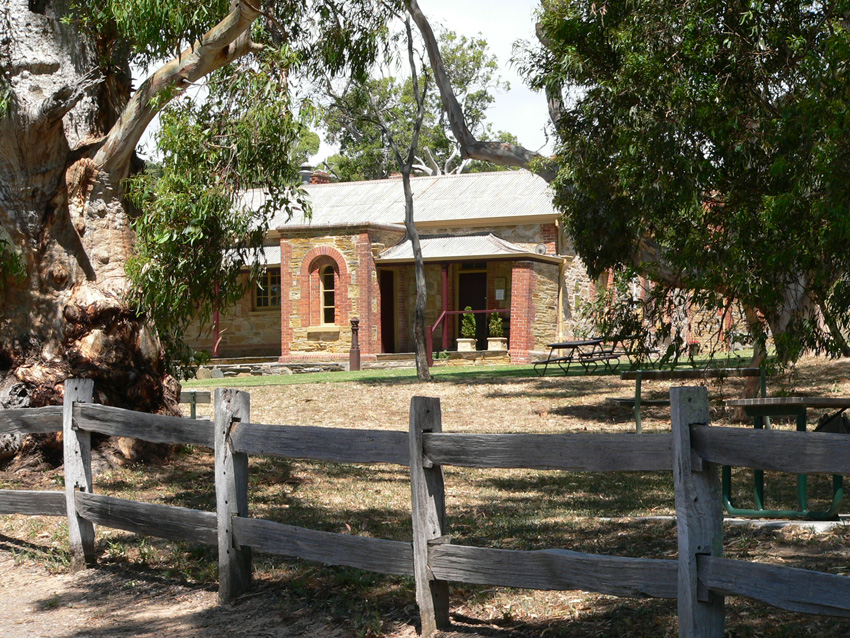
1 Willunga has many fine old colonial buildings

Willunga has many fine old colonial buildings


As well as honeyeaters the plants attracted more than their fair share of bees. Between sips of wine and a nibble of cheese (doing it tough that day) I watched them flit from one blossom to another gathering nectar and collecting a dusting of pollen on their legs. Then, out of the corner of my eye, I caught sight of one bee flying more erratically than the others, it seemed to hover for a second then repeatedly zoom off in different directions; like a miniscule attack helicopter. Every so often it would land but only for a short time before resuming its unpredictable flight pattern.
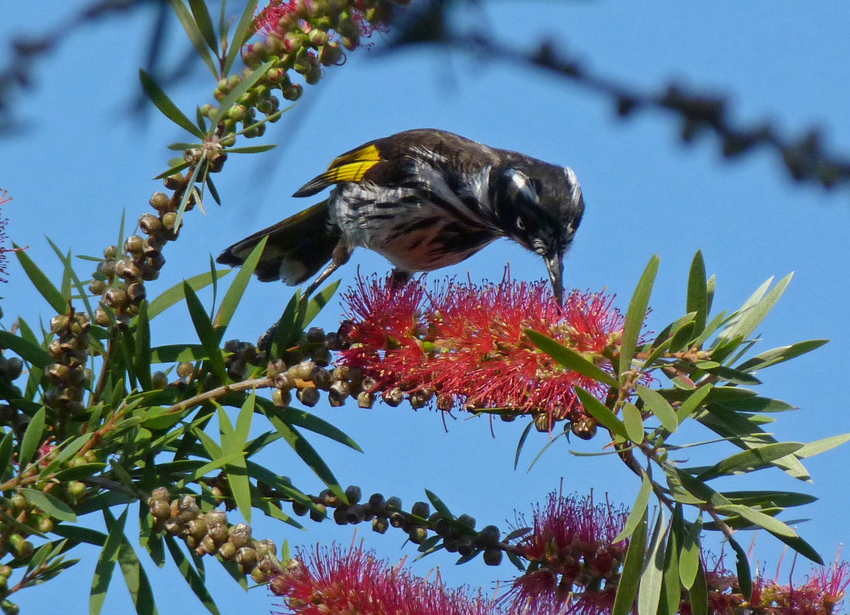
2 New Holland honeyeater probing bottle brush flowers for nectar

New Holland honeyeater probing bottle brush flowers for nectar


I moved my chair a little closer to the native hibiscus, where the little insect seemed to be spending most of its time, set the camera to macro zoom and started to track it through the lens. The bee was certainly smaller than the honeybees that were also doing the rounds of the blossoms and it appeared to have a bluish tinge. I fired off a couple of frames and took a closer look on the review screen. It was certainly not a honeybee. Over the next hour and a half several of the little blue bees appeared at different times and I managed to get a series of images that I could use to identify them. I suspected they were native bees which I had heard of but knew very little about.
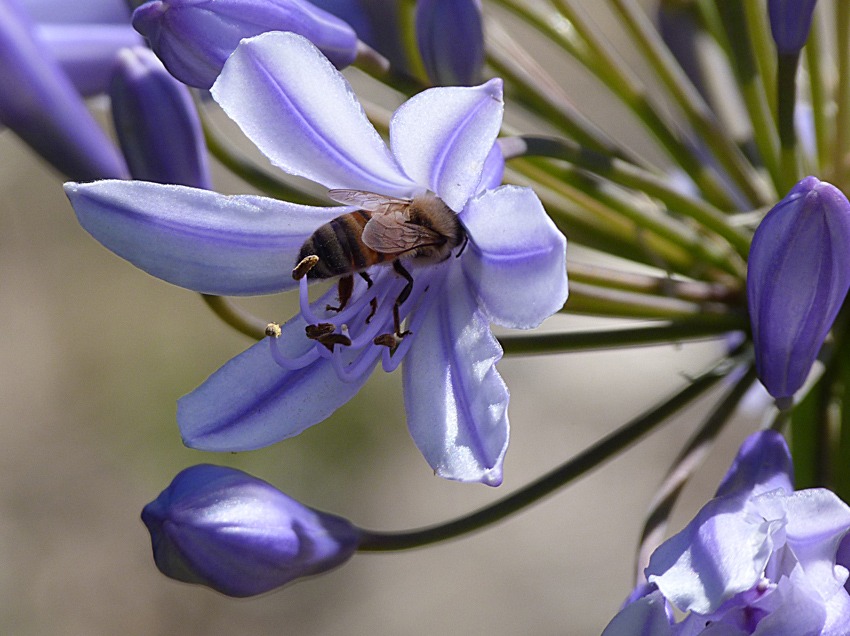
3 Honeybee feeding on a blue agapanthus

Honeybee feeding on a blue agapanthus


My guess was correct. The little insect was a blue banded bee (Amegilla cingulata). Blue banded bees are actually far more common than I realised and are found throughout SE Asia. They contribute to the pollination of many commercial crops with their unique ability to buzz pollinate; the result of intense wing vibrations when they cling to flowers.

4 Banded blue bee hovering in front of native hibiscus 2

Blue banded bee hovering in front of native hibiscus blossom


Unlike honey bees these native bees are not colonial with females building burrows in dried up river banks or even soft mortar in urban housing. Their sting is mild and they are not aggressive. Interestingly, these blue bees collect most of their nectar from blue flowers and since my initial sighting I have found them on the lavender and agapanthus in my own garden. They have obviously been there for years and I had never even noticed; yet another lesson in observation.

Cheers

Baz


Wine, Whales and Pelicans at the Bluff

26 Oct

Dear Reader: 

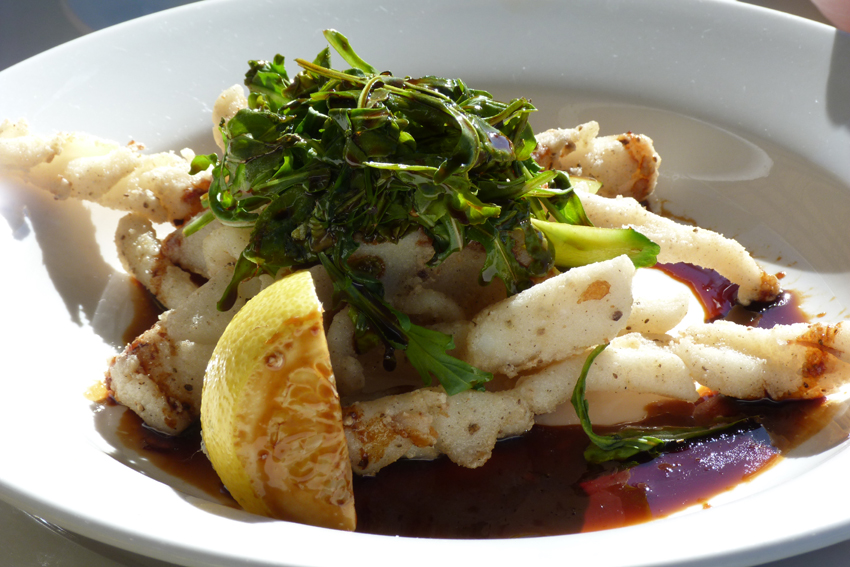
I am at ‘The Bluff’, a granite outcrop near the tip of the Fleurieu Peninsula. Comfortably tucked into a wicker chair on the balcony of the ‘Whalers Inn’,  I am enjoying a plate of local calamari and nursing a fruity white from one of our coastal vineyards. The restaurant is only ten minutes drive from the centre of Victor Harbor, the south coast’s largest town.

bluff vh

A view from the restaurant

P1000661

Calamari with soy, lemon and wilted greens

My field glasses and camera are within easy reach and every few minutes I scan the horizon beyond Wright Island for a tell-tale blow, breach or the raised fluke of a Southern Right Whale. I can just make out one animal a few kilometres out to sea and I am hoping that it will make its way closer inshore. Only a few days ago two adults and a calf were frolicking in the bay just a few hundred metres from where I am sitting. In fact, well over 40 whales have been seen during the last month. Southern Rights regularly migrate with their calves en route to their Antarctic feeding grounds at this time of year.

P1000649

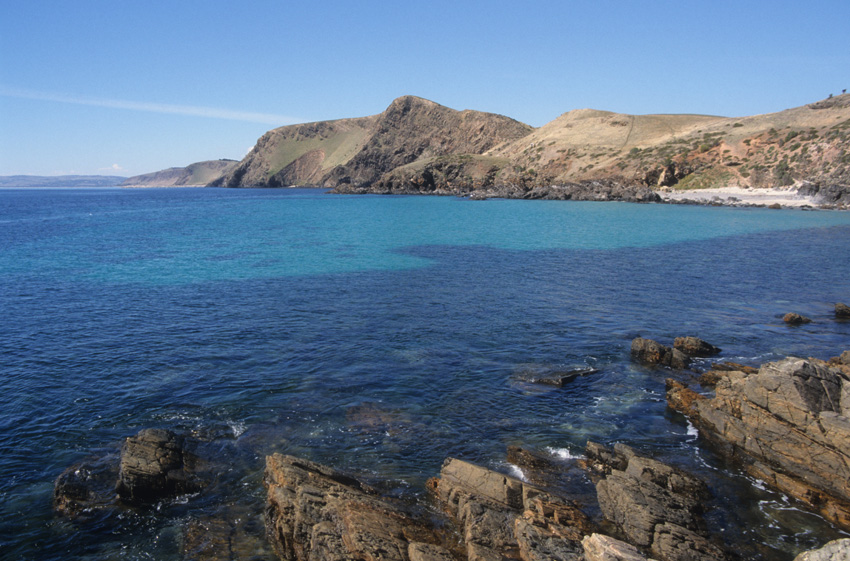
Rocky outcrops and an offshore island


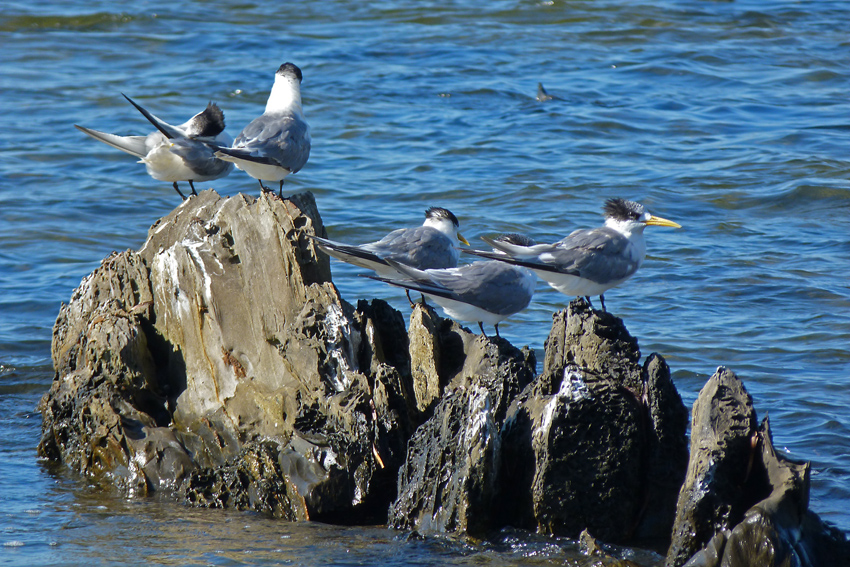
No such luck. The whale heads further out to sea and I know that it is late in the season and the chance of another sighting is slim. I shift my focus to the rocky foreshore where jagged outcrops of dark rock trail into the sea. A strong offshore breeze is ruffling the feathers of a group of caspian terns that are precariously clinging to the rocks. Over the last few hours they have been alternately patrolling the rolling swell between Wright Island and the mainland searching for baitfish then resting on the shoreline.

tern 2

Crested terns resting between forays


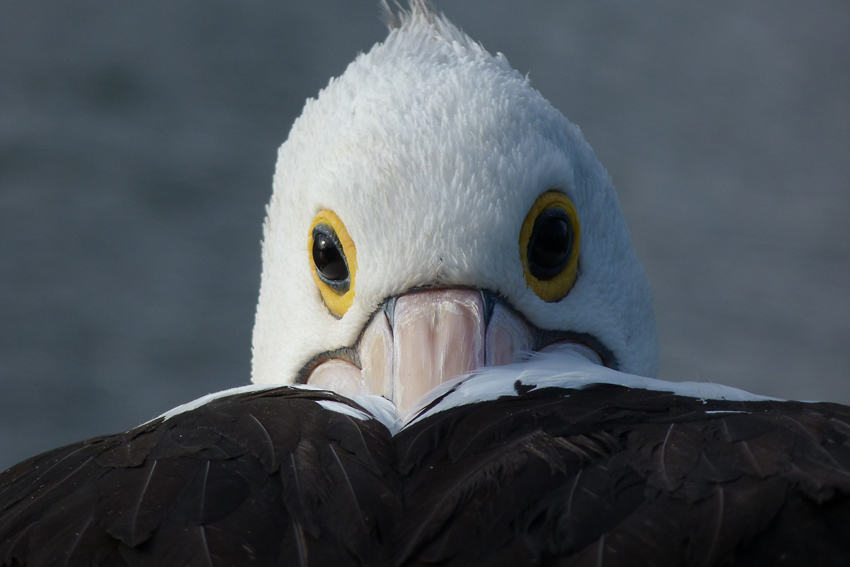
A little closer to the town, between a stand of huge Norfolk pines, there is a boat ramp and every so often anglers motor in from the deeper water and tie up at the dock. Several large granite boulders lie close to the channel and a couple of Australian pelicans have been patiently ensconced on their smooth surfaces eyeing each craft in the hope of a fishy handout. They are not too fussy and a few mullet, salmon trout or even some unused bait usually makes their wait worthwhile. While I finish my calamari the birds are rewarded by a boatie and his family of pelican friendly kids.

pelic 4

Australian pelican


There are, of course, the usual silver gulls flying, scavenging and wading in the shallows in search of any kind of food from a discarded potato chip to an unwary shore crab. But amongst their sleek silver forms I catch sight of a larger yellow beaked gull. It is a pacific gull, a less common species in this area, and it is wading in the shallows searching for prey in one of the tiny beaches that form between the rocky outcrops.

pacific  gull 3

Pacific gull


As the afternoon wears on and the temperature climbs, I finish my glass of wine, pay the bill and stroll down to the car. The sea is inviting and my snorkelling gear and underwater camera are in the back. Today I have dined well, photographed a diverse collection of seabirds, watched whales on a dazzling blue ocean, and now I have the chance of encountering some slightly smaller varieties of marine life in a great dive location.

That encounter will be the subject of a future blog.

Cheers

Baz


Kids, Kookaburras and Creeks

4 Oct

Dear Readers

It would be lovely to write for a living. To earn my dollars wandering South Australia’s diverse wilderness areas taking photos and composing articles to share with you. Dream over….reality check! Like most of the world I need a steady job to survive and my profession is teaching. One of the many requirements at my school is to take my year 6 students on camp each year. Fortunately, Adelaide has many wonderful destinations in the adjacent hills and along the coastline that provide a range of outdoor activities. Many of these sites also double as corporate destinations. This year we chose Wirraway a campsite located on the eastern fringe of the Mt Lofty Ranges. It is a beautiful location situated amongst rolling hills with a little creek running through the property. And, to my delight their program included a nature walk along with the adventure activities.

G

Typical hills country


Each morning I woke at six and reluctantly dragged my weary bones out of bed; any teachers reading this will immediately understand that the previous night’s sleep was limited to a few hours. The students were not allowed out of their dorms until 7.00 which gave me an hour to wander around the grounds uninterrupted. Campsites always attract wildlife. However well intentioned the staff may be there are always a few food scraps to be had, nooks and crannies to nest or hide in as well as wood piles and building materials that might be home to both predator and prey. On my first morning a pair of rats scurried under the raised foundations of the caretaker’s home watched with interest by me and anticipation by a kookaburra sitting in a an old gum tree (there’s a song title there).

kooka2 red

Hungry kookaburra


The camp site was also home to a wild rabbit that liked to munch the grass close to one of the girls’ dorms but scurried back into the bushes at the slightest noise. Each time it appeared I tried to signal the students to be quiet and take a look…no such luck. Only a picture snapped in the quiet hours and shown at the dinner table convinced them that I was not making it up.

A

Peter makes a rare appearance


Both male and female superb blue wrens were common though timid and constantly on the move keeping low in the bushes and feeding in the leaf litter. And a resident flock of red browed finches moved between the flowering trees and bushes often coming close when I was working with the students and staying away if I had a camera nearby. Fancy that!!

C

Male superb blue wren

B

Finches all in a line


Our nature walk was quite a revelation. You would not expect city kids to be overly responsive to a lengthy stroll in the bush when the alternative activities included horse riding, archery and rock climbing. Surprisingly, they showed a keen interest in what the guide had to say and even sat quietly by the creek for a few minutes trying to work out how many different frog species could be identified from their distinctive calls. Even the plant life scored a hit, most notably the unusual grass trees that were flowering at the time and an old weathered log with lichen and moss growing in its sinuous furrows.

E

Flowering grass plants

F

Patterns and colours in nature


The three days passed quickly and each group appeared to enjoy their excursions into the bush.  Kids get few opportunities to experience the outdoors in our digital world and watching their faces as they discovered the beauty of wild things was a rare pleasure.


Until my next post

Cheers

Baz

Second Valley ….drive and dive

17 Aug

Dear Reader:

This week’s post is courtesy of a chilly winter dive and a pleasant day’s drive to one of my favourite childhood haunts, Second Valley.

D Second Valley bay on a winter's day

Second Valley bay and beach on a calm winter’s day


In 1836 Colonel Light, the founder of Adelaide, was searching for a good location for South Australia’s new capital city. He sailed his ship, the Rapid, into a sheltered bay with a fresh water stream that flowed in from a fertile valley. Light named the bay after the vessel. The second little cove that he discovered was just a few miles north towards the present location of Adelaide and was simply known as Second Valley.

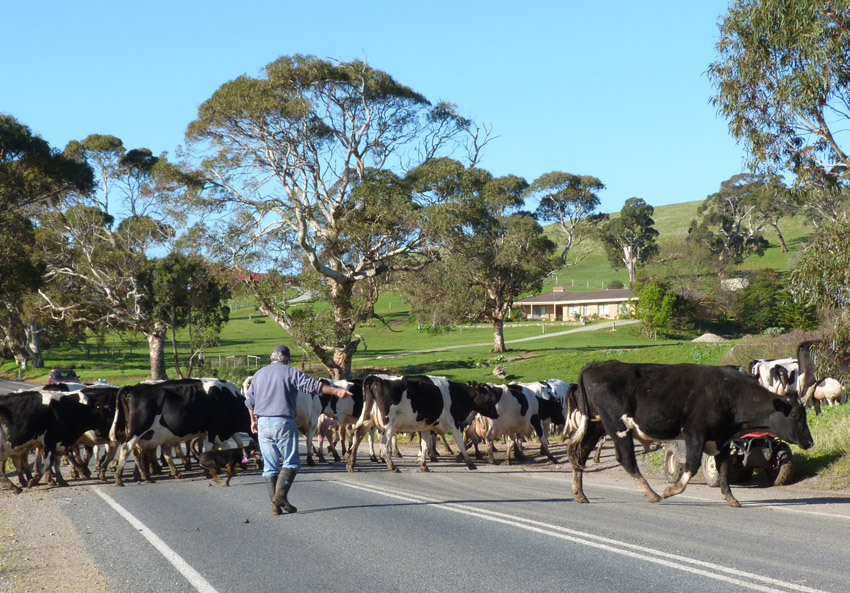
E farmer and dog taking dairy herd across the road near Rapid Bay

Farmer and cattle dog taking dairy herd across the road near Rapid Bay

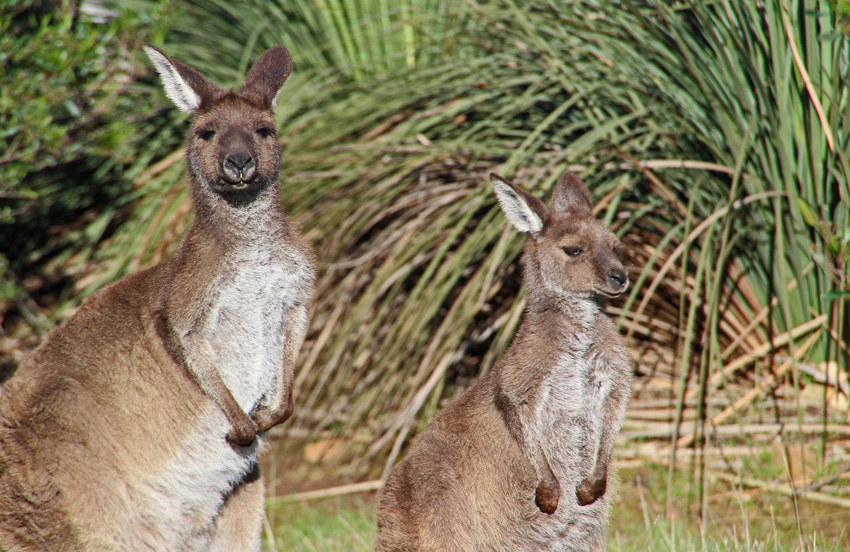
Second Valley is a one and a half hour drive from the city centre along the Fleurieu  Peninsula’s south coast road. The dairy farms that lie amongst the rolling hills, large expanses of open woodland, and vineyards make it a recreational drive worth undertaking for its own sake. But for the wildlife enthusiast both drive and destination are even more enthralling. The farms and bushland support a healthy population of western grey kangaroos that are often visible from the road. Rosellas, various cockatoos, lorikeets and a host of other bird species are also common throughout the year.

BB Western grey kangaroos near the roadside near Second Valley

Western grey kangaroos by the roadside near Second Valley

However Second Valley’s real charm lies beneath its pristine waters. The sheltered little bay is enclosed by limestone hills and coastal cliffs . It boasts an exquisite little beach and miniature rocky headland which is bisected by an old wooden jetty. Small boats can be launched from the beach but the marine environment is just as easily accessed from the beach, jetty and rocks for shore based divers. It is, in my experience, one of the best scuba and snorkelling locations that I have encountered anywhere in the world. A place where a novice snorkeler can swim amongst shallow rocky reefs in water they can stand up in or a more adventurous diver can swim a short distance and be next to a cliff face that drops away into 10 metres of water.

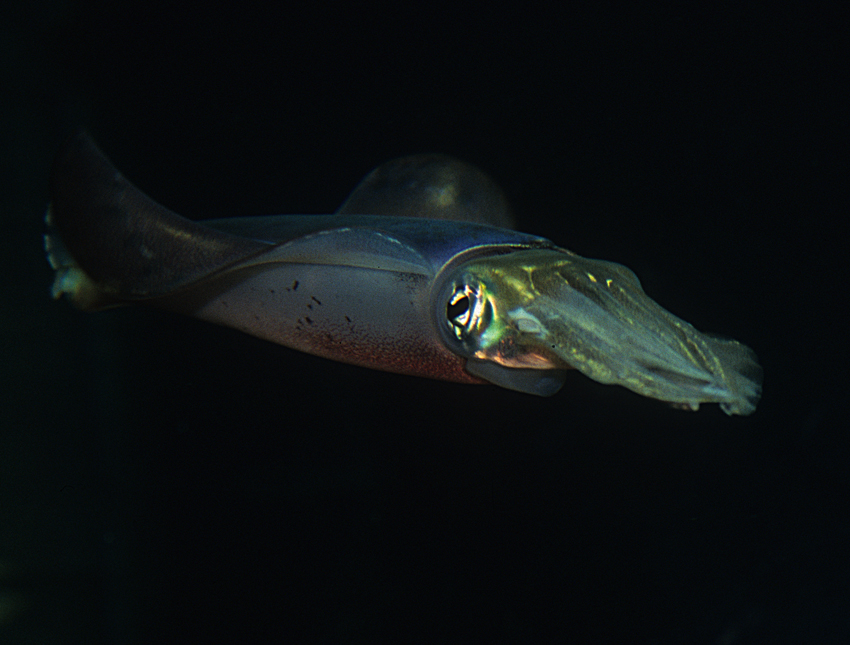
A squid at nightshowing irridescence

Squid viewed on night dive

Below the water there is a diverse range of habitats to explore ranging from limestone caves and ledges, to rocky reefs, seagrass meadows and open expanses of white rippled sand. There is always a wide selection of marine life to enjoy. Over the years I have encountered everything from huge eagle rays to schools of iridescent squid on a night dive and once I came across an elephant shark lazily gliding across the segrass as it came into the shallow bay to breed.

B large cuttlefish amongst brown algae

Large cuttlefish amongst brown algae

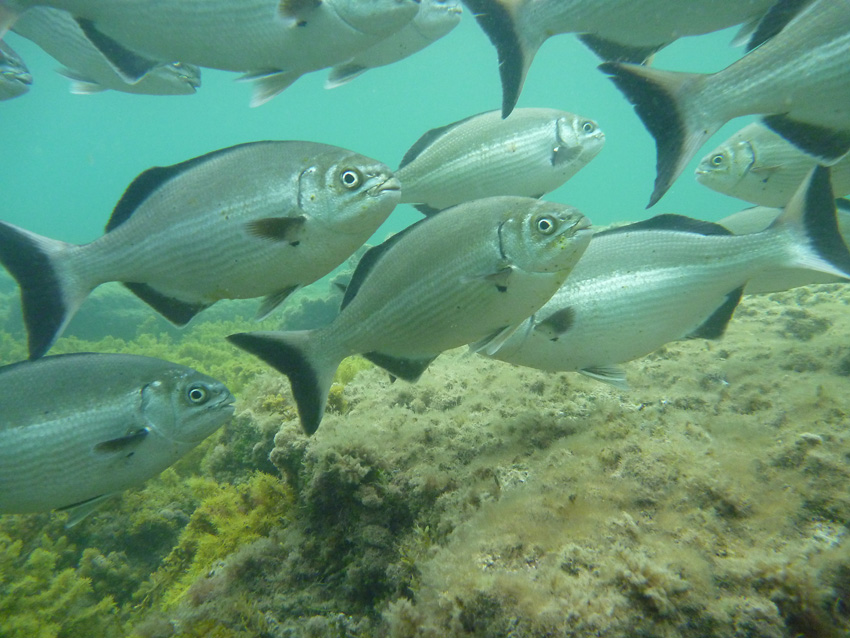
Although the balmy days of summer are the ideal weather for a dip in the ocean the winter months often produce long fine breaks when the sea is calm and visibility excellent. On this particular occasion I was lucky enough to encounter a couple of large cuttlefish under a ledge and a school of silver drummer milled around me on the edge of the rocky outcrop. On any typical dive, either snorkelling or with scuba, I would expect to sight at least 30 different species of fish and a multitude of invertebrates. This dive was no exception.

BB Silver drummer schooling  at the end of the rocky peninsular

Silver drummer schooling at the end of the rocky peninsula

As always I hope you enjoyed the pictures and anecdotes and that they encourage you to come and enjoy our unique scenery and wildlife.

Cheers

Baz

South Coast Sealions

31 May

Dear Reader:
Last weekend I was walking along the rocky foreshore of the Deep Creek Conservation Park at the tip of the Fleurieu Peninsula around 90 kms from Adelaide. A few metres from the shore a rush of water and a speeding grey shape caught my attention. ‘Dolphins at play’ was my first thought but a closer look dispelled that idea. The twisting motion was suddenly more than a little familiar… sealions. A pair were frolicking or fishing close to the rocks on the inside of the powerful rip current that surges between KI and mainland. They were too fast for me to take a shot but my thoughts drifted back to my first encounter many years ago in this same stretch of water.

AACP1070291 edit

Deep Creek foreshore with grass trees in foreground

We were *spear-fishing along this same section of coast on a day that would have been better spent sleeping in. There was a stiff sea breeze and the visibility was around 2 meters at best. I was returning to the surface after scouring a rocky ledge near the bottom for zebra fish and just one hard kick of my fins from the next breath of air when a grey shape rocketed out of the gloom just below me.  In an instant my assailant turned to face me with breathtaking agility. Instinctively, I raised my spear gun, slipped off the safety and prepared to meet either a bronze whaler or white shark.

AADzebra 2 edit

Zebra fish on a rocky reef feeding amongst brown algae

Needless to say, my reflexes combined with the drag of the water meant that by the time the predator had reached me the gun was in no position to be of any use. The next moment I was face to face with my attacker. The large bull sealion came to a sudden halt, only inches from my facemask; its formidable set of teeth, bushy whiskers and baleful eyes providing an image that stays with me to this day. The sea lion performed a few more acrobatic turns as if to point out my ineptness in its watery home then disappeared back into the murky depths.

AAEsealion 8red

Sealion underwater near Deep Creek

Australian sealions (Neophoca cinerea) are a threatened species that inhabit the temperate waters of Western Australia and South Australia. They grow to around 2.5 metres in length and weigh up to 300Kg; the males are larger than females. Sealions feed on fish, molluscs and crustaceans and in the past were persecuted by fishermen and hunted for blubber and meat. Unlike seals, sealions move comfortably on land using their flippers rather than dragging themselves. They have external ears; hence their family name Otariidae . Sealions breed on isolated beaches and rocky platforms often with rock pools close by where the pups can swim safely while being weaned. Their major predator is the great white shark.

AABsealion 5 edit

Female sealion weanng pup on a sheltered beach

This was not my last encounter with these glorious South Australian mammals but it was my first and most memorable. In a later blog I will tell you about an exhilarating weekend on Kangaroo Island photographing sealions.

AAAustralia marine and coast sealions edit

Male sealion asserting dominance on a breeding site

Cheers
Baz
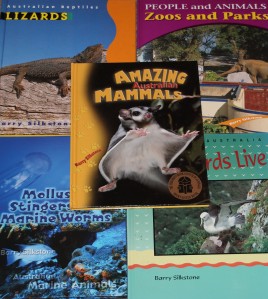
*Apologetic footnote…..Many of the Australian wildlife photographers and naturalists that I have encountered developed their passion for the natural world and much of their field-craft with a rifle or rod in their young hands before graduating to pen and camera.

← Back

Thank you for your response. ✨

A Drive Along the Beach

20 Mar

Dear Reader

At the southern tip of the Fleurieu Peninsula the rocky cliffs and granite outcrops of Victor Harbor and Port Elliot subside into a long stretch of pristine sandy beaches. They are the product of aeons of erosion and define the area where Australia’s longest river, the Murray; meets the ocean. The beach is easily accessed from the old river port of Goolwa and the short 5 Km drive along its length is only possible in a  4WD vehicle, Even then, it is best to keep a close eye on the tide and have a little experience driving in soft, sandy conditions.

Four wheel drive entry to Goolwa Beach

Four wheel drive entry to Goolwa Beach

Over the last few weeks I have made the trip several times to photograph and observe the wildlife that lives along the tidal zone and in the windswept dunes. Twice, I reached the river mouth and once I had to turn back as the high tide and churned up sand made the going a little too difficult for my SUV.

Goolwa beach near the Murray mouth showing different environments

Goolwa beach near the Murray mouth showing different environments

The surf breaks for several hundred metres out to sea along this beach and sometimes you can be lucky enough to see a dolphin or the dark outline of a whaler shark hunting for Australian salmon or mulloway in the waves. However, most of the time it is the caspian terns that dominate the open ocean as they dive for schools of baitfish or rest on the wet sand ready to set off and hunt again.

You've done something different with your hair

You’ve done something different with your hair

In the shallow surf break a dozen different species of waders can be seen each exploiting its own niche with its specialised beak and hunting style. Diminutive sanderlings and dotterels race along the sand in between the wave fronts gleaning tiny invertebrates and worms too small to see. Small groups of oystercatchers use their broadened beaks to dig out cockles and prise them open while avocets use their slightly upturned bills to catch tiny crustaceans and other invertebrates swimming in the shallow water. In fact, what at first glance appears to be an homogenous continuum of beach; is in reality, a collection of micro habitats or niches, each exploited by its own particular species of bird.

Pied Oystercatchers feeding in the surf

I hope you enjoyed this jaunt along the beach and stay tuned for more South Aussie  adventures.

Cheers

Baz

← Back

Thank you for your response. ✨