Archive | Reptiles RSS feed for this section

Coorong

28 Jul

Dear Reader

This week’s posting is about one of my favourite wildlife refuges: a place that rivals any of the habitats that I have visited over many years of travelling and one that is in my own backyard.

AA Drying fishing nets on a Coorong beach

Drying fishing nets on a Coorong beach

The Coorong is around two hours drive south east of South Australia’s capital city Adelaide. It consists of a 150 km, slender spit of land of land that runs parallel to the coast enclosing an extensive chain of brackish, shallow lagoons and salt pans. Impressive scrub covered dunes, battered by the heavy seas of the southern ocean on the seaward side, run the length of the narrow peninsular. At its north-western end the Coorong is fed by the River Murray which enters into two large lakes-Albert and Alexandrina. The unusual word ‘Coorong’ is thought to be derived from the Aboriginal word ‘kurangh’ which means ‘long neck”

AC Wind blown trre amongst grasses with the shallow salt pans in the background

Wind blown trre amongst grasses with the shallow salt pans in the background

The region’s unique landscape of sand dunes, tussock grasses, low scrub and jagged limestone outcrops, is a haven for wildlife. Kangaroos, wombats, emus and an abundance of parrots and honeyeaters are just a few of the many native species that inhabit the thick, low bush that borders the lagoons and cover the towering dunes. An extraordinary number and variety of wading birds regularly gather in the Coorong. Enormous Australian Pelicans glide majestically along the waterway or spiral high on thermals before settling back on the water to fish. Tiny Mongolian Dotterels, which have travelled over 10 000 kilometres to avoid the northern winter, feed on the beachfronts between the crashing waves while avocets and curlews probe for shrimp and worms in the shallow limestone pools and mudflats. In total, over 400 species of birds, both residential and migratory, are found in this internationally recognised wetland.

AB Pelican in flight cross the shallow waters of the Coorong

Pelican in flight cross the shallow waters of the Coorong

Such a rich and diverse environment did not escape the attention of Australia’s original inhabitants and for around 40 000 years the Coorong has been home to the Ngarrindjeri (pronounced Nuh-run-jerri) people. They hunted kangaroos, emus and reptiles in the scrub as well as fishing and harvesting shellfish in the lagoons. Today the Ngarrindjeri still live in the area and practise many of the ancient skills that have been handed down through countless generations by ceremonies and stories. Those visitors who wish to learn more about the Coorong’s rich Aboriginal heritage can stay in lovely studio apartments, camp out, or park a caravan at the Coorong Wilderness Lodge with its sweeping views of the park and bush-tucker walks or canoe trips lead by local guides.
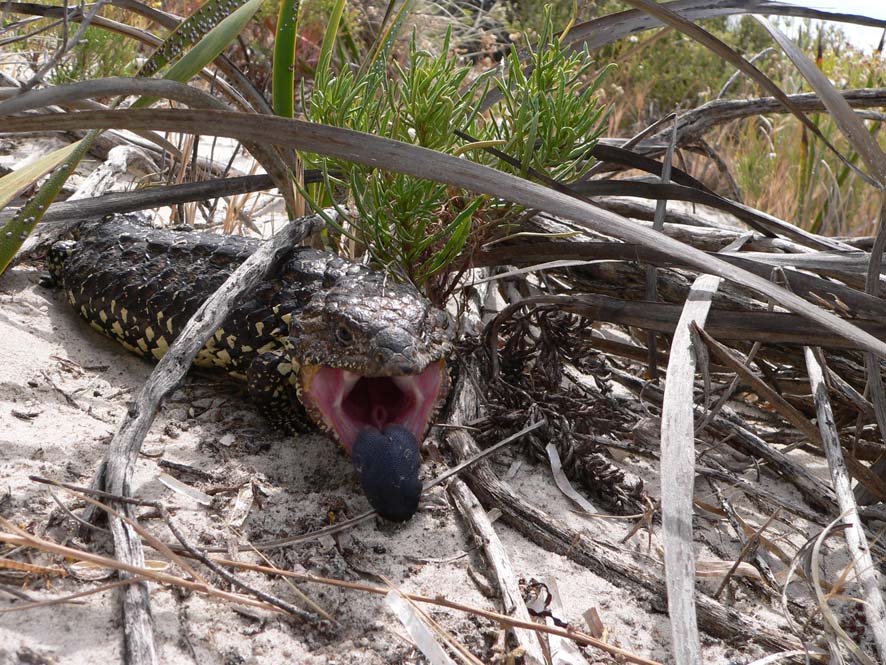
AD Sleepy or shingleback lizard amongst Coorong dunes

Sleepy or shingleback lizard amongst Coorong dunes

Despite its wild and lonely character the Coorong National Park is an easy day trip from Adelaide. Ideally, you would hire an off road vehicle in the city and take the coast road south then meander back north on a variety of tracks that parallel the highway to the mouth of the River Murray and the twin lakes of Alexandrina and Albert. From there you can join the main road back to the city and even drop into one of the regional wineries if time permits. However, if wild places are your passion and you feel the Coorong’s scenery and history are worth a longer stay there are a variety of established bush campsites as well as budget cabins, units and bunkhouses in the area. A slightly more upmarket approach is to book into one of the self-contained lakeside cottages at the historic homestead of Poltalloch on Lake Alexandrina. From there you can arrange guided tours of both the Coorong and lakes or use your own vehicle or boat to explore the area.

A battered old 4WD cruises along the beach at sunset near  lake Alexandrina

A battered old 4WD cruises along the beach at sunset near lake Alexandrina

I hope that one day, Dear Reader, you will come and visit this extraordinary place.

Cheers

Baz
My South Aussie Garden

15 Jun

Dear Reader

The people of Adelaide have the luxury of a glorious Mediterranean climate; cool and wet in the winter, mild to warm during autumn and spring and hot and dry in the summer. Such benign weather combined with the city’s ideal location between hills and coast provide excellent conditions for gardening throughout the year. Viewed from the hills, the city looks like a green patchwork of tiny gardens, expansive parks and tree lined boulevards. In general, South Australians take great pride in their gardens creating personal spaces that provide a sanctuary in a modern urban setting as well attracting local wildlife into the city.

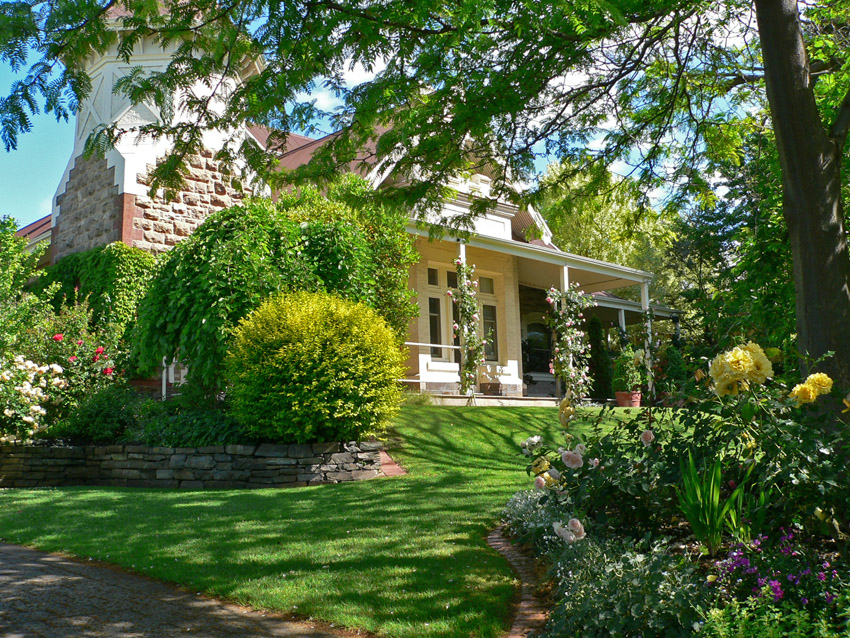
AE Clssic home and garden in North Adelaide

Classic home and garden in North Adelaide

My own garden, like that of many Adelaideans, is a combination of native shrubs, trees, lawn and exotic flowering plants, all carefully chosen to give colour throughout the year and attract both birds, insects and the occasional reptile. Small areas of lawn and strategically placed rocks provide variations in terrain while outdoor seating and water features add aesthetics plus an all important source of moisture in the summer months.

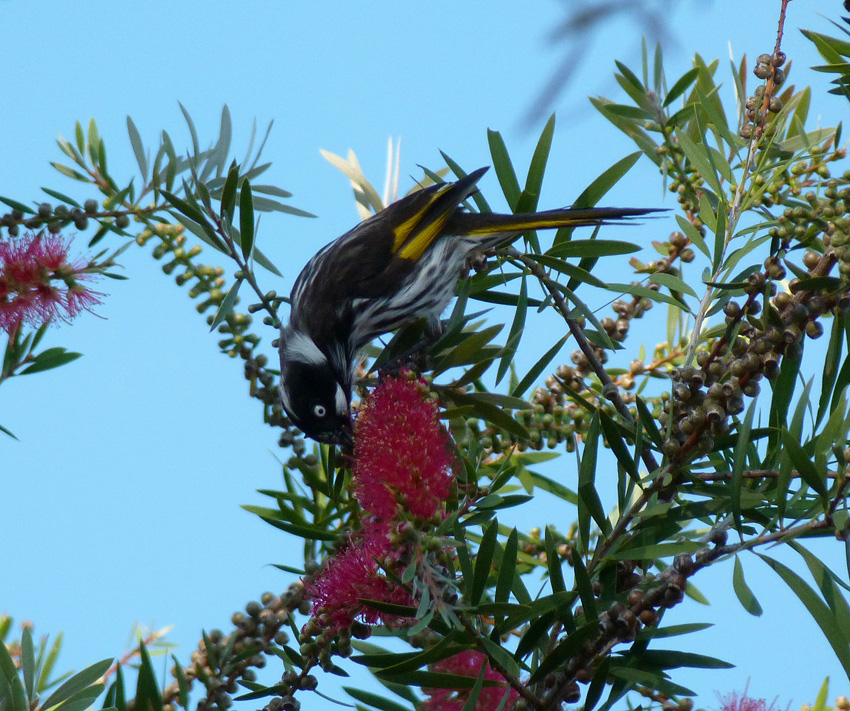
AB New holland honeyeater feeding in bottlebrush

New holland honeyeater feeding in bottlebrush

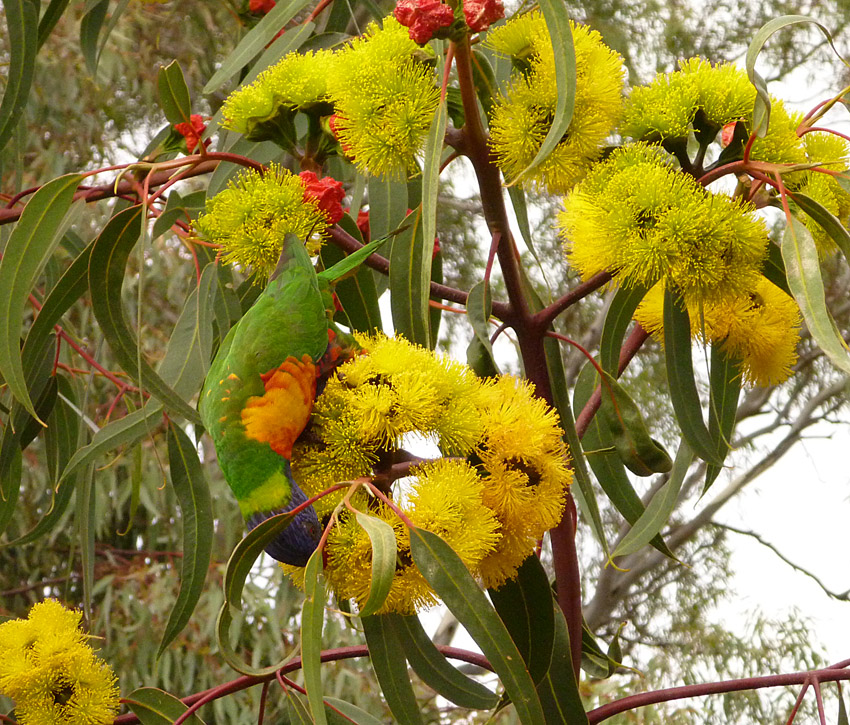
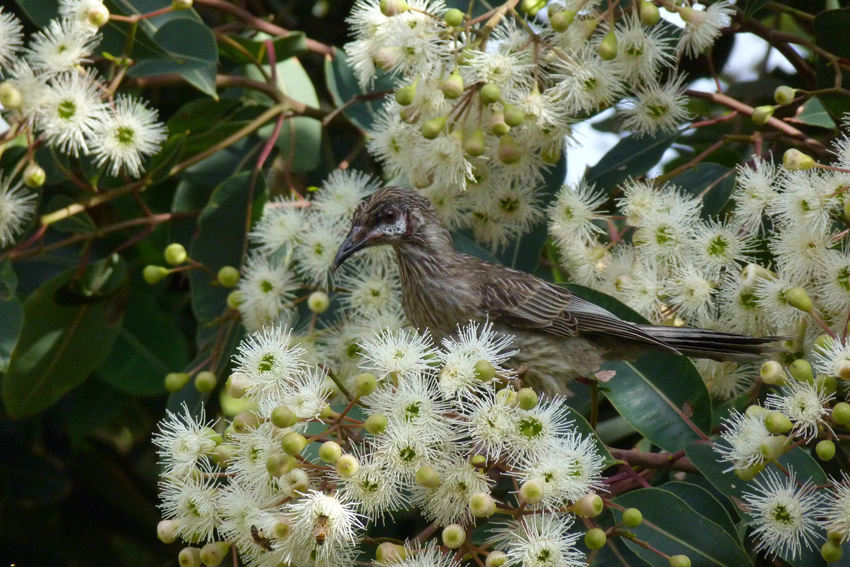
A couple of sizeable eucalypts dominate the back of the garden. The smaller of the two has large yellow flowers that blossom in the spring and tends to attract a wide variety of parrots, especially rainbow lorikeets. The larger tree has smaller, white flowers that seem to be at their best around Christmas. The  snowy blossoms are a favourite food for several different  species of honeyeaters including the largest of all; the wattle bird whose raucous cry sound remarkably like wakeup…wakeup.

AF Rainbow lorikeet feeding on red flowering gum blossoms

Rainbow lorikeet feeding on red flowering gum blossoms

AC Young wattle bird feeding in eucalyptus tree

Young wattle bird feeding in eucalyptus tree

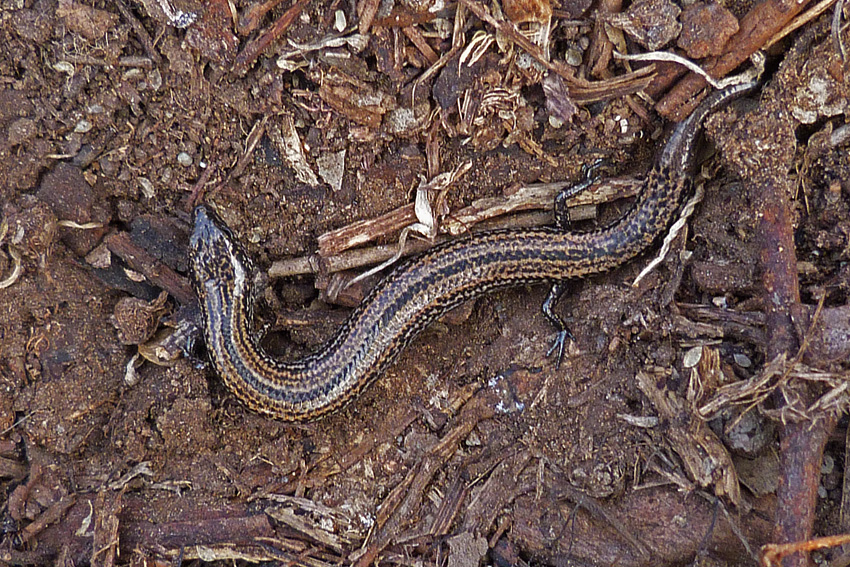
Several different species of lizards are quite common around the garden. Marbled geckos live amongst the brickwork and a variety of slender skinks including sliders and cenotus scurry under the leaf litter and rocks. Occasionally a blue tongue or shingleback makes an appearance during the summer months.

AAgarden skink amongst bark and leaf itter

Garden skink amongst bark and leaf litter


Spiders and insects are found in a myriad of micro-niches throughout the garden. Flower spiders hunt amongst the blossoms, red backs live in the dark recesses of garden sheds while various beetles, wasps and mantids (to mention just few groups) forage amongst the diverse shrubs and grasses.

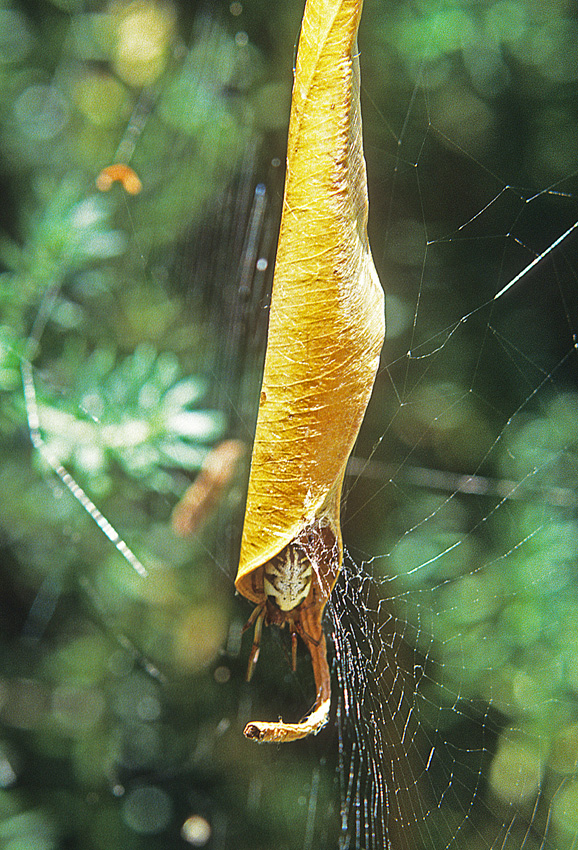
AD Leaf curling spider

Leaf curling spider using a gum leaf to construct its home


This is a merely a brief introduction to my garden. In some of my future posts I hope to share much more detailed stories and observations about the animals and plants that   I encounter each day in my own garden and others that I might visit around the state.

Cheers

Baz

Any feedback on this post is most welcome

← Back

Thank you for your response. ✨


Waterfall Gully’s Aquatic Skinks

27 Apr

In the driest state on the driest continent water is, as you can imagine, the most precious of commodities. To be entirely honest, Adelaide has a wonderful climate but in summer we can go for many weeks without a drop of rain. During this time the few spring fed creeks that flow down from hills become a refuge for a wide variety of wildlife.  

AA edit

Waterfall above the creek

Frogs, native fish, fresh water crustaceans, aquatic lizards and certain bird species all need this permanent source of water. The spectacular little falls that have carved out Waterfall Gully on the city’s eastern fringe feeds one of the few environments where water dependent wildlife can survive the harsh summer months. At the foot of the falls; a restaurant, walking trails, and car parking sit adjacent to the creek making it a wonderful place for hikers, casual visitors and naturalists alike. 

B edit

A spotted marsh frog amongst the reeds

 After a particularly dry start to autumn I decided to drive out to Waterfall Gully to assess how the wildlife was coping with the conditions. A friend told me that he used to see quite lot of water skinks in the area years ago. I had only caught the occasional glimpse of the little lizards while cycling around the Torrens Lake in the city or on the banks of the Murray. This seemed like the perfect time to try to get some better images of these fascinating little reptiles. 

AAA edit

The creek provides a secure environment for many creatures including snakes, lizards, frogs and fish

Water skinks, actually the eastern water skink (Eulamprus quoyii) grows to around 30cms in length. They hunt for small invertebrates in and around permanent water. These lizards are territorial and males and females look alike. Up to 9 well developed young are born in the summer. They are common prey for Kookaburras, snakes and feral cats. Like most skinks, eastern water skinks can drop their tail when grabbed as an escape strategy and often have shortened or partly re-grown tails.

E edit

Eastern water skink basking on a rock in the late afternoon

 On my first trip I drove up the narrow road to Waterfall Gully and parked the car close to the creek below the falls. Within a few minutes I had spotted my first lizard. It was sitting on a flat rock in the middle of the creek and had a substantial part of its tail missing. Around one in ten of the skinks that I saw that afternoon were missing parts of their tails.

C edit

This little lizard got away but not without losing part of its tail

 As I walked towards the waterfall I noticed that the skinks were quite abundant throughout the creek and its banks. Some were tucked into the undergrowth while others were foraging amongst leaves and twigs that had accumulated between the rocks in the creek bed. I did not see any swimming though a few were partially immersed in water, apparently waiting for prey.

D edit

An eastern water skink foraging in the creek bed

 I returned to Waterfall Gully several times over the next few weeks to watch the water skinks and try to capture some better images. On my last excursion I sat quietly by a section of creek for over half an hour watching the lizards, small birds and insects that lived there. The wildlife had survived the ‘big dry’ quite well it seemed.

IMG_1205 edit

Perhaps I’ll focus on the insects next time

One ‘Ticked Off ‘ Tiger Snake

16 Feb

 Field Notes

Dear reader

Sometimes life gets a little too busy and the pressures of work and family don’t allow me time to sit down, sort through my notes and put together a polished article. So I have simply edited my field notes in the hope that they will stand alone as an enjoyable account of my brush with one of Australia’s deadliest reptiles.

Setting

Late Summer, midday, on the banks of the river Murray near Mannum about 100kms NE of Adelaide. A smallish town, good pub with excellent view of river and great meals. Some nice antique and bric-a-brac shops, historic paddle steamer and houseboats to hire.

Notes

  • A pleasant drive from the city through the foothills.
  • Parts of the countryside is still green from good winter rains.
  • The rain shadowed plains on the other side of the ranges are quite dry and you can see the course of the river from the granite outcrops near Palmer.

    Clssical Murray river environment showing billabongs

    Clssical Murray river environment showing billabongs

  • We crossed the river on the Mannum ferry and drove along the edge of one of the billabongs.
  • Several small boats and a kayaker cruised past enjoying the sheltered environment away from the main channel.
  • The river level is high and there is quite a lot of debris along the bank.
  • There are numerous waterbirds foraging in the shallows and some parrots in the trees and I spotted a water skink on a concrete jetty near a bed of reeds.

    Pelicans feeding in the shallows near reeds

    Pelicans feeding in the shallows near reeds

  • I decided to explore a tangle of reeds and driftwood that was caught in the roots of one of the large river gums that grow on the edge of the bank.
  • As I pushed through some of the reeds I heard the distinct rustle of a fairly large animal moving away from me.
  • A sizeable tiger snake shot out from under a small log to my right and headed towards the water.
  • I froze momentarily so as not to alarm it unduly and steady myself to take a picture if it stopped-as opposed to freezing because it scared the .#$%%^&&  out of me.
  • Tiger snakes are one of the top ten most venomous snakes on the planet and can be rather aggressive when threatened. They feed on a variety of small riverside animals ranging from frogs and lizards to mice and birds. A large tiger snake can measure up to 2 metres. There are several varieties and the namesake stripes are not always obvious.
  • The snake paused after a few seconds and turned to face me.
  • It was about 3-4 metres away but looked unnervingly close through the telephoto lens.
  • The reptile had moved into the shadows and a quick review of my shots revealed a mottled and shady image.
  • I popped up the flash and fired another couple of frames.
  •  The snake did not like that and reared into a strike position as the second burst of light was emitted.
  • The results were startling, a Tiger Snake, mouth agape and fangs visible.

    Tiger snake striking

    snake striking

  • Time to leave and not annoy the tiger anymore
  • We continued to drive along the river bank track enjoying the scenery and had no more serious reptilian encounters other than a couple more skinks

    Water Skink near the river bank

    Skink near the river bank

  • Stopped  at the Pretoria Hotel on the banks of the main river
  • Great food, plenty of it and a glorious view of the river from the glass fronted dining room
  • Some pelicans feeding close to the river bank
  • Crossed back on the ferry then drove along the river towards Walker Flats to take in the views of the cliffs and an interesting stretch of Mallee scrub.

    Crossing the Murray at Mannum on the ferry

    Crossing the Murray at Mannum on the ferry

  • We have previously observed wombats here, foraging near the road in the late afternoon.
Wombat in sandy terrain within Mallee scrub near the river

Cheers

Baz
  • ← Back

    Thank you for your response. ✨

Seaside Dragons

30 Dec

After a chilly morning the day has warmed considerably, making it perfect weather for hunting dragons. My quarry is the glorious little Painted Ground-dragon, a species that lives in the remnant coastal dunes fringing several of Adelaide’s beachside suburbs. The dunes behind Tennyson Beach provide a perfect habitat; scrubby heath with coastal grasses and succulent ground covers. The best strategy is to walk slowly along the marked trails stopping frequently to listen for a tell tale rustle in the understory.

Tennyson dunes showing low fencing to preserve environment

Painted Ground-dragons (Ctenophorus pictus) are one of the 65 species of dragon lizards that occur in Australia. They are diurnal with long tails and legs and a typically rough, stippled appearance. Some of their scales form ridges and points that give them a rather undeserverd, fearsome appearance. Painted Dragons grow to around 20 cms in length, live in burrows in sandy soil amongst low vegetation and feed mainly on small invertebrates.

close up of male Painted Dragon showing skin texture and colouring

Close up of male Painted Dragon showing skin texture and colouring

At this time of the year the feisty little reptiles have some serious breeding to attend to and they need a few rays to warm up their blood. The rather promiscuous females are game for any male that looks their way and the guys need some energy to put on their twisting, bobbing and erecting displays.

male Paintd Dragon in display mode

Male Paintd Dragon in display mode

male Painted Dragon sunning himself  amongst understory

Male Painted Dragon sunning himself amongst understory

Sexual necessity and the never ending quest for food gives me an advantage as Painted Dragons will often break cover or bask on a branch or tree root to get more exposure to the sun. The complex barred pattern on their bodies, coupled with the blue grey and orange colouring of the showy males and browns and creams of the females, makes them difficult to spot unless they move. The trick is to walk quietly enough to hear them yet boldly enough to flush them out.

As I pass a tangle of dead branches and spiky coastal grass a female that has been lying on one of the wind scoured limbs runs across the path, freezing as she reaches the edge. I fire off a couple of frames. Then I glance back at the area she emerged from, immediately spotting a now forlorn male perched on a bare branch that overlooked her hiding place. He appears to be performing a set of lacklustre push-ups and tail wriggles in a futile attempt to lure her back.female Painted Dragon flushed onto path

As the afternoon progresses I get a few more shots and watch a large White Faced Heron stalking insidiously through the dunes, also hunting dragons but with a far more sinister intent. Finally, hot and tired from my afternoon’s endeavours I take one of the short, sand blown trails down to the beach and enjoy a leisurely paddle through the cool, clear water.

White Faced Heron stalking lizards

White Faced Heron stalking lizards

But ther is one final surprise to end my dragon hunting day. As I walk towards the edge of the car park, I catch sight of one last lizard. Not a Painted Dragon this time but its larger relative the Bearded Dragon. This one, probably a male is wrapped around the dead trunk of an old acacia tree, surveying his territory.

Bearded Dragon surveying territory

Bearded Dragon surveying territory

Some days the gods of wildlife do smile on us.