Tag Archives: Adelaide Hills

Mount Barker’s Wetland Wonders

8 Jun

Dear Reader;

It is a glorious autumn day, perfect for a little bird-watching and a stroll around the water.


The tiny plover has been edging around the reed beds for the last ten minutes, finally coming out of the dense cover around the lake to probe the mud for worms and other avian niceties. The colourful little wader seems more confident and continues to feed just forty metres from where I am concealed in the undergrowth; a little too close to bull ant nest for comfort. Eventually it comes close enough for me to fire off a couple of shots before taking off abruptly, spooked by a pair of maned ducks cruising low over the water.


P1070914

Black-fronted plover (click to enlarge)


I am at the Laratinga wetland on the edge of Mount Barker, the largest town in the Adelaide Hills. The word Laratinga comes from the indigenous name for the Mt Barker Creek and near the entrance of the wetlands there is magical series of portraits that relate episodes within the timeline of the original inhabitants of the area, the Peramangk people. Mount Barker is a busy regional centre with plenty of places to buy fresh local ingredients for making up a picnic lunch to enjoy while you wander around the wetlands observing the diverse collection of plants and animals that live there.

P1070892

Portraits at the wetlands (click to enlarge)


Leaving my hiding place on the edge of the lake, I follow one of the many trails that zigzag through the reserve. Near the edge of another patch of reeds a small flock of ibis are feeding in the shallows. Their distinctive curved beaks and greater size means they might be feeding in the same habitat as the little plover but their prey will be distinctly different. Such a variety of beaks, feet and size is one of the reasons that so many different species of birds can feed together in the same area without destroying the food supply. But the wetland is not reserved for wildlife enthusiasts and a jogger runs a little too close to the flock causing the them take to the air. Despite this being a fairly recent wetland, constructed by the council to filter water naturally, wildlife and people live quite harmoniously and the birds soon return to their chosen spot and resume dining.

P1070923

Ibis in flight (click to enlarge)


Although I have caught a fleeting glimpse of a couple of turtles in the shallow pools and the undergrowth has more than healthy population of insects; it is the bird life that is dominating my walk around the wetlands. The reeds that encircle the water are a veritable cathedral of birdsong. I can hear the twitter of finches and reed warblers in the tangle of greenery and occasionally catch sight of one of the tiny birds flitting amongst them. Finally a superb blue wren makes a more prolonged appearance as it perches on a reed stem giving me just enough time for one last shot before I leave.

P1070928

Superb blue wren (click to enlarge)


Cheers

Baz

The Art of Nature

17 May

The metallic sculpture sits in the middle of a shady pool. The polished industrial surface in stark contrast to the delicate blue kingfisher that the artist has crafted to pose, lifelike, on its extremity. But it seems that the artist has done the job too well as the supposedly fabricated kingfisher suddenly takes to the air. I have rarely seen sacred kingfishers in the hills and to find one conveniently posed on a sculpture in a pond is simply too good to believe.

2 sacred kingfisher - Copy

Sacred kingfisher….. click to enlarge


I am strolling around ‘The Cedars’ the privately owned property near the tourist hamlet of Hahndorf in the Adelaide hills which is open to the public and host many art displays throughout the year. It was home to South Australia’s most famous artist, Sir Hans Heysen. The German born Heysen moved to SA in 1884 at age 7 where he was inspired by the beautiful and rugged countryside of the Adelaide Hills. He painted rural and landscape scenes for over 70 years in many SA locations before his death in 1968 The home and studio are set in 60 hectares of open woodland and scrub and wandering amongst the bush it is not difficult to see how the area inspired him.

5 heysen studio - Copy

Heysen’s studio….. click to enlarge


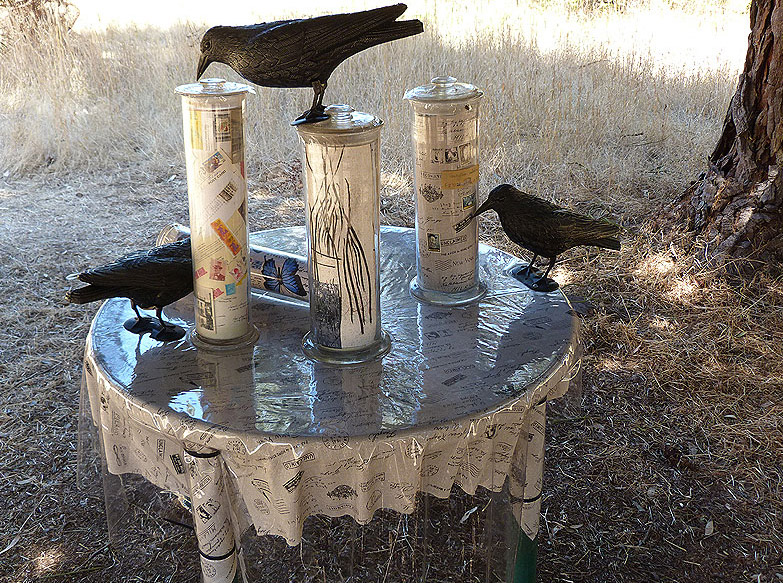
From ‘shady pool’ I climb the gentle slope above Heysen’s studio to explore a stand of Eucalypts. I can hear the warbling of magpies and screech of lorikeets. Half way up the incline I notice another piece of art work. Several crows are balanced on a table peering into glass specimen jars full of postcards. Nearby a pair of genuine, organic crows are perched in some bushes searching for food with their piercing blue eyes. In reality, the birds we commonly refer to as crows are more likely to be Australia ravens as the true crows are usually found further north in drier conditions.

3 crows - Copy

Crow art

IMG_3620 red

Crow/Raven….. click to enlarge


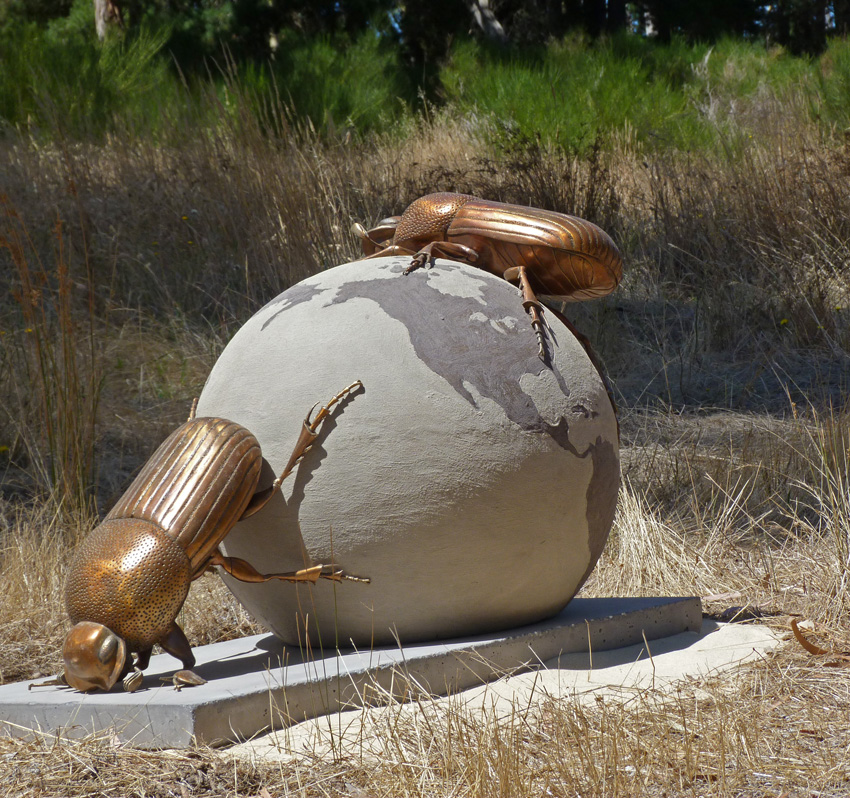
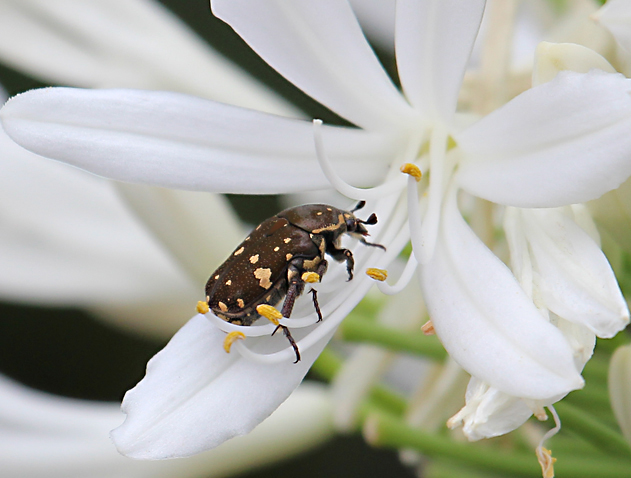
A little further along the trail I discover yet another art work hidden in the scrub: a pair of dung beetles rolling a globe. This piece seems to reflect on the state of the planet as seen by one artist. From this site I take a short walk to the house where Hans Heysen and later his daughter Nora lived and worked. The well kept garden features an eclectic mix of native and exotic flowering plants, the perfect place to find some beetles though not the dung variety which are more typical of Africa not Australia. After a little searching amongst the agapanthus, roses and native species I discover a brown flower beetle crawling across an agapanthus blossom.

P1080531 copy

Dung beetles….. click to enlarge

2 brown flower beetle on white agapanthus (2) red

Brown flower beetle….. click to enlarge


My walk has been both entertaining and informative with each animal species mirrored by a piece of art: a lovely way to spend an autumn afternoon.


Until our next adventure

Baz

Quinn and Pop do Cleland

21 Apr

Dear Reader:

Though I have photographed wildlife for over 30 years, I still get excited when I see an unusual bug in the garden or hear the screech of sulphur crested cockatoos on my morning bike ride. However, every photographer needs an extra bit of inspiration; that fresh way to see the world. Mine came from taking two year old Quinn to explore Cleland Wildlife Park in the Adelaide Hills. Seeing a child experience the beauty and mystery of nature is something that no amount of field experiences can ever compete with. With a little hand tucked in mine I was guided along the bushland paths to the sound of……

“Pop come see.”

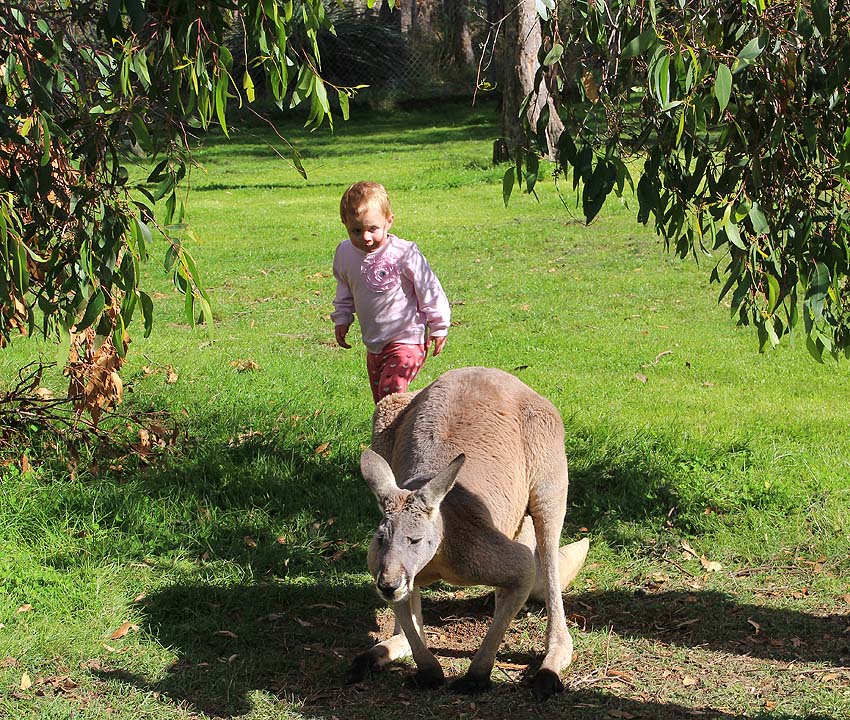
“Look croos!!”…. (kangaroos, I presumed correctly)


IMG_3608

My first wildlife park

Quinn loves animals, she has a dog, a cat and often toddles down the road to the local wetlands where every bird species is still classified as a duck. At Cleland she was overwhelmed by the variety of new animals and ran between marsupials and reptiles then on to the birds (ducks) with ever increasing gusto. The wildlife was not quite as enthusiastic about her energy levels and tended to disappear with a hop, scuttle or ‘flap of wing’ as the two year old whirlwind bore down on them. The combined wisdom of Mum and Nan tried to instil a sense of calm and caution when dealing with wildlife but the concept did not seem to gel with her two year old philosophy.

IMG_3648

Quinn has a puppy too…not quite a dingo

IMG_3684

Stop croo stop


Unsurprisingly, the koalas were a particular hit. She probably associated their solid, furry bodies and bear-like appearance with the plethora of animated cartoon characters featured in various children’s programs. Next time we will get the obligatory ‘kid with koala’ image but on this public holiday excursion the overseas visitor line stretched away into the horizon. A few minutes watching the iconic marsupials climbing, snoozing and munching gum leaves, had to suffice; at least she was still for a while.

IMG_3654

An enclosure of cute

IMG_3651

Koala are not bears…a lesson for later


After an hour and half of unbridled, two year old enthusiasm we decided/hoped that she had used up her energy quota. Not so: near the gate there is an indoor complex that features species that require individual conditions such as specialised lighting, temperature control and enclosures that safeguard the public from venomous bites. In she went and spent the next 20 minutes staring at these more unusual animals which included: taipans, death adders and a variety of lizards. Eyes wide and somewhat subdued she grabbed my hand and repeated her, Pop come see’ request as we looked intently at each display.

mulga snake

Mulga snake or king brown… she really liked this one


Even as we left the park she was pointing and staring into the trees that surround Cleland in the apparent hope of seeing more wildlife. To be honest I was amazed and secretly wondering at what age a child can be trusted with her first digital camera.

IMG_3695

Before I become a naturalist I’ll try art


It was an exhilarating day in a lovely bushland setting; without doubt, a place to take the family and experience the wildlife that makes SA such an extraordinary place to live or visit.

Cheers

Baz


Footnote

She slept all the way home

Mum hit the sack at 8.00 pm

Nan rubbed in some back ointment

I pored over the camera and laptop to record a Quinn-based blog

A Hill’s Face Hike

16 Feb

Dear Reader:

The koala is well camouflaged and firmly wedged between two branches in a stunted eucalyptus tree which is growing on the edge of a steep slope. Getting a decent shot involves scrabbling through some spiky acacia bushes and perching myself precariously on the edge of a rocky outcrop. But a quick glance at the playback screen suggests that the effort has been worthwhile and a few more scratches on my legs are ‘par for the course’ in this terrain.

3 Koala near the trail head

Koala near the trail head


I am half way up Anstey Hill on the north eastern edge of the Adelaide Hills. This ‘hills face’ recreation park is part of the in the Greater Mount lofty Parklands and one of several reserves that permit hiking, walking dogs on leads while banning camping, mountain bikes and the lighting of any fires. Anstey Hill is only 8 Kms from the CBD, easily accessed from several major roads and close to quite a few reputable hotels and restaurants. In short, an ideal destination for a morning or afternoon walk followed by a meal and a glass of wine.

1 Local pub and restaurant

Local pub and restaurant


Satisfied with koala image I start take a winding trail towards the top of the hill emerging on its northern flank where the view across the cliff face towards the city and coast is quite spectacular. A winding trail skirts the ridge and there are still some late blooming wattles and melaleucas clinging to the rocky outcrops and a small group of new holland honeyeaters are feeding on the blossoms and hawking for insects.

2 View from the ridge

View from the ridge


Further along the trail a small stand of eucalypts pushes up through the lower layer of scrub and many of them are losing their outer layers of bark….an ideal opportunity to look for huntsman spiders which often search for prey in this micro environment. And luck is on my side after a little foraging a piece of bark with a sizeable huntsman comes away from the tree. These large spiders often come into suburban homes where they stay high on the walls and eat a whole collection of unwanted pests from mosquitoes and flies to earwigs and roaches.

4 Huntsman spider

Huntsman spider


I turn south at the top of the hill and head through a little section of bush that has recently been burnt. To my surprise a large, dark robber fly is perched on one of the blackened branches magnificently camouflaged as it waits for smaller insects to ambush.

5 Blackbugs on burnt trees

Robber fly on burnt trees


My final wildlife encounter is with a pied currawong. Related to crows and magpies these large omnivorous birds are not common on the Adelaide plains and prefer the higher elevations of the Mt Lofty Ranges. I have never seen them around this area before and have few photographs consequently; this capturing this image was quite a treat.

6 Pied Currawong

Pied Currawong


Now it’s lunch at the pub


Cheers

Baz


JET

Kids, Kookaburras and Creeks

4 Oct

Dear Readers

It would be lovely to write for a living. To earn my dollars wandering South Australia’s diverse wilderness areas taking photos and composing articles to share with you. Dream over….reality check! Like most of the world I need a steady job to survive and my profession is teaching. One of the many requirements at my school is to take my year 6 students on camp each year. Fortunately, Adelaide has many wonderful destinations in the adjacent hills and along the coastline that provide a range of outdoor activities. Many of these sites also double as corporate destinations. This year we chose Wirraway a campsite located on the eastern fringe of the Mt Lofty Ranges. It is a beautiful location situated amongst rolling hills with a little creek running through the property. And, to my delight their program included a nature walk along with the adventure activities.

G

Typical hills country


Each morning I woke at six and reluctantly dragged my weary bones out of bed; any teachers reading this will immediately understand that the previous night’s sleep was limited to a few hours. The students were not allowed out of their dorms until 7.00 which gave me an hour to wander around the grounds uninterrupted. Campsites always attract wildlife. However well intentioned the staff may be there are always a few food scraps to be had, nooks and crannies to nest or hide in as well as wood piles and building materials that might be home to both predator and prey. On my first morning a pair of rats scurried under the raised foundations of the caretaker’s home watched with interest by me and anticipation by a kookaburra sitting in a an old gum tree (there’s a song title there).

kooka2 red

Hungry kookaburra


The camp site was also home to a wild rabbit that liked to munch the grass close to one of the girls’ dorms but scurried back into the bushes at the slightest noise. Each time it appeared I tried to signal the students to be quiet and take a look…no such luck. Only a picture snapped in the quiet hours and shown at the dinner table convinced them that I was not making it up.

A

Peter makes a rare appearance


Both male and female superb blue wrens were common though timid and constantly on the move keeping low in the bushes and feeding in the leaf litter. And a resident flock of red browed finches moved between the flowering trees and bushes often coming close when I was working with the students and staying away if I had a camera nearby. Fancy that!!

C

Male superb blue wren

B

Finches all in a line


Our nature walk was quite a revelation. You would not expect city kids to be overly responsive to a lengthy stroll in the bush when the alternative activities included horse riding, archery and rock climbing. Surprisingly, they showed a keen interest in what the guide had to say and even sat quietly by the creek for a few minutes trying to work out how many different frog species could be identified from their distinctive calls. Even the plant life scored a hit, most notably the unusual grass trees that were flowering at the time and an old weathered log with lichen and moss growing in its sinuous furrows.

E

Flowering grass plants

F

Patterns and colours in nature


The three days passed quickly and each group appeared to enjoy their excursions into the bush.  Kids get few opportunities to experience the outdoors in our digital world and watching their faces as they discovered the beauty of wild things was a rare pleasure.


Until my next post

Cheers

Baz