Tag Archives: currawong

The Grampians…Around Halls Gap 1

25 Aug

Halls Gap Grampians

A preliminary note:

When I am not enjoying the natural wonders of South Australia I sometimes cross state borders and enjoy the wildlife of our close neighbours, Victoria and Tasmania. This post is about one of my favourite Victorian destinations.

Dear Reader:

There is an old fencepost on the edge of the creek trail. The weathered wood is in stark contrast to the red and black colours of a Red Jewel Beetle  crawling across it.

Red Jewel Beetle

I am staying at Halls Gap in the heart of the Grampians National Park. Because I am here for a wedding, there is not the usual time available for exploring the natural environment. My observations will only cover those animals which are casually encountered.

Classic Grampians scrub with rocky outcrop in the distance

I take the Mt Victory Road from Halls Gap to meet some friends at Zumsteins. On the way I am surprised by a large Eastern Grey Kangaroo which decides to make its way down a steep bank to cross the road in front of us.

Eastern Grey Kangaroo descending sloping hillside

Further along the road, a small group of Emus are feeding amongst a patch of grass and thistles. These adaptable birds forage for a wide variety of foods including: tubers, grasses, fruits, insects, centipedes and other arthropods.

Emus foraging

We reach the camping ground at the Zumsteins Historic area on the MacKenzie River. Apparently there are Platypuses in the river but my only sighting of a monotreme (egg laying mammal) is a lone Echidna.

Echidna foraging

Grey Currawong

Taking a more circuitous track back to Halls gap we have a few more interesting wildlife encounters along the way.  I photograph a Long-billed Corella perched high in the canopy, numerous Eastern Greys by the roadside and a  Grey Currawong in the trees where we stop for a snack.

Eastern Grey Kangaroos alert to a disturbance
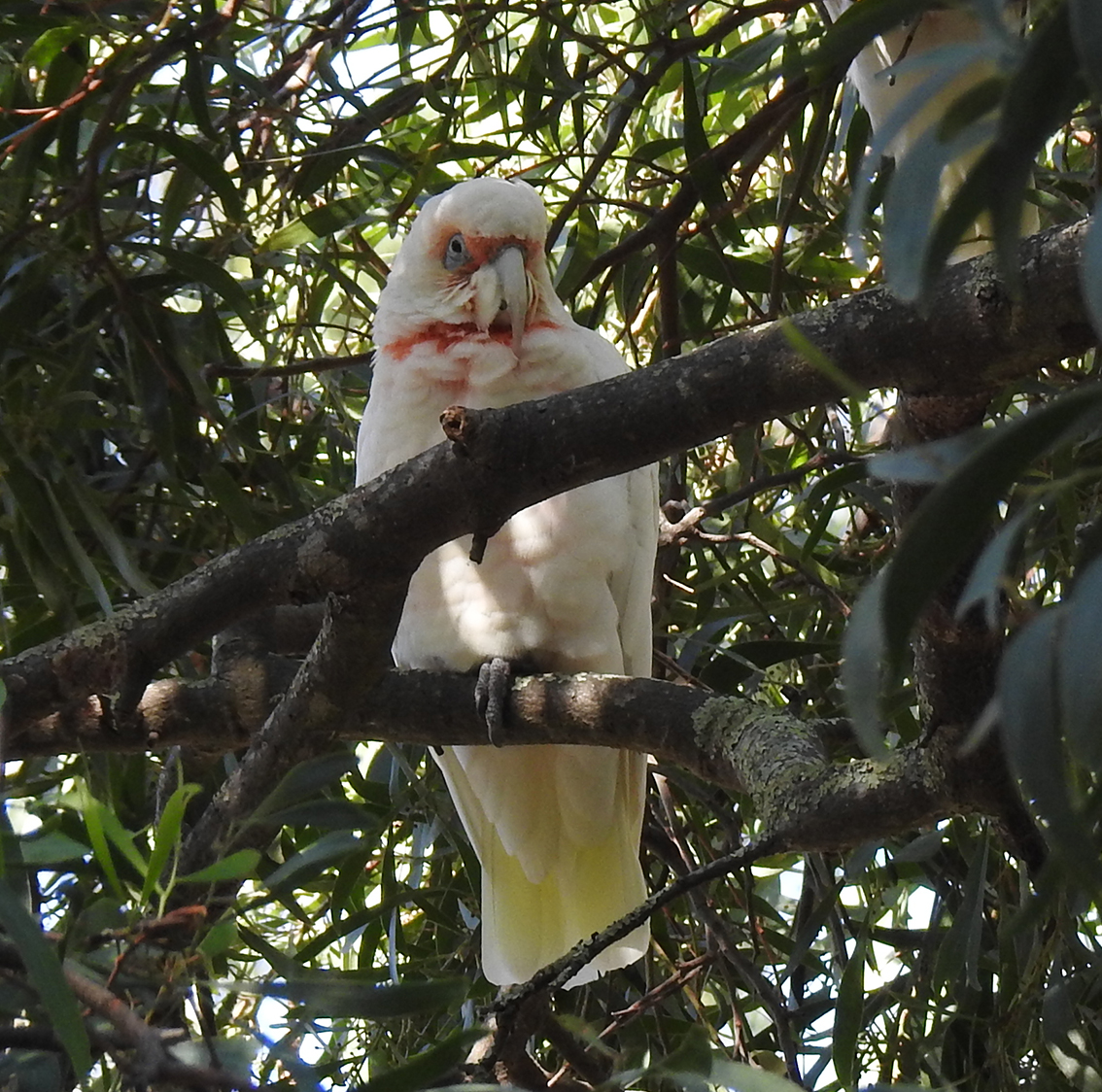
Long-billed Corella

However, the sun is getting low in the sky and we have one more place to visit, an orchard with a lovely view of some rocky outcrops. The site of tomorrow’s wedding.

Sunset on the edge of The Grampians

Cheers

Baz

Additional notes

This is an easy drive which is quite suitable for families and seniors. Dogs are not allowed in the National Park

Please pass on this blog title and or contact information (URL) to any person or organisation with an interest in taking walks and enjoying wildlife in SA. Dogs are not allowed in the National Park.

Click on these links and see more South Australian stories and pictures in my Weekend Notes articles as well as locating similar blogs on Feedspot’s top 20 Australian wildlife blogs

https://www.weekendnotes.com/adelaide/writer/452/

Tea Tree Gully’s Camellia Nursery

5 Jul

Dear Reader:

It is a cool crisp morning, and to be perfectly honest, I am not in the mood for a long drive. Instead, I have decided to visit a local nursery just a few kilometres away, where the North East Road starts its climb into the Adelaide Hills.

1a Newman's nursery

Newman’s nursery front entrance


As I park the car next to the entrance I am immediately struck by the contrast in lighting conditions. The path following the little creek that leads from ‘Newman’s Camellia’ nursery to the ‘Tea Tree Gully Hotel’ is in deep shade whereas the hills on the opposite side of the road are bathed in sunlight. An afternoon walk might have offered better lighting for photography but the wildlife always seems more active in the morning.

1a Start of the walk

The path begins


Climbing out of the car I glance up at the hillside above the little creek and to my surprise and delight I notice the hunched outline of a koala wedged between the branches of a huge gum tree; not what I was expecting this close to a suburban area.

1a koala in tree

Koala in tree


The trail starts just a few metres from the nursery entrance and meanders alongside the small watercourse for a mere 500 metres before broadening to a neatly manicured lawn enclosed by trees and shrubs. A varied collection of plants flank the path; including arum lilies, several lovely camellias, indigenous wattles and melaleucas as well as the ever-present, towering eucalypts.

1a Rogue camelia

A rogue camellia alongside the path


Small birds are continually flitting through the bushes though I am only able to catch fleeting glimpses of them. Some are definitely female blue wrens and I suspect that the tiniest ones are thornbills. Eventually, a small brownish bird settles in a low, flowering shrub some 50 metres away. I fire off a series of shots which, on review, reveal a glorious eastern spinebill.

1a Eastern spinebill  foraging in shrubs

Eastern spinebill foraging in flame heath bush


At the end of the trail half a dozen magpies are foraging for grubs in the well tended lawns. Several enormous gums tower over the grass and a pied currawong is perched on one of the topmost branches with a seed pod hanging from its beak. Another bird joins it, they seem nervous, jumping between branches before flying off, possibly to a nesting site.

1a Currawong with food approaching nest

Currawong approaching nest with food

The walk back is equally eventful with both rosellas and lorikeets feeding on berries in the scrub along the edge of the trail but capturing a sharp image in the shadows and overcast conditions is somewhat challenging.

1a Tapas on the terrace

Tapas


Newman’s nursery has a charming little restaurant with both inside and alfresco dining areas which afford a fine view of the hillside on the other side of the road. While I enjoy the delights of a tapas snack I notice several tiny finches feeding on the liquid amber trees that decorate the front of the nursery. From my outside table the birds are just within camera range and using the long lens I am able to identify them as European goldfinches.


1a European goldfinch in liquid amber tree

European goldfinch in liquid amber tree


Until next time

Baz