Tag Archives: echidna

The Grampians…Around Halls Gap 1

25 Aug

Halls Gap Grampians

A preliminary note:

When I am not enjoying the natural wonders of South Australia I sometimes cross state borders and enjoy the wildlife of our close neighbours, Victoria and Tasmania. This post is about one of my favourite Victorian destinations.

Dear Reader:

There is an old fencepost on the edge of the creek trail. The weathered wood is in stark contrast to the red and black colours of a Red Jewel Beetle  crawling across it.

Red Jewel Beetle

I am staying at Halls Gap in the heart of the Grampians National Park. Because I am here for a wedding, there is not the usual time available for exploring the natural environment. My observations will only cover those animals which are casually encountered.

Classic Grampians scrub with rocky outcrop in the distance

I take the Mt Victory Road from Halls Gap to meet some friends at Zumsteins. On the way I am surprised by a large Eastern Grey Kangaroo which decides to make its way down a steep bank to cross the road in front of us.

Eastern Grey Kangaroo descending sloping hillside

Further along the road, a small group of Emus are feeding amongst a patch of grass and thistles. These adaptable birds forage for a wide variety of foods including: tubers, grasses, fruits, insects, centipedes and other arthropods.

Emus foraging

We reach the camping ground at the Zumsteins Historic area on the MacKenzie River. Apparently there are Platypuses in the river but my only sighting of a monotreme (egg laying mammal) is a lone Echidna.

Echidna foraging

Grey Currawong

Taking a more circuitous track back to Halls gap we have a few more interesting wildlife encounters along the way.  I photograph a Long-billed Corella perched high in the canopy, numerous Eastern Greys by the roadside and a  Grey Currawong in the trees where we stop for a snack.

Eastern Grey Kangaroos alert to a disturbance
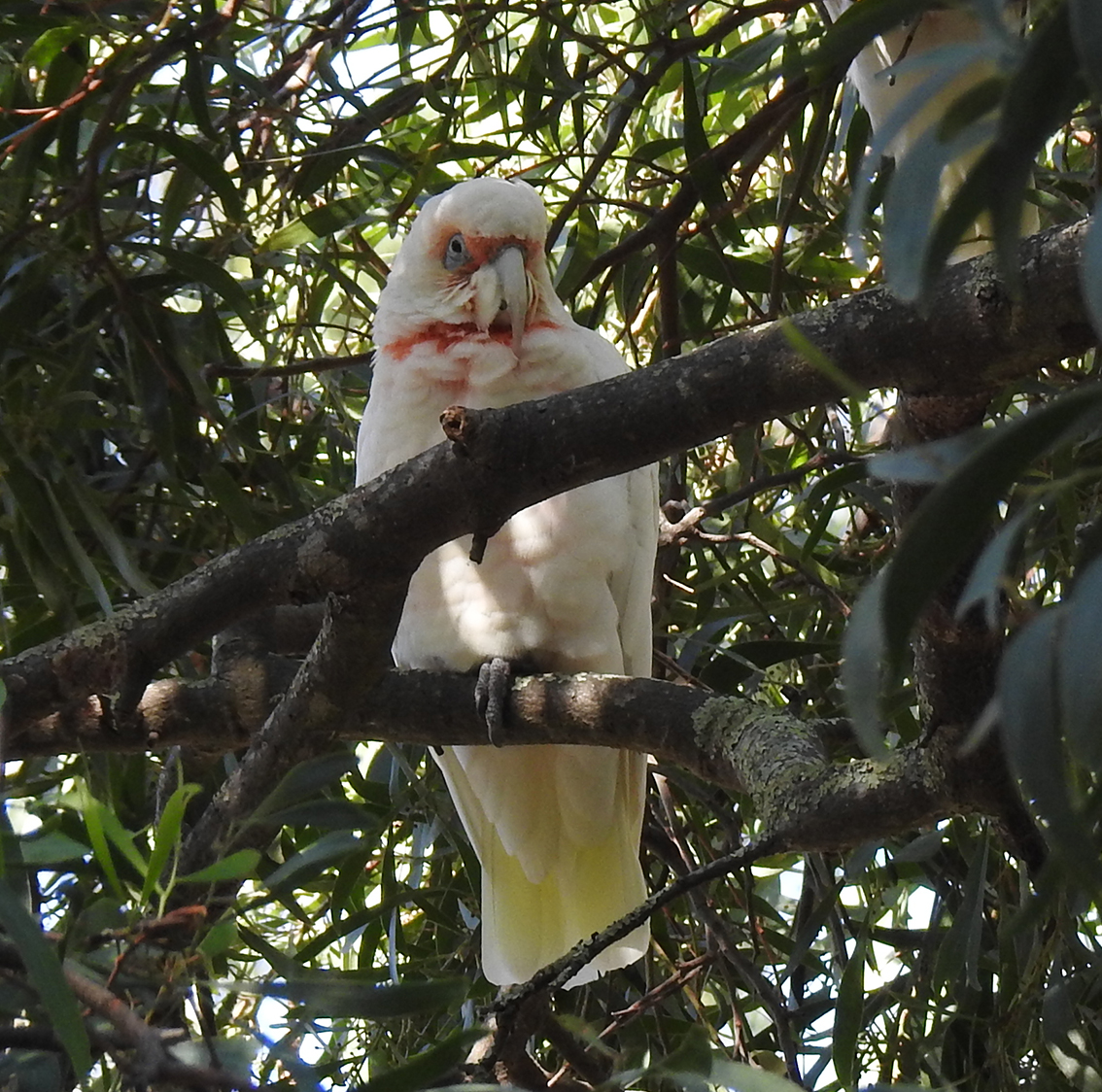
Long-billed Corella

However, the sun is getting low in the sky and we have one more place to visit, an orchard with a lovely view of some rocky outcrops. The site of tomorrow’s wedding.

Sunset on the edge of The Grampians

Cheers

Baz

Additional notes

This is an easy drive which is quite suitable for families and seniors. Dogs are not allowed in the National Park

Please pass on this blog title and or contact information (URL) to any person or organisation with an interest in taking walks and enjoying wildlife in SA. Dogs are not allowed in the National Park.

Click on these links and see more South Australian stories and pictures in my Weekend Notes articles as well as locating similar blogs on Feedspot’s top 20 Australian wildlife blogs

https://www.weekendnotes.com/adelaide/writer/452/

Bethany SA….. history and wildlife

5 Aug

Dear Reader:

Against a clear blue sky, a Nankeen Kestrel hovers above wheat stubble in search of rodents, lizards and other small animals.

Nankeen Kestrel

I am driving into the village of Bethany in the Barossa Valley about 70 kms from Adelaide. Founded in 1842 by German Lutheran settlers it was originally called Bethanian: German for Bethlehem. This charming hamlet has numerous points of historic interest starting with a Lutheran church constructed in 1883 and located on the site of an original mud, thatch church built in 1843.

Bethany, Lutheran Church

Further along the road, there is a local cemetery. I wander around reading the inscriptions which gives some perspective into the lives of our early settlers. Several Crested Pigeons are perched in one of the many trees and bushes that give the cemetery a garden-like quality.

Crested Pigeon

I take a few images of: homes incorporating original stonework, farm machinery, old fencing and other features that characterise this colonial village. In one front garden, a Monarch Butterfly perches on a shrub while Australian Magpies call (referred to as carolling and warbling) from nearby eucalypts.

Monarch butterfly, credit Debbie Simmonds

Near the town’s exit and heading further into the Barossa there is a ford crossing the Tanunda Creek. An unpaved pathway runs along the waterway. Massive Red River Gums tower above the creek and I spot: Galahs, Adelaide Rosellas and a lone Sulphur-crested Cockatoo high in the branches.

Galahs (Rose-breasted Cockatoos

Walking along the trail I meet a young couple exercising their dogs and ask them about the wildlife. They mention that Western Grey Kangaroos are common and the occasional Echidna.

Echidna, photographed in nearby woodland

Several of the biggest eucalypts have quite a lot of bark peeling off their trunks and I lift it carefully searching for: centipedes, roaches, gecko lizards and termites. All of which frequent this micro-habitat. I discover none of these. Instead, a myriad of half-grown Huntsman Spiders scatter in all directions. Instinctively, I jump back and fire off a couple of shots. I am not ­­­arachnophobic, but spiders are far from my favourite form of wildlife.

Juvenile Huntsmen Spiders head for cover

Close up of juvenile Huntsman to show features

After crossing the creek, I walk back towards my car which is parked near the ford. I will return to Bethany in the Spring and take a longer walk along the creek. However, today I’ll finish my day by visiting the nearby Bethany Winery and pick up a bottle or two to remember a good day exploring this iconic South Australian destination.

Bethany Winery

Cheers

Baz

Additional notes

This is an easy walk and drive which is quite suitable for families and seniors with public toilets, shelter, barbecues, parking and other facilities nearby. It is dog friendly.

Please pass on this blog title and or contact information (URL) to any person or organisation with an interest in taking walks and enjoying wildlife in SA.

Click on these links and see more South Australian stories and pictures in my Weekend Notes articles as well as locating similar blogs on Feedspot’s top 20 Australian wildlife blogs

https://www.weekendnotes.com/adelaide/writer/452/

https://blog.feedspot.com/australian_wildlife_blogs

Wiliamstown to Springton a Wildlife Drive

1 Jan

Dear Reader:

The paddock beyond the fence-line is characterised by open grassland still bearing a tinge of green from recent rains. There are gum trees punctuating the open expanse of pasture and a large mob of kangaroos are spread across this classic Australian landscape. Some are resting while others graze; a few have joeys in pouches or at heel.


Grazing roos


I am driving between Williamstown and Springton and despite most of the land being fenced off  each time I stop by the roadside there are many faunal and floral delights to discover. In addition, lunch at the end of the drive in the Springton Pub or morning tea at the start of my drive at the Williamstown Bakery, are wonderful refueling stopovers.


Echidna on the move


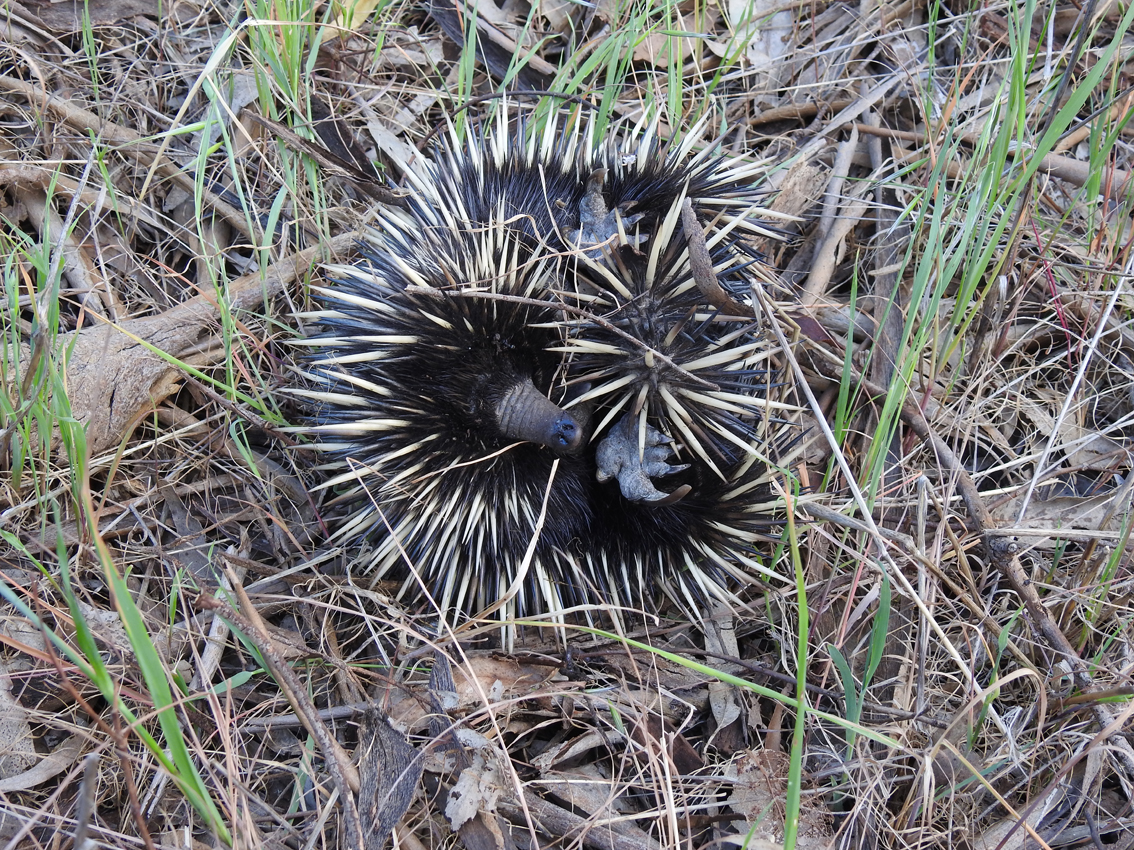
Echidna rolled and momentarily turned before righting itself

As I drive on I can see a variety of parrots in the roadside trees; rosellas, lorikeets and galahs are the dominant species. But in one very large eucalypt a group of Yellow Tailed Black Cockatoos have settled. Unfortunately they take to the air as I leave the vehicle. However, as luck would have it, I hear some rustling in the grass alongside the road and an Echidna appears trundling along in its everlasting search for termites. The fascinating animal rolls itself up and burrows down as I kneel to take a shot using the macro capability of my Nikon P900 to zoom in on its features.


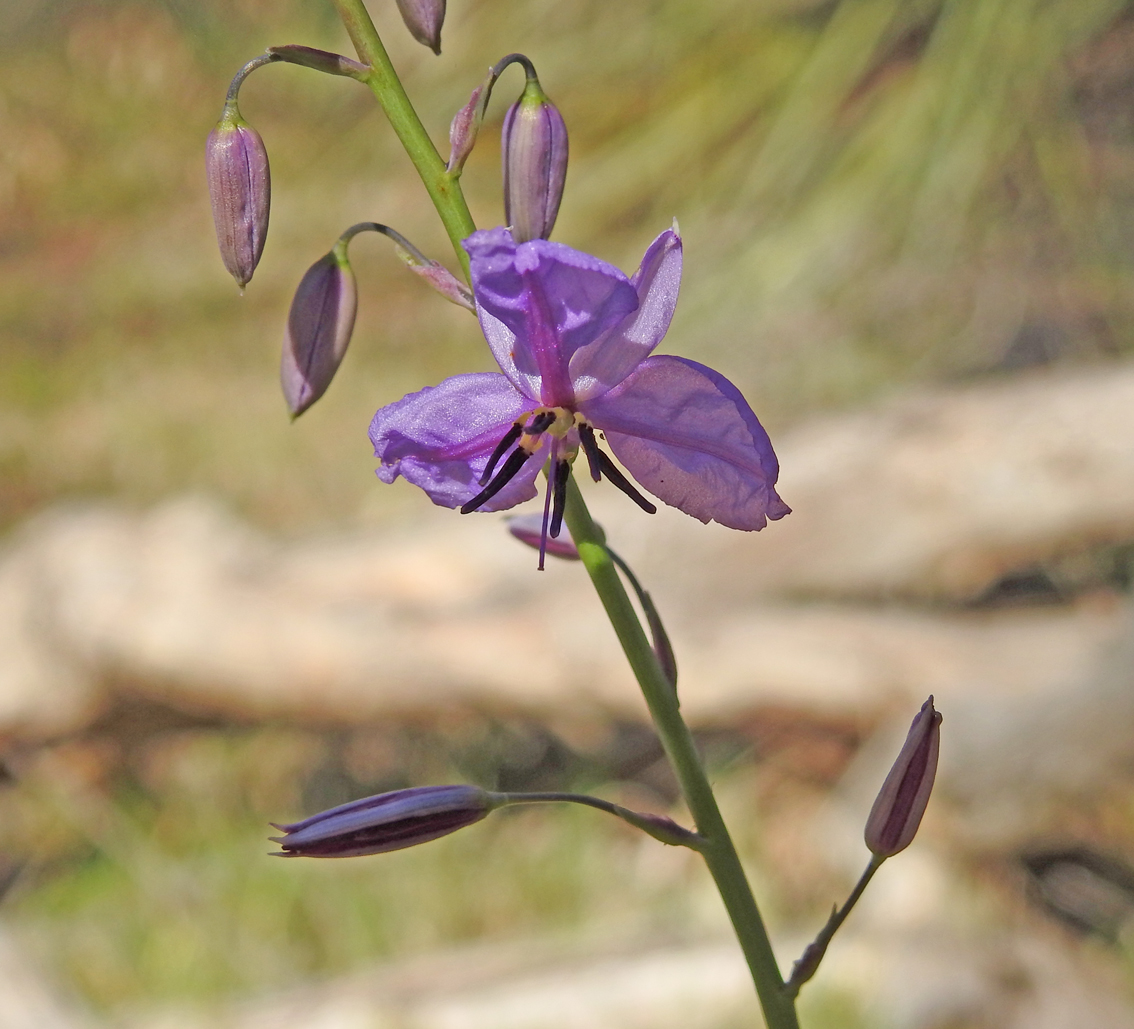
Flax Lily species


After making several more quick stops to photograph birds in the scrub, pasture and trees along the road I find a lay-by with quite a lot of vegetation. Amongst the bushes and grass I notice a small collection of lovely Purple Flax plants, just one of the many flowering natives that can be seen through this area.


Painted Lady


Cuckoo Shrike species feeding


My final stop before the return drive back through Gawler is in a patch of scrub near a farm gate where there is quite a lot of undergrowth. The area is dominated by a single massive gum that appears to attract numerous birds. Scouring the leaf litter and broken branches reveals a lovely Painted Lady Butterfly while a Cuckoo Shrike sits in a barren branch above. A wonderful way to finish my little expedition.

Cheers 

Baz

Additional notes

This is an easy drive which is quite suitable for families and seniors with facilities at both towns.  

 See more South Australian stories and pictures in Weekend Notes

https://www.weekendnotes.com/profile/651267/

Photo Reflections 2

16 Nov

Dear Reader:

South Australia is an extraordinary place to live and work especially if you are a wildlife writer and photographer. Our fauna is both diverse and fascinating and en route to any destination there are always interesting country towns, world class wineries or vast rural properties to explore. This blog is a reflection of those attributes and is a collation of images and notes that remind me of the reasons I live and work here.

A Camping near Arkaroola

Camping near Arkaroola


Arkaroola is a world heritage wilderness area approximately 700 kilometres north of Adelaide. Its geology, Aboriginal heritage and wildlife make it a premier destination for off roaders, photographers and those who simply like a taste of real outback life.

B Nankeen night heron

Nankeen night heron

The wetlands around the Adelaide region have a core of commonly sighted species that include a variety of waterfowl, pelicans, ibises, swamp hens and swallows; to mention but a few. The nankeen night heron is one of the less frequently encountered birds which made photographing this one, as it hid in a willow overhanging a lake near my home, a special moment.

C Vines near McClaren Vale

Vines near McLaren Vale


The coast road that runs south from Adelaide along the Fleurieu Peninsula is a drive I have made countless times on the way to a dive site. On this occasion I was drawn to the dormant vines that stood in stark contrast to the overcast sky and yellow oxalis flowers.

D Biscuit star

Biscuit star


Sometimes the simplest creatures, the ones encountered countless times, catch your attention. Perhaps it is the light or just the way the animal is positioned. This common biscuit star caught my eye as it crept along the edge of a rock face covered in algae and a melange of encrusting organisms.

E Hoverfly on blossoms

Hoverfly on blossoms


Hoverflies are one of the most common invertebrates in our gardens. These agile little insects hover, flit and settle on a variety of flowering plants. They seem to be in constant motion. On an afternoon stroll through the Botanic Gardens an accommodating hoverfly settled on a nearby blossom giving me just a split second to get down low and capture this image which emphasises its startling compound eyes.

F Echidna foraging

Echidna foraging


Echidnas roam the length and breadth of Australia but they are not commonly seen. This one was trundling through the bush in the Adelaide Hills close to a termite mound that it had been ripping apart. It was the sound of the little spiky battle tank that gave away its location. Stealth does not appear to be part of their defensive repertoire. You don’t need to be furtive when you are armed with a plethora of sharp spines.


I hope you enjoyed this little reflection

Baz