Tag Archives: rainbow lorikeet

Crossing the Creek

30 Nov

Dear Reader:

In my other life I am a teacher and my school has the unique advantage of having a creek running through the centre of the campus neatly dividing us into two quite distinct entities. I say advantage but to those less enamoured by the lure of nature it is seen, more as a barrier; to each their own. Every day I cross the creek on at least a half dozen occasions and every day I see something interesting that I point out to my students in the hope that it might promote a little engagement with the non-digital world. Duelling magpies, mating dragonflies and the occasional brown snake have all been prime time features.

Baz teaching creek studies on the bridge

Baz teaching creek studies on the bridge (click all images on page to enlarge)


Education aside, the creek is a wonderful resource for the people who live in the area and walkers, joggers and cyclists alike use the pathways that run along the banks. Currently, the creek is starting to dry out as spring fades and summer breathes its hot northerly winds across the city. But there is still a diverse mixture of wildlife taking advantage of the receding water. Both black and maned ducks have raised their ducklings in the small pools near the school bridge and chestnut teal with their striking markings are not uncommon.

Black ducks and chestnut teal

Black ducks and chestnut teal


My creek runs through the suburb of Mawson Lakes which has been fashioned around a series of artificial lakes that in themselves are home to various water birds, turtles and huge carp. The central shopping area is a good place to start a walk as it has a nice little cafe overlooking the main stretch of water and the coffee is good. Mawson Lakes is a twenty minute train or bus ride from the city and the train station sits on the northern edge of quite a sizeable expanse of swampy wetland.

Mating dragonflies

Mating dragonflies


The local council have planted bushes and trees along the length of the creek which attract a variety of birds. Rainbow lorikeets seem to be around the area throughout the year with the greatest numbers occurring when the eucalyptus trees are flowering. They provide these raucous little parrots with the nectar, seeds and blossoms that are the bulk of their diet.

Rainbow lorikeet feeding on eucalyptus blossoms

Rainbow lorikeet feeding on eucalyptus blossoms


During my most recent foray across the creek it was large water birds that dominated the reedy watercourse. Ibis and herons are quite common but one of the children rekindled my faith in the observation abilities of twelve year olds when she noticed that one of the ibises had a different shaped beak which it was swinging through the water rather than probing. It turned out to be our first spoonbill for the year.

Spoonbill feeding

Spoonbill feeding


Until our next chat

Baz

I Wonder What the Neighbours are Doing?

11 Sep

Dear Reader:

It is a cool, early spring afternoon. I can hear annoyingly cheerful birds singing in the white cedars that line my street but I am bored stupid. Home from work with a cold but certainly not sick enough to stay in bed. What to do? Going for a walk along the beach or up in the hills would be foolish and daytime television is just one step above poking my eyes with a sharp stick. Decision made! I shall stroll up to the main road, pick up a magazine and have a cup of coffee with an inordinately unhealthy pastry at one the cosy little cafés that are dotted along Prospect Road.

IMG_4175

A mudlark finds grubs in the gutter (click all images to enlarge)


I am halfway through the door when I stop and think that it might be worth taking the camera along, though the chance of seeing something unexpected on a quiet suburban street at midday; is not very likely. It turns out that I am quite mistaken and my two hundred metre walk to the main drag is filled with interesting moments.

IMG_4174

Rainbow lorikeet feeding on a late flowering gum


First encounter; a pair of rainbow lorikeets are alternately feeding on a late flowering gum and taking turns to performs some trade-like renovations on a hollow branch in a nearby cedar. One of the parrots uses its powerful, curved beak to scour the edge of the entrance while the other pops in out and removing old bits of nest lining. They seem quite oblivious to my presence and allow me to get quite close.

IMG_4185

Rainbow lorikeets house hunting


I leave the rainbows to their reno-project and move further up the street. A Murray magpie is sorting its way through the leaf litter and other detritus deposited in the gutters by recent rains. Every so often it stops, cocks its head to one side and gulps down a worm or bug. Ironically, there is a classic white backed magpie sitting on the power line above watching its little namesake. Despite their titles, the two species are unrelated and it is only their colouring that encouraged early settlers to name the birds after the black and white European magpies. Although it is a large imposing bird this particular magpie has a serious handicap which is revealed when I take a look at its magnified image on the viewfinder. The powerful beak has been badly damaged making both feeding and defence a ‘tough ask’.

A busted beak makes life on the streets tough

A busted beak makes life on the streets tough


Even the cafe has its wildlife component as a squadron of New Holland honeyeaters perched in a courtyard tree argue over territory with the ever present miner birds and several sparrows and pigeons patrol beneath the tables in search of crumbs. But the standouts are still the rainbows and their nesting antics, which simply confirmed an unwritten rule that every wildlife photographer knows; take your camera, something will almost always surprise you.

IMG_1446

Juvenile miner bird watching out for new Holland honeyeaters


Until our next chat

Baz
A Walk to the Falls

12 Jul

Dear Reader

Last Saturday was a classic Adelaide winter’s day. It had rained the night before and a fine patina of dew decorated the shrubs in my garden. The sky was clear and despite a chill in the morning air it promised to be sunny and dry; perfect conditions for a walk in the park. Not any park though. My park of choice was a little conservation reserve nestled in the foothills about 20 minutes from the city centre. Like Waterfall Gully,  Morialta Conservation Park is graced by a series of waterfalls and steep walking trails that cut through a variety of classic bush habitats.

AB Typical sandstone and eucalypt bushland within the park

Typical sandstone and eucalypt bushland within the park

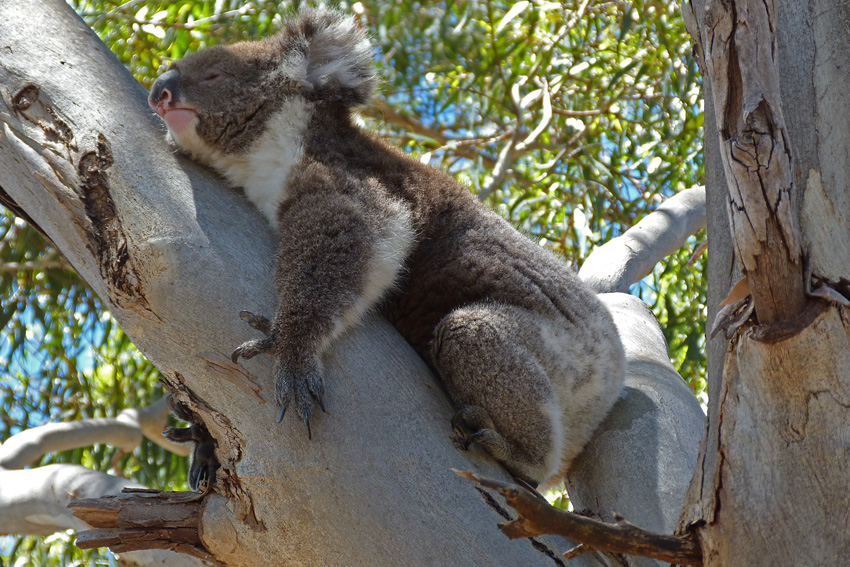
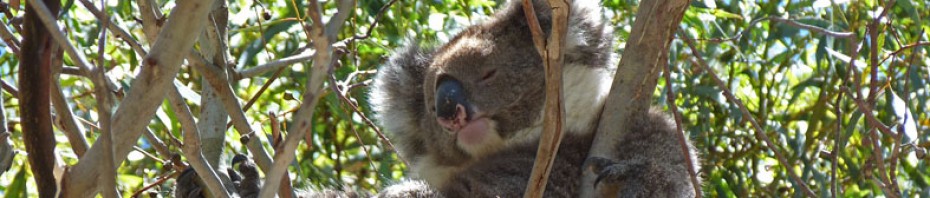
 The drive took me a little longer than expected as I was waylaid by the smell of freshly cooked pastries emanating from a little bakery. My rucksack now stocked with enough calories to sustain my upcoming physical endeavours and probably those of the next week, I pulled into the little car park alongside the creek, hung a camera from my shoulder and set off up the southernmost trail. The sun was still low in the sky and only the southern face of the steep-sided valley benefited from it.  I had walked just a few metres and was emerging from the shade when I noticed some walkers standing below a tall eucalyptus tree pointing excitedly at one of the higher branches. I followed their obvious line of sight and there, nestled into the fork between trunk and branch was a fairly large koala doing what koalas do best ….stretching out and resting.

AC Koala in tree near the trailhead

Koala in tree near the trailhead

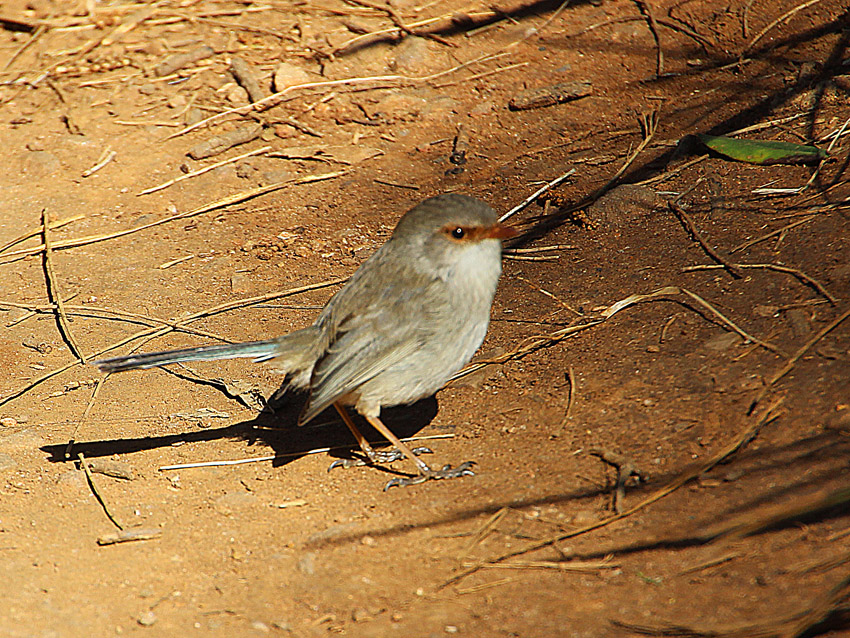
The koala was an unexpected and encouraging start to the day and after spending few minutes watching it I started up the trail with a fair degree of optimism. Winter is never the best time for wildlife. Plants have fewer flowers and fruits and the insects that are attracted to them are in short supply. Of course there is always an up-side when it comes to nature and the damp ground makes it easier for some bird species to fossick for grubs and worms. A pair of blue wrens seemed to be making the best of these conditions, madly hopping from one tree branch to the next then down onto the ground in a never ending search for food. Their constant motion and the morning light gave me only a few half-chances to capture some images and no hope of freezing their motion completely. I did manage a couple of shots that showed some of the obvious differences between the male and female of this species.

AI Male blue wren

Male blue wren

AH Female blue wren

Female blue wren

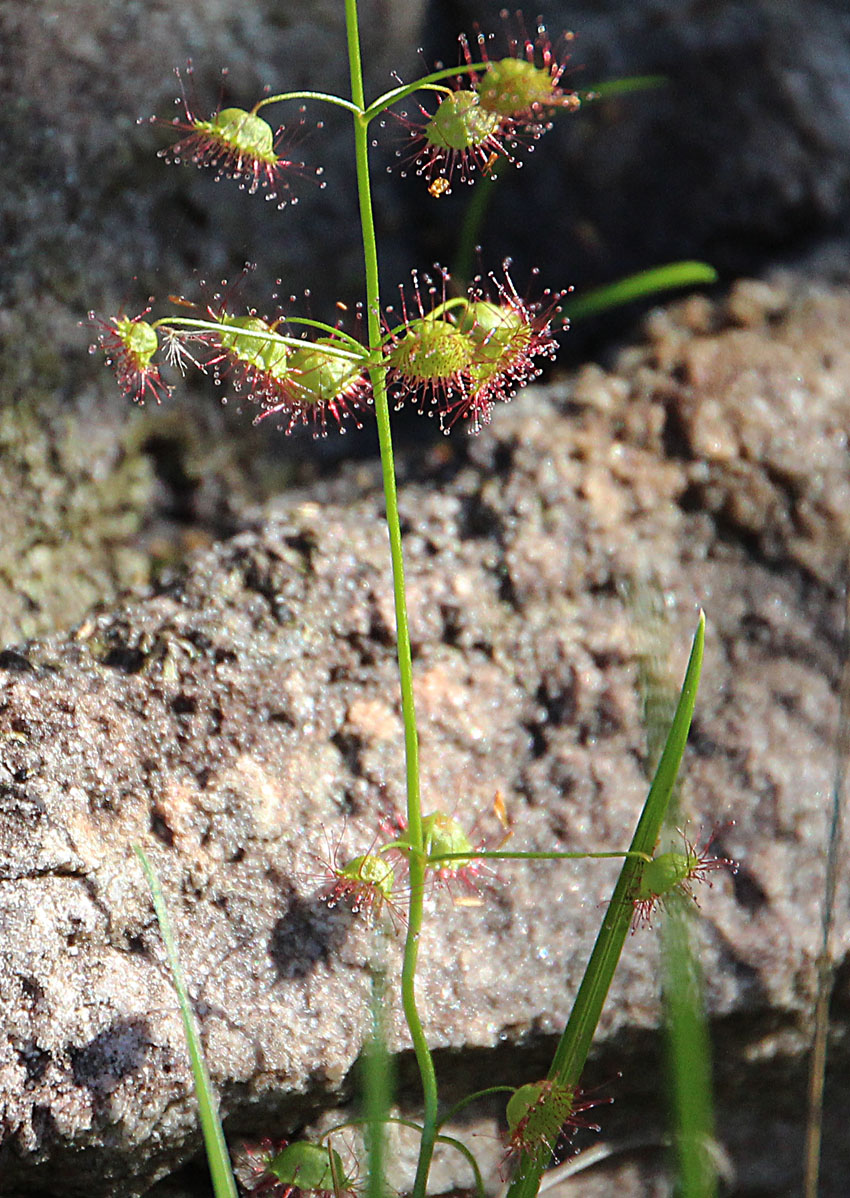
A little further up the track I stopped and sat on a large boulder and scanned the undergrowth for insects or lizards. There was nothing to be seen or heard but I did notice some honeydew plants growing amongst the grasses near a rocky outcrop. These delicate little plants have tiny inverted cups radiating from their stems. The cups are fringed by small filaments and have sticky, viscous fluid in the centre. Unwary insects are trapped in the sweet heart of the cups and the filaments close on them to seal their fate. The unfortunate bug is then digested by its ‘vegetable’ captor providing essential nutrients that other plants might get from the soil.

AG Honeydew plant

Honeydew plant


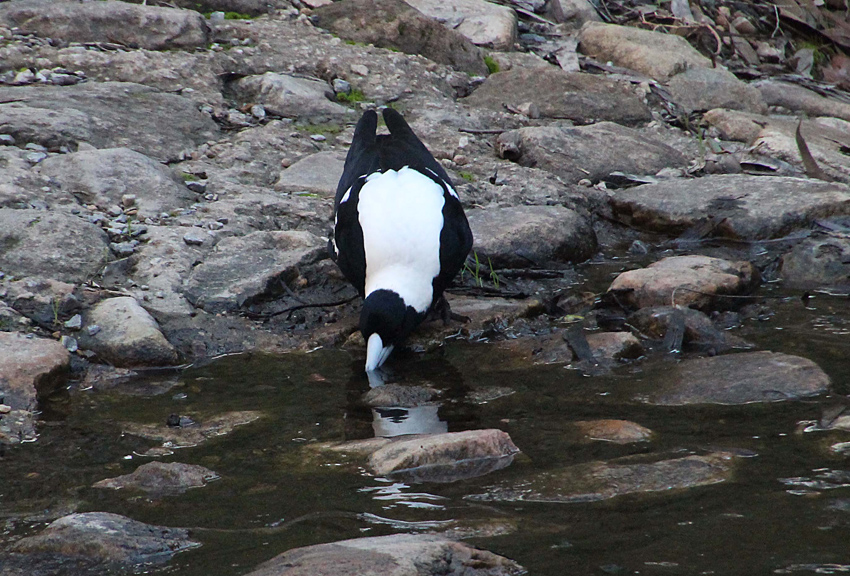
Colourful wrens, cute koalas and carnivorous plants had provided quite a range of wildlife in the first kilometre or so of my walk. As expected, the wildlife had not been prolific but there always seemed to be something around the next bend if I took the time to pause and use all of my senses. The next few kilometres were enjoyable but largely uneventful. A few honeyeaters flitted between late flowering shrubs, a magpie nervously snatched a drink from the creek while a squadron of miner birds squabbled in a stand of acacia bushes. It was not until I was almost back to the car park and walking below some tall, pale eucalyptus trees that bordered the creek that my next significant encounter occurred.

AD Magpie drinking from the creek below the falls

Magpie drinking from the creek below the falls

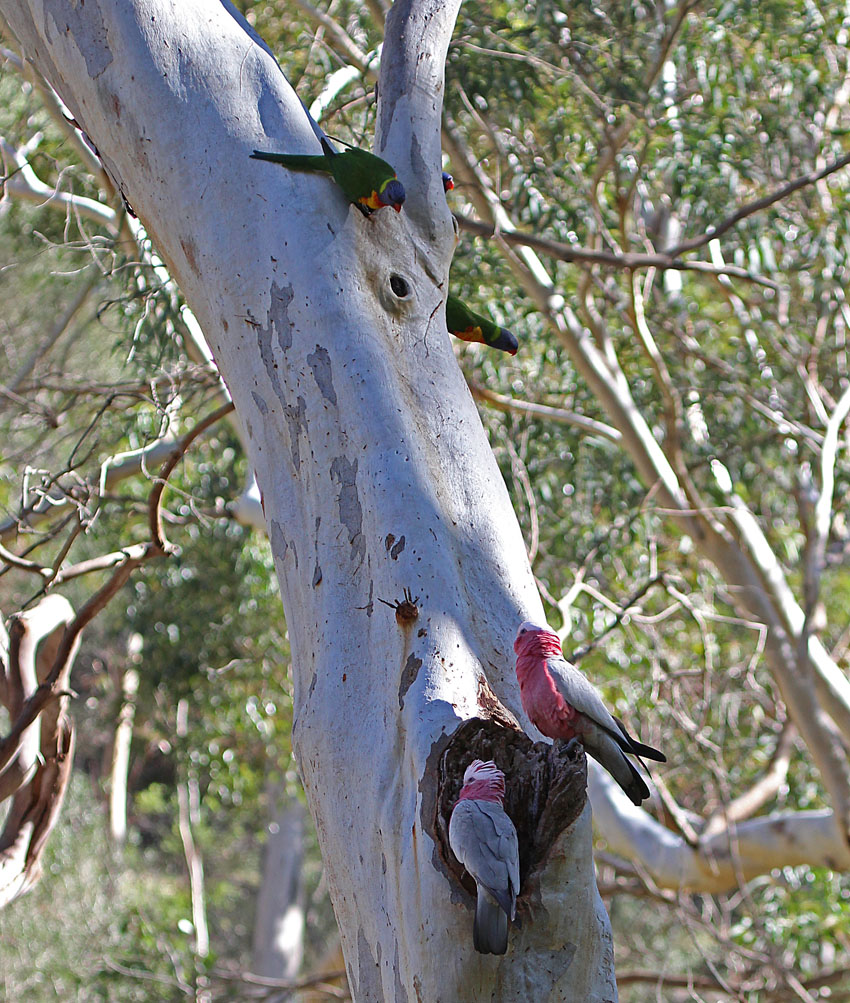
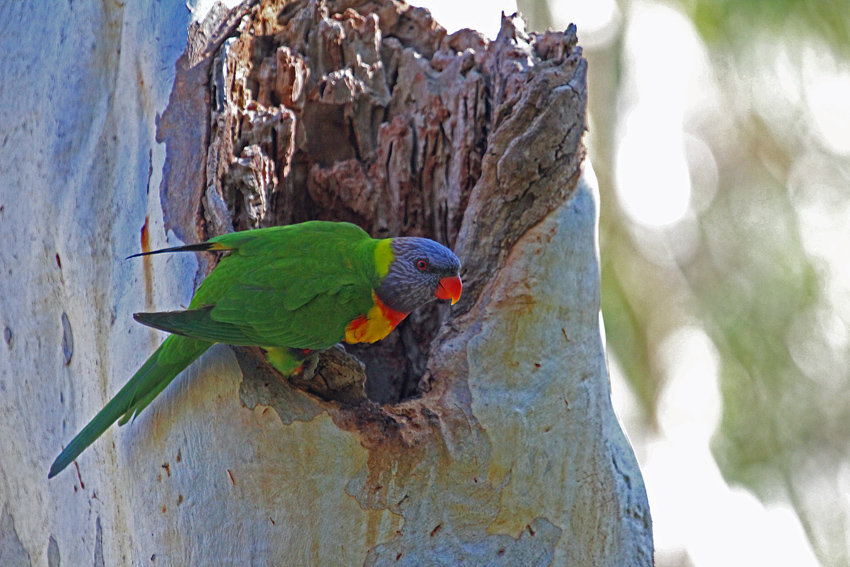
A small group of rainbow lorikeets had gathered on the branches of a massive gum tree about 10 metres off the ground. They were screeching loudly and seemed quite agitated. I moved away so as not to scare them and sat quietly in the cover of some thick bushes watching closely through my long lens. The source of their consternation soon became obvious; a pair of galahs had commandeered a nesting hole in the trunk of the tree. Over the next half an hour I witnessed a heated real estate battle develop as a continual rotation of chattering rainbows tried to dislodge their larger rivals. Eventually the galahs moved off and one of the rainbow lorikeets immediately flew down and started to peck around the perimeter of the nest hole.

A A pair of rainbows watching galahs at nest site

A pair of rainbows watching galahs at nest site

AF Inspecting the new proerty

Inspecting the new property

I finished my walk sitting on the edge of the creek with a cappuccino from the coffee van that plies its trade on the weekend and a pastry from my stash. Not a bad way to spend a sunny winter’s day for any wildlife enthusiast.


Thanks for taking the time to read this post.


Cheers

Baz  

Solandra Wetland’s Musk Lorikeets

4 Jan

Dear Reader

Last week, on a warm summer afternoon, I decided to walk down to the pond at the bottom of the street to photograph a pair of nesting Australian grebes. The pond is part of a chain of wetlands that feeds off the nearby creek and filters stormwater for use on local parks and gardens around Tea Tree Gully. It provides a welcome oasis for many species during the dry summer months and supports a small semi-permanent population of water birds.

Local pond

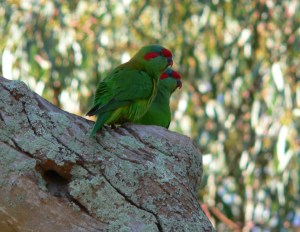
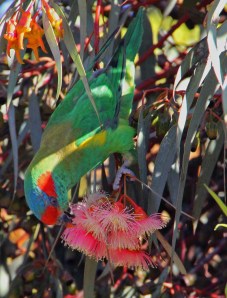
On the edge of the pond there are a few medium sized eucalyptus trees that flower this time of year. They have broad canopies adorned with either cream or coral blossoms and are a favourite destination of the local rainbow lorikeet tribe. As I passed the trees I could hear the raucous screech of feeding birds but the tone seemed a little different to the cacophony of sound that frequently greets me.  A quick glance confirmed that most of these parrots were musk lorikeets with just a smattering of rainbows amongst them.

Rainbow Lorikeet amongst white gum blossoms

Musk lorikeeets ( Glossopsitta concinna) are medium sized lorikeets between 20-30cms from head to tail. They use their brush tipped tongues to feed on pollen and nectar but will also eat some seeds, fruits and insects. They often travel in flocks and are usually found in dry woodlands where they nest in hollow branches. They are slightly smaller than rainbows and less common in this area.

Musk Lorikeet feeding on coral gum blossoms

I decided that the grebes could wait. And, while I have quite a good collection of rainbow pictures I rarely see more than a few Muskies and the chance to photograph them while feeding does not come along too often. They were endearing little animals to watch as they performed an extraordinary range of acrobatic movements. Sometimes they hung upside down to get their beaks into a bunch of blossoms; at other times they used it as a prehensile tool to climb along spindly branches. Despite their preoccupation with feeding they were still a little nervous and as I moved cautiously around the trees they scattered into the denser parts of the foliage making photography somewhat difficult.

Pair of Musk Lorikeets

I tried sitting quietly in some of the surrounding bushes closer to the pond and using the telephoto on full zoom. An equally unsuccessful manoeuvre, as the birds seemed to rarely feed on the outer blossoms as doing so would probably increase their exposure to local predators like harriers and falcons. Finally I adopted a more professional and scientific approach to the problem; walk slowly, keep shooting and hope for the best.

Musk Lorikeet pair bonding near nest hole

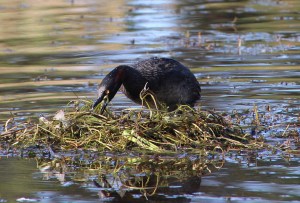
Dozens of frames later, with the light diminishing and more than a few bird droppings adorning my jacket, I left my flock of musk lorikeets to their meal and walked down to the pond for a quick look at the pair of grebes. One was repairing the nest and the other half hidden in the reeds at the edge. Australian Grebe building nest

Another post for another day

Cheers

Baz

Go back

Your message has been sent

Warning
Warning
Warning
Warning

Warning.