Tag Archives: South Australia

Jenkins Scrub

21 Mar

Dear Reader:

There are tiny birds flitting through the canopy and squabbling in the bushes either side of the walking trail that snakes its way through the scrub. Occasionally they settle for just a second or two and feed on Autumn’s few remaining blossoms or probe for insects beneath the bark. The birds move quickly, giving me just a split second to focus and fire; which is my excuse for some of these images not being quite as sharp as I would like. However, they do give an accurate depiction of what searching for wildlife images in dense scrub, is really like.

IMG_6372

Grey fantail


treecreeper

Treecreeper species


After walking across a small footbridge, I find a clearing and sit on a fallen log and wait in the shadows for ten minutes. Birds are still twittering deep in the bushes, heard but not seen; but most have moved on.

IMG_0717

Crescent honeyeater


Jenkins scrub is a remnant area of the original bushland that once covered the Adelaide hills. The light sandy soil supports a wide range of shrubs, grasses and delicate flowers including native orchids. Tall eucalyptus trees complete the ecosystem which is traversed by a series of narrow trails.

IMG_0723

Classic hills scrub


The scrub lies just off the Springton road, a pleasant 50k hills drive from the city. A lunch stop at the Bakehouse Tavern in Williamstown, just 10 Kms from the park’s entrance, is a good way to break up the drive. Or, you can buy a pies and cake at the bakery to snack by the old cemetery on the edge of the adjoining pine forest; somewhere to explore the personal histories the people who settled this region. 

IMG_0694

Pub at Williamstown


IMG_0709

Graveyard from the old church


Hefting my long lens from the pack I continue my walk. The understory is littered with leaves and fallen branches which provide a home for a plethora of insect and retile species. There are quite a few butterflies in the area and every so often one settles in the leaf litter. They seem to spread their wings a couple of times then rest them upright exposing only the underneath which blend perfectly with the bleached leaves and twigs.

IMG_6376

Meadow argus butterfly…..brilliant camouflage


Another hour’s walking produces a few more images, shot at long range, and a memorable encounter with a pair of kangaroos which are feeding deep in the bush. I try for a better angle to get a clear shot but they quickly hop into deeper cover. By the time I reach the car it is a welcome refuge as some large bush flies have emerged in the late afternoon and the insect repellent is in the glove box.

adel rosella

Adelaide rosella


Just as I am about to turn on the engine I hear the shrill call of rosellas. Luck is with me and the birds settle in a gum tree just within camera range of the car. Three quick frames and my day ends on a high or so I think. It turns out that the 2 Km drive back along the dirt to the Springton road has a final surprise; three young emus feeding in a field of stubble just a ‘stone’s throw’ from the roadside.

IMG_6384 edit 1

Emus at dusk


Until our next adventure

P1110363

Author in the office


Cheers

BAZ

The Old Talisker Mine

15 Nov

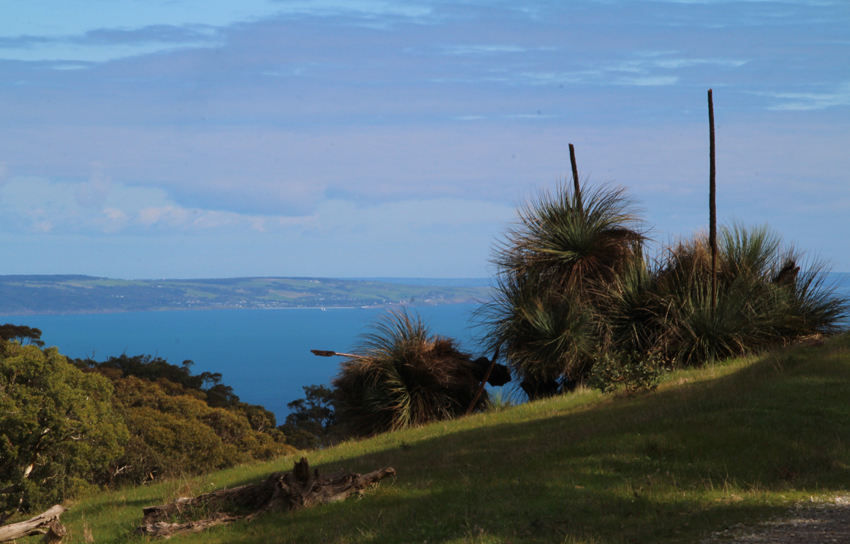
The view from the top of the hill is spectacular. Soft winter pasture still covers the ground in sharp contrast to the spiky Xantheria or grass plants that characterize the harsh coastal scrub and the blue of Baxter’s Passage and hazy profile of Kangaroo Island beckon on the horizon.


Backstair's passage and Kangaroo Island

Backstair’s passage and Kangaroo Island (double click to enlarge all images on this page)


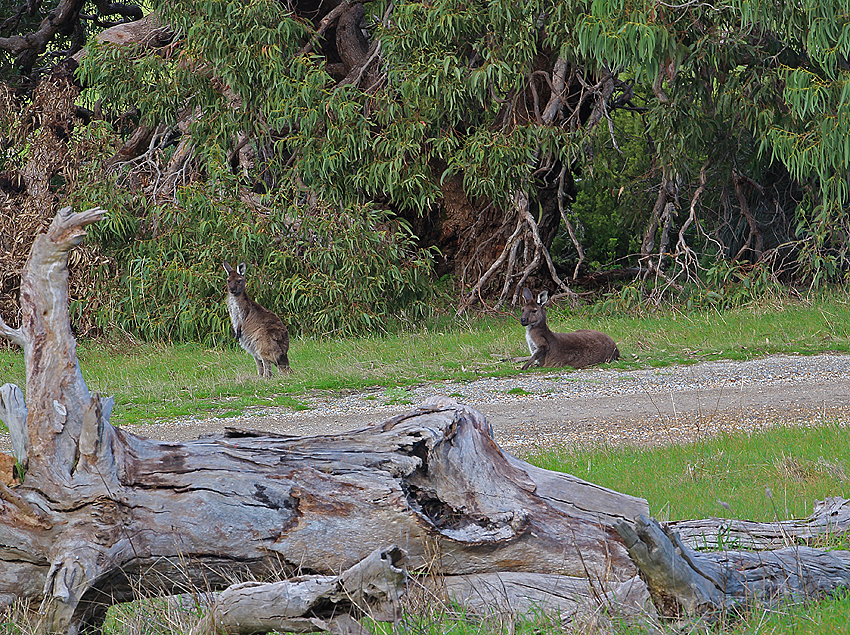
As I get out of the 4WD to capture this image I notice a pair of western grey kangaroos on the edge of the scrub no more than 20 meters from the vehicle. They are wary, ears twitching and sniffing the air. One is considerably larger than the other. They are probably a mother with a joey at heel and her pouch looks a little enlarged suggesting that she may have another little one tucked away. There could even be two in the pouch; one permanently attached to the nipple while the other simply enjoys the ride. In good times kangaroos can multiply quickly.

Western greys by the track

Western greys by the track


I am in the Talisker National Park about an hour and a half journey from the city and 10 kms from Cape Jervis at the toe of the Fleurieu Peninsula. The park centres around a series of bush trails that surround an abandoned silver and lead mine dating from the 1860s. Old machinery, buildings and shafts add an historic dimension to an area rich in scenery and wildlife.

Crushing house and old boiler

Crushing house and old boiler


From my cliff top lookout I backtrack along the dirt roads to the entrance of the old Talisker mine site. The walking trail to the mine is not too steep but the scrub on both sides is dense and full of life. In both the treetops and bushes I can hear the calls of wrens and honeyeaters. Eventually one of the delicate little birds pauses on a branch to announce its territory.

Crescent honeyeater

Crescent honeyeater


The track ends in a small clearing where the rusted remains of crushers, boilers and old buildings mark the main site. They are all that is left of a mine that once was the workplace of dozens of miners and supported a community of 300 souls at nearby Silverton; now also long gone.

Pied currawong

Grey currawong


The buildings are surrounded by a forest of eucalypts and I can hear the more distinctive movements of a larger animal in the branches on the far side of the crushing plant. I focus my long lens on the area and start to search for the perpetrator, expecting another roo or even a possum disturbed from its daytime sno0ze. But it is a large crow-like bird that I spot amongst the leaves and branches, a pied currawong, a relative of the white backed magpies that are so common on the plains where I live. Currawongs are a group that I have rarely photographed successfully as they tend to be a little more wary than their magpie cousins.

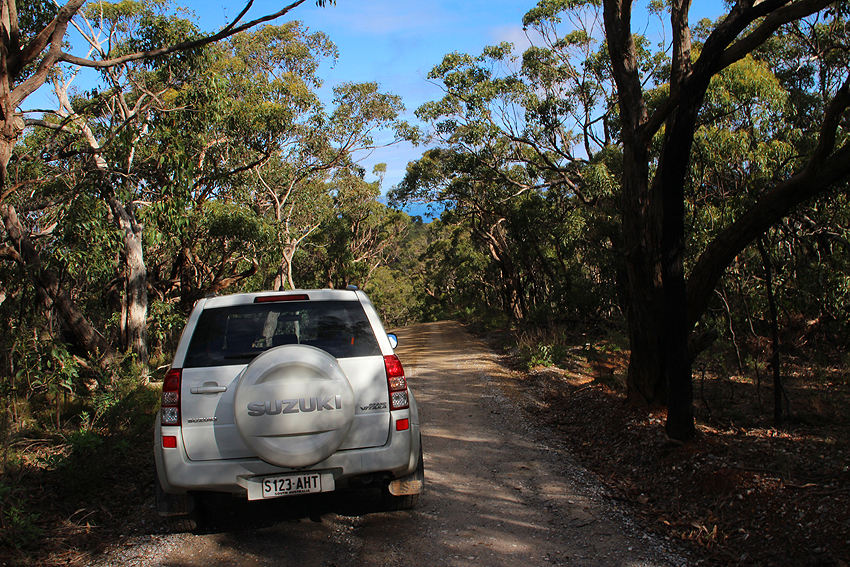
Bush track surrounded by eucalypt forest near the park entrance

Leaving the park along a bush track


It has been quite a long day walking, driving and stalking wildlife and the ruins are a great place to sit and unpack a well anticipated lunch picked up at the local Yankalilla bakery; nothing flash, just a steak and mushroom pie and an indulgent apricot tart to round off the meal. Good South Aussie ‘tucker’ to fuel up for the walk up the hill and drive home.


Cheers

Baz                  

I Wonder What the Neighbours are Doing?

11 Sep

Dear Reader:

It is a cool, early spring afternoon. I can hear annoyingly cheerful birds singing in the white cedars that line my street but I am bored stupid. Home from work with a cold but certainly not sick enough to stay in bed. What to do? Going for a walk along the beach or up in the hills would be foolish and daytime television is just one step above poking my eyes with a sharp stick. Decision made! I shall stroll up to the main road, pick up a magazine and have a cup of coffee with an inordinately unhealthy pastry at one the cosy little cafés that are dotted along Prospect Road.

IMG_4175

A mudlark finds grubs in the gutter (click all images to enlarge)


I am halfway through the door when I stop and think that it might be worth taking the camera along, though the chance of seeing something unexpected on a quiet suburban street at midday; is not very likely. It turns out that I am quite mistaken and my two hundred metre walk to the main drag is filled with interesting moments.

IMG_4174

Rainbow lorikeet feeding on a late flowering gum


First encounter; a pair of rainbow lorikeets are alternately feeding on a late flowering gum and taking turns to performs some trade-like renovations on a hollow branch in a nearby cedar. One of the parrots uses its powerful, curved beak to scour the edge of the entrance while the other pops in out and removing old bits of nest lining. They seem quite oblivious to my presence and allow me to get quite close.

IMG_4185

Rainbow lorikeets house hunting


I leave the rainbows to their reno-project and move further up the street. A Murray magpie is sorting its way through the leaf litter and other detritus deposited in the gutters by recent rains. Every so often it stops, cocks its head to one side and gulps down a worm or bug. Ironically, there is a classic white backed magpie sitting on the power line above watching its little namesake. Despite their titles, the two species are unrelated and it is only their colouring that encouraged early settlers to name the birds after the black and white European magpies. Although it is a large imposing bird this particular magpie has a serious handicap which is revealed when I take a look at its magnified image on the viewfinder. The powerful beak has been badly damaged making both feeding and defence a ‘tough ask’.

A busted beak makes life on the streets tough

A busted beak makes life on the streets tough


Even the cafe has its wildlife component as a squadron of New Holland honeyeaters perched in a courtyard tree argue over territory with the ever present miner birds and several sparrows and pigeons patrol beneath the tables in search of crumbs. But the standouts are still the rainbows and their nesting antics, which simply confirmed an unwritten rule that every wildlife photographer knows; take your camera, something will almost always surprise you.

IMG_1446

Juvenile miner bird watching out for new Holland honeyeaters


Until our next chat

Baz

Rapid Bay’s Misty Morning Predators

5 Jul

Dear Reader:

The road drops sharply from a cloud enveloped ridge top to the beach then emerges from the mist alongside a small creek. The sky is clearer close to the ocean and I can see the familiar outline of the steep cliffs and the twin jetties that jut out into the gulf. It is a chilly winter’s morning and my hands are cold as I organise my back pack and cameras ready for a stroll along the seafront.

IMG_3732

The creek at Rapid Bay (click to enlarge)

Two large birds are flying slowly along the beach front; in the early morning light they seem to resemble pacific gulls, a fairly common species along this part of the coast. I track the seabirds with my long lens and fire off a series of shots and quickly review them. Although the light mist obscured the birds’ features to the naked eye the captured images reveal a pleasant surprise. The wing feathers, tail shape and characteristically curved beak indicate a far more interesting and less common bird….the white breasted sea eagle. A little further down the coast I can see the eagles rise up on a thermal alongside the cliffs as they soar in tight spirals before resuming their beach patrol.

IMG_3771 edit1

White breasted sea eagle (click to enlarge)

The beach with its high cliffs, creek and mining jetty define one of the Fleurieu Peninsula’s most interesting and historic locations; Rapid Bay.  It was here that Adelaide’s original surveyor Colonel Light anchored his brig ‘The Rapid’ in the sheltered bay uttering the words “I have hardly seen a place I like better”.  Only 100 kms south of Adelaide, Rapid Bay is a prime location for divers and anglers. It is also  holds a significant place in the lore of several local Aboriginal peoples; a feature of the area that I will explore in more depth at a later date.

IMG_3761

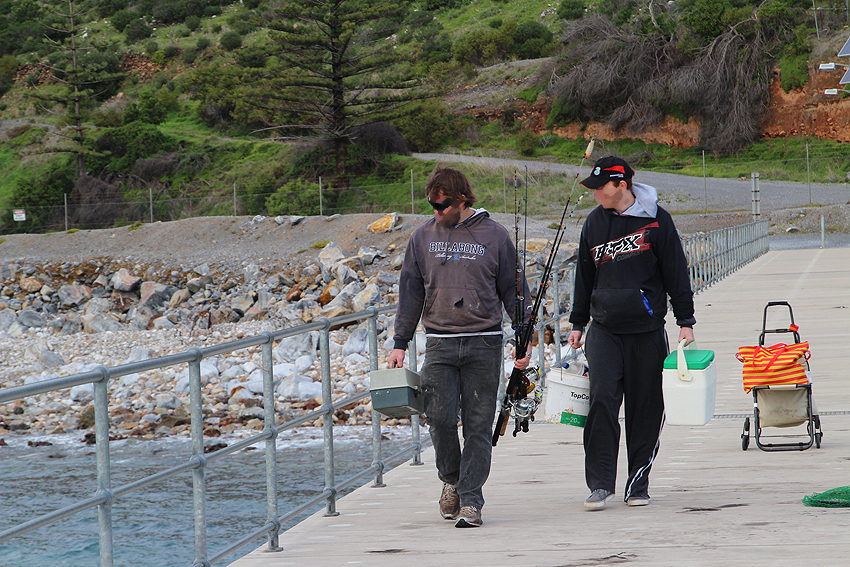
Anglers on the jetty (click to enlarge)

IMG_3755

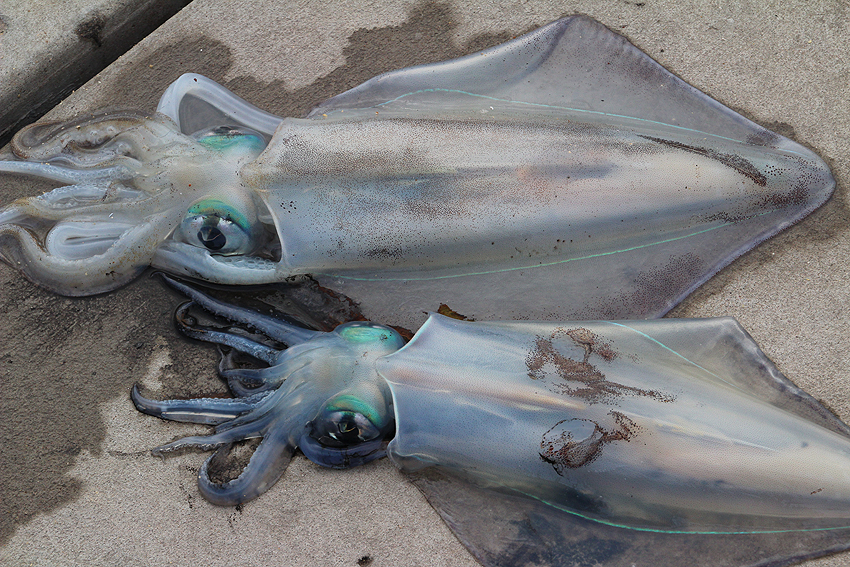
Southern calamari (click to enlarge)

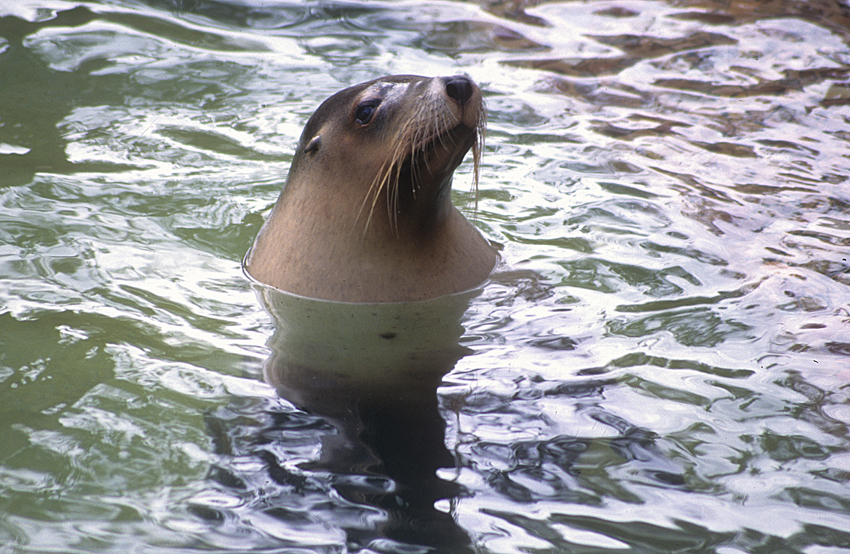
From the beach front I walk along a short dirt road to the jetty. A couple of fishers tell me that a sea lion has been hunting in the shallows between the new and old jetty. After a few minutes a sleek grey shape twists and turns in the water only a dozen metres away and a whiskery face pops up, surveys the surface and is gone as suddenly as it appeared. The anglers tell me that they have tossed a couple of squid to it and that the sealion has been around the jetties for the last couple of days.

sealion 1

Australian sealion (click to enlarge)

I watch the men jigging for squid for a few more minutes before returning to the car which is parked near the creek. As I pack up my gear I can hear the sound of finches in the bushes and reeds but it is difficult to focus on the tiny birds especially in these low light conditions. While I am concentrating on the tiny birds a large raven appears on the nearby embankment with a piece of squid in its beak and proceeds to tear the rubbery flesh apart while keeping a wary eye on me and croaking out a few warning calls to any other would be scavengers that might fancy a calamari entree.

IMG_3741

Little raven (click to enlarge)

Eagles, sealions, squid and even a dolphin that cruises past as I leave the jetty; it has been a morning of predators and scavengers both aquatic and aerial. And now it is my turn to grab a bite to eat. Leonard’s Mill, a renovated flour mill, is one of my favourite dining spots and on the main highway to town a mere 15 kms from the Rapid Bay turn off. Their calamari is on the menu as salt and pepper squid and best enjoyed with a fine white wine from the local vineyards.

Cheers

Baz

Mount Barker’s Wetland Wonders

8 Jun

Dear Reader;

It is a glorious autumn day, perfect for a little bird-watching and a stroll around the water.


The tiny plover has been edging around the reed beds for the last ten minutes, finally coming out of the dense cover around the lake to probe the mud for worms and other avian niceties. The colourful little wader seems more confident and continues to feed just forty metres from where I am concealed in the undergrowth; a little too close to bull ant nest for comfort. Eventually it comes close enough for me to fire off a couple of shots before taking off abruptly, spooked by a pair of maned ducks cruising low over the water.


P1070914

Black-fronted plover (click to enlarge)


I am at the Laratinga wetland on the edge of Mount Barker, the largest town in the Adelaide Hills. The word Laratinga comes from the indigenous name for the Mt Barker Creek and near the entrance of the wetlands there is magical series of portraits that relate episodes within the timeline of the original inhabitants of the area, the Peramangk people. Mount Barker is a busy regional centre with plenty of places to buy fresh local ingredients for making up a picnic lunch to enjoy while you wander around the wetlands observing the diverse collection of plants and animals that live there.

P1070892

Portraits at the wetlands (click to enlarge)


Leaving my hiding place on the edge of the lake, I follow one of the many trails that zigzag through the reserve. Near the edge of another patch of reeds a small flock of ibis are feeding in the shallows. Their distinctive curved beaks and greater size means they might be feeding in the same habitat as the little plover but their prey will be distinctly different. Such a variety of beaks, feet and size is one of the reasons that so many different species of birds can feed together in the same area without destroying the food supply. But the wetland is not reserved for wildlife enthusiasts and a jogger runs a little too close to the flock causing the them take to the air. Despite this being a fairly recent wetland, constructed by the council to filter water naturally, wildlife and people live quite harmoniously and the birds soon return to their chosen spot and resume dining.

P1070923

Ibis in flight (click to enlarge)


Although I have caught a fleeting glimpse of a couple of turtles in the shallow pools and the undergrowth has more than healthy population of insects; it is the bird life that is dominating my walk around the wetlands. The reeds that encircle the water are a veritable cathedral of birdsong. I can hear the twitter of finches and reed warblers in the tangle of greenery and occasionally catch sight of one of the tiny birds flitting amongst them. Finally a superb blue wren makes a more prolonged appearance as it perches on a reed stem giving me just enough time for one last shot before I leave.

P1070928

Superb blue wren (click to enlarge)


Cheers

Baz

Photo Reflections 2

16 Nov

Dear Reader:

South Australia is an extraordinary place to live and work especially if you are a wildlife writer and photographer. Our fauna is both diverse and fascinating and en route to any destination there are always interesting country towns, world class wineries or vast rural properties to explore. This blog is a reflection of those attributes and is a collation of images and notes that remind me of the reasons I live and work here.

A Camping near Arkaroola

Camping near Arkaroola


Arkaroola is a world heritage wilderness area approximately 700 kilometres north of Adelaide. Its geology, Aboriginal heritage and wildlife make it a premier destination for off roaders, photographers and those who simply like a taste of real outback life.

B Nankeen night heron

Nankeen night heron

The wetlands around the Adelaide region have a core of commonly sighted species that include a variety of waterfowl, pelicans, ibises, swamp hens and swallows; to mention but a few. The nankeen night heron is one of the less frequently encountered birds which made photographing this one, as it hid in a willow overhanging a lake near my home, a special moment.

C Vines near McClaren Vale

Vines near McLaren Vale


The coast road that runs south from Adelaide along the Fleurieu Peninsula is a drive I have made countless times on the way to a dive site. On this occasion I was drawn to the dormant vines that stood in stark contrast to the overcast sky and yellow oxalis flowers.

D Biscuit star

Biscuit star


Sometimes the simplest creatures, the ones encountered countless times, catch your attention. Perhaps it is the light or just the way the animal is positioned. This common biscuit star caught my eye as it crept along the edge of a rock face covered in algae and a melange of encrusting organisms.

E Hoverfly on blossoms

Hoverfly on blossoms


Hoverflies are one of the most common invertebrates in our gardens. These agile little insects hover, flit and settle on a variety of flowering plants. They seem to be in constant motion. On an afternoon stroll through the Botanic Gardens an accommodating hoverfly settled on a nearby blossom giving me just a split second to get down low and capture this image which emphasises its startling compound eyes.

F Echidna foraging

Echidna foraging


Echidnas roam the length and breadth of Australia but they are not commonly seen. This one was trundling through the bush in the Adelaide Hills close to a termite mound that it had been ripping apart. It was the sound of the little spiky battle tank that gave away its location. Stealth does not appear to be part of their defensive repertoire. You don’t need to be furtive when you are armed with a plethora of sharp spines.


I hope you enjoyed this little reflection

Baz

A Drive Along the Beach

20 Mar

Dear Reader

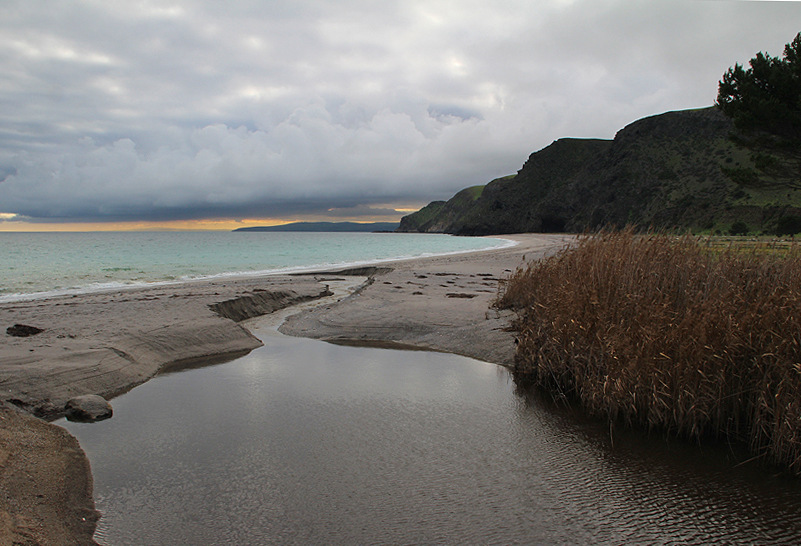
At the southern tip of the Fleurieu Peninsula the rocky cliffs and granite outcrops of Victor Harbor and Port Elliot subside into a long stretch of pristine sandy beaches. They are the product of aeons of erosion and define the area where Australia’s longest river, the Murray; meets the ocean. The beach is easily accessed from the old river port of Goolwa and the short 5 Km drive along its length is only possible in a  4WD vehicle, Even then, it is best to keep a close eye on the tide and have a little experience driving in soft, sandy conditions.

Four wheel drive entry to Goolwa Beach

Four wheel drive entry to Goolwa Beach

Over the last few weeks I have made the trip several times to photograph and observe the wildlife that lives along the tidal zone and in the windswept dunes. Twice, I reached the river mouth and once I had to turn back as the high tide and churned up sand made the going a little too difficult for my SUV.

Goolwa beach near the Murray mouth showing different environments

Goolwa beach near the Murray mouth showing different environments

The surf breaks for several hundred metres out to sea along this beach and sometimes you can be lucky enough to see a dolphin or the dark outline of a whaler shark hunting for Australian salmon or mulloway in the waves. However, most of the time it is the caspian terns that dominate the open ocean as they dive for schools of baitfish or rest on the wet sand ready to set off and hunt again.

You've done something different with your hair

You’ve done something different with your hair

In the shallow surf break a dozen different species of waders can be seen each exploiting its own niche with its specialised beak and hunting style. Diminutive sanderlings and dotterels race along the sand in between the wave fronts gleaning tiny invertebrates and worms too small to see. Small groups of oystercatchers use their broadened beaks to dig out cockles and prise them open while avocets use their slightly upturned bills to catch tiny crustaceans and other invertebrates swimming in the shallow water. In fact, what at first glance appears to be an homogenous continuum of beach; is in reality, a collection of micro habitats or niches, each exploited by its own particular species of bird.

Pied Oystercatchers feeding in the surf

I hope you enjoyed this jaunt along the beach and stay tuned for more South Aussie  adventures.

Cheers

Baz

← Back

Thank you for your response. ✨

A Sunday Walk…….Hackney Street Bridge

1 Mar

Dear reader

South Australia’s wild expanses are vast and the wildlife fascinating  in these remote areas but the cities and towns have their own natural features and often the wildlife is equally prolific and interesting in these urban spaces.

The River Torrens flows from the Adelaide hills through the city and on to the coast. It is an effective wildlife corridor supporting a wide range of animals and plants. The government of South Australia, along with local councils and interested wildlife groups, have crafted the aptly named ‘Linear Park’ along the urban sector of the waterway. It is defined by a narrow strip of bushland that runs along the river from the hills suburb of Athelstone to its outlet at Henley Beach. Walking or cycling along sections of this trail is a great way to experience the wildlife of the region. In some areas there are also interpretive references and information about the Kaurna People; the original Aboriginal inhabitants of the Adelaide plains.

Bubble fountains installed in the river help reduce algal blooms in the hot summer months

Bubble fountains installed in the river help reduce algal blooms in the hot summer months

The section of park that runs between the two bridges spanning Hackney and Frome roads is one of my favourite haunts. Although it is on the very fringe of the city centre there is a surprising amount of wildlife for the careful observer to enjoy. My last walk along this section of the river was an early morning jaunt on a Sunday. I shared the path with a few cyclists and joggers all blissfully unaware of the interesting creatures that they were passing.

Cyclist crossing linear park behind the Zoo

Cyclist crossing linear park behind the Zoo

Several stands of large eucalypts overhang this part of the river providing perfect roosting sires for great cormorants. This particular morning several of the birds were puffing out their neck feathers and jockeying for position on some bare branches trying to catch the first rays of the sun filtering through the canopy. As I walked along the bank they started to stretch their wings and glide down to the water to begin the morning’s hunt for fish, frogs and occasional water kkink.

Great Cormorants roosting in trees overhanging the Torrens Lake

Great cormorants roosting in trees overhanging the Torrens Lake

And there were quite a few nervous skinks for the cormorants to set their sights on. Amongst the tall papyrus reeds that grow along much of the bank, I could hear the rustle of the little reptiles as they scurried into the dense matt of stalks and grasses. Eventually one of the lizards decided that freezing was a better escape strategy and I was able to capture an image before it too, disappeared into the reeds. The area seemed to have quite a large population of lizards so I adopted a sit and wait policy. A few minutes later my patience was rewarded when I noticed two cormorants fishing close to the reeds.  After several failed attempts one of the birds emerged with either a slender fish or a lizard firmly clamped in its hooked beak which it then dispatched with a quick gulp.

A water skink freezes in the undergrowth near the river bank

A water skink freezes in the undergrowth near the river bank


The first half an hour of my walk had taken me along the western bank up to the Frome Road Bridge. From there I crossed the river and walked back along the opposite side. Small groups of Pacific and maned ducks were feeding close to the bank and a small Australian grebe was having an energetic wash in a sheltered pool.  But it was a colourful dragonfly that really caught my attention as it flitted over the water eventually settling on the branch of a gum tree. One brief moment for a photo op and it was gone.

Dragonfly on eucalyptus branch

Dragonfly on eucalyptus branch

My final wildlife encounter was with a couple of mudlarks that had built a cup shaped mud nest in one of the taller eucalypts that grew out from the bank. One of these territorial little birds was aggressively defending its territory against a large raven that had landed too close to their nesting site. The other bird was perched on a branch peering into the bushes near the water in search of prey.

A Mudlark perches on a branch watching for insects

A mudlark perches on a branch watching for insects


Insects, reptiles, birds and a good walk; not a bad way to spend the morning- just one final touch, breakfast in one of Adelaide’s parkland bistros a few minute’s drive from the river.

Cheers

Baz

← Back

Thank you for your response. ✨

Brachina’s Yellow Footed Rock Wallabies

14 Jan

Dear Reader

Today I would like to take you on a brief trip through time n one of my state’s most spectacular environments.

Hundreds of millions of years ago sediments were deposited on an ancient seabed. Over the following millennia, the sediments were compressed to form layers of rocks. In turn, the rocks were uplifted and folded creating a formidable mountain range. Eventually, the relentless action of wind, heat and water wore down the mountains and carved deep gorges through them. The result of this timeless process is the Flinders Ranges, one of the world’s oldest geological formations. Rising from the semi desert landscape some 400 Kms NE of Adelaide; they are a pleasant day’s drive through the rolling hills and open plains of the mid north’s wine and wheat districts.

Flinders Ranges emerging from arid plains as seen from the Leigh Creek Road

I have visited the Flinders many times and the rugged beauty and abundance of wildlife throughout the area never fails to impress me. However, on my most recent excursion I had a specific location and target in mind. Brachina Gorge crosses the ranges from east to west cutting through the layers of rock and revealing a unique insight into our planet’s ancient history. The 30 kms of rutted dirt track is crossed by several creeks and the geological history is traced by a series of interpretive signs. But Brachina’s rock formations are more than a glimpse into the past; they are home to one of Australia’s most beautiful marsupials-the yellow footed rock wallaby.

Layers of sedimentary rock in Brachina Gorge

Small populations of yellow footed rock wallabies (Petrogale Xanthopus) are found in rugged areas of northern South Australia. Like all wallabies they use their long tails for balance rather than locomotion. Their fur is thick especially on the feet where it provides cushioning and grip in the precipitous terrain they prefer. Yellow footed rock wallabies grow to around 60 cms in height and weigh7-13 Kgs They feed on vegetation such as grasses and forbes and sometimes graze on trees and shrubs during hard times. They are mainly active during the late afternoon and early morning.

Yellow footed rock wallaby with joey in pouch

I entered the gorge from the Leigh Creek road on the western aspect of the ranges; and slipped my SUV into high range as there had been a little rain and the track was a little tricky. The flat terrain, where the creek flows out of the hills, quickly gave way to steep sloping rock walls and bush covered hillsides that characterise the Flinders’ gorges. After a few kilometres I stopped by a shallow pool of semi permanent water where a variety of grasses and low bushes were growing along the water’s edge. A jumble of rocks had fallen from the cliff face above creating some small caves and easy access to the shallow pools of water, the perfect environment for these agile little marsupials.

Classic yellow footed rock wallaby environment

For the best part of an hour I sat amongst the vegetation, camera in hand watching and listening. The light was beginning to fade a little and I my optimism was dwindling with it. Eventually I caught sight of a slight movement high above the rock-fall as a wallaby hopped from one boulder to the other-a long shot even with the 24X lens. I shifted my position to get a better angle and to my delight and embarrassment noticed a yellow foot feeding by the creek not 5 metres from where I was crouched. It must have been there for some time and seemed oblivious or indifferent to my presence.

Yellow footed rock wallaby feeding

For the next ten minutes I watched and waited as the wallaby nibbled on the grasses and bushes surrounding the creek. I squeezed off quite a few shots and was about to call it a day when a second animal hopped onto a flattish boulder and stared pointedly at me. As I moved slightly it froze and gave me ample opportunity to capture a few more images. Sadly, I was reminded why these exquisite little animals came so close to extinction. Early settlers hunted them for their pelts and found them easy prey as their first reaction to a threat is to freeze and ironically, rely on camouflage provided by their subtly shaded fur.

Yellow footed rock wallabies showing camouflage in afternoon light

By the time I had finished photographing the wallabies, the sun was low in the sky and driving along bush tracks at night is not the safest of activities as kangaroos, emus, cattle and sheep seem to be drawn to headlights. I packed up and headed on to Wilpena an hour’s drive to the west. A sophisticated tourist development in a natural amphitheatre of towering cliffs, it would provide the perfect base to hunt for yellow footed rock wallabies in some other locations.

The track through Brachina Gorge with Wilpena in background

Cheers

Baz

← Back

Thank you for your response. ✨