Tag Archives: south australian travel

Nairne….an artistic afternoon

6 Oct

Nairne….an artistic afternoon

Despite a field that is full of lush green grass, a veritable cow paradise, the small herd of young bovines drifts down towards the fence where I am standing. Perhaps they are intent on providing me with the perfect ‘cow’ shot or they may be simply illustrating the old adage; ‘the grass is always greener….’

2

Taking a closer look

1

Classic South Aussie dirt track

 On this perfect spring day I am driving along Ironstone Range Road just off the Old Princes Highway, a few kilometres east of Nairne. Expansive, open woodland dominates one side of the unsealed track and rich pasture carpets the other. I am on my way to the Jonathan Art Centre to grab a bite to eat and make some inquiries about art classes.

3

Open woodland with massive eucalypts

 Five minutes later I am driving across an open paddock on a grass trail to a pitch roofed building set on the side of a gently sloping hillside. There are rosellas in the trees that line the driveway and a pair of crows raucously announces my arrival. The entrance hall is a combination studio and gallery displaying the owner’s work and opening on to a balcony which overlooks a cottage style garden.

4

Johnathan art centre

5

Work space and gallery

10

Another view from the property

A friend has recommended the fish pie, a classic British dish that I often enjoy in London’s Union Cafe. And this version does not disappoint; full of good South Aussie seafood and topped with a fluffy potato mash. Like the art on display, it is a credit to the proprietor, Liz’s, creative flair.

6

Fish pie and fresh garden salad

To my surprise and delight; while I am enjoying the meal a hare hops through the garden below the balcony, pauses, looks straight at me then heads off down the hillside. Now, though his blog has had more of an ‘afternoon drive in the country’ flavour about it than my usual wildlife emphasis; rest assured, the camera was well within reach and a short burst fired off at my visitor.

7

Waiter, there’s a hare in my garden

Art inquiries and meal complete, I ask permission to wander around the property. Behind a bushy hedge there are rows of colourful annuals and lavender that abut a small pond. I can hear the call of parrots and eventually spot a crimson rosella amongst the layers of blooms. Then, switching to macro, I zoom in on a honey bee feeding. Its legs are covered in pollen brushed from the abundant flowers as the little insect drinks in their various nectars.

8

Layers of colour and rosella

9

Bee at work

A great drive, wonderful meal and a few wild encounters…not a bad way to spend a day.

Cheers

Baz
Norwood’s Parade of Animals

29 Aug

Norwood’s Parade of Animals

 Dear Reader:

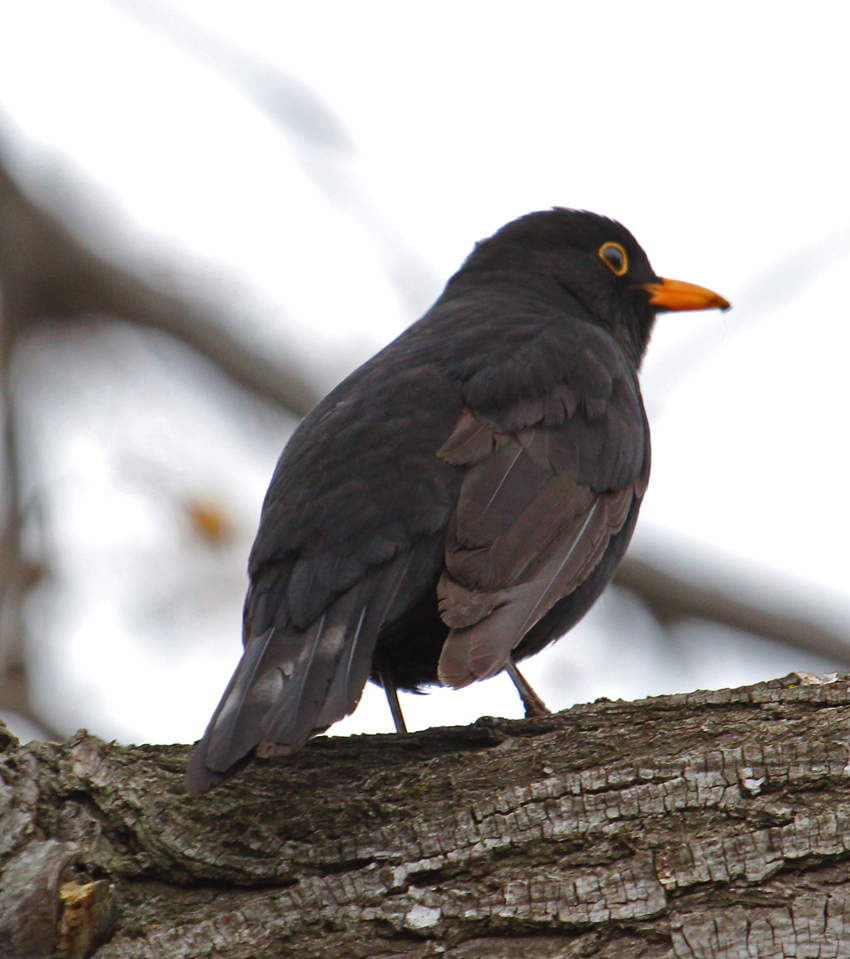
It has been rather a grey week but today the sun is showing its face at regular intervals and there is a blackbird singing in a tree above me. A good day for a walk around Norwood admiring the architecture before grabbing a bite to eat at one of the many restaurants and hotels that make the area a premier dining destination. But this old, established suburb with its towering trees and well-tended gardens also provides meals and homes for a wide variety of urban wildlife.

Juvenile male blackbird

1 One of the classic hotels in the Norwood area

One of the classic hotels in the Norwood area


Blackbird aside; the first indigenous species that grabs my attention is living between the petals of a bright yellow daisy bush. The diminutive flower spider hunts amongst the blooms for small insects. This one has ambushed a fly and is proceeding to wrap it in a web for a late afternoon snack.

2 Flower spider with lunch

Flower spider with lunch


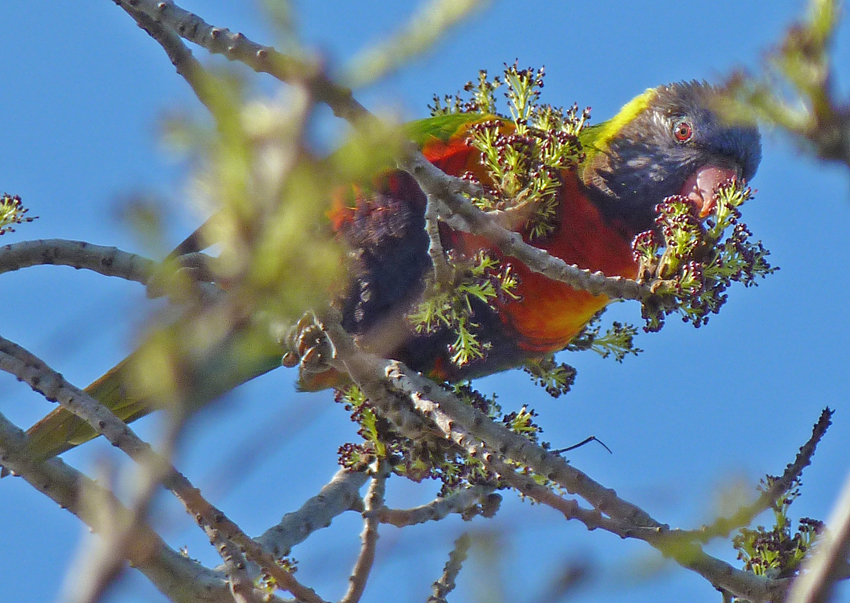
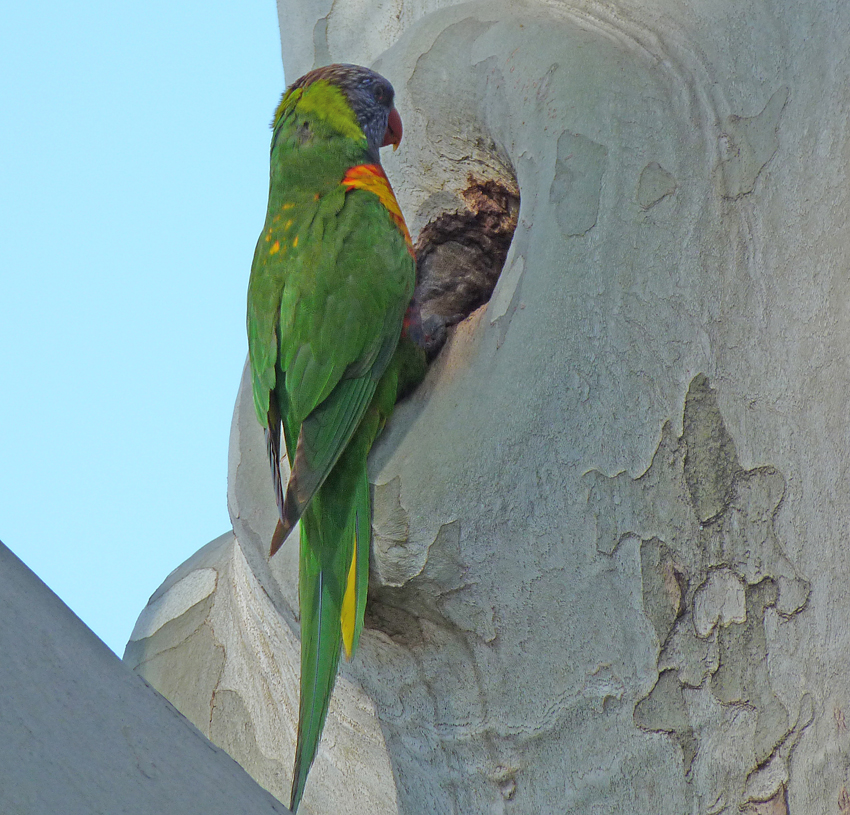
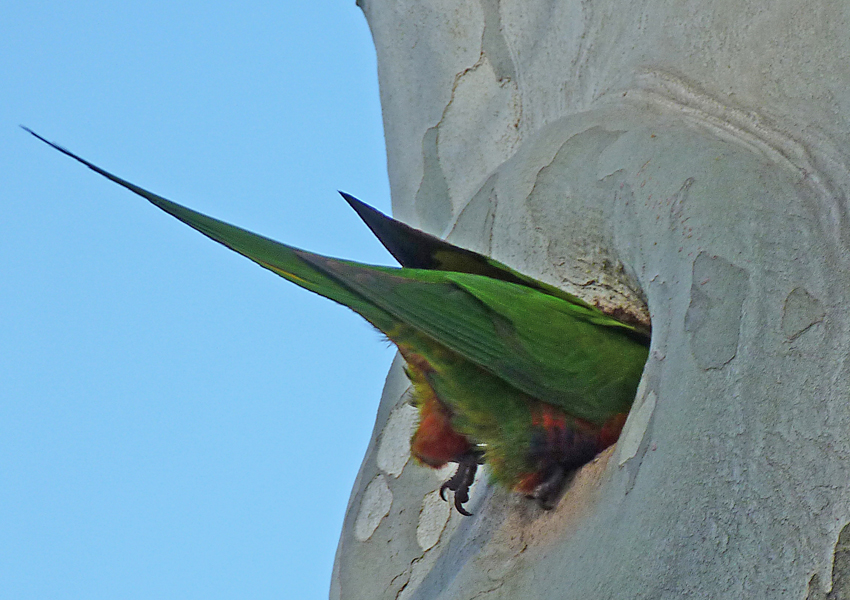
A little further down the street I can hear the call of lorikeets as a pair of the colourful little parrots forage in the trees for seed and blossom. I follow them closely as they fly from the tree tops to a smooth barked gum tree right on the edge of Osmond Terrace, a busy boulevard that cuts through Norwood. Here, with traffic whizzing past, they are investigating a hole in the trunk as a potential nesting site.

2 Lorikeet feeding

Rainbow lorikeet feeding

2 Rainbow lorikeet scouting for real estate

Rainbow lorikeet scouting for real estate

2 Taking a closer look

Taking a closer look

2 Hey honey come take a look

Hey honey come take a look


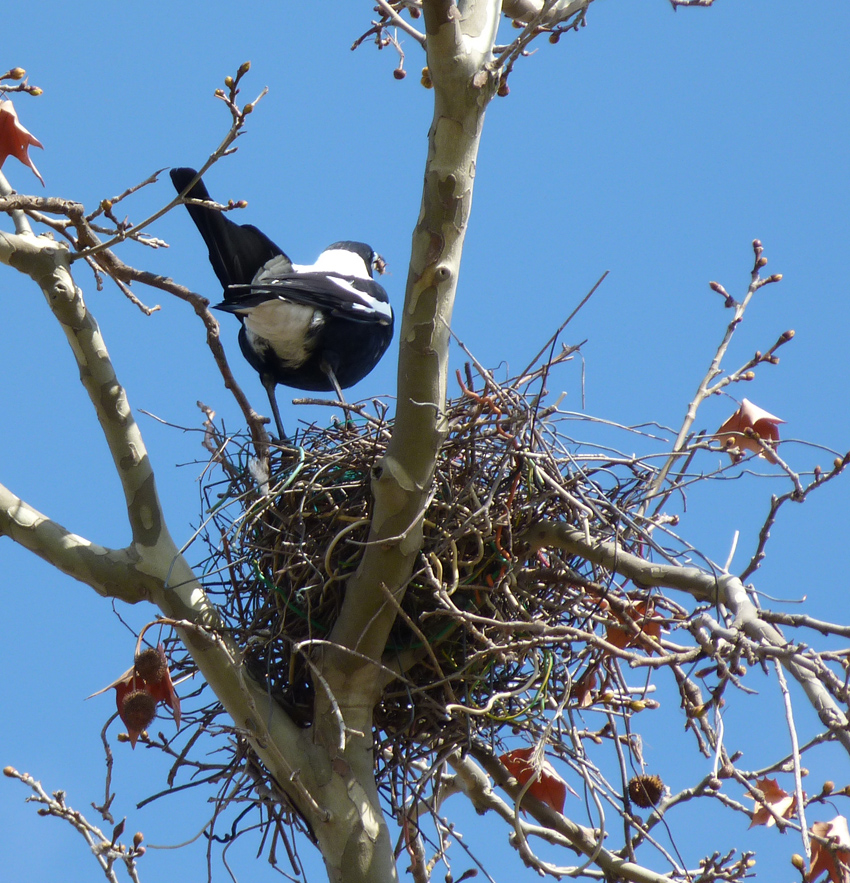
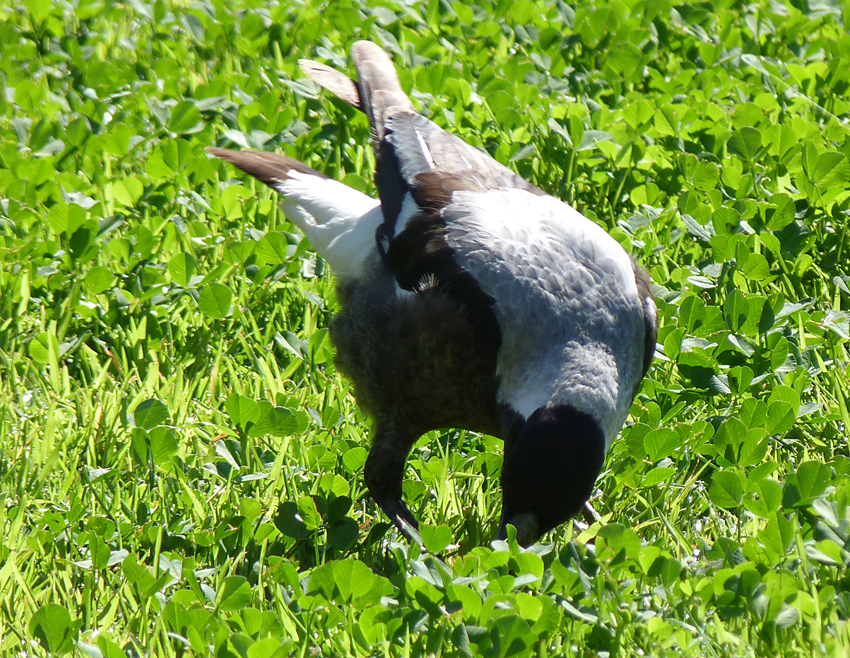
Osmond Terrace is also home to a group of Australian magpies. I can see a raggedy nest high in one of the liquid amber trees that line the thoroughfare and when I focus the long lens on it, the head of a large chick is just visible. After ten minutes an adult bird arrives with a grub in its beak. A few minutes later I catch site of another bird digging for invertebrates in the lawn of a local school while a third sits, watching from the concrete facade of Vine House, one of the suburb’s historic buildings.

Adult magpie arriving at nest

Magpie feeding

Magpie feeding

keeping an eye on proceedings

Keeping an eye on proceedings


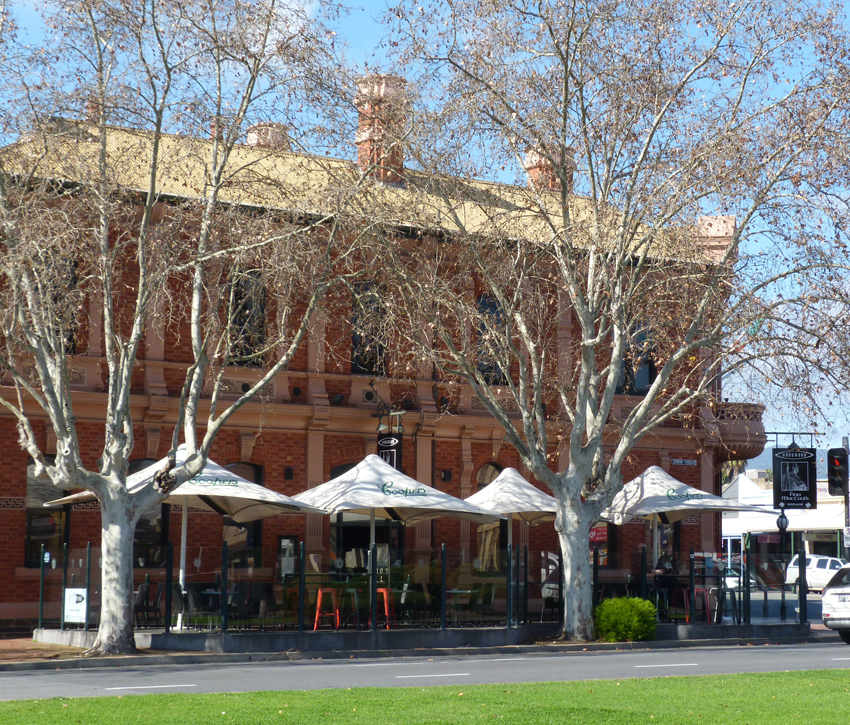
My final stop is Finn MacCool’s Irish Pub for lunch where a group of pigeons is also enjoying an alfresco bite to eat in slightly less salubrious circumstances. I started with an introduced species…might as well end on the same note.

P1130169

Common pigeons feeding on crumbs in the street


Until our next adventure

Cheers

Baz  

Check out Geotravelling a new site that I have attached that celebrates the natural, cultural and urban diversity of our planet through my travel photographs.

Adelaide’s Frome Road Bikeway

16 Aug

Adelaide’s Frome Road Bikeway 

Dear reader:

One of my favourite bike rides starts in north Adelaide at the junction of Barton and LeFevre Terraces. From the roundabout, a dedicated bike lane follows Le Fevre Terrace which is flanked by open parklands on one side and lovely colonial homes on the other. For the marginally more adventurous, there are several paths through the park that run almost parallel to the road. Noisy miners, honeyeaters, magpies and lorikeets are common here and in the evening you might see brush-tailed possums in the trees.

miner bird5

Noisy miners are a species of honeyeater

1

Nice little house with a good view of the parklands


The bike lane curves down towards the city through more parklands and playing fields. Huge Moreton Bay Fig Trees dominate the parklands providing a vantage point for both rose breasted and sulphur crested cockatoos that often fly down to the grass in search of food.

2a

Galahs having a bite to eat


Just over the Frome Road Bridge, Adelaide Zoo’s classic entrance marks the end of the parklands. Tucked between the zoo and the Botanic Gardens there is a stand of huge pine trees. Look up and it’s hard not to notice a large colony of fruit bats (flying foxes) that call these trees home.

2b

Entrance to the zoo

2c

Fruit bats in the trees


After the zoo there is a well marked bike lane that runs up Frome Road past the medical school and hospital. The lush lawns around these buildings are a favourite haunt of Sacred Ibises that probe the soft ground with their long curved beaks in search of worms and grubs.

12

View of the Torrens from the Frome Road Bridge


3

Sacred ibises feeding


As Frome Road crosses North Terrace you enter a purely urban environment with a wide bikeway that cuts all the way across the city towards the southern parklands. This charming region of the city has many unique little houses and flats decorated with native plantings providing a rich urban ecosystem that supports common bird species such as sparrows, blackbirds and magpies.

10

Magpies carolling in an urban environment

11

Stopping for a coffee along the way


The bikeway finally emerges at the Himeji Japanese Gardens. These gardens are dedicated to Adelaide’s sister city on the Japanese island of Honshu. In keeping with the rest of Adelaide’s green belt parklands the signage also relates to the aboriginal heritage of the area. Rosellas and lorikeets are common inhabitants in the ancient eucalypts that characterise this southern edge of the city.

5

Japanese garden

6

White cheeked eastern roesella


From the Japanese Gardens there are bike paths that meander through all of the southern parks but their wildlife and charms will be the subject of a further post in the warmer months to come.


Cheers

Baz

Tea Tree Gully’s Camellia Nursery

5 Jul

Dear Reader:

It is a cool crisp morning, and to be perfectly honest, I am not in the mood for a long drive. Instead, I have decided to visit a local nursery just a few kilometres away, where the North East Road starts its climb into the Adelaide Hills.

1a Newman's nursery

Newman’s nursery front entrance


As I park the car next to the entrance I am immediately struck by the contrast in lighting conditions. The path following the little creek that leads from ‘Newman’s Camellia’ nursery to the ‘Tea Tree Gully Hotel’ is in deep shade whereas the hills on the opposite side of the road are bathed in sunlight. An afternoon walk might have offered better lighting for photography but the wildlife always seems more active in the morning.

1a Start of the walk

The path begins


Climbing out of the car I glance up at the hillside above the little creek and to my surprise and delight I notice the hunched outline of a koala wedged between the branches of a huge gum tree; not what I was expecting this close to a suburban area.

1a koala in tree

Koala in tree


The trail starts just a few metres from the nursery entrance and meanders alongside the small watercourse for a mere 500 metres before broadening to a neatly manicured lawn enclosed by trees and shrubs. A varied collection of plants flank the path; including arum lilies, several lovely camellias, indigenous wattles and melaleucas as well as the ever-present, towering eucalypts.

1a Rogue camelia

A rogue camellia alongside the path


Small birds are continually flitting through the bushes though I am only able to catch fleeting glimpses of them. Some are definitely female blue wrens and I suspect that the tiniest ones are thornbills. Eventually, a small brownish bird settles in a low, flowering shrub some 50 metres away. I fire off a series of shots which, on review, reveal a glorious eastern spinebill.

1a Eastern spinebill  foraging in shrubs

Eastern spinebill foraging in flame heath bush


At the end of the trail half a dozen magpies are foraging for grubs in the well tended lawns. Several enormous gums tower over the grass and a pied currawong is perched on one of the topmost branches with a seed pod hanging from its beak. Another bird joins it, they seem nervous, jumping between branches before flying off, possibly to a nesting site.

1a Currawong with food approaching nest

Currawong approaching nest with food

The walk back is equally eventful with both rosellas and lorikeets feeding on berries in the scrub along the edge of the trail but capturing a sharp image in the shadows and overcast conditions is somewhat challenging.

1a Tapas on the terrace

Tapas


Newman’s nursery has a charming little restaurant with both inside and alfresco dining areas which afford a fine view of the hillside on the other side of the road. While I enjoy the delights of a tapas snack I notice several tiny finches feeding on the liquid amber trees that decorate the front of the nursery. From my outside table the birds are just within camera range and using the long lens I am able to identify them as European goldfinches.


1a European goldfinch in liquid amber tree

European goldfinch in liquid amber tree


Until next time

Baz

Wilpena…. Three Kangaroos and an Emu

26 Jun

Dear Reader:

The hillside behind the cabin is quite steep and the trail leading to its summit zig-zags between rocky outcrops and stands of native pine. Every so often there are depressions and small caves where the rust coloured soil is littered with roo droppings. From the first ridge, the view back across ‘the pound’ is spectacular with the curved formation of peaks that shape this unique environment clearly evident against the deep blue of an outback sky.


OLYMPUS DIGITAL CAMERA

A lone euro with the ranges in the background

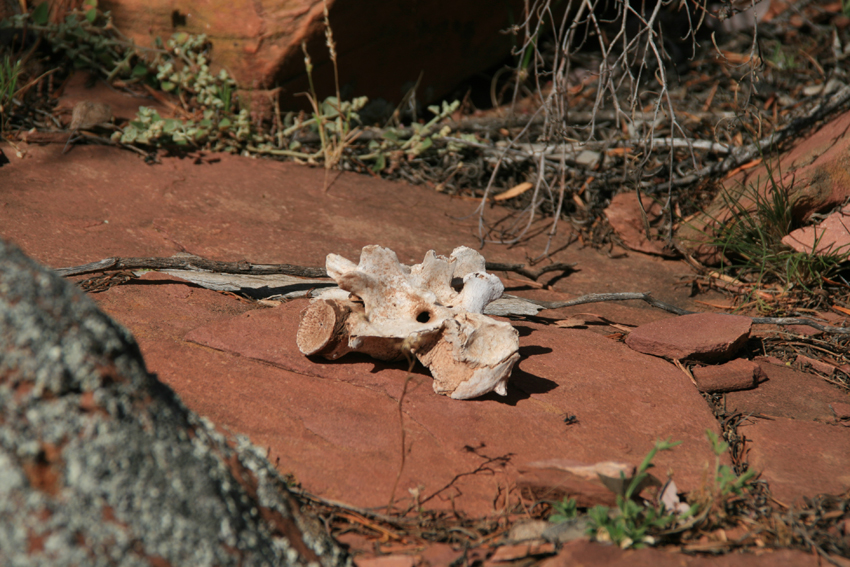
Euro nremains below a particularly steep rockface

Euro remains below a particularly steep rockface


A little further up the scree slope the sound of scattering rocks provides a tell-tale hint of movement. I freeze, lift the camera and wait; nothing but the thumping sound of a large animal bounding further up the hillside. Only a kangaroo makes that sound and only a hill kangaroo, sometimes called a wallaroo or euro, would be living in this steep terrain.

Classic euro habitat

Classic euro habitat


There are three species of kangaroos, as well as their smaller wallaby relatives, living in the Flinders Ranges near Wilpena Pound ; a crater shaped geological formation in South Australia’s northern outback region about five hour’s drive from Adelaide. Each species tends to favour slightly different habitats in this arid, semi desert environment though there is inevitably some overlap in their territories.

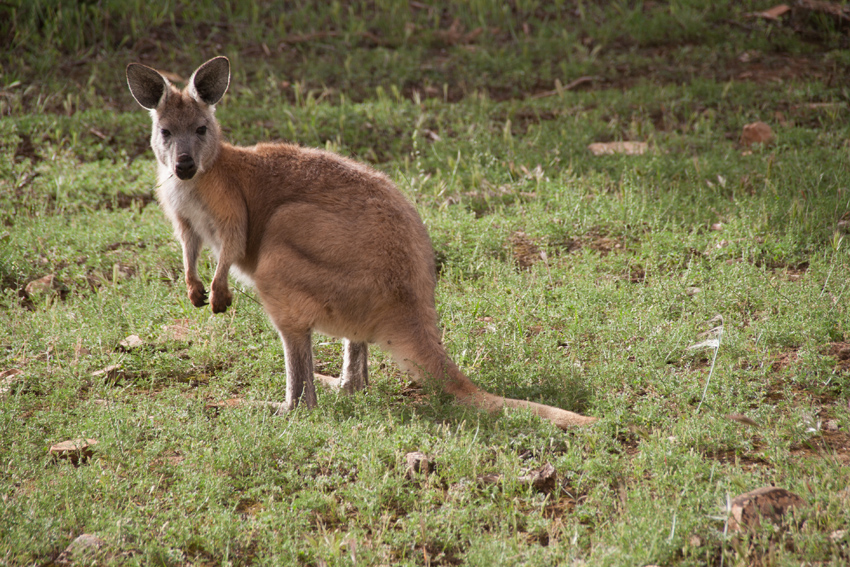
This euro has a rustier tinge to its fur

This euro has a rustier tinge to its fur


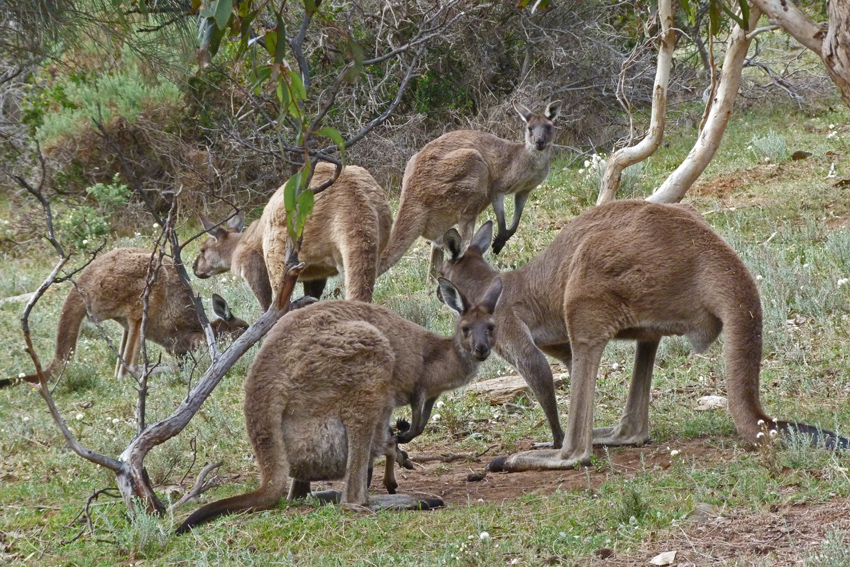
Euros are generally solitary and they prefer rocky outcrops. Their fur is thicker than the other two species and can have a slightl reddish tinge. They are quite stocky, robust kangaroos measuring up to 195 cms from head to tip of the tail with both males and females similar in appearance. Red kangaroos prefer the open plains and males can measure 2.4 metres and always have a rusty coat and distinct facial markings. Female red kangaroos have grey fur with a hint of blue shading and are considerably smaller. The third species, the western grey kangaroo, is less common in the ranges; they look more like a lighter built euro with smoother fur. Western greys are gregarious and prefer woodlands. They are the most common species in the southern part of the state.

Western grey kangaroos

Western grey kangaroos


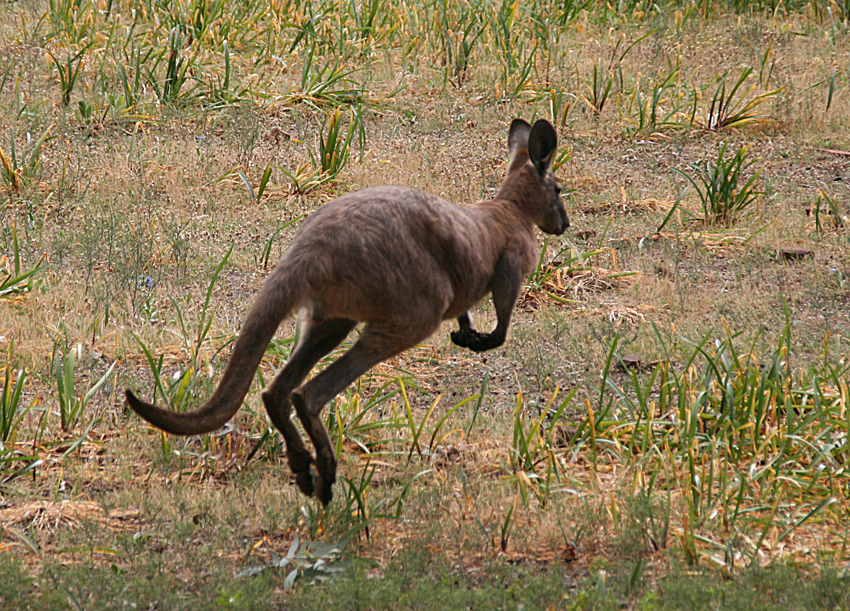
From the top of the hillside I work my way back down a steep gully to the lower slopes where a couple of euros are feeding on the grass and small shrubs growing close to the roadside. They let me approach to within fifty metres before twitching their ears nervously and bounding off into a stand of native pines at the base of a steep hillside.

A young euro moments before bounding up into the escarpment after its mother

A young euro moments before bounding up into the escarpment after its mother

Female adult euro bounding up into escarpment

Female adult euro bounding up into escarpment


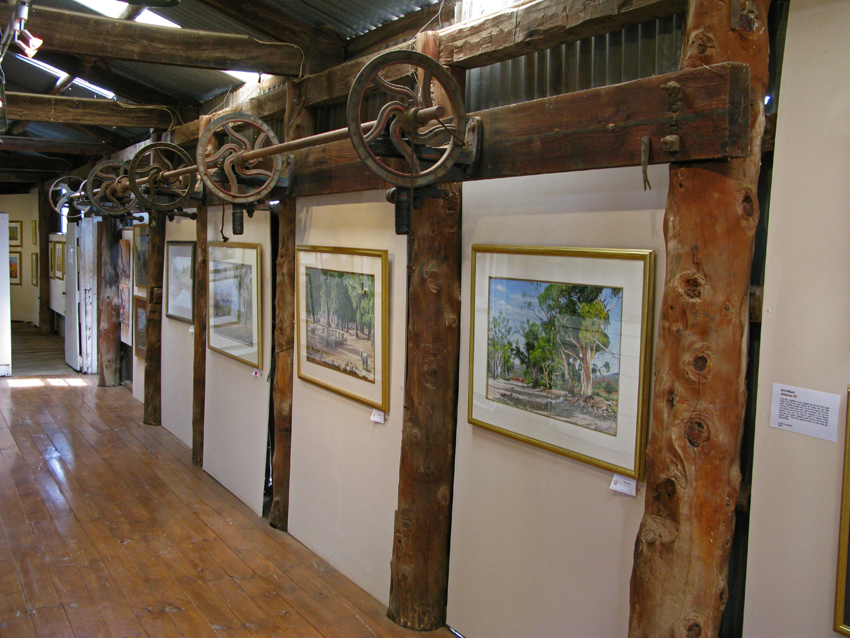
The roadside provides a perfect view of both the rugged escarpments that dominate the terrain and the open grassland that characterizes the entrance to the pound. In the distance I can see the outline of several red kangaroos grazing on the grass near an old restored woolshed that serves as a gallery and function centre. They appear to be quite relaxed and as I approach I notice that it is actually a pair of animals; a large male standing close to a resting female.

Red kangaroo male and female

Red kangaroo male and female

Red kangaroo male and female

Art display in the old woolshed


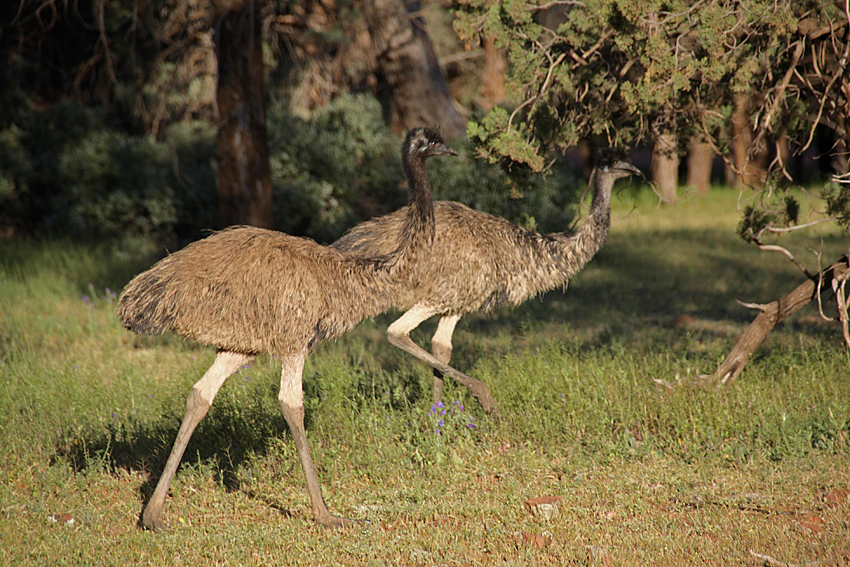
I have been quite lucky on my walk, having seen two of the three local kangaroo species and as if to point out that the landscape is inhabited by more than just marsupials a couple of emus run across the walking trail as I am turning for home.

A pair of emus running alongside a walking trail at Wilpena

A pair of emus running alongside a walking trail at Wilpena


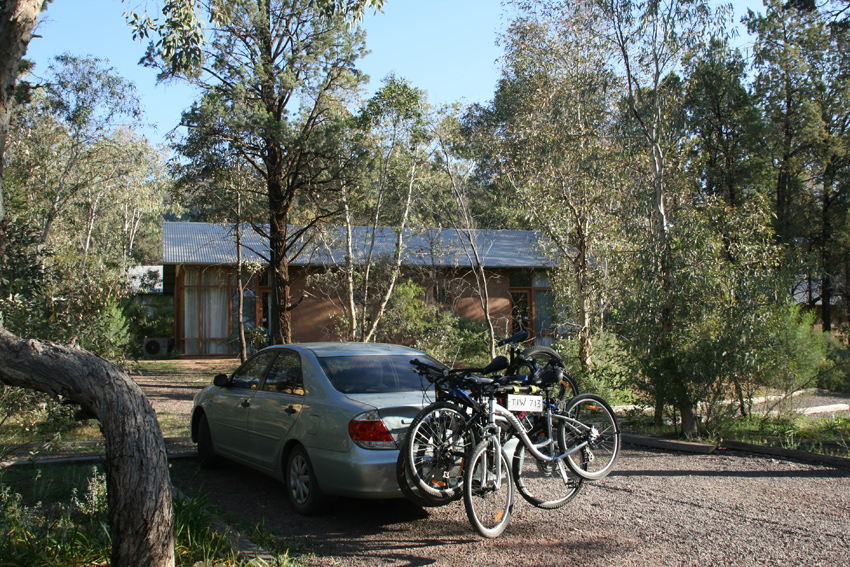
Satisfied with my morning’s work I head back to the chalets for a shower and lunch at one of the two dining areas. Chalets, dining areas, a well equipped general store and even a small swimming pool for the summer heat; not really roughing it but on the other hand there is abundant wildlife just a stone’s throw away. SA at its very best.

Accommodation Wilpena

Accommodation Wilpena


Cheers

Baz


Brougham Park on a Winter’s Afternoon

7 Jun

Dear Reader:

It is late in the afternoon and a bit on the chilly side. Grey skies and showers have alternated all day with patches of blue and occasional bursts of sunshine through the clouds. My car is parked in O’Connell Street where I am meeting friends in an hour for a bite to eat then a movie at the art deco Piccadilly Theatre. Typically, and despite the weather, I have arrived a tad early with camera in hand, hoping that I might encounter a little urban wildlife.

O'Connell street has a woderful collectionof cafes and restaurants

O’Connell street has a woderful collectionof cafes and restaurants


At the end of O’Connell St the road curves down into the city through a little patch of parkland. Asphalt paths cross this little green oasis which is dotted with tall eucalypts, pines and several large Moreton Bay Figs. I can hear parrots calling in the tree tops and eventually I spot a rainbow lorikeet shuffling along a branch high in the crown of one of them. With a flourish of feathers, a second bird appears and the parrots start to preen and gently peck at each other. They seem to be a mating pair settling in for the night. Nearby a lone eastern rosella appears to be looking on with a touch of sad envy…anthropomorphic, I know.

Just dropped in to say Hi

Just dropped in to say Hi

A lone eastern rosella sillhouetted against the late afternoon sky

A lone eastern rosella sillhouetted against the late afternoon sky


I sit and watch the birds for a few minutes while scanning the rest of the tree with my telephoto lens when I notice the furry coat of a possum wedged in a hollow. I toss a couple of pebbles against the branch. The brown patch moves and a tail appears for a second as the owner moves further into the tree; definitely a possum, probably a brush tail as they are far more common than their ring tail cousins.

Daytime view of a brushtail possum

Daytime view of a brushtail possum

Parkland possums forage at night

Parkland possums forage at night


On the eastern side of the park the imposing facade of the Brougham Place Uniting Church is framed by the massive leaves of an old fig tree. There are birds flitting though the foliage but in the afternoon shadows it is impossible to identify, let alone photograph them.

Brougham Place Uniting Church across park

Brougham Place Uniting Church across park


Before heading back up to my parked car I walk further down Brougham Place alongside a red brick wall that cordons off one of the area’s classic old mansions. A tangle of olive tree branches straddle the top of the wall and deep in their shadows a pair of crested pigeons are finding a sheltered place to roost.

Classic homes and businesses surround the park

Classic homes and businesses surround the park

Crested pigeons in olive tree

Crested pigeons in olive tree

Even on a cloudy winter’s afternoon, Adelaide has yet again delivered a memorable wildlife experience; a fascinating and ever-changing urban ecosystem available to anyone who takes a few moments out of their busy day to stop and look.


Thanks for reading my work

Cheers

Baz

North Adelaide……the lion circuit

8 May

Dear Reader:

It is a mild sunny morning and I am enjoying one of my favourite bike rides. Starting at The Lion Hotel I ride away from the city along Melbourne Street to the Park Terrace intersection. The street is an eclectic mixture of cafes and niche retailers selling anything from clothes to antiques and Persian rugs.

2

Classic old building converted into shops and galleries


Crossing Park terrace I wind my way through narrow streets and past some lovely old homes to intersect the path that runs alongside the Torrens River before it hits the city proper. The river has cut a narrow gorge through the ochre coloured rocks and tall eucalypts dominate the trail. A pair of rainbow lorikeets is fussing around a nesting hole and one bird takes flight as I dismount to take a closer look.

P1030399

Rainbow lorikeets nesting


A wooden boardwalk descends towards the river and the weir that controls the water flow. Common pigeons can often be seen foraging along the steep hillside early in the mornings. I think that the clay might supplement their diet and aid digestion.

5

Boardwalk trail along the river


6

Common pigeon feeding on cliff-side


Where the walkway levels out a small bridge splits the trail with one path leading back into the city and the other north east to the foothills. I head for the city. The track is flatter here and I pass numerous joggers and other cyclists all enjoying the fine weather.

7

Foot and cycle crossing near St Peters


4

Large dragonfly resting in a bottle brush near the river bank


Just past the little foot bridge the path sweeps under the much larger Hackney Road Bridge that carries the majority of traffic into the eastern side of the city. Here, the river widens, slows and becomes the Torrens Lake. As if to herald the change, a graceful snowy egret stands sentinel-like amongst the reeds watching for prey. Further along the waterway, a great cormorant perches close by with similar intent. These larger predatory water birds seem to indicate a greater abundance of prey in the lake.

8

Signage explains Aboriginal connections and other historical facts


9

Great Cormorant perching on the lake behind the zoo


egret edit

Egret hunting in reeds


Although the path follows the lake right along the northern edge of the city, I only ride a couple of hundred metres further to the Frome Road Bridge. Pausing briefly to take in the view of the lake, city and zoo from the top of the bridge, I turn right and head past the playing fields riding parallel to Mackinnon Parade through an avenue of massive, stately eucalypts. Cyclists, joggers and football players of all codes share this green space with cockatoos and other parrots that squawk in the trees and feed in the grass.

10

Cockatoo foraging on the oval near McKinnon Parade


Left near the end of the tree line and I’m back where I started and ready for coffee or breakfast at The Lion.

1

Back at The Lion


A brilliant way to spend the morning!!

Try it some time!!!

Cheers

Baz

Robe…..raptors, reptiles and rough roads

7 Feb

Dear Reader:

To be entirely honest, the track hadn’t looked too difficult. My tyres were suitably deflated and the little Suzuki had a punchy V6 motor. What the hell! I backed up onto the hard packed dirt road, gunned the motor and headed up the sand dune towards the beach, scaring the daylights out of a pair of emus that had been feeding in the coastal scrub.

A pair of emus feeding in the coastal scrub

A pair of emus feeding in the coastal scrub


Marker posts driven into the sand had indicated the route was suitable for 4WD but I lost a little traction on the climb and one wheel slipped off the trail. The car slid, the sand pushed up hard underneath and there I was, stuck. Over the next half an hour I tried every way I could think of to get free from the sand trap; brush under the wheels, digging out some of the sand wedged under the chassis and swearing in several languages; all to no avail. I wasn’t going anywhere.

The edge of a coastal dune

The edge of a coastal dune


Feeling rather stupid and just a tad worried, it was 40C and though I had a water bottle and my mobile phone, it was a good hour’s walk back to the main road. Furthermore, I couldn’t remember seeing any signs of habitation when I had driven from Robe into the Little Dip Conservation Park earlier in the day. But my choices were somewhat limited and so, with my camera slung over my shoulder, I started off to get some help.

Numerous frehwater lakes in the the conservaion park provide a haven for wildlife

Numerous frehwater lakes in the the conservaion park provide a haven for wildlife


Within half an hour of trudging along the sandy trail I realised this was going to be a hard walk. Every 30 minutes I found a little shade took a sip out of the bottle and rested for 5. Eventually I reached the junction of the trail and the main road back to town. Sitting quietly in the shade of a park information sign, I sipped on my water bottle and waited for a few minutes in the hope that another vehicle might be heading my way. No such luck, but a rather feisty bearded dragon did saunter across the road and give me a long hard stare before disappearing into the scrub.

Bearded dragons tend to freeze when threatened relying on their camouflage to avoid predators

Bearded dragons tend to freeze when threatened relying on their camouflage to avoid predators


Suitably unrefreshed and distinctly grumpy, I started along the road back to Robe. Earlier in the day and in stark contrast to my present predicament, I had been enjoying a civilised meal of local crayfish and salad in a boutique restaurant. After a couple of kilometres I noticed a swamp harrier that had settled on a fence line after scanning the fields for prey. The fence ended  in a cattle grid  near a long driveway that led to a farmhouse that I had not seen earlier. It was one of those typically Australian country homes, old sandstone with return verandahs that spoke of generations of farmers that worked this rugged landscape.

A swamp harrier rests on a fence post

A swamp harrier rests on a fence post


It turned out that I was in luck. The farmer, who was tired of rescuing inexperienced off roaders, kindly offered me a drink and some sandwiches. When I told him I was in the park photographing wildlife for a children’s book on reptiles he shared some of the interesting encounters with native animals he had experienced recently. Ten minutes turned into a couple of hours and because of our mutual interest in natural history, he offered to use the farm truck to haul me off the dune.

The kindness of strangers

The kindness of strangers


As we approached my SUV I noticed the curved imprint of a large snake that had taken shelter under the front of the vehicle. Now that would have made a good shot!!

A brown snake flicks out its forked tongue to pick up chemical signals given off by prey.

A brown snake flicks out its forked tongue to pick up chemical signals given off by prey.


With the car back on track we sat in the scrub and had a cold drink before I headed back for a shower and a good night’s rest. Offering to pay for my rescue did not seem appropriate. Instead, I promised to send him some copies of the wildlife books I had recently written for his grandchildren and to stop in for coffee the next time I headed down to Robe and the limestone coast.

Many of Robe's restaurants, galleries and B&Bs are based in classic old buildings

Many of Robe’s restaurants, galleries and B&Bs are housed in classic old buildings


Until our next excursion

BAZ

PS

I think the raptor is a swamp harrier; any help on this identification would be appreciated

B

Crossing the Creek

30 Nov

Dear Reader:

In my other life I am a teacher and my school has the unique advantage of having a creek running through the centre of the campus neatly dividing us into two quite distinct entities. I say advantage but to those less enamoured by the lure of nature it is seen, more as a barrier; to each their own. Every day I cross the creek on at least a half dozen occasions and every day I see something interesting that I point out to my students in the hope that it might promote a little engagement with the non-digital world. Duelling magpies, mating dragonflies and the occasional brown snake have all been prime time features.

Baz teaching creek studies on the bridge

Baz teaching creek studies on the bridge (click all images on page to enlarge)


Education aside, the creek is a wonderful resource for the people who live in the area and walkers, joggers and cyclists alike use the pathways that run along the banks. Currently, the creek is starting to dry out as spring fades and summer breathes its hot northerly winds across the city. But there is still a diverse mixture of wildlife taking advantage of the receding water. Both black and maned ducks have raised their ducklings in the small pools near the school bridge and chestnut teal with their striking markings are not uncommon.

Black ducks and chestnut teal

Black ducks and chestnut teal


My creek runs through the suburb of Mawson Lakes which has been fashioned around a series of artificial lakes that in themselves are home to various water birds, turtles and huge carp. The central shopping area is a good place to start a walk as it has a nice little cafe overlooking the main stretch of water and the coffee is good. Mawson Lakes is a twenty minute train or bus ride from the city and the train station sits on the northern edge of quite a sizeable expanse of swampy wetland.

Mating dragonflies

Mating dragonflies


The local council have planted bushes and trees along the length of the creek which attract a variety of birds. Rainbow lorikeets seem to be around the area throughout the year with the greatest numbers occurring when the eucalyptus trees are flowering. They provide these raucous little parrots with the nectar, seeds and blossoms that are the bulk of their diet.

Rainbow lorikeet feeding on eucalyptus blossoms

Rainbow lorikeet feeding on eucalyptus blossoms


During my most recent foray across the creek it was large water birds that dominated the reedy watercourse. Ibis and herons are quite common but one of the children rekindled my faith in the observation abilities of twelve year olds when she noticed that one of the ibises had a different shaped beak which it was swinging through the water rather than probing. It turned out to be our first spoonbill for the year.

Spoonbill feeding

Spoonbill feeding


Until our next chat

Baz