Tag Archives: South Australian wildlife

A Walk to the Falls

12 Jul

Dear Reader

Last Saturday was a classic Adelaide winter’s day. It had rained the night before and a fine patina of dew decorated the shrubs in my garden. The sky was clear and despite a chill in the morning air it promised to be sunny and dry; perfect conditions for a walk in the park. Not any park though. My park of choice was a little conservation reserve nestled in the foothills about 20 minutes from the city centre. Like Waterfall Gully,  Morialta Conservation Park is graced by a series of waterfalls and steep walking trails that cut through a variety of classic bush habitats.

AB Typical sandstone and eucalypt bushland within the park

Typical sandstone and eucalypt bushland within the park

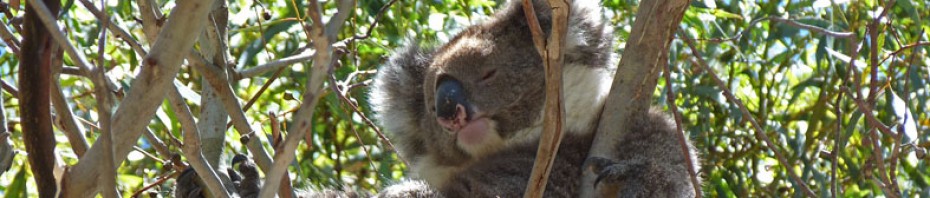
 The drive took me a little longer than expected as I was waylaid by the smell of freshly cooked pastries emanating from a little bakery. My rucksack now stocked with enough calories to sustain my upcoming physical endeavours and probably those of the next week, I pulled into the little car park alongside the creek, hung a camera from my shoulder and set off up the southernmost trail. The sun was still low in the sky and only the southern face of the steep-sided valley benefited from it.  I had walked just a few metres and was emerging from the shade when I noticed some walkers standing below a tall eucalyptus tree pointing excitedly at one of the higher branches. I followed their obvious line of sight and there, nestled into the fork between trunk and branch was a fairly large koala doing what koalas do best ….stretching out and resting.
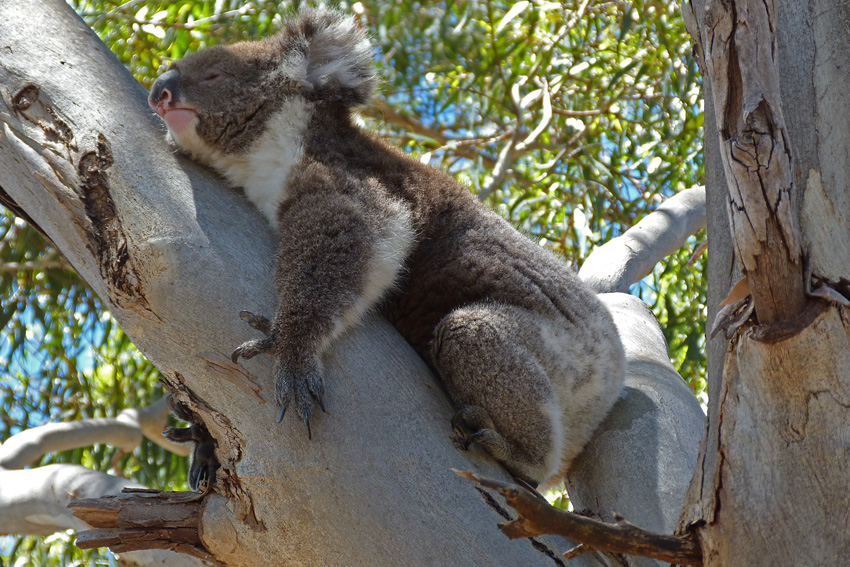
AC Koala in tree near the trailhead

Koala in tree near the trailhead

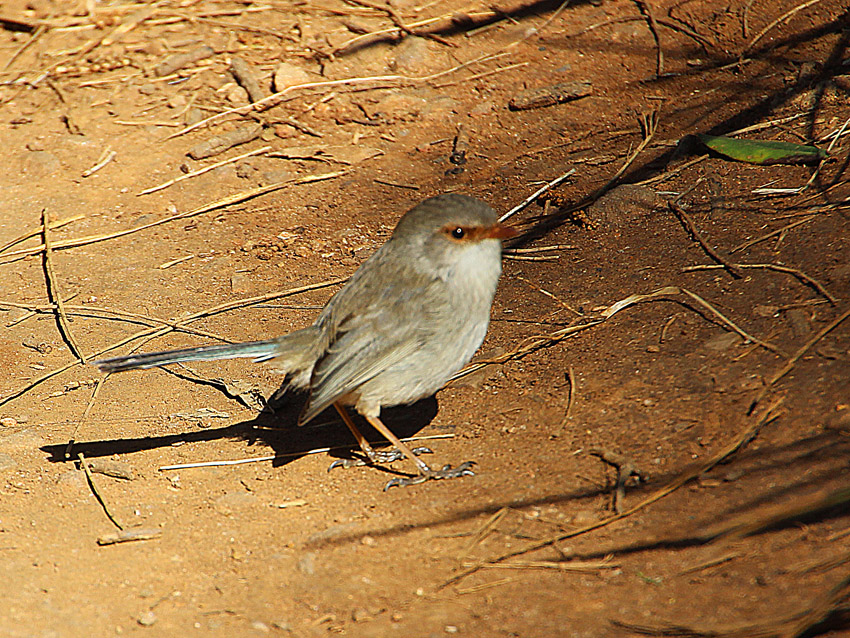
The koala was an unexpected and encouraging start to the day and after spending few minutes watching it I started up the trail with a fair degree of optimism. Winter is never the best time for wildlife. Plants have fewer flowers and fruits and the insects that are attracted to them are in short supply. Of course there is always an up-side when it comes to nature and the damp ground makes it easier for some bird species to fossick for grubs and worms. A pair of blue wrens seemed to be making the best of these conditions, madly hopping from one tree branch to the next then down onto the ground in a never ending search for food. Their constant motion and the morning light gave me only a few half-chances to capture some images and no hope of freezing their motion completely. I did manage a couple of shots that showed some of the obvious differences between the male and female of this species.

AI Male blue wren

Male blue wren

AH Female blue wren

Female blue wren

A little further up the track I stopped and sat on a large boulder and scanned the undergrowth for insects or lizards. There was nothing to be seen or heard but I did notice some honeydew plants growing amongst the grasses near a rocky outcrop. These delicate little plants have tiny inverted cups radiating from their stems. The cups are fringed by small filaments and have sticky, viscous fluid in the centre. Unwary insects are trapped in the sweet heart of the cups and the filaments close on them to seal their fate. The unfortunate bug is then digested by its ‘vegetable’ captor providing essential nutrients that other plants might get from the soil.
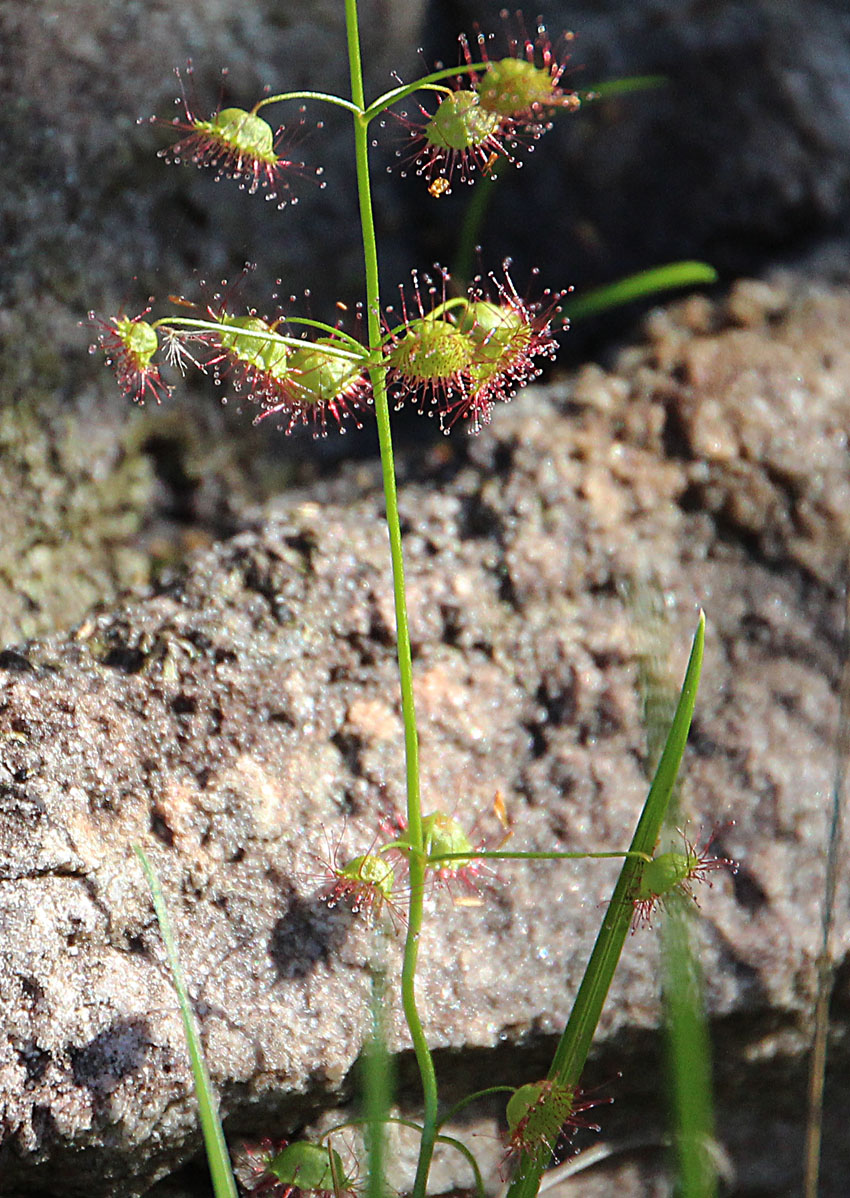
AG Honeydew plant

Honeydew plant


Colourful wrens, cute koalas and carnivorous plants had provided quite a range of wildlife in the first kilometre or so of my walk. As expected, the wildlife had not been prolific but there always seemed to be something around the next bend if I took the time to pause and use all of my senses. The next few kilometres were enjoyable but largely uneventful. A few honeyeaters flitted between late flowering shrubs, a magpie nervously snatched a drink from the creek while a squadron of miner birds squabbled in a stand of acacia bushes. It was not until I was almost back to the car park and walking below some tall, pale eucalyptus trees that bordered the creek that my next significant encounter occurred.
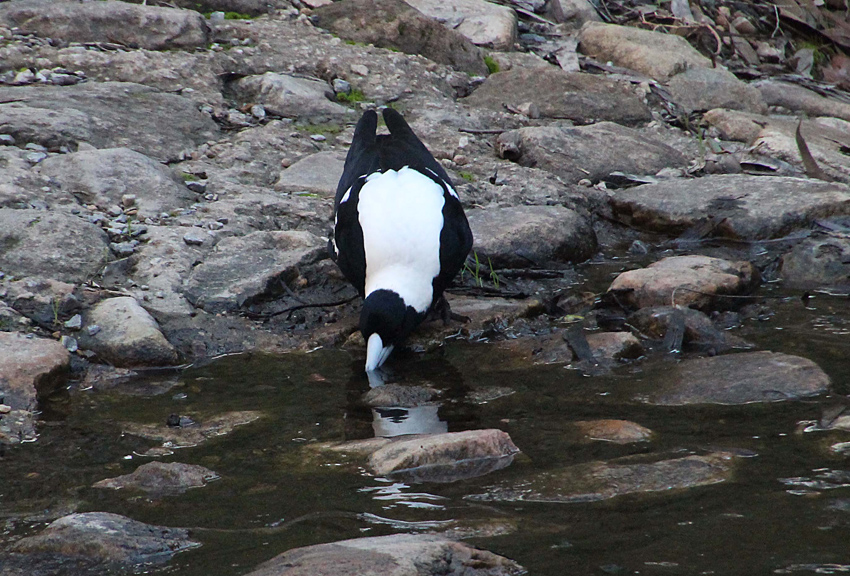
AD Magpie drinking from the creek below the falls

Magpie drinking from the creek below the falls

A small group of rainbow lorikeets had gathered on the branches of a massive gum tree about 10 metres off the ground. They were screeching loudly and seemed quite agitated. I moved away so as not to scare them and sat quietly in the cover of some thick bushes watching closely through my long lens. The source of their consternation soon became obvious; a pair of galahs had commandeered a nesting hole in the trunk of the tree. Over the next half an hour I witnessed a heated real estate battle develop as a continual rotation of chattering rainbows tried to dislodge their larger rivals. Eventually the galahs moved off and one of the rainbow lorikeets immediately flew down and started to peck around the perimeter of the nest hole.
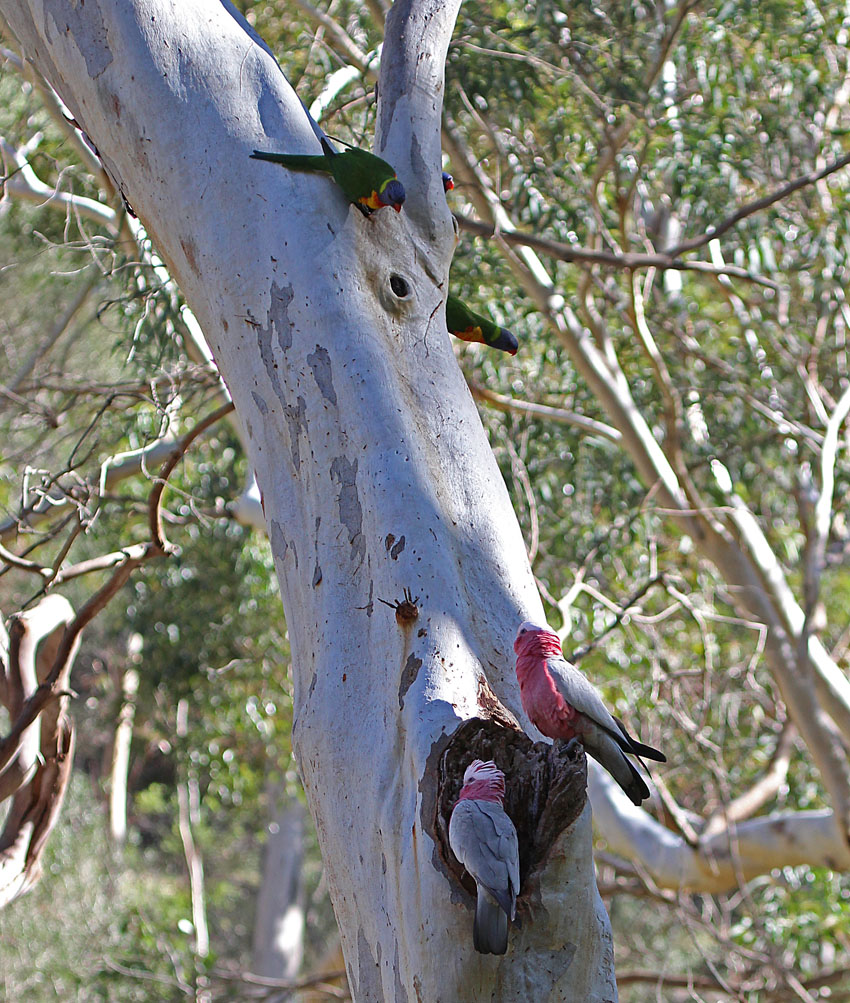
A A pair of rainbows watching galahs at nest site
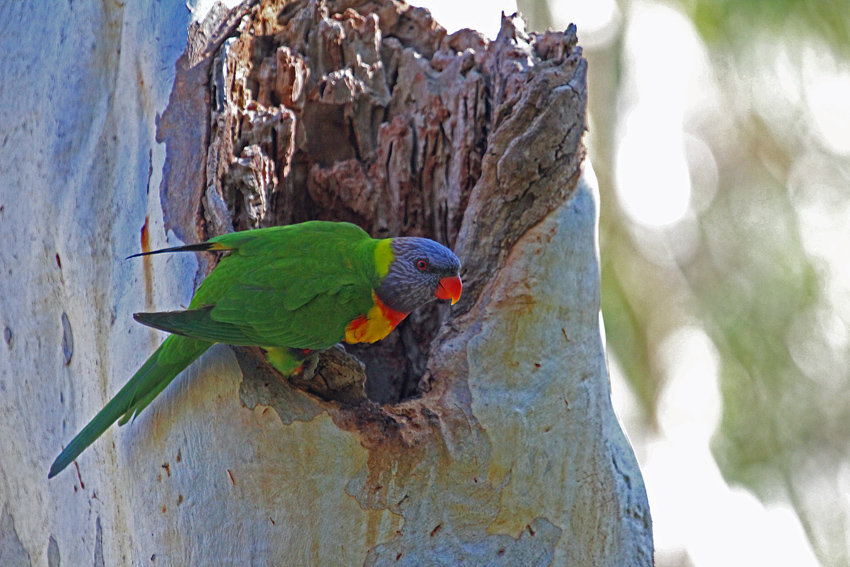
A pair of rainbows watching galahs at nest site

AF Inspecting the new proerty

Inspecting the new property

I finished my walk sitting on the edge of the creek with a cappuccino from the coffee van that plies its trade on the weekend and a pastry from my stash. Not a bad way to spend a sunny winter’s day for any wildlife enthusiast.


Thanks for taking the time to read this post.


Cheers

Baz  

Red Earth Wildlife

28 Jun

Dear Reader

South Australia’s capital Adelaide is a wonderful starting point for long country drives that take you through a variety of landscapes ranging from seemingly endless wheat fields to rugged coastline and dense bushland. The  city sits in the curve of the Mount Lofty Ranges. It has a fine Mediterranean climate with hot summers and cool wet winters. However, as you travel further west both the terrain and the climate change dramatically. The grassy plains and forests give way to saltbush, desert and scrubland. Even the earth beneath your feet looks different, the browns and greys turn to a rusty red, a signature feature of this iron rich land.

AB Bush track and old sheep fencing near Whyalla

Bush track and old sheep fencing near Whyalla

I have travelled west on many occasions to visit family on the Eyre Peninsula. They live in Whyalla, the state’s largest city after Adelaide. Whyalla lies on the coast and is a steel making centre where the iron rich rock that paints the landscape its terra cotta shades is mined, processed and exported to all corners of the globe. The city is well positioned for exploring the rugged Eyre Peninsula and has good accommodation as well as excellent fishing and interesting mangrove stands along the shallow foreshore. However, it is the nearby rugged bush landscape and hardy desert creatures that carve out an existence from it, that never fail to inspire me when I visit.

AB Different layers of arid scrub on Eyre Peninsula

Different layers of arid scrub on Eyre Peninsula

My last visit a little, at the end of this summer, was particularly rewarding. We had been without significant rain for well over a month which often brings the wildlife closer to the town where there is casual water and food, albeit not quite their natural diet, around parks and other public spaces. As many desert animals are crepuscular or nocturnal they tend to head back into the shelter of the surrounding bush during the day when the light is better for photography. This behaviour results in a narrow window of opportunity, during the early morning and late afternoon, for wildlife watching.

AE desert scrub near Whyalla

Red Kangaroo in semi desert terrain near Whyalla


A morning drive along one of the narrow bush tracks, used by local farmers to repair fencing, brought me to a large clearing and a brief encounter with a huge male red kangaroo. He was alone and grazing on some low shrubs and grasses and moved slowly into the bush as I approached. Several of the smaller grey coloureds females bounded across the track as I moved further along the trail and I caught a passing glimpse of an emu way picking its way through some stands of Myall trees. For the next hour the wildlife viewing was much the same, a few roos in the distance and the occasional bird of prey and flights of parrots flushed out of the surrounding bush.

hite-browed Wood Swallow perched near its nest in a fence post

White-browed Wood Swallow perched near its nest in a fence post


Later in the evening I drove along a different trail and had to engage low ratio 4WD to scramble my SUV across some steep shale covered sections. But it was well worth it when I climbed out and walked slowly through a particularly promising section of scrub. Crouching low in the bushes I spotted a couple of white browed wood swallows, a species I had never photographed and certainly a beautiful little bird and one superbly adapted to this green grey outback country.  

AF Tawny frogmouths group camouflagedin Myall Scrub in the late afternoon

Tawny frogmouths group camouflaged in Myall Scrub in the late afternoon


Satisfied with my afternoon’s work, I checked the ground for ants, scorpions or other pain inducing critters, sat down under an old, weathered Myall tree and pulled out my drink bottle. Sitting quietly in the bush is a treat for a city guy and I was going to enjoy some time alone before driving back for dinner.  However, it turned out that I was not alone in my choice of resting places. Perched on one of the branches, no more than three metres from away, was a family of tawny frogmouths; an insectivorous, nocturnal species unique to Australia that has an owl like appearance and the most amazing camouflage that I have ever seen. The birds were seeing out the daylight hours in the shade and paid me no heed as remaining still is a crucial part of their survival strategy. A final series of images to end an amazing morning in the bush.

Cheers

Baz

← Back

Thank you for your response. ✨

South Coast Sealions

31 May

Dear Reader:
Last weekend I was walking along the rocky foreshore of the Deep Creek Conservation Park at the tip of the Fleurieu Peninsula around 90 kms from Adelaide. A few metres from the shore a rush of water and a speeding grey shape caught my attention. ‘Dolphins at play’ was my first thought but a closer look dispelled that idea. The twisting motion was suddenly more than a little familiar… sealions. A pair were frolicking or fishing close to the rocks on the inside of the powerful rip current that surges between KI and mainland. They were too fast for me to take a shot but my thoughts drifted back to my first encounter many years ago in this same stretch of water.

AACP1070291 edit

Deep Creek foreshore with grass trees in foreground

We were *spear-fishing along this same section of coast on a day that would have been better spent sleeping in. There was a stiff sea breeze and the visibility was around 2 meters at best. I was returning to the surface after scouring a rocky ledge near the bottom for zebra fish and just one hard kick of my fins from the next breath of air when a grey shape rocketed out of the gloom just below me.  In an instant my assailant turned to face me with breathtaking agility. Instinctively, I raised my spear gun, slipped off the safety and prepared to meet either a bronze whaler or white shark.

AADzebra 2 edit

Zebra fish on a rocky reef feeding amongst brown algae

Needless to say, my reflexes combined with the drag of the water meant that by the time the predator had reached me the gun was in no position to be of any use. The next moment I was face to face with my attacker. The large bull sealion came to a sudden halt, only inches from my facemask; its formidable set of teeth, bushy whiskers and baleful eyes providing an image that stays with me to this day. The sea lion performed a few more acrobatic turns as if to point out my ineptness in its watery home then disappeared back into the murky depths.

AAEsealion 8red

Sealion underwater near Deep Creek

Australian sealions (Neophoca cinerea) are a threatened species that inhabit the temperate waters of Western Australia and South Australia. They grow to around 2.5 metres in length and weigh up to 300Kg; the males are larger than females. Sealions feed on fish, molluscs and crustaceans and in the past were persecuted by fishermen and hunted for blubber and meat. Unlike seals, sealions move comfortably on land using their flippers rather than dragging themselves. They have external ears; hence their family name Otariidae . Sealions breed on isolated beaches and rocky platforms often with rock pools close by where the pups can swim safely while being weaned. Their major predator is the great white shark.

AABsealion 5 edit

Female sealion weanng pup on a sheltered beach

This was not my last encounter with these glorious South Australian mammals but it was my first and most memorable. In a later blog I will tell you about an exhilarating weekend on Kangaroo Island photographing sealions.

AAAustralia marine and coast sealions edit

Male sealion asserting dominance on a breeding site

Cheers
Baz

*Apologetic footnote…..Many of the Australian wildlife photographers and naturalists that I have encountered developed their passion for the natural world and much of their field-craft with a rifle or rod in their young hands before graduating to pen and camera.

← Back

Thank you for your response. ✨

Rare Birds on the Beach

16 May

Dear Reader:
This week’s post is coming to you from Southport, a surf beach just south of Port Noarlunga but still sheltered by the reef (see Jan 21st post). I am sitting in a small cafe sipping a cup of coffee and reflecting on the last couple of hours spent wandering through the sand hills and along the beach.
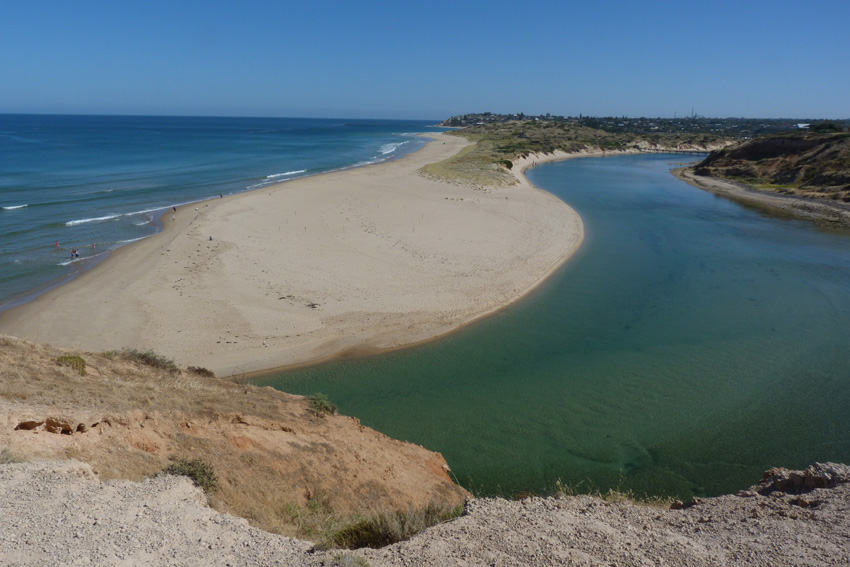
I had driven to Southport in the early afternoon with the specific intention of walking along the tidal flats, where the Onkaparinga estuary drains into the sea, to photograph crabs and wading birds. However, I had not counted on such a high tide; the mudflats were covered and I could only access the walking trails that meander through the sand hills from beach on the seaward side.

A Southport Beach, estuary with bridge in the background red

Southport Beach, estuary with bridge in the background

I parked by the roadside and crossed the river on a small bridge below the cliff line and spent a few minutes watching anglers casting for bream and garfish. Nearby, a father and son paddled a sea kayak towards the ocean disturbing a small flock of black swans as they edged close to one of the steeper banks where the sandy slope of the dunes ran into the water.

B Kayaking below the cliffs red

Kayaking below the cliffs

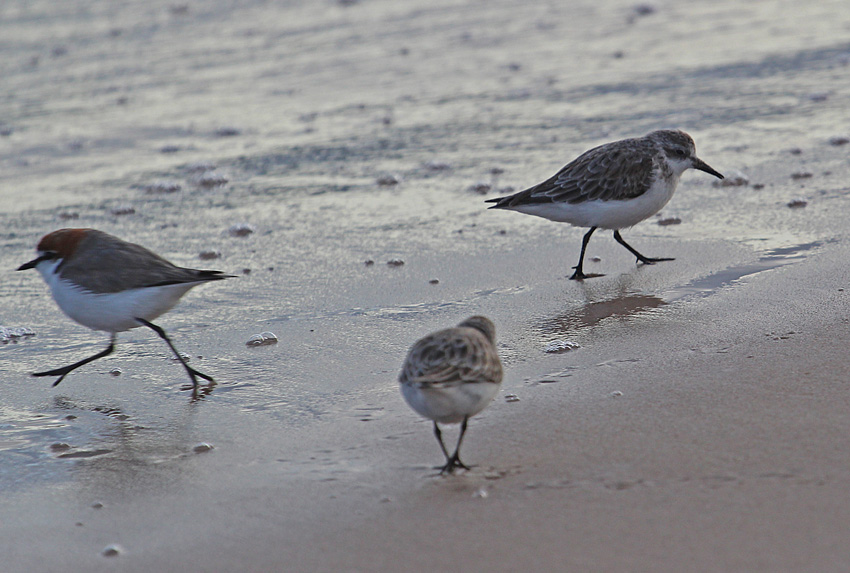
As I traversed the final set of dunes above the beach I felt the afternoon sea breeze on my face and caught the muffled crash of waves breaking on the shore. Several surfers were enjoying a choppy break and more adventurous anglers were wading into the white water to cast for salmon. I headed down to the sand to find one of the trail entrances to the dunes that open onto the beach. As I trudged through the soft sand I noticed a group of diminutive shore birds racing between the foamy lines of waves curving up the beach. At first glance they appeared to be similar in appearance but a more critical look through the telephoto revealed a mixture of species and sexes.

D Mixed group of waders foraging between waves red

Mixed group of waders foraging between waves

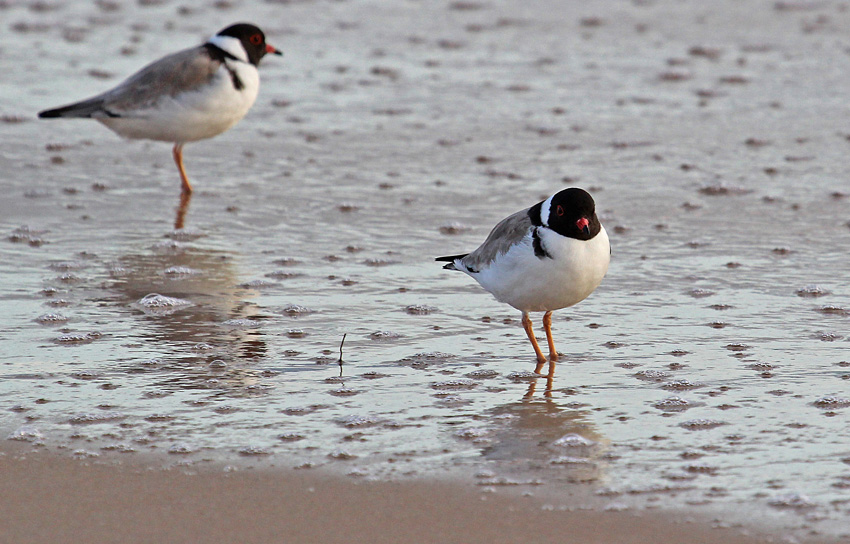
One particular pair stood out amongst the others. I held my breath, refocussed and squeezed off a series of shots, dropped to one knee to better incorporate the water into the background and fired again. I was photographing a pair of hooded plovers, an endangered species that nests on open beaches and a bird that I had only glimpsed at a distance along the Coorong’s extensive beaches further south. As I captured the last image, the wind picked up and the little flock of waders lifted as one and flew further down the beach.

E Hooded Plovers red

Hooded plovers

A sat for a few minutes, smiling inwardly as I reviewed the images then continued down to the trail entrance. As I climbed back up into the dunes I reflected on the extraordinary beauty and diversity of this stretch of coastline, a mere 20 Kms from the city centre. Walking through the dunes was like entering another world made up of: low scrub, wiry grasses and a thick layer of undergrowth fashioned from the skeletal remains of branches and tree trunks. I walked slowly and paused frequently observing a variety of insects, several lizard species and an assortment of birds including: honeyeaters, magpies and crested pigeons.

C View of the beach from the dunes in the afternoon light red

View of the beach from the dunes in the afternoon light

But today it was the ocean that called and as the light started to fade I took another track down to the shoreline and worked my way back to the section of beach where I had encountered the plovers. Sadly, the plovers were long gone but a little group of red capped dotterels remained, bedding down for the night in the footprints that I had left in the sand when I walked this way just an hour ago.

F Red Capped Dotterels bedding down for the night red

Red capped dotterels bedding down for the night

My coffee is finished now and it is time to drive home and share this afternoon with you.

And yes, dear reader, I missed the tide but somehow I think it might have been for the better.

Sincerely
Baz

← Back

Thank you for your response. ✨

Arkaroola’s Emus

19 Apr

Dear reader 

This last week has been quite exciting. Old friends visited from Texas and, as is our custom, we headed to one of the most remote areas of the state to indulge our passion for wildlife and wild places. My choice was Arkaroola a place that I had visited many years ago on an indigenous cultures study tour and an environment I was eager to experience again.  

Arkaroola is a world heritage listed site in the northern Flinders Ranges 600kms north of Adelaide. It is a landscape of harsh granite peaks and deep, enchanting gorges; a favourite haunt for off road drivers, bush walkers and naturalists. Despite its isolation, facilities at the visitor centre are first class providing accommodation, a restaurant, supplies and fuel.

C Dry creek bed near Arkaroola with Sturt Desert Pea in the foreground

Dry creek bed near Arkaroola with Sturt Desert Pea in the foreground

The road from Wilpena in the southern part of the ranges to Arkaroola is largely unsealed and traverses an iconic selection of Australian arid zone bushland ranging from wide brown plains and grassland to forested scrub. The road is traversed by numerous ephemeral creeks some of which wind back into interesting rocky gorges. Each time I have driven this route the wildlife that I have encountered has been different; flocks of parrots and red kangaroos one year, sightings of a variety of lizards and raptors another. However, it was my last drive north that was most memorable.

B Driving to Arkaroola

Driving to Arkaroola

The first section of the road from the classical little outback town of Blinman with its pub, art gallery and general store, was largely uneventful. A few wedge tailed eagles soared on thermals in the distance and a couple of small flocks of corellas and galahs screeched at us as they took flight from larger eucalypts in the dry creek beds. The only kangaroos were road kill victims.

A Blinman    the last outpost before a long bush drive

Blinman the last outpost before a long bush drive

Around 50 kms north of the town we drove a little way up one of the creek beds clattering over the flat rock and sand in 4WD then parked in the shade of some taller gum trees for a bite to eat. Almost immediately, a male Eeu guiding his procession of chicks, emerged from behind some bushes where they had been feeding. As we approached he sauntered off up the creek with feathery rump swaying and his little family ‘in tow’.

EA Male emu with brood of young stripy chicks

Male emu with brood of young stripy chicks

Emus are the world’s third largest bird after the African ostrich and Australasian cassowary; they grow to a height of 2 metres and can weigh almost 40 kgs. Emus run at speeds over 60 kph. This bird had to be a male as only males incubate the eggs and care for the young.

A Emu bad hair day

Emu bad hair day

This was the first of many encounters over the next few days. Perhaps the most unforgettable was just a few kilometres outside of Arkaroola. We were rounding a sharp bend in the road when a pair of emus suddenly appeared on the road hurtling towards us. The pair seemed oblivious to our presence and wholly engrossed in some kind of emu ‘high jinks’. They pushed and shoved at each other while still running, one falling sideways, rolling over then leaping into the air to continue the game. We skidded to a halt and watched them cavort privileged to see such a candid display of exuberant animal behaviour. After a minute or so they settled down and wandered up a rocky together slope feeding.

OLYMPUS DIGITAL CAMERA

The boys are back in town

Our final emu encounter occurred near one of the few permanent waterholes in the region. Two large birds suddenly appeared from the scrub and ran alongside the vehicle for a couple of hundred metres then abruptly cut across us and headed for a stand of tall eucalypts. We pulled over and walked slowly down to the trees and watched them join up with another group and start drinking. In the soft evening light, the scene was really quite unforgettable and the Emus though aware of our presence, did not seem uncomfortable allowing us to capture some memorable images.

D Group of Emus at waterhole in the evening

Group of emus at waterhole in the evening

Cheers

Baz

← Back

Thank you for your response. ✨

Mad March Possums

5 Apr

Dear reader

Each season in our southern state has its own natural highlights, For many March in Adelaide is a very special month; one where culture and wildlife seem to interconnect in rather unusual ways.

The city of Adelaide is separated from the outer suburbs by over 760 hectares of parklands. They consist of playing fields, open woodland, creeks and gardens. Most of the year, the parklands are frequented by joggers, cyclists and picnicking families. However, each March the serenity of the eastern parklands is replaced by the roar of V8 motors, the rhythms of international music and a surreal feast of various performing artists.

A Open woodland environment of the Adelaide parklands

A Open woodland environment of the Adelaide parklands

Now, you would think that such an onslaught of humanity; its sounds, lights and smells would frighten the daylights out of the parklands’ resident wildlife. Admittedly, the local birds do seem a little more nervous and the resident bat population somewhat more erratic in their coming and goings. On the other hand, the possum population seems to relish the activity. Although they are not obvious to the casual observer, when the troubadours, drivers and musicians retire for the night these masters of the nocturnal world emerge to search for the spoils of the day.

Fruit Bats or Grey- headed Flying -foxes are found in the Botanic Gardens which are situated within  the Parklands

Fruit bats or grey- headed flying -foxes are found in the Botanic Gardens which are situated within the Parklands

Over the last few years I have enjoyed the city’s March festivities and often wandered down the east end to take in a concert, play or watch the ‘V8 Supercars’ burn up the track. This year, I decided to walk home after a late night performance and was more than surprised to see a couple of common brushtail possums foraging near an overflowing trash can. Normally solitary, these cat sizes marsupials seemed indifferent to each other as they sought out some apple and banana leftovers, a welcome change to their usual diet of leaves, buds and native fruits. I was aware that possum numbers had generally declined throughout the state due to habitat changes and predation by feral animals, most notably cats. I watched them for a while thinking to myself that if a little party food on the side bolstered their survival chances who was I to take the purist stand on natural diets for our indigenous species.

Brush Tail Possums use their delicate paws and sharp claws for feeding, climbing and grooming

Brush tail possums use their delicate paws and sharp claws for feeding, climbing and grooming

Unfortunately, I was not carrying a camera and decided to return the next evening at the unearthly hour of 4 am armed with my DSLR and long lens, in the hope of capturing a few shots. I was not disappointed. One particular animal that was sitting by the side of a trash can taking stock of the menu decided to climb up into a nearby tree as I approached. Staring defiantly at me as I adjusted the flash setting to suit the telephoto, it conveniently struck a number of typically possum-like poses then promptly disappeared into the upper branches once the modelling session had finished.

A possum's yellow fur shows where its pouch is situated

The yellowish fur on a female possum’s fur shows where its pouch is situated

I crossed to the other side of the road and scanned some native pine trees with a high powered flashlight. The stand of trees was situated just inside the perimeter fence of the aptly named ‘Garden of Unearthly Delights’, one of the festivals most notorious attractions. I was hoping to flush out a ringtail possum, a smaller less frequently seen species. Unfortunately there were none to be found but I did manage to find a brushtail climbing the trunk of a large pine using its prehensile tail to hold on while testing the capability of a smaller branch to bear its weight.

Brushtail Possum foraging in a native pine tree

Brushtail possum using its prehensile tail while foraging in a native pine tree

On the whole it was a successful night though I would dearly have liked to see a ringtail. Perhaps another night when sleep eludes me and the lure of the city’s indigenous nightlife beckons I’ll capture that image.

Cheers

Baz

← Back

Thank you for your response. ✨

A Drive Along the Beach

20 Mar

Dear Reader

At the southern tip of the Fleurieu Peninsula the rocky cliffs and granite outcrops of Victor Harbor and Port Elliot subside into a long stretch of pristine sandy beaches. They are the product of aeons of erosion and define the area where Australia’s longest river, the Murray; meets the ocean. The beach is easily accessed from the old river port of Goolwa and the short 5 Km drive along its length is only possible in a  4WD vehicle, Even then, it is best to keep a close eye on the tide and have a little experience driving in soft, sandy conditions.

Four wheel drive entry to Goolwa Beach

Four wheel drive entry to Goolwa Beach

Over the last few weeks I have made the trip several times to photograph and observe the wildlife that lives along the tidal zone and in the windswept dunes. Twice, I reached the river mouth and once I had to turn back as the high tide and churned up sand made the going a little too difficult for my SUV.

Goolwa beach near the Murray mouth showing different environments

Goolwa beach near the Murray mouth showing different environments

The surf breaks for several hundred metres out to sea along this beach and sometimes you can be lucky enough to see a dolphin or the dark outline of a whaler shark hunting for Australian salmon or mulloway in the waves. However, most of the time it is the caspian terns that dominate the open ocean as they dive for schools of baitfish or rest on the wet sand ready to set off and hunt again.

You've done something different with your hair

You’ve done something different with your hair

In the shallow surf break a dozen different species of waders can be seen each exploiting its own niche with its specialised beak and hunting style. Diminutive sanderlings and dotterels race along the sand in between the wave fronts gleaning tiny invertebrates and worms too small to see. Small groups of oystercatchers use their broadened beaks to dig out cockles and prise them open while avocets use their slightly upturned bills to catch tiny crustaceans and other invertebrates swimming in the shallow water. In fact, what at first glance appears to be an homogenous continuum of beach; is in reality, a collection of micro habitats or niches, each exploited by its own particular species of bird.

Pied Oystercatchers feeding in the surf

I hope you enjoyed this jaunt along the beach and stay tuned for more South Aussie  adventures.

Cheers

Baz

← Back

Thank you for your response. ✨

One ‘Ticked Off ‘ Tiger Snake

16 Feb

 Field Notes

Dear reader

Sometimes life gets a little too busy and the pressures of work and family don’t allow me time to sit down, sort through my notes and put together a polished article. So I have simply edited my field notes in the hope that they will stand alone as an enjoyable account of my brush with one of Australia’s deadliest reptiles.

Setting

Late Summer, midday, on the banks of the river Murray near Mannum about 100kms NE of Adelaide. A smallish town, good pub with excellent view of river and great meals. Some nice antique and bric-a-brac shops, historic paddle steamer and houseboats to hire.

Notes

  • A pleasant drive from the city through the foothills.
  • Parts of the countryside is still green from good winter rains.
  • The rain shadowed plains on the other side of the ranges are quite dry and you can see the course of the river from the granite outcrops near Palmer.

    Clssical Murray river environment showing billabongs

    Clssical Murray river environment showing billabongs

  • We crossed the river on the Mannum ferry and drove along the edge of one of the billabongs.
  • Several small boats and a kayaker cruised past enjoying the sheltered environment away from the main channel.
  • The river level is high and there is quite a lot of debris along the bank.
  • There are numerous waterbirds foraging in the shallows and some parrots in the trees and I spotted a water skink on a concrete jetty near a bed of reeds.

    Pelicans feeding in the shallows near reeds

    Pelicans feeding in the shallows near reeds

  • I decided to explore a tangle of reeds and driftwood that was caught in the roots of one of the large river gums that grow on the edge of the bank.
  • As I pushed through some of the reeds I heard the distinct rustle of a fairly large animal moving away from me.
  • A sizeable tiger snake shot out from under a small log to my right and headed towards the water.
  • I froze momentarily so as not to alarm it unduly and steady myself to take a picture if it stopped-as opposed to freezing because it scared the .#$%%^&&  out of me.
  • Tiger snakes are one of the top ten most venomous snakes on the planet and can be rather aggressive when threatened. They feed on a variety of small riverside animals ranging from frogs and lizards to mice and birds. A large tiger snake can measure up to 2 metres. There are several varieties and the namesake stripes are not always obvious.
  • The snake paused after a few seconds and turned to face me.
  • It was about 3-4 metres away but looked unnervingly close through the telephoto lens.
  • The reptile had moved into the shadows and a quick review of my shots revealed a mottled and shady image.
  • I popped up the flash and fired another couple of frames.
  •  The snake did not like that and reared into a strike position as the second burst of light was emitted.
  • The results were startling, a Tiger Snake, mouth agape and fangs visible.

    Tiger snake striking

    snake striking

  • Time to leave and not annoy the tiger anymore
  • We continued to drive along the river bank track enjoying the scenery and had no more serious reptilian encounters other than a couple more skinks

    Water Skink near the river bank

    Skink near the river bank

  • Stopped  at the Pretoria Hotel on the banks of the main river
  • Great food, plenty of it and a glorious view of the river from the glass fronted dining room
  • Some pelicans feeding close to the river bank
  • Crossed back on the ferry then drove along the river towards Walker Flats to take in the views of the cliffs and an interesting stretch of Mallee scrub.

    Crossing the Murray at Mannum on the ferry

    Crossing the Murray at Mannum on the ferry

  • We have previously observed wombats here, foraging near the road in the late afternoon.
Wombat in sandy terrain within Mallee scrub near the river

Cheers

Baz

  • ← Back

    Thank you for your response. ✨