Tag Archives: sulphur crested cockatoo

Wildlife Around Chalk’s Campground

16 Dec

Dear Reader:

With the arrival of summer, grasses turn to gold with remnant shadings of green while pale gums add a subtle contrast to the landscape.

As the countryside flashes past on my way to the campground I notice a field of freshly baled hay. A flock of Sulphur Crested Cockatoos forages for any remaining seed heads.

Sulphur Crested Cockatoos

My destination is Chalk’s Campground, just past the Warren Reservoir on the road between Williamstown and Gumeracha. I am not intending to camp here; however, the interface between human habitation, rural zones and wilderness areas is an excellent place to encounter wildlife.
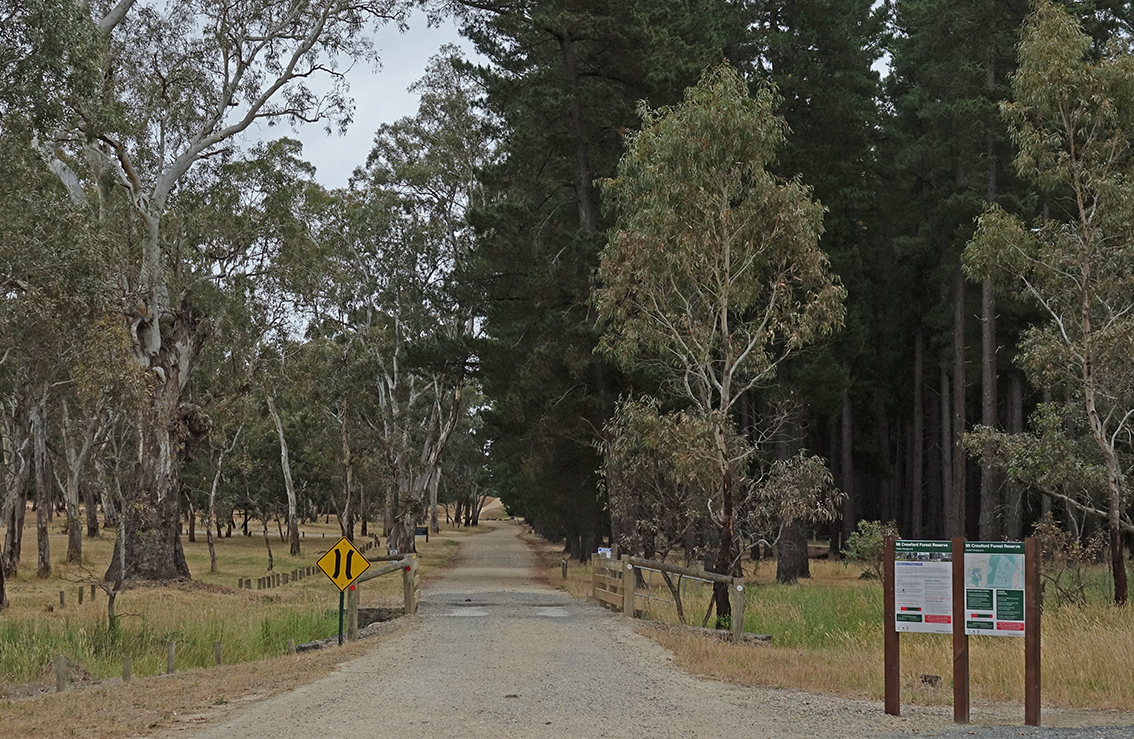
Although the campsite is closed between December and March, due to the danger of bushfires, it is still accessible for walking and is a destination along the famed Heysen Trail. I drove through the area a few weeks ago on a sunny day and spotted a Shingleback lizard in the undergrowth.

Although it is summer, the weather is overcast and photography a little more challenging than on my previous visit. I use the powerful lens of my Sony RX10 to scan the trees, bushes and ground in search of wildlife.  Common Brown butterflies are the most common animals. They are flitting between the grass and leaf litter where their excellent camouflage is most apparent.

As I walk around the campsite zone, I notice a group of Adelaide Rosellas perched in a pine tree. The birds are wary and I only manage to fire off a couple of long range shots before they take flight.

Bark is peeling off many large River Gums and I probe under it in search of millipedes, spiders, roaches and other bugs. Spiders are not my favourite creatures and I have often come across multiple Huntsman species under the bark. However, today’s arachnid is a jet-black spider which resembles the common Black House Spider.

It is time to wind up this excursion and I backtrack along a little creek towards the car park. On my drive home I will take a break at the Gumeracha Bakery and enjoy a tasty chicken pie and an indulgent custard tart.

In a final attempt to find some different animals, I decide to turn over a few flattish rocks (which I carefully replace in their original position) in the hope of finding one of the elongated skinks that commonly shelter under them. To my surprise, it is a large and very and active Garden Centipede that I unearth. And, on that note, I bid Chalk’s Campground farewell.

Until our next adventure

Cheers

Baz

 Additional notes

This is an easy walk and drive which is quite suitable for families and seniors. It is dog friendly.

 Please pass on this blog title and or contact information (URL) to any person or organisation with an interest in taking walks and enjoying wildlife in SA.

Click on these links and see more South Australian stories and pictures in my Weekend Notes articles as well as locating similar blogs on Feedspot’s top 20 Australian wildlife blogs

 https://www.weekendnotes.com/adelaide/writer/452/

https://blog.feedspot.com/australian_wildlife_blogs/

Druminoor Lake’s Birdlife

4 Mar

Druminoor Lake’s Birdlife

Dear Reader:

From the edge of a little bridge that divides the creek from the lake I can see a purple swamp hen using its elongated feet to delicately traverse a clump of reeds. These beautiful water birds also use the reeds as food and to construct their nests along the water’s edge.


Purple swamp hen


Crossing the bridge, I walk along a short gravel pathway to a viewing platform that overlooks Druminoor Lake, a small dammed area of Dry Creek just off Golden Grove Road.  It is an integral part of the Tea Tree Gully water management program. Their goal is to use water that runs into the creek in an environmentally sustainable fashion for the benefit of the local community.


Low water during summer


A centuries old red gum dominates the upstream end of the lake and I can hear birds screeching high in the branches. Using the extreme setting on my long lens I scan the tree tops and to my surprise there are both rainbow lorikeets and sulphur crested cockatoos in the foliage. Both parrot species noisy but together they produce a considerable din.


Sulphur crest real estate


Below a rock wall dam on the downstream perimeter of the lake, Dry Creek meanders through a steep gully overshadowed by more eucalypts. In a gnarled old tree a pair of lorikeets has chosen to nest in a knot hole half way up the trunk. I approach carefully but the birds takes flight and resultant blurred image of feathers in flight is rather satisfying.


A flash of colour


The grey trunks of long dead trees tower above the little lake. They are perfect nesting sites and vantage points for a range of bird life. Cormorants and ibises often perch on the limbs and parrots make use of the holes where branches were once attached. Occasionally a bird of prey will use them as a vantage point to wreak havoc amongst the smaller animals that gather around the lake which is a permanent source of water even in the drier months.


Ibis silhouette


There are several lakes and ponds along the track that stretches from Modbury through to Wynne Vale and all of them harbour quite a varied array of wildlife making this trail through Tea Tree Gully one of my favourite wildlife walks. Take a look and send me a message if you enjoy it. 


Cheers

Baz


Additional notes

This is an easy walk which is quite suitable for families and seniors with concrete pathways along Dry Creek and a viewing platform at the lake.


 I have recently spent time in Africa and the link below will allow you to enjoy images and text describing some of my encounters with the wonderful wildlife of Botswana and Zambia. I will attach a new image and notes to accompany each post. The link does not work well on mobile phones and is best followed through a computer or tablet.

https://silkstone627.wixsite.com/mysite

Belair National Park…Plants and a Pond

25 May

Dear Reader:

It is a mild autumn day and a light wind from the south promises to blow the early clouds away. A cyclist, rugged up against the chilly morning air, pedals through the parking area on her way to the nursery. I have come here in search of plants too, some native grasses and a red flowering gum to fill a vacant spot by my back fence. But there is an ulterior motive as the nursery often attracts a variety of birds and insects from the surrounding bush.

The hills can be chilly in the morning

The hills can be chilly in the morning


Close to the car park there is a thick growth of native correas and bottle brush. I notice a slight movement in one of the correas that is heavy with pale pink flowers. I change position to get a better line of sight and wait quietly. After a few moments an eastern spinebill appears amongst the leaves busily searching for insects and nectar.

The eastern spinebill belongs to the honeyeater group

The eastern spinebill belongs to the honeyeater group


Belair National Park is just 13 kms from the city centre in the foothills of the Mount Lofty Ranges. As well as a wonderful native nursery, the park boasts over 20 kms of walking, horse riding and cycling trails covering a range of different environments. Tennis courts, grassed playing fields, barbecues areas and even an adventure playground are dotted throughout the 840 hectare park making it a popular destination for both outdoor enthusiasts and families.

The Belair Naional Park nursery markets wonderful array of native plants as well as an extensive collection of natural history books

The Belair National Park nursery markets a wonderful array of native plants as well as an extensive collection of natural history books


The park has quite a few non indigenous species of tree near Old Government House,  which provide lovely autumn colours

The park has quite a few non indigenous species of tree near Old Government House, which provide lovely autumn colours


From the nursery it is a short five minute drive to Playford Lake. By now the sun has burned off the last remaining clouds and it is sunny and clear; ideal for taking a short walk around the lake. On the edge of the lake several freshwater turtles are basking on a tree root taking in the morning sun. As I approach they slide off with a splash and head into deeper water.

Playford lake at the end of summer

Playford lake at the end of summer


Australian  freshwater turtles eat a variety of foods including insect, small fish and yabbies

Australian freshwater turtles eat a variety of foods including insects, small fish and yabbies


On the other side of the path a patch of tall gums shade a small gully where a flock of sulphur crested cockatoos are squawking in the tree tops and biting the leaves. On closer examination, through the long lens, I suspect they might be scraping insects off them, as eucalypt leaves are not usually a part of their diet.

Sulphur crested cockatoos tend to feed on the ground searching out fallen seeds, berries roots and nuts

Sulphur crested cockatoos usually feed on the ground searching out fallen seeds, berries roots and nuts


As I work my way back towards the car the terrain changes slightly with a gentle hillside rising up from the path. The snap of branches deeper in the bush suggests a bigger animal and suddenly a large grey kangaroo hops across the path and bounds through the trees. As I try to follow the roo through the viewfinder I catch sight of a fluffy bundle moving slowly up one of the eucalypts. It turns out to be a koala climbing up a slender branch to feed on the tender, outer leaves.

This young koala's mother was feeding a few metres higher in the tree

This young koala’s mother was feeding a few metres higher in the tree


My 20 minute walk has taken the best part of an hour with all the wildlife stops and I’m ready for a coffee in the hills suburb of Belair before driving home. But one last critter appears to round off my morning in the park. A large blue dragonfly is hovering over a reed patch. I wait for it to land, no luck. It zips from one grassy stalk to the next with manoeuvrability that puts any military helicopter to shame. Then, as if to do me a favour, the elegant little insect lands on the path just a few metres away…. nice one…click..done !!!

Large blue and red dragonflies are quite common around the lake

Large blue and red dragonflies are quite common around the lake


Cheers

Baz

Wynne Vale Dam Walk

17 Feb

The sulphur crested cockatoos are perched up high in the river gums that surround the dam. Their loud and raucous calls fill the air and drown out the sounds of the other birds that live and feed around the water’s edge. Every few minutes some of the large, white parrots fly down into the acacia bushes that grow along the pathway in search of food. They tear off some of the brown, elongated pods and fly back into the higher branches where they manipulate them with their feet and beaks to extract the seeds.

Acacia pods with seeds exposed

Acacia pods with seeds exposed


Sulphur crested cockatoo eating acacia seeds

Sulphur crested cockatoo eating acacia seeds


Wynne Vale Dam is just a fifteen minute bike ride north of Tea Tree Plaza along the Dry Creek trail which can be easily accessed from the bridge over Ladywood Road near the Modbury Hotel. It is a great way to break up the shopping chores or get some exercise after lunching at one of the nearby hotels and restaurants. The small lake is part of a stormwater reclamation and creek improvement project and is surrounded by a track with viewing platforms, interpretive signs and a sizeable earthen dam on the southern edge.

Wynne Vale Dam from the viewing platform

Wynne Vale Dam from the viewing platform


After watching the birds feeding for a few minutes I climb back on my bike and cycle round to the other side of the dam. Leaving the pathway I shift the mountain bike into low gear and pedal along an exposed stretch of the embankment bumping over a tangle of roots that radiate from a stand of partly submerged trees. Their skeletal trunks and branches are the perfect vantage points for a white faced heron to scope out its prey and a freshwater turtle to bask in a patch of early morning sunshine. White faced herons are quite common along the banks but the turtle is a more unusual sighting.

White faced heron survey its kill zone

White faced heron surveys its kill zone


Short necked turtle on a tree branch

Short necked turtle on a partially submerged tree branch


Just as I start to move off to my next location I catch site of a medium sized bird roosting high in one of the old willows that overhang the water. It is a nankeen night heron. Easily recognised by their cinnamon plumage and shorter powerful, beaks these herons tend to stay hidden during the day feeding in the morning, evening and sometimes at night; a behaviour that is referred to as crepuscular.

In the winter months the water level rises considerably covering the embankment

In the winter months the water level rises considerably covering the embankment


Nanakeen night herons feed on aquatic invertebrates and small fish

Nankeen night herons feed on aquatic invertebrates and small fish


After photographing the heron I cycle around the lake once more to make sure that I haven’t missed anything too obvious then head back down the western side of the creek. Where the dam ends and the creek re-emerges there is a line of exceptionally tall river gums. And there, right in my line of vision, are two koalas climbing up into the branches. Koalas, nankeen night herons and a turtle on one short ride. Not a bad morning’s work.

A pair of koalas climbing. Probably an adult fmale and mature joey.

A pair of koalas climbing. Probably an adult female and mature joey.


Thanks for reading this post.

I hope you enjoyed it.

Tell a friend who might be interested.

Cheers

Baz