Archive | Adelaide suburbs RSS feed for this section

Xmas Gums

26 Dec

Xmas Gums

Dear Reader;

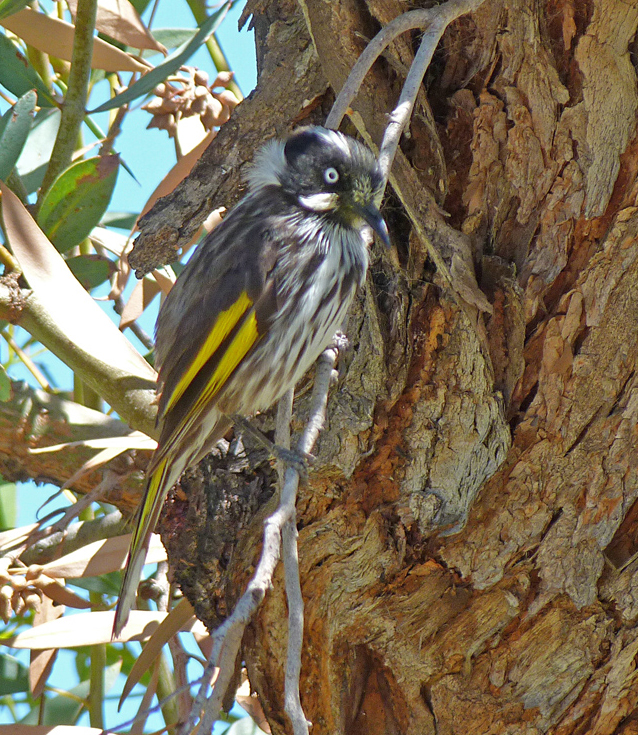
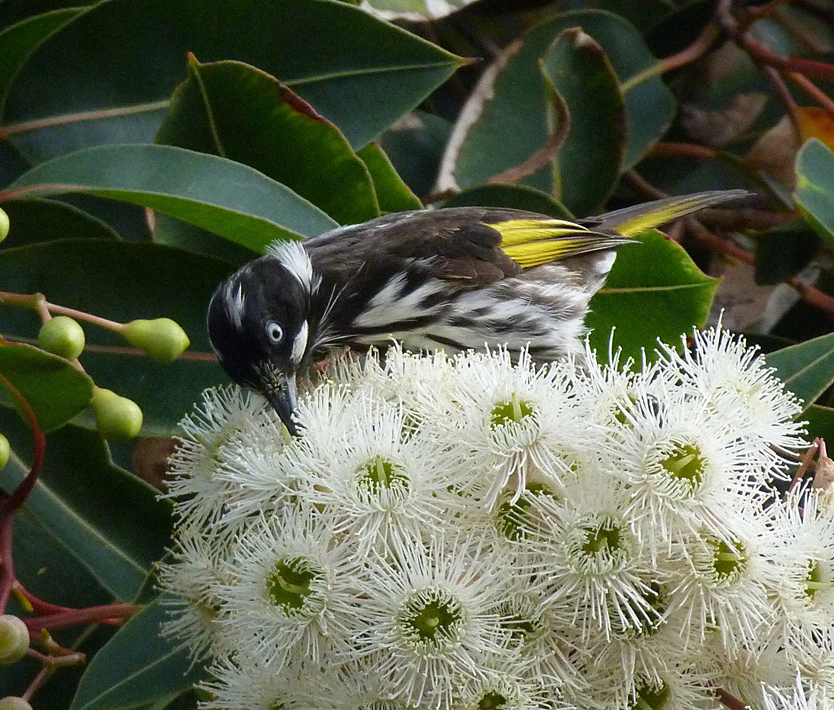
The New Holland honeyeater is perched on the topmost branch of the white flowering gum in my backyard. Every few minutes it takes to the air and chases an insect that has inadvertently flown too close to its ‘operating zone’. But hawking for prey like this takes an energy toll on the little bird, requiring frequent refuelling at the nectar rich flowers that also serve to attract its insect prey.
1

New Holland honeyeater


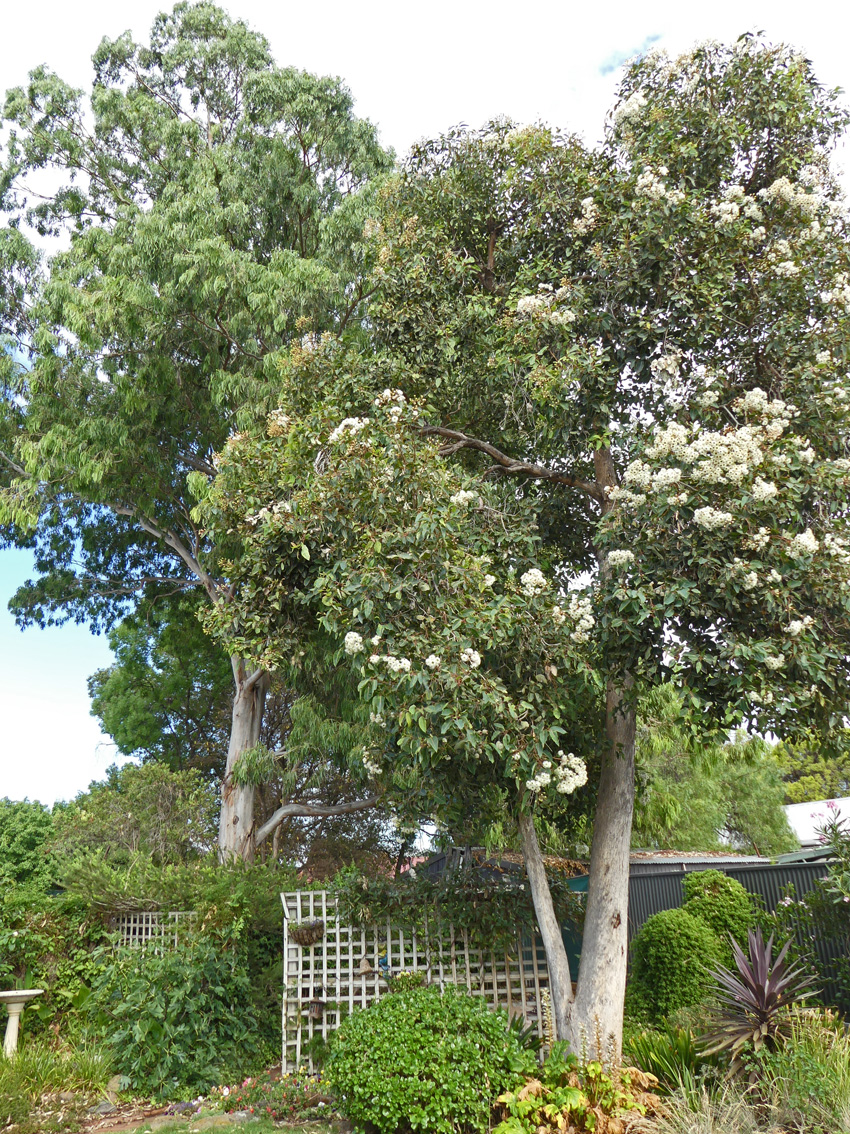
This is just one of the little wildlife scenarios that play themselves out during the Christmas season in the gum trees that grace my backyard. The smaller tree comes into flower in early December reaching its peak around Xmas day. The larger tree has flowered earlier but seems to harbour a wealth of tiny leaf and bark insects throughout the early summer months. Together, they attract a wide range of birds providing an interesting holiday spectacle; especially if one has scored a new camera from Santa.
2

A tale of two gums


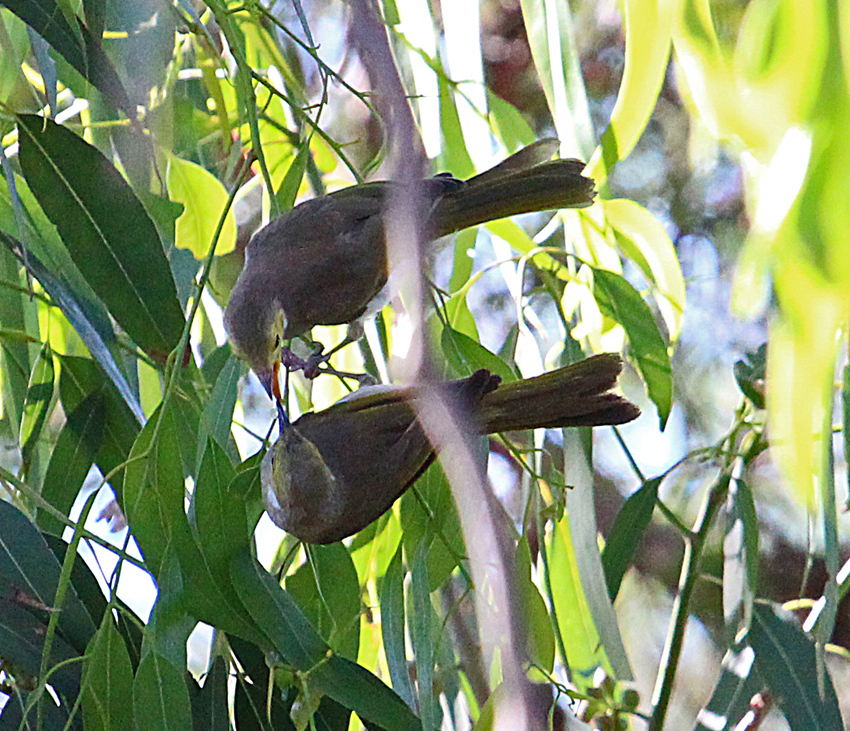
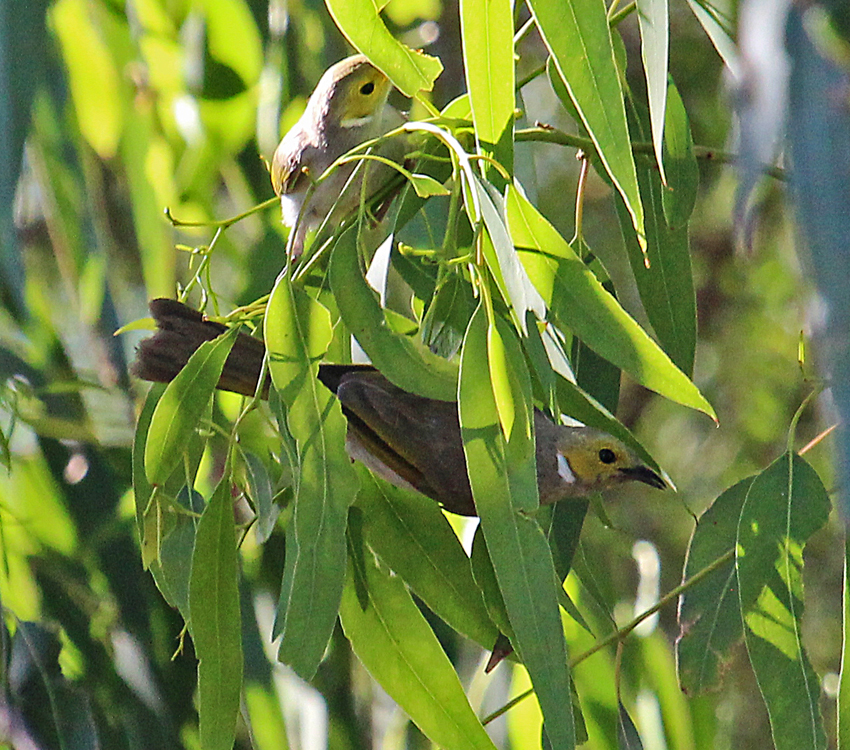
New Holland honeyeaters aren’t the only species of honeyeater that feeds in my garden. The more timid white plumed variety also samples the blossoms and hawk for insects. However, at this time of year they are almost finished raising their final brood for the season and the young ones are being schooled in the art of bug catching by the adults. Peering through my long lens into the shadows of the taller tree I am lucky enough to capture two images of a chick waiting for food then being fed a bug by its parent.
3 1

White plumed honeyeaters


3 2

Have a bug or two junior


In a wonderful coincidence, there is also a family of wattle birds in the same tree and a fully fledged chick is sitting on a branch demanding to be fed. I watch carefully, trying to time my shots to coincide with the exact moment the adult shoves some insect offering down its waiting gullet. Of course, some leaves get in the way and the light intensity drops at the crucial moment but that’s wildlife photography.

4 1

Wattle bird and chick


4 2

A gullet full of whatever


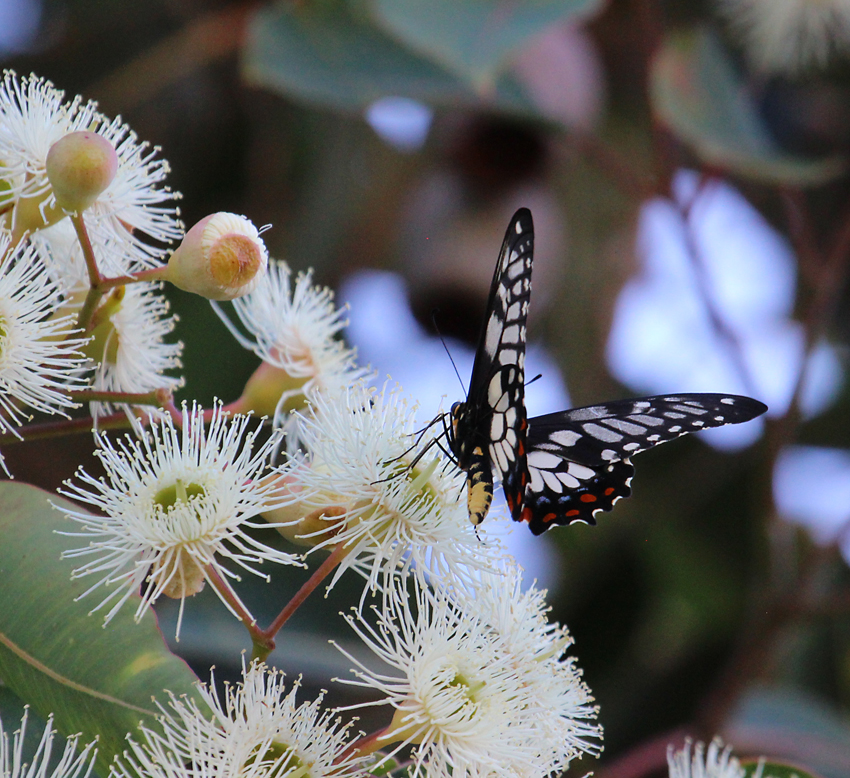
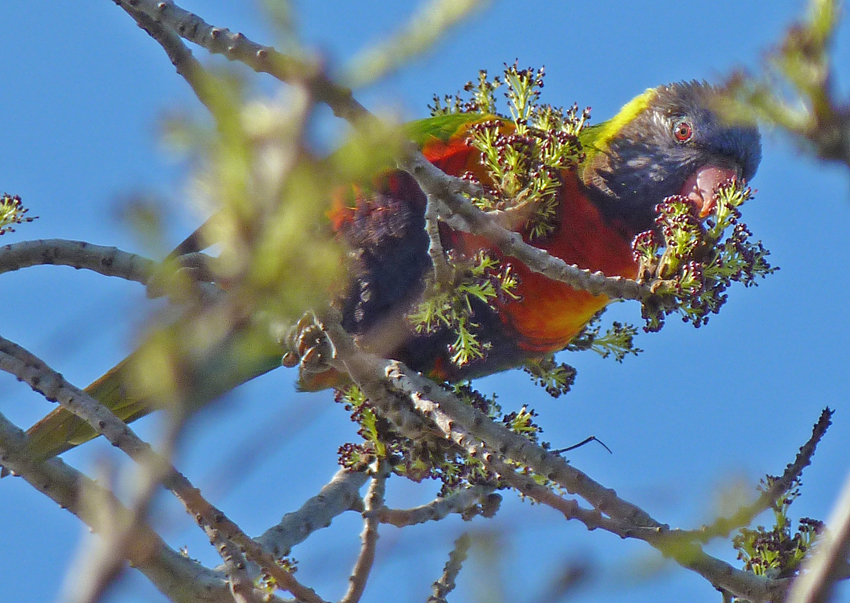
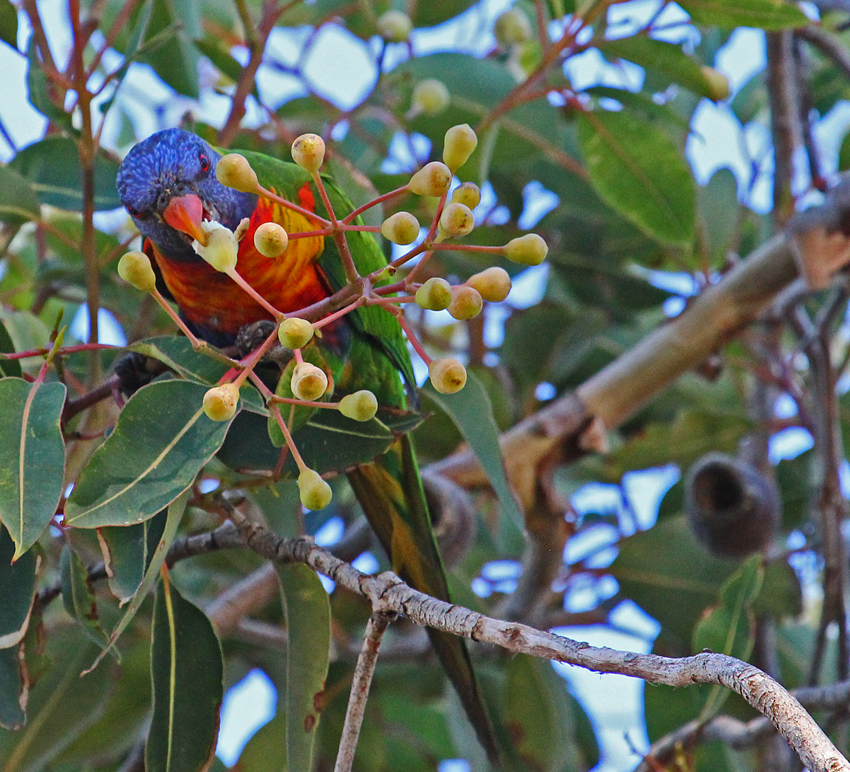
With a Xmas drink and a mince pie resting on the outdoor table next to my cameras I scan the foliage of the smaller tree for a final shot or two. Two colourful creatures oblige; a rainbow lorikeet is tearing apart a blossom emerging from a gum nut and a swallowtail butterfly is probing the mature flowers for nectar.
5

Rainbow lorikeet


6 Dingy swallowtail

Dingy swallowtail


Cheers and Seasons greetings

Until next year

Baz

Walkerville’s Bickle Reserve…..Fairies in the Garden

4 Sep

Fairies in the Garden

Dear Reader:

As I have categorically stated in several of my posts, “I am no botanist”. I love gardening and appreciate the wonderful diversity of South Australia’s flora but remembering all the different classifications, names and botanical intricacies is just a little too much like hard work. Instead, I rely on a couple of field guides to common plants in the Adelaide area, phone a friend or simply make reference to those yellow bushes or tall straight eucalypts. Hopefully, this gap in my naturalistic armoury will be narrowed as I write more nature posts, though the signs are not promising. So: it is with some trepidation that I lead into the following piece …….

P1130228

Pink fairy (Caladenia species)

IMG_8066

The Torrens near Bickle Park

 ….It is a cool winter’s day, slightly overcast and I am on my knees examining a glorious little patch of native orchids. Most are pink fairies but there is one tiny delicate bloom, the size of a little finger nail, called a gnat or mosquito orchid. Nearby several of the flat prostrate leaves indicate where other orchids will appear in the near future.

P1130247

Gnat orchid (Cyrtostylis species)

All of these species are endemic to the area and though a few might have grown naturally, most are the result of a dedicated group of volunteers who are revegetating this area which is part of the Vale Park Wildflower Walk. The section I am exploring is alongside the Torrens River just east of the autobahn bridge near the Bickle Reserve. Several of the Vale Park group are holding an open morning and explaining the importance and biology of the plants they have established.

P1130234

Chatting about orchids

IMG_8071

Native Wisteria (Hardenbergia)

IMG_8099

Purple swamp hen

As I listen to information about the relationship of certain fungi in the soil to the propagation of orchids and marvel at the spidery native clematis and hardenbergia that are climbing up some eucalypts (big tall ones) I notice a pair of purple swamp hens foraging in the long grass by the river. Leaving the group I pursue the birds and make my way along the bank where there are also dusky moorhens in the reeds and crested pigeons feeding near the bikeway.

IMG_8059 edit

Dusky moorehen

Rejoining the group I chat about the importance of maintaining our wild heritage for future generations and learn about Aboriginal use of some types of native plants including orchids. Predictably in this group I encounter another wildlife photographer and the conversation fluctuates between nature and the lenses we have used for different purposes.

IMG_8088

An occasional visitor

In the course of our conversations one of the replanting team asks me if I have any images from the area and I remember that on a bike ride along this part of the linear park trail I had photographed a koala high in the largest eucalypt overshadowing the orchid beds. But, in keeping with my botanical prowess I forget to ask what kind of species it is (probably a tall, straight one).

Until the next journey into SA’s natural wonders

Cheers

Baz

PS

Check out Geotravelling a new site that I have attached that celebrates the natural, cultural and urban diversity of our planet through my travel photographs.

Norwood’s Parade of Animals

29 Aug

Norwood’s Parade of Animals

 Dear Reader:

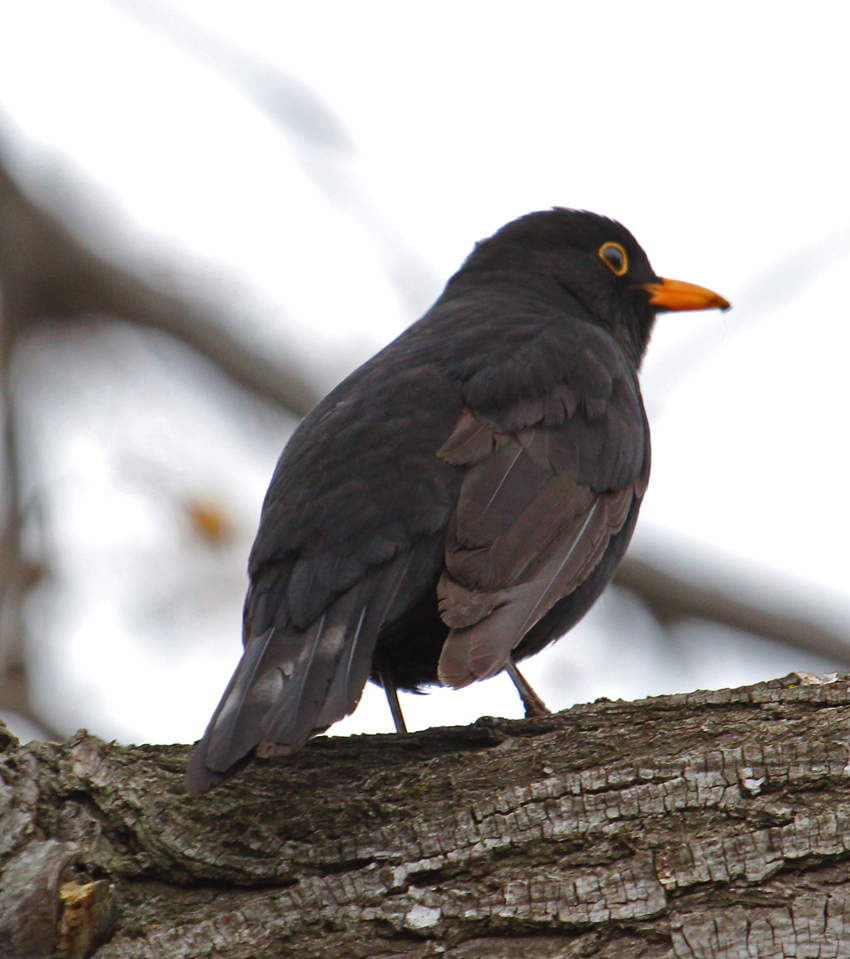
It has been rather a grey week but today the sun is showing its face at regular intervals and there is a blackbird singing in a tree above me. A good day for a walk around Norwood admiring the architecture before grabbing a bite to eat at one of the many restaurants and hotels that make the area a premier dining destination. But this old, established suburb with its towering trees and well-tended gardens also provides meals and homes for a wide variety of urban wildlife.

Juvenile male blackbird

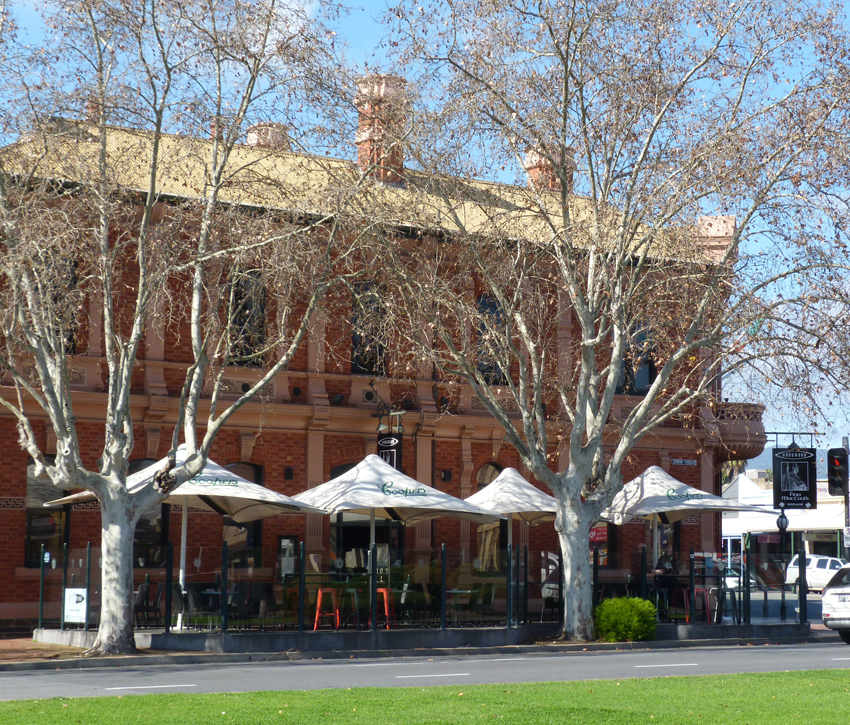
1 One of the classic hotels in the Norwood area

One of the classic hotels in the Norwood area


Blackbird aside; the first indigenous species that grabs my attention is living between the petals of a bright yellow daisy bush. The diminutive flower spider hunts amongst the blooms for small insects. This one has ambushed a fly and is proceeding to wrap it in a web for a late afternoon snack.

2 Flower spider with lunch

Flower spider with lunch


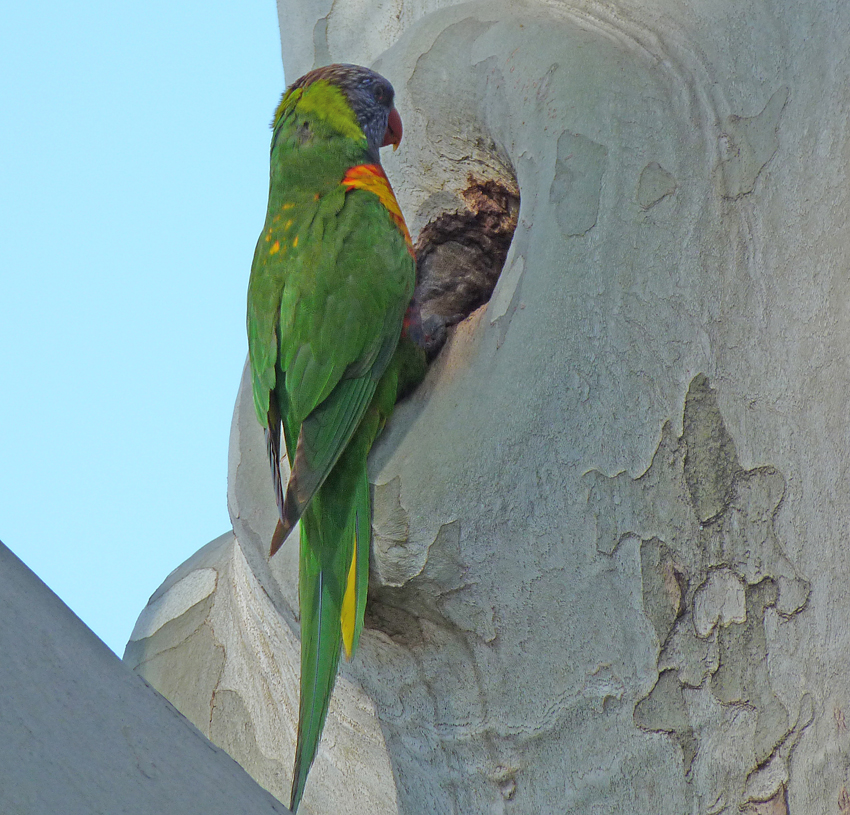
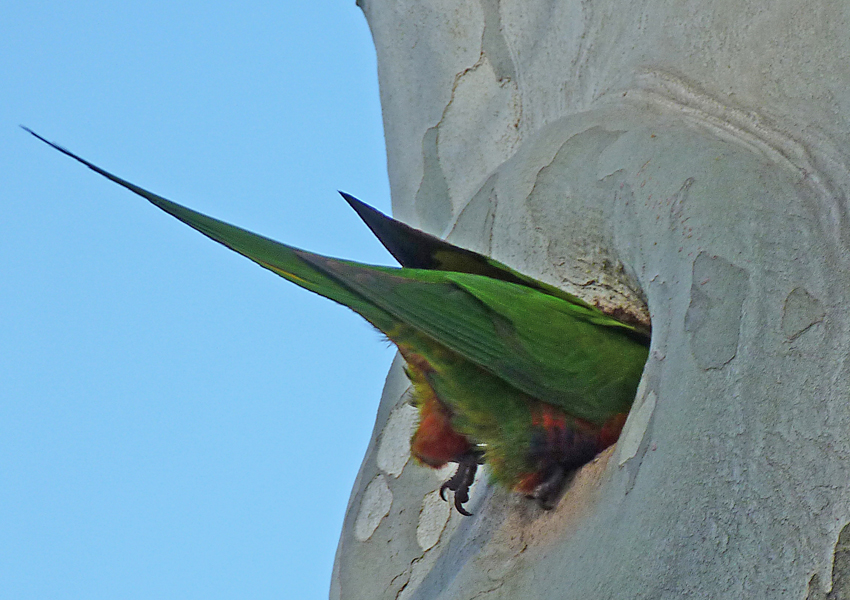
A little further down the street I can hear the call of lorikeets as a pair of the colourful little parrots forage in the trees for seed and blossom. I follow them closely as they fly from the tree tops to a smooth barked gum tree right on the edge of Osmond Terrace, a busy boulevard that cuts through Norwood. Here, with traffic whizzing past, they are investigating a hole in the trunk as a potential nesting site.

2 Lorikeet feeding

Rainbow lorikeet feeding

2 Rainbow lorikeet scouting for real estate

Rainbow lorikeet scouting for real estate

2 Taking a closer look

Taking a closer look

2 Hey honey come take a look

Hey honey come take a look


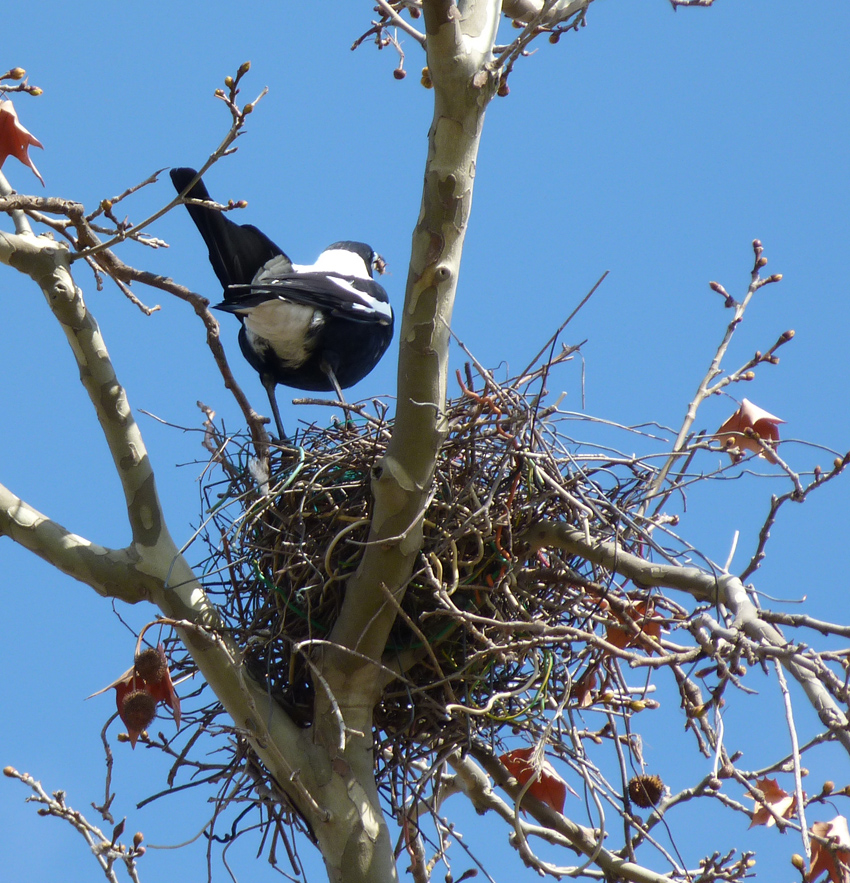
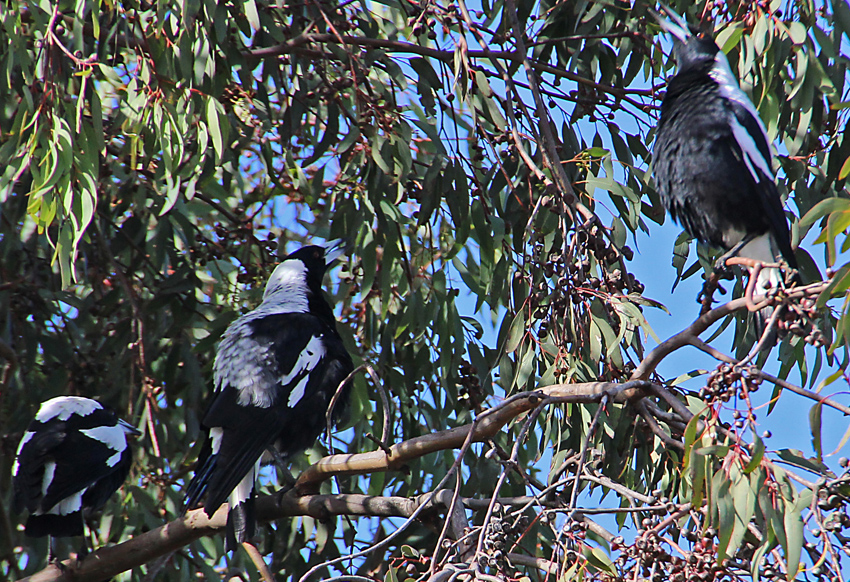
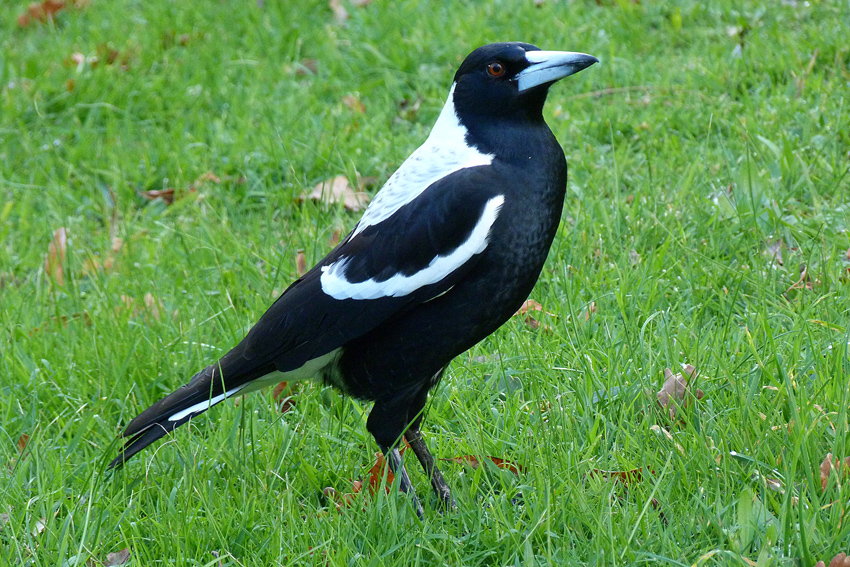
Osmond Terrace is also home to a group of Australian magpies. I can see a raggedy nest high in one of the liquid amber trees that line the thoroughfare and when I focus the long lens on it, the head of a large chick is just visible. After ten minutes an adult bird arrives with a grub in its beak. A few minutes later I catch site of another bird digging for invertebrates in the lawn of a local school while a third sits, watching from the concrete facade of Vine House, one of the suburb’s historic buildings.

Adult magpie arriving at nest

Magpie feeding

Magpie feeding

keeping an eye on proceedings

Keeping an eye on proceedings


My final stop is Finn MacCool’s Irish Pub for lunch where a group of pigeons is also enjoying an alfresco bite to eat in slightly less salubrious circumstances. I started with an introduced species…might as well end on the same note.

P1130169

Common pigeons feeding on crumbs in the street


Until our next adventure

Cheers

Baz  

Check out Geotravelling a new site that I have attached that celebrates the natural, cultural and urban diversity of our planet through my travel photographs.

Adelaide’s Frome Road Bikeway

16 Aug

Adelaide’s Frome Road Bikeway 

Dear reader:

One of my favourite bike rides starts in north Adelaide at the junction of Barton and LeFevre Terraces. From the roundabout, a dedicated bike lane follows Le Fevre Terrace which is flanked by open parklands on one side and lovely colonial homes on the other. For the marginally more adventurous, there are several paths through the park that run almost parallel to the road. Noisy miners, honeyeaters, magpies and lorikeets are common here and in the evening you might see brush-tailed possums in the trees.

miner bird5

Noisy miners are a species of honeyeater

1

Nice little house with a good view of the parklands


The bike lane curves down towards the city through more parklands and playing fields. Huge Moreton Bay Fig Trees dominate the parklands providing a vantage point for both rose breasted and sulphur crested cockatoos that often fly down to the grass in search of food.

2a

Galahs having a bite to eat


Just over the Frome Road Bridge, Adelaide Zoo’s classic entrance marks the end of the parklands. Tucked between the zoo and the Botanic Gardens there is a stand of huge pine trees. Look up and it’s hard not to notice a large colony of fruit bats (flying foxes) that call these trees home.

2b

Entrance to the zoo

2c

Fruit bats in the trees


After the zoo there is a well marked bike lane that runs up Frome Road past the medical school and hospital. The lush lawns around these buildings are a favourite haunt of Sacred Ibises that probe the soft ground with their long curved beaks in search of worms and grubs.

12

View of the Torrens from the Frome Road Bridge


3

Sacred ibises feeding


As Frome Road crosses North Terrace you enter a purely urban environment with a wide bikeway that cuts all the way across the city towards the southern parklands. This charming region of the city has many unique little houses and flats decorated with native plantings providing a rich urban ecosystem that supports common bird species such as sparrows, blackbirds and magpies.

10

Magpies carolling in an urban environment

11

Stopping for a coffee along the way


The bikeway finally emerges at the Himeji Japanese Gardens. These gardens are dedicated to Adelaide’s sister city on the Japanese island of Honshu. In keeping with the rest of Adelaide’s green belt parklands the signage also relates to the aboriginal heritage of the area. Rosellas and lorikeets are common inhabitants in the ancient eucalypts that characterise this southern edge of the city.

5

Japanese garden

6

White cheeked eastern roesella


From the Japanese Gardens there are bike paths that meander through all of the southern parks but their wildlife and charms will be the subject of a further post in the warmer months to come.


Cheers

Baz

Tea Tree Gully’s Camellia Nursery

5 Jul

Dear Reader:

It is a cool crisp morning, and to be perfectly honest, I am not in the mood for a long drive. Instead, I have decided to visit a local nursery just a few kilometres away, where the North East Road starts its climb into the Adelaide Hills.

1a Newman's nursery

Newman’s nursery front entrance


As I park the car next to the entrance I am immediately struck by the contrast in lighting conditions. The path following the little creek that leads from ‘Newman’s Camellia’ nursery to the ‘Tea Tree Gully Hotel’ is in deep shade whereas the hills on the opposite side of the road are bathed in sunlight. An afternoon walk might have offered better lighting for photography but the wildlife always seems more active in the morning.

1a Start of the walk

The path begins


Climbing out of the car I glance up at the hillside above the little creek and to my surprise and delight I notice the hunched outline of a koala wedged between the branches of a huge gum tree; not what I was expecting this close to a suburban area.

1a koala in tree

Koala in tree


The trail starts just a few metres from the nursery entrance and meanders alongside the small watercourse for a mere 500 metres before broadening to a neatly manicured lawn enclosed by trees and shrubs. A varied collection of plants flank the path; including arum lilies, several lovely camellias, indigenous wattles and melaleucas as well as the ever-present, towering eucalypts.

1a Rogue camelia

A rogue camellia alongside the path


Small birds are continually flitting through the bushes though I am only able to catch fleeting glimpses of them. Some are definitely female blue wrens and I suspect that the tiniest ones are thornbills. Eventually, a small brownish bird settles in a low, flowering shrub some 50 metres away. I fire off a series of shots which, on review, reveal a glorious eastern spinebill.

1a Eastern spinebill  foraging in shrubs

Eastern spinebill foraging in flame heath bush


At the end of the trail half a dozen magpies are foraging for grubs in the well tended lawns. Several enormous gums tower over the grass and a pied currawong is perched on one of the topmost branches with a seed pod hanging from its beak. Another bird joins it, they seem nervous, jumping between branches before flying off, possibly to a nesting site.

1a Currawong with food approaching nest

Currawong approaching nest with food

The walk back is equally eventful with both rosellas and lorikeets feeding on berries in the scrub along the edge of the trail but capturing a sharp image in the shadows and overcast conditions is somewhat challenging.

1a Tapas on the terrace

Tapas


Newman’s nursery has a charming little restaurant with both inside and alfresco dining areas which afford a fine view of the hillside on the other side of the road. While I enjoy the delights of a tapas snack I notice several tiny finches feeding on the liquid amber trees that decorate the front of the nursery. From my outside table the birds are just within camera range and using the long lens I am able to identify them as European goldfinches.


1a European goldfinch in liquid amber tree

European goldfinch in liquid amber tree


Until next time

Baz
Tea Tree Gully-An Afternoon in San’s Garden

12 Jun

Dear Reader:

Sometimes, it is not about four wheel drives, walks in the bush or diving on a reef. Sometimes, South Australia’s wildlife wonders are the common animals and plants that live  right under our noses in the backyard. Last weekend I grabbed a pie and a doughnut from the local shop, pulled out the recliner and watched the antics of the local critters in my friend’s garden. I hope you enjoy the pictures and a few minor, explanatory observations.

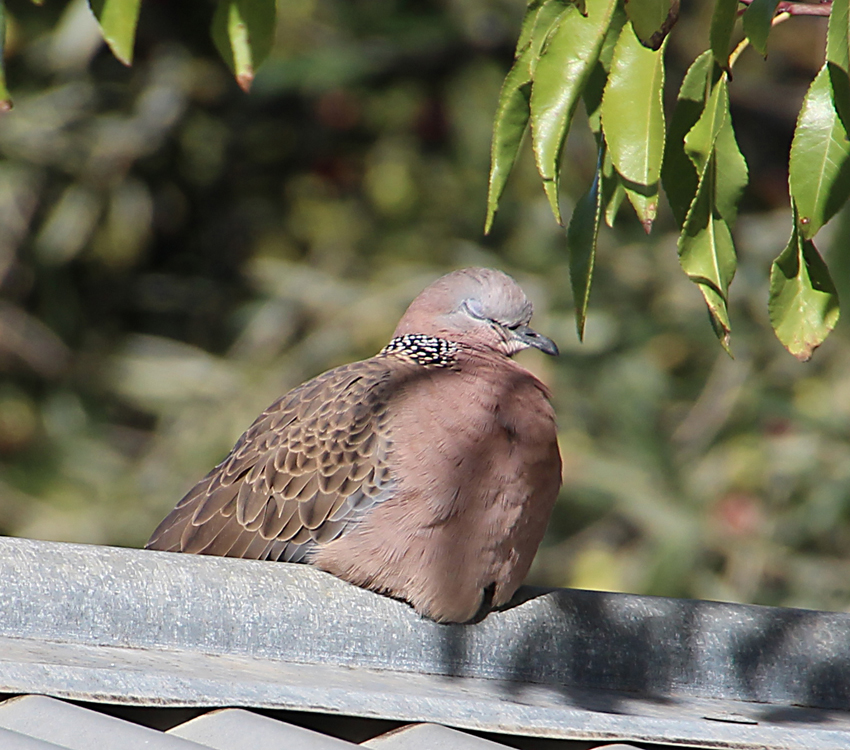
Spotted dove snoozing on the garage roof

Spotted dove snoozing on the garage roof

To initiate proceedings, a spotted dove landed on the garage roof, much to the consternation of a local cat, who sat and stared at it for a few minutes, decided it was too much work then nonchalantly strolled off to find easier prey.

New holland honeyeater feeding on orange honeysuckle

New holland honeyeater feeding on orange honeysuckle

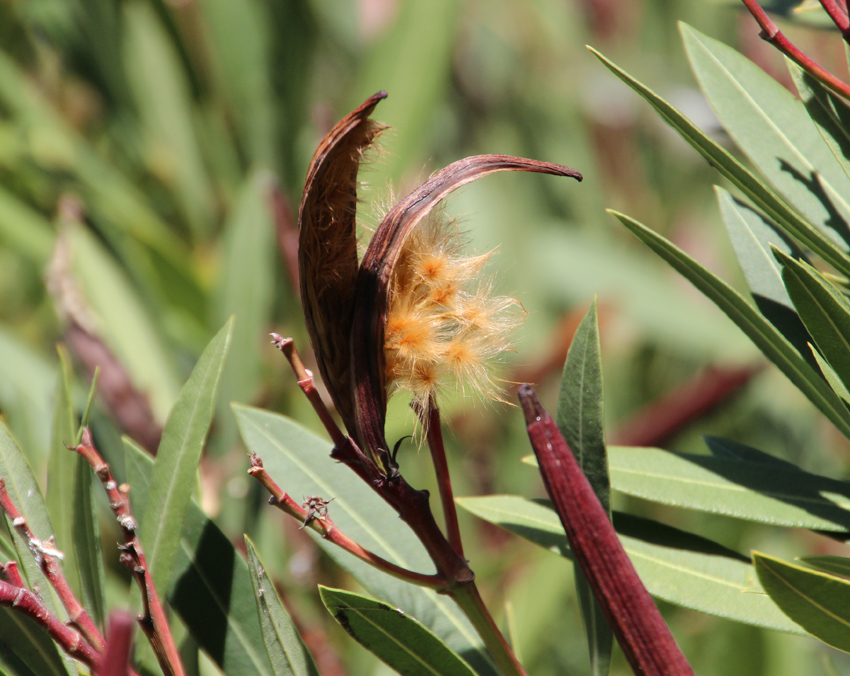
Oleander seeds pods

Oleander seeds pods

New holland honeyeater catching insect in mid flight

New holland honeyeater catching insect in mid flight

While the dove dozed the high energy brigade arrived in the form of a squadron of new holland honeyeaters who proceeded to feed on various blossoms, hawk for insects and in one bizarre instance; pull apart the seed pods of an oleander. Fair enough if it was nesting season but a little hard to fathom at the beginning of winter!!

Hover fly grabbing a suck to eat

Hover fly grabbing a suck to eat

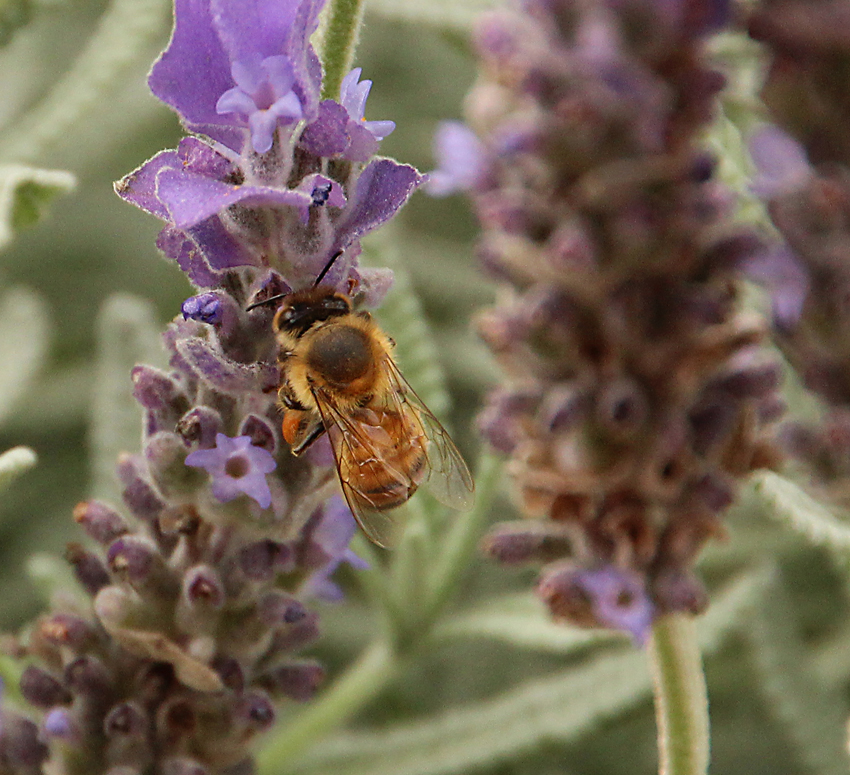
Bee on lavender

Bee on lavender

The winter months are not too conducive to insect life but a few ‘die hards’ do persist and the lavender and daisies played host to quite a number of bees and hover flies respectively.

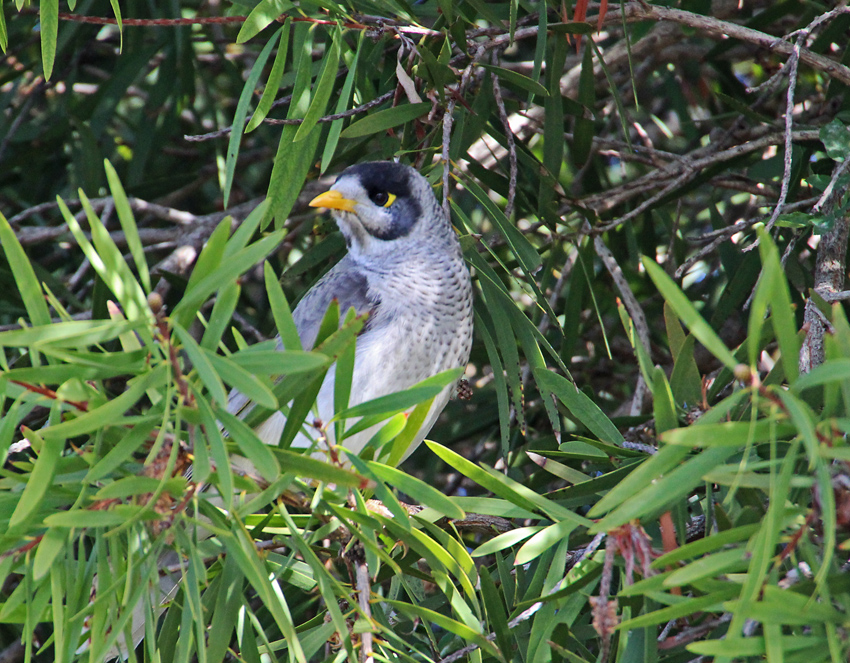
Noisy miner surveys the garden with a bandit glare

Noisy miner surveys the garden with a bandit glare

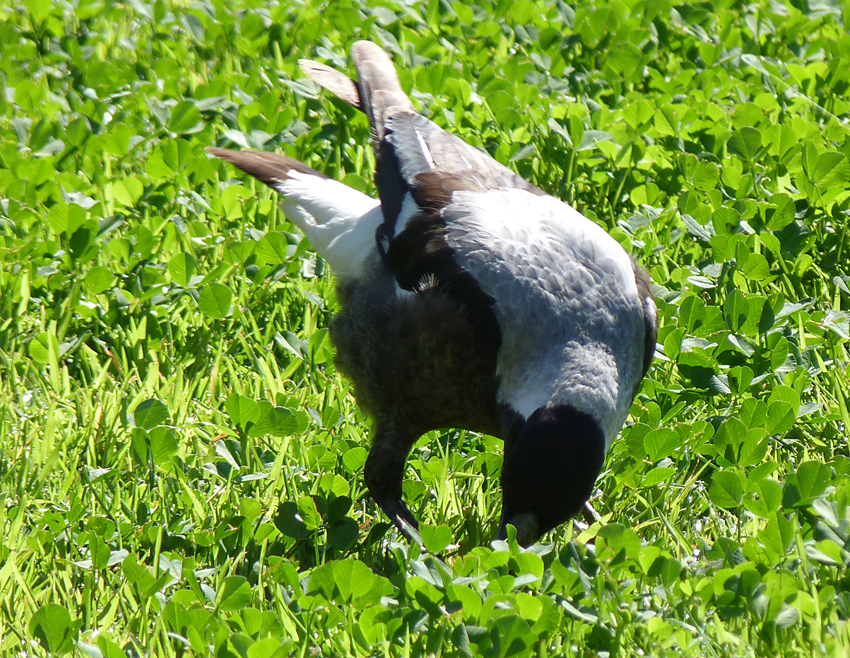
Whatever the season my little bandit friends are always around with their masked faces and grey plumage. A small flock of noisy miners did the afternoon rounds, harassing the other birds and making their presence felt; arguing as much with each other as the other species.

Singing the team song in the old gum tree

Singing the team song in the old gum tree

Strutting his stuff on the back lawn

Strutting his stuff on the back lawn

Just as I was settling for a little snooze when the warbling (carolling) call of white backed magpies brought me to my feet. I walked around to the front garden to see a trio of the large black and white birds high in the crown of a roadside eucalypt loudly proclaiming their territory. Then, the largest and obviously most confident bird flew down into the garden only a few metres away to search for grubs.

Quinnus muchsuddliusforaging in the fairy garden

Quinnus cuddlius foraging in the fairy garden

Back to recliner, pictures taken, lunch finished; book or snooze again beckoning…when the most active of all the garden’s wildlife toddled in and a restful, lazy afternoon dissipated like an early morning mist evaporating when the sunshine arrives.

Enjoy your own gardens

Baz

Brougham Park on a Winter’s Afternoon

7 Jun

Dear Reader:

It is late in the afternoon and a bit on the chilly side. Grey skies and showers have alternated all day with patches of blue and occasional bursts of sunshine through the clouds. My car is parked in O’Connell Street where I am meeting friends in an hour for a bite to eat then a movie at the art deco Piccadilly Theatre. Typically, and despite the weather, I have arrived a tad early with camera in hand, hoping that I might encounter a little urban wildlife.

O'Connell street has a woderful collectionof cafes and restaurants

O’Connell street has a woderful collectionof cafes and restaurants


At the end of O’Connell St the road curves down into the city through a little patch of parkland. Asphalt paths cross this little green oasis which is dotted with tall eucalypts, pines and several large Moreton Bay Figs. I can hear parrots calling in the tree tops and eventually I spot a rainbow lorikeet shuffling along a branch high in the crown of one of them. With a flourish of feathers, a second bird appears and the parrots start to preen and gently peck at each other. They seem to be a mating pair settling in for the night. Nearby a lone eastern rosella appears to be looking on with a touch of sad envy…anthropomorphic, I know.

Just dropped in to say Hi

Just dropped in to say Hi

A lone eastern rosella sillhouetted against the late afternoon sky

A lone eastern rosella sillhouetted against the late afternoon sky


I sit and watch the birds for a few minutes while scanning the rest of the tree with my telephoto lens when I notice the furry coat of a possum wedged in a hollow. I toss a couple of pebbles against the branch. The brown patch moves and a tail appears for a second as the owner moves further into the tree; definitely a possum, probably a brush tail as they are far more common than their ring tail cousins.

Daytime view of a brushtail possum

Daytime view of a brushtail possum

Parkland possums forage at night

Parkland possums forage at night


On the eastern side of the park the imposing facade of the Brougham Place Uniting Church is framed by the massive leaves of an old fig tree. There are birds flitting though the foliage but in the afternoon shadows it is impossible to identify, let alone photograph them.

Brougham Place Uniting Church across park

Brougham Place Uniting Church across park


Before heading back up to my parked car I walk further down Brougham Place alongside a red brick wall that cordons off one of the area’s classic old mansions. A tangle of olive tree branches straddle the top of the wall and deep in their shadows a pair of crested pigeons are finding a sheltered place to roost.

Classic homes and businesses surround the park

Classic homes and businesses surround the park

Crested pigeons in olive tree

Crested pigeons in olive tree

Even on a cloudy winter’s afternoon, Adelaide has yet again delivered a memorable wildlife experience; a fascinating and ever-changing urban ecosystem available to anyone who takes a few moments out of their busy day to stop and look.


Thanks for reading my work

Cheers

Baz

Old Noarlunga….A River Walk

17 Apr

Dear Reader;

As I pull the SUV into the parking area I can hear the sound of cockatoos and corellas foraging in the recreation area just a cross the road. At the beginning of the walking trail several monarch butterflies are hovering around a stand of late flowering eucalypts. They are all part of a sudden surge of activity following recent morning showers; a welcome distraction after a long hot summer and a dry start to autumn.

P1080891

Corellas feeding


IMG_6156

Monarch butterflies


There are several marked trails that I can take from the park but today I am simply following the bitumen path along the river front to get some idea of the terrain and wildlife. This side of the river is bordered by the little township of Old Noarlunga and the area is quite significant in terms of South Australian history. For thousands of years it was a meeting place for the Kaurna people who lived along the river banks in natural caves or dome shaped dwellings. Later, during the early years of European settlement the area was a rest stop for bullock trains and some of the timbers and bricks in the park are remnants from the old Horseshoe Inn that burnt down in 1987.

IMG_0350

One of the larger pools


On the far side of the river, the summer brown hills rise steeply and there is mixture of native scrub and cleared grazing land. A wood and cable bridge links the two banks and a small group of students appear to be carrying out some kind of environmental survey on the opposite bank.

IMG_0360

Footbridge across the river


The river is at its lowest during this time of the year; a series of large pools linked by pebble strewn shallows where the water flows slowly. At the far end of one pool a white faced heron is hunting stealthily amongst the rocks. Every so often the bird jabs its long beak into the water to grab, what appears to be, some kind of large insect larvae.

IMG_0356

Grey faced heron hunting


After a while I decide to rest on a large tree stump above one of the larger pools and simply watch the water. Near the reed beds I can make out the shapes of some sizeable bream cruising between the bank and several submerged logs in the middle of the river. At the end of the pool there are large black cormorants perched on branches that overhang the water. Surprise!!! They are also watching the fish.

IMG_6147

School of bream in shallow water


A few hundred meters further up the track there is a side road that leads to The Old Noarlunga Hotel. In the warm weather a drink and lunch are a welcome break before I head back on the other side of the river. As I start to pack away the camera, a flash of grey catches my eye. A large bird flies along the river bank and lands in the trees quite close to where I am standing. Pulling the camera back out, I walk slowly towards the target keeping a large tree in line for cover. It turns out that the bird is an Australian bittern, a heron-like species that is not often seen in the daylight hours.

IMG_0374

Old Noarlunga Hotel


bittern

Australian bittern


Half an hour later, refuelled and rehydrated I shoulder arms and head back down to the river to explore the other bank. But that area will be the subject of a future post, perhaps in the springtime, when the character of the river will have changed again.


Cheers

Baz

Hallet Cove….a scrub and coastal walk

3 Apr

The walk from the park’s entrance is striking with the ocean forming a sapphire backdrop to the greens and greys of the scrub. Along the edge of the track stands of eucalypts dominate an understory of acacias, banksias and native grasses. Near the top of the trail, several wattle birds are feeding on a late autumn splash of flowers in the crown of a flowering gum. The largest of all the honeyeaters, these birds have a grating call reminiscent of an out of tune bagpipe.

IMG_0547

View from the park entrance


wat 1

Wattle bird


I scramble further down the track listening to the twittering of scrub birds in the bushes. It is difficult to identify any particular species and almost impossible to photograph them. After walking for a couple of hundred metres, I catch a glimpse of some wrens and miner birds deep in the labyrinth of foliage. Where the trail runs alongside a small creek at the foot of the hill, a singing honeyeater is perched on an exposed branch, finally providing one easy target.

IMG_2486

Singing honeyeater


Hallet Cove Conservation Park runs parallel to the coast about half an hour’s drive south of the city centre. It encompasses a range of habitats from sclerophyll forest to coastal heath and a classic wave cut platform below the cliff face. In addition to a healthy population of native animals the park has extraordinary geological and marine features that I will explore more fully in a later post. 

IMG_0553 - Copy

The track winds through the scrub near a creek bed


I meet a group of elderly walkers on a small bridge that crosses the creek where the path starts to climb towards the top of the cliffs. As they tramp across the wooden planks a large water skink runs across, pausing momentarily before disappearing over the edge into the reeds.

IMG_6338

Skink on the bridge


Climbing southward up the track I take note of the dramatic changes in terrain. The hillside that rises from the cliff tops is dominated by low wind-swept shrubs and grasses and the coastline is defined by the wave cut platform. Near the edge of the cliffs, two magpies are probing the undergrowth with their long, powerful beaks. Suddenly the birds become agitated and take to the air. I look around for the source of their distress and catch sight of a kestrel hovering high above them. But this kestrel has made an error of judgement that soon becomes apparent as the maggies take it on in an aerial dogfight.

IMG_6329

Minding my own business


IMG_0672

Kestrel hunting


IMG_0683

Not on my turf


The final section of my trail follows the boardwalk along the top of the cliffs. I can see pacific gulls foraging in the rock-pools on the exposed shore and a colony of cormorants roosting on a rocky outcrop out to sea.

IMG_6347

Cormorants on offshore outcrop


After following the contours of the hillside for a kilometre the boardwalk slopes down to a stretch of beach, finally terminating at a car park and local eatery…The Boatshed Cafe. Simply grabbing a croissant and soft drink to eat on the beach or choosing a light meal from the excellent menu is an ideal way to wind up a morning stroll.

IMG_0570

Descent to the beach and cafe


I hope you enjoyed this little adventure

Cheers

Baz

A Walk Around West Lakes

14 Mar

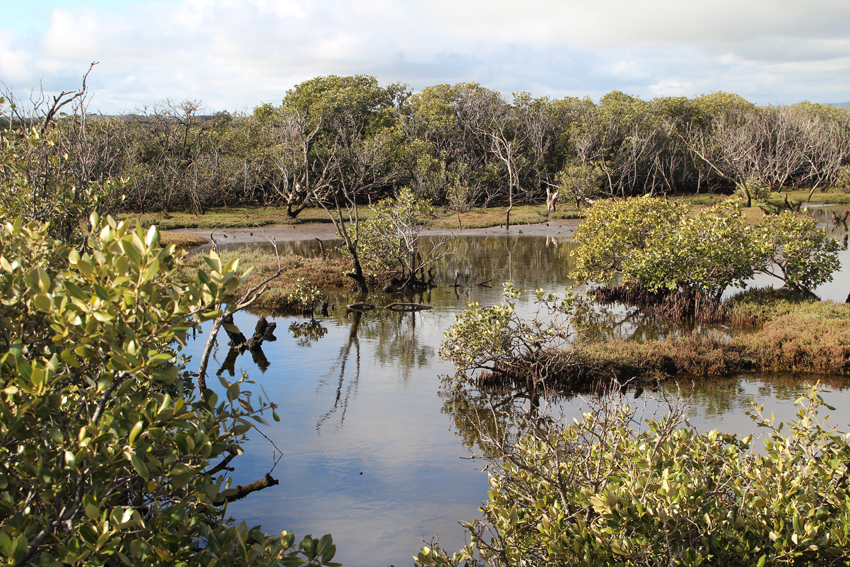
Dear Reader: Once upon a time when I was several decades younger and people thought less about the environment, there was a mangrove swamp behind the dunes near Tennyson Beach. The government of the day and even the general public cared little for mangroves and even less for anything described as a swamp. Consequently, they allowed developers to ‘liberate’ this area from its unproductive state and create a new suburb in its place. The result was West Lakes. For some, the loss of this unique wetland was an environmental tragedy as such areas are important nurseries for many marine species and significant wild places to be cherished.

IMG_2585

Nearby mangrove swamp demonstrates what the area looked like before development

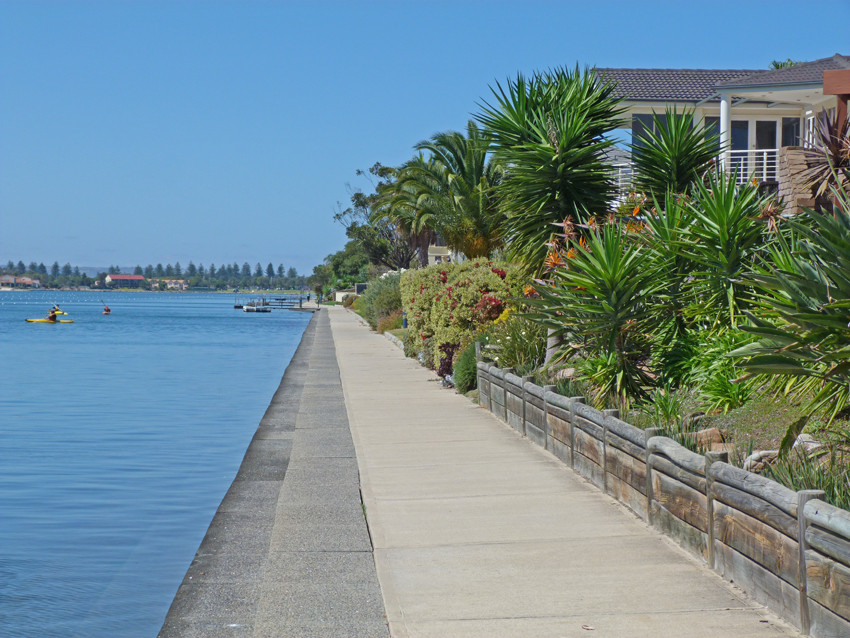
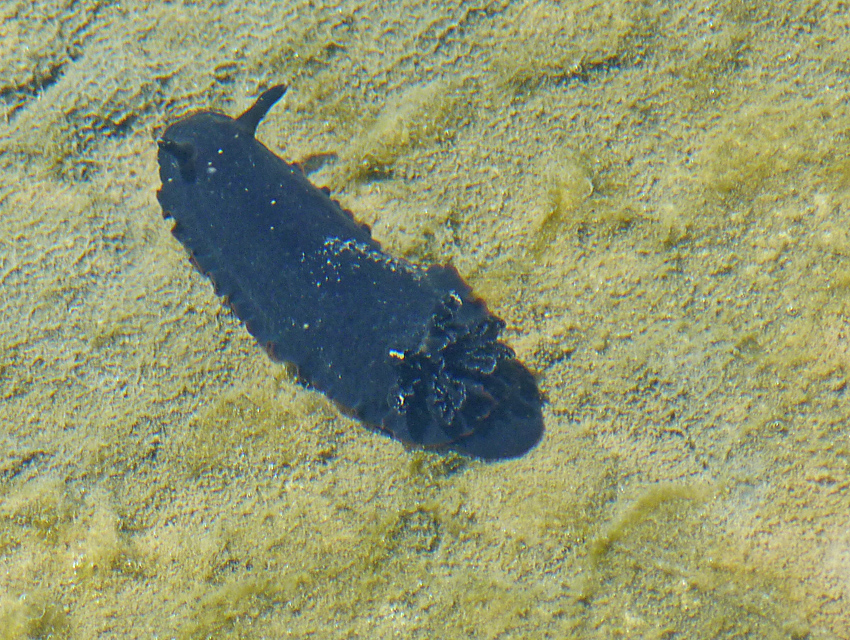
  History aside, West Lakes remains a worthwhile place to visit and walking around the man-made lake on a fine autumn afternoon still provides many interesting wildlife encounters. Instead of samphire swamp and mangrove forest, the edge of the lake is defined by fine sand and a ruler straight concrete edge which steps down into the water. Despite its artificial nature, marine invertebrates and small fish still feed on the algal growth that clings to this constructed shoreline. And on occasions I have even seen nudibranchs, a kind of sea slug with a prominent flower like gills on their backs, grazing on the concrete surfaces.

P1100002

West Lakes today

P1100014

A grazing nudibranch species

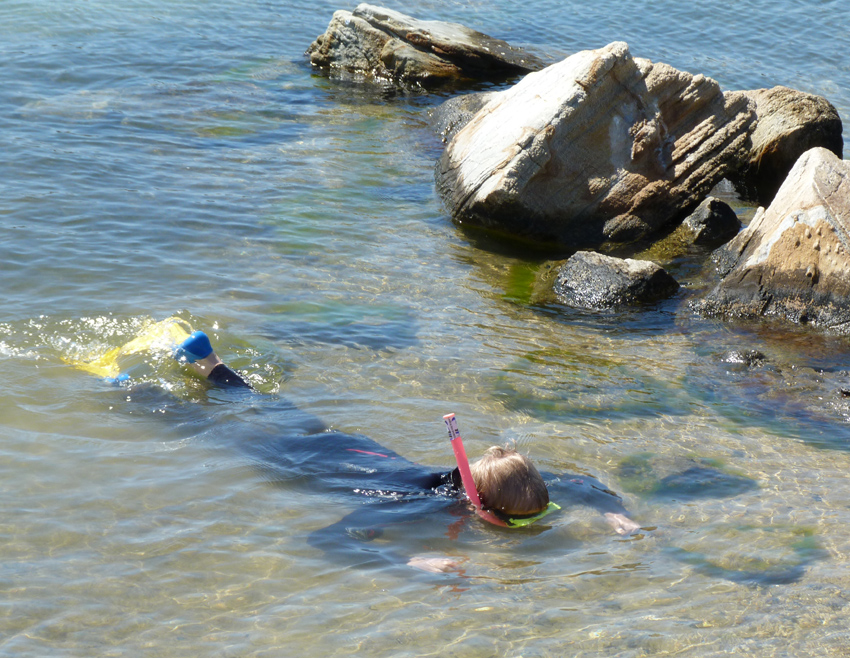
  Because the lake has a less diverse ecology than the original swampland, there are fewer fish species; although sizeable bream, mullet and even the occasional mulloway make it a popular venue for anglers. In fact, the people who live on its shore often feed the resident bream and have quite large schools living near their private jetties and landings. These fish are generally off limits to the fishers but school children who snorkel off the West Lakes Aquatic Centre get quite a thrill when an instructor lures a school from a nearby pontoon.

P1100030 edited

Large bream close to the shoreline

P1090979

School student snorkelling near the aquatics centre

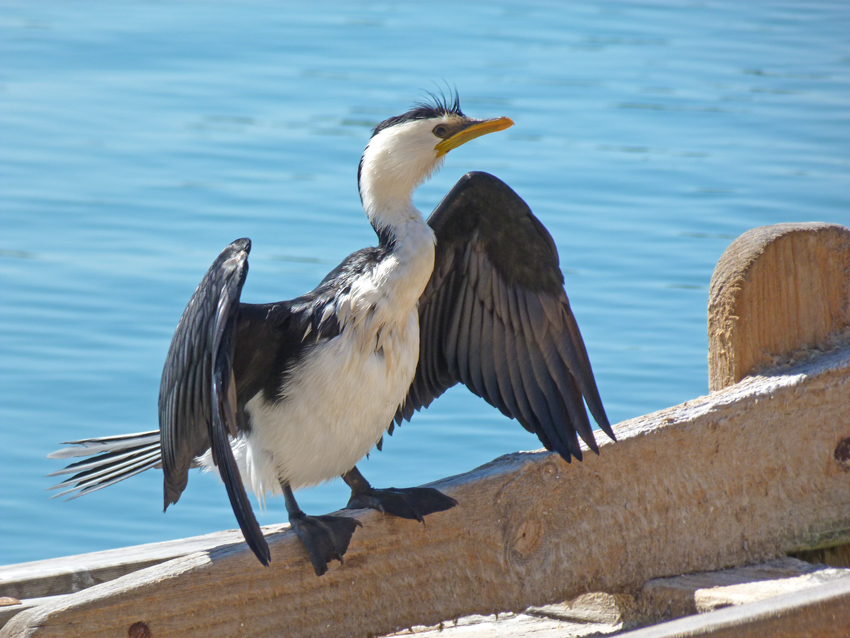
  The fish, crabs and sundry other creatures inevitably attracts predators. Because of the intakes that feed water in from the sea, sharks are virtually unheard of in the lake system and the main hunters are seabirds. Pelicans and cormorants are common and the ubiquitous silver gulls carry out their indispensible clean up duties along the shoreline.

P1100019

Little pied cormorant drying its wings on a pontoon

  Various paths and roads follow the course of the lake system. Walking or cycling along them in the evening and early morning is best for wildlife encounters. However, even at midday when the sun is up and all is relatively quiet on the wildlife front, the well-tended gardens along the fringe of the lake still attract a wide variety of common urban birds as well as insects and the occasional lizard.

P1100023

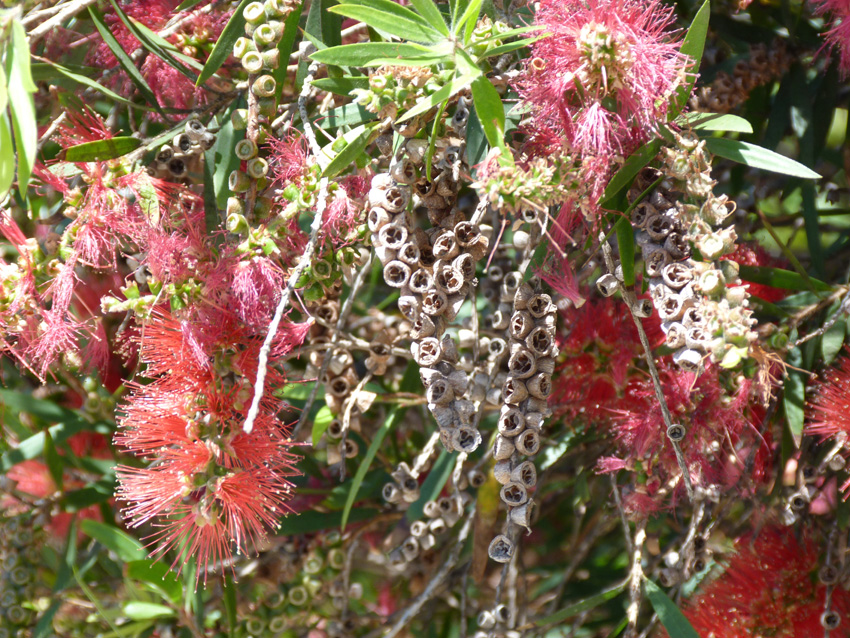
Bottle brush in lakeside gardens

P1100024

Gaura in lakeside gardens

P1100010

New Holland honeyeater feeding in garden

  Finally, a couple of considerations for those contemplating a walk around the lake. Start at the aquatics centre off Military road as there is a nice little cafe overlooking the water. And take a look at the Tennyson Dunes just across the road from the lake. They separate the urban zone from the seashore and are yet another wonderful South Aussie environment to explore… (see ‘Seaside Dragons’…30th Dec 2012)   Until next time Cheers Baz