Archive | Fleurieu Peninsula RSS feed for this section

Normanville’s Back Blocks and Coastal Walk

17 Sep

Normanville’s Back Blocks and Coastal Walk


Dear Reader:

The grey kangaroo is huge, a fully grown male with a couple of smaller females close by, half hidden in the scrub. As I approach, he rises up to his full height and eyes me with intent. I take half a step closer and he turns and shuffles closer to the fence. Then, with a single, effortless bound he clears it and disappears into the scrub further down the hillside.

2 roo

Fully grown male, grey kangaroo


3roo

Up and over

I am in an older part of Normanville on a hillside behind the beach houses and new developments. Large blocks of land are quite common here. Some still retain vestiges of the original pre-farming vegetation. Landowners with an interest in wilderness conservation have re-established endemic plants on many plots that in turn attract a plethora of native wildlife from ‘roos’ and kookaburras to colourful rosellas and even the odd echidna.

IMG_7906

Grevillea species growing under the pink gums


Near the top of this particular block there is a stand of gnarled old pink gums where little crescent honeyeaters and several grey currawongs are sheltering from the light showers that are sweeping in from the sea a couple of kilometres away.

IMG_7909

Grey currawong in pink gum

IMG_6803

Crescent honeyeater sheltering from rain


Beneath the canopy of the trees there is a wide variety of native shrubs and ground covers that support both small birds and insects. Despite the cool weather I manage to find some shield bugs amongst the berries and flowers of a pink Geraldton wax bush. And in the branches above them a crimson rosella is calling to its mate in anticipation of a warmer spring day when they will be searching for nesting holes.

Common gum tree shield bug on Geraldton wax bush

Common gum tree shield bug on Geraldton wax bush


From the scrubby hillside I drive back down to the coast stopping in at the Normanville Hotel for a locally caught seafood meal; calamari, whiting and scallops. The beach is only five minutes from the hotel and I park where a coastal pathway sweeps around to Carrickalinga heads, an area that I frequently dived during my youth.

IMG_7280

Late afternoon view of Carrickalinga heads from Normanville


The sun is getting low now and there are sparrows and honeyeaters settling in for the night in the bushes that flank the path. I can just make out a cormorant resting on the rocky foreshore shaking water from its wings before finding a place to roost. Sometimes this half light produces some of the more striking images that I have captured in the wild and today is no exception. I find a pair of crested pigeons perching on a skeletal branch with the grey sea and sky as their backdrop. They are my final memory of yet another memorable day spent enjoying South Australia’s Fleurieu Peninsula.

IMG_7283 edit 1

Crested pigeons near walking trail to Carrickalinga


Take a drive down the coast sometime and enjoy this special place and its wildlife!!!

Cheers

Baz

Waitpinga…. Scrub and Surf

26 Jul

Waitpinga…. Scrub and Surf 

Dear Reader:

I am in the little parking area at the Newland Head Conservation Park, just a twenty minute drive from Victor Harbor. On the grassy verge near a stand of pink gums, a small group of red-browed finches are feeding on seeds. It is a wonderful way to start my late afternoon exploration of this diverse coastal park.

2 Red-browed finches like to live in thick ndergrowth

Red-browed finches like to live in thick undergrowth


A series of trails branch out from this sheltered camp ground. They wind through the scrub providing access to the beach and rock climbing areas or simply wind through the scrub that lies behind a series of coastal dunes.

3 coastal scrub dominated by wattles and casuarina trees

Coastal scrub dominated by wattles and casurina trees


I choose a trail that runs parallel to the dunes. It is dominated by coastal acacia bushes where a variety of small birds flit amongst the foliage chattering and calling to each other. I fire off a few shots in the low light conditions to try and identify the species. One bird is definitely a grey fantail the other is bouncing on the thin branches as it feeds on seed pods. Perhaps it is a robin or thornbill species; hard to tell but that is the challenge of wildlife photography in these conditions.


What is it a thornbill or a robin

What is it a thornbill or a robin?

Grey fantails

Grey fantails are often found in coastal scrub


From the campground the road descends towards the beach. To the right a seasonal creek spreads into a shallow lake behind a set of dunes that are continually eroded by wind and water. I pull the car into a siding and walk along the edge of the lake. The wildlife here is quite prolific. A pair of kangaroos bound out of the scrub in front of me and there are black swans, coots and several duck species on the water. In one small bush, growing amongst the long grass, silvereyes are feeding on berries.

The creek spreads to a small lake just behind some low coastal dunes

The creek spreads to a small lake just behind some low coastal dunes

Silvereyes feed on insects, fruit and nectar

Silvereyes feed on insects, fruit and nectar


As I approach the beach I can hear the roar of the surf over the car’s motor. This is a classic southern beach with white water breaks that stretch several hundred metres out to sea. In the afternoon light the sand is pale gold contrasting the darker figures of anglers casting for salmon from the beach. There are silver gulls crowding around their bait buckets and several of their larger cousins, Pacific gulls, are patrolling the edge of the surf.

Fishing the surf gutters at Waitpinga Beach

Fishing the surf gutters at Waitpinga Beach

Pacific gulls forage along the edge of the ocean eating a wide variety of foods from fish to moluscs and even other birds

Pacific gulls forage along the edge of the ocean eating a wide variety of foods from fish to molluscs and even other birds


It has been a rewarding afternoon at ‘Waits’ and I have enough time to drive back to Victor Harbor and enjoy an afternoon meal sitting on the decking of the Whalers restaurant enjoying a wonderful view of Encounter Bay. And, at this time of year, even the chance of a whale sighting.

bluff vh

Dinner overlooking the bluff


I hope you take the time to enjoy this lovely bit of our coastline sometime in the near future.


Cheers Baz
Aldinga Scrub

21 Dec

The tawny frogmouth is absolutely motionless. At first glance, I can’t see the bird even though my guide has pointed out its position. Eventually I locate it amongst the foliage exploiting its extraordinary camouflage and the tactic of remaining statue-still to remain ‘hidden in plain sight’. I am using a long lens which allows me to zoom in close enough to capture the delicate whisker-like structures around its beak; perfect for sensing insects at night. “Sometimes there are two together,” she informs me. “And we’ve had a nest with young.” I make a mental note to ask her to give me a call when that happens; photographing a frogmouth and its chicks would be something special.

A tawny frogmouth exhibits its amazing camouflage

A tawny frogmouth exhibits its amazing camouflage (Click to enlarge all images on page)

I am on the edge of the Aldinga scrub; a patch of remnant bushland that hints of what this coastal plain would have looked like before the early settlers arrived with their ploughs and sheep. Aldinga and its coastal neighbour Silver Sands are just an hour’s drive from the centre of Adelaide and a favourite haunt of mine for an entirely different reason. No more than a kilometre away is one of my favourite snorkelling destinations. A reef to dive on, long white beaches for swimming and surfing and a patch of scrub to explore; make this an ideal destination for a day trip from the city.

A half full water hole attracts a wide variety of animals

A half full water hole attracts a wide variety of animals

I continue to walk along the road that borders the scrub. The houses on the urban side of the track blend in well with the bushland ambience. Obviously the residents have chosen this location because of its natural setting and the gardens are filled with a variety of native plants that attract insects and birds. In a huge gum that towers over the track I can hear the raucous screech of a wattle bird high in the canopy. The largest of all the honeyeaters, wattle birds often feed on leaf bugs and nectar from eucalyptus flowers. This one is hopping between the branches calling loudly while foraging amongst the leaves.

A wattle bird wipes its curved beak clean on a branch.

A wattle bird wipes its curved beak clean on a branch

A post and wire fence separates the road from the scrub and a host of tiny birds are twittering and flitting between the trees just inside the reserve. I find a likely spot and sit quietly, balancing the camera and lens carefully on my knees. Eventually, one of the tiny birds perches on a bare branch a dozen metres away. I track the fluffy bundle of feathers and take a quick series of shots as it hops and turns before taking flight. Perhaps one frame will freeze its incessant motion and allow me to identify the species. On reviewing the image my best guess is a species of thornbill.

Thornbil species

Thornbill species

I am more than pleased with my stroll along the edge of the scrub. The frogmouth, wattle birds and tiny finch-like birds were more than I expected. But as I turn to walk back to the car I hear the familiar thump of a kangaroo’s powerful back legs hitting the hard packed earth of the track. An adult grey kangaroo and its joey bound across the road and pause by the fence-line. I watch them as they survey the obstacle for a few seconds then the joey squeezes between the strands of wire while the adult clears it with a single bound. They stop and look around before disappearing into the thick scrub.

A joey balances on its tail and lifts its back legs before squeezing through the fence

A joey balances on its tail and lifts its back legs before squeezing through the fence

The afternoon light is fading and I have one last stop to make before driving home and it has little to do with wildlife. Opposite the Aldinga pub there is a charming café called the Old Vine. It has a colonial cottage feel about it and the meals are interesting, tasty and sourced from local produce but the main draw card is a citrus tart that is as good as any I have eaten anywhere in the world…and I have sampled quite a few.


Come visit

Merry Xmas

Baz

Ingalalla Falls

13 Dec

Dear Reader;

Ingalalla falls does not actually cascade down the dark boulders to the pools below. This is South Australia where water is scarce and in the summer months rain is a rare blessing. But it is a waterfall and as such attracts a varied collection of wildlife as well as providing a few interesting walks and the perfect setting to enjoy a picnic in the bush.

Yankalilla's main street with bakery and surrounding hills visible

Yankalilla’s main street with bakery and surrounding hills visible (click on all images to enlarge)


The falls are about 10 kilometres off the main south road near the coastal hamlets of Normanville and Yankalilla. Both towns have superb little bakeries where one can quickly stock up on a range of ‘goodies’. My choice for this expedition included a gourmet chicken, potato and cheese pie with a generous serve of bee-sting cake (a legacy of our early German settlers) to follow.

Ingalalla falls desceding into the creek

Ingalalla falls descending into the creek


The dirt road from Normanville passes through a mixture of open bushland and wheat fields with a superb links golf course near the main highway. And just few kilometres down the track I noticed a boulder with a metal plaque that celebrated the life of a local settler, mariner and pastoralist William Field, adding an unexpected historical perspective to the day.

A little bit of history

A little bit of history


Where the native scrub started to merge with pine plantations, a small signposted track leads to a sheltered camping area complete with a simple shelter and scattering of wooden benches and tables. From there, a walking trail follows the little creek to the falls. On the right side of the path a steep hillside covered with bracken, native shrubs and tall stringy barked eucalypts rises abruptly from the creek.

Bushland trail characterised by  eucalypts, bracken and low bushes (2)

Walk to the falls showing eucalypts, bracken and low bushes


The rustle of leaves and chirping calls indicated that the thick cover was home to many small bird species but the dense foliage made identifying them somewhat difficult. Eventually, I adopted the sit still and wait strategy which yielded results as a yellow faced honeyeater and grey fantail soon came within camera range.

Grey fantail perching near the creek after eating an insect

Grey fantail perching near the creek after eating an insect


Yellow faced honeyeater in thicket

Yellow faced honeyeater in thicket


Although it was a mild day for summer, a few insects were active around the creek. Both dragon and damsel flies hovered amongst the reeds and several species of butterflies alternately fed on small flowering shrubs and rested amongst the leaf litter.

Wattle trunk scarred by boring beetles

Wattle trunk scarred by boring beetles


Meadow argus butterfly camouflaged in leaf litter

Meadow argus butterfly camouflaged in leaf litter


The rest of my walk was equally rewarding with a pair of yellow tailed black cockatoos making a sudden appearance in one of the nearby pine trees and a couple of wester grey kangaroos bounding across the track as we drove back to the road with the late afternoon light enhancing the golden wheat fields.

Wheat fields on the edge of the track to Ingalalla

Wheat fields on the edge of the track to Ingalalla


I hope you enjoyed this recollection

Drop me a line with any suggestions, criticisms or compliments

All are welcome


Baz

The Old Talisker Mine

15 Nov

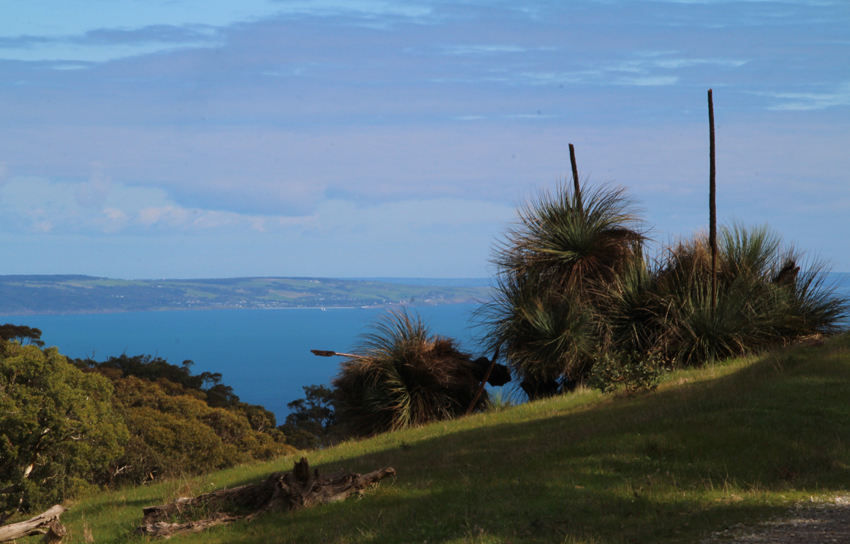
The view from the top of the hill is spectacular. Soft winter pasture still covers the ground in sharp contrast to the spiky Xantheria or grass plants that characterize the harsh coastal scrub and the blue of Baxter’s Passage and hazy profile of Kangaroo Island beckon on the horizon.


Backstair's passage and Kangaroo Island

Backstair’s passage and Kangaroo Island (double click to enlarge all images on this page)


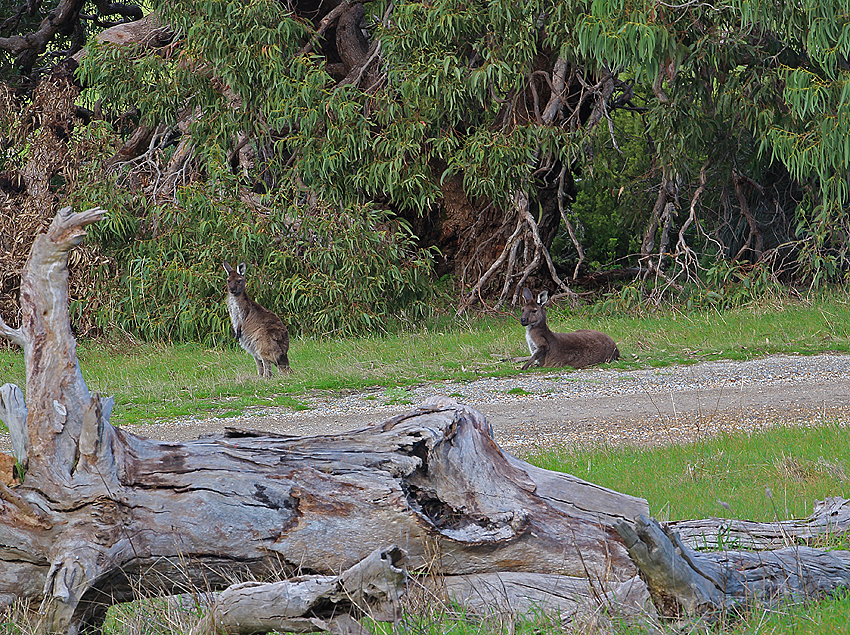
As I get out of the 4WD to capture this image I notice a pair of western grey kangaroos on the edge of the scrub no more than 20 meters from the vehicle. They are wary, ears twitching and sniffing the air. One is considerably larger than the other. They are probably a mother with a joey at heel and her pouch looks a little enlarged suggesting that she may have another little one tucked away. There could even be two in the pouch; one permanently attached to the nipple while the other simply enjoys the ride. In good times kangaroos can multiply quickly.

Western greys by the track

Western greys by the track


I am in the Talisker National Park about an hour and a half journey from the city and 10 kms from Cape Jervis at the toe of the Fleurieu Peninsula. The park centres around a series of bush trails that surround an abandoned silver and lead mine dating from the 1860s. Old machinery, buildings and shafts add an historic dimension to an area rich in scenery and wildlife.

Crushing house and old boiler

Crushing house and old boiler


From my cliff top lookout I backtrack along the dirt roads to the entrance of the old Talisker mine site. The walking trail to the mine is not too steep but the scrub on both sides is dense and full of life. In both the treetops and bushes I can hear the calls of wrens and honeyeaters. Eventually one of the delicate little birds pauses on a branch to announce its territory.

Crescent honeyeater

Crescent honeyeater


The track ends in a small clearing where the rusted remains of crushers, boilers and old buildings mark the main site. They are all that is left of a mine that once was the workplace of dozens of miners and supported a community of 300 souls at nearby Silverton; now also long gone.

Pied currawong

Grey currawong


The buildings are surrounded by a forest of eucalypts and I can hear the more distinctive movements of a larger animal in the branches on the far side of the crushing plant. I focus my long lens on the area and start to search for the perpetrator, expecting another roo or even a possum disturbed from its daytime sno0ze. But it is a large crow-like bird that I spot amongst the leaves and branches, a pied currawong, a relative of the white backed magpies that are so common on the plains where I live. Currawongs are a group that I have rarely photographed successfully as they tend to be a little more wary than their magpie cousins.

Bush track surrounded by eucalypt forest near the park entrance

Leaving the park along a bush track


It has been quite a long day walking, driving and stalking wildlife and the ruins are a great place to sit and unpack a well anticipated lunch picked up at the local Yankalilla bakery; nothing flash, just a steak and mushroom pie and an indulgent apricot tart to round off the meal. Good South Aussie ‘tucker’ to fuel up for the walk up the hill and drive home.


Cheers

Baz                  
Kestrels at the Cape

25 Jul

Dear Reader:

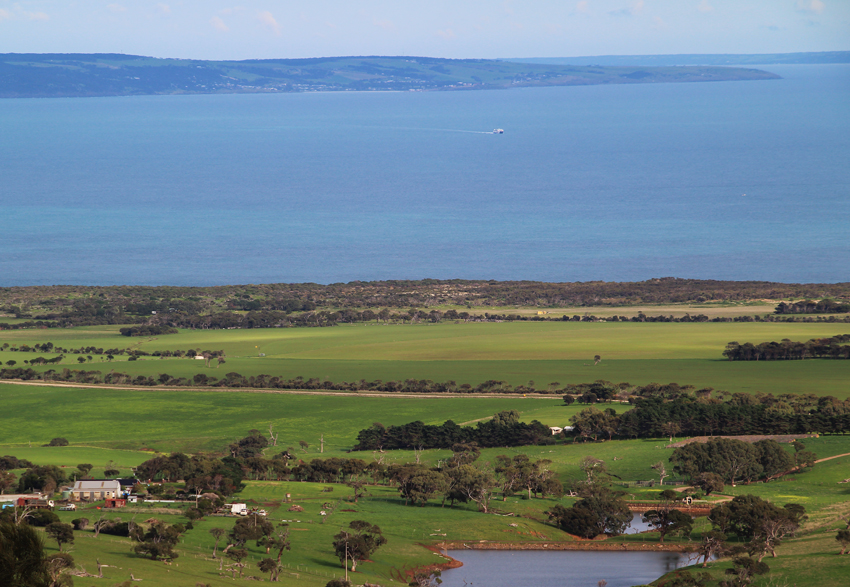
It is late morning on a fine winter’s day and I am leaving the dirt road from Victor Harbor to join the main route back to Adelaide. As I round the curve the descent towards the coast is quite spectacular. From the top of the hill the road drops away sharply providing a panoramic view of open pastures dotted with small dams and patches of native vegetation. A corridor of lazy blue ocean separates the mainland from the island, which appears as a hazy outline on the horizon.

View from the top

View from the top (click to enlarge)

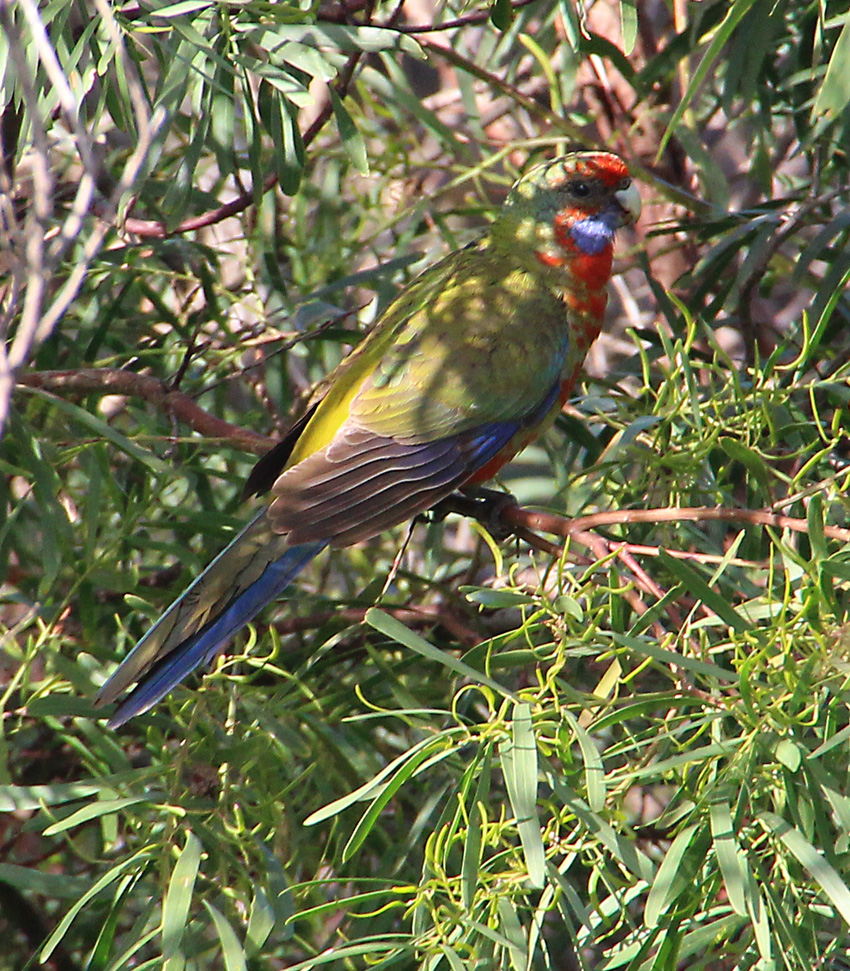
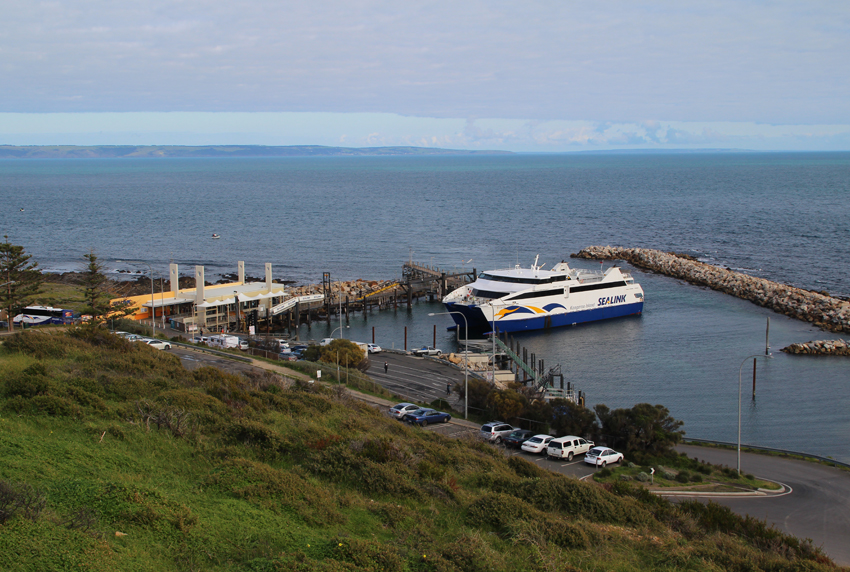
Closer to the coast a dirt track leads to a viewing point alongside a small stand of low trees and bushes. From the elevated position I watch the Sealink ferry crossing Backstairs Passage and stop to take a shot as it docks at the terminal below. While I focus on the ship I can hear the twittering of finches in the nearby scrub and catch a fleeting glimpse of two brightly coloured rosellas gliding into one of the taller bushes.

Rosella feeding in accacia tree

Rosella feeding in acacia tree (click to enlarge)

Sealink ferry docking at Cape Jervis with Kangaroo Island in background

Sealink ferry docking at Cape Jervis with Kangaroo Island in background (click to enlarge)

The ferry from Kangaroo Island docks at Cape Jervis on the southern tip of the Fleurieu Peninsula. It is one of my favourite places in the South Australia; from the little coastal hamlet you can visit local beaches and dive spots, access the Deep Creek Conservation Park, organise a charter fishing expedition or take a day trip to Kangaroo Island.

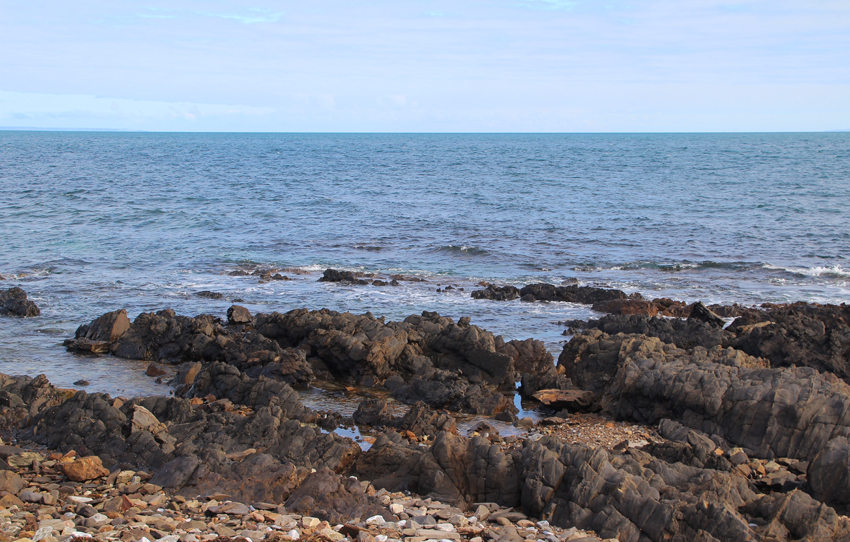
Rocky outcrops extending into the sea

Rocky outcrops extending into the sea (click to enlarge)

From the lookout I follow the road down to the lighthouse and park on a track a hundred metres back from the sea. The shoreline is a geology lesson in itself, with weathered ridges of dark rock ‘criss-crossed’ by veins of quartz, jutting into the ocean and patches of coarse sand and fractured rocks abutting the low earthen cliffs. In the distance I can see a line of giant wind turbines silhouetted on a faraway hilltop and the smell of salt air combined with the sound of waves breaking amongst the rocks fills my senses.

Nankeen kestral hovering above beach

Nankeen kestrel hovering above beach (click to enlarge)

As I move up the foreshore, picking my way between the boulders, I can see two  kestrels hovering over the beach. They seem to be systematically working together; one hovers for  a few minutes over the rocks then moves on while the other works the grassy slopes a little further inland. By pure chance they are slowly coming towards me so I lift the camera skyward and try to remain as still as humanly possible until the birds are almost directly above. I fire off a dozen shots and smile at my good fortune.

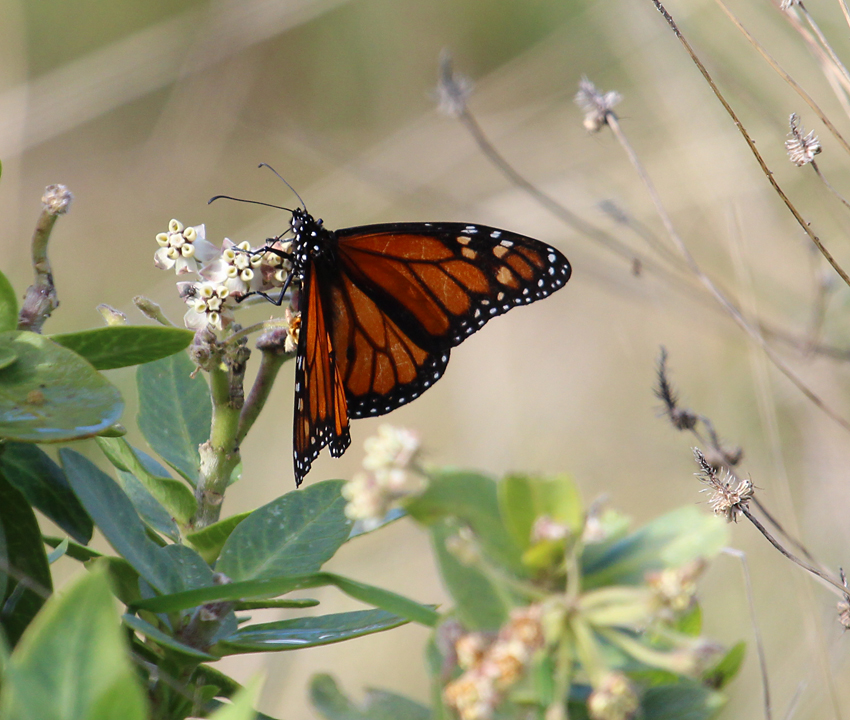
Monarch butterfly

Monarch butterfly (click to enlarge)

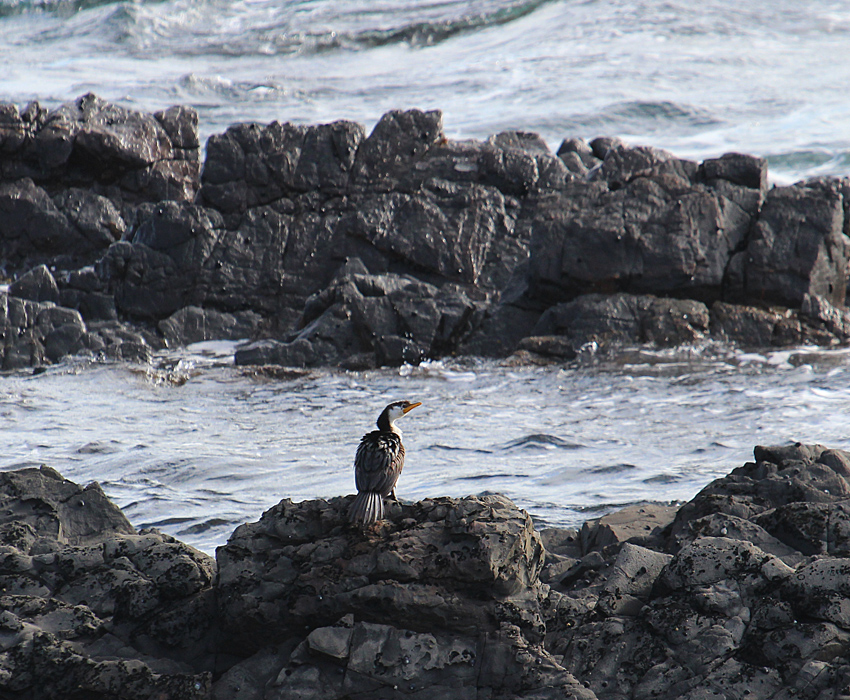
Pied crmorant by rockpool

Pied cormorant by rock pool (click to enlarge)

Raven with nesting material

Raven with nesting material (click to enlarge)

My walk provides a few more interesting moments: a cluster of monarch butterflies in a shrub that looks like milkweed, a lone pied cormorant sunning itself on one of the rocky outcrops that reach into the sea and a raven that is tearing up seaweed on the breakwater for nesting material. However, while I sit in the ferry terminal sipping a coffee, watching passengers returning from KI and reviewing my images I realise that it is the kestrels that have really made my day.

Cheers

Baz
Rapid Bay’s Misty Morning Predators

5 Jul

Dear Reader:

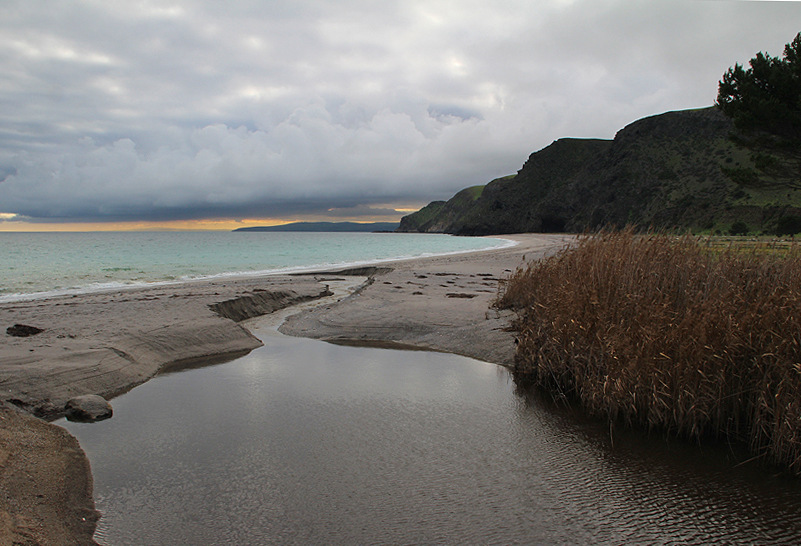
The road drops sharply from a cloud enveloped ridge top to the beach then emerges from the mist alongside a small creek. The sky is clearer close to the ocean and I can see the familiar outline of the steep cliffs and the twin jetties that jut out into the gulf. It is a chilly winter’s morning and my hands are cold as I organise my back pack and cameras ready for a stroll along the seafront.

IMG_3732

The creek at Rapid Bay (click to enlarge)

Two large birds are flying slowly along the beach front; in the early morning light they seem to resemble pacific gulls, a fairly common species along this part of the coast. I track the seabirds with my long lens and fire off a series of shots and quickly review them. Although the light mist obscured the birds’ features to the naked eye the captured images reveal a pleasant surprise. The wing feathers, tail shape and characteristically curved beak indicate a far more interesting and less common bird….the white breasted sea eagle. A little further down the coast I can see the eagles rise up on a thermal alongside the cliffs as they soar in tight spirals before resuming their beach patrol.

IMG_3771 edit1

White breasted sea eagle (click to enlarge)

The beach with its high cliffs, creek and mining jetty define one of the Fleurieu Peninsula’s most interesting and historic locations; Rapid Bay.  It was here that Adelaide’s original surveyor Colonel Light anchored his brig ‘The Rapid’ in the sheltered bay uttering the words “I have hardly seen a place I like better”.  Only 100 kms south of Adelaide, Rapid Bay is a prime location for divers and anglers. It is also  holds a significant place in the lore of several local Aboriginal peoples; a feature of the area that I will explore in more depth at a later date.

IMG_3761

Anglers on the jetty (click to enlarge)

IMG_3755

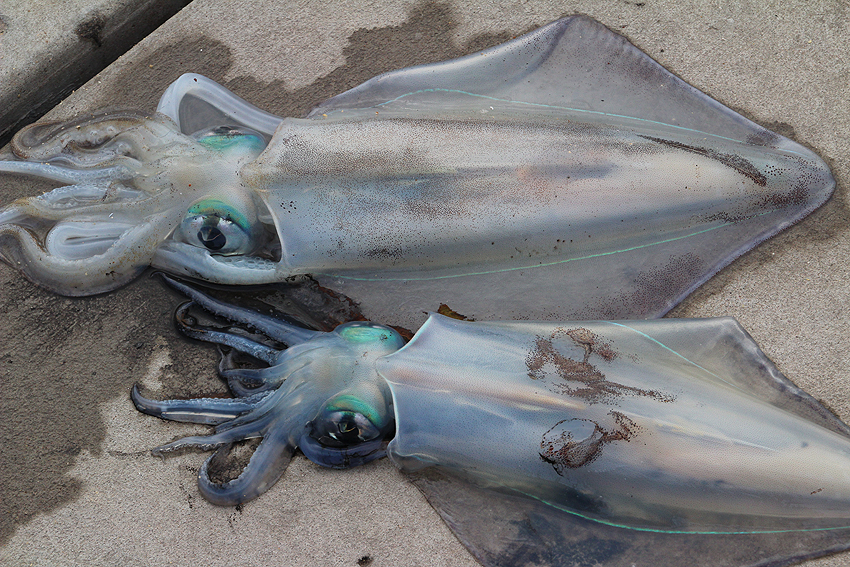
Southern calamari (click to enlarge)

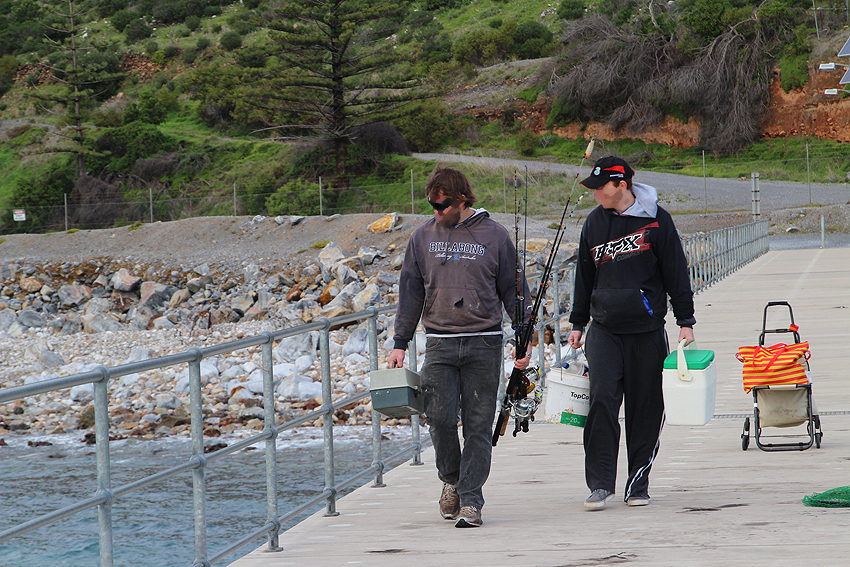
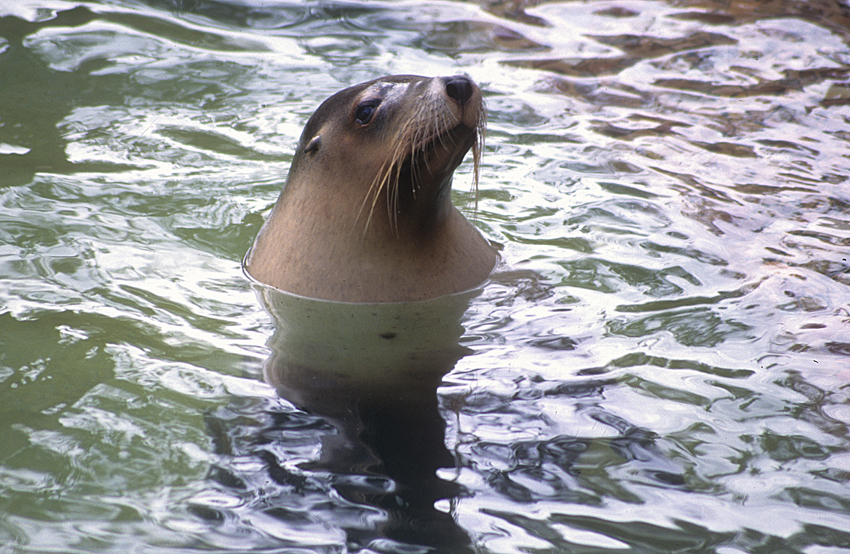
From the beach front I walk along a short dirt road to the jetty. A couple of fishers tell me that a sea lion has been hunting in the shallows between the new and old jetty. After a few minutes a sleek grey shape twists and turns in the water only a dozen metres away and a whiskery face pops up, surveys the surface and is gone as suddenly as it appeared. The anglers tell me that they have tossed a couple of squid to it and that the sealion has been around the jetties for the last couple of days.

sealion 1

Australian sealion (click to enlarge)

I watch the men jigging for squid for a few more minutes before returning to the car which is parked near the creek. As I pack up my gear I can hear the sound of finches in the bushes and reeds but it is difficult to focus on the tiny birds especially in these low light conditions. While I am concentrating on the tiny birds a large raven appears on the nearby embankment with a piece of squid in its beak and proceeds to tear the rubbery flesh apart while keeping a wary eye on me and croaking out a few warning calls to any other would be scavengers that might fancy a calamari entree.

IMG_3741

Little raven (click to enlarge)

Eagles, sealions, squid and even a dolphin that cruises past as I leave the jetty; it has been a morning of predators and scavengers both aquatic and aerial. And now it is my turn to grab a bite to eat. Leonard’s Mill, a renovated flour mill, is one of my favourite dining spots and on the main highway to town a mere 15 kms from the Rapid Bay turn off. Their calamari is on the menu as salt and pepper squid and best enjoyed with a fine white wine from the local vineyards.

Cheers

Baz
Port Willunga’s Natural Charms

24 May

There is a pair of pigeons nesting along the limestone cliffs. They are billing and cooing and puffing up their feathers if rival birds come anywhere near their territory. Unbeknown to the loving pair a far greater menace, in the form of kestrel, is circling high above, scanning the cliff face for a tasty pigeon treat. Luckily for the nesting pair, the hunter overlooks them or perhaps the angle of attack is too steep and the cliffs too perilous.

Lucky pigeons

Lucky pigeons……click to enlarge


I am walking along Port Willunga beach just 40 minutes from Adelaide; a glorious little stretch of white sand that lies below ochre limestone cliffs and bounded by the Aldinga reef to the south and Gull Rock to the north. The reef is a marine sanctuary that showcases a wide variety of the state’s diverse aquatic life. And the beach is a rich repository of the South Australia’s pastoral history where the sea scoured remnants of an old wheat jetty, built in 1853, protrudes from the shallow water. Despite its idyllic setting, Port Willunga also harbours a darker history with no less than five ships being wrecked in the vicinity. The most famous of these was the Star of Greece whose skeleton can still be explored just 500m offshore.

The view from the beach

The view from the beach…..click to enlarge


Leaving the fortuitous pigeons to their parental duties I kick off my shoes and walk through the water amongst the old jetty piles. The wood is bleached white and worn by wind, sand and rain. Tenacious little limpets cling to the timber and a shore crab scuttles past my feet. Looking back across the beach I can see the rough hewn caves that were dug into the cliffs to house fishing dingies and give shelter to the hardy men who made a living from these waters.

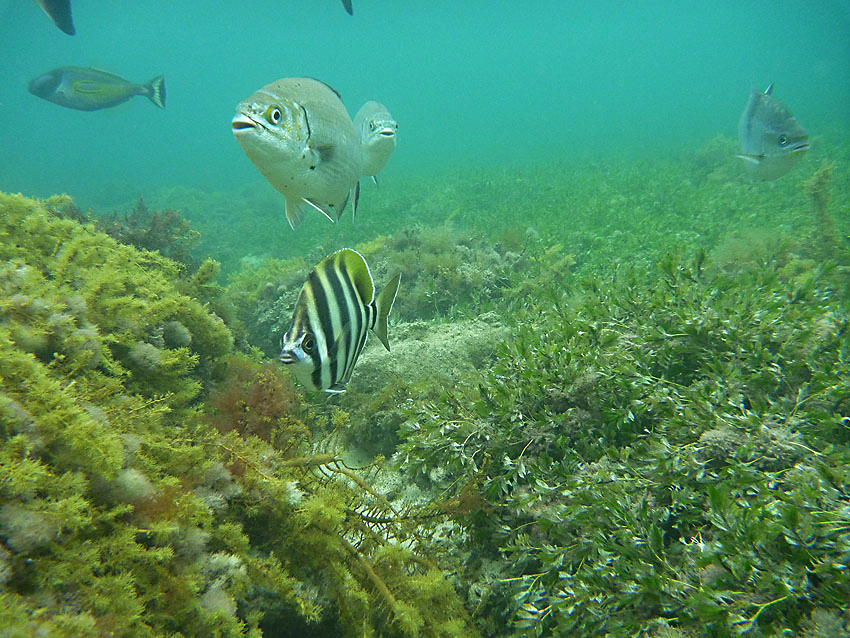
Drummer, leatherjackets, sweep and a moonlighter on the edge of the reef....click to enlarge

Drummer, leatherjackets, sweep and a moonlighter on the edge of the reef….click to enlarge


Warm clear water, a fine day and good light….thinks….twenty minutes later I am snorkeling along the edge of the reef. The water is fairly shallow and the marine life prolific. A school of zebra fish swims close to me and large dusky morwong and magpie perch feed along the undercut shelves that define the reef’s edge. At the end of one rocky outcrop a number of different species are congregating where the reef and the adjacent seagrass meadow intersect. I dive to the bottom and hold onto the rocks to steady myself and fire off a couple of shots. Later when I review the images they seem to reflect both the environment and the moment. An hour in the water and I’m getting a little chilly and its time to go back, this time I walk across the shallow rocky platform exploring the many tidal pools.

A casual lunch outside or fine dining inside....click to enlarge

A casual lunch outside or fine dining inside….click to enlarge


The change rooms at the end of the car park make getting out of the wet suit easy and the short walk up the slope to the restaurant, named after the hapless Star of Greece, gives me a good view north and south along the coast. Often I have caught sight of a pod of dolphins cruising the calm gulf waters but not today; just a few fishers and an optimistic body surfer are enjoying the water. However, after a strenuous swim and a walk along the beach my priorities have changed from natural history to lunch and the boutique restaurant, once a fish and chip shop that I frequented as a lad, beckons. Fresh seafood, quality local produce and wines; a typically South Aussie way to finish my day.


Cheers

Baz
Two out of Three ‘aint Bad

15 Apr

  The red bellied black is sunning itself on the track about forty metres in front of us. It hasn’t caught the scent of the dog yet or reacted to the vibrations created by our footsteps. We stop and watch it for a few seconds and that change in rhythm seems to alert the snake. Suddenly, a grey faced heron that is feeding amongst the samphire plants that line the foreshore of the lake, takes to the air. That is warning enough for the reptile and in the blink of an eye it has disappeared into the wetland. My companions are relieved, the dog is unaware and I must admit to being a little disappointed. They walk on ahead while I sit on a pine railing near the last point of sighting and watch. Sometimes a little patience pays off and after a few minutes I see just enough of the snake to fire off a single frame before it weaves its way deeper into the swamp.

Red bellied black snake hunting

Red bellied black snake hunting

  These rather striking snakes are quite common in the cooler wetland areas of southern Australia. They grow to around 2 metres in length and their diet includes a variety of small mammals, amphibians, fish and reptiles including their own species. They are related to the deadlier and more aggressive brown and tiger snakes that also occur in this area. Red bellied blacks produce between 5 and 18 young which are delivered in a membranous sac; they are considered to bear live young rather than produce eggs.

5 lake alexandrina

Lake Alexandrina on the shores of Milang

  My encounter with the black snake occurs along a dirt track on the edge of the small town of Milang, on the shore of Lake Alexandrina. With a population of just 500 Milang is a charming reminder of the bygone era of paddle steamers and rural living. The little township is a pleasant twenty minute drive from the rural centre of Strathalbyn. It is accessed by both sealed and unsealed roads which pass through rolling farmland and vineyards. With a caravan park, wharf, general store, designated walking trail and several historic sites; Milang is a great place to spend a couple of laid back days in the South Australian countryside.

2 brown snake

Common brown snake in strike position

  Leaving the black snake to its swampy refuge, I walk further down the trail and to my astonishment I catch sight of a long slender tail protruding from the edge of the grass verge. I freeze and ‘ever so carefully’ step forward until ‘snake two’ is immediately below me. It is almost completely obscured by a tangle of grasses and reeds. I watch it for a few minutes trying to angle my camera for a worthwhile shot. No luck; the common brown snake; the second most venomous land snake in the world; remains motionless, using its colouration and shape to stay hidden. I step back to change the angle fractionally and when I glance back through the viewfinder the snake is gone…without the slightest sound it simply disappeared into the grass.    

Dirt track between swamp and township

Dirt track between swamp and township

I have been photographing wildlife in South Australia for many years and I rarely see venomous snakes. To see two of the resident three species in the space of 15 minutes is extraordinary to say the least. Needless to say I did not run into a tiger snake on my return walk along the track.  

Cheers Baz

Reef and Cliff

25 Mar

The crumbling cliffs drop steeply to a narrow beach where a tangle of dried out seaweed marks the extent of the last high tide. From the beach, a flat limestone platform gently slopes into the ocean. The once smooth surface is scarred with shallow pools, sand patches and bubble weed. A line of white foam marks the outer fringe of the shelf where a sudden increase in depth creates a series of smaller reefs and ledges. These features provide a range of diverse habitats for an assortment of marine life.

3 cliff beach and reef

The view from the cliff top


The first animal that I meet, on my swim across the shallows, is a fiddler ray which has come in from the seagrass meadows beyond the edge of the reef. It is hunting on the limestone platform; using its keen senses to locate molluscs that are buried in the sandy patches. Like all rays, its mouth is located on the underside of the body and its back is camouflaged to confuse predators that might attack from above. I follow the ray for a few minutes approaching quite close as it lies near a patch of bubble weed. Unlike stingrays, fiddlers do not have a barbed spine on the tail for defence and seem to be quite placid animals.

2 fiddler ray red

Fiddler ray near bubble weed


The ray follows a series of narrow cracks in the rocky surface where shore crabs often leave the shelter of their burrows to hunt on the incoming tide. The narrow crevices are also home to hoards of tiny anemones that extend their stinging tentacles to trap the tiny organisms that live in the water.

4 Pale anemones amongst seaweed

Anemones in a rock ledge surrounded by seaweed that keeps them wet on the receding tide


The limestone reef and high cliffs with their spectacular coastal views are the main attractions of the coastal community of Aldinga. The town is a comfortable 50 minutes drive from Adelaide along the main South Road. A traditional Aussie pub and bakery close to the access road from the highway provide great local meals and there are numerous houses for hire along the coastal strip that overlooks the gulf. Several parking bays on top of the cliffs with steps that lead down to the beach and reef make accessing this location very easy. The area is also a marine park and various signs explain the exact nature of restrictions for divers and fishers.


rock crab  aldinga 2

Shore crab that has emerged from its shelter to feed


After following the ray for a while I swim to the seaward edge of the reef and start exploring its perimeter. The limestone is honeycombed with undercut ledges, caves and crevices. Almost immediately I encounter a large strongfish or dusky morwong; a common species that lives in the seagrass meadows. The fish is well over a metre long and appears to be resting before heading into deeper water to feed.

1 strongfish in cavern red

Strongfish or dusky morwong sheltering under a rocky ledge on the edge of the reef


I have been in the water for over an hour and have photographed a wide variety of marine life apart from the species mentioned. Now it is my turn to follow their example and ‘grab a bite to eat’ back at the pub before driving home confident that there is still much to see on subsequent visits to this spectacular local ecosystem.

Cheers

Baz