Archive | Inverterbrates RSS feed for this section

Patowolonga’s Cormorants

1 Dec

Dear Reader:

It is a glorious spring day, not a breath of wind to ruffle the placid expanse of water that stretches out in front of me. By the breakwater there is a gathering of little black cormorants paddling alongside the rocky barrier. Every few minutes, one of the birds dives and swims out into the deeper water to hunt. Cormorants use both wings and feet to navigate underwater. Their aquatic speed and agility combined with specially adapted eyes and serrated beaks make them formidable fishers.

1-red

Black cormorant

2-red

Black cormorant diving


I am walking around the Patawolonga from Glenelg towards the first road and foot-bridge. This man-made lake extends between Glenelg and West beach for around 1.5 kilometres and serves as a flood mitigation system. The area also incorporates a berths for larger boats and lock that lead on to Holdfast Shores Marina an upmarket, shopping, restaurant and residential complex.

3-red

View from the bridge


When I reach the bridge there is a spectacular view back down the lake towards Glenelg that takes in the old replica ship The Buffalo which brought some of South Australia’s first colonists and governor ashore. The extensive grassed areas that run alongside ‘The Pat’ are shaded by eucalypts and Norfolk pines which attract a wide range of common urban birds. Today there are numerous crested pigeons foraging in the grass as well as wagtails and swallows demonstrating their sophisticated aerial acrobatics as they hunt for insects nearer the water.

4-red

Crested pigeon


From the western end of the bridge I walk back towards Glenelg along the edge of the marina. There are several fishermen casting for bream and I stop and chat with them. Apparently a small pod of dolphins has been in the area over the last few days. Not great for fishing but wonderful for those who simply enjoy the wildlife. The rocks along this part of the Patawolonga have a healthy cover of small molluscs and occasionally I catch sight of small schools of baitfish in the shallows.

5-red

periwinkles at low water


The path stops near a dive shop and I have to walk around the lake past neatly kept houses. When I reach the lock I can see dozens of swallows hawking insects. A few have settled on the glass and steel partitions that enclose some of the nearby units to rest for few minutes before resuming their hunting sorties.

6-red

resting swallow


The lock is not being used by any of the local boaties and I am able to walk across to finish my circuit of the lake, watched intently by yet another cormorant. This time it is a pied cormorant, perched high on a railing. The bird is drying its wings before it too dives back into the water for lunch while I head for nearby Jetty Road with similar intent.

7-red

Pied cormorant drying wings on lock


Cheers

Baz


Additional notes

This is an easy walk which is quite suitable for families and seniors with public toilets, barbecues, parking and other facilities nearby.

Blackwood’s Wittunga Botanic Park

12 Nov


Blackwood’s Wittunga Botanic Park 

Dear Reader:

There is a rainbow lorikeet around fifty metres away from me. The excitable little bird has inverted its body to dip its feathery tongue into a tube shaped eremophila blossom.  Several other species of birds including new Holland honeyeaters and wattle birds are feeding in the same garden beds where there is a smorgasbord of flowers to choose from. Clever planting also attract a variety of butterflies which feed on the nectar and help to pollinate plants by transferring pollen.


1a2

Rainbow lorikeet feeding


I am walking around the Wittunga Botanical Gardens near Blackwood in Adelaide’s foothills, just a twenty minute drive from the CBD. The busy little township is nestled into bushland where koalas and myriad bird species are common visitors. There are several hotels, bakeries and restaurants in the area and the Belair National Park and Golf course make this an ideal day trip for city residents.


1c

Old church and soldiers’ memorial in Blackwood


Leaving the flower beds behind I venture down to the lake that is the central feature of the park. It is surrounded by massive gum trees and there are crows, honeyeaters and a kookaburra perched in some of the branches that overhang the water. But it is a tiny head that emerges from the lake that draws my attention as I watch a Macquarie short-necked turtle swim towards the shore. The side-plate sized reptile clambers up on to a fallen branch and positions itself to catch some warming sunlight.


3a

Central lake and gardens


1d-red-2-macqurie-short-necked-turtle

Macquarie freshwater turtle


2a

Pacific black ducks

At the end of a long cool, wet summer the lake is full of new life. I spot purple swamp hens tending their fluffy black chicks near the reed beds. Several species of frogs are calling; probably spotted marsh frogs and common froglets or perhaps a potty bonk. Two Pacific black ducks are preening their feathers near the water’s edge and Eurasian coots appear to be amorously pursuing each other further from the bank.


4a

Ra venfeeding, they are often mistakenly called crows


Various pathways meander around the lake and I choose one that cuts through a stand of massive red gums. A lone raven is strutting around the perimeter of one tree pecking at the bark which is cracked and sloughing off the trunk. The bark of most eucalypts is an important environment for many smaller animals. Insects and spiders find shelter and breed there while larger predators such as birds and lizards find it a fertile hunting ground.


5a

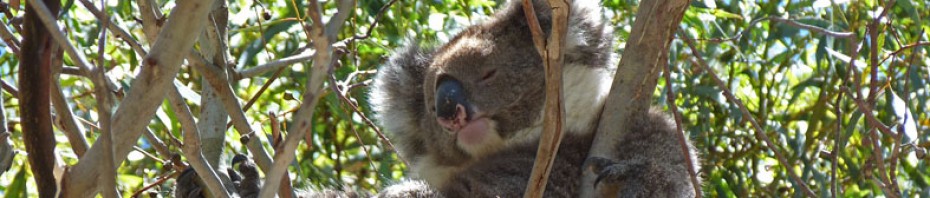
Koala portrait shot


Having enjoyed a pleasant walk around the lake while indulging my passion for both wildlife and plants in general I walk back to the car park by way of a small stand of gums that run along the northern edge of the gardens. They are the kind of trees that might be attractive to koalas and I know that these endearing marsupials are common in the Blackwood area. Sure enough, there is one wedged between two branches in what I can only describe as the perfect koala portrait pose; a nice way to finish my walk.


1b-red-lesser-wanderer

Lesser-wanderer butterfly


Enjoy our city and suburban parks in spring as they really are some of the best in the world.

Cheers

Baz

A North Adelaide Garden Safari

30 Sep

A north Adelaide garden safari 

Dear Reader

There is a tiny spider on the daisy petal. It waits patiently for prey to approach. In an instant the little arachnid pounces and ensnares an unfortunate fly that has wandered too close. The spider drags its victim onto a nearby leaf, binds it in silk and proceeds to enjoy its lunch.

1-1

Flower spider on daisy blossom

1-2

Gotcha


I am wandering around the streets of North Adelaide exploring the local gardens and their early spring blooms. However, my real focus is the multitude of little invertebrates such as beetles, spiders, caterpillars that revel in the warmer weather and emerging flowers. To that end I have set my camera on macro and ramped up my observation skills to detect these well camouflaged and often minuscule creatures.

2-1

Bee feeding on cat mint


A little further down the road a feline loving resident has planted some cat mint. Today it is not the local ‘mogs’ that are enjoying the plant but honey bees. Half a dozen are hovering around the purple flowers periodically settling to extract the nectar and unwittingly collect pollen to distribute.

3

Woolly bear caterpillar


In one particular cottage garden the front fence is dominated by a huge yellow euryops bush, a kind of yellow daisy. It seems to be a favourite food for a myriad of mini beasts. A woolly bear caterpillar has munched its way through both leaves and flowers as it prepares to enter the next phase of its life as a chrysalis before eventually morphing into a tiger moth.

4-1

There are many different species of ladybirds


Before heading into O’Connell Street and a well earned cup of coffee at one of a dozen restaurants I want to find one last iconic insect species. My chance comes when I notice a tiny spec of red and black on a deep purple native hibiscus flower. It is a ladybug, a familiar insect to both adults and children alike. Despite its benign appearance ladybugs are fierce predators demolishing a plethora of insects that are considered to be garden pests. 

Enjoy our spring gardens and their wildlife

Cheers

Baz  

A Walk through Victoria Park

14 Sep

A Walk through Victoria Park

 Dear Reader;

The little musk lorikeet has been hovering around the small opening in the trunk of a red gum for a few minutes. Suddenly another lorikeet appears and disappears down into the tree. They are obviously nesting here. I walk closer to the tree and listen. From deep inside I can hear the plaintive calls of the young chicks demanding food.

1-1

Musk lorikeet

 I am walking around the old Victoria Park Racecourse which is now a recreation area bounded by gracious old houses, a creek, walking trails and stands of massive old gums as well as a variety of native shrubs and bushes. It is a wonderful space for people to enjoy a bike ride, walk or run, exercise their dog off lead or even fly model planes.

1-2

Historic old racecourse stand


1-3

Avenue of gums on the western perimeter

 From the car park at the south western edge of the park I take the path towards Greenhill Road which winds through a copse of massive old gums and thick tangles of bushes. There are white cheeked rosellas high in the branches and one pair seem to be staying close to a hollowed out limb some 10 metres above the ground. I’ll come back at another time and see if they have chosen it for a nesting site.

1-6

Huntsman spider in bark crevice

 To get a better idea of the bird life I decide to spend a little time sitting quietly on a fallen log deep amongst the trees and bushes. Unfortunately or fortunately depending on how you look at it, the aforementioned log is also home to a large huntsman spider that scuttles for cover as my ‘butt’ approaches.

1-4

White cheeked rosella

While the spider and I share our seating arrangements, a wide range of birds including- miners, mudlarks, crows, magpies and galahs-are active in the scrub around me. Wonderful for a photographer to capture some images; not so good for a spider who features on many of their menus.

1-7

Police greys

Bidding adieu to ‘Boris’, I continue along the pathway. To my delight, my final encounter is not with native wildlife but a pair of police greys being ridden through the parklands.

1-5

Spiny wattle variety with feeding fly

 Spend some time in our parklands during the spring. It really is the best time to enjoy the wildlife.


Cheers

Baz

A Walk from Tennyson to Grange

11 Aug

A Walk from Tennyson to Grange

 Dear Reader;

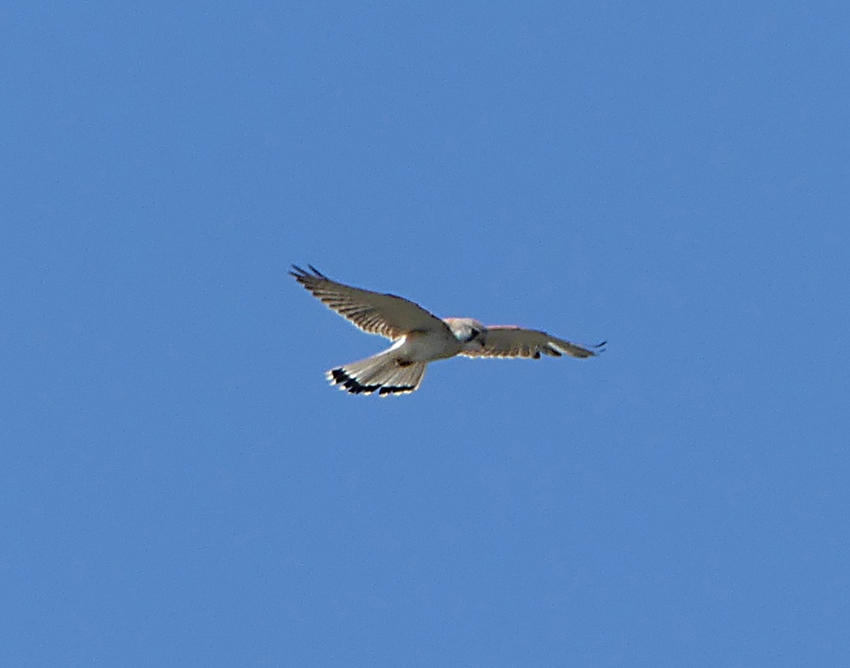
As I follow the narrow footpath south from the cul-de-sac overlooking Tennyson beach towards the Grange jetty in the distance, I can see a bird of prey hovering just above the houses that spill down to the dunes. The sky is patchy, blue then grey as clouds blow in from the sea and it is difficult to locate the kestrel in the viewfinder. I take a few quick shots and hope for the best.

1

Nankeen kestrel hovering

I am intrigued by the raptor and wait quietly close to a coastal wattle bush watching it patrol along the line of the dunes pausing periodically to hover and scan the terrain below for small animals. The birds in the surrounding scrub are not quite so keen. They head for cover deep in the bushes or under the eaves of the houses twittering their various warning calls.

2

Singing honeyeater in shelter

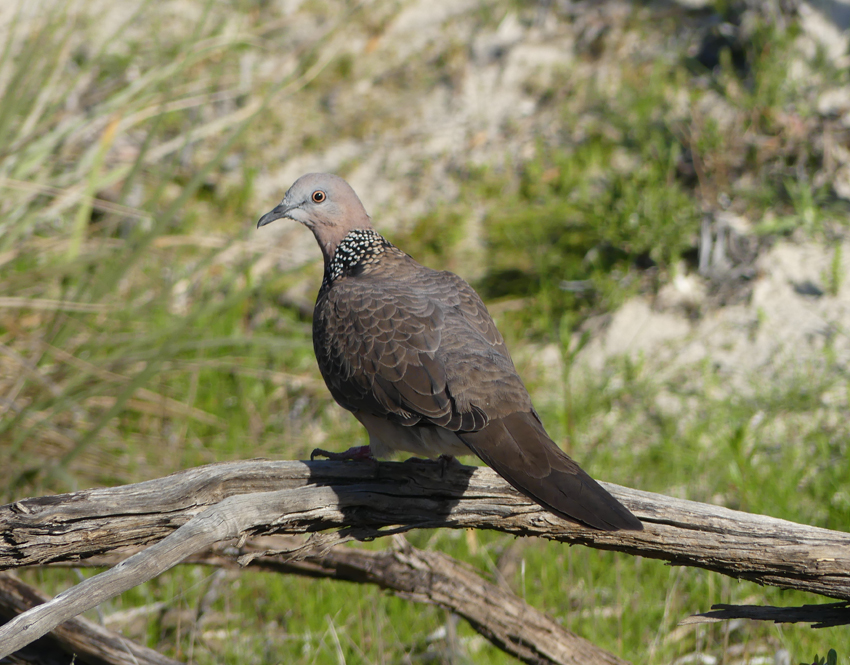
A lovely little singing honeyeater hides in a dense tangle of branches while spotted doves remain motionless closer to the ground near some dried scrub that matches their subdued colouring. Both species are usually very wary in this dune habitat and hard to approach but I am obviously the lesser of two evils and able to get closer than usual to capture some images.

3

Spooted dove

Continuing along the pathway, I am fascinated by the different architectural elements incorporated in many of the houses. There are domed chapel-like structures, facades of tinted glass and walls with pastel shades of ochre, pink and grey. Just before I reach the jetty the beautiful ‘Marines’ sit alongside the beach. This group of Victorian 3 story terraces was built in 1840 and they dominate the foreshore.

4

At the trail head near Tennyson Beach

 After a wonderful lunch at the Grange Hotel and a walk along the jetty to check out the fishers and look for dolphins, I turn back for home. The wind is getting up so I opt to walk back down the path rather than along the beach front. There are numerous trails down to the sea allowing me deeper penetration into the scrub as well as a quick search for seabirds. On this visit they are few and far between bar a couple seagulls under the jetty.

5

Grange Hotel

6

From track to beach through the dunes


Near one of the beach access paths I stop to watch a mudlark foraging in the sand and notice a discarded Besser brick lying in a sunny patch near a patch of early flowering succulents. Much to my surprise there is a bearded dragon lizard perched on it, flattened out to extract every bit of heat from the masonry. These reptiles are not uncommon in the summer but in the winter I would have expected them to be tucked away hibernating until spring.

7

Mudlark foraging along pathway

8 1

Bearded dragon picking up some rays


9

Still a few bugs around to eat for the dragon

Predators prey and unseasonal reptiles it has been a rewarding winter’s walk along the dunes enjoying the ocean, good food and quite an assortment of wildlife.


Enjoy your winter walks in SA

Cheers

Baz

Hindmarsh Falls….An easy walk with lots to see

20 May

Hindmarsh Falls….An easy walk with lots to see

 Dear Reader:

Eucalyptus trees overhang the dirt road that leads to the falls. Tiny wrens and even tinier thornbills twitter and flit amongst the branches and leaves. Occasionally pairs of rosellas fly out from the foliage. From the parking area I can see bush clad hills and open farmland rising all around and the sound of running water provides a pleasant background melody.


1

Driving into the falls


1a thornbill species probably yellow rumped

Thornbill species probably yellow rumped


Hindmarsh Falls are about 12 kms north of Victor Harbor towards Mt Compass on the Adelaide Road and are clearly signposted. The walk to the falls is easy and the path down to the viewing platform has rails and steps.

2

Path to the falls through scrub


I make my way along the trail that descends to a lookout point where I can see the water tumbling down dark boulders to a small pool below. There are kangaroo droppings on the forest floor and some of the trees show signs of a recent fire.

2a

Falls and pool


The birds are very wary here and difficult to photograph. I concentrate on other aspects of the area’s natural history. Bright orange fungal growths adorn some of the fallen logs and striking yellow Banksia flowers lend splashes of colour to the browns, greys and greens so typical of our bushland. I spend some time just watching the water. In the driest state on the driest continent watching a waterfall is always good for the soul. Near the edge of the pool I catch a glimpse of a grey kangaroo slowly edging through the scrub. Not clear enough to take a picture but interesting to watch how the ‘roo’ leans forward onto its front legs then pushes with its tail when travelling at slow speeds.

4a

Common orange fungus on fallen log


4

Banksia flowers


As I climb back up the incline towards the recreation area I notice a wattle bird perched on a branch scouring the leaves and limbs for insects to pick off. And in the sharp native grasses that border the creek near the picnic area I come across a fascinating little diamond weevil crawling along one of the blades. Hopefully, not to become a victim of the ever- vigilant wattle bird.

5 diamond weevil

Diamond weevil


7

Wattle bird

My trip to the falls has been interesting and though there has not been an over abundance of wildlife it is, after all, the middle of the day. And on that note I occupy one of the benches and tuck into pasty, lamington and a bottle of OJ bought en route at one the many excellent, local bakeries.


Nice to be back

Cheers

Baz

Wildlife and Wineries

15 Mar

Wildlife and Wineries

Dear Reader:

I can hear the first few notes of a kookaburra calling near some picnic tables across the other side of the green. The birds are usually quite shy and I don’t hold out much hope of sighting them with all the families enjoying their lunch on the grass. However, to my surprise there are two birds sitting on a low branch quite close to a group enjoying a BBQ and glass of wine. I have seen kookaburras steal a sausage in the past and these birds must be residents accustomed to life in the grounds of one of South Australia’s most notable wineries.

1 1

Laughing kookaburras


Seppeltsfield winery in the Barossa Valley is a pleasant 50 minute drive from the city. Easily recognised by the avenue of huge palms at its entrance, the rambling complex encompasses: green spaces, bushland, old buildings, a family mausoleum, fine restaurant, cellar door facilities and even an art gallery; and that’s without even mentioning the sprawling vineyards. Established in 1851 the land was initially used for growing tobacco then wheat and finally grapes in the mid 1860s. Today, it is one of the nation’s most famous and revered wine wineries.

1 2

Jam Factory gallery


I decide that a bushland trek in the area is not by best wildlife option. Today, I will simply wander around the grounds enjoying the animals that take advantage of the plantings, food and shelter that this popular rural setting can provide. My strategy pays off when a wattle bird hops down onto one of the slate tables just a few yards away. Like the kookaburras, wattle birds are fairly common but shy and often difficult to photograph. Having one so close is a rare opportunity.

1 3

Wattle bird


1 4

Picturesque grounds

From the picnic area I take a walk around the courtyards near the restaurant enjoying the tasteful landscaping and searching for insects amongst the plantings. There is a good selection of butterflies this time of year and several different kinds of tiny spiders are hunting amongst the flowers.

1 5

Flower spider n blossoms


After a late afternoon meal ‘Local Garfish, Skordalia, Snowpeas and Vegetable Escabeche’ at ‘FINO’ and a sample sip of the wonderful vintage port that Seppeltsfield is renowned for, I call it a day. As I walk back out to the car park a young magpie fixes its gaze on me cocking its head to one side as if to bid me farewell

1 6

Fond farewell from magpie gatekeeper


Cheers

Baz    

Nairne….an artistic afternoon

6 Oct

Nairne….an artistic afternoon

Despite a field that is full of lush green grass, a veritable cow paradise, the small herd of young bovines drifts down towards the fence where I am standing. Perhaps they are intent on providing me with the perfect ‘cow’ shot or they may be simply illustrating the old adage; ‘the grass is always greener….’

2

Taking a closer look

1

Classic South Aussie dirt track

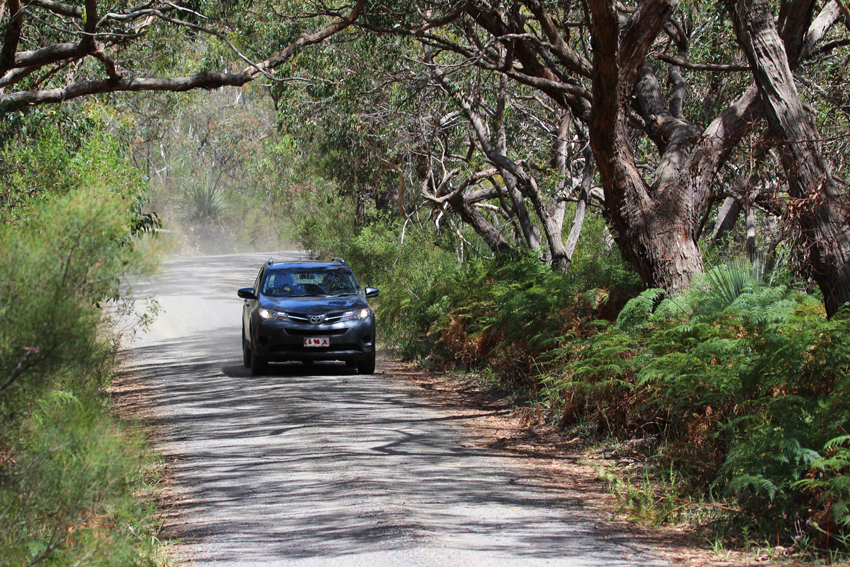
 On this perfect spring day I am driving along Ironstone Range Road just off the Old Princes Highway, a few kilometres east of Nairne. Expansive, open woodland dominates one side of the unsealed track and rich pasture carpets the other. I am on my way to the Jonathan Art Centre to grab a bite to eat and make some inquiries about art classes.
3

Open woodland with massive eucalypts

 Five minutes later I am driving across an open paddock on a grass trail to a pitch roofed building set on the side of a gently sloping hillside. There are rosellas in the trees that line the driveway and a pair of crows raucously announces my arrival. The entrance hall is a combination studio and gallery displaying the owner’s work and opening on to a balcony which overlooks a cottage style garden.

4

Johnathan art centre

5

Work space and gallery

10

Another view from the property

A friend has recommended the fish pie, a classic British dish that I often enjoy in London’s Union Cafe. And this version does not disappoint; full of good South Aussie seafood and topped with a fluffy potato mash. Like the art on display, it is a credit to the proprietor, Liz’s, creative flair.

6

Fish pie and fresh garden salad

To my surprise and delight; while I am enjoying the meal a hare hops through the garden below the balcony, pauses, looks straight at me then heads off down the hillside. Now, though his blog has had more of an ‘afternoon drive in the country’ flavour about it than my usual wildlife emphasis; rest assured, the camera was well within reach and a short burst fired off at my visitor.

7

Waiter, there’s a hare in my garden

Art inquiries and meal complete, I ask permission to wander around the property. Behind a bushy hedge there are rows of colourful annuals and lavender that abut a small pond. I can hear the call of parrots and eventually spot a crimson rosella amongst the layers of blooms. Then, switching to macro, I zoom in on a honey bee feeding. Its legs are covered in pollen brushed from the abundant flowers as the little insect drinks in their various nectars.

8

Layers of colour and rosella

9

Bee at work

A great drive, wonderful meal and a few wild encounters…not a bad way to spend a day.

Cheers

Baz

Normanville’s Back Blocks and Coastal Walk

17 Sep

Normanville’s Back Blocks and Coastal Walk


Dear Reader:

The grey kangaroo is huge, a fully grown male with a couple of smaller females close by, half hidden in the scrub. As I approach, he rises up to his full height and eyes me with intent. I take half a step closer and he turns and shuffles closer to the fence. Then, with a single, effortless bound he clears it and disappears into the scrub further down the hillside.

2 roo

Fully grown male, grey kangaroo


3roo

Up and over

I am in an older part of Normanville on a hillside behind the beach houses and new developments. Large blocks of land are quite common here. Some still retain vestiges of the original pre-farming vegetation. Landowners with an interest in wilderness conservation have re-established endemic plants on many plots that in turn attract a plethora of native wildlife from ‘roos’ and kookaburras to colourful rosellas and even the odd echidna.

IMG_7906

Grevillea species growing under the pink gums


Near the top of this particular block there is a stand of gnarled old pink gums where little crescent honeyeaters and several grey currawongs are sheltering from the light showers that are sweeping in from the sea a couple of kilometres away.

IMG_7909

Grey currawong in pink gum

IMG_6803

Crescent honeyeater sheltering from rain


Beneath the canopy of the trees there is a wide variety of native shrubs and ground covers that support both small birds and insects. Despite the cool weather I manage to find some shield bugs amongst the berries and flowers of a pink Geraldton wax bush. And in the branches above them a crimson rosella is calling to its mate in anticipation of a warmer spring day when they will be searching for nesting holes.

Common gum tree shield bug on Geraldton wax bush

Common gum tree shield bug on Geraldton wax bush


From the scrubby hillside I drive back down to the coast stopping in at the Normanville Hotel for a locally caught seafood meal; calamari, whiting and scallops. The beach is only five minutes from the hotel and I park where a coastal pathway sweeps around to Carrickalinga heads, an area that I frequently dived during my youth.

IMG_7280

Late afternoon view of Carrickalinga heads from Normanville


The sun is getting low now and there are sparrows and honeyeaters settling in for the night in the bushes that flank the path. I can just make out a cormorant resting on the rocky foreshore shaking water from its wings before finding a place to roost. Sometimes this half light produces some of the more striking images that I have captured in the wild and today is no exception. I find a pair of crested pigeons perching on a skeletal branch with the grey sea and sky as their backdrop. They are my final memory of yet another memorable day spent enjoying South Australia’s Fleurieu Peninsula.

IMG_7283 edit 1

Crested pigeons near walking trail to Carrickalinga


Take a drive down the coast sometime and enjoy this special place and its wildlife!!!

Cheers

Baz

Norwood’s Parade of Animals

29 Aug

Norwood’s Parade of Animals

 Dear Reader:

It has been rather a grey week but today the sun is showing its face at regular intervals and there is a blackbird singing in a tree above me. A good day for a walk around Norwood admiring the architecture before grabbing a bite to eat at one of the many restaurants and hotels that make the area a premier dining destination. But this old, established suburb with its towering trees and well-tended gardens also provides meals and homes for a wide variety of urban wildlife.

Juvenile male blackbird

1 One of the classic hotels in the Norwood area

One of the classic hotels in the Norwood area


Blackbird aside; the first indigenous species that grabs my attention is living between the petals of a bright yellow daisy bush. The diminutive flower spider hunts amongst the blooms for small insects. This one has ambushed a fly and is proceeding to wrap it in a web for a late afternoon snack.

2 Flower spider with lunch

Flower spider with lunch


A little further down the street I can hear the call of lorikeets as a pair of the colourful little parrots forage in the trees for seed and blossom. I follow them closely as they fly from the tree tops to a smooth barked gum tree right on the edge of Osmond Terrace, a busy boulevard that cuts through Norwood. Here, with traffic whizzing past, they are investigating a hole in the trunk as a potential nesting site.

2 Lorikeet feeding

Rainbow lorikeet feeding

2 Rainbow lorikeet scouting for real estate

Rainbow lorikeet scouting for real estate

2 Taking a closer look

Taking a closer look

2 Hey honey come take a look

Hey honey come take a look


Osmond Terrace is also home to a group of Australian magpies. I can see a raggedy nest high in one of the liquid amber trees that line the thoroughfare and when I focus the long lens on it, the head of a large chick is just visible. After ten minutes an adult bird arrives with a grub in its beak. A few minutes later I catch site of another bird digging for invertebrates in the lawn of a local school while a third sits, watching from the concrete facade of Vine House, one of the suburb’s historic buildings.

Adult magpie arriving at nest

Magpie feeding

Magpie feeding

keeping an eye on proceedings

Keeping an eye on proceedings


My final stop is Finn MacCool’s Irish Pub for lunch where a group of pigeons is also enjoying an alfresco bite to eat in slightly less salubrious circumstances. I started with an introduced species…might as well end on the same note.

P1130169

Common pigeons feeding on crumbs in the street


Until our next adventure

Cheers

Baz  

Check out Geotravelling a new site that I have attached that celebrates the natural, cultural and urban diversity of our planet through my travel photographs.