Archive | Inverterbrates RSS feed for this section

Tea Tree Gully-An Afternoon in San’s Garden

12 Jun

Dear Reader:

Sometimes, it is not about four wheel drives, walks in the bush or diving on a reef. Sometimes, South Australia’s wildlife wonders are the common animals and plants that live  right under our noses in the backyard. Last weekend I grabbed a pie and a doughnut from the local shop, pulled out the recliner and watched the antics of the local critters in my friend’s garden. I hope you enjoy the pictures and a few minor, explanatory observations.
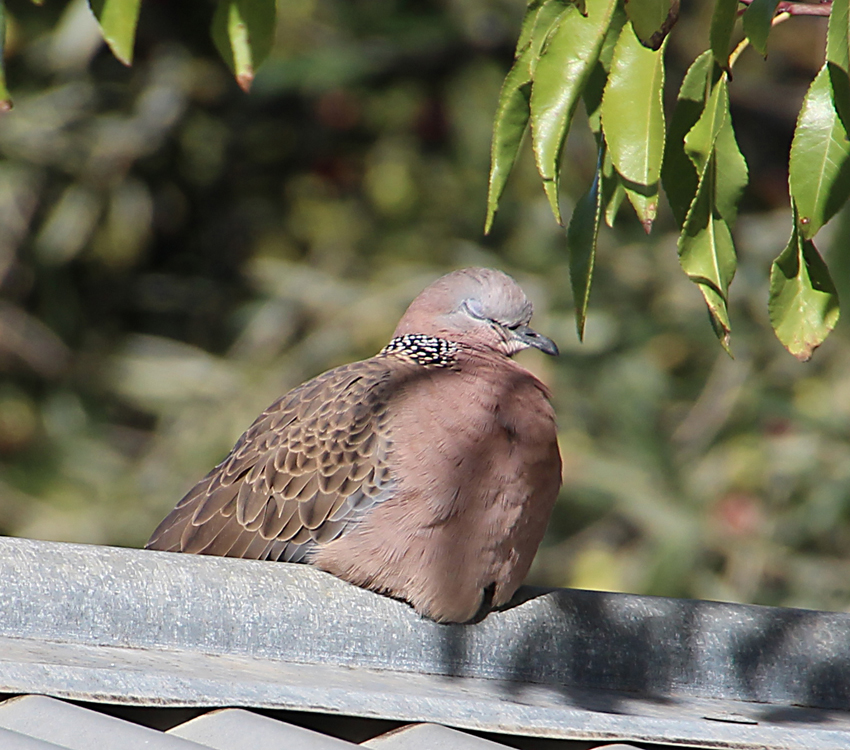
Spotted dove snoozing on the garage roof

Spotted dove snoozing on the garage roof

To initiate proceedings, a spotted dove landed on the garage roof, much to the consternation of a local cat, who sat and stared at it for a few minutes, decided it was too much work then nonchalantly strolled off to find easier prey.

New holland honeyeater feeding on orange honeysuckle

New holland honeyeater feeding on orange honeysuckle

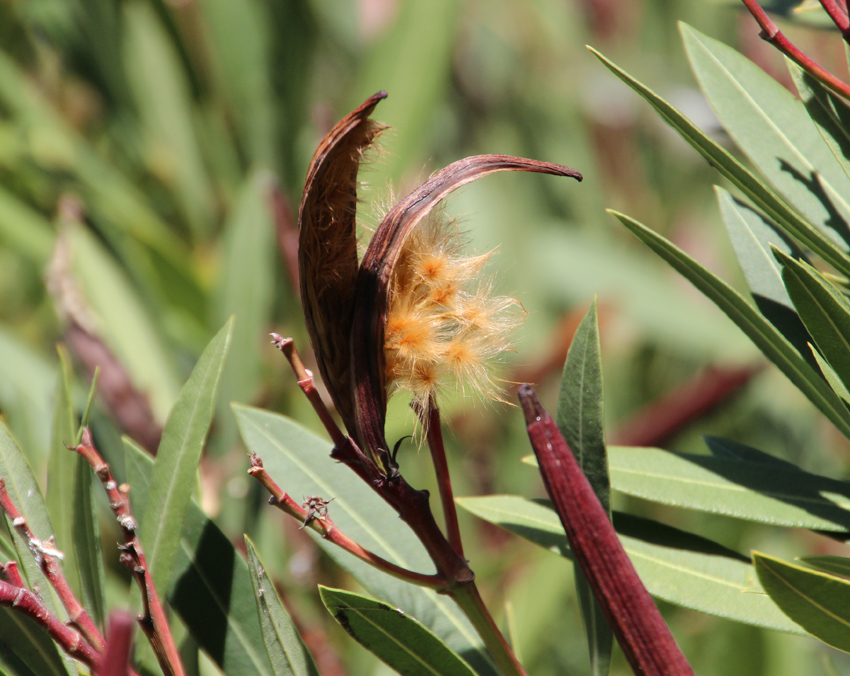
Oleander seeds pods

Oleander seeds pods

New holland honeyeater catching insect in mid flight

New holland honeyeater catching insect in mid flight

While the dove dozed the high energy brigade arrived in the form of a squadron of new holland honeyeaters who proceeded to feed on various blossoms, hawk for insects and in one bizarre instance; pull apart the seed pods of an oleander. Fair enough if it was nesting season but a little hard to fathom at the beginning of winter!!

Hover fly grabbing a suck to eat

Hover fly grabbing a suck to eat

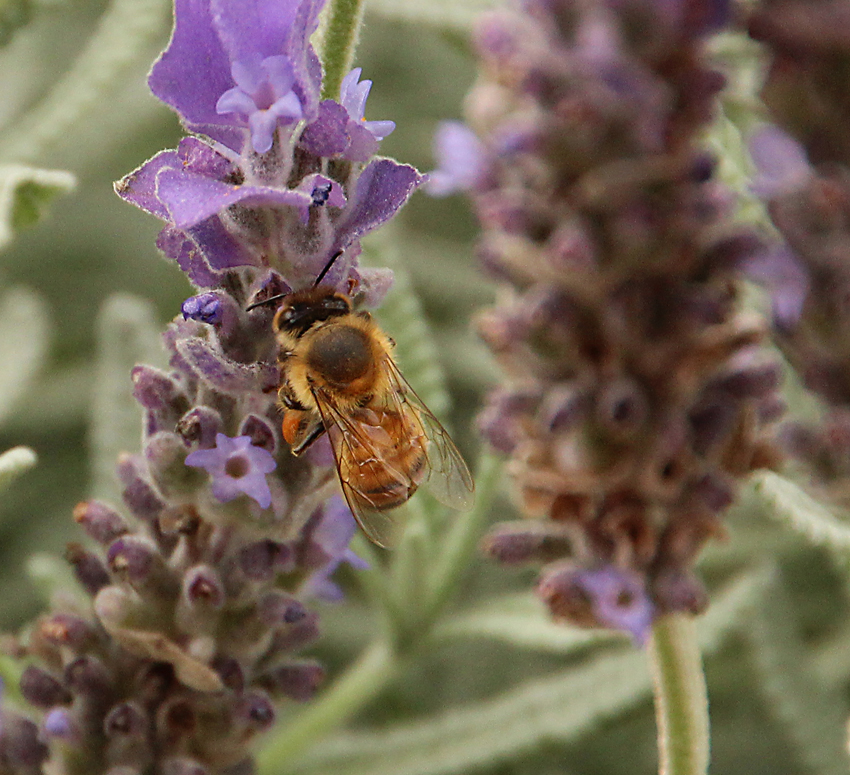
Bee on lavender

Bee on lavender

The winter months are not too conducive to insect life but a few ‘die hards’ do persist and the lavender and daisies played host to quite a number of bees and hover flies respectively.

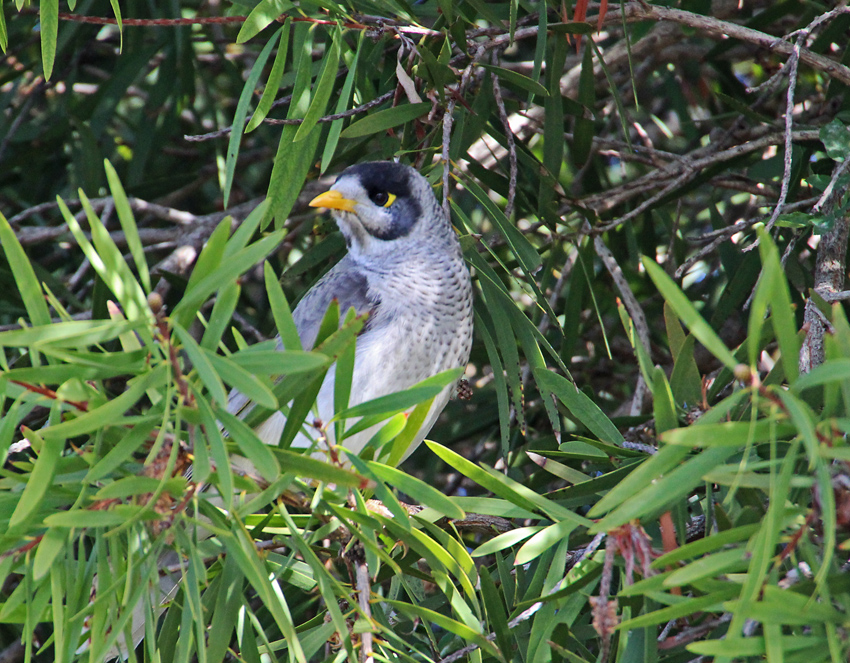
Noisy miner surveys the garden with a bandit glare

Noisy miner surveys the garden with a bandit glare

Whatever the season my little bandit friends are always around with their masked faces and grey plumage. A small flock of noisy miners did the afternoon rounds, harassing the other birds and making their presence felt; arguing as much with each other as the other species.

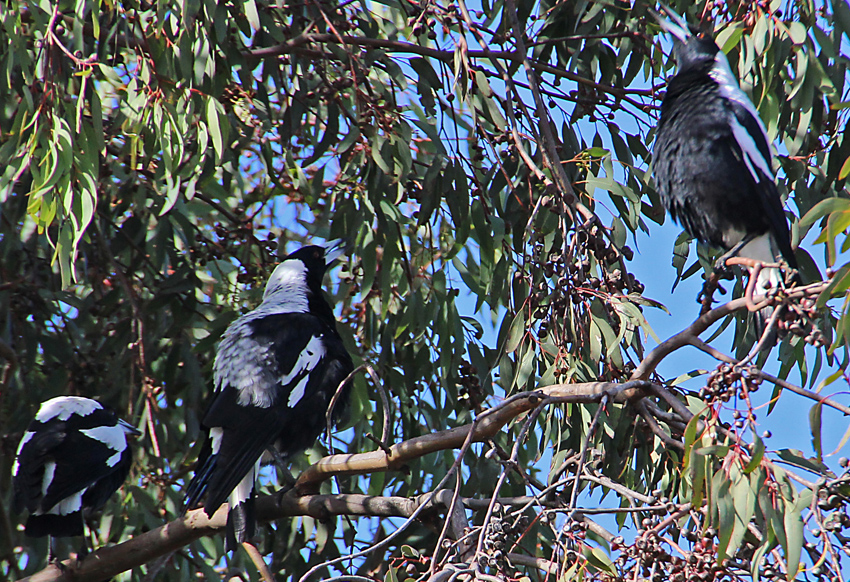
Singing the team song in the old gum tree

Singing the team song in the old gum tree

Strutting his stuff on the back lawn

Strutting his stuff on the back lawn

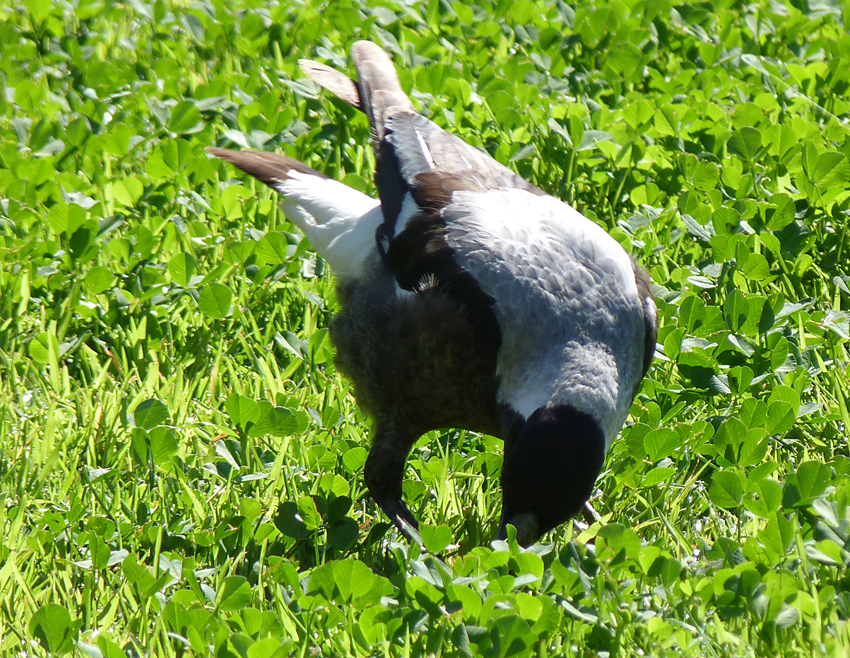
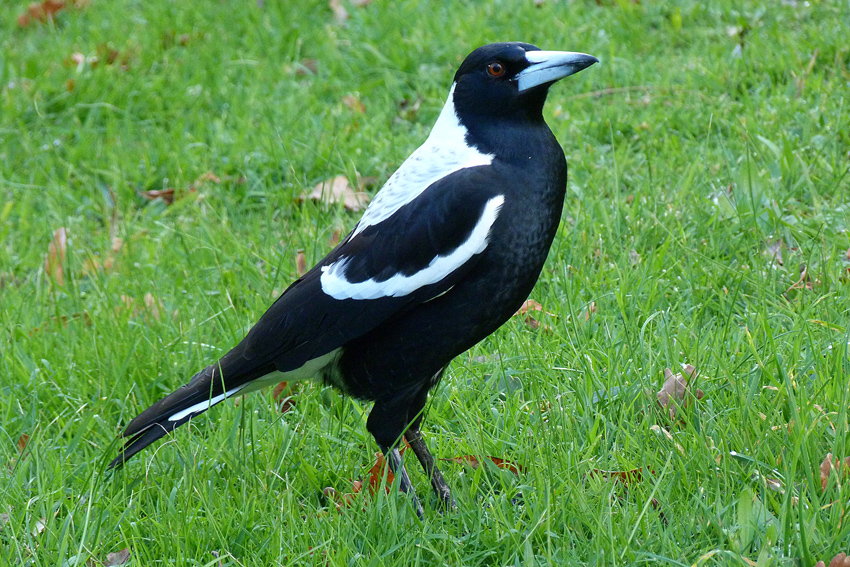
Just as I was settling for a little snooze when the warbling (carolling) call of white backed magpies brought me to my feet. I walked around to the front garden to see a trio of the large black and white birds high in the crown of a roadside eucalypt loudly proclaiming their territory. Then, the largest and obviously most confident bird flew down into the garden only a few metres away to search for grubs.

Quinnus muchsuddliusforaging in the fairy garden

Quinnus cuddlius foraging in the fairy garden

Back to recliner, pictures taken, lunch finished; book or snooze again beckoning…when the most active of all the garden’s wildlife toddled in and a restful, lazy afternoon dissipated like an early morning mist evaporating when the sunshine arrives.

Enjoy your own gardens

Baz

A Morning at the Zoo with Quinn

27 Feb

Dear reader: 

It is a warm Adelaide morning and the shady paths of the zoo are a labyrinth of intrigue for a nearly three year old. Around every turn there is a new enclosure full of sights, sounds and animals that she had only previously experienced in picture books.

7

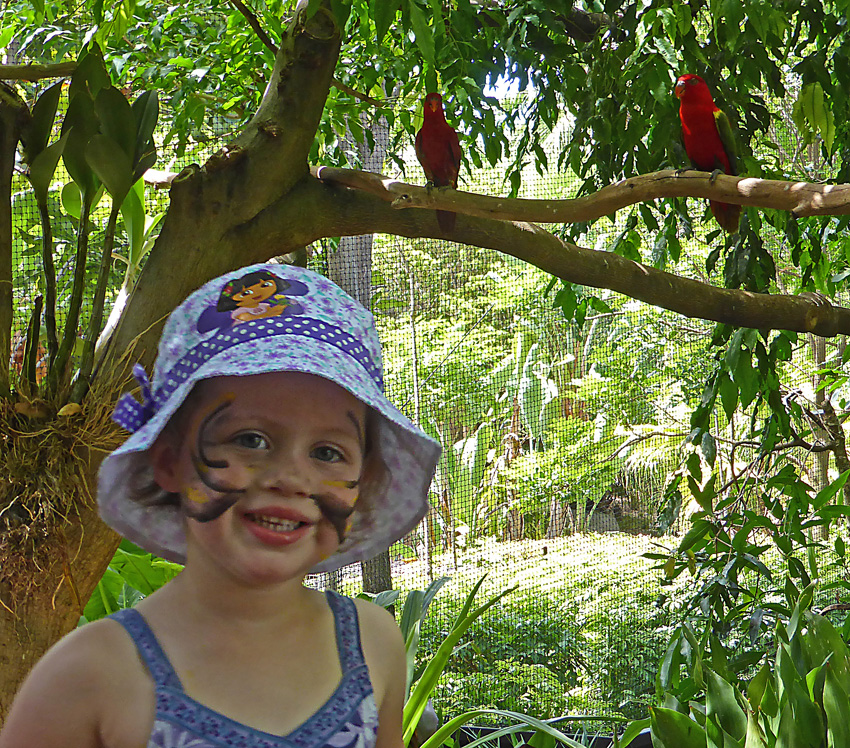
A pair of king parrots provide a suitable backdrop for a tiger striped Quinn


3

The zoo is situated by the river just over the Frome Road Bridge


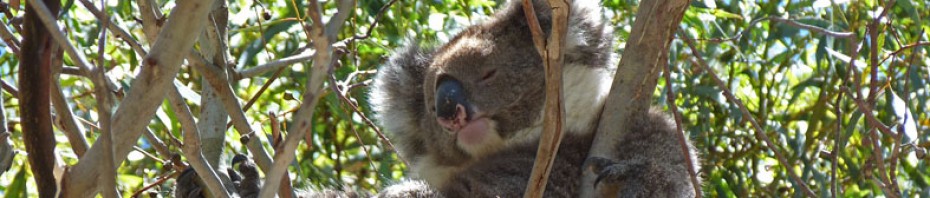
A misty spray of water shrouds the koala and Tasmanian devil enclosures in anticipation of the midday heat. It proves irresistible to our little granddaughter and sends her squealing down the path shouting, “bear, bear, bear!” I stand and watch the ‘really not bears’ as they stoically munch on eucalyptus leaves and fire off a couple of frames. Sometimes the images that can be taken in a zoo are invaluable additions for later projects.

1

A koala chews on eucalyptus leaves that would be inedible even toxic to any other species of marsupial


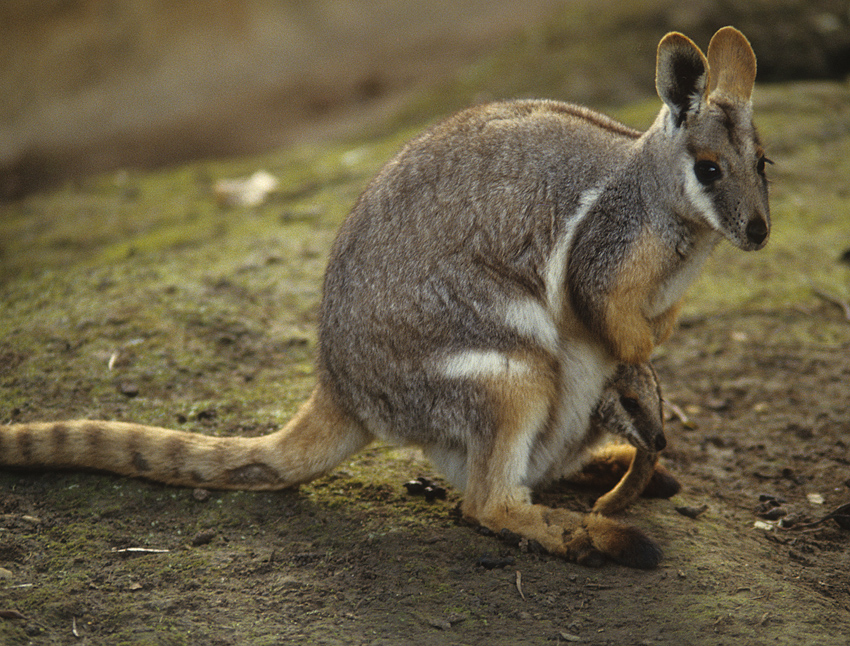
Half a vegemite sandwich and an ice cream later a little hand tugs mine and a voice whispers, “ Pop, kangaroo”. She is almost right, as a pair of yellow footed rock wallabies emerge from behind a tree in an open enclosure a few metres away. One of the little marsupials has a joey in its pouch; a difficult image for any photographer to catch in the wild.

6

A young yellow footed rock wallaby peering out from the safety of its mother’s pouch


The nocturnal house proves to be a real challenge. Try telling a toddler to be quiet as she goes through a dark tunnel lined with glass exhibits featuring bats and other night time wildlife. Near the entrance there are some aquariums which she finds quite fascinating (translate as…actually stops moving for a few seconds) giving me the opportunity to photograph some purple spotted gudgeons, one of our threatened native fish species. Yet another example of the pictorial opportunities that only captive animals can provide the amateur photographer.

2 purple spotted gudgeon

Purple spotted gudgeon are found in South Australia’s freshwater streams and lakes


Ironically, our final wildlife moment is not one that the Royal Zoological Society can claim credit for. Just as we are leaving and wandering past the hippos, Nan’s favourite exotic animal, we hear a family excitedly chattering about a spider. And there, strung in front of the hippo pool is last night’s tattered web of a sizeable orb weaver with the resident arachnid devouring a hapless dragonfly. Quinn says “yuck”, Nan scoops her up and I click away merrily wishing that I had brought the DSLR instead of popping the point and shoot in my pocket to ensure hands free, child minding capabilities.

4

A large orb weaver makes short work of an unfortunate dragonfly


By now the temperature is getting into the mid thirties and it is time to leave. She does not want to go. “More animals Pop.” A good sign for the future.


Cheers

Baz (and Quinn)

Henley Square……Crabs, Coffee and Coastline

13 Jan

Dear Reader:

The morning is warm and still with hardly a breath of wind. Although the water is not as clear as I would have liked it is worth putting on a mask and flippers to explore the shallows alongside the jetty.

Henley jetty on a summer's day

Henley jetty on a summer’s day (click to enlarge all images)


As I swim into the shadows beneath one of the jetty piles I can just make out a school of sizeable bream with a few silver whiting scattered amongst them. They are massing near the wooden posts directly below several fishermen who have empty buckets and a look of ‘no luck today’ on their faces.


School of bream under the  jetty

School of bream under the jetty


The wind is strengthening a little which often stirs up the sand and makes underwater photography challenging to say the least. It is time to switch to macro settings and look for small organisms on the sandy bottom. Numerous furrows snake across the undulating sand like roads through desert dunes. I follow one trail and probe the end point gently with my dive knife to see if I can reveal the perpetrator…no luck. But my digging does annoy a swimmer crab half buried in the sand only an arm’s length away. The little creature immediately strikes an aggressive pose angling up towards me with nippers spread and ready to attack.

Sand crab, note the swimming paddles on the rear legs and the faint furrow in the sand made by a sea snail

Sand crab, note the swimming paddles on the rear legs and the faint furrow in the sand made by a sea snail


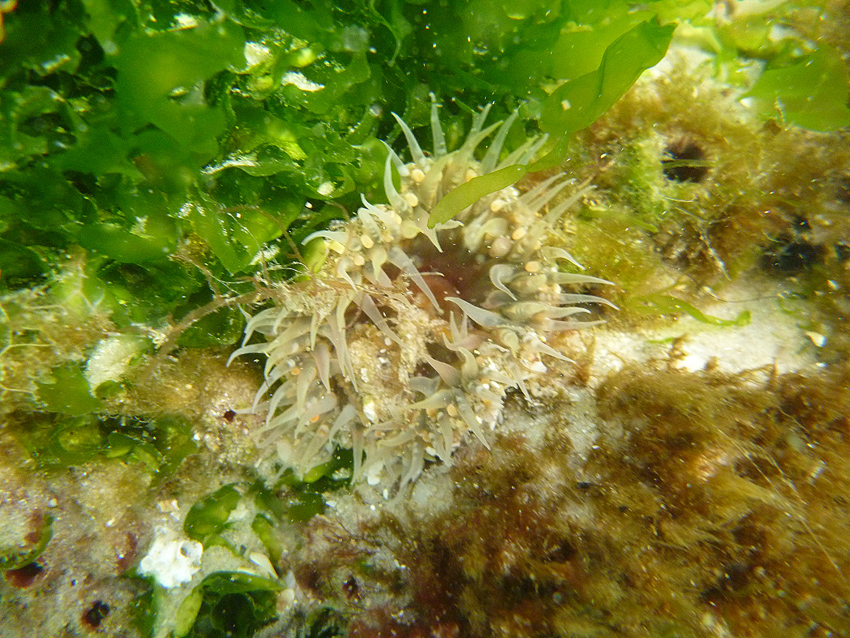
Anemone, sea squirt and green algae attached to a jetty pile

Anemone, sea squirt and green algae attached to a jetty pile


I spend a few more minutes exploring the various organisms that cling to the jetty piles. Satisfied with a few close up shots of anemones and sea squirts, I head for the change rooms and outdoor shower to wash off my gear. And then, the all important decision…. which of the beachside al fresco restaurants for coffee and breakfast? Henley Square at the foot of the jetty is one of Adelaide’s favourite beachside haunts where you will invariably find an eclectic collection of walkers, cyclists, fishers and even the odd naturalist; all enjoying the coastal ambience and quality restaurants.

Cafe culture on a sunny morning

Cafe culture on a sunny morning


Coastal strip of dune vegetation including the pine used as vantage point by a nankeen kestrel

Coastal strip of dune vegetation including the pine used as vantage point by a nankeen kestrel


Refuelled and refreshed by my morning dip I walk south along the bikeway that skirts this section of coastline. Between the beach and the path there is a long stretch of low coastal dunes that have been revegetated over the last decade providing an interesting ecosystem that is home to a variety of plant and animal species.

Nankeen kestrel in flight. one of the more common raptors that feeds mainly on ground dwellers but will attack other birds

Nankeen kestrel in flight. one of the more common raptors that feeds mainly on ground dwellers but will attack other birds


Several small groups of sparrows and some honeyeaters are flitting through the foliage but they seem extremely nervous. The reason for their apprehension soon becomes obvious as a nankeen kestrel perches on a tall pine tree to survey its hunting zone. The bird of prey, however, does not go unnoticed by a pair of noisy miners that dive bomb the predator and force it to take to the air again.

Blue bees are a small native species that have a more errtic, zippy flight pattern than common honey bees

Blue bees are a small native species that have a more erratic, zippy flight pattern than common honey bees


A spcies of White butterfly feeding on coastal blooming plants

A species of white butterfly feeding on coastal blooming plants


The temperature is rising and the chance of spotting larger animals diminishing as the day progresses and they seek shelter from the sun. I turn back towards the jetty and focus my attention on the unique coastal plant life and the bees, wasps and butterflies that feed on the various flowering shrubs. Near one of the sandy tracks that lead down to the water a thick stand of acacias, with delicate blue flowering grasses growing amongst them, is attracting native blue bees and several varieties of butterflies. Tricky images to capture as the bees are speedy, erratic little creatures and the butterflies are only landing on the blossoms for a few seconds.

Despite their bulk pelicans are graceful in flight.

Despite their bulk pelicans are graceful in flight.


Australian pelicans have a wingspan of around 2 metres

Australian pelicans have a wingspan of around 2 metres


By the time get back to the square I am ready to sit under one of the square’s cafe umbrellas and sip a long cool drink while watching the locals enjoying another warm South Aussie day at the beach. It’s hot now and time to drive home and sort my pictures. I slip the camera strap over my shoulder ready to leave as one final image presents itself. An Australian pelican glides in low over the water and gracefully deposits itself on one of the jetty light poles and glances in my direction…..thanks!!


Until we chat again

Baz  

Kestrels at the Cape

25 Jul

Dear Reader:

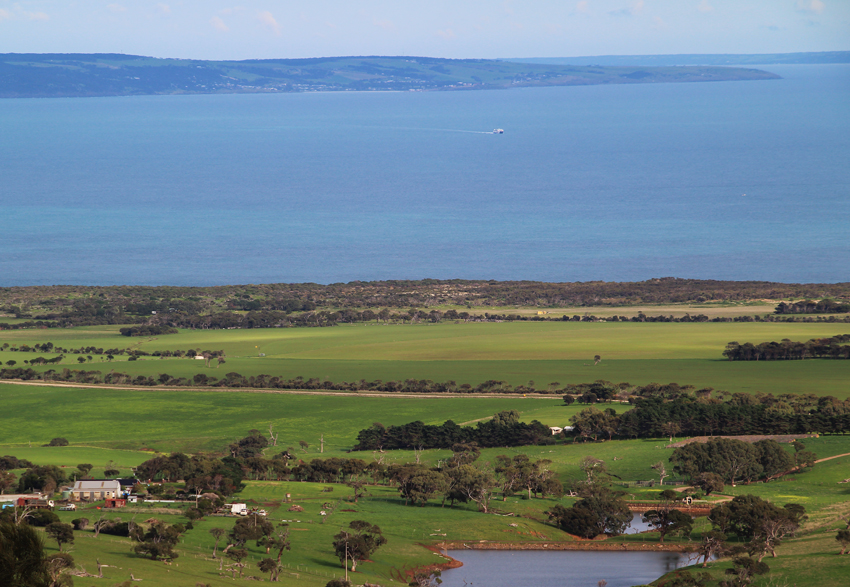
It is late morning on a fine winter’s day and I am leaving the dirt road from Victor Harbor to join the main route back to Adelaide. As I round the curve the descent towards the coast is quite spectacular. From the top of the hill the road drops away sharply providing a panoramic view of open pastures dotted with small dams and patches of native vegetation. A corridor of lazy blue ocean separates the mainland from the island, which appears as a hazy outline on the horizon.

View from the top

View from the top (click to enlarge)

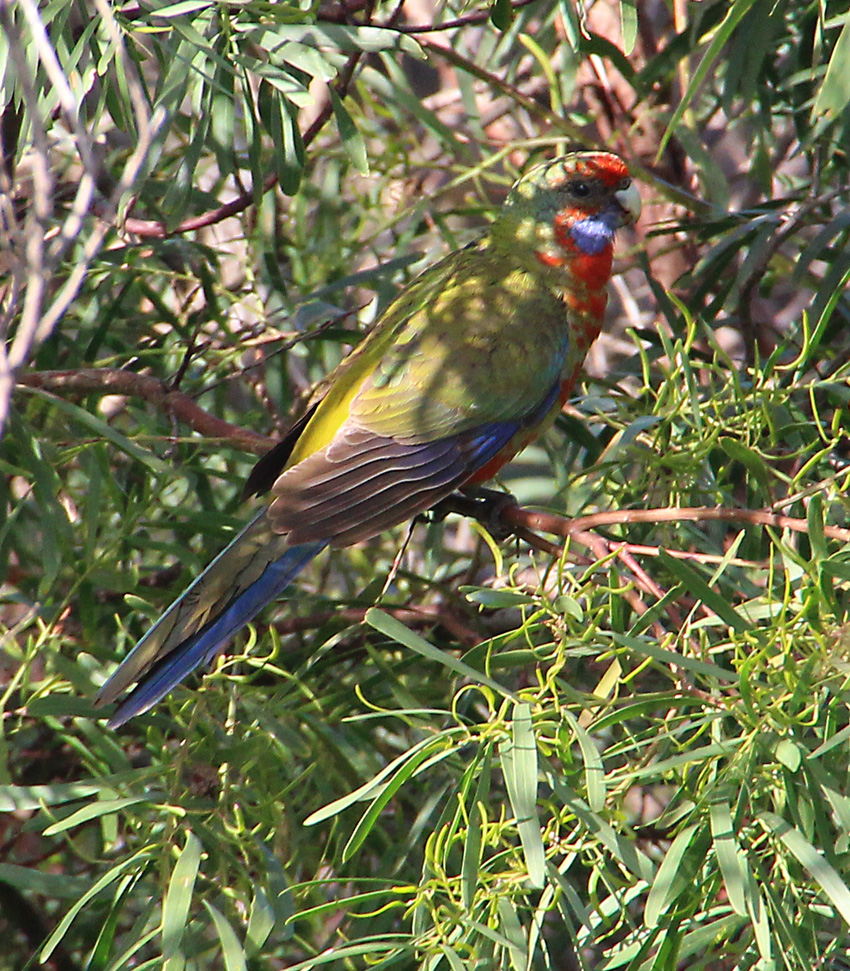
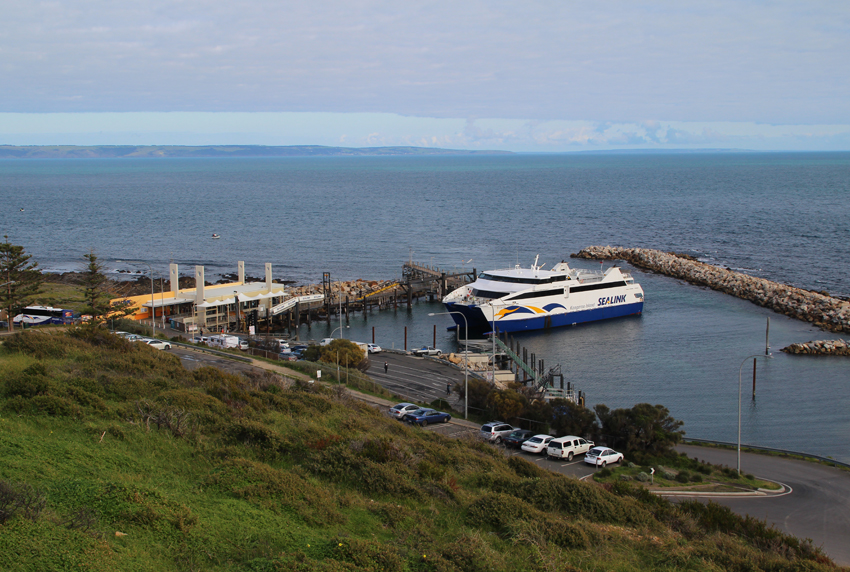
Closer to the coast a dirt track leads to a viewing point alongside a small stand of low trees and bushes. From the elevated position I watch the Sealink ferry crossing Backstairs Passage and stop to take a shot as it docks at the terminal below. While I focus on the ship I can hear the twittering of finches in the nearby scrub and catch a fleeting glimpse of two brightly coloured rosellas gliding into one of the taller bushes.

Rosella feeding in accacia tree

Rosella feeding in acacia tree (click to enlarge)

Sealink ferry docking at Cape Jervis with Kangaroo Island in background

Sealink ferry docking at Cape Jervis with Kangaroo Island in background (click to enlarge)

The ferry from Kangaroo Island docks at Cape Jervis on the southern tip of the Fleurieu Peninsula. It is one of my favourite places in the South Australia; from the little coastal hamlet you can visit local beaches and dive spots, access the Deep Creek Conservation Park, organise a charter fishing expedition or take a day trip to Kangaroo Island.

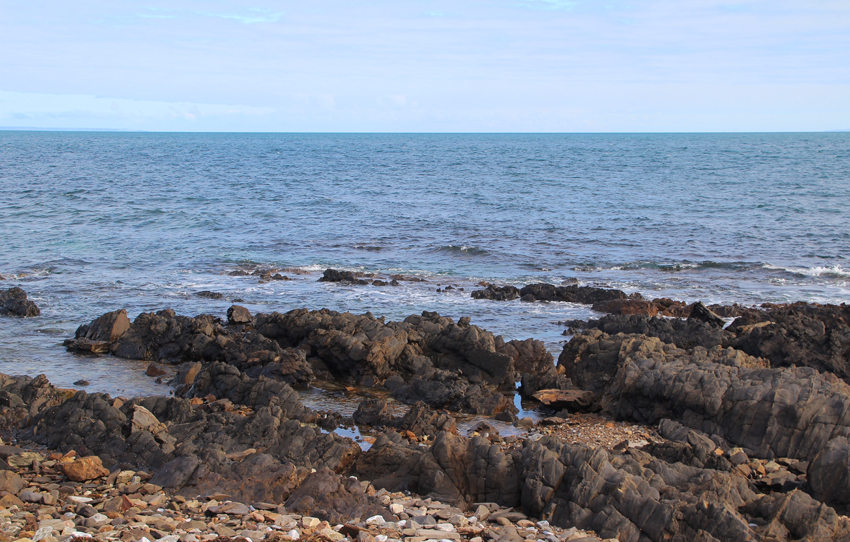
Rocky outcrops extending into the sea

Rocky outcrops extending into the sea (click to enlarge)

From the lookout I follow the road down to the lighthouse and park on a track a hundred metres back from the sea. The shoreline is a geology lesson in itself, with weathered ridges of dark rock ‘criss-crossed’ by veins of quartz, jutting into the ocean and patches of coarse sand and fractured rocks abutting the low earthen cliffs. In the distance I can see a line of giant wind turbines silhouetted on a faraway hilltop and the smell of salt air combined with the sound of waves breaking amongst the rocks fills my senses.

Nankeen kestral hovering above beach

Nankeen kestrel hovering above beach (click to enlarge)

As I move up the foreshore, picking my way between the boulders, I can see two  kestrels hovering over the beach. They seem to be systematically working together; one hovers for  a few minutes over the rocks then moves on while the other works the grassy slopes a little further inland. By pure chance they are slowly coming towards me so I lift the camera skyward and try to remain as still as humanly possible until the birds are almost directly above. I fire off a dozen shots and smile at my good fortune.

Monarch butterfly

Monarch butterfly (click to enlarge)

Pied crmorant by rockpool

Pied cormorant by rock pool (click to enlarge)

Raven with nesting material

Raven with nesting material (click to enlarge)

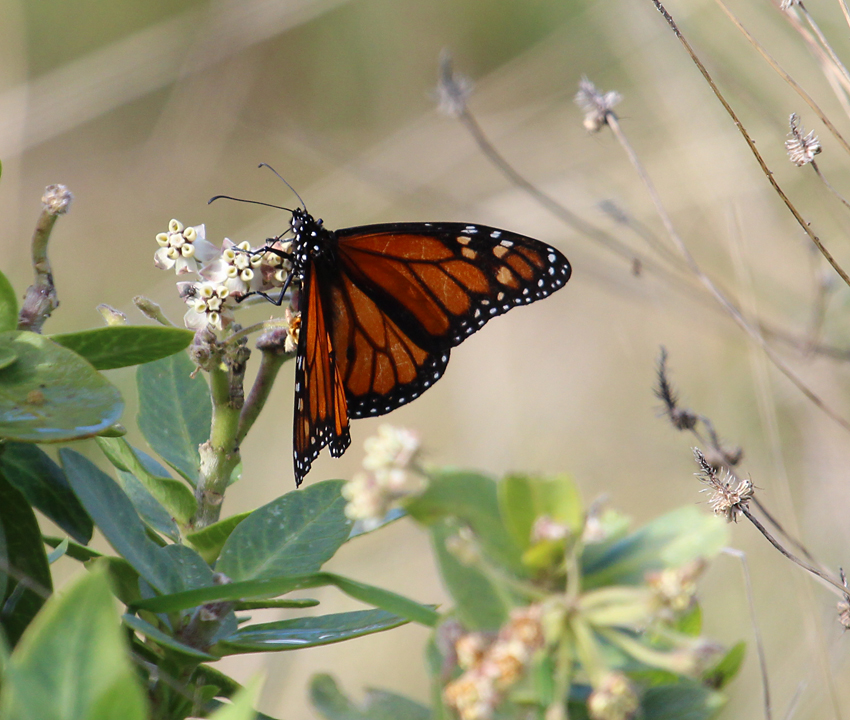
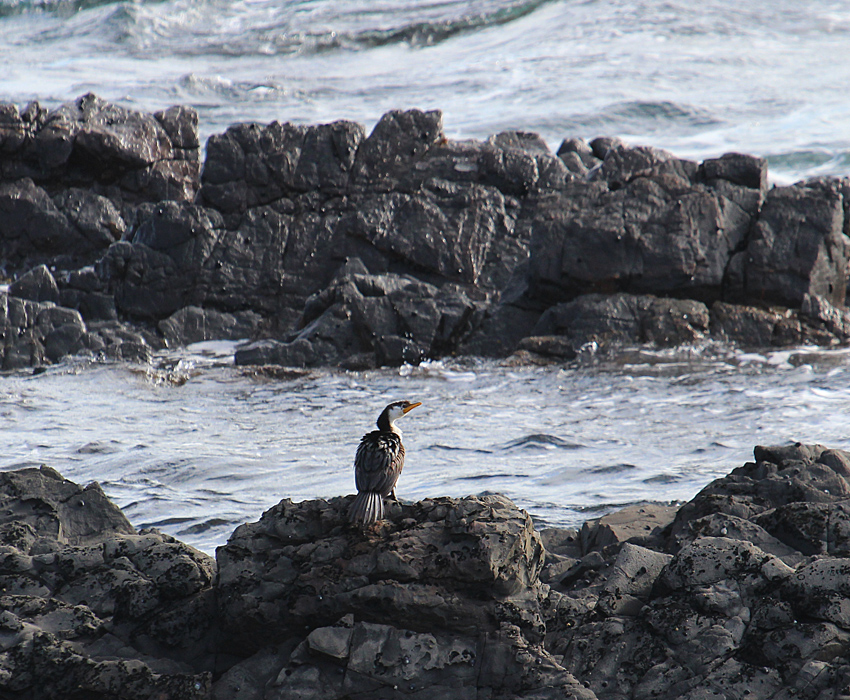
My walk provides a few more interesting moments: a cluster of monarch butterflies in a shrub that looks like milkweed, a lone pied cormorant sunning itself on one of the rocky outcrops that reach into the sea and a raven that is tearing up seaweed on the breakwater for nesting material. However, while I sit in the ferry terminal sipping a coffee, watching passengers returning from KI and reviewing my images I realise that it is the kestrels that have really made my day.

Cheers

Baz

The Art of Nature

17 May

The metallic sculpture sits in the middle of a shady pool. The polished industrial surface in stark contrast to the delicate blue kingfisher that the artist has crafted to pose, lifelike, on its extremity. But it seems that the artist has done the job too well as the supposedly fabricated kingfisher suddenly takes to the air. I have rarely seen sacred kingfishers in the hills and to find one conveniently posed on a sculpture in a pond is simply too good to believe.

2 sacred kingfisher - Copy

Sacred kingfisher….. click to enlarge


I am strolling around ‘The Cedars’ the privately owned property near the tourist hamlet of Hahndorf in the Adelaide hills which is open to the public and host many art displays throughout the year. It was home to South Australia’s most famous artist, Sir Hans Heysen. The German born Heysen moved to SA in 1884 at age 7 where he was inspired by the beautiful and rugged countryside of the Adelaide Hills. He painted rural and landscape scenes for over 70 years in many SA locations before his death in 1968 The home and studio are set in 60 hectares of open woodland and scrub and wandering amongst the bush it is not difficult to see how the area inspired him.

5 heysen studio - Copy

Heysen’s studio….. click to enlarge


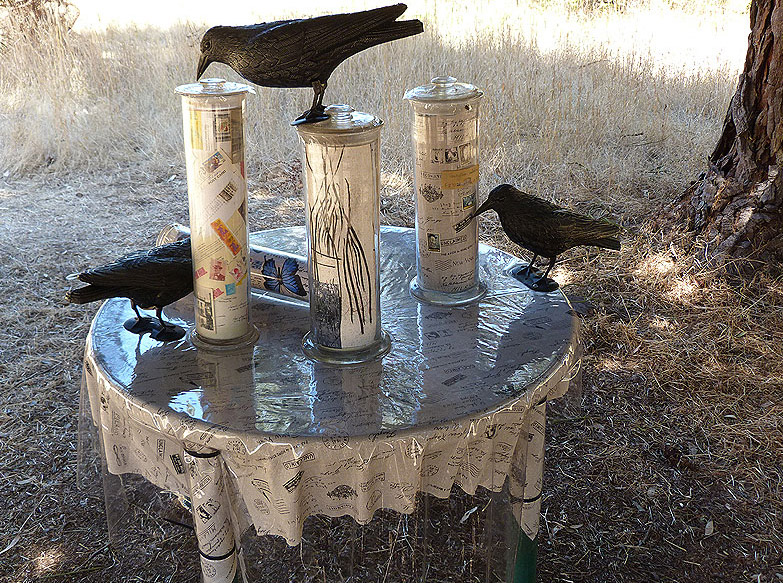
From ‘shady pool’ I climb the gentle slope above Heysen’s studio to explore a stand of Eucalypts. I can hear the warbling of magpies and screech of lorikeets. Half way up the incline I notice another piece of art work. Several crows are balanced on a table peering into glass specimen jars full of postcards. Nearby a pair of genuine, organic crows are perched in some bushes searching for food with their piercing blue eyes. In reality, the birds we commonly refer to as crows are more likely to be Australia ravens as the true crows are usually found further north in drier conditions.

3 crows - Copy

Crow art

IMG_3620 red

Crow/Raven….. click to enlarge


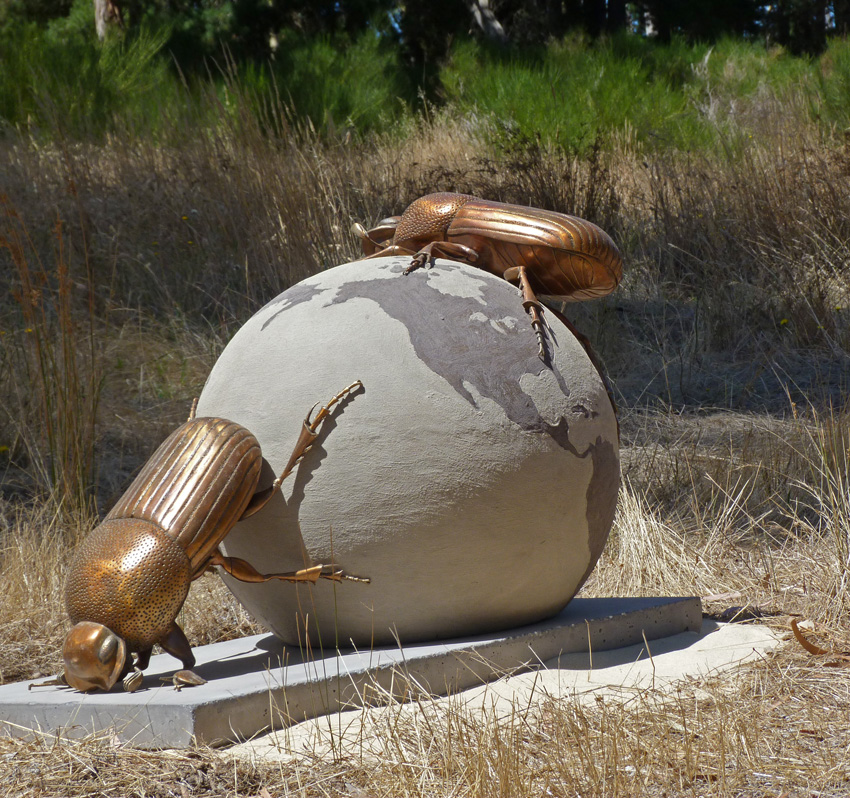
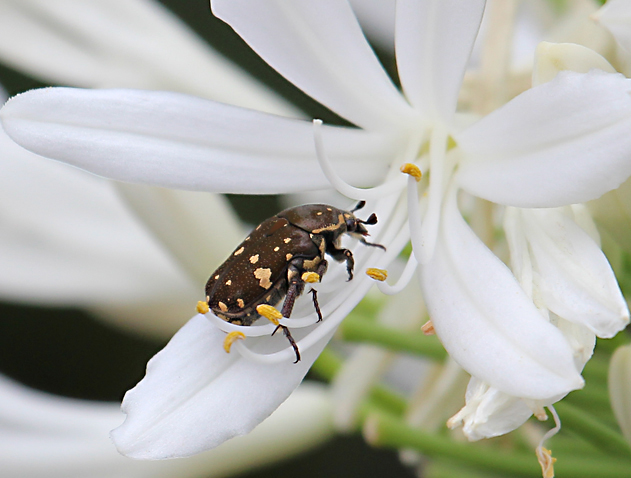
A little further along the trail I discover yet another art work hidden in the scrub: a pair of dung beetles rolling a globe. This piece seems to reflect on the state of the planet as seen by one artist. From this site I take a short walk to the house where Hans Heysen and later his daughter Nora lived and worked. The well kept garden features an eclectic mix of native and exotic flowering plants, the perfect place to find some beetles though not the dung variety which are more typical of Africa not Australia. After a little searching amongst the agapanthus, roses and native species I discover a brown flower beetle crawling across an agapanthus blossom.

P1080531 copy

Dung beetles….. click to enlarge

2 brown flower beetle on white agapanthus (2) red

Brown flower beetle….. click to enlarge


My walk has been both entertaining and informative with each animal species mirrored by a piece of art: a lovely way to spend an autumn afternoon.


Until our next adventure

Baz

A Hill’s Face Hike

16 Feb

Dear Reader:

The koala is well camouflaged and firmly wedged between two branches in a stunted eucalyptus tree which is growing on the edge of a steep slope. Getting a decent shot involves scrabbling through some spiky acacia bushes and perching myself precariously on the edge of a rocky outcrop. But a quick glance at the playback screen suggests that the effort has been worthwhile and a few more scratches on my legs are ‘par for the course’ in this terrain.

3 Koala near the trail head

Koala near the trail head


I am half way up Anstey Hill on the north eastern edge of the Adelaide Hills. This ‘hills face’ recreation park is part of the in the Greater Mount lofty Parklands and one of several reserves that permit hiking, walking dogs on leads while banning camping, mountain bikes and the lighting of any fires. Anstey Hill is only 8 Kms from the CBD, easily accessed from several major roads and close to quite a few reputable hotels and restaurants. In short, an ideal destination for a morning or afternoon walk followed by a meal and a glass of wine.

1 Local pub and restaurant

Local pub and restaurant


Satisfied with koala image I start take a winding trail towards the top of the hill emerging on its northern flank where the view across the cliff face towards the city and coast is quite spectacular. A winding trail skirts the ridge and there are still some late blooming wattles and melaleucas clinging to the rocky outcrops and a small group of new holland honeyeaters are feeding on the blossoms and hawking for insects.

2 View from the ridge

View from the ridge


Further along the trail a small stand of eucalypts pushes up through the lower layer of scrub and many of them are losing their outer layers of bark….an ideal opportunity to look for huntsman spiders which often search for prey in this micro environment. And luck is on my side after a little foraging a piece of bark with a sizeable huntsman comes away from the tree. These large spiders often come into suburban homes where they stay high on the walls and eat a whole collection of unwanted pests from mosquitoes and flies to earwigs and roaches.

4 Huntsman spider

Huntsman spider


I turn south at the top of the hill and head through a little section of bush that has recently been burnt. To my surprise a large, dark robber fly is perched on one of the blackened branches magnificently camouflaged as it waits for smaller insects to ambush.

5 Blackbugs on burnt trees

Robber fly on burnt trees


My final wildlife encounter is with a pied currawong. Related to crows and magpies these large omnivorous birds are not common on the Adelaide plains and prefer the higher elevations of the Mt Lofty Ranges. I have never seen them around this area before and have few photographs consequently; this capturing this image was quite a treat.

6 Pied Currawong

Pied Currawong


Now it’s lunch at the pub


Cheers

Baz


JET

On the Edge of the Blue Line

25 Dec

On the Edge of the Blue Line

The sand is golden with a uniform, rippled pattern to it; like the sole of an old fashioned sneaker. Every few metres small clumps of grassy weed appear until finally the sand merges into an endless green meadow of seagrass. Seagrasses are not algae but true plants with leaves, roots and in most species, flowers. They form a crucial ecosystem in the shallow waters of Gulf St Vincent. As I hover above the dense mass of leaves, a school of tiny silver fish lifts out of their embrace, swims a few metres then blends back into the shelter of the meadow.

1

Blue line as seen from the sand hills near Henley Beach


I am snorkelling off Henley which is better known as a fashionable beachside cafe strip rather than a dive destination. I decided to arrive a little early and enjoy a cup of coffee while I waited for the sun to get high enough for underwater photography. The water is clear and the ocean warm and inviting at this time of year and it is just a short swim from the local jetty to the blue line where the sand and seagrasses merge. The lush tangle of gently waving blades that surround me are home to one of the planet’s richest marine environments. It is a place where whiting, mullet, blue crabs, giant rays and squid (to mention just a few inhabitants) find food and shelter for themselves and their young.

2 Seagrass meadows

Seagrass meadow


I swim a little further into the seagrass until I locate a patch of sand with some darker detritus around its edge, indicating that something might have dug into the substrate. I stir the sand with the tip of my dive knife…nothing…I swim a few metres further and repeat the process. On the third attempt I get a result. A dinner plate sized blue swimmer crab bursts out of the sand with pincers extended and full of aggression. These crabs are prolific along the upper gulf in the summer months providing a valuable commercial fishery and great sport for recreational fishers and divers.

5 Blue swimmer crab

Blue swimmer crab


Experience has taught me that the boundary between seagrass and sand is an ideal place to observe different animals. Because I am wearing extra weights I am able to rest effortlessly on the bottom in this zone and wait for something to happen. Over the next few dives my strategy pays off as a small group of juvenile King George whiting settle close to me as they search for worms and molluscs between weed and sand.

4 Juvenile King George whiting

Juvenile King George whiting


A little further offshore small sand patches occur regularly in the seagrass meadow. Often there are a few rocks colonised by brown or green algae and even variations in seagrass species in these areas and these slight variations in terrain frequently produce the greatest diversity of marine life. My first sand patch does just that. Lying close to the bottom, I let my eyes adjust to the light and moving shadows produced by the tidal flow and rippling surface. Just a few centimetres from my lens a seahorse clings to a blade of eelgrass using its tail and tiny fins to move in time with the swaying miniature forest of the underwater meadow.

3 Big bellied seahorse

Big bellied seahorse


I have been in the water for over an hour and I am getting a little chilly and besides a cappuccino and breakfast roll beckon back at the Henley Square where many a tourist sips coffee unaware of the glorious marine world just a short swim away.


Cheers

Baz


Willunga’s Blue Bees

13 Dec


Dear Reader:

A few weeks ago I spent a weekend in the charming little country town of Willunga just south of Adelaide, in the McLaren Vale wine region. I was updating some illustrations in one of my wildlife books and needed some photographs of honeyeaters feeding on different coloured flowers. We stayed in a heritage B&B on the edge of the town with a lovely garden featuring stands of agapanthus, native hibiscus and several large bottle brush trees. Throughout the day a variety of birds, including both new Holland and white plumed honeyeaters, used their elongated beaks to probe the blossoms and hawk for insects.

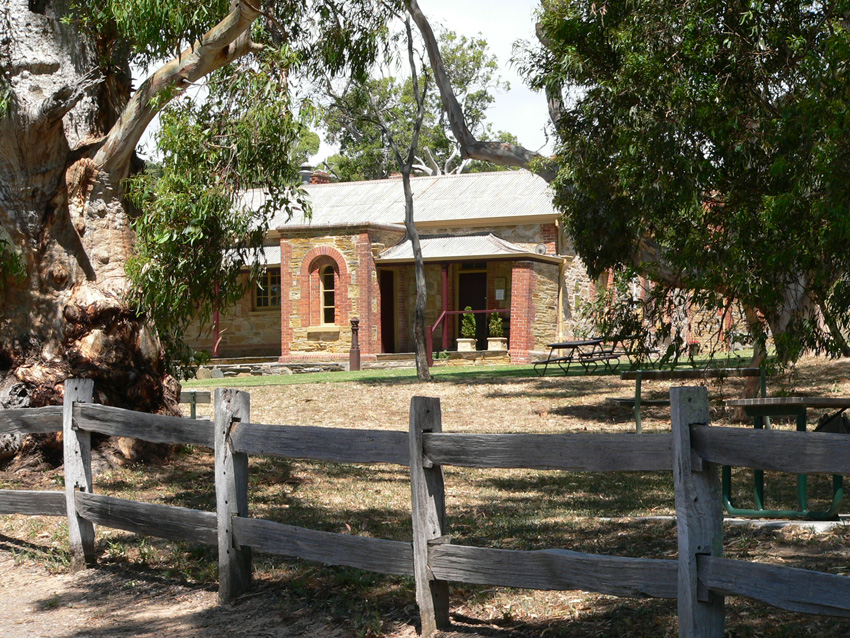
1 Willunga has many fine old colonial buildings

Willunga has many fine old colonial buildings


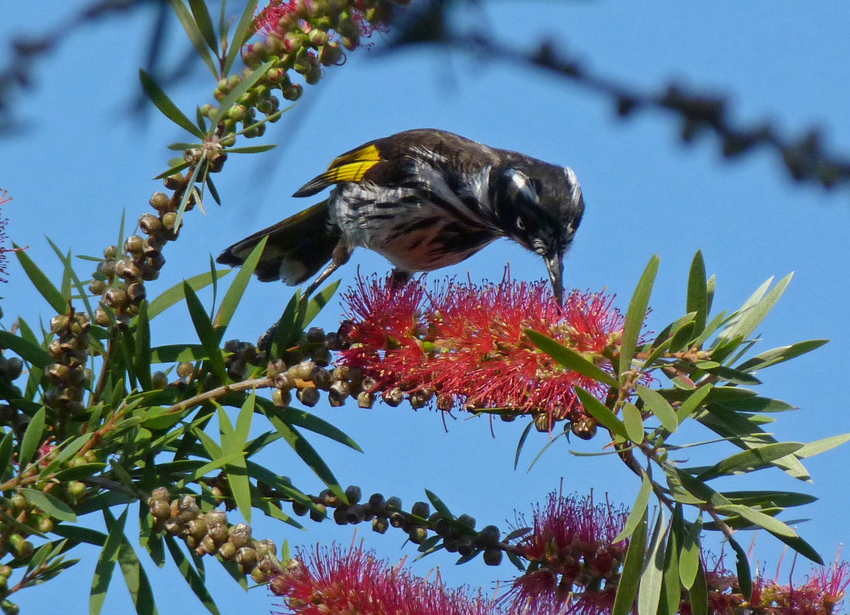
As well as honeyeaters the plants attracted more than their fair share of bees. Between sips of wine and a nibble of cheese (doing it tough that day) I watched them flit from one blossom to another gathering nectar and collecting a dusting of pollen on their legs. Then, out of the corner of my eye, I caught sight of one bee flying more erratically than the others, it seemed to hover for a second then repeatedly zoom off in different directions; like a miniscule attack helicopter. Every so often it would land but only for a short time before resuming its unpredictable flight pattern.

2 New Holland honeyeater probing bottle brush flowers for nectar

New Holland honeyeater probing bottle brush flowers for nectar


I moved my chair a little closer to the native hibiscus, where the little insect seemed to be spending most of its time, set the camera to macro zoom and started to track it through the lens. The bee was certainly smaller than the honeybees that were also doing the rounds of the blossoms and it appeared to have a bluish tinge. I fired off a couple of frames and took a closer look on the review screen. It was certainly not a honeybee. Over the next hour and a half several of the little blue bees appeared at different times and I managed to get a series of images that I could use to identify them. I suspected they were native bees which I had heard of but knew very little about.

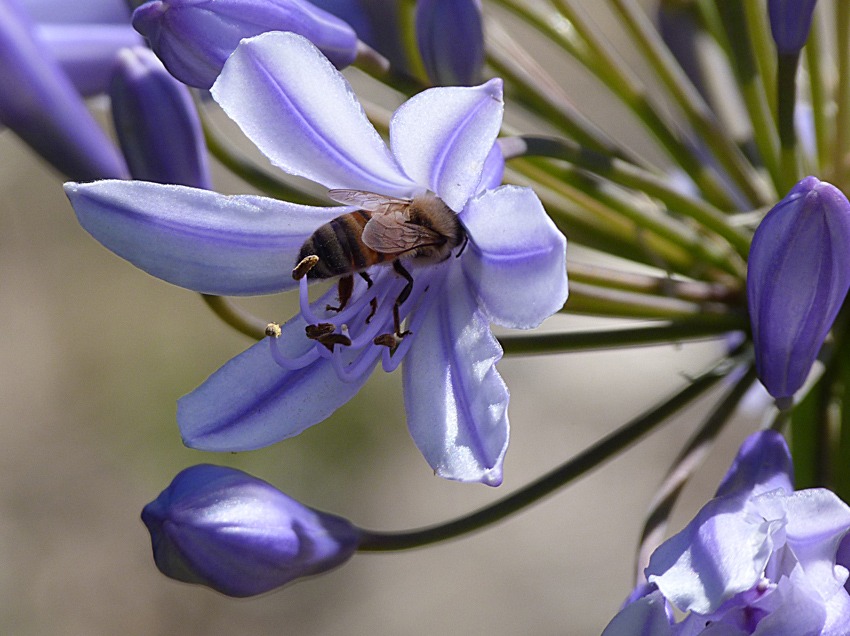
3 Honeybee feeding on a blue agapanthus

Honeybee feeding on a blue agapanthus


My guess was correct. The little insect was a blue banded bee (Amegilla cingulata). Blue banded bees are actually far more common than I realised and are found throughout SE Asia. They contribute to the pollination of many commercial crops with their unique ability to buzz pollinate; the result of intense wing vibrations when they cling to flowers.

4 Banded blue bee hovering in front of native hibiscus 2

Blue banded bee hovering in front of native hibiscus blossom


Unlike honey bees these native bees are not colonial with females building burrows in dried up river banks or even soft mortar in urban housing. Their sting is mild and they are not aggressive. Interestingly, these blue bees collect most of their nectar from blue flowers and since my initial sighting I have found them on the lavender and agapanthus in my own garden. They have obviously been there for years and I had never even noticed; yet another lesson in observation.

Cheers

Baz


A Golden Day

24 Nov


Dear Reader:

The track is quite steep and the scrub dense. I can hear birds calling and catch fleeting glimpses of tiny finches foraging deep in the bushes. At the same time a group of lorikeets are feeding on eucalyptus blossoms in the canopy. But the birds are wary on this warm spring morning and keep moving out of camera range. Periodically, the eroded openings of narrow mine shafts, fenced off for safety, appear on both sides of the trail. I stop to reflect on the men who worked these dangerous tunnels armed only with buckets, ropes and spades. At the top of the hill, where I started my walk, a restored miner’s cottage and the weathered skeletons of a rock crusher and derrick suggest that the area had once been the centre of a sizeable mining operation.

1 mining equipment

Mining equipment


I am at the Barossa Goldfields about 40 kms from Adelaide between Williamstown and Gawler. At its peak in 1870, the lure of gold attracted around 4000 hopeful souls to these hills and over 25000 ounces of the precious metal was extracted. The site has been carefully restored by volunteers and is in the Para Wirra National Park; a worthwhile stop en route to the Barossa wineries if you care to take the back roads rather than the main highway. There is a network of well marked trails to suit walkers of all abilities and many excellent interpretive signs that cover everything from local geology to the everyday life of the original miners.

2 Cicadas

Cicadas

At the bottom of the trail there is a small creek still flowing from this year’s ample winter rains and as I cross it a kookaburra takes flight from a low branch where it had been watching for prey. The air is warm and buzzing with the calls of cicadas. I find a small eucalypt that seems to have more than its share of the ‘noisy little buggers’ and sit quietly in its shade for the next half hour trying to get a half decent shot.

4 Wattle bird

Wattle bird


As the trail climbs back out of the gully the terrain changes; the thick scrub gives way to more open grassland interspersed with stands of tall eucalypts. In the distance I catch sight of a pair of western grey kangaroos but they bound off over a ridge as I approach them. A scattering of rosellas are feeding in the grass and a wattle bird squawks defiance at a group of miner birds that are encroaching on its territory.

3 sleepy lizard

Sleepy lizard or shingleback skink

As the track takes a sharp bend I come across a sign that indicates a short cut back to the cottage and car park where I started my journey. It seems an opportune time to sit under a tree and take a ‘swig’ from my water bottle. However, I am not the only one who finds this a convenient resting place. I hear a faint rustling sound by my feet and a sleepy lizard materialises between a couple of rocks, its pine cone scales shiny and dark in the dappled light.


5 Grevillias

Grevillea flowers


I leave the lizard to its shady refuge and continue on my way, happy with my wildlife sightings and ready to wind up a successful morning’s trek. Close to the cottage another trail head appears. This track drops down sharply into a gully and I can see that the terrain has changed yet again. The soil is gravelly and grass trees, grevilleas and a variety of small plants with yellow, lilac and orange flowers, decorate the understory.

6 Grasshopper

Grasshopper species

The ever present eucalypts are a smaller more gnarled species. A few cicadas still buzz in the trees but on closer examination I can see a variety of other insects in the scrub including a glorious little cricket with ‘pink-camo-splotches’.

7 Grass tree amongst low eucalypts

Grass tree amongst stand of low growing eucalypts


I walk a couple of hundred metres further and realise that this trail is worth more than a cursory glance- but not today. And so ‘Dear Readers’ I look forward to another hike around the goldfields and the opportunity to share whatever I find with you.


Cheers

Baz


Family Life at Walker Flat

11 Oct

The road from Mannum to Walker Flat is a classic Australian drive. With low hills to the left and the river on the right it winds past limestone cliffs and mallee scrub. It is a short drive of no more than 30 kms but there is ample opportunity to get out of the car and wander around in the scrub or capture a panoramic shot of the river. The countryside is typical of the Murray Mallee zone. Mallee are smallish eucalypts that have numerous trunks growing from the same base. They are of uniform height and stretch for kilometres in an unbroken forest. The hills are predominantly limestone based and where the river cuts through them it exposes a wonderful array of fossils.

walkers flat cliffs

Limestone cliffs a Walker flat


As you come down the hill into Walker Flat the river takes a sweeping bend exposing ochre coloured cliffs that rise abruptly from the water. There is small community of shack owners, a general store and places to camp, launch a boat or cross the river on an old fixed line ferry. The area has several billabongs; backwaters fed by floods; and it was these that I had come to explore. Even as I drove down from the low hills to meet the river I could see a flock of pelicans cruising along the main channel of the river.

Pelican feeding as a group

Pelicans feeding as a group


Camera in hand, I walked along a dirt trail that followed the course of a large billabong that was bordered by thick stands of reeds and some old eucalypts. My quick reconnaissance was useful and I located a dozen different bird and insect species in the first few minutes. However, the wildlife seemed very wary and scattered at my approach. Accordingly, I resorted to my favourite strategy for capturing images under these circumstances and found a quiet spot with a clear view in every direction, settled down and waited.

little wattlebird

A little wattlebird, one of the many bird species along the billabong

Within twenty minutes or so the rhythm of the river bank seemed to return to normal. So long as I didn’t make any sudden movements or sounds most of the wildlife seemed to view me as a part of the environment and I, in turn, started to notice the hidden things that were going on all round me. Twenty metres in front of me the reeds began to move and a purple swamp hen emerged delicately grasping the plants with his outrageously huge feet. I eased the big lens up slowly for a better look and to my surprise the adult was accompanied by two fluffy, black chicks. Over the next few minutes I was privileged to watch the adult cutting up reed stalks with its powerful beak and feeding them to the young. Later, another swamp hen appeared and took the chicks further into the reeds indicating that both parents were involved in rearing their brood.

IMG_2791

Purple swamp hen cutting up reed stalk near chicks

IMG_2793

Purple swamp hen feeding a chick with cut up reed morsel


My next encounter was a tad closer. A variety of large dragonflies and their more delicate cousins the damselflies had been continuously flitting across the water just a few metres away. They appeared to be in a mating phase with an occasional pair joined head to tail, which is part of the reproductive process. Others were obviously hunting smaller insects while a few seemed to be establishing some kind of territory by chasing off rivals of the same species.

wandering percher

Wandering percher dragonflies mating in flight

Emperor dragonflies mating


Between the dragonflies and purple swamp hens feeding their family my patience seemed to have paid off and re-confirmed an old but well tried approach to wildlife photography. Better to let the target come to you than chase it.


Until next time

Baz