Archive | Nikon Cameras and lenses RSS feed for this section

Goannas, Shinglebacks and Ringnecks at the Ferries McDonald Conservation Park

30 Oct

Dear Reader:

Two Mallee Ringneck Parrots are perched high in a spindly eucalypt. Bracing the camera against a tree, I focus on the nearer bird to better illustrate its glorious colours.

Malle Ringneck Parrot

First sighting of Parrots

The Ferries McDonald Conservation Park is in the Monarto area about an hour’s drive from Adelaide’s CBD. It is a ‘dryland’ park dominated by Mallee trees and typical of the area before European settlement.

David entering the park

In the spring there is an abundance of blossoming shrubs and understory wildflowers, including numerous orchid species.

Eremophila Species

Peaflower species


We move along the narrow track slowly and listen carefully for a tell-tale rustle in the undergrowth or bird call. It is the former that announces my next encounter as a Shingleback Lizard heads for cover, abandoning the open, sunny area where it is basking.

Shingleback in cover

I’d prefer not to have my photograph taken

The occasional raptor, and small groups of cockatoos fly overhead. However, it is a diminutive, female Spotted Spotted Pardalote that catches my eye.

Spotted Pardalote

During the next hour of gentle walking we encounter a lone Western Grey Kangaroo near a fence-line which separates the park from nearby pastureland and numerous bird species. Most are tiny birds such as Silvereyes and honeyeater species which are feeding high in the canopy. In addition, there are Little Ravens, wattlebird species and Black-faced Cuckoo Shrikes in the area.

Western Grey with joey

The day is quite warm and the trek has taken a couple of hours which includes numerous stops to stand, watch and listen for wildlife. It is time for a leisurely drive home while still scanning for wildlife as we negotiate the initial section of unsealed road. However, it is a very rare sighting of a monitor lizard crossing the sealed road that really excites us.

Goannna crossing the road

I slow the car and cut the engine, gliding to a stop where the Goanna (the general term for all Australian monitors) pauses on a slight embankment. I power the windows down and we manage a few close ups before the lizard heads back into the scrub. An extraordinary way to round off our day.

Sand Goanna or Sand Monitor

Cheers

Baz

Additional notes

The camera used for this post is a Nikon P900

This is an easy walk/drive which is quite suitable for families and seniors. 

Please pass on this blog title and or contact information (URL) to any person or organisation with an interest in taking walks and enjoying wildlife in SA.

Click on these links and see more South Australian stories and pictures in my Weekend Notes articles as well as locating similar blogs on Feedspot’s top 20 Australian wildlife blogs

Barnes on a Rainy Day

14 Oct

Dear Reader:

A trio of elegant Mute Swans glide effortlessly across the river. They are accompanied by both male and female Mallards.

Three Mute Swans and one cygnet alongside Mallards

English Mute Swans are a sharp contrast to the usual Black Swans that I encounter at home in SA.

Australian Black Swans and cygnets

I am taking a rainy day walk around the outer London village of Barnes; a 45 minute bus trip from central London. This largely affluent community sits on a bend in the Thames River.

One of several pubs in Barnes

There is a wide range of things to do in this village even on a rainy day. The architecture is varied and interesting, the river and central duck pond support a variety of wildlife and there is an eclectic variety of shops and galleries to browse.

Duck pond at Barnes

Beyond the swans, in mid river, two teams of rowers battle against the incoming tide as their coaches urge them on from a power boat. And yes, the term tide is correct, as the Thames is a tidal river for many miles above its confluence with the ocean.

Rowing on the Thames

Battling a sudden gust of wind I follow the Thames Path, past some interesting buildings with glorious views over the river. I am making my way towards a little gallery which I always visit when I come to London.

Walking along the Thames Path in the rain

Local artists are featured here and I chat with one of the owners, an artist himself, before purchasing a beautiful ceramic owl as a keepsake.

Inside the Riverside Gallery

On the nearby duck pond, my naturalist’s eye is drawn to a pair of Swans and their sub-adult cygnets. The birds start to paddle across the water in my direction. Even closer, a pair of Egyptian Geese leave water and begin to feed on the grassy verge by the pathway. 

Egyptian Geese feeding

The rain eases a little and I peer into shop fronts as I make my way along the high street towards a bus stop for my return trip to London.

A soggy dog at the bus stop

As always, my short excursion to Barnes has been wonderful. Despite the wet weather, which adds a certain convincing flavour to the day, I have managed to capture a few memorable images.

Cheers

Baz

Additional notes

The camera used was a Nikon Coolpix W300 (all weather camera)

This is an easy walk/drive which is quite suitable for families and seniors with public toilets, parking and other facilities nearby. It is dog friendly.

 Please pass on this blog title and or contact information (URL) to any person or organisation with an interest in taking walks and enjoying wildlife.

 Click on these links and see more  stories and pictures in my Weekend Notes articles as well as locating similar blogs on Feedspot’s top 20 Australian wildlife blogs

 https://www.weekendnotes.com/adelaide/writer/452/

https://blog.feedspot.com/australian_wildlife_blogs/

Kapunda…The Pines Recreation Park

4 May

Dear Reader:

There is a pair of White-plumed Honeyeaters perched on a branch about thirty metres away. I think one is an adult which has just fed its well fledged chick.

The Pines Conservation Reserve is a five-minute drive from the historic township of Kapunda. It encompasses the old reservoir which once serviced the town and its mining community. Today the reservoir is dry after a long summer with little rain.

From the park’s entrance where I spotted the honeyeaters, I follow a looped trail leading to the reservoir. There are Galahs and rosellas flying through the trees and scrub and I can hear the twittering calls of smaller birds in the canopy and bushes.

On the side of a nearby slope I notice a classic 1800s cottage which has been renovated and is now privately owned. Nearby signage informs me this was once the residence of the Waterworks Manager.

Nearby, there is a bird hide which would stand on the edge of the water when the reservoir is full. There is a visitor book of observations which recounts animals observed. One recent notation mentions an Echidna shuffling underneath the hide.

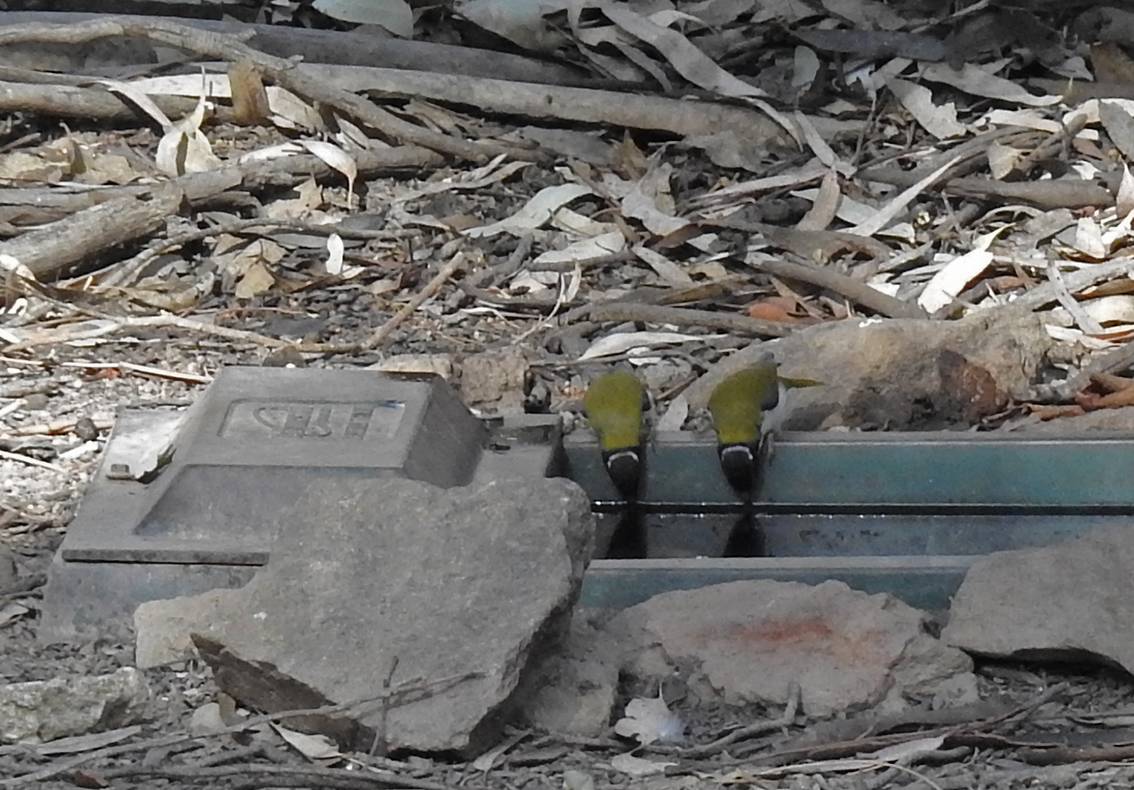
I sit in the hide for a few minutes and watch several different species of birds drinking from a small trough which appears to have a permanently piped in water supply. I am particularly excited to see a pair of White-naped Honeyeaters at the trough.

From the bird hide, I backtrack a little and take the shorter route to the car park which passes across the top of the levy then down a slight slope. I stop to photograph the old Turncock building which regulated the water supply to the town.

From the top of the levy I am level with the middle story of the surrounding forest. I spot a Laughing Kookaburra half hidden in the branches and an Australian Tree Creeper on the trunk of a skeletal, old eucalypt.

The walk has been quite successful though for this time of year, with little water and most of the flowering trees and shrubs dormant, the wildlife has been hard to spot and photograph and I have had to rely on the extreme magnification that my Nikon P900 embodies.

My final stops are in the town itself; firstly, the local craft and arts centre then for lunch at the North Kapunda Hotel.

Next time I visit Kapunda I will explore the town which has its own pond and urban wildlife as well as the nearby mines. I hope you enjoyed this post and look forward to my next one which will focus on the tourist oriented town of Hahndorf in the Adelaide Hills. Yet another destination in our wonderful state

Cheers

Baz

Additional notes

This is an easy walk and drive which is quite suitable for families and seniors with public toilets, a shelter, parking and other facilities nearby. It is dog friendly.

Please pass on this blog title and or contact information (URL) to any person or organisation with an interest in taking walks and enjoying wildlife in SA.

Click on these links and see more South Australian stories and pictures in my Weekend Notes articles as well as locating similar blogs on Feedspot’s top 20 Australian wildlife blogs

https://www.weekendnotes.com/adelaide/writer/452/

https://blog.feedspot.com/australian_wildlife_blogs/

Glacier Rock….Good food, Geology and Wildlife

30 Nov

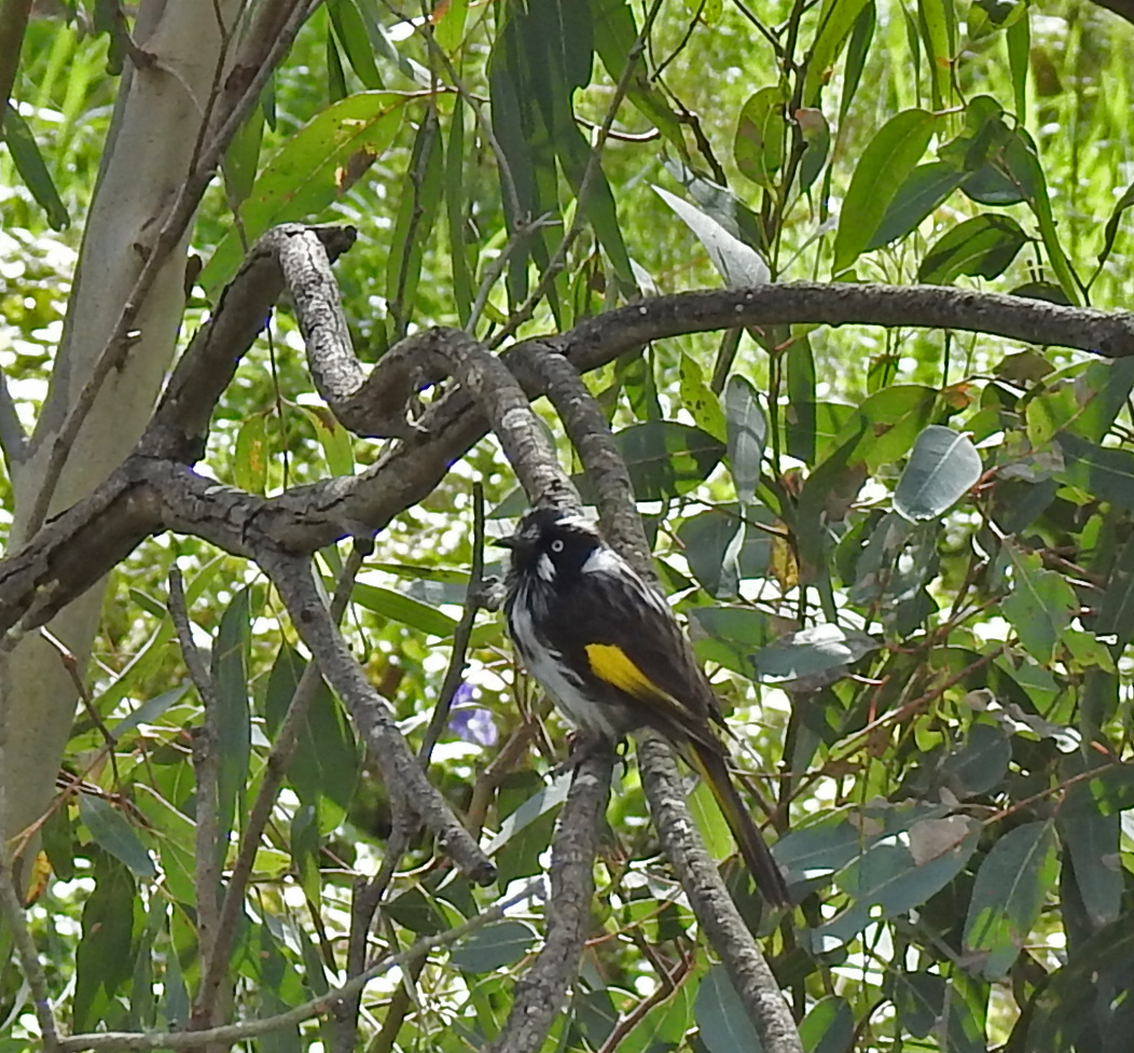
A pair of New Holland Honeyeaters

Dear Reader:

There is white water swirling around the boulders in the river and a family of Pacific Black Ducks are huddling to one side where the water is calmer. Perched amongst the branches of an overhanging eucalyptus tree I make out the shape of several New Holland Honeyeaters and hear the distinctive call of Sulphur-crested Cockatoos as they fly overhead.

Breakfast at the Tearooms

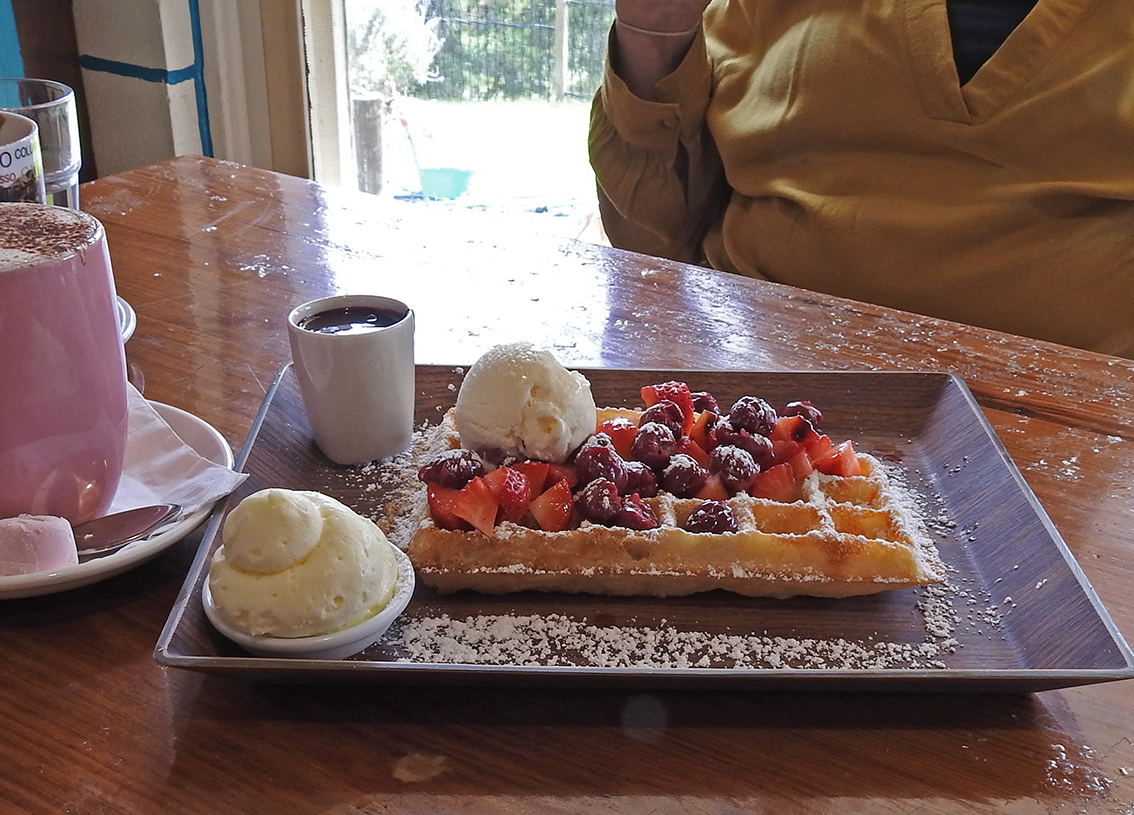
I am sitting on the back decking of the Glacier Rock Tea Rooms  having just devoured a serve of the delicious waffles topped with berries, cream and ice cream; with a little maple syrup for good measure. The weather is overcast and not great for photography but I shall make the best of it.

Typical rural countryside along the Inman Valley

On the drive along the Inman Valley Road we spotted a mob of roos feeding just outside the little township of the same name. There were also  black headed sheep and numerous herds of dairy cattle grazing on the fertile grassland. Some really pleasant rural scenes to photograph.

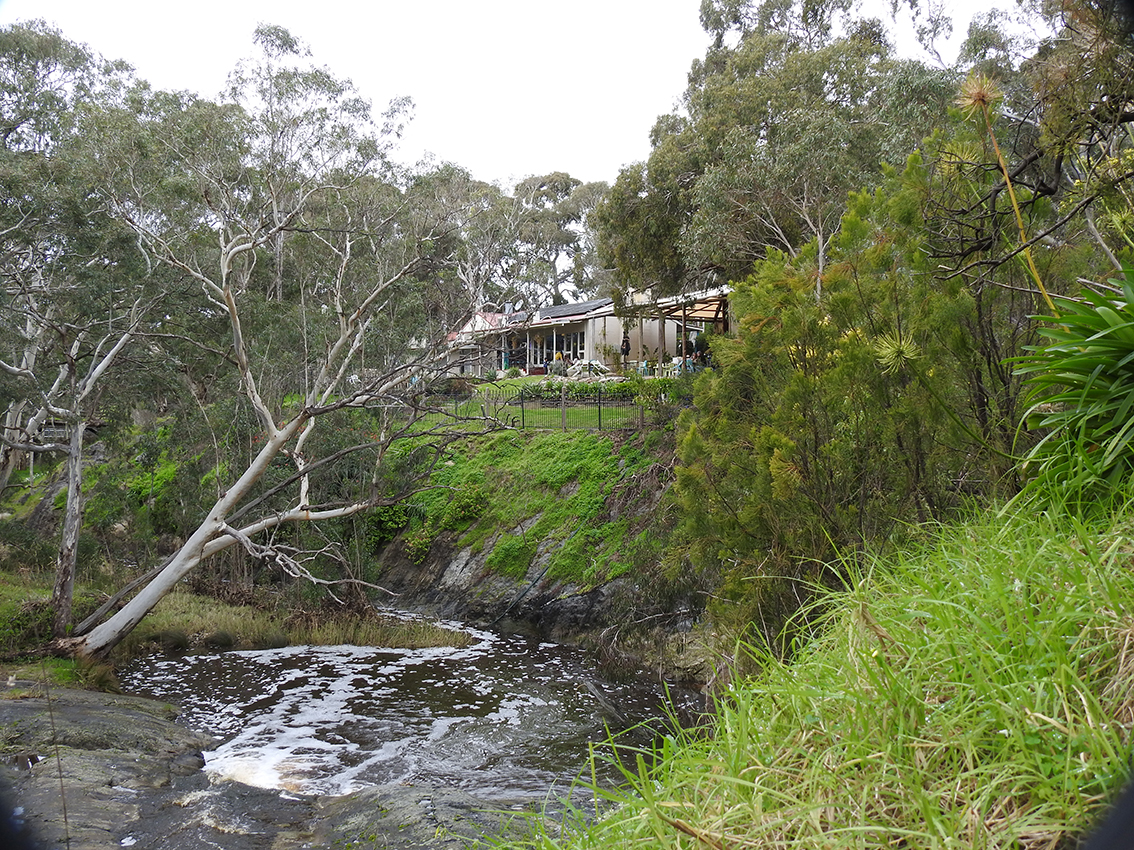
Inman river and Tearooms

I take the track from the caffe down to the river passing an information board on the way which explains the geological processes that lead to the rock formations. They involved the scraping of surfaces by rocks embedded in an ancient glacier which carved out the valley millions of years ago.

White-naped Honeyeater

Grey Fantail

From the viewing point alongside the river I watch Welcome Swallows and Grey Fantails hawking for insects above the water. And, to my great delight, spot a bird I have never photographed before: a White-naped Honeyeater.  

Old bridge over the Inman River

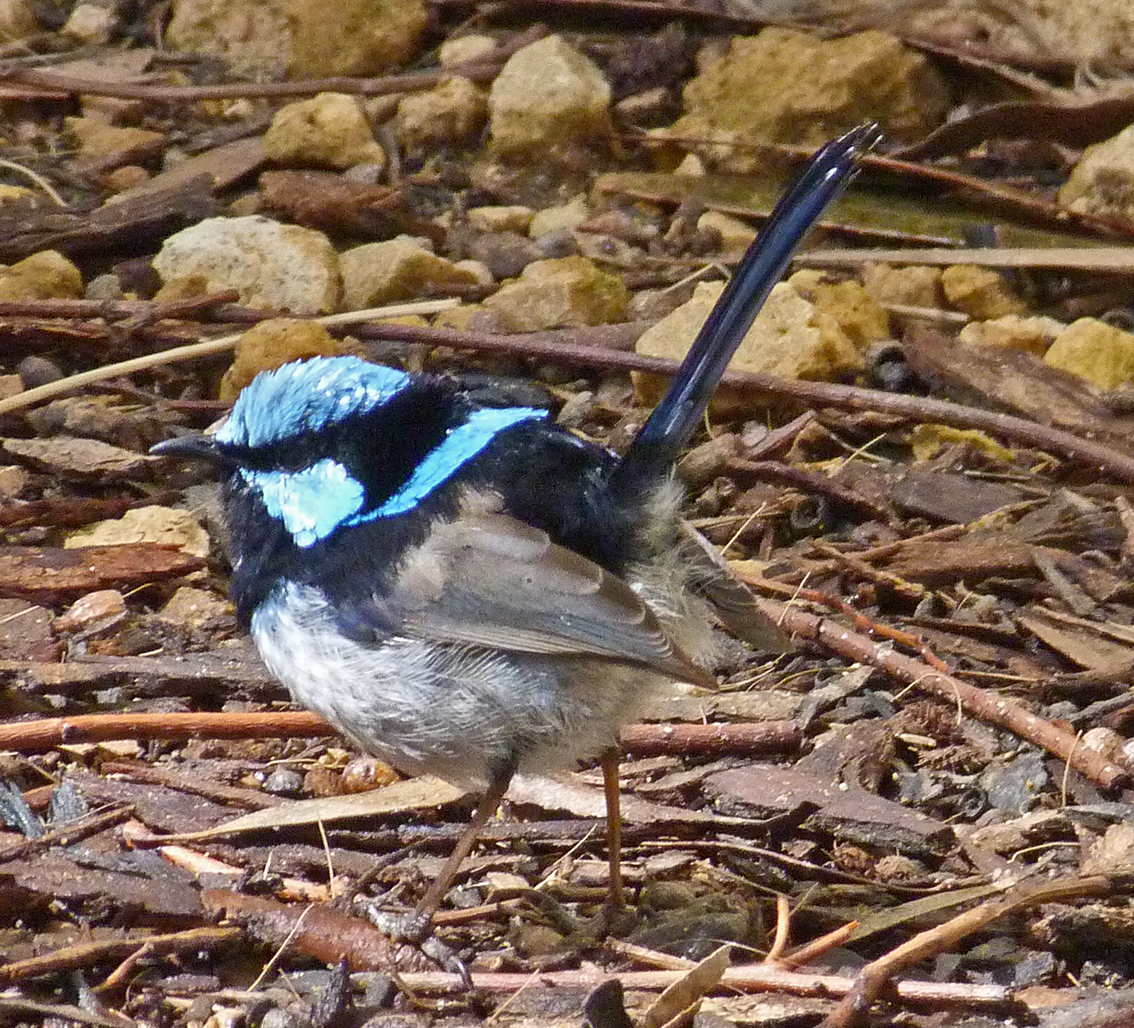
Superb Fairy Wren

The Mt Alma Road runs alongside the café. I walk a short distance along the road to get a good view of a dilapidated, old bridge which crosses the river. Thick brush lines the first section of the road and I can hear the twittering of wrens in the thickets. There are both sheep and cattle in the paddock opposite.

Galahs in silhouette

Red Wattlebird

On the other side of the Inman Valley Road, a narrow, sealed track called Parsons Road climbs a small rise. In the field alongside the road, several Galahs are perched at the top a long dead tree. Nearby a group of Red Wattlebirds are feeding on flowering shrubs along the fence line.

Spider predation or devouring its own carapace after shedding????

However, my final wildlife encounter is on a much smaller scale. A little spider (species unknown) appears to have caught another spider in its web and is starting to wrap it in silk ready to devour later.

Sweet indulgence

My walk is over and I shall return to the tearooms and treat myself to a hot chocolate. An appropriate end to a rather successful walk in this lovely part of the Fleurieu Peninsula.  

Cheers

Baz

Additional notes

This is an easy walk and drive which is quite suitable for families and seniors with public toilets, parking and other facilities nearby. It is dog friendly.

Please pass on this blog title and or contact information (URL) to any person or organisation with an interest in taking walks and enjoying wildlife in SA.

Click on these links and see more South Australian stories and pictures in my Weekend Notes articles as well as locating similar blogs on Feedspot’s top 20 Australian wildlife blogs

https://www.weekendnotes.com/adelaide/writer/452/

https://blog.feedspot.com/australian_wildlife_blogs/

Aldgate to Stirling 1……..around the RSL and church

26 Aug

Dear Reader:

There is a small stream running under the roadway which is overshadowed by tall Eucalyptus trees. I can hear the raucous calls of Galahs, Lorikeets and Sulphur-crested Cockatoos coming from high in the canopy. I swing the Nikon telephoto in a broad arc and eventually locate a lone Galah (Rose-breasted Cockatoo) gripping the trunk of a Stringy Bark Gum. On a grassy area near the playground, which is adjacent to the stream, a male and female Maned Duck are sitting close to each other some distance from the water.

Galah (Rose-breasted Cockatoo)

Male and female Maned Ducks or Wood Ducks

In another tree, I spot an Adelaide Rosella perched amongst the branches and leaves and nearby a second bird  is feeding on the buds of a non-native tree.  In the last few minutes I have identified four species of parrots , two by sight and two by sound. A nice start to my walk between the Aldgate RSL club and the outskirts of Stirling in the Adelaide Hills.

Adelaide Rosella

Adelaide Rosella feeding

Before I take my intended walk back to Stirling along the roadside pathway, I decide to explore the immediate area as I have been surprised by the diversity of birdlife here. A short stone stairway leads up to the Soldiers Memorial and a clearing with some garden seats. I sit for a while contemplating lives lost and the sacrifices made by families to ensure our way of life.

Soldiers Memorial

Golden Whistler

While I am sitting near the Memorial a Golden Whistler lands in the bushes close to me. This truly beautiful bird is not common and I feel privileged to watch it hopping between branches.

Superb Fairy Wren (Male)

Anglican Church of the Ascension

On the other side of the main road there an Anglican Church. It is shaded by trees and appears to have a range of flowers and flowering trees and shrubs in the grounds; always a good sign when one is searching for wildlife. I have heard the twittering call of wrens while walking up to the church and, as if on cue, I notice a male and female Superb Fairy Wren fossicking in the gravel beneath the Church Noticeboard.

Pair of Laughing Kookaburras

The church’s pretty wrens and flowers seem to have rounded off the first part of my walk around the Aldgate RSL but I am left with one more divine offering. A pair of Kookaburras, that I have not noticed, start to call from a branch in the largest eucalypt overlooking the church. There has been so many species in this small area that I have decided to cover the actual walk back to Stirling in my next post.

Cheers

Baz

Additional notes

This is an easy walk and drive which is quite suitable for families and seniors with public toilets, parking and other facilities nearby. It is dog friendly.

Please pass on this blog title and or contact information (URL) to any person or organisation with an interest in taking walks and enjoying wildlife in SA.

Click on these links and see more South Australian stories and pictures in my Weekend Notes articles as well as locating similar blogs on Feedspot’s top 20 Australian wildlife blogs

https://www.weekendnotes.com/adelaide/writer/452/

https://blog.feedspot.com/australian_wildlife_blogs/