Port Willunga’s Natural Charms

24 May

There is a pair of pigeons nesting along the limestone cliffs. They are billing and cooing and puffing up their feathers if rival birds come anywhere near their territory. Unbeknown to the loving pair a far greater menace, in the form of kestrel, is circling high above, scanning the cliff face for a tasty pigeon treat. Luckily for the nesting pair, the hunter overlooks them or perhaps the angle of attack is too steep and the cliffs too perilous.

Lucky pigeons

Lucky pigeons……click to enlarge


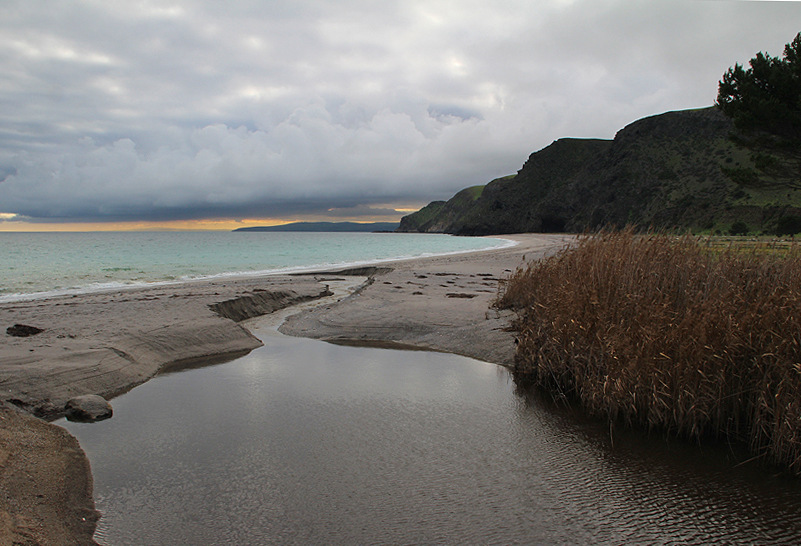
I am walking along Port Willunga beach just 40 minutes from Adelaide; a glorious little stretch of white sand that lies below ochre limestone cliffs and bounded by the Aldinga reef to the south and Gull Rock to the north. The reef is a marine sanctuary that showcases a wide variety of the state’s diverse aquatic life. And the beach is a rich repository of the South Australia’s pastoral history where the sea scoured remnants of an old wheat jetty, built in 1853, protrudes from the shallow water. Despite its idyllic setting, Port Willunga also harbours a darker history with no less than five ships being wrecked in the vicinity. The most famous of these was the Star of Greece whose skeleton can still be explored just 500m offshore.

The view from the beach

The view from the beach…..click to enlarge


Leaving the fortuitous pigeons to their parental duties I kick off my shoes and walk through the water amongst the old jetty piles. The wood is bleached white and worn by wind, sand and rain. Tenacious little limpets cling to the timber and a shore crab scuttles past my feet. Looking back across the beach I can see the rough hewn caves that were dug into the cliffs to house fishing dingies and give shelter to the hardy men who made a living from these waters.

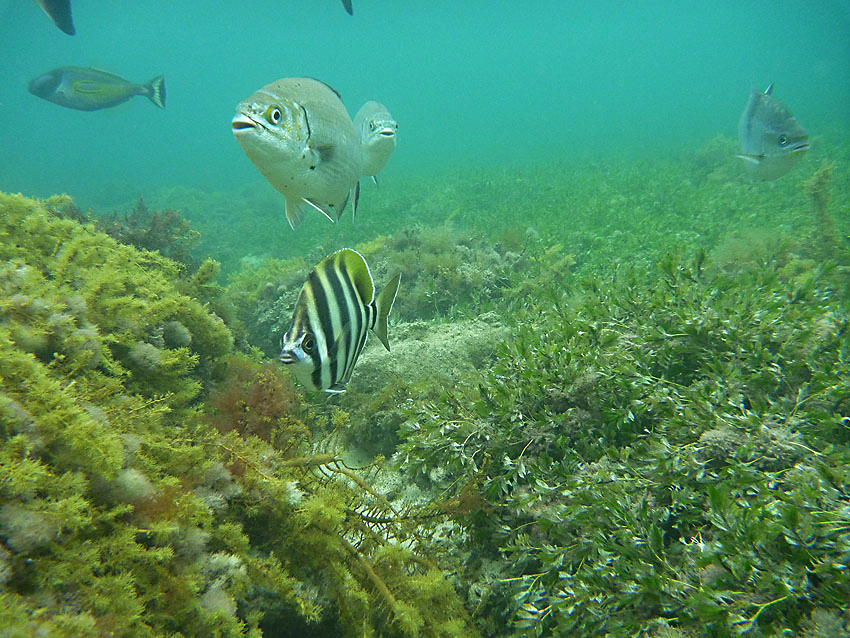
Drummer, leatherjackets, sweep and a moonlighter on the edge of the reef....click to enlarge

Drummer, leatherjackets, sweep and a moonlighter on the edge of the reef….click to enlarge


Warm clear water, a fine day and good light….thinks….twenty minutes later I am snorkeling along the edge of the reef. The water is fairly shallow and the marine life prolific. A school of zebra fish swims close to me and large dusky morwong and magpie perch feed along the undercut shelves that define the reef’s edge. At the end of one rocky outcrop a number of different species are congregating where the reef and the adjacent seagrass meadow intersect. I dive to the bottom and hold onto the rocks to steady myself and fire off a couple of shots. Later when I review the images they seem to reflect both the environment and the moment. An hour in the water and I’m getting a little chilly and its time to go back, this time I walk across the shallow rocky platform exploring the many tidal pools.

A casual lunch outside or fine dining inside....click to enlarge

A casual lunch outside or fine dining inside….click to enlarge


The change rooms at the end of the car park make getting out of the wet suit easy and the short walk up the slope to the restaurant, named after the hapless Star of Greece, gives me a good view north and south along the coast. Often I have caught sight of a pod of dolphins cruising the calm gulf waters but not today; just a few fishers and an optimistic body surfer are enjoying the water. However, after a strenuous swim and a walk along the beach my priorities have changed from natural history to lunch and the boutique restaurant, once a fish and chip shop that I frequented as a lad, beckons. Fresh seafood, quality local produce and wines; a typically South Aussie way to finish my day.


Cheers

Baz
The Art of Nature

17 May

The metallic sculpture sits in the middle of a shady pool. The polished industrial surface in stark contrast to the delicate blue kingfisher that the artist has crafted to pose, lifelike, on its extremity. But it seems that the artist has done the job too well as the supposedly fabricated kingfisher suddenly takes to the air. I have rarely seen sacred kingfishers in the hills and to find one conveniently posed on a sculpture in a pond is simply too good to believe.

2 sacred kingfisher - Copy

Sacred kingfisher….. click to enlarge


I am strolling around ‘The Cedars’ the privately owned property near the tourist hamlet of Hahndorf in the Adelaide hills which is open to the public and host many art displays throughout the year. It was home to South Australia’s most famous artist, Sir Hans Heysen. The German born Heysen moved to SA in 1884 at age 7 where he was inspired by the beautiful and rugged countryside of the Adelaide Hills. He painted rural and landscape scenes for over 70 years in many SA locations before his death in 1968 The home and studio are set in 60 hectares of open woodland and scrub and wandering amongst the bush it is not difficult to see how the area inspired him.

5 heysen studio - Copy

Heysen’s studio….. click to enlarge


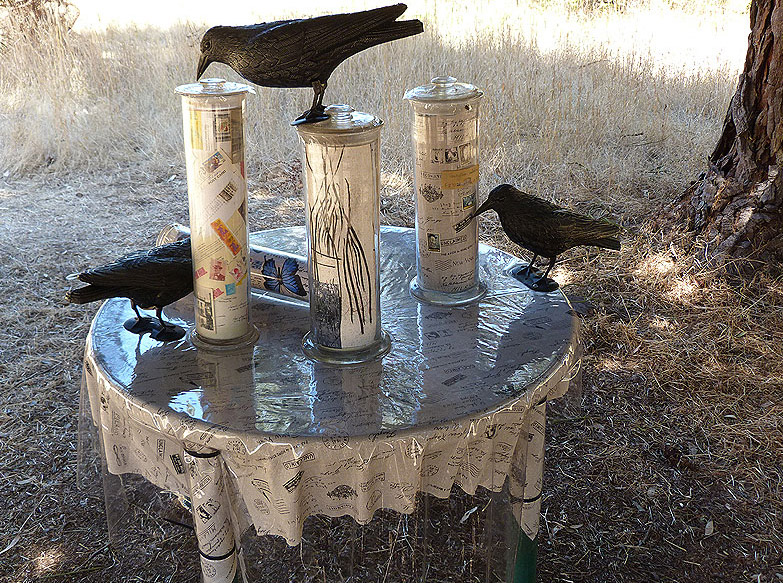
From ‘shady pool’ I climb the gentle slope above Heysen’s studio to explore a stand of Eucalypts. I can hear the warbling of magpies and screech of lorikeets. Half way up the incline I notice another piece of art work. Several crows are balanced on a table peering into glass specimen jars full of postcards. Nearby a pair of genuine, organic crows are perched in some bushes searching for food with their piercing blue eyes. In reality, the birds we commonly refer to as crows are more likely to be Australia ravens as the true crows are usually found further north in drier conditions.

3 crows - Copy

Crow art

IMG_3620 red

Crow/Raven….. click to enlarge


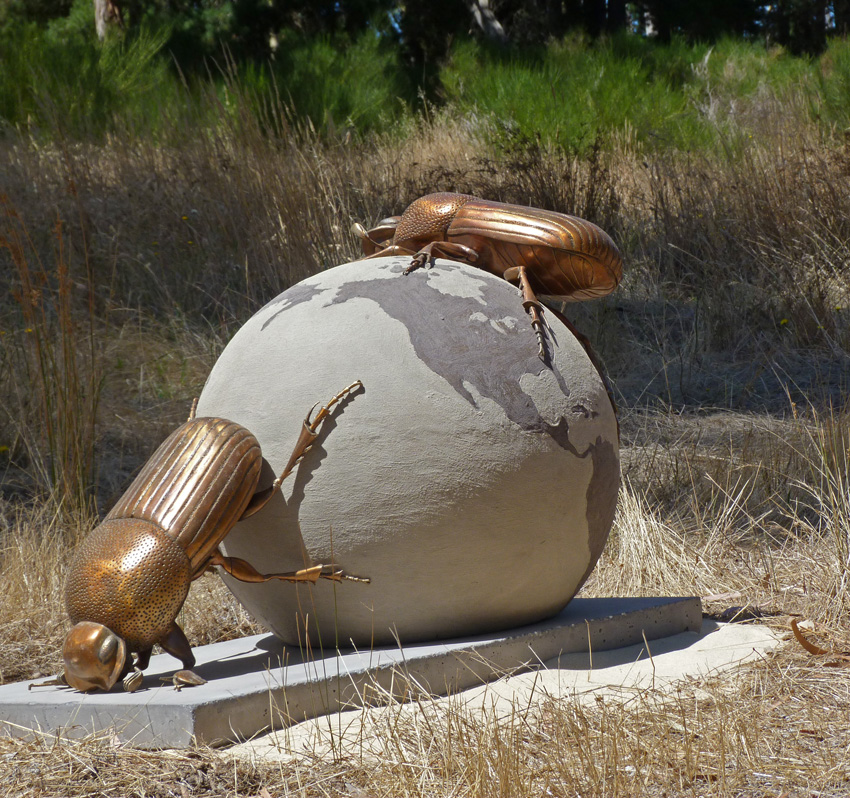
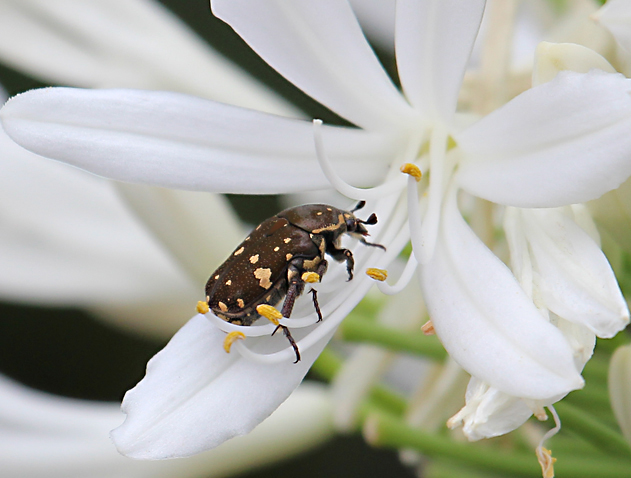
A little further along the trail I discover yet another art work hidden in the scrub: a pair of dung beetles rolling a globe. This piece seems to reflect on the state of the planet as seen by one artist. From this site I take a short walk to the house where Hans Heysen and later his daughter Nora lived and worked. The well kept garden features an eclectic mix of native and exotic flowering plants, the perfect place to find some beetles though not the dung variety which are more typical of Africa not Australia. After a little searching amongst the agapanthus, roses and native species I discover a brown flower beetle crawling across an agapanthus blossom.

P1080531 copy

Dung beetles….. click to enlarge

2 brown flower beetle on white agapanthus (2) red

Brown flower beetle….. click to enlarge


My walk has been both entertaining and informative with each animal species mirrored by a piece of art: a lovely way to spend an autumn afternoon.


Until our next adventure

Baz

Burnside’s Hidden Creek

6 May

Dear Reader: 

The wattle bird seems to be totally absorbed and indifferent to my presence as it feeds on the tiny white lerps that dot the leaves of a creek-side eucalyptus tree. Usually these large members of the honeyeater group are quite nervous and hard to approach. This one, however, is determined to provide me with a ringside display of its acrobatic ability as it hangs upside down and hops from branch to flimsy branch in pursuit of its lunch. The tiny white lerps look like an arborial version of measles. In fact they are the early stage of a parasitic bug called a psyllid, an introduced insect pest that sucks the ‘juice’ from the trees.

A wattle bird pecks tiny insects from the leaves of a blue gum near the river bank

A wattle bird pecks tiny insects from the leaves of a blue gum near the river bank.


I am walking along the banks of second creek in the Michael Perry Botanical Reserve. This charming little park is easily accessed from a small lane called Andrew’s Walk at the southern end of Hallet Road, in the hills face suburb of Burnside. The shady banks, trickling stream and little ponds have a European flavour to them affording a cool retreat in the drier summer months. Before setting off on my short walk to investigate the creek’s wildlife I made a couple of crucial stops to provision my pack for a bite to eat on the river bank. At the nearby Stoneyfell Winery I found a fine bottle of white while ‘Taylor Blend’, a fashionable little eastern suburbs coffee shop on Hallett Road, provided a wide selection of gourmet paninis and local beesting cake. When one has to sit by a river bank for an hour or so to wait for the wildlife it might as well be done in style.

The brook cascades over a small ford made from slate and sandstone rocks

The brook cascades over a small ford made from slate and sandstone rocks


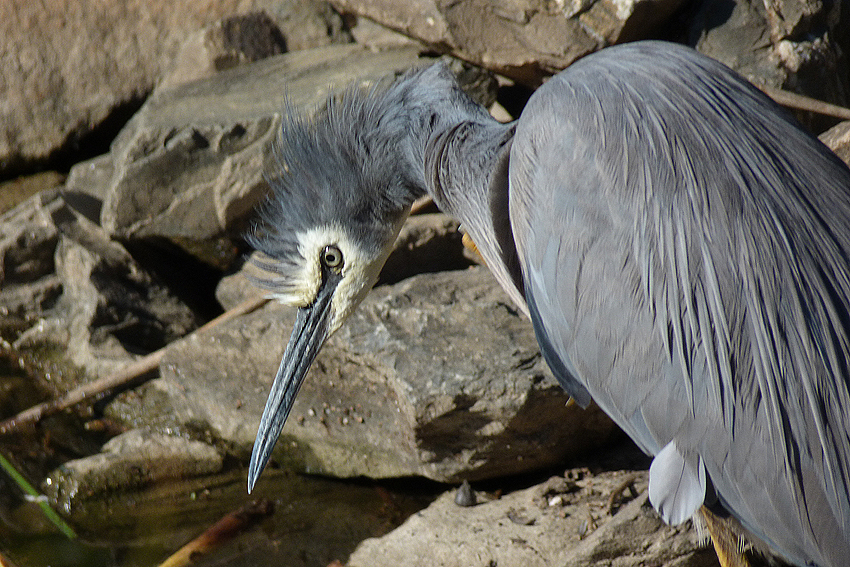
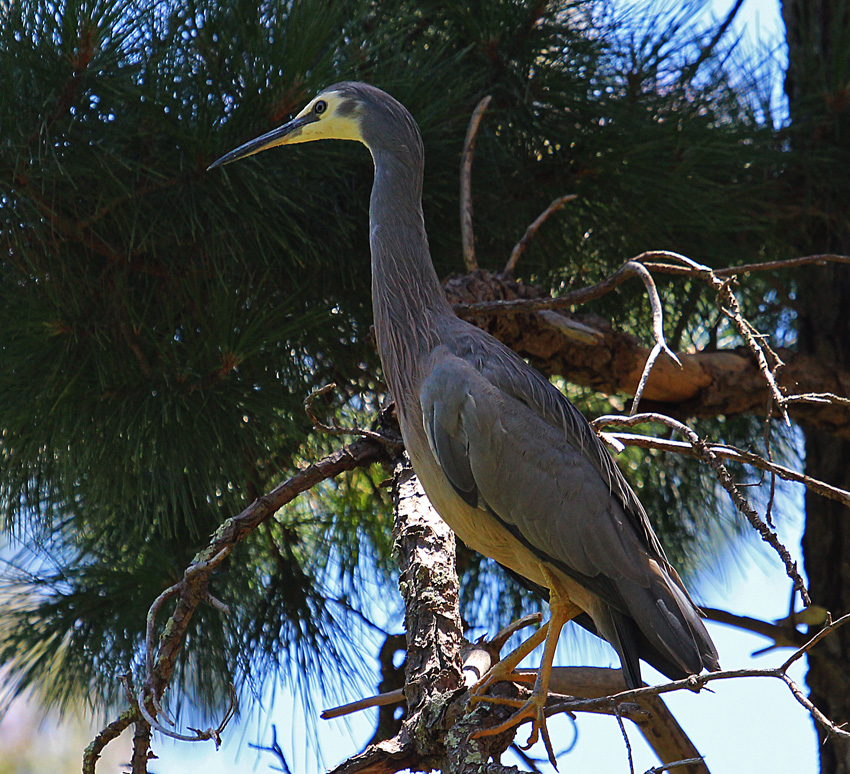
Leaving the wattle birds to finish their meal I work my way along the creek, pausing frequently to try and catch sight of the small birds that I can hear chirping and rustling deep in the cover of the reed beds. Without warning a grey faced heron explodes from the tangle of branches a couple of metres in front of me. The birds wheels in flight and settles on a branch high in a nearby pine tree where it can keep a sharp eye on its human intruder. As I point the camera at the perching water bird I catch site of a pair of Kookaburras in a huge eucalypt further up the opposite embankment. Two predatory birds; now it’s time to take a look for the prey animals that sustain them.

A white faced heron watches the creek from its vantage point in a pine tree

A white faced heron watches the creek from its vantage point in a pine tree


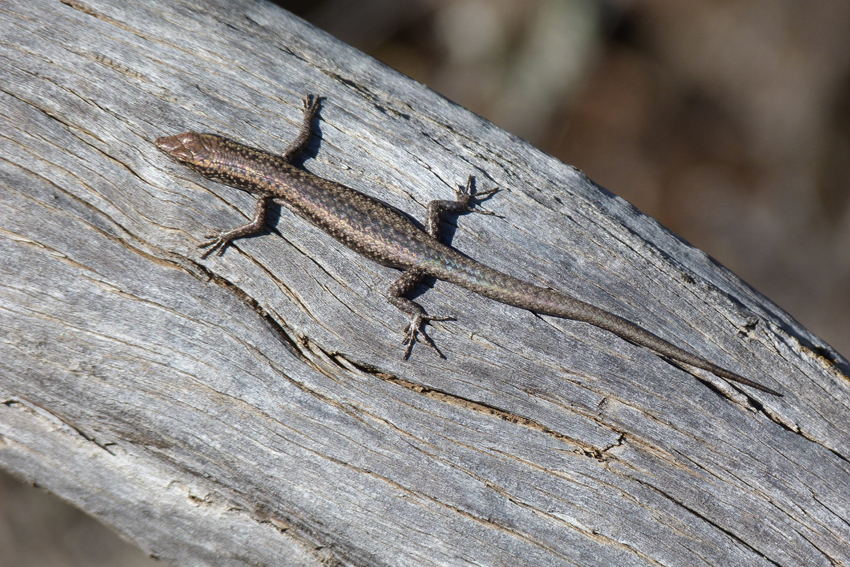
The first interesting small animal that I notice is a water skink which is sunning itself on a log. Being mid autumn I am surprised to see a reptile as most would now be ‘dug in’ for the winter months ahead. As I sit quietly and prepare to watch the lizard, a green eyed dragonfly lands on a boulder in the middle of the creek. And, where the water has formed a small clear pool I can see tiny fish or tadpoles swimming close the reeds and water striders skating across the surface: like my lunch, a gourmet larder for a range of feathered predators.

A water skink basking on a log amongst the reeds

A water skink basking on a log amongst the reeds

A dragonfly pauses for a moment on a warm rock in the creek

A dragonfly pauses for a moment on a warm rock in the creek


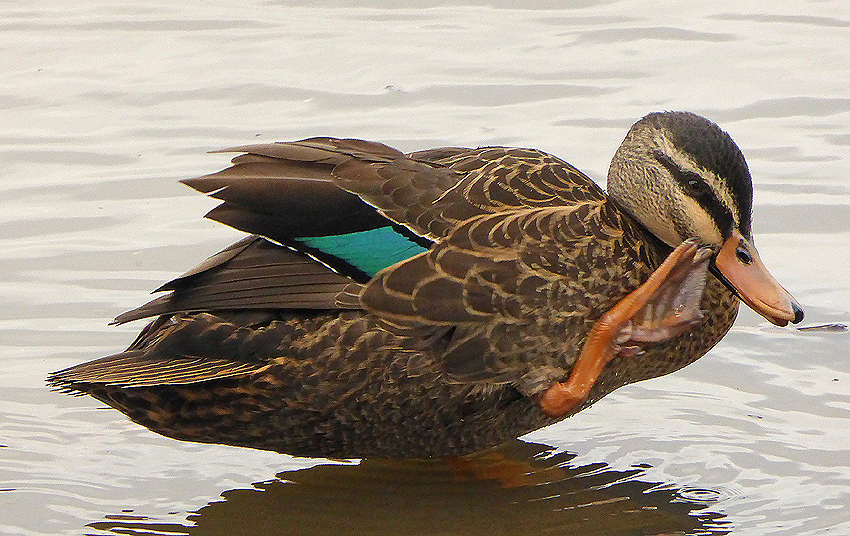
A fence marks the end of the reserve and I cross the creek to return on the northern bank. The tiny reed birds still elude me but in a shady stretch of water a single black duck is swimming against the current as it dabbles for food. A common enough species in southern Australia but the light is particularly good and on reviewing the shot it seems to encapsulate the mood of this lovely little waterway.

Black duck are common along the waterway

Black duck are common along the waterway


Until the next time

Baz

Quinn and Pop do Cleland

21 Apr

Dear Reader:

Though I have photographed wildlife for over 30 years, I still get excited when I see an unusual bug in the garden or hear the screech of sulphur crested cockatoos on my morning bike ride. However, every photographer needs an extra bit of inspiration; that fresh way to see the world. Mine came from taking two year old Quinn to explore Cleland Wildlife Park in the Adelaide Hills. Seeing a child experience the beauty and mystery of nature is something that no amount of field experiences can ever compete with. With a little hand tucked in mine I was guided along the bushland paths to the sound of……

“Pop come see.”

“Look croos!!”…. (kangaroos, I presumed correctly)


IMG_3608

My first wildlife park

Quinn loves animals, she has a dog, a cat and often toddles down the road to the local wetlands where every bird species is still classified as a duck. At Cleland she was overwhelmed by the variety of new animals and ran between marsupials and reptiles then on to the birds (ducks) with ever increasing gusto. The wildlife was not quite as enthusiastic about her energy levels and tended to disappear with a hop, scuttle or ‘flap of wing’ as the two year old whirlwind bore down on them. The combined wisdom of Mum and Nan tried to instil a sense of calm and caution when dealing with wildlife but the concept did not seem to gel with her two year old philosophy.

IMG_3648

Quinn has a puppy too…not quite a dingo

IMG_3684

Stop croo stop


Unsurprisingly, the koalas were a particular hit. She probably associated their solid, furry bodies and bear-like appearance with the plethora of animated cartoon characters featured in various children’s programs. Next time we will get the obligatory ‘kid with koala’ image but on this public holiday excursion the overseas visitor line stretched away into the horizon. A few minutes watching the iconic marsupials climbing, snoozing and munching gum leaves, had to suffice; at least she was still for a while.

IMG_3654

An enclosure of cute

IMG_3651

Koala are not bears…a lesson for later


After an hour and half of unbridled, two year old enthusiasm we decided/hoped that she had used up her energy quota. Not so: near the gate there is an indoor complex that features species that require individual conditions such as specialised lighting, temperature control and enclosures that safeguard the public from venomous bites. In she went and spent the next 20 minutes staring at these more unusual animals which included: taipans, death adders and a variety of lizards. Eyes wide and somewhat subdued she grabbed my hand and repeated her, Pop come see’ request as we looked intently at each display.

mulga snake

Mulga snake or king brown… she really liked this one


Even as we left the park she was pointing and staring into the trees that surround Cleland in the apparent hope of seeing more wildlife. To be honest I was amazed and secretly wondering at what age a child can be trusted with her first digital camera.

IMG_3695

Before I become a naturalist I’ll try art


It was an exhilarating day in a lovely bushland setting; without doubt, a place to take the family and experience the wildlife that makes SA such an extraordinary place to live or visit.

Cheers

Baz


Footnote

She slept all the way home

Mum hit the sack at 8.00 pm

Nan rubbed in some back ointment

I pored over the camera and laptop to record a Quinn-based blog

Two out of Three ‘aint Bad

15 Apr

  The red bellied black is sunning itself on the track about forty metres in front of us. It hasn’t caught the scent of the dog yet or reacted to the vibrations created by our footsteps. We stop and watch it for a few seconds and that change in rhythm seems to alert the snake. Suddenly, a grey faced heron that is feeding amongst the samphire plants that line the foreshore of the lake, takes to the air. That is warning enough for the reptile and in the blink of an eye it has disappeared into the wetland. My companions are relieved, the dog is unaware and I must admit to being a little disappointed. They walk on ahead while I sit on a pine railing near the last point of sighting and watch. Sometimes a little patience pays off and after a few minutes I see just enough of the snake to fire off a single frame before it weaves its way deeper into the swamp.

Red bellied black snake hunting

Red bellied black snake hunting

  These rather striking snakes are quite common in the cooler wetland areas of southern Australia. They grow to around 2 metres in length and their diet includes a variety of small mammals, amphibians, fish and reptiles including their own species. They are related to the deadlier and more aggressive brown and tiger snakes that also occur in this area. Red bellied blacks produce between 5 and 18 young which are delivered in a membranous sac; they are considered to bear live young rather than produce eggs.

5 lake alexandrina

Lake Alexandrina on the shores of Milang

  My encounter with the black snake occurs along a dirt track on the edge of the small town of Milang, on the shore of Lake Alexandrina. With a population of just 500 Milang is a charming reminder of the bygone era of paddle steamers and rural living. The little township is a pleasant twenty minute drive from the rural centre of Strathalbyn. It is accessed by both sealed and unsealed roads which pass through rolling farmland and vineyards. With a caravan park, wharf, general store, designated walking trail and several historic sites; Milang is a great place to spend a couple of laid back days in the South Australian countryside.

2 brown snake

Common brown snake in strike position

  Leaving the black snake to its swampy refuge, I walk further down the trail and to my astonishment I catch sight of a long slender tail protruding from the edge of the grass verge. I freeze and ‘ever so carefully’ step forward until ‘snake two’ is immediately below me. It is almost completely obscured by a tangle of grasses and reeds. I watch it for a few minutes trying to angle my camera for a worthwhile shot. No luck; the common brown snake; the second most venomous land snake in the world; remains motionless, using its colouration and shape to stay hidden. I step back to change the angle fractionally and when I glance back through the viewfinder the snake is gone…without the slightest sound it simply disappeared into the grass.    

Dirt track between swamp and township

Dirt track between swamp and township

I have been photographing wildlife in South Australia for many years and I rarely see venomous snakes. To see two of the resident three species in the space of 15 minutes is extraordinary to say the least. Needless to say I did not run into a tiger snake on my return walk along the track.  

Cheers Baz

Reef and Cliff

25 Mar

The crumbling cliffs drop steeply to a narrow beach where a tangle of dried out seaweed marks the extent of the last high tide. From the beach, a flat limestone platform gently slopes into the ocean. The once smooth surface is scarred with shallow pools, sand patches and bubble weed. A line of white foam marks the outer fringe of the shelf where a sudden increase in depth creates a series of smaller reefs and ledges. These features provide a range of diverse habitats for an assortment of marine life.

3 cliff beach and reef

The view from the cliff top


The first animal that I meet, on my swim across the shallows, is a fiddler ray which has come in from the seagrass meadows beyond the edge of the reef. It is hunting on the limestone platform; using its keen senses to locate molluscs that are buried in the sandy patches. Like all rays, its mouth is located on the underside of the body and its back is camouflaged to confuse predators that might attack from above. I follow the ray for a few minutes approaching quite close as it lies near a patch of bubble weed. Unlike stingrays, fiddlers do not have a barbed spine on the tail for defence and seem to be quite placid animals.

2 fiddler ray red

Fiddler ray near bubble weed


The ray follows a series of narrow cracks in the rocky surface where shore crabs often leave the shelter of their burrows to hunt on the incoming tide. The narrow crevices are also home to hoards of tiny anemones that extend their stinging tentacles to trap the tiny organisms that live in the water.

4 Pale anemones amongst seaweed

Anemones in a rock ledge surrounded by seaweed that keeps them wet on the receding tide


The limestone reef and high cliffs with their spectacular coastal views are the main attractions of the coastal community of Aldinga. The town is a comfortable 50 minutes drive from Adelaide along the main South Road. A traditional Aussie pub and bakery close to the access road from the highway provide great local meals and there are numerous houses for hire along the coastal strip that overlooks the gulf. Several parking bays on top of the cliffs with steps that lead down to the beach and reef make accessing this location very easy. The area is also a marine park and various signs explain the exact nature of restrictions for divers and fishers.


rock crab  aldinga 2

Shore crab that has emerged from its shelter to feed


After following the ray for a while I swim to the seaward edge of the reef and start exploring its perimeter. The limestone is honeycombed with undercut ledges, caves and crevices. Almost immediately I encounter a large strongfish or dusky morwong; a common species that lives in the seagrass meadows. The fish is well over a metre long and appears to be resting before heading into deeper water to feed.

1 strongfish in cavern red

Strongfish or dusky morwong sheltering under a rocky ledge on the edge of the reef


I have been in the water for over an hour and have photographed a wide variety of marine life apart from the species mentioned. Now it is my turn to follow their example and ‘grab a bite to eat’ back at the pub before driving home confident that there is still much to see on subsequent visits to this spectacular local ecosystem.

Cheers

Baz

Port Germein ….A Long Walk Out to Sea…Field Notes

8 Mar

General description of location

Port Germein is a  small country town just north of Port Pirie which is  a major regional centre about 2½ hours from Adelaide

Lies near the top of Spencer Gulf and is in the shadow of the Southern Flinders Ranges.

Town has a pub with excellent food, a general store and campground

Small local population of around 250

A long jetty, once used to load grain clippers, it extends from the shore to over a mile out to sea and most of the beach is exposed at low tide

Good fishing, crabbing and general coastal wildlife walks

6 jetty and ranges red

View back to the ranges from the end of the jetty

Notes

Season:

Late summer

Weather:

Mild morning temperature around 18 ºC at 0900.

Forecast temperature 35°C later in the day

No wind and clear skies

5 blue bee red

Blue bee on coastal heath

While walking from the house where I am staying to the jetty I spot some blue bees, an Australian native species, feeding on a coastal bushes with small blue flowers

They tend to feed on blue and white blossoms

Note to self

Identify some of the coastal vegetation before next PT Germein post

3 blue swimmer crab red

Blue Swimmer crab in net

I stroll along the jetty and notice a variety of small wading birds feeding on the sand/mud flats, some are searching out small pools of residual water

A young couple near the end of the jetty are crabbing and they have caught half a dozen Blue Swimmer Crabs which are common at this time of year

A group of Pied Cormorants and Common Terns are perching on some battered poles which remind us that the jetty was once longer

A family have used a tractor to tow out a small boat and launch it as the tide comes in

The view from the end of the jetty of the foreshore and Ranges is spectacular.


12end  of jetty red

Terns and Cormorants at the end of the jetty

I return to the shore and walk along coastal path that weaves between low bushes and stretches of beach

There are honeyeaters and finches in the bushes and a Ring Necked Parrot preens itself on a branch

Near a rocky outcrop close to a garden I come across a Bearded Dragon sunning itself

There are also quite a few White Plumed Honey Eaters feeding on blossoms in Eucalypt trees that grow in gardens near the coastal walk

After sipping nectar some are hawking for insects.

5 white plumed honeyeater red

White Plumed Honeyeater feeding in eucalyptus tree near the foreshore

A ten minute walk from the end of town, the coastal scrub and samphire give way to stands of mangrove and a whole new coastal ecology emerges

A White Faced Herons stalk small fish and crustacean in the shallow channels and a White Browed babbler fluffs up its feathers in one of the mangrove trees

These mangroves are part of a south Australian system that marks the southernmost extent of mangrove communities in the world

Small fish can be seen schooling in some of the deeper channels

This is a nursery area for many commercial species.

8 mangrove pool red

Mangrove pool

15

White Faced Heron hunting in the mangroves

I head back to town for a schnitzel and a beer at the local pub and the promise of a drive to Telowie or Port Germein Gorge in the afternoon to look for rock wallabies and eagles.

Cheers

Baz

A Hill’s Face Hike

16 Feb

Dear Reader:

The koala is well camouflaged and firmly wedged between two branches in a stunted eucalyptus tree which is growing on the edge of a steep slope. Getting a decent shot involves scrabbling through some spiky acacia bushes and perching myself precariously on the edge of a rocky outcrop. But a quick glance at the playback screen suggests that the effort has been worthwhile and a few more scratches on my legs are ‘par for the course’ in this terrain.

3 Koala near the trail head

Koala near the trail head


I am half way up Anstey Hill on the north eastern edge of the Adelaide Hills. This ‘hills face’ recreation park is part of the in the Greater Mount lofty Parklands and one of several reserves that permit hiking, walking dogs on leads while banning camping, mountain bikes and the lighting of any fires. Anstey Hill is only 8 Kms from the CBD, easily accessed from several major roads and close to quite a few reputable hotels and restaurants. In short, an ideal destination for a morning or afternoon walk followed by a meal and a glass of wine.

1 Local pub and restaurant

Local pub and restaurant


Satisfied with koala image I start take a winding trail towards the top of the hill emerging on its northern flank where the view across the cliff face towards the city and coast is quite spectacular. A winding trail skirts the ridge and there are still some late blooming wattles and melaleucas clinging to the rocky outcrops and a small group of new holland honeyeaters are feeding on the blossoms and hawking for insects.

2 View from the ridge

View from the ridge


Further along the trail a small stand of eucalypts pushes up through the lower layer of scrub and many of them are losing their outer layers of bark….an ideal opportunity to look for huntsman spiders which often search for prey in this micro environment. And luck is on my side after a little foraging a piece of bark with a sizeable huntsman comes away from the tree. These large spiders often come into suburban homes where they stay high on the walls and eat a whole collection of unwanted pests from mosquitoes and flies to earwigs and roaches.

4 Huntsman spider

Huntsman spider


I turn south at the top of the hill and head through a little section of bush that has recently been burnt. To my surprise a large, dark robber fly is perched on one of the blackened branches magnificently camouflaged as it waits for smaller insects to ambush.

5 Blackbugs on burnt trees

Robber fly on burnt trees


My final wildlife encounter is with a pied currawong. Related to crows and magpies these large omnivorous birds are not common on the Adelaide plains and prefer the higher elevations of the Mt Lofty Ranges. I have never seen them around this area before and have few photographs consequently; this capturing this image was quite a treat.

6 Pied Currawong

Pied Currawong


Now it’s lunch at the pub


Cheers

Baz


JET

Salisbury’s Urban Wetlands

3 Jan


Dear Reader:

The saltbush and thorny wattle bushes that surround the bark chip path are thick and impenetrable. All around me I can hear the hum of insects and the twittering of unknown birds. Eventually I catch sight of a small bird perched in some bushes about twenty metres in front of me. The light is poor despite the sunny day and the shot is far from ideal. I wait for a few minutes. Finally the little bird breaks cover and sits on an exposed branch. It is still moving so the image will not be perfect but I fire off a few frames in the hope that one will help me to identify it.

1 Female fairy wren in scrub

Female fairy wren in scrub

5 Typical wetland  habitat

Typical wetland habitat


A little further along the trail I cross a footbridge and a wide expanse of shallow water confronts me. A collection of wading birds are feeding on an exposed mud-bank. They see me and start to behave nervously. I capture a single image just moments before the birds scatter; some disappear into the reeds while others take flight and head deeper into the wetland.

2 Various species of water birds on an embankment

Various species of water birds on an embankment


I am in the Greenfields Wetlands near Mawson Lakes where I work as a teacher. This complex of lakes, reed beds and low scrub is part of a chain of wetlands that filter stormwater for re-use in the Salisbury area a few kilometres north of Adelaide. This particular area has been carefully rejuvenated over several decades turning wasteland into a natural wetland zone where the wildlife is wary. Even common ducks disperse as I approach rather than simply paddling away as they might in the urban part of the creek that passes through my school. The wildlife is not only cautious but more diverse and one gets a real sense of being in the field, despite the traffic and housing only a hundred metres away.

2 Watershed restaurant

Watershed restaurant


My next wildlife encounter tests both observation skills and patience. I detect a slight movement on a mudflat near some reeds. I look a little closer and can see nothing. I wait, searching through the telephoto. Eventually, what appeared to be a brownish patch of decaying plant matter moves ever so slightly. It is a little black-fronted dotterel that has been foraging along the edge of the creek. A few more minutes pass more before the bird feels confident enough to resume its previous feeding pattern and I have to move carefully and slowly to capture an image. This is the kind of photography that I love. Perhaps it rekindles some lost predatory instinct…who knows?

4 Dotterel feeding on muddy embankment

Black-fronted dotterel feeding on muddy embankment


My final wetland moment is really quite unexpected. As I leave the trail and head up to the little restaurant that sits alongside the wetland there is a flurry of wings and water behind the reeds to my right. A flock of Australian pelicans lifts into the air. My camera is in standby mode and by the time it has re-started the birds are climbing rapidly. I hastily track them in flight and fire off a series of shots. Later when I review the images I am delighted to find that one picture shows three birds with their wings in different flight position.

6 Pelicans showing different wing positions in flight

Pelicans showing different wing positions in flight


As the light starts to fade I return to the Watershed Cafe, hand in my trail key and enjoy coffee and dessert on the deck overlooking the main lagoon. A tough way to end my day.


Cheers

Baz


JET

On the Edge of the Blue Line

25 Dec

On the Edge of the Blue Line

The sand is golden with a uniform, rippled pattern to it; like the sole of an old fashioned sneaker. Every few metres small clumps of grassy weed appear until finally the sand merges into an endless green meadow of seagrass. Seagrasses are not algae but true plants with leaves, roots and in most species, flowers. They form a crucial ecosystem in the shallow waters of Gulf St Vincent. As I hover above the dense mass of leaves, a school of tiny silver fish lifts out of their embrace, swims a few metres then blends back into the shelter of the meadow.

1

Blue line as seen from the sand hills near Henley Beach


I am snorkelling off Henley which is better known as a fashionable beachside cafe strip rather than a dive destination. I decided to arrive a little early and enjoy a cup of coffee while I waited for the sun to get high enough for underwater photography. The water is clear and the ocean warm and inviting at this time of year and it is just a short swim from the local jetty to the blue line where the sand and seagrasses merge. The lush tangle of gently waving blades that surround me are home to one of the planet’s richest marine environments. It is a place where whiting, mullet, blue crabs, giant rays and squid (to mention just a few inhabitants) find food and shelter for themselves and their young.

2 Seagrass meadows

Seagrass meadow


I swim a little further into the seagrass until I locate a patch of sand with some darker detritus around its edge, indicating that something might have dug into the substrate. I stir the sand with the tip of my dive knife…nothing…I swim a few metres further and repeat the process. On the third attempt I get a result. A dinner plate sized blue swimmer crab bursts out of the sand with pincers extended and full of aggression. These crabs are prolific along the upper gulf in the summer months providing a valuable commercial fishery and great sport for recreational fishers and divers.

5 Blue swimmer crab

Blue swimmer crab


Experience has taught me that the boundary between seagrass and sand is an ideal place to observe different animals. Because I am wearing extra weights I am able to rest effortlessly on the bottom in this zone and wait for something to happen. Over the next few dives my strategy pays off as a small group of juvenile King George whiting settle close to me as they search for worms and molluscs between weed and sand.

4 Juvenile King George whiting

Juvenile King George whiting


A little further offshore small sand patches occur regularly in the seagrass meadow. Often there are a few rocks colonised by brown or green algae and even variations in seagrass species in these areas and these slight variations in terrain frequently produce the greatest diversity of marine life. My first sand patch does just that. Lying close to the bottom, I let my eyes adjust to the light and moving shadows produced by the tidal flow and rippling surface. Just a few centimetres from my lens a seahorse clings to a blade of eelgrass using its tail and tiny fins to move in time with the swaying miniature forest of the underwater meadow.

3 Big bellied seahorse

Big bellied seahorse


I have been in the water for over an hour and I am getting a little chilly and besides a cappuccino and breakfast roll beckon back at the Henley Square where many a tourist sips coffee unaware of the glorious marine world just a short swim away.


Cheers

Baz