Tag Archives: adelaide rosella

Exploring Meadows Creek……an interesting drive

3 Mar

Dear Reader:

I hear movement in the long grass. Fifty metres away a Western Grey Kangaroo twitches its ears and looks back at me before slowly hopping into the scrub.

Western Grey Kangaroo

I am exploring Meadows Creek from three roads that intersect the creek from Brookman Rd, which starts at the top of Willunga Hill and terminates at Meadows. The first is Adams Gully Road.
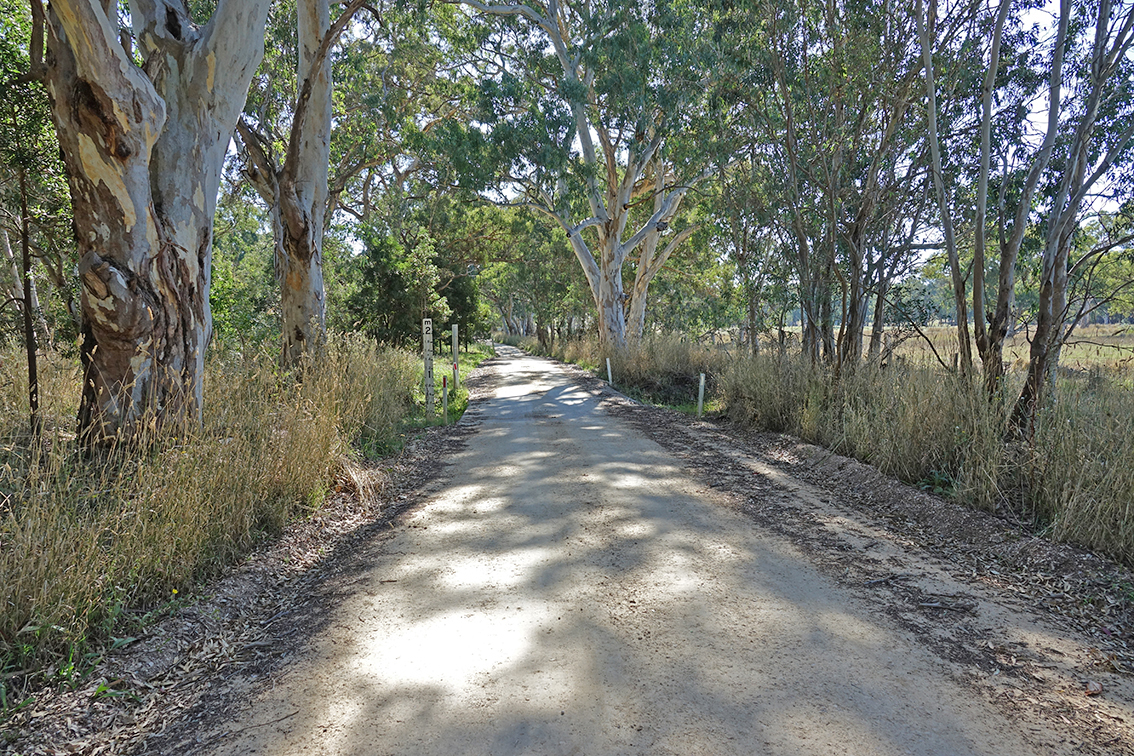
Adams Gully Road ford

Here, the creek’s bank is obscured by scrub and grass. I wade through the tangle of dry stalks and spot a Common Brown Butterfly amongst a mat of fallen grass.

Common Brown butterfly

Nearby, a leaf curling spider has strung its web between some bushes. I can just make out its spindly legs protruding from its specially constructed home.

Leaf Curling Spider with legs visible

Sometimes tracking a creek or river is a complex endeavour. Meadows Creek runs through farmland and only flows freely when it has rained. In drier months it is typical of many SA waterways, consisting of a series of shallow pools.

Typical summer pool along Meadows Creek

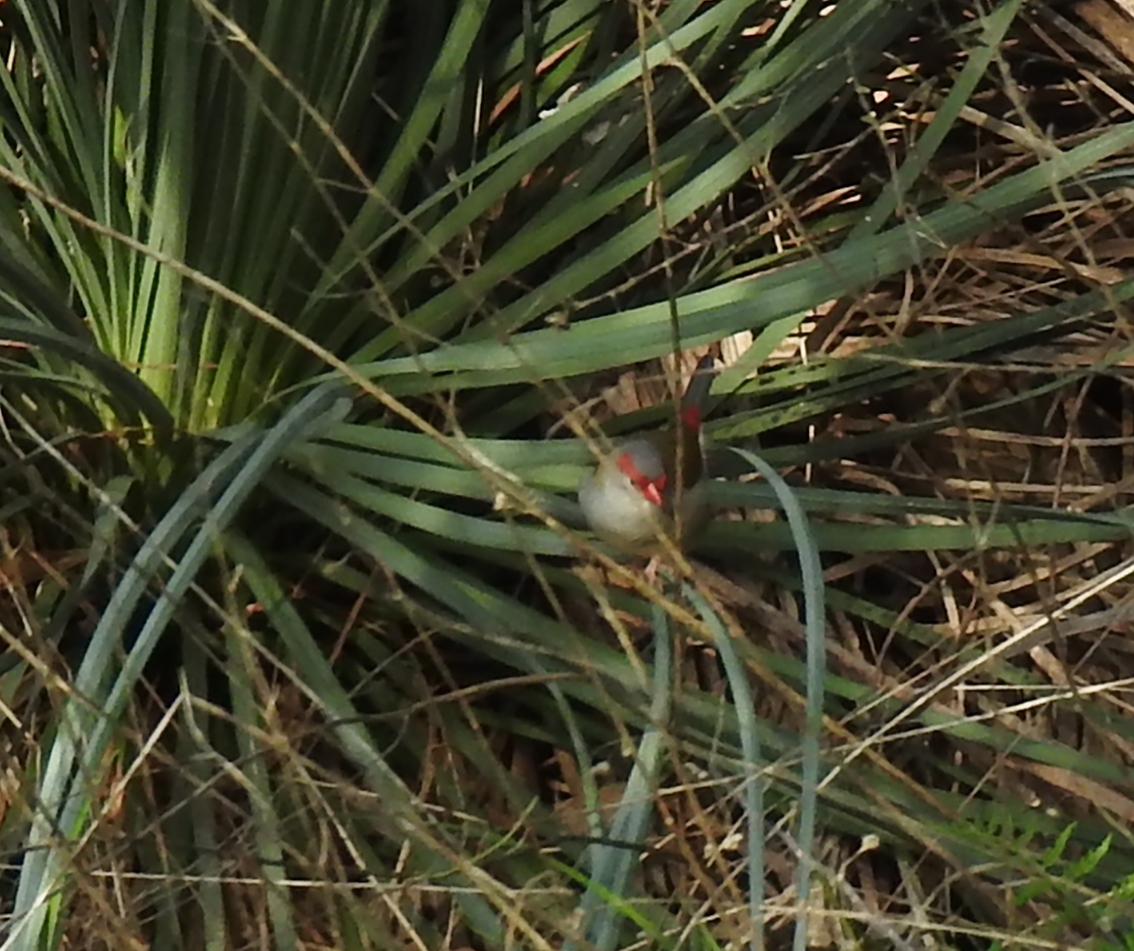
A few kilometres past Adams Gully Road is Tynan Road where there is a slightly larger more accessible pool. There are prickly blackberry stems (canes) close to the water providing a safe place for small birds to shelter. A Silvereye lands on a branch providing a nice camera angle. Then a Superb Fairy Wren puts in a brief appearance while an Adelaide Rosella perches high in one of the tall roadside eucalypts.

Tynan Road crossing

Silvereye
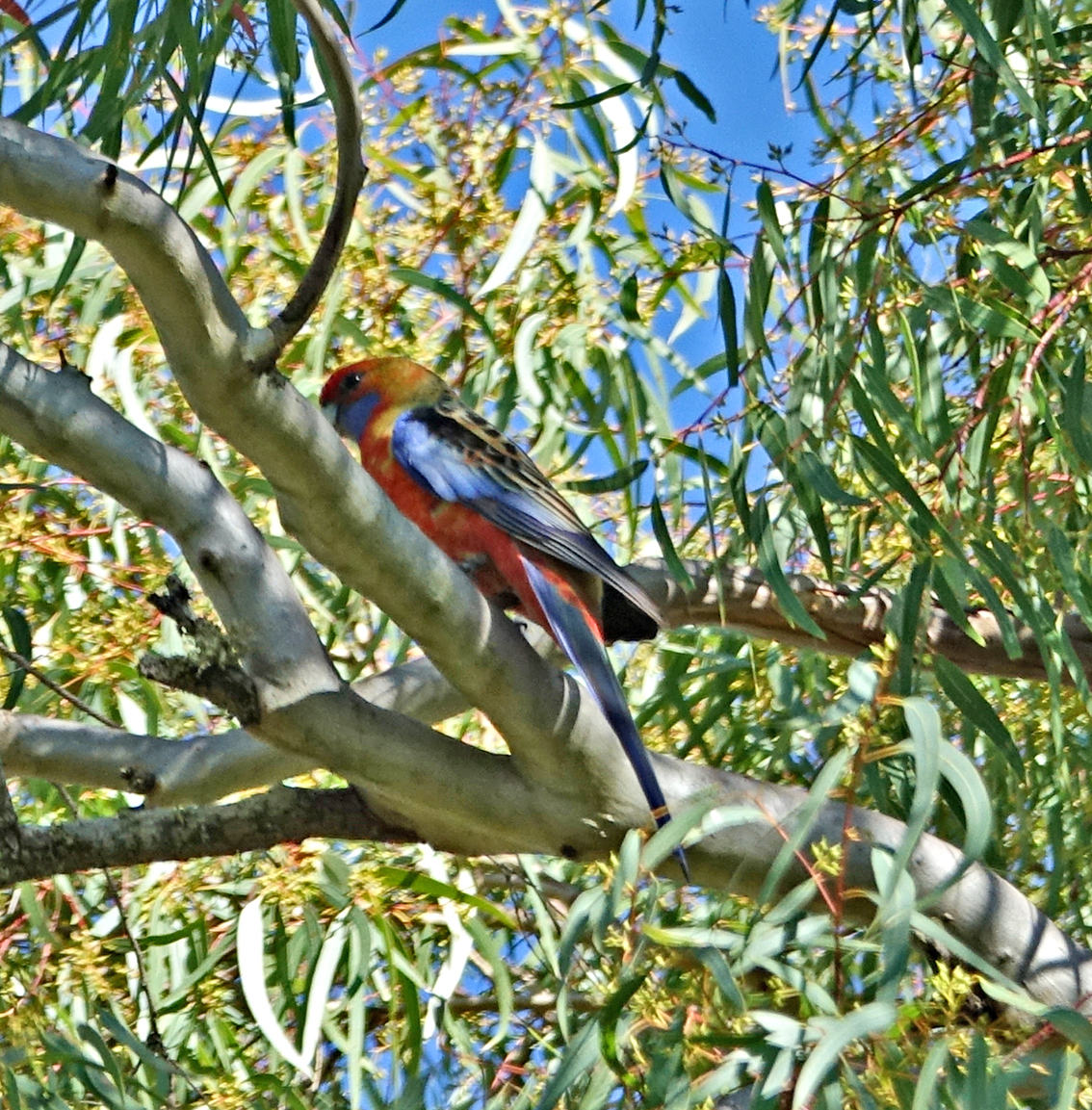
Adelaide Rosella

My final crossing point is on Wickham Hills Road where I walk along the dry creek bed towards a pool and spend a quiet ten minutes waiting to see what animals are in the area. Eventually a Grey Fantail alights on a nearby rock as it searches for insects near the water. Further along the creek I can hear Kookaburras calling and a pair of Yellow-tailed Black Cockatoos fly overhead.

Wickham Hills ford

Grey Fantail

Rather than drive back to Brookman Road and return to Adelaide via Meadows or Willunga, I continue along Wickham Hills Road and wind my way back to the city through some lovely rural areas.  Rich pastures, stock, vineyards, barns and farmhouses provide some picturesque, rural scenes, making a wonderful ending to my creek exploring day.

Vines and open bushland

Cheers

Baz

Additional notes

This is an easy drive which is quite suitable for families and seniors.

Please pass on this blog title and or contact information (URL) to any person or organisation with an interest in taking walks and enjoying wildlife in SA.

Click on these links and see more South Australian stories and pictures in my Weekend Notes articles as well as locating similar blogs on Feedspot’s top 20 Australian wildlife blogs

https://www.weekendnotes.com/adelaide/writer/452

https://blog.feedspot.com/australian_wildlife_blogs

Wildlife Around Chalk’s Campground

16 Dec

Dear Reader:

With the arrival of summer, grasses turn to gold with remnant shadings of green while pale gums add a subtle contrast to the landscape.

As the countryside flashes past on my way to the campground I notice a field of freshly baled hay. A flock of Sulphur Crested Cockatoos forages for any remaining seed heads.

Sulphur Crested Cockatoos

My destination is Chalk’s Campground, just past the Warren Reservoir on the road between Williamstown and Gumeracha. I am not intending to camp here; however, the interface between human habitation, rural zones and wilderness areas is an excellent place to encounter wildlife.

Although the campsite is closed between December and March, due to the danger of bushfires, it is still accessible for walking and is a destination along the famed Heysen Trail. I drove through the area a few weeks ago on a sunny day and spotted a Shingleback lizard in the undergrowth.

Although it is summer, the weather is overcast and photography a little more challenging than on my previous visit. I use the powerful lens of my Sony RX10 to scan the trees, bushes and ground in search of wildlife.  Common Brown butterflies are the most common animals. They are flitting between the grass and leaf litter where their excellent camouflage is most apparent.

As I walk around the campsite zone, I notice a group of Adelaide Rosellas perched in a pine tree. The birds are wary and I only manage to fire off a couple of long range shots before they take flight.

Bark is peeling off many large River Gums and I probe under it in search of millipedes, spiders, roaches and other bugs. Spiders are not my favourite creatures and I have often come across multiple Huntsman species under the bark. However, today’s arachnid is a jet-black spider which resembles the common Black House Spider.

It is time to wind up this excursion and I backtrack along a little creek towards the car park. On my drive home I will take a break at the Gumeracha Bakery and enjoy a tasty chicken pie and an indulgent custard tart.

In a final attempt to find some different animals, I decide to turn over a few flattish rocks (which I carefully replace in their original position) in the hope of finding one of the elongated skinks that commonly shelter under them. To my surprise, it is a large and very and active Garden Centipede that I unearth. And, on that note, I bid Chalk’s Campground farewell.

Until our next adventure

Cheers

Baz

 Additional notes

This is an easy walk and drive which is quite suitable for families and seniors. It is dog friendly.

 Please pass on this blog title and or contact information (URL) to any person or organisation with an interest in taking walks and enjoying wildlife in SA.

Click on these links and see more South Australian stories and pictures in my Weekend Notes articles as well as locating similar blogs on Feedspot’s top 20 Australian wildlife blogs

 https://www.weekendnotes.com/adelaide/writer/452/

https://blog.feedspot.com/australian_wildlife_blogs/

Aldgate to Stirling 1……..around the RSL and church

26 Aug

Dear Reader:

There is a small stream running under the roadway which is overshadowed by tall Eucalyptus trees. I can hear the raucous calls of Galahs, Lorikeets and Sulphur-crested Cockatoos coming from high in the canopy. I swing the Nikon telephoto in a broad arc and eventually locate a lone Galah (Rose-breasted Cockatoo) gripping the trunk of a Stringy Bark Gum. On a grassy area near the playground, which is adjacent to the stream, a male and female Maned Duck are sitting close to each other some distance from the water.

Galah (Rose-breasted Cockatoo)

Male and female Maned Ducks or Wood Ducks

In another tree, I spot an Adelaide Rosella perched amongst the branches and leaves and nearby a second bird  is feeding on the buds of a non-native tree.  In the last few minutes I have identified four species of parrots , two by sight and two by sound. A nice start to my walk between the Aldgate RSL club and the outskirts of Stirling in the Adelaide Hills.

Adelaide Rosella

Adelaide Rosella feeding

Before I take my intended walk back to Stirling along the roadside pathway, I decide to explore the immediate area as I have been surprised by the diversity of birdlife here. A short stone stairway leads up to the Soldiers Memorial and a clearing with some garden seats. I sit for a while contemplating lives lost and the sacrifices made by families to ensure our way of life.

Soldiers Memorial

Golden Whistler

While I am sitting near the Memorial a Golden Whistler lands in the bushes close to me. This truly beautiful bird is not common and I feel privileged to watch it hopping between branches.

Superb Fairy Wren (Male)

Anglican Church of the Ascension

On the other side of the main road there an Anglican Church. It is shaded by trees and appears to have a range of flowers and flowering trees and shrubs in the grounds; always a good sign when one is searching for wildlife. I have heard the twittering call of wrens while walking up to the church and, as if on cue, I notice a male and female Superb Fairy Wren fossicking in the gravel beneath the Church Noticeboard.

Pair of Laughing Kookaburras

The church’s pretty wrens and flowers seem to have rounded off the first part of my walk around the Aldgate RSL but I am left with one more divine offering. A pair of Kookaburras, that I have not noticed, start to call from a branch in the largest eucalypt overlooking the church. There has been so many species in this small area that I have decided to cover the actual walk back to Stirling in my next post.

Cheers

Baz

Additional notes

This is an easy walk and drive which is quite suitable for families and seniors with public toilets, parking and other facilities nearby. It is dog friendly.

Please pass on this blog title and or contact information (URL) to any person or organisation with an interest in taking walks and enjoying wildlife in SA.

Click on these links and see more South Australian stories and pictures in my Weekend Notes articles as well as locating similar blogs on Feedspot’s top 20 Australian wildlife blogs
https://www.weekendnotes.com/adelaide/writer/452/

https://blog.feedspot.com/australian_wildlife_blogs/

Hale Conservation Park

14 Aug

Adelaide Rosella

Dear Reader:

Over the years I have made several major errors as a wildlife photographer. Perhaps the most telling has been the tendency to see a shot at the beginning of a field trip and not take it as I believe there will be a better one later. Not this time! As I climb out of the SUV I notice a pair of Adelaide Rosellas flying into a gum tree about a hundred metres away. I steady my camera against the vehicle and fire off a couple of frames. And yes; they were the only Rosellas I came close to photographing for the rest of the day.

Trailhead

Typical section of the trail showing some fire damage

I am walking the loop trail in the Hale Conservation Park a few kilometres out of Williamstown on Warren Road which leads to Gumeracha. It is a lovely, compact park with a small parking area and a well-defined track with information panels at the head of the trail.

Flame Heath with Goodenia flower growing through

Cryptandra species

The path climbs gently with generous views of the surrounding rural landscape. There is evidence of fire damage in some areas and significant regrowth; especially the Blue Gums. Although it is winter there are still numerous flowering plants along the trail including Flame Heath and Prickly Cryptandra bushes with Goodenia flowers growing through them.

Clever hands

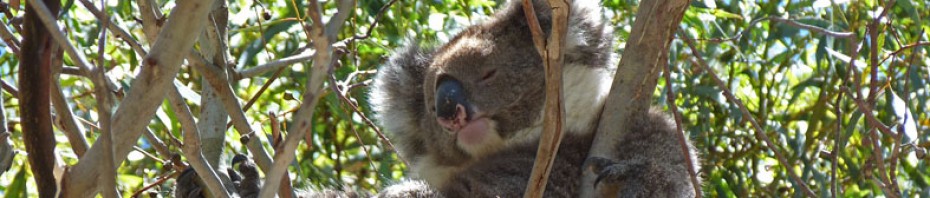
I continually scan both trees and bushes for birdlife, possums and Koalas. On a level section, which gives me an excellent view of trees growing below me on the hillside, I spot a large Koala in the forked branches of a eucalypt. Its grip on the tree provides an excellent example of the prehensile nature of the marsupial’s ‘opposable thumb grip’-a feature more common in primates.

Scarlet Robin and New Holland Honeyeater (ID images only)

Red-browed Finch (ID image only)

With rain clouds gathering, I decide to backtrack rather than continue along the loop trail. Near the parking area there is a noticeable population of smaller birds which are hard to photograph as they flit between branches and leaves. I decide to take a sit and wait approach and capture some images for identification purposes. My results are far from ideal but they do give a true sense of the difficulty inherent in acquiring good clear shots in a natural environment where animals are wary. Nevertheless, I have included my attempts in this post.

Spotted Ctenotus

When I explore a new area I try to find and photograph animals from as many groups or classifications as possible. In the cooler months, cold blooded animals such as invertebrates and reptiles are the most difficult to locate. It is always worth turning over a rocks and dead tree branches or peering under bark to find animals that might take shelter there, (always replace the item or make sure the animal can move back to a safe place). Today, I find a Spotted Ctenotus; a small, stripy, long-tailed skink, hiding under a rock on a north facing incline.

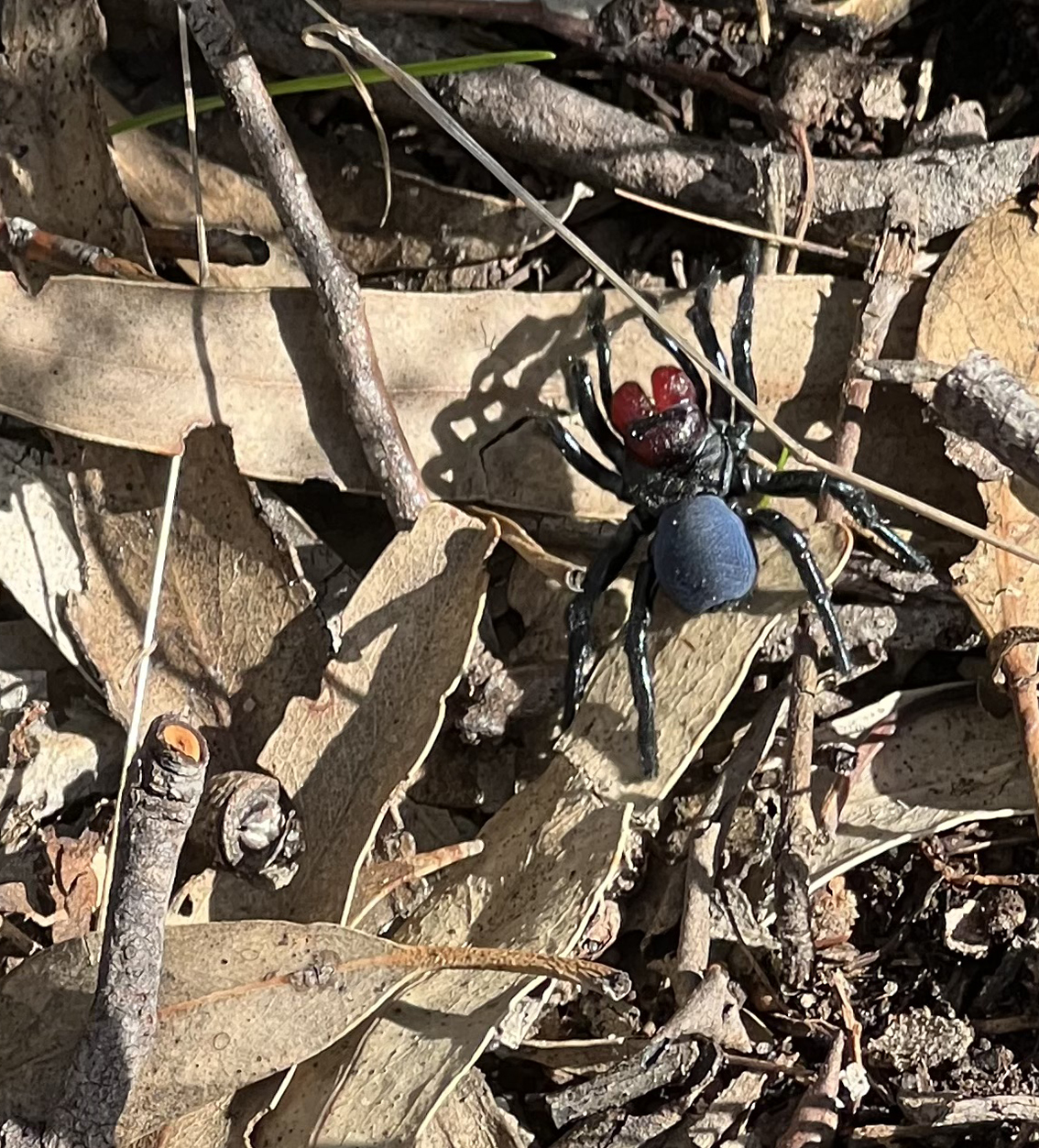
Mouse Spider (Credit Andrew Fitzner)

One of the best things about exploring our parks is encountering like-minded people and today’s walk is no exception. I meet a couple who passed me on the trail earlier and we chat about what we have seen. They show me a picture of a Mouse Spider spotted on the trail and photographed with an I Phone.

My walk completed, including a promise to myself to return in the spring, I drive back to Williamstown and the local bakery to treat myself to a chai latte and one of the best custard tarts I have eaten in ages.  

Cheers

Baz

Additional notes

This is a moderately steep walk with a small parking bay. It is not dog friendly.

Please pass on this blog title and or contact information (URL) to any person or organisation with an interest in taking walks and enjoying wildlife in SA.

Click on these links and see more South Australian stories and pictures in my Weekend Notes articles as well as locating similar blogs on Feedspot’s top 20 Australian wildlife blogs

https://www.weekendnotes.com/adelaide/writer/452/

https://blog.feedspot.com/australian_wildlife_blogs/

Hannaford Hump Drive

2 Dec

Dear Reader:

I leave the bitumen and continue along a well graded, unsealed road. A landscape of rural pasture and scrub borders the dirt road overhung by tall eucalypts. I stop on the verge and scan the trees with my long lens. While I search for wildlife visually, I hear the faint thumping call of a Common Bronzewing. It takes a few minutes to locate the bird but I eventually find it perched on a branch just in camera range.


Common Bronzewing

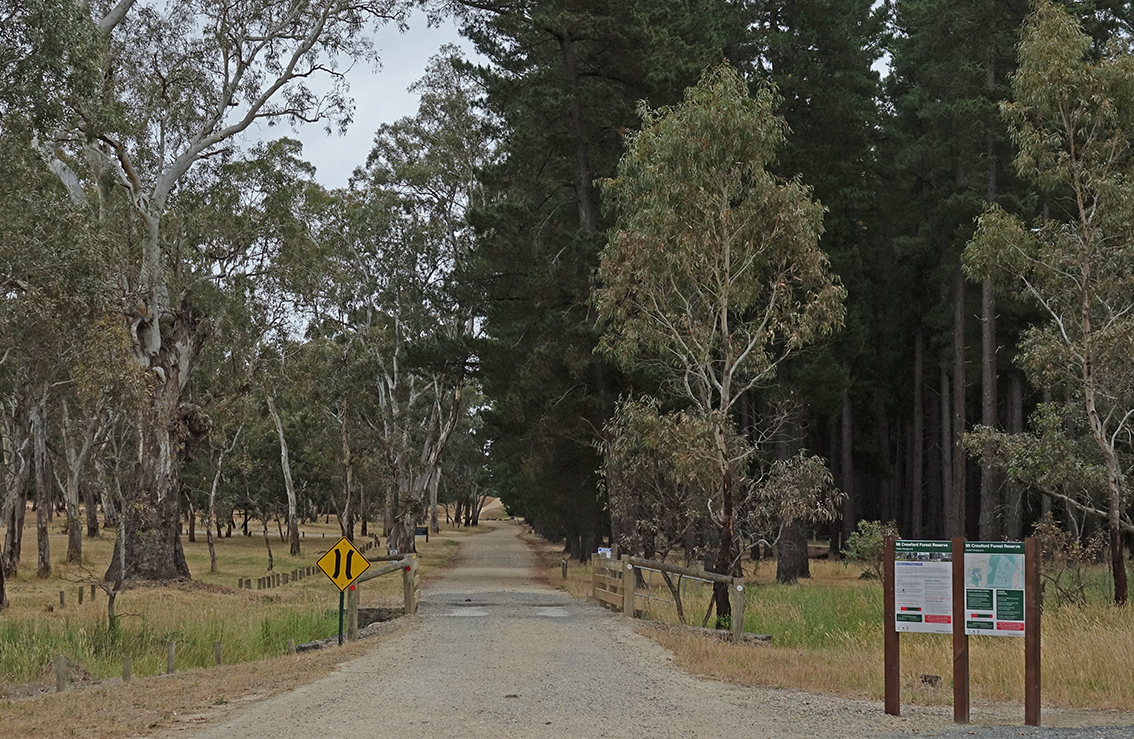
I am taking a late afternoon drive along the quirkily named Hannaford Hump Road which branches off One Tree Hill Road north east of the roundabout junction with Golden Grove Road in the suburb of Greenwith. Hannaford Hump then becomes Airstrip Road which leads to the sealed Mt Gawler Road. Both Hannaford Hump and Airstrip Roads are surrounded by large areas of accessible scrub and rural countryside dotted with small properties and farms.


Roadside bush

A little further along Hannaford Hump Road I park the car and walk along one of several fire tracks that lead into the Mount Crawford Forest Reserve. The well maintained track is skirted by dense scrub dominated by low growing gums, acacias and a variety of native bushes, grasses and ground covers….a botanist’s dream.


Fire track entrance

Flax-Leafed Logania

I walk a kilometre along the track stopping frequently to listen for bird calls. In this bushland setting it is best to let the wildlife come to you as animals are wary of anything that appears to be stalking them. I catch sight of numerous wrens, finches and other small birds darting between bushes but photographing them is nigh on impossible. Eventually a pair of Adelaide Rosellas perch on a dead branch at extreme camera range and I take the shot steadying the camera against a tree trunk. The vibration reduction in my Nikon P900 works well and I get a passable result considering the distance and fading light. 


Adelaide Rosellas

Further along the road I stop at another fire track. This one is flanked by even denser bush and some taller shrubs and gums as well as a smattering of grass trees. I find a narrow opening in the scrub and walk in about twenty metres then sit quietly. Small birds are flitting between branches but they are hard to line up. Eventually one settles close enough to get a clear shot. Later I determine it to be a thornbill species; probably a Red Striated Thornbill.


Striated Red Thornbill…probably

Evening is closing in and the light is making photography more challenging so I turn for home and watch the other, more rural side of the road as I drive. Unexpectedly, I notice some kangaroos feeding in the long grass. When I stop to take a shot I catch sight of a crow perched on a branch; perfectly silhouetted against the wheat coloured background.


Australian Raven

Western Grey Kangaroos in grassland

Small group (mob) of Western Grey Kangaroos feeding at dusk

It has been a really wonderful drive along this unusually named road so close to the suburbs yet rarely explored by the nearby residents. In fact there are many trails, tracks and roads throughout this part of the foothills that are worth exploring when you have a few hours to spare.

Cheers

Baz

Additional notes

This is an easy drive and simple walks, which are quite suitable for families and seniors.

Please pass on this blog title and or contact information (URL) to any person or organisation with an interest in taking walks and enjoying wildlife in SA.

See more South Australian stories and pictures in Weekend Notes

https://www.weekendnotes.com/profile/651267/

Pondalowie’s Beachside Birdlife

6 Feb

Pondalowie’s Beachside Birdlife

 Dear Reader:

A lone Pacific gull stands on the beach amongst strands of washed up seaweed. It stares at the ocean for a while watching another gull wheeling and soaring above the waves then nonchalantly wanders along the tidal fringe foraging for invertebrates or whatever the sea has deposited.


Pacific gull


The long white sands of Pondalowie Bay are home to many species of birds and a fertile food source for many others. A leisurely four hour drive from Adelaide to this picturesque Bay on the western extremity of the Innes National Park is a favourite haunt of naturalists, fishers, divers and holiday makers. In fact; any traveller who enjoy that hint of wildness in their getaways will find this a wonderful destination.


Classic peninsula coastal landscape


Further along the beach several species of tiny waders including dotterels, plovers and sand pipers scurry along the retreating waterline searching for tiny invertebrates such as worms, crustaceans and molluscs. Their little legs seem to rotate as they forage giving them the appearance of wind up clockwork toys.


Double banded plover-non breeding plumage


Swallows normally live further inland amongst the scrub and trees. However, the proliferation of insects infesting the beds of weed that are strewn along the high tide line has attracted quite a large number of these colourful little aerial hunters. Some are perched on driftwood as they rest between their forays above the weed while others perch in bushes close to the beach.

Swallow


In all honesty, my favourite beach dwellers are the oystercatchers. There are two species on the beach pied and sooty and it is a pair of sooties that I spend a few minutes focussing on. They use their long chisel shaped beaks to probe the sand or scrape molluscs off rocks and prise them apart. The bird closest to me has snagged a turban shell and is proceeding to split it open and consume the unfortunate critter within.


Sooty oystercatcher


From Pondalowie it is a good half hour drive back to Marion Bay where we are staying in a cliff-side holiday home and dinner at the local pub that serves the best pizzas and seafood I have eaten in a long time.    


Cheers

Baz


Additional notes

This is an easy drive which is quite suitable for families and seniors with public toilets, barbecues, parking and other facilities at Marion Bay and Pondalowie. The trails leading from the main park road down to beaches and into the scrub are more arduous.


 I have recently spent time in Africa and the link below will allow you to enjoy images and text describing some of my encounters with the wonderful wildlife of Botswana and Zambia. I will attach a new image and notes to accompany each post. The link does not work well on mobile phones and is best followed through a computer or tablet.

https://silkstone627.wixsite.com/mysite

Para Wirra Wildlife

2 Mar

Para Wirra Wildlife

Dear Reader:

There is a small group of lorikeets high in one of the taller eucalypts that overhangs the track. Several birds fly down to the ground and start to forage amongst the bushes and groundcovers. A closer look shows them to be Adelaide Rosellas, a sub group of the crimson rosella. One bird in particular struts across the ground towards me and despite the low light conditions I manage to fire off a frame.

1-para

Adelaide rosella

2-para

Strutting his stuff


I am walking along one of the many trails that cuts through Para Wirra National Park near Gawler about an hour’s drive from Adelaide’s CBD. The park has a wonderful array of wildlife as well as excellent shelter and barbecue facilities situated in several convenient  locations including a small lake close to the park entrance.

para-5

Trio of emus

Leaving the parrots to their own devices I continue along the trail towards the ‘Devils Nose’ a prominent lookout a few kilometres ahead. There is an abundance of leaf litter on the ground and every so often I can hear the rustle of small skinks amongst the bark and twigs. Suddenly a crashing of branches and leaves permeates the air as three emus emerge from the scrub and head up the nearby hillside.

3-para

Crescent honeyeater


I come to a sign-posted junction of trails and decide that today is about slow and stealthy not a long walk. Heading back towards the car by retracing my route I take a little more time to wait and watch where I think there might be wildlife. Near a thick patch of scrub I am well rewarded when a beautiful crescent honeyeater lands amongst some branches just a few metres from me.

4-para

Striated pardalote


Back at the lay-by where I have parked the 4WD I take out some well earned lunch bought from one of Gawler’s many superb little bakeries, pop the cork on a bottle of cider and sit on a conveniently placed wooden bench beneath a spreading eucalypt. Not two bites in and I hear an unfamiliar bird call and glance up into the tree to identify the ‘perp’. And there sits a lovely striated pardalote, with half its body tucked into a nesting hole…….what a way to end my walk!!!


Cheers

Baz


Jenkins Scrub

21 Mar

Dear Reader:

There are tiny birds flitting through the canopy and squabbling in the bushes either side of the walking trail that snakes its way through the scrub. Occasionally they settle for just a second or two and feed on Autumn’s few remaining blossoms or probe for insects beneath the bark. The birds move quickly, giving me just a split second to focus and fire; which is my excuse for some of these images not being quite as sharp as I would like. However, they do give an accurate depiction of what searching for wildlife images in dense scrub, is really like.

IMG_6372

Grey fantail


treecreeper

Treecreeper species


After walking across a small footbridge, I find a clearing and sit on a fallen log and wait in the shadows for ten minutes. Birds are still twittering deep in the bushes, heard but not seen; but most have moved on.

IMG_0717

Crescent honeyeater


Jenkins scrub is a remnant area of the original bushland that once covered the Adelaide hills. The light sandy soil supports a wide range of shrubs, grasses and delicate flowers including native orchids. Tall eucalyptus trees complete the ecosystem which is traversed by a series of narrow trails.

IMG_0723

Classic hills scrub


The scrub lies just off the Springton road, a pleasant 50k hills drive from the city. A lunch stop at the Bakehouse Tavern in Williamstown, just 10 Kms from the park’s entrance, is a good way to break up the drive. Or, you can buy a pies and cake at the bakery to snack by the old cemetery on the edge of the adjoining pine forest; somewhere to explore the personal histories the people who settled this region. 

IMG_0694

Pub at Williamstown


IMG_0709

Graveyard from the old church


Hefting my long lens from the pack I continue my walk. The understory is littered with leaves and fallen branches which provide a home for a plethora of insect and retile species. There are quite a few butterflies in the area and every so often one settles in the leaf litter. They seem to spread their wings a couple of times then rest them upright exposing only the underneath which blend perfectly with the bleached leaves and twigs.

IMG_6376

Meadow argus butterfly…..brilliant camouflage


Another hour’s walking produces a few more images, shot at long range, and a memorable encounter with a pair of kangaroos which are feeding deep in the bush. I try for a better angle to get a clear shot but they quickly hop into deeper cover. By the time I reach the car it is a welcome refuge as some large bush flies have emerged in the late afternoon and the insect repellent is in the glove box.

adel rosella

Adelaide rosella


Just as I am about to turn on the engine I hear the shrill call of rosellas. Luck is with me and the birds settle in a gum tree just within camera range of the car. Three quick frames and my day ends on a high or so I think. It turns out that the 2 Km drive back along the dirt to the Springton road has a final surprise; three young emus feeding in a field of stubble just a ‘stone’s throw’ from the roadside.

IMG_6384 edit 1

Emus at dusk


Until our next adventure

P1110363

Author in the office


Cheers

BAZ

Mt Lofty on a Winter’s Day

12 Jul

Dear Reader:

Last weekend was cool and clear, perfect winter weather for a visit to Adelaide’s highest point, Mt lofty. The bush covered peak is a mere twenty minutes drive from the city along the SE freeway and the viewing deck and restaurant are surrounded by tall eucalypts that are home to a variety of wildlife.

AD A view from the top  (click to enlarge)

A view from the top (click to enlarge)

A selection of walking trails and bike tracks converge on the summit and earlier in the year I had spent some time walking along their lower sections photographing wildlife. However, on this occasion I had decided to see if the distribution of species was different at a slightly higher altitude in the cooler months.

AG Mt Lofty summit - Copy

Mt Lofty summit (click to enlarge)

The summit was quite busy with a smattering of mountain bikers and walkers using the trails and dozens of casual visitors simply enjoying coffee and the view from the observation deck and glass fronted dining areas. As I knelt down by my pack to select a lens I heard the chattering call of some blue wrens that were flitting between some nearby bushes and diving into the undergrowth. I watched their antics for a few minutes before heading off on one of the shorter trails that circle the summit.

AC2 C

Male blue wren surveying his territory(click to enlarge)

AH White backed magpie (click to enlarge)

White backed magpie (click to enlarge)

After walking for several minutes I noticed a sizeable magpie foraging for grubs amongst the grass and rocks. As I paused to take a few shots a group of Japanese tourists stopped and asked about the different birds in this area. We spent an enjoyable few minutes chatting and comparing their native species to ours; it transpired that they were an ornithological party on a study tour.

AE Natve heath - Copy

Native heath (click to enlarge)

AB Rosella feeding in the trees (click to enlarge)

Rosella feeding in the trees (click to enlarge)

A little further along the trail the greens and browns of the understory were enhanced by small patches of bright red flowers belonging to one of the hardy little heaths that flowers in the winter months. But the real splash of colour on this winter’s day was a colourful Adelaide rosella that was feeding on berries high in the branches above me. This was quite unusual as virtually every rosella I have observed feeding has been foraging on the ground for seeds and tubers.

AA Large male koala near the restaurant entrance - Copy

Large male koala near the restaurant exit (click to enlarge)

Mount Lofty, as I have pointed out, is a prime tourism site and in keeping with this status it provided one final surprise. A large male koala, that seemed to be extending a farewell gesture of pure Australiana, was comfortably tucked into the forked branches of a large gum tree alongside to the exit path.

Cheers

Baz