Tag Archives: Australian parrots

Xmas Gums

26 Dec

Xmas Gums

Dear Reader;

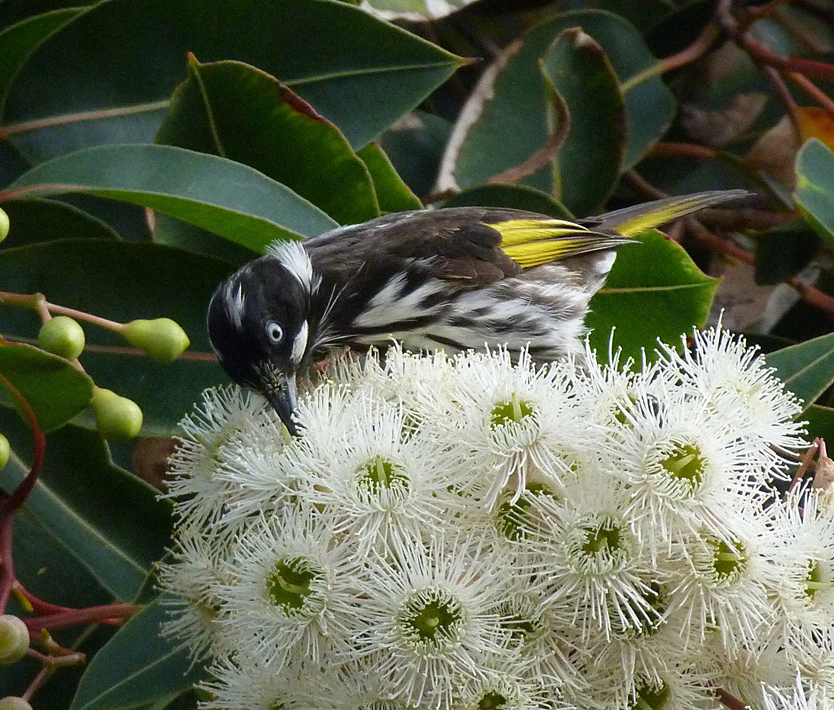
The New Holland honeyeater is perched on the topmost branch of the white flowering gum in my backyard. Every few minutes it takes to the air and chases an insect that has inadvertently flown too close to its ‘operating zone’. But hawking for prey like this takes an energy toll on the little bird, requiring frequent refuelling at the nectar rich flowers that also serve to attract its insect prey.
1

New Holland honeyeater


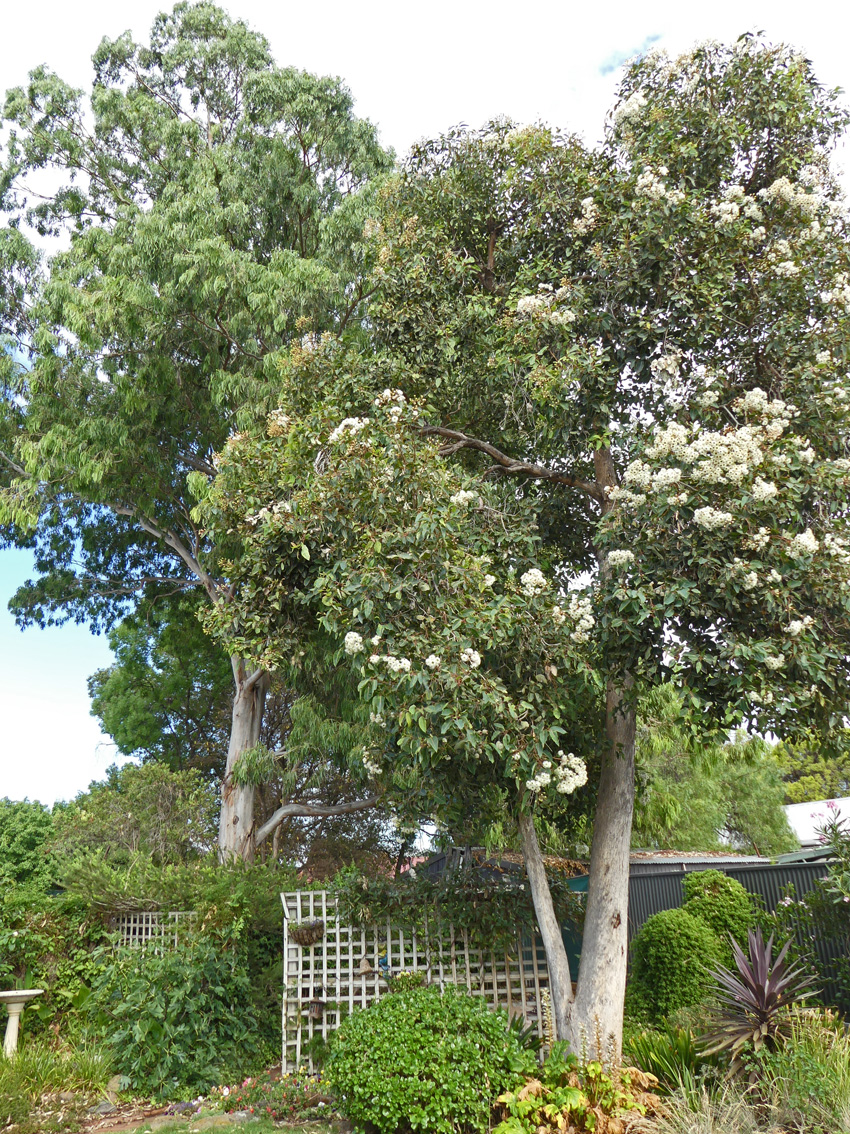
This is just one of the little wildlife scenarios that play themselves out during the Christmas season in the gum trees that grace my backyard. The smaller tree comes into flower in early December reaching its peak around Xmas day. The larger tree has flowered earlier but seems to harbour a wealth of tiny leaf and bark insects throughout the early summer months. Together, they attract a wide range of birds providing an interesting holiday spectacle; especially if one has scored a new camera from Santa.
2

A tale of two gums


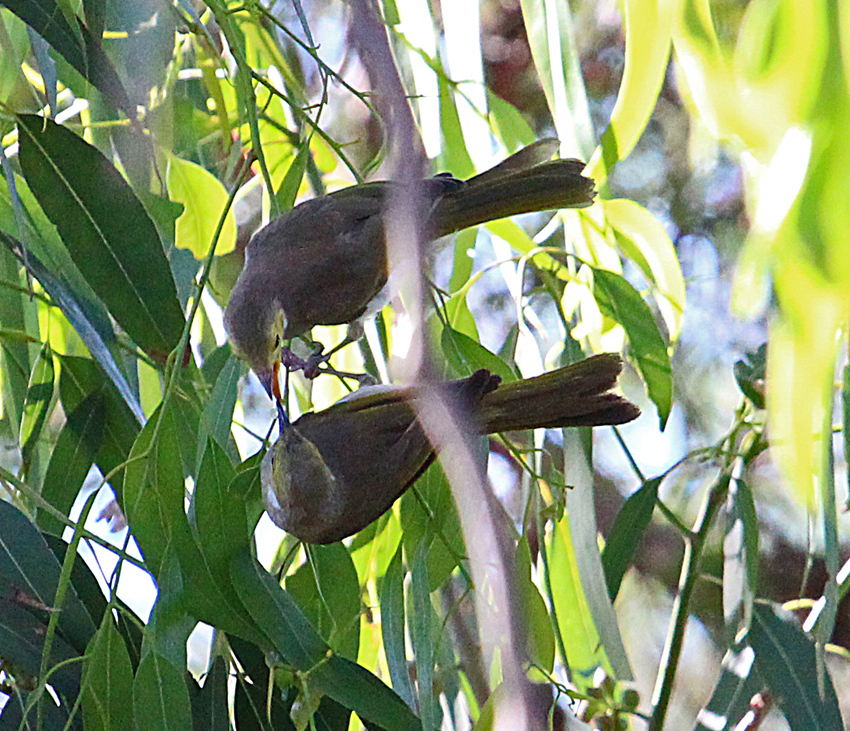
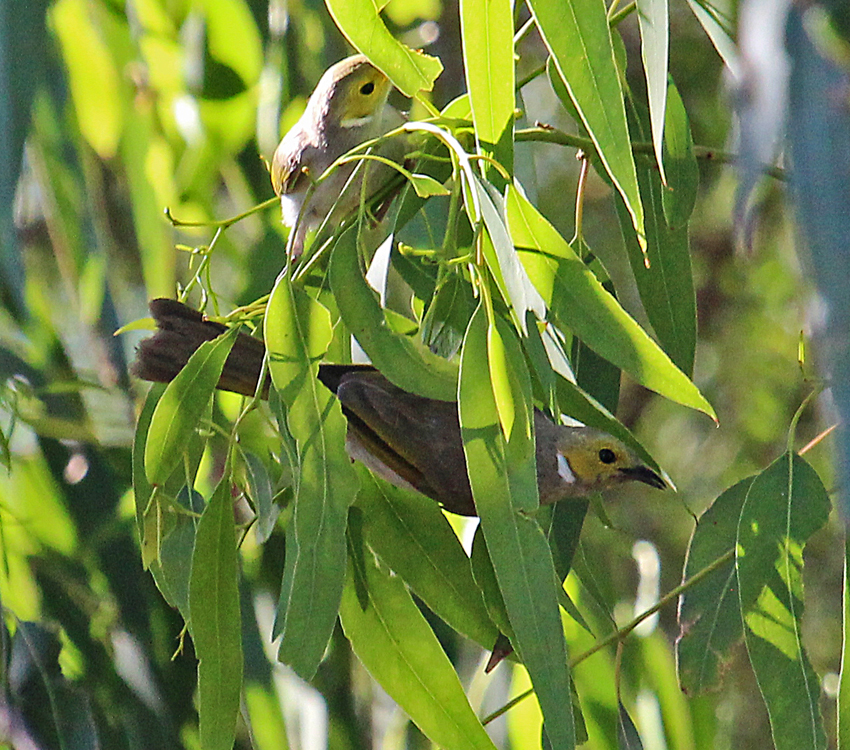
New Holland honeyeaters aren’t the only species of honeyeater that feeds in my garden. The more timid white plumed variety also samples the blossoms and hawk for insects. However, at this time of year they are almost finished raising their final brood for the season and the young ones are being schooled in the art of bug catching by the adults. Peering through my long lens into the shadows of the taller tree I am lucky enough to capture two images of a chick waiting for food then being fed a bug by its parent.
3 1

White plumed honeyeaters


3 2

Have a bug or two junior


In a wonderful coincidence, there is also a family of wattle birds in the same tree and a fully fledged chick is sitting on a branch demanding to be fed. I watch carefully, trying to time my shots to coincide with the exact moment the adult shoves some insect offering down its waiting gullet. Of course, some leaves get in the way and the light intensity drops at the crucial moment but that’s wildlife photography.

4 1

Wattle bird and chick


4 2

A gullet full of whatever


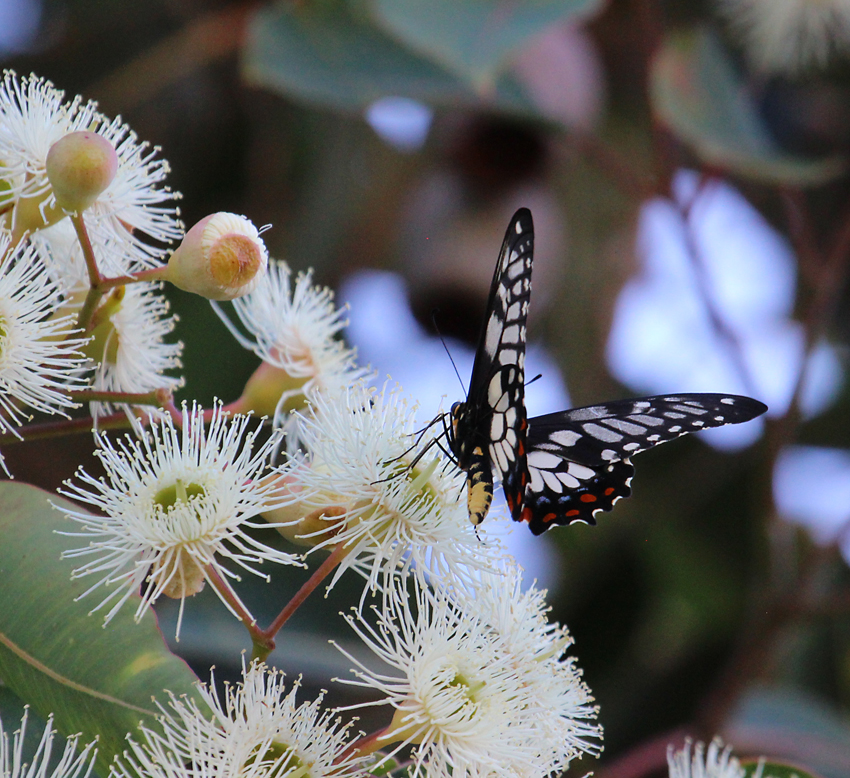
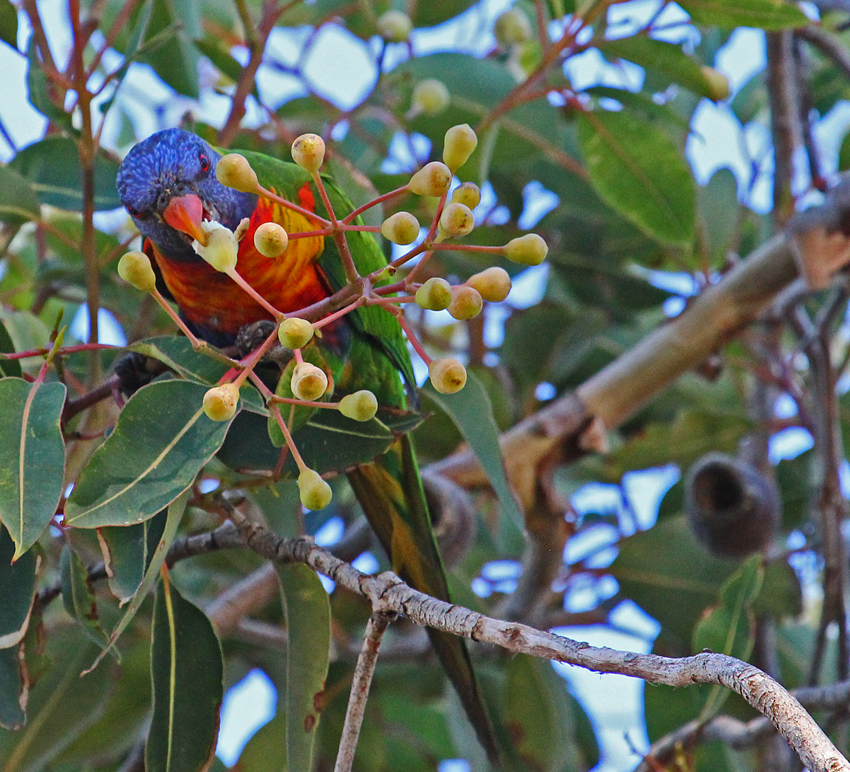
With a Xmas drink and a mince pie resting on the outdoor table next to my cameras I scan the foliage of the smaller tree for a final shot or two. Two colourful creatures oblige; a rainbow lorikeet is tearing apart a blossom emerging from a gum nut and a swallowtail butterfly is probing the mature flowers for nectar.
5

Rainbow lorikeet


6 Dingy swallowtail

Dingy swallowtail


Cheers and Seasons greetings

Until next year

Baz

Crossing the Creek

30 Nov

Dear Reader:

In my other life I am a teacher and my school has the unique advantage of having a creek running through the centre of the campus neatly dividing us into two quite distinct entities. I say advantage but to those less enamoured by the lure of nature it is seen, more as a barrier; to each their own. Every day I cross the creek on at least a half dozen occasions and every day I see something interesting that I point out to my students in the hope that it might promote a little engagement with the non-digital world. Duelling magpies, mating dragonflies and the occasional brown snake have all been prime time features.

Baz teaching creek studies on the bridge

Baz teaching creek studies on the bridge (click all images on page to enlarge)


Education aside, the creek is a wonderful resource for the people who live in the area and walkers, joggers and cyclists alike use the pathways that run along the banks. Currently, the creek is starting to dry out as spring fades and summer breathes its hot northerly winds across the city. But there is still a diverse mixture of wildlife taking advantage of the receding water. Both black and maned ducks have raised their ducklings in the small pools near the school bridge and chestnut teal with their striking markings are not uncommon.

Black ducks and chestnut teal

Black ducks and chestnut teal


My creek runs through the suburb of Mawson Lakes which has been fashioned around a series of artificial lakes that in themselves are home to various water birds, turtles and huge carp. The central shopping area is a good place to start a walk as it has a nice little cafe overlooking the main stretch of water and the coffee is good. Mawson Lakes is a twenty minute train or bus ride from the city and the train station sits on the northern edge of quite a sizeable expanse of swampy wetland.

Mating dragonflies

Mating dragonflies


The local council have planted bushes and trees along the length of the creek which attract a variety of birds. Rainbow lorikeets seem to be around the area throughout the year with the greatest numbers occurring when the eucalyptus trees are flowering. They provide these raucous little parrots with the nectar, seeds and blossoms that are the bulk of their diet.

Rainbow lorikeet feeding on eucalyptus blossoms

Rainbow lorikeet feeding on eucalyptus blossoms


During my most recent foray across the creek it was large water birds that dominated the reedy watercourse. Ibis and herons are quite common but one of the children rekindled my faith in the observation abilities of twelve year olds when she noticed that one of the ibises had a different shaped beak which it was swinging through the water rather than probing. It turned out to be our first spoonbill for the year.

Spoonbill feeding

Spoonbill feeding


Until our next chat

Baz

Kestrels at the Cape

25 Jul

Dear Reader:

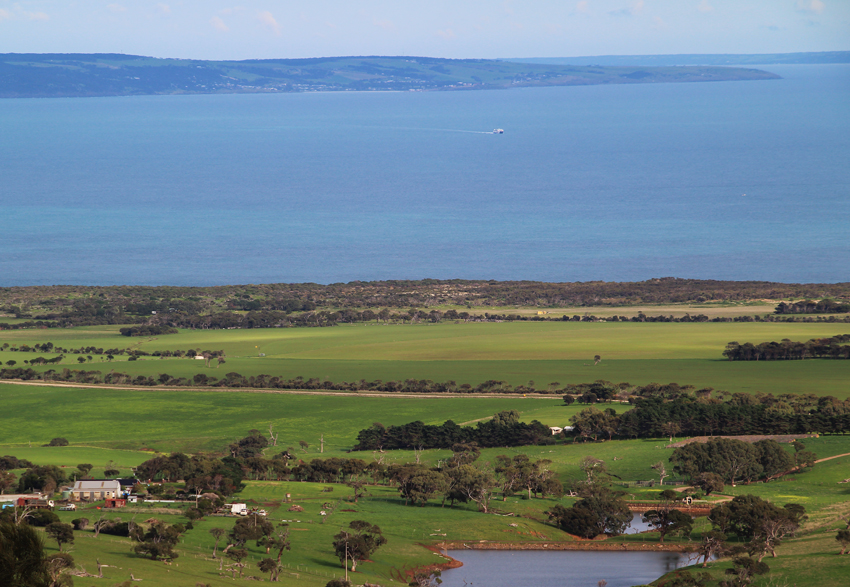
It is late morning on a fine winter’s day and I am leaving the dirt road from Victor Harbor to join the main route back to Adelaide. As I round the curve the descent towards the coast is quite spectacular. From the top of the hill the road drops away sharply providing a panoramic view of open pastures dotted with small dams and patches of native vegetation. A corridor of lazy blue ocean separates the mainland from the island, which appears as a hazy outline on the horizon.

View from the top

View from the top (click to enlarge)

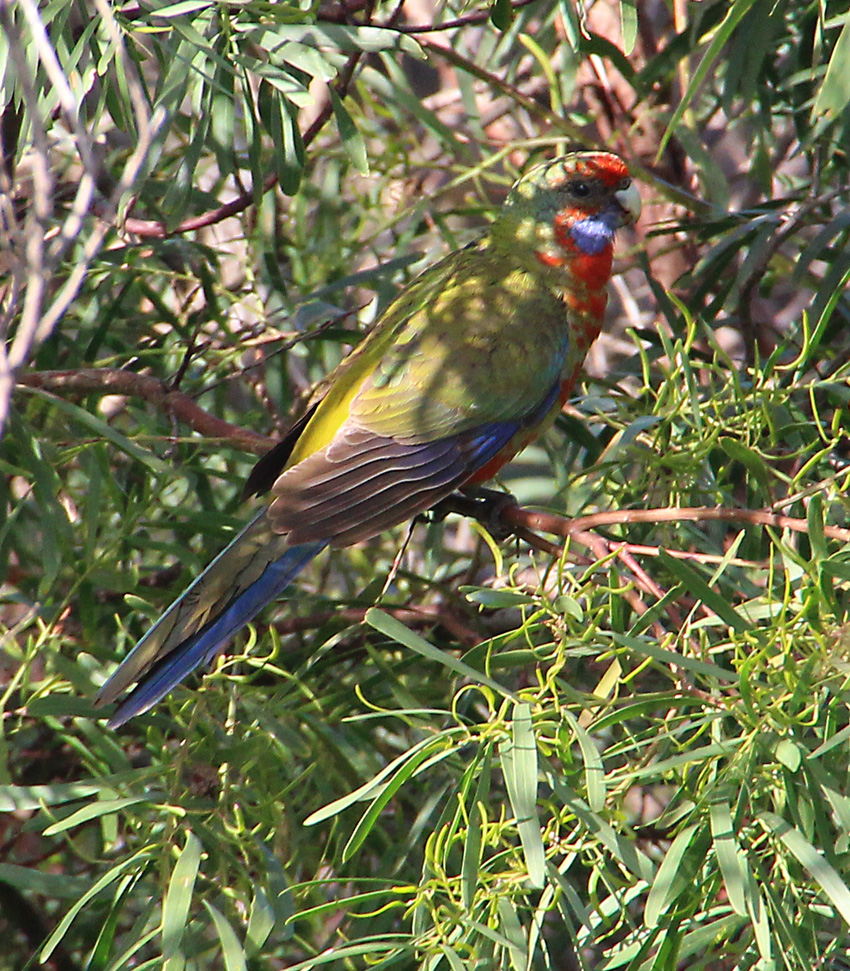
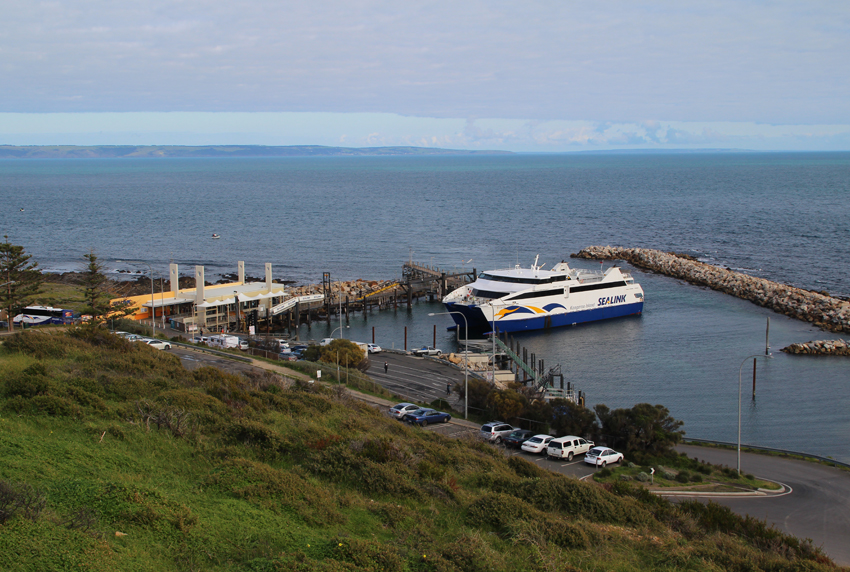
Closer to the coast a dirt track leads to a viewing point alongside a small stand of low trees and bushes. From the elevated position I watch the Sealink ferry crossing Backstairs Passage and stop to take a shot as it docks at the terminal below. While I focus on the ship I can hear the twittering of finches in the nearby scrub and catch a fleeting glimpse of two brightly coloured rosellas gliding into one of the taller bushes.

Rosella feeding in accacia tree

Rosella feeding in acacia tree (click to enlarge)

Sealink ferry docking at Cape Jervis with Kangaroo Island in background

Sealink ferry docking at Cape Jervis with Kangaroo Island in background (click to enlarge)

The ferry from Kangaroo Island docks at Cape Jervis on the southern tip of the Fleurieu Peninsula. It is one of my favourite places in the South Australia; from the little coastal hamlet you can visit local beaches and dive spots, access the Deep Creek Conservation Park, organise a charter fishing expedition or take a day trip to Kangaroo Island.

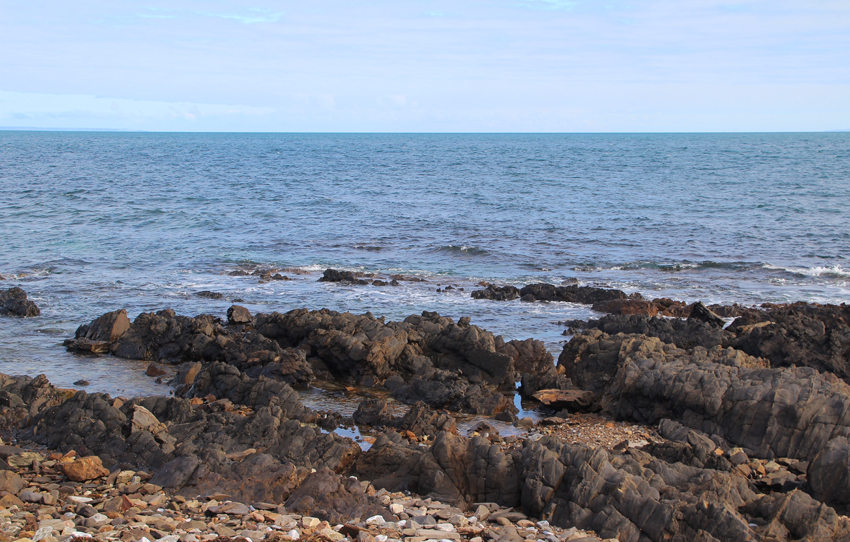
Rocky outcrops extending into the sea

Rocky outcrops extending into the sea (click to enlarge)

From the lookout I follow the road down to the lighthouse and park on a track a hundred metres back from the sea. The shoreline is a geology lesson in itself, with weathered ridges of dark rock ‘criss-crossed’ by veins of quartz, jutting into the ocean and patches of coarse sand and fractured rocks abutting the low earthen cliffs. In the distance I can see a line of giant wind turbines silhouetted on a faraway hilltop and the smell of salt air combined with the sound of waves breaking amongst the rocks fills my senses.

Nankeen kestral hovering above beach

Nankeen kestrel hovering above beach (click to enlarge)

As I move up the foreshore, picking my way between the boulders, I can see two  kestrels hovering over the beach. They seem to be systematically working together; one hovers for  a few minutes over the rocks then moves on while the other works the grassy slopes a little further inland. By pure chance they are slowly coming towards me so I lift the camera skyward and try to remain as still as humanly possible until the birds are almost directly above. I fire off a dozen shots and smile at my good fortune.

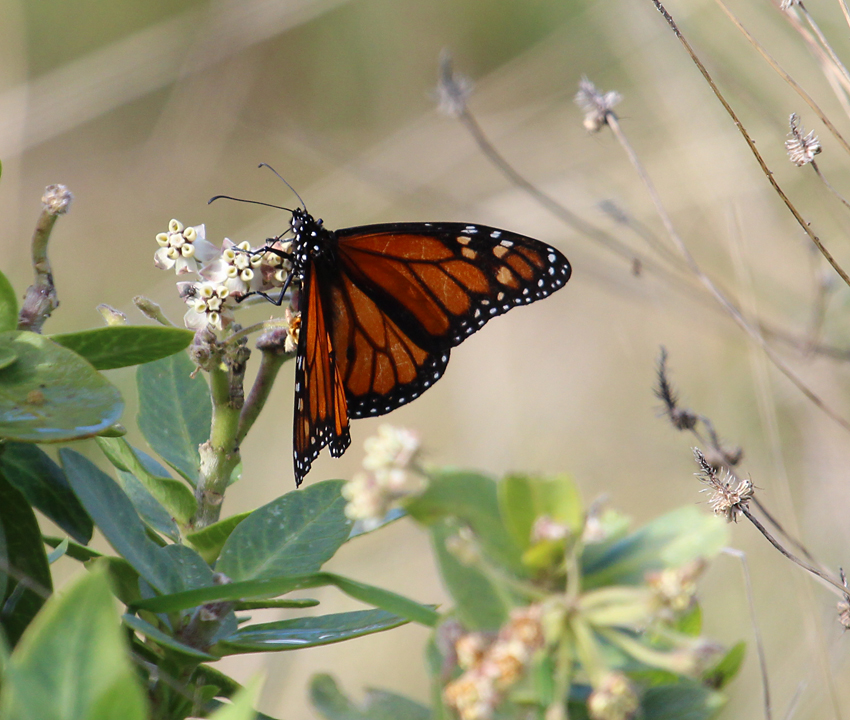
Monarch butterfly

Monarch butterfly (click to enlarge)

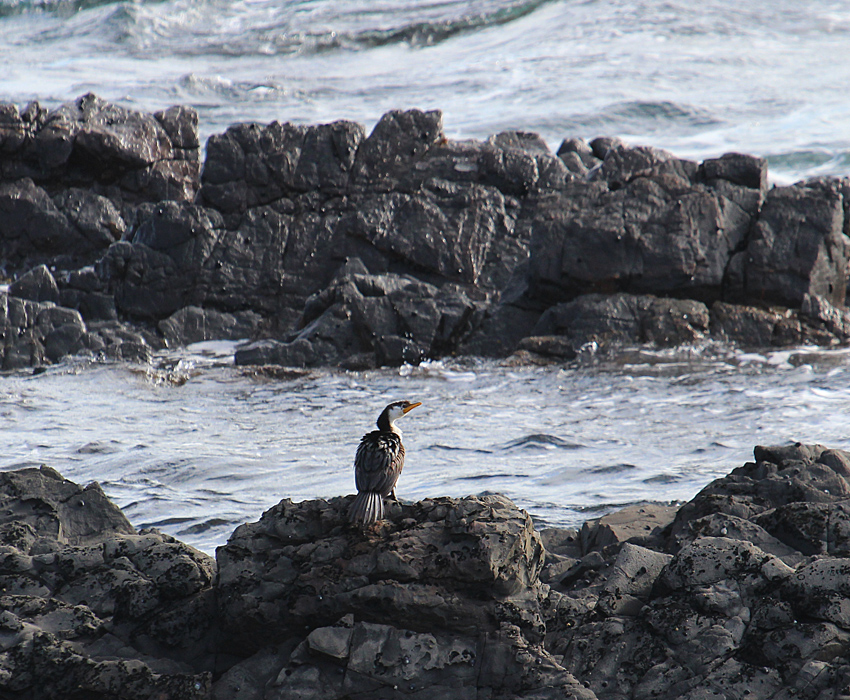
Pied crmorant by rockpool

Pied cormorant by rock pool (click to enlarge)

Raven with nesting material

Raven with nesting material (click to enlarge)

My walk provides a few more interesting moments: a cluster of monarch butterflies in a shrub that looks like milkweed, a lone pied cormorant sunning itself on one of the rocky outcrops that reach into the sea and a raven that is tearing up seaweed on the breakwater for nesting material. However, while I sit in the ferry terminal sipping a coffee, watching passengers returning from KI and reviewing my images I realise that it is the kestrels that have really made my day.

Cheers

Baz

The Paralana Trail

29 Jun

Dear Reader 

It’s winter but you’d hardly know it. The afternoon sky is a clear endless blue and though there’s a hint of the approaching night’s cold desert chill, the temperature is still a comfortable 25 degrees. I am in the Arkaroola Wilderness reserve in the Gammon Ranges some 1000 kms north of Adelaide heading towards the Paralana hot springs. After a hearty breakfast in the resort’s dining room we have loaded our gear into Suzuki GV and locked in 4WD for the 30 km trip along one of the most interesting off road adventures in this world heritage region.

Ochre wall

Ochre wall (click to enlarge)

 We have been crawling over the rugged terrain for about 20 minutes and the stony track has opened into a dry creek bed. One section of the embankment is quite extraordinary; a wave shaped deposit of ochre that contrasts sharply with the surrounding bush. This significant deposit was of great importance to the Adnyamathanha people who used it in ceremonies and to trade with other Aboriginal groups.

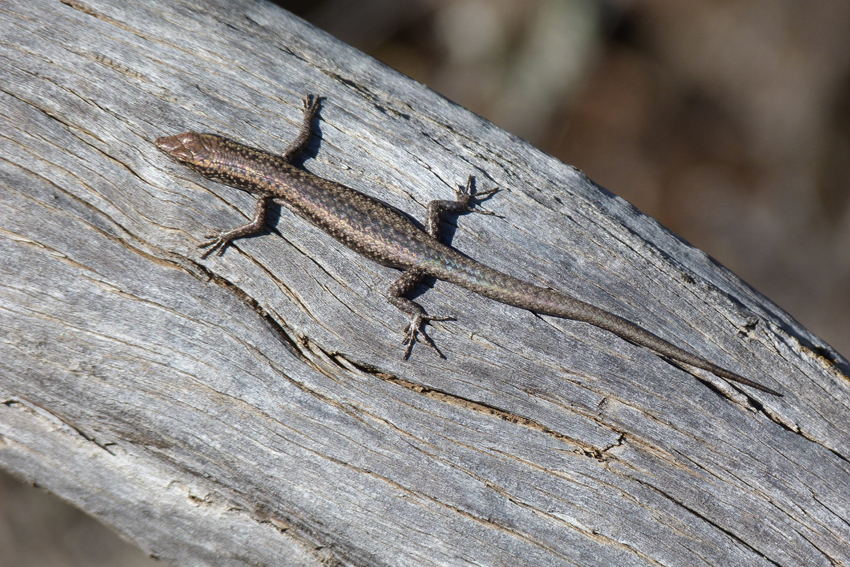
Rock skink

Unknown skink species (click to enlarge)

 While the others break out a little gas stove to brew a ‘cuppa’ I walk along the creek bed camera in hand. The unseasonably warm weather has brought out a few reptiles that would normally be hibernating at this time of the year. They are wary and the only clue to their presence is an occasional rustle in the undergrowth. Finally, one little skink that is basking on a weathered tree trunk decides that remaining motionless is a better option than retreating, offering me a nice clear shot.

(click to enlarge)

Male mulga parrot (click to enlarge)

Femal mulga parrot feeding on blue bush berries

Female mulga parrot (click to enlarge)

 Just as I am about to make my way back to the vehicle a flash of colour amongst the skeletal branches of a long dead acacia tree catches my eye. I peer through the telephoto and focus on the turquoise plumage of a male mulga parrot. If it is the mating season then the female should be nearby and with a little persistence I find her on the ground feeding on some small yellow berries that are the fruit of a low growing saltbush-like plant.

P1010422

Yellow footed rock wallabies on steep cliff (click to enlarge)

 Refreshed, we resume our drive along the trail, slowly climbing into the hills which provide spectacular views across the Gammons. Following a twisting descent down a narrow track we enter the spectacular Baranarra Gorge with its sheer rock walls and boulder strewn pools of clear fresh water.   Our progress has been slower than planned and it is late afternoon when we start to pick our way along the edge of the water hole. Almost immediately I hear the rattle of small rocks skittering down a steep rock face. Almost immediately I hear the rattle of small rocks skittering down a steep rock face. Looking up I catch sight of a pair of yellow footed rock wallabies precariously perched on the sheer cliff face. Once again, I am reminded of the extraordinary adaptations of these beautiful little animals. With their furry back feet perfectly designed for gripping rock surfaces, long counterbalancing tail and subtle camouflage, they are the Aussie equivalent of mountain goats.

P1010408

Chopper based at Arkaroola Village (click to enlarge)

 Unfortunately our stay must be a short one as the light is starting to fade and we must head back to our home base at the village. Tomorrow we have decided to take a helicopter flight over the area to get an overall picture of the terrain before our next off road foray.

Cheers

Baz

Port Germein ….A Long Walk Out to Sea…Field Notes

8 Mar

General description of location

Port Germein is a  small country town just north of Port Pirie which is  a major regional centre about 2½ hours from Adelaide

Lies near the top of Spencer Gulf and is in the shadow of the Southern Flinders Ranges.

Town has a pub with excellent food, a general store and campground

Small local population of around 250

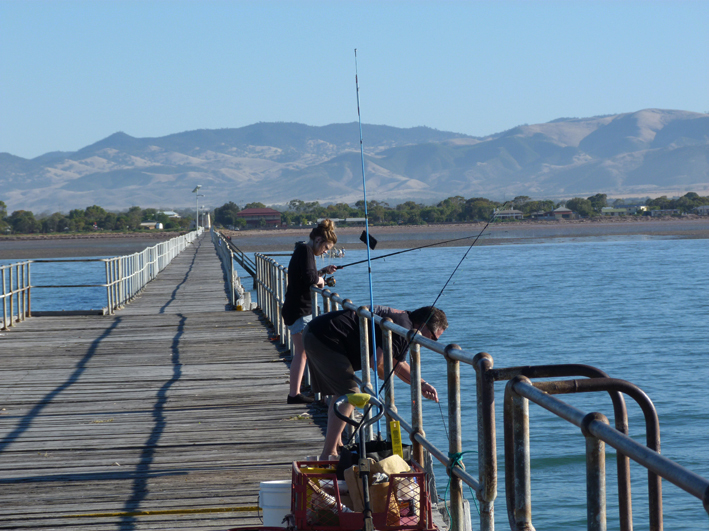
A long jetty, once used to load grain clippers, it extends from the shore to over a mile out to sea and most of the beach is exposed at low tide

Good fishing, crabbing and general coastal wildlife walks

6 jetty and ranges red

View back to the ranges from the end of the jetty

Notes

Season:

Late summer

Weather:

Mild morning temperature around 18 ºC at 0900.

Forecast temperature 35°C later in the day

No wind and clear skies

5 blue bee red

Blue bee on coastal heath

While walking from the house where I am staying to the jetty I spot some blue bees, an Australian native species, feeding on a coastal bushes with small blue flowers

They tend to feed on blue and white blossoms

Note to self

Identify some of the coastal vegetation before next PT Germein post

3 blue swimmer crab red

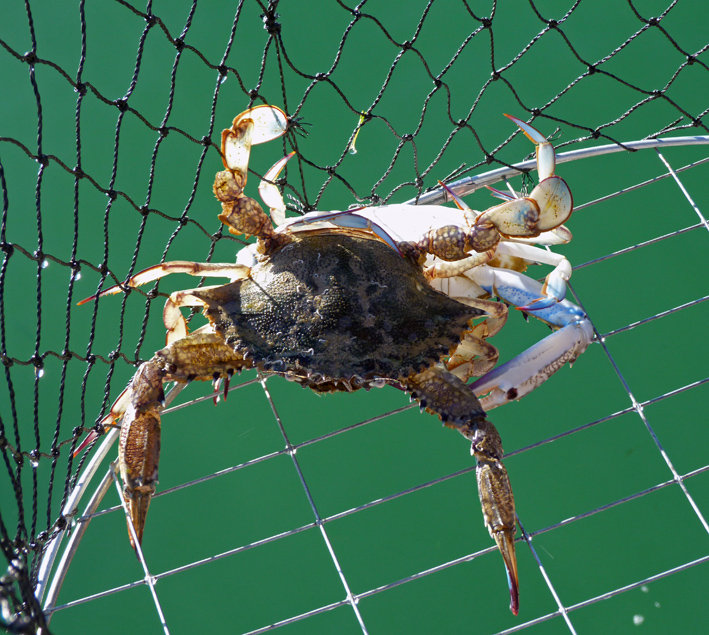
Blue Swimmer crab in net

I stroll along the jetty and notice a variety of small wading birds feeding on the sand/mud flats, some are searching out small pools of residual water

A young couple near the end of the jetty are crabbing and they have caught half a dozen Blue Swimmer Crabs which are common at this time of year

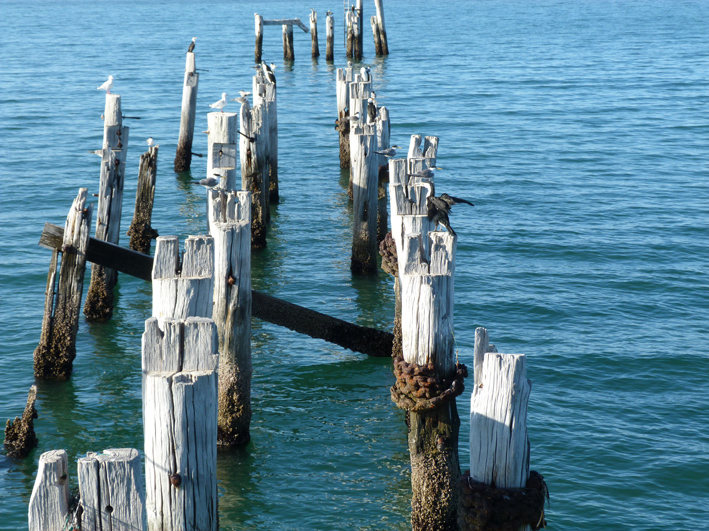
A group of Pied Cormorants and Common Terns are perching on some battered poles which remind us that the jetty was once longer

A family have used a tractor to tow out a small boat and launch it as the tide comes in

The view from the end of the jetty of the foreshore and Ranges is spectacular.


12end  of jetty red

Terns and Cormorants at the end of the jetty

I return to the shore and walk along coastal path that weaves between low bushes and stretches of beach

There are honeyeaters and finches in the bushes and a Ring Necked Parrot preens itself on a branch

Near a rocky outcrop close to a garden I come across a Bearded Dragon sunning itself

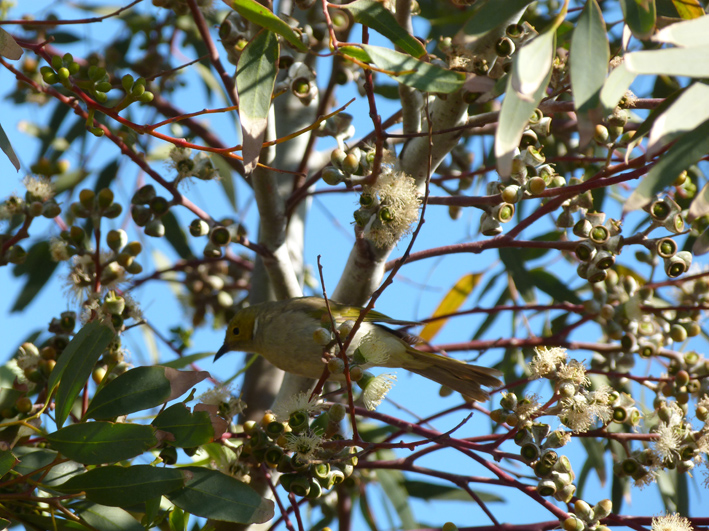
There are also quite a few White Plumed Honey Eaters feeding on blossoms in Eucalypt trees that grow in gardens near the coastal walk

After sipping nectar some are hawking for insects.

5 white plumed honeyeater red

White Plumed Honeyeater feeding in eucalyptus tree near the foreshore

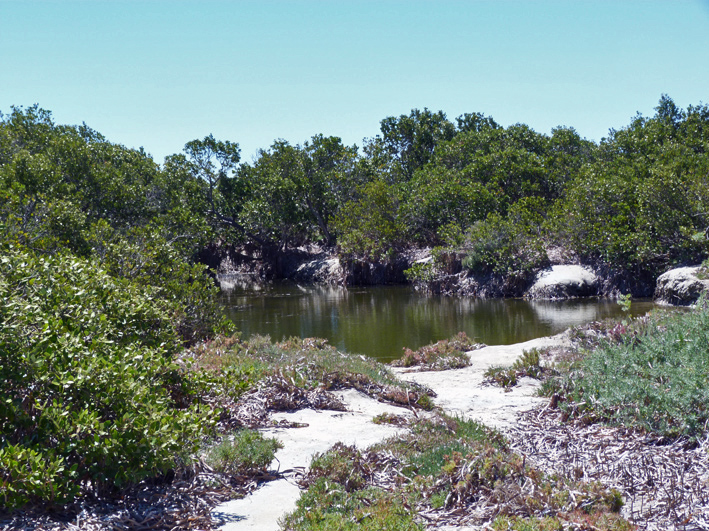
A ten minute walk from the end of town, the coastal scrub and samphire give way to stands of mangrove and a whole new coastal ecology emerges

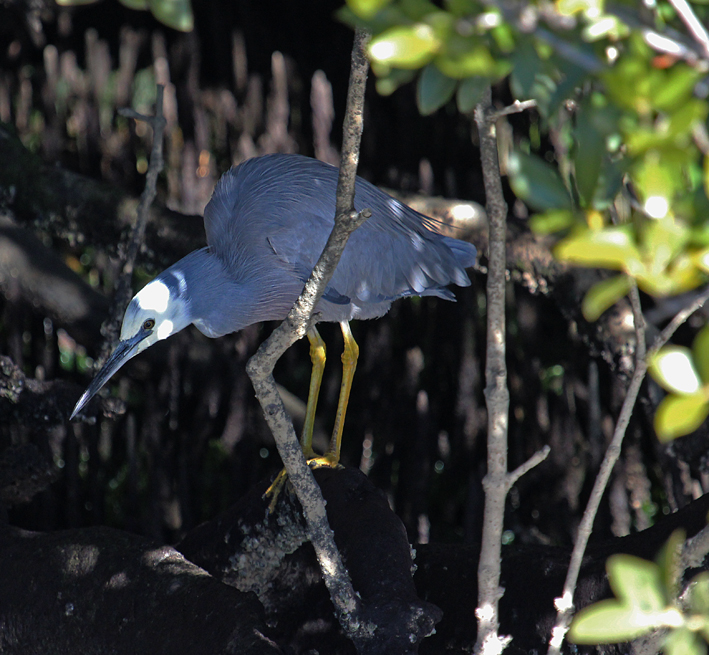
A White Faced Herons stalk small fish and crustacean in the shallow channels and a White Browed babbler fluffs up its feathers in one of the mangrove trees

These mangroves are part of a south Australian system that marks the southernmost extent of mangrove communities in the world

Small fish can be seen schooling in some of the deeper channels

This is a nursery area for many commercial species.

8 mangrove pool red

Mangrove pool

15

White Faced Heron hunting in the mangroves

I head back to town for a schnitzel and a beer at the local pub and the promise of a drive to Telowie or Port Germein Gorge in the afternoon to look for rock wallabies and eagles.

Cheers

Baz

Birds with Attitude

3 Dec


Dear Reader:

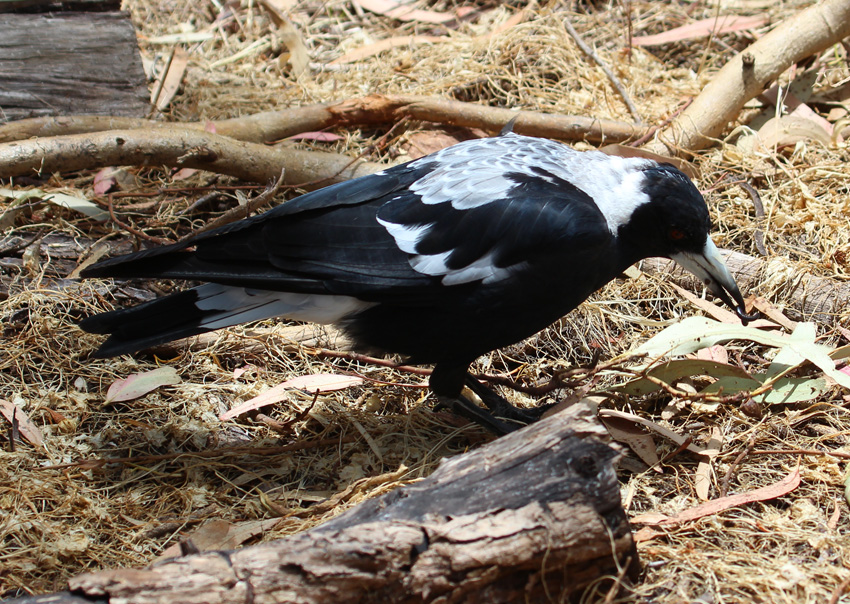
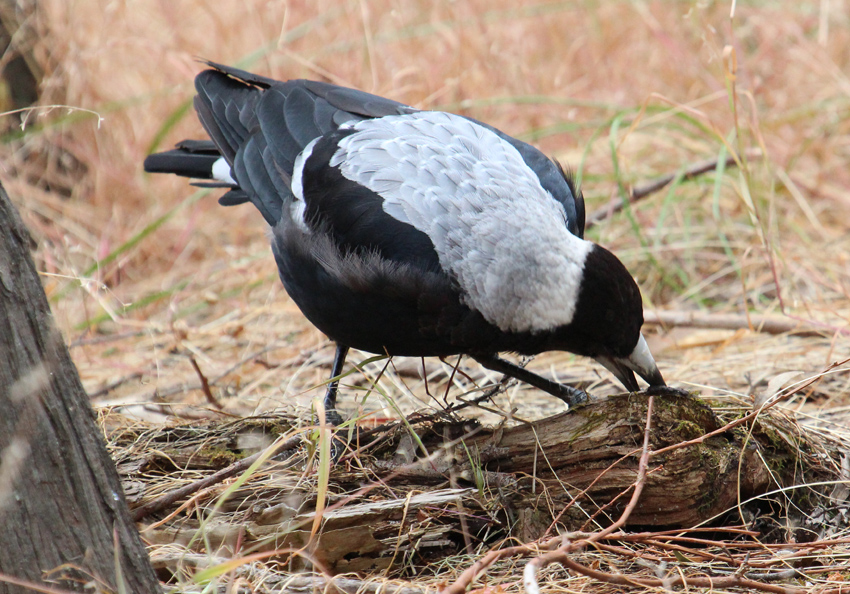
There were magpies scattered through the little park. I had seen them high in the trees and foraging nervously amongst the undergrowth. Every time I came close to one it would fly off and perch on a branch and watch me suspiciously. Suddenly, a small group of what I surmised must be sub-adults because of their grey flecked backs, decided to congregate in the understory just a few metres away from where I was sitting. They warbled and strutted and then seemed to organise themselves into a group.

E Magpie with attitude

The magpie strut


The birds moved in a skirmish line through the leaf litter chasing butterflies and raking through the ground with their powerful beaks. Every so often one would lift up its head and gulp down a grub then return to the hunt. I was perched on a fallen tree branch, clearly in their way but the birds just kept coming closer, brimming with the confidence that youth and inexperience bestows on many species including our own.

D Magpie with grub

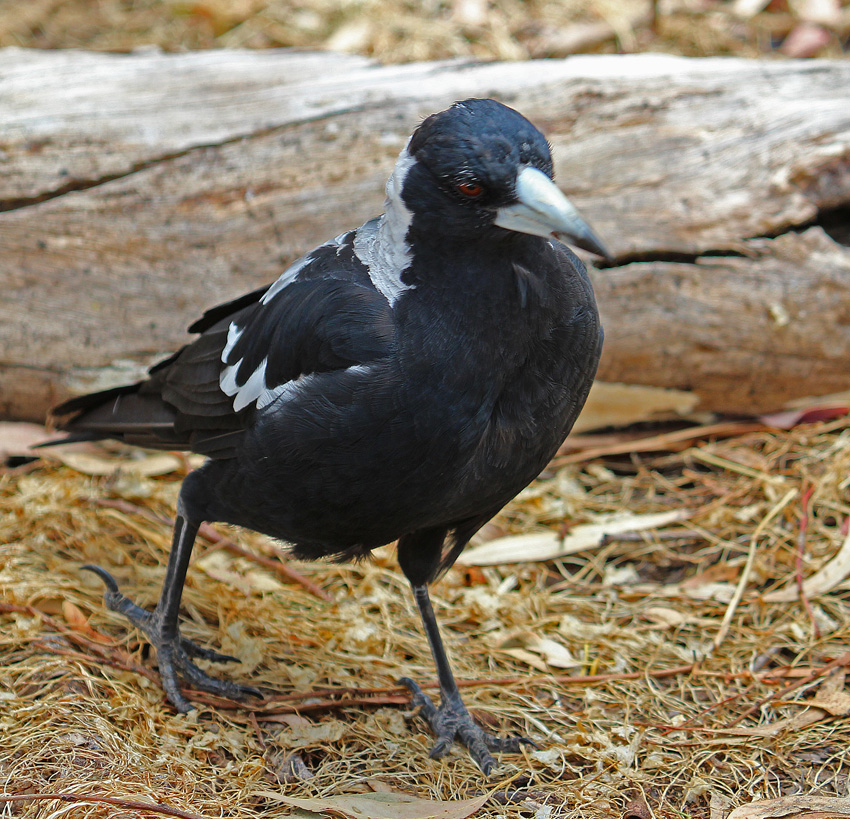
Magpie about to swallow grub


Australian magpies (Gymnorina tibicen) are actually a member of the butcherbird family. They are medium sized, robust birds growing to around 44 cms in length with powerful stabbing beaks that are used for digging out ground based prey and for defence. Magpies live in groups of 2-24 birds with distinct social stratification- several high status females usually breed with a dominant male and the remainder live on the periphery helping to protect nests. They are extremely territorial during the breeding season and many a cyclist, golfer or innocent pedestrian crossing the parklands will tell tales of being attacked by dive bombing magpies.

F Magpie cleaning beak

Magpie cleaning beak while foraging


My far less adventurous magpie moment occurred inside a little conservation park in Burnside, one of Adelaide’s more affluent eastern suburbs quite close to the hills face. The park is classic scrub reminiscent of the way the plains would have been before European settlement. Tall eucalypts and native pines dominate the upper story and a variety of low bushes including spiky acacias form the mid range vegetation. Being the end of spring, there were still quite a few flowering plants amongst the leaf litter and fallen branches. And when I sat quietly and watched intently it was possible to catch glimpses of tiny brown skinks searching for prey in the jumbled layer of leaves and bark.

C Adelaide rosellas

Adelaide rosellas on the track near the park entrance


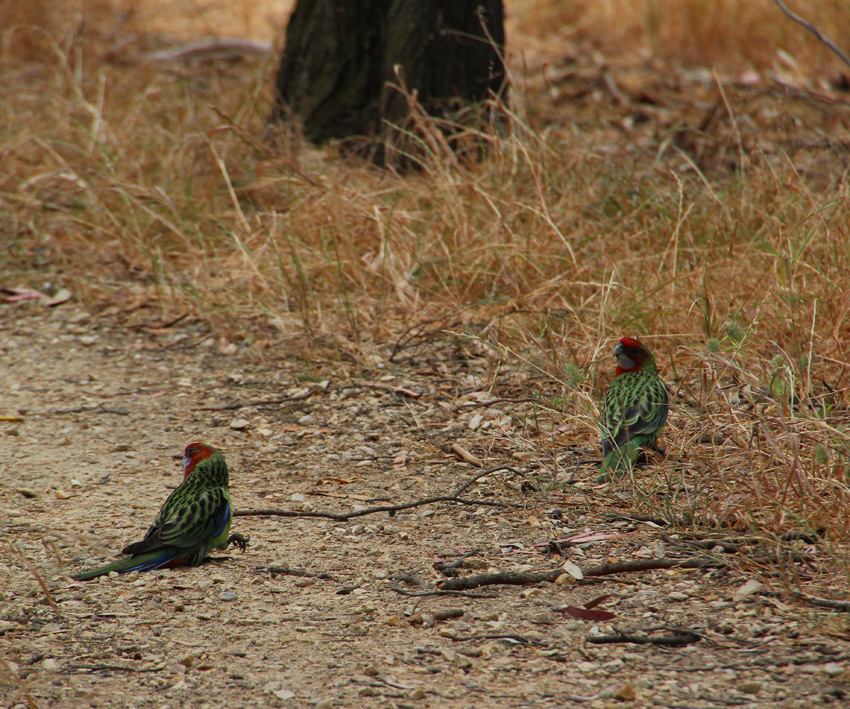
However, magpies were not the only birds using the park. As I entered through a side gate I watched a pair of Adelaide rosellas nibbling grass seeds on the path a mere 20 metres away. And the usual suspects; noisy miners, new Holland honeyeaters and some tiny, twittering finches, all added to the sounds and sights of my walk in the park.

B Meadow argus butterflies

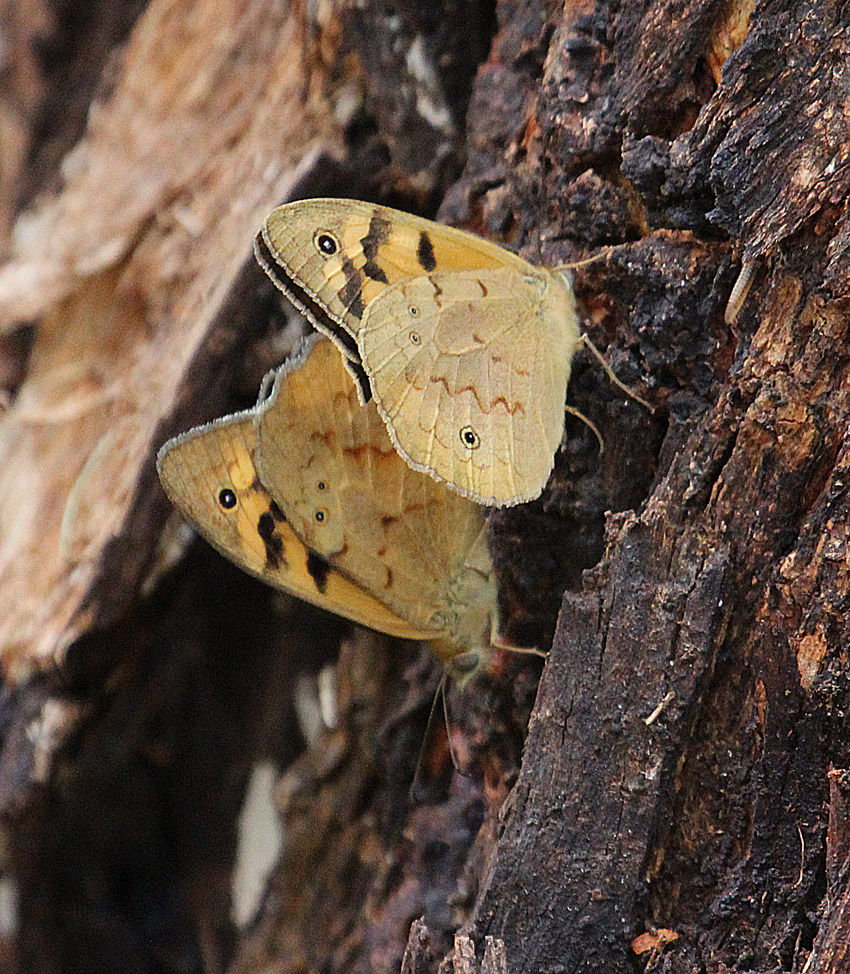
Meadow argus butterflies


Cheers

Baz


Springtime Turtles at Maggie’s Farm

7 Sep

Dear reader

Its early spring in South Australia and everything natural has started to flourish after a rather damp winter. To celebrate the season’s change I decided to take a drive out to Maggie’s in the Barossa Valley. Only an hour’s drive from the city, the Barossa is a favourite destination for urban South Australians. It is characterized by gently rolling hills and open bush-land where fine old homesteads sit amongst seas of vines. The land is not only conducive to what is arguably the finest wine growing area in Australia but also to wildlife. There is always a diverse pageant of bird life and even the odd kangaroo or fox to be seen on the way to visit a winery or two, which makes a drive through the valley a rewarding way to spend a spring afternoon.

AG Open bushland and vines

Open bushland and vines

Maggie Beers is a little pheasant farm situated in the heart of the valley. Maggie is a gourmet chef and she produces a range of fine homemade products ranging from pates and cheeses to ice cream and cooking oils. Visitors to the farm can sit on the decking or in a country styled dining room overlooking a charming little pond while sampling delicacies from quaint wicker baskets. The water is surrounded by tall eucalypts and an olive grove, which attract a variety of birds including rosellas, galahs and waterfowl but Maggie’s special wildlife treat resides in the pond not around it.

B Maggie Beer's from across the lake

Maggie Beer’s from across the lake


As I sat nibbling my pate and biscuits sipping a glass of red I caught sight of my first pond critter. At first it was a mere ripple in the water that caught my attention then two little dark nostrils appeared As the ripples drew closer I could see the little turtle clearly through the water. It was coming to the surface to breathe and probably warm its reptilian body in the sun before heading back to the bottom to search for yabbies, worms and other invertebrate goodies.

A Enjoying good food and wine while watching the wildlife

Enjoying good food and wine while watching the wildlife

The turtle stayed on the surface for at least 10 minutes stretching out its long snake neck and paddling closer to the shallows by the edge of the decking. Before the indulgences of dessert and coffee were complete I had watched half a dozen snake necked turtles appear and disappear in the area where I was sitting.

D Turtle in shallow water emerging to take a breath

Turtle in shallow water emerging to take a breath

Freshwater turtles belong to the family Chelidae and there are 24 species living in Australia’ rivers and wetlands. Interestingly, there are no land-living tortoises in Australia.  Maggie’s pond turtles are eastern long-necked tortoises (Chelodina longicolis). They grow to a carapace (shell) size of around 25cms and the neck can be a little over half the size of the carapace.

C underwater view of freshwater turtle swimming

Underwater view of freshwater turtle swimming


Watching wildlife in such ‘trying circumstances’ requires both stamina and endurance but my next step epitomized the daring and courage of the dedicated wildlife writer and photographer. Yes, you guessed it ‘Dear Reader’, I left the safety of my secure hide, shouldered a camera and walked around the pond. The goal: to try and get a little more insight into the behaviour of the turtles and see if there were any interesting birds in the trees.  

AF Turtle basking on the surface

Turtle basking on the surface


Apart from simply enjoying some different views of the turtles and being serenaded by a pair of affectionate sulphur crested cockatoos, my walk did not provide any new insights though one large turtle did appear to be munching a tadpole or small fish when it surfaced.

E A pair of affectionate sulphur crests

A pair of affectionate sulphur crests

On balance, a day sipping wine, eating fine food and photographing turtles did not seem to be a bad way to kick off spring.

Until next time

Baz

Corella Wars

24 Aug

Dear Reader:

Strathalbyn is one of those country towns that make you think of Britain. An imposing church presides over a pleasant stretch of river complete with ducks, gently sloping banks and an old fashioned rotunda. Huge Norfolk pines are mingled with classic river red gums and picnicking families often spread blankets on the banks and eat sandwiches or barbecue a few snags.

Like a flurry of snow Corellas perch in the trees they are feeding on showing bare branches

Church, rotunda and corellas in the trees


But the rustic charm is not sound-tracked by the gentle call of songbirds. Quite the opposite, it is the raucous call of parrots that often fills the air. Large flocks of short beaked corellas frequently descend upon the trees that line the Finnis River where it passes through the town. They are particularly fond of the towering pines and hundreds will sit along the branches of each tree tearing at the cones and limbs with their powerful beaks. At the same time they engage in a variety of typically cockatoo-like social interactions ranging from mutual grooming and preening to wing flapping, mock fights and beak duels; all of which are accompanied by a variety of screeches and squawks.

A Corella social behaviour

Corella social behaviour


Short-beaked or little corellas (Cacatua sanguine) are, as the name suggests, a member of the cockatoo family. They grow to around 40 cms in length and can weigh over half a kilogram. These corellas often congregate in flocks that can number thousands of birds. They are mainly ground feeders, rooting out tubers and bulbs and are particularly fond of cereal crops like wheat and barley; a habit which does not endear them to many farmers.

B Corellas use a combination of wings , beaks and feet  to position themselves

Corellas use a combination of wings , beaks and feet to position themselves


Although most locals and visitors alike enjoy the sight of thousands of graceful white birds wheeling through the sky, the continual noise and quite substantial damage to the heritage trees has become a significant problem. Various means have been employed to move the flock to the outskirts of the town including: culling, high frequency sound bursts and quite recently using a trained peregrine falcon to discourage them.

D Little corella flock circling pine trees

Flock of little corellas circling pine trees


Strathalbyn is only an hour’s drive from the city and the wildlife along the Finnis and open bushland that dominates the area makes it a wonderful day’s outing. And the corellas are the most endearing of birds to observe despite their rather destructive disposition.

 I hope you enjoyed this story.

Cheers

Baz

Adelaide’s Parkland Rosellas

4 May

Dear Reader Adelaide’s CBD is surrounded by parklands. They are a place for workers to enjoy during a lunch break or cyclists and joggers to traverse on the daily commute. They set the tone for the city and also provide a natural backdrop to the everyday business of the state’s vibrant capital. They were conceived by the city’s founder and first governor Colonel Light and are still treasured and protected by those who live in the city and inner suburbs.

AA bike linear park

Bike riding through the parklands

The ecology of the parklands like the commerce of the city has its own rules and hierarchy. magpies and miner birds aggressively mark out and defend their territories, brushtail possums enjoy the nightlife and screeching rainbow lorikeets seem to know everyone’s business.

AB Noisy Miner feeding on a banksia bloom

Noisy miner feeding on a banksia bloom

One of my favourite animals in this urban ecosystem is the elegant and colourful eastern rosella. They are found throughout the Adelaide and Mount Lofty region and seem to have a preference for open woodland where they can find suitable nesting holes, preferably in old growth trees. There has been a pair raising their young in a white cedar in front of my home this year and when I go for an evening walk I can hear the young ones deep in the tree calling to the adults.

AC Male and Female Adelaide Rosellas feeding

Male and female eastern rosellas feeding

Adelaide rosellas are around 35 cms in length with females being slightly smaller with a faintly orange cast to their plumage and less defined markings. They create a nest up to a metre deep within a tree hollow. Both parents feed the young. Rosellas are mainly seed eaters and feed mainly on the ground.

AD Adelaide Rosella on parkland fencepost feeding on wild grain heads

Eastern rosella on parkland fencepost feeding on wild grain heads

For me, one of the attractions of rosellas is their is its truly unique South Australian connection.  Indeed one particular type, the Adelaide rosella,  only occurs within a few dozen kilometres of the city. It is actually a hybrid of the yellow rosella which inhabits the Murray River valley and the crimson rosella which is more prevalent in the south east of the state.

AE Social interaction between Adelaide Rosellas above nesting hole

Social interaction between eastern rosellas above nesting hole

If you walk through the parklands during the spring and summer months it is not difficult to observe these colourful rosellas exhibiting a full range of behaviours from feeding to nesting and mating.

AF Adelaide Rosella perched on nesting hole entrance

Eastern rosella perched on nesting hole entrance

Cheers Baz

Go back

Your message has been sent

Warning
Warning
Warning
Warning

Warning.

Solandra Wetland’s Musk Lorikeets

4 Jan

Dear Reader

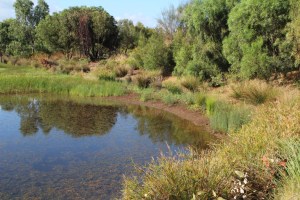
Last week, on a warm summer afternoon, I decided to walk down to the pond at the bottom of the street to photograph a pair of nesting Australian grebes. The pond is part of a chain of wetlands that feeds off the nearby creek and filters stormwater for use on local parks and gardens around Tea Tree Gully. It provides a welcome oasis for many species during the dry summer months and supports a small semi-permanent population of water birds.

Local pond

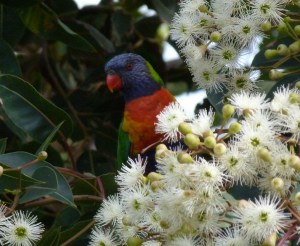
On the edge of the pond there are a few medium sized eucalyptus trees that flower this time of year. They have broad canopies adorned with either cream or coral blossoms and are a favourite destination of the local rainbow lorikeet tribe. As I passed the trees I could hear the raucous screech of feeding birds but the tone seemed a little different to the cacophony of sound that frequently greets me.  A quick glance confirmed that most of these parrots were musk lorikeets with just a smattering of rainbows amongst them.

Rainbow Lorikeet amongst white gum blossoms

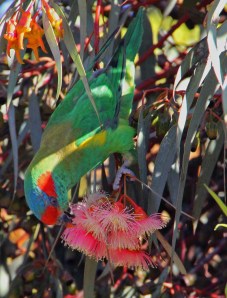
Musk lorikeeets ( Glossopsitta concinna) are medium sized lorikeets between 20-30cms from head to tail. They use their brush tipped tongues to feed on pollen and nectar but will also eat some seeds, fruits and insects. They often travel in flocks and are usually found in dry woodlands where they nest in hollow branches. They are slightly smaller than rainbows and less common in this area.

Musk Lorikeet feeding on coral gum blossoms

I decided that the grebes could wait. And, while I have quite a good collection of rainbow pictures I rarely see more than a few Muskies and the chance to photograph them while feeding does not come along too often. They were endearing little animals to watch as they performed an extraordinary range of acrobatic movements. Sometimes they hung upside down to get their beaks into a bunch of blossoms; at other times they used it as a prehensile tool to climb along spindly branches. Despite their preoccupation with feeding they were still a little nervous and as I moved cautiously around the trees they scattered into the denser parts of the foliage making photography somewhat difficult.

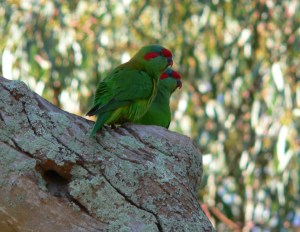
Pair of Musk Lorikeets

I tried sitting quietly in some of the surrounding bushes closer to the pond and using the telephoto on full zoom. An equally unsuccessful manoeuvre, as the birds seemed to rarely feed on the outer blossoms as doing so would probably increase their exposure to local predators like harriers and falcons. Finally I adopted a more professional and scientific approach to the problem; walk slowly, keep shooting and hope for the best.

Musk Lorikeet pair bonding near nest hole

Dozens of frames later, with the light diminishing and more than a few bird droppings adorning my jacket, I left my flock of musk lorikeets to their meal and walked down to the pond for a quick look at the pair of grebes. One was repairing the nest and the other half hidden in the reeds at the edge. Australian Grebe building nest

Another post for another day

Cheers

Baz

Go back

Your message has been sent

Warning
Warning
Warning
Warning

Warning.