Tag Archives: cockatoo

Hahndorf Has Wildlife

24 Sep

Dear Reader:

At first glance the little creek appears lifeless but on closer examination I spot a Blue Damselfly and a juvenile Eastern Water Skink on the overgrown stonework.

Hahndorf is a tourist town of German heritage about a forty minute drive from Adelaide’s CBD. Best known for handicrafts, galleries, food and souvenirs; it also has quite a wide variety of wildlife hidden in its streets, trees and parks.

I am currently strolling around the Alec Johnston Park which has a small creek running through it, a soldiers’ memorial as well as a playground, rose garden and a heritage shed.

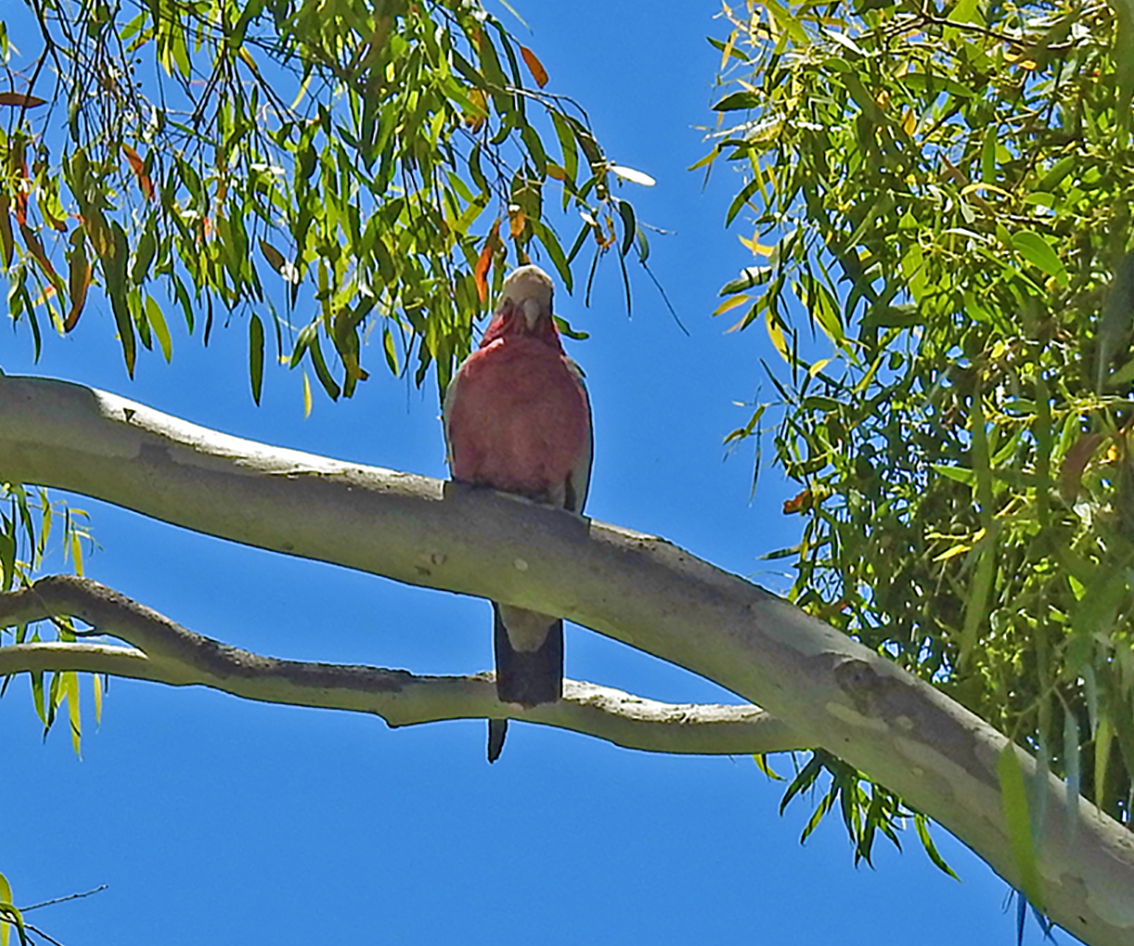
The trees above me are a haven for parrots. I have seen lorikeets and a rosella. However, it is their larger cockatoo cousins the Galahs and Sulphur Crests that make for the best images.

Two species of ducks live in and around the little creek: Pacific Black ducks and Wood or Maned Ducks. Today, a little group of Maned Ducks are dabbling amongst the water plants.

It is early spring and the wildlife is beginning to build up again after the winter hiatus. As with any natural observations weather and time of year are critical. Even a few roses are beginning to bloom.

Finally, I shall avail myself of the many lunch options available in Hahndorf and I am certainly leaning towards Kranskys (German sausages) and Sauerkraut with a serve of Beesting Cake to follow.

Cheers

Baz

Additional notes

This is an easy walk and drive which is quite suitable for families and seniors with public toilets, barbecues, parking and other facilities nearby. It is dog friendly.

Please pass on this blog title and or contact information (URL) to any person or organisation with an interest in taking walks and enjoying wildlife in SA.

Click on these links and see more South Australian stories and pictures in my Weekend Notes articles as well as locating similar blogs on Feedspot’s top 20 Australian wildlife blogs

https://www.weekendnotes.com/adelaide/writer/452/

https://blog.feedspot.com/australian_wildlife_blogs/

Mylor: Parrots, Food, Shopping and History

15 Jun

Dear Reader:

There is an avenue of trees shading the footpath. A small group of Sulphur-crested Cockatoos are using both beaks and feet to feed on something growing or living on the branches and leaves.

Sulphur-crested Cockatoos enjoying a winter feast

I am in the small town of Mylor in the Adelaide Hills. It has a village atmosphere with a general store, small restaurant and craft shop and a football oval. Some lovely heritage homes adorn the main street and a small creek runs along the back of the oval.

One of many heritage buildings in the area

A quality range of goods on display at Verte Kitchen

As I walk along the tree lined street I notice a plaque commemorating soldiers from the town who gave their lives during the First World War. I pass a few emotional moments reading about the trees planted to mark their sacrifice.

The smaller populations of some early hills communities made these losses particularly poignant.

One of so many who gave their lives for their country

Apart from the Sulphur Crests, the trees harbour two other parrot species; Rainbow Lorikeets and Adelaide Rosellas. Once again it is hard to determine exactly what they are eating.

Adelaide Rosella

I cross the road only to stop and let a group of Maned Ducks toddle across the footpath next to me. Their presence certainly indicates there must be some water in the nearby creek.

Maned Ducks

I hear the calls of Galahs as a flock circles overhead before landing on the oval where they start foraging for bulbs, tubers and whatever else they can dig up with their powerful beaks.  Although the Galahs are some distance away, I take several shots. From experience, I suspect getting closer will result in the flock taking off.

Galahs or Rose-breasted Cockatoos

My final stop has little to do with the wildlife of the area. There is a wonderful little café and gallery in the middle of the village. Fresh baked goods, local arts and crafts all with a slightly French flavour make Verte’ Kitchen, a must visit, Hills destination.

So much to choose from

Cheers

Baz

Additional notes

This is an easy walk and drive which is quite suitable for families and seniors with public toilets, barbecues, parking and other facilities nearby. It is dog friendly.

Please pass on this blog title and or contact information (URL) to any person or organisation with an interest in taking walks and enjoying wildlife in SA.

Click on these links and see more South Australian stories and pictures in my Weekend Notes articles as well as locating similar blogs on Feedspot’s top 20 Australian wildlife blogs

https://www.weekendnotes.com/adelaide/writer/452/

https://blog.feedspot.com/australian_wildlife_blogs

Marion’s Warraparinga wetlands

24 Jan

Dear Reader:

There is a Kookaburra high in the red river gum near the entrance to the Warraparinga wetlands. It chortles out its laughing call alerting just about every wild creature in the area. However, the main purpose of its famous laugh is proclaiming to other kookaburras whose turf it is and how eligible one is for mating. As I sit and listen I cannot help but wonder what the original people who inhabited this land thought about these iconic Australian birds and the other animals that lived here.

A kookaburra sits in the old gum tree

A kookaburra sits in the old gum tree (click to enlarge all images in this post)


For tens of thousands of years before European settlement the Kaurna people roamed the Adelaide plains and south coast. They used both forest and grasslands to hunt for kangaroos, possums and birds. The creeks and wetlands provided turtles, yabbies and fish. Reeds and other plants were a source of food, medicinal remedies and the raw materials for weaving and building.

A timeline describing aspects of Kaurna culture

A timeline describing aspects of Kaurna culture


 Although Aboriginal peoples used symbols, they never developed writing. Their laws, ideas, family histories and seasonal maps were passed from one generation to the next by a series of stories some of which are referred to as Dreaming Stories and often relate to spirit ancestors. One such story is that of Kulutuwi a young boy who is killed by his stepbrothers and carried to his resting place by his uncle Tjilbruke. It describes how the tears that Tjilbruke shed formed the little creeks along the Fleurieu Peninsula. Warraparinga, which comes from the Kaurna warri parri and means windy place by the river is on Sturt Creek near the start of the Tjilbruke trail in the suburb of Marion. It is a wetland complex and home to the Living Kuarna Cultural Centre which has interpretive displays, an art gallery, performing space and cafe.

The creek flowing freely after summer rain

The creek flowing freely after summer rain


An acrobatic white plumed honeyeater feeding on small insects

An acrobatic white plumed honeyeater feeding on small insects


 Leaving the kookaburra to its vocal gymnastics, I walk through a sculpture garden and down to the creek which is flowing quite swiftly as it has rained heavily in the last week. The rain has also stimulated some plants to flower and there is a healthy population of insects in the bushes and trees. The typical ‘wick wicky’ call alerts me to several white plumed honeyeaters that are energetically picking off lerps and ants high in the tall eucalyptus trees by the water. I spend a good ten minutes trying to get a definitive shot that shows their hunting strategies.

Galah feeding on the ground

Galah feeding on the ground


Rose breasted cockatoo or galah performing beak maintenance duties

Rose breasted cockatoo or galah performing beak maintenance duties


In the same stand of trees both rosellas and cockatoos are sheltering amongst the foliage. The cockies are particularly interesting as they have been feeding on the ground pulling up tubers and searching for seeds then returning to the trees to wipe their beaks on the branches; whether to clean, sharpen or what?…I am not sure.

Reeds by the banks of a small lake help filter out pollutants

Reeds by the banks of a small lake help filter out pollutants


Purple swamp hens are often seen using their huge feet to climb over reeds

Purple swamp hens are often seen using their huge feet to climb over reeds


Eurasian coots are found in Asia, Australia, Africa and Europe

Eurasian coots are found in Asia, Australia, Africa and Europe


 The trail is well defined and leads me past several different ecosystems. One of these is a chain of ponds that are surrounded by reeds. South Australia’s urban wetlands have been developed to help filter storm water run-off and improve the health of our creeks but they also serve as a wonderful habitat for water birds. Eurasian coots, purple swamp hens and dusky moorhens are all feeding close to the reeds and these birds would have been part of the diet of the Kaurna people who hunted along the nearby Sturt Creek.

The lobby of the Living Kaurna Cultural Centre

The lobby of the Living Kaurna Cultural Centre


Having spent a couple of hours exploring the trails and stopping to capture a representative batch of images, I wind up back at the cultural centre for a well earned cup of coffee and a pastry. In the next room there is a wonderful display of indigenous art and a timeline displaying the history of the Kuarna people. It seems a fitting and reflective way to end my first visit to this rather special park in the heart of Adelaide’ southern suburbs.


Until our next adventure

BAZ