Tag Archives: galah

Chinaman’s Creek on a cloudy day

3 Aug

Chinaman’s Creek on a cloudy day

Dear Reader:

It is a cool, overcast afternoon; not ideal for wildlife watching or photography. Nevertheless, I have organised a weekend trip north to Port Augusta to investigate the Arid Zone Botanic Gardens during the winter months. As an added bonus, I hope to explore a shallow mangrove creek some 20kms south of the town that a friend has suggested as an interesting wildlife stop off en route.

1 wedge tail 2

Wedge – tailed eagles are Australia’s largest raptors with a wingspan over 2 metres
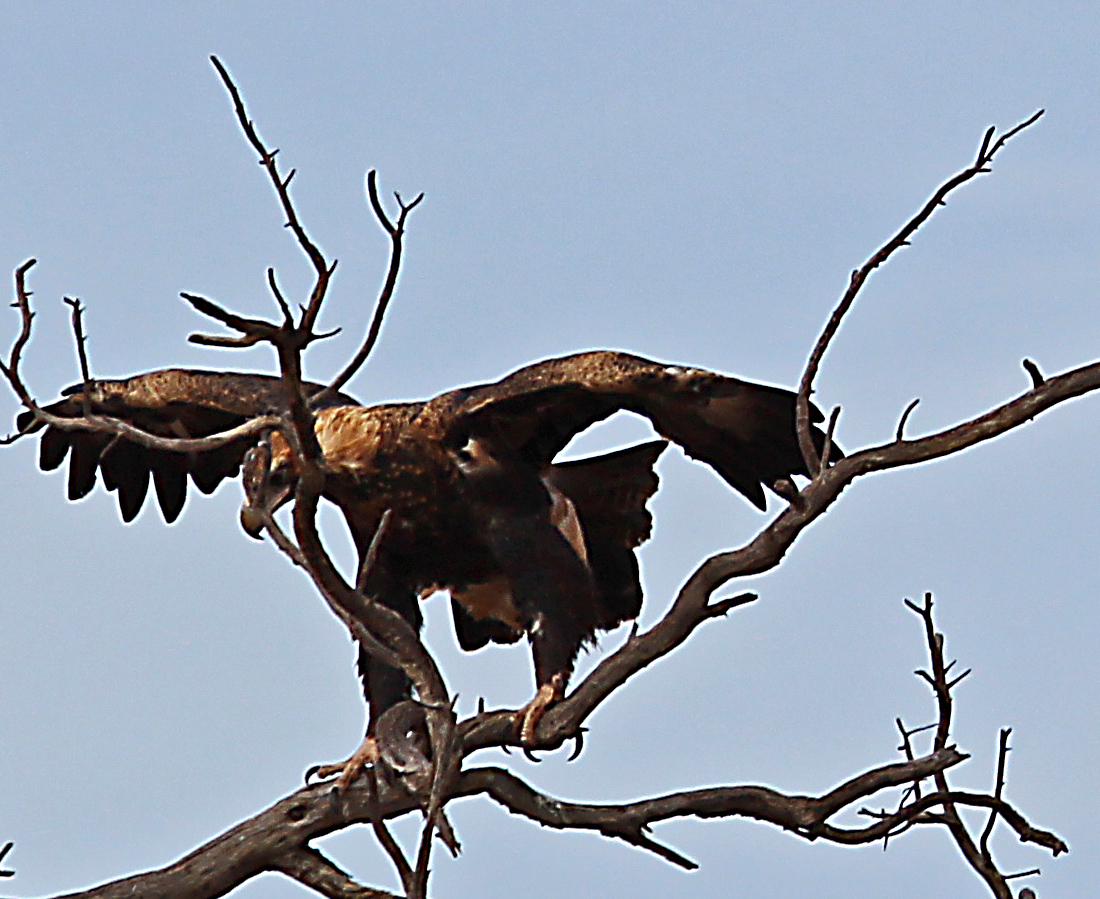
1 wedge tail 1. Australia's largest raptor with a wingspan over 2 meters

Wedge-tailed eagle about to fly

1 wedgy takes flight

In flight


As I approach the Chinaman’s creek junction I notice a pair of wedge-tailed eagles in the skeletal branches of a mallee tree. The birds seem quite relaxed as they survey the low scrub that stretches towards the coast. I let the car roll to a stop and gingerly climb out careful not to let the door bang shut. There is good cover between the birds and myself and I fire off a couple of shots before one bird senses the movement and takes to the air.

2 Galahs iin bush near wheat fields

Galahs in bush near wheat fields

2 Cockatoo near the park's entrance

Cockatoo near the park’s entrance


The stretch of unsealed road that stretches towards the coast is flanked on both sides by scrubby farmland that supports sheep and some wheat fields. Small groups of rose breasted cockatoos are perching in the branches alongside the road. They occasionally take flight into the fields to dig out tubers and possibly ravage a few of the crops; lovely birds to watch but not always popular with farmers.

4 Dirt trackinto the coservation park about 5 kms from the highway

Dirt track into the conservation park about 5 Kms from the highway
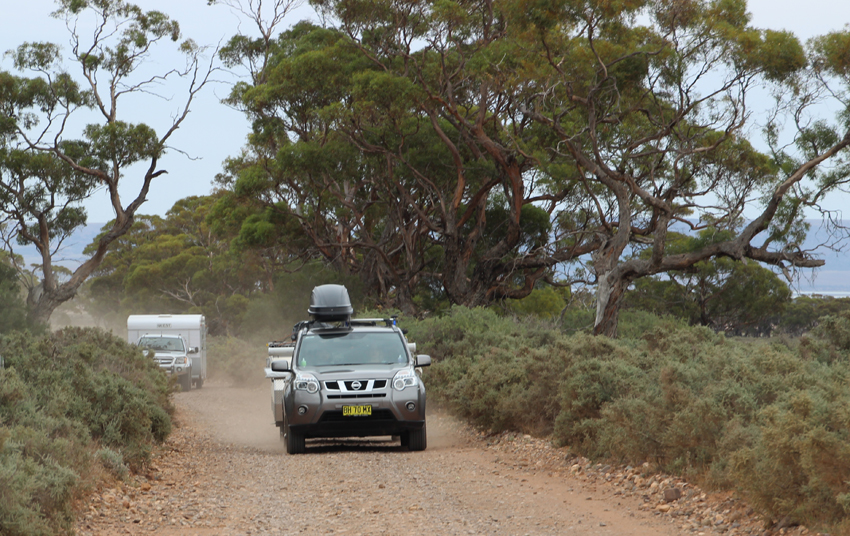
4 Visitors to the park

Visitors to the park


Where the cleared land gives way to forest and denser scrub, a fence and sign announces the Winninowie conservation Park which incorporates Chinaman’s Creek. Despite the remoteness of the area we meet a couple of 4X4s complete with camping trailers and stop to chat with the drivers for a few moments. They have been camping by the creek for a few days and had some success fishing the mangrove flats on the receding tide for whiting and mullet.

6 Chinaman's creek jetty at low tide

Chinaman’s creek jetty at low tide

9 Momentary glimpse of a sacred kingfisher

Momentary glimpse of a sacred kingfisher


A few minutes later we pull into the camping area. There is a scattering of permanent shacks and a small jetty that is completely exposed at low tide. I change from shoes to gum boots, from experience I know that this mud sticks like glue, and start to walk along the edge of the little creek. I can hear singing honeyeaters in the mangroves and catch flashes of colour from other unidentifiable species that flit amongst the thick foliage. But the birds are some distance away and the overcast conditions make photography all but impossible.

6 Chinaman's creek jetty at low tide

Chinaman’s creek jetty at low tide


I notice thousands of small burrows honeycombing the edge of the intertidal zone. Each is home to a small shore or mangrove crab. In the creek I can see roving schools of silver baitfish eagerly eyed by a pair of herons that are stalking the fringe of the mangroves.
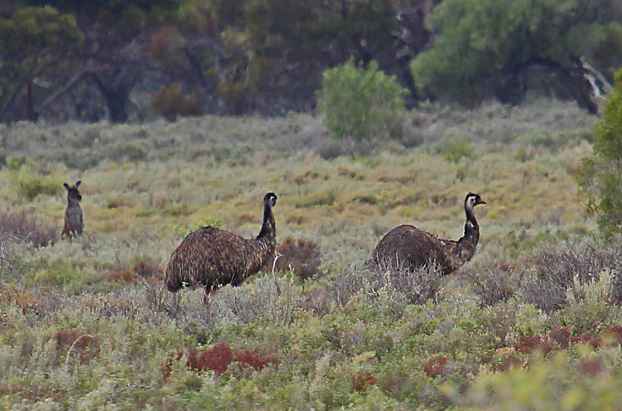
4 As a pair of emus head towards the trees a grey kangaroo pops its head up

As a pair of emus head towards the trees a grey kangaroo pops its head up


Our time at the creek is limited. The clouds are thickening and a few fat raindrops have bounced off my camera lens. As we leave the park has a few more wildlife surprises that make me grit my teeth over the poor lighting conditions. A gorgeous sacred kingfisher perches on a long-dead coastal acacia bush and a group of grazing emus wanders across the saltbush dominated plain. Later, when examining this image in detail I discover that there is another participant in the scene; a grey kangaroo that was feeding close to them.

5 The creek at low tide with mangrove forest and Flinders Ranges in the background

The creek at low tide with mangrove forest and Flinders Ranges in the background


It has been an interesting first look at this coastal environment with its varied habitats and I look forward to further visits in the warmer, lighter months ahead.


Until next time

Cheers

Baz

Marion’s Warraparinga wetlands

24 Jan

Dear Reader:

There is a Kookaburra high in the red river gum near the entrance to the Warraparinga wetlands. It chortles out its laughing call alerting just about every wild creature in the area. However, the main purpose of its famous laugh is proclaiming to other kookaburras whose turf it is and how eligible one is for mating. As I sit and listen I cannot help but wonder what the original people who inhabited this land thought about these iconic Australian birds and the other animals that lived here.

A kookaburra sits in the old gum tree

A kookaburra sits in the old gum tree (click to enlarge all images in this post)


For tens of thousands of years before European settlement the Kaurna people roamed the Adelaide plains and south coast. They used both forest and grasslands to hunt for kangaroos, possums and birds. The creeks and wetlands provided turtles, yabbies and fish. Reeds and other plants were a source of food, medicinal remedies and the raw materials for weaving and building.

A timeline describing aspects of Kaurna culture

A timeline describing aspects of Kaurna culture


 Although Aboriginal peoples used symbols, they never developed writing. Their laws, ideas, family histories and seasonal maps were passed from one generation to the next by a series of stories some of which are referred to as Dreaming Stories and often relate to spirit ancestors. One such story is that of Kulutuwi a young boy who is killed by his stepbrothers and carried to his resting place by his uncle Tjilbruke. It describes how the tears that Tjilbruke shed formed the little creeks along the Fleurieu Peninsula. Warraparinga, which comes from the Kaurna warri parri and means windy place by the river is on Sturt Creek near the start of the Tjilbruke trail in the suburb of Marion. It is a wetland complex and home to the Living Kuarna Cultural Centre which has interpretive displays, an art gallery, performing space and cafe.

The creek flowing freely after summer rain

The creek flowing freely after summer rain


An acrobatic white plumed honeyeater feeding on small insects

An acrobatic white plumed honeyeater feeding on small insects


 Leaving the kookaburra to its vocal gymnastics, I walk through a sculpture garden and down to the creek which is flowing quite swiftly as it has rained heavily in the last week. The rain has also stimulated some plants to flower and there is a healthy population of insects in the bushes and trees. The typical ‘wick wicky’ call alerts me to several white plumed honeyeaters that are energetically picking off lerps and ants high in the tall eucalyptus trees by the water. I spend a good ten minutes trying to get a definitive shot that shows their hunting strategies.

Galah feeding on the ground

Galah feeding on the ground


Rose breasted cockatoo or galah performing beak maintenance duties

Rose breasted cockatoo or galah performing beak maintenance duties


In the same stand of trees both rosellas and cockatoos are sheltering amongst the foliage. The cockies are particularly interesting as they have been feeding on the ground pulling up tubers and searching for seeds then returning to the trees to wipe their beaks on the branches; whether to clean, sharpen or what?…I am not sure.

Reeds by the banks of a small lake help filter out pollutants

Reeds by the banks of a small lake help filter out pollutants


Purple swamp hens are often seen using their huge feet to climb over reeds

Purple swamp hens are often seen using their huge feet to climb over reeds


Eurasian coots are found in Asia, Australia, Africa and Europe

Eurasian coots are found in Asia, Australia, Africa and Europe


 The trail is well defined and leads me past several different ecosystems. One of these is a chain of ponds that are surrounded by reeds. South Australia’s urban wetlands have been developed to help filter storm water run-off and improve the health of our creeks but they also serve as a wonderful habitat for water birds. Eurasian coots, purple swamp hens and dusky moorhens are all feeding close to the reeds and these birds would have been part of the diet of the Kaurna people who hunted along the nearby Sturt Creek.

The lobby of the Living Kaurna Cultural Centre

The lobby of the Living Kaurna Cultural Centre


Having spent a couple of hours exploring the trails and stopping to capture a representative batch of images, I wind up back at the cultural centre for a well earned cup of coffee and a pastry. In the next room there is a wonderful display of indigenous art and a timeline displaying the history of the Kuarna people. It seems a fitting and reflective way to end my first visit to this rather special park in the heart of Adelaide’ southern suburbs.


Until our next adventure

BAZ

A Walk to the Falls

12 Jul

Dear Reader

Last Saturday was a classic Adelaide winter’s day. It had rained the night before and a fine patina of dew decorated the shrubs in my garden. The sky was clear and despite a chill in the morning air it promised to be sunny and dry; perfect conditions for a walk in the park. Not any park though. My park of choice was a little conservation reserve nestled in the foothills about 20 minutes from the city centre. Like Waterfall Gully,  Morialta Conservation Park is graced by a series of waterfalls and steep walking trails that cut through a variety of classic bush habitats.

AB Typical sandstone and eucalypt bushland within the park

Typical sandstone and eucalypt bushland within the park

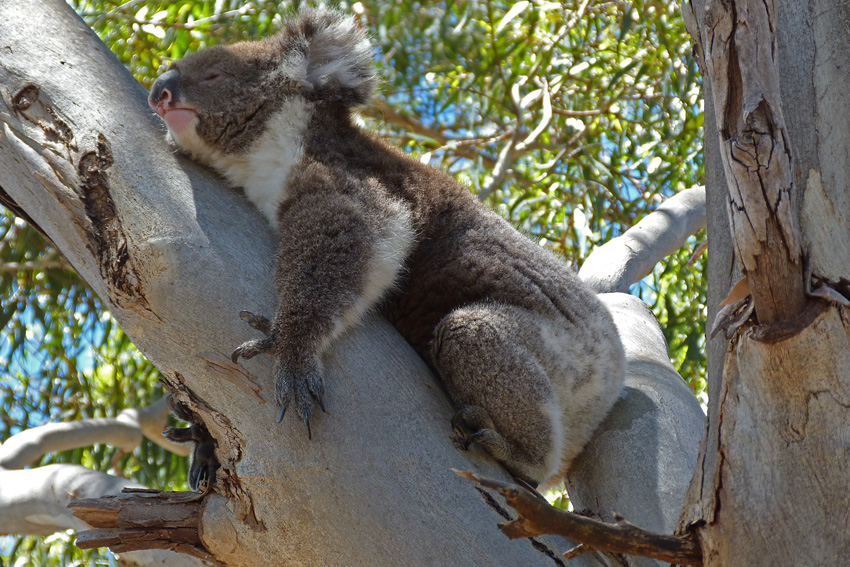
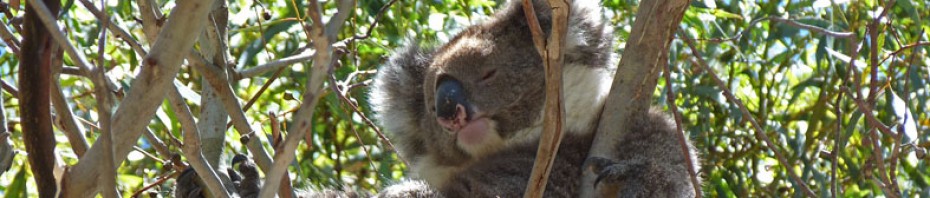
 The drive took me a little longer than expected as I was waylaid by the smell of freshly cooked pastries emanating from a little bakery. My rucksack now stocked with enough calories to sustain my upcoming physical endeavours and probably those of the next week, I pulled into the little car park alongside the creek, hung a camera from my shoulder and set off up the southernmost trail. The sun was still low in the sky and only the southern face of the steep-sided valley benefited from it.  I had walked just a few metres and was emerging from the shade when I noticed some walkers standing below a tall eucalyptus tree pointing excitedly at one of the higher branches. I followed their obvious line of sight and there, nestled into the fork between trunk and branch was a fairly large koala doing what koalas do best ….stretching out and resting.

AC Koala in tree near the trailhead

Koala in tree near the trailhead

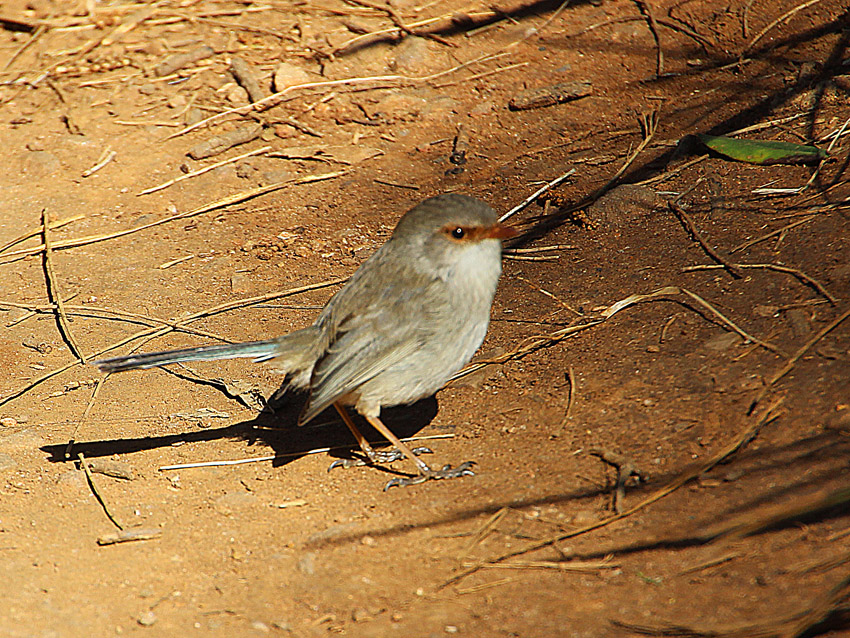
The koala was an unexpected and encouraging start to the day and after spending few minutes watching it I started up the trail with a fair degree of optimism. Winter is never the best time for wildlife. Plants have fewer flowers and fruits and the insects that are attracted to them are in short supply. Of course there is always an up-side when it comes to nature and the damp ground makes it easier for some bird species to fossick for grubs and worms. A pair of blue wrens seemed to be making the best of these conditions, madly hopping from one tree branch to the next then down onto the ground in a never ending search for food. Their constant motion and the morning light gave me only a few half-chances to capture some images and no hope of freezing their motion completely. I did manage a couple of shots that showed some of the obvious differences between the male and female of this species.

AI Male blue wren

Male blue wren

AH Female blue wren

Female blue wren

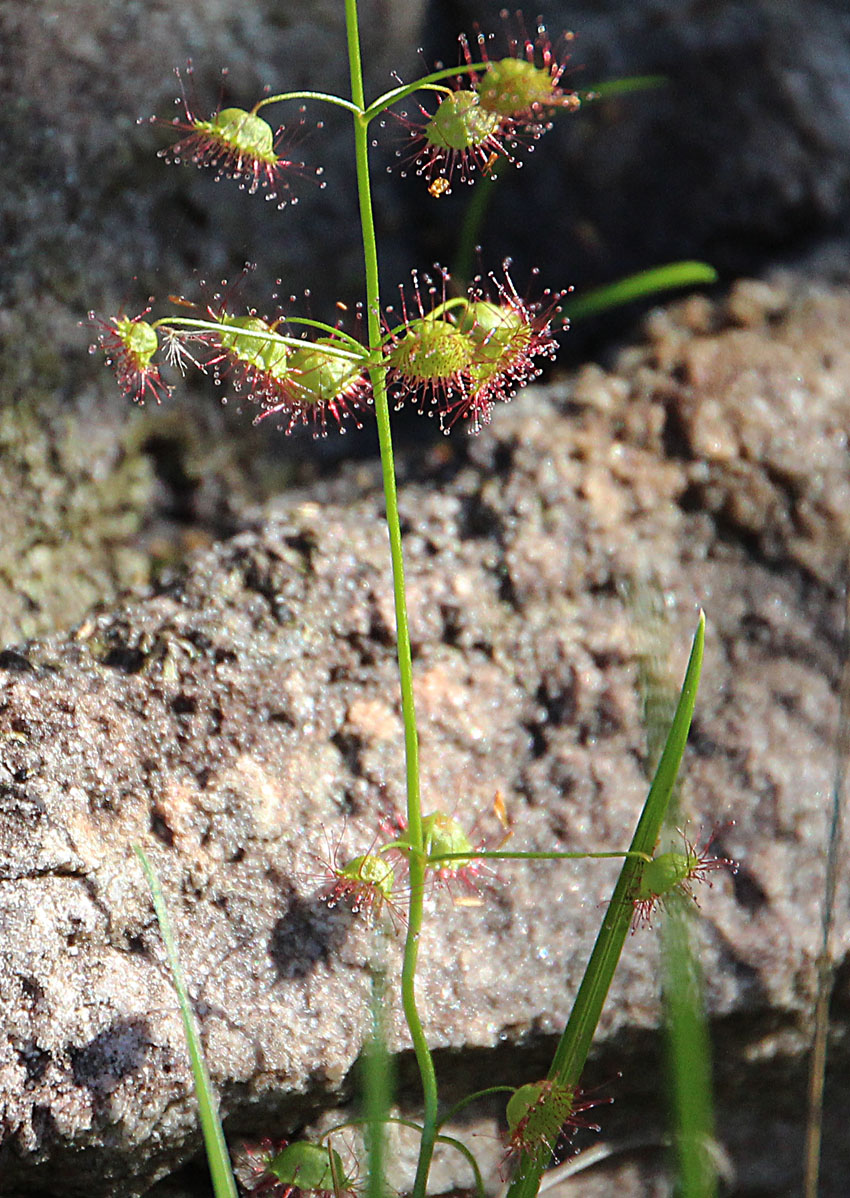
A little further up the track I stopped and sat on a large boulder and scanned the undergrowth for insects or lizards. There was nothing to be seen or heard but I did notice some honeydew plants growing amongst the grasses near a rocky outcrop. These delicate little plants have tiny inverted cups radiating from their stems. The cups are fringed by small filaments and have sticky, viscous fluid in the centre. Unwary insects are trapped in the sweet heart of the cups and the filaments close on them to seal their fate. The unfortunate bug is then digested by its ‘vegetable’ captor providing essential nutrients that other plants might get from the soil.

AG Honeydew plant

Honeydew plant


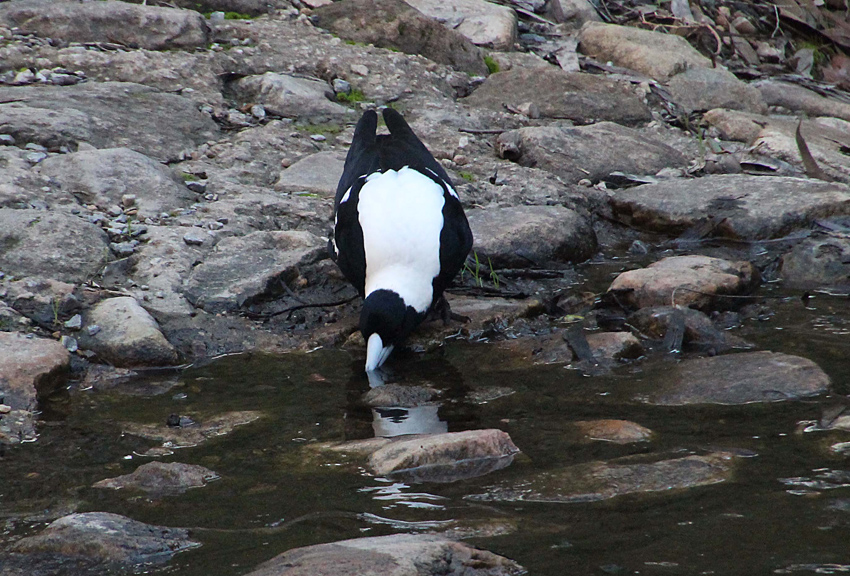
Colourful wrens, cute koalas and carnivorous plants had provided quite a range of wildlife in the first kilometre or so of my walk. As expected, the wildlife had not been prolific but there always seemed to be something around the next bend if I took the time to pause and use all of my senses. The next few kilometres were enjoyable but largely uneventful. A few honeyeaters flitted between late flowering shrubs, a magpie nervously snatched a drink from the creek while a squadron of miner birds squabbled in a stand of acacia bushes. It was not until I was almost back to the car park and walking below some tall, pale eucalyptus trees that bordered the creek that my next significant encounter occurred.

AD Magpie drinking from the creek below the falls

Magpie drinking from the creek below the falls

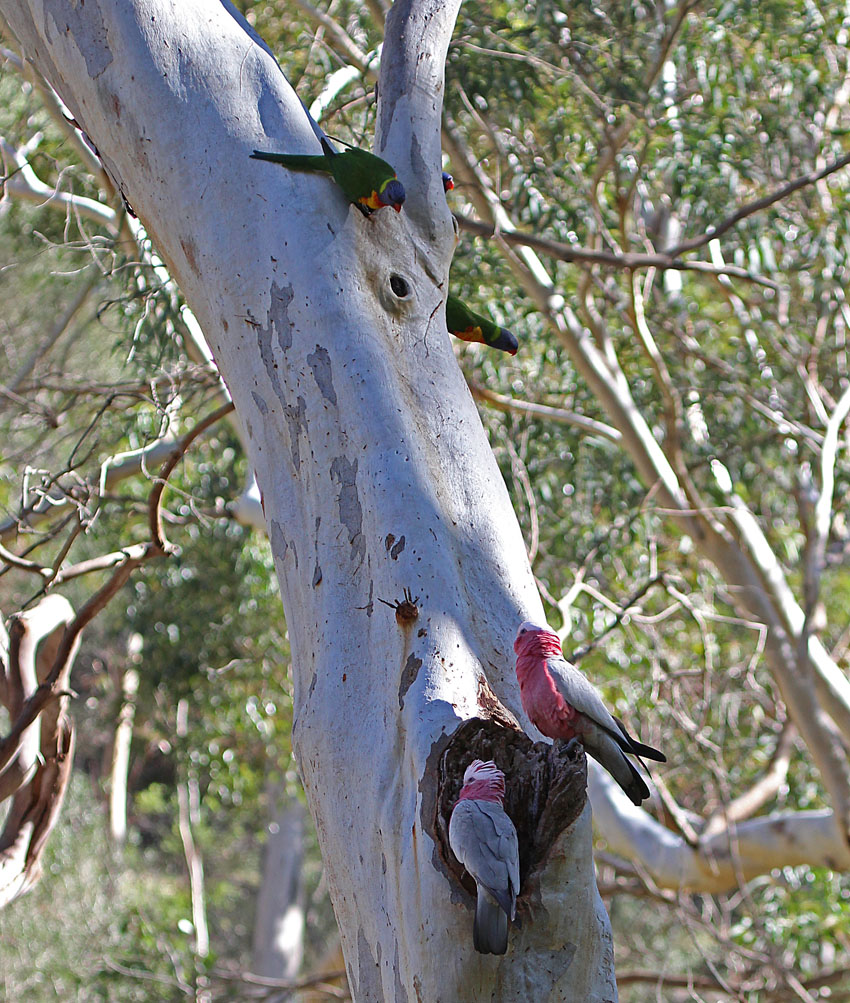
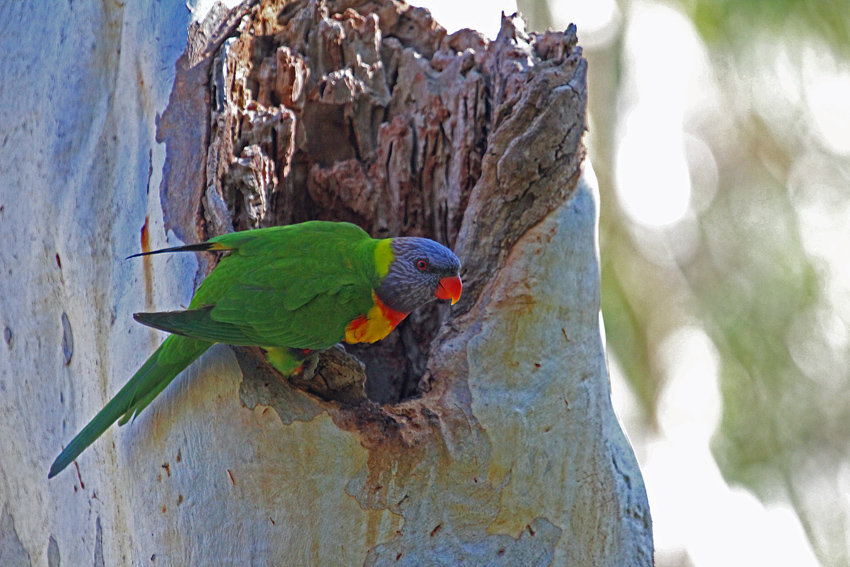
A small group of rainbow lorikeets had gathered on the branches of a massive gum tree about 10 metres off the ground. They were screeching loudly and seemed quite agitated. I moved away so as not to scare them and sat quietly in the cover of some thick bushes watching closely through my long lens. The source of their consternation soon became obvious; a pair of galahs had commandeered a nesting hole in the trunk of the tree. Over the next half an hour I witnessed a heated real estate battle develop as a continual rotation of chattering rainbows tried to dislodge their larger rivals. Eventually the galahs moved off and one of the rainbow lorikeets immediately flew down and started to peck around the perimeter of the nest hole.

A A pair of rainbows watching galahs at nest site

A pair of rainbows watching galahs at nest site

AF Inspecting the new proerty

Inspecting the new property

I finished my walk sitting on the edge of the creek with a cappuccino from the coffee van that plies its trade on the weekend and a pastry from my stash. Not a bad way to spend a sunny winter’s day for any wildlife enthusiast.


Thanks for taking the time to read this post.


Cheers

Baz