Tag Archives: honeyeaters

Murray River: Murtho Forest Reserve

21 Jan

Dear Reader:

As I walk across the top of the cliffs from the reserve’s entrance, I notice a Rainbow Bee Eater perched on a dead tree branch. The first one I have seen in Australia.

Rainbow Bee Eater

My next stop is an observation tower which provides splendid up and downstream views of the Murray River.

The observation tower is flanked by cliffs, river and scrub

Murtho forest reserve is part of the greater Riverland Biosphere Reserve. It lies 20 kms northeast of Renmark. There are several walks through the park as well as a camping area, boat launching facilities and the observation tower.
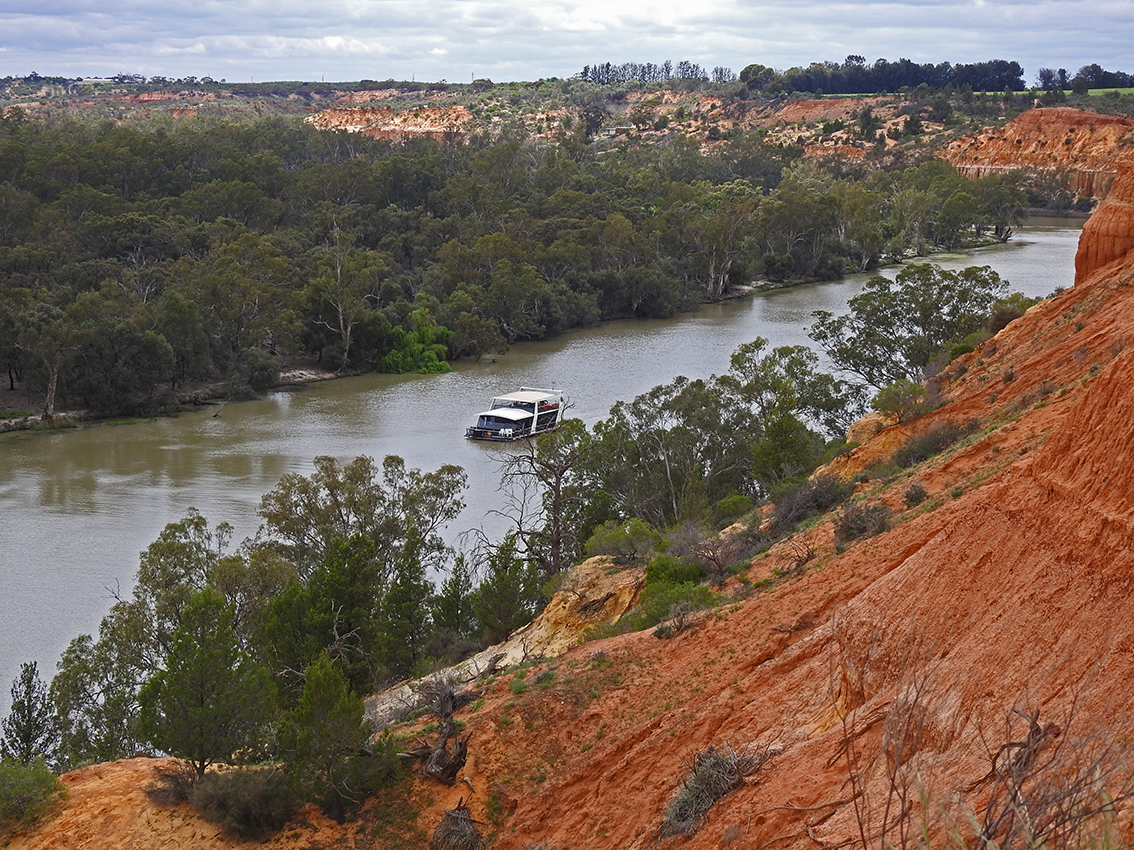
A houseboat makes its way down the river

Honeyeaters are common throughout the forest and I am lucky enough to photograph three different species in the area around the tower; White-plumed Honeyeaters, Singing Honeyeaters and the less common Spiny-cheeked Honeyeater. The latter species is perching on a protruding, dead branch above the river and it takes several shots to identify it.
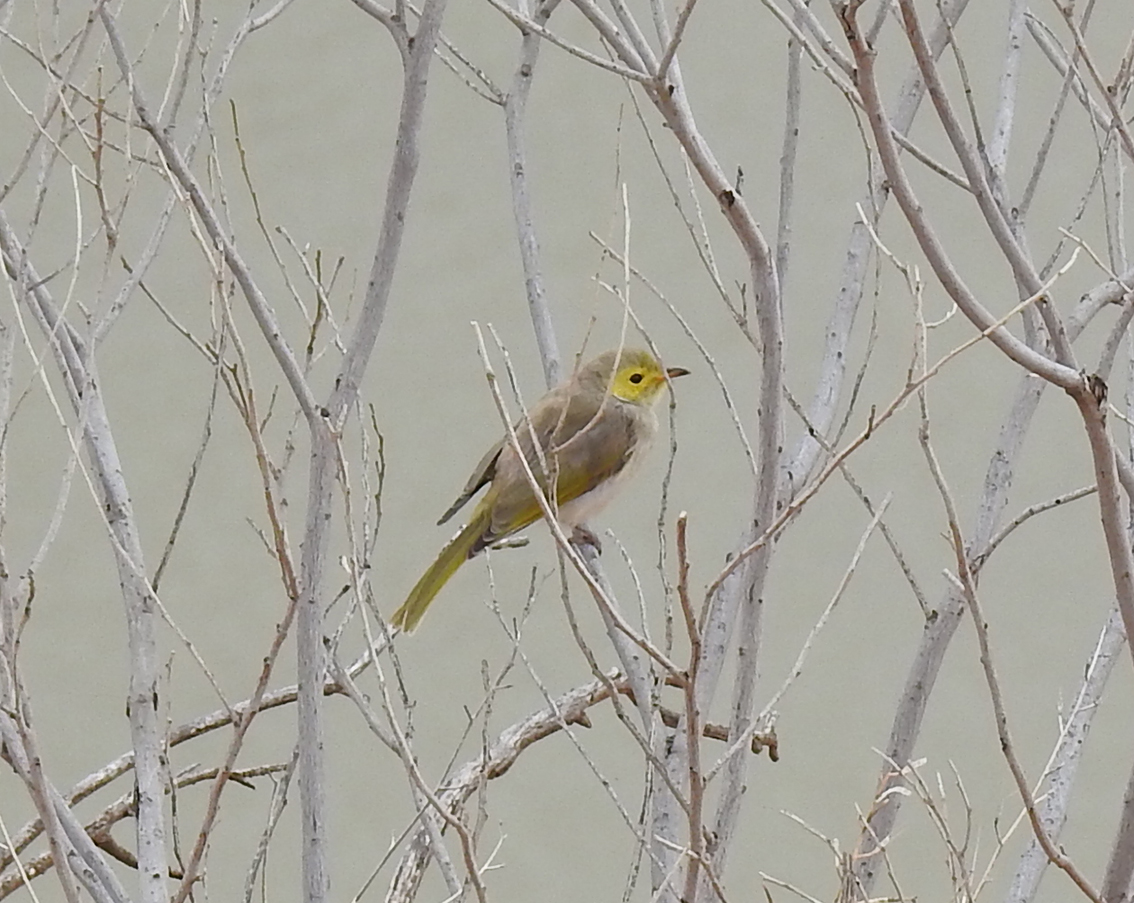
White-plumed Honeyeater

It is hard to shift your gaze from the wonderful scenery; red cliffs, a slow meandering giant of a river as well as billabongs and wetlands on the far bank.

Wetlands opposite the forest

Leaving the viewing platform, I drive to the camping and boat launch area. There are quite a few flowering shrubs and ground covers in this location including an Eremophila species and Pigface, a common coastal succulent. I notice several different types of butterflies and a Hoverfly feeding on the blossoms.

Eremophila species

As the cloud cover thickens I decide it is time to drive back to Renmark with a short stop on the way at the Paringa Hotel for a drink and lunch.
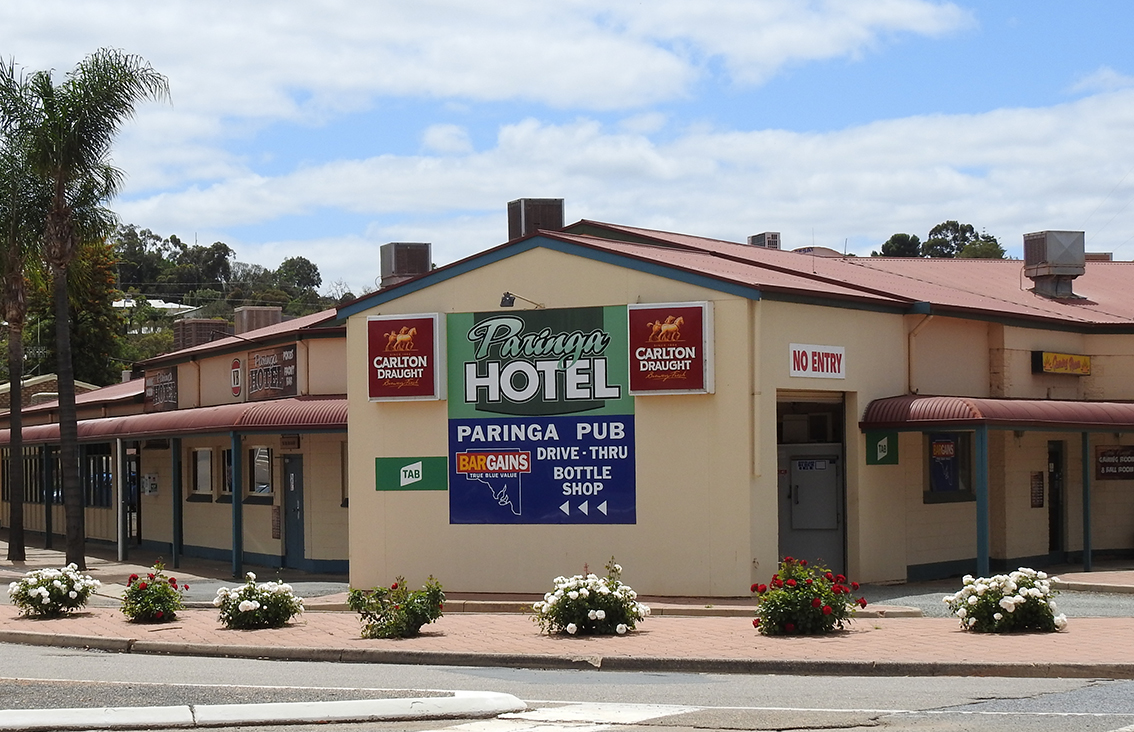
Local watering hole

Cheers

Baz

Additional notes

The camera used for this post is a Nikon Coolpix P900

This is an easy drive and walk which is quite suitable for families and seniors. It is dog friendly.

Please pass on this blog title and or contact information (URL) to any person or organisation with an interest in taking walks and enjoying wildlife in SA.

Click on these links and see more South Australian stories and pictures in my Weekend Notes articles as well as locating similar blogs on Feedspot’s top 20 Australian wildlife blogs

Aldinga’s Temperance Precinct

13 Oct

Dear Reader:

There is a sizeable group of Short-billed Corellas in the eucalyptus trees flanking the street. They exhibit a range of behaviours ranging from preening each other to nibbling branches and feeding on gum nuts. Some of the cars parked under the trees or nearby have also suffered some paintwork indignities due to the sheer number of birds.

Little or Short-beaked Corella

Corellas in tree

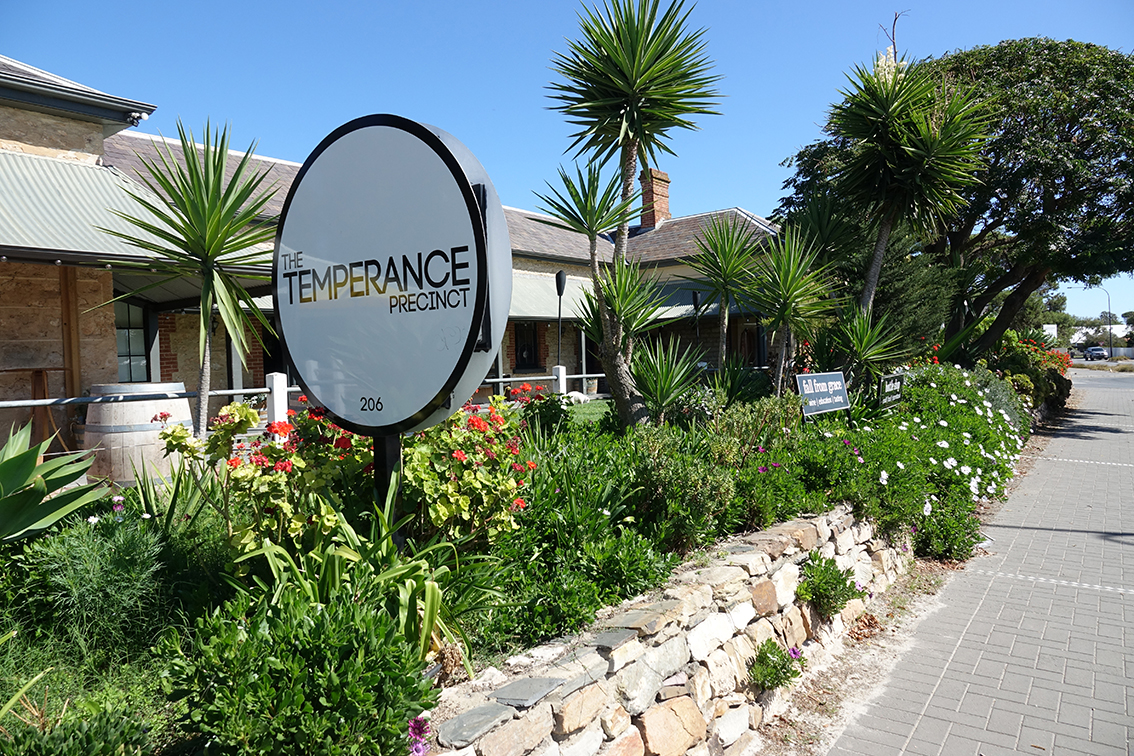
I am enjoying the ambience of the Temperance Precinct. A group of shops, restaurants, a pub, and other organisations situated on Port Road, where it intersects South Road leading into Aldinga. It is an area that has developed significantly over the last few years.

An interesting name

A little footwear style

So many colours to choose from

Perhaps the most iconic of these outlets is Miss Gladys on Sea which specialises in ‘well made’ clothing, shoes and accessories. Next door is a deli with organic foodstuffs and across the road, a bakery. Further down the street, there is an old church and graveyard as well as some fine period homes. Intermingled with the buildings are gardens, trees and bushes and the animals and plants which inhabit them.

A bit of everything

Heading for home

Collecting nectar

I sit on a stone wall, which borders a garden, waiting for a friend to do some shopping and notice a large native wasp fly into a gap in the stonework. In the garden I observe the same species feeding on several different kinds of flowers. With my attention focussed on these small invertebrates, I scan the plants for more species and spot: a diminutive flower spider, several Hoverflies, numerous Honey Bees and a cluster of tiny Aphids.

Not a gardener’s best friend

Shopping completed, it is time for lunch, but first I take a short stroll down to the churchyard where I can see some birds flitting between the branches of a red flowering gum. They are wary and in shadow. However, I recognise both Little Wattlebirds and New Holland Honeyeaters.

New Holland Honeyeater

Little Wattlebird

I finish the day with a wonderful steak and kidney pie washed down with a bottle of local fruit juice. In truth, a very satisfying low-key jaunt to one of my favourite coastal towns and I haven’t even taken the short drive to the beach with its fringing reef. An adventure I will leave for another day.

 Cheers

Baz

Additional notes

This is an easy walk and drive which is quite suitable for families and seniors with public toilets, parking and other facilities nearby. It is dog friendly.

Please pass on this blog title and or contact information (URL) to any person or organisation with an interest in taking walks and enjoying wildlife in SA.

Click on these links and see more South Australian stories and pictures in my Weekend Notes articles as well as locating similar blogs on Feedspot’s top 20 Australian wildlife blogs
https://www.weekendnotes.com/adelaide/writer/452/

https://blog.feedspot.com/australian_wildlife_blogs/

Port Elliot to Goolwa…A Wildlife Drive

20 Jul

Scrub and dunes between Coorong National Park and Goolwa Beach

Dear Reader:

A lone Silver Gull is perched on the parking sign next to the Flying Fish Café on Port Elliot’s picturesque Horseshoe Bay. Two hours should be more than enough for a fish and chips lunch while watching a few brave souls taking a dip in the chilly winter waters.

Parking restrictions…seagulls only

Across the bay, a fisherman is unfolding a chair and setting his lines for a leisurely afternoon’s angling. Perhaps he will catch a squid or some Flathead as we enjoy the same species on a plate and without the effort.

Horsehoe Bay’s old Jetty

I am taking a drive along the southernmost part of the SA’s lovely Fleurieu Peninsular between the towns of Port Elliot and Goolwa. This area is well known for fishing, surfing and whale watching in the winter months when Southern Right Whale migrate through these waters from the Southern Ocean.

Goolwa Beach and photographer

My next stop is Goolwa Beach, a long sandy stretch of several kilometres ending at the mouth of the Murray River. If the tides are right, I will be able to take my SUV onto the beach between sand hills and surf; a really rewarding experience. I am in luck and able to drive some distance towards the mouth. There are a few tiny waders dodging the surf while feeding on worms and other invertebrates beneath the wet sand but they quickly fly away as I get close enough for a shot. A pair of Pacific Gulls are more accommodating and I get a good series of images using full extension of the Nikon P900 zoom.

Fun in the surf…Pacific Gull style

About a kilometre along the beach there is a sign indicating a track that crosses the dunes ending up at the Coorong National Park near the Goolwa barrages which separate seawater from freshwater. This area is my next destination and I must drive back along the beach and skirt the town to reach the park.

Beach crossing to the barrages

The part of the Coorong National Park I am exploring is just past the barrages and consists of shallow mud flats, reed beds and small islets; an ideal collection of habitats for a wide range of aquatic birds. There are Black Swans in the distance, an unusual Musk Duck a couple of hundred metres offshore and a White-faced Heron hunting in the grasses and pools next to the road. Meanwhile, Singing Honeyeaters warble in the scrub between the park and the ocean beach which we were driving along just fifteen minutes earlier. However, the most exciting birds in the area are a couple of quite different raptor species which are swooping and hovering close to the shoreline. The larger bird is a Whistling Kite and the smaller, a female Nankeen Kestrel.

Singing Honeyeater not singing

Whistling Kite

Lunch and a couple of lucrative wildlife drives have made the day a success. However, the coastal town of Goolwa has many other attractions and I spend a further relaxing hour pottering around galleries and other small shops. To finish the day, I buy a bun and coffee at the Original  Goolwa Bakery on Dawson Street (established in 1912) before heading home via Strathalbyn and Mount Barker; two more SA towns with much to offer an enthusiastic nature photographer.

Goolwa’s Artworx Gallery

Cheers

Baz

Additional notes

This is an easy drive which is quite suitable for families and seniors with public toilets, barbecues, parking and other facilities nearby. 

Please pass on this blog title and or contact information (URL) to any person or organisation with an interest in taking walks and enjoying wildlife in SA.

Click on this link and see more South Australian stories and pictures in my Weekend Notes articles

https://www.weekendnotes.com/profile/651267/

Charleston Conservation Park……Coming Back from a Burn

1 May

Dear Reader:

Despite the blackened and scarred bush there are glimmers of hope in the landscape. Grass trees can survive the worst of the worst bushfires and some Banksias and other native species need fire to regenerate successfully. And, where there are plants the animals follow. Sitting atop the burnt spire of a grass tree (Xanthoria sp) I notice a female Superb Fairy Wren and my companion David points out a Male in full breeding plumage. Wildlife amongst the devastation.

Superb Fairy Wren male….photo by David Morris
Superb Fairy Wren female

I am exploring the Charleston Conservation Park, on Bell Springs Road in the Adelaide Hills about 7 Kms north of Lobethal and near the little town of Charleston. This small park of 54 hectares and bounded by open farmland on all sides, was devastated by recent bushfires but it is starting to show signs of re-vegetation. It is both sad and fascinating to walk around the park and look at the new life that is emerging amongst the burnt trees and undergrowth. However, the open, burnt bushland makes it easy to see animals though they are scarce, wary and hard to photograph. If you visit take a camera with a good telephoto.

Track along the park perimeter

We follow the track which runs around the edge of the park. It is separated from the surrounding farmland by a fence with a few surviving trees and bushes along the perimeter. In the distance I spot a mob of kangaroos feeding alongside cattle. These animals would have inhabited the park before the bushfires and will again as the understory and scrub develops, providing them with food and shelter.

Mob on the fenceline

A few hundred meters along the primary track that circumnavigates the park we take a smaller trail leading to a rocky outcrop. David stops abruptly and points, “Snake and it’s a big one, just a few metres in front of me.“ I can just make out the shape as it slides into a gap between the rocks; a sizeable Red Bellied Black Snake. Time to be a little more cautious in our movements. Later, we encounter another large Red-bellied Black on the gravel path. This snake is remarkably relaxed and we are to get some decent close-up images.

Snake ahead….enlarge and look at centre below and left of large rock
Red-bellied Black Snake

Further along the main track I notice numerous Monarch Butterflies landing on plants growing near the fence line. I focus on one of the insects while David point out a pair of Yellow-faced Honeyeaters feeding in a native pine.

Yellow -faced Honeyeater……photo David Morris
Monarch or Wanderer buterfly

Quite unexpectedly we hear the strident sound of Laughing Koookaburras. A pair has landed in a badly burnt eucalypt. They look surreal against the devastated background. Getting close enough to photograph them in this open environment is difficult; finally I settle for a long distance shot stretching my Nikon P900 to its limits.    

Laughing Kookaburras

Nodding Vanilla Lily

There are many signs of life emerging in the blackened landscape including: mosses, lily flowers, and patches of, what appear to be, acacia plants. Only time will tell how much the new environment will reflect the past as many non-native species will quickly colonise the vacant spaces; most notably grasses and windblown weeds. However, with some help from park rangers and volunteers this small area of remnant bushland may be able to regain much of its former beauty.   

Cheers

Baz

Additional notes

This is an easy walk and drive which is quite suitable for families and seniors. It is not dog friendly due to its status as a a conservation park.

Please pass on this blog title and or contact information (URL) to any person or organisation with an interest in taking walks and enjoying wildlife in SA.

Click on this link and see more South Australian stories and pictures in my Weekend Notes articles

https://www.weekendnotes.com/profile/651267/

By the Barrage

17 Dec

By the Barrage

Dear Reader:

A stately Australian Pelican glides across the water between the barrage and the reed beds.  This stretch of water is home to a wide variety water birds, fish and insects and even the occasional water rat.


Barrage and Pelican


Goolwa’s barrages are an intricate set of barriers between the freshwater expanses of Lake Alexandrina and the ocean. They are used to control the saline ocean water that once extended far up river under certain conditions. Locks in the barrage allows boats to pass through them giving fishers and other ‘boaties’ access to the Coorong; a long shallow waterway that runs parallel to the open ocean.


View from the track

Returning after collecting cockles

A paved road accesses the area with numerous interpretive signs explaining the history and purpose of this barrage which about five minutes from the Goolwa wharves taking Admiral Terrace which leads into Riverside Drive and then Barrage Road. Where vehicle access stops there is a small car park and a sign-posted track that leads over the sand-hills to Goolwa Beach; well known for its surf fishing and proliferation of cockles that are gathered for both food and bait.  


Pied Oystercatchers


I take the sand hill track over to the beach. There are several species of birds on the beach including; Plovers, Silver Gulls and the occasional Pacific Gulls and Common Terns patrolling the shallow waters looking for food. But it is a pair of Pied Oystercatchers that catch my eye as they delicately balance on one in the wet sand near the waterline.


Singing Honeyeater

Dune beetle


On my walk back across the dunes I focus on the numerous species of bushes, grasses and spreading ground covers that hold the dune ecosystem together. The wildlife is sparse in these harsh conditions but I do manage to find a large ‘weevil-like’ beetle foraging in some grasses and there are quite a few Singing Honeyeaters calling from the tops of bushes. There are also numerous tracks and droppings from kangaroos, rabbits and reptiles. I suspect that there is more action in the nocturnal hours.


Little Raven

Trudging through the dunes has been quite tiring; it is approaching lunch time and the wonderful bakeries of Goolwa beckon; or perhaps a pub lunch at the hotel.  As I climb into the car and head back along the lake one last animal  draws my attention. A raven is sitting on some weathered branches fluffing up its feathers and the light seems just right. Normally the all black birds are hard to photograph and the colours and reflections off their feathers seem incorrect. Down with the window, engine off to reduce vibration, rest the camera on the door frame and gently press the button. Voila… and now for lunch!!

 Cheers

Baz

 Additional notes

This is an easy drive which is quite suitable for families and seniors with parking and other facilities nearby. The walk across the sand hill track is quite strenuous though relatively short


See more South Australian stories and pictures in Weekend Notes

https://www.weekendnotes.com/profile/651267/

Burnside’s Hidden Creek

6 May

Dear Reader: 

The wattle bird seems to be totally absorbed and indifferent to my presence as it feeds on the tiny white lerps that dot the leaves of a creek-side eucalyptus tree. Usually these large members of the honeyeater group are quite nervous and hard to approach. This one, however, is determined to provide me with a ringside display of its acrobatic ability as it hangs upside down and hops from branch to flimsy branch in pursuit of its lunch. The tiny white lerps look like an arborial version of measles. In fact they are the early stage of a parasitic bug called a psyllid, an introduced insect pest that sucks the ‘juice’ from the trees.

A wattle bird pecks tiny insects from the leaves of a blue gum near the river bank

A wattle bird pecks tiny insects from the leaves of a blue gum near the river bank.


I am walking along the banks of second creek in the Michael Perry Botanical Reserve. This charming little park is easily accessed from a small lane called Andrew’s Walk at the southern end of Hallet Road, in the hills face suburb of Burnside. The shady banks, trickling stream and little ponds have a European flavour to them affording a cool retreat in the drier summer months. Before setting off on my short walk to investigate the creek’s wildlife I made a couple of crucial stops to provision my pack for a bite to eat on the river bank. At the nearby Stoneyfell Winery I found a fine bottle of white while ‘Taylor Blend’, a fashionable little eastern suburbs coffee shop on Hallett Road, provided a wide selection of gourmet paninis and local beesting cake. When one has to sit by a river bank for an hour or so to wait for the wildlife it might as well be done in style.

The brook cascades over a small ford made from slate and sandstone rocks

The brook cascades over a small ford made from slate and sandstone rocks


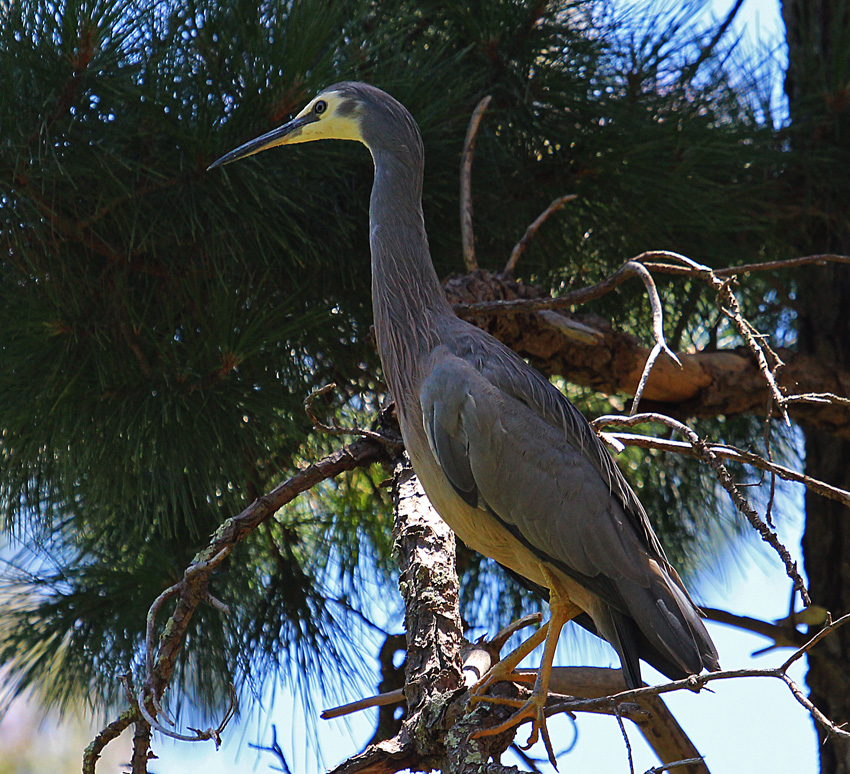
Leaving the wattle birds to finish their meal I work my way along the creek, pausing frequently to try and catch sight of the small birds that I can hear chirping and rustling deep in the cover of the reed beds. Without warning a grey faced heron explodes from the tangle of branches a couple of metres in front of me. The birds wheels in flight and settles on a branch high in a nearby pine tree where it can keep a sharp eye on its human intruder. As I point the camera at the perching water bird I catch site of a pair of Kookaburras in a huge eucalypt further up the opposite embankment. Two predatory birds; now it’s time to take a look for the prey animals that sustain them.

A white faced heron watches the creek from its vantage point in a pine tree

A white faced heron watches the creek from its vantage point in a pine tree


The first interesting small animal that I notice is a water skink which is sunning itself on a log. Being mid autumn I am surprised to see a reptile as most would now be ‘dug in’ for the winter months ahead. As I sit quietly and prepare to watch the lizard, a green eyed dragonfly lands on a boulder in the middle of the creek. And, where the water has formed a small clear pool I can see tiny fish or tadpoles swimming close the reeds and water striders skating across the surface: like my lunch, a gourmet larder for a range of feathered predators.

A water skink basking on a log amongst the reeds

A water skink basking on a log amongst the reeds

A dragonfly pauses for a moment on a warm rock in the creek

A dragonfly pauses for a moment on a warm rock in the creek


A fence marks the end of the reserve and I cross the creek to return on the northern bank. The tiny reed birds still elude me but in a shady stretch of water a single black duck is swimming against the current as it dabbles for food. A common enough species in southern Australia but the light is particularly good and on reviewing the shot it seems to encapsulate the mood of this lovely little waterway.

Black duck are common along the waterway

Black duck are common along the waterway


Until the next time

Baz