Tag Archives: koala

Blackwood’s Wittunga Botanic Park

12 Nov


Blackwood’s Wittunga Botanic Park 

Dear Reader:

There is a rainbow lorikeet around fifty metres away from me. The excitable little bird has inverted its body to dip its feathery tongue into a tube shaped eremophila blossom.  Several other species of birds including new Holland honeyeaters and wattle birds are feeding in the same garden beds where there is a smorgasbord of flowers to choose from. Clever planting also attract a variety of butterflies which feed on the nectar and help to pollinate plants by transferring pollen.


1a2

Rainbow lorikeet feeding


I am walking around the Wittunga Botanical Gardens near Blackwood in Adelaide’s foothills, just a twenty minute drive from the CBD. The busy little township is nestled into bushland where koalas and myriad bird species are common visitors. There are several hotels, bakeries and restaurants in the area and the Belair National Park and Golf course make this an ideal day trip for city residents.


1c

Old church and soldiers’ memorial in Blackwood


Leaving the flower beds behind I venture down to the lake that is the central feature of the park. It is surrounded by massive gum trees and there are crows, honeyeaters and a kookaburra perched in some of the branches that overhang the water. But it is a tiny head that emerges from the lake that draws my attention as I watch a Macquarie short-necked turtle swim towards the shore. The side-plate sized reptile clambers up on to a fallen branch and positions itself to catch some warming sunlight.


3a

Central lake and gardens


1d-red-2-macqurie-short-necked-turtle

Macquarie freshwater turtle


2a

Pacific black ducks

At the end of a long cool, wet summer the lake is full of new life. I spot purple swamp hens tending their fluffy black chicks near the reed beds. Several species of frogs are calling; probably spotted marsh frogs and common froglets or perhaps a potty bonk. Two Pacific black ducks are preening their feathers near the water’s edge and Eurasian coots appear to be amorously pursuing each other further from the bank.


4a

Ra venfeeding, they are often mistakenly called crows


Various pathways meander around the lake and I choose one that cuts through a stand of massive red gums. A lone raven is strutting around the perimeter of one tree pecking at the bark which is cracked and sloughing off the trunk. The bark of most eucalypts is an important environment for many smaller animals. Insects and spiders find shelter and breed there while larger predators such as birds and lizards find it a fertile hunting ground.


5a

Koala portrait shot


Having enjoyed a pleasant walk around the lake while indulging my passion for both wildlife and plants in general I walk back to the car park by way of a small stand of gums that run along the northern edge of the gardens. They are the kind of trees that might be attractive to koalas and I know that these endearing marsupials are common in the Blackwood area. Sure enough, there is one wedged between two branches in what I can only describe as the perfect koala portrait pose; a nice way to finish my walk.


1b-red-lesser-wanderer

Lesser-wanderer butterfly


Enjoy our city and suburban parks in spring as they really are some of the best in the world.

Cheers

Baz

An Autumn Walk and Drive Around Stirling

21 Mar

Dear Reader:

There are ravens in the tree near the restaurant. We call them crows in SA but the birds that live around Adelaide are usually little or Australian ravens. True crows are found much further north in outback regions. The birds are feeding on some autumn berries in a deciduous tree by the roadside. Every so often, one of the more adventurous gang members swoops down and reconnoitrers the outdoor tables for any tasty leftovers.

1 1 red

Raven disguised as crow


I am sitting in Rubys Organic cafe in the hills town of Stirling, a twenty minute drive from the city along the south-eastern freeway. This charming town of around 3000 people has a distinctly English feel about it. As well as native trees the town has numerous European species and the cooler climate makes it ideal for plants such as azaleas and camellias.

1 2 red

Healthy, interesting and tasty


After a healthy and delicious (gf) lunch of salmon croquettes and a pumpkin and bean salad, I drive out to the golf course on the outskirts of the town. At the end of the aptly named Golflinks road I park the car and walk into the Mt George Conservation Park. Tall stringybarks dominate this section of the walking trail which is part of Adelaide renowned Heysen Trail. Some of the trunks are blackened from earlier fires though most are still alive and bearing new growth. There is a proliferation of native groundcovers including heaths, grevillias and even some tiny orchids and lilies sheltered in the understory.

1 3 red

One of the many small plants growing in the understory, probably a heath


Walking through the forest is enjoyable but most of the bird life is high in the trees and hard to photograph so I return to the car, drive back and head along Old Carey Gully Road to the Mt George turn off. At the little picnic area, pleasantly situated by a small dam, I rejoin the track which is now part of the Pioneers Womens Trail. It runs over a small bridge where I pause to look into the creek bed in search of water skinks or perhaps a water rat (rakali). To my surprise I catch a fleeting glimpse of a small rat-like creature hopping across a pool on a fallen log. It is a southern brown bandicoot, a marsupial, not a rat at all. It pauses for a brief moment on its makeshift bridge and I take a shot. Photographically, the results are somewhat mediocre but in terms of satisfaction as a naturalist, it is a special moment.

1 4 red

Bridge on trail crossing Cox Creek


1 4 2 red

Unbelievable to get a photo of a bandicoot especially in daylight hours


But the bandicoot is not my last marsupial. To really ‘make my day’ I spot two koalas, probably a mother and joey, perched on a slender eucalypt overhanging the creek bed.

1 5 red

Mum and youngster


I started with lunch in Stirling and I decide to finish with a visit to Aptos Cruz; one of my favourite hills art galleries.

1 7 red

Aptos Cruise gallery from the top floor


However, on the short drive back to the town nature provides one last surprise when a deer bounds out across the road then pauses amongst the singed trunks of the gums on the edge of the roadside

1 6 red

Oh dear, wrong continent!!!

Cheers

Baz

Athelstone … a river walk…field notes and images

15 Oct

Athelstone … a river walk…field notes and images


Dear Reader: I hope that you enjoy the field notes and images from my day exploring the lower reaches of the Torrens Gorge near Athelstone. I will be using this style from now on as it allows me to share more observations and thoughts with you.


Spring 12/10/2015

A cool morning with a little cloud cover and patches of blue sky

Drove from city to Gorge Road intersection then to Athelstone, approx 20 minutes

Stopped in at bakery to get steak pie, apple tart and fruit juice

Photographed historic community centre, lovely roses on display

Spoke to history officer

Quite a few colonial buildings in the area worth visiting

Started walk from the mining road 2.8 Kms from Athelstone Council chambers, just past stone and fibre house on RHS of main road, parked near the causeway (ford)

Followed old, narrow bitumen road along left bank of Torrens heading up the gorge (upstream) towards historic aquaduct

B18 jpeg

Council chambers

B17 image

Stone and fibre home by turn off


Trail to aquaduct only 800 meters

Not going to walk off impending lunch this way

Walked slowly, stop, look and wait

Can hear small birds twittering in scrub to the left

Several little wrens fossicking in leaf litter

They appear to be different species as one has a blue tail

All are females as fairy wren males of the most common species have patches of bright blue plumage

B8

Female superb fairy wren

B9

Male superb fairy wren


Koala in dense foliage of a non native tree, unusual

There are several gums nearby, perhaps this tree is shadier

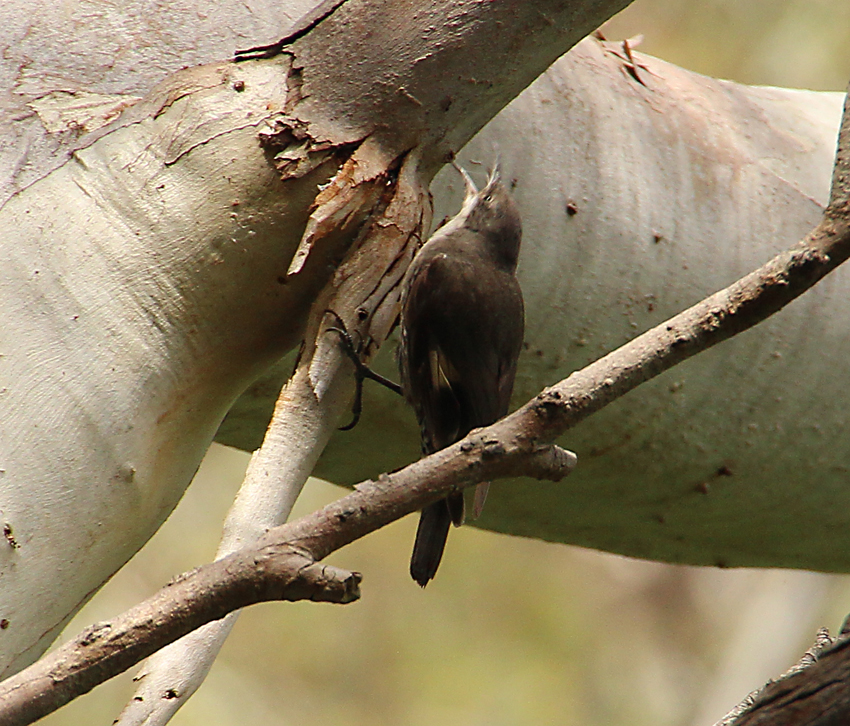
Tree creeper (possibly white throated) feeding probing for insects on a eucalyptus tree, seems to be favouring old and dead branches

Note the huge feet for gripping and providing stability

Hard to get a clear shot

Switch to shutter priority to stop action 1/1600 should do

B13

Koala

White throated treecreeper

White throated treecreeper


Reach the aquaduct

Note the signage about its history

State listed heritage item in 1980

Operated continuously for 138 years carrying water from Hope Valley Reservoir

There is a deep pool below

Scan the edge of the water and several logs for fresh water turtles…nothing

A water skink is basking on one of the flat rocks

As I approach and take a couple of shots it disappears into the undergrowth

I have often photographed these little reptiles and never seen one in the water swimming

B10

Aquaduct

IMG_8953

Eastern water skink


Start return walk to car

Expansive views of the gorge rising on the SE side

Several cyclist ride past on the main road above the river

They use the steep road for training

Concentrate on the other side of the path on return walk

Yellow tail black cockatoos fly above

See and hear a lot of Rosellas in taller trees

Manage to get a shot of a crimson feeding on berries in tree top

Stop to look at interesting gum trunk with red sap oozing from it

Like the colours and texture

B20 red

Bark patterns and gum resin

Back at car

Drive to park about 1 kilometre out of Athelstone to walking trails in parkland area, still has Torrens flowing through

Lunch on a bench watching some magpies haggling over territory

A Good morning’s work

Cheers

Baz

Walkerville’s Bickle Reserve…..Fairies in the Garden

4 Sep

Fairies in the Garden

Dear Reader:

As I have categorically stated in several of my posts, “I am no botanist”. I love gardening and appreciate the wonderful diversity of South Australia’s flora but remembering all the different classifications, names and botanical intricacies is just a little too much like hard work. Instead, I rely on a couple of field guides to common plants in the Adelaide area, phone a friend or simply make reference to those yellow bushes or tall straight eucalypts. Hopefully, this gap in my naturalistic armoury will be narrowed as I write more nature posts, though the signs are not promising. So: it is with some trepidation that I lead into the following piece …….

P1130228

Pink fairy (Caladenia species)

IMG_8066

The Torrens near Bickle Park

 ….It is a cool winter’s day, slightly overcast and I am on my knees examining a glorious little patch of native orchids. Most are pink fairies but there is one tiny delicate bloom, the size of a little finger nail, called a gnat or mosquito orchid. Nearby several of the flat prostrate leaves indicate where other orchids will appear in the near future.

P1130247

Gnat orchid (Cyrtostylis species)

All of these species are endemic to the area and though a few might have grown naturally, most are the result of a dedicated group of volunteers who are revegetating this area which is part of the Vale Park Wildflower Walk. The section I am exploring is alongside the Torrens River just east of the autobahn bridge near the Bickle Reserve. Several of the Vale Park group are holding an open morning and explaining the importance and biology of the plants they have established.

P1130234

Chatting about orchids

IMG_8071

Native Wisteria (Hardenbergia)

IMG_8099

Purple swamp hen

As I listen to information about the relationship of certain fungi in the soil to the propagation of orchids and marvel at the spidery native clematis and hardenbergia that are climbing up some eucalypts (big tall ones) I notice a pair of purple swamp hens foraging in the long grass by the river. Leaving the group I pursue the birds and make my way along the bank where there are also dusky moorhens in the reeds and crested pigeons feeding near the bikeway.

IMG_8059 edit

Dusky moorehen

Rejoining the group I chat about the importance of maintaining our wild heritage for future generations and learn about Aboriginal use of some types of native plants including orchids. Predictably in this group I encounter another wildlife photographer and the conversation fluctuates between nature and the lenses we have used for different purposes.

IMG_8088

An occasional visitor

In the course of our conversations one of the replanting team asks me if I have any images from the area and I remember that on a bike ride along this part of the linear park trail I had photographed a koala high in the largest eucalypt overshadowing the orchid beds. But, in keeping with my botanical prowess I forget to ask what kind of species it is (probably a tall, straight one).

Until the next journey into SA’s natural wonders

Cheers

Baz

PS

Check out Geotravelling a new site that I have attached that celebrates the natural, cultural and urban diversity of our planet through my travel photographs.

Tea Tree Gully’s Camellia Nursery

5 Jul

Dear Reader:

It is a cool crisp morning, and to be perfectly honest, I am not in the mood for a long drive. Instead, I have decided to visit a local nursery just a few kilometres away, where the North East Road starts its climb into the Adelaide Hills.

1a Newman's nursery

Newman’s nursery front entrance


As I park the car next to the entrance I am immediately struck by the contrast in lighting conditions. The path following the little creek that leads from ‘Newman’s Camellia’ nursery to the ‘Tea Tree Gully Hotel’ is in deep shade whereas the hills on the opposite side of the road are bathed in sunlight. An afternoon walk might have offered better lighting for photography but the wildlife always seems more active in the morning.

1a Start of the walk

The path begins


Climbing out of the car I glance up at the hillside above the little creek and to my surprise and delight I notice the hunched outline of a koala wedged between the branches of a huge gum tree; not what I was expecting this close to a suburban area.

1a koala in tree

Koala in tree


The trail starts just a few metres from the nursery entrance and meanders alongside the small watercourse for a mere 500 metres before broadening to a neatly manicured lawn enclosed by trees and shrubs. A varied collection of plants flank the path; including arum lilies, several lovely camellias, indigenous wattles and melaleucas as well as the ever-present, towering eucalypts.

1a Rogue camelia

A rogue camellia alongside the path


Small birds are continually flitting through the bushes though I am only able to catch fleeting glimpses of them. Some are definitely female blue wrens and I suspect that the tiniest ones are thornbills. Eventually, a small brownish bird settles in a low, flowering shrub some 50 metres away. I fire off a series of shots which, on review, reveal a glorious eastern spinebill.

1a Eastern spinebill  foraging in shrubs

Eastern spinebill foraging in flame heath bush


At the end of the trail half a dozen magpies are foraging for grubs in the well tended lawns. Several enormous gums tower over the grass and a pied currawong is perched on one of the topmost branches with a seed pod hanging from its beak. Another bird joins it, they seem nervous, jumping between branches before flying off, possibly to a nesting site.

1a Currawong with food approaching nest

Currawong approaching nest with food

The walk back is equally eventful with both rosellas and lorikeets feeding on berries in the scrub along the edge of the trail but capturing a sharp image in the shadows and overcast conditions is somewhat challenging.

1a Tapas on the terrace

Tapas


Newman’s nursery has a charming little restaurant with both inside and alfresco dining areas which afford a fine view of the hillside on the other side of the road. While I enjoy the delights of a tapas snack I notice several tiny finches feeding on the liquid amber trees that decorate the front of the nursery. From my outside table the birds are just within camera range and using the long lens I am able to identify them as European goldfinches.


1a European goldfinch in liquid amber tree

European goldfinch in liquid amber tree


Until next time

Baz

Belair National Park…Plants and a Pond

25 May

Dear Reader:

It is a mild autumn day and a light wind from the south promises to blow the early clouds away. A cyclist, rugged up against the chilly morning air, pedals through the parking area on her way to the nursery. I have come here in search of plants too, some native grasses and a red flowering gum to fill a vacant spot by my back fence. But there is an ulterior motive as the nursery often attracts a variety of birds and insects from the surrounding bush.

The hills can be chilly in the morning

The hills can be chilly in the morning


Close to the car park there is a thick growth of native correas and bottle brush. I notice a slight movement in one of the correas that is heavy with pale pink flowers. I change position to get a better line of sight and wait quietly. After a few moments an eastern spinebill appears amongst the leaves busily searching for insects and nectar.

The eastern spinebill belongs to the honeyeater group

The eastern spinebill belongs to the honeyeater group


Belair National Park is just 13 kms from the city centre in the foothills of the Mount Lofty Ranges. As well as a wonderful native nursery, the park boasts over 20 kms of walking, horse riding and cycling trails covering a range of different environments. Tennis courts, grassed playing fields, barbecues areas and even an adventure playground are dotted throughout the 840 hectare park making it a popular destination for both outdoor enthusiasts and families.

The Belair Naional Park nursery markets wonderful array of native plants as well as an extensive collection of natural history books

The Belair National Park nursery markets a wonderful array of native plants as well as an extensive collection of natural history books


The park has quite a few non indigenous species of tree near Old Government House,  which provide lovely autumn colours

The park has quite a few non indigenous species of tree near Old Government House, which provide lovely autumn colours


From the nursery it is a short five minute drive to Playford Lake. By now the sun has burned off the last remaining clouds and it is sunny and clear; ideal for taking a short walk around the lake. On the edge of the lake several freshwater turtles are basking on a tree root taking in the morning sun. As I approach they slide off with a splash and head into deeper water.

Playford lake at the end of summer

Playford lake at the end of summer


Australian  freshwater turtles eat a variety of foods including insect, small fish and yabbies

Australian freshwater turtles eat a variety of foods including insects, small fish and yabbies


On the other side of the path a patch of tall gums shade a small gully where a flock of sulphur crested cockatoos are squawking in the tree tops and biting the leaves. On closer examination, through the long lens, I suspect they might be scraping insects off them, as eucalypt leaves are not usually a part of their diet.

Sulphur crested cockatoos tend to feed on the ground searching out fallen seeds, berries roots and nuts

Sulphur crested cockatoos usually feed on the ground searching out fallen seeds, berries roots and nuts


As I work my way back towards the car the terrain changes slightly with a gentle hillside rising up from the path. The snap of branches deeper in the bush suggests a bigger animal and suddenly a large grey kangaroo hops across the path and bounds through the trees. As I try to follow the roo through the viewfinder I catch sight of a fluffy bundle moving slowly up one of the eucalypts. It turns out to be a koala climbing up a slender branch to feed on the tender, outer leaves.

This young koala's mother was feeding a few metres higher in the tree

This young koala’s mother was feeding a few metres higher in the tree


My 20 minute walk has taken the best part of an hour with all the wildlife stops and I’m ready for a coffee in the hills suburb of Belair before driving home. But one last critter appears to round off my morning in the park. A large blue dragonfly is hovering over a reed patch. I wait for it to land, no luck. It zips from one grassy stalk to the next with manoeuvrability that puts any military helicopter to shame. Then, as if to do me a favour, the elegant little insect lands on the path just a few metres away…. nice one…click..done !!!

Large blue and red dragonflies are quite common around the lake

Large blue and red dragonflies are quite common around the lake


Cheers

Baz

A Morning at the Zoo with Quinn

27 Feb

Dear reader: 

It is a warm Adelaide morning and the shady paths of the zoo are a labyrinth of intrigue for a nearly three year old. Around every turn there is a new enclosure full of sights, sounds and animals that she had only previously experienced in picture books.

7

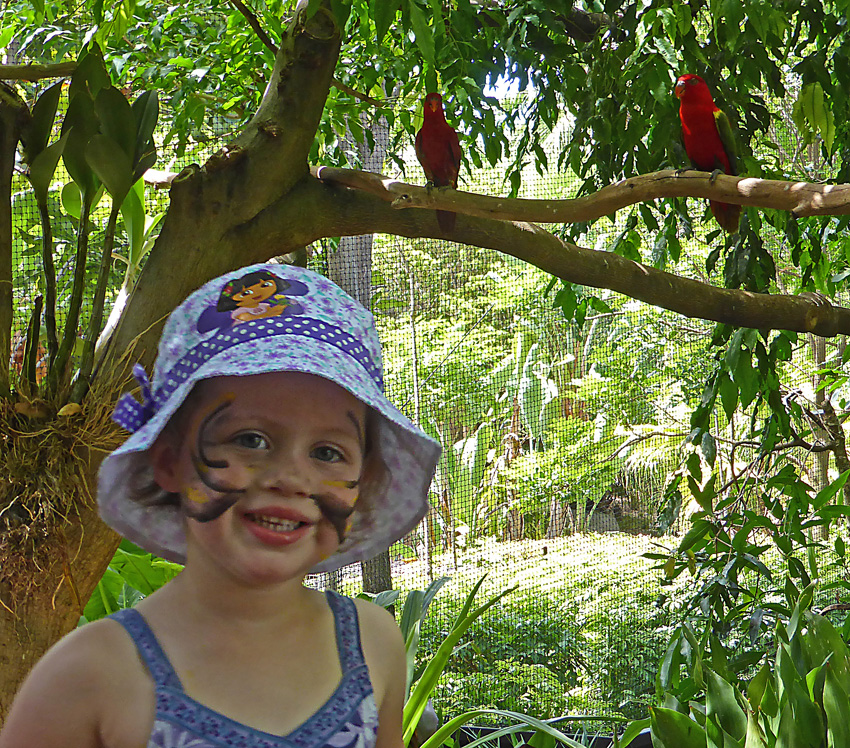
A pair of king parrots provide a suitable backdrop for a tiger striped Quinn


3

The zoo is situated by the river just over the Frome Road Bridge


A misty spray of water shrouds the koala and Tasmanian devil enclosures in anticipation of the midday heat. It proves irresistible to our little granddaughter and sends her squealing down the path shouting, “bear, bear, bear!” I stand and watch the ‘really not bears’ as they stoically munch on eucalyptus leaves and fire off a couple of frames. Sometimes the images that can be taken in a zoo are invaluable additions for later projects.

1

A koala chews on eucalyptus leaves that would be inedible even toxic to any other species of marsupial


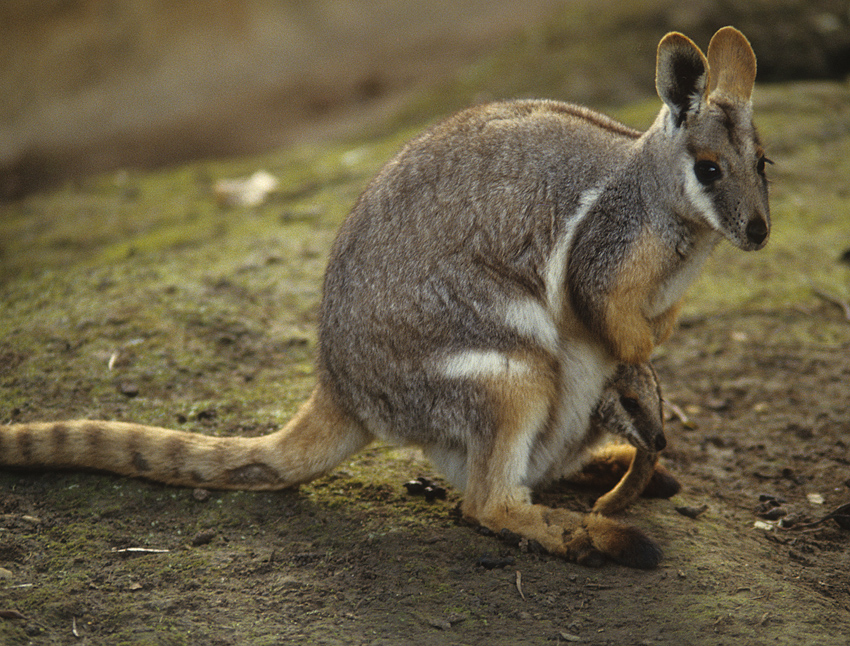
Half a vegemite sandwich and an ice cream later a little hand tugs mine and a voice whispers, “ Pop, kangaroo”. She is almost right, as a pair of yellow footed rock wallabies emerge from behind a tree in an open enclosure a few metres away. One of the little marsupials has a joey in its pouch; a difficult image for any photographer to catch in the wild.

6

A young yellow footed rock wallaby peering out from the safety of its mother’s pouch


The nocturnal house proves to be a real challenge. Try telling a toddler to be quiet as she goes through a dark tunnel lined with glass exhibits featuring bats and other night time wildlife. Near the entrance there are some aquariums which she finds quite fascinating (translate as…actually stops moving for a few seconds) giving me the opportunity to photograph some purple spotted gudgeons, one of our threatened native fish species. Yet another example of the pictorial opportunities that only captive animals can provide the amateur photographer.

2 purple spotted gudgeon

Purple spotted gudgeon are found in South Australia’s freshwater streams and lakes


Ironically, our final wildlife moment is not one that the Royal Zoological Society can claim credit for. Just as we are leaving and wandering past the hippos, Nan’s favourite exotic animal, we hear a family excitedly chattering about a spider. And there, strung in front of the hippo pool is last night’s tattered web of a sizeable orb weaver with the resident arachnid devouring a hapless dragonfly. Quinn says “yuck”, Nan scoops her up and I click away merrily wishing that I had brought the DSLR instead of popping the point and shoot in my pocket to ensure hands free, child minding capabilities.

4

A large orb weaver makes short work of an unfortunate dragonfly


By now the temperature is getting into the mid thirties and it is time to leave. She does not want to go. “More animals Pop.” A good sign for the future.


Cheers

Baz (and Quinn)

Mt Lofty on a Winter’s Day

12 Jul

Dear Reader:

Last weekend was cool and clear, perfect winter weather for a visit to Adelaide’s highest point, Mt lofty. The bush covered peak is a mere twenty minutes drive from the city along the SE freeway and the viewing deck and restaurant are surrounded by tall eucalypts that are home to a variety of wildlife.

AD A view from the top  (click to enlarge)

A view from the top (click to enlarge)

A selection of walking trails and bike tracks converge on the summit and earlier in the year I had spent some time walking along their lower sections photographing wildlife. However, on this occasion I had decided to see if the distribution of species was different at a slightly higher altitude in the cooler months.

AG Mt Lofty summit - Copy

Mt Lofty summit (click to enlarge)

The summit was quite busy with a smattering of mountain bikers and walkers using the trails and dozens of casual visitors simply enjoying coffee and the view from the observation deck and glass fronted dining areas. As I knelt down by my pack to select a lens I heard the chattering call of some blue wrens that were flitting between some nearby bushes and diving into the undergrowth. I watched their antics for a few minutes before heading off on one of the shorter trails that circle the summit.

AC2 C

Male blue wren surveying his territory(click to enlarge)

AH White backed magpie (click to enlarge)

White backed magpie (click to enlarge)

After walking for several minutes I noticed a sizeable magpie foraging for grubs amongst the grass and rocks. As I paused to take a few shots a group of Japanese tourists stopped and asked about the different birds in this area. We spent an enjoyable few minutes chatting and comparing their native species to ours; it transpired that they were an ornithological party on a study tour.

AE Natve heath - Copy

Native heath (click to enlarge)

AB Rosella feeding in the trees (click to enlarge)

Rosella feeding in the trees (click to enlarge)

A little further along the trail the greens and browns of the understory were enhanced by small patches of bright red flowers belonging to one of the hardy little heaths that flowers in the winter months. But the real splash of colour on this winter’s day was a colourful Adelaide rosella that was feeding on berries high in the branches above me. This was quite unusual as virtually every rosella I have observed feeding has been foraging on the ground for seeds and tubers.

AA Large male koala near the restaurant entrance - Copy

Large male koala near the restaurant exit (click to enlarge)

Mount Lofty, as I have pointed out, is a prime tourism site and in keeping with this status it provided one final surprise. A large male koala, that seemed to be extending a farewell gesture of pure Australiana, was comfortably tucked into the forked branches of a large gum tree alongside to the exit path.

Cheers

Baz

Quinn and Pop do Cleland

21 Apr

Dear Reader:

Though I have photographed wildlife for over 30 years, I still get excited when I see an unusual bug in the garden or hear the screech of sulphur crested cockatoos on my morning bike ride. However, every photographer needs an extra bit of inspiration; that fresh way to see the world. Mine came from taking two year old Quinn to explore Cleland Wildlife Park in the Adelaide Hills. Seeing a child experience the beauty and mystery of nature is something that no amount of field experiences can ever compete with. With a little hand tucked in mine I was guided along the bushland paths to the sound of……

“Pop come see.”

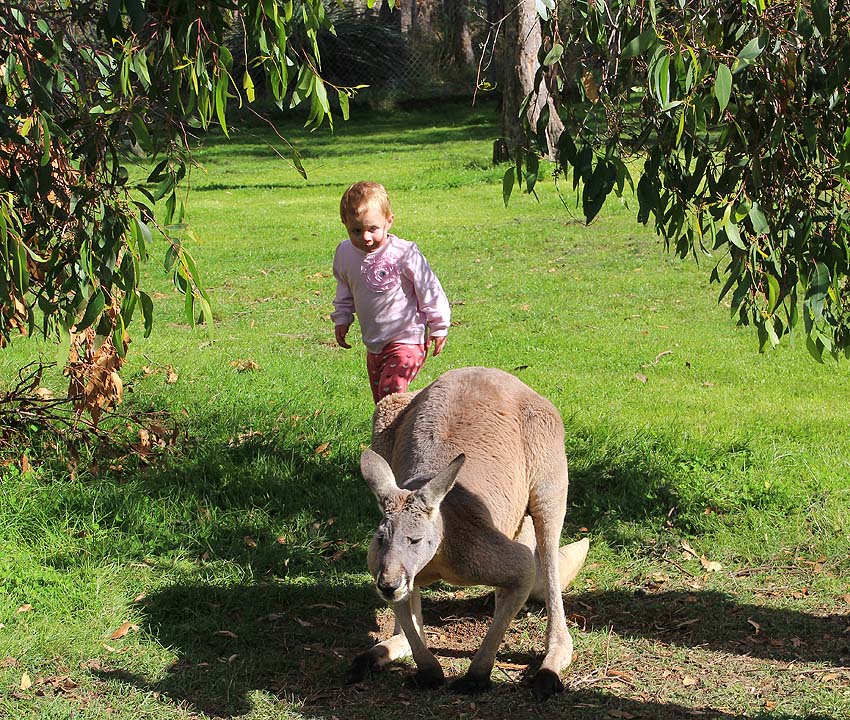
“Look croos!!”…. (kangaroos, I presumed correctly)


IMG_3608

My first wildlife park

Quinn loves animals, she has a dog, a cat and often toddles down the road to the local wetlands where every bird species is still classified as a duck. At Cleland she was overwhelmed by the variety of new animals and ran between marsupials and reptiles then on to the birds (ducks) with ever increasing gusto. The wildlife was not quite as enthusiastic about her energy levels and tended to disappear with a hop, scuttle or ‘flap of wing’ as the two year old whirlwind bore down on them. The combined wisdom of Mum and Nan tried to instil a sense of calm and caution when dealing with wildlife but the concept did not seem to gel with her two year old philosophy.

IMG_3648

Quinn has a puppy too…not quite a dingo

IMG_3684

Stop croo stop


Unsurprisingly, the koalas were a particular hit. She probably associated their solid, furry bodies and bear-like appearance with the plethora of animated cartoon characters featured in various children’s programs. Next time we will get the obligatory ‘kid with koala’ image but on this public holiday excursion the overseas visitor line stretched away into the horizon. A few minutes watching the iconic marsupials climbing, snoozing and munching gum leaves, had to suffice; at least she was still for a while.

IMG_3654

An enclosure of cute

IMG_3651

Koala are not bears…a lesson for later


After an hour and half of unbridled, two year old enthusiasm we decided/hoped that she had used up her energy quota. Not so: near the gate there is an indoor complex that features species that require individual conditions such as specialised lighting, temperature control and enclosures that safeguard the public from venomous bites. In she went and spent the next 20 minutes staring at these more unusual animals which included: taipans, death adders and a variety of lizards. Eyes wide and somewhat subdued she grabbed my hand and repeated her, Pop come see’ request as we looked intently at each display.

mulga snake

Mulga snake or king brown… she really liked this one


Even as we left the park she was pointing and staring into the trees that surround Cleland in the apparent hope of seeing more wildlife. To be honest I was amazed and secretly wondering at what age a child can be trusted with her first digital camera.

IMG_3695

Before I become a naturalist I’ll try art


It was an exhilarating day in a lovely bushland setting; without doubt, a place to take the family and experience the wildlife that makes SA such an extraordinary place to live or visit.

Cheers

Baz


Footnote

She slept all the way home

Mum hit the sack at 8.00 pm

Nan rubbed in some back ointment

I pored over the camera and laptop to record a Quinn-based blog

A Hill’s Face Hike

16 Feb

Dear Reader:

The koala is well camouflaged and firmly wedged between two branches in a stunted eucalyptus tree which is growing on the edge of a steep slope. Getting a decent shot involves scrabbling through some spiky acacia bushes and perching myself precariously on the edge of a rocky outcrop. But a quick glance at the playback screen suggests that the effort has been worthwhile and a few more scratches on my legs are ‘par for the course’ in this terrain.

3 Koala near the trail head

Koala near the trail head


I am half way up Anstey Hill on the north eastern edge of the Adelaide Hills. This ‘hills face’ recreation park is part of the in the Greater Mount lofty Parklands and one of several reserves that permit hiking, walking dogs on leads while banning camping, mountain bikes and the lighting of any fires. Anstey Hill is only 8 Kms from the CBD, easily accessed from several major roads and close to quite a few reputable hotels and restaurants. In short, an ideal destination for a morning or afternoon walk followed by a meal and a glass of wine.

1 Local pub and restaurant

Local pub and restaurant


Satisfied with koala image I start take a winding trail towards the top of the hill emerging on its northern flank where the view across the cliff face towards the city and coast is quite spectacular. A winding trail skirts the ridge and there are still some late blooming wattles and melaleucas clinging to the rocky outcrops and a small group of new holland honeyeaters are feeding on the blossoms and hawking for insects.

2 View from the ridge

View from the ridge


Further along the trail a small stand of eucalypts pushes up through the lower layer of scrub and many of them are losing their outer layers of bark….an ideal opportunity to look for huntsman spiders which often search for prey in this micro environment. And luck is on my side after a little foraging a piece of bark with a sizeable huntsman comes away from the tree. These large spiders often come into suburban homes where they stay high on the walls and eat a whole collection of unwanted pests from mosquitoes and flies to earwigs and roaches.

4 Huntsman spider

Huntsman spider


I turn south at the top of the hill and head through a little section of bush that has recently been burnt. To my surprise a large, dark robber fly is perched on one of the blackened branches magnificently camouflaged as it waits for smaller insects to ambush.

5 Blackbugs on burnt trees

Robber fly on burnt trees


My final wildlife encounter is with a pied currawong. Related to crows and magpies these large omnivorous birds are not common on the Adelaide plains and prefer the higher elevations of the Mt Lofty Ranges. I have never seen them around this area before and have few photographs consequently; this capturing this image was quite a treat.

6 Pied Currawong

Pied Currawong


Now it’s lunch at the pub


Cheers

Baz


JET