Tag Archives: Pangarinda

Pangarinda Botanic Garden, Wellington SA, part 2

1 Dec

Dear Reader:

As we walk around the waterhole, I notice a large spider clinging to the corner of a fallen branch. Closer examination reveals it to be the shed carapace of a large Huntsman Spider.

Spider carapace

We are continuing (see previous post) our walk around the Pangarinda Botanic Park in Wellington East. We have reached a waterhole which is currently dry but surrounded by flowering Grass Trees and Kangaroo Paws. Nearby there are many other native bushes, many of which have ID markers. 

Grass Trees and scrub

Kangaroo Paws

Hundreds of insects are feeding on the tiny flowers which coat the Grass Trees. Most are introduced Honey Bees. However, there are some larger bees that might be natives as well as ants and a butterfly species which I do not recognise.

Flowering Grass Tree and butterfly

The next section of our walk is dominated by numerous Eremophila species. These beautiful flowering bushes have delicate curved, tubular flowers in a wide range of colours. Many varieties are well adapted to dryland conditions. Eremophilas are often used in gardens as they attract honeyeaters and other small, nectar feeding birds.

Eremophila polyclada

New Holland Honeyeater in yellow Eremophila

It is getting late in the day and with an hour and a half drive in front of us there is time for one last stop. We are only a couple of minutes’ from the Wellington ferry and it would be remiss not to spend a few minutes by the river.

Wellington ferry

Wetland pool near the ferry with old mechanical windmill

There are a couple of small  reedy, pools alongside the ferry ramp and we can hear Australian Reed Warblers calling. Tiny fish swim in small schools near the surface of the water.  In the distance Black-tailed Native hens are feeding in a paddock. 

Australian Reed Warbler, near Wellington ferry, credit David Morris


Black-tailed Native Hens at distance

Our day complete, we turn for home and enjoy the wide variety of dryland landscapes this part of South Australia has to offer.

Rural landscape near Wellington

Cheers

Baz

Additional notes

The camera used for this post is a Nikon Coolpix P900

This is an easy walk and drive which is quite suitable for families and seniors with public toilets, picnic area, information maps, tags and placards and parking. It is dog friendly.

Please pass on this blog title and or contact information (URL) to any person or organisation with an interest in taking walks and enjoying wildlife in SA.

Click on these links and see more South Australian stories and pictures in my Weekend Notes articles as well as locating similar blogs on Feedspot’s top 20 Australian wildlife blogs
Pangarinda Botanic Garden, Wellington SA….part 1

18 Nov

Dear Reader:

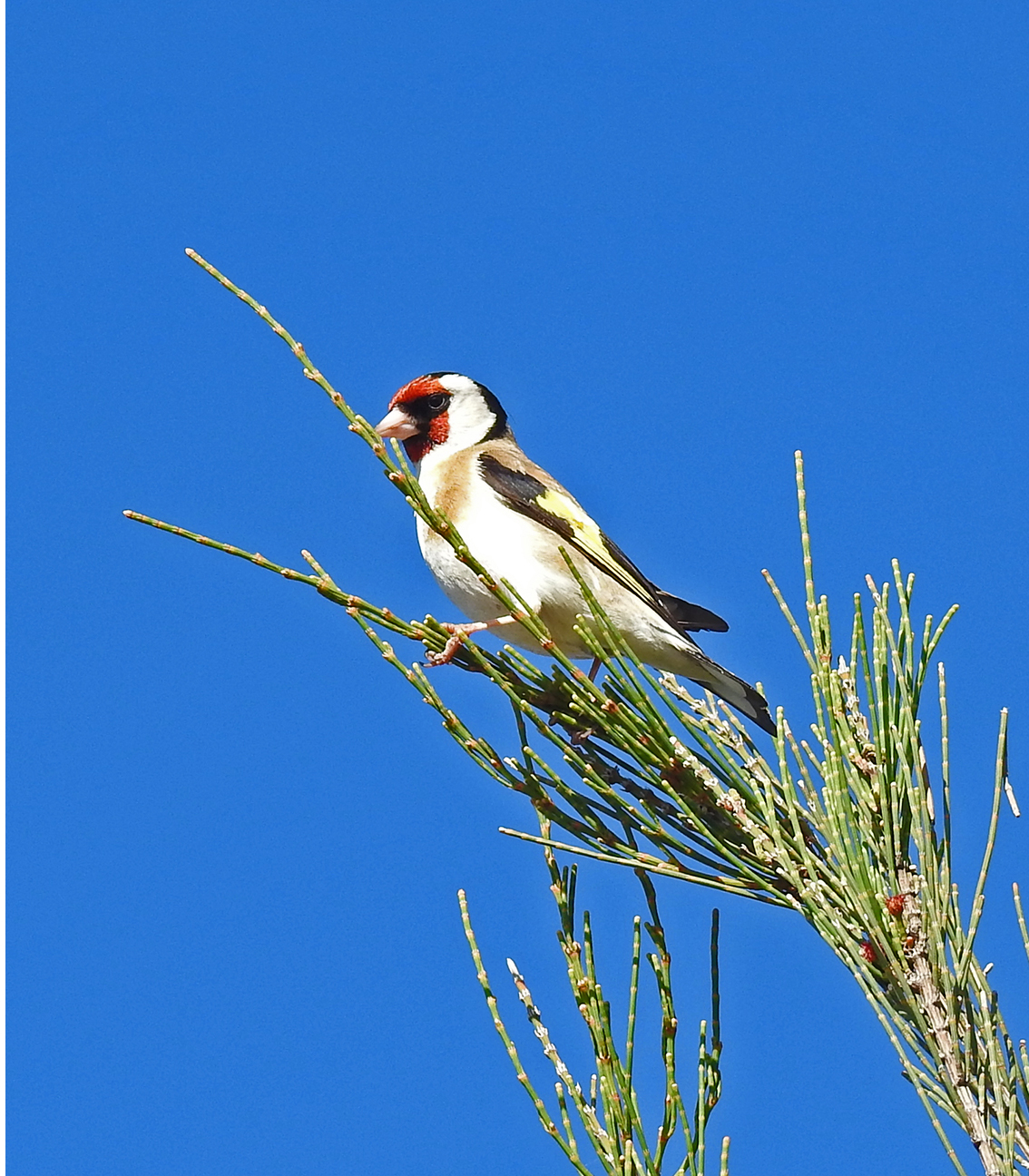
There is a beautiful European Goldfinch perched in the top of a Casuarina. Though I came to look at native plants and fauna, this introduced bird is far to pretty to ignore.

European Goldfinch

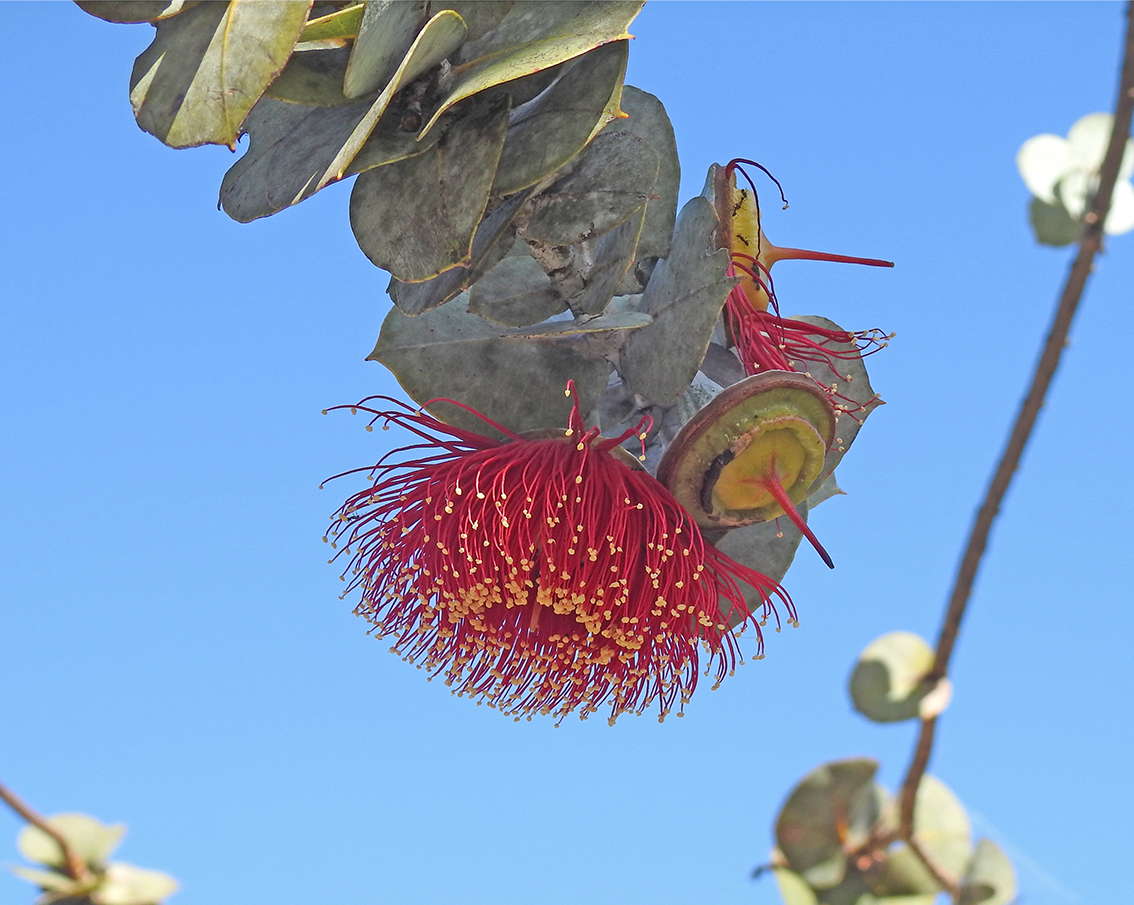
A little further along the pathway, I notice a low spreading gum with pale roundish leaves and brilliant red flowers. The tag beneath the tree shows it is a Eucalyptus rhodantha or the Rose Mallee.

Eucalyptus Rhodantha

Eucalyptus Rhodantha cap coming off to reveal blossom

Eucalyptus Rhodantha blossom

I am wandering around the Pangarinda Botanic Garden in Wellington East near Murray River. This wonderful community project, started in 1993, transformed 25 HA of weedy, eroded land into a brilliant dryland botanic garden primarily featuring plants of Western and South Australia.

Garden entrance

My first native bird sighting  is a Red Wattlebird picking insect larvae off the branches and leaves of a gum tree. They might be Lerps but it is difficult to tell at this range.

Red Wattlebird with larvae

Further along the trail, I notice a brilliant, yellow flowering bush (Calothamnus quadrifimus) sometimes called the One-side Bottlebrush. It appears to be a feeding station for a hoard of New Holland Honeyeaters. I set my camera to high speed mode and fire a few quick shots at the feeding birds.

New Holland Honeyeater feeding on Calothamnus sp blossoms

The nature of the trail changes throughout the park and I find myself looking across a small grove of Native or Cyprus Pine (Callitris sp). In the distance, I can just make out some blackbird sized birds hopping around a small pile of branches. Steadying myself on a the back of a conveniently placed bench, I use the full extent of my zoom. On review, I think they are Grey Shrike Thrushes.

Grove of Native Pine

Grey Shrike Thrush

The next section of the walk takes me along the eastern flank of the garden where there is a variety of eucalypts, native pine and other trees. The bird calls are both overwhelming and distinct along this part of the trail.  They indicate significant numbers of Superb Fairy Wrens, White-browed Babblers, various honeyeater species as well as tiny canopy living birds such as pardalotes and Silvereyes.

Male Superb Fairy Wren

White-browed Babbler foraging

White-browed Babbler close up shot from nearby Monarto CP

Where this taller stretch of trees peters out there is a bench by a waterhole surrounded by Grass Trees and Kangaroo Paws. An excellent place to stop and rest before tackling the rest of the circuit………..to be continued

Cheers

Baz

Additional notes

The camera used for this post is a Nikon P900

This is an easy walk and drive which is quite suitable for families and seniors with public toilets,  with parking and other facilities nearby. It is dog friendly but they must be on a lead.

Please pass on this blog title and or contact information (URL) to any person or organisation with an interest in taking walks and enjoying wildlife in SA.

Click on these links and see more South Australian stories and pictures in my Weekend Notes articles as well as locating similar blogs on Feedspot’s top 20 Australian wildlife blogs

https://www.weekendnotes.com/adelaide/writer/452/

https://blog.feedspot.com/australian_wildlife_blogs/