Tag Archives: skink

South Para Reservoir’s Water, Wine and Wildlife

13 Feb

Dear Reader:

There’s a small mob of Western Grey Kangaroos feeding close to the path where I am starting my walk. Leaning against a tree, I steady the camera. The roos detect either sound or scent and bound away into the thicker scrub.

Up Up and Away

I am taking a walk around the South Para Reservoir near Williamstown about an hour’s drive from Adelaide’s CBD. The road winds through the Adelaide hills and encompasses a range of environments from rural to wilderness. Unfortunately, it is a bit of a grey day. Not brilliant for photography.  

South Para Reservoir

The track leads down to the water where a kayaker is bringing the craft back to dry land. This reservoir is open for fishing, kayaking, cycling and walking unlike many of our other reservoirs.

A recreational paddle

There are numerous butterflies in the area but it is hard to spot them until they take flight. Eventually I get a reasonably clear shot and identify the species as a Common Brown.

Common Brown

On the water’s edge I can just make out some large birds. I suspect they are either Cormorants or Snake Birds (Anhingas). I approach warily, lie down in the grass and focus. There are two distinct species; a Pied Cormorant and a Great Cormorant.

Pied Cormorant

Working my way around the water’s edge I discover a dry creek bed and another track heading back towards the main road. I follow the creek bed up a gentle slope towards a rocky outcrop. A large male kangaroo watches me from the scrub as I walk. He seems relaxed and stays still enough for a long-range shot.
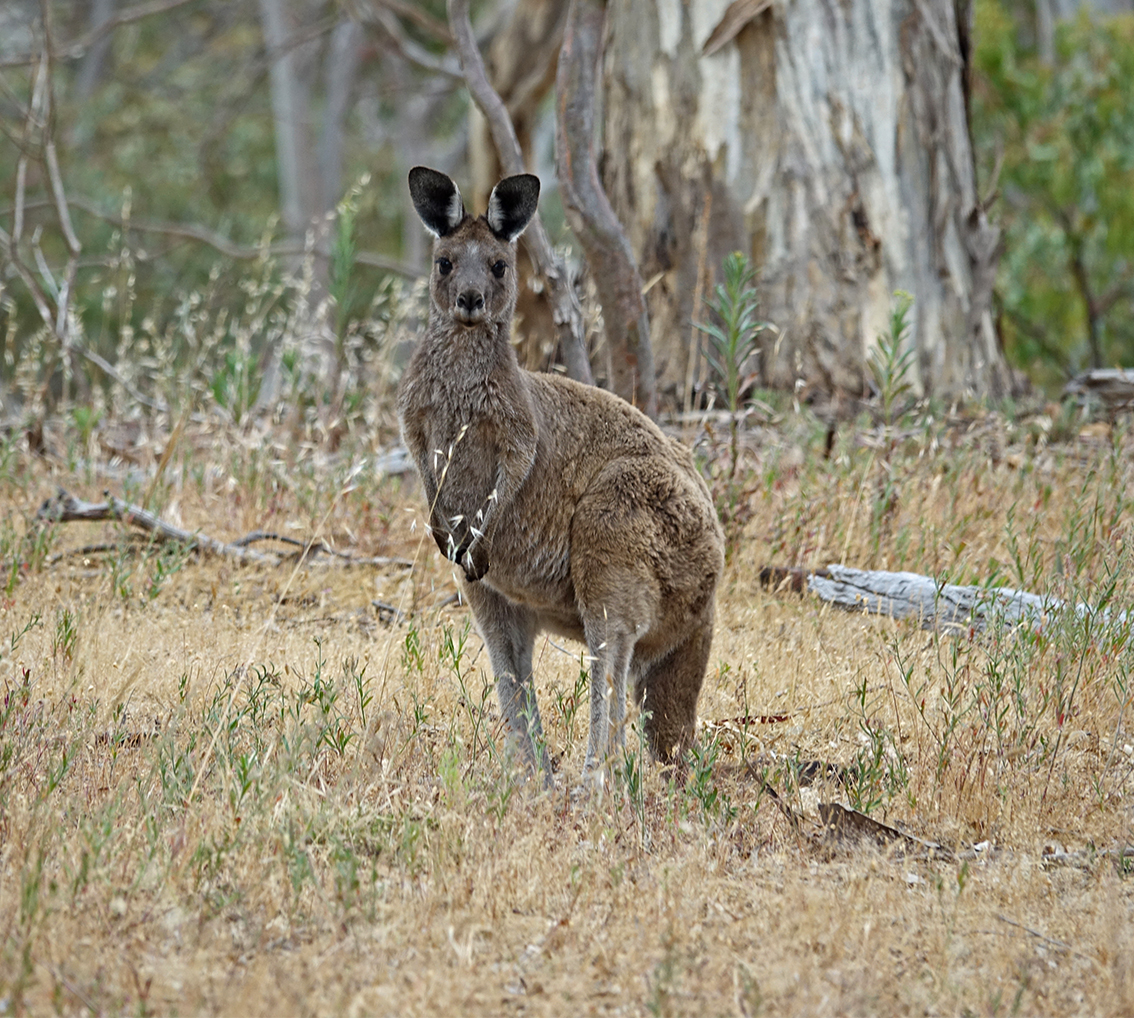
Just watching

Continuing along the cross track I suddenly freeze and hold my breath. Three adult Emus are walking towards me and have, either not registered my presence, or are not unduly phased by humans. I raise the camera slowly and wait as they approach to within thirty metres. I take a series of shots before they veer away pecking for seeds, insects and whatever else they might find in the dry scrub.

The Emus gang

Emus close by me

As I traverse move up the trail, I notice a variety of wildlife including; musk Lorikeets Sulphur Crested and Rose Breasted Cockatoos, more butterflies, a few native bees as well as ant nests and termite mounds. I turn over a couple of rocks and dead branches (replacing them carefully afterwards), uncovering a snakelike Three-toed Earless Skink and Pie-dish Beetle.
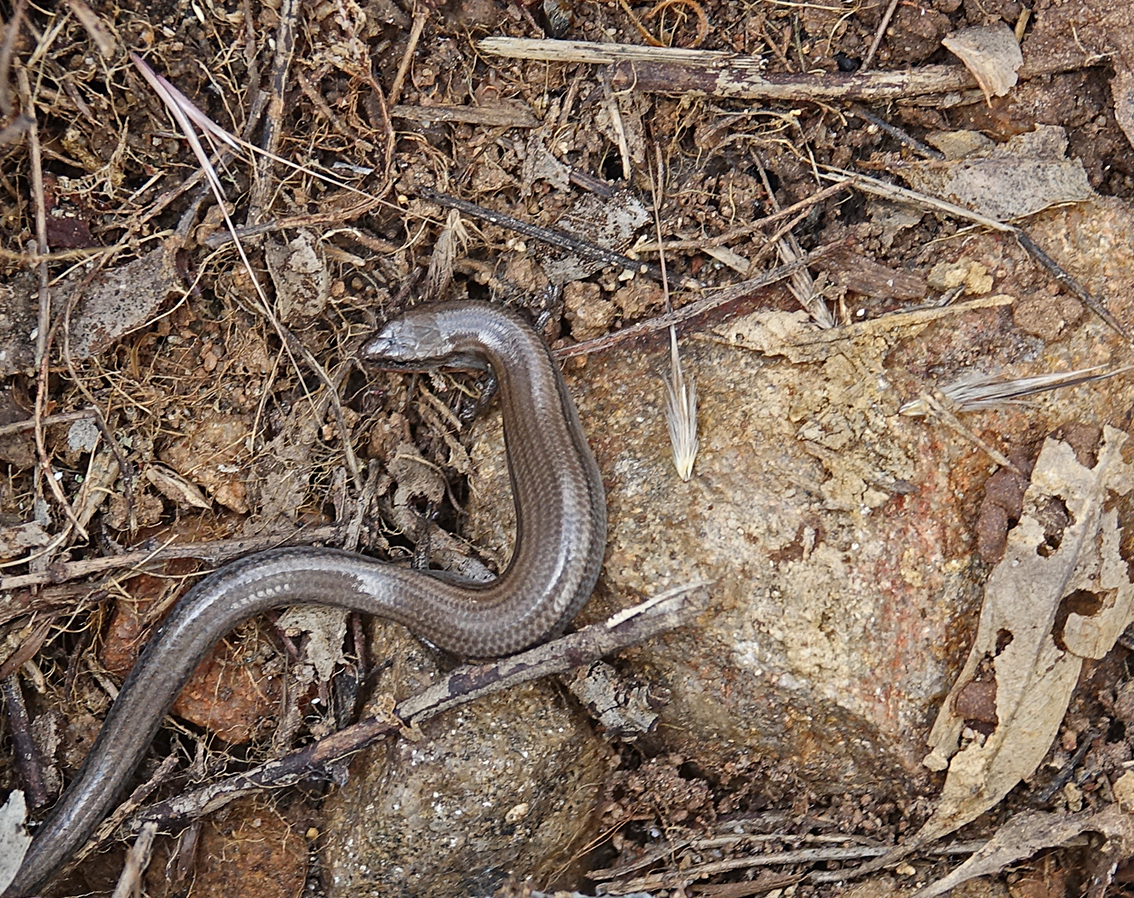
Three-toed Earless Skink
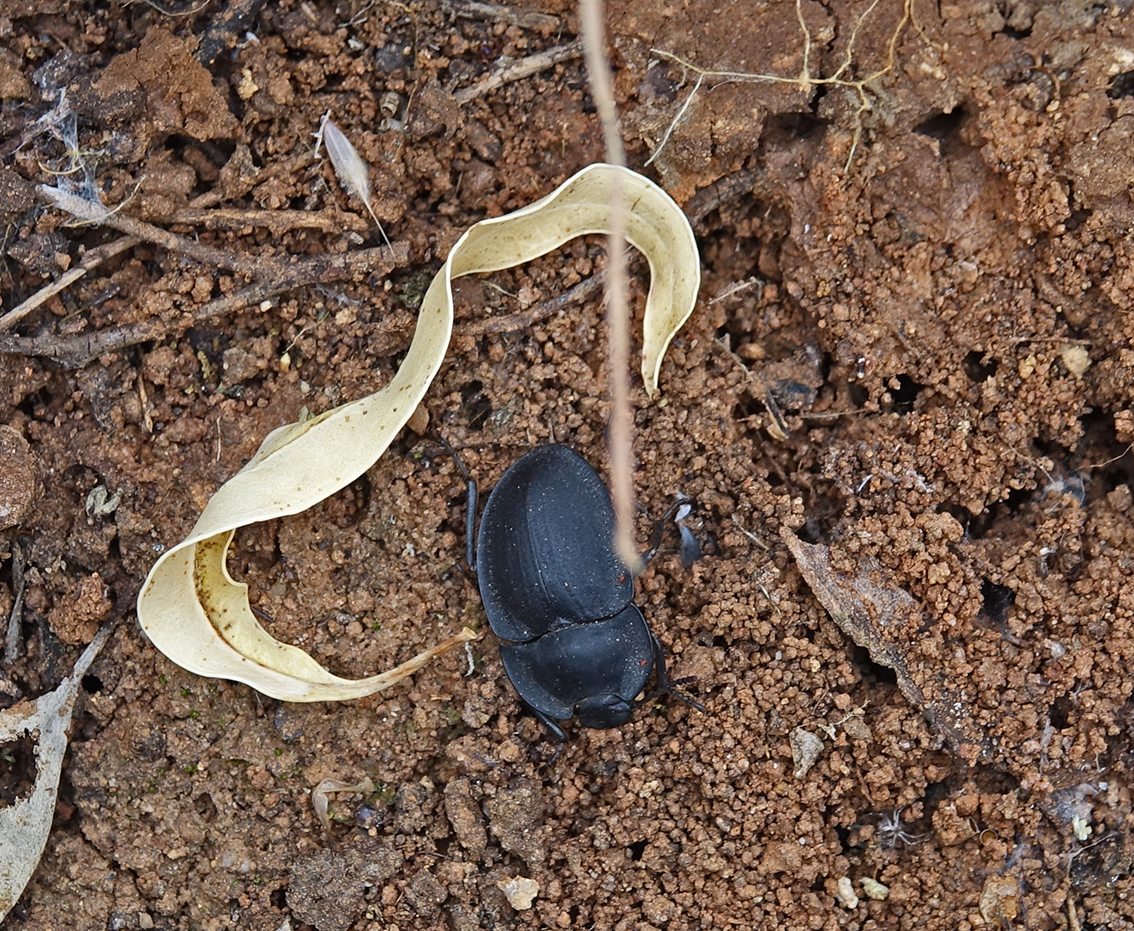
Pie-dish Beetle

With my walk at an end, I drive on towards Williamstown for lunch at the little bakery across from the creek. However, I do make one more stop on the way at Linfield Road Winery which has a charming bed and breakfast attached. An ideal place to stay when I make my next foray into the wonderful north-eastern region of the Adelaide Hills.

B&B for next time

Linfield Road Winery vines

Cheers

Baz

Additional notes

This is an easy walk/drive which is quite suitable for families and seniors with public toilets, barbecues, parking and other facilities nearby.

Please pass on this blog title and or contact information (URL) to any person or organisation with an interest in taking walks and enjoying wildlife in SA.

Click on these links and see more South Australian stories and pictures in my Weekend Notes articles as well as locating similar blogs on Feedspot’s top 20 Australian wildlife blogs

https://www.weekendnotes.com/adelaide/writer/452 https://blog.feedspot.com/australian_wildlife_blogs

Hale Conservation Park

14 Aug

Adelaide Rosella

Dear Reader:

Over the years I have made several major errors as a wildlife photographer. Perhaps the most telling has been the tendency to see a shot at the beginning of a field trip and not take it as I believe there will be a better one later. Not this time! As I climb out of the SUV I notice a pair of Adelaide Rosellas flying into a gum tree about a hundred metres away. I steady my camera against the vehicle and fire off a couple of frames. And yes; they were the only Rosellas I came close to photographing for the rest of the day.

Trailhead

Typical section of the trail showing some fire damage

I am walking the loop trail in the Hale Conservation Park a few kilometres out of Williamstown on Warren Road which leads to Gumeracha. It is a lovely, compact park with a small parking area and a well-defined track with information panels at the head of the trail.

Flame Heath with Goodenia flower growing through

Cryptandra species

The path climbs gently with generous views of the surrounding rural landscape. There is evidence of fire damage in some areas and significant regrowth; especially the Blue Gums. Although it is winter there are still numerous flowering plants along the trail including Flame Heath and Prickly Cryptandra bushes with Goodenia flowers growing through them.

Clever hands

I continually scan both trees and bushes for birdlife, possums and Koalas. On a level section, which gives me an excellent view of trees growing below me on the hillside, I spot a large Koala in the forked branches of a eucalypt. Its grip on the tree provides an excellent example of the prehensile nature of the marsupial’s ‘opposable thumb grip’-a feature more common in primates.

Scarlet Robin and New Holland Honeyeater (ID images only)

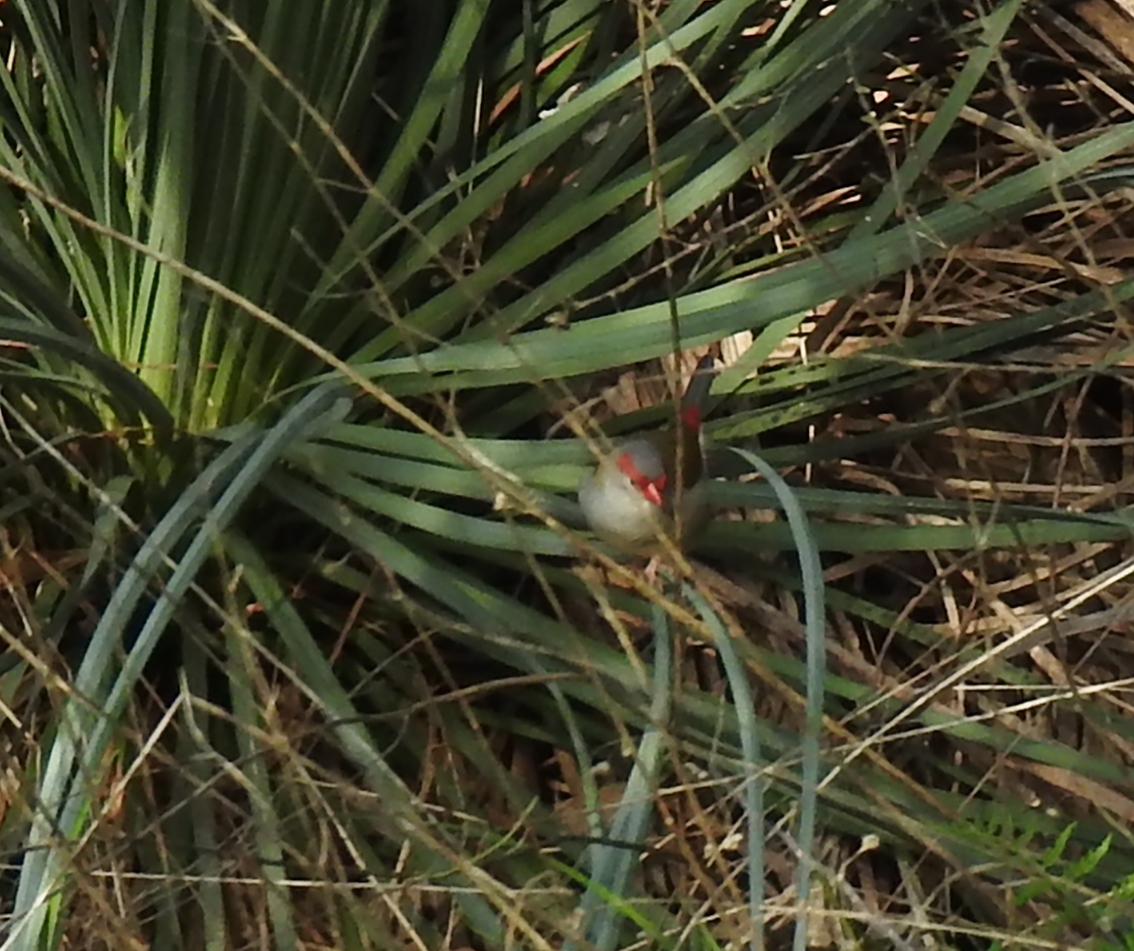
Red-browed Finch (ID image only)

With rain clouds gathering, I decide to backtrack rather than continue along the loop trail. Near the parking area there is a noticeable population of smaller birds which are hard to photograph as they flit between branches and leaves. I decide to take a sit and wait approach and capture some images for identification purposes. My results are far from ideal but they do give a true sense of the difficulty inherent in acquiring good clear shots in a natural environment where animals are wary. Nevertheless, I have included my attempts in this post.

Spotted Ctenotus

When I explore a new area I try to find and photograph animals from as many groups or classifications as possible. In the cooler months, cold blooded animals such as invertebrates and reptiles are the most difficult to locate. It is always worth turning over a rocks and dead tree branches or peering under bark to find animals that might take shelter there, (always replace the item or make sure the animal can move back to a safe place). Today, I find a Spotted Ctenotus; a small, stripy, long-tailed skink, hiding under a rock on a north facing incline.

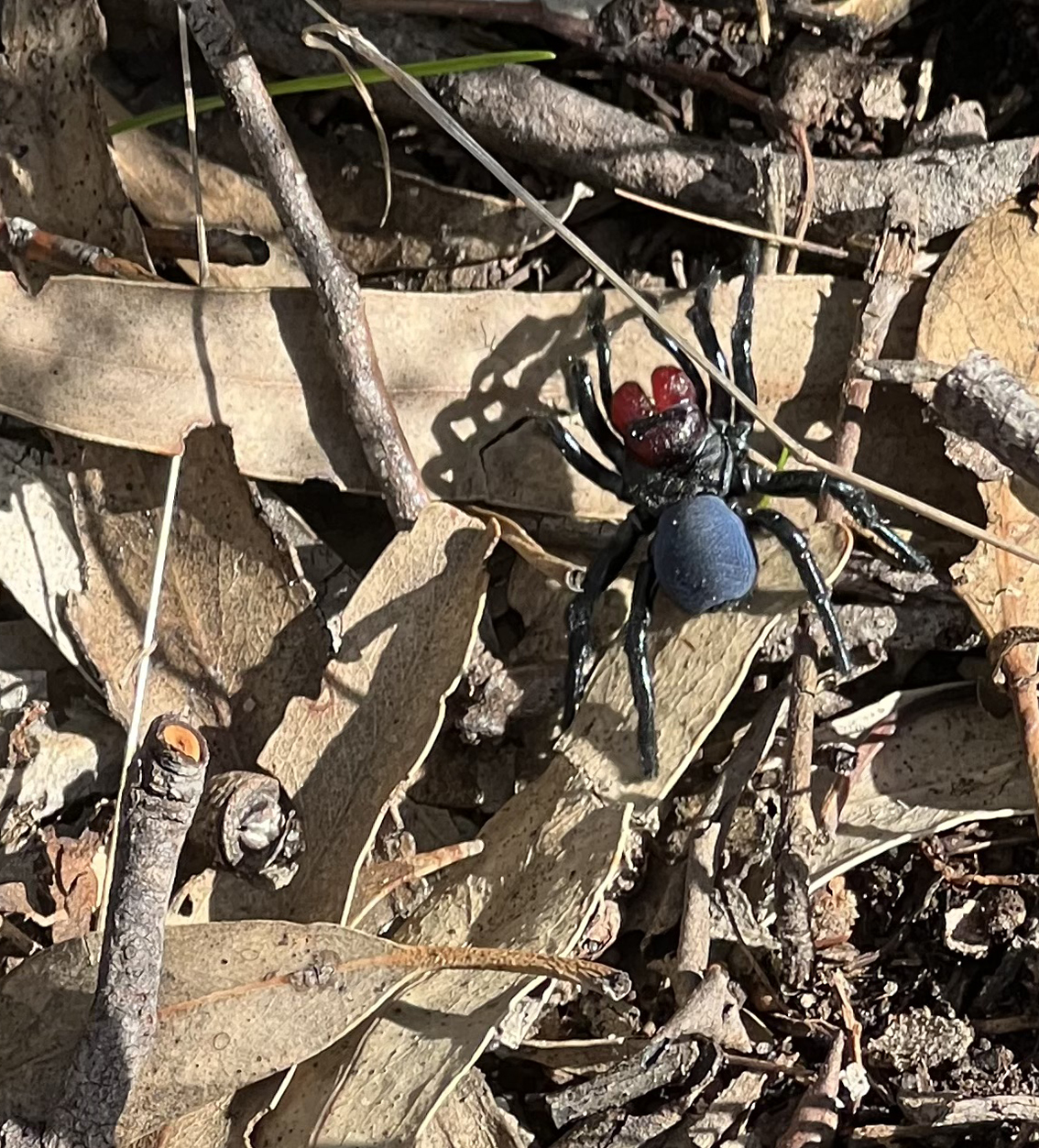
Mouse Spider (Credit Andrew Fitzner)

One of the best things about exploring our parks is encountering like-minded people and today’s walk is no exception. I meet a couple who passed me on the trail earlier and we chat about what we have seen. They show me a picture of a Mouse Spider spotted on the trail and photographed with an I Phone.

My walk completed, including a promise to myself to return in the spring, I drive back to Williamstown and the local bakery to treat myself to a chai latte and one of the best custard tarts I have eaten in ages.  

Cheers

Baz

Additional notes

This is a moderately steep walk with a small parking bay. It is not dog friendly.

Please pass on this blog title and or contact information (URL) to any person or organisation with an interest in taking walks and enjoying wildlife in SA.

Click on these links and see more South Australian stories and pictures in my Weekend Notes articles as well as locating similar blogs on Feedspot’s top 20 Australian wildlife blogs

https://www.weekendnotes.com/adelaide/writer/452/

https://blog.feedspot.com/australian_wildlife_blogs/

Birdwood’s Cromer Conservation Park…….Part 2

11 Mar

Classic Cromer scrub

Dear Reader:

This is my second visit to the Cromer CP. Unlike my first wander around this unique patch of South Aussie scrub the immediate weather is not treating me in a kindly fashion with low clouds and mist forecast for the morning then clearing as the day progresses. Not great for detailed photography but it might add a different atmosphere to my images.

Roos in the fields

Close up shot from car

As I drive along the road from Birdwood I am forced to a stop to avoid a small group of Western Grey Kangaroos bounding in front of the car. They settle in a field and start to graze only looking up as I power down the window for a shot.

Thornbill species?

Treecreeper sp or Sitella sp

I enter the park from an unmarked gate on the far corner of the park about 1 km from the main entrance. A barely visible track runs into scrub which is dominated by two distinct types of eucalypts. The taller trees have smooth bark while the other’s is rougher and darker. There are small noisy birds flitting about in the canopy and despite the poor light I get a couple of shots at distance thanks to the extreme range of my Nikon P900. A bit of Photoshopping later suggests one is a variety of thornbill and the other a sitella or treecreeper species (any ID feedback would be welcome).

Cockies Galahs) in the mist

The track disappears after a few hundred metres and just where it peters out there is a small mound surrounded by old, rusted fencing. I take a closer look and discover, what appears to be,  a well or perhaps mine digging. There are several smaller unfenced depressions in the area and in one I catch a glimpse of a Blue Tongue Lizard just before it quickly disappears into the undergrowth. The sudden movement startles a pair of Galahs perched high above me. Despite the poor light I manage to capture a rather atmospheric image of the parrots.

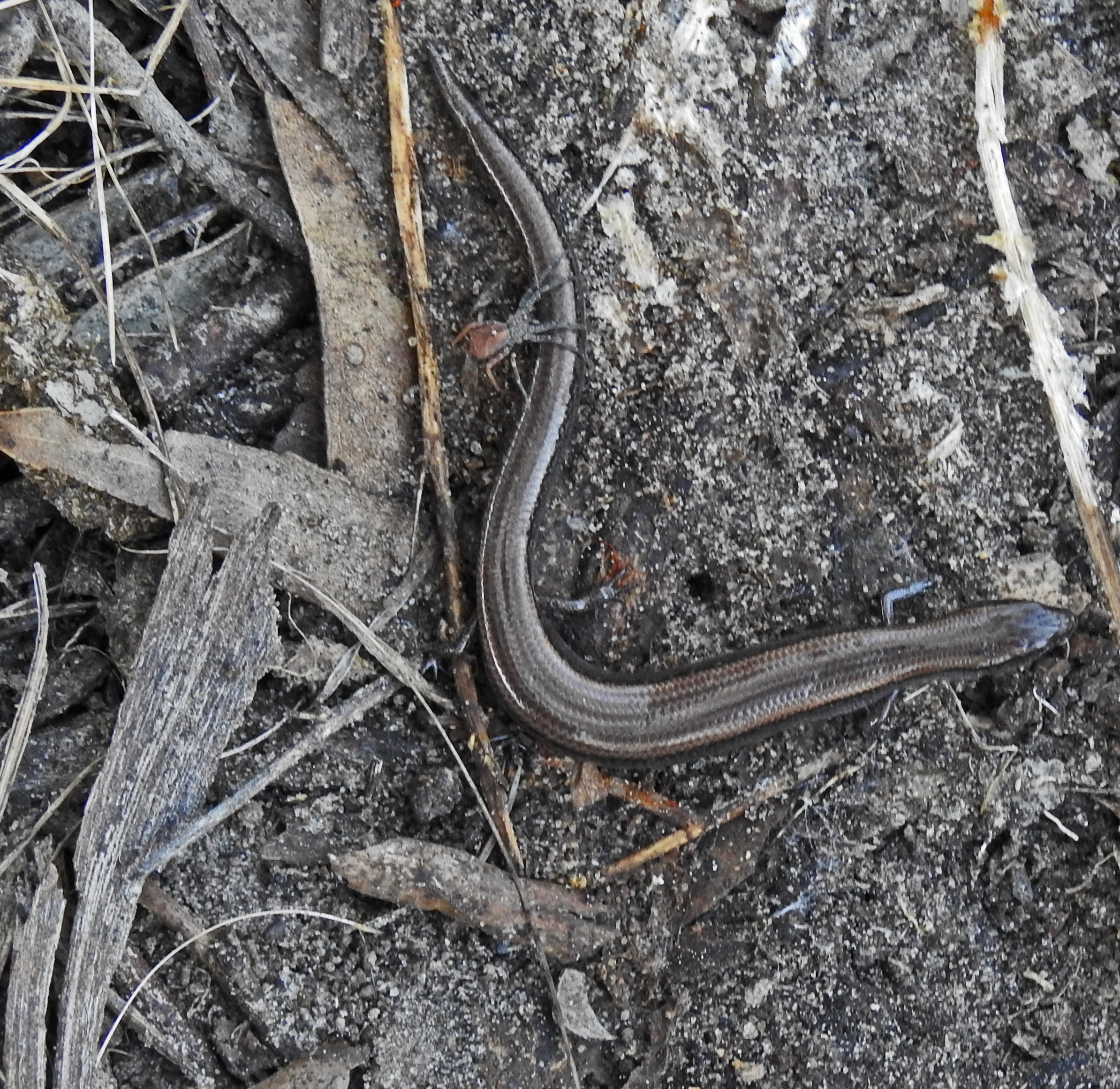
Unknown skink species possibly a slider

To my delight the sun is starting to burn off the low cloud and blue skies allow for faster shutter speeds and more depth of field. I decide to turn my attention to the smaller animals inhabiting the park. Under a fallen log, I discover a plethora of life; roaches, a centipede plus a lovely striped skink, possibly a slider species. It has tiny legs and a long slender body for living in the leaf litter and under rocks and fallen branches. Further examination of the shot reveals a small spider by its tail.

Bakery delights at Birdwood

It is time to leave the park on this, my second visit, but I shall return in spring to witness the emergence of delicate wildflowers, birds building nests and roos breeding. Now it is time to obey the urges of my stomach clock and enjoy the calorific delights of the local bakery. So much to choose from but my walk in Cromer Conservation Park might justify my indulgence.     

Cheers

Baz

Additional notes

This is an easy walk which is quite suitable for families and seniors but care must be taken because of the pristine nature of the scrub and the possibility of snakes in the warmer months.

Please pass on this blog title and or contact information (URL) to any person or organisation with an interest in taking walks and enjoying wildlife in SA.

Click on this link and see more South Australian stories and pictures in my Weekend Notes articles

https://www.weekendnotes.com/profile/651267/

Houseboat Day 5…..At Caudo Winery

2 Jul

Dear Reader:

The gum tree alongside the boat is massive. Its branches extend well over the bank and river. These River Gums are a sanctuary for many species that live along the Murray providing homes for myriad invertebrates, birds, reptiles and even mammals such as bats and possums. At the moment, I can see a Yellow Rosella perched high in the canopy. A long shot but certainly gettable with my Nikon P900.

Yellow Rosella

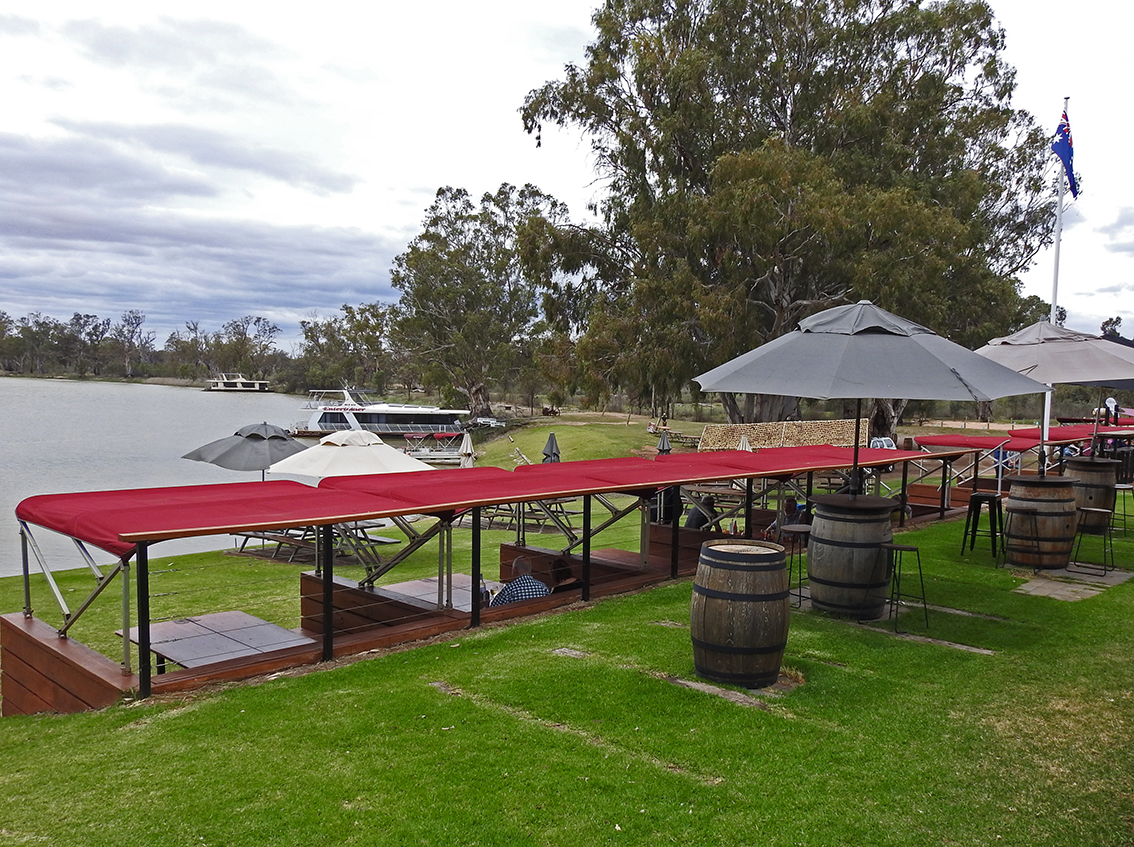
We have tied up the houseboat at Caudo Winery after a lovely cruise along the river which was quite productive when it came to wildlife; as I mentioned in my last post. The winery is a perfect pause for lunch and wine tasting on a river trip from Morgan, and the staff are both helpful and knowledgeable.

Houseboat and winery outdoor area

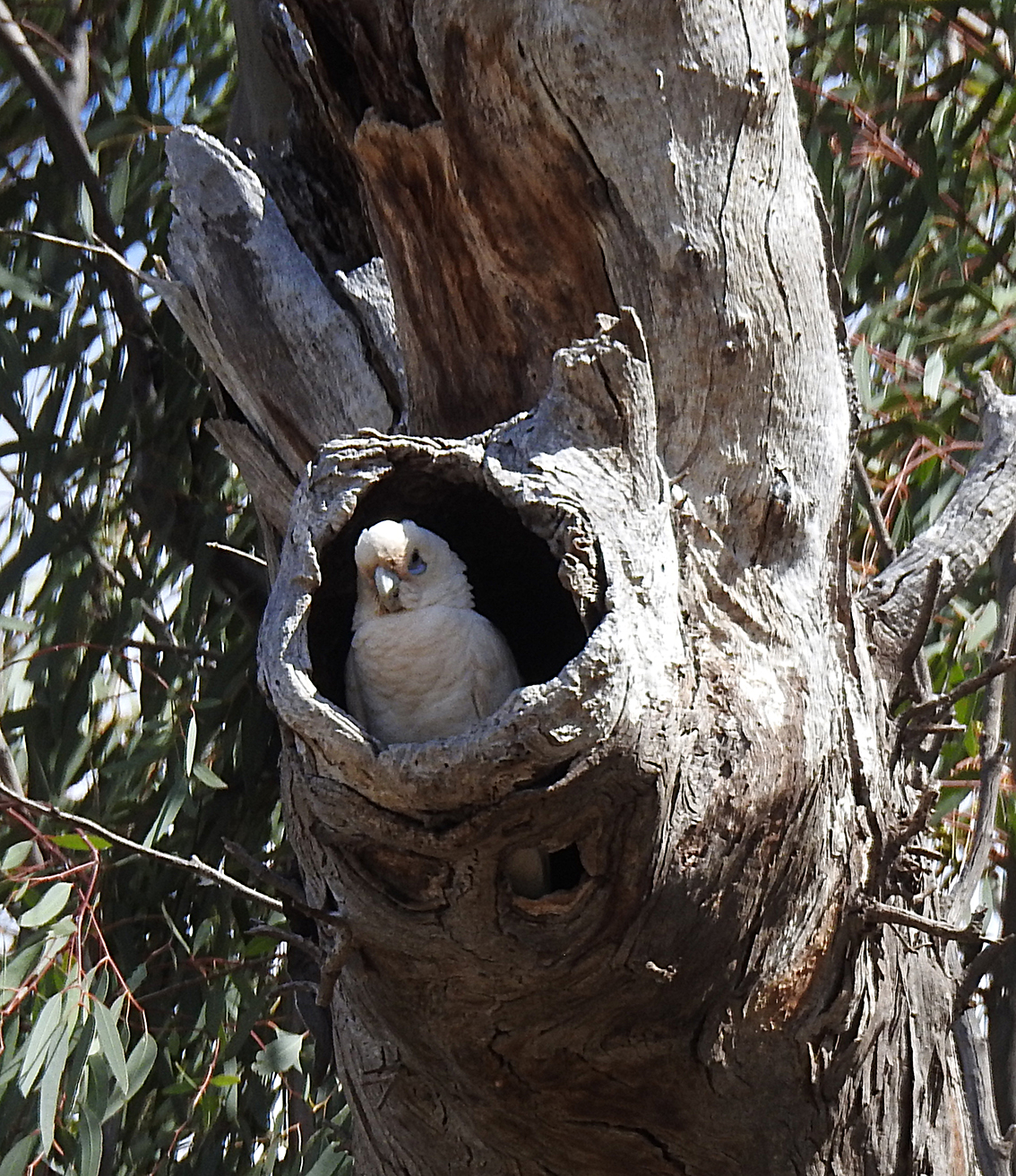
After a sip of a local white, I am ostensibly a non-drinker but love a little taste to simply enjoy the flavours, I decided to take an exploratory wander around the grounds. Another Red Gum, even larger than the first, towers over an open paddock on the property’s edge. Peering through the long lens I can make out a Corella nesting in a dead branch. While I am watching the Corella’s mate flies in and they exchange places.

Short-beaked Corella in nesting hole

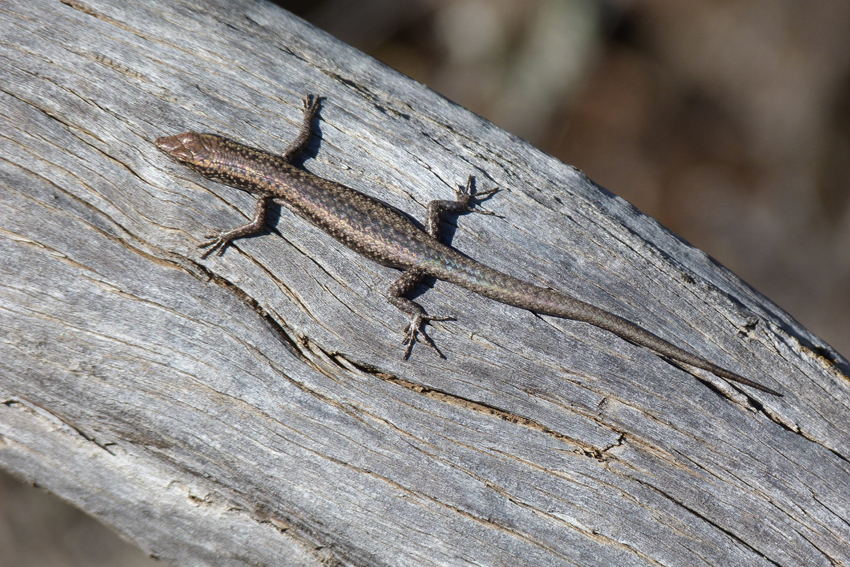
Turning my attention from the larger animals I start to hunt around under the half-shed bark and understory by the base of the gum trees; always a good place to find insects, spiders and reptiles. I am not disappointed, discovering some beetles and small coppery skink that I have yet to identify.

Pie Dish Beetle species
Unknown skink species

My stroll is brought to a pleasant end when a couple the houseboat crew send me a quick text about pizzas hot from the oven being served in the next few minutes. Pizzas, fine wines, good company a bit of wildlife….a pretty good afternoon on the Murray River.

Cheers

Baz

This is an easy trip which is quite suitable for families and seniors with all facilities on board, only a driver’s license required to drive and boat training provided by the company prior to departure.

Please pass on this blog title and or contact information (URL) to any person or organisation with an interest in taking walks and enjoying wildlife in SA.

Click on this link and see more South Australian stories and pictures in my Weekend Notes articles

https://www.weekendnotes.com/profile/651267/

The Paralana Trail

29 Jun

Dear Reader 

It’s winter but you’d hardly know it. The afternoon sky is a clear endless blue and though there’s a hint of the approaching night’s cold desert chill, the temperature is still a comfortable 25 degrees. I am in the Arkaroola Wilderness reserve in the Gammon Ranges some 1000 kms north of Adelaide heading towards the Paralana hot springs. After a hearty breakfast in the resort’s dining room we have loaded our gear into Suzuki GV and locked in 4WD for the 30 km trip along one of the most interesting off road adventures in this world heritage region.

Ochre wall

Ochre wall (click to enlarge)

 We have been crawling over the rugged terrain for about 20 minutes and the stony track has opened into a dry creek bed. One section of the embankment is quite extraordinary; a wave shaped deposit of ochre that contrasts sharply with the surrounding bush. This significant deposit was of great importance to the Adnyamathanha people who used it in ceremonies and to trade with other Aboriginal groups.

Rock skink

Unknown skink species (click to enlarge)

 While the others break out a little gas stove to brew a ‘cuppa’ I walk along the creek bed camera in hand. The unseasonably warm weather has brought out a few reptiles that would normally be hibernating at this time of the year. They are wary and the only clue to their presence is an occasional rustle in the undergrowth. Finally, one little skink that is basking on a weathered tree trunk decides that remaining motionless is a better option than retreating, offering me a nice clear shot.

(click to enlarge)

Male mulga parrot (click to enlarge)

Femal mulga parrot feeding on blue bush berries

Female mulga parrot (click to enlarge)

 Just as I am about to make my way back to the vehicle a flash of colour amongst the skeletal branches of a long dead acacia tree catches my eye. I peer through the telephoto and focus on the turquoise plumage of a male mulga parrot. If it is the mating season then the female should be nearby and with a little persistence I find her on the ground feeding on some small yellow berries that are the fruit of a low growing saltbush-like plant.

P1010422

Yellow footed rock wallabies on steep cliff (click to enlarge)

 Refreshed, we resume our drive along the trail, slowly climbing into the hills which provide spectacular views across the Gammons. Following a twisting descent down a narrow track we enter the spectacular Baranarra Gorge with its sheer rock walls and boulder strewn pools of clear fresh water.   Our progress has been slower than planned and it is late afternoon when we start to pick our way along the edge of the water hole. Almost immediately I hear the rattle of small rocks skittering down a steep rock face. Almost immediately I hear the rattle of small rocks skittering down a steep rock face. Looking up I catch sight of a pair of yellow footed rock wallabies precariously perched on the sheer cliff face. Once again, I am reminded of the extraordinary adaptations of these beautiful little animals. With their furry back feet perfectly designed for gripping rock surfaces, long counterbalancing tail and subtle camouflage, they are the Aussie equivalent of mountain goats.

P1010408

Chopper based at Arkaroola Village (click to enlarge)

 Unfortunately our stay must be a short one as the light is starting to fade and we must head back to our home base at the village. Tomorrow we have decided to take a helicopter flight over the area to get an overall picture of the terrain before our next off road foray.

Cheers

Baz