Tag Archives: South Australian tourism

Spring Gully…Wildlife and Wineries

20 Jul

Spring Gully…Wildlife and Wineries

Dear Reader;

There are two white winged choughs in the eucalyptus tree about a hundred metres away. The birds are quite wary, flying deep into the woodland every time I approach. Choughs are often mistaken for crows but closer examination reveals a curved beak and rusty coloured eyes in these juveniles, red in adults, as well as white patches on the wings. The birds seem to be quite communal and there are at least a dozen scattered amongst the trees.

1 white winged chough red

White winged choughs


I am driving through the Spring Gully Conservation Park about five kilometres from the little hamlet of Sevenhills in the Clare Valley. Where the road to the park leaves the main highway we have ‘dined’ at a local bakery on coffee and one of the best vanilla slices ever to clog an artery. This crossroad also leads to the renowned Skillagolee restaurant and winery where we have booked an afternoon tea.

2 1 red

Red stringy barks


 Leaving the choughs to their socialising I park a little further along the road by a fire track then walk along a bush trail. The view of the plains beyond; with rare red stringy barks, as well as yacca or grass trees and bush lilies in the foreground, is breathtaking. There are numerous trails leading off the main track, one winds down to a creek and waterfall. However, the afternoon is drawing to close and we are simply doing a quick drive through in preparation for some bush walking later.

2 2 red

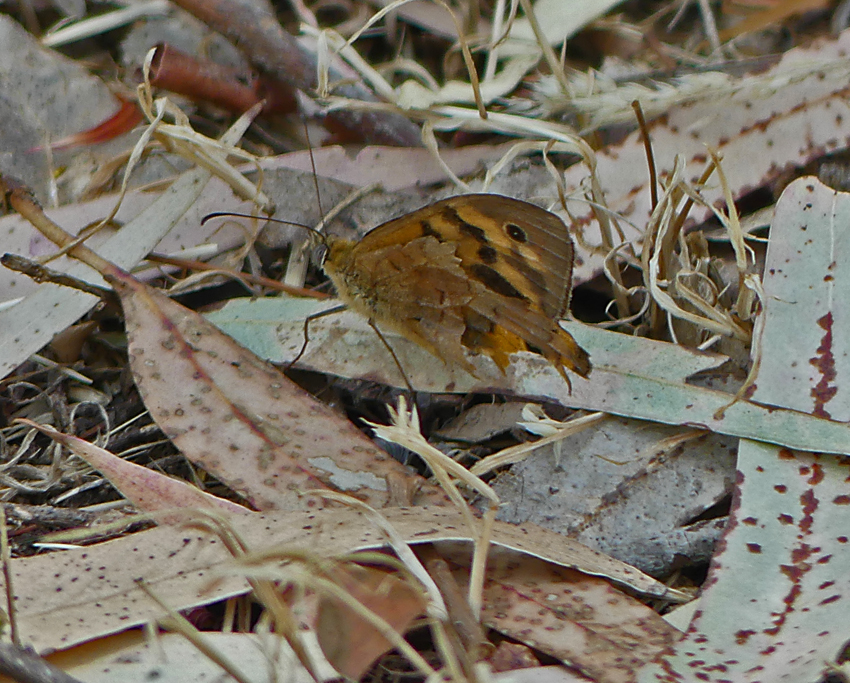
Argus species butterfly


Afternoon tea is superb, scones and a cheese platter, followed by a pleasant time tasting some of the excellent Clare Valley wines. Now the sun is low in the sky and it is time to drive down to the Jesuit winery at Sevenhills where altar wine is produced amongst other table vintages.

5 red

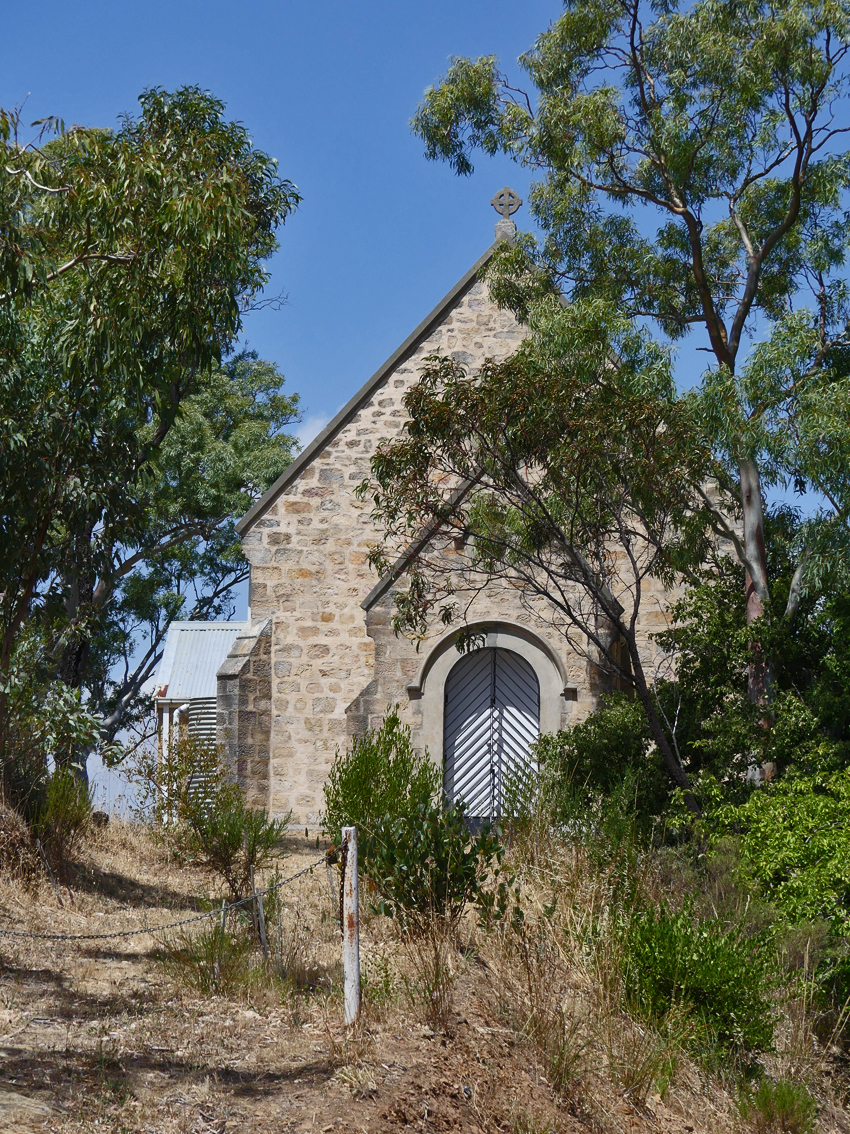
Sevenills monastery


As we drive along the entrance road to the monastery and vineyard we are lucky enough to catch sight of a group of grey kangaroos feeding along the fence line by the vines. I have often seen roos here on previous trips and it is an image I was hoping to capture.

6 red

Grey kangaroos at dusk in vineyard


 With the evening sun backlighting the trees that surround a sacred grotto, kangaroos in a vineyard and a flight of pink and grey cockatoos settling in the trees to roost it is hard to imagine a more idyllic way to start our weekend trip through the Clare Valley.

Cheers

Baz

Once Around the Lake

2 Jul

Dear Reader;

The ‘little pied cormorant’ is perched precariously on a branch overlooking the lake. It has been fishing for the last ten minutes and I have watched the bird continually diving under the water to pursue small fish before swallowing them when it surfaces. When the cormorant has finished the afternoon hunt it will spread out its wings to help dry them before finding a suitable place to roost.

1 1 b

Little pied cormorant


It is a mild winter afternoon and I am strolling around the Torrens Lake between the Frome Road Bridge and the new footbridge that links the city to the Adelaide oval. I have walked this circuit many times stopping at the zoo cafe for coffee, or dining at Jolley’s Boathouse Restaurant in the evening. Each time I manage to encounter a different assortment of wildlife depending on the season, time and weather.

1 4 red

Jolley’s and Popeye pleasure craft


In front of Jolley’s a fisherman is casting for carp and earning the close attention of several Australian pelicans. One bird in particular is waiting to see if it can capitalise on his skills. Pelicans are common throughout the year. Sometimes they hunt individually catching small carp in their flexible, pouched beaks and at other times they work together to round up a school of fish.

1 2  red

Fishing buddies


A little further along the embankment a pair of dusky moorhens and a Eurasian coot are feeding on the edge of the water. Coots are adept at diving and they are able to squeeze the water out of their feathers to decrease their buoyancy which makes foraging underwater easier. Both species tend to stay close to the reeds which provide both shelter and a safe place for nesting.

1 3 red

Eurasian coot and dusky moorhens


While I am watching this little group I notice the characteristic V shaped ripples of an Australian water rat heading towards the far bank. Water rats are shy and hard to photograph in the wild and I am pleased to fire off one or two quick frames before it disappears into a tangle of undergrowth and reeds.

1 5 red

Australian water rat


I cross over the Adelaide Oval footbridge to the northern side of the Torrens enjoying an uninterrupted view of the water, parklands and riverside buildings including the Convention Centre and Festival Theatre. A young family are manoeuvring their paddle boat near the fountains and black cormorants are drying their wings on the ‘paper-boat’ sculptures in the centre of the lake.

1 6 1 red

View from Adelaide Oval footbridge


Near the Frome Road Bridge several swans are swimming majestically along the edge of the manicured lawns to the delight of some children cycling along the path with their parents. The birds are very large with a wingspan approaching two metres and they can be quite formidable when there are cygnets around. On the bank, another bird is using its long flexible neck to preen the feathers on its back and side.

1 6 red

Black swan


My walk concludes by the Frome Road Bridge where I indulge in a well earned cup of coffee at the Wisteria Cafe. Providing a wide range of snacks and casual meals, the cafe can be accessed from both inside and outside the zoo at the southern end of the bridge. It provides a lovely parkland setting alongside a small creek that runs through the Botanic Gardens and into the lake.

1 7 red

Frome Road Bridge by the zoo


Cheers and enjoy a winter walk

Baz

Monarto Zoo’s Native and Exotic Animals

2 Jun

Dear Reader

There’s something wrong with the first few images; lions do not usually recline under eucalyptus trees and my blogs are about South Australian wildlife. However, Monarto Zoo’s impressive array of wildlife and ideal safari setting certainly merit an article or two from this writer.


1 edit

Aussie lions


When I travelled to Botswana’s Okavango Delta a couple of years ago I was lucky enough to see many of Africa’s iconic species. Unfortunately I never encountered hyenas. As you can see from the following shots of two young animals racing around in a space that could easily be an African veldt, Monarto went some way towards rectifying that disappointment.


3 edit

Spotted hyenas


Monarto Zoo is about an hour drive from Adelaide along the Princes Highway. It is a vast (1500 hectares) open range zoo with over 50 exotic and native animals, most of them displayed in open range settings. Visitors tour the enclosures in special buses with volunteer guides who provide expert information. There are excellent tourist facilities including a cafe, picnic areas and special ‘behind the scenes’ tours that can be pre-arranged.


2 edit

Viewing areas


After my predator experiences from the safety of elevated viewing platforms and many other wonderful encounters with plains animals from giraffes to Mongolian wild horses, I had a bite to eat and set off on one of the many walking trails that wind through the park’s natural bushland.


6 edit

Walking trails and bushland


4 edit

Visitor facilities


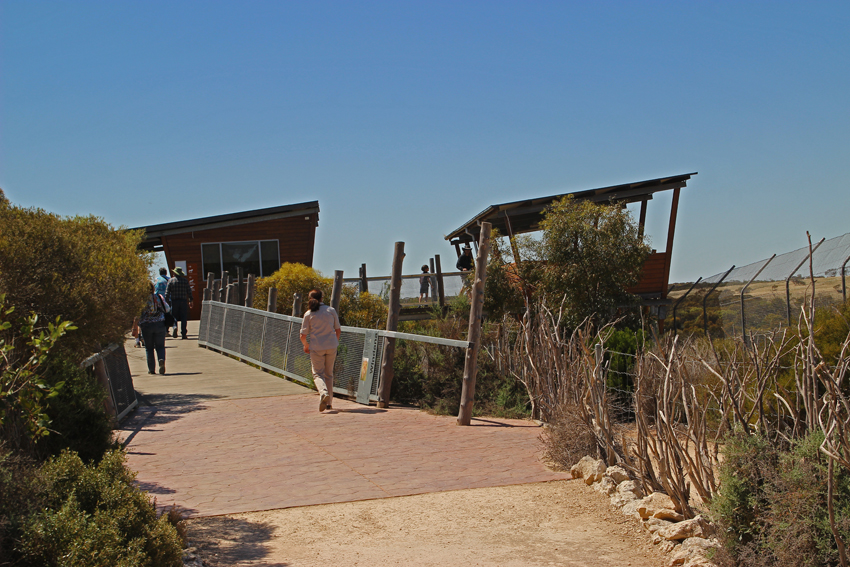
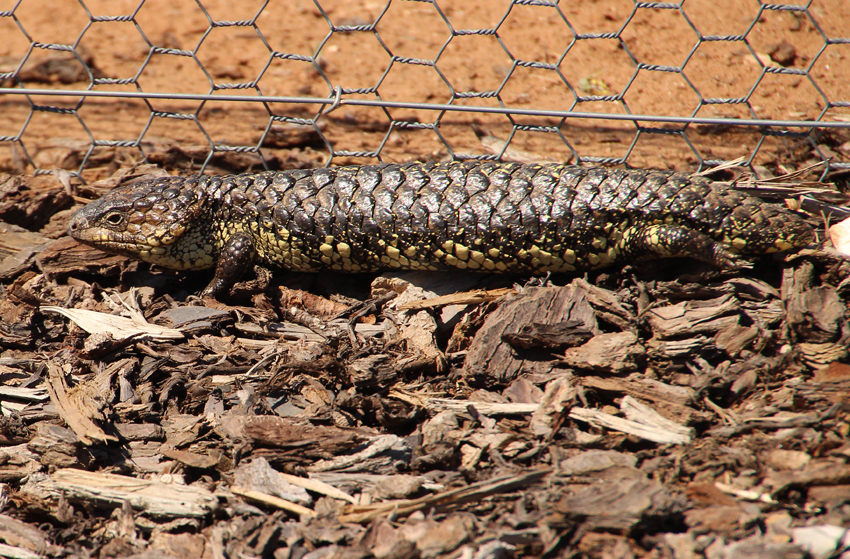
I now switched my focus from exotic species back to native animals. Along one of the trails that ran through a display on sustainable, native gardens I caught sight of a shingleback lizard. The dry sclerophyll scrub was also home to numerous small common dwarf skinks that I had not encountered before.


7 2 edit

Shingleback in native garden area


7 1 edit

Common dwarf skink in leaf liitter


Emus and grey kangaroos roamed freely in certain regions of the park and in one smaller, closed off area yellow footed rock wallabies enjoyed a boulder strewn habitat. A variety of birds including: honeyeaters, wrens, finches, various parrots as well as the usual suspects like magpies, crows and birds of prey, were also common throughout the trees and open spaces.


5 edit

Emus


7 3 edit

Yellow footed rock wallaby


This unusual combination of exotic animals in extensive natural enclosures alongside bushland that can be accessed by walking trails made my day at Monarto exciting at so many different levels and certainly a special place to visit whatever your wildlife preferences.

 Cheers

Baz

Gawler’s Dead Man’s Pass

7 Apr

 Dear Reader:

There are dragonflies and damselflies hovering above the water. Every so often one of the slender damselflies hovers near the bank then attaches itself at right angles to a reed.

1

Damselfly


The pool of water is left over from the winter rains and sits alongside a causeway that crosses the river just a few hundred metres from Gawler’s main street. The town has a country, colonial feel about it with classic stone buildings and a good smattering of pubs, restaurants and bakeries to fuel up on before exploring the ominously named Dead Man’s Pass.

2

Causeway over the Gawler River

3

Historic stone buildings in Gawler


Well placed signs along the walking and cycling track indicate interesting historical information as well as describing the wealth of fauna that can be encountered along this trail which follows the course of the Gawler River. As I approach a dense clump of reeds I am lucky enough to catch a fleeting glimpse of a red bellied black snake before it disappears into the undergrowth near the river bank.

4

Red bellied black snake


The edge of the river is bordered by massive red gums that in themselves create a multitude of ecological niches. I sit near the base of one huge tree watching a variety of insects from ants to beetles as they forage along the trunk while a tree skink weaves its way amongst the deeply furrowed bark in search of prey.

5

Tree living skink


Several metres higher up the tree, a pair of crested pigeons has made a nest on one of the larger limbs. Both birds will share the incubation of the eggs (usually two) which will hatch after about 21 days.

6

Crested pigeon


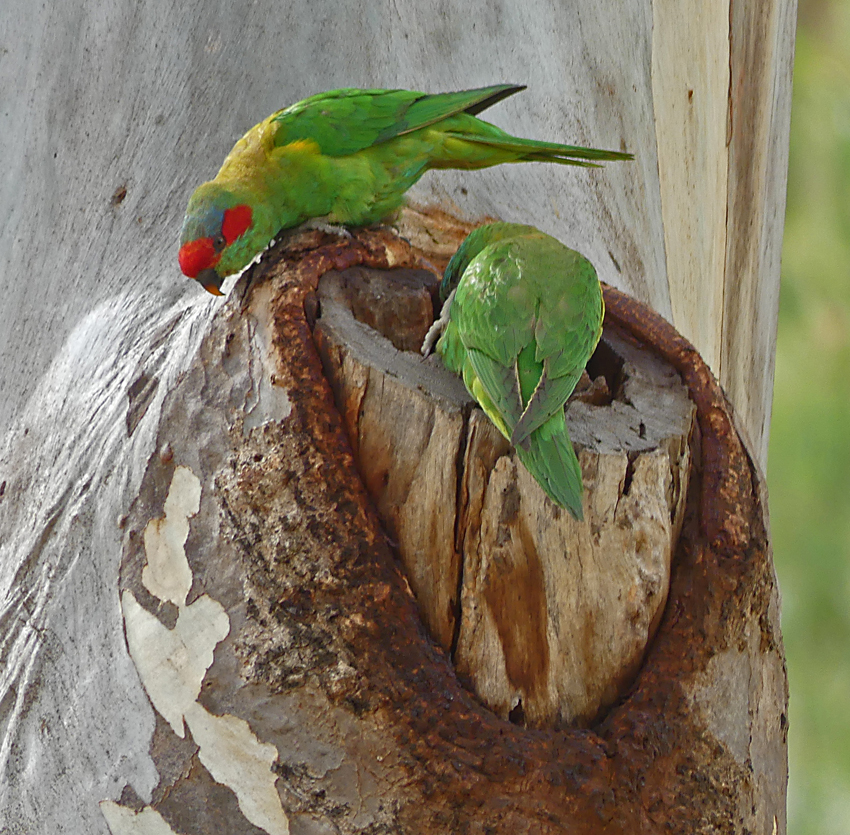
The river red gums along the creek also play host to a wide variety of parrot species including cockatoos, rosellas, rainbow lorikeets and the brightly coloured little musk lorikeets. Two of these delightful little birds are checking out a nesting hole where a branch has been removed and I am fortunate enough to capture an image of them contemplating their future real estate.

7

Nesting musk lorikeets


My morning exploring the park on the outskirts of this charming country town has been most rewarding and I am sure that Gawler’s historical and ecological diversity will be the topic of more posts in the future.


Cheers Baz

An Autumn Walk and Drive Around Stirling

21 Mar

Dear Reader:

There are ravens in the tree near the restaurant. We call them crows in SA but the birds that live around Adelaide are usually little or Australian ravens. True crows are found much further north in outback regions. The birds are feeding on some autumn berries in a deciduous tree by the roadside. Every so often, one of the more adventurous gang members swoops down and reconnoitrers the outdoor tables for any tasty leftovers.

1 1 red

Raven disguised as crow


I am sitting in Rubys Organic cafe in the hills town of Stirling, a twenty minute drive from the city along the south-eastern freeway. This charming town of around 3000 people has a distinctly English feel about it. As well as native trees the town has numerous European species and the cooler climate makes it ideal for plants such as azaleas and camellias.

1 2 red

Healthy, interesting and tasty


After a healthy and delicious (gf) lunch of salmon croquettes and a pumpkin and bean salad, I drive out to the golf course on the outskirts of the town. At the end of the aptly named Golflinks road I park the car and walk into the Mt George Conservation Park. Tall stringybarks dominate this section of the walking trail which is part of Adelaide renowned Heysen Trail. Some of the trunks are blackened from earlier fires though most are still alive and bearing new growth. There is a proliferation of native groundcovers including heaths, grevillias and even some tiny orchids and lilies sheltered in the understory.

1 3 red

One of the many small plants growing in the understory, probably a heath


Walking through the forest is enjoyable but most of the bird life is high in the trees and hard to photograph so I return to the car, drive back and head along Old Carey Gully Road to the Mt George turn off. At the little picnic area, pleasantly situated by a small dam, I rejoin the track which is now part of the Pioneers Womens Trail. It runs over a small bridge where I pause to look into the creek bed in search of water skinks or perhaps a water rat (rakali). To my surprise I catch a fleeting glimpse of a small rat-like creature hopping across a pool on a fallen log. It is a southern brown bandicoot, a marsupial, not a rat at all. It pauses for a brief moment on its makeshift bridge and I take a shot. Photographically, the results are somewhat mediocre but in terms of satisfaction as a naturalist, it is a special moment.

1 4 red

Bridge on trail crossing Cox Creek


1 4 2 red

Unbelievable to get a photo of a bandicoot especially in daylight hours


But the bandicoot is not my last marsupial. To really ‘make my day’ I spot two koalas, probably a mother and joey, perched on a slender eucalypt overhanging the creek bed.

1 5 red

Mum and youngster


I started with lunch in Stirling and I decide to finish with a visit to Aptos Cruz; one of my favourite hills art galleries.

1 7 red

Aptos Cruise gallery from the top floor


However, on the short drive back to the town nature provides one last surprise when a deer bounds out across the road then pauses amongst the singed trunks of the gums on the edge of the roadside

1 6 red

Oh dear, wrong continent!!!

Cheers

Baz

Wildlife and Wineries

15 Mar

Wildlife and Wineries

Dear Reader:

I can hear the first few notes of a kookaburra calling near some picnic tables across the other side of the green. The birds are usually quite shy and I don’t hold out much hope of sighting them with all the families enjoying their lunch on the grass. However, to my surprise there are two birds sitting on a low branch quite close to a group enjoying a BBQ and glass of wine. I have seen kookaburras steal a sausage in the past and these birds must be residents accustomed to life in the grounds of one of South Australia’s most notable wineries.

1 1

Laughing kookaburras


Seppeltsfield winery in the Barossa Valley is a pleasant 50 minute drive from the city. Easily recognised by the avenue of huge palms at its entrance, the rambling complex encompasses: green spaces, bushland, old buildings, a family mausoleum, fine restaurant, cellar door facilities and even an art gallery; and that’s without even mentioning the sprawling vineyards. Established in 1851 the land was initially used for growing tobacco then wheat and finally grapes in the mid 1860s. Today, it is one of the nation’s most famous and revered wine wineries.

1 2

Jam Factory gallery


I decide that a bushland trek in the area is not by best wildlife option. Today, I will simply wander around the grounds enjoying the animals that take advantage of the plantings, food and shelter that this popular rural setting can provide. My strategy pays off when a wattle bird hops down onto one of the slate tables just a few yards away. Like the kookaburras, wattle birds are fairly common but shy and often difficult to photograph. Having one so close is a rare opportunity.

1 3

Wattle bird


1 4

Picturesque grounds

From the picnic area I take a walk around the courtyards near the restaurant enjoying the tasteful landscaping and searching for insects amongst the plantings. There is a good selection of butterflies this time of year and several different kinds of tiny spiders are hunting amongst the flowers.

1 5

Flower spider n blossoms


After a late afternoon meal ‘Local Garfish, Skordalia, Snowpeas and Vegetable Escabeche’ at ‘FINO’ and a sample sip of the wonderful vintage port that Seppeltsfield is renowned for, I call it a day. As I walk back out to the car park a young magpie fixes its gaze on me cocking its head to one side as if to bid me farewell

1 6

Fond farewell from magpie gatekeeper


Cheers

Baz    

Montacute’s Cherry Trail

10 Feb

Montacute’s Cherry Trail 

Dear Reader:

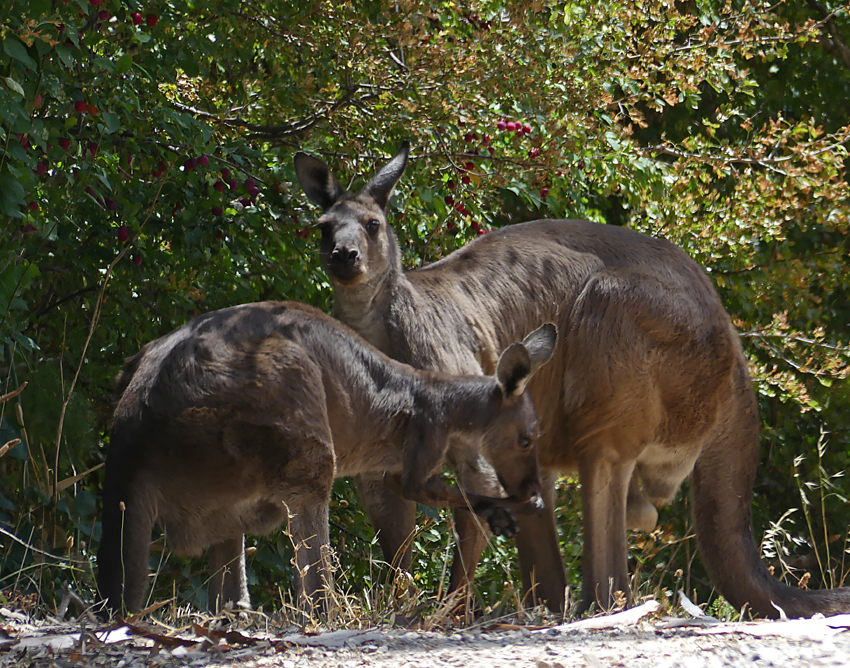
The two roos are huge. It is rare to see grey kangaroos this large quite so close to the suburbs. They are browsing by the side of a gravel track just off the main road. The male seems quite protective of the female looking intently at me while she continues to feed. But in truth both seem unfazed by my presence.

1

Grey kangaroos


I am parked just near St Andrews Uniting Church where the tortuous curves of Corkscrew Road heads back down to the Torrens Gorge. Earlier I had driven up Montacute Road past the hills face suburbs of Newton and Athelstone. The road traversed The Black Hill Conservation Park as it followed the winding path of Fifth Creek to the little community of Montacute famous for its cherry orchards.

2  red St Pauls ANglican

St Andrew’s Church


Along the way I had stopped at several parking bays to access the park. Much to my surprise nearly every stop yielded a koala sighting. They were hanging in trees, nibbling leaves and one was even scuttling clumsily across the ground to a new arboreal refuge.

3

Relaxed koala


After walking around the scrub near the church photographing butterflies and other insects I call in at Montacute Valley Orchards. I park near the farm shed and purchase a few kilos of cherries and some superb home-made ice cream. But my wildlife instincts are drawn to the birds that are frequenting the nearby fruit trees. There are lorikeets, miner birds and wattle birds feeding on cherries and apricots in the foliage as well as cockatoos and rosellas rummaging amongst the fallen fruit below the trees.

4 red meadow argus

Meadow argus butterfly


4 red musk lorikeet

Musk lorikeet in cherry tree


With a belly full of ice cream, a bag full of cherries and an SD card full of images I call it a day and drive back to the city via corkscrew Road and the Torrens Gorge.

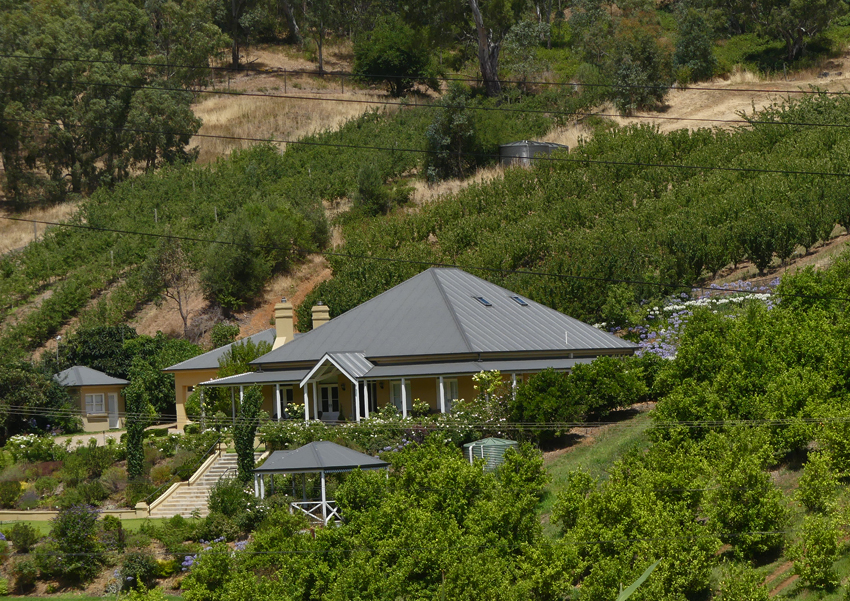
5 One of the lovely hills properies that nestle in the valley

One of the lovely hills properties that nestle in the valley


Cheers

Baz

Cobbler Creek…Love is in the Air

29 Jan

Cobbler Creek…Love is in the Air

Dear Reader:

The two noisy miner birds have been flying backwards and forwards through the box gums for the last ten minutes. Eventually the male sees his chance and lands on the branch next to the female. She chirps a half hearted protest or perhaps encouragement and he seizes the moment. Mating takes just a few seconds and they go back to their previous pattern of fly and follow.

1 1

Miner 1


1 2

Miner birds 2


I am watching the birds and their courtship antics in the Cobbler Creek Recreation Park; an area of open-woodland, near the end of Bridge Road in Salisbury East. Cobbler Creek stretches up into Tea Tree Gully where it can be easily accessed from Atlantis Avenue which joins the two branches of the Golden Way. Dropping in at the Tea Tree Gully shopping mall to collect some food then exploring the creek after picnicking on the grassed area, where Atlantis joins ‘The Way’ near Spring Hill, is a nice option.

2 mallee box gums

Salisbury East entrance


After spending a little more time watching the bird life at the western end of the creek I take a short drive up to Spring Hill in TTG. This part of the creek lies in a more urban setting where the waterway is dominated by huge red gums. There are numerous parrots in the trees and they too seem to be in a rather affectionate mood. For a while I focus on a pair of Rose Breasted Cockatoos (Galahs) which are quite intrigued by a tree hollow that has the makings of a future family home. Between real estate outings they preen themselves and each other as well as squawking and hopping between branches. Occasionally they hang upside down with wings flapping madly and crests erect.

4 off golden way past shopping centre

In Tea Tree Gully

5

Galahs


But the Galah couple do not have the neighbourhood to themselves. An equally amorous pair of corellas is occupying an adjacent tree and they too seem to have spied the potential nest site. Not to be outdone by their Galah cousins they engage in some serious necking and cooing.

3

Corellas


Yes, it seems that along Cobbler Creek; love is definitely in the air.

Cheers

Baz

Clarendon…A Bend in the River

15 Jan

Clarendon…A Bend in the River 

Dear Reader:

From where I am standing, half hidden amongst the reeds, I can see that the river is quite high after some recent rainfall and the water fowl are making the best of it. Both maned and Pacific black ducks are dabbling along the sheltered banks. Any ducklings seem to have reached maturity and left the area though some of the other water birds such as purple swamp hens and dusky moorhens are still tending their chicks.

1

Maned ducks


Riverbend Park is exactly what its name implies. Situated at Clarendon, just a two minute walk from the main street, it is a glorious little reserve with an abundance of habitats and wildlife. There are steep cliffs, reed beds, deep pools and shallow riffles. Wildlife aside, the township with its colonial feel, lovely old homes and good eateries, is a destination in itself and certainly worth the forty minute drive from the city.

4

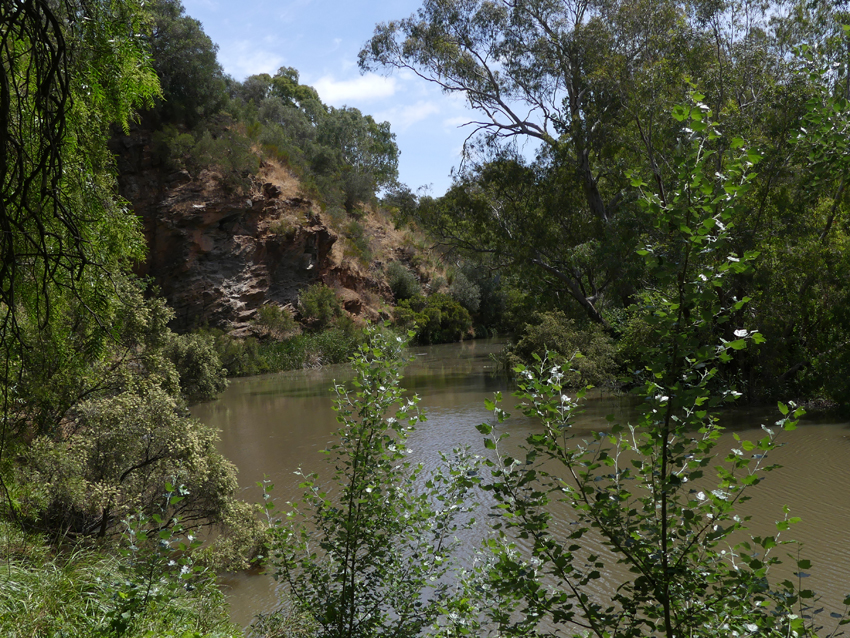
Bend in the river

2

Classic old home


As I stroll along the well grassed banks of the park I notice several species of honeyeaters flitting across the water. The birds seem to be attracted to a huge river gum, gorging themselves on the insects sheltering beneath its peeling layers of bark. Positioning myself behind a nearby bench I rest the camera on a bean bag for stability and fire off a few shots, eventually capturing an image of a white plumed honeyeater hunting for bugs.

11111

Plumed honeyeater


 I follow a well worn dirt road downstream from the car park towards some crumbling cliffs that rise up from the river bank. Unable to go any further, I sit and wait for a while with the camera resting on my lap. There is movement in the undergrowth all around me and after a few minutes I catch sight of a small water skink making its way down to the water.

5

Water skink


After spending a couple of hours in the park, it’s time to indulge in lunch at the local bakery. I take the short walk over the ford then up a well worn path to the main street. Half way up the path I can hear the high pitched twittering of blue wrens. Back out with the camera for one last time! The decision is justified as both a male and female leave the shelter of the bushes to forage on the ground for their avian version of my long anticipated lunch.

6

Female blue wren

6 1

male blue wren


Cheers

And

Enjoy the New Year!

Baz

Port Augusta…Arid Lands Botanic Gardens

7 Dec

Dear Reader:

The sand monitor, a kind of goanna, is raised slightly off the ground and peering intently towards me. It doesn’t seem too perturbed by my presence. In fact, I am probably the more excited of the two. It is my first encounter with one of these lizards which can reach a length of around 1.5 metres. Like all monitors, the sand goanna has a forked tongue like a snake allowing it to use scent to detect the distance and direction of its prey. A closer examination through my camera lens reveals that this animal has been injured at some time and is missing part of its front right foot.

Sand monitor

Sand monitor


I am in the Arid Lands Botanic Gardens just a few kilometres out of Port Augusta near the head of the gulf. The gardens showcase many of the diverse dry-land ecologies that SA has to offer. Unlike most parks this one is not fenced and the animals that venture into its proximity are wild. Despite its natural status the gardens are well serviced by a modern visitor centre and cafe.

The view from the head of the gulf

The view from the head of the gulf


Leaving the sand monitor to its own devices, I walk around the edge of the encroaching scrub towards the extensive eremophila plantings at the back of the centre. Several zebra finches are perched in the branches of a skeletal tree overlooking a small artificial waterhole. I search for the right image, eventually finding a male and female settled on a dead branch; perfectly demonstrating the difference between the sexes.

male and female zebra finches

male and female zebra finches

Purple eremophila

Purple eremophila


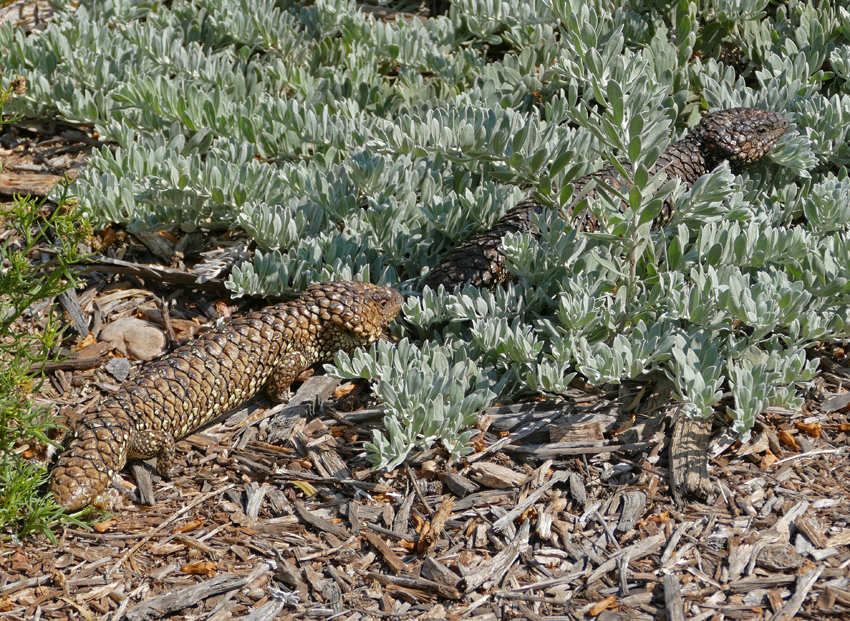
After spending some time exploring the eremophila shrubs with all their subtle floral variations, I walk around to the northern edge of the gardens. This area includes habitat zones where interpretive signs explain adaptations to climate and terrain as well as Aboriginal use of plants as foods and medicines. While I am reading about how sugarwoods are used as sweeteners and their amazing regenerative powers after bushfires, I hear a rustle in the undergrowth. Only a few metres from where I am standing a pair of or shinglebacks are following each other closely between the ground-covers. Sleepy lizards, as they are sometimes known, are essentially solitary reptiles which can only mean that it is mating season.


Shingleback or sleepy lizards

Shingleback or sleepy lizards


Whenever I visit these extraordinary gardens I conclude my day with a little culinary treat; a light meal, ice cream or scones with jam and cream. But these are no ordinary delicacies. Many of the flavours are created from the landscape with a distinctly ‘bush tucker’ nuance such as quandong ice cream and native herb flavoured damper.

Looking out from the café across the eremophila garden into the scrub beyond

Looking out from the café across the eremophila garden into the scrub beyond


Until our next adventure

Cheers

Baz