Tag Archives: south australian travel

A Walk through Victoria Park

14 Sep

A Walk through Victoria Park

 Dear Reader;

The little musk lorikeet has been hovering around the small opening in the trunk of a red gum for a few minutes. Suddenly another lorikeet appears and disappears down into the tree. They are obviously nesting here. I walk closer to the tree and listen. From deep inside I can hear the plaintive calls of the young chicks demanding food.

1-1

Musk lorikeet

 I am walking around the old Victoria Park Racecourse which is now a recreation area bounded by gracious old houses, a creek, walking trails and stands of massive old gums as well as a variety of native shrubs and bushes. It is a wonderful space for people to enjoy a bike ride, walk or run, exercise their dog off lead or even fly model planes.

1-2

Historic old racecourse stand


1-3

Avenue of gums on the western perimeter

 From the car park at the south western edge of the park I take the path towards Greenhill Road which winds through a copse of massive old gums and thick tangles of bushes. There are white cheeked rosellas high in the branches and one pair seem to be staying close to a hollowed out limb some 10 metres above the ground. I’ll come back at another time and see if they have chosen it for a nesting site.

1-6

Huntsman spider in bark crevice

 To get a better idea of the bird life I decide to spend a little time sitting quietly on a fallen log deep amongst the trees and bushes. Unfortunately or fortunately depending on how you look at it, the aforementioned log is also home to a large huntsman spider that scuttles for cover as my ‘butt’ approaches.

1-4

White cheeked rosella

While the spider and I share our seating arrangements, a wide range of birds including- miners, mudlarks, crows, magpies and galahs-are active in the scrub around me. Wonderful for a photographer to capture some images; not so good for a spider who features on many of their menus.

1-7

Police greys

Bidding adieu to ‘Boris’, I continue along the pathway. To my delight, my final encounter is not with native wildlife but a pair of police greys being ridden through the parklands.

1-5

Spiny wattle variety with feeding fly

 Spend some time in our parklands during the spring. It really is the best time to enjoy the wildlife.


Cheers

Baz

A Walk from Tennyson to Grange

11 Aug

A Walk from Tennyson to Grange

 Dear Reader;

As I follow the narrow footpath south from the cul-de-sac overlooking Tennyson beach towards the Grange jetty in the distance, I can see a bird of prey hovering just above the houses that spill down to the dunes. The sky is patchy, blue then grey as clouds blow in from the sea and it is difficult to locate the kestrel in the viewfinder. I take a few quick shots and hope for the best.

1

Nankeen kestrel hovering

I am intrigued by the raptor and wait quietly close to a coastal wattle bush watching it patrol along the line of the dunes pausing periodically to hover and scan the terrain below for small animals. The birds in the surrounding scrub are not quite so keen. They head for cover deep in the bushes or under the eaves of the houses twittering their various warning calls.

2

Singing honeyeater in shelter

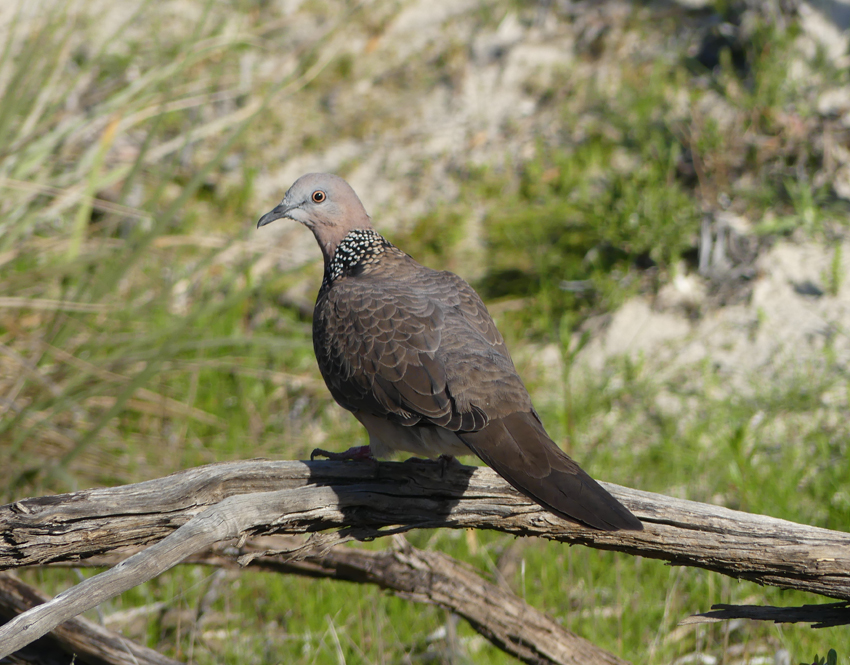
A lovely little singing honeyeater hides in a dense tangle of branches while spotted doves remain motionless closer to the ground near some dried scrub that matches their subdued colouring. Both species are usually very wary in this dune habitat and hard to approach but I am obviously the lesser of two evils and able to get closer than usual to capture some images.

3

Spooted dove

Continuing along the pathway, I am fascinated by the different architectural elements incorporated in many of the houses. There are domed chapel-like structures, facades of tinted glass and walls with pastel shades of ochre, pink and grey. Just before I reach the jetty the beautiful ‘Marines’ sit alongside the beach. This group of Victorian 3 story terraces was built in 1840 and they dominate the foreshore.

4

At the trail head near Tennyson Beach

 After a wonderful lunch at the Grange Hotel and a walk along the jetty to check out the fishers and look for dolphins, I turn back for home. The wind is getting up so I opt to walk back down the path rather than along the beach front. There are numerous trails down to the sea allowing me deeper penetration into the scrub as well as a quick search for seabirds. On this visit they are few and far between bar a couple seagulls under the jetty.

5

Grange Hotel

6

From track to beach through the dunes


Near one of the beach access paths I stop to watch a mudlark foraging in the sand and notice a discarded Besser brick lying in a sunny patch near a patch of early flowering succulents. Much to my surprise there is a bearded dragon lizard perched on it, flattened out to extract every bit of heat from the masonry. These reptiles are not uncommon in the summer but in the winter I would have expected them to be tucked away hibernating until spring.

7

Mudlark foraging along pathway

8 1

Bearded dragon picking up some rays


9

Still a few bugs around to eat for the dragon

Predators prey and unseasonal reptiles it has been a rewarding winter’s walk along the dunes enjoying the ocean, good food and quite an assortment of wildlife.


Enjoy your winter walks in SA

Cheers

Baz

Hindmarsh Falls….An easy walk with lots to see

20 May

Hindmarsh Falls….An easy walk with lots to see

 Dear Reader:

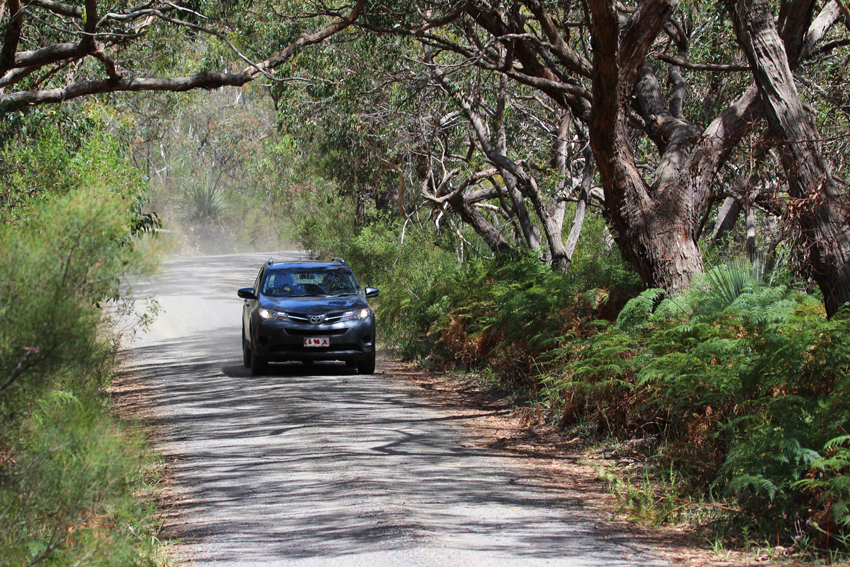
Eucalyptus trees overhang the dirt road that leads to the falls. Tiny wrens and even tinier thornbills twitter and flit amongst the branches and leaves. Occasionally pairs of rosellas fly out from the foliage. From the parking area I can see bush clad hills and open farmland rising all around and the sound of running water provides a pleasant background melody.


1

Driving into the falls


1a thornbill species probably yellow rumped

Thornbill species probably yellow rumped


Hindmarsh Falls are about 12 kms north of Victor Harbor towards Mt Compass on the Adelaide Road and are clearly signposted. The walk to the falls is easy and the path down to the viewing platform has rails and steps.

2

Path to the falls through scrub


I make my way along the trail that descends to a lookout point where I can see the water tumbling down dark boulders to a small pool below. There are kangaroo droppings on the forest floor and some of the trees show signs of a recent fire.

2a

Falls and pool


The birds are very wary here and difficult to photograph. I concentrate on other aspects of the area’s natural history. Bright orange fungal growths adorn some of the fallen logs and striking yellow Banksia flowers lend splashes of colour to the browns, greys and greens so typical of our bushland. I spend some time just watching the water. In the driest state on the driest continent watching a waterfall is always good for the soul. Near the edge of the pool I catch a glimpse of a grey kangaroo slowly edging through the scrub. Not clear enough to take a picture but interesting to watch how the ‘roo’ leans forward onto its front legs then pushes with its tail when travelling at slow speeds.

4a

Common orange fungus on fallen log


4

Banksia flowers


As I climb back up the incline towards the recreation area I notice a wattle bird perched on a branch scouring the leaves and limbs for insects to pick off. And in the sharp native grasses that border the creek near the picnic area I come across a fascinating little diamond weevil crawling along one of the blades. Hopefully, not to become a victim of the ever- vigilant wattle bird.

5 diamond weevil

Diamond weevil


7

Wattle bird

My trip to the falls has been interesting and though there has not been an over abundance of wildlife it is, after all, the middle of the day. And on that note I occupy one of the benches and tuck into pasty, lamington and a bottle of OJ bought en route at one the many excellent, local bakeries.


Nice to be back

Cheers

Baz

Aldgate Valley Reserve

14 Apr

Aldgate Valley Reserve

The road from Aldgate to the reserve winds through rural and bush country with charming homes and patches of scrub on either side. I pull off the road near an old bridge that crosses Aldgate Creek and walk along the well marked trail listening to the sounds of birds high in the gum trees. Eventually I catch sight of a pair of eastern rosellas as they fly between the topmost branches.

1 1

Eastern rosella


Aldgate is one of the principal towns in the Adelaide Hills. It has a village atmosphere with fine eateries and small, locally owned shops. A fascinating 6 km nature walk runs between Aldgate and its neighbour Mylor. The route passes through the Aldgate Valley where southern brown bandicoots have been reintroduced to their native habitat (little marsupials that superficially resemble rats).

1 2

Aldgate Creek


From the road bridge I take the path alongside the creek where I find a small footbridge. Several eastern water skinks have taken up residence amongst the wooden slats and one little fellow, who seems to have regrown the end of his tail, poses nicely for a portrait. Most of these smaller skinks drop their tail if grabbed by a predator. This serves a dual purpose as the tail continues to wiggle after being detached, acting as a decoy.

1 3

Eastern water skink


Today I have decided to simply explore the area around the reserve and search out some of the animals that inhabit it. A bandicoot would be nice but as they are timid and mainly nocturnal and I am not holding out much hope. On the right hand side of the bridge there is a small orchard and some benches. Several large magpies are strutting around the area and one sits on the bench and glares at me as I walk through the trees.

1 4

Magpie with attitude


I spend a little more time sitting by the creek watching finches and wrens darting between bushes but the day is getting chilly and the clouds are rolling in. As I step into the car for the drive back home a solitary kookaburra chortles in the trees nearby. Something seems to have disturbed the bird and I take a closer look and find a koala feeding in an adjacent tree.

1 5

Laughing kookaburra


1 6

Does my bum look big up this?

I make one last stop back in Aldgate to drop in at ‘FRED’ for a late lunch. So much to choose from; but the Sicilian ciabatta with wilted greens, haloumi, home-made chutney and caramelised onion cannot be resisted.

1 7 wilted greens aloumi chutney ciabaco sicilian armelised onion

One of many choices


Cheers

Baz

PS

I will be travelling for the next month and will not post any articles until mid-late May

Take a look over some of the earlier work and find somewhere to take a walk and enjoy our wonderful wildlife.

Gawler’s Dead Man’s Pass

7 Apr

 Dear Reader:

There are dragonflies and damselflies hovering above the water. Every so often one of the slender damselflies hovers near the bank then attaches itself at right angles to a reed.

1

Damselfly


The pool of water is left over from the winter rains and sits alongside a causeway that crosses the river just a few hundred metres from Gawler’s main street. The town has a country, colonial feel about it with classic stone buildings and a good smattering of pubs, restaurants and bakeries to fuel up on before exploring the ominously named Dead Man’s Pass.

2

Causeway over the Gawler River

3

Historic stone buildings in Gawler


Well placed signs along the walking and cycling track indicate interesting historical information as well as describing the wealth of fauna that can be encountered along this trail which follows the course of the Gawler River. As I approach a dense clump of reeds I am lucky enough to catch a fleeting glimpse of a red bellied black snake before it disappears into the undergrowth near the river bank.

4

Red bellied black snake


The edge of the river is bordered by massive red gums that in themselves create a multitude of ecological niches. I sit near the base of one huge tree watching a variety of insects from ants to beetles as they forage along the trunk while a tree skink weaves its way amongst the deeply furrowed bark in search of prey.

5

Tree living skink


Several metres higher up the tree, a pair of crested pigeons has made a nest on one of the larger limbs. Both birds will share the incubation of the eggs (usually two) which will hatch after about 21 days.

6

Crested pigeon


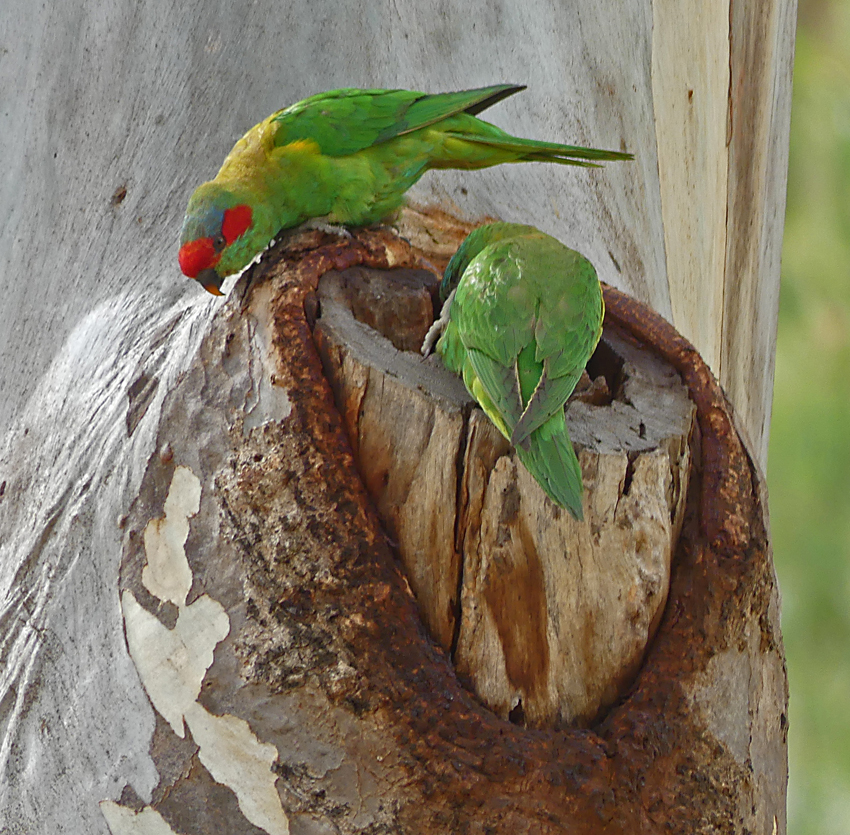
The river red gums along the creek also play host to a wide variety of parrot species including cockatoos, rosellas, rainbow lorikeets and the brightly coloured little musk lorikeets. Two of these delightful little birds are checking out a nesting hole where a branch has been removed and I am fortunate enough to capture an image of them contemplating their future real estate.

7

Nesting musk lorikeets


My morning exploring the park on the outskirts of this charming country town has been most rewarding and I am sure that Gawler’s historical and ecological diversity will be the topic of more posts in the future.


Cheers Baz

An Autumn Walk and Drive Around Stirling

21 Mar

Dear Reader:

There are ravens in the tree near the restaurant. We call them crows in SA but the birds that live around Adelaide are usually little or Australian ravens. True crows are found much further north in outback regions. The birds are feeding on some autumn berries in a deciduous tree by the roadside. Every so often, one of the more adventurous gang members swoops down and reconnoitrers the outdoor tables for any tasty leftovers.

1 1 red

Raven disguised as crow


I am sitting in Rubys Organic cafe in the hills town of Stirling, a twenty minute drive from the city along the south-eastern freeway. This charming town of around 3000 people has a distinctly English feel about it. As well as native trees the town has numerous European species and the cooler climate makes it ideal for plants such as azaleas and camellias.

1 2 red

Healthy, interesting and tasty


After a healthy and delicious (gf) lunch of salmon croquettes and a pumpkin and bean salad, I drive out to the golf course on the outskirts of the town. At the end of the aptly named Golflinks road I park the car and walk into the Mt George Conservation Park. Tall stringybarks dominate this section of the walking trail which is part of Adelaide renowned Heysen Trail. Some of the trunks are blackened from earlier fires though most are still alive and bearing new growth. There is a proliferation of native groundcovers including heaths, grevillias and even some tiny orchids and lilies sheltered in the understory.

1 3 red

One of the many small plants growing in the understory, probably a heath


Walking through the forest is enjoyable but most of the bird life is high in the trees and hard to photograph so I return to the car, drive back and head along Old Carey Gully Road to the Mt George turn off. At the little picnic area, pleasantly situated by a small dam, I rejoin the track which is now part of the Pioneers Womens Trail. It runs over a small bridge where I pause to look into the creek bed in search of water skinks or perhaps a water rat (rakali). To my surprise I catch a fleeting glimpse of a small rat-like creature hopping across a pool on a fallen log. It is a southern brown bandicoot, a marsupial, not a rat at all. It pauses for a brief moment on its makeshift bridge and I take a shot. Photographically, the results are somewhat mediocre but in terms of satisfaction as a naturalist, it is a special moment.

1 4 red

Bridge on trail crossing Cox Creek


1 4 2 red

Unbelievable to get a photo of a bandicoot especially in daylight hours


But the bandicoot is not my last marsupial. To really ‘make my day’ I spot two koalas, probably a mother and joey, perched on a slender eucalypt overhanging the creek bed.

1 5 red

Mum and youngster


I started with lunch in Stirling and I decide to finish with a visit to Aptos Cruz; one of my favourite hills art galleries.

1 7 red

Aptos Cruise gallery from the top floor


However, on the short drive back to the town nature provides one last surprise when a deer bounds out across the road then pauses amongst the singed trunks of the gums on the edge of the roadside

1 6 red

Oh dear, wrong continent!!!

Cheers

Baz

Montacute’s Cherry Trail

10 Feb

Montacute’s Cherry Trail 

Dear Reader:

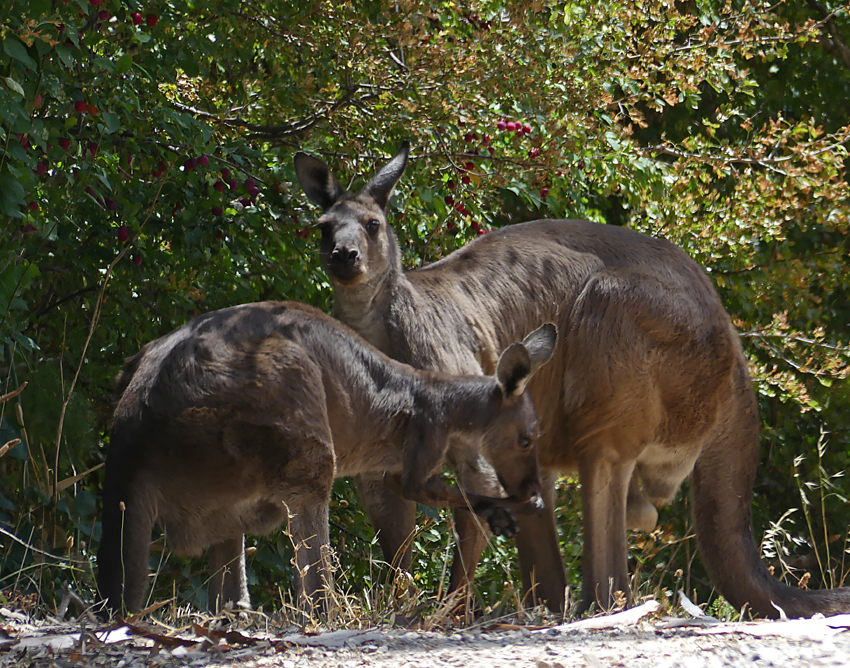
The two roos are huge. It is rare to see grey kangaroos this large quite so close to the suburbs. They are browsing by the side of a gravel track just off the main road. The male seems quite protective of the female looking intently at me while she continues to feed. But in truth both seem unfazed by my presence.

1

Grey kangaroos


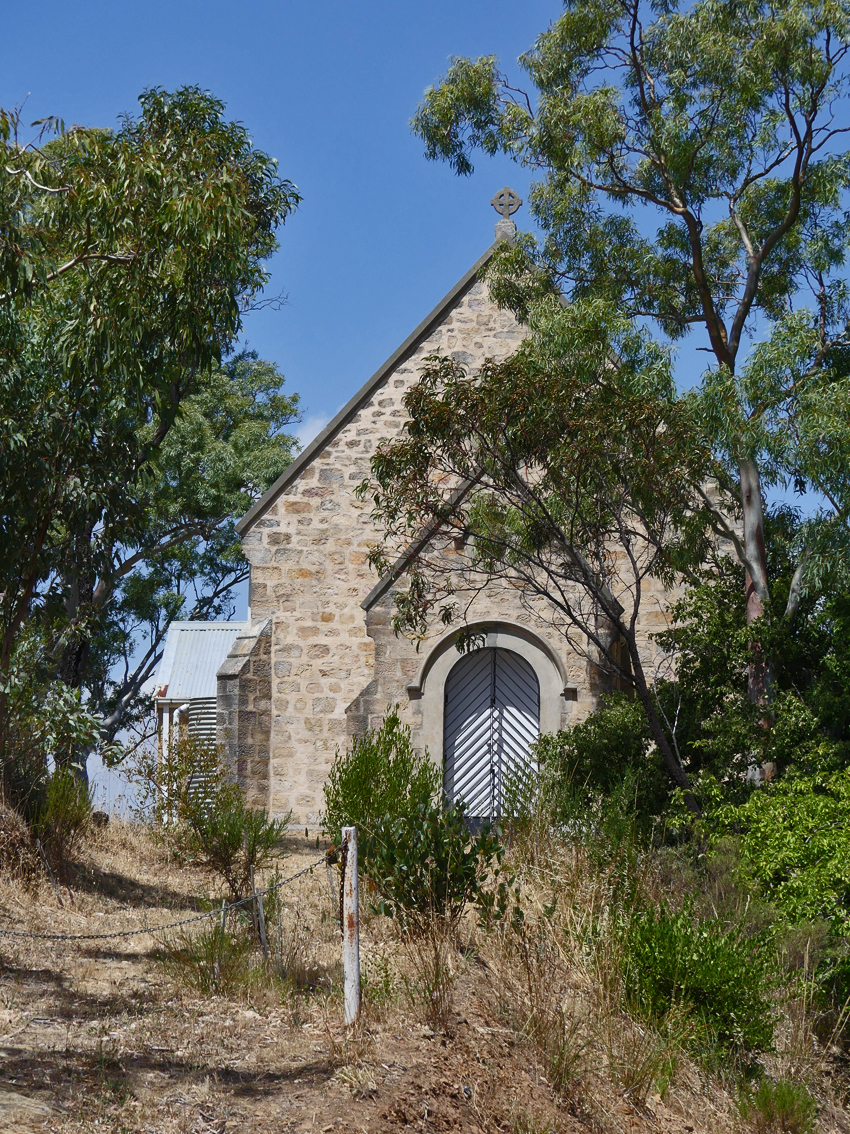
I am parked just near St Andrews Uniting Church where the tortuous curves of Corkscrew Road heads back down to the Torrens Gorge. Earlier I had driven up Montacute Road past the hills face suburbs of Newton and Athelstone. The road traversed The Black Hill Conservation Park as it followed the winding path of Fifth Creek to the little community of Montacute famous for its cherry orchards.

2  red St Pauls ANglican

St Andrew’s Church


Along the way I had stopped at several parking bays to access the park. Much to my surprise nearly every stop yielded a koala sighting. They were hanging in trees, nibbling leaves and one was even scuttling clumsily across the ground to a new arboreal refuge.

3

Relaxed koala


After walking around the scrub near the church photographing butterflies and other insects I call in at Montacute Valley Orchards. I park near the farm shed and purchase a few kilos of cherries and some superb home-made ice cream. But my wildlife instincts are drawn to the birds that are frequenting the nearby fruit trees. There are lorikeets, miner birds and wattle birds feeding on cherries and apricots in the foliage as well as cockatoos and rosellas rummaging amongst the fallen fruit below the trees.

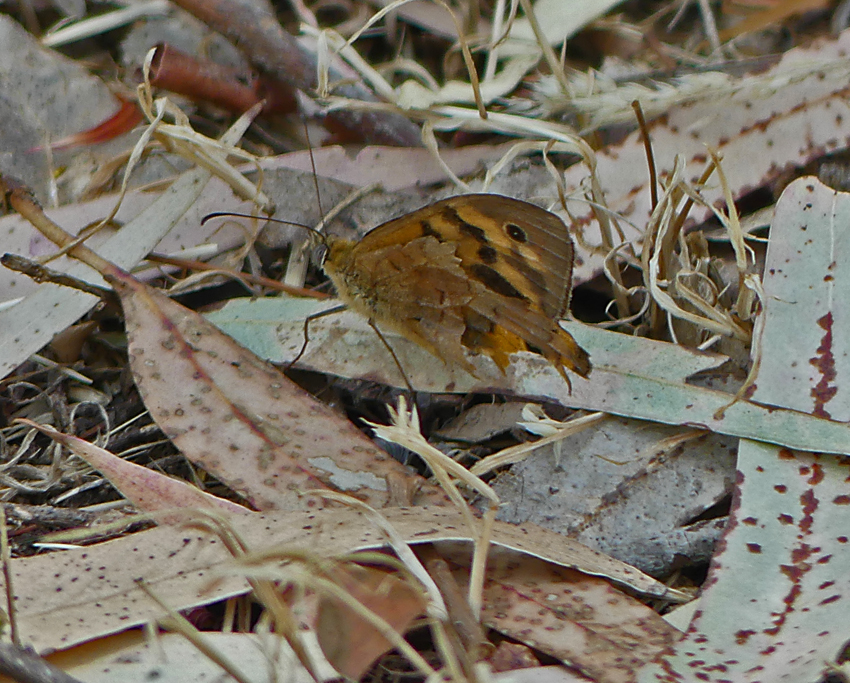
4 red meadow argus

Meadow argus butterfly


4 red musk lorikeet

Musk lorikeet in cherry tree


With a belly full of ice cream, a bag full of cherries and an SD card full of images I call it a day and drive back to the city via corkscrew Road and the Torrens Gorge.

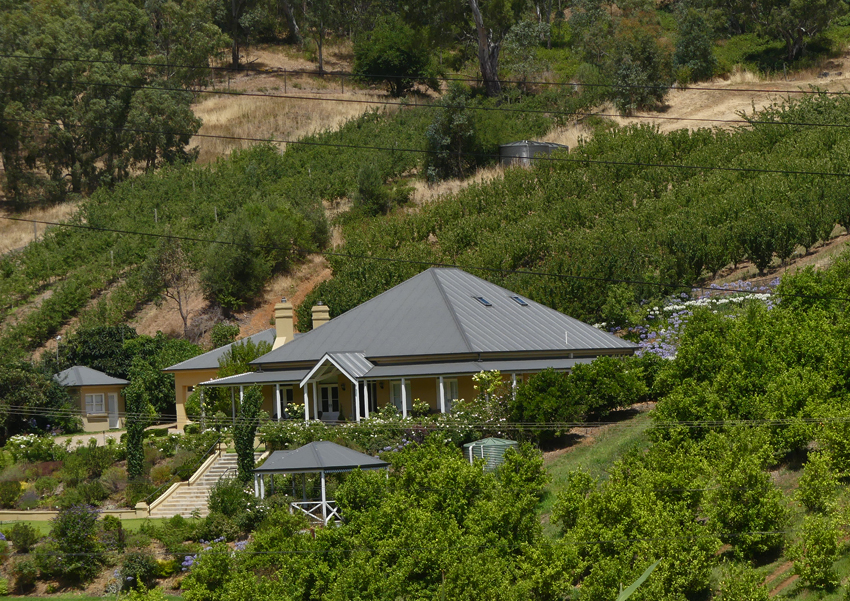
5 One of the lovely hills properies that nestle in the valley

One of the lovely hills properties that nestle in the valley


Cheers

Baz

Port Augusta…Arid Lands Botanic Gardens

7 Dec

Dear Reader:

The sand monitor, a kind of goanna, is raised slightly off the ground and peering intently towards me. It doesn’t seem too perturbed by my presence. In fact, I am probably the more excited of the two. It is my first encounter with one of these lizards which can reach a length of around 1.5 metres. Like all monitors, the sand goanna has a forked tongue like a snake allowing it to use scent to detect the distance and direction of its prey. A closer examination through my camera lens reveals that this animal has been injured at some time and is missing part of its front right foot.

Sand monitor

Sand monitor


I am in the Arid Lands Botanic Gardens just a few kilometres out of Port Augusta near the head of the gulf. The gardens showcase many of the diverse dry-land ecologies that SA has to offer. Unlike most parks this one is not fenced and the animals that venture into its proximity are wild. Despite its natural status the gardens are well serviced by a modern visitor centre and cafe.

The view from the head of the gulf

The view from the head of the gulf


Leaving the sand monitor to its own devices, I walk around the edge of the encroaching scrub towards the extensive eremophila plantings at the back of the centre. Several zebra finches are perched in the branches of a skeletal tree overlooking a small artificial waterhole. I search for the right image, eventually finding a male and female settled on a dead branch; perfectly demonstrating the difference between the sexes.

male and female zebra finches

male and female zebra finches

Purple eremophila

Purple eremophila


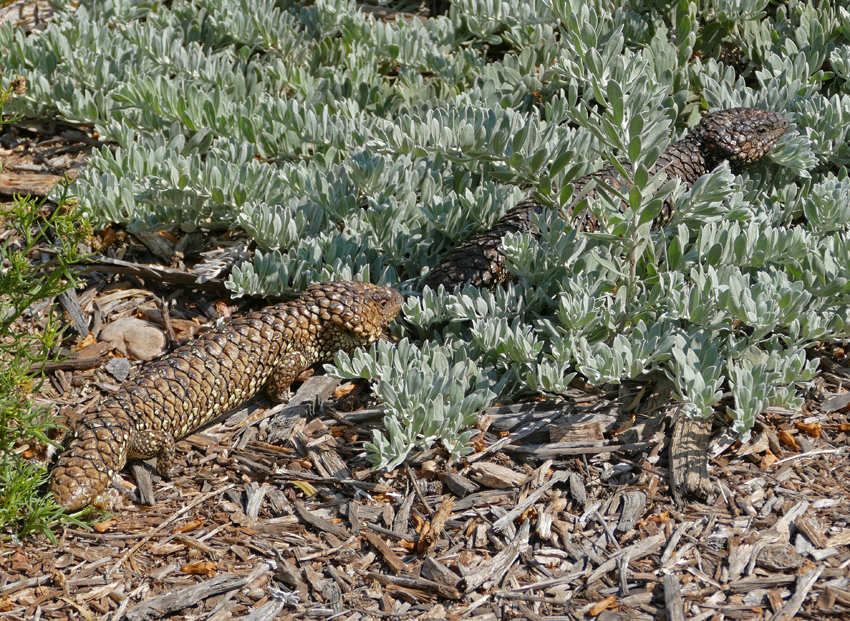
After spending some time exploring the eremophila shrubs with all their subtle floral variations, I walk around to the northern edge of the gardens. This area includes habitat zones where interpretive signs explain adaptations to climate and terrain as well as Aboriginal use of plants as foods and medicines. While I am reading about how sugarwoods are used as sweeteners and their amazing regenerative powers after bushfires, I hear a rustle in the undergrowth. Only a few metres from where I am standing a pair of or shinglebacks are following each other closely between the ground-covers. Sleepy lizards, as they are sometimes known, are essentially solitary reptiles which can only mean that it is mating season.


Shingleback or sleepy lizards

Shingleback or sleepy lizards


Whenever I visit these extraordinary gardens I conclude my day with a little culinary treat; a light meal, ice cream or scones with jam and cream. But these are no ordinary delicacies. Many of the flavours are created from the landscape with a distinctly ‘bush tucker’ nuance such as quandong ice cream and native herb flavoured damper.

Looking out from the café across the eremophila garden into the scrub beyond

Looking out from the café across the eremophila garden into the scrub beyond


Until our next adventure

Cheers

Baz  
Torrens Lake…..Down by the Weir

2 Nov

(Naturallysouthaustralia.com response to feedback and article)

Thank you for your comments regarding my change of style to a field notes format. Most people seemed to prefer the original recount genre and therefore I will return to writing in this manner.


Torrens Lake….Down by the Weir

Dear Reader:

From the walkway where I am standing I can see the V shaped ripples of an Australian water rat swimming towards the concrete lattice work at the foot of the weir. I am always excited by the chance to photograph these elusive mammals and despite the overcast conditions I am in a good position to get a few nice pictures; if the little creature cooperates just a tad.

1 The usual view of a water rat, a V shaped trail that quickly disappears nto the reeds

The usual view of a water rat, a V shaped trail that quickly disappears into the reeds

3

Just sitting here enjoying the view


When the rakali (another name for the water rat) reaches the reeds instead of disappearing, as usually happens, it dives under the concrete barriers and hauls itself onto the flat surface. After settling for a few seconds it has a quick look around, grooms its fur then slides back into the water. Oh yes; there is a god of wildlife photography.

6

Popeye does a U turn at the weir

5

Below the Weir where ratty lives

10

Great places to dine

 I am at the end of the Torrens Lake by the Weir. It is a place where cycling and walking tracks converge, the iconic Popeye makes its turn for home and the par 3 golf course begins. There are also free city bikes at the little kiosk and the Red Ochre/River Cafe restaurant complex which provides excellent dining and wonderful views across the lake towards the city.

7

Moorhens in love

On my way to a coffee before heading home I can’t help but notice a pair of dusky moorhens delicately tripping across the top of the spillway. They follow each other for some time, apparently with amorous intent. Yes, spring is in the air.

8

Miner getting a bite to eat the hard way

9

I simply loved the colour and motion


Noisy miner birds are common along the river bank (not to be confused with the introduced Indian Mynah that plagues Sydney) and a small group are feeding close to the weir. One particular bird hangs from a slender eucalyptus branch as it gathers nectar from the blossoms then kicks off in flight. A nice couple of images to finish my walk by the water.


Enjoy the spring weather and our wildlife

Cheers

Baz

Athelstone … a river walk…field notes and images

15 Oct

Athelstone … a river walk…field notes and images


Dear Reader: I hope that you enjoy the field notes and images from my day exploring the lower reaches of the Torrens Gorge near Athelstone. I will be using this style from now on as it allows me to share more observations and thoughts with you.


Spring 12/10/2015

A cool morning with a little cloud cover and patches of blue sky

Drove from city to Gorge Road intersection then to Athelstone, approx 20 minutes

Stopped in at bakery to get steak pie, apple tart and fruit juice

Photographed historic community centre, lovely roses on display

Spoke to history officer

Quite a few colonial buildings in the area worth visiting

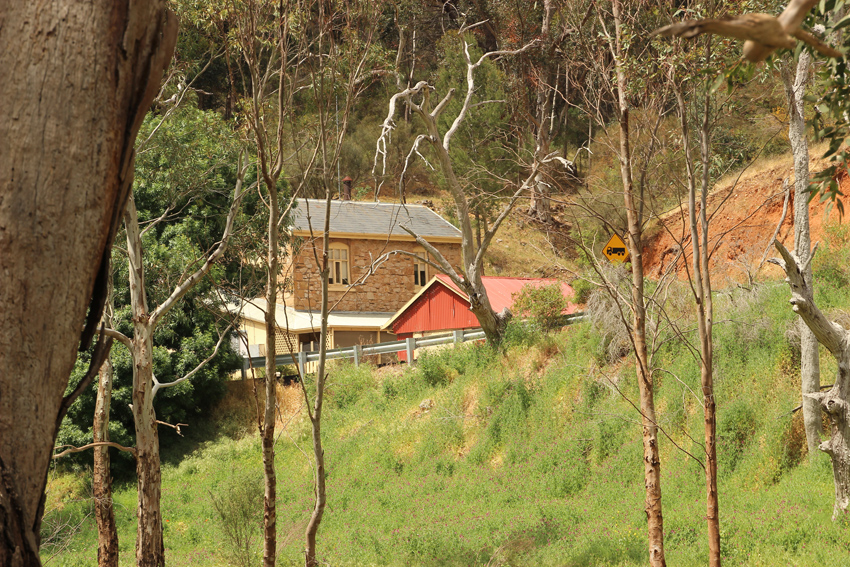
Started walk from the mining road 2.8 Kms from Athelstone Council chambers, just past stone and fibre house on RHS of main road, parked near the causeway (ford)

Followed old, narrow bitumen road along left bank of Torrens heading up the gorge (upstream) towards historic aquaduct

B18 jpeg

Council chambers

B17 image

Stone and fibre home by turn off


Trail to aquaduct only 800 meters

Not going to walk off impending lunch this way

Walked slowly, stop, look and wait

Can hear small birds twittering in scrub to the left

Several little wrens fossicking in leaf litter

They appear to be different species as one has a blue tail

All are females as fairy wren males of the most common species have patches of bright blue plumage

B8

Female superb fairy wren

B9

Male superb fairy wren


Koala in dense foliage of a non native tree, unusual

There are several gums nearby, perhaps this tree is shadier

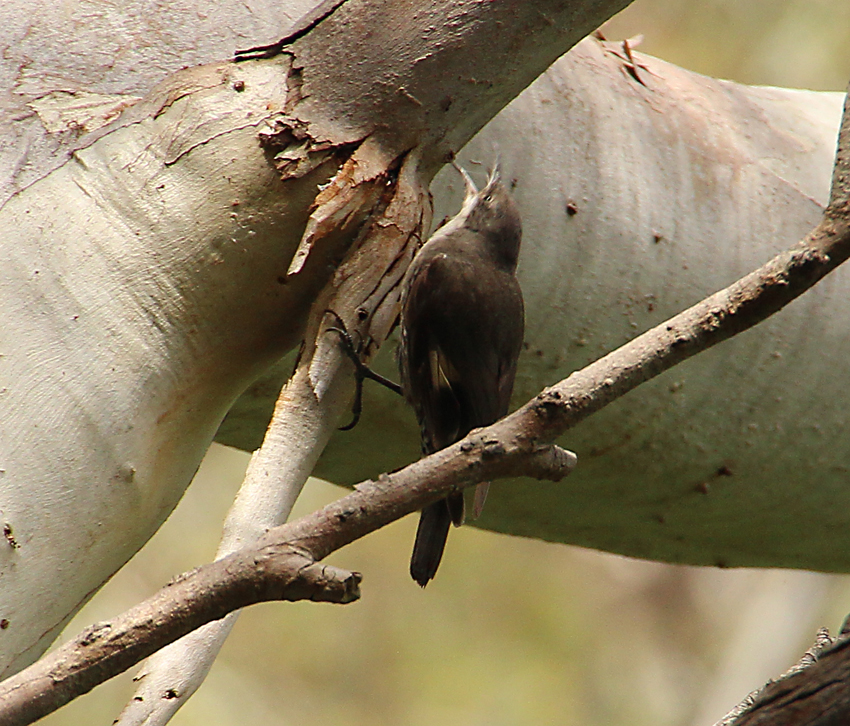
Tree creeper (possibly white throated) feeding probing for insects on a eucalyptus tree, seems to be favouring old and dead branches

Note the huge feet for gripping and providing stability

Hard to get a clear shot

Switch to shutter priority to stop action 1/1600 should do

B13

Koala

White throated treecreeper

White throated treecreeper


Reach the aquaduct

Note the signage about its history

State listed heritage item in 1980

Operated continuously for 138 years carrying water from Hope Valley Reservoir

There is a deep pool below

Scan the edge of the water and several logs for fresh water turtles…nothing

A water skink is basking on one of the flat rocks

As I approach and take a couple of shots it disappears into the undergrowth

I have often photographed these little reptiles and never seen one in the water swimming

B10

Aquaduct

IMG_8953

Eastern water skink


Start return walk to car

Expansive views of the gorge rising on the SE side

Several cyclist ride past on the main road above the river

They use the steep road for training

Concentrate on the other side of the path on return walk

Yellow tail black cockatoos fly above

See and hear a lot of Rosellas in taller trees

Manage to get a shot of a crimson feeding on berries in tree top

Stop to look at interesting gum trunk with red sap oozing from it

Like the colours and texture

B20 red

Bark patterns and gum resin

Back at car

Drive to park about 1 kilometre out of Athelstone to walking trails in parkland area, still has Torrens flowing through

Lunch on a bench watching some magpies haggling over territory

A Good morning’s work

Cheers

Baz