Tag Archives: South Australian wetlands

Walkerville’s Bickle Reserve…..Fairies in the Garden

4 Sep

Fairies in the Garden

Dear Reader:

As I have categorically stated in several of my posts, “I am no botanist”. I love gardening and appreciate the wonderful diversity of South Australia’s flora but remembering all the different classifications, names and botanical intricacies is just a little too much like hard work. Instead, I rely on a couple of field guides to common plants in the Adelaide area, phone a friend or simply make reference to those yellow bushes or tall straight eucalypts. Hopefully, this gap in my naturalistic armoury will be narrowed as I write more nature posts, though the signs are not promising. So: it is with some trepidation that I lead into the following piece …….

P1130228

Pink fairy (Caladenia species)

IMG_8066

The Torrens near Bickle Park

 ….It is a cool winter’s day, slightly overcast and I am on my knees examining a glorious little patch of native orchids. Most are pink fairies but there is one tiny delicate bloom, the size of a little finger nail, called a gnat or mosquito orchid. Nearby several of the flat prostrate leaves indicate where other orchids will appear in the near future.

P1130247

Gnat orchid (Cyrtostylis species)

All of these species are endemic to the area and though a few might have grown naturally, most are the result of a dedicated group of volunteers who are revegetating this area which is part of the Vale Park Wildflower Walk. The section I am exploring is alongside the Torrens River just east of the autobahn bridge near the Bickle Reserve. Several of the Vale Park group are holding an open morning and explaining the importance and biology of the plants they have established.

P1130234

Chatting about orchids

IMG_8071

Native Wisteria (Hardenbergia)

IMG_8099

Purple swamp hen

As I listen to information about the relationship of certain fungi in the soil to the propagation of orchids and marvel at the spidery native clematis and hardenbergia that are climbing up some eucalypts (big tall ones) I notice a pair of purple swamp hens foraging in the long grass by the river. Leaving the group I pursue the birds and make my way along the bank where there are also dusky moorhens in the reeds and crested pigeons feeding near the bikeway.

IMG_8059 edit

Dusky moorehen

Rejoining the group I chat about the importance of maintaining our wild heritage for future generations and learn about Aboriginal use of some types of native plants including orchids. Predictably in this group I encounter another wildlife photographer and the conversation fluctuates between nature and the lenses we have used for different purposes.

IMG_8088

An occasional visitor

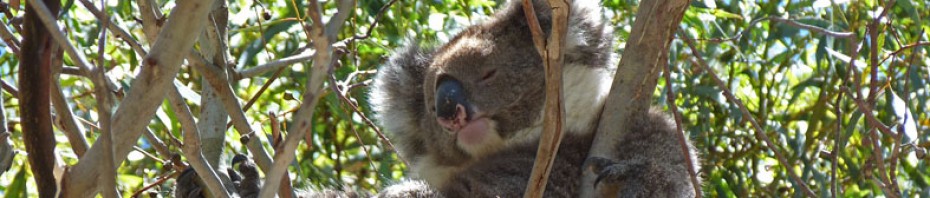
In the course of our conversations one of the replanting team asks me if I have any images from the area and I remember that on a bike ride along this part of the linear park trail I had photographed a koala high in the largest eucalypt overshadowing the orchid beds. But, in keeping with my botanical prowess I forget to ask what kind of species it is (probably a tall, straight one).

Until the next journey into SA’s natural wonders

Cheers

Baz

PS

Check out Geotravelling a new site that I have attached that celebrates the natural, cultural and urban diversity of our planet through my travel photographs.

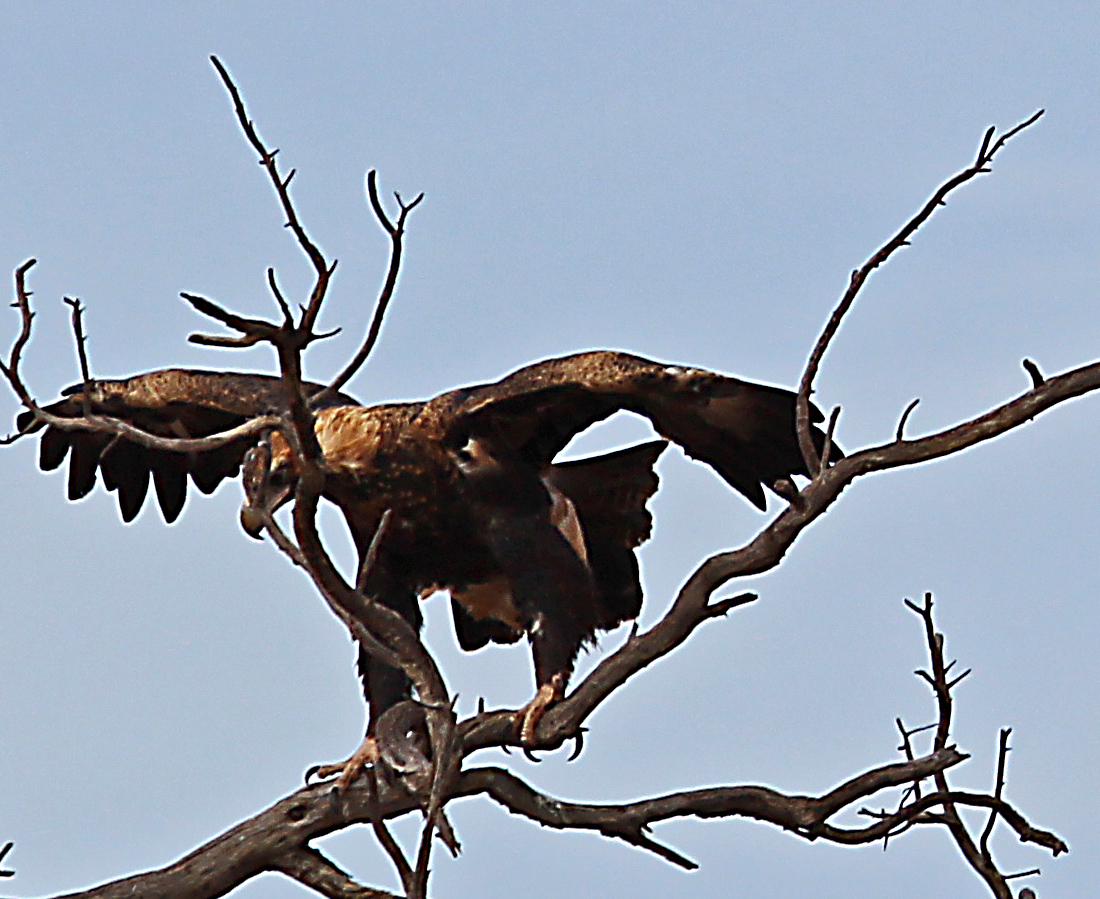
Chinaman’s Creek on a cloudy day

3 Aug

Chinaman’s Creek on a cloudy day

Dear Reader:

It is a cool, overcast afternoon; not ideal for wildlife watching or photography. Nevertheless, I have organised a weekend trip north to Port Augusta to investigate the Arid Zone Botanic Gardens during the winter months. As an added bonus, I hope to explore a shallow mangrove creek some 20kms south of the town that a friend has suggested as an interesting wildlife stop off en route.
1 wedge tail 2

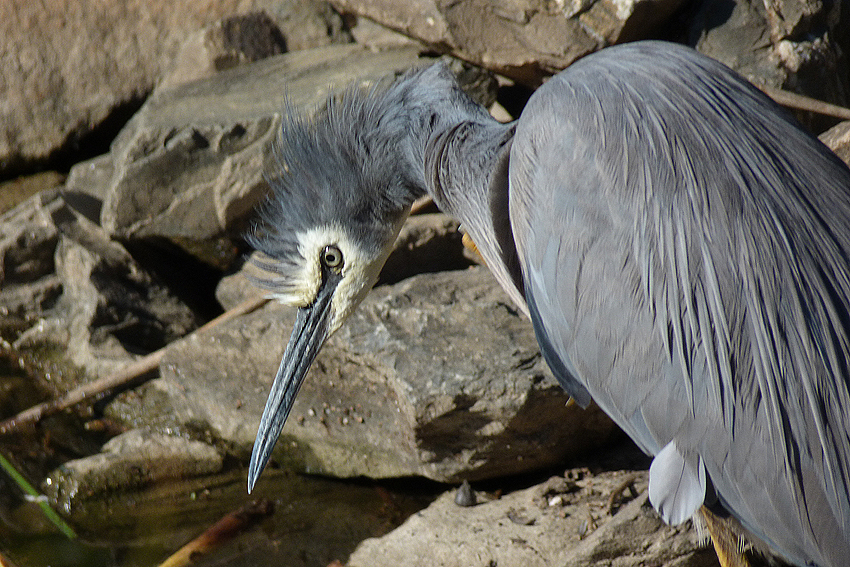
Wedge – tailed eagles are Australia’s largest raptors with a wingspan over 2 metres

1 wedge tail 1. Australia's largest raptor with a wingspan over 2 meters

Wedge-tailed eagle about to fly

1 wedgy takes flight

In flight


As I approach the Chinaman’s creek junction I notice a pair of wedge-tailed eagles in the skeletal branches of a mallee tree. The birds seem quite relaxed as they survey the low scrub that stretches towards the coast. I let the car roll to a stop and gingerly climb out careful not to let the door bang shut. There is good cover between the birds and myself and I fire off a couple of shots before one bird senses the movement and takes to the air.

2 Galahs iin bush near wheat fields

Galahs in bush near wheat fields

2 Cockatoo near the park's entrance

Cockatoo near the park’s entrance


The stretch of unsealed road that stretches towards the coast is flanked on both sides by scrubby farmland that supports sheep and some wheat fields. Small groups of rose breasted cockatoos are perching in the branches alongside the road. They occasionally take flight into the fields to dig out tubers and possibly ravage a few of the crops; lovely birds to watch but not always popular with farmers.
4 Dirt trackinto the coservation park about 5 kms from the highway

Dirt track into the conservation park about 5 Kms from the highway

4 Visitors to the park

Visitors to the park


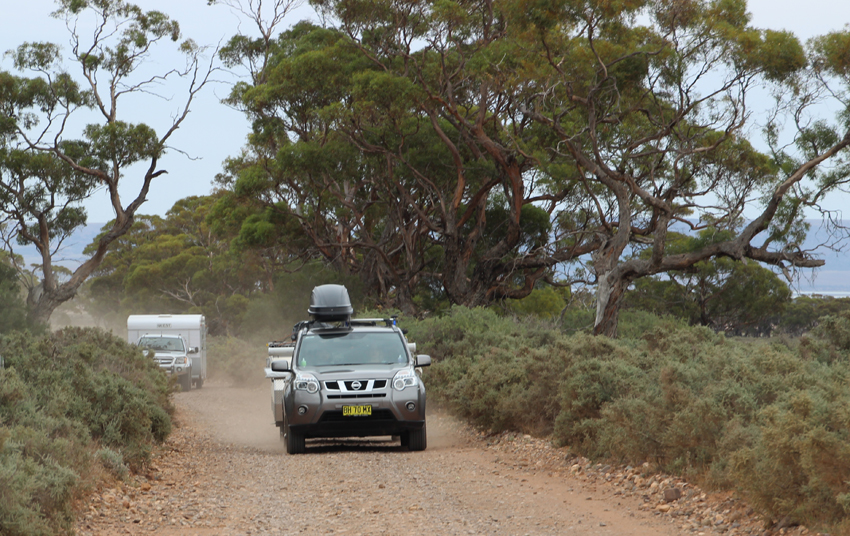
Where the cleared land gives way to forest and denser scrub, a fence and sign announces the Winninowie conservation Park which incorporates Chinaman’s Creek. Despite the remoteness of the area we meet a couple of 4X4s complete with camping trailers and stop to chat with the drivers for a few moments. They have been camping by the creek for a few days and had some success fishing the mangrove flats on the receding tide for whiting and mullet.

6 Chinaman's creek jetty at low tide

Chinaman’s creek jetty at low tide

9 Momentary glimpse of a sacred kingfisher

Momentary glimpse of a sacred kingfisher


A few minutes later we pull into the camping area. There is a scattering of permanent shacks and a small jetty that is completely exposed at low tide. I change from shoes to gum boots, from experience I know that this mud sticks like glue, and start to walk along the edge of the little creek. I can hear singing honeyeaters in the mangroves and catch flashes of colour from other unidentifiable species that flit amongst the thick foliage. But the birds are some distance away and the overcast conditions make photography all but impossible.

6 Chinaman's creek jetty at low tide

Chinaman’s creek jetty at low tide


I notice thousands of small burrows honeycombing the edge of the intertidal zone. Each is home to a small shore or mangrove crab. In the creek I can see roving schools of silver baitfish eagerly eyed by a pair of herons that are stalking the fringe of the mangroves.

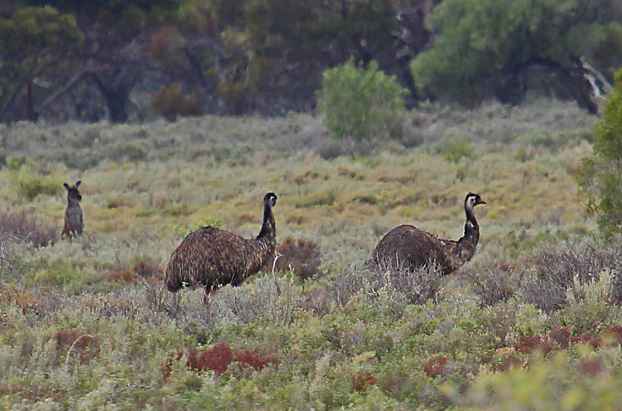
4 As a pair of emus head towards the trees a grey kangaroo pops its head up

As a pair of emus head towards the trees a grey kangaroo pops its head up


Our time at the creek is limited. The clouds are thickening and a few fat raindrops have bounced off my camera lens. As we leave the park has a few more wildlife surprises that make me grit my teeth over the poor lighting conditions. A gorgeous sacred kingfisher perches on a long-dead coastal acacia bush and a group of grazing emus wanders across the saltbush dominated plain. Later, when examining this image in detail I discover that there is another participant in the scene; a grey kangaroo that was feeding close to them.

5 The creek at low tide with mangrove forest and Flinders Ranges in the background

The creek at low tide with mangrove forest and Flinders Ranges in the background


It has been an interesting first look at this coastal environment with its varied habitats and I look forward to further visits in the warmer, lighter months ahead.


Until next time

Cheers

Baz

Waitpinga…. Scrub and Surf

26 Jul

Waitpinga…. Scrub and Surf 

Dear Reader:

I am in the little parking area at the Newland Head Conservation Park, just a twenty minute drive from Victor Harbor. On the grassy verge near a stand of pink gums, a small group of red-browed finches are feeding on seeds. It is a wonderful way to start my late afternoon exploration of this diverse coastal park.

2 Red-browed finches like to live in thick ndergrowth

Red-browed finches like to live in thick undergrowth


A series of trails branch out from this sheltered camp ground. They wind through the scrub providing access to the beach and rock climbing areas or simply wind through the scrub that lies behind a series of coastal dunes.

3 coastal scrub dominated by wattles and casuarina trees

Coastal scrub dominated by wattles and casurina trees


I choose a trail that runs parallel to the dunes. It is dominated by coastal acacia bushes where a variety of small birds flit amongst the foliage chattering and calling to each other. I fire off a few shots in the low light conditions to try and identify the species. One bird is definitely a grey fantail the other is bouncing on the thin branches as it feeds on seed pods. Perhaps it is a robin or thornbill species; hard to tell but that is the challenge of wildlife photography in these conditions.


What is it a thornbill or a robin

What is it a thornbill or a robin?

Grey fantails

Grey fantails are often found in coastal scrub


From the campground the road descends towards the beach. To the right a seasonal creek spreads into a shallow lake behind a set of dunes that are continually eroded by wind and water. I pull the car into a siding and walk along the edge of the lake. The wildlife here is quite prolific. A pair of kangaroos bound out of the scrub in front of me and there are black swans, coots and several duck species on the water. In one small bush, growing amongst the long grass, silvereyes are feeding on berries.

The creek spreads to a small lake just behind some low coastal dunes

The creek spreads to a small lake just behind some low coastal dunes

Silvereyes feed on insects, fruit and nectar

Silvereyes feed on insects, fruit and nectar


As I approach the beach I can hear the roar of the surf over the car’s motor. This is a classic southern beach with white water breaks that stretch several hundred metres out to sea. In the afternoon light the sand is pale gold contrasting the darker figures of anglers casting for salmon from the beach. There are silver gulls crowding around their bait buckets and several of their larger cousins, Pacific gulls, are patrolling the edge of the surf.

Fishing the surf gutters at Waitpinga Beach

Fishing the surf gutters at Waitpinga Beach

Pacific gulls forage along the edge of the ocean eating a wide variety of foods from fish to moluscs and even other birds

Pacific gulls forage along the edge of the ocean eating a wide variety of foods from fish to molluscs and even other birds


It has been a rewarding afternoon at ‘Waits’ and I have enough time to drive back to Victor Harbor and enjoy an afternoon meal sitting on the decking of the Whalers restaurant enjoying a wonderful view of Encounter Bay. And, at this time of year, even the chance of a whale sighting.

bluff vh

Dinner overlooking the bluff


I hope you take the time to enjoy this lovely bit of our coastline sometime in the near future.


Cheers Baz

Old Noarlunga….A River Walk

17 Apr

Dear Reader;

As I pull the SUV into the parking area I can hear the sound of cockatoos and corellas foraging in the recreation area just a cross the road. At the beginning of the walking trail several monarch butterflies are hovering around a stand of late flowering eucalypts. They are all part of a sudden surge of activity following recent morning showers; a welcome distraction after a long hot summer and a dry start to autumn.

P1080891

Corellas feeding


IMG_6156

Monarch butterflies


There are several marked trails that I can take from the park but today I am simply following the bitumen path along the river front to get some idea of the terrain and wildlife. This side of the river is bordered by the little township of Old Noarlunga and the area is quite significant in terms of South Australian history. For thousands of years it was a meeting place for the Kaurna people who lived along the river banks in natural caves or dome shaped dwellings. Later, during the early years of European settlement the area was a rest stop for bullock trains and some of the timbers and bricks in the park are remnants from the old Horseshoe Inn that burnt down in 1987.

IMG_0350

One of the larger pools


On the far side of the river, the summer brown hills rise steeply and there is mixture of native scrub and cleared grazing land. A wood and cable bridge links the two banks and a small group of students appear to be carrying out some kind of environmental survey on the opposite bank.

IMG_0360

Footbridge across the river


The river is at its lowest during this time of the year; a series of large pools linked by pebble strewn shallows where the water flows slowly. At the far end of one pool a white faced heron is hunting stealthily amongst the rocks. Every so often the bird jabs its long beak into the water to grab, what appears to be, some kind of large insect larvae.

IMG_0356

Grey faced heron hunting


After a while I decide to rest on a large tree stump above one of the larger pools and simply watch the water. Near the reed beds I can make out the shapes of some sizeable bream cruising between the bank and several submerged logs in the middle of the river. At the end of the pool there are large black cormorants perched on branches that overhang the water. Surprise!!! They are also watching the fish.

IMG_6147

School of bream in shallow water


A few hundred meters further up the track there is a side road that leads to The Old Noarlunga Hotel. In the warm weather a drink and lunch are a welcome break before I head back on the other side of the river. As I start to pack away the camera, a flash of grey catches my eye. A large bird flies along the river bank and lands in the trees quite close to where I am standing. Pulling the camera back out, I walk slowly towards the target keeping a large tree in line for cover. It turns out that the bird is an Australian bittern, a heron-like species that is not often seen in the daylight hours.

IMG_0374

Old Noarlunga Hotel


bittern

Australian bittern


Half an hour later, refuelled and rehydrated I shoulder arms and head back down to the river to explore the other bank. But that area will be the subject of a future post, perhaps in the springtime, when the character of the river will have changed again.


Cheers

Baz

A Stroll with a New Camera

1 Nov

Dear Reader:

Like all photographers I enjoy equipment. Every so often I can even justify buying a new camera. With an overseas trip to Italy looming I needed a light compact zoom that would fit easily into my pocket. In truth I had been thinking of getting the same kind of equipment to carry when cycling along the parkland trails that I enjoy each weekend. Too often, I had decided not to take my DSLR or super-zoom because thy were that bit too cumbersome or the weather looked threatening. And on nearly every occasion some exquisite little wildlife moment went un-recorded.

Small lake near McIntyre Rd f3.3 @1  320 sec ISO100, click to enlarge

Small lake near McIntyre Rd; f3.3 @1 320 sec ISO100, click to enlarge all images on this page.

Australan grebe f6.4 @ 1 200th sec ISO  400; click to enlarge

Australian grebe; f6.4 @ 1 200th sec ISO 400


A little compact would serve both purposes and popping a plastic bag in my bike pants (not the lycra variety I assure you) would take care of any wet weather problems. My camera of choice was a Panasonic TZ40, a pocket sized camera with a respectable 20x zoom. They were on special with a new model coming out and my old Pana’ FZ40 had always proved a reliable unit capable of producing some extremely sharp images.

Sacred Ibis reflections f5.9 @ 1 320th sec ISO 100

Sacred Ibis reflections; f5.9 @ 1 320th sec ISO 100

Red flowering gum, f5.9 @1 200 th sec ISO  100

Red flowering gum, f5.9 @1 200 th sec ISO 100


Armed with my new acquisition, I chose some familiar turf to see what the little camera could do. Tea tree Plaza is a large shopping mall on the north eastern fringe of Adelaide’s suburbs. There are some nice cafes to get an early morning ‘cuppa’ before you set off across the adjacent park to intersect Dry creek by the bridge over Montague Road. From there, a network of paths, trails and tracks wind south along the creek towards the coast or north into the foothills.

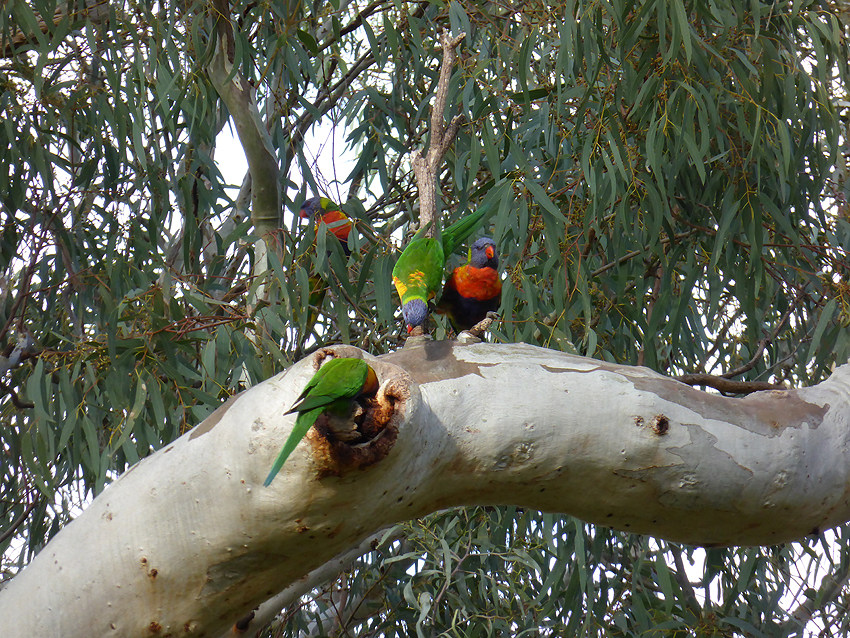
Rainbow lorikeets examining tree hollow f6.4 @1 125  th sec ISO 250

Rainbow lorikeets examining tree hollow; f6.4 @1 125 th sec ISO 250

Mudlark collecting nesting material;  f2.9 @ 1 125th sec ISO 400

Mudlark collecting nesting material; f2.9 @ 1 125th sec ISO 400


I decided to take the southern bike trail that follows the creek down to McIntyre road then work my way back to the bridge along the bush tracks that hug the other side of the waterway; a nice journey of around 3kms that includes several small lakes, patches of quite dense scrub and some towering old river gums.

Maned duck with chicks;   f5.6 @ 1 80sec ISO 160

Maned duck with chicks; f5.6 @ 1 80sec ISO 160

Black duck taking off;  f6.4  @1 250 th sec ISO 100

Black duck taking off; f6.4 @1 250th sec ISO 100


In this post, I will not describe each particular wildlife encounter, instead the pictures and brief captions can tell the story. There was a little post image tidying up through Photoshop but in my humble opinion the little camera did a good job as a backup and will certainly sit in my pocket on many a bike ride or travel adventure in the future.


Until our next chat

Cheers

Baz  

Breakout Creek’s Herons

22 Jun


Dear Reader

It is a typically South Australian winter’s afternoon; cool, clear and sunny with a light breeze coming off the ocean.

5 heron poised to strike

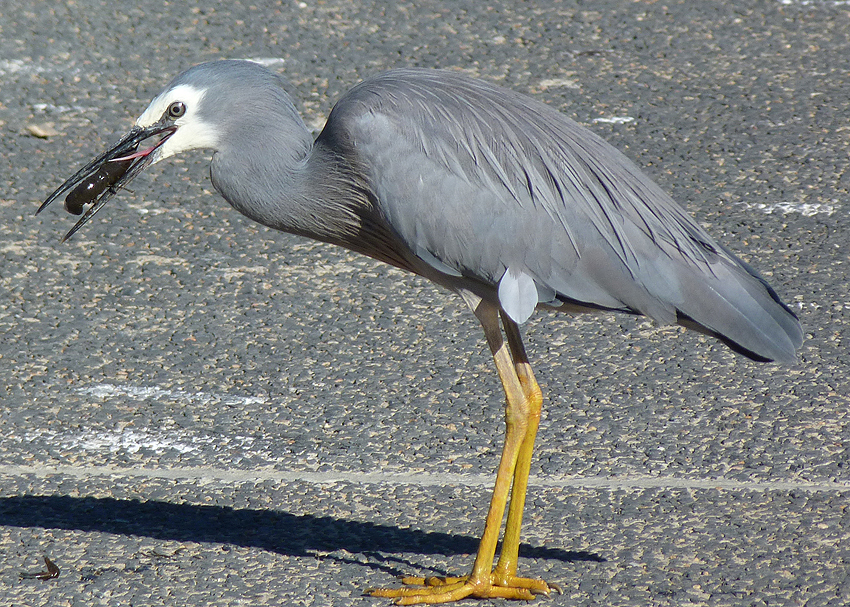
Grey faced heron poised to strike….click to enlarge image

4 heron and yabbie

Heron and yabbie (freshwater crayfish)….click to enlarge image


The white faced heron is hunting amongst the shallow reed beds and rocks along the edge of the river bank. It moves slowly, carefully placing each of its long, spindly legs before freezing to stare into the water in search of prey. The long neck coils back slowly and then with disarming speed the dagger beak flashes into the water to snatch an unsuspecting yabbie. The bird rearranges the unlucky crawfish in its beak then strides onto the causeway to enjoy its catch.

3 white faced heron in flight

White faced heron in flight….click to enlarge image


Over the next few minutes I watch the heron as it continues to hunt in the same area. I am trying to capture some images that depict its hunting style but the wader is becoming more nervous and eventually takes to the air.

Breakout Creek looking south

Breakout Creek looking south….click to enlarge image


I am at Breakout Creek, a section of the Torrens where the river broadens and significant environmental work has been done to improve aquatic habitats. Over the years I have seen water rats, lizards, frogs, possums as well as a wide variety of birds in this area. It is a favourite destination when I go for a bike ride along Linear Park and one that I would recommend to any visitor who enjoys the outdoors and a little mild exercise. Free bikes are available at the weir near the golf course and the ride to Breakout Creek and back is an easy one hour pedal.

7 greater egret

Greater egret….click to enlarge image


From the causeway I cycle back towards the city for a couple of hundred metres then dismount where the reeds are thickest. Between a small island and the bank a lone greater egret is hunting, half concealed by the brush. Like the grey face the egret uses its long bill to snatch small prey from the water and while I am watching it snaps up several small fish.

2 Nankeen night heron

Nankeen night heron….click to enlarge image


Close by the reed bed some tall eucalypts overhang the creek and, as luck would have it, there is a far more unusual heron roosting in the topmost branches. The nankeen night heron is a nocturnal hunter and it spends the days resting before hunting for its prey when the sun goes down. This one is becoming a little more active as it is now late afternoon. Night herons are one of my favourite birds and though they are not exactly rare along the river seeing one is a bit of a treat.

6 red ochre grill

Red ochre grill….click to enlarge image


Three herons in one day (egrets are a kind of heron )……nice; but the day is not done and I have planned to meet a friend for dinner at the Red Ochre Grill, a fabulous restaurant adjacent to the weir, golf course and bike hire station where I started my ride. Their menu, which sources local ingredients and is a kind of upmarket take on the bush tucker concept, is certainly something to look forward to.


Until next time

Baz    

Salisbury’s Urban Wetlands

3 Jan


Dear Reader:

The saltbush and thorny wattle bushes that surround the bark chip path are thick and impenetrable. All around me I can hear the hum of insects and the twittering of unknown birds. Eventually I catch sight of a small bird perched in some bushes about twenty metres in front of me. The light is poor despite the sunny day and the shot is far from ideal. I wait for a few minutes. Finally the little bird breaks cover and sits on an exposed branch. It is still moving so the image will not be perfect but I fire off a few frames in the hope that one will help me to identify it.

1 Female fairy wren in scrub

Female fairy wren in scrub

5 Typical wetland  habitat

Typical wetland habitat


A little further along the trail I cross a footbridge and a wide expanse of shallow water confronts me. A collection of wading birds are feeding on an exposed mud-bank. They see me and start to behave nervously. I capture a single image just moments before the birds scatter; some disappear into the reeds while others take flight and head deeper into the wetland.

2 Various species of water birds on an embankment

Various species of water birds on an embankment


I am in the Greenfields Wetlands near Mawson Lakes where I work as a teacher. This complex of lakes, reed beds and low scrub is part of a chain of wetlands that filter stormwater for re-use in the Salisbury area a few kilometres north of Adelaide. This particular area has been carefully rejuvenated over several decades turning wasteland into a natural wetland zone where the wildlife is wary. Even common ducks disperse as I approach rather than simply paddling away as they might in the urban part of the creek that passes through my school. The wildlife is not only cautious but more diverse and one gets a real sense of being in the field, despite the traffic and housing only a hundred metres away.

2 Watershed restaurant

Watershed restaurant


My next wildlife encounter tests both observation skills and patience. I detect a slight movement on a mudflat near some reeds. I look a little closer and can see nothing. I wait, searching through the telephoto. Eventually, what appeared to be a brownish patch of decaying plant matter moves ever so slightly. It is a little black-fronted dotterel that has been foraging along the edge of the creek. A few more minutes pass more before the bird feels confident enough to resume its previous feeding pattern and I have to move carefully and slowly to capture an image. This is the kind of photography that I love. Perhaps it rekindles some lost predatory instinct…who knows?

4 Dotterel feeding on muddy embankment

Black-fronted dotterel feeding on muddy embankment


My final wetland moment is really quite unexpected. As I leave the trail and head up to the little restaurant that sits alongside the wetland there is a flurry of wings and water behind the reeds to my right. A flock of Australian pelicans lifts into the air. My camera is in standby mode and by the time it has re-started the birds are climbing rapidly. I hastily track them in flight and fire off a series of shots. Later when I review the images I am delighted to find that one picture shows three birds with their wings in different flight position.

6 Pelicans showing different wing positions in flight

Pelicans showing different wing positions in flight


As the light starts to fade I return to the Watershed Cafe, hand in my trail key and enjoy coffee and dessert on the deck overlooking the main lagoon. A tough way to end my day.


Cheers

Baz


JET

Waterfall Gully’s Aquatic Skinks

27 Apr

In the driest state on the driest continent water is, as you can imagine, the most precious of commodities. To be entirely honest, Adelaide has a wonderful climate but in summer we can go for many weeks without a drop of rain. During this time the few spring fed creeks that flow down from hills become a refuge for a wide variety of wildlife.  

AA edit

Waterfall above the creek

Frogs, native fish, fresh water crustaceans, aquatic lizards and certain bird species all need this permanent source of water. The spectacular little falls that have carved out Waterfall Gully on the city’s eastern fringe feeds one of the few environments where water dependent wildlife can survive the harsh summer months. At the foot of the falls; a restaurant, walking trails, and car parking sit adjacent to the creek making it a wonderful place for hikers, casual visitors and naturalists alike. 

B edit

A spotted marsh frog amongst the reeds

 After a particularly dry start to autumn I decided to drive out to Waterfall Gully to assess how the wildlife was coping with the conditions. A friend told me that he used to see quite lot of water skinks in the area years ago. I had only caught the occasional glimpse of the little lizards while cycling around the Torrens Lake in the city or on the banks of the Murray. This seemed like the perfect time to try to get some better images of these fascinating little reptiles. 

AAA edit

The creek provides a secure environment for many creatures including snakes, lizards, frogs and fish

Water skinks, actually the eastern water skink (Eulamprus quoyii) grows to around 30cms in length. They hunt for small invertebrates in and around permanent water. These lizards are territorial and males and females look alike. Up to 9 well developed young are born in the summer. They are common prey for Kookaburras, snakes and feral cats. Like most skinks, eastern water skinks can drop their tail when grabbed as an escape strategy and often have shortened or partly re-grown tails.

E edit

Eastern water skink basking on a rock in the late afternoon

 On my first trip I drove up the narrow road to Waterfall Gully and parked the car close to the creek below the falls. Within a few minutes I had spotted my first lizard. It was sitting on a flat rock in the middle of the creek and had a substantial part of its tail missing. Around one in ten of the skinks that I saw that afternoon were missing parts of their tails.

C edit

This little lizard got away but not without losing part of its tail

 As I walked towards the waterfall I noticed that the skinks were quite abundant throughout the creek and its banks. Some were tucked into the undergrowth while others were foraging amongst leaves and twigs that had accumulated between the rocks in the creek bed. I did not see any swimming though a few were partially immersed in water, apparently waiting for prey.

D edit

An eastern water skink foraging in the creek bed

 I returned to Waterfall Gully several times over the next few weeks to watch the water skinks and try to capture some better images. On my last excursion I sat quietly by a section of creek for over half an hour watching the lizards, small birds and insects that lived there. The wildlife had survived the ‘big dry’ quite well it seemed.

IMG_1205 edit

Perhaps I’ll focus on the insects next time