Tag Archives: South Australian wildlife

Barker Inlet and Greenfields Wetlands …a road trip

23 Feb

Barker Inlet and Greenfields Wetlands ….a road trip

Dear Reader:

As I cruise along the highway between Port Adelaide and Salisbury a succession of lagoons, ponds and wetlands flash past my windscreen. Over the last couple of decades this once industrial wasteland has become a haven for wildlife and an integral part of the system converting run off into clean water that flows back into the ocean.

1Torrens Island power station

Torrens island power station looms behind the wetlands


There are several parking bays along the way that provide vantage points and access to walking paths into the wetlands. In rather an anomalous environmental scene the first one that I explore has the Torrens Island Power Station as a backdrop. And, a family of maned ducks are sheltering amongst the reeds in the foreground.

2

Maned ducks


I drive another couple of kilometres to a large siding where two 4WD vehicles with council logos on them are parked by a path into the wetlands. A small group of volunteers are working on clearing weeds, counting bird species and making other environmental observations about the health of the ecosystem.

3

Those who care


Leaving the voluntary workers to their work I find the next promising entrance and park my car. A sign indicates that we have moved into the Greenfields Wetlands. The track leads to an old bridge then follows an embankment along the edge of a small lake. The twittering of wrens provides a constant sound track as I scan for water fowl and reptiles along the edge of the reeds. There are coots, swamp hens and Pacific black ducks as well as turtles and water skinks along this section of wetland but it is a glorious little blue wren draws the attention of my long lens.

4 2

Male superb blue wren


The watercourse ends in a sluice gate that regulates water flow between the ponds and on one side I can see the swirl and splash of large fish feeding in the shallows. They are carp, an unwelcome guest in any ecosystem and their eradication is probably another task for the council and other environmental protection agencies that watch over these important resources.

5

Carp feeding in the shallows


My final stop, just before the salt pans is particularly fruitful as there is a mixed population of black swans, herons and spoonbills feeding in a shallow lagoon. It is always interesting to observe these quite diverse species with their individual feeding styles and uniquely evolved body parts. Their beaks, legs and feet have developed unique characteristics over time for feeding in the same area but utilising different food sources and therefore not competing.

6

A mixed group of waterbirds


And, as is so often the case, my thoughts also turn to food. The Watershed Cafe, just over the bridge, is opportunely positioned on another part of the Greenfields system near Mawson Lakes. Sitting on the edge of a reed fringed lake it is the perfect place for coffee and cake at the end of my wetlands drive.


Cheer

Baz

Montacute’s Cherry Trail

10 Feb

Montacute’s Cherry Trail 

Dear Reader:

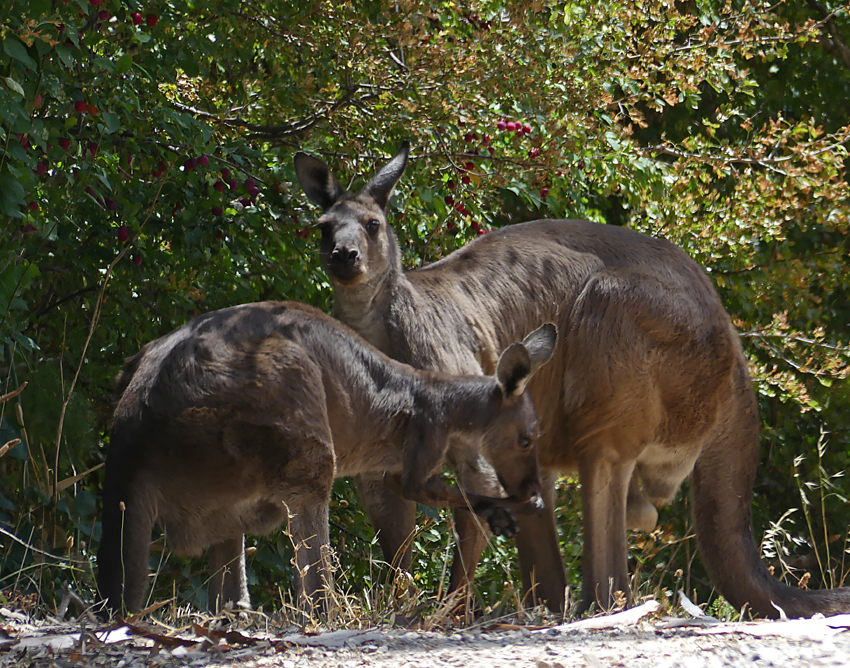
The two roos are huge. It is rare to see grey kangaroos this large quite so close to the suburbs. They are browsing by the side of a gravel track just off the main road. The male seems quite protective of the female looking intently at me while she continues to feed. But in truth both seem unfazed by my presence.

1

Grey kangaroos


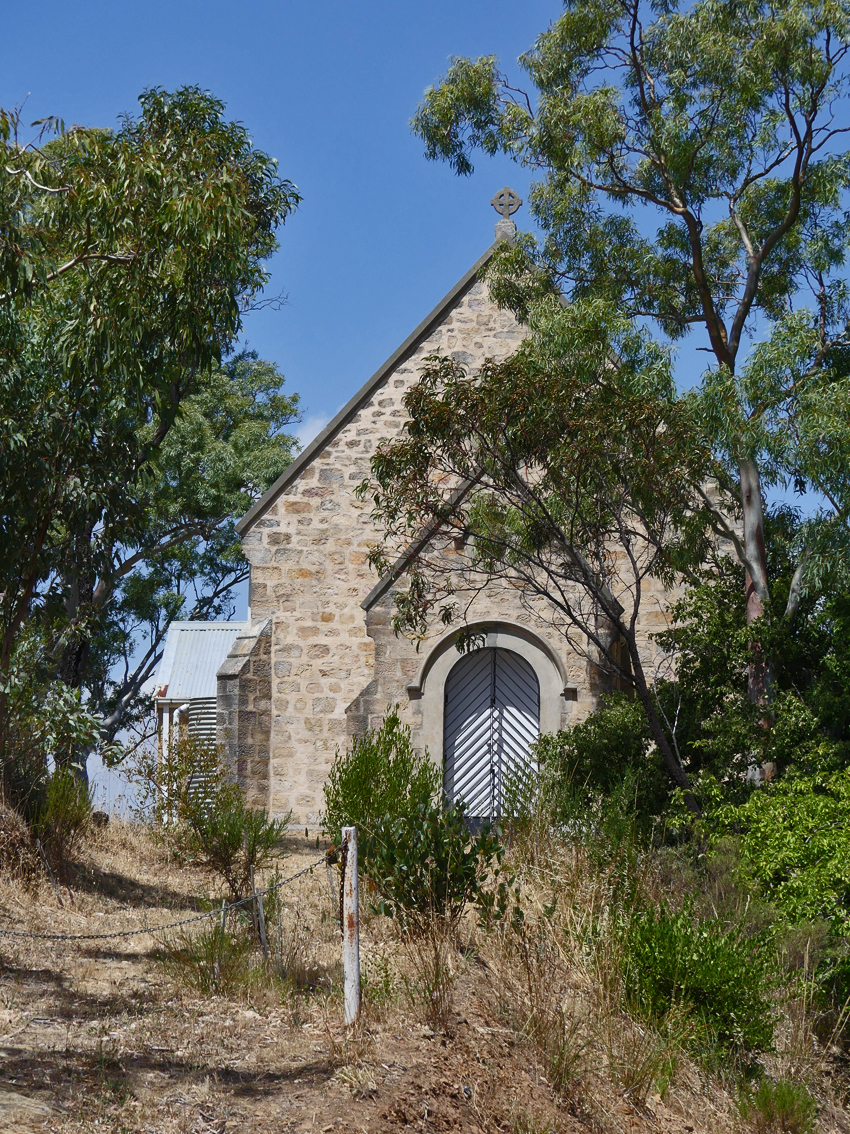
I am parked just near St Andrews Uniting Church where the tortuous curves of Corkscrew Road heads back down to the Torrens Gorge. Earlier I had driven up Montacute Road past the hills face suburbs of Newton and Athelstone. The road traversed The Black Hill Conservation Park as it followed the winding path of Fifth Creek to the little community of Montacute famous for its cherry orchards.

2  red St Pauls ANglican

St Andrew’s Church


Along the way I had stopped at several parking bays to access the park. Much to my surprise nearly every stop yielded a koala sighting. They were hanging in trees, nibbling leaves and one was even scuttling clumsily across the ground to a new arboreal refuge.

3

Relaxed koala


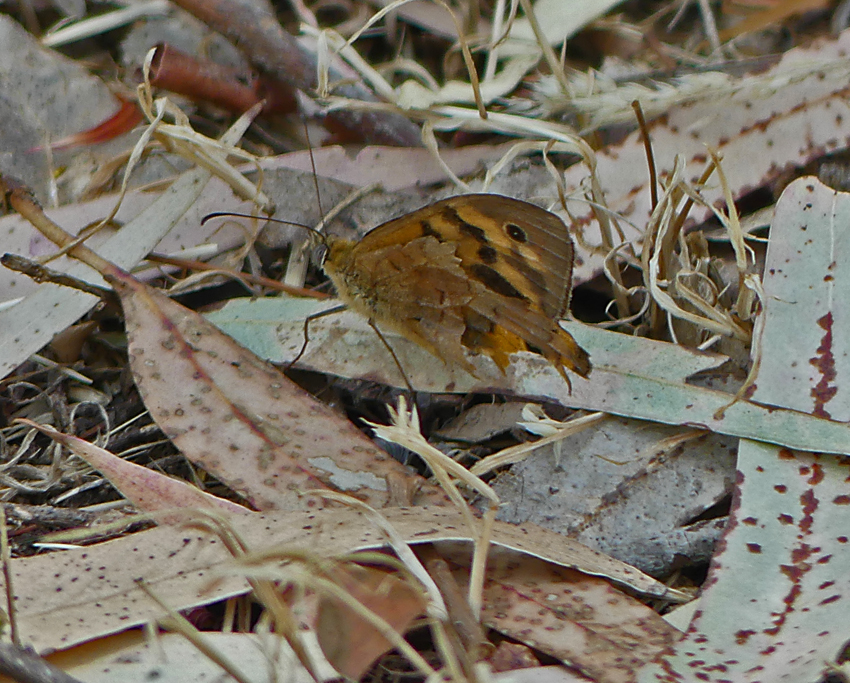
After walking around the scrub near the church photographing butterflies and other insects I call in at Montacute Valley Orchards. I park near the farm shed and purchase a few kilos of cherries and some superb home-made ice cream. But my wildlife instincts are drawn to the birds that are frequenting the nearby fruit trees. There are lorikeets, miner birds and wattle birds feeding on cherries and apricots in the foliage as well as cockatoos and rosellas rummaging amongst the fallen fruit below the trees.

4 red meadow argus

Meadow argus butterfly


4 red musk lorikeet

Musk lorikeet in cherry tree


With a belly full of ice cream, a bag full of cherries and an SD card full of images I call it a day and drive back to the city via corkscrew Road and the Torrens Gorge.

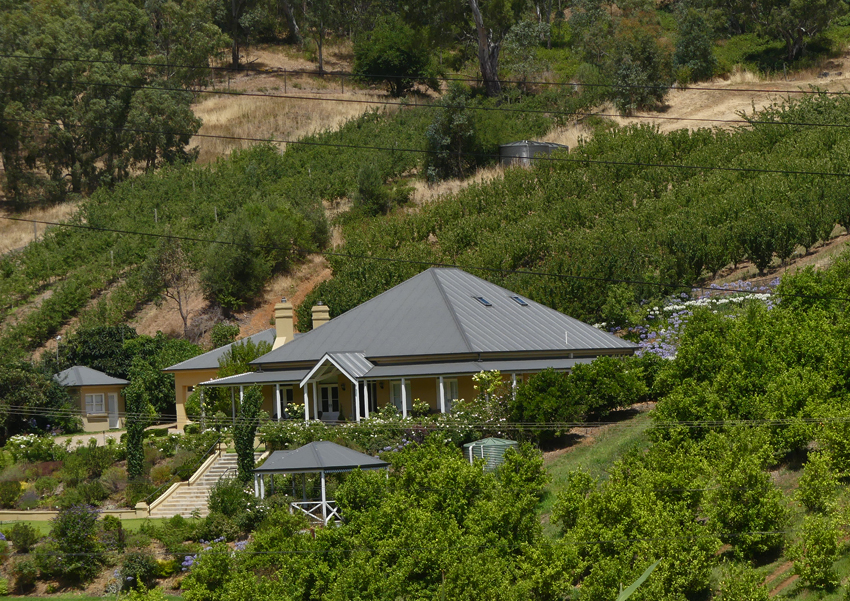
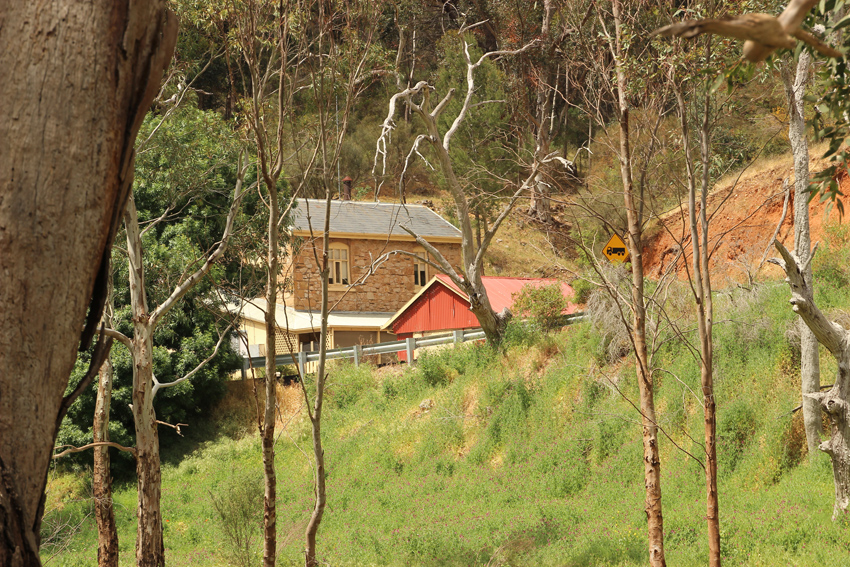
5 One of the lovely hills properies that nestle in the valley

One of the lovely hills properties that nestle in the valley


Cheers

Baz
Cobbler Creek…Love is in the Air

29 Jan

Cobbler Creek…Love is in the Air

Dear Reader:

The two noisy miner birds have been flying backwards and forwards through the box gums for the last ten minutes. Eventually the male sees his chance and lands on the branch next to the female. She chirps a half hearted protest or perhaps encouragement and he seizes the moment. Mating takes just a few seconds and they go back to their previous pattern of fly and follow.

1 1

Miner 1


1 2

Miner birds 2


I am watching the birds and their courtship antics in the Cobbler Creek Recreation Park; an area of open-woodland, near the end of Bridge Road in Salisbury East. Cobbler Creek stretches up into Tea Tree Gully where it can be easily accessed from Atlantis Avenue which joins the two branches of the Golden Way. Dropping in at the Tea Tree Gully shopping mall to collect some food then exploring the creek after picnicking on the grassed area, where Atlantis joins ‘The Way’ near Spring Hill, is a nice option.

2 mallee box gums

Salisbury East entrance


After spending a little more time watching the bird life at the western end of the creek I take a short drive up to Spring Hill in TTG. This part of the creek lies in a more urban setting where the waterway is dominated by huge red gums. There are numerous parrots in the trees and they too seem to be in a rather affectionate mood. For a while I focus on a pair of Rose Breasted Cockatoos (Galahs) which are quite intrigued by a tree hollow that has the makings of a future family home. Between real estate outings they preen themselves and each other as well as squawking and hopping between branches. Occasionally they hang upside down with wings flapping madly and crests erect.

4 off golden way past shopping centre

In Tea Tree Gully

5

Galahs


But the Galah couple do not have the neighbourhood to themselves. An equally amorous pair of corellas is occupying an adjacent tree and they too seem to have spied the potential nest site. Not to be outdone by their Galah cousins they engage in some serious necking and cooing.

3

Corellas


Yes, it seems that along Cobbler Creek; love is definitely in the air.

Cheers

Baz
Xmas Gums

26 Dec

Xmas Gums

Dear Reader;

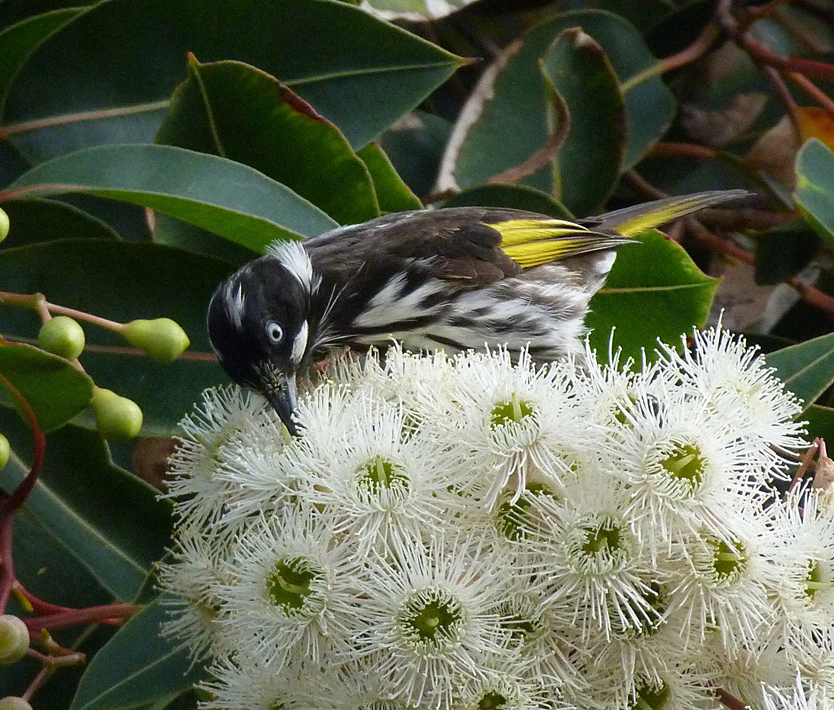
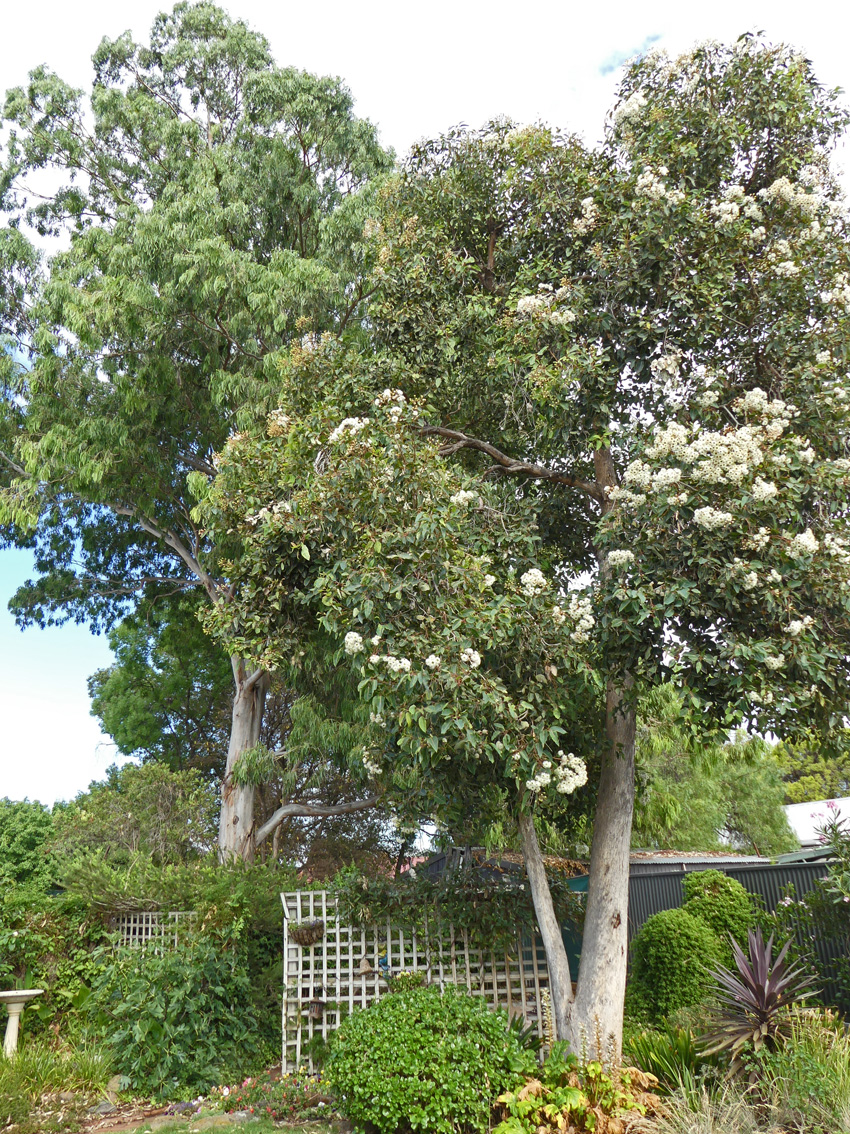
The New Holland honeyeater is perched on the topmost branch of the white flowering gum in my backyard. Every few minutes it takes to the air and chases an insect that has inadvertently flown too close to its ‘operating zone’. But hawking for prey like this takes an energy toll on the little bird, requiring frequent refuelling at the nectar rich flowers that also serve to attract its insect prey.

1

New Holland honeyeater


This is just one of the little wildlife scenarios that play themselves out during the Christmas season in the gum trees that grace my backyard. The smaller tree comes into flower in early December reaching its peak around Xmas day. The larger tree has flowered earlier but seems to harbour a wealth of tiny leaf and bark insects throughout the early summer months. Together, they attract a wide range of birds providing an interesting holiday spectacle; especially if one has scored a new camera from Santa.

2

A tale of two gums


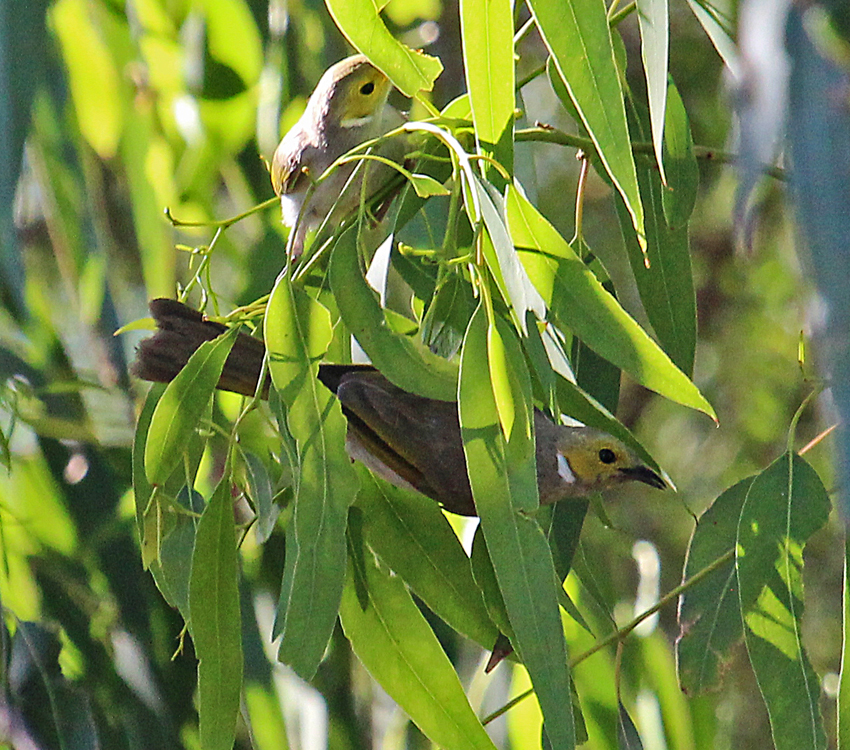
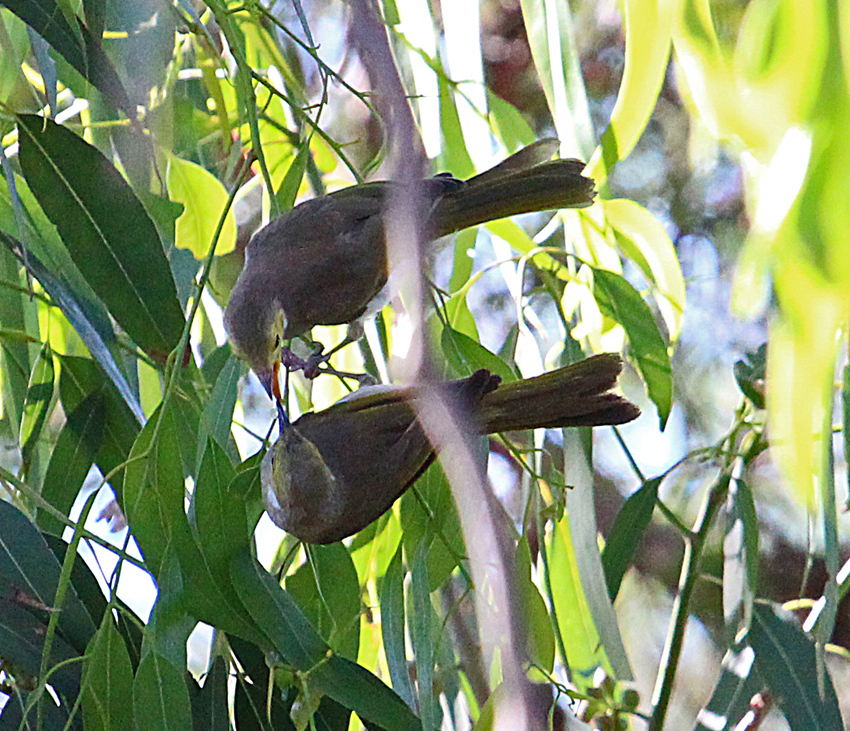
New Holland honeyeaters aren’t the only species of honeyeater that feeds in my garden. The more timid white plumed variety also samples the blossoms and hawk for insects. However, at this time of year they are almost finished raising their final brood for the season and the young ones are being schooled in the art of bug catching by the adults. Peering through my long lens into the shadows of the taller tree I am lucky enough to capture two images of a chick waiting for food then being fed a bug by its parent.

3 1

White plumed honeyeaters


3 2

Have a bug or two junior


In a wonderful coincidence, there is also a family of wattle birds in the same tree and a fully fledged chick is sitting on a branch demanding to be fed. I watch carefully, trying to time my shots to coincide with the exact moment the adult shoves some insect offering down its waiting gullet. Of course, some leaves get in the way and the light intensity drops at the crucial moment but that’s wildlife photography.

4 1

Wattle bird and chick


4 2

A gullet full of whatever


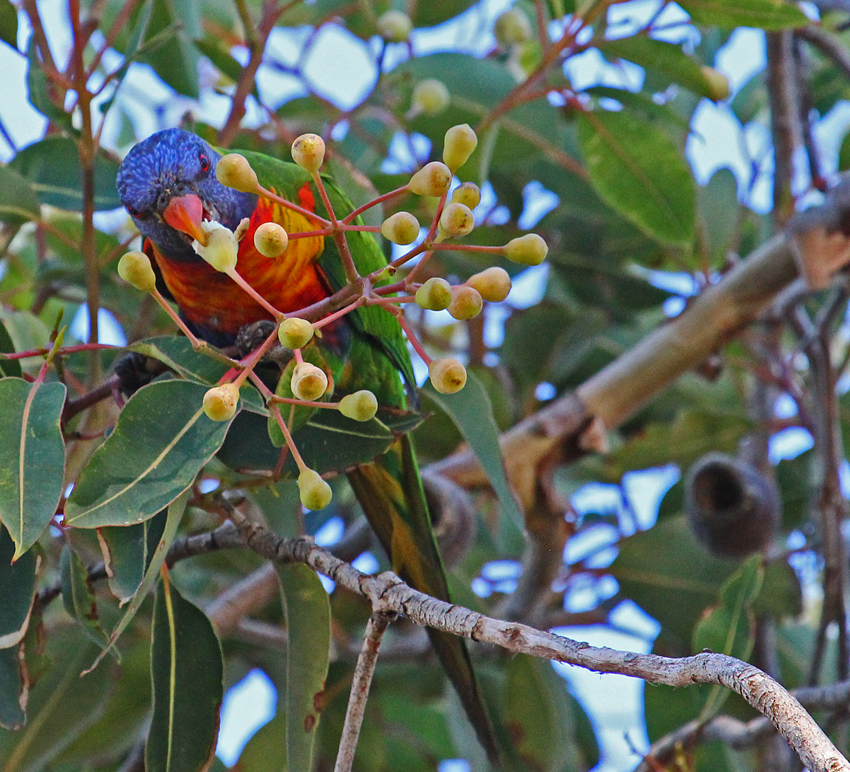
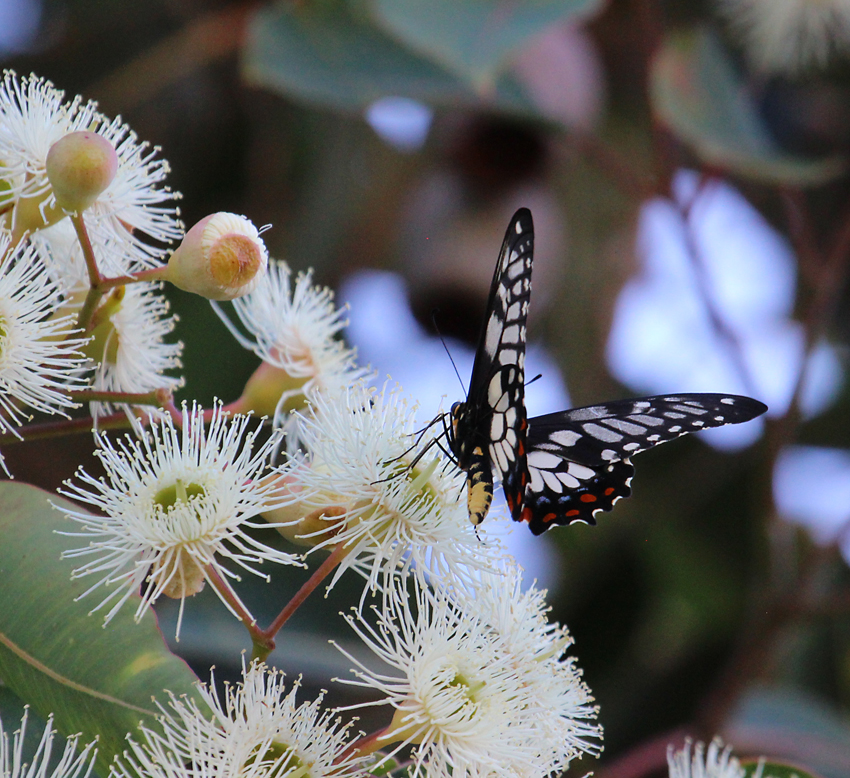
With a Xmas drink and a mince pie resting on the outdoor table next to my cameras I scan the foliage of the smaller tree for a final shot or two. Two colourful creatures oblige; a rainbow lorikeet is tearing apart a blossom emerging from a gum nut and a swallowtail butterfly is probing the mature flowers for nectar.

5

Rainbow lorikeet


6 Dingy swallowtail

Dingy swallowtail


Cheers and Seasons greetings

Until next year

Baz

Port Augusta…Arid Lands Botanic Gardens

7 Dec

Dear Reader:

The sand monitor, a kind of goanna, is raised slightly off the ground and peering intently towards me. It doesn’t seem too perturbed by my presence. In fact, I am probably the more excited of the two. It is my first encounter with one of these lizards which can reach a length of around 1.5 metres. Like all monitors, the sand goanna has a forked tongue like a snake allowing it to use scent to detect the distance and direction of its prey. A closer examination through my camera lens reveals that this animal has been injured at some time and is missing part of its front right foot.

Sand monitor

Sand monitor


I am in the Arid Lands Botanic Gardens just a few kilometres out of Port Augusta near the head of the gulf. The gardens showcase many of the diverse dry-land ecologies that SA has to offer. Unlike most parks this one is not fenced and the animals that venture into its proximity are wild. Despite its natural status the gardens are well serviced by a modern visitor centre and cafe.

The view from the head of the gulf

The view from the head of the gulf


Leaving the sand monitor to its own devices, I walk around the edge of the encroaching scrub towards the extensive eremophila plantings at the back of the centre. Several zebra finches are perched in the branches of a skeletal tree overlooking a small artificial waterhole. I search for the right image, eventually finding a male and female settled on a dead branch; perfectly demonstrating the difference between the sexes.

male and female zebra finches

male and female zebra finches

Purple eremophila

Purple eremophila


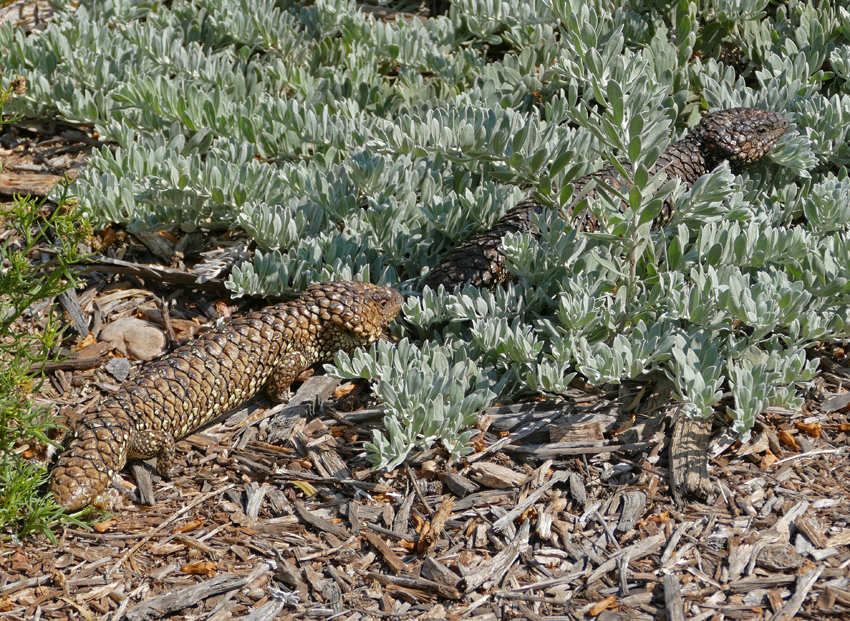
After spending some time exploring the eremophila shrubs with all their subtle floral variations, I walk around to the northern edge of the gardens. This area includes habitat zones where interpretive signs explain adaptations to climate and terrain as well as Aboriginal use of plants as foods and medicines. While I am reading about how sugarwoods are used as sweeteners and their amazing regenerative powers after bushfires, I hear a rustle in the undergrowth. Only a few metres from where I am standing a pair of or shinglebacks are following each other closely between the ground-covers. Sleepy lizards, as they are sometimes known, are essentially solitary reptiles which can only mean that it is mating season.


Shingleback or sleepy lizards

Shingleback or sleepy lizards


Whenever I visit these extraordinary gardens I conclude my day with a little culinary treat; a light meal, ice cream or scones with jam and cream. But these are no ordinary delicacies. Many of the flavours are created from the landscape with a distinctly ‘bush tucker’ nuance such as quandong ice cream and native herb flavoured damper.

Looking out from the café across the eremophila garden into the scrub beyond

Looking out from the café across the eremophila garden into the scrub beyond


Until our next adventure

Cheers

Baz  

Athelstone … a river walk…field notes and images

15 Oct

Athelstone … a river walk…field notes and images


Dear Reader: I hope that you enjoy the field notes and images from my day exploring the lower reaches of the Torrens Gorge near Athelstone. I will be using this style from now on as it allows me to share more observations and thoughts with you.


Spring 12/10/2015

A cool morning with a little cloud cover and patches of blue sky

Drove from city to Gorge Road intersection then to Athelstone, approx 20 minutes

Stopped in at bakery to get steak pie, apple tart and fruit juice

Photographed historic community centre, lovely roses on display

Spoke to history officer

Quite a few colonial buildings in the area worth visiting

Started walk from the mining road 2.8 Kms from Athelstone Council chambers, just past stone and fibre house on RHS of main road, parked near the causeway (ford)

Followed old, narrow bitumen road along left bank of Torrens heading up the gorge (upstream) towards historic aquaduct

B18 jpeg

Council chambers

B17 image

Stone and fibre home by turn off


Trail to aquaduct only 800 meters

Not going to walk off impending lunch this way

Walked slowly, stop, look and wait

Can hear small birds twittering in scrub to the left

Several little wrens fossicking in leaf litter

They appear to be different species as one has a blue tail

All are females as fairy wren males of the most common species have patches of bright blue plumage

B8

Female superb fairy wren

B9

Male superb fairy wren


Koala in dense foliage of a non native tree, unusual

There are several gums nearby, perhaps this tree is shadier

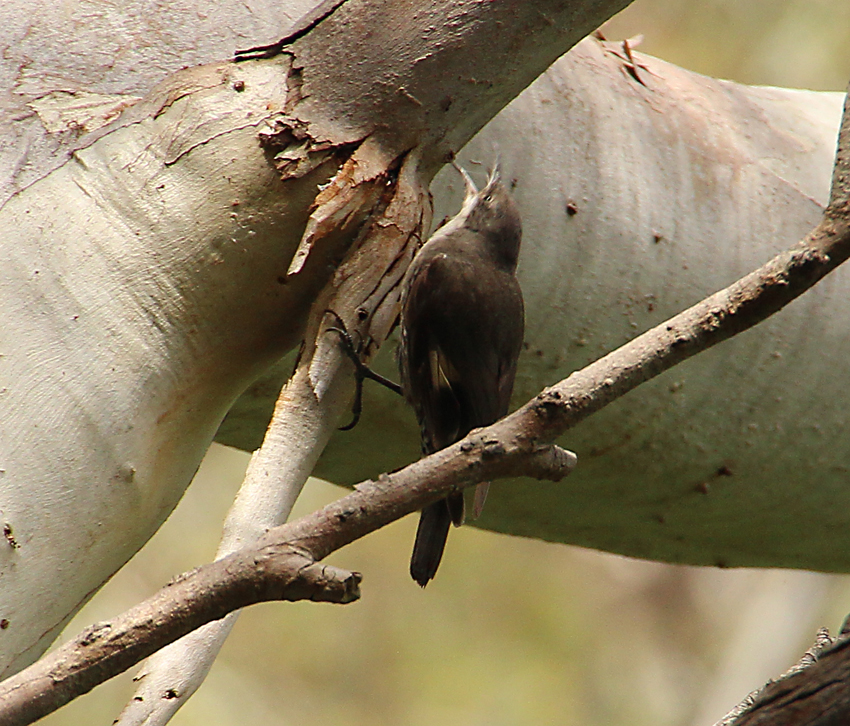
Tree creeper (possibly white throated) feeding probing for insects on a eucalyptus tree, seems to be favouring old and dead branches

Note the huge feet for gripping and providing stability

Hard to get a clear shot

Switch to shutter priority to stop action 1/1600 should do

B13

Koala

White throated treecreeper

White throated treecreeper


Reach the aquaduct

Note the signage about its history

State listed heritage item in 1980

Operated continuously for 138 years carrying water from Hope Valley Reservoir

There is a deep pool below

Scan the edge of the water and several logs for fresh water turtles…nothing

A water skink is basking on one of the flat rocks

As I approach and take a couple of shots it disappears into the undergrowth

I have often photographed these little reptiles and never seen one in the water swimming

B10

Aquaduct

IMG_8953

Eastern water skink


Start return walk to car

Expansive views of the gorge rising on the SE side

Several cyclist ride past on the main road above the river

They use the steep road for training

Concentrate on the other side of the path on return walk

Yellow tail black cockatoos fly above

See and hear a lot of Rosellas in taller trees

Manage to get a shot of a crimson feeding on berries in tree top

Stop to look at interesting gum trunk with red sap oozing from it

Like the colours and texture

B20 red

Bark patterns and gum resin

Back at car

Drive to park about 1 kilometre out of Athelstone to walking trails in parkland area, still has Torrens flowing through

Lunch on a bench watching some magpies haggling over territory

A Good morning’s work

Cheers

Baz

Nairne….an artistic afternoon

6 Oct

Nairne….an artistic afternoon

Despite a field that is full of lush green grass, a veritable cow paradise, the small herd of young bovines drifts down towards the fence where I am standing. Perhaps they are intent on providing me with the perfect ‘cow’ shot or they may be simply illustrating the old adage; ‘the grass is always greener….’

2

Taking a closer look

1

Classic South Aussie dirt track

 On this perfect spring day I am driving along Ironstone Range Road just off the Old Princes Highway, a few kilometres east of Nairne. Expansive, open woodland dominates one side of the unsealed track and rich pasture carpets the other. I am on my way to the Jonathan Art Centre to grab a bite to eat and make some inquiries about art classes.

3

Open woodland with massive eucalypts

 Five minutes later I am driving across an open paddock on a grass trail to a pitch roofed building set on the side of a gently sloping hillside. There are rosellas in the trees that line the driveway and a pair of crows raucously announces my arrival. The entrance hall is a combination studio and gallery displaying the owner’s work and opening on to a balcony which overlooks a cottage style garden.

4

Johnathan art centre

5

Work space and gallery

10

Another view from the property

A friend has recommended the fish pie, a classic British dish that I often enjoy in London’s Union Cafe. And this version does not disappoint; full of good South Aussie seafood and topped with a fluffy potato mash. Like the art on display, it is a credit to the proprietor, Liz’s, creative flair.

6

Fish pie and fresh garden salad

To my surprise and delight; while I am enjoying the meal a hare hops through the garden below the balcony, pauses, looks straight at me then heads off down the hillside. Now, though his blog has had more of an ‘afternoon drive in the country’ flavour about it than my usual wildlife emphasis; rest assured, the camera was well within reach and a short burst fired off at my visitor.

7

Waiter, there’s a hare in my garden

Art inquiries and meal complete, I ask permission to wander around the property. Behind a bushy hedge there are rows of colourful annuals and lavender that abut a small pond. I can hear the call of parrots and eventually spot a crimson rosella amongst the layers of blooms. Then, switching to macro, I zoom in on a honey bee feeding. Its legs are covered in pollen brushed from the abundant flowers as the little insect drinks in their various nectars.

8

Layers of colour and rosella

9

Bee at work

A great drive, wonderful meal and a few wild encounters…not a bad way to spend a day.

Cheers

Baz
Normanville’s Back Blocks and Coastal Walk

17 Sep

Normanville’s Back Blocks and Coastal Walk


Dear Reader:

The grey kangaroo is huge, a fully grown male with a couple of smaller females close by, half hidden in the scrub. As I approach, he rises up to his full height and eyes me with intent. I take half a step closer and he turns and shuffles closer to the fence. Then, with a single, effortless bound he clears it and disappears into the scrub further down the hillside.

2 roo

Fully grown male, grey kangaroo


3roo

Up and over

I am in an older part of Normanville on a hillside behind the beach houses and new developments. Large blocks of land are quite common here. Some still retain vestiges of the original pre-farming vegetation. Landowners with an interest in wilderness conservation have re-established endemic plants on many plots that in turn attract a plethora of native wildlife from ‘roos’ and kookaburras to colourful rosellas and even the odd echidna.

IMG_7906

Grevillea species growing under the pink gums


Near the top of this particular block there is a stand of gnarled old pink gums where little crescent honeyeaters and several grey currawongs are sheltering from the light showers that are sweeping in from the sea a couple of kilometres away.

IMG_7909

Grey currawong in pink gum

IMG_6803

Crescent honeyeater sheltering from rain


Beneath the canopy of the trees there is a wide variety of native shrubs and ground covers that support both small birds and insects. Despite the cool weather I manage to find some shield bugs amongst the berries and flowers of a pink Geraldton wax bush. And in the branches above them a crimson rosella is calling to its mate in anticipation of a warmer spring day when they will be searching for nesting holes.

Common gum tree shield bug on Geraldton wax bush

Common gum tree shield bug on Geraldton wax bush


From the scrubby hillside I drive back down to the coast stopping in at the Normanville Hotel for a locally caught seafood meal; calamari, whiting and scallops. The beach is only five minutes from the hotel and I park where a coastal pathway sweeps around to Carrickalinga heads, an area that I frequently dived during my youth.

IMG_7280

Late afternoon view of Carrickalinga heads from Normanville


The sun is getting low now and there are sparrows and honeyeaters settling in for the night in the bushes that flank the path. I can just make out a cormorant resting on the rocky foreshore shaking water from its wings before finding a place to roost. Sometimes this half light produces some of the more striking images that I have captured in the wild and today is no exception. I find a pair of crested pigeons perching on a skeletal branch with the grey sea and sky as their backdrop. They are my final memory of yet another memorable day spent enjoying South Australia’s Fleurieu Peninsula.

IMG_7283 edit 1

Crested pigeons near walking trail to Carrickalinga


Take a drive down the coast sometime and enjoy this special place and its wildlife!!!

Cheers

Baz
Walkerville’s Bickle Reserve…..Fairies in the Garden

4 Sep

Fairies in the Garden

Dear Reader:

As I have categorically stated in several of my posts, “I am no botanist”. I love gardening and appreciate the wonderful diversity of South Australia’s flora but remembering all the different classifications, names and botanical intricacies is just a little too much like hard work. Instead, I rely on a couple of field guides to common plants in the Adelaide area, phone a friend or simply make reference to those yellow bushes or tall straight eucalypts. Hopefully, this gap in my naturalistic armoury will be narrowed as I write more nature posts, though the signs are not promising. So: it is with some trepidation that I lead into the following piece …….

P1130228

Pink fairy (Caladenia species)

IMG_8066

The Torrens near Bickle Park

 ….It is a cool winter’s day, slightly overcast and I am on my knees examining a glorious little patch of native orchids. Most are pink fairies but there is one tiny delicate bloom, the size of a little finger nail, called a gnat or mosquito orchid. Nearby several of the flat prostrate leaves indicate where other orchids will appear in the near future.

P1130247

Gnat orchid (Cyrtostylis species)

All of these species are endemic to the area and though a few might have grown naturally, most are the result of a dedicated group of volunteers who are revegetating this area which is part of the Vale Park Wildflower Walk. The section I am exploring is alongside the Torrens River just east of the autobahn bridge near the Bickle Reserve. Several of the Vale Park group are holding an open morning and explaining the importance and biology of the plants they have established.

P1130234

Chatting about orchids

IMG_8071

Native Wisteria (Hardenbergia)

IMG_8099

Purple swamp hen

As I listen to information about the relationship of certain fungi in the soil to the propagation of orchids and marvel at the spidery native clematis and hardenbergia that are climbing up some eucalypts (big tall ones) I notice a pair of purple swamp hens foraging in the long grass by the river. Leaving the group I pursue the birds and make my way along the bank where there are also dusky moorhens in the reeds and crested pigeons feeding near the bikeway.

IMG_8059 edit

Dusky moorehen

Rejoining the group I chat about the importance of maintaining our wild heritage for future generations and learn about Aboriginal use of some types of native plants including orchids. Predictably in this group I encounter another wildlife photographer and the conversation fluctuates between nature and the lenses we have used for different purposes.

IMG_8088

An occasional visitor

In the course of our conversations one of the replanting team asks me if I have any images from the area and I remember that on a bike ride along this part of the linear park trail I had photographed a koala high in the largest eucalypt overshadowing the orchid beds. But, in keeping with my botanical prowess I forget to ask what kind of species it is (probably a tall, straight one).

Until the next journey into SA’s natural wonders

Cheers

Baz

PS

Check out Geotravelling a new site that I have attached that celebrates the natural, cultural and urban diversity of our planet through my travel photographs.

Norwood’s Parade of Animals

29 Aug

Norwood’s Parade of Animals

 Dear Reader:

It has been rather a grey week but today the sun is showing its face at regular intervals and there is a blackbird singing in a tree above me. A good day for a walk around Norwood admiring the architecture before grabbing a bite to eat at one of the many restaurants and hotels that make the area a premier dining destination. But this old, established suburb with its towering trees and well-tended gardens also provides meals and homes for a wide variety of urban wildlife.

Juvenile male blackbird

1 One of the classic hotels in the Norwood area

One of the classic hotels in the Norwood area


Blackbird aside; the first indigenous species that grabs my attention is living between the petals of a bright yellow daisy bush. The diminutive flower spider hunts amongst the blooms for small insects. This one has ambushed a fly and is proceeding to wrap it in a web for a late afternoon snack.

2 Flower spider with lunch

Flower spider with lunch


A little further down the street I can hear the call of lorikeets as a pair of the colourful little parrots forage in the trees for seed and blossom. I follow them closely as they fly from the tree tops to a smooth barked gum tree right on the edge of Osmond Terrace, a busy boulevard that cuts through Norwood. Here, with traffic whizzing past, they are investigating a hole in the trunk as a potential nesting site.

2 Lorikeet feeding

Rainbow lorikeet feeding

2 Rainbow lorikeet scouting for real estate

Rainbow lorikeet scouting for real estate

2 Taking a closer look

Taking a closer look

2 Hey honey come take a look

Hey honey come take a look


Osmond Terrace is also home to a group of Australian magpies. I can see a raggedy nest high in one of the liquid amber trees that line the thoroughfare and when I focus the long lens on it, the head of a large chick is just visible. After ten minutes an adult bird arrives with a grub in its beak. A few minutes later I catch site of another bird digging for invertebrates in the lawn of a local school while a third sits, watching from the concrete facade of Vine House, one of the suburb’s historic buildings.

Adult magpie arriving at nest

Magpie feeding

Magpie feeding

keeping an eye on proceedings

Keeping an eye on proceedings


My final stop is Finn MacCool’s Irish Pub for lunch where a group of pigeons is also enjoying an alfresco bite to eat in slightly less salubrious circumstances. I started with an introduced species…might as well end on the same note.

P1130169

Common pigeons feeding on crumbs in the street


Until our next adventure

Cheers

Baz  

Check out Geotravelling a new site that I have attached that celebrates the natural, cultural and urban diversity of our planet through my travel photographs.