Tag Archives: water birds

Port Germein ….A Long Walk Out to Sea…Field Notes

8 Mar

General description of location

Port Germein is a  small country town just north of Port Pirie which is  a major regional centre about 2½ hours from Adelaide

Lies near the top of Spencer Gulf and is in the shadow of the Southern Flinders Ranges.

Town has a pub with excellent food, a general store and campground

Small local population of around 250

A long jetty, once used to load grain clippers, it extends from the shore to over a mile out to sea and most of the beach is exposed at low tide

Good fishing, crabbing and general coastal wildlife walks
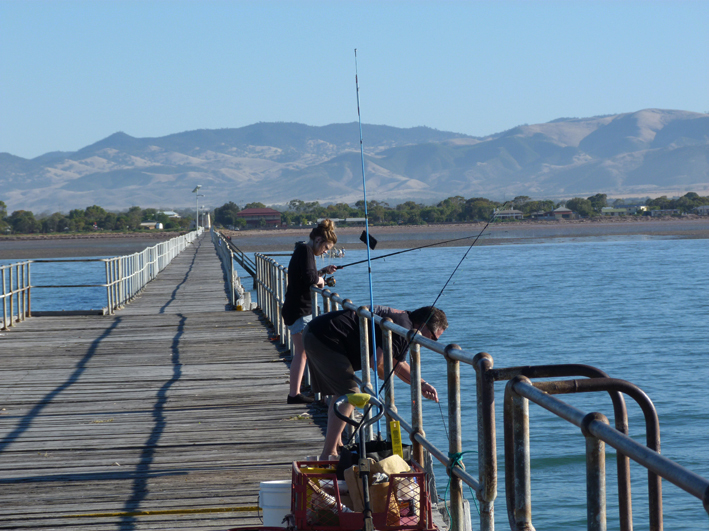
6 jetty and ranges red

View back to the ranges from the end of the jetty

Notes

Season:

Late summer

Weather:

Mild morning temperature around 18 ºC at 0900.

Forecast temperature 35°C later in the day

No wind and clear skies

5 blue bee red

Blue bee on coastal heath

While walking from the house where I am staying to the jetty I spot some blue bees, an Australian native species, feeding on a coastal bushes with small blue flowers

They tend to feed on blue and white blossoms

Note to self

Identify some of the coastal vegetation before next PT Germein post
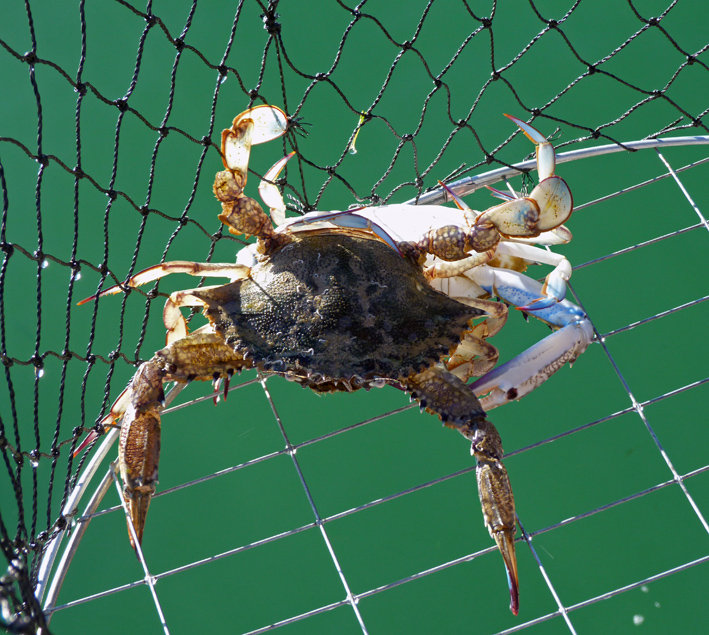
3 blue swimmer crab red

Blue Swimmer crab in net

I stroll along the jetty and notice a variety of small wading birds feeding on the sand/mud flats, some are searching out small pools of residual water

A young couple near the end of the jetty are crabbing and they have caught half a dozen Blue Swimmer Crabs which are common at this time of year

A group of Pied Cormorants and Common Terns are perching on some battered poles which remind us that the jetty was once longer

A family have used a tractor to tow out a small boat and launch it as the tide comes in

The view from the end of the jetty of the foreshore and Ranges is spectacular.
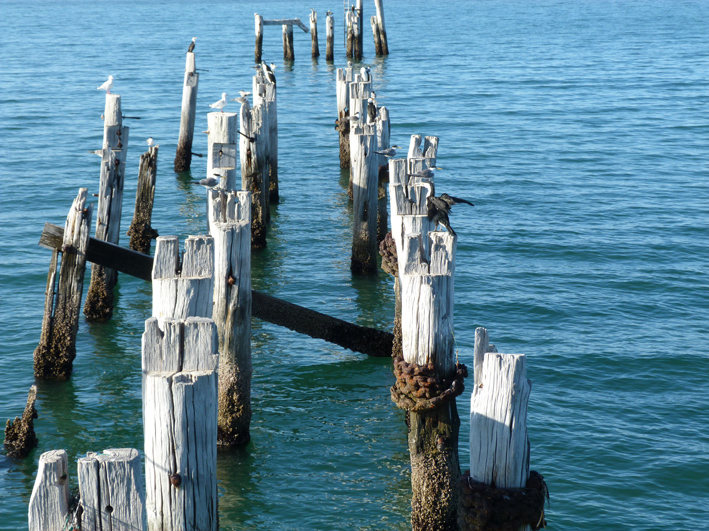
 

12end  of jetty red

Terns and Cormorants at the end of the jetty

I return to the shore and walk along coastal path that weaves between low bushes and stretches of beach

There are honeyeaters and finches in the bushes and a Ring Necked Parrot preens itself on a branch

Near a rocky outcrop close to a garden I come across a Bearded Dragon sunning itself

There are also quite a few White Plumed Honey Eaters feeding on blossoms in Eucalypt trees that grow in gardens near the coastal walk

After sipping nectar some are hawking for insects.
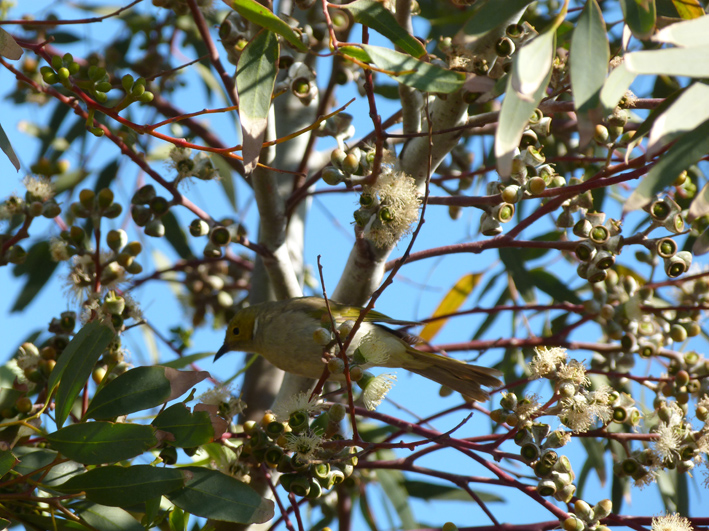
5 white plumed honeyeater red

White Plumed Honeyeater feeding in eucalyptus tree near the foreshore

A ten minute walk from the end of town, the coastal scrub and samphire give way to stands of mangrove and a whole new coastal ecology emerges

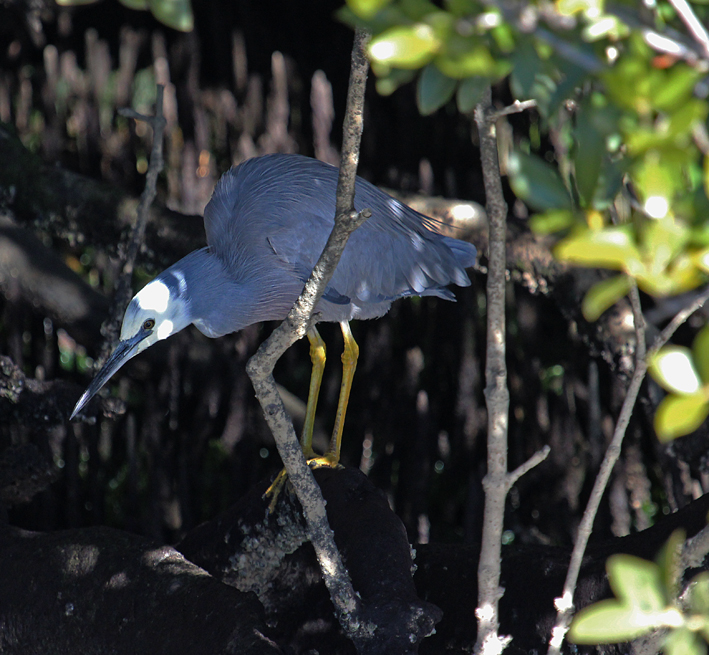
A White Faced Herons stalk small fish and crustacean in the shallow channels and a White Browed babbler fluffs up its feathers in one of the mangrove trees

These mangroves are part of a south Australian system that marks the southernmost extent of mangrove communities in the world

Small fish can be seen schooling in some of the deeper channels

This is a nursery area for many commercial species.
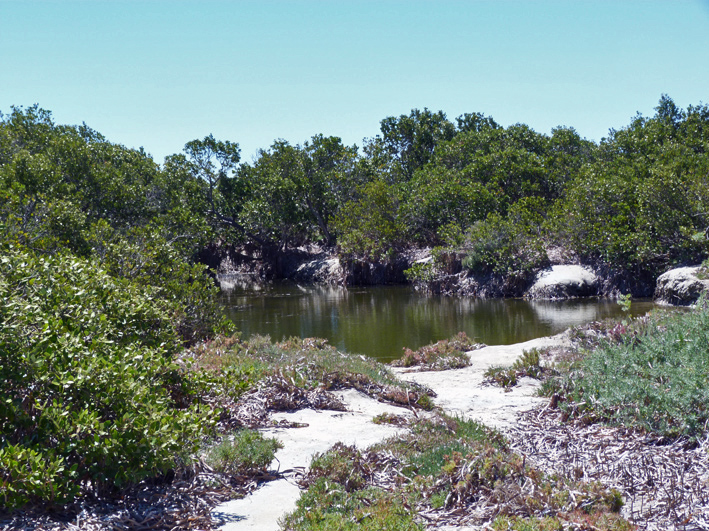
8 mangrove pool red

Mangrove pool

15

White Faced Heron hunting in the mangroves

I head back to town for a schnitzel and a beer at the local pub and the promise of a drive to Telowie or Port Germein Gorge in the afternoon to look for rock wallabies and eagles.

Cheers

Baz

Salisbury’s Urban Wetlands

3 Jan


Dear Reader:

The saltbush and thorny wattle bushes that surround the bark chip path are thick and impenetrable. All around me I can hear the hum of insects and the twittering of unknown birds. Eventually I catch sight of a small bird perched in some bushes about twenty metres in front of me. The light is poor despite the sunny day and the shot is far from ideal. I wait for a few minutes. Finally the little bird breaks cover and sits on an exposed branch. It is still moving so the image will not be perfect but I fire off a few frames in the hope that one will help me to identify it.

1 Female fairy wren in scrub

Female fairy wren in scrub

5 Typical wetland  habitat

Typical wetland habitat


A little further along the trail I cross a footbridge and a wide expanse of shallow water confronts me. A collection of wading birds are feeding on an exposed mud-bank. They see me and start to behave nervously. I capture a single image just moments before the birds scatter; some disappear into the reeds while others take flight and head deeper into the wetland.

2 Various species of water birds on an embankment

Various species of water birds on an embankment


I am in the Greenfields Wetlands near Mawson Lakes where I work as a teacher. This complex of lakes, reed beds and low scrub is part of a chain of wetlands that filter stormwater for re-use in the Salisbury area a few kilometres north of Adelaide. This particular area has been carefully rejuvenated over several decades turning wasteland into a natural wetland zone where the wildlife is wary. Even common ducks disperse as I approach rather than simply paddling away as they might in the urban part of the creek that passes through my school. The wildlife is not only cautious but more diverse and one gets a real sense of being in the field, despite the traffic and housing only a hundred metres away.

2 Watershed restaurant

Watershed restaurant


My next wildlife encounter tests both observation skills and patience. I detect a slight movement on a mudflat near some reeds. I look a little closer and can see nothing. I wait, searching through the telephoto. Eventually, what appeared to be a brownish patch of decaying plant matter moves ever so slightly. It is a little black-fronted dotterel that has been foraging along the edge of the creek. A few more minutes pass more before the bird feels confident enough to resume its previous feeding pattern and I have to move carefully and slowly to capture an image. This is the kind of photography that I love. Perhaps it rekindles some lost predatory instinct…who knows?

4 Dotterel feeding on muddy embankment

Black-fronted dotterel feeding on muddy embankment


My final wetland moment is really quite unexpected. As I leave the trail and head up to the little restaurant that sits alongside the wetland there is a flurry of wings and water behind the reeds to my right. A flock of Australian pelicans lifts into the air. My camera is in standby mode and by the time it has re-started the birds are climbing rapidly. I hastily track them in flight and fire off a series of shots. Later when I review the images I am delighted to find that one picture shows three birds with their wings in different flight position.

6 Pelicans showing different wing positions in flight

Pelicans showing different wing positions in flight


As the light starts to fade I return to the Watershed Cafe, hand in my trail key and enjoy coffee and dessert on the deck overlooking the main lagoon. A tough way to end my day.


Cheers

Baz


JET

Moonta Bay: above and below the water

21 Sep

Dear Reader:

It is a lovely afternoon and I am sitting on the balcony of a friend’s beach house gazing across the calm waters of Moonta Bay. The light is soft and despite an unseasonably hot spring day there is a gentle sea breeze ruffling the bushes and coastal grasses on the edge of the steep cliffs that drop down to the beach. I have been watching a pair of rabbits cautiously emerging from their burrows in the soft sand; endearing little creatures but unwelcome guests in this area where they eat the native plants and damage the delicate balance of the cliff top ecology.

Wild rabbits amongst succulent and grasses on the cliff top

Wild rabbits amongst succulent and grasses on the cliff top

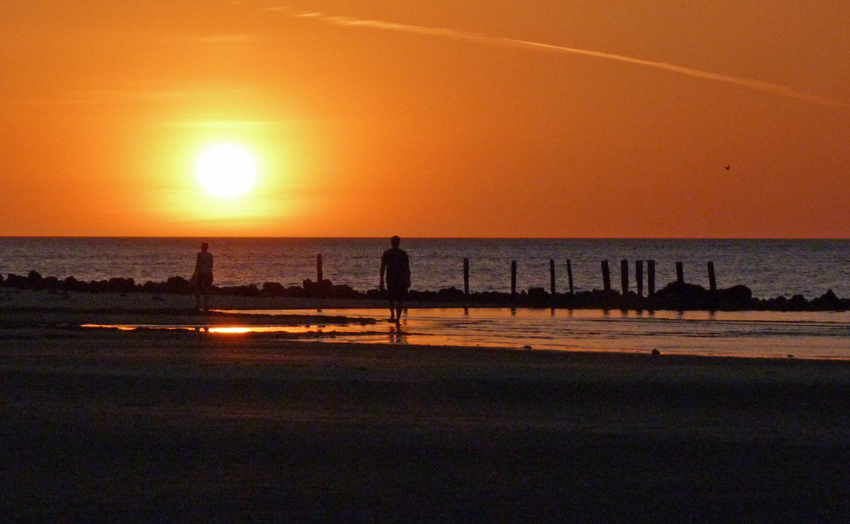
As night approaches and the sun drops below the horizon the rabbits become more active. A flock of gulls flies in V formation across the skyline and I retreat into the study to avoid some early season mosquitoes and reflect on my day. The sunset is quite spectacular and provides some inspiration to set pen to paper.

Moonta Bay at sunset

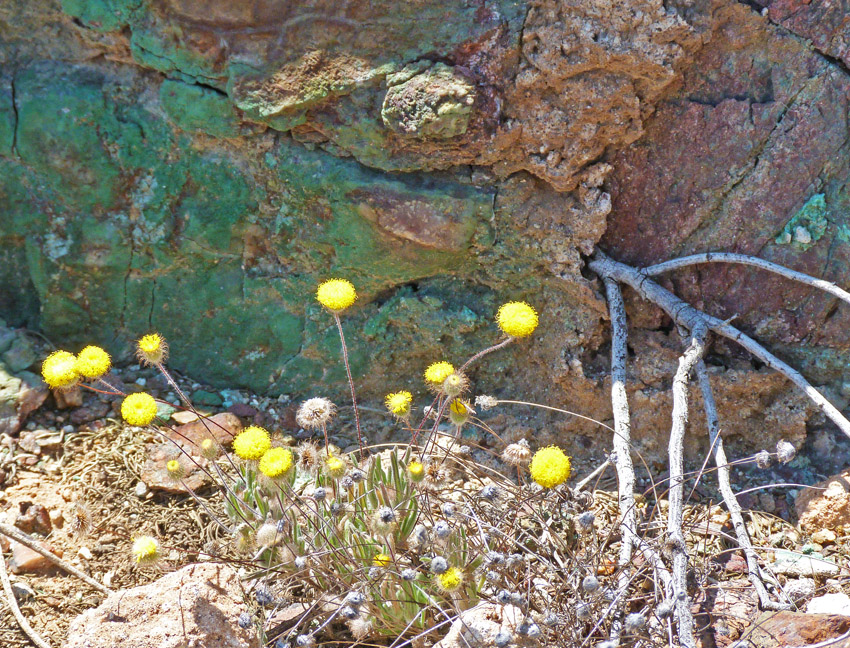
The journey from Adelaide across the flat coastal plains and scrub hedged wheat fields  was an easy couple of hours. I stopped at a local pub and grabbed a bite to eat then pushed on to Moonta. With only one night at my disposal I spent the early part of the afternoon wandering amongst the old mine ruins. A little gecko clung miraculously to the smooth surface of an old mine bucket and a pair of swallows had made a neat little nest behind a wooden beam that protruded from a square stone tower. But strangely it was the colours in the rocks that caught my attention as they hinted at the wealth of copper that was extracted from this area in the late nineteenth and early twentieth century.

throughout the old quarry the rocks are stll tinged with the coper ore

Throughout the old quarry many of the rocks are tinged with the copper ore

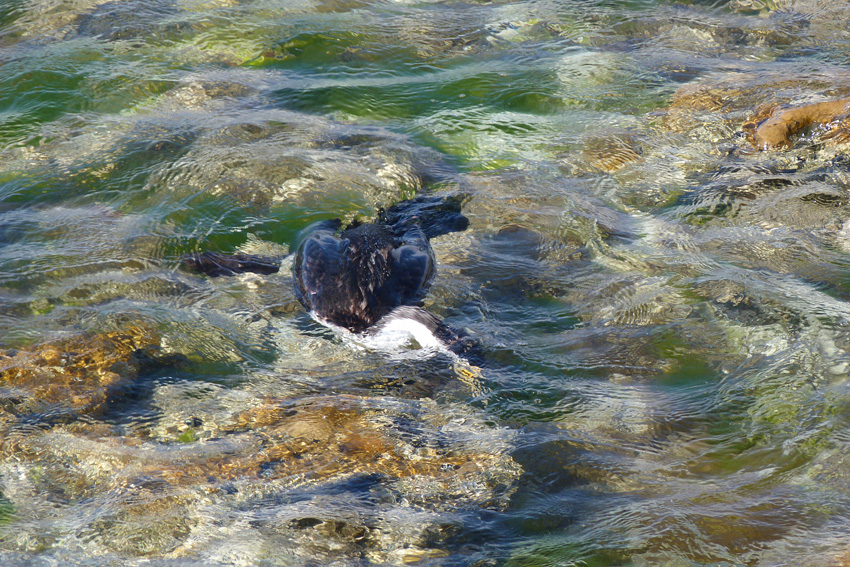
From the mine it was a short drive down to the seashore and jetty with its art deco styled motel and restaurant nestled into the low cliffs. A stroll along the stained hardwood planks out to the end where it curves to run parallel to the shore brought back childhood memories of weekends fishing and playing cricket on the huge expanse of beach that is exposed when the tide recedes. But on this occasion the child’s rod and line were replaced by camera and notebook. Near the shoreline I stopped by a rocky outcrop to watch a pied cormorant hunting amongst the weed and rock-pools; its body seeming to take on the fluid persona of the water as it twisted and turned in search of small fish and crabs.

Pied cormorant hunting amongst the shallow rock pools

Pied cormorant hunting amongst the shallow rock pools

 A little further along the jetty, where the shallow water starts to turn darker hinting at the meadow of seagrass beneath, a flotilla of seabirds were patrolling; an indication  that there might be baitfish in the area. With this in mind I trotted back to the car and donned my snorkelling gear to take a closer look. I was not disappointed as several schools of small fish were congregating in the deeper water beyond the rocky outcrop. 

A school of baitfish congregate below the jetty

A school of juvenile mullet feeding below the jetty

The sunset is well over and the  forecast indicates fine weather with calm seas for the next few days.  I’ll probably do a little more snorkelling near the rocky outcrop before walking along the coastal trail to watch the seabirds and search for reptiles and insects.


Until next time

Cheers

Baz