Archive | Adelaide Hills RSS feed for this section

Hale Conservation Park

14 Aug

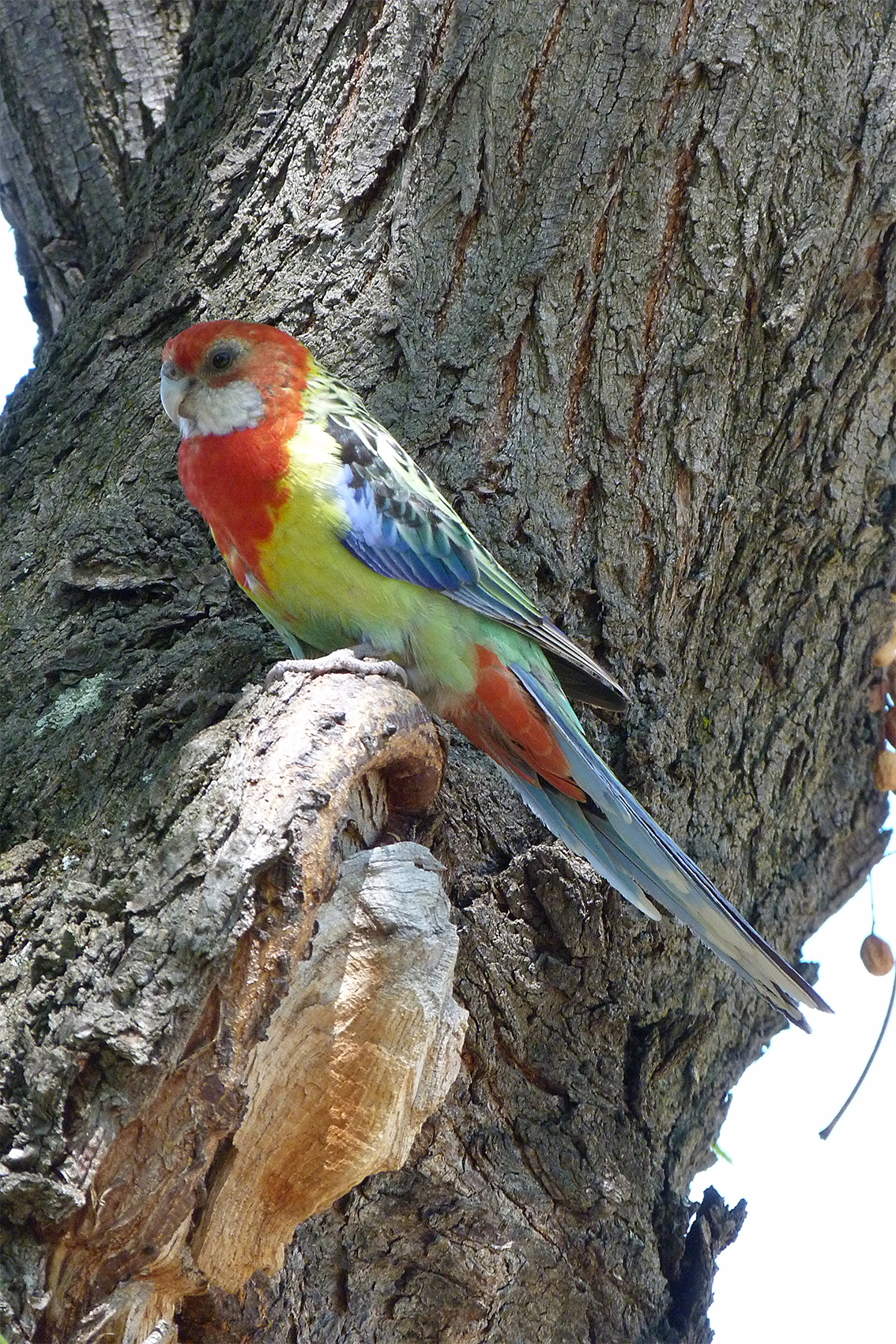
Adelaide Rosella

Dear Reader:

Over the years I have made several major errors as a wildlife photographer. Perhaps the most telling has been the tendency to see a shot at the beginning of a field trip and not take it as I believe there will be a better one later. Not this time! As I climb out of the SUV I notice a pair of Adelaide Rosellas flying into a gum tree about a hundred metres away. I steady my camera against the vehicle and fire off a couple of frames. And yes; they were the only Rosellas I came close to photographing for the rest of the day.

Trailhead

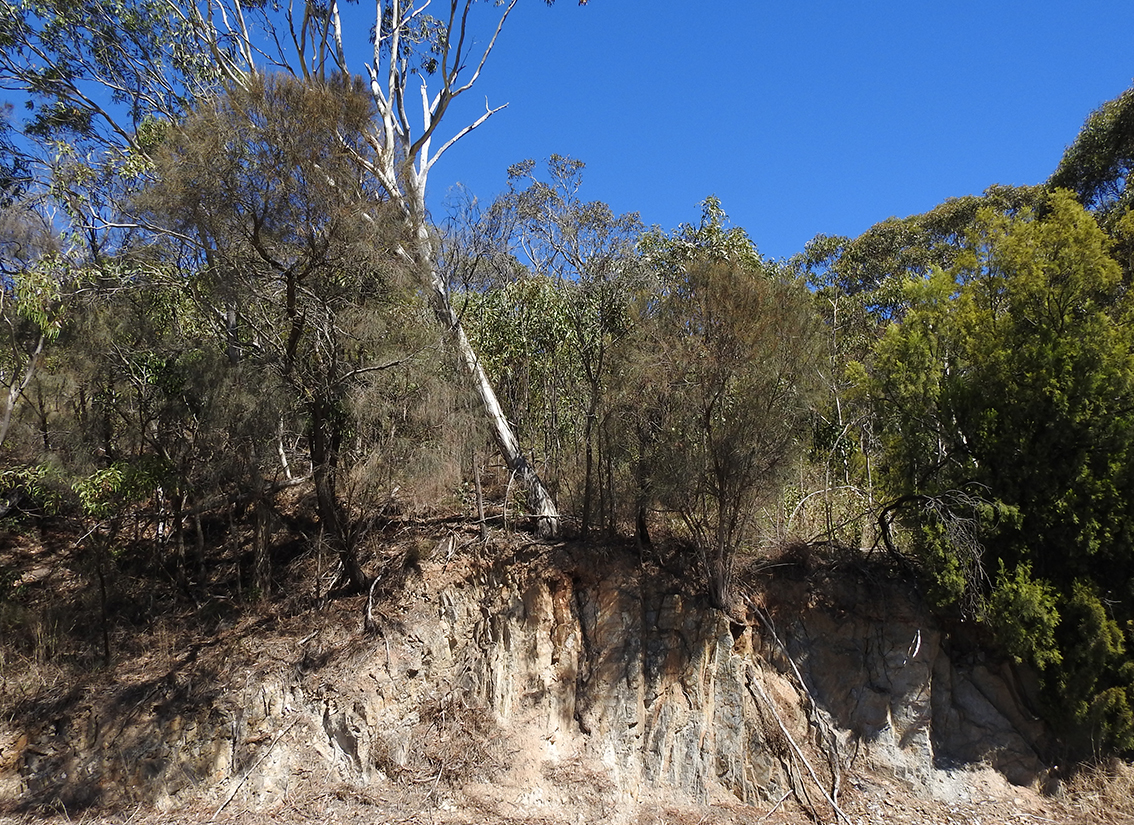
Typical section of the trail showing some fire damage

I am walking the loop trail in the Hale Conservation Park a few kilometres out of Williamstown on Warren Road which leads to Gumeracha. It is a lovely, compact park with a small parking area and a well-defined track with information panels at the head of the trail.

Flame Heath with Goodenia flower growing through

Cryptandra species

The path climbs gently with generous views of the surrounding rural landscape. There is evidence of fire damage in some areas and significant regrowth; especially the Blue Gums. Although it is winter there are still numerous flowering plants along the trail including Flame Heath and Prickly Cryptandra bushes with Goodenia flowers growing through them.

Clever hands

I continually scan both trees and bushes for birdlife, possums and Koalas. On a level section, which gives me an excellent view of trees growing below me on the hillside, I spot a large Koala in the forked branches of a eucalypt. Its grip on the tree provides an excellent example of the prehensile nature of the marsupial’s ‘opposable thumb grip’-a feature more common in primates.

Scarlet Robin and New Holland Honeyeater (ID images only)

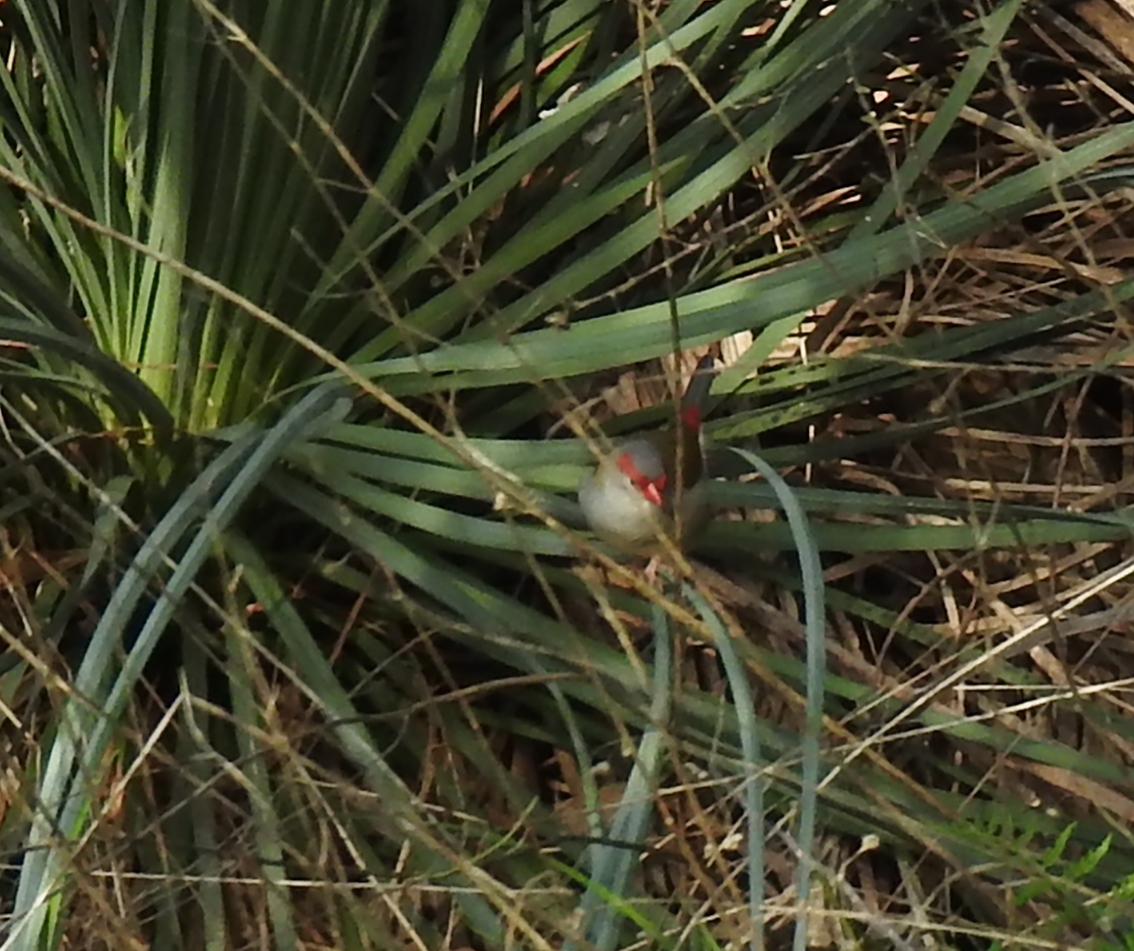
Red-browed Finch (ID image only)

With rain clouds gathering, I decide to backtrack rather than continue along the loop trail. Near the parking area there is a noticeable population of smaller birds which are hard to photograph as they flit between branches and leaves. I decide to take a sit and wait approach and capture some images for identification purposes. My results are far from ideal but they do give a true sense of the difficulty inherent in acquiring good clear shots in a natural environment where animals are wary. Nevertheless, I have included my attempts in this post.

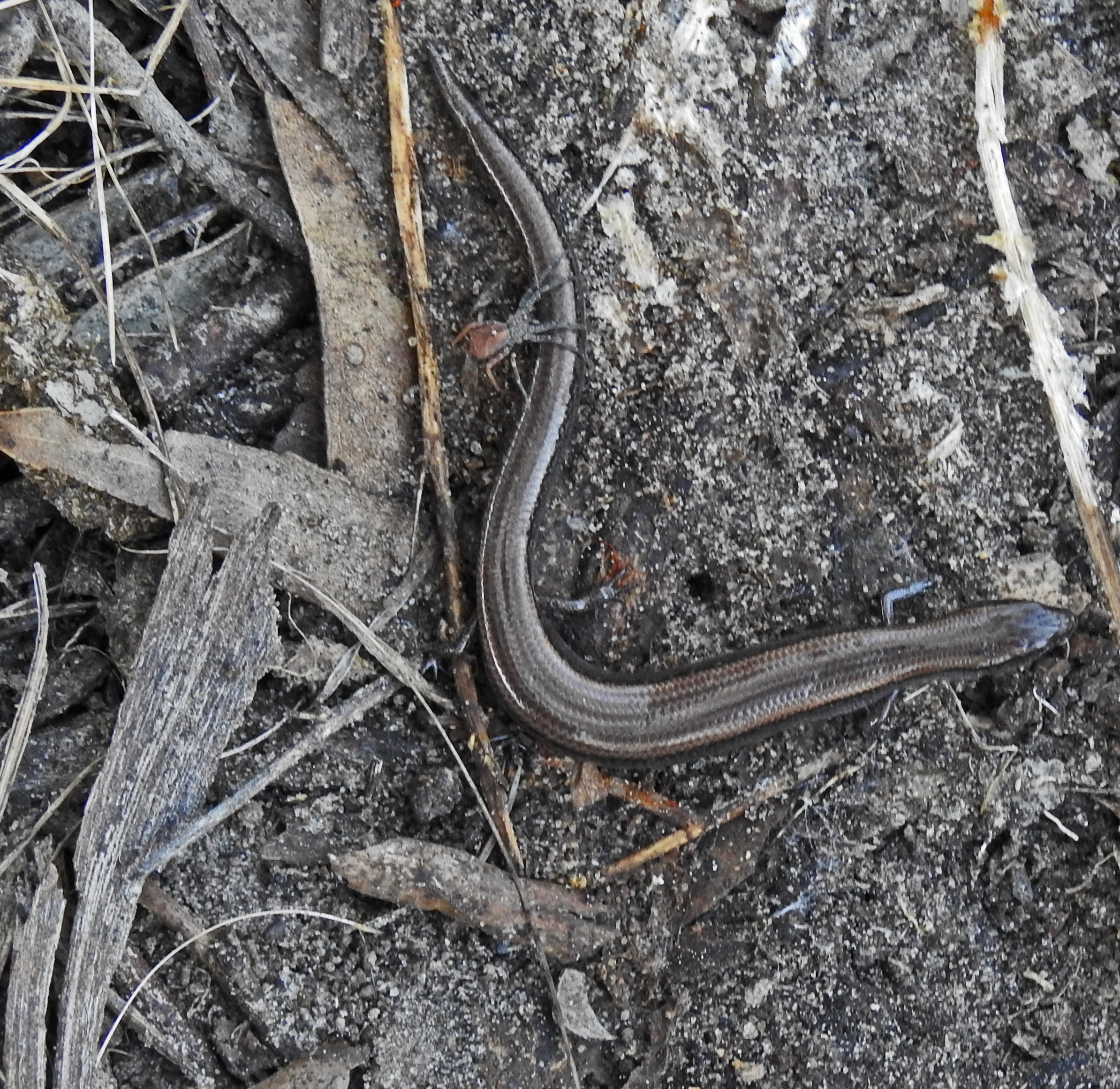
Spotted Ctenotus

When I explore a new area I try to find and photograph animals from as many groups or classifications as possible. In the cooler months, cold blooded animals such as invertebrates and reptiles are the most difficult to locate. It is always worth turning over a rocks and dead tree branches or peering under bark to find animals that might take shelter there, (always replace the item or make sure the animal can move back to a safe place). Today, I find a Spotted Ctenotus; a small, stripy, long-tailed skink, hiding under a rock on a north facing incline.

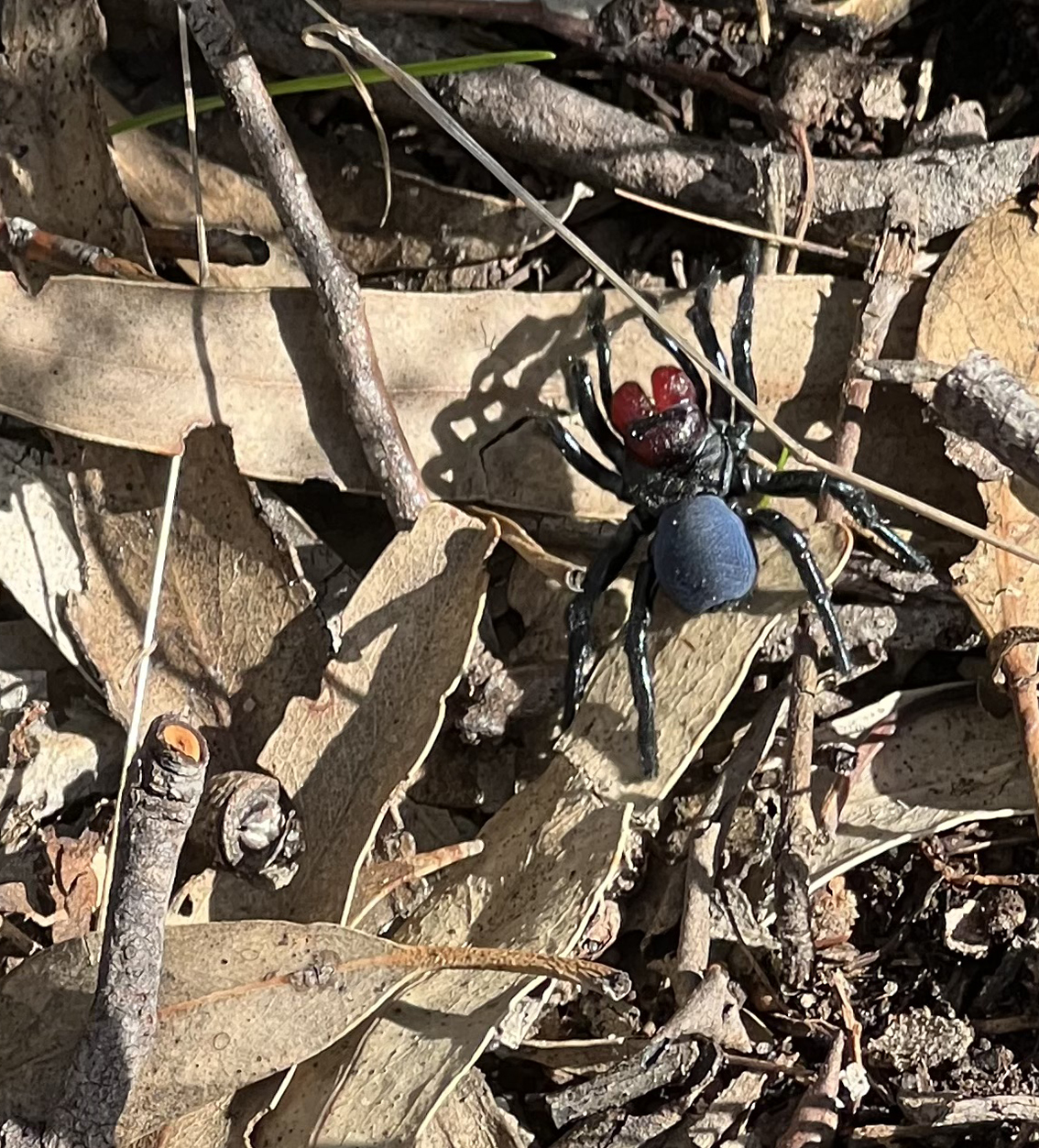
Mouse Spider (Credit Andrew Fitzner)

One of the best things about exploring our parks is encountering like-minded people and today’s walk is no exception. I meet a couple who passed me on the trail earlier and we chat about what we have seen. They show me a picture of a Mouse Spider spotted on the trail and photographed with an I Phone.

My walk completed, including a promise to myself to return in the spring, I drive back to Williamstown and the local bakery to treat myself to a chai latte and one of the best custard tarts I have eaten in ages.  

Cheers

Baz

Additional notes

This is a moderately steep walk with a small parking bay. It is not dog friendly.

Please pass on this blog title and or contact information (URL) to any person or organisation with an interest in taking walks and enjoying wildlife in SA.

Click on these links and see more South Australian stories and pictures in my Weekend Notes articles as well as locating similar blogs on Feedspot’s top 20 Australian wildlife blogs

https://www.weekendnotes.com/adelaide/writer/452/

https://blog.feedspot.com/australian_wildlife_blogs/

Warren Reservoir…drained for maintenance

14 Jul

Dear Reader:

From Tea Tree Gully, the road climbs into the foothills then snakes past Chain of Ponds Reservoir before it forks to the left towards Williamstown. Just before the town there are often mobs of Western Grey Kangaroos on the hillside to the right. Today, I spot a small group on the opposite side near a layby where I can safely pull off the road to take a few photographs.

Western Grey Kangaroos near Williamstown

I am exploring the Northern section of the Warren Reservoir which is around 10 kms past Williamstown towards Gumeracha on the Warren Road. The sky is a little overcast with a hint of rain in the air which makes photography challenging but in the winter months one takes any opportunity on offer to venture out into the bush. This is my second visit to the Warren and of particular interest because the reservoir has been emptied for dam wall maintenance and comparing it to my last visit, when it was full, is a rare opportunity.

Reservoir full

Reservoir drained and with some improvements to the public car park area

Usually there are numerous duck species as well as cormorants, Australian Pelicans and Anhingas (Snakebirds) around the edge of the reservoir. Today there is just a solitary Pacific Black Duck paddling along a narrow channel. Way off to the north, I can just make out a pair of kites catching thermals above the surrounding scrub.

Anhinga

Grey Fantail

However, all is not lost. For some reason the number of smaller birds seems to have increased around the periphery of the reservoir. Using the full extension of my Nikon P900 Camera lens, I am able to spot Silvereyes, Superb Fairy Wrens, a thornbill species, Grey Fantails and New Holland honeyeaters. Perhaps a lack of predatory species could account for this or maybe there are insects among the leaves and on the smaller branches.

Adelaide Rosella

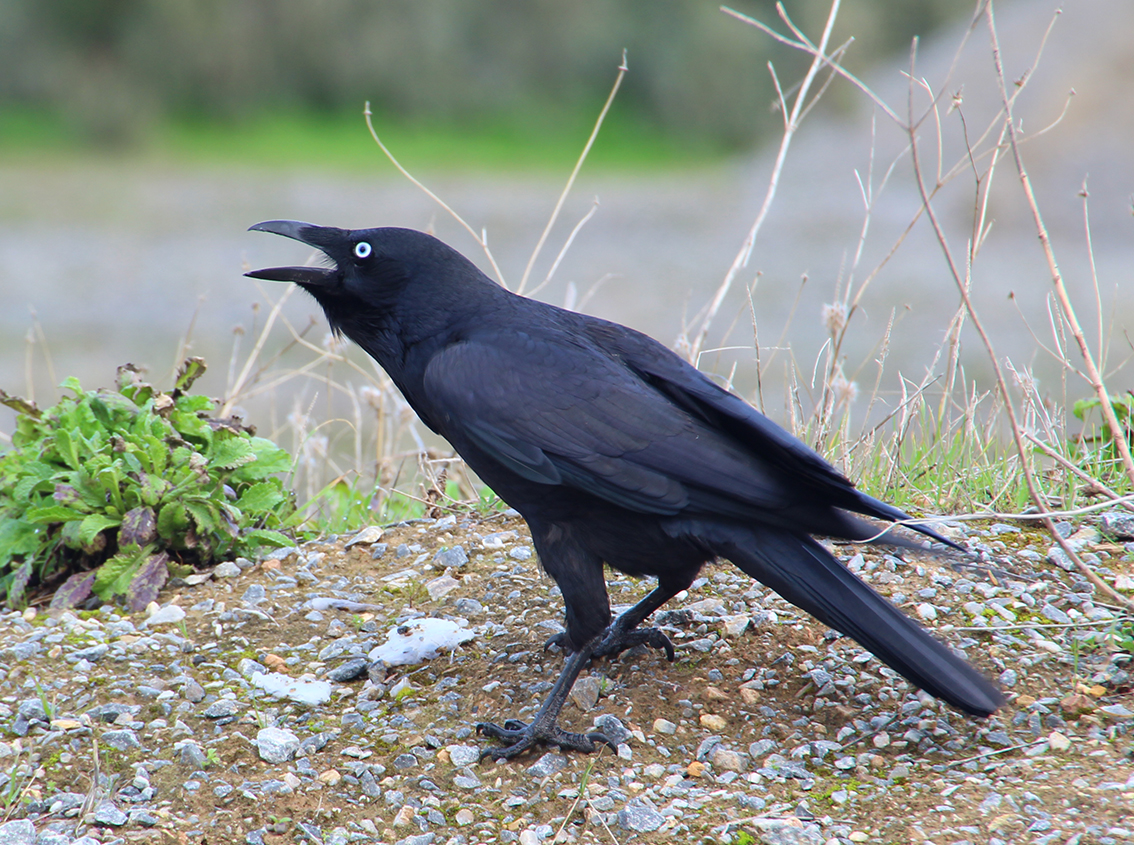
I finish my loop walk back at the car parking area where a pair of Adelaide Rosellas are feeding on the ground. They are some distance away and as I approach all but one fly into the canopy. The lone bird perches on a wiry grass stem where it appears to be picking out seeds. I take a shot from distance just before it flies off disturbed by a couple of Little Ravens flying into a nearby eucalypt.

Australian Magpie foraging on reservoir floor

It has been a relatively productive morning’s work and I pack up my gear and head back towards Williamstown and lunch at the local bakery which, by the way, makes one of the best custard tarts I have tasted in a long time.

Snack time

Cheers

Baz

Additional notes

This is an easy walk and drive which is quite suitable for families and seniors with public toilets, barbecues, parking and information boards nearby.

Please pass on this blog title and or contact information (URL) to any person or organisation with an interest in taking walks and enjoying wildlife in SA.

Click on the links below to see more South Australian stories and pictures in my Weekend Notes articles as well as locating similar blogs on Feedspot’s top 20 Australian wildlife blogs

Weekend Notes

Feedspots top 20 Wildlife Blogs
 

Around Kersbrook

14 Nov

Dear Reader

The road is dusty after a rare dry spell during the Spring months. I catch a quick glimpse of a large kangaroo through the corner of my eye and pull over to the far side of the track and wait for the dust to settle. Next to a farmer’s dam there is a small mob of Western Grey Kangaroos They watch me closely, ears twitching. The big male I first spotted, stands to his full height, protective of his small harem.

Large male Grey Kangaroo

I am driving around the roads surrounding Kersbrook a small hills town about an hour’s drive from the city centre, a continuation of the Main North East Road past Tea Tree Gully and Chain of Ponds Reservoir. Using the GPS maps I have found a network of small roads around the town and I am randomly exploring them.

Small mob of greys

Checking the GPS I note that I am driving along Bagshaw Road. As I walk back to the vehicle I notice an old brick chimney on the other side of the road; the remains of an old farmhouse. Old ruins always fascinate me and I wonder what stories of family, drought, flood and celebration have resonated within the home that once stood there.

Stories to tell

A long way from the highlands of Scotland

On Bulman Road, I come across a small farmhouse. There are Alpacas fenced off near the home and a little further along the road I can see Highland Cattle. Nothing indigenous about these species but they are still a treat to see on the rich green background of spring pasture.

Grey Currawong silhouetted

My next encounters are on Smith Road where I come across two bird species that are not too common around the city and urban landscapes. A Grey Currawong (related to crows and ravens) is perched on a fallen branch.

Red-rumped Parrot and fence


There are also a beautiful Red-rumped Parrots feeding behind a fence which ‘try as I might’ I cannot remove from the picture. Then again, this is farming country and fences are part of the landscape. Later on my drive home I spot another two parrots feeding in rough stubble about 50 metres from the car, another tricky shot.

Well camouflaged Red-rumped Parrots

Although today’s trip exploring the backroads around Kersbrook is at an end before returning home I’ll visit ‘Kersbrook Hill Wines and Cider’ followed by a short stop at Williamstown Bakery: a couple of favourite destinations when I drive through the north-eastern region of the Adelaide Hills.

Additional notes

This is an easy drive which is quite suitable for families and seniors

For more pictures and short stories about SA places and wildlife go to:

https://www.weekendnotes.com/profile/651267/


Meadows to Cox Scrub along Bull Creek Road

15 May

White-cheeked Rosella

Dear Reader:

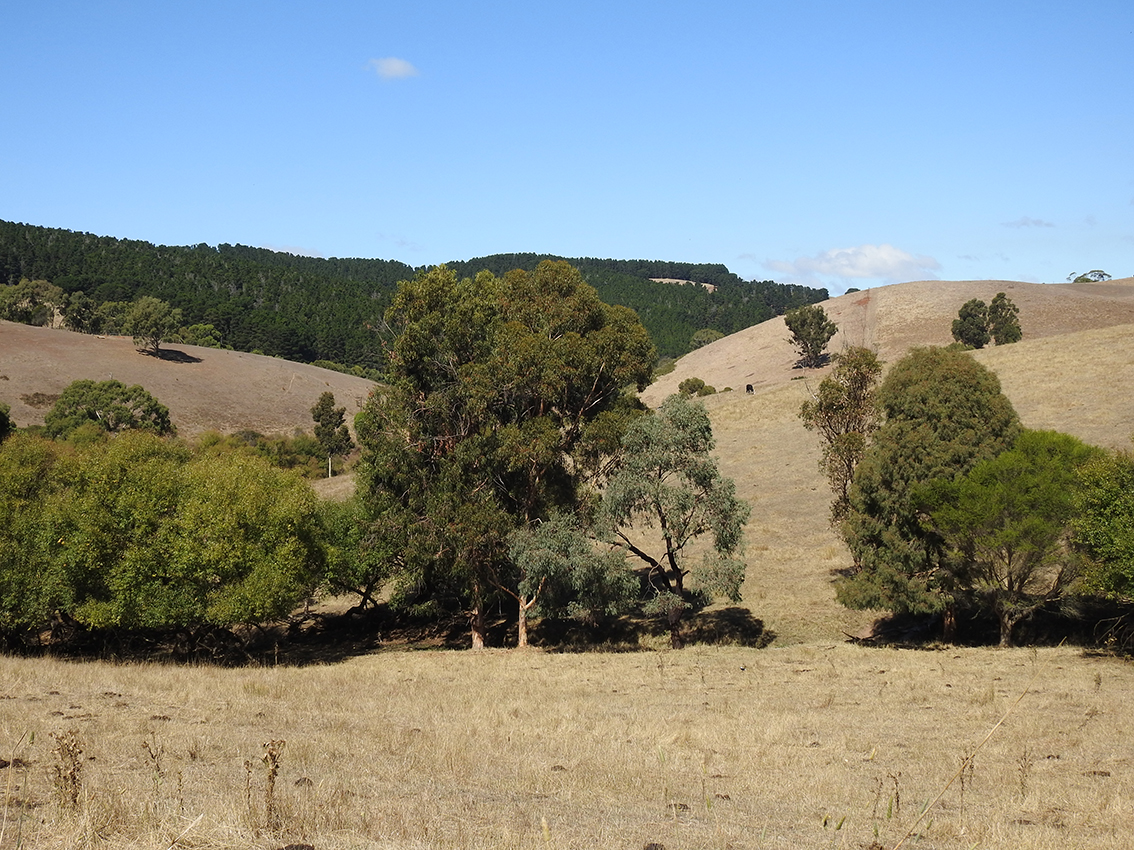
There is a layby just a 400 meters along Bull Creek Road which starts just outside Meadows on the road to Ashbourne. It is a unique viewing point as the road also passes through a cutting which exposes the root systems of a large eucalypt. The layby overlooks a steep hillside providing a direct line of sight into the canopies of the surrounding trees. I can hear Rosellas and ravens calling and a quick sweep with the telephoto lens reveals a White-cheeked Rosella perched on a branch. While I concentrate on the bird a Little Raven lands by the roadside to scavenge on the carcass of a road-kill possum.

Cutting with exposed roots

Little Raven

I continue along the road for a further 400 meters to another layby which has quite a different outlook. A small section of bush is fenced off and surrounded by grazing land. High in the sky, I notice the circling motion of a large raptor. Once again, the amazing 83x magnification of my Nikon P900 comes to the fore and I recognise the bird as a Wedge-tailed Eagle, Australia’s largest bird of prey.

Wedge-tailed Eagle

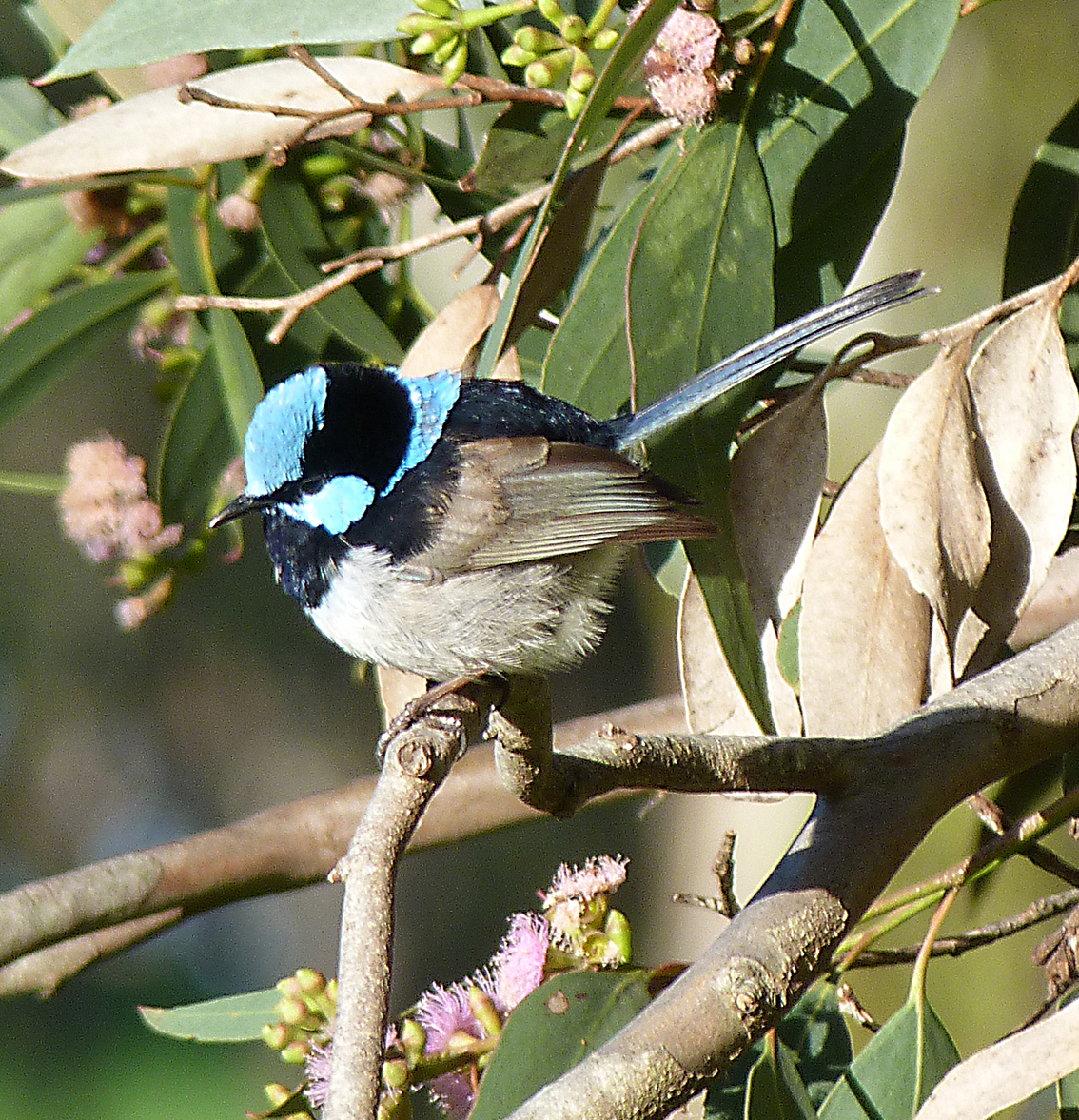
My next deviation from the main road is a right hand turn into Ushers Road, a dirt track 3.7 Kms further on from the last layby. The road follows a creek surrounded by open farmland. There are Fairy Wrens and sparrows flitting across it. I catch a glimpse of a hare racing across the paddocks and some Galahs are feeding in the distance. As my main objective is Bull Creek Road’s wildlife I travel just a short distance before returning to the main road.

Creek bed and open pasture

Superb Fairy Wren

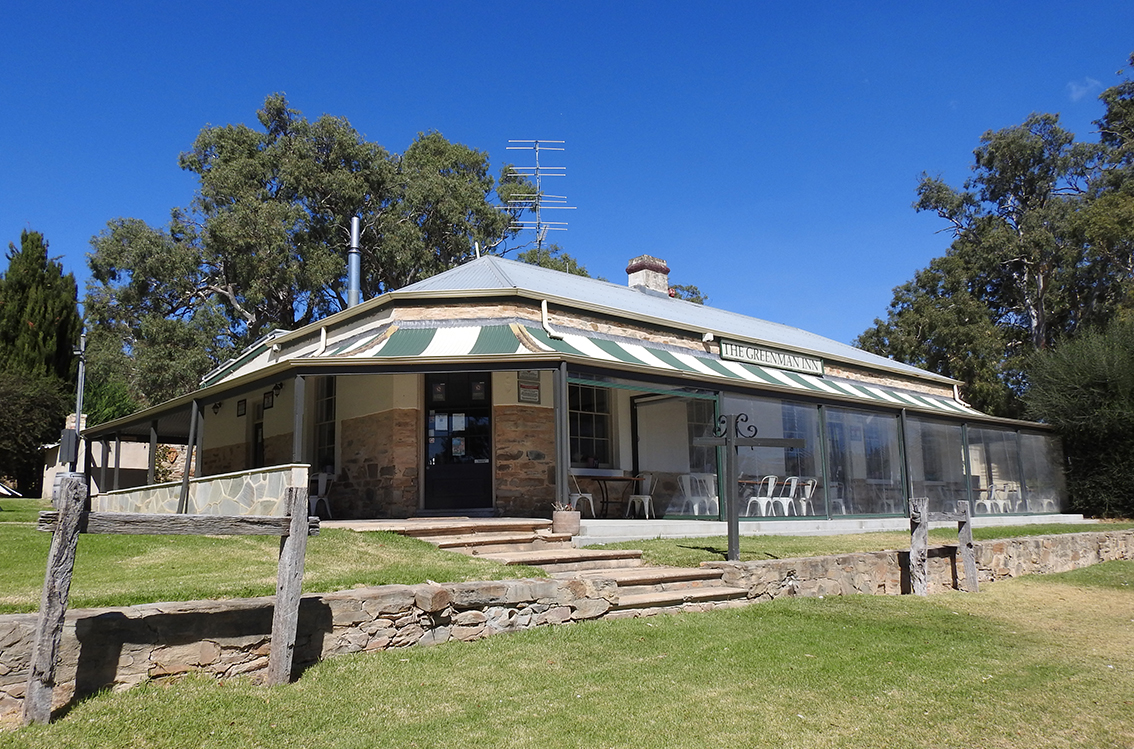
Around 7 kms from Ushers Road, is the little hamlet of Ashbourne which features a lovely old church and the iconic Greenman Inn. The building dates from 1865 when it was a general store and post office. Today, the Greenman is a contemporary establishment with country charm and a pub style menu sourced from local produce. It is both family and pet friendly. However, plan your drive carefully as the Greenman is closed on a Mondays and Tuesdays.

Greenman at Ashbourne

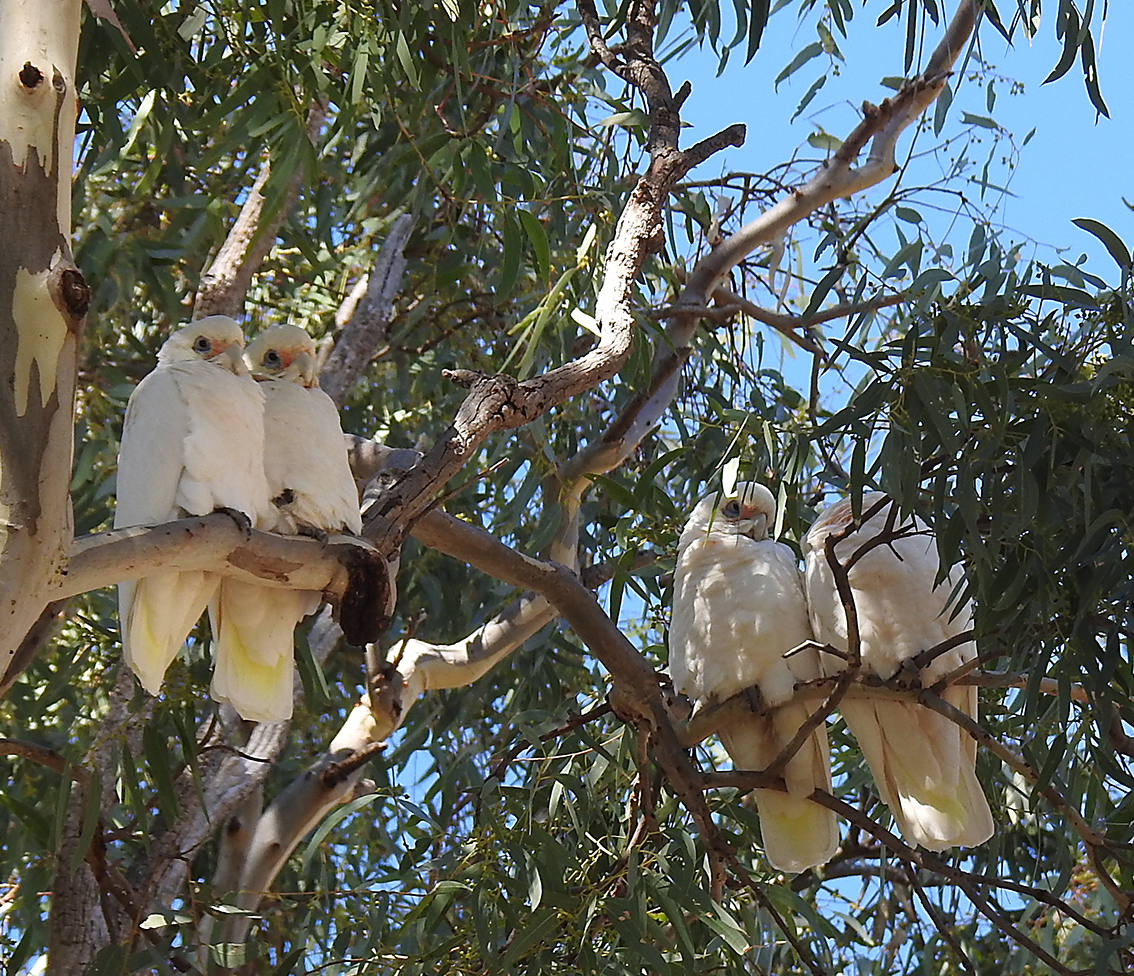
Little Corellas

Ashbourne is characterised by some massive eucalypts and pine trees sitting alongside the inn and church. As I wander around the area I can hear the raucous calls of Little Corellas and Galahs and it doesn’t take too long to find and photograph both species of parrot.

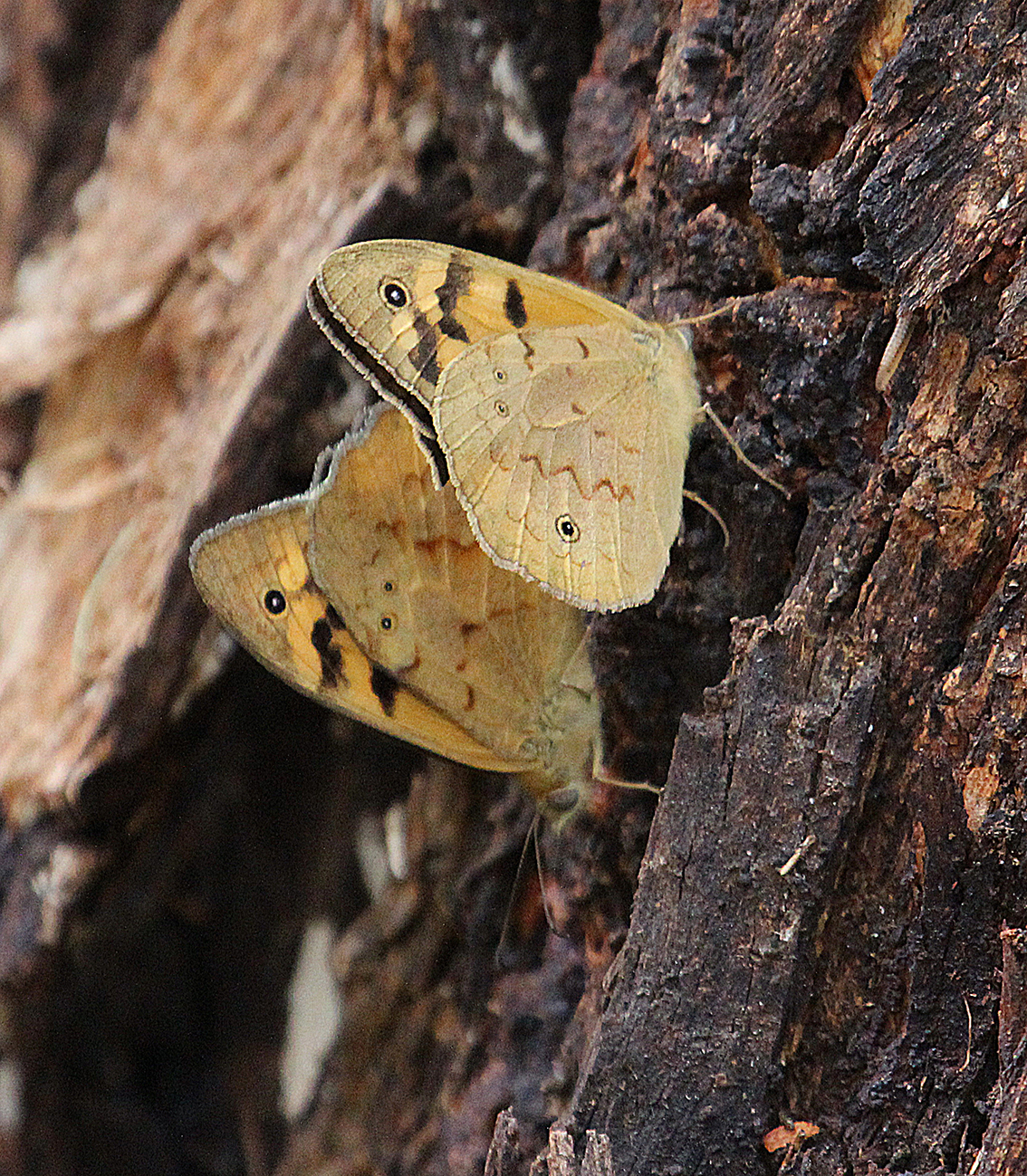
Pair of Common Brown butterflies

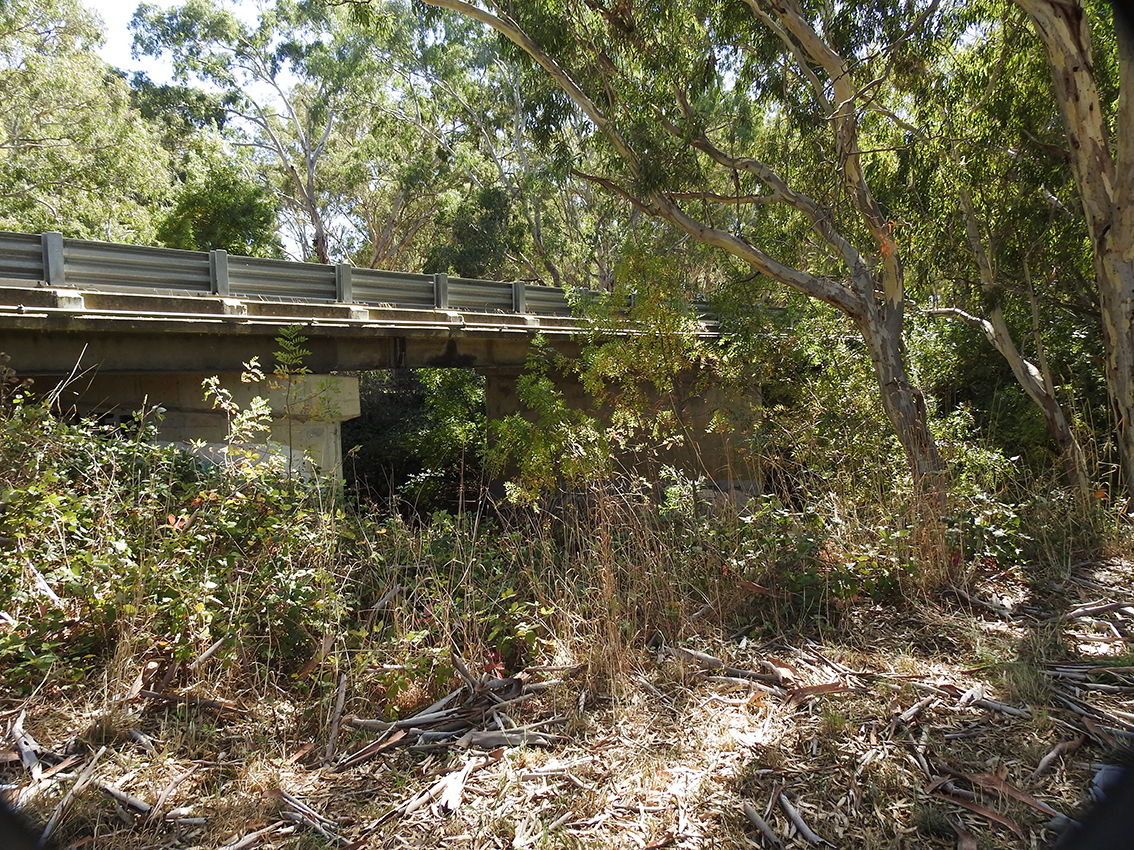
Bridge over Finniss River

Two kilometres beyond Ashbourne, the Finniss River is crossed by an historic Bridge which was constructed in 1865. There is a little water in the river and I climb down the bank careful not to lacerate myself on blackberry bushes. A White-faced Heron takes flight and several Little Ravens retreat high into high the canopy of the River Gums growing alongside the Finniss. As I make my way back up to the car I notice several brownish butterflies and with a little patience and some luck I manage to photograph a pair.

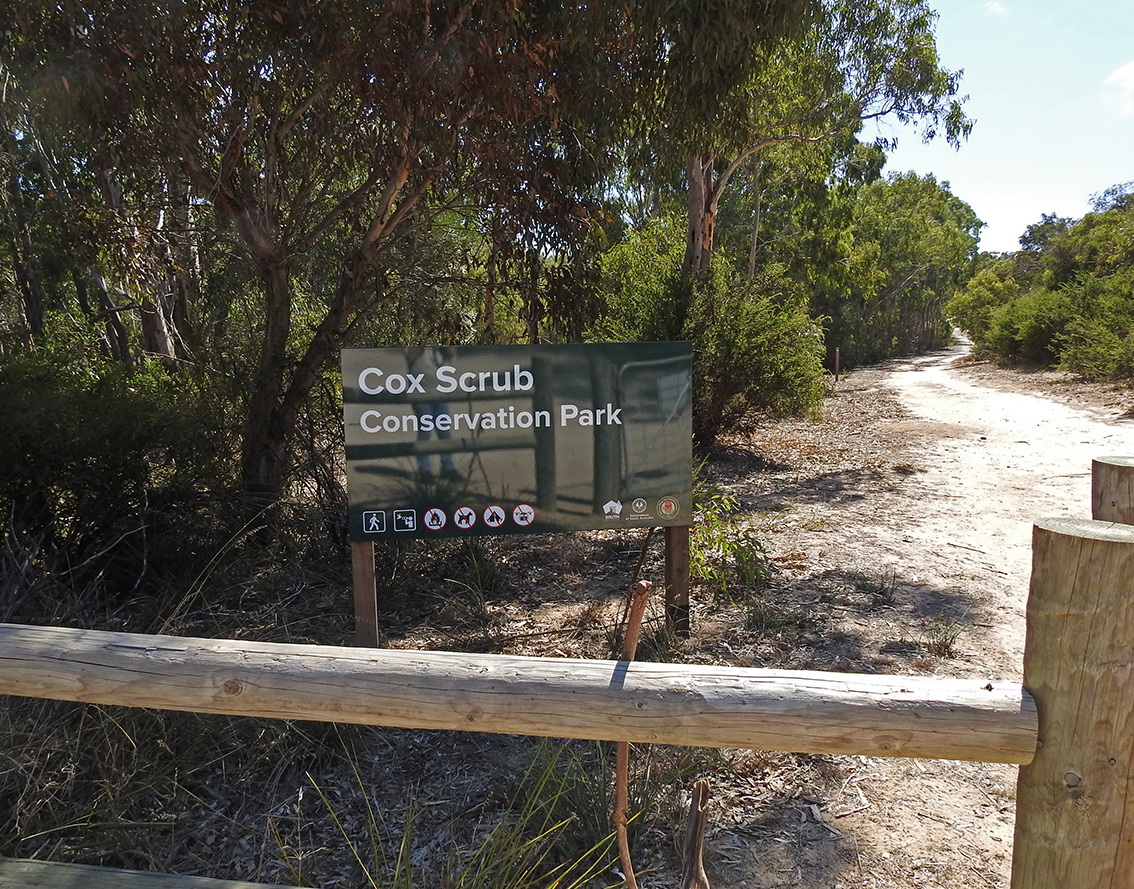
Turn around destination at Cox Scrub

The final destination for this part of my drive lies another 3.5 kilometres past the bridge. Cox Scrub Conservation Park is an area I have written about previously (see link below). There is a car parking area surrounded by trees and I notice a variety of tiny birds flitting around. I use the telephoto to track them and recognise Striated Pardalotes, Silvereyes and Weebills but they are too small and fast to capture with a camera. Perhaps another day when I have more time.

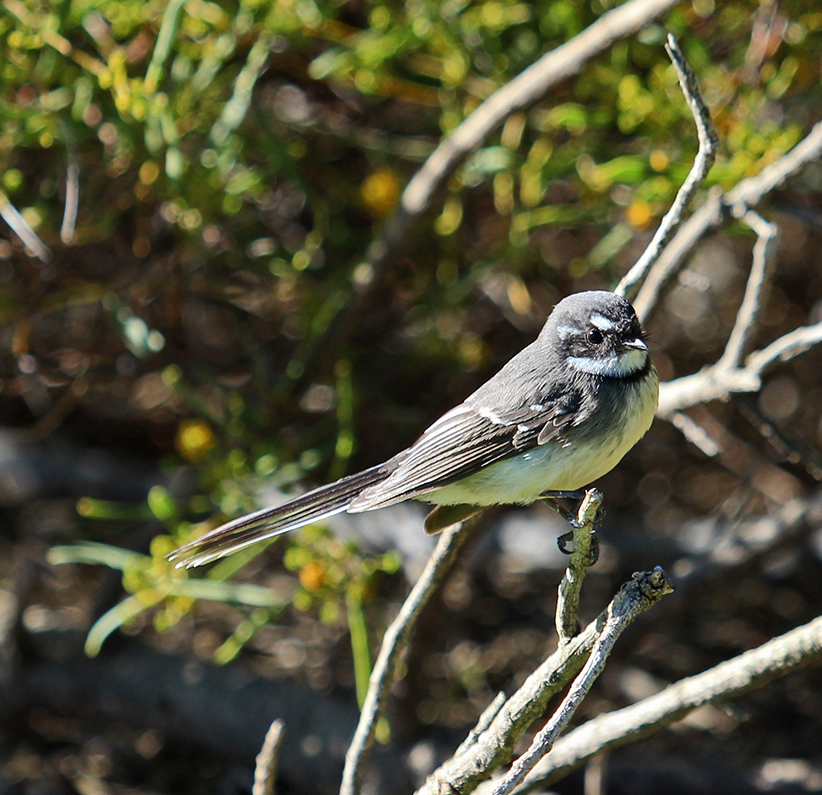
Grey Fantail

Through the scrub I can see a small clearing with some fallen tree trunks nearby. I sit for a while and watch the birds and eventually a Grey Fantail comes close enough to photograph. A nice way to end this part of my Bull Creek Drive and the car park is as safe place to swing round and head back to the city.          

Cheers

Baz

Additional notes

Cox Scrub CP post

This is an easy drive which is quite suitable for families and seniors with amenities at Ashbourne and Meadows.

Please pass on this blog title and or contact information (URL) to any person or organisation with an interest in taking walks and enjoying wildlife in SA.

Click on this link and see more South Australian stories and pictures in my Weekend Notes articleshttps://www.weekendnotes.com/profile/651267/

Birdwood’s Cromer Conservation Park…….Part 2

11 Mar

Classic Cromer scrub

Dear Reader:

This is my second visit to the Cromer CP. Unlike my first wander around this unique patch of South Aussie scrub the immediate weather is not treating me in a kindly fashion with low clouds and mist forecast for the morning then clearing as the day progresses. Not great for detailed photography but it might add a different atmosphere to my images.

Roos in the fields

Close up shot from car

As I drive along the road from Birdwood I am forced to a stop to avoid a small group of Western Grey Kangaroos bounding in front of the car. They settle in a field and start to graze only looking up as I power down the window for a shot.

Thornbill species?

Treecreeper sp or Sitella sp

I enter the park from an unmarked gate on the far corner of the park about 1 km from the main entrance. A barely visible track runs into scrub which is dominated by two distinct types of eucalypts. The taller trees have smooth bark while the other’s is rougher and darker. There are small noisy birds flitting about in the canopy and despite the poor light I get a couple of shots at distance thanks to the extreme range of my Nikon P900. A bit of Photoshopping later suggests one is a variety of thornbill and the other a sitella or treecreeper species (any ID feedback would be welcome).

Cockies Galahs) in the mist

The track disappears after a few hundred metres and just where it peters out there is a small mound surrounded by old, rusted fencing. I take a closer look and discover, what appears to be,  a well or perhaps mine digging. There are several smaller unfenced depressions in the area and in one I catch a glimpse of a Blue Tongue Lizard just before it quickly disappears into the undergrowth. The sudden movement startles a pair of Galahs perched high above me. Despite the poor light I manage to capture a rather atmospheric image of the parrots.

Unknown skink species possibly a slider

To my delight the sun is starting to burn off the low cloud and blue skies allow for faster shutter speeds and more depth of field. I decide to turn my attention to the smaller animals inhabiting the park. Under a fallen log, I discover a plethora of life; roaches, a centipede plus a lovely striped skink, possibly a slider species. It has tiny legs and a long slender body for living in the leaf litter and under rocks and fallen branches. Further examination of the shot reveals a small spider by its tail.

Bakery delights at Birdwood

It is time to leave the park on this, my second visit, but I shall return in spring to witness the emergence of delicate wildflowers, birds building nests and roos breeding. Now it is time to obey the urges of my stomach clock and enjoy the calorific delights of the local bakery. So much to choose from but my walk in Cromer Conservation Park might justify my indulgence.     

Cheers

Baz

Additional notes

This is an easy walk which is quite suitable for families and seniors but care must be taken because of the pristine nature of the scrub and the possibility of snakes in the warmer months.

Please pass on this blog title and or contact information (URL) to any person or organisation with an interest in taking walks and enjoying wildlife in SA.

Click on this link and see more South Australian stories and pictures in my Weekend Notes articles

https://www.weekendnotes.com/profile/651267/

Birdwood’s Cromer Conservation Park… Part 1

26 Feb

Cromer Conservation Park… Part 1

Dear Reader:

Red and Pink Gums as well as Long Leafed Box trees tower above me. They echo with birdsong which ranges from the twittering of finches and pardalotes to the raucous calls of lorikeets. My Nikon P 900 has a phenomenal telephoto and I use it to scan the treetops in the hope of identifying the birds and capturing an image or two.

Eventually I spot a Red Wattlebird and a Musk Lorikeet close enough to photograph. The silhouette of the wattlebird calling is a particularly pleasing image. While I continue to search the foliage for a makeable shot I watch a pair of Adelaide Rosellas flit between trees and high above me a kestrel is circling.

My destination today is the Cromer Conservation Park about 5 Kms from Birdwood. This small, fenced off section of bush is all that remains of the original scrub that once blanketed this part of the ranges. As such, it is an important repository of endemic plant and animal species. Indeed, over 100 bird species have been recorded in the park and I am sure plant and invertebrate tallies would also be high.

As I walk slowly along the main pathway near the boundary fence I notice another faint track winding into the scrub. I step cautiously and stop to listen every few paces. There is a rustle in the bush a dozen metres ahead and a Western Grey Kangaroo suddenly appears. We both freeze. I slide the Nikon up the rapid release strapping to eye level and take a wide angle shot for context then a close-up. The second click of the camera alerts the roo which swivels its ears, looks in my direction, then bounds away.

The sun is well up, the day is warming and with a rise in temperature the sounds of the scrub also change. Cicadas start to buzz and Fairy Wrens twitter in and around the grass trees which seem to be the centre of their territories. My morning walk is almost over therefore I decide to focus on the smaller plants and animals surrounding me. Although it is late summer there are still a few plants in bloom. The delicate, little Flax Lilies growing along this trail catch my attention. However, my final image for today is of a tiny speckled spider living under the bark of a long dead gum tree…….to be continued

Cox Scrub Conservation Park’s Wildlife…..Part 2 From Ridge and Bull Creek Roads

7 Feb


Track near Ridge Road entrance to Cox Scrub

Dear Reader:

After my initial foray into Cox Scrub from Coles crossing, today, I am entering the park from Ridge and Bull Creek roads. The Ridge Road entrance leads me to a long straight track which separates nearby farmland from the park. The scrub here is thick and quite difficult to penetrate. I can hear the chirping of wrens and other small birds but they are hard to spot and constantly moving.


Classic Cox Scrub vegetation

I employ a sit and wait strategy. The trick is to find a comfortable place with a good view of the surrounding area and not too many bushes and trees in line of sight. A tough ask as the sun must be in the right direction; silhouettes and side lit animals do not make great pictures.


Heliotrope Moth on melaleuca blossom

Having chosen a spot alongside a flowering Melaleuca tree I make sure my Nikon P900 is on a moderate telephoto setting. I might only get a split   second to make a shot with no time to zoom in closer. I am trying for bird images however I also stay tuned to the close undergrowth and bushes listening for a tell-tale rustle of leaves or the hum of an insect. For the first ten minutes the only animals I encounter are invertebrates; a moth on the Melaleuca flowers and a dragonfly resting on the sandy soil. Eventually a scubwren lands in a nearby tree and a pair of Crested pigeons start foraging on in the understory. Sighting that make my wait worthwhile.


Scrubwren species

There are clouds moving in from the south west and I decide to drive to my next destination before I lose the light or it begins to rain. Several walking trails start at the Bull Creek entrance. The tracks are wide and easy to walk but the scrub is still quite dense with less large trees than the last track. A kilometre along the trail I find a clearing where there seems to be quite a lot of bird activity. It’s time for stop, sit and wait, again.


Golden Whistler

This time I am rewarded within a few minutes. A beautiful Golden Whistler perches in stubby eucalypt about twenty metres away. Its characteristic call (loud sharp whistles ending in a whip-crack note) echoes through the bush. The bird is quite active and I set the camera to shutter priority firing at 1/2000 th of a second. The clearing seems to attract a number of different bird species and I watch a pair of Grey Fantails hawking for insects before returning to a perch on a fallen branch. There are also kangaroo droppings and several termite nests have been ravaged by Echidnas.


Grey Fantail

Though I would like to stay for a few more minutes, the first drops of rain start to spatter on my jacket. I tuck my camera into its waterproof case and head back to the car. It is time for lunch, and the Mount Compass Bakery beckons. A chicken and vegetable pie with a custard tart to follow. A fitting end to my morning’s work.

Cheers

Baz

Additional notes

This is an easy walk/drive which is quite suitable for families and seniors.

Please pass on this blog title and or contact information (URL) to any person or organisation with an interest in taking walks and enjoying wildlife in SA.

Click on this link and see more South Australian stories and pictures in my Weekend Notes articles

https://www.weekendnotes.com/profile/651267/

Cox Scrub Conservation Park’s Wildlife…..Part 1. Entering from Coles Crossing

23 Jan

Old dairy building

Dear Reader:

It is a glorious day for a drive and some wildlife photography. The bitumen road winds past lush farmland and every so often I come across an old building that reminds me of the rich heritage this region of South Australia boasts. I keep a watchful eye out for kangaroos which are often seen grazing near stock and have been known to hop across the road even in the daylight hours. Rosellas and cockatoos fly between the eucalyptus trees fringing the road. I stop to capture an unusual image of two Galahs feeding on an embankment behind a barbed wire fence.


Galahs on embankment

I am exploring the Cox Scrub Conservation Park which is around an hour’s drive south of Adelaide’s CBD near Mt Compass and Ashbourne. It is one of the largest parks on the Fleurieu Peninsula. The park has numerous walking trails cutting through stands of Stringy Barks and a dense understory of Banksias and many other native shrubs. There are several entrances to the park and today I am starting at Cole’s Crossing where the Finniss River cuts through the north western perimeter of the conservation park.


Coles Crossing

He Coles Crossing track ends at a ford which is too deep to cross in the SUV but a great place to stop and eat lunch. There are small fish in the river and quite a lot of macroinvertebrates (tiny aquatic invertebrates like water boatmen and pond skaters) in the shallow water by the reeds. Several butterfly species are settling amongst exposed sand and pebbles to drink and I can see a Kookaburra perched on a dead tree branch about a hundred metres downstream.


Painted Lady

I follow a fence-line which skirts the river. There are numerous small birds twittering in the reeds and high in the canopy of the massive River Gums which tower over the water. I use the extreme telephoto on my Nikon P900 as a bird spotting tool then manage to get a half decent shot of a small honeyeater-like bird which I later identify as a Brown-headed Honeyeater (note to readers…please correct me if I am wrong with this ID).


Brown-headed Honeyeater

It has been interesting just pottering around the crossing but I want to enter the park from a different direction and see if there is any variation in the terrain and wildlife. However, that will be my next blog ‘Cox Scrub CP from Ridge and Bull Creek Roads’

Cheers

Baz

Additional notes

This is an easy walk and drive which is quite suitable for families.

Please pass on this blog title and or contact information (URL) to any person or organisation with an interest in taking walks and enjoying wildlife in SA.

Click on this link and see more South Australian stories and pictures in my Weekend Notes articles

https://www.weekendnotes.com/profile/651267/

Rainbow Parrots……..1

2 Aug

As well as continuing to write posts describing South Australia’s best natural and urban destinations and their associated wildlife; I will be posting some shorter pieces focussing entirely on one species or idea.

Dear Reader:

I am sitting on the front porch watching the street’s wildlife. There are a few New Holland Honeyeaters hawking for insects and a small group of Crested Pigeons congregating on the newly mown nature strip. Always a good time to look for food. But it is the brightly coloured Rainbow Lorikeets in the Hackberry Tree opposite that really catch my attention as they balance on the thin branches to feed on the small, dark berries. 

Hackberries for dinner

These energetic little parrots do not feed quietly; they squawk and chatter to each other as they bounce, balance and flutter amongst the foliage in search of the ripest fruit. And, while these birds feed on the Hackberries another group are tucking into the last blooms of my flowering gums in the backyard.

Blossoms for desset

Rainbow Lorikeets (Trichoglossus haematodus) are smallish parrots with around 30 cms in length wih a wingspan around 40 cms. Their main foods are blossoms, nectar, seeds, fruit and sometimes insects. They have brush like tongues for collecting pollen and sharp beaks capable of biting into fruit and crushing seeds. Rainbow Lorikeets are often considered a nuisance by people who have fruit trees in their yards.

Cheers

Baz

Please pass on this blog title and or contact information (URL) to any person or organisation with an interest in taking walks and enjoying wildlife in SA.

Click on this link and see more South Australian stories and pictures in my Weekend Notes articles

https://www.weekendnotes.com/profile/651267/

Charleston Conservation Park……Coming Back from a Burn

1 May

Dear Reader:

Despite the blackened and scarred bush there are glimmers of hope in the landscape. Grass trees can survive the worst of the worst bushfires and some Banksias and other native species need fire to regenerate successfully. And, where there are plants the animals follow. Sitting atop the burnt spire of a grass tree (Xanthoria sp) I notice a female Superb Fairy Wren and my companion David points out a Male in full breeding plumage. Wildlife amongst the devastation.

Superb Fairy Wren male….photo by David Morris
Superb Fairy Wren female

I am exploring the Charleston Conservation Park, on Bell Springs Road in the Adelaide Hills about 7 Kms north of Lobethal and near the little town of Charleston. This small park of 54 hectares and bounded by open farmland on all sides, was devastated by recent bushfires but it is starting to show signs of re-vegetation. It is both sad and fascinating to walk around the park and look at the new life that is emerging amongst the burnt trees and undergrowth. However, the open, burnt bushland makes it easy to see animals though they are scarce, wary and hard to photograph. If you visit take a camera with a good telephoto.

Track along the park perimeter

We follow the track which runs around the edge of the park. It is separated from the surrounding farmland by a fence with a few surviving trees and bushes along the perimeter. In the distance I spot a mob of kangaroos feeding alongside cattle. These animals would have inhabited the park before the bushfires and will again as the understory and scrub develops, providing them with food and shelter.

Mob on the fenceline

A few hundred meters along the primary track that circumnavigates the park we take a smaller trail leading to a rocky outcrop. David stops abruptly and points, “Snake and it’s a big one, just a few metres in front of me.“ I can just make out the shape as it slides into a gap between the rocks; a sizeable Red Bellied Black Snake. Time to be a little more cautious in our movements. Later, we encounter another large Red-bellied Black on the gravel path. This snake is remarkably relaxed and we are to get some decent close-up images.

Snake ahead….enlarge and look at centre below and left of large rock
Red-bellied Black Snake

Further along the main track I notice numerous Monarch Butterflies landing on plants growing near the fence line. I focus on one of the insects while David point out a pair of Yellow-faced Honeyeaters feeding in a native pine.

Yellow -faced Honeyeater……photo David Morris
Monarch or Wanderer buterfly

Quite unexpectedly we hear the strident sound of Laughing Koookaburras. A pair has landed in a badly burnt eucalypt. They look surreal against the devastated background. Getting close enough to photograph them in this open environment is difficult; finally I settle for a long distance shot stretching my Nikon P900 to its limits.    

Laughing Kookaburras

Nodding Vanilla Lily

There are many signs of life emerging in the blackened landscape including: mosses, lily flowers, and patches of, what appear to be, acacia plants. Only time will tell how much the new environment will reflect the past as many non-native species will quickly colonise the vacant spaces; most notably grasses and windblown weeds. However, with some help from park rangers and volunteers this small area of remnant bushland may be able to regain much of its former beauty.   

Cheers

Baz

Additional notes

This is an easy walk and drive which is quite suitable for families and seniors. It is not dog friendly due to its status as a a conservation park.

Please pass on this blog title and or contact information (URL) to any person or organisation with an interest in taking walks and enjoying wildlife in SA.

Click on this link and see more South Australian stories and pictures in my Weekend Notes articles

https://www.weekendnotes.com/profile/651267/