Archive | Bird watching RSS feed for this section

Bullock Hill CP….. Kangaroos, Cows and Cockies

19 Mar

Dear Reader:

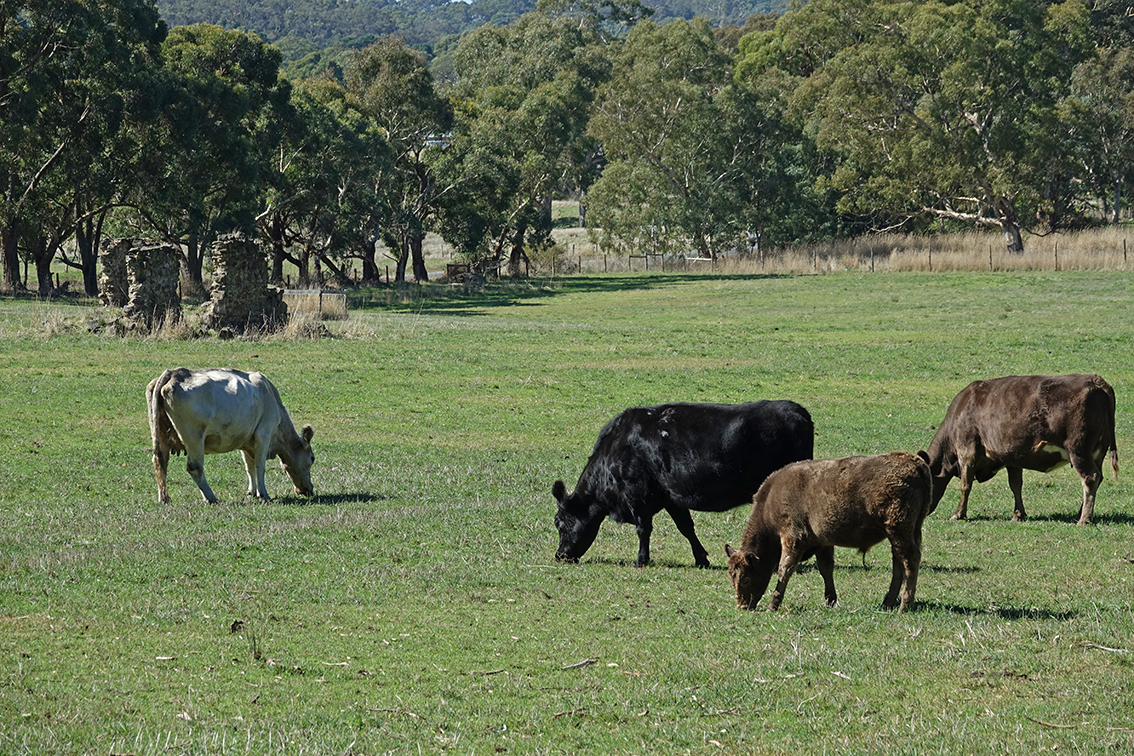
The scenery on my drive between Meadows and Ashbourne varies between open pasture to Creekside scrubland with both kangaroos and cows enjoying the fertile landscape.

Rural setting with old farmhouse ruin, stock and bush background

My destinations are the town of Ashbourne and the nearby Bullock Hill Conservation Park. I have driven along several of the roads I am about to explore during the cooler months when the weather was not as conducive to photography and I promised myself a summer visit and a meal at the Green Man Hotel.

Track into the park

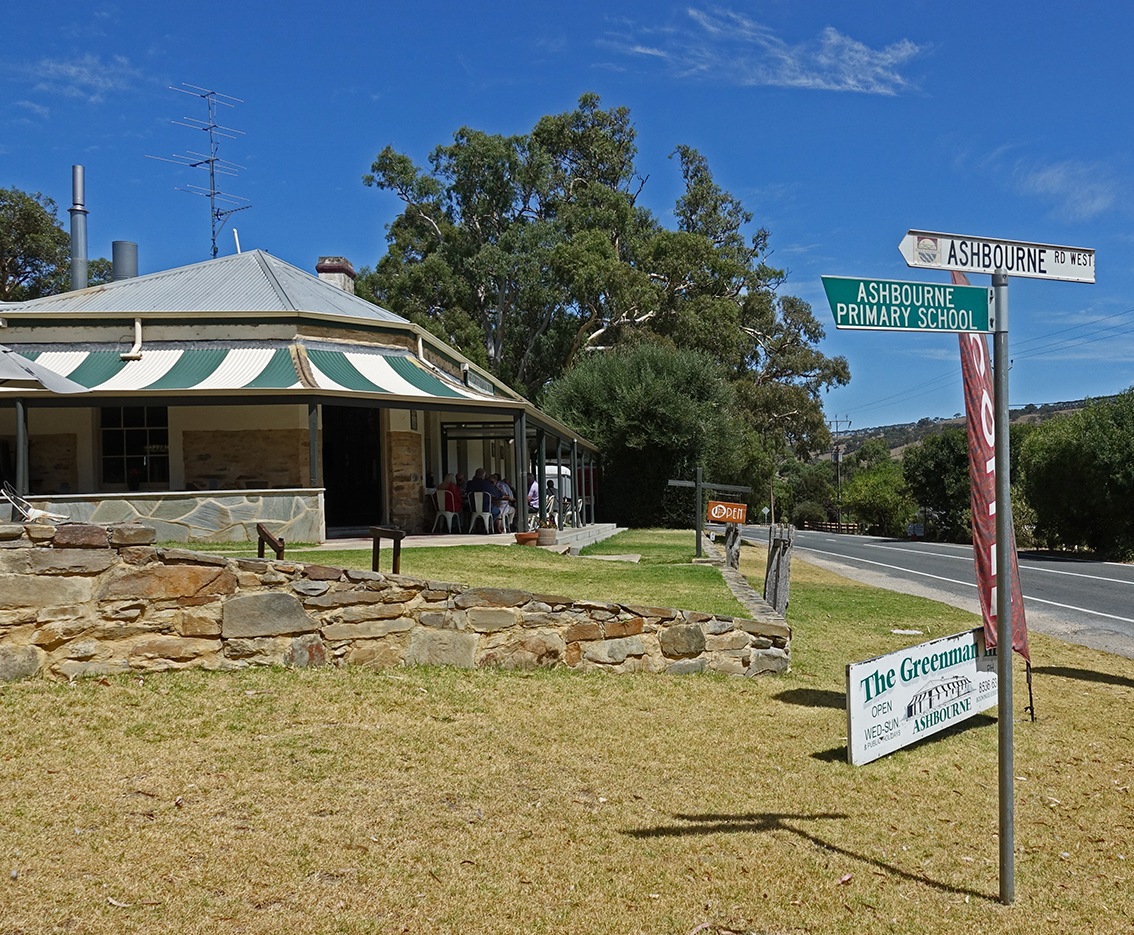
Green Man Hotel in Ashbourne SA

Three roads skirt the Bullock Hill Conservation Park; Signal Flat Road to the west, Wattle Flat Road to the east and Haines Road to the south. There are walking trails leading into the park off these roads. The country town of Ashbourne with its folksy Green Man Hotel lies a kilometre or two north west of the park, on the intersection of Bull Creek and Signal Flat Roads.

Wattle Flat Road on my previous trip

I enter the park off Haines Road. There are honeyeaters, Grey Fantails, rosellas, lorikeets and Galahs. The birds are wary and move quickly in the canopy. Eventually I spot a Welcome Swallow resting between aerial sorties in search of insects.

Welcome Swallow taking a break

Galah or Cockie or Rose-breasted Cockatoo

Along Wattle Flat Road, I notice a pair of roos near a fenceline and stop to take a picture. Not a successful venture as one bounds over the fence while the other scoots under it. Both animals are unhurt and I get the feeling they have done this on more than one occasion.

One under one over….Western Grey Kangaroos

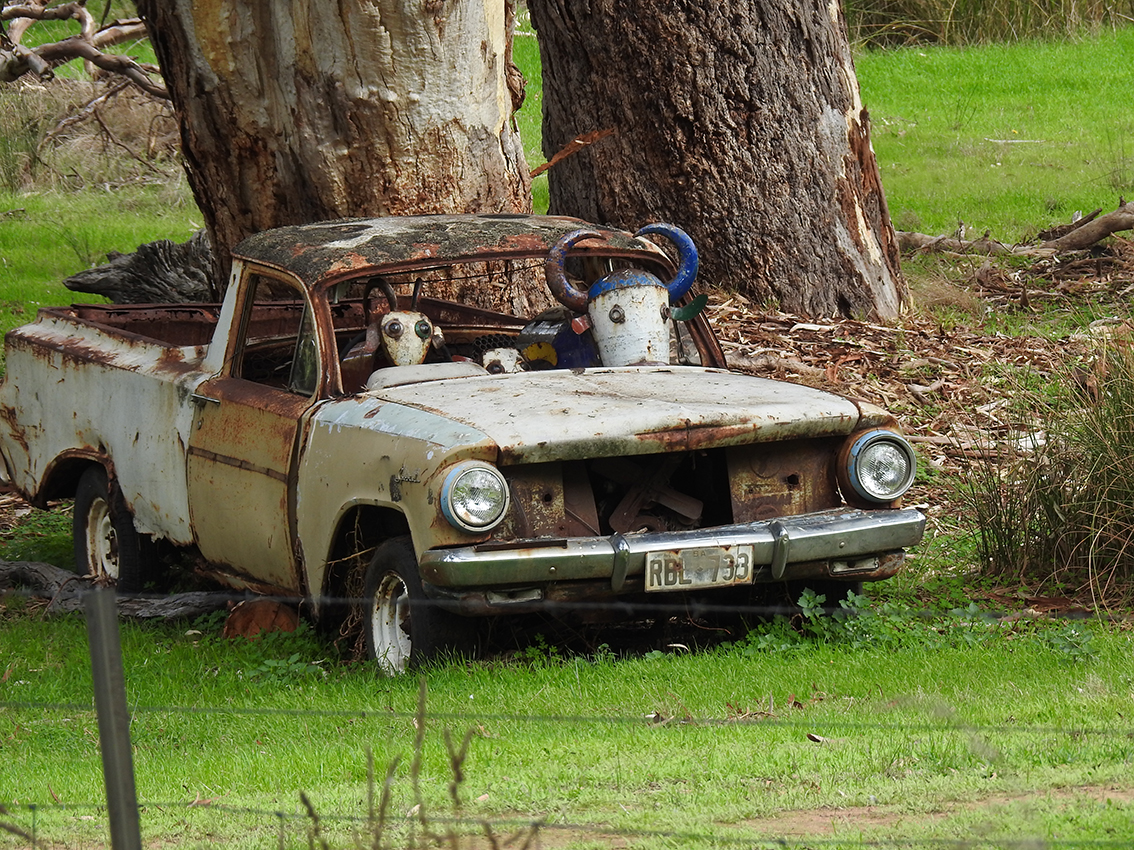
On this trip I have not driven back along Signal flat Road which skirts the eastern side of the park. However, on my last drive I was quite taken by a whimsical piece of ‘Auto-art’; if such a genre exists. On the same drive I encountered significant flocks of Galahs.  

A little whimsical, rural art off Wattle Flat Road

Back in Ashbourne and alongside the Green Man Hotel, there is an enclosure with a couple of unusual sheep which seem to be shedding their fleece rather than it being shorn. I believe they are White Dorpers a variation bred specifically for this particular characteristic.

Shearing the easy way….White Dorper variety of sheep

Leaving the car in the shade, I order a seafood platter and share an outside table with a curious and food oriented Australian Magpie. It has been a worthwhile day in the field and I will certainly return during spring to further explore the park and surrounding areas.

Seafood plate with Oysters, Calamari, Scallops and fish

Australian Magpie

Cheers

Baz

Additional notes

This is an easy walk and drive which is quite suitable for families and seniors with public toilets, barbecues, parking and other facilities nearby..

Please pass on this blog title and or contact information (URL) to any person or organisation with an interest in taking walks and enjoying wildlife in SA.

Click on these links and see more South Australian stories and pictures in my Weekend Notes articles as well as locating similar blogs on Feedspot’s top 20 Australian wildlife blogs
https://www.weekendnotes.com/profile/651267

Exploring Meadows Creek……an interesting drive

3 Mar

Dear Reader:

I hear movement in the long grass. Fifty metres away a Western Grey Kangaroo twitches its ears and looks back at me before slowly hopping into the scrub.

Western Grey Kangaroo

I am exploring Meadows Creek from three roads that intersect the creek from Brookman Rd, which starts at the top of Willunga Hill and terminates at Meadows. The first is Adams Gully Road.

Adams Gully Road ford

Here, the creek’s bank is obscured by scrub and grass. I wade through the tangle of dry stalks and spot a Common Brown Butterfly amongst a mat of fallen grass.

Common Brown butterfly

Nearby, a leaf curling spider has strung its web between some bushes. I can just make out its spindly legs protruding from its specially constructed home.

Leaf Curling Spider with legs visible

Sometimes tracking a creek or river is a complex endeavour. Meadows Creek runs through farmland and only flows freely when it has rained. In drier months it is typical of many SA waterways, consisting of a series of shallow pools.

Typical summer pool along Meadows Creek

A few kilometres past Adams Gully Road is Tynan Road where there is a slightly larger more accessible pool. There are prickly blackberry stems (canes) close to the water providing a safe place for small birds to shelter. A Silvereye lands on a branch providing a nice camera angle. Then a Superb Fairy Wren puts in a brief appearance while an Adelaide Rosella perches high in one of the tall roadside eucalypts.

Tynan Road crossing

Silvereye

Adelaide Rosella

My final crossing point is on Wickham Hills Road where I walk along the dry creek bed towards a pool and spend a quiet ten minutes waiting to see what animals are in the area. Eventually a Grey Fantail alights on a nearby rock as it searches for insects near the water. Further along the creek I can hear Kookaburras calling and a pair of Yellow-tailed Black Cockatoos fly overhead.

Wickham Hills ford

Grey Fantail

Rather than drive back to Brookman Road and return to Adelaide via Meadows or Willunga, I continue along Wickham Hills Road and wind my way back to the city through some lovely rural areas.  Rich pastures, stock, vineyards, barns and farmhouses provide some picturesque, rural scenes, making a wonderful ending to my creek exploring day.

Vines and open bushland

Cheers

Baz

Additional notes

This is an easy drive which is quite suitable for families and seniors.

Please pass on this blog title and or contact information (URL) to any person or organisation with an interest in taking walks and enjoying wildlife in SA.

Click on these links and see more South Australian stories and pictures in my Weekend Notes articles as well as locating similar blogs on Feedspot’s top 20 Australian wildlife blogs
https://www.weekendnotes.com/adelaide/writer/452

https://blog.feedspot.com/australian_wildlife_blogs

South Para Reservoir’s Water, Wine and Wildlife

13 Feb

Dear Reader:

There’s a small mob of Western Grey Kangaroos feeding close to the path where I am starting my walk. Leaning against a tree, I steady the camera. The roos detect either sound or scent and bound away into the thicker scrub.

Up Up and Away

I am taking a walk around the South Para Reservoir near Williamstown about an hour’s drive from Adelaide’s CBD. The road winds through the Adelaide hills and encompasses a range of environments from rural to wilderness. Unfortunately, it is a bit of a grey day. Not brilliant for photography.  

South Para Reservoir

The track leads down to the water where a kayaker is bringing the craft back to dry land. This reservoir is open for fishing, kayaking, cycling and walking unlike many of our other reservoirs.

A recreational paddle

There are numerous butterflies in the area but it is hard to spot them until they take flight. Eventually I get a reasonably clear shot and identify the species as a Common Brown.

Common Brown

On the water’s edge I can just make out some large birds. I suspect they are either Cormorants or Snake Birds (Anhingas). I approach warily, lie down in the grass and focus. There are two distinct species; a Pied Cormorant and a Great Cormorant.

Pied Cormorant

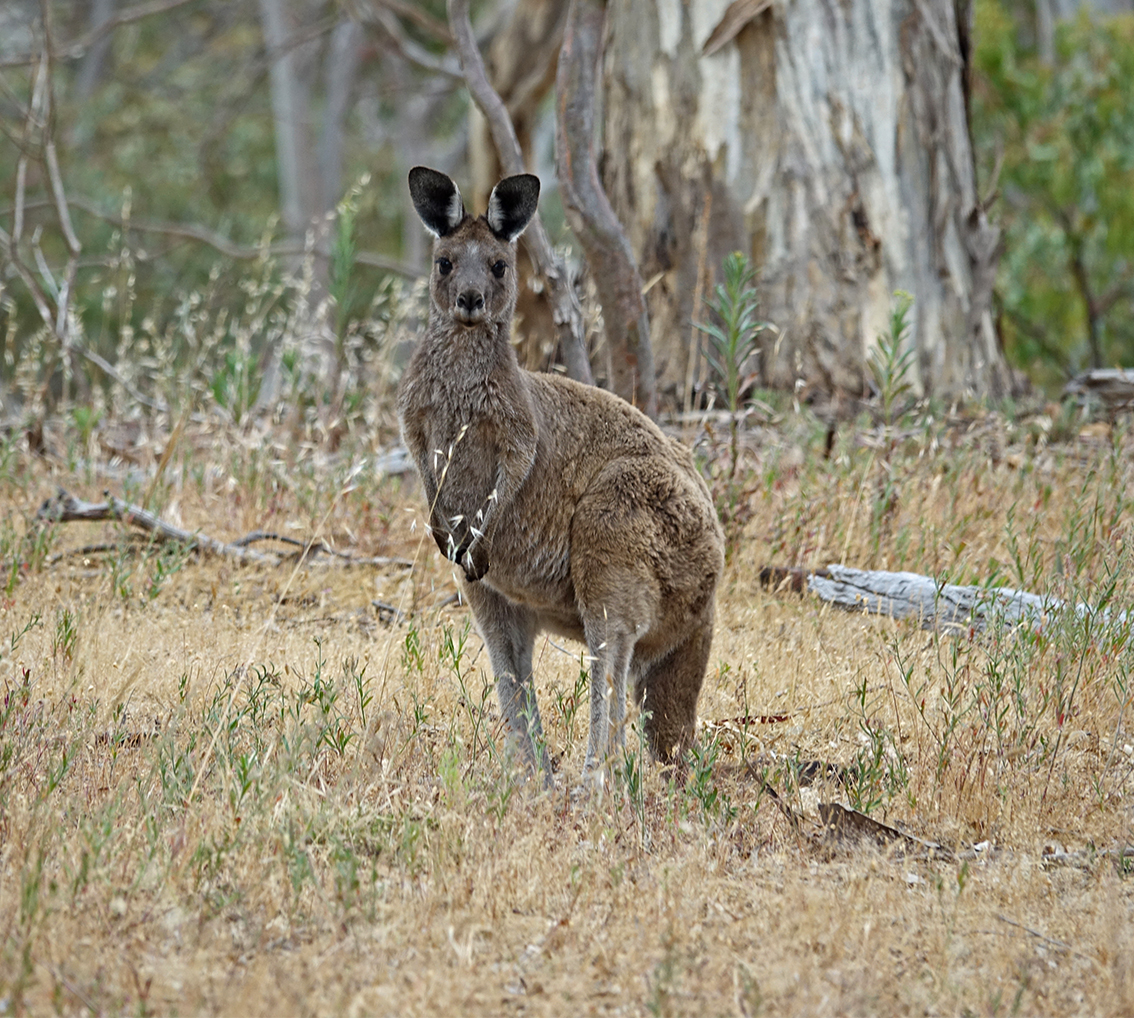
Working my way around the water’s edge I discover a dry creek bed and another track heading back towards the main road. I follow the creek bed up a gentle slope towards a rocky outcrop. A large male kangaroo watches me from the scrub as I walk. He seems relaxed and stays still enough for a long-range shot.

Just watching

Continuing along the cross track I suddenly freeze and hold my breath. Three adult Emus are walking towards me and have, either not registered my presence, or are not unduly phased by humans. I raise the camera slowly and wait as they approach to within thirty metres. I take a series of shots before they veer away pecking for seeds, insects and whatever else they might find in the dry scrub.

The Emus gang

Emus close by me

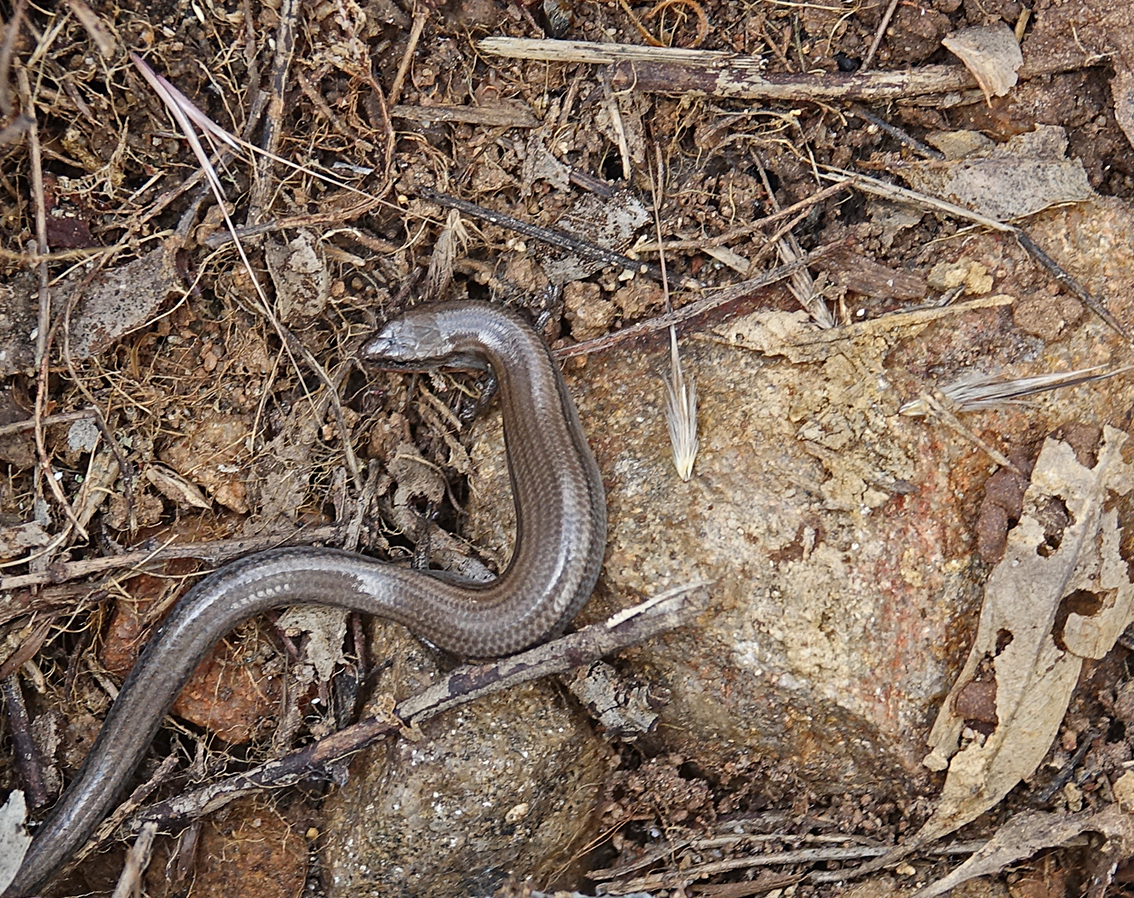
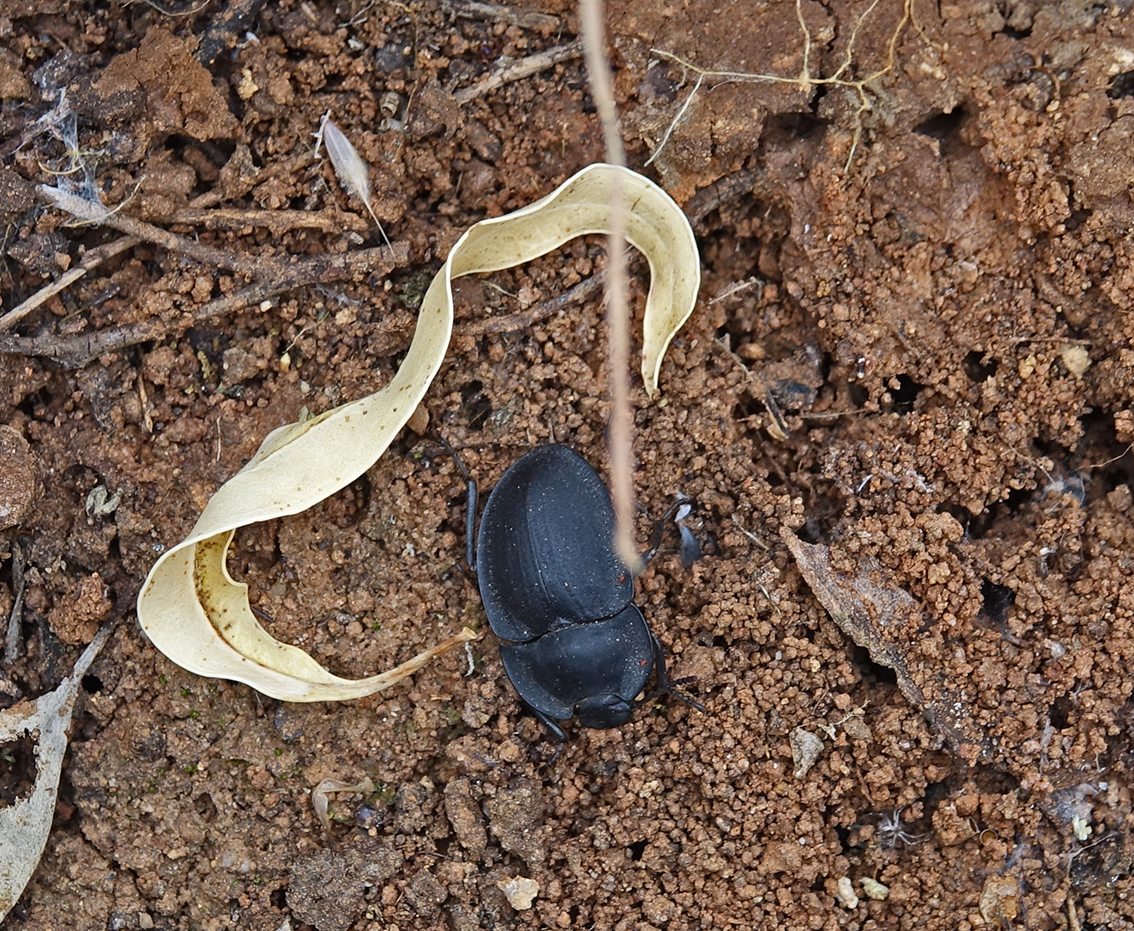
As I traverse move up the trail, I notice a variety of wildlife including; musk Lorikeets Sulphur Crested and Rose Breasted Cockatoos, more butterflies, a few native bees as well as ant nests and termite mounds. I turn over a couple of rocks and dead branches (replacing them carefully afterwards), uncovering a snakelike Three-toed Earless Skink and Pie-dish Beetle.

Three-toed Earless Skink

Pie-dish Beetle

With my walk at an end, I drive on towards Williamstown for lunch at the little bakery across from the creek. However, I do make one more stop on the way at Linfield Road Winery which has a charming bed and breakfast attached. An ideal place to stay when I make my next foray into the wonderful north-eastern region of the Adelaide Hills.

B&B for next time

Linfield Road Winery vines

Cheers

Baz

Additional notes

This is an easy walk/drive which is quite suitable for families and seniors with public toilets, barbecues, parking and other facilities nearby.

Please pass on this blog title and or contact information (URL) to any person or organisation with an interest in taking walks and enjoying wildlife in SA.

Click on these links and see more South Australian stories and pictures in my Weekend Notes articles as well as locating similar blogs on Feedspot’s top 20 Australian wildlife blogs

https://www.weekendnotes.com/adelaide/writer/452 https://blog.feedspot.com/australian_wildlife_blogs

Mount Barker’s Laratinga Wetland………Crakes and Warblers

16 Jan

Dear Reader:

A small bird with vivid spots and dashes paddles out from the reed bed. A Spotted Crake, the first one I have ever seen.

Spotted Crake feeding


For the next ten minutes I watch several of the striking birds as they dip into the water in search of aquatic plants and animals such as worms, crustaceans, molluscs, spiders and even small fish and tadpoles.

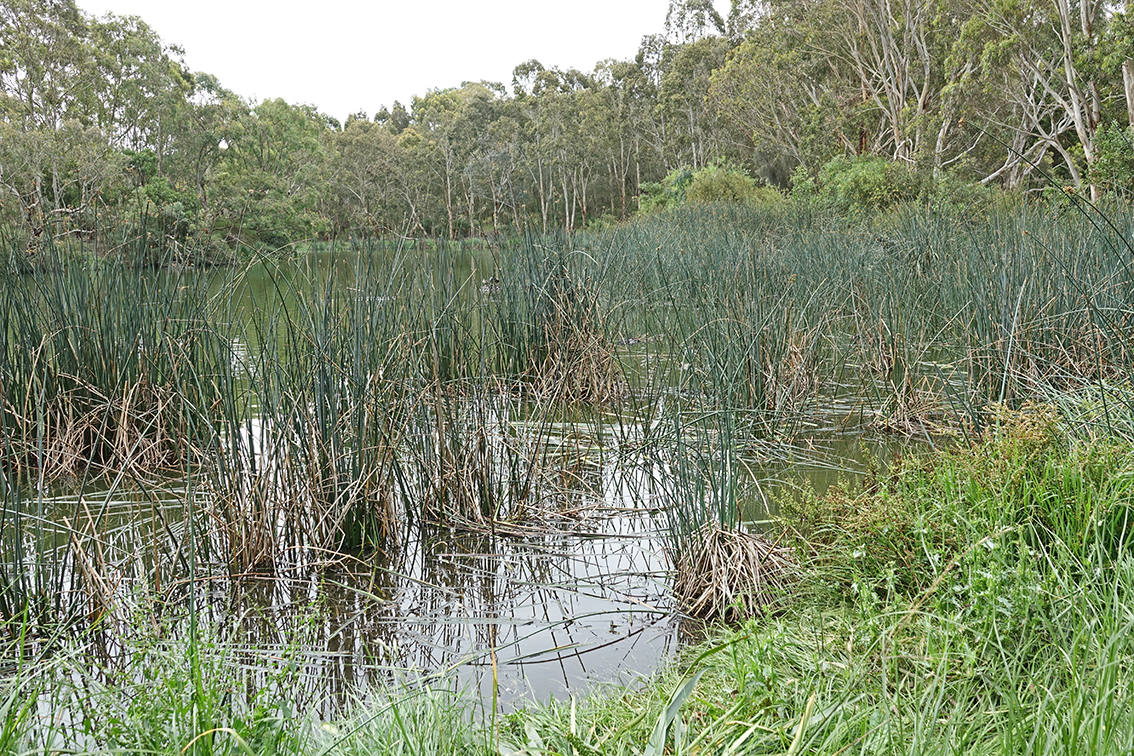
Spotted Crake habitat

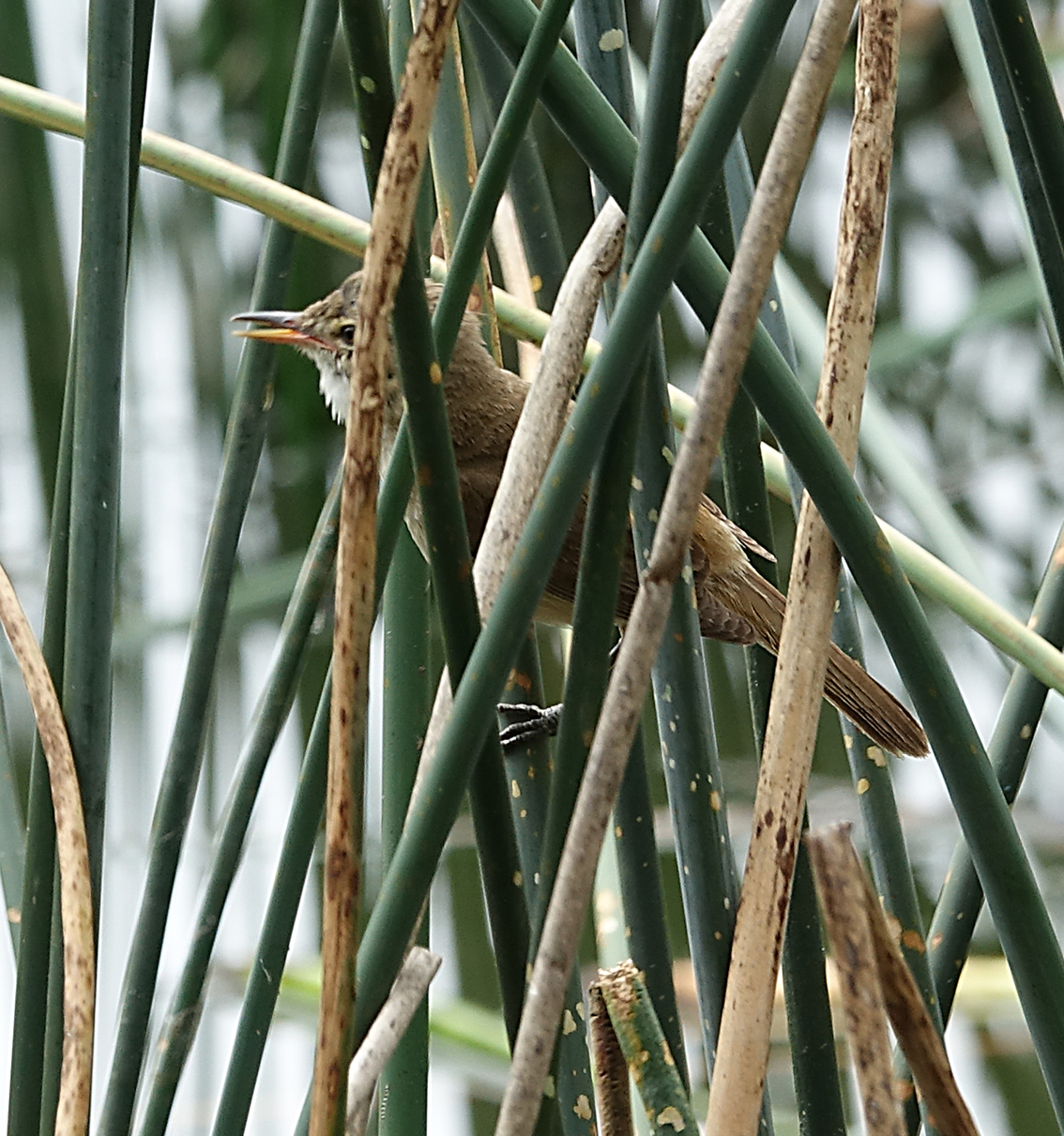
Leaving the crakes I walk a further hundred metres to another pool before I hear the melodic call of a reed warbler. There are reeds, small bushes and a variety of grasses bordering the water. I can still hear a bird calling and scan the reeds for movement. Deep in the tangle of stems I locate the source of the call; an Australian Reed-warbler.

Australian Reed-warbler calling

Reed warbler habitat

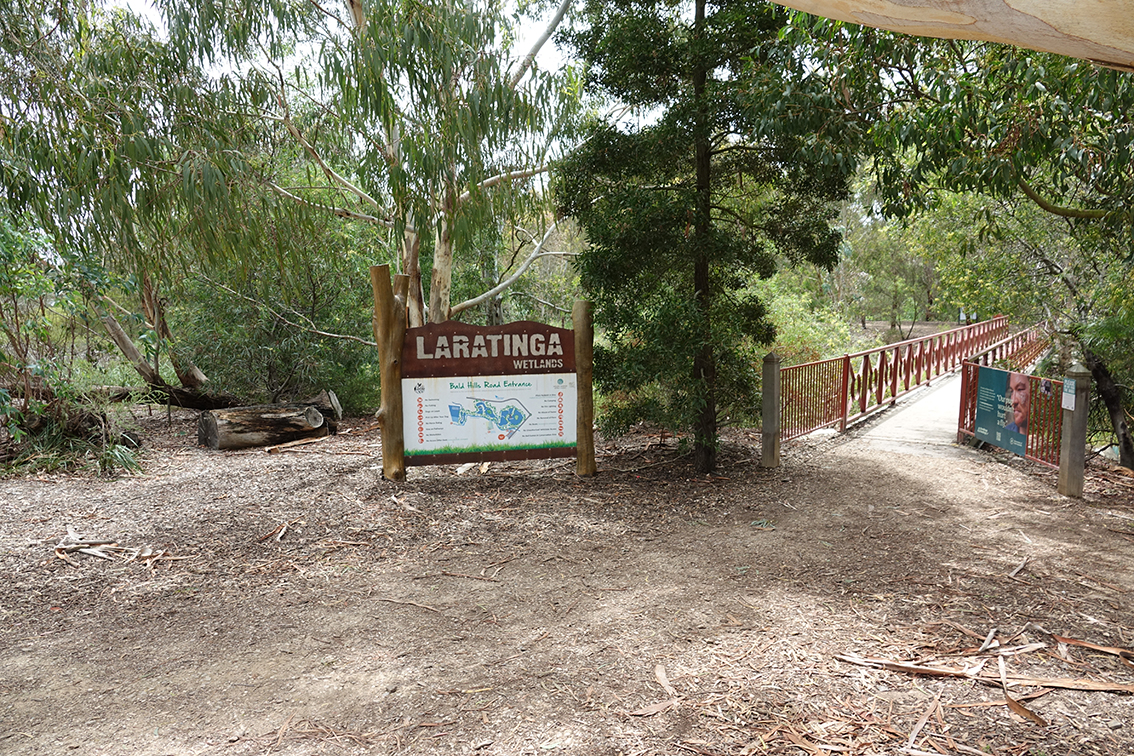
My hunting ground is the Laratinga Wetlands near Mount Barker about a Forty five minute drive from the city. In the local ‘Peramangk’ language it approximates to “Flooding Land Creek.” This wetland serves numerous purposes including filtering waste water, providing habitats for a range of animals and the establishment of walking, running, and cycling trails.

Wetland entrance

Having achieved my primary goal of photographing Spotted Crakes and Australian Reed-warblers, I continue my stroll around these fascinating wetlands keeping an eye open for more interesting plant and animal life.

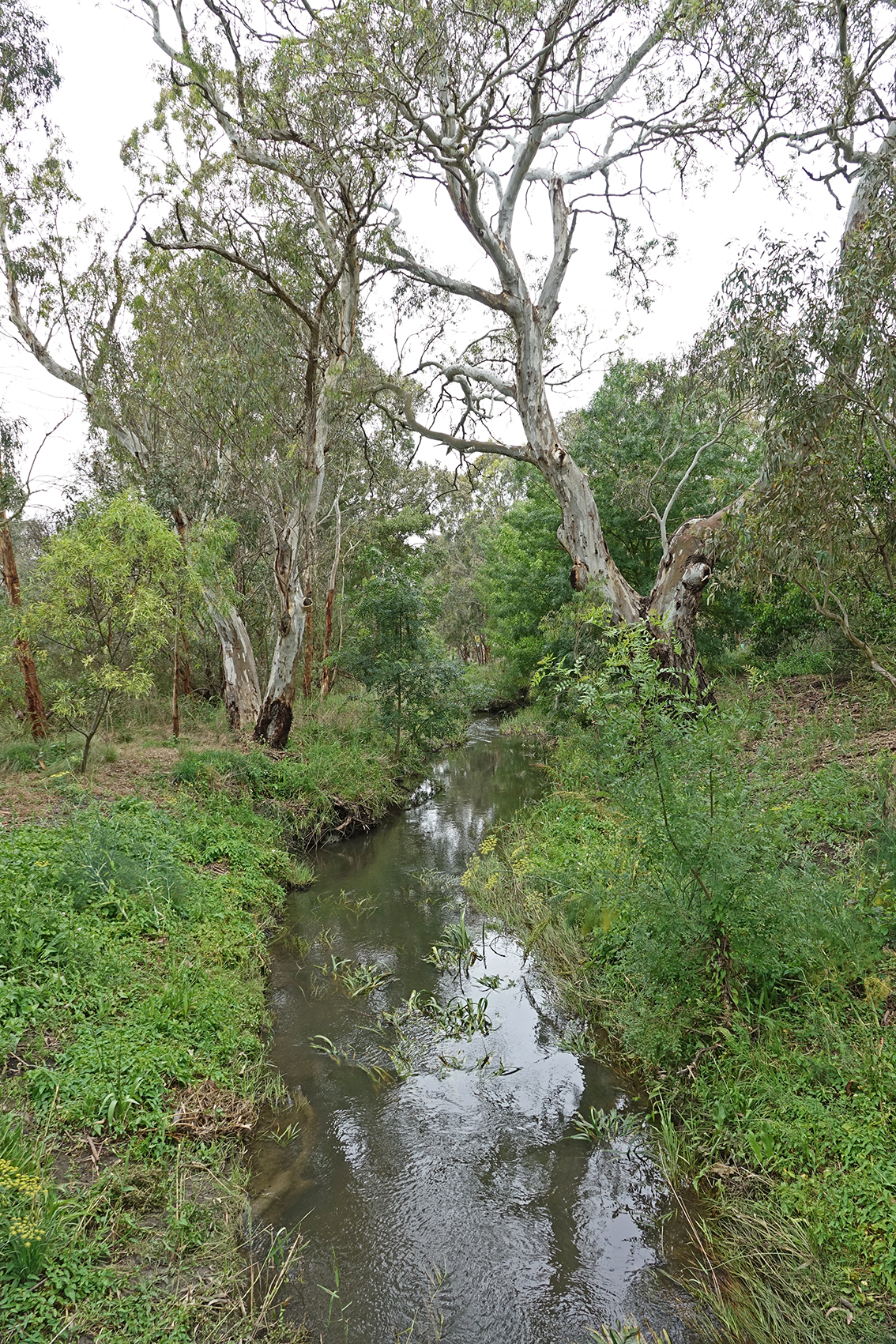
Channel between larger pools

Because my Nikon P900 with its 83X magnification doubles as a spotting scope, I am able to search the opposite bank of a broad pool. I notice several Grey Teal perched on a branch overhanging the water. But it is the Short-necked or Macquarie Turtle in the background that is my main focus.

Grey Teal, Eurasian Coot and Short-necked Turtle

The day has been overcast and the light is fading. I have encountered numerous bird species in addition to the crakes and reed warblers as well as two reptiles; the turtle and a gecko. Another animal group would complete my day’s excursion. I turn my attention to invertebrates searching the foliage and leaf litter.

Marbled Gecko……showing camouflage

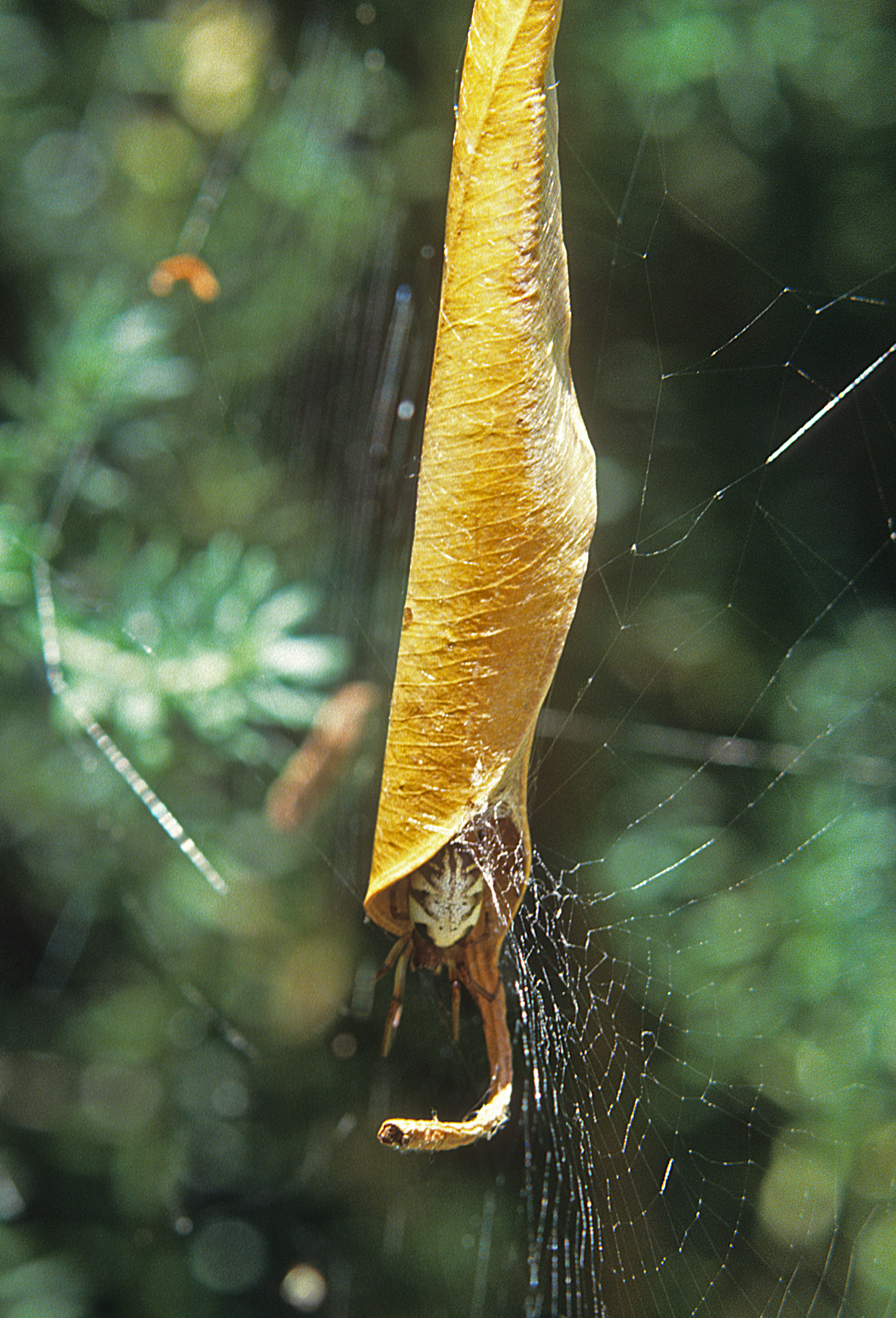
I am in luck. Perfectly suspended in the branches of a Christmas Bush is a Leaf-curling spider. These little arachnids create a home by spinning their silk around a dead leaf slowly curving it until they form a cylindrical shelter to hide in.

Leaf-curling Spider in Christmas Bush

Leaf-curling spider…Image shot at another location to show the spider

Now it is time to leave this amazing wetland but I will return in the near future to search for more wildlife in its maze of waterways, reed beds and bushland.

Cheers

Baz

Additional notes

This is an easy walk and drive which is quite suitable for families and seniors with public toilets, parking and other facilities nearby. It is dog friendly.

Please pass on this blog title and or contact information (URL) to any person or organisation with an interest in taking walks and enjoying SA wildlife.

Click on these links and see more South Australian stories and pictures in my Weekend Notes articles as well as locating similar blogs on Feedspot’s top 20 Australian wildlife blogs

https://www.weekendnotes.com/adelaide/writer/452/

https://blog.feedspot.com/australian_wildlife_blogs/

Glacier Rock….Good food, Geology and Wildlife

30 Nov

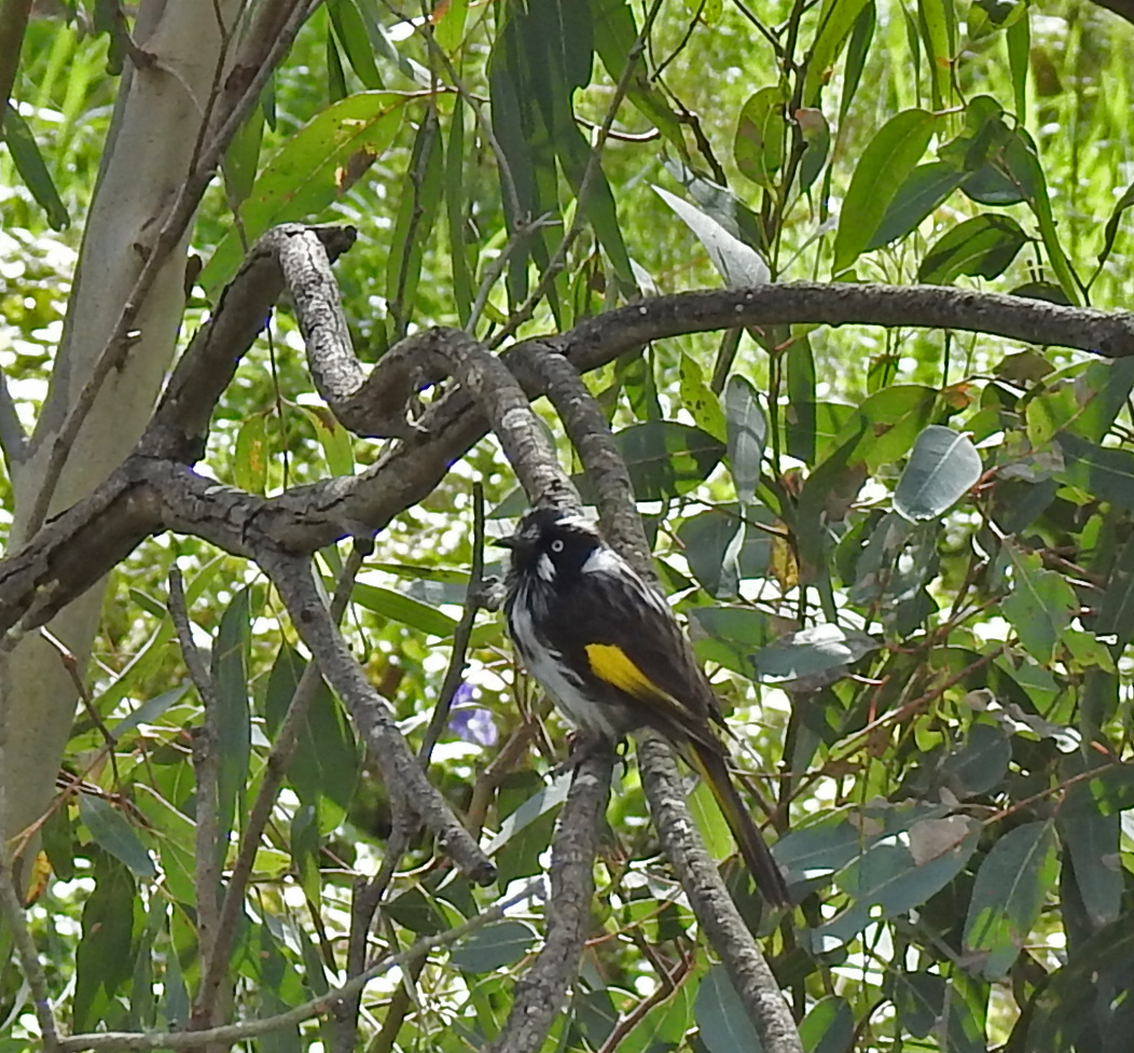
A pair of New Holland Honeyeaters

Dear Reader:

There is white water swirling around the boulders in the river and a family of Pacific Black Ducks are huddling to one side where the water is calmer. Perched amongst the branches of an overhanging eucalyptus tree I make out the shape of several New Holland Honeyeaters and hear the distinctive call of Sulphur-crested Cockatoos as they fly overhead.

Breakfast at the Tearooms

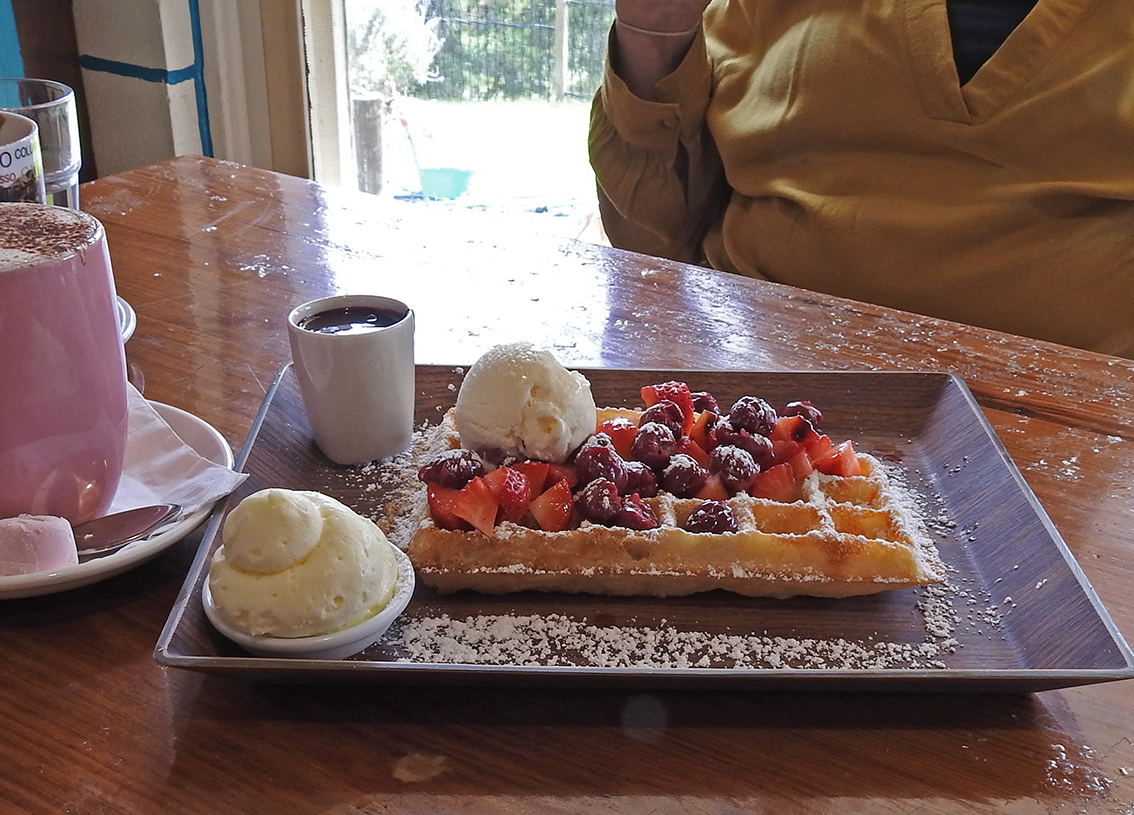
I am sitting on the back decking of the Glacier Rock Tea Rooms  having just devoured a serve of the delicious waffles topped with berries, cream and ice cream; with a little maple syrup for good measure. The weather is overcast and not great for photography but I shall make the best of it.

Typical rural countryside along the Inman Valley

On the drive along the Inman Valley Road we spotted a mob of roos feeding just outside the little township of the same name. There were also  black headed sheep and numerous herds of dairy cattle grazing on the fertile grassland. Some really pleasant rural scenes to photograph.

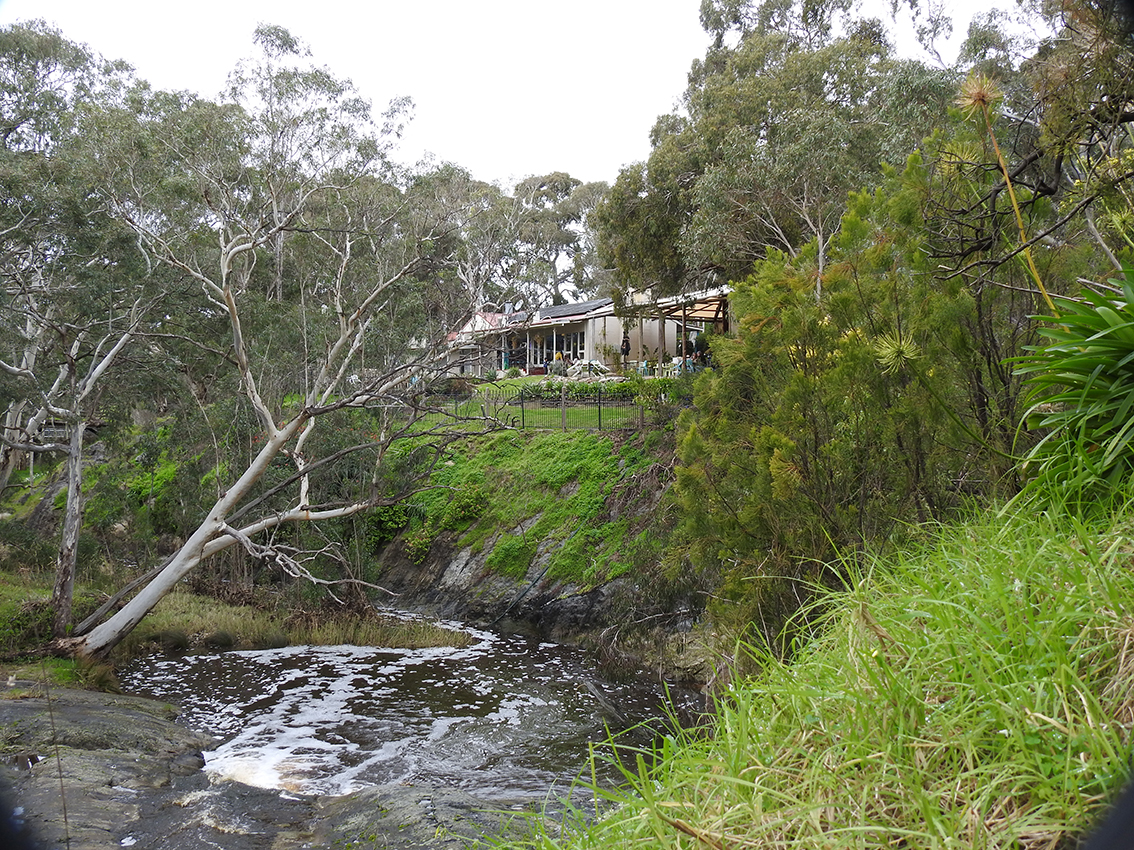
Inman river and Tearooms

I take the track from the caffe down to the river passing an information board on the way which explains the geological processes that lead to the rock formations. They involved the scraping of surfaces by rocks embedded in an ancient glacier which carved out the valley millions of years ago.

White-naped Honeyeater

Grey Fantail

From the viewing point alongside the river I watch Welcome Swallows and Grey Fantails hawking for insects above the water. And, to my great delight, spot a bird I have never photographed before: a White-naped Honeyeater.  

Old bridge over the Inman River

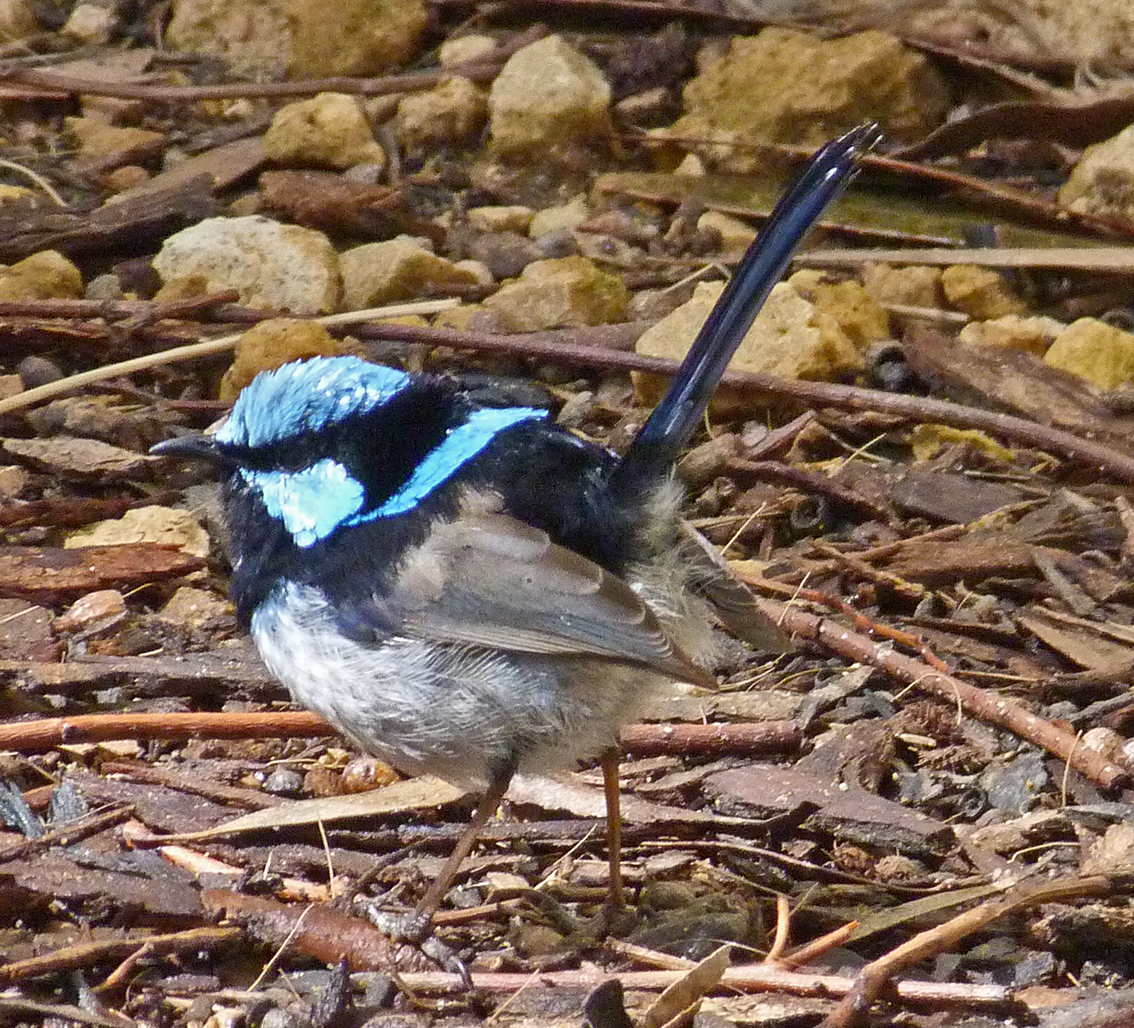
Superb Fairy Wren

The Mt Alma Road runs alongside the café. I walk a short distance along the road to get a good view of a dilapidated, old bridge which crosses the river. Thick brush lines the first section of the road and I can hear the twittering of wrens in the thickets. There are both sheep and cattle in the paddock opposite.

Galahs in silhouette

Red Wattlebird

On the other side of the Inman Valley Road, a narrow, sealed track called Parsons Road climbs a small rise. In the field alongside the road, several Galahs are perched at the top a long dead tree. Nearby a group of Red Wattlebirds are feeding on flowering shrubs along the fence line.

Spider predation or devouring its own carapace after shedding????

However, my final wildlife encounter is on a much smaller scale. A little spider (species unknown) appears to have caught another spider in its web and is starting to wrap it in silk ready to devour later.

Sweet indulgence

My walk is over and I shall return to the tearooms and treat myself to a hot chocolate. An appropriate end to a rather successful walk in this lovely part of the Fleurieu Peninsula.  

Cheers

Baz

Additional notes

This is an easy walk and drive which is quite suitable for families and seniors with public toilets, parking and other facilities nearby. It is dog friendly.

Please pass on this blog title and or contact information (URL) to any person or organisation with an interest in taking walks and enjoying wildlife in SA.

Click on these links and see more South Australian stories and pictures in my Weekend Notes articles as well as locating similar blogs on Feedspot’s top 20 Australian wildlife blogs

https://www.weekendnotes.com/adelaide/writer/452/

https://blog.feedspot.com/australian_wildlife_blogs/

Port Vincent….. an afternoon walk

30 Oct

Australian Pelican and Silver Gulls

Dear Reader:

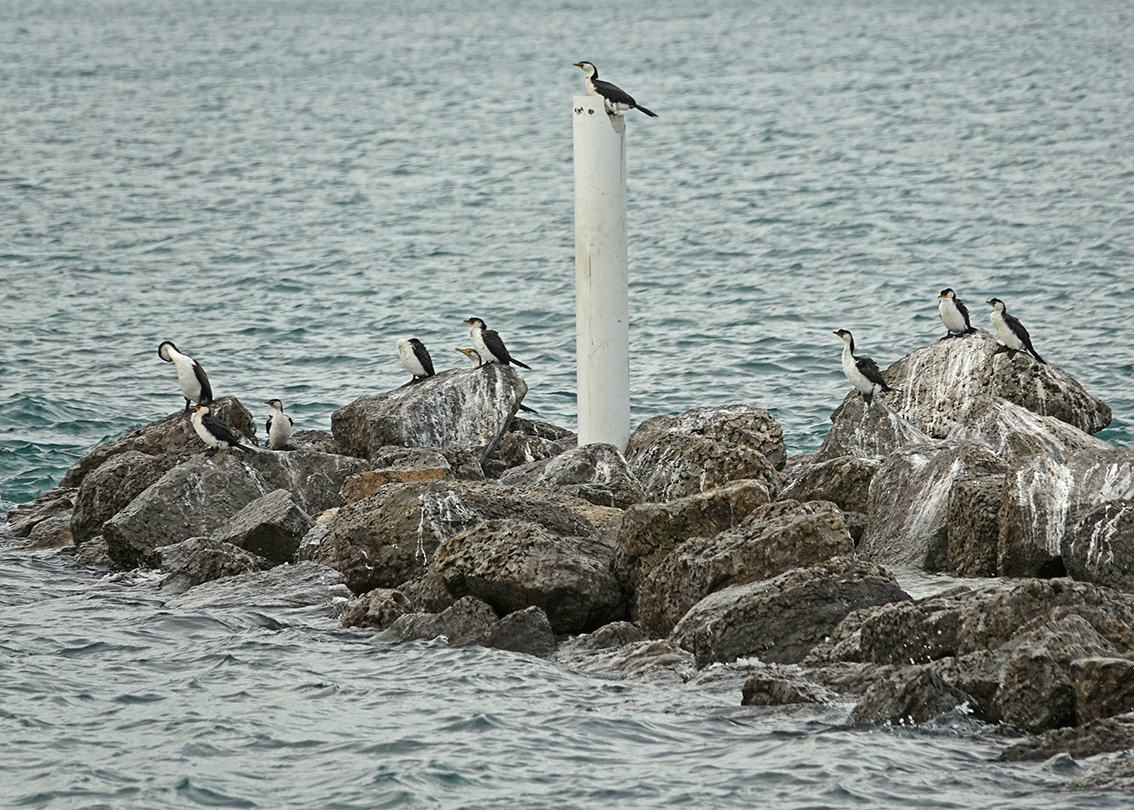
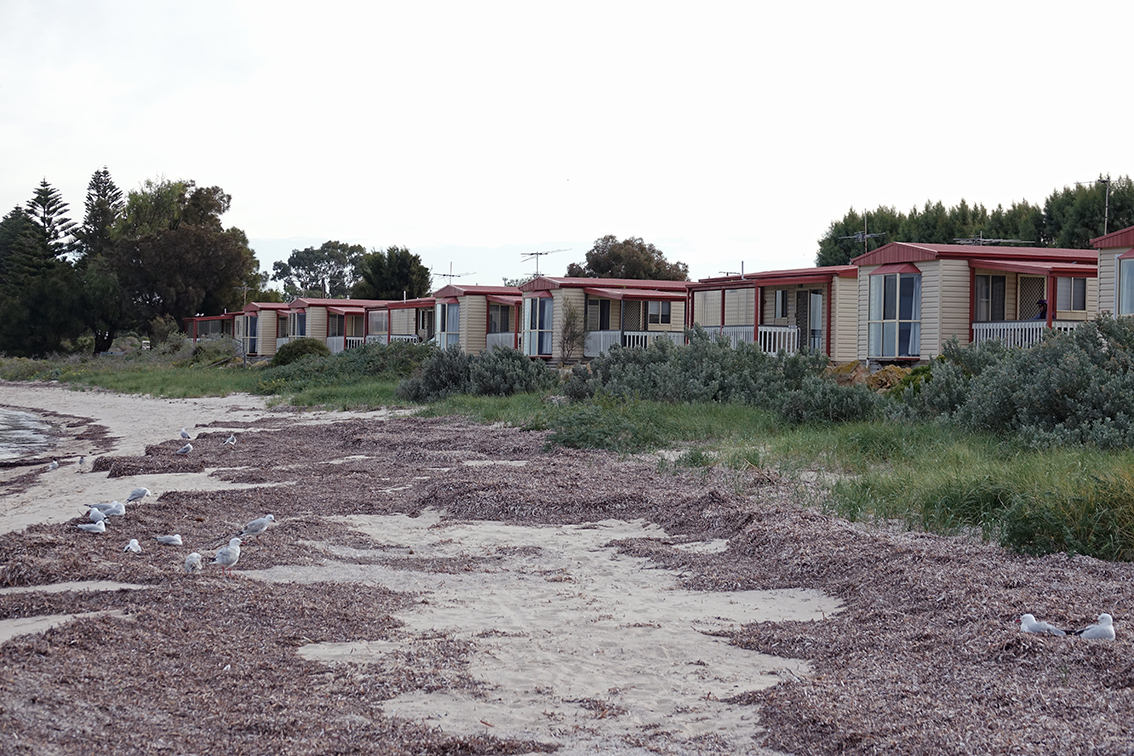
It has been a comfortable two and a half hour drive from Adelaide to Port Vincent. Although, with low cloud cover, I am not anticipating any worthwhile photography until tomorrow. How wrong can I be? As I pull up in the car park, an Australian Pelican lands on the grass verge near the cabins. And, no more than a hundred metres away, I can see a group of Pied Cormorants on the nearby breakwater.

Pied Cormorants

Cabins along the beach front

Apologetically leaving the others to unpack, I grab my Sony RX10 and wander down to the beach. To my surprise, two Bottlenose Dolphins are hunting in the shallows along with another Pelican; much to the consternation of a pair of fishermen who are trying to catch an evening meal themselves.

Pelican hunting solo

Dolphin taking a vertical dive

The dolphins are fascinating; turning, accelerating and diving constantly as they herd the school of fish they are feeding on. Not an easy animal to photograph from the beach as all you see are half a back and the occasional fin. Nevertheless, I continue to track them with the camera. Suddenly, one dives vertically with its tail held high. A nice moment.

Red-necked Stints

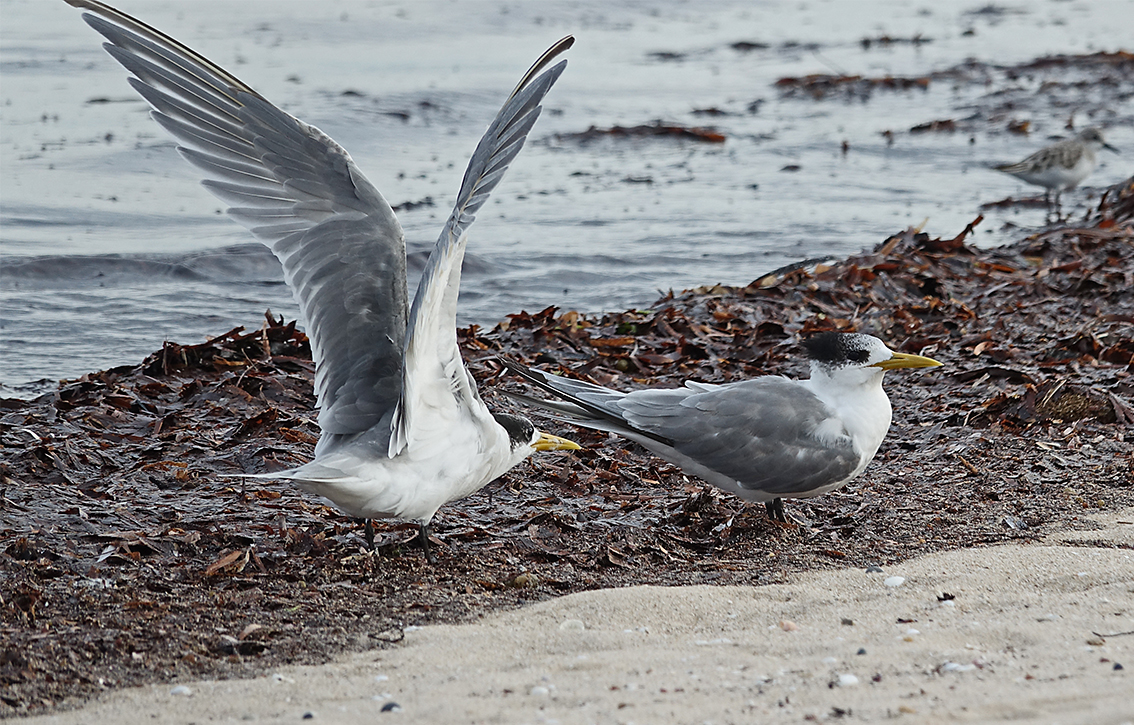
Crested Terns

Along the shoreline, where the waves lap against piled up seaweed, a mixed group of tiny waders; Red-capped Plovers and Red-necked stints, are foraging for tiny worms and crustaceans. Nearby, a Crested Tern is resting on the beach when a second bird flies down to join it, possibly a nesting pair.

Red-capped Plover with eggs

One of the plovers is meandering higher up the beach and doesn’t move far as I approach. I watch it carefully and search the seaweed for a nest. Sure enough, there amongst the brown tangle of weed are two perfectly camouflaged eggs. I back off a dozen metres and wait. After a few minutes the bird returns to its eggs and sits carefully on them eyeing me defiantly. 

Port Jackson Shark egg casing. The spiral shape wedges under rocks.

Remains of a sponge showing silica skeleton

I move away from the little plover and hunt for any other life in the accumulated drifts of weed. My search is fruitful and I turn up a spiral shark egg. Probably from a Port Jackson Shark one of the oviparous (egg laying) species around our coast. Further along the beach I come across the skeletal remains of a sponge. Sponges, unlike nearly all life on earth, have a skeleton made of silica and the fine network of spicules is fascinating and easy to see.

My walk along the shorefront, right in front of our cabin, is coming to an end it is getting cool. Time to head on back and decide on lunch. Probably local seafood at a rather colourful shop on the shore closer to the town. It is easy walking distance and highly recommended by a local I met on my initial Port Vincent walk. 

Cheers

Baz

Additional notes

This is an easy walk and drive which is quite suitable for families and seniors with public toilets, barbecues, parking and other facilities nearby. It is dog friendly.

Please pass on this blog title and or contact information (URL) to any person or organisation with an interest in taking walks and enjoying wildlife in SA.

Click on these links and see more South Australian stories and pictures in my Weekend Notes articles as well as locating similar blogs on Feedspot’s top 20 Australian wildlife blogs

https://www.weekendnotes.com/adelaide/writer/452/

https://blog.feedspot.com/australian_wildlife_blogs/

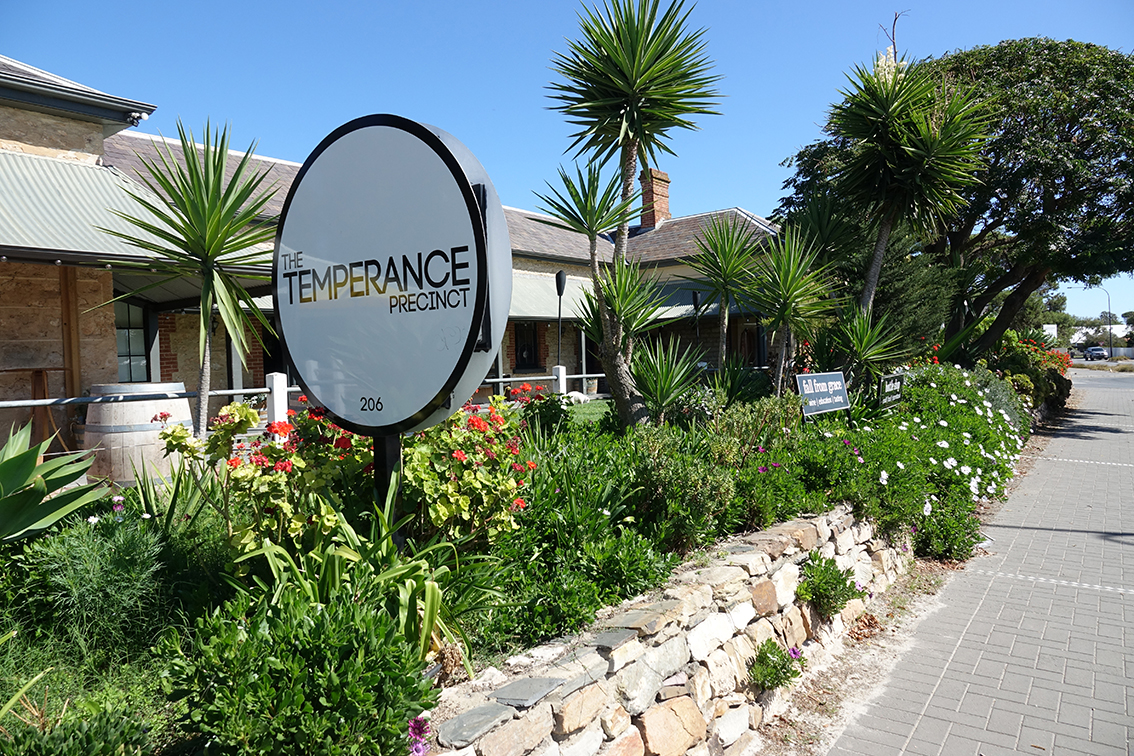
Aldinga’s Temperance Precinct

13 Oct

Dear Reader:

There is a sizeable group of Short-billed Corellas in the eucalyptus trees flanking the street. They exhibit a range of behaviours ranging from preening each other to nibbling branches and feeding on gum nuts. Some of the cars parked under the trees or nearby have also suffered some paintwork indignities due to the sheer number of birds.

Little or Short-beaked Corella

Corellas in tree

I am enjoying the ambience of the Temperance Precinct. A group of shops, restaurants, a pub, and other organisations situated on Port Road, where it intersects South Road leading into Aldinga. It is an area that has developed significantly over the last few years.

An interesting name

A little footwear style

So many colours to choose from

Perhaps the most iconic of these outlets is Miss Gladys on Sea which specialises in ‘well made’ clothing, shoes and accessories. Next door is a deli with organic foodstuffs and across the road, a bakery. Further down the street, there is an old church and graveyard as well as some fine period homes. Intermingled with the buildings are gardens, trees and bushes and the animals and plants which inhabit them.

A bit of everything

Heading for home

Collecting nectar

I sit on a stone wall, which borders a garden, waiting for a friend to do some shopping and notice a large native wasp fly into a gap in the stonework. In the garden I observe the same species feeding on several different kinds of flowers. With my attention focussed on these small invertebrates, I scan the plants for more species and spot: a diminutive flower spider, several Hoverflies, numerous Honey Bees and a cluster of tiny Aphids.

Not a gardener’s best friend

Shopping completed, it is time for lunch, but first I take a short stroll down to the churchyard where I can see some birds flitting between the branches of a red flowering gum. They are wary and in shadow. However, I recognise both Little Wattlebirds and New Holland Honeyeaters.

New Holland Honeyeater

Little Wattlebird

I finish the day with a wonderful steak and kidney pie washed down with a bottle of local fruit juice. In truth, a very satisfying low-key jaunt to one of my favourite coastal towns and I haven’t even taken the short drive to the beach with its fringing reef. An adventure I will leave for another day.

 Cheers

Baz

Additional notes

This is an easy walk and drive which is quite suitable for families and seniors with public toilets, parking and other facilities nearby. It is dog friendly.

Please pass on this blog title and or contact information (URL) to any person or organisation with an interest in taking walks and enjoying wildlife in SA.

Click on these links and see more South Australian stories and pictures in my Weekend Notes articles as well as locating similar blogs on Feedspot’s top 20 Australian wildlife blogs
https://www.weekendnotes.com/adelaide/writer/452/

https://blog.feedspot.com/australian_wildlife_blogs/

Aldgate to Stirling…a short walk

24 Sep

Dear Reader:

It is still early Spring and the sun is out and I have often spotted a small copper headed skinks basking in the sun at this time of year. There are several logs on the northern facing aspect of the path and with a little patience and perseverance I manage to find one of the little lizards. Their correct name is the Common Garden Skink or Sun Skink.

Common Garden Skink

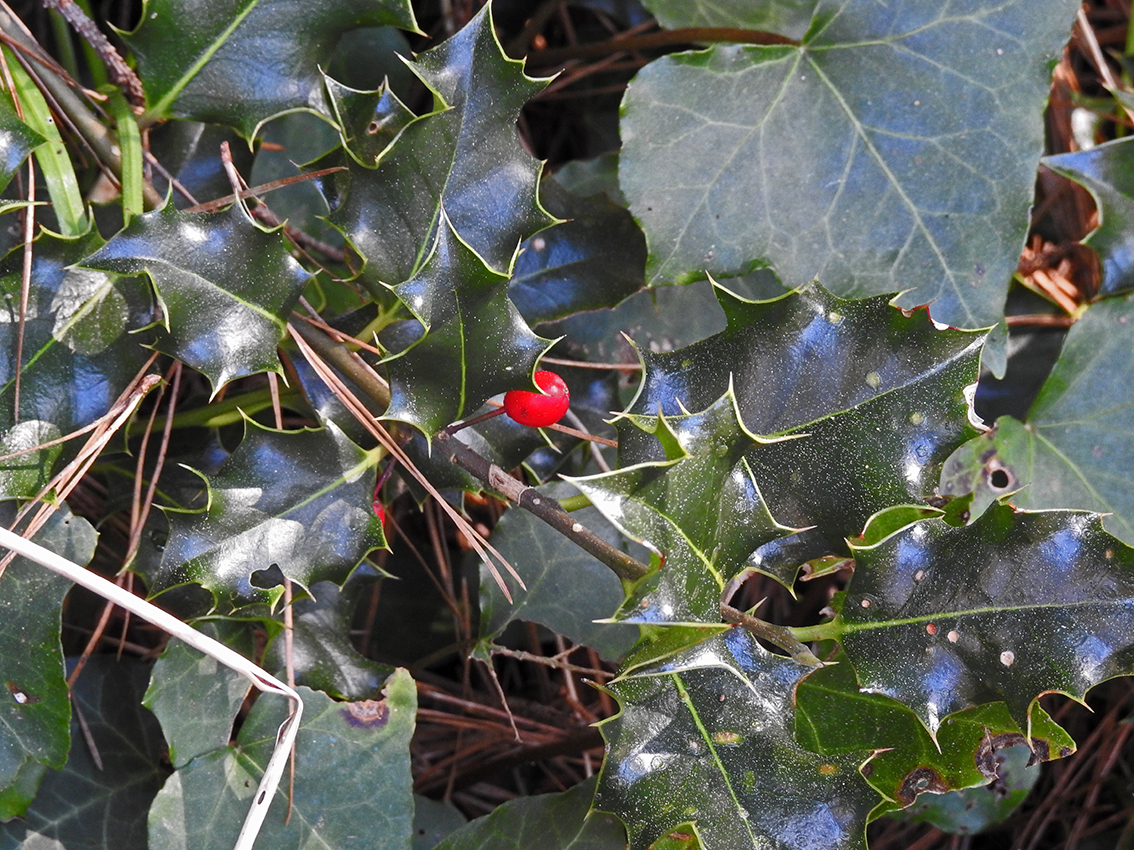
Following up on my previous post, which covered the area around the RSL Hall, on the edge of Aldgate, I am now walking the short path to Stirling. The trail follows the road and creek on one side and is heavily wooded on the other. There are numerous plants both native and introduced along the pathway including: Holly, tall pines, grevilleas, a few eucalyptus and acacia species as well as ferns and bracken.

Holly in the Hills

Grevillea species

After a fifteen-minute stroll along the pathway I reach the outskirts of Stirling. The town has an English country village feel about it with some lovely old homes and many small shops and businesses. Whenever I visit Stirling there always seems to be a welcoming committee of Little Ravens (often mistaken for Crows) in the area. Today is no exception as a group of the shiny black corvids trumpet their characteristic calls from a nearby garden.

Little Raven Stirling

I do not venture far into Stirling as it will be the subject of a later blog. I head back down the path to Aldgate. The dense vegetation, now to my right, is full of movement and the sounds of small birds in the undergrowth; probably wrens and finches. I scan the other side of the road and spot a Koala high in the branches. I take a couple of shots to demonstrate how difficult locating wildlife can be and how training your eyes to notice subtle changes and movement takes continual practice.

Koala at 100 metres

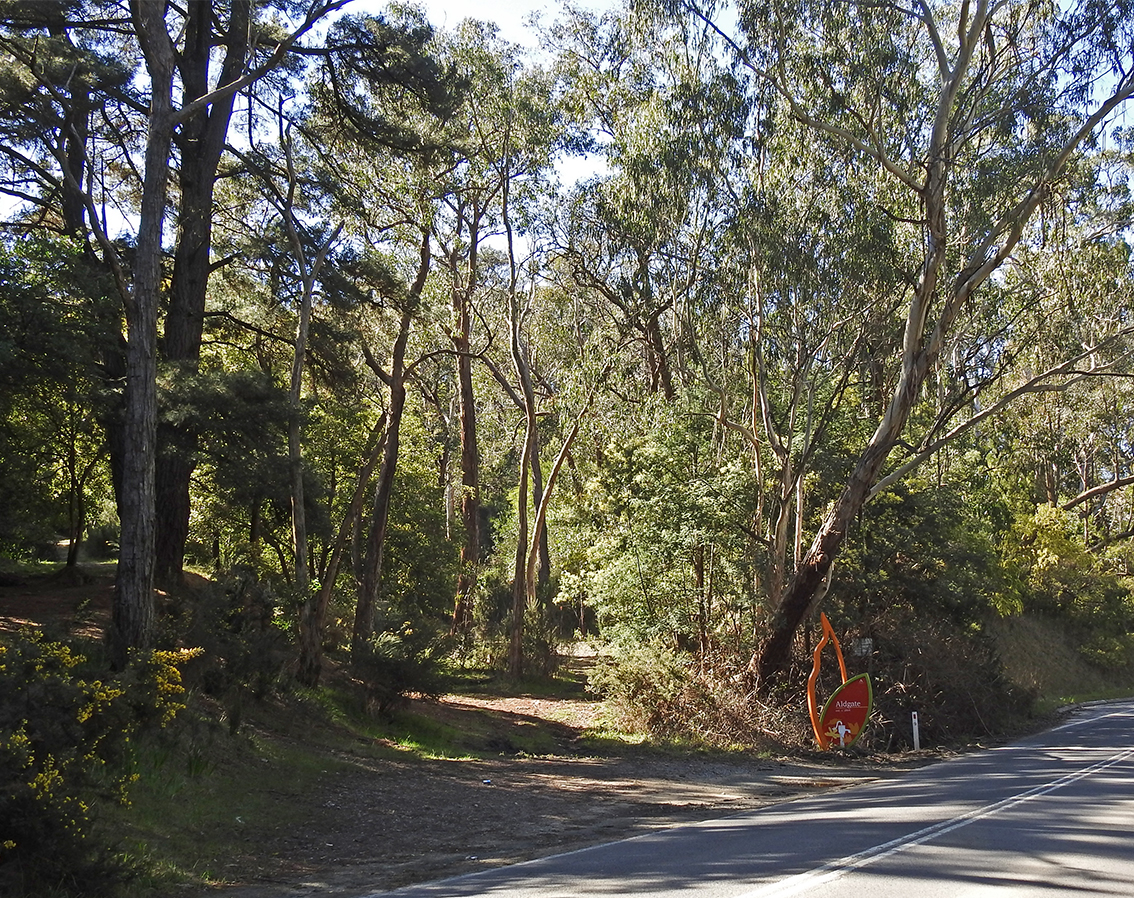
As I approach the outskirts of Aldgate I notice a track on the other side of the road near the township sign. Crossing over, I follow it a short way as it cuts along the hillside and into the scrub. This area is dominated by tall eucalypts and is a more typical hills bushland setting than the pathway.

The track near the entrance to Aldgate

Adelaide Rosella

Koala Aldgate

My detour is well worth the effort. Within a few minutes I have managed to photograph an Adelaide Rosella perched on an old, gnarled branch and a Koala at far closer range than before.

FRED……..Barista at work

FRED….Cosy place to dine

With the walk concluded I drive into Aldgate for lunch at Fred, a wonderful local eatery and another compelling reason to visit Aldgate. Over the years, I have had some wonderful meals in this iconic hills café and I’m sure today will be no exception. The only problem is one of choice with so many interesting dishes to choose from. After some serious deliberating, I end my day in Aldgate with a Croque Monsieur and a Chai Latte, selected from the ‘All Day Breakfast Menu’.    

Cheers Baz

Additional notes

This is an easy walk and drive which is quite suitable for families and seniors with public toilets, parking and other facilities nearby. It is dog friendly.

Please pass on this blog title and or contact information (URL) to any person or organisation with an interest in taking walks and enjoying wildlife in SA.

Click on these links and see more South Australian stories and pictures in my Weekend Notes articles as well as locating similar blogs on Feedspot’s top 20 Australian wildlife blogs

https://www.weekendnotes.com/adelaide/writer/452/

https://blog.feedspot.com/australian_wildlife_blogs/

Aldgate to Stirling 1……..around the RSL and church

26 Aug

Dear Reader:

There is a small stream running under the roadway which is overshadowed by tall Eucalyptus trees. I can hear the raucous calls of Galahs, Lorikeets and Sulphur-crested Cockatoos coming from high in the canopy. I swing the Nikon telephoto in a broad arc and eventually locate a lone Galah (Rose-breasted Cockatoo) gripping the trunk of a Stringy Bark Gum. On a grassy area near the playground, which is adjacent to the stream, a male and female Maned Duck are sitting close to each other some distance from the water.

Galah (Rose-breasted Cockatoo)

Male and female Maned Ducks or Wood Ducks

In another tree, I spot an Adelaide Rosella perched amongst the branches and leaves and nearby a second bird  is feeding on the buds of a non-native tree.  In the last few minutes I have identified four species of parrots , two by sight and two by sound. A nice start to my walk between the Aldgate RSL club and the outskirts of Stirling in the Adelaide Hills.

Adelaide Rosella

Adelaide Rosella feeding

Before I take my intended walk back to Stirling along the roadside pathway, I decide to explore the immediate area as I have been surprised by the diversity of birdlife here. A short stone stairway leads up to the Soldiers Memorial and a clearing with some garden seats. I sit for a while contemplating lives lost and the sacrifices made by families to ensure our way of life.

Soldiers Memorial

Golden Whistler

While I am sitting near the Memorial a Golden Whistler lands in the bushes close to me. This truly beautiful bird is not common and I feel privileged to watch it hopping between branches.

Superb Fairy Wren (Male)

Anglican Church of the Ascension

On the other side of the main road there an Anglican Church. It is shaded by trees and appears to have a range of flowers and flowering trees and shrubs in the grounds; always a good sign when one is searching for wildlife. I have heard the twittering call of wrens while walking up to the church and, as if on cue, I notice a male and female Superb Fairy Wren fossicking in the gravel beneath the Church Noticeboard.

Pair of Laughing Kookaburras

The church’s pretty wrens and flowers seem to have rounded off the first part of my walk around the Aldgate RSL but I am left with one more divine offering. A pair of Kookaburras, that I have not noticed, start to call from a branch in the largest eucalypt overlooking the church. There has been so many species in this small area that I have decided to cover the actual walk back to Stirling in my next post.

Cheers

Baz

Additional notes

This is an easy walk and drive which is quite suitable for families and seniors with public toilets, parking and other facilities nearby. It is dog friendly.

Please pass on this blog title and or contact information (URL) to any person or organisation with an interest in taking walks and enjoying wildlife in SA.

Click on these links and see more South Australian stories and pictures in my Weekend Notes articles as well as locating similar blogs on Feedspot’s top 20 Australian wildlife blogs

https://www.weekendnotes.com/adelaide/writer/452/

https://blog.feedspot.com/australian_wildlife_blogs/

Hale Conservation Park

14 Aug

Adelaide Rosella

Dear Reader:

Over the years I have made several major errors as a wildlife photographer. Perhaps the most telling has been the tendency to see a shot at the beginning of a field trip and not take it as I believe there will be a better one later. Not this time! As I climb out of the SUV I notice a pair of Adelaide Rosellas flying into a gum tree about a hundred metres away. I steady my camera against the vehicle and fire off a couple of frames. And yes; they were the only Rosellas I came close to photographing for the rest of the day.

Trailhead

Typical section of the trail showing some fire damage

I am walking the loop trail in the Hale Conservation Park a few kilometres out of Williamstown on Warren Road which leads to Gumeracha. It is a lovely, compact park with a small parking area and a well-defined track with information panels at the head of the trail.

Flame Heath with Goodenia flower growing through

Cryptandra species

The path climbs gently with generous views of the surrounding rural landscape. There is evidence of fire damage in some areas and significant regrowth; especially the Blue Gums. Although it is winter there are still numerous flowering plants along the trail including Flame Heath and Prickly Cryptandra bushes with Goodenia flowers growing through them.

Clever hands

I continually scan both trees and bushes for birdlife, possums and Koalas. On a level section, which gives me an excellent view of trees growing below me on the hillside, I spot a large Koala in the forked branches of a eucalypt. Its grip on the tree provides an excellent example of the prehensile nature of the marsupial’s ‘opposable thumb grip’-a feature more common in primates.

Scarlet Robin and New Holland Honeyeater (ID images only)

Red-browed Finch (ID image only)

With rain clouds gathering, I decide to backtrack rather than continue along the loop trail. Near the parking area there is a noticeable population of smaller birds which are hard to photograph as they flit between branches and leaves. I decide to take a sit and wait approach and capture some images for identification purposes. My results are far from ideal but they do give a true sense of the difficulty inherent in acquiring good clear shots in a natural environment where animals are wary. Nevertheless, I have included my attempts in this post.

Spotted Ctenotus

When I explore a new area I try to find and photograph animals from as many groups or classifications as possible. In the cooler months, cold blooded animals such as invertebrates and reptiles are the most difficult to locate. It is always worth turning over a rocks and dead tree branches or peering under bark to find animals that might take shelter there, (always replace the item or make sure the animal can move back to a safe place). Today, I find a Spotted Ctenotus; a small, stripy, long-tailed skink, hiding under a rock on a north facing incline.

Mouse Spider (Credit Andrew Fitzner)

One of the best things about exploring our parks is encountering like-minded people and today’s walk is no exception. I meet a couple who passed me on the trail earlier and we chat about what we have seen. They show me a picture of a Mouse Spider spotted on the trail and photographed with an I Phone.

My walk completed, including a promise to myself to return in the spring, I drive back to Williamstown and the local bakery to treat myself to a chai latte and one of the best custard tarts I have eaten in ages.  

Cheers

Baz

Additional notes

This is a moderately steep walk with a small parking bay. It is not dog friendly.

Please pass on this blog title and or contact information (URL) to any person or organisation with an interest in taking walks and enjoying wildlife in SA.

Click on these links and see more South Australian stories and pictures in my Weekend Notes articles as well as locating similar blogs on Feedspot’s top 20 Australian wildlife blogs

https://www.weekendnotes.com/adelaide/writer/452/

https://blog.feedspot.com/australian_wildlife_blogs/