Archive | Birds RSS feed for this section

Dry Creek by the Junction

31 May

Dry Creek by the Junction

Dear Reader:

Yes, an ant is an ant, but in Australia some ants are just that little bit more! Inch ants or bulldog ants live up to their name and reputation. Solitary hunters that still live in communal nests they have a fearsome bite and relentless disposition. This one is hunting late on a cool autumn afternoon scouring a eucalypt trunk for prey. I watch carefully as it systematically probes under the bark for any hapless invertebrate that is sheltering or hibernating. Seeing a bulldog ant at this time of year seems strange, perhaps a late burst of warm weather woke the colony up. The vagaries of nature are always fascinating.
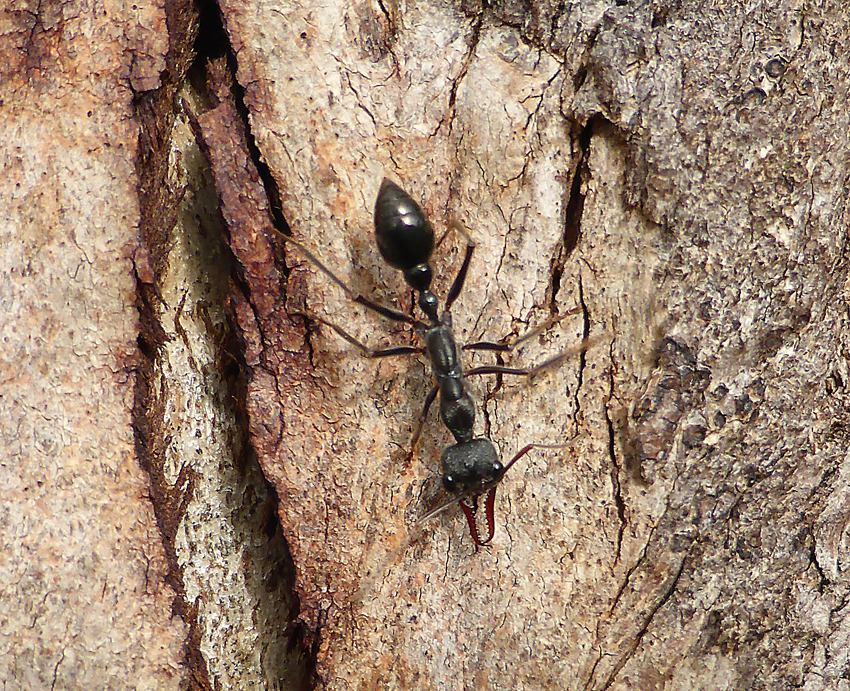
 

Bulldog ant hunting


I am exploring the section of Dry Creek which flows between the intersection of Grand Junction Road and Nelson Road through to Walkley’s Road. It can be accessed behind ‘The Junction’ shopping centre. The creek twist and turns along this part of its length and is bordered by walking and bike trails. There are some deep pools, a ford and a small footbridge which all facilitate wildlife viewing and photography. Throw in a nice bakery at the shopping area and you have the makings of a perfect walk.


Dry Creek


The little footbridge which spans the river is an ideal place to watch for wildlife. It is high on the banks and provides a good vantage point for peering into the treetops. Today it is the surface of the water that catches my attention. The tell-tale V shaped ripples of a water rat swimming across the creek are an unexpected bonus on my walk. I have rarely seen the elusive little rodents in Dry Creek and to know that they are present is quite a treat. Water rats or rakalis are a native species with a broad head, webbed feet and a white tip to the tail. They feed on aquatic insects, yabbies, molluscs, frogs and small fish.


Australian water rat swimming


Further along the path there is a break in the bushes and trees that envelop the sides of the creek and I can get good access to the water’s edge.  A little pied cormorant is sitting on a log directing its gaze into a long pool before continuing to hunt amongst the reeds along the water’s edge. On my walk back I see the same bird with its wings outstretched drying them between forays into the creek to hunt. Cormorants do not have waterproofing oils to protect their plumage like some waterbirds and therefore must continually dry out their feathers.   
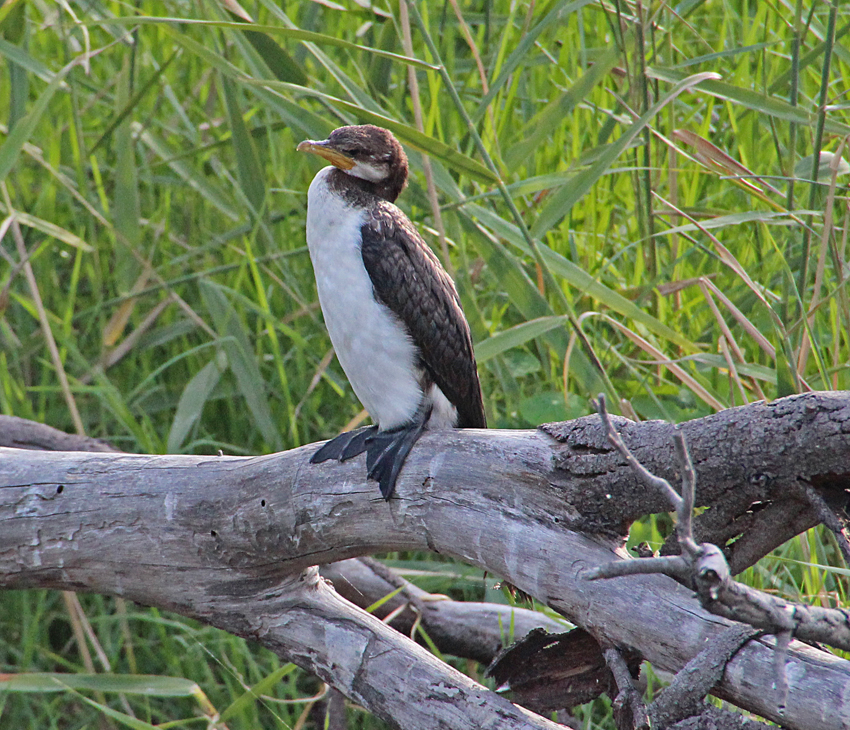


little pied cormorant


Near one of the fords there are some massive river red gums shading the creek bed and I can hear the raucous screech of lorikeets in the highest branches. A quick look through the telephoto lens helps me to identify them as musk lorikeets. These social little birds seem to have found something to feed on in the canopy. There are no blossoms on the trees so I can only assume that it is some form of insect life.


Musk lorikeet


My walk has been most rewarding as I have encountered a wide range of animals from aquatic mammals and predatory insects through to brightly coloured parrots in the treetops. Only the bakery to go and I can mark today down as more than a little successful.


Cheers

Baz


Additional notes

This is an easy walk which is quite suitable for families and seniors with food outlets, parking and other facilities nearby.


 I have recently spent time in Africa and the link below will allow you to enjoy images and text describing some of my encounters with the wonderful wildlife of Botswana and Zambia. I will attach a new image and notes to accompany each post.
https://wildlifemomentssa.blogspot.com

Cape Jervis as a wildlife destination

2 May

Cape Jervis

Dear Reader: 

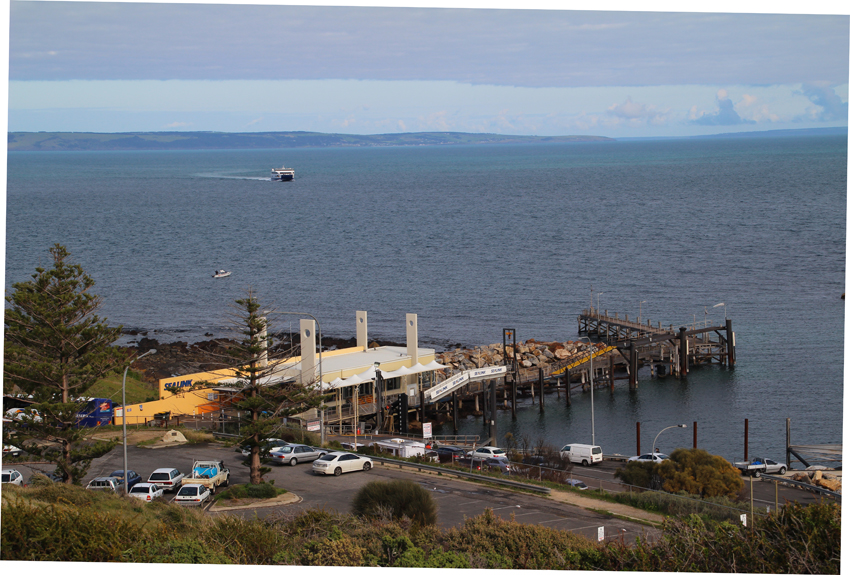
Cape Jervis is a rugged promontory at the southern tip of the Fleurieu Peninsula overlooking Backstair’s Passage. It lies about 110 kms south of Adelaide along South Road. The little township is a fishing community with a lighthouse and the terminal for the Kangaroo Island ferry. The location was named by Matthew Flinders after John Jervis; a seaman who rose to the rank ‘Lord of the Admiralty’.

Ferry landing


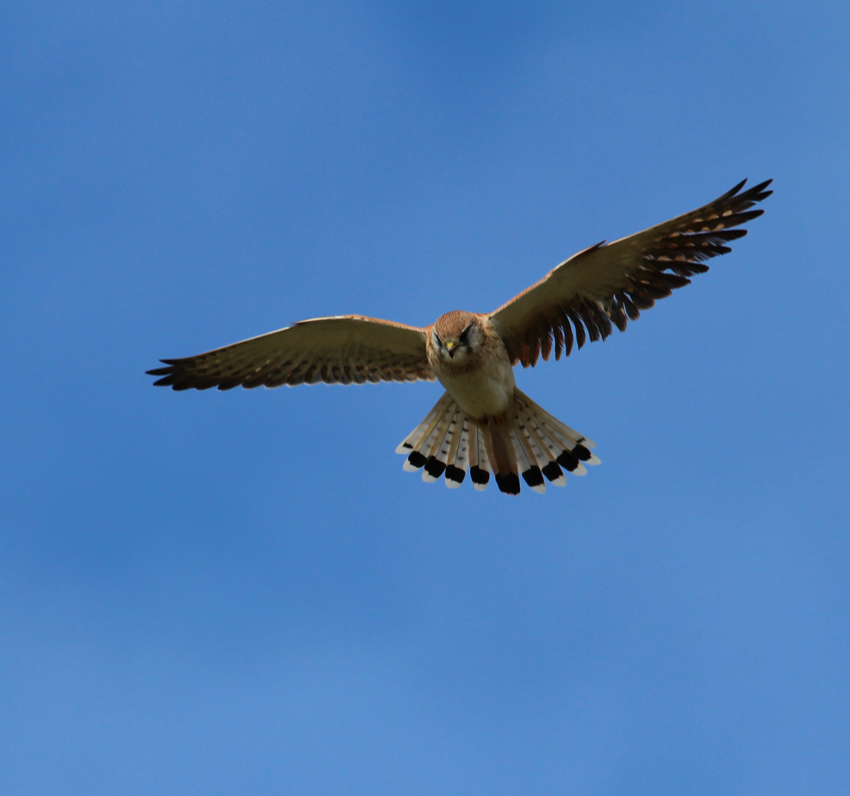
The drive into Cape Jervis passes by open farmland and patches of scrub where there are often kangaroos grazing sometimes alongside sheep. Crows, magpies, rosellas and many smaller bird species including wrens live in the natural vegetation along with a variety of insects and reptiles.  Occasionally wedge tailed eagles are seen circling on thermals searching for prey.

Kestrel hunting


The shoreline is strewn with pebbles and jagged outcrops of rock creating numerous rock pools. This intertidal zone is the habitat of numerous invertebrate species such as; crabs, anemones, sea snails, limpets and shrimps. Wading birds including oystercatchers, plovers and herons feed in this zone as well as gulls. Cormorants can often be seen drying their wings on the rocks.

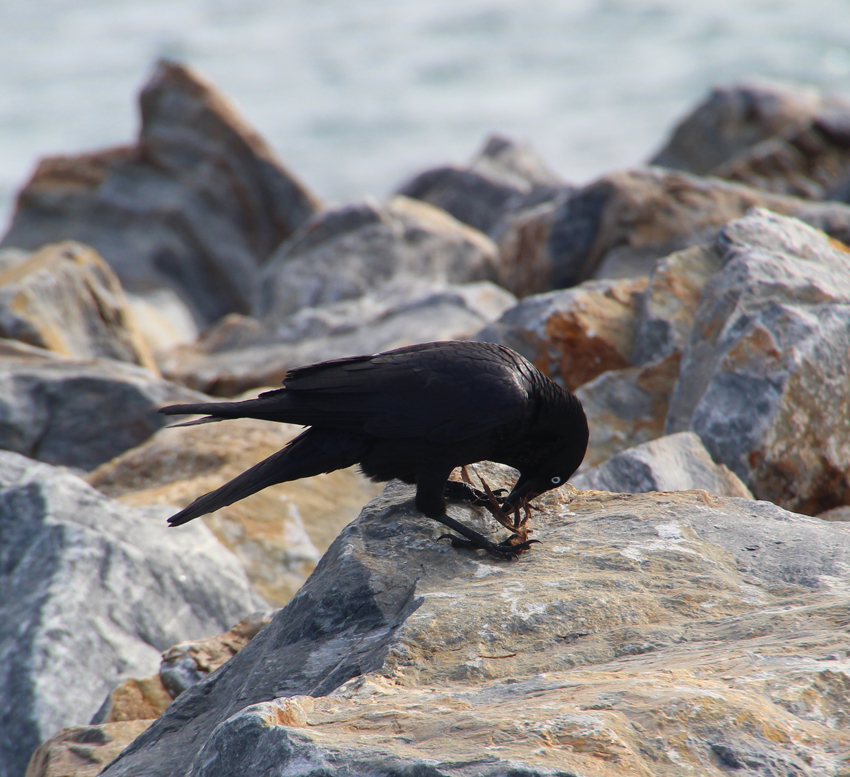
Raven feeding on breakwater


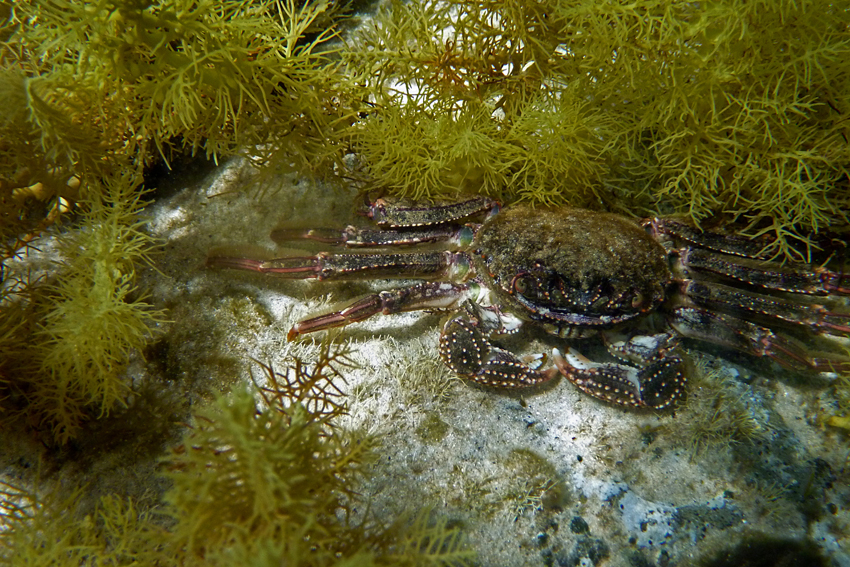
Below the water the rocky shoreline is dominated by brown algae and silver drummer, sea sweep, kelp fish, morwong and parrot fish are just a few of the many fish species that live in the shallow margin close to shore.

Crab in algae


Further notes and comments:

  • Snorkelling along the foreshore requires care as the rocks are sharp and entry to the water can be difficult. There is also a strong rip current running parallel to the shoreline so stay in shallow water.
  • A pathway runs from the lighthouse to the beach front
  • There are snacks for sale and public toilets at the terminal
  • A variety of fish can be caught in this area from the shore and boats
  • There is a public boat ramp
  • Charter fishing excursions can be arranged from Cape Jervis
  • The lookout on the left hand side entering the town provides sweeping views of Backstairs Passage and Kangaroo Island
  • Southern right whales and dolphins are sometimes spotted in Backstairs Passage
  • The Heysen Trail walk that goes all the way to the Flinders ranges begins here

Cheers

Baz


 I have recently spent time in Africa and the link below will allow you to enjoy images and text describing some of my encounters with the wonderful wildlife of Botswana and Zambia. I will attach a new image and notes to accompany each post.
https://wildlifemomentssa.blogspot.com

Myponga to the Beach

2 Apr

Dear Reader:

The drive from the little Fleurieu town of Myponga to the beach some 10 kms away is rather unique. It takes in views of the local reservoir, bushland and sweeping rural scenes before descending towards a picturesque beach characterised by a small creek and the skeletal remains of an old wooden jetty. All the way along this route there is a proliferation of wildlife if you take the time to stop and look around.


Mypnga resevoir

The old jetty and rocky beachfront


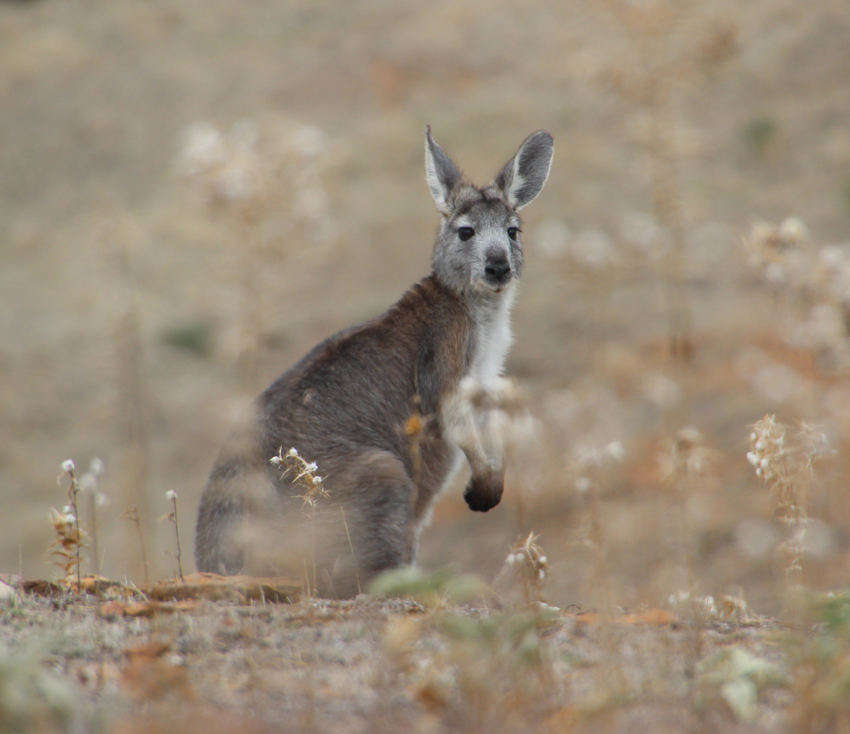
My first wildlife encounter on the drive from the township to the beach was a pair of grey kangaroos feeding along the banks of the reservoir. One animal seemed unperturbed by my presence and cocked its head cheekily as I closed in to capture an image.


Curious roo


Further along the well graded dirt road I noticed numerous parrots in the eucalypts, they appeared to be feeding on gum nuts and blossoms. One pair of crimson rosellas caught my eye. They are wary birds and hard to approach so I tried for a distance shot in the shaded heart of the trees. Their glorious red plumage allowed them to dominate the background making for a rather nice image.


Crimson rosellas


Birds posing against the rugged background seemed to be a recurring theme and an Australian magpie perched on the end of a weather beaten branch provided the next wildlife moment. However, as I stopped the car and stepped out to take my picture I noticed the field behind the bird was dotted with the grey brown shapes of kangaroos. There must have been over twenty of them leisurely grazing on the freshly cut pasture.


The mob


It would have been easy to stop at this point and simply focus on the terrestrial wildlife but my heart was set on doing a little snorkelling when I reached the beach. It was a warm day and the cool water would provide some welcome relief.


Toothbrush leatherjacket

Wrasse species in algal fronds


My decision proved to be worthwhile and without going into too much detail I spent a good hour photographing colourful fish amongst the rocky inshore reef and algal beds. A wonderful finale to my day notwithstanding a much anticipated trip to the Myponga Bakery on the way home for a meat pie and vanilla slice.   

 Cheers

Baz

Additional notes

This is an easy drive which is quite suitable for families and seniors with public toilets, barbecues, food outlets, parking and other facilities at Myponga.

My work is also published in Weekend Notes


  I have recently spent time in Africa and the link below will allow you to enjoy images and text describing some of my encounters with the wonderful wildlife of Botswana and Zambia. I will attach a new image and notes to accompany each post.
https://wildlifemomentssa.blogspot.com

Druminoor Lake’s Birdlife

4 Mar

Druminoor Lake’s Birdlife

Dear Reader:

From the edge of a little bridge that divides the creek from the lake I can see a purple swamp hen using its elongated feet to delicately traverse a clump of reeds. These beautiful water birds also use the reeds as food and to construct their nests along the water’s edge.


Purple swamp hen


Crossing the bridge, I walk along a short gravel pathway to a viewing platform that overlooks Druminoor Lake, a small dammed area of Dry Creek just off Golden Grove Road.  It is an integral part of the Tea Tree Gully water management program. Their goal is to use water that runs into the creek in an environmentally sustainable fashion for the benefit of the local community.


Low water during summer


A centuries old red gum dominates the upstream end of the lake and I can hear birds screeching high in the branches. Using the extreme setting on my long lens I scan the tree tops and to my surprise there are both rainbow lorikeets and sulphur crested cockatoos in the foliage. Both parrot species noisy but together they produce a considerable din.


Sulphur crest real estate


Below a rock wall dam on the downstream perimeter of the lake, Dry Creek meanders through a steep gully overshadowed by more eucalypts. In a gnarled old tree a pair of lorikeets has chosen to nest in a knot hole half way up the trunk. I approach carefully but the birds takes flight and resultant blurred image of feathers in flight is rather satisfying.


A flash of colour


The grey trunks of long dead trees tower above the little lake. They are perfect nesting sites and vantage points for a range of bird life. Cormorants and ibises often perch on the limbs and parrots make use of the holes where branches were once attached. Occasionally a bird of prey will use them as a vantage point to wreak havoc amongst the smaller animals that gather around the lake which is a permanent source of water even in the drier months.


Ibis silhouette


There are several lakes and ponds along the track that stretches from Modbury through to Wynne Vale and all of them harbour quite a varied array of wildlife making this trail through Tea Tree Gully one of my favourite wildlife walks. Take a look and send me a message if you enjoy it. 


Cheers

Baz


Additional notes

This is an easy walk which is quite suitable for families and seniors with concrete pathways along Dry Creek and a viewing platform at the lake.


 I have recently spent time in Africa and the link below will allow you to enjoy images and text describing some of my encounters with the wonderful wildlife of Botswana and Zambia. I will attach a new image and notes to accompany each post. The link does not work well on mobile phones and is best followed through a computer or tablet.

https://silkstone627.wixsite.com/mysite

Pondalowie’s Beachside Birdlife

6 Feb

Pondalowie’s Beachside Birdlife

 Dear Reader:

A lone Pacific gull stands on the beach amongst strands of washed up seaweed. It stares at the ocean for a while watching another gull wheeling and soaring above the waves then nonchalantly wanders along the tidal fringe foraging for invertebrates or whatever the sea has deposited.


Pacific gull


The long white sands of Pondalowie Bay are home to many species of birds and a fertile food source for many others. A leisurely four hour drive from Adelaide to this picturesque Bay on the western extremity of the Innes National Park is a favourite haunt of naturalists, fishers, divers and holiday makers. In fact; any traveller who enjoy that hint of wildness in their getaways will find this a wonderful destination.


Classic peninsula coastal landscape


Further along the beach several species of tiny waders including dotterels, plovers and sand pipers scurry along the retreating waterline searching for tiny invertebrates such as worms, crustaceans and molluscs. Their little legs seem to rotate as they forage giving them the appearance of wind up clockwork toys.


Double banded plover-non breeding plumage


Swallows normally live further inland amongst the scrub and trees. However, the proliferation of insects infesting the beds of weed that are strewn along the high tide line has attracted quite a large number of these colourful little aerial hunters. Some are perched on driftwood as they rest between their forays above the weed while others perch in bushes close to the beach.

Swallow


In all honesty, my favourite beach dwellers are the oystercatchers. There are two species on the beach pied and sooty and it is a pair of sooties that I spend a few minutes focussing on. They use their long chisel shaped beaks to probe the sand or scrape molluscs off rocks and prise them apart. The bird closest to me has snagged a turban shell and is proceeding to split it open and consume the unfortunate critter within.


Sooty oystercatcher


From Pondalowie it is a good half hour drive back to Marion Bay where we are staying in a cliff-side holiday home and dinner at the local pub that serves the best pizzas and seafood I have eaten in a long time.    


Cheers

Baz


Additional notes

This is an easy drive which is quite suitable for families and seniors with public toilets, barbecues, parking and other facilities at Marion Bay and Pondalowie. The trails leading from the main park road down to beaches and into the scrub are more arduous.


 I have recently spent time in Africa and the link below will allow you to enjoy images and text describing some of my encounters with the wonderful wildlife of Botswana and Zambia. I will attach a new image and notes to accompany each post. The link does not work well on mobile phones and is best followed through a computer or tablet.

https://silkstone627.wixsite.com/mysite

Brownhill Creek’s Koalas and Bird Life

22 Jan

Dear Reader:

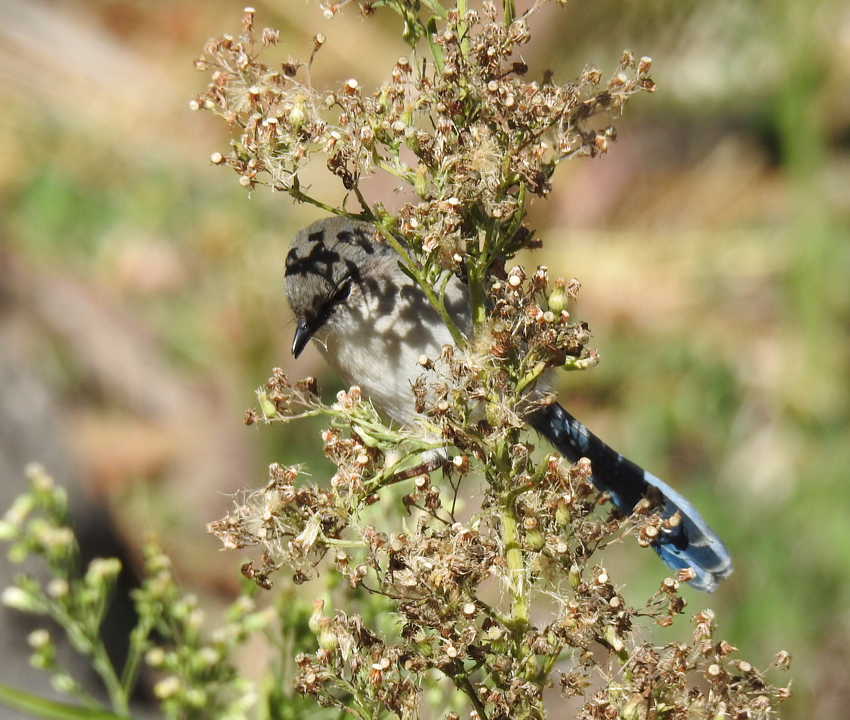
The scrub is quite thick along the river bank and I can hear the movements of small animals against the background sigh of the wind through the towering eucalypts. Lizards, perhaps small mammals but more likely wrens, finches and other little birds are foraging in the undergrowth. Finally, a diminutive female blue wren emerges from the cover to search for seeds in a clearing. The opportunity to take a quick shot is momentary.


Female blue wren

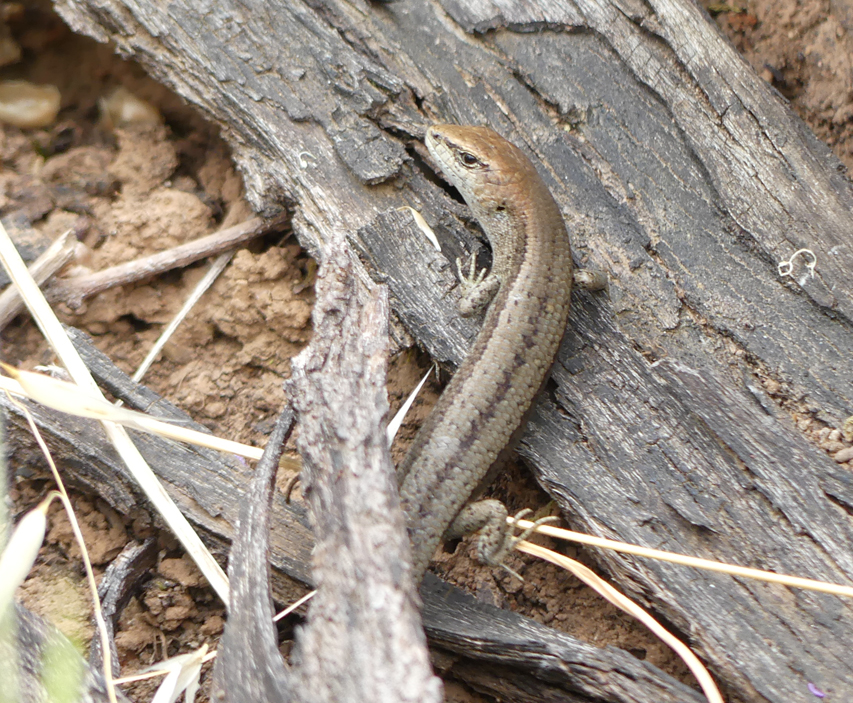
Common garden skink


Brownhill Creek is one of several waterways that drain the south eastern aspect of the Mount Lofty Ranges. It has shallow pools that retain water in the hotter months and flows freely in the cooler ones. There is thick undergrowth along the creek bed that ranges into open scrubland on the surrounding hillsides. A paved road follows the creek eastward with numerous sidings that enable access to the water along narrow dirt tracks.


koala


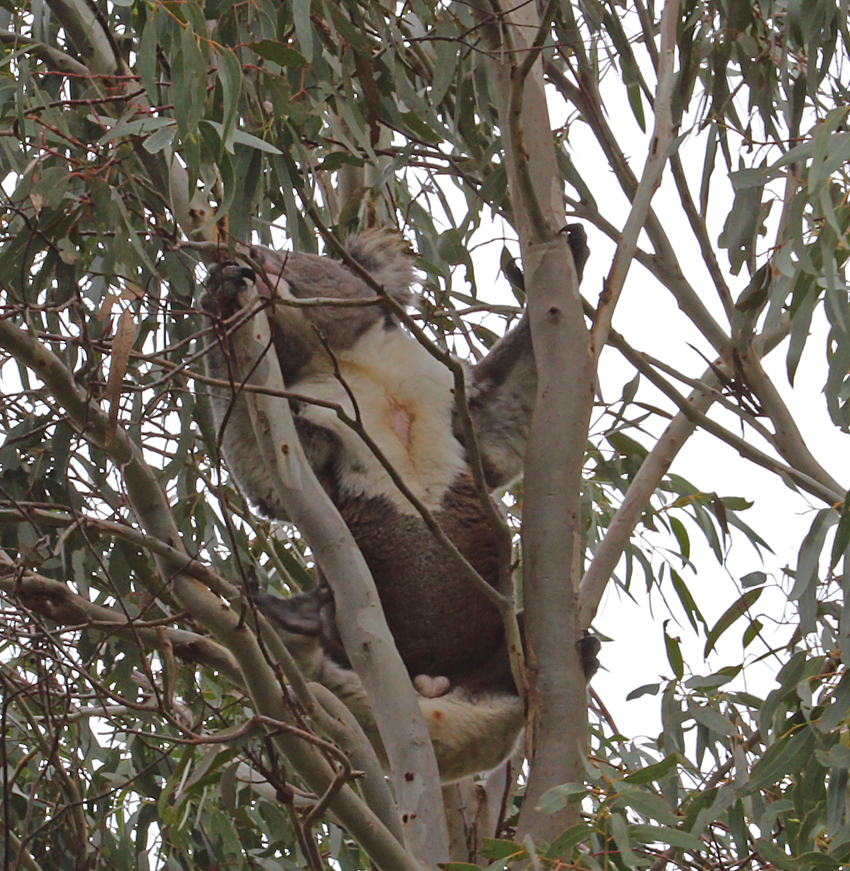
I stop in one of the lay-bys where there is a significant clearing surrounded by several eucalypts. Using the long lens I scan the forks in the canopy for koalas. The bear-like marsupials eat a range of gum leaves and these trees look to be one of the preferred species. Luck is with me as I spot a large male using its double-thumbed prehensile grip to move along a branch.

Silvereye


Adelaide rosella

Ravens


Further along the road a small bridge crosses the creek and there is a large stand of eucalyptus and evergreen trees spreading both limbs and branches across the creek. A wide variety of birds are feeding on blossoms, fruit and insects. I manage to photograph silver-eyes, Adelaide rosellas and a pair of raucous ravens.

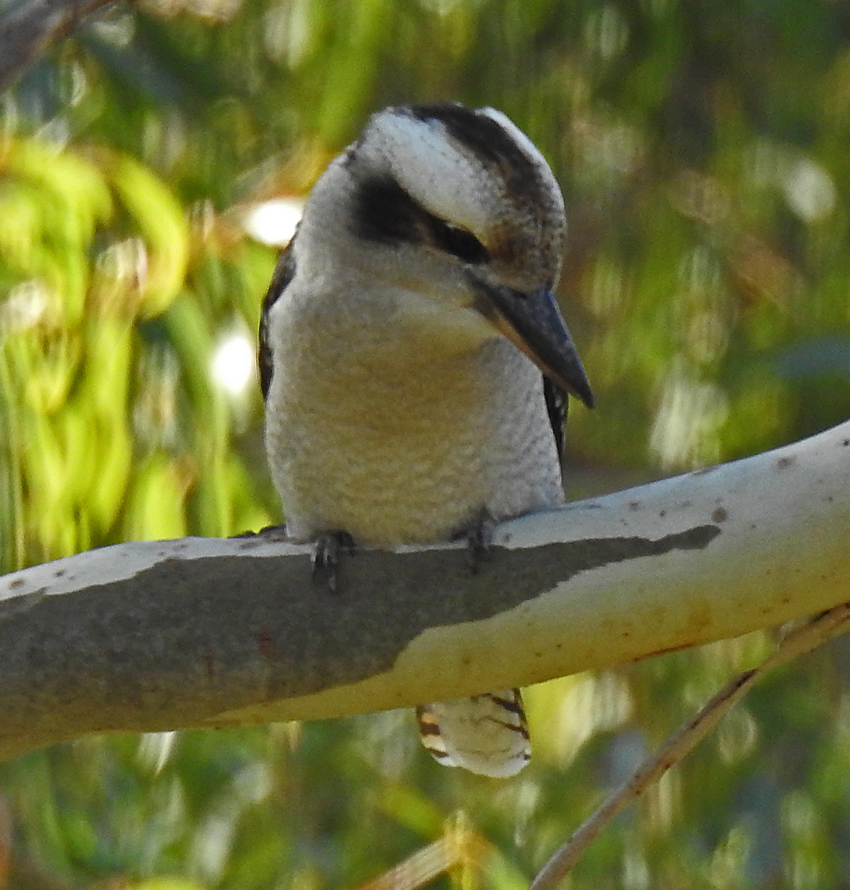
Laughing kookaburra


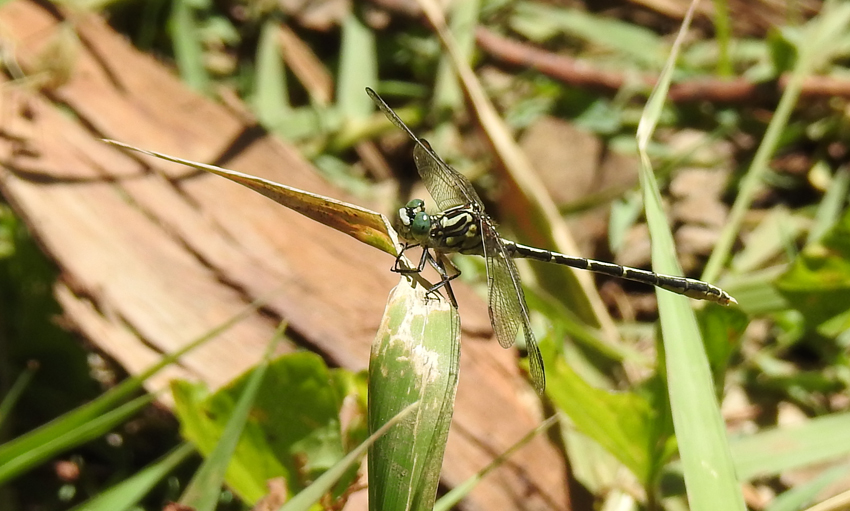
Dragonfly species


My drive along Brownhill creek has been quite exceptional and I decide to make one last foray down to the creek near the caravan park.  I can hear a kookaburra calling and some flowering plants along the creek seem to be attracting both butterflies and dragonflies. With a little luck I might just capture a few more images to complete my creek-side safari.


Cheers

Baz


Additional notes

This is an easy drive but the tracks along the creek are more difficult.

 I have recently spent time in Africa and the link below will allow you to enjoy images and text describing some of my encounters with the wonderful wildlife of Botswana and Zambia. I will attach a new image and notes to accompany each post. The link does not work well on mobile phones and is best followed through a computer or tablet.

https://silkstone627.wixsite.com/mysite

Bridle Track Wildlife

6 Nov

Dear Reader:

A grey kangaroo pricks up its ears and turns to face us. Half hidden in the grass and further camouflaged by its subtle colouring, the wary marsupial stares for a few more seconds before bounding away towards the shelter of a nearby stand of stunted gum trees.


I put the camera back on the passenger seat, raise the window and continue up the rugged track towards the top of the ridge. The vehicle ahead of me has already reached a farm gate and my companions have opened it in readiness. There are a few sheep in the area grazing on the steep hillsides and we have to be careful to maintain good relationships with the farmers who kindly allow the public to traverse their land.


I am driving along the Bridle 4WD track in the foothills of the Southern Flinders Ranges between Port Pirie and Melrose. This is red earth country with deep ravines, open expanses of pasture and small patches of scrub clinging to the windswept hills. Sporadic rocky outcrops dot the landscape and it is here that one can search for different species such as reptiles and a range of invertebrates.


We stop alongside one such outcrop near the top of the ridge and enjoy a wonderful view across hills and bushland to the Spencer Gulf in the hazy distance. I bend down and dislodge a couple of flat rocks and a small skink darts out and freezes in the long grass. Carefully replacing its rocky home I leave the little reptile to its own devices after snapping a quick shot.


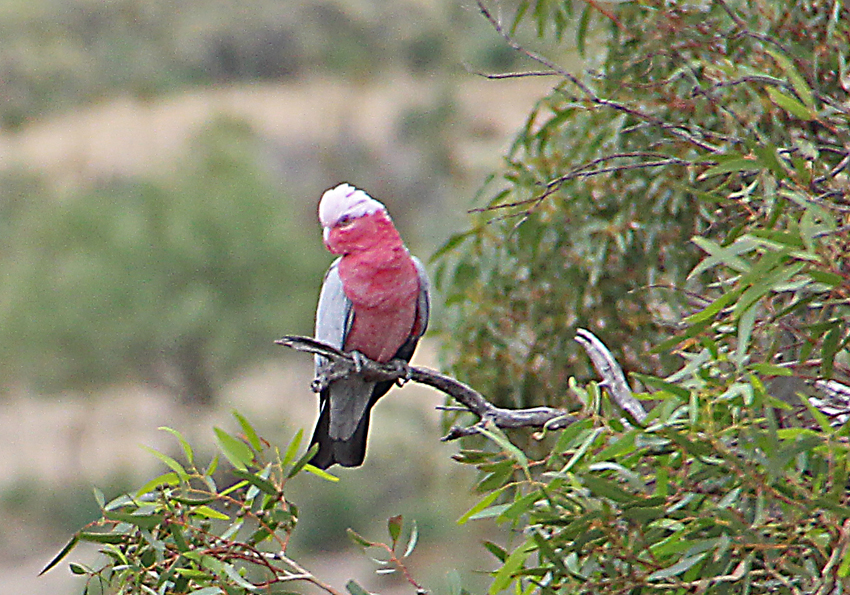
The descent towards the coast is quite steep and we need to put the vehicles in low range. We stop occasionally to take a closer look at some of the eucalypts that grow in isolated patches providing nesting sites for some of the many parrot species that populate this part of the state. Ring neck parrots, galahs and rosellas are just a few of the species we encounter.


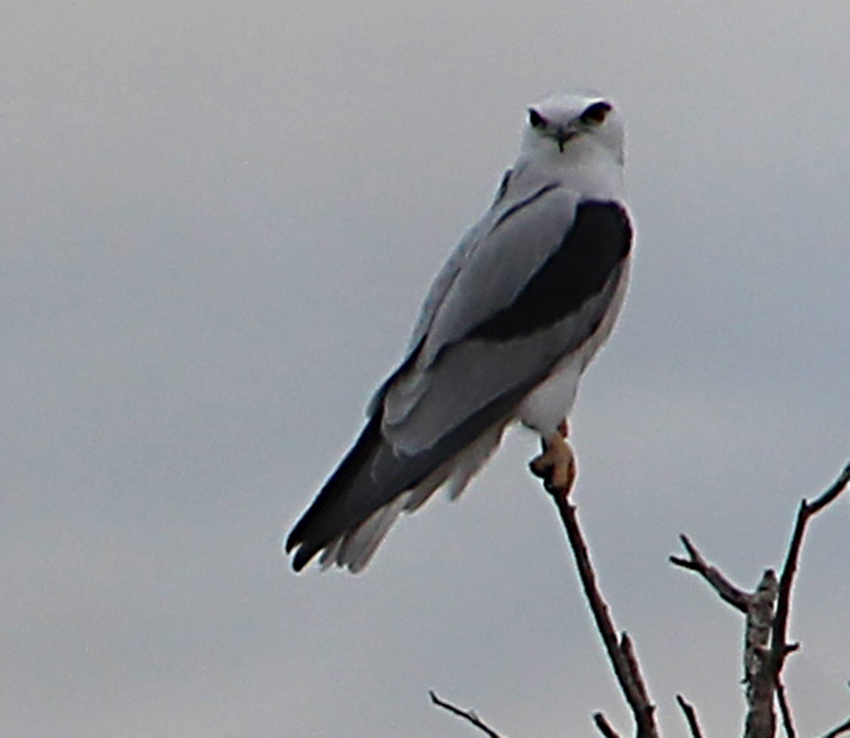
Back on the plains we leave the main trail and take a well graded dirt road back to the highway. A beautifully marked black shouldered kite watches us from a skeletal branch where it is perched to surveying the landscape for prey.


Our final farewell to this bleak but beautiful part of South Australia is the forlorn whistle of a freight train as it clatters over a crossing on the endless tracks that cover the thousands of kilometres between the west and east coasts of Australia.    


Cheers

Baz

Jupiter’s Wildlife

2 Oct

Dear Reader:

Before I have even climbed out of the car I notice a flight of cockatoos gliding low towards the grassy oval where they settle to feed on tubers and roots. Then from the trail head I spot a pair of tawny frogmouths high in one of the stringy barks that dominate the area. These fascinating owl-like birds are nocturnal and use the fine whiskery feathers to locate prey in the dark. Their camouflage is superb making them appear to be an extension of the branches they cling to during the daylight hours.


Tawny frogmouth


I am exploring the trails around the heritage listed Jupiter Creek Gold Diggings. They are located in the Kuitpo Forest area and were mined intermittently between the 1860s and 1930s. The diggings are now a heritage site and a great place to go for an historic and wildlife wander.


Bush trail near the car park


Today the weather is a little on the bleak side; not characteristic of South Australia’s habitually warm spring season. But the light adds softness to the bushland setting while providing many photographic challenges as I try trying to capture acceptable images of the constantly moving wildlife.


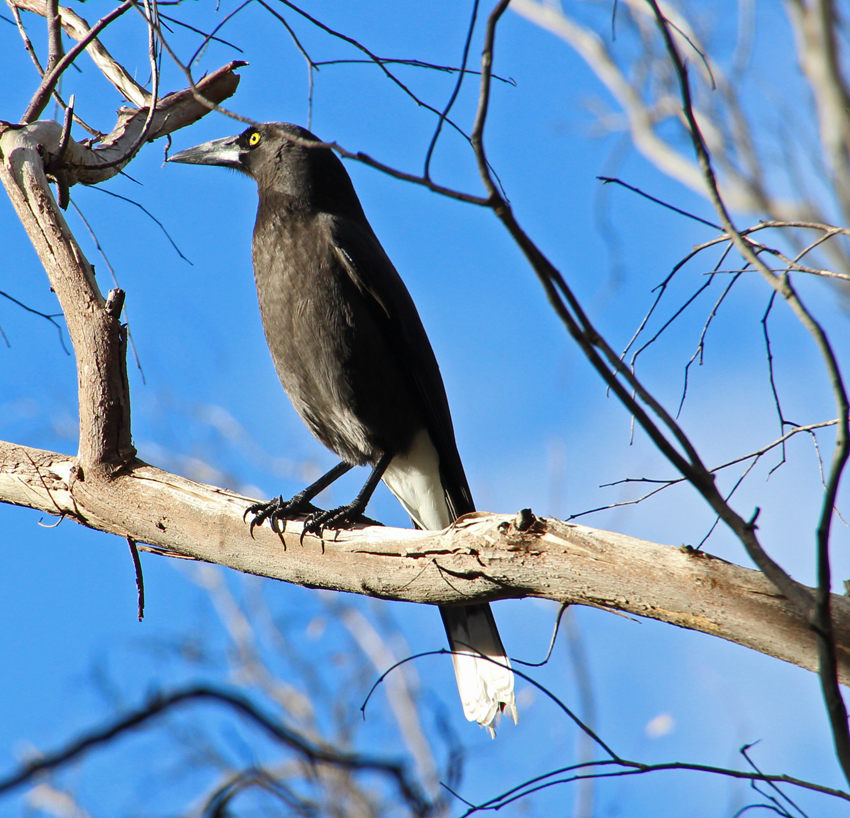
Grey currawong


A little further along one of the trails that leads to the diggings I hear the bell-like chimes of a grey currawong. Eventually the bird flies between some trees and I am able to get a clear shot as it perches high in the branches framed by a rare patch of blue sky.


Female scarlet robin


There are many small birds flitting between the branches and amongst the wattle and pea bushes that form the mid story. I catch glimpses of fairy wrens, tree creepers and even a crescent honeyeater. Eventually a female scarlet robin lands on the trunk of a large eucalypt and begins to forage between the layers of bark for grubs, spiders and insects. In the low light I have to steady the camera against a branch to make the shot.


Leaf curling spider web


Leaf curling spider emerging

Although only the first vestiges of Spring have graced the state a few insects and spiders are emerging from their winter dormancy. Numerous webs are strung between the lower branches of bushes and trees. Curled leaves are suspended in many of the webs in what, at first, seems a random fashion. However, closer examination shows this web and leaf combination is home to leaf-curling spiders that use silk to draw in the sides of the elongated eucalypt leaves to form a tubular shelter.


Common brown butterfly camouflaged


A few species of flowering plants are beginning to bloom in the leaf litter and under story and the contrast between them and a well camouflaged common brown butterfly provides a striking image.


Gums in low light


Today I have only wandered a little way along the trail that leads to the old diggings but I am determined to return later in spring to investigate more of this fascinating area. For now I shall climb back into the car and head for ‘Fred’, a charming little restaurant in Aldgate a just a few kilometres down the road and the home of some of Adelaide’s best lunch time treats. I’ll try the croque monsieur….then go for another walk in the wild to work off the calories!!!!


 Cheers Baz


Additional notes

There are some challenging areas when walking the trails around the mine site. A signposted area near the oval with basic shelters provides maps and diagrams of the area.


 I have recently spent time in Africa and the link below will allow you to enjoy images and text describing some of my encounters with the wonderful wildlife of Botswana and Zambia. I will attach a new image and notes to accompany each post. 

The link does not work well on mobile phones and is best followed through a computer.

https://silkstone627.wixsite.com/mysite

Cudlee Creek’s Winter Wildlife

1 Sep

Dear Reader:

It is early morning and the sky is still a little grey as it sheds the last of the morning mist. A steep path winds down to the riverside and it too is slippery from the moisture in the air. Small birds are flitting between the trees, moving too fast to recognise but an occasional call suggests they are honeyeaters and wrens. Eventually the ground levels off and I am able to walk comfortably amongst a stand of gums that border the water. To my surprise I find a large koala in the one of the smaller saplings doing its best to reach the tender leaves at the top of the tree.


Koala feeding


The road from the Cudlee Creek Bridge past the Kangaroo Creek Dam and back to Adelaide winds along the banks of the Torrens for the first few kilometres. There are a few narrow lay-bys where you can access the water and the enveloping scrub. Steep hillsides and sandstone cliffs make this an attractive but arduous place to search for wildlife but one worth the effort as a variety of birds, grey kangaroos, water rats and turtles; to mention but a few species; make the Torrens Gorge home.


River, cliff and road


Closer to the Bridge and Cudlee Creek store I park along a track and make my way down to the long pool at the foot of a hillside. A pair of rosellas is chattering in the trees above me and an expectant kookaburra is waiting above the water on an overhanging branch. But it is the little fairy wrens that intrigue me. One bird sits cautiously on a large rock near some straggly plants that have gone to seed. It seems aware of me but the lure of a nutritious lunch seems to outweigh caution. I watch it feed for a few minutes before the lorikeets issue a warning call and it flits back into the undergrowth.


Blue wren near water


Blue wren feeding


My final stop is the little store ‘come restaurant and gas station’ for a bite to eat but not before I walk across the adjacent bridge to see if I can spot some birds or even a possum in the foliage of several eucalypts that reach up from the river. Though it is winter and insects are a rarity it is a beautiful monarch butterfly that provides my parting shot and a reminder to return in the warmer weather.

Historic Cudlee Creek Bridge


Monarch on eucalyptus leaves

Cheers

Baz

Additional notes

Exploring the riverbank can be quite difficult but driving and simply stopping at the lay-bys between Cudlee Creek and Kangaroo Creek dam is a pleasant drive.

 I have recently spent time in Africa and the link below will allow you to enjoy images and short texts describing some of my encounters with the wonderful wildlife of Botswana and Zambia. I will add a new image and caption to accompany each post.

https://silkstone627.wixsite.com/mysite

Veale Garden’s Bird Life

3 Jul

Veale Garden’s Bird Life

 Dear Reader;

There is a posse of bandits in the trees around me. Noisy miners with their black masked faces and highly social behaviour resemble just that, especially when they are defending their territory. Today it is a magpie that is on the receiving end of their aggressive chattering and aerial sorties. Despite its size, the magpie soon leaves the area and the miners return to their foraging and socialising in the trees.

Noisy Miner glaring at magpie


Australian magpie


I am in Veale Gardens, a lovely green space that borders South Terrace on the very fringe of Adelaide’s CBD. I have been attending a convention in the Adelaide Pavilion which caters for a range of functions from weddings to corporate events. After a superb lunch I am taking advantage of these charming gardens to enjoy some urban wildlife. Lawns, trees, flower beds, tall trees and a little brook that runs through the area make it ideal for a little environmental decompression on the edge of the city.

Veale Gardens Creek

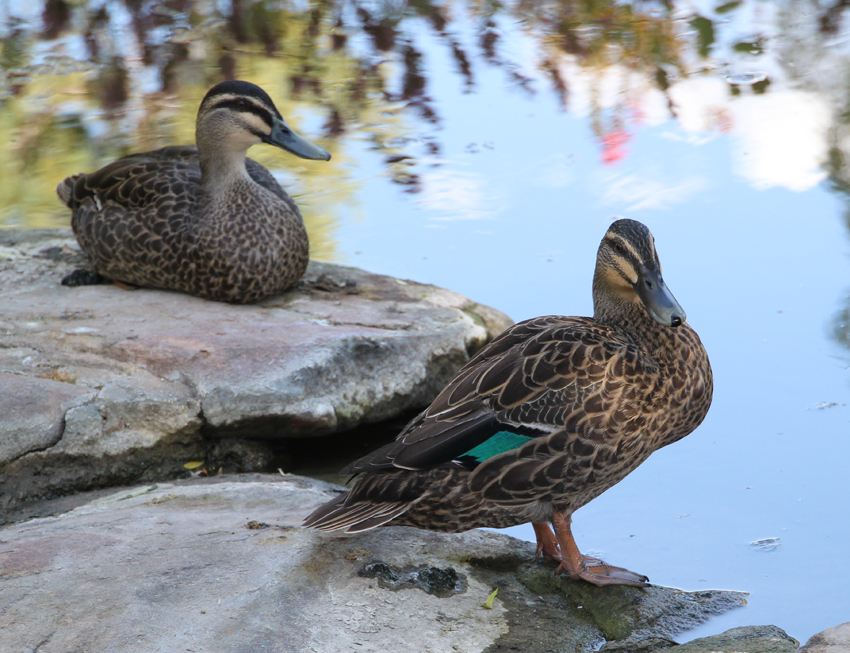
In one shaded area of the creek there is a small pool that is attracting several different species of water birds. A male and female Pacific black duck are resting on the rocks at the edge of the water.  Nearby a little pied cormorant is perched a little further along the rock wall near a small waterfall. The predatory bird is watching the water intently for prey such as small fish, yabbies and frogs which it will chase underwater using its wings like flippers.

Pacific black ducks


Little pied cormorant


There are many other bird species around the gardens especially in the tall eucalypts that run along South Terrace. My favourites are the corellas which congregate in the trees and on the well tended lawns probing for bulbs and tubers in the grass. Their raucous calls can be heard as extensive flocks fly over the city to their roosting sites in the late afternoon.

Corella


It has been a rewarding lunchtime stroll around the gardens but the convention beckons and it is time to put away the camera and listen to another speaker extolling the benefits of the city’s parklands to the general health and well being of the public…..quite ironic really.

 Cheers

Baz

Additional notes

This is an easy walk which is quite suitable for families and seniors with public toilets, barbecues, parking and other facilities nearby.