Archive | Coastal RSS feed for this section

Rapid Bay’s Misty Morning Predators

5 Jul

Dear Reader:

The road drops sharply from a cloud enveloped ridge top to the beach then emerges from the mist alongside a small creek. The sky is clearer close to the ocean and I can see the familiar outline of the steep cliffs and the twin jetties that jut out into the gulf. It is a chilly winter’s morning and my hands are cold as I organise my back pack and cameras ready for a stroll along the seafront.
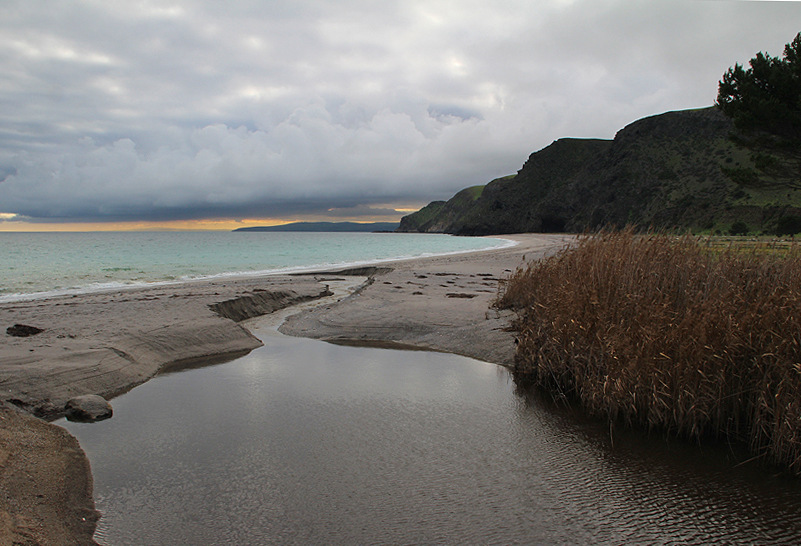
IMG_3732

The creek at Rapid Bay (click to enlarge)

Two large birds are flying slowly along the beach front; in the early morning light they seem to resemble pacific gulls, a fairly common species along this part of the coast. I track the seabirds with my long lens and fire off a series of shots and quickly review them. Although the light mist obscured the birds’ features to the naked eye the captured images reveal a pleasant surprise. The wing feathers, tail shape and characteristically curved beak indicate a far more interesting and less common bird….the white breasted sea eagle. A little further down the coast I can see the eagles rise up on a thermal alongside the cliffs as they soar in tight spirals before resuming their beach patrol.

IMG_3771 edit1

White breasted sea eagle (click to enlarge)

The beach with its high cliffs, creek and mining jetty define one of the Fleurieu Peninsula’s most interesting and historic locations; Rapid Bay.  It was here that Adelaide’s original surveyor Colonel Light anchored his brig ‘The Rapid’ in the sheltered bay uttering the words “I have hardly seen a place I like better”.  Only 100 kms south of Adelaide, Rapid Bay is a prime location for divers and anglers. It is also  holds a significant place in the lore of several local Aboriginal peoples; a feature of the area that I will explore in more depth at a later date.
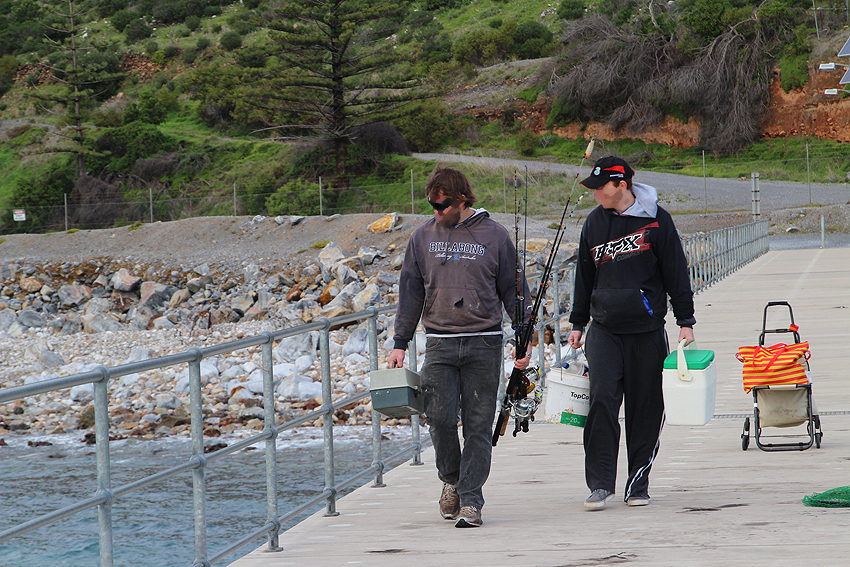
IMG_3761

Anglers on the jetty (click to enlarge)
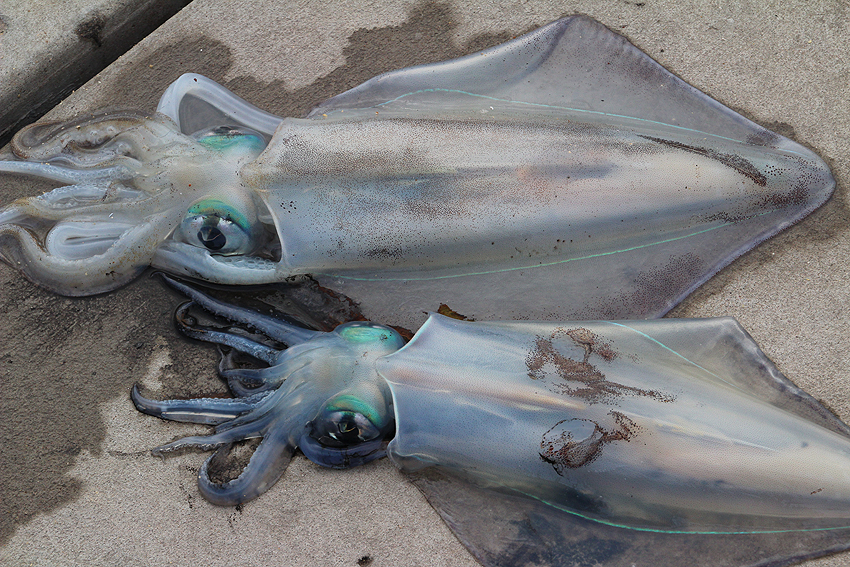
IMG_3755

Southern calamari (click to enlarge)

From the beach front I walk along a short dirt road to the jetty. A couple of fishers tell me that a sea lion has been hunting in the shallows between the new and old jetty. After a few minutes a sleek grey shape twists and turns in the water only a dozen metres away and a whiskery face pops up, surveys the surface and is gone as suddenly as it appeared. The anglers tell me that they have tossed a couple of squid to it and that the sealion has been around the jetties for the last couple of days.
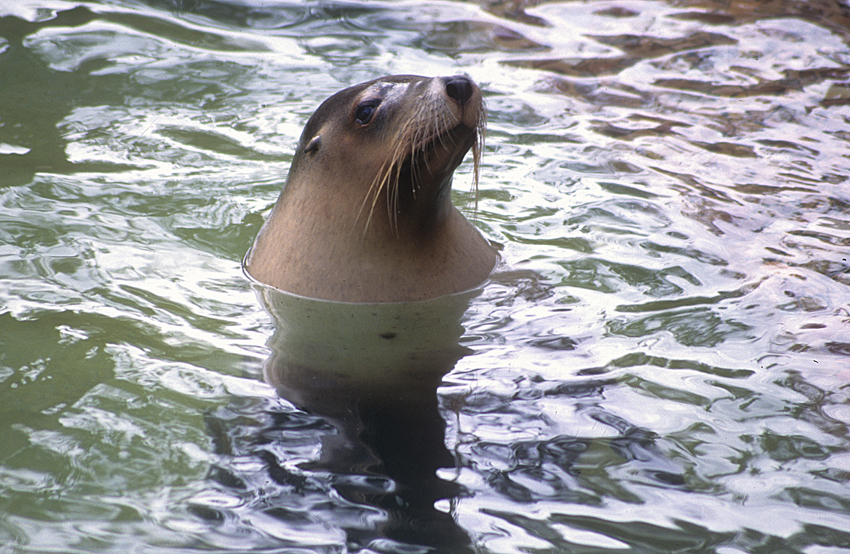
sealion 1

Australian sealion (click to enlarge)

I watch the men jigging for squid for a few more minutes before returning to the car which is parked near the creek. As I pack up my gear I can hear the sound of finches in the bushes and reeds but it is difficult to focus on the tiny birds especially in these low light conditions. While I am concentrating on the tiny birds a large raven appears on the nearby embankment with a piece of squid in its beak and proceeds to tear the rubbery flesh apart while keeping a wary eye on me and croaking out a few warning calls to any other would be scavengers that might fancy a calamari entree.

IMG_3741

Little raven (click to enlarge)

Eagles, sealions, squid and even a dolphin that cruises past as I leave the jetty; it has been a morning of predators and scavengers both aquatic and aerial. And now it is my turn to grab a bite to eat. Leonard’s Mill, a renovated flour mill, is one of my favourite dining spots and on the main highway to town a mere 15 kms from the Rapid Bay turn off. Their calamari is on the menu as salt and pepper squid and best enjoyed with a fine white wine from the local vineyards.

Cheers

Baz

Port Willunga’s Natural Charms

24 May

There is a pair of pigeons nesting along the limestone cliffs. They are billing and cooing and puffing up their feathers if rival birds come anywhere near their territory. Unbeknown to the loving pair a far greater menace, in the form of kestrel, is circling high above, scanning the cliff face for a tasty pigeon treat. Luckily for the nesting pair, the hunter overlooks them or perhaps the angle of attack is too steep and the cliffs too perilous.

Lucky pigeons

Lucky pigeons……click to enlarge


I am walking along Port Willunga beach just 40 minutes from Adelaide; a glorious little stretch of white sand that lies below ochre limestone cliffs and bounded by the Aldinga reef to the south and Gull Rock to the north. The reef is a marine sanctuary that showcases a wide variety of the state’s diverse aquatic life. And the beach is a rich repository of the South Australia’s pastoral history where the sea scoured remnants of an old wheat jetty, built in 1853, protrudes from the shallow water. Despite its idyllic setting, Port Willunga also harbours a darker history with no less than five ships being wrecked in the vicinity. The most famous of these was the Star of Greece whose skeleton can still be explored just 500m offshore.

The view from the beach

The view from the beach…..click to enlarge


Leaving the fortuitous pigeons to their parental duties I kick off my shoes and walk through the water amongst the old jetty piles. The wood is bleached white and worn by wind, sand and rain. Tenacious little limpets cling to the timber and a shore crab scuttles past my feet. Looking back across the beach I can see the rough hewn caves that were dug into the cliffs to house fishing dingies and give shelter to the hardy men who made a living from these waters.

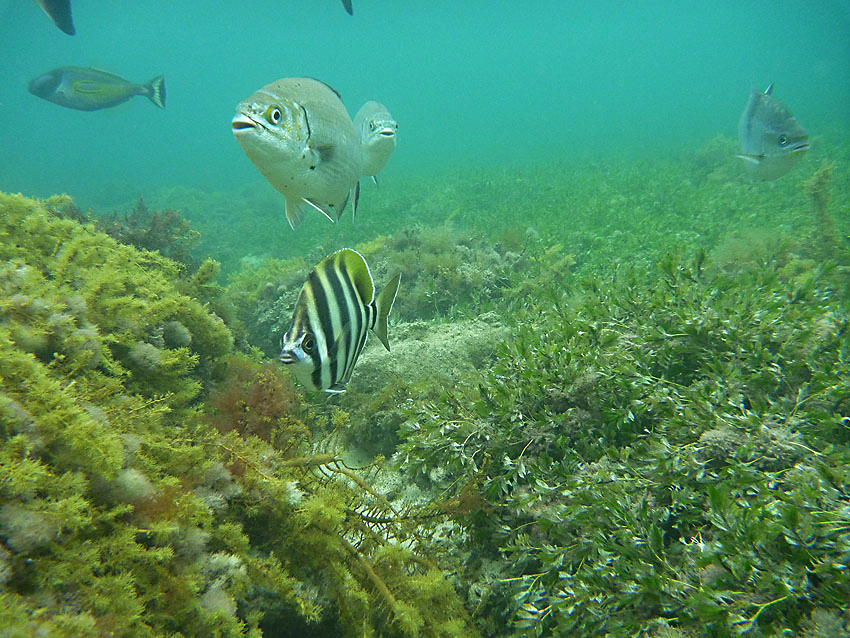
Drummer, leatherjackets, sweep and a moonlighter on the edge of the reef....click to enlarge

Drummer, leatherjackets, sweep and a moonlighter on the edge of the reef….click to enlarge


Warm clear water, a fine day and good light….thinks….twenty minutes later I am snorkeling along the edge of the reef. The water is fairly shallow and the marine life prolific. A school of zebra fish swims close to me and large dusky morwong and magpie perch feed along the undercut shelves that define the reef’s edge. At the end of one rocky outcrop a number of different species are congregating where the reef and the adjacent seagrass meadow intersect. I dive to the bottom and hold onto the rocks to steady myself and fire off a couple of shots. Later when I review the images they seem to reflect both the environment and the moment. An hour in the water and I’m getting a little chilly and its time to go back, this time I walk across the shallow rocky platform exploring the many tidal pools.

A casual lunch outside or fine dining inside....click to enlarge

A casual lunch outside or fine dining inside….click to enlarge


The change rooms at the end of the car park make getting out of the wet suit easy and the short walk up the slope to the restaurant, named after the hapless Star of Greece, gives me a good view north and south along the coast. Often I have caught sight of a pod of dolphins cruising the calm gulf waters but not today; just a few fishers and an optimistic body surfer are enjoying the water. However, after a strenuous swim and a walk along the beach my priorities have changed from natural history to lunch and the boutique restaurant, once a fish and chip shop that I frequented as a lad, beckons. Fresh seafood, quality local produce and wines; a typically South Aussie way to finish my day.


Cheers

Baz

Reef and Cliff

25 Mar

The crumbling cliffs drop steeply to a narrow beach where a tangle of dried out seaweed marks the extent of the last high tide. From the beach, a flat limestone platform gently slopes into the ocean. The once smooth surface is scarred with shallow pools, sand patches and bubble weed. A line of white foam marks the outer fringe of the shelf where a sudden increase in depth creates a series of smaller reefs and ledges. These features provide a range of diverse habitats for an assortment of marine life.

3 cliff beach and reef

The view from the cliff top


The first animal that I meet, on my swim across the shallows, is a fiddler ray which has come in from the seagrass meadows beyond the edge of the reef. It is hunting on the limestone platform; using its keen senses to locate molluscs that are buried in the sandy patches. Like all rays, its mouth is located on the underside of the body and its back is camouflaged to confuse predators that might attack from above. I follow the ray for a few minutes approaching quite close as it lies near a patch of bubble weed. Unlike stingrays, fiddlers do not have a barbed spine on the tail for defence and seem to be quite placid animals.

2 fiddler ray red

Fiddler ray near bubble weed


The ray follows a series of narrow cracks in the rocky surface where shore crabs often leave the shelter of their burrows to hunt on the incoming tide. The narrow crevices are also home to hoards of tiny anemones that extend their stinging tentacles to trap the tiny organisms that live in the water.

4 Pale anemones amongst seaweed

Anemones in a rock ledge surrounded by seaweed that keeps them wet on the receding tide


The limestone reef and high cliffs with their spectacular coastal views are the main attractions of the coastal community of Aldinga. The town is a comfortable 50 minutes drive from Adelaide along the main South Road. A traditional Aussie pub and bakery close to the access road from the highway provide great local meals and there are numerous houses for hire along the coastal strip that overlooks the gulf. Several parking bays on top of the cliffs with steps that lead down to the beach and reef make accessing this location very easy. The area is also a marine park and various signs explain the exact nature of restrictions for divers and fishers.


rock crab  aldinga 2

Shore crab that has emerged from its shelter to feed


After following the ray for a while I swim to the seaward edge of the reef and start exploring its perimeter. The limestone is honeycombed with undercut ledges, caves and crevices. Almost immediately I encounter a large strongfish or dusky morwong; a common species that lives in the seagrass meadows. The fish is well over a metre long and appears to be resting before heading into deeper water to feed.

1 strongfish in cavern red

Strongfish or dusky morwong sheltering under a rocky ledge on the edge of the reef


I have been in the water for over an hour and have photographed a wide variety of marine life apart from the species mentioned. Now it is my turn to follow their example and ‘grab a bite to eat’ back at the pub before driving home confident that there is still much to see on subsequent visits to this spectacular local ecosystem.

Cheers

Baz

Port Germein ….A Long Walk Out to Sea…Field Notes

8 Mar

General description of location

Port Germein is a  small country town just north of Port Pirie which is  a major regional centre about 2½ hours from Adelaide

Lies near the top of Spencer Gulf and is in the shadow of the Southern Flinders Ranges.

Town has a pub with excellent food, a general store and campground

Small local population of around 250

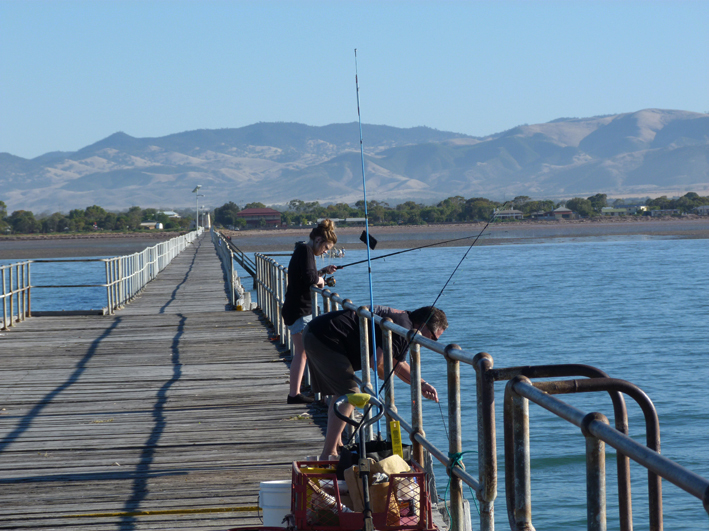
A long jetty, once used to load grain clippers, it extends from the shore to over a mile out to sea and most of the beach is exposed at low tide

Good fishing, crabbing and general coastal wildlife walks

6 jetty and ranges red

View back to the ranges from the end of the jetty

Notes

Season:

Late summer

Weather:

Mild morning temperature around 18 ºC at 0900.

Forecast temperature 35°C later in the day

No wind and clear skies

5 blue bee red

Blue bee on coastal heath

While walking from the house where I am staying to the jetty I spot some blue bees, an Australian native species, feeding on a coastal bushes with small blue flowers

They tend to feed on blue and white blossoms

Note to self

Identify some of the coastal vegetation before next PT Germein post

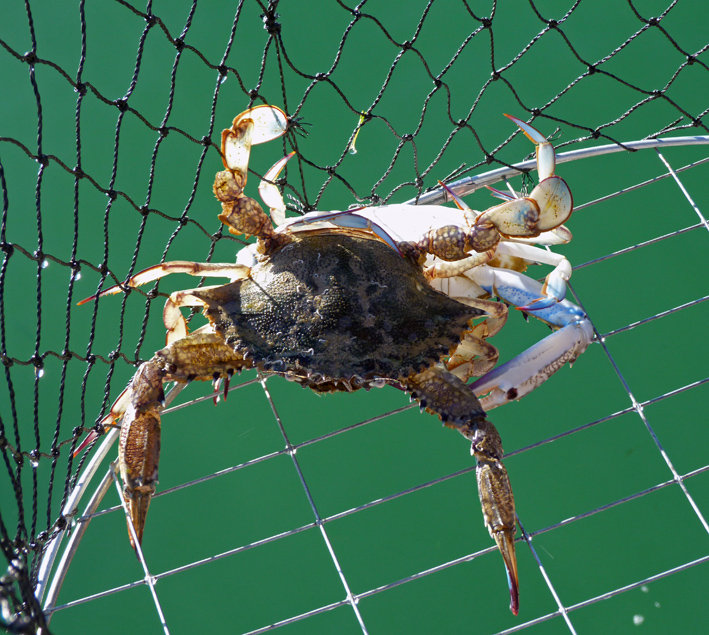
3 blue swimmer crab red

Blue Swimmer crab in net

I stroll along the jetty and notice a variety of small wading birds feeding on the sand/mud flats, some are searching out small pools of residual water

A young couple near the end of the jetty are crabbing and they have caught half a dozen Blue Swimmer Crabs which are common at this time of year

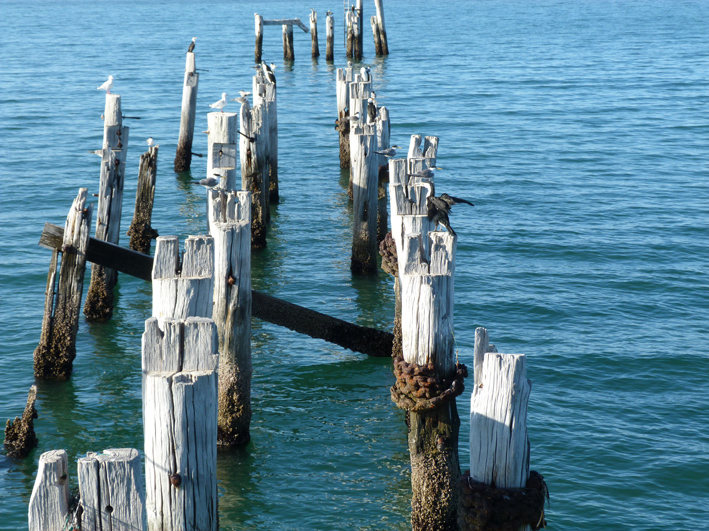
A group of Pied Cormorants and Common Terns are perching on some battered poles which remind us that the jetty was once longer

A family have used a tractor to tow out a small boat and launch it as the tide comes in

The view from the end of the jetty of the foreshore and Ranges is spectacular.


12end  of jetty red

Terns and Cormorants at the end of the jetty

I return to the shore and walk along coastal path that weaves between low bushes and stretches of beach

There are honeyeaters and finches in the bushes and a Ring Necked Parrot preens itself on a branch

Near a rocky outcrop close to a garden I come across a Bearded Dragon sunning itself

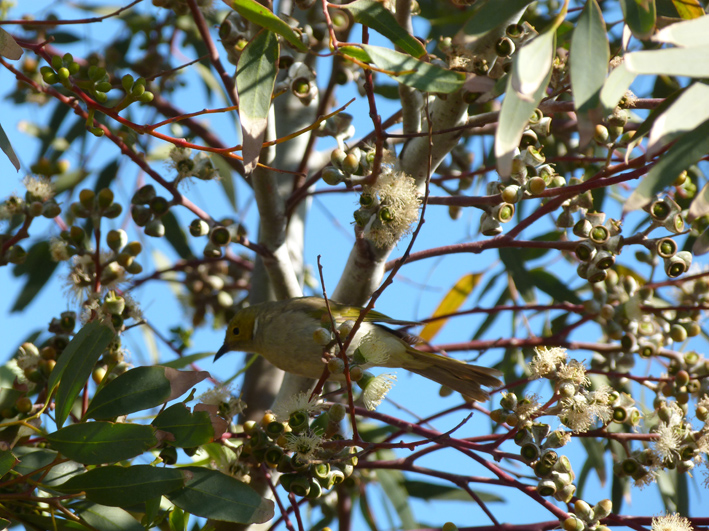
There are also quite a few White Plumed Honey Eaters feeding on blossoms in Eucalypt trees that grow in gardens near the coastal walk

After sipping nectar some are hawking for insects.

5 white plumed honeyeater red

White Plumed Honeyeater feeding in eucalyptus tree near the foreshore

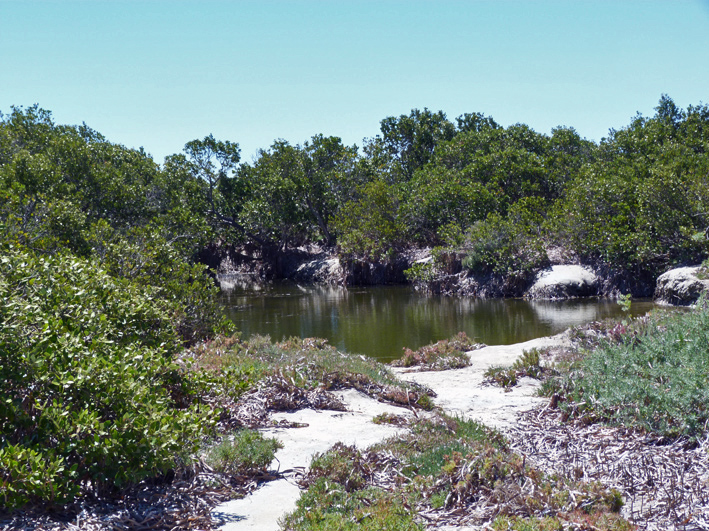
A ten minute walk from the end of town, the coastal scrub and samphire give way to stands of mangrove and a whole new coastal ecology emerges

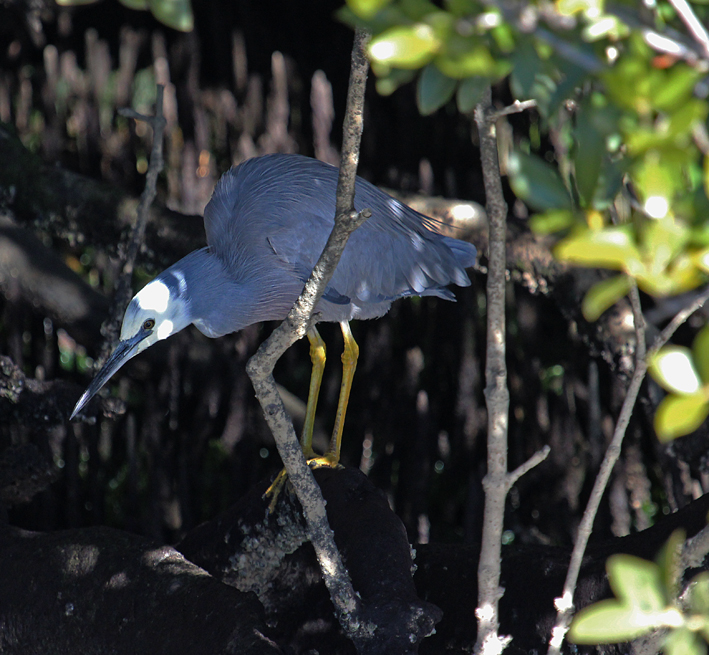
A White Faced Herons stalk small fish and crustacean in the shallow channels and a White Browed babbler fluffs up its feathers in one of the mangrove trees

These mangroves are part of a south Australian system that marks the southernmost extent of mangrove communities in the world

Small fish can be seen schooling in some of the deeper channels

This is a nursery area for many commercial species.

8 mangrove pool red

Mangrove pool

15

White Faced Heron hunting in the mangroves

I head back to town for a schnitzel and a beer at the local pub and the promise of a drive to Telowie or Port Germein Gorge in the afternoon to look for rock wallabies and eagles.

Cheers

Baz