Archive | Creeks and wetlands RSS feed for this section

Hahndorf Has Wildlife

24 Sep

Dear Reader:

At first glance the little creek appears lifeless but on closer examination I spot a Blue Damselfly and a juvenile Eastern Water Skink on the overgrown stonework.

Hahndorf is a tourist town of German heritage about a forty minute drive from Adelaide’s CBD. Best known for handicrafts, galleries, food and souvenirs; it also has quite a wide variety of wildlife hidden in its streets, trees and parks.

I am currently strolling around the Alec Johnston Park which has a small creek running through it, a soldiers’ memorial as well as a playground, rose garden and a heritage shed.

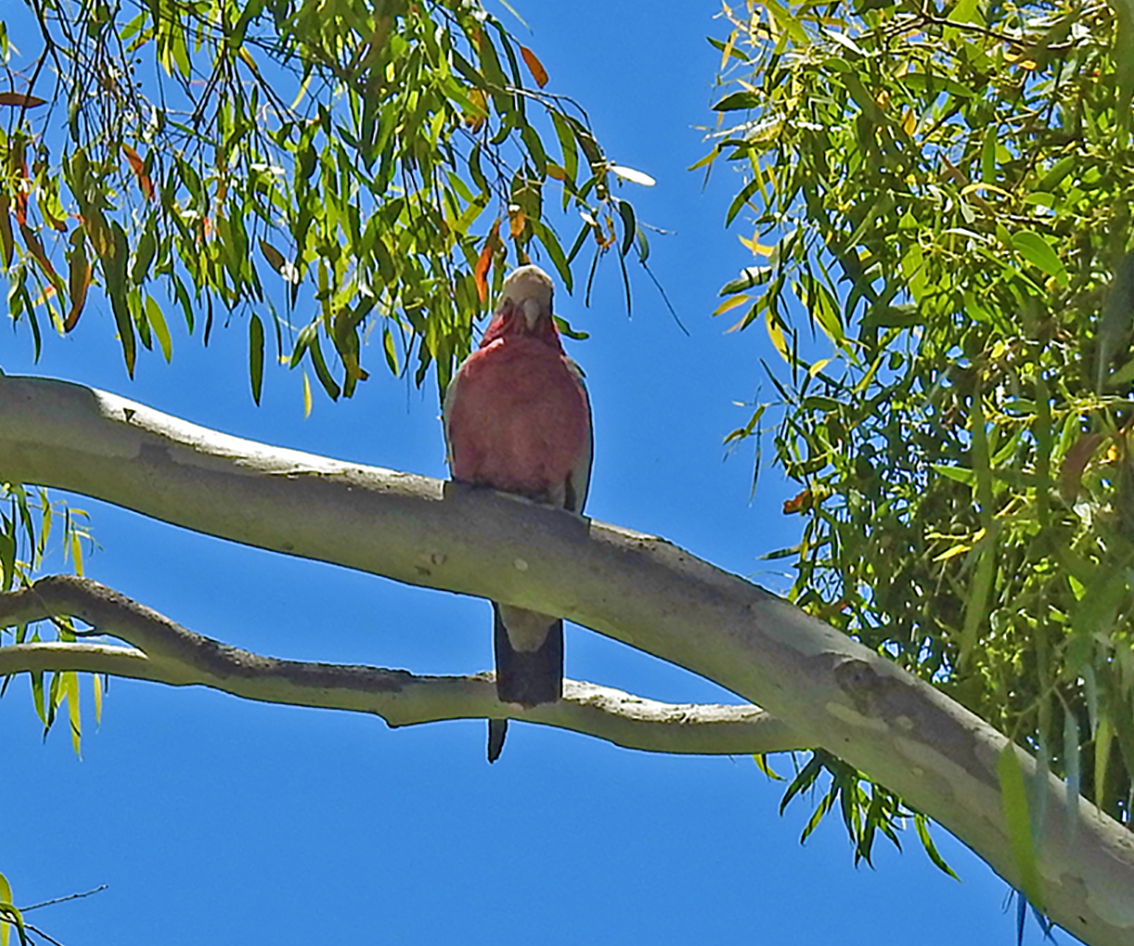
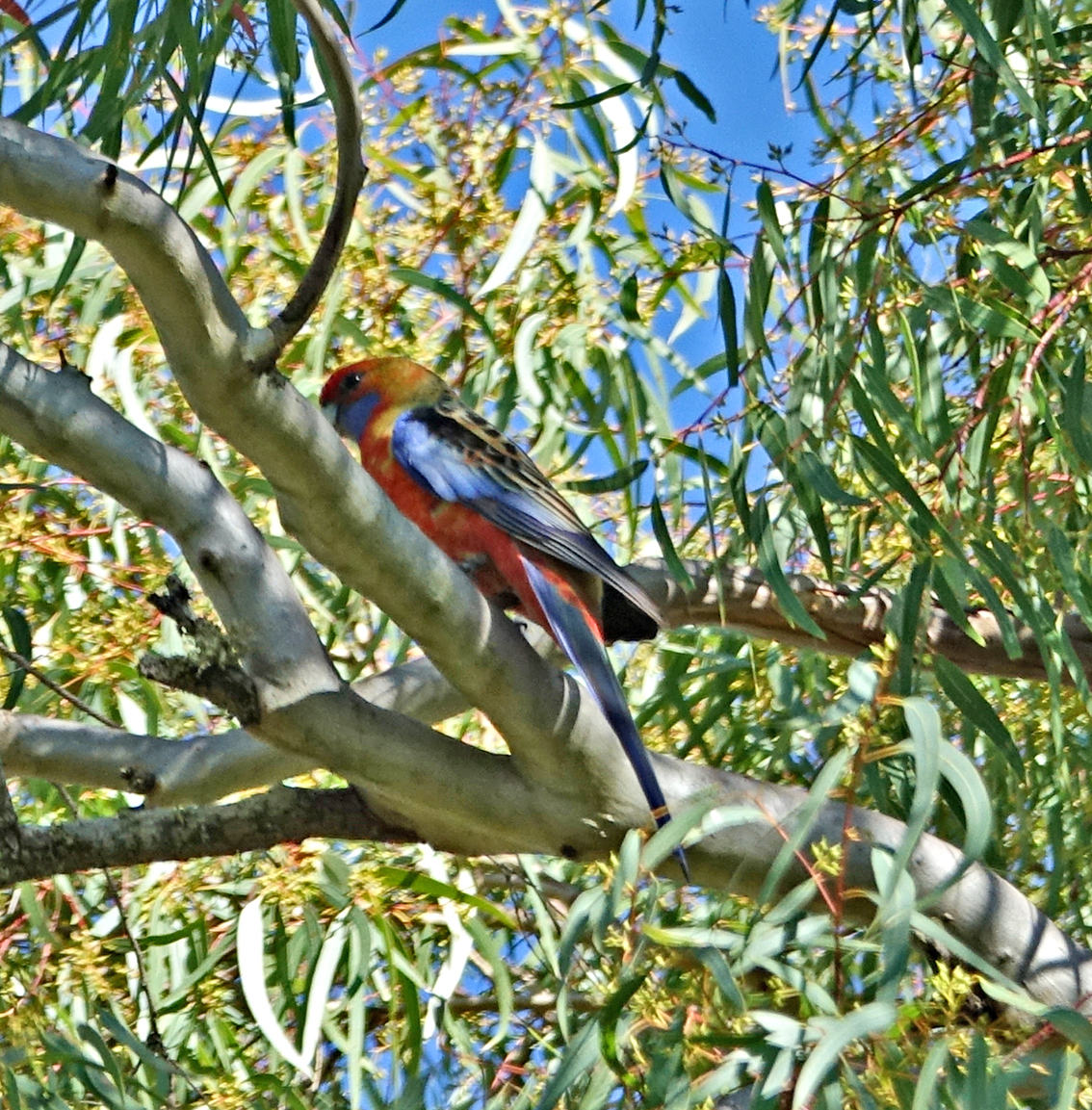
The trees above me are a haven for parrots. I have seen lorikeets and a rosella. However, it is their larger cockatoo cousins the Galahs and Sulphur Crests that make for the best images.
Two species of ducks live in and around the little creek: Pacific Black ducks and Wood or Maned Ducks. Today, a little group of Maned Ducks are dabbling amongst the water plants.

It is early spring and the wildlife is beginning to build up again after the winter hiatus. As with any natural observations weather and time of year are critical. Even a few roses are beginning to bloom.

Finally, I shall avail myself of the many lunch options available in Hahndorf and I am certainly leaning towards Kranskys (German sausages) and Sauerkraut with a serve of Beesting Cake to follow.

Cheers

Baz

Additional notes

This is an easy walk and drive which is quite suitable for families and seniors with public toilets, barbecues, parking and other facilities nearby. It is dog friendly.

Please pass on this blog title and or contact information (URL) to any person or organisation with an interest in taking walks and enjoying wildlife in SA.

Click on these links and see more South Australian stories and pictures in my Weekend Notes articles as well as locating similar blogs on Feedspot’s top 20 Australian wildlife blogs

https://www.weekendnotes.com/adelaide/writer/452/

https://blog.feedspot.com/australian_wildlife_blogs/

Exploring Meadows Creek……an interesting drive

3 Mar

Dear Reader:

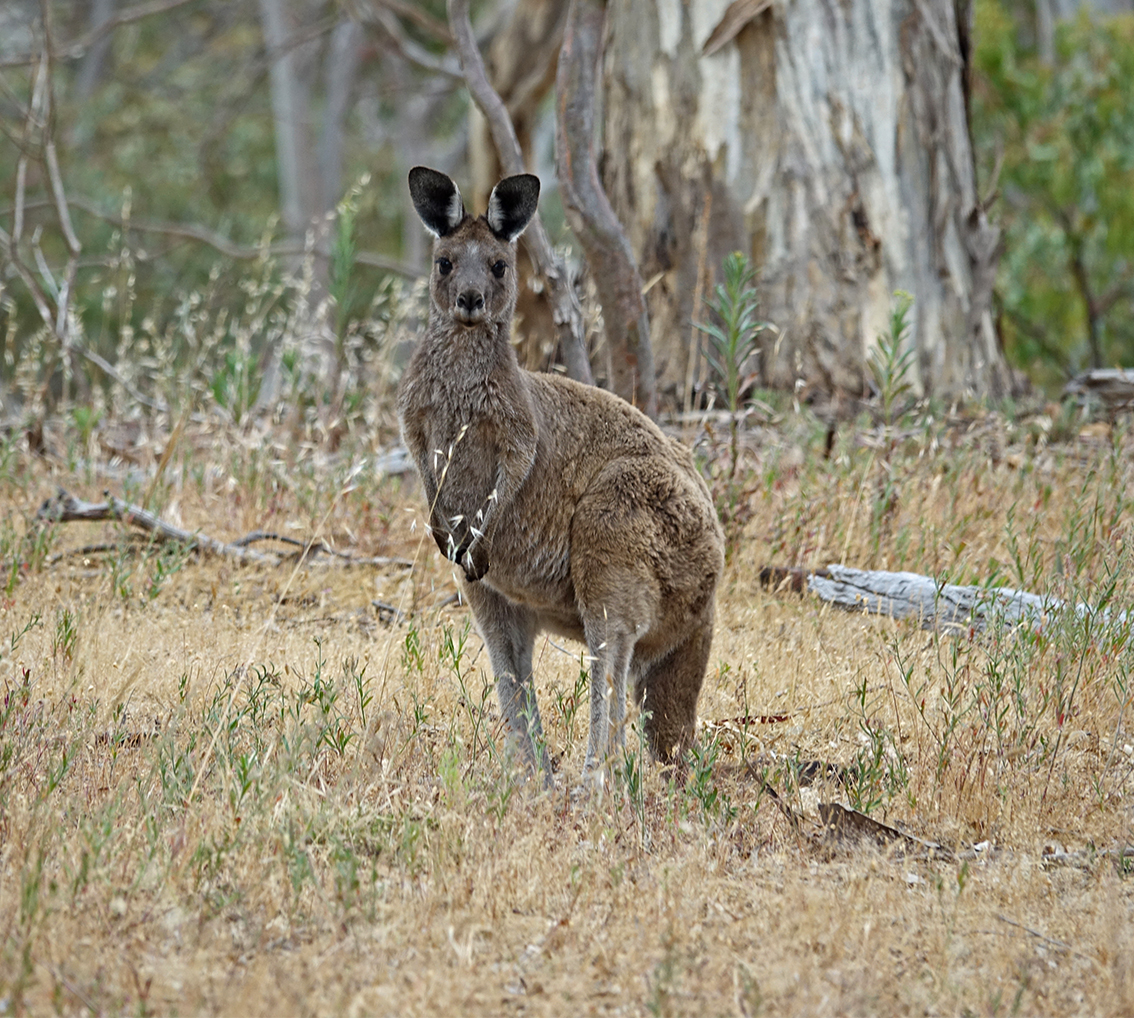
I hear movement in the long grass. Fifty metres away a Western Grey Kangaroo twitches its ears and looks back at me before slowly hopping into the scrub.

Western Grey Kangaroo

I am exploring Meadows Creek from three roads that intersect the creek from Brookman Rd, which starts at the top of Willunga Hill and terminates at Meadows. The first is Adams Gully Road.

Adams Gully Road ford

Here, the creek’s bank is obscured by scrub and grass. I wade through the tangle of dry stalks and spot a Common Brown Butterfly amongst a mat of fallen grass.

Common Brown butterfly

Nearby, a leaf curling spider has strung its web between some bushes. I can just make out its spindly legs protruding from its specially constructed home.

Leaf Curling Spider with legs visible

Sometimes tracking a creek or river is a complex endeavour. Meadows Creek runs through farmland and only flows freely when it has rained. In drier months it is typical of many SA waterways, consisting of a series of shallow pools.

Typical summer pool along Meadows Creek

A few kilometres past Adams Gully Road is Tynan Road where there is a slightly larger more accessible pool. There are prickly blackberry stems (canes) close to the water providing a safe place for small birds to shelter. A Silvereye lands on a branch providing a nice camera angle. Then a Superb Fairy Wren puts in a brief appearance while an Adelaide Rosella perches high in one of the tall roadside eucalypts.

Tynan Road crossing

Silvereye

Adelaide Rosella

My final crossing point is on Wickham Hills Road where I walk along the dry creek bed towards a pool and spend a quiet ten minutes waiting to see what animals are in the area. Eventually a Grey Fantail alights on a nearby rock as it searches for insects near the water. Further along the creek I can hear Kookaburras calling and a pair of Yellow-tailed Black Cockatoos fly overhead.

Wickham Hills ford

Grey Fantail

Rather than drive back to Brookman Road and return to Adelaide via Meadows or Willunga, I continue along Wickham Hills Road and wind my way back to the city through some lovely rural areas.  Rich pastures, stock, vineyards, barns and farmhouses provide some picturesque, rural scenes, making a wonderful ending to my creek exploring day.

Vines and open bushland

Cheers

Baz

Additional notes

This is an easy drive which is quite suitable for families and seniors.

Please pass on this blog title and or contact information (URL) to any person or organisation with an interest in taking walks and enjoying wildlife in SA.

Click on these links and see more South Australian stories and pictures in my Weekend Notes articles as well as locating similar blogs on Feedspot’s top 20 Australian wildlife blogs

https://www.weekendnotes.com/adelaide/writer/452

https://blog.feedspot.com/australian_wildlife_blogs

South Para Reservoir’s Water, Wine and Wildlife

13 Feb

Dear Reader:

There’s a small mob of Western Grey Kangaroos feeding close to the path where I am starting my walk. Leaning against a tree, I steady the camera. The roos detect either sound or scent and bound away into the thicker scrub.

Up Up and Away

I am taking a walk around the South Para Reservoir near Williamstown about an hour’s drive from Adelaide’s CBD. The road winds through the Adelaide hills and encompasses a range of environments from rural to wilderness. Unfortunately, it is a bit of a grey day. Not brilliant for photography.  

South Para Reservoir

The track leads down to the water where a kayaker is bringing the craft back to dry land. This reservoir is open for fishing, kayaking, cycling and walking unlike many of our other reservoirs.

A recreational paddle

There are numerous butterflies in the area but it is hard to spot them until they take flight. Eventually I get a reasonably clear shot and identify the species as a Common Brown.

Common Brown

On the water’s edge I can just make out some large birds. I suspect they are either Cormorants or Snake Birds (Anhingas). I approach warily, lie down in the grass and focus. There are two distinct species; a Pied Cormorant and a Great Cormorant.

Pied Cormorant

Working my way around the water’s edge I discover a dry creek bed and another track heading back towards the main road. I follow the creek bed up a gentle slope towards a rocky outcrop. A large male kangaroo watches me from the scrub as I walk. He seems relaxed and stays still enough for a long-range shot.

Just watching

Continuing along the cross track I suddenly freeze and hold my breath. Three adult Emus are walking towards me and have, either not registered my presence, or are not unduly phased by humans. I raise the camera slowly and wait as they approach to within thirty metres. I take a series of shots before they veer away pecking for seeds, insects and whatever else they might find in the dry scrub.

The Emus gang

Emus close by me

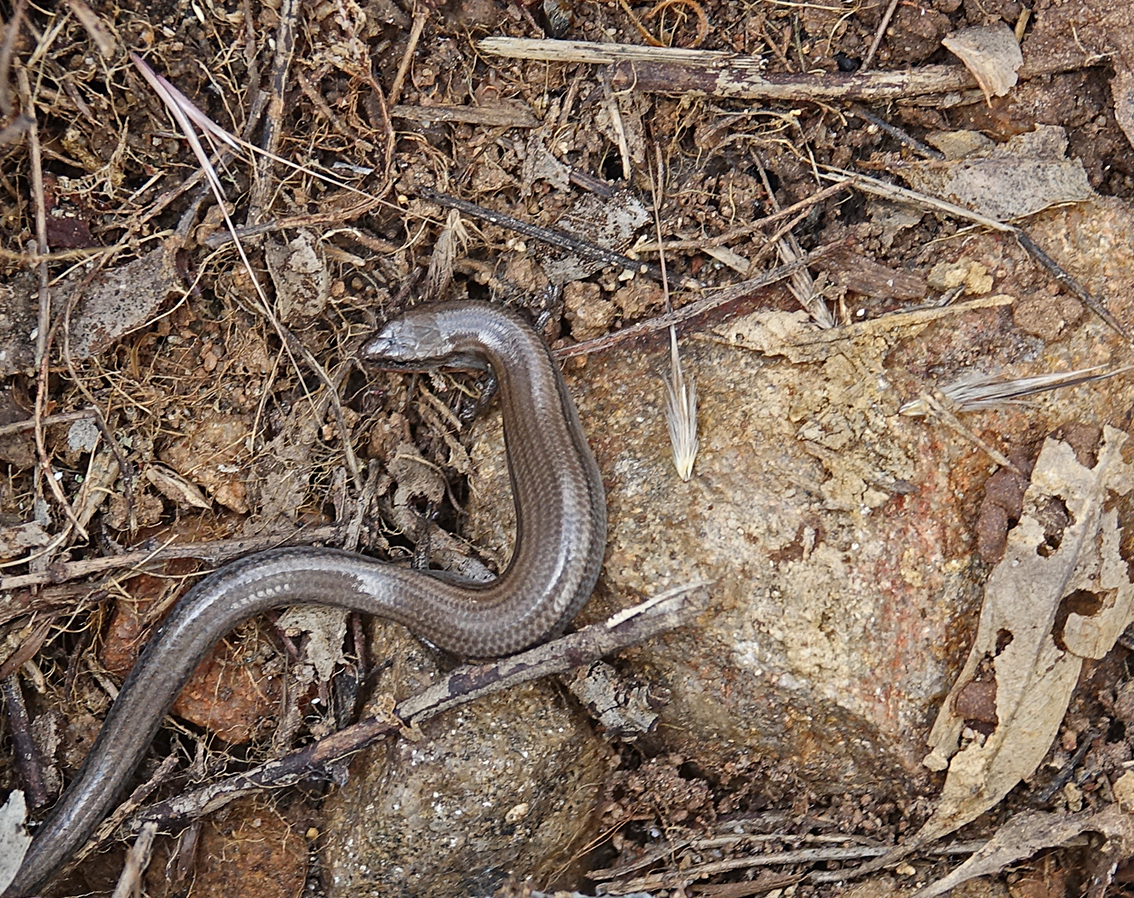
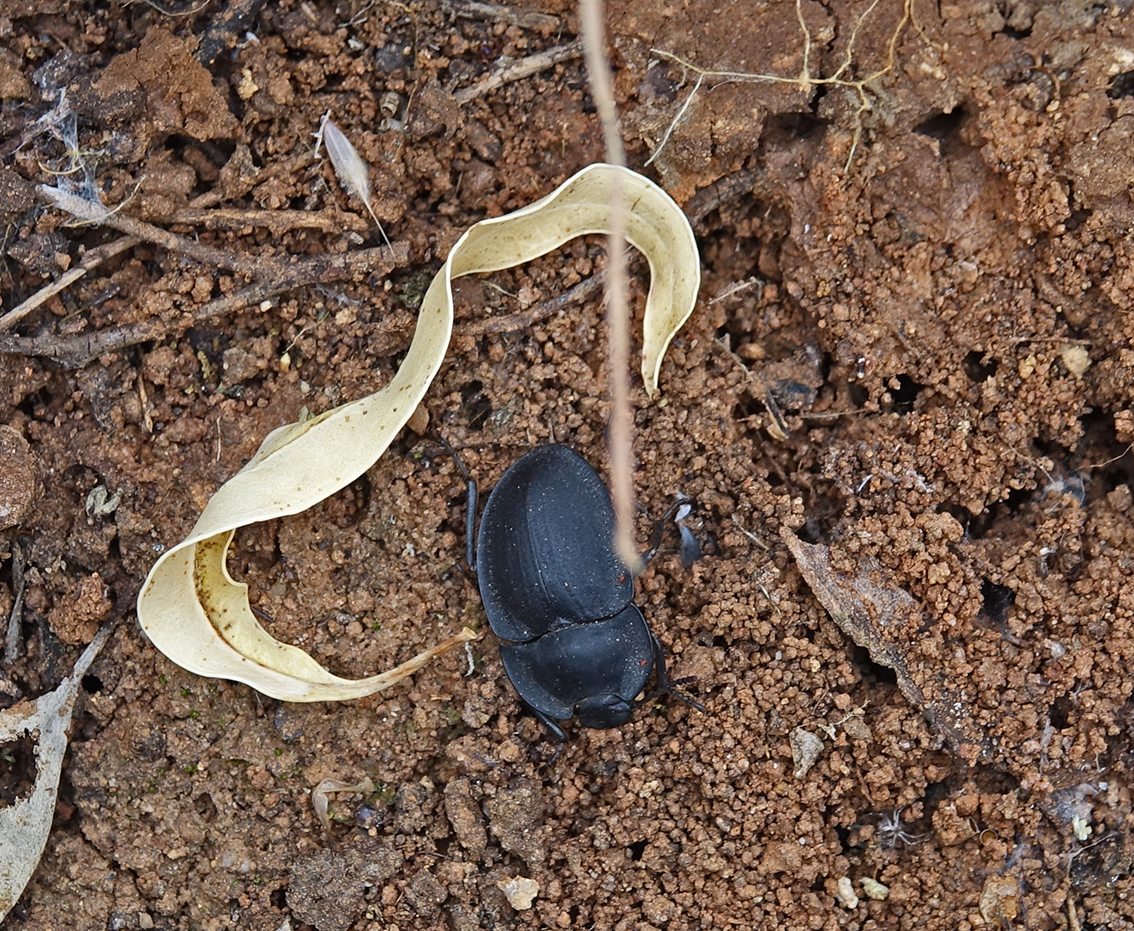
As I traverse move up the trail, I notice a variety of wildlife including; musk Lorikeets Sulphur Crested and Rose Breasted Cockatoos, more butterflies, a few native bees as well as ant nests and termite mounds. I turn over a couple of rocks and dead branches (replacing them carefully afterwards), uncovering a snakelike Three-toed Earless Skink and Pie-dish Beetle.

Three-toed Earless Skink

Pie-dish Beetle

With my walk at an end, I drive on towards Williamstown for lunch at the little bakery across from the creek. However, I do make one more stop on the way at Linfield Road Winery which has a charming bed and breakfast attached. An ideal place to stay when I make my next foray into the wonderful north-eastern region of the Adelaide Hills.

B&B for next time

Linfield Road Winery vines

Cheers

Baz

Additional notes

This is an easy walk/drive which is quite suitable for families and seniors with public toilets, barbecues, parking and other facilities nearby.

Please pass on this blog title and or contact information (URL) to any person or organisation with an interest in taking walks and enjoying wildlife in SA.

Click on these links and see more South Australian stories and pictures in my Weekend Notes articles as well as locating similar blogs on Feedspot’s top 20 Australian wildlife blogs

https://www.weekendnotes.com/adelaide/writer/452 https://blog.feedspot.com/australian_wildlife_blogs

Glacier Rock….Good food, Geology and Wildlife

30 Nov

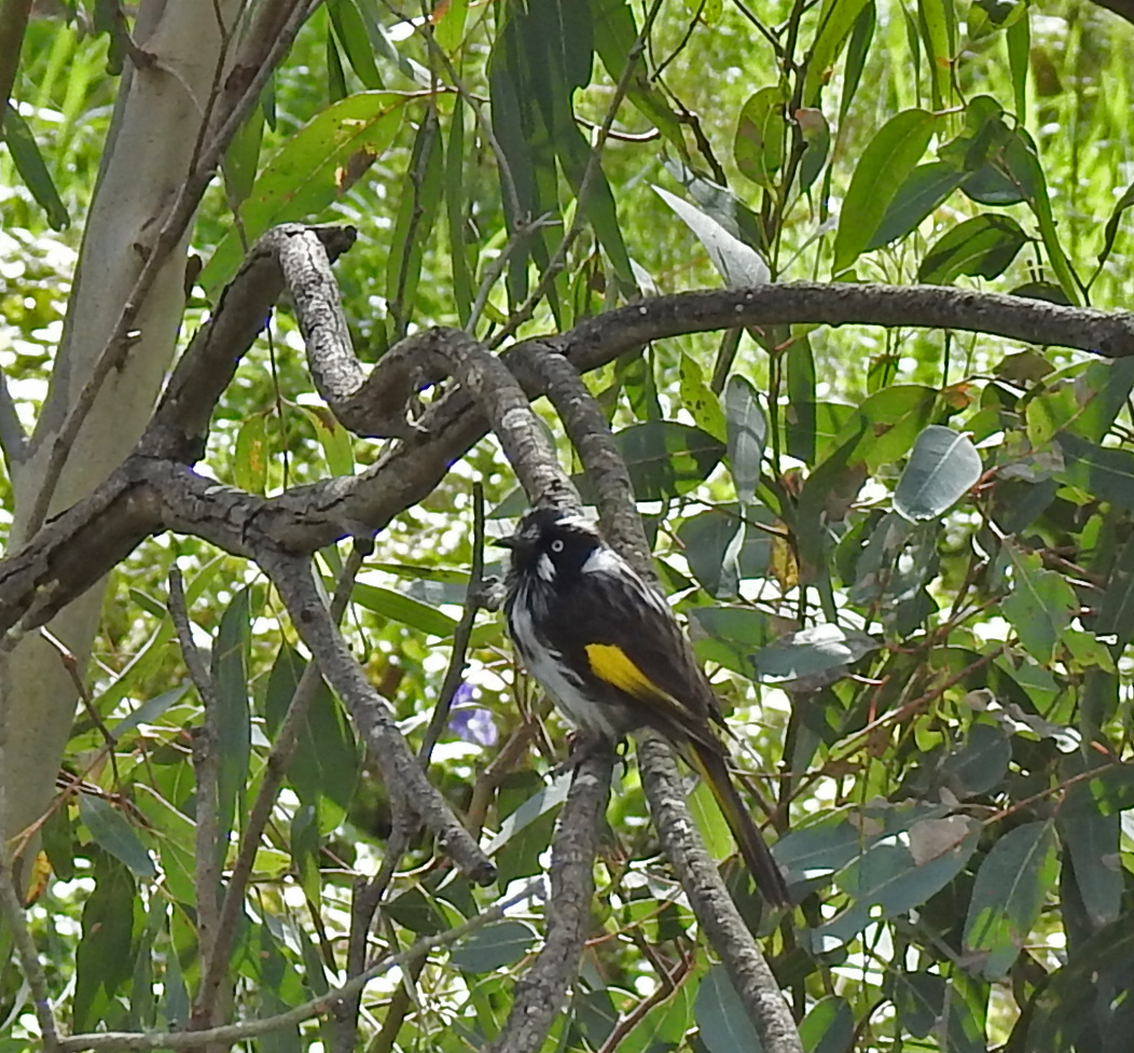
A pair of New Holland Honeyeaters

Dear Reader:

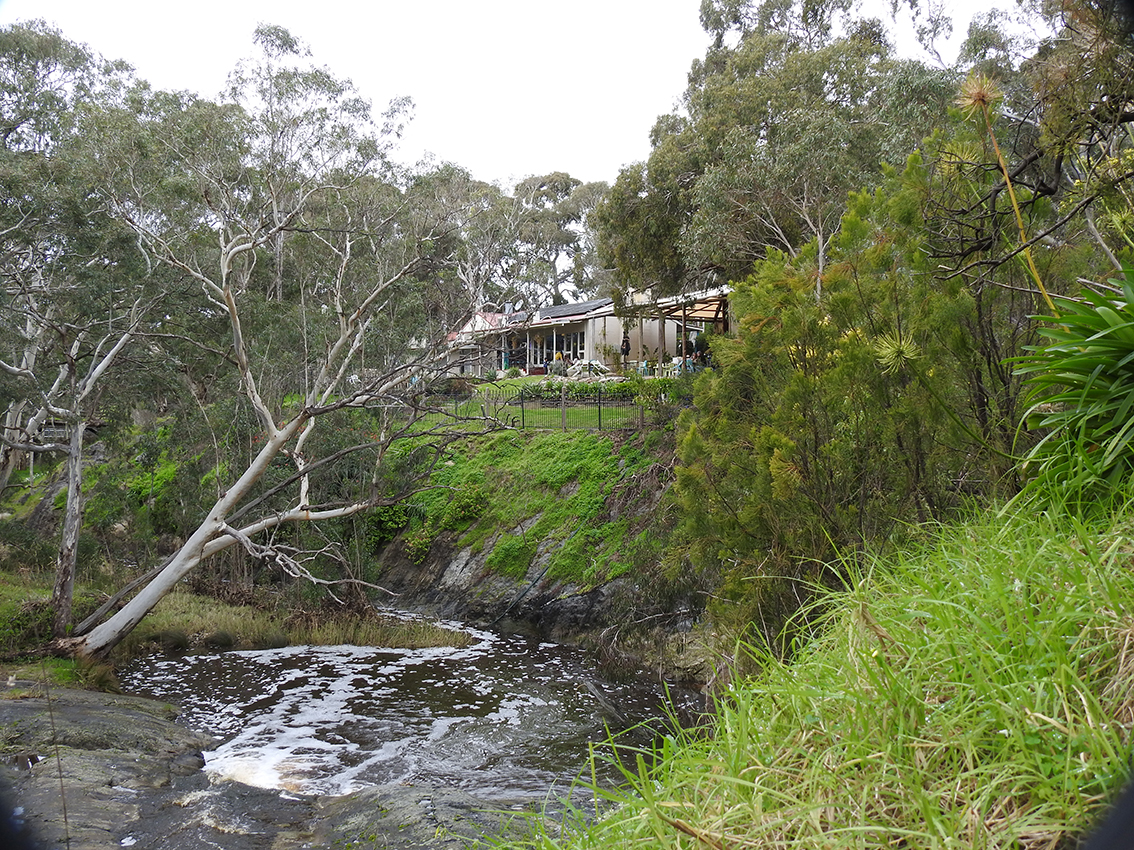
There is white water swirling around the boulders in the river and a family of Pacific Black Ducks are huddling to one side where the water is calmer. Perched amongst the branches of an overhanging eucalyptus tree I make out the shape of several New Holland Honeyeaters and hear the distinctive call of Sulphur-crested Cockatoos as they fly overhead.

Breakfast at the Tearooms

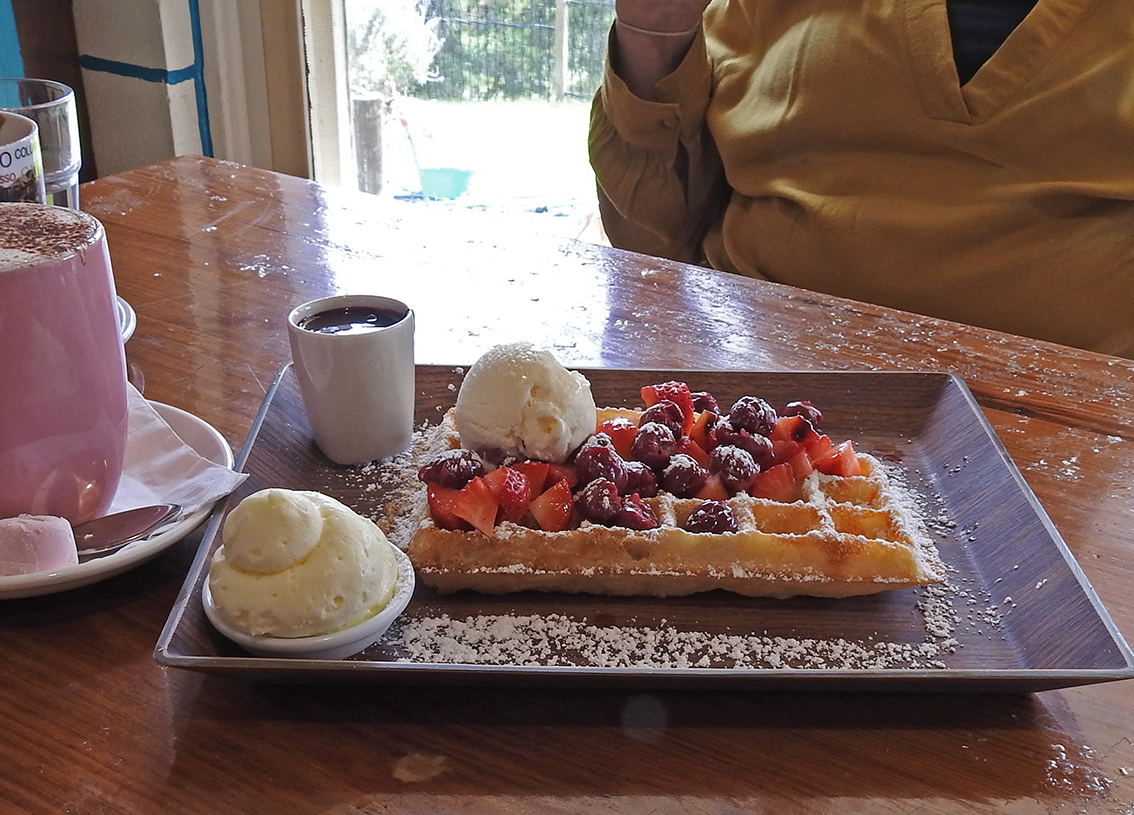
I am sitting on the back decking of the Glacier Rock Tea Rooms  having just devoured a serve of the delicious waffles topped with berries, cream and ice cream; with a little maple syrup for good measure. The weather is overcast and not great for photography but I shall make the best of it.

Typical rural countryside along the Inman Valley

On the drive along the Inman Valley Road we spotted a mob of roos feeding just outside the little township of the same name. There were also  black headed sheep and numerous herds of dairy cattle grazing on the fertile grassland. Some really pleasant rural scenes to photograph.

Inman river and Tearooms

I take the track from the caffe down to the river passing an information board on the way which explains the geological processes that lead to the rock formations. They involved the scraping of surfaces by rocks embedded in an ancient glacier which carved out the valley millions of years ago.

White-naped Honeyeater

Grey Fantail

From the viewing point alongside the river I watch Welcome Swallows and Grey Fantails hawking for insects above the water. And, to my great delight, spot a bird I have never photographed before: a White-naped Honeyeater.  

Old bridge over the Inman River

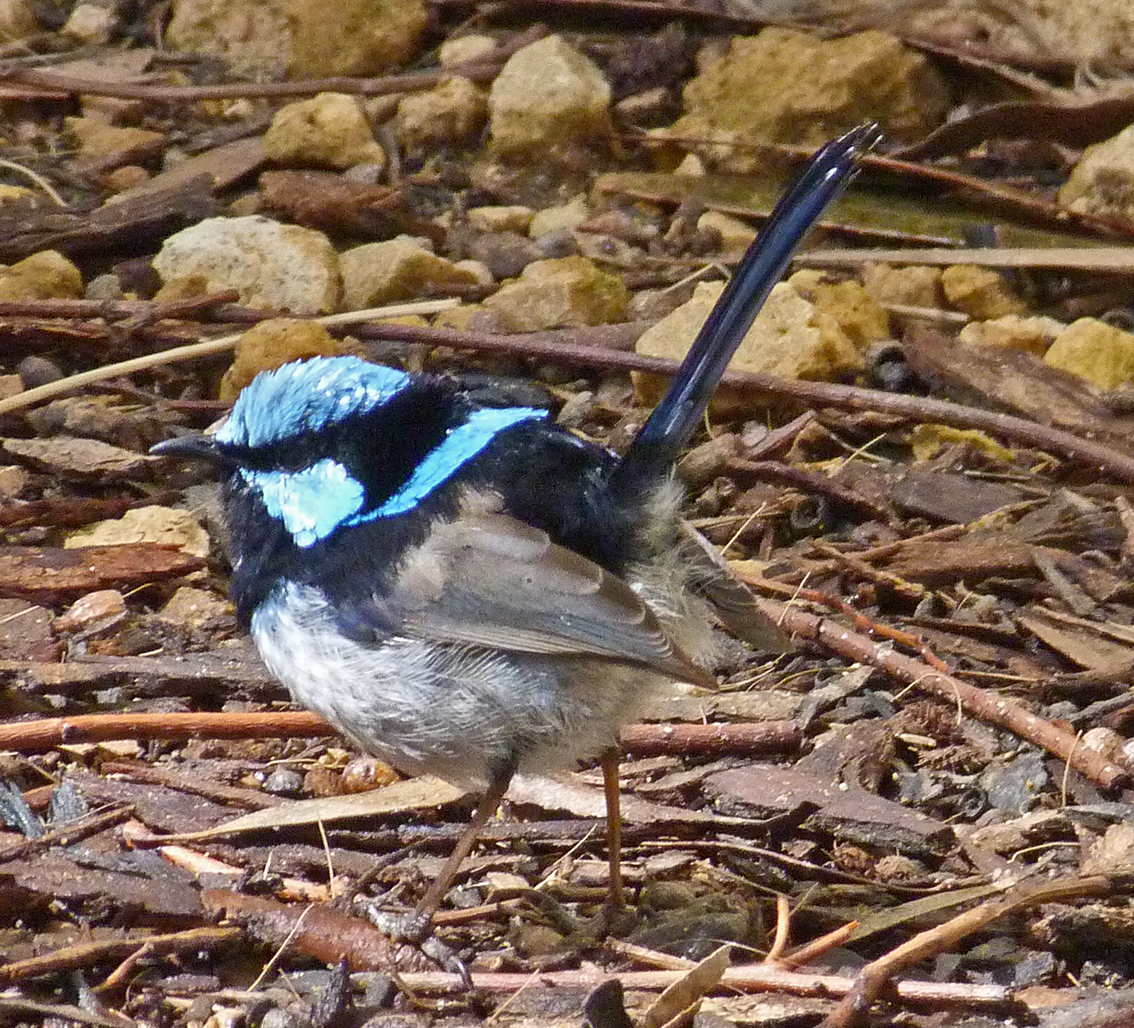
Superb Fairy Wren

The Mt Alma Road runs alongside the café. I walk a short distance along the road to get a good view of a dilapidated, old bridge which crosses the river. Thick brush lines the first section of the road and I can hear the twittering of wrens in the thickets. There are both sheep and cattle in the paddock opposite.

Galahs in silhouette

Red Wattlebird

On the other side of the Inman Valley Road, a narrow, sealed track called Parsons Road climbs a small rise. In the field alongside the road, several Galahs are perched at the top a long dead tree. Nearby a group of Red Wattlebirds are feeding on flowering shrubs along the fence line.

Spider predation or devouring its own carapace after shedding????

However, my final wildlife encounter is on a much smaller scale. A little spider (species unknown) appears to have caught another spider in its web and is starting to wrap it in silk ready to devour later.

Sweet indulgence

My walk is over and I shall return to the tearooms and treat myself to a hot chocolate. An appropriate end to a rather successful walk in this lovely part of the Fleurieu Peninsula.  

Cheers

Baz

Additional notes

This is an easy walk and drive which is quite suitable for families and seniors with public toilets, parking and other facilities nearby. It is dog friendly.

Please pass on this blog title and or contact information (URL) to any person or organisation with an interest in taking walks and enjoying wildlife in SA.

Click on these links and see more South Australian stories and pictures in my Weekend Notes articles as well as locating similar blogs on Feedspot’s top 20 Australian wildlife blogs

https://www.weekendnotes.com/adelaide/writer/452/

https://blog.feedspot.com/australian_wildlife_blogs/

Warren Reservoir…drained for maintenance

14 Jul

Dear Reader:

From Tea Tree Gully, the road climbs into the foothills then snakes past Chain of Ponds Reservoir before it forks to the left towards Williamstown. Just before the town there are often mobs of Western Grey Kangaroos on the hillside to the right. Today, I spot a small group on the opposite side near a layby where I can safely pull off the road to take a few photographs.

Western Grey Kangaroos near Williamstown

I am exploring the Northern section of the Warren Reservoir which is around 10 kms past Williamstown towards Gumeracha on the Warren Road. The sky is a little overcast with a hint of rain in the air which makes photography challenging but in the winter months one takes any opportunity on offer to venture out into the bush. This is my second visit to the Warren and of particular interest because the reservoir has been emptied for dam wall maintenance and comparing it to my last visit, when it was full, is a rare opportunity.

Reservoir full

Reservoir drained and with some improvements to the public car park area

Usually there are numerous duck species as well as cormorants, Australian Pelicans and Anhingas (Snakebirds) around the edge of the reservoir. Today there is just a solitary Pacific Black Duck paddling along a narrow channel. Way off to the north, I can just make out a pair of kites catching thermals above the surrounding scrub.

Anhinga

Grey Fantail

However, all is not lost. For some reason the number of smaller birds seems to have increased around the periphery of the reservoir. Using the full extension of my Nikon P900 Camera lens, I am able to spot Silvereyes, Superb Fairy Wrens, a thornbill species, Grey Fantails and New Holland honeyeaters. Perhaps a lack of predatory species could account for this or maybe there are insects among the leaves and on the smaller branches.

Adelaide Rosella

I finish my loop walk back at the car parking area where a pair of Adelaide Rosellas are feeding on the ground. They are some distance away and as I approach all but one fly into the canopy. The lone bird perches on a wiry grass stem where it appears to be picking out seeds. I take a shot from distance just before it flies off disturbed by a couple of Little Ravens flying into a nearby eucalypt.

Australian Magpie foraging on reservoir floor

It has been a relatively productive morning’s work and I pack up my gear and head back towards Williamstown and lunch at the local bakery which, by the way, makes one of the best custard tarts I have tasted in a long time.

Snack time

Cheers

Baz

Additional notes

This is an easy walk and drive which is quite suitable for families and seniors with public toilets, barbecues, parking and information boards nearby.

Please pass on this blog title and or contact information (URL) to any person or organisation with an interest in taking walks and enjoying wildlife in SA.

Click on the links below to see more South Australian stories and pictures in my Weekend Notes articles as well as locating similar blogs on Feedspot’s top 20 Australian wildlife blogs

Weekend Notes

Feedspots top 20 Wildlife Blogs


Houseboat stories…..After the Floods

28 Jun

Houseboat stories continued (May 2023)…..After the Floods

Dear Reader:

As I walk across the flood plain, which was inundated in last year’s winter rains, there is a definite lack of wildlife. Bushes, grasses and other ground covers have been decimated. Last time I visited this area there were: Butcherbirds, Mudlarks, parrots, honeyeaters, Western Grey Kangaroos as well as an abundance of insects. Eventually I spot a single white butterfly settling on the cracked earth.

Cabbage White Butterfly

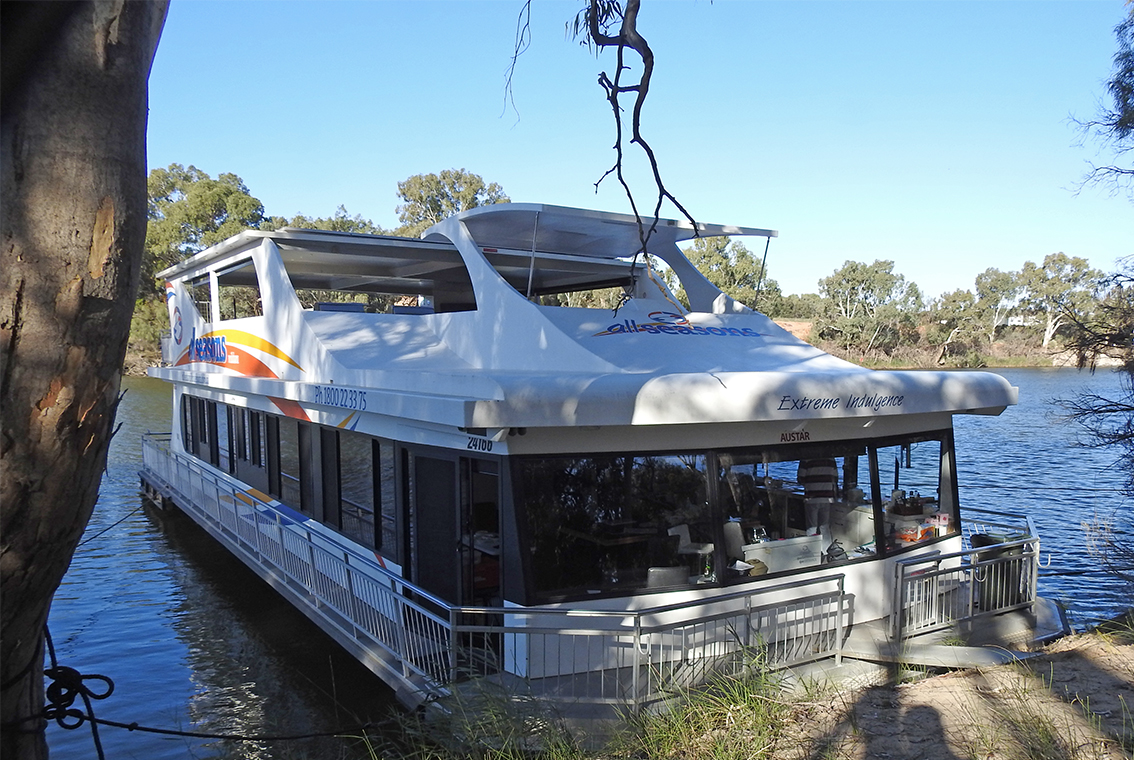
I am exploring Kings Billabong near Mildura, just over the SA border. We have travelled to this location by houseboat but the area is also accessible by unsealed roads. Each year I holiday here from Adelaide and observing the changes along the river, especially after major climatic changes,  is always interesting.

Track to the billabong

First lagoon

Following a pathway carved by a 4WD vehicle, probably a local ranger, I reach a boardwalk leading to a junction of trails accessing various parts of the billabong. From this location I get my first look at one of the many lagoons which make up this fascinating wetland.

Pink-eared Ducks

There are numerous birds congregating around a small island in the middle of the lagoon. They are about one hundred and fifty metres from my nearest vantage point and the light is starting to fade. Challenging conditions for my Nikon P900. I brace myself against a tree trunk, take a breath and fire off a couple of frames as I exhale. Later examination on the laptop reveals some Australian Ibises, a lone White-necked Heron and a flock of Pink-eared Ducks. The latter two species are birds I have never previously photographed.

Whistling Kite

With around half an hour’s light remaining I quickly skirt the first lagoon and sit quietly while scanning a second lagoon. High in a tall, dead tree overlooking the water, I can just make out the distinctive outline of a raptor. Zooming in, I recognise it as a Whistling Kite.

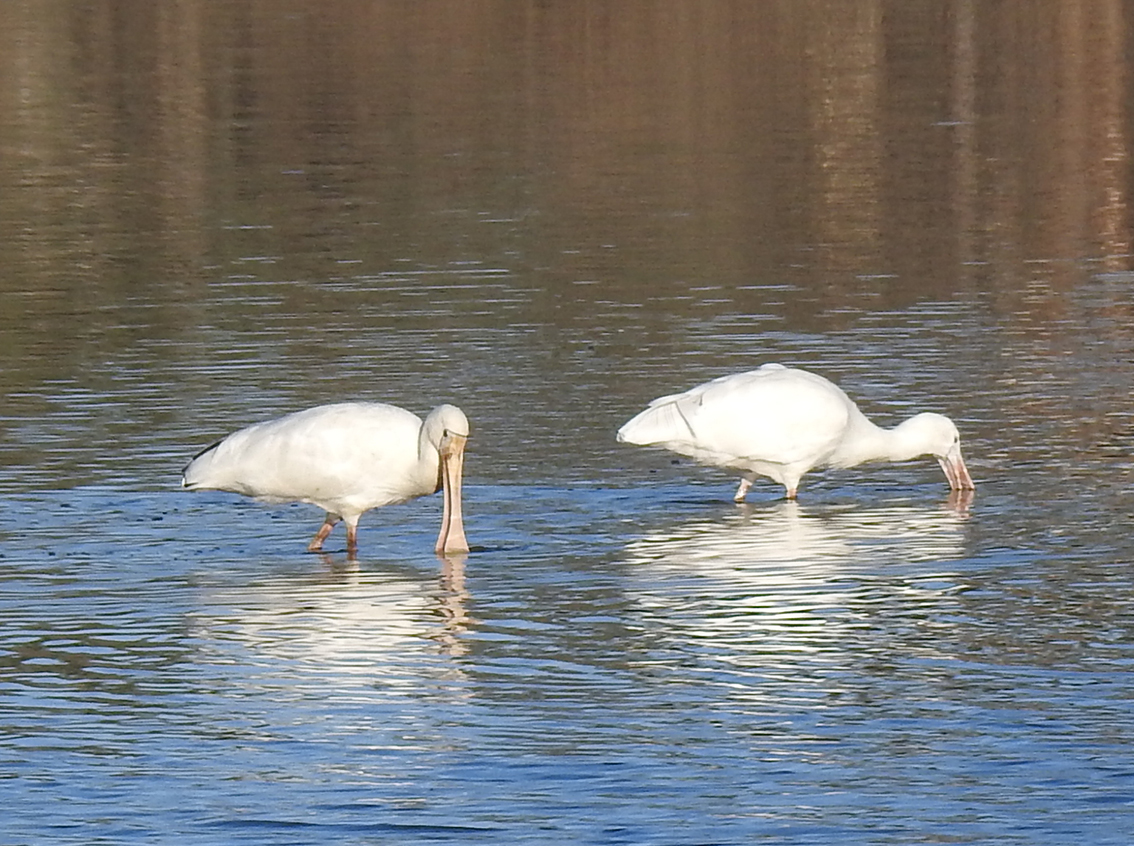
Spoonbills foraging


Fish in beak

There are a few Pacific Black Ducks, herons and a pair of Laughing Kookaburras around the edge of this second pool but it is a small group of Yellow-billed Spoonbills that are most interesting as they swing their bills through the water in search of small prey. However, I am quite surprised when I see one of the birds capture a small fish in its bill; something I have never witnessed before.

Back at the boat

I feel the vibration of my Apple Watch indicating an incoming phone call. The watch, with its emergency capabilities, is a useful tool when you work alone in the bush. The call is just a safety check and a reminder that dinner is being prepared on the houseboat and it’s time to make my way back. Tomorrow I will venture further into the park to explore some other parts of this complex wetland.

For more wildlife stories and pictures go to:

Weekend Notes

Feedspots best wildlife blogs


Maslins and Blanche Point to Port Willunga…a rewarding short walk

12 Mar

Dear Reader:

It is glorious summer’s day, not too hot and a gentle sea breeze. The view from the clifftop is spectacular. The outline of Gull Rock and surrounding shallow reefs are clear cut against an impossibly blue ocean. Inland, the view is quite a contrast with farmland, scrub and distant, low hills reflecting the dry shades of an Australian summer.

Gull Rock from the clifftop

Farmland, Raven and Hills

There are Little Ravens and Red Wattlebirds in the trees alongside the road leading to the carpark. In addition, I can see an adult Singing Honeyeater feeding one of its fledged chicks in the scrubby bushes near the entrance to the downhill trail. As I scan the ocean there is a pair of Bottlenose Dolphins far out to see patrolling the edge of a reef or seagrass meadow.

Reefs and seagrass from the clifftop

Singing Honeyeater

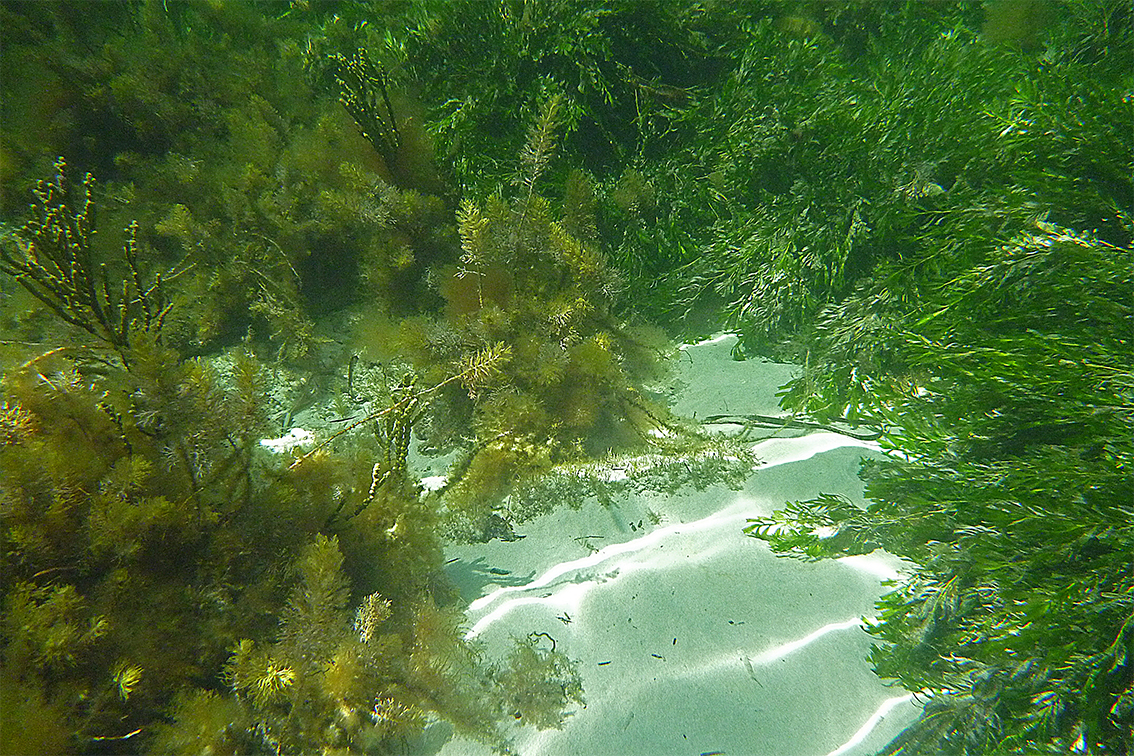
From the Blanche Point/Maslins hilltop carpark there are two ways to reach Port Willunga. The hilltop track is self-explanatory, or you can walk down the steps to the shore and follow the beach. The beach walk has two special features: take a mask and flippers to explore the shallow inshore reefs or examine the rock formations and fossil beds along the route.

Walking along the beach at low tide

Seagrass and brown algae: an underwater view

Today, I take the path which winds along the top of the cliffs then dips down towards the Willunga Creek outlet where there is a lovely patch of scrub and some old ruins. As I walk along this section of the trail I can hear Singing Honeyeaters and catch sight of a flock of Yellow-tailed Black Cockatoos feeding on pine cone seeds.

Willunga Creek where it meets the sea

Yellow-tailed Black Cockatoos

Suddenly, the birds scatter in apparent panic as a Nankeen Kestrel lands on a power pole. The bird sits for a while and I try to get close enough for a clear shot. Finally I have to settle for a long distance telephoto image. Later, on review, I am quite pleased with the result from my Nikon P900 at this range.

Nankeen Kestrel

Just as I am about to leave the scrub and creek to head up to the restaurant I notice a parenting group of Australian Black Ducks emerging from the reeds. A lovely way to end my walk before indulging in some Calamari and battered fish at the Star of Greece Restaurant. The restaurant and nearby sheltered lookout have lovely views over the Port Willunga Beach, the fringing reef and the old jetty piles.

Remains of the old Port Willunga jetty

Cheers

Baz

Additional notes

This is a moderate fitness walk with parking and other facilities nearby at Port Willunga. It is dog friendly.

Please pass on this blog title and or contact information (URL) to any person or organisation with an interest in taking walks and enjoying wildlife in SA.

Click on these links and see more South Australian stories and pictures in my Weekend Notes articles as well as locating similar blogs on Feedspot’s top 20 Australian wildlife blogs

https://www.weekendnotes.com/profile/651267/

https://blog.feedspot.com/australian_wildlife_blogs/

https://www.onkaparinganow.com/News-listing/Iconic-cliff-top-path-for-Port-Willunga

Title:Goolwa Barrage(2)…..Hunters and Hitchhikers or ‘Bluey Takes a Rest’

4 Feb

Dear Reader:

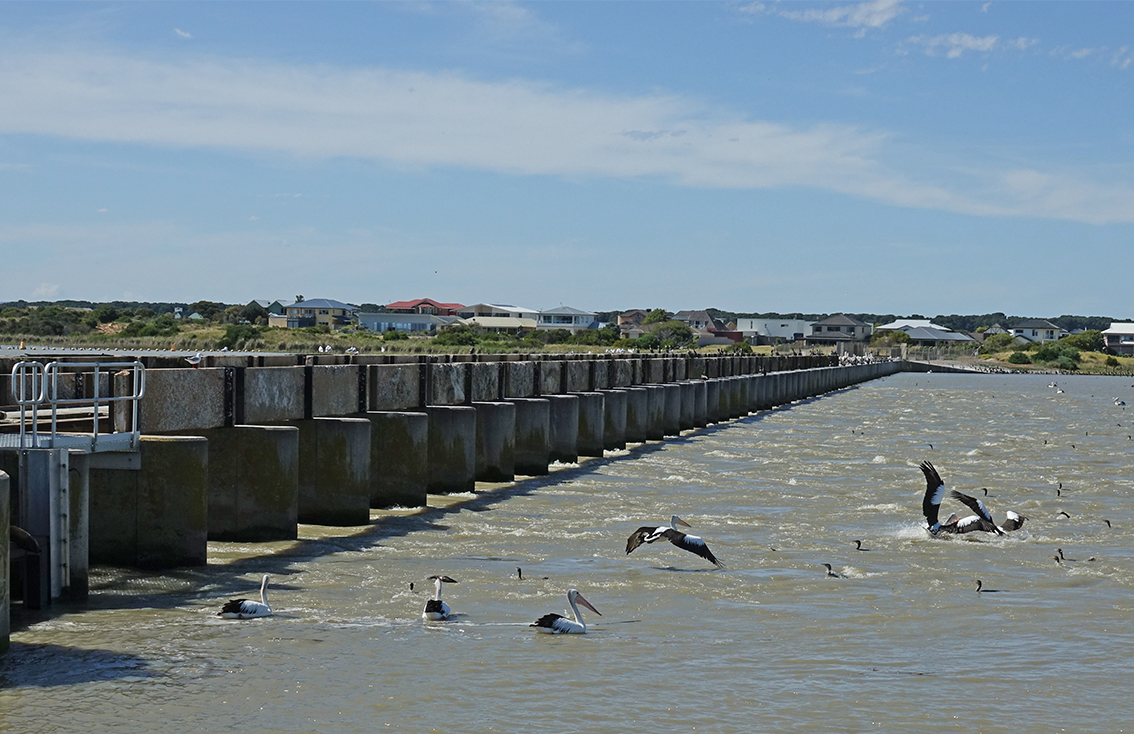
In my previous post I took you from the car park to the beginning of the Goolwa barrage. Now we will explore the main part of the barrage where the water is streaming through the gates at an unprecedented rate due to severe flooding upstream.

View along the barrage

With the floodgates open there is an overabundance of food being washed out into the Coorong. The freshwater is laden with silt and leaves a brown stain across the seaward side of the barrage which actually extends to Goolwa Beach and Victor Harbor.

Enlargement of first image showing interspecies rivalry

Long-nosed Fur Seals, Australian Pelicans and Great Cormorants are positioned to ambush fish and any other food as the water cascades through the gates. On every level this is quite a spectacular natural event and onlookers, armed with phones and cameras, are making the most of the situation.

Too much of a good thing

I spend some time taking shots that I hope will capture the essence of this event as well as a few close-ups of the different species. When animals are engaged in feeding behaviour they often ignore people which creates the perfect opportunity for more intimate images.

Sub-adult Pacific Gull (still has darker markings)

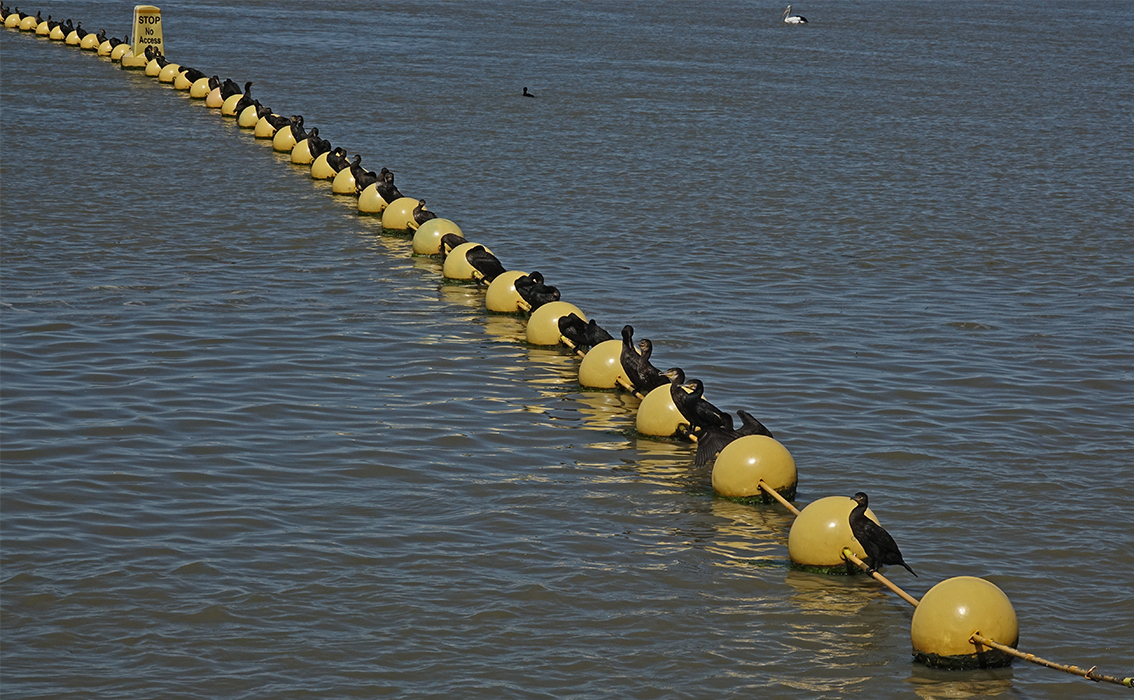
Floats with Great Cormorants

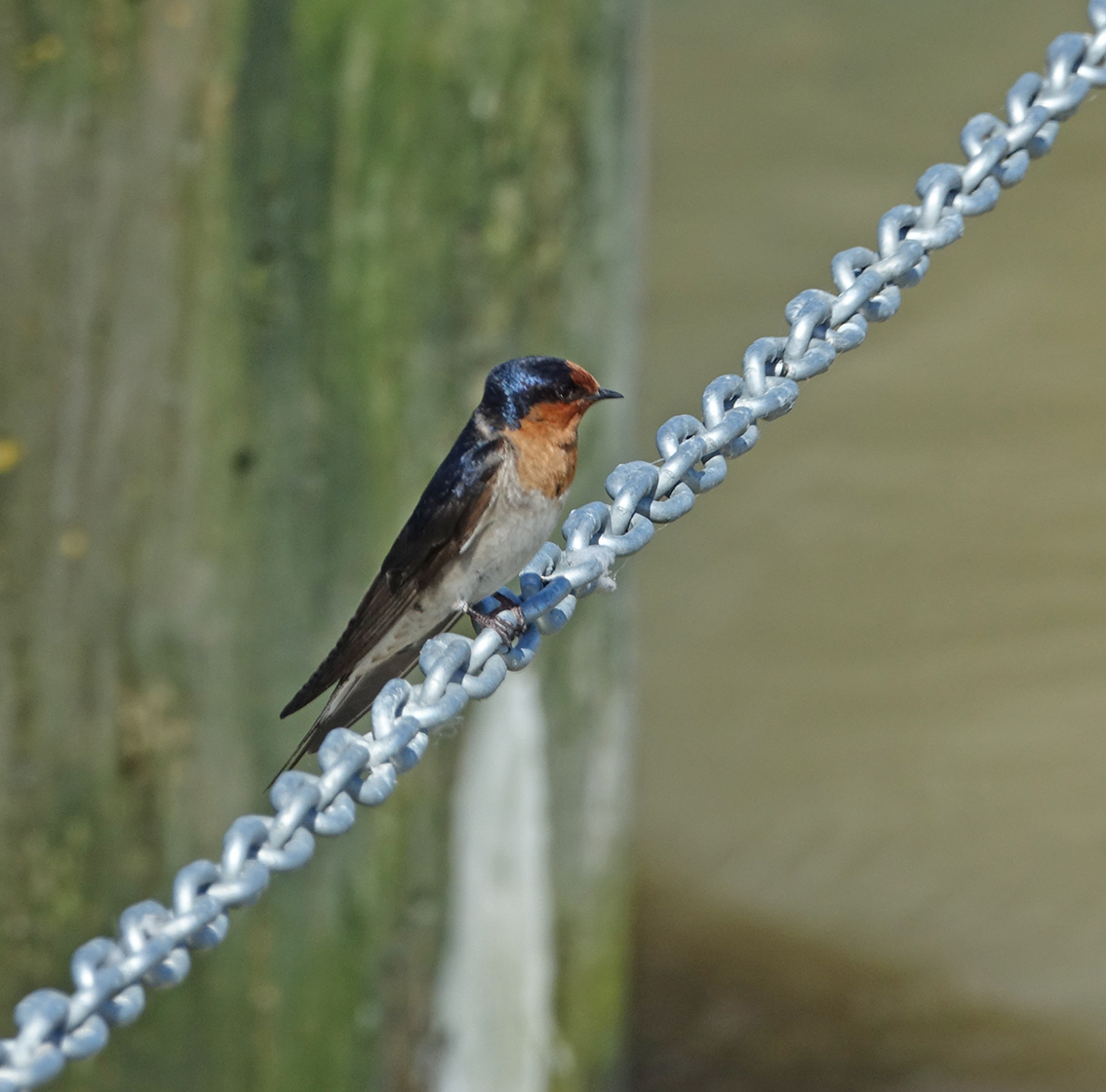
Swallow at rest

It is time to leave. I stroll back along the walkway watching swallows, cormorants and occasional Pacific gull perching on bollards, chain link and floats. I am halfway back to the bank when I notice an elderly couple pointing excitedly at the area where I was just watching the seals.

Catching a ride

Close up of previous image

Time to go

Intrigued, I walk back to the viewing platform and to my surprise they have spotted one of the most unusual examples of animal behaviour I have ever witnessed. A few metres below us, a seal is resting in the water, catching the sunlight on a raised flipper with a Blue-tongue Lizard lying across its body. I can only assume the reptile is taking a break from the swiftly flowing water. The lizard stays for a few minutes before ‘disembarking’ and continuing its journey towards the far bank. Extraordinary!!!!

Historic Goolwa Hotel

On that note, I ‘call it a day’ and walk back to the car. My next stop will be the historic township of Goolwa. There is a wonderful gallery called ‘Art Worx’ where I love to browse and sometimes pick up something special for the house or garden. Finally, the Goolwa Bakery, for a chicken and vegetable pie and perhaps a vanilla slice to follow. Always a pleasant way to wind up any trip to this fascinating waterside location.

Cheers

Baz

Additional notes

This is an easy walk/drive which is quite suitable for families and seniors with public toilets, barbecues, parking and other facilities nearby.

Please pass on this blog title and or contact information (URL) to any person or organisation with an interest in taking walks and enjoying wildlife in SA.

Click on these links and see more South Australian stories and pictures in my Weekend Notes articles as well as locating similar blogs on Feedspot’s top 20 Australian wildlife blogs
https://www.weekendnotes.com/profile/651267/

https://blog.feedspot.com/australian_wildlife_blogs/

Houseboat 2022 Mildura to Trentham Winery….part 1

4 Jun

Houseboat sunset

For any regular followers:

(I am stepping outside my usual SA destinations posts to recount part of my latest houseboat adventure from Mildura. The town is on the Murray River just over the border from the SA Riverland towns of Renmark, Berri and Barmera). The terrain and wildlife are much the same as the Riverland

Dear Reader:

It has been a long drive from Adelaide to Mildura and with the unpacking finished and the boat moved to its new mooring on the Mildura Quay it is time to enjoy a glass of wine, sit back on a comfy couch and admire a glorious river sunset.

Pond by the quay

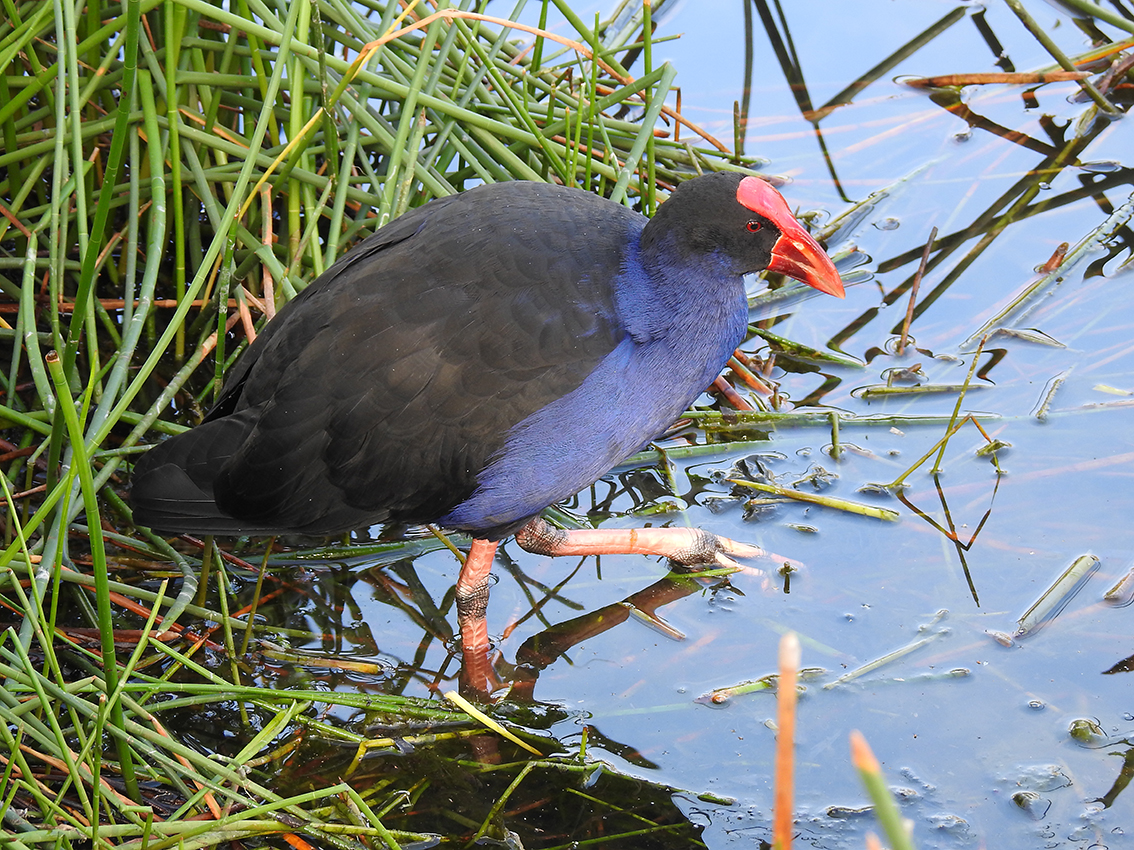
Purple Swap Hen

Coffee time

The next morning is all business. Sandra checks the maps, two couples take a quick walk up to the local shops to purchase a few extras and Pete stows the fishing gear and coolers on the rear deck. The weather is fine so I wander over to the recreation area opposite which has a lovely pond used to rear protected, native fish species. The pond is a perfect place to take some close-up shots of the aquatic birds I will encounter along the river. In addition, the little coffee shop alongside the pond is ideal for an early morning ‘cuppa’ and a calorie laden treat for breakfast.

Swallows on outboard by Peter Zab using iPhone

Back on the houseboat we’re waiting for everyone to come aboard. I watch the swallows hawking for insects alongside the boat. They are incredibly fast and acrobatic and never seem to slow down. Pete notices a pair resting on the small outboard motor of our attached dinghy and zeroes in on them with his iPhone.

Sandra at the helm

Ropes are untied, Sandra opens the throttles and blasts the reversing horn…we are off; cruising around 7km/hr. I climb the stairs to the top deck and take up a position near the front, ready to brace my camera against a fibreglass side panel. From this position I am able to sight a target coming towards me from the riverbanks on either side of the boat. It is tricky photography and stretches the Nikon P900’s capabilities to the limit.

View of Whistling Kite from the boat

Whistling Kite through the telephoto

Our destination is Trentham winery about 10 kms away by river. The scenery along the way is classic Murray River scrub with Mallee trees, a few errant Willows and billabongs dotted with massive dead River Gums protruding like bony, grey fingers. At the top of one fading gum, I spot a Whistling Kite and further along the river there is an Australian Pelican perched on an old tree stump. My final shot for the morning, as the winery is just around the bend, an Anhinga or Snake-bird drying its wings after hunting in the river………….to be continued…. 

Anhinga drying wings

Australian Pelican and rosella

Please comment on this story if you find Houseboat posts interesting.

Cheers

Baz

Additional notes

This is an easy holiday which is quite suitable for families and active seniors as tying up the boat requires some mobility and strength. Only a driver’s license is required to operate a houseboat and instruction is given prior to use.

Please pass on this blog title and/or contact information (URL) to any person or organisation with an interest in taking walks and enjoying wildlife in SA.

Click on this link and see more South Australian stories and pictures in my Weekend Notes articles:

https://www.weekendnotes.com/profile/651267/

For more information about Trentham Winery go to:

https://www.visitvictoria.com/regions/The-Murray/eat-and-drink/Wineries/Trentham-Estate-Winery

Hindmarsh Island ……Part 2

13 Apr

…….Continued from my last post about Hindmarsh Island……

White-faced Heron stalking

Dear Reader:

Having explored the little settlement by the channel I decide to drive a little further on this side island before cutting inland and heading to the Murray Mouth. A fortunate decision, as I spot a Royal Spoonbill working the shallows near a patch of reeds, a Black Swan just taking to the air and a heron stalking prey; all just a couple of hundred metres further down the track. Window down, some quick snaps and fingers crossed!


Spoonbill at work

Swan take off

It is only a five-minute drive to the river mouth but the wind has certainly whipped up the water and bent the grassy pastures. The area around the Murray mouth has a varied collection of shacks, the signposted entrance to a conservation park and even a pop-up coffee van.


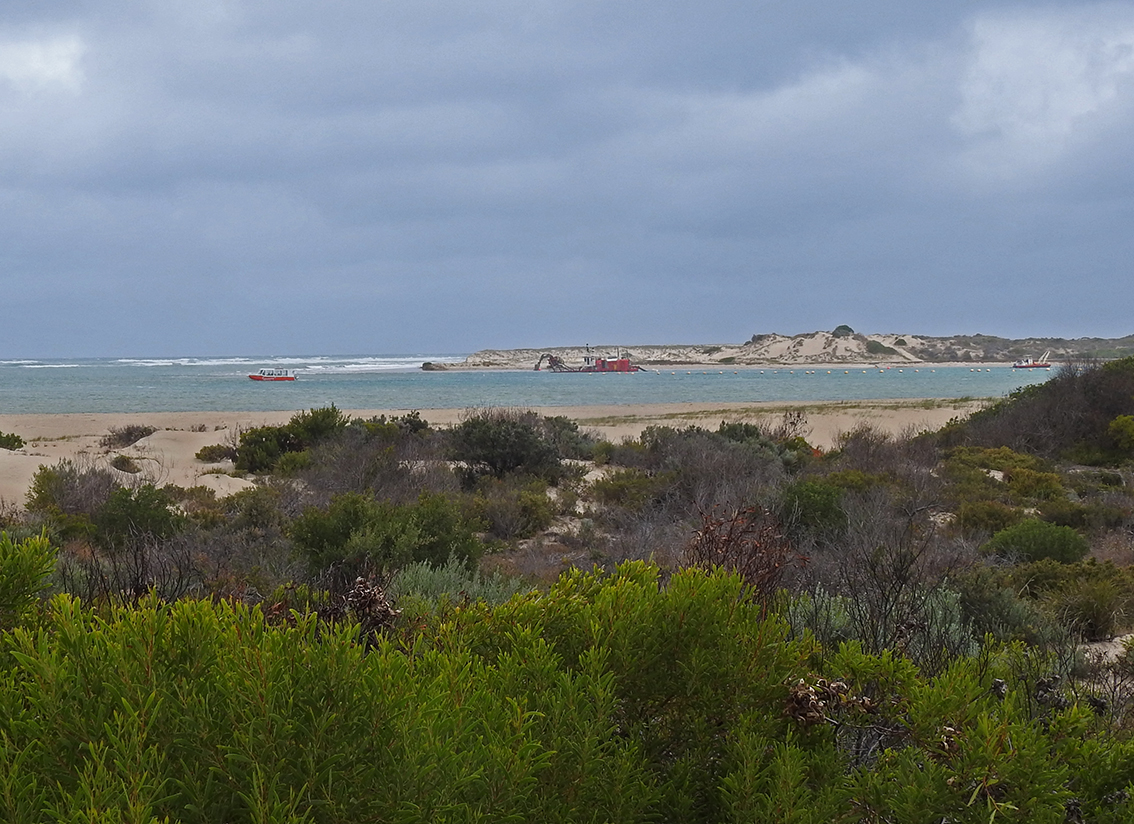
Murray Mouth with dredge in background

Surprise…time for a break

Despite the blustery weather a tourist boat is taking groups from Goolwa along the sheltered reaches of the Coorong to enjoy the scenery and wildlife. As I lift the camera to photograph the boat I notice a Pacific Gull tracing its path in the foreground, a nice image !


Tourist boat and gull in synch

There is a sign near the mouth for the Lawari Conservation Park which covers 106 hectares at the eastern end of Hindmarsh Island incorporating natural coastal scrub and former grazing land. Lawari means Cape Barren Goose in the local Ngarrindjeri language. Over a hundred different species of birds have been recorded in this park and there are significant reptile species as well as Western Grey Kangaroos.


Cape Barren Geese

Entrance to park near the river mouth

The wind and cloud have made the Murray Mouth too difficult to photograph as the wildlife is taking shelter in the grass and shrubs. I turn for home and retrace my path down the middle of the island stopping at the memorial to Captain Charles Sturt who was the first European explorer to view the Mouth of the Murray.


Sturt memorial

Layby near the bridge


Just before I cross the bridge back to the mainland there is a shelter with parking, a barbecue area and detailed graphics about Hindmarsh Island’s history. I take a path through the scrub leading a to a lookout where I can Goolwa and catch a glimpse of an old paddle steamer at the docks. This visit and reading the historical information enthuse me to return on a sunnier day and explore more of this special place where history, culture and wildlife are so closely interwoven.   

Cheers

Baz

Additional notes

This is an easy drive and walk which is quite suitable for families and seniors. Hindmarsh Island is dog friendly except for the Conservation Park.

Some useful links

https://en.wikipedia.org/wiki/Hindmarsh_Island#Lonely_Island

Please pass on this blog title and or contact information (URL) to any person or organisation with an interest in taking walks and enjoying wildlife in SA.

Click on this link and see more South Australian stories and pictures in my Weekend Notes articles

https://www.weekendnotes.com/profile/651267/