Archive | Creeks and wetlands RSS feed for this section

Wynne Vale Dam Walk

17 Feb

The sulphur crested cockatoos are perched up high in the river gums that surround the dam. Their loud and raucous calls fill the air and drown out the sounds of the other birds that live and feed around the water’s edge. Every few minutes some of the large, white parrots fly down into the acacia bushes that grow along the pathway in search of food. They tear off some of the brown, elongated pods and fly back into the higher branches where they manipulate them with their feet and beaks to extract the seeds.

Acacia pods with seeds exposed

Acacia pods with seeds exposed


Sulphur crested cockatoo eating acacia seeds

Sulphur crested cockatoo eating acacia seeds


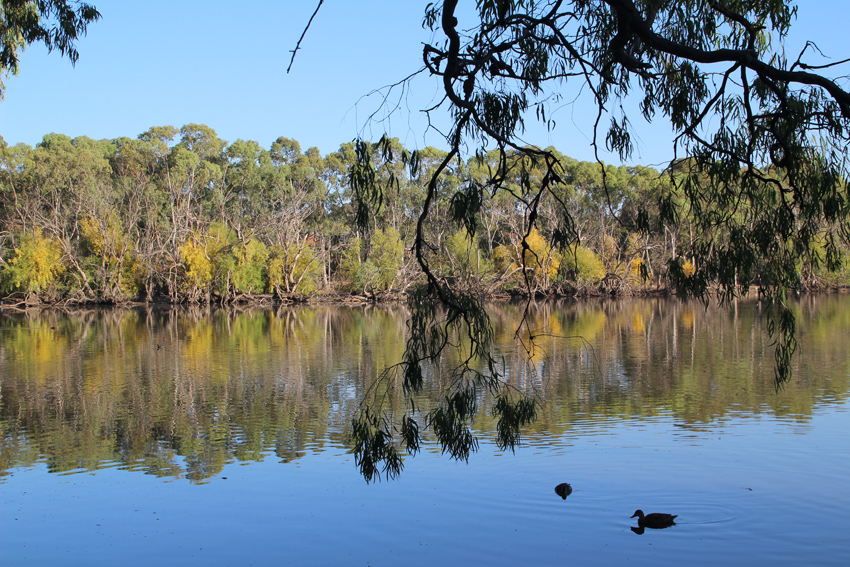
Wynne Vale Dam is just a fifteen minute bike ride north of Tea Tree Plaza along the Dry Creek trail which can be easily accessed from the bridge over Ladywood Road near the Modbury Hotel. It is a great way to break up the shopping chores or get some exercise after lunching at one of the nearby hotels and restaurants. The small lake is part of a stormwater reclamation and creek improvement project and is surrounded by a track with viewing platforms, interpretive signs and a sizeable earthen dam on the southern edge.
Wynne Vale Dam from the viewing platform

Wynne Vale Dam from the viewing platform


After watching the birds feeding for a few minutes I climb back on my bike and cycle round to the other side of the dam. Leaving the pathway I shift the mountain bike into low gear and pedal along an exposed stretch of the embankment bumping over a tangle of roots that radiate from a stand of partly submerged trees. Their skeletal trunks and branches are the perfect vantage points for a white faced heron to scope out its prey and a freshwater turtle to bask in a patch of early morning sunshine. White faced herons are quite common along the banks but the turtle is a more unusual sighting.

White faced heron survey its kill zone

White faced heron surveys its kill zone


Short necked turtle on a tree branch

Short necked turtle on a partially submerged tree branch


Just as I start to move off to my next location I catch site of a medium sized bird roosting high in one of the old willows that overhang the water. It is a nankeen night heron. Easily recognised by their cinnamon plumage and shorter powerful, beaks these herons tend to stay hidden during the day feeding in the morning, evening and sometimes at night; a behaviour that is referred to as crepuscular.

In the winter months the water level rises considerably covering the embankment

In the winter months the water level rises considerably covering the embankment


Nanakeen night herons feed on aquatic invertebrates and small fish

Nankeen night herons feed on aquatic invertebrates and small fish


After photographing the heron I cycle around the lake once more to make sure that I haven’t missed anything too obvious then head back down the western side of the creek. Where the dam ends and the creek re-emerges there is a line of exceptionally tall river gums. And there, right in my line of vision, are two koalas climbing up into the branches. Koalas, nankeen night herons and a turtle on one short ride. Not a bad morning’s work.

A pair of koalas climbing. Probably an adult fmale and mature joey.

A pair of koalas climbing. Probably an adult female and mature joey.


Thanks for reading this post.

I hope you enjoyed it.

Tell a friend who might be interested.

Cheers

Baz

Ingalalla Falls

13 Dec

Dear Reader;

Ingalalla falls does not actually cascade down the dark boulders to the pools below. This is South Australia where water is scarce and in the summer months rain is a rare blessing. But it is a waterfall and as such attracts a varied collection of wildlife as well as providing a few interesting walks and the perfect setting to enjoy a picnic in the bush.

Yankalilla's main street with bakery and surrounding hills visible

Yankalilla’s main street with bakery and surrounding hills visible (click on all images to enlarge)


The falls are about 10 kilometres off the main south road near the coastal hamlets of Normanville and Yankalilla. Both towns have superb little bakeries where one can quickly stock up on a range of ‘goodies’. My choice for this expedition included a gourmet chicken, potato and cheese pie with a generous serve of bee-sting cake (a legacy of our early German settlers) to follow.

Ingalalla falls desceding into the creek

Ingalalla falls descending into the creek


The dirt road from Normanville passes through a mixture of open bushland and wheat fields with a superb links golf course near the main highway. And just few kilometres down the track I noticed a boulder with a metal plaque that celebrated the life of a local settler, mariner and pastoralist William Field, adding an unexpected historical perspective to the day.

A little bit of history

A little bit of history


Where the native scrub started to merge with pine plantations, a small signposted track leads to a sheltered camping area complete with a simple shelter and scattering of wooden benches and tables. From there, a walking trail follows the little creek to the falls. On the right side of the path a steep hillside covered with bracken, native shrubs and tall stringy barked eucalypts rises abruptly from the creek.

Bushland trail characterised by  eucalypts, bracken and low bushes (2)

Walk to the falls showing eucalypts, bracken and low bushes


The rustle of leaves and chirping calls indicated that the thick cover was home to many small bird species but the dense foliage made identifying them somewhat difficult. Eventually, I adopted the sit still and wait strategy which yielded results as a yellow faced honeyeater and grey fantail soon came within camera range.

Grey fantail perching near the creek after eating an insect

Grey fantail perching near the creek after eating an insect


Yellow faced honeyeater in thicket

Yellow faced honeyeater in thicket


Although it was a mild day for summer, a few insects were active around the creek. Both dragon and damsel flies hovered amongst the reeds and several species of butterflies alternately fed on small flowering shrubs and rested amongst the leaf litter.

Wattle trunk scarred by boring beetles

Wattle trunk scarred by boring beetles


Meadow argus butterfly camouflaged in leaf litter

Meadow argus butterfly camouflaged in leaf litter


The rest of my walk was equally rewarding with a pair of yellow tailed black cockatoos making a sudden appearance in one of the nearby pine trees and a couple of wester grey kangaroos bounding across the track as we drove back to the road with the late afternoon light enhancing the golden wheat fields.

Wheat fields on the edge of the track to Ingalalla

Wheat fields on the edge of the track to Ingalalla


I hope you enjoyed this recollection

Drop me a line with any suggestions, criticisms or compliments

All are welcome


Baz

Crossing the Creek

30 Nov

Dear Reader:

In my other life I am a teacher and my school has the unique advantage of having a creek running through the centre of the campus neatly dividing us into two quite distinct entities. I say advantage but to those less enamoured by the lure of nature it is seen, more as a barrier; to each their own. Every day I cross the creek on at least a half dozen occasions and every day I see something interesting that I point out to my students in the hope that it might promote a little engagement with the non-digital world. Duelling magpies, mating dragonflies and the occasional brown snake have all been prime time features.

Baz teaching creek studies on the bridge

Baz teaching creek studies on the bridge (click all images on page to enlarge)


Education aside, the creek is a wonderful resource for the people who live in the area and walkers, joggers and cyclists alike use the pathways that run along the banks. Currently, the creek is starting to dry out as spring fades and summer breathes its hot northerly winds across the city. But there is still a diverse mixture of wildlife taking advantage of the receding water. Both black and maned ducks have raised their ducklings in the small pools near the school bridge and chestnut teal with their striking markings are not uncommon.

Black ducks and chestnut teal

Black ducks and chestnut teal


My creek runs through the suburb of Mawson Lakes which has been fashioned around a series of artificial lakes that in themselves are home to various water birds, turtles and huge carp. The central shopping area is a good place to start a walk as it has a nice little cafe overlooking the main stretch of water and the coffee is good. Mawson Lakes is a twenty minute train or bus ride from the city and the train station sits on the northern edge of quite a sizeable expanse of swampy wetland.

Mating dragonflies

Mating dragonflies


The local council have planted bushes and trees along the length of the creek which attract a variety of birds. Rainbow lorikeets seem to be around the area throughout the year with the greatest numbers occurring when the eucalyptus trees are flowering. They provide these raucous little parrots with the nectar, seeds and blossoms that are the bulk of their diet.

Rainbow lorikeet feeding on eucalyptus blossoms

Rainbow lorikeet feeding on eucalyptus blossoms


During my most recent foray across the creek it was large water birds that dominated the reedy watercourse. Ibis and herons are quite common but one of the children rekindled my faith in the observation abilities of twelve year olds when she noticed that one of the ibises had a different shaped beak which it was swinging through the water rather than probing. It turned out to be our first spoonbill for the year.

Spoonbill feeding

Spoonbill feeding


Until our next chat

Baz

Breakout Creek’s Herons

22 Jun


Dear Reader

It is a typically South Australian winter’s afternoon; cool, clear and sunny with a light breeze coming off the ocean.

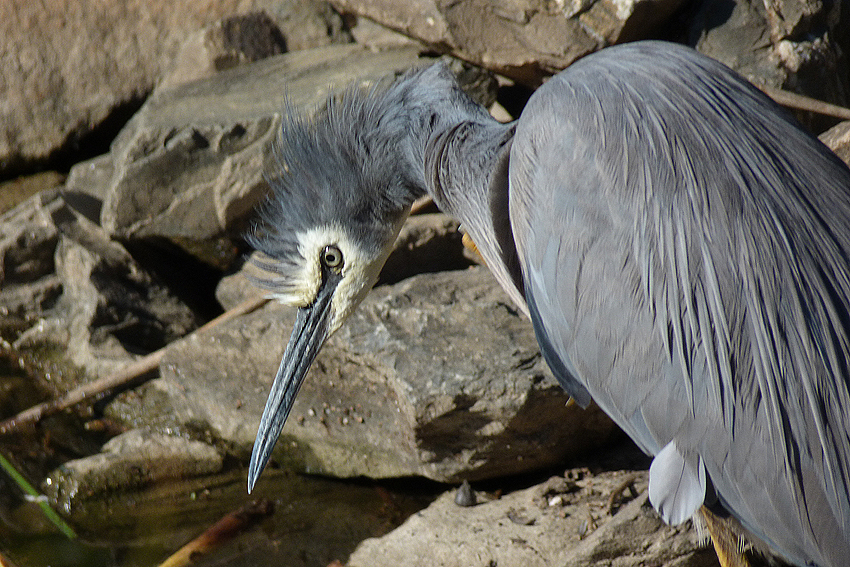
5 heron poised to strike

Grey faced heron poised to strike….click to enlarge image

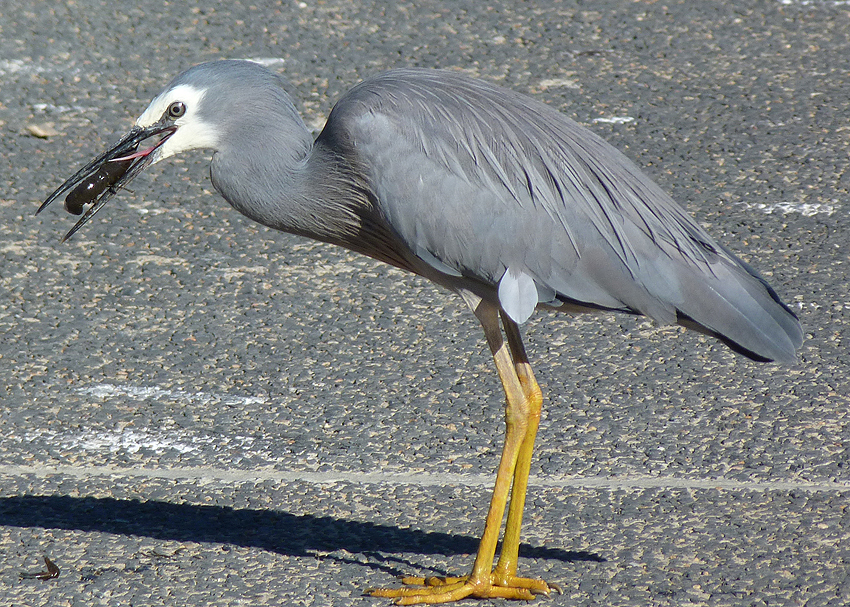
4 heron and yabbie

Heron and yabbie (freshwater crayfish)….click to enlarge image


The white faced heron is hunting amongst the shallow reed beds and rocks along the edge of the river bank. It moves slowly, carefully placing each of its long, spindly legs before freezing to stare into the water in search of prey. The long neck coils back slowly and then with disarming speed the dagger beak flashes into the water to snatch an unsuspecting yabbie. The bird rearranges the unlucky crawfish in its beak then strides onto the causeway to enjoy its catch.

3 white faced heron in flight

White faced heron in flight….click to enlarge image


Over the next few minutes I watch the heron as it continues to hunt in the same area. I am trying to capture some images that depict its hunting style but the wader is becoming more nervous and eventually takes to the air.

Breakout Creek looking south

Breakout Creek looking south….click to enlarge image


I am at Breakout Creek, a section of the Torrens where the river broadens and significant environmental work has been done to improve aquatic habitats. Over the years I have seen water rats, lizards, frogs, possums as well as a wide variety of birds in this area. It is a favourite destination when I go for a bike ride along Linear Park and one that I would recommend to any visitor who enjoys the outdoors and a little mild exercise. Free bikes are available at the weir near the golf course and the ride to Breakout Creek and back is an easy one hour pedal.

7 greater egret

Greater egret….click to enlarge image


From the causeway I cycle back towards the city for a couple of hundred metres then dismount where the reeds are thickest. Between a small island and the bank a lone greater egret is hunting, half concealed by the brush. Like the grey face the egret uses its long bill to snatch small prey from the water and while I am watching it snaps up several small fish.

2 Nankeen night heron

Nankeen night heron….click to enlarge image


Close by the reed bed some tall eucalypts overhang the creek and, as luck would have it, there is a far more unusual heron roosting in the topmost branches. The nankeen night heron is a nocturnal hunter and it spends the days resting before hunting for its prey when the sun goes down. This one is becoming a little more active as it is now late afternoon. Night herons are one of my favourite birds and though they are not exactly rare along the river seeing one is a bit of a treat.

6 red ochre grill

Red ochre grill….click to enlarge image


Three herons in one day (egrets are a kind of heron )……nice; but the day is not done and I have planned to meet a friend for dinner at the Red Ochre Grill, a fabulous restaurant adjacent to the weir, golf course and bike hire station where I started my ride. Their menu, which sources local ingredients and is a kind of upmarket take on the bush tucker concept, is certainly something to look forward to.


Until next time

Baz    

Mount Barker’s Wetland Wonders

8 Jun

Dear Reader;

It is a glorious autumn day, perfect for a little bird-watching and a stroll around the water.


The tiny plover has been edging around the reed beds for the last ten minutes, finally coming out of the dense cover around the lake to probe the mud for worms and other avian niceties. The colourful little wader seems more confident and continues to feed just forty metres from where I am concealed in the undergrowth; a little too close to bull ant nest for comfort. Eventually it comes close enough for me to fire off a couple of shots before taking off abruptly, spooked by a pair of maned ducks cruising low over the water.


P1070914

Black-fronted plover (click to enlarge)


I am at the Laratinga wetland on the edge of Mount Barker, the largest town in the Adelaide Hills. The word Laratinga comes from the indigenous name for the Mt Barker Creek and near the entrance of the wetlands there is magical series of portraits that relate episodes within the timeline of the original inhabitants of the area, the Peramangk people. Mount Barker is a busy regional centre with plenty of places to buy fresh local ingredients for making up a picnic lunch to enjoy while you wander around the wetlands observing the diverse collection of plants and animals that live there.

P1070892

Portraits at the wetlands (click to enlarge)


Leaving my hiding place on the edge of the lake, I follow one of the many trails that zigzag through the reserve. Near the edge of another patch of reeds a small flock of ibis are feeding in the shallows. Their distinctive curved beaks and greater size means they might be feeding in the same habitat as the little plover but their prey will be distinctly different. Such a variety of beaks, feet and size is one of the reasons that so many different species of birds can feed together in the same area without destroying the food supply. But the wetland is not reserved for wildlife enthusiasts and a jogger runs a little too close to the flock causing the them take to the air. Despite this being a fairly recent wetland, constructed by the council to filter water naturally, wildlife and people live quite harmoniously and the birds soon return to their chosen spot and resume dining.

P1070923

Ibis in flight (click to enlarge)


Although I have caught a fleeting glimpse of a couple of turtles in the shallow pools and the undergrowth has more than healthy population of insects; it is the bird life that is dominating my walk around the wetlands. The reeds that encircle the water are a veritable cathedral of birdsong. I can hear the twitter of finches and reed warblers in the tangle of greenery and occasionally catch sight of one of the tiny birds flitting amongst them. Finally a superb blue wren makes a more prolonged appearance as it perches on a reed stem giving me just enough time for one last shot before I leave.

P1070928

Superb blue wren (click to enlarge)


Cheers

Baz

Burnside’s Hidden Creek

6 May

Dear Reader: 

The wattle bird seems to be totally absorbed and indifferent to my presence as it feeds on the tiny white lerps that dot the leaves of a creek-side eucalyptus tree. Usually these large members of the honeyeater group are quite nervous and hard to approach. This one, however, is determined to provide me with a ringside display of its acrobatic ability as it hangs upside down and hops from branch to flimsy branch in pursuit of its lunch. The tiny white lerps look like an arborial version of measles. In fact they are the early stage of a parasitic bug called a psyllid, an introduced insect pest that sucks the ‘juice’ from the trees.

A wattle bird pecks tiny insects from the leaves of a blue gum near the river bank

A wattle bird pecks tiny insects from the leaves of a blue gum near the river bank.


I am walking along the banks of second creek in the Michael Perry Botanical Reserve. This charming little park is easily accessed from a small lane called Andrew’s Walk at the southern end of Hallet Road, in the hills face suburb of Burnside. The shady banks, trickling stream and little ponds have a European flavour to them affording a cool retreat in the drier summer months. Before setting off on my short walk to investigate the creek’s wildlife I made a couple of crucial stops to provision my pack for a bite to eat on the river bank. At the nearby Stoneyfell Winery I found a fine bottle of white while ‘Taylor Blend’, a fashionable little eastern suburbs coffee shop on Hallett Road, provided a wide selection of gourmet paninis and local beesting cake. When one has to sit by a river bank for an hour or so to wait for the wildlife it might as well be done in style.

The brook cascades over a small ford made from slate and sandstone rocks

The brook cascades over a small ford made from slate and sandstone rocks


Leaving the wattle birds to finish their meal I work my way along the creek, pausing frequently to try and catch sight of the small birds that I can hear chirping and rustling deep in the cover of the reed beds. Without warning a grey faced heron explodes from the tangle of branches a couple of metres in front of me. The birds wheels in flight and settles on a branch high in a nearby pine tree where it can keep a sharp eye on its human intruder. As I point the camera at the perching water bird I catch site of a pair of Kookaburras in a huge eucalypt further up the opposite embankment. Two predatory birds; now it’s time to take a look for the prey animals that sustain them.

A white faced heron watches the creek from its vantage point in a pine tree

A white faced heron watches the creek from its vantage point in a pine tree


The first interesting small animal that I notice is a water skink which is sunning itself on a log. Being mid autumn I am surprised to see a reptile as most would now be ‘dug in’ for the winter months ahead. As I sit quietly and prepare to watch the lizard, a green eyed dragonfly lands on a boulder in the middle of the creek. And, where the water has formed a small clear pool I can see tiny fish or tadpoles swimming close the reeds and water striders skating across the surface: like my lunch, a gourmet larder for a range of feathered predators.

A water skink basking on a log amongst the reeds

A water skink basking on a log amongst the reeds

A dragonfly pauses for a moment on a warm rock in the creek

A dragonfly pauses for a moment on a warm rock in the creek


A fence marks the end of the reserve and I cross the creek to return on the northern bank. The tiny reed birds still elude me but in a shady stretch of water a single black duck is swimming against the current as it dabbles for food. A common enough species in southern Australia but the light is particularly good and on reviewing the shot it seems to encapsulate the mood of this lovely little waterway.

Black duck are common along the waterway

Black duck are common along the waterway


Until the next time

Baz

Two out of Three ‘aint Bad

15 Apr

  The red bellied black is sunning itself on the track about forty metres in front of us. It hasn’t caught the scent of the dog yet or reacted to the vibrations created by our footsteps. We stop and watch it for a few seconds and that change in rhythm seems to alert the snake. Suddenly, a grey faced heron that is feeding amongst the samphire plants that line the foreshore of the lake, takes to the air. That is warning enough for the reptile and in the blink of an eye it has disappeared into the wetland. My companions are relieved, the dog is unaware and I must admit to being a little disappointed. They walk on ahead while I sit on a pine railing near the last point of sighting and watch. Sometimes a little patience pays off and after a few minutes I see just enough of the snake to fire off a single frame before it weaves its way deeper into the swamp.

Red bellied black snake hunting

Red bellied black snake hunting

  These rather striking snakes are quite common in the cooler wetland areas of southern Australia. They grow to around 2 metres in length and their diet includes a variety of small mammals, amphibians, fish and reptiles including their own species. They are related to the deadlier and more aggressive brown and tiger snakes that also occur in this area. Red bellied blacks produce between 5 and 18 young which are delivered in a membranous sac; they are considered to bear live young rather than produce eggs.

5 lake alexandrina

Lake Alexandrina on the shores of Milang

  My encounter with the black snake occurs along a dirt track on the edge of the small town of Milang, on the shore of Lake Alexandrina. With a population of just 500 Milang is a charming reminder of the bygone era of paddle steamers and rural living. The little township is a pleasant twenty minute drive from the rural centre of Strathalbyn. It is accessed by both sealed and unsealed roads which pass through rolling farmland and vineyards. With a caravan park, wharf, general store, designated walking trail and several historic sites; Milang is a great place to spend a couple of laid back days in the South Australian countryside.

2 brown snake

Common brown snake in strike position

  Leaving the black snake to its swampy refuge, I walk further down the trail and to my astonishment I catch sight of a long slender tail protruding from the edge of the grass verge. I freeze and ‘ever so carefully’ step forward until ‘snake two’ is immediately below me. It is almost completely obscured by a tangle of grasses and reeds. I watch it for a few minutes trying to angle my camera for a worthwhile shot. No luck; the common brown snake; the second most venomous land snake in the world; remains motionless, using its colouration and shape to stay hidden. I step back to change the angle fractionally and when I glance back through the viewfinder the snake is gone…without the slightest sound it simply disappeared into the grass.    

Dirt track between swamp and township

Dirt track between swamp and township

I have been photographing wildlife in South Australia for many years and I rarely see venomous snakes. To see two of the resident three species in the space of 15 minutes is extraordinary to say the least. Needless to say I did not run into a tiger snake on my return walk along the track.  

Cheers Baz
Port Germein ….A Long Walk Out to Sea…Field Notes

8 Mar

General description of location

Port Germein is a  small country town just north of Port Pirie which is  a major regional centre about 2½ hours from Adelaide

Lies near the top of Spencer Gulf and is in the shadow of the Southern Flinders Ranges.

Town has a pub with excellent food, a general store and campground

Small local population of around 250

A long jetty, once used to load grain clippers, it extends from the shore to over a mile out to sea and most of the beach is exposed at low tide

Good fishing, crabbing and general coastal wildlife walks

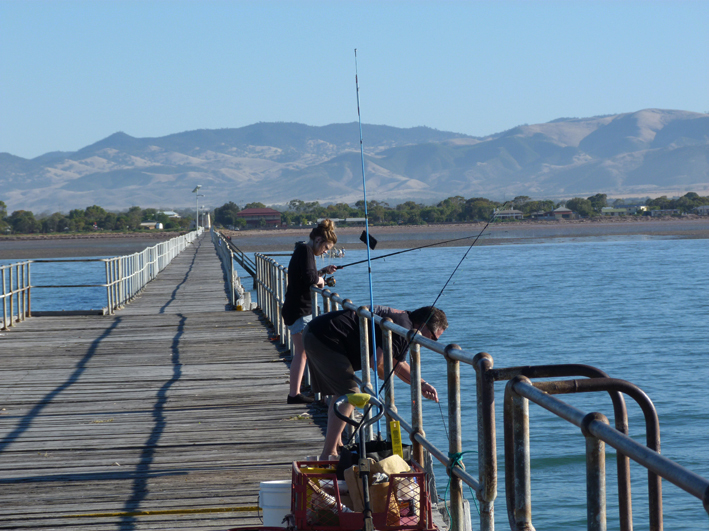
6 jetty and ranges red

View back to the ranges from the end of the jetty

Notes

Season:

Late summer

Weather:

Mild morning temperature around 18 ºC at 0900.

Forecast temperature 35°C later in the day

No wind and clear skies

5 blue bee red

Blue bee on coastal heath

While walking from the house where I am staying to the jetty I spot some blue bees, an Australian native species, feeding on a coastal bushes with small blue flowers

They tend to feed on blue and white blossoms

Note to self

Identify some of the coastal vegetation before next PT Germein post

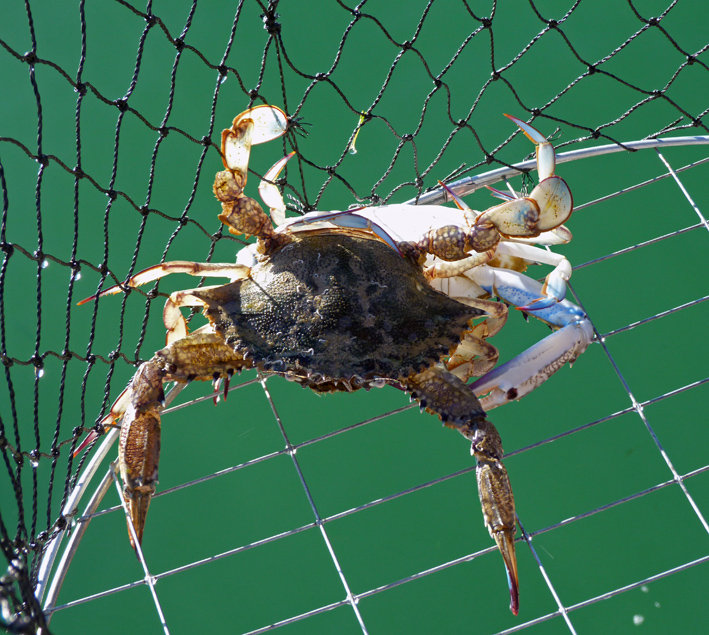
3 blue swimmer crab red

Blue Swimmer crab in net

I stroll along the jetty and notice a variety of small wading birds feeding on the sand/mud flats, some are searching out small pools of residual water

A young couple near the end of the jetty are crabbing and they have caught half a dozen Blue Swimmer Crabs which are common at this time of year

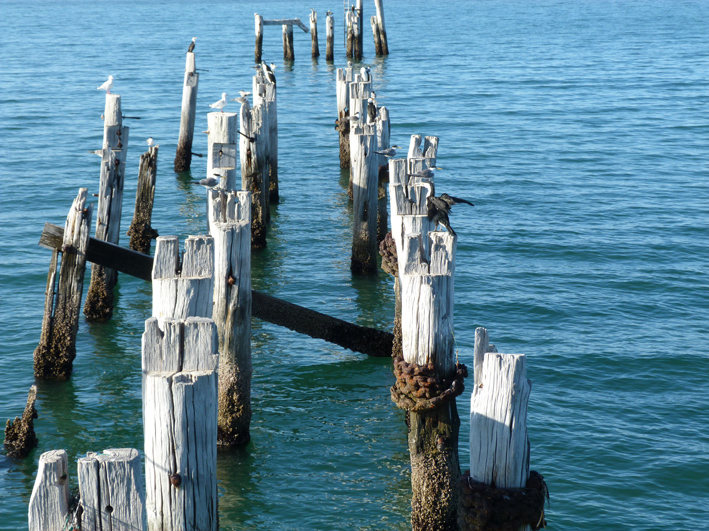
A group of Pied Cormorants and Common Terns are perching on some battered poles which remind us that the jetty was once longer

A family have used a tractor to tow out a small boat and launch it as the tide comes in

The view from the end of the jetty of the foreshore and Ranges is spectacular.


12end  of jetty red

Terns and Cormorants at the end of the jetty

I return to the shore and walk along coastal path that weaves between low bushes and stretches of beach

There are honeyeaters and finches in the bushes and a Ring Necked Parrot preens itself on a branch

Near a rocky outcrop close to a garden I come across a Bearded Dragon sunning itself

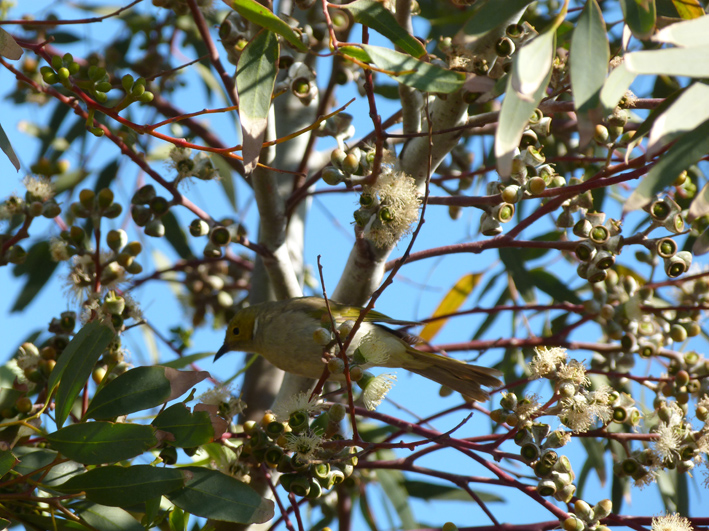
There are also quite a few White Plumed Honey Eaters feeding on blossoms in Eucalypt trees that grow in gardens near the coastal walk

After sipping nectar some are hawking for insects.

5 white plumed honeyeater red

White Plumed Honeyeater feeding in eucalyptus tree near the foreshore

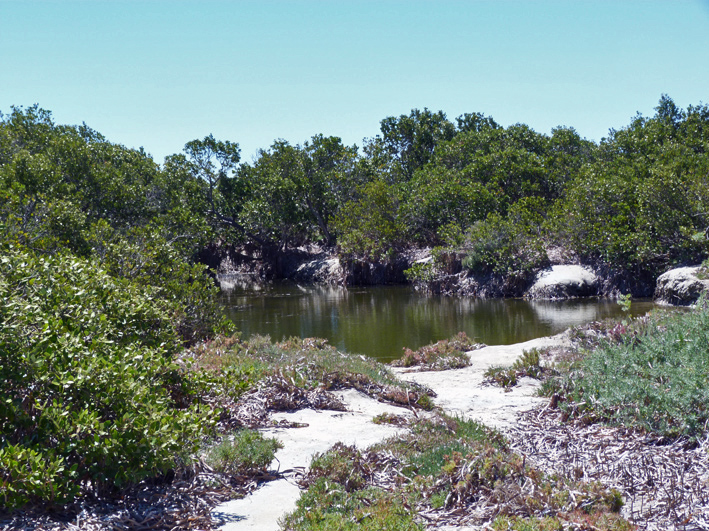
A ten minute walk from the end of town, the coastal scrub and samphire give way to stands of mangrove and a whole new coastal ecology emerges

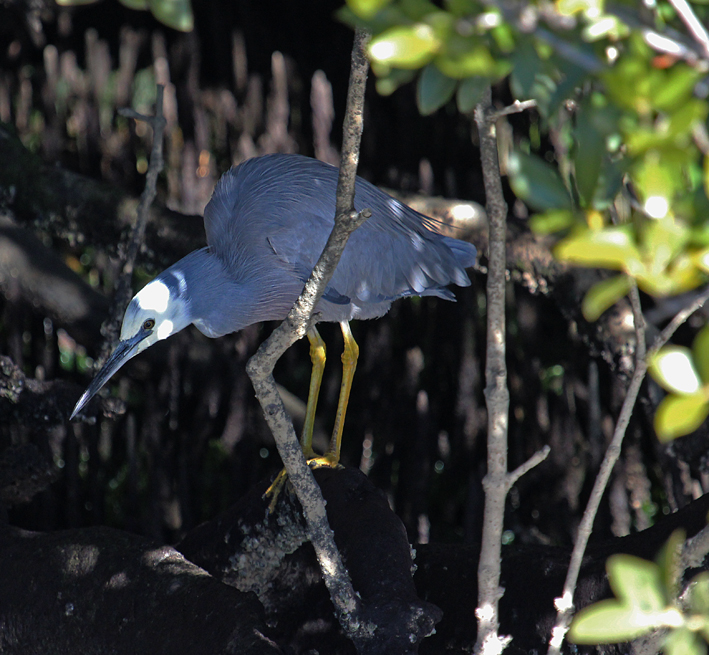
A White Faced Herons stalk small fish and crustacean in the shallow channels and a White Browed babbler fluffs up its feathers in one of the mangrove trees

These mangroves are part of a south Australian system that marks the southernmost extent of mangrove communities in the world

Small fish can be seen schooling in some of the deeper channels

This is a nursery area for many commercial species.

8 mangrove pool red

Mangrove pool

15

White Faced Heron hunting in the mangroves

I head back to town for a schnitzel and a beer at the local pub and the promise of a drive to Telowie or Port Germein Gorge in the afternoon to look for rock wallabies and eagles.

Cheers

Baz

Salisbury’s Urban Wetlands

3 Jan


Dear Reader:

The saltbush and thorny wattle bushes that surround the bark chip path are thick and impenetrable. All around me I can hear the hum of insects and the twittering of unknown birds. Eventually I catch sight of a small bird perched in some bushes about twenty metres in front of me. The light is poor despite the sunny day and the shot is far from ideal. I wait for a few minutes. Finally the little bird breaks cover and sits on an exposed branch. It is still moving so the image will not be perfect but I fire off a few frames in the hope that one will help me to identify it.

1 Female fairy wren in scrub

Female fairy wren in scrub

5 Typical wetland  habitat

Typical wetland habitat


A little further along the trail I cross a footbridge and a wide expanse of shallow water confronts me. A collection of wading birds are feeding on an exposed mud-bank. They see me and start to behave nervously. I capture a single image just moments before the birds scatter; some disappear into the reeds while others take flight and head deeper into the wetland.

2 Various species of water birds on an embankment

Various species of water birds on an embankment


I am in the Greenfields Wetlands near Mawson Lakes where I work as a teacher. This complex of lakes, reed beds and low scrub is part of a chain of wetlands that filter stormwater for re-use in the Salisbury area a few kilometres north of Adelaide. This particular area has been carefully rejuvenated over several decades turning wasteland into a natural wetland zone where the wildlife is wary. Even common ducks disperse as I approach rather than simply paddling away as they might in the urban part of the creek that passes through my school. The wildlife is not only cautious but more diverse and one gets a real sense of being in the field, despite the traffic and housing only a hundred metres away.

2 Watershed restaurant

Watershed restaurant


My next wildlife encounter tests both observation skills and patience. I detect a slight movement on a mudflat near some reeds. I look a little closer and can see nothing. I wait, searching through the telephoto. Eventually, what appeared to be a brownish patch of decaying plant matter moves ever so slightly. It is a little black-fronted dotterel that has been foraging along the edge of the creek. A few more minutes pass more before the bird feels confident enough to resume its previous feeding pattern and I have to move carefully and slowly to capture an image. This is the kind of photography that I love. Perhaps it rekindles some lost predatory instinct…who knows?

4 Dotterel feeding on muddy embankment

Black-fronted dotterel feeding on muddy embankment


My final wetland moment is really quite unexpected. As I leave the trail and head up to the little restaurant that sits alongside the wetland there is a flurry of wings and water behind the reeds to my right. A flock of Australian pelicans lifts into the air. My camera is in standby mode and by the time it has re-started the birds are climbing rapidly. I hastily track them in flight and fire off a series of shots. Later when I review the images I am delighted to find that one picture shows three birds with their wings in different flight position.

6 Pelicans showing different wing positions in flight

Pelicans showing different wing positions in flight


As the light starts to fade I return to the Watershed Cafe, hand in my trail key and enjoy coffee and dessert on the deck overlooking the main lagoon. A tough way to end my day.


Cheers

Baz


JET

An Urban Billabong

29 Sep

Dear Reader:

The word billabong looms large in Australian folklore. It is where ‘a jolly swagman’ met his untimely end and mythical beasties called ‘bunyips’ supposedly emerge from the water to devour unwary campers. In reality, billabongs are freshwater wetlands that flood when river levels are high then become more isolated in the dry season. They are essentially backwaters that provide a refuge for many different species of animals as well as being popular locations for camping and fishing.

i

Still, dark waters of an urban billabong


In South Australia the lower reaches of the Murray River has many lovely billabongs that have provided me with many a peaceful afternoon’s wildlife watching and photography. However, the trail that runs along the banks of Adelaide’s Torrens River also incorporates a little billabong which is tucked behind the upmarket suburb of St Peters, just a stone’s throw from the CBD. It was rehabilitated in the mid eighties and over the intervening years various community and government groups have overseen its care and maintenance.

c

A mosaic of the rainbow serpent reflects the importance that Aboriginal people attached to billabongs


Last weekend, I packed my little super-zoom camera, hopped on the bike and pedalled up to the billabong to take stock of the wildlife. It has been a long wet winter and I was hoping that the warmth of the first few weeks of spring would stimulate some wildlife activity. I was not entirely disappointed. As I approached the little wooden landing that fronts the water, a pair of amorous crested pigeons pranced and displayed to each other. Close to a patch of reeds a mother black duck was tending a pair of fluffy little ducklings.

h

Courting crested pigeons

k

A pair of black swans nibble the water side vegetation


During the winter months the landscape may be verdant but few of the native shrubs flower and the insects that rely on the blossoms are rare. Now the billabong was clearly beginning to emerge from its winter blues and life was starting to reassert itself. As well as the hormonal pigeons and baby ducks a colony of colonial spiders had constructed a silken trap in an acacia bush and delicate little purple chocolate lilies were emerging from their winter dormancy.

chocolate lily

Chocolate lily

L

Colonial spiders construct a complex web in a wattle bush


As spring turns to summer I am sure the wildlife will continue to flourish and I look forward to revisiting and reporting back to you.

Cheers

Baz