Archive | Fleurieu Peninsula RSS feed for this section

Glacier Rock….Good food, Geology and Wildlife

30 Nov

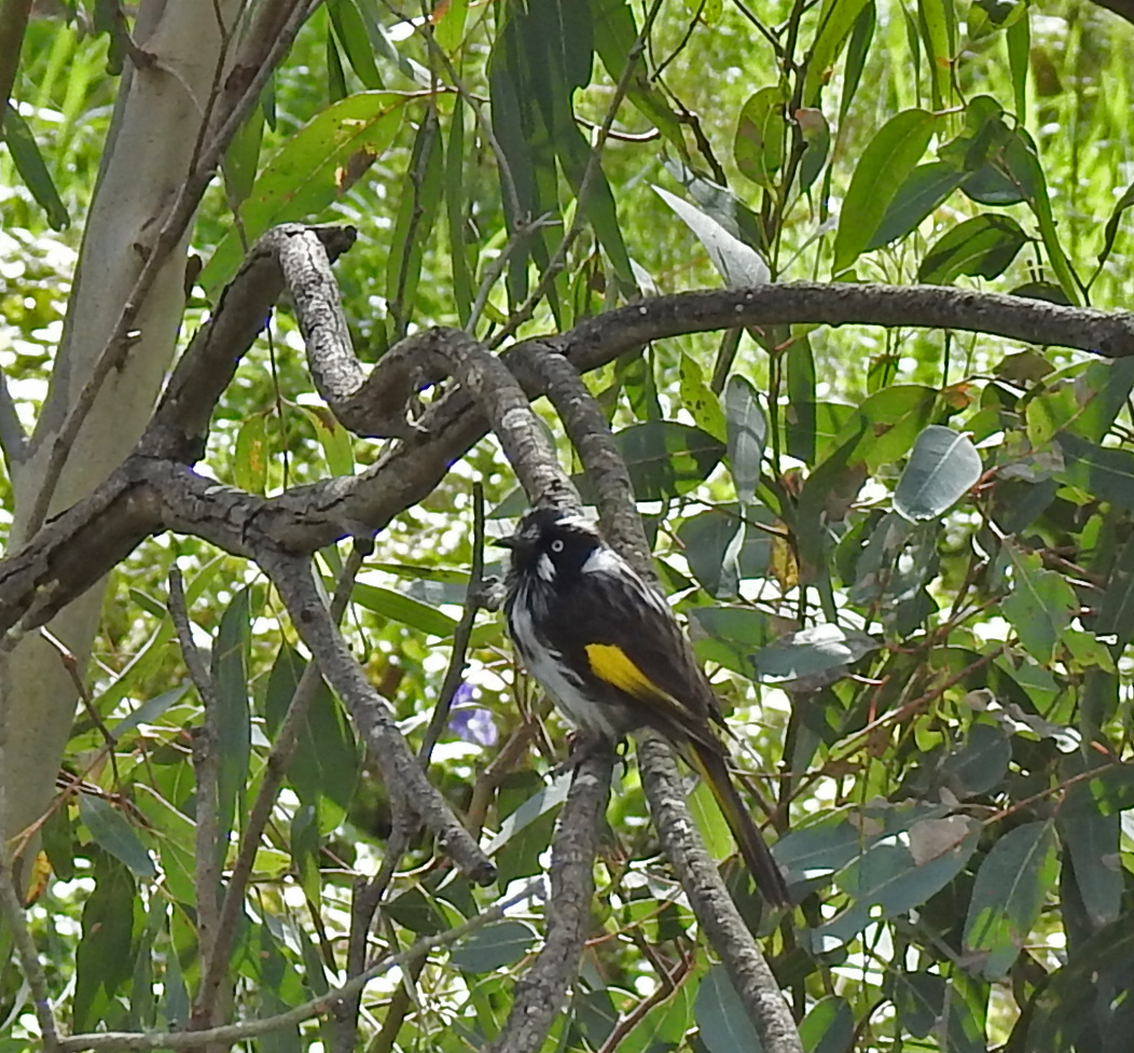
A pair of New Holland Honeyeaters

Dear Reader:

There is white water swirling around the boulders in the river and a family of Pacific Black Ducks are huddling to one side where the water is calmer. Perched amongst the branches of an overhanging eucalyptus tree I make out the shape of several New Holland Honeyeaters and hear the distinctive call of Sulphur-crested Cockatoos as they fly overhead.

Breakfast at the Tearooms

I am sitting on the back decking of the Glacier Rock Tea Rooms  having just devoured a serve of the delicious waffles topped with berries, cream and ice cream; with a little maple syrup for good measure. The weather is overcast and not great for photography but I shall make the best of it.

Typical rural countryside along the Inman Valley

On the drive along the Inman Valley Road we spotted a mob of roos feeding just outside the little township of the same name. There were also  black headed sheep and numerous herds of dairy cattle grazing on the fertile grassland. Some really pleasant rural scenes to photograph.
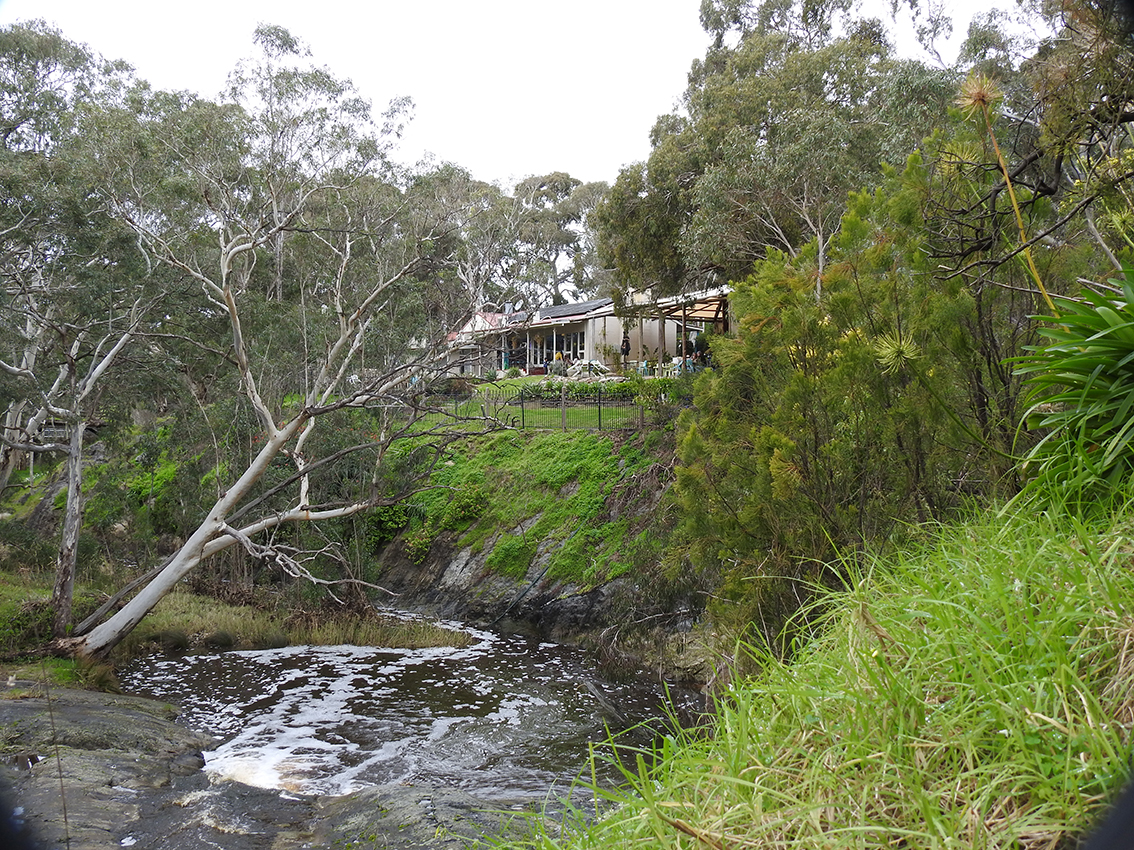
Inman river and Tearooms

I take the track from the caffe down to the river passing an information board on the way which explains the geological processes that lead to the rock formations. They involved the scraping of surfaces by rocks embedded in an ancient glacier which carved out the valley millions of years ago.

White-naped Honeyeater

Grey Fantail

From the viewing point alongside the river I watch Welcome Swallows and Grey Fantails hawking for insects above the water. And, to my great delight, spot a bird I have never photographed before: a White-naped Honeyeater.  

Old bridge over the Inman River
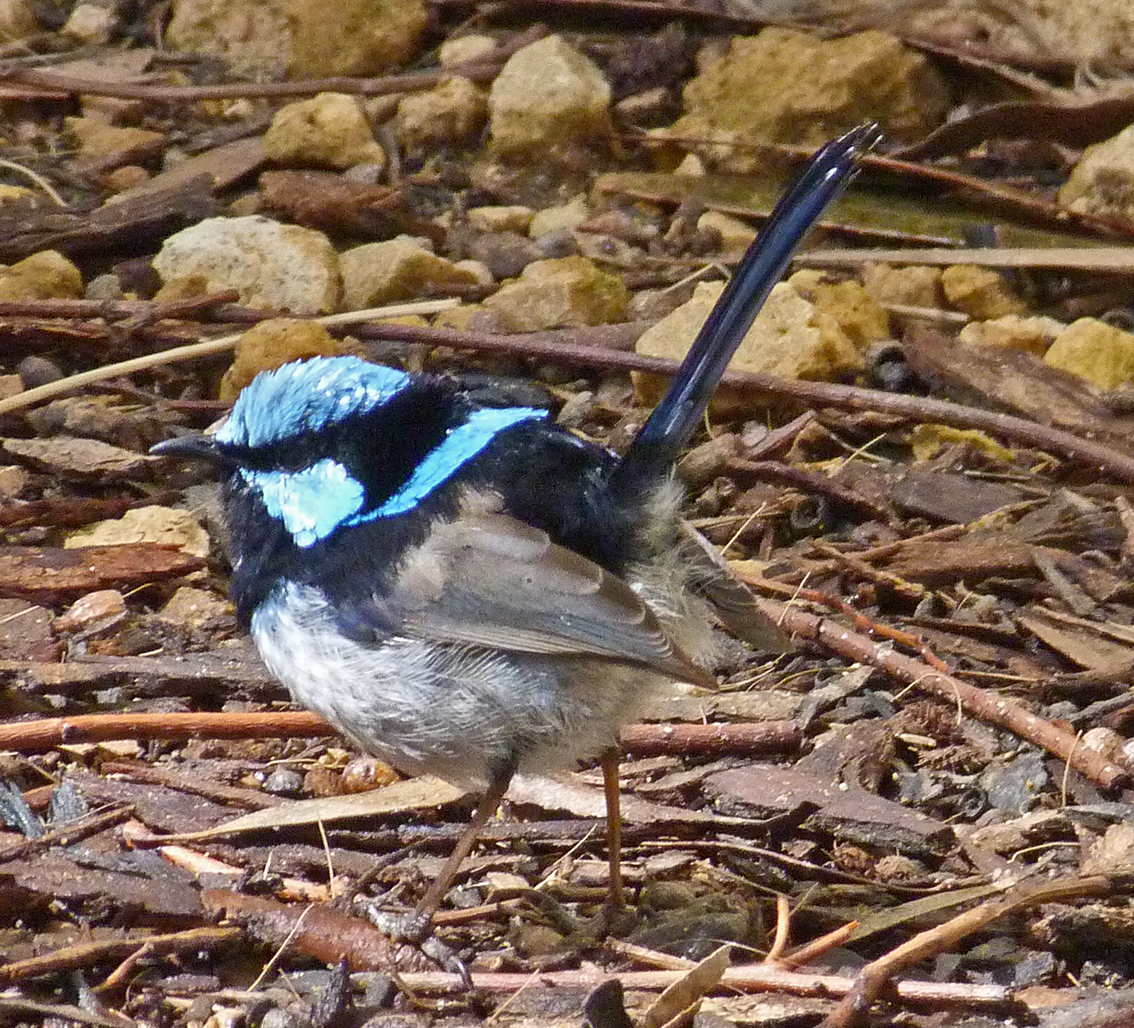
Superb Fairy Wren

The Mt Alma Road runs alongside the café. I walk a short distance along the road to get a good view of a dilapidated, old bridge which crosses the river. Thick brush lines the first section of the road and I can hear the twittering of wrens in the thickets. There are both sheep and cattle in the paddock opposite.

Galahs in silhouette

Red Wattlebird

On the other side of the Inman Valley Road, a narrow, sealed track called Parsons Road climbs a small rise. In the field alongside the road, several Galahs are perched at the top a long dead tree. Nearby a group of Red Wattlebirds are feeding on flowering shrubs along the fence line.

Spider predation or devouring its own carapace after shedding????

However, my final wildlife encounter is on a much smaller scale. A little spider (species unknown) appears to have caught another spider in its web and is starting to wrap it in silk ready to devour later.
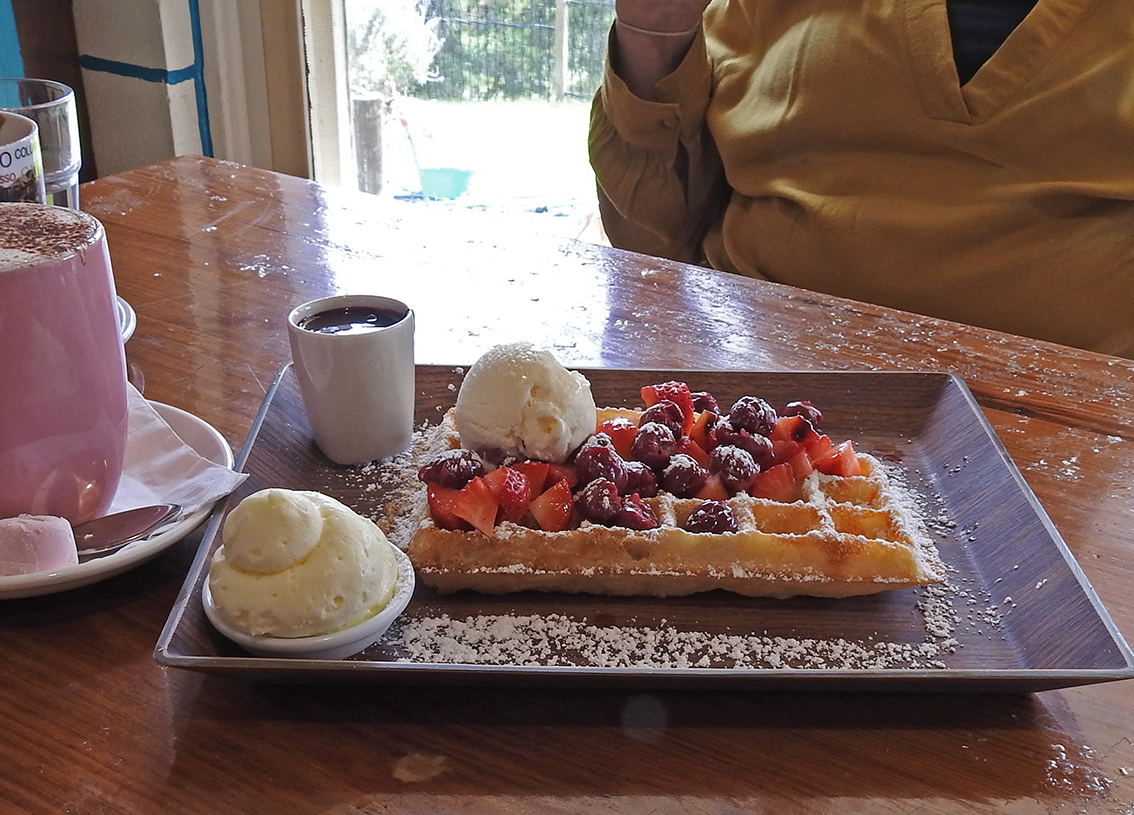
Sweet indulgence

My walk is over and I shall return to the tearooms and treat myself to a hot chocolate. An appropriate end to a rather successful walk in this lovely part of the Fleurieu Peninsula.  

Cheers

Baz

Additional notes

This is an easy walk and drive which is quite suitable for families and seniors with public toilets, parking and other facilities nearby. It is dog friendly.

Please pass on this blog title and or contact information (URL) to any person or organisation with an interest in taking walks and enjoying wildlife in SA.

Click on these links and see more South Australian stories and pictures in my Weekend Notes articles as well as locating similar blogs on Feedspot’s top 20 Australian wildlife blogs

https://www.weekendnotes.com/adelaide/writer/452/

https://blog.feedspot.com/australian_wildlife_blogs/

Aldinga’s Temperance Precinct

13 Oct

Dear Reader:

There is a sizeable group of Short-billed Corellas in the eucalyptus trees flanking the street. They exhibit a range of behaviours ranging from preening each other to nibbling branches and feeding on gum nuts. Some of the cars parked under the trees or nearby have also suffered some paintwork indignities due to the sheer number of birds.

Little or Short-beaked Corella

Corellas in tree

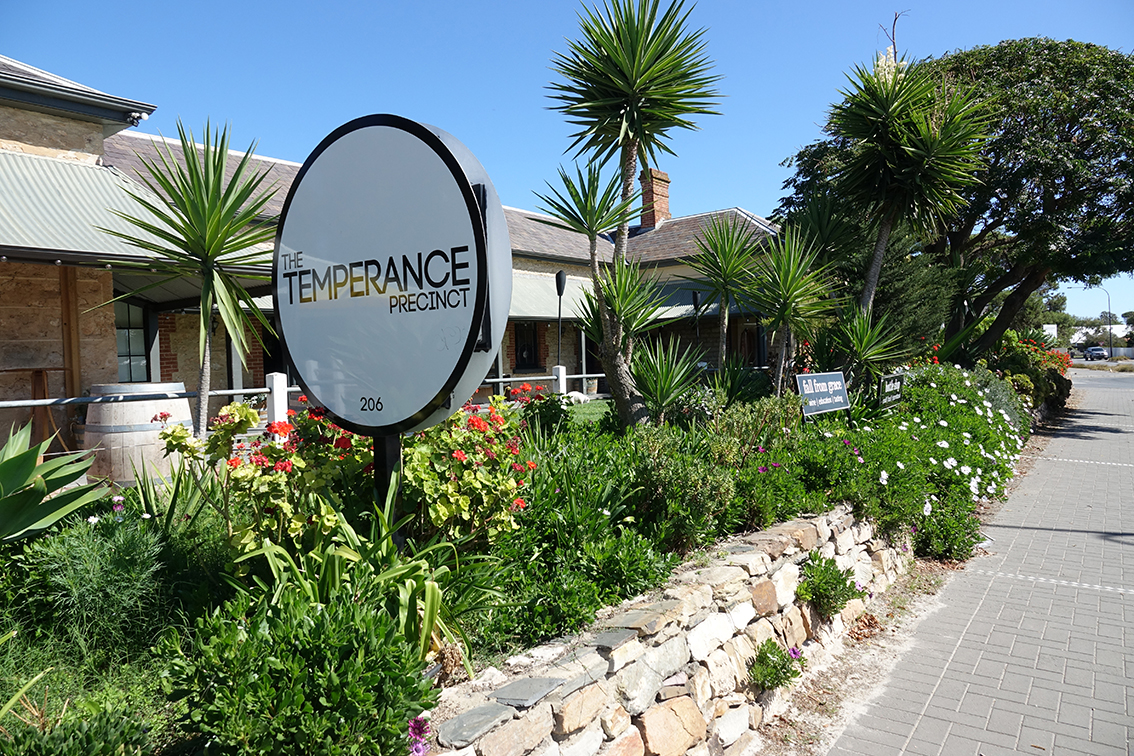
I am enjoying the ambience of the Temperance Precinct. A group of shops, restaurants, a pub, and other organisations situated on Port Road, where it intersects South Road leading into Aldinga. It is an area that has developed significantly over the last few years.

An interesting name

A little footwear style

So many colours to choose from

Perhaps the most iconic of these outlets is Miss Gladys on Sea which specialises in ‘well made’ clothing, shoes and accessories. Next door is a deli with organic foodstuffs and across the road, a bakery. Further down the street, there is an old church and graveyard as well as some fine period homes. Intermingled with the buildings are gardens, trees and bushes and the animals and plants which inhabit them.

A bit of everything

Heading for home

Collecting nectar

I sit on a stone wall, which borders a garden, waiting for a friend to do some shopping and notice a large native wasp fly into a gap in the stonework. In the garden I observe the same species feeding on several different kinds of flowers. With my attention focussed on these small invertebrates, I scan the plants for more species and spot: a diminutive flower spider, several Hoverflies, numerous Honey Bees and a cluster of tiny Aphids.

Not a gardener’s best friend

Shopping completed, it is time for lunch, but first I take a short stroll down to the churchyard where I can see some birds flitting between the branches of a red flowering gum. They are wary and in shadow. However, I recognise both Little Wattlebirds and New Holland Honeyeaters.

New Holland Honeyeater

Little Wattlebird

I finish the day with a wonderful steak and kidney pie washed down with a bottle of local fruit juice. In truth, a very satisfying low-key jaunt to one of my favourite coastal towns and I haven’t even taken the short drive to the beach with its fringing reef. An adventure I will leave for another day.

 Cheers

Baz

Additional notes

This is an easy walk and drive which is quite suitable for families and seniors with public toilets, parking and other facilities nearby. It is dog friendly.

Please pass on this blog title and or contact information (URL) to any person or organisation with an interest in taking walks and enjoying wildlife in SA.

Click on these links and see more South Australian stories and pictures in my Weekend Notes articles as well as locating similar blogs on Feedspot’s top 20 Australian wildlife blogs
https://www.weekendnotes.com/adelaide/writer/452/

https://blog.feedspot.com/australian_wildlife_blogs/

Maslins and Blanche Point to Port Willunga…a rewarding short walk

12 Mar

Dear Reader:

It is glorious summer’s day, not too hot and a gentle sea breeze. The view from the clifftop is spectacular. The outline of Gull Rock and surrounding shallow reefs are clear cut against an impossibly blue ocean. Inland, the view is quite a contrast with farmland, scrub and distant, low hills reflecting the dry shades of an Australian summer.

Gull Rock from the clifftop

Farmland, Raven and Hills

There are Little Ravens and Red Wattlebirds in the trees alongside the road leading to the carpark. In addition, I can see an adult Singing Honeyeater feeding one of its fledged chicks in the scrubby bushes near the entrance to the downhill trail. As I scan the ocean there is a pair of Bottlenose Dolphins far out to see patrolling the edge of a reef or seagrass meadow.

Reefs and seagrass from the clifftop

Singing Honeyeater

From the Blanche Point/Maslins hilltop carpark there are two ways to reach Port Willunga. The hilltop track is self-explanatory, or you can walk down the steps to the shore and follow the beach. The beach walk has two special features: take a mask and flippers to explore the shallow inshore reefs or examine the rock formations and fossil beds along the route.

Walking along the beach at low tide

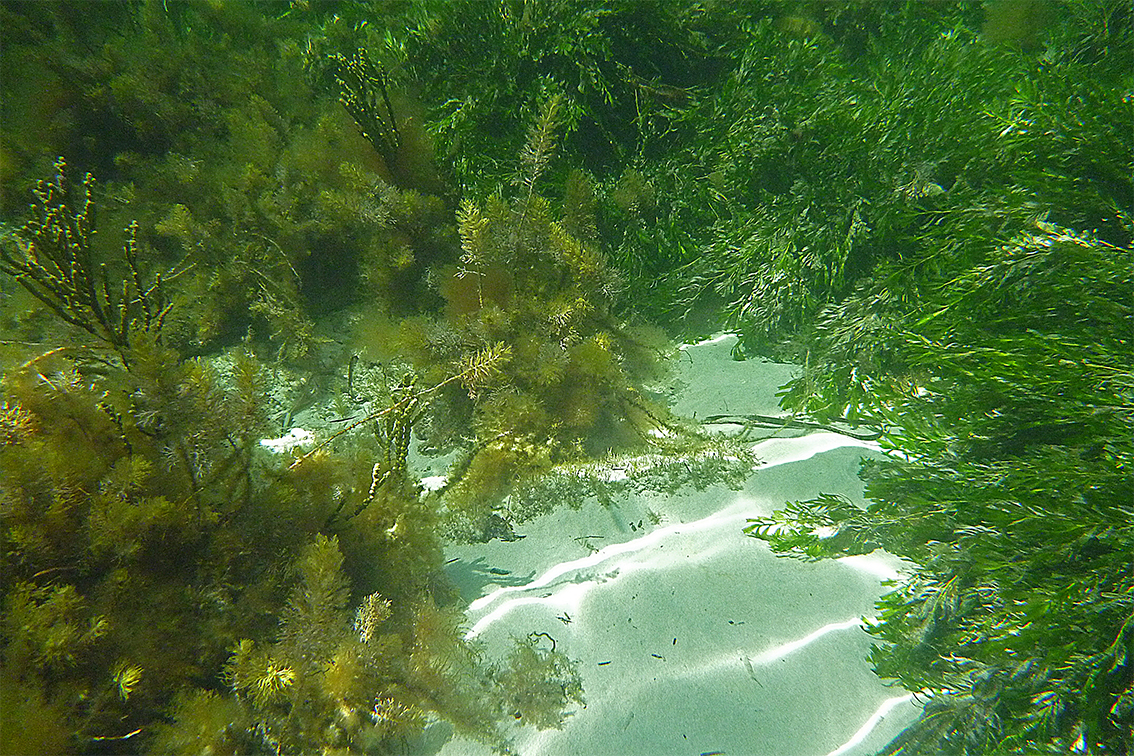
Seagrass and brown algae: an underwater view

Today, I take the path which winds along the top of the cliffs then dips down towards the Willunga Creek outlet where there is a lovely patch of scrub and some old ruins. As I walk along this section of the trail I can hear Singing Honeyeaters and catch sight of a flock of Yellow-tailed Black Cockatoos feeding on pine cone seeds.

Willunga Creek where it meets the sea

Yellow-tailed Black Cockatoos

Suddenly, the birds scatter in apparent panic as a Nankeen Kestrel lands on a power pole. The bird sits for a while and I try to get close enough for a clear shot. Finally I have to settle for a long distance telephoto image. Later, on review, I am quite pleased with the result from my Nikon P900 at this range.

Nankeen Kestrel

Just as I am about to leave the scrub and creek to head up to the restaurant I notice a parenting group of Australian Black Ducks emerging from the reeds. A lovely way to end my walk before indulging in some Calamari and battered fish at the Star of Greece Restaurant. The restaurant and nearby sheltered lookout have lovely views over the Port Willunga Beach, the fringing reef and the old jetty piles.

Remains of the old Port Willunga jetty

Cheers

Baz

Additional notes

This is a moderate fitness walk with parking and other facilities nearby at Port Willunga. It is dog friendly.

Please pass on this blog title and or contact information (URL) to any person or organisation with an interest in taking walks and enjoying wildlife in SA.

Click on these links and see more South Australian stories and pictures in my Weekend Notes articles as well as locating similar blogs on Feedspot’s top 20 Australian wildlife blogs

https://www.weekendnotes.com/profile/651267/

https://blog.feedspot.com/australian_wildlife_blogs/

https://www.onkaparinganow.com/News-listing/Iconic-cliff-top-path-for-Port-Willunga

Goolwa Barrage (1)…Seals, Kites and Pelicans

18 Feb

Seals, Kites and Pelicans

Australian Pelican

Dear Reader:

As I approach the barrage, which separates the fresh water flowing down the Murray from the salt water of the Coorong, I notice quite a lot of bird activity. Pelicans are flying low in the sky and there are both Ravens and Mudlarks scavenging along the rocky banks.


Mudlark or Murray Magpie


Little Raven

The Goolwa barrage is a ten minute drive from the town of Goolwa around 80 kms south of Adelaide. It is the last of a series of locks and barrages that control the flow of the Murray River along its entire length. They were originally intended to make the river more navigable for the elegant paddle steamers that once plied these waters carrying essential goods. Information about them is provided along the path leading from the car park to the  barrage. 


Information

Walkway to barrage

A row of statuesque Norfolk Pines lines the roadway to the barrage and I scan them for more birds. Sometimes I have seen kestrels and hawks perched in the uppermost branches but today I am surprised by an even larger raptor; a Whistling Kite. It seems that food must be plentiful with so many predatory bird species in the area.


Whistling Kite

Pelican and Long-nosed Fur Seal often called New Zealand Fur Seal

When I reach the barrage, I am greeted by a variety of wildlife around the first section which leads out into the river. There are Great Cormorants on the adjacent bank, a Long-nosed Fur Seal basking in the muddy water closer to the main part of the barrage and a seal and Australian Pelican near one of the old wooden gateways. A nice start to my walk out to view the barrage proper………..to be continued in my next post

Cheers

BAZ

Additional notes

This is an easy walk and drive which is quite suitable for families and seniors with public toilets, barbecues, parking and other facilities nearby.

Please pass on this blog title and or contact information (URL) to any person or organisation with an interest in taking walks and enjoying wildlife in SA.

Click on these links and see more South Australian stories and pictures in my Weekend Notes articles as well as locating similar blogs on Feedspot’s top 20 Australian wildlife blogs

https://www.weekendnotes.com/profile/651267/

https://blog.feedspot.com/australian_wildlife_blogs/

Title:Goolwa Barrage(2)…..Hunters and Hitchhikers or ‘Bluey Takes a Rest’

4 Feb

Dear Reader:

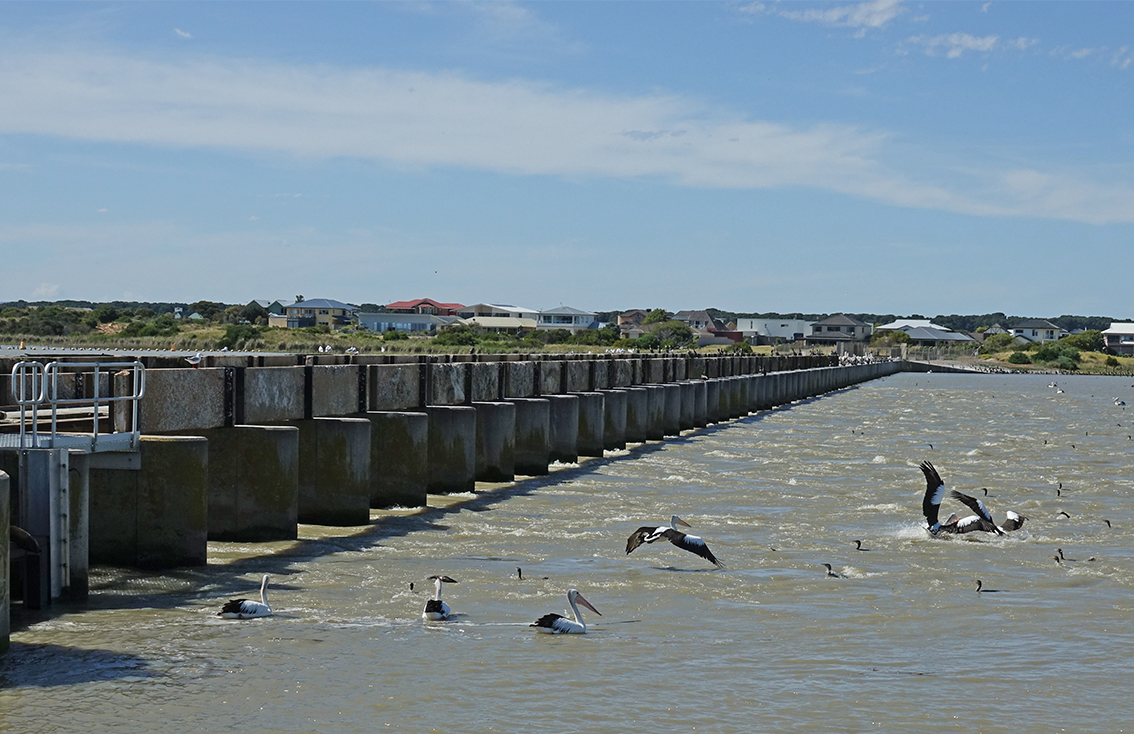
In my previous post I took you from the car park to the beginning of the Goolwa barrage. Now we will explore the main part of the barrage where the water is streaming through the gates at an unprecedented rate due to severe flooding upstream.

View along the barrage

With the floodgates open there is an overabundance of food being washed out into the Coorong. The freshwater is laden with silt and leaves a brown stain across the seaward side of the barrage which actually extends to Goolwa Beach and Victor Harbor.

Enlargement of first image showing interspecies rivalry

Long-nosed Fur Seals, Australian Pelicans and Great Cormorants are positioned to ambush fish and any other food as the water cascades through the gates. On every level this is quite a spectacular natural event and onlookers, armed with phones and cameras, are making the most of the situation.

Too much of a good thing

I spend some time taking shots that I hope will capture the essence of this event as well as a few close-ups of the different species. When animals are engaged in feeding behaviour they often ignore people which creates the perfect opportunity for more intimate images.

Sub-adult Pacific Gull (still has darker markings)

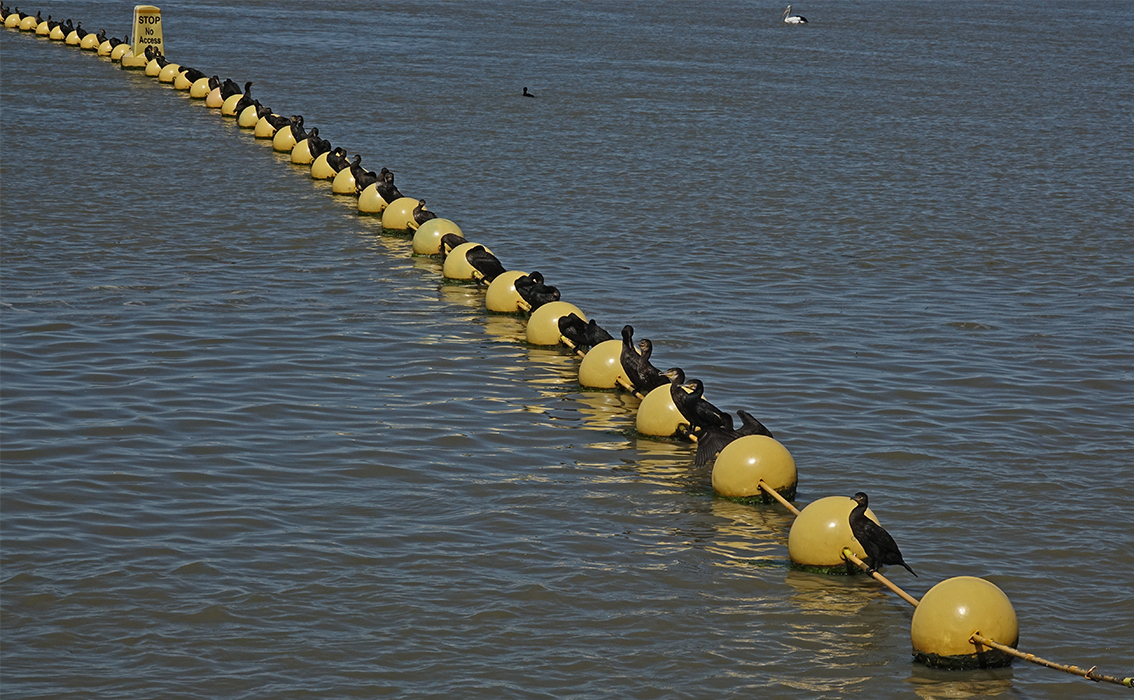
Floats with Great Cormorants

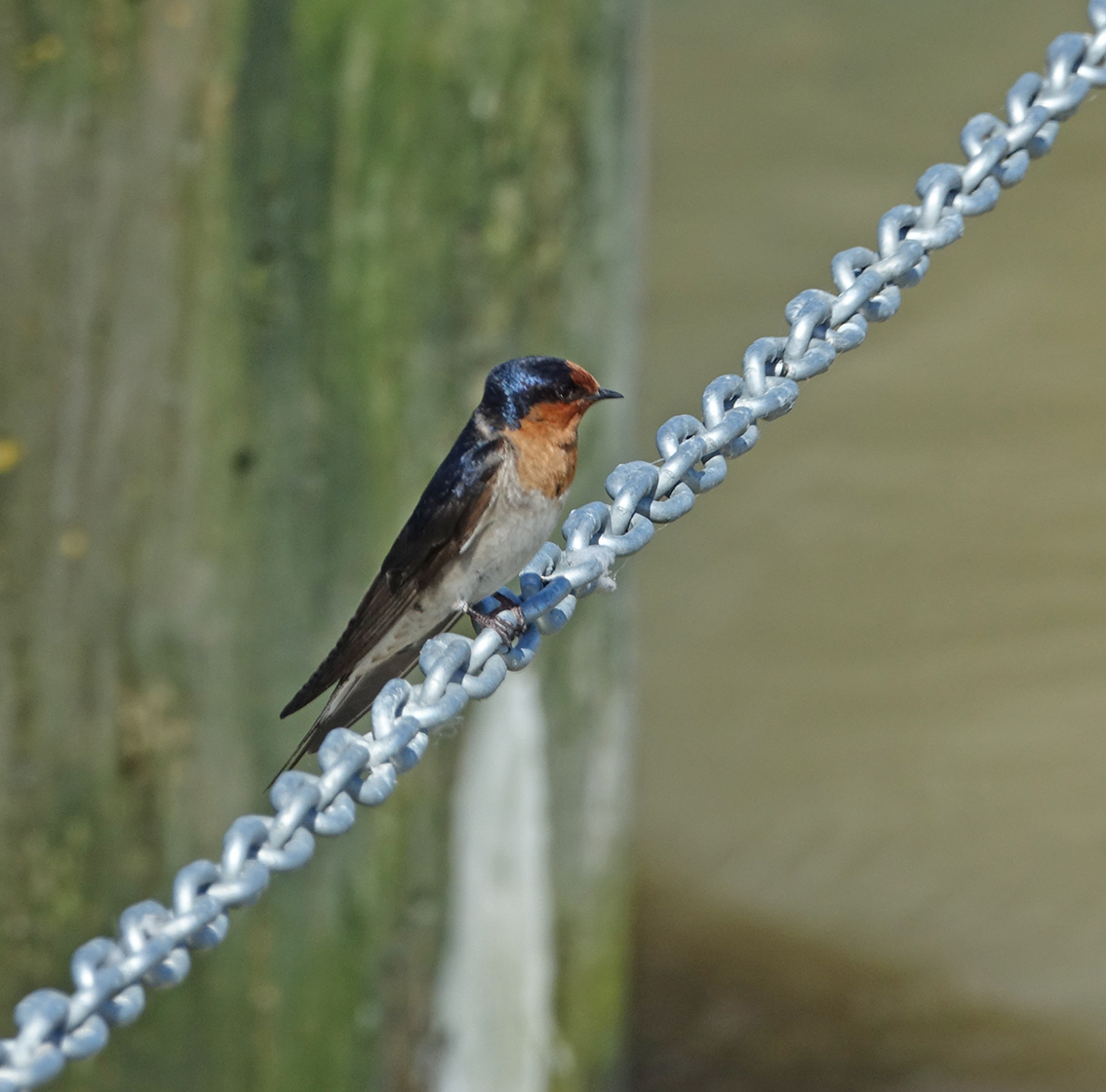
Swallow at rest

It is time to leave. I stroll back along the walkway watching swallows, cormorants and occasional Pacific gull perching on bollards, chain link and floats. I am halfway back to the bank when I notice an elderly couple pointing excitedly at the area where I was just watching the seals.

Catching a ride

Close up of previous image

Time to go

Intrigued, I walk back to the viewing platform and to my surprise they have spotted one of the most unusual examples of animal behaviour I have ever witnessed. A few metres below us, a seal is resting in the water, catching the sunlight on a raised flipper with a Blue-tongue Lizard lying across its body. I can only assume the reptile is taking a break from the swiftly flowing water. The lizard stays for a few minutes before ‘disembarking’ and continuing its journey towards the far bank. Extraordinary!!!!

Historic Goolwa Hotel

On that note, I ‘call it a day’ and walk back to the car. My next stop will be the historic township of Goolwa. There is a wonderful gallery called ‘Art Worx’ where I love to browse and sometimes pick up something special for the house or garden. Finally, the Goolwa Bakery, for a chicken and vegetable pie and perhaps a vanilla slice to follow. Always a pleasant way to wind up any trip to this fascinating waterside location.

Cheers

Baz

Additional notes

This is an easy walk/drive which is quite suitable for families and seniors with public toilets, barbecues, parking and other facilities nearby.

Please pass on this blog title and or contact information (URL) to any person or organisation with an interest in taking walks and enjoying wildlife in SA.

Click on these links and see more South Australian stories and pictures in my Weekend Notes articles as well as locating similar blogs on Feedspot’s top 20 Australian wildlife blogs

https://www.weekendnotes.com/profile/651267/

https://blog.feedspot.com/australian_wildlife_blogs/

Carrickalinga’s Underwater and Coastal Wildlife

7 Sep

Dear Reader:

The drive into Carrickalinga along Forktree Road from Myponga is quite spectacular with sweeping views of the ocean, reservoir and surrounding farmland. On entering the township, it is a short drive north along Gold Coast Drive to the rocky headland which can be easily accessed from the parking zone by a zig-zag series of wooden steps.


Driving in to Carrickalinga

Steps at the headland

This area is a sanctuary which means there should be quite a lot of marine life to encounter. I change into my snorkelling gear before walking down to the beach and survey a couple of entry points then photograph one of the many rockpools. The water is cold this time of year and even with a wet suit it takes a few minutes to adjust.


Old Wives under a ledge

Red Bait Crab

Visibility is good and I work my way along the shoreline which has numerous ledges and a healthy covering of algae as well as some encrusting invertebrates like sponges and sea squirts. A large Red Bait Crab peers at me from its position amongst some brown algae and there are numerous fish species in the seaweed and under the ledges. Within a few minutes I have seen over a dozen types including: leatherjacket species, Old Wives and Moonlighters.


Track along the hillside

Half an hour in the water is enough today. After a quick towelling down and a change of clothes (and camera) I decide to follow the narrow trail cut into the hillside and explore some more of this picturesque coastline.


Locust species possibly Plague Locust

Nankeen Kestrel Hovering

The wildlife above the water is not abundant as coastal vegetation does not provide a lot of food for animals. I manage to spot the occasional Singing Honeyeater and I can see a Nankeen Kestrel hovering near the top of the hillside. Quite a few grasshopper-like animals are taking flight from the undergrowth. A close up shot, and an ID book later at home, suggests they are probably Australian Plague Locusts.


Rockpools

The morning is almost over and as I walk back I look down on the beach and rockpools and the turquoise colour of the sea. Along the path, I notice some Crested Pigeons on an old fenceline, a murder of Crows in the distance and a lone Willie Wagtail fossicking close to the ground; probably after a locust snack. Which reminds me, it is time to head for the Normanville Bakery for a spot of lunch before I take a closer look at the township of Carrickalinga later in the afternoon.

Cheers

Baz

In a further post (Carrickalinga 2) will cover a walk around the township and along the beach.

Cheers

Baz

Please pass on this blog title and or contact information (URL) to any person or organisation with an interest in taking walks and enjoying wildlife in SA.

Click on this link and see more South Australian stories and pictures in my Weekend Notes articles

https://www.weekendnotes.com/profile/651267/

Port Elliot to Goolwa…A Wildlife Drive

20 Jul

Scrub and dunes between Coorong National Park and Goolwa Beach

Dear Reader:

A lone Silver Gull is perched on the parking sign next to the Flying Fish Café on Port Elliot’s picturesque Horseshoe Bay. Two hours should be more than enough for a fish and chips lunch while watching a few brave souls taking a dip in the chilly winter waters.

Parking restrictions…seagulls only

Across the bay, a fisherman is unfolding a chair and setting his lines for a leisurely afternoon’s angling. Perhaps he will catch a squid or some Flathead as we enjoy the same species on a plate and without the effort.

Horsehoe Bay’s old Jetty

I am taking a drive along the southernmost part of the SA’s lovely Fleurieu Peninsular between the towns of Port Elliot and Goolwa. This area is well known for fishing, surfing and whale watching in the winter months when Southern Right Whale migrate through these waters from the Southern Ocean.

Goolwa Beach and photographer

My next stop is Goolwa Beach, a long sandy stretch of several kilometres ending at the mouth of the Murray River. If the tides are right, I will be able to take my SUV onto the beach between sand hills and surf; a really rewarding experience. I am in luck and able to drive some distance towards the mouth. There are a few tiny waders dodging the surf while feeding on worms and other invertebrates beneath the wet sand but they quickly fly away as I get close enough for a shot. A pair of Pacific Gulls are more accommodating and I get a good series of images using full extension of the Nikon P900 zoom.

Fun in the surf…Pacific Gull style

About a kilometre along the beach there is a sign indicating a track that crosses the dunes ending up at the Coorong National Park near the Goolwa barrages which separate seawater from freshwater. This area is my next destination and I must drive back along the beach and skirt the town to reach the park.

Beach crossing to the barrages

The part of the Coorong National Park I am exploring is just past the barrages and consists of shallow mud flats, reed beds and small islets; an ideal collection of habitats for a wide range of aquatic birds. There are Black Swans in the distance, an unusual Musk Duck a couple of hundred metres offshore and a White-faced Heron hunting in the grasses and pools next to the road. Meanwhile, Singing Honeyeaters warble in the scrub between the park and the ocean beach which we were driving along just fifteen minutes earlier. However, the most exciting birds in the area are a couple of quite different raptor species which are swooping and hovering close to the shoreline. The larger bird is a Whistling Kite and the smaller, a female Nankeen Kestrel.

Singing Honeyeater not singing

Whistling Kite

Lunch and a couple of lucrative wildlife drives have made the day a success. However, the coastal town of Goolwa has many other attractions and I spend a further relaxing hour pottering around galleries and other small shops. To finish the day, I buy a bun and coffee at the Original  Goolwa Bakery on Dawson Street (established in 1912) before heading home via Strathalbyn and Mount Barker; two more SA towns with much to offer an enthusiastic nature photographer.

Goolwa’s Artworx Gallery

Cheers

Baz

Additional notes

This is an easy drive which is quite suitable for families and seniors with public toilets, barbecues, parking and other facilities nearby. 

Please pass on this blog title and or contact information (URL) to any person or organisation with an interest in taking walks and enjoying wildlife in SA.

Click on this link and see more South Australian stories and pictures in my Weekend Notes articles

https://www.weekendnotes.com/profile/651267/

Hindmarsh Island ……Part 2

13 Apr

…….Continued from my last post about Hindmarsh Island……

White-faced Heron stalking

Dear Reader:

Having explored the little settlement by the channel I decide to drive a little further on this side island before cutting inland and heading to the Murray Mouth. A fortunate decision, as I spot a Royal Spoonbill working the shallows near a patch of reeds, a Black Swan just taking to the air and a heron stalking prey; all just a couple of hundred metres further down the track. Window down, some quick snaps and fingers crossed!


Spoonbill at work

Swan take off

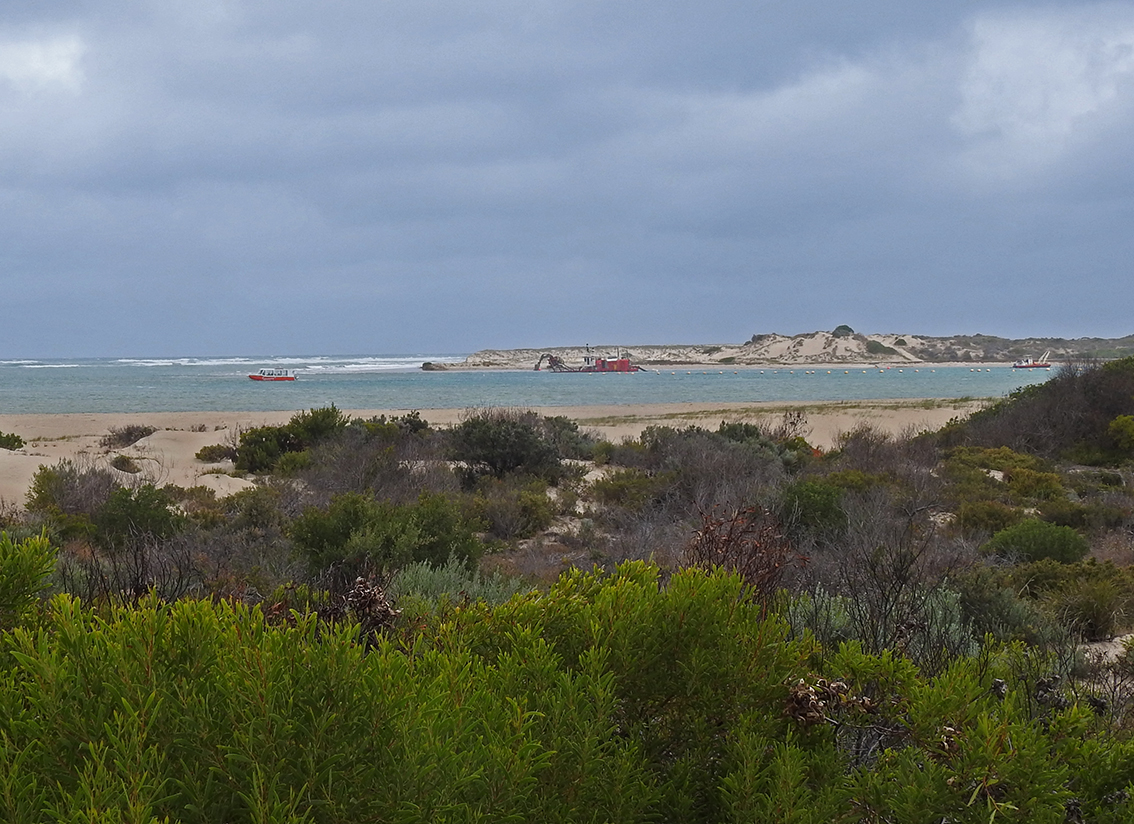
It is only a five-minute drive to the river mouth but the wind has certainly whipped up the water and bent the grassy pastures. The area around the Murray mouth has a varied collection of shacks, the signposted entrance to a conservation park and even a pop-up coffee van.


Murray Mouth with dredge in background

Surprise…time for a break

Despite the blustery weather a tourist boat is taking groups from Goolwa along the sheltered reaches of the Coorong to enjoy the scenery and wildlife. As I lift the camera to photograph the boat I notice a Pacific Gull tracing its path in the foreground, a nice image !


Tourist boat and gull in synch

There is a sign near the mouth for the Lawari Conservation Park which covers 106 hectares at the eastern end of Hindmarsh Island incorporating natural coastal scrub and former grazing land. Lawari means Cape Barren Goose in the local Ngarrindjeri language. Over a hundred different species of birds have been recorded in this park and there are significant reptile species as well as Western Grey Kangaroos.


Cape Barren Geese

Entrance to park near the river mouth

The wind and cloud have made the Murray Mouth too difficult to photograph as the wildlife is taking shelter in the grass and shrubs. I turn for home and retrace my path down the middle of the island stopping at the memorial to Captain Charles Sturt who was the first European explorer to view the Mouth of the Murray.


Sturt memorial

Layby near the bridge


Just before I cross the bridge back to the mainland there is a shelter with parking, a barbecue area and detailed graphics about Hindmarsh Island’s history. I take a path through the scrub leading a to a lookout where I can Goolwa and catch a glimpse of an old paddle steamer at the docks. This visit and reading the historical information enthuse me to return on a sunnier day and explore more of this special place where history, culture and wildlife are so closely interwoven.   

Cheers

Baz

Additional notes

This is an easy drive and walk which is quite suitable for families and seniors. Hindmarsh Island is dog friendly except for the Conservation Park.

Some useful links

https://en.wikipedia.org/wiki/Hindmarsh_Island#Lonely_Island

Please pass on this blog title and or contact information (URL) to any person or organisation with an interest in taking walks and enjoying wildlife in SA.

Click on this link and see more South Australian stories and pictures in my Weekend Notes articles

https://www.weekendnotes.com/profile/651267/

Hindmarsh Island ……Part 1

29 Mar


Hindmarsh Island ……Part 1

Dear Reader:

The bridge over the Murray River to the island is sleek and modern. Where it terminates there is a small layby and a short track going back under the concrete stanchions. A line of posts edges into the river. Probably part of the old ferry structures. Every few minutes, Australian Pelicans land on the old wooden posts and rails resting or watching for prey in the water.


Hindmarsh Island Bridge

After a while, the pelicans move off and land in the water near a reed patch. Another bird joins them and they start to swim in a roughly circular formation. They seem to be hunting; possibly herding small fish. My thoughts are confirmed when the birds tighten the circle and simultaneously dip their heads and long beaks into the water. The manoeuvre is repeated several times. Their movements are very graceful, almost like watching synchronised swimming or ballerinas with fluffed up tutus.


Pelicans up

Pelicans down

I am on Hindmarsh Island; Kumerangk in the language of the First Nations People who live in this area, the Ngarrindjeri. The island is an hour and a half drive SE of Adelaide near the town of Goolwa. It is flat and low with extensive areas of pasture, some scrub and a modern housing development with associated marina. There are numerous roads both paved and dirt criss-crossing the island. Hindmarsh Island is significant both in South Australia’s settler history and Ngarrindjeri history and culture and the creation of the bridge was the subject of friction between First Nations People and the SA government.


Fishing the channel

I continue driving for another ten minutes, past the marina turnoff on my right then the take one of several unsealed roads to my left which brings me to a shoreline where there is a small group of houses. Two fishermen are working the channel and I stop and chat with them for a few minutes about the marine and terrestrial wildlife in the area.


Orb weaver at work

Lovely, golden grass and patches of coastal scrub carpet this area and offer shelter to a range of animals. I spot some wrens and other small birds and catch a fleeting glimpse of a reptile near the muddy shore. Lizard or snake? Not sure. However, it is an Orb Weaver spider constructing its complex web that intrigues me. I watch the industrious little animal for some time and capture some reasonable close-up images.


Lapwing, Ibis, swans

My next stop is a couple of kilometres down the sealed road at a small group of shacks. There are short jetties poking out into the channel and most of them seem to be favourite roosting areas for both Black and Pied cormorants. Where the muddy shoreline and Samphire swamp meet, I can see numerous wading birds including: Spoonbills, Pied Stilts, Sandpipers and Masked Lapwings. In the slightly deeper water, a large flock of Black Swans are feeding.


Fascinating ecosytem


The morning’s drive and my initial exploration of the island have been quite productive and after I find a place to sit and have a bite to eat, provisioned from one of Goolwa’s many fine bakeries, I will head over to the Murray Mouth and Mundoo Channel to continue my day at Hindmarsh Island…………to be continued.

Cheers

Baz


Additional notes

This is an easy drive and walk which is quite suitable for families and seniors. Hindmarsh Island is dog friendly except for the Conservation Parks.

Please pass on this blog title and or contact information (URL) to any person or organisation with an interest in taking walks and enjoying wildlife in SA.

Click on this link and see more South Australian stories and pictures in my Weekend Notes articles

https://www.weekendnotes.com/profile/651267/

Cox Scrub Conservation Park’s Wildlife…..Part 2 From Ridge and Bull Creek Roads

7 Feb


Track near Ridge Road entrance to Cox Scrub

Dear Reader:

After my initial foray into Cox Scrub from Coles crossing, today, I am entering the park from Ridge and Bull Creek roads. The Ridge Road entrance leads me to a long straight track which separates nearby farmland from the park. The scrub here is thick and quite difficult to penetrate. I can hear the chirping of wrens and other small birds but they are hard to spot and constantly moving.


Classic Cox Scrub vegetation

I employ a sit and wait strategy. The trick is to find a comfortable place with a good view of the surrounding area and not too many bushes and trees in line of sight. A tough ask as the sun must be in the right direction; silhouettes and side lit animals do not make great pictures.


Heliotrope Moth on melaleuca blossom

Having chosen a spot alongside a flowering Melaleuca tree I make sure my Nikon P900 is on a moderate telephoto setting. I might only get a split   second to make a shot with no time to zoom in closer. I am trying for bird images however I also stay tuned to the close undergrowth and bushes listening for a tell-tale rustle of leaves or the hum of an insect. For the first ten minutes the only animals I encounter are invertebrates; a moth on the Melaleuca flowers and a dragonfly resting on the sandy soil. Eventually a scubwren lands in a nearby tree and a pair of Crested pigeons start foraging on in the understory. Sighting that make my wait worthwhile.


Scrubwren species

There are clouds moving in from the south west and I decide to drive to my next destination before I lose the light or it begins to rain. Several walking trails start at the Bull Creek entrance. The tracks are wide and easy to walk but the scrub is still quite dense with less large trees than the last track. A kilometre along the trail I find a clearing where there seems to be quite a lot of bird activity. It’s time for stop, sit and wait, again.


Golden Whistler

This time I am rewarded within a few minutes. A beautiful Golden Whistler perches in stubby eucalypt about twenty metres away. Its characteristic call (loud sharp whistles ending in a whip-crack note) echoes through the bush. The bird is quite active and I set the camera to shutter priority firing at 1/2000 th of a second. The clearing seems to attract a number of different bird species and I watch a pair of Grey Fantails hawking for insects before returning to a perch on a fallen branch. There are also kangaroo droppings and several termite nests have been ravaged by Echidnas.


Grey Fantail

Though I would like to stay for a few more minutes, the first drops of rain start to spatter on my jacket. I tuck my camera into its waterproof case and head back to the car. It is time for lunch, and the Mount Compass Bakery beckons. A chicken and vegetable pie with a custard tart to follow. A fitting end to my morning’s work.

Cheers

Baz

Additional notes

This is an easy walk/drive which is quite suitable for families and seniors.

Please pass on this blog title and or contact information (URL) to any person or organisation with an interest in taking walks and enjoying wildlife in SA.

Click on this link and see more South Australian stories and pictures in my Weekend Notes articles

https://www.weekendnotes.com/profile/651267/