Archive | Nature and Wildlife RSS feed for this section

Flinders Ranges’ Brachina Gorge

1 Feb

Dear Reader:

There is a pair of kangaroos resting out on the low grassy plain. As we approach they sit up and watch us warily. I slow the 4WD down and pull up on the side of the track carefully lowering the window. The animals are a good hundred and fifty metres away which stretches my Panasonic FZ60 to its limits. I slide a bean bag under the camera and take a few shots. With the benefit of the telephoto I can tell that they are both Red Kangaroos; a grey shaded female and the rusty coloured male.


Red Kangaroos


I am driving into Brachina Gorge which slices through the Flinders Ranges between the Flinders and Outback highways just north of Wilpena Pound; a good day’s drive from Adelaide. Today I am focussing on wildlife but this incredible gorge is also a geological wonder with layers of rocks and fossils dating back hundreds of millions of years. A well defined trail explains their formation and significance and tours are available through this remarkable area (Google Brachina Gorge Tours).


Ancient rock strata


Once we reach the Gorge proper it is time to get out and do a little exploring on foot. My first encounter is a Shingleback or Sleepy Lizard that is well entrenched in a pile of rocks. A cache of snails and bits of plant matter suggest that this has been home for a while though in general they are transient reptiles until it is time to hibernate.

Sleepy or Shingleback Lizard


If there is one iconic species in the Flinders it is the beautiful Yellow Footed Rock Wallaby and a little further along the gorge near a pool of water and a rock fall seems like a good place to sit quietly and wait. I am rewarded for patience about twenty minutes later when two of the delicate little creatures hop down the slope towards the water.


Yellow Footed Rock Wallaby grazing


As well as amazing geological features and great wildlife the gorge has an abundance of interesting plants and in near the watercourse amongst some shale-like rocks I find a spreading clump of Sturt Desert Pea; the state’s floral emblem.


Sturt desert Pea


So far Brachina has yielded wallabies, roos and flowering plants as well as innumerable other wildlife that I have not even mentioned from cockatoos to spiders and even some undesirable feral goats. But, it is a rather beautiful Mulga Parrot feeding on a small ground covering plant that really marks the end of my trip through Brachina Gorge.


Bourke’s Parrot feeding


When I reach the Outback Highway Wildlife slips from my mind and I turn north towards Parachilna and the famous Prairie Hotel and a rather special lunch that I will leave you the reader to discover when you come up to our wonderful Flinders Ranges.

Cheers

Baz

Wiliamstown to Springton a Wildlife Drive

1 Jan

Dear Reader:

The paddock beyond the fence-line is characterised by open grassland still bearing a tinge of green from recent rains. There are gum trees punctuating the open expanse of pasture and a large mob of kangaroos are spread across this classic Australian landscape. Some are resting while others graze; a few have joeys in pouches or at heel.


Grazing roos


I am driving between Williamstown and Springton and despite most of the land being fenced off  each time I stop by the roadside there are many faunal and floral delights to discover. In addition, lunch at the end of the drive in the Springton Pub or morning tea at the start of my drive at the Williamstown Bakery, are wonderful refueling stopovers.


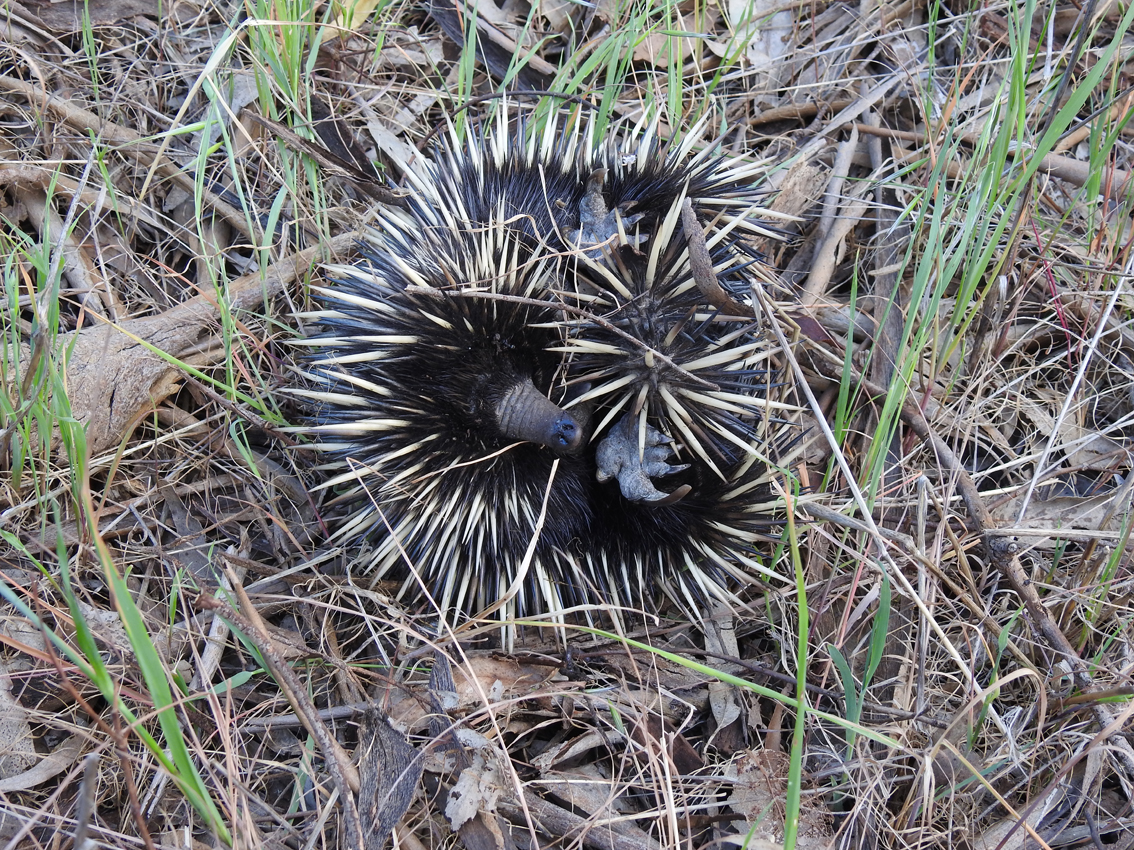
Echidna on the move


Echidna rolled and momentarily turned before righting itself

As I drive on I can see a variety of parrots in the roadside trees; rosellas, lorikeets and galahs are the dominant species. But in one very large eucalypt a group of Yellow Tailed Black Cockatoos have settled. Unfortunately they take to the air as I leave the vehicle. However, as luck would have it, I hear some rustling in the grass alongside the road and an Echidna appears trundling along in its everlasting search for termites. The fascinating animal rolls itself up and burrows down as I kneel to take a shot using the macro capability of my Nikon P900 to zoom in on its features.


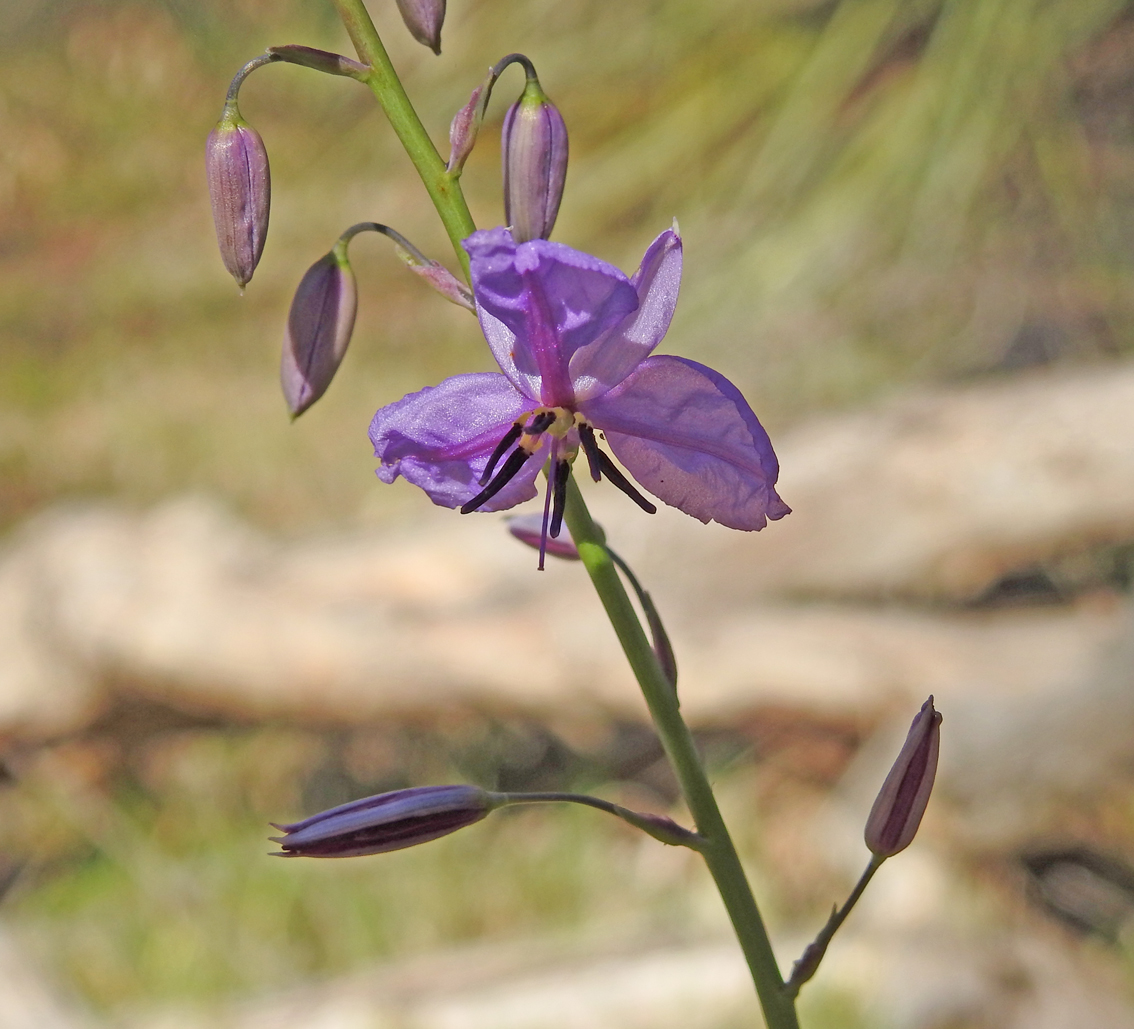
Flax Lily species


After making several more quick stops to photograph birds in the scrub, pasture and trees along the road I find a lay-by with quite a lot of vegetation. Amongst the bushes and grass I notice a small collection of lovely Purple Flax plants, just one of the many flowering natives that can be seen through this area.


Painted Lady


Cuckoo Shrike species feeding


My final stop before the return drive back through Gawler is in a patch of scrub near a farm gate where there is quite a lot of undergrowth. The area is dominated by a single massive gum that appears to attract numerous birds. Scouring the leaf litter and broken branches reveals a lovely Painted Lady Butterfly while a Cuckoo Shrike sits in a barren branch above. A wonderful way to finish my little expedition.

Cheers 

Baz

Additional notes

This is an easy drive which is quite suitable for families and seniors with facilities at both towns.  

 See more South Australian stories and pictures in Weekend Notes

https://www.weekendnotes.com/profile/651267/

By the Barrage

17 Dec

By the Barrage

Dear Reader:

A stately Australian Pelican glides across the water between the barrage and the reed beds.  This stretch of water is home to a wide variety water birds, fish and insects and even the occasional water rat.


Barrage and Pelican


Goolwa’s barrages are an intricate set of barriers between the freshwater expanses of Lake Alexandrina and the ocean. They are used to control the saline ocean water that once extended far up river under certain conditions. Locks in the barrage allows boats to pass through them giving fishers and other ‘boaties’ access to the Coorong; a long shallow waterway that runs parallel to the open ocean.


View from the track

Returning after collecting cockles

A paved road accesses the area with numerous interpretive signs explaining the history and purpose of this barrage which about five minutes from the Goolwa wharves taking Admiral Terrace which leads into Riverside Drive and then Barrage Road. Where vehicle access stops there is a small car park and a sign-posted track that leads over the sand-hills to Goolwa Beach; well known for its surf fishing and proliferation of cockles that are gathered for both food and bait.  


Pied Oystercatchers


I take the sand hill track over to the beach. There are several species of birds on the beach including; Plovers, Silver Gulls and the occasional Pacific Gulls and Common Terns patrolling the shallow waters looking for food. But it is a pair of Pied Oystercatchers that catch my eye as they delicately balance on one in the wet sand near the waterline.


Singing Honeyeater

Dune beetle


On my walk back across the dunes I focus on the numerous species of bushes, grasses and spreading ground covers that hold the dune ecosystem together. The wildlife is sparse in these harsh conditions but I do manage to find a large ‘weevil-like’ beetle foraging in some grasses and there are quite a few Singing Honeyeaters calling from the tops of bushes. There are also numerous tracks and droppings from kangaroos, rabbits and reptiles. I suspect that there is more action in the nocturnal hours.


Little Raven

Trudging through the dunes has been quite tiring; it is approaching lunch time and the wonderful bakeries of Goolwa beckon; or perhaps a pub lunch at the hotel.  As I climb into the car and head back along the lake one last animal  draws my attention. A raven is sitting on some weathered branches fluffing up its feathers and the light seems just right. Normally the all black birds are hard to photograph and the colours and reflections off their feathers seem incorrect. Down with the window, engine off to reduce vibration, rest the camera on the door frame and gently press the button. Voila… and now for lunch!!

 Cheers

Baz

 Additional notes

This is an easy drive which is quite suitable for families and seniors with parking and other facilities nearby. The walk across the sand hill track is quite strenuous though relatively short


See more South Australian stories and pictures in Weekend Notes

https://www.weekendnotes.com/profile/651267/