Archive | Photography RSS feed for this section

Barker Inlet and Greenfields Wetlands …a road trip

23 Feb

Barker Inlet and Greenfields Wetlands ….a road trip

Dear Reader:

As I cruise along the highway between Port Adelaide and Salisbury a succession of lagoons, ponds and wetlands flash past my windscreen. Over the last couple of decades this once industrial wasteland has become a haven for wildlife and an integral part of the system converting run off into clean water that flows back into the ocean.
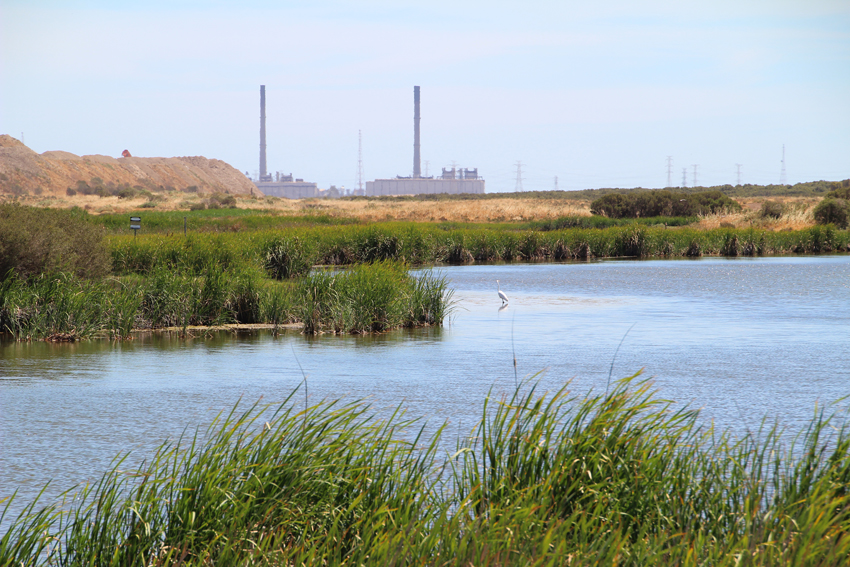
1Torrens Island power station

Torrens island power station looms behind the wetlands


There are several parking bays along the way that provide vantage points and access to walking paths into the wetlands. In rather an anomalous environmental scene the first one that I explore has the Torrens Island Power Station as a backdrop. And, a family of maned ducks are sheltering amongst the reeds in the foreground.

2

Maned ducks


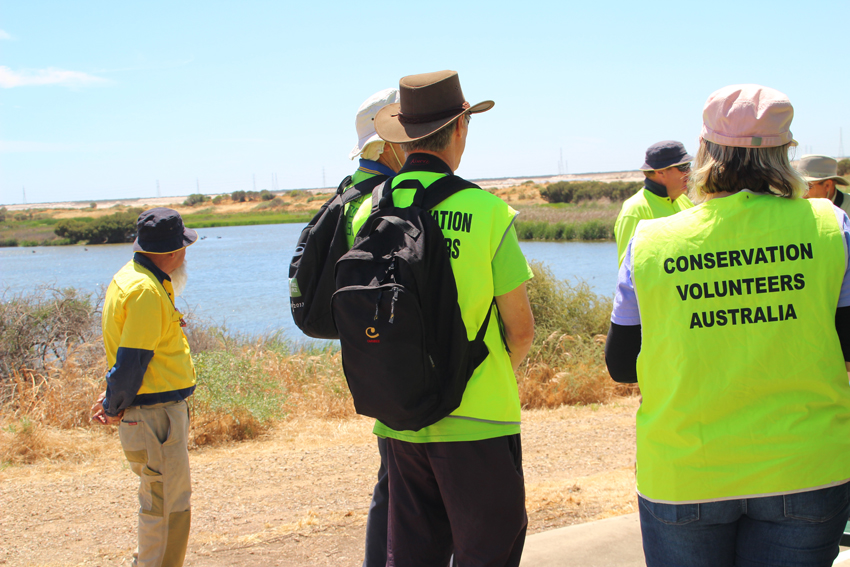
I drive another couple of kilometres to a large siding where two 4WD vehicles with council logos on them are parked by a path into the wetlands. A small group of volunteers are working on clearing weeds, counting bird species and making other environmental observations about the health of the ecosystem.
3

Those who care


Leaving the voluntary workers to their work I find the next promising entrance and park my car. A sign indicates that we have moved into the Greenfields Wetlands. The track leads to an old bridge then follows an embankment along the edge of a small lake. The twittering of wrens provides a constant sound track as I scan for water fowl and reptiles along the edge of the reeds. There are coots, swamp hens and Pacific black ducks as well as turtles and water skinks along this section of wetland but it is a glorious little blue wren draws the attention of my long lens.

4 2

Male superb blue wren


The watercourse ends in a sluice gate that regulates water flow between the ponds and on one side I can see the swirl and splash of large fish feeding in the shallows. They are carp, an unwelcome guest in any ecosystem and their eradication is probably another task for the council and other environmental protection agencies that watch over these important resources.

5

Carp feeding in the shallows


My final stop, just before the salt pans is particularly fruitful as there is a mixed population of black swans, herons and spoonbills feeding in a shallow lagoon. It is always interesting to observe these quite diverse species with their individual feeding styles and uniquely evolved body parts. Their beaks, legs and feet have developed unique characteristics over time for feeding in the same area but utilising different food sources and therefore not competing.

6

A mixed group of waterbirds


And, as is so often the case, my thoughts also turn to food. The Watershed Cafe, just over the bridge, is opportunely positioned on another part of the Greenfields system near Mawson Lakes. Sitting on the edge of a reed fringed lake it is the perfect place for coffee and cake at the end of my wetlands drive.


Cheer

Baz

Clarendon…A Bend in the River

15 Jan

Clarendon…A Bend in the River 

Dear Reader:

From where I am standing, half hidden amongst the reeds, I can see that the river is quite high after some recent rainfall and the water fowl are making the best of it. Both maned and Pacific black ducks are dabbling along the sheltered banks. Any ducklings seem to have reached maturity and left the area though some of the other water birds such as purple swamp hens and dusky moorhens are still tending their chicks.

1

Maned ducks


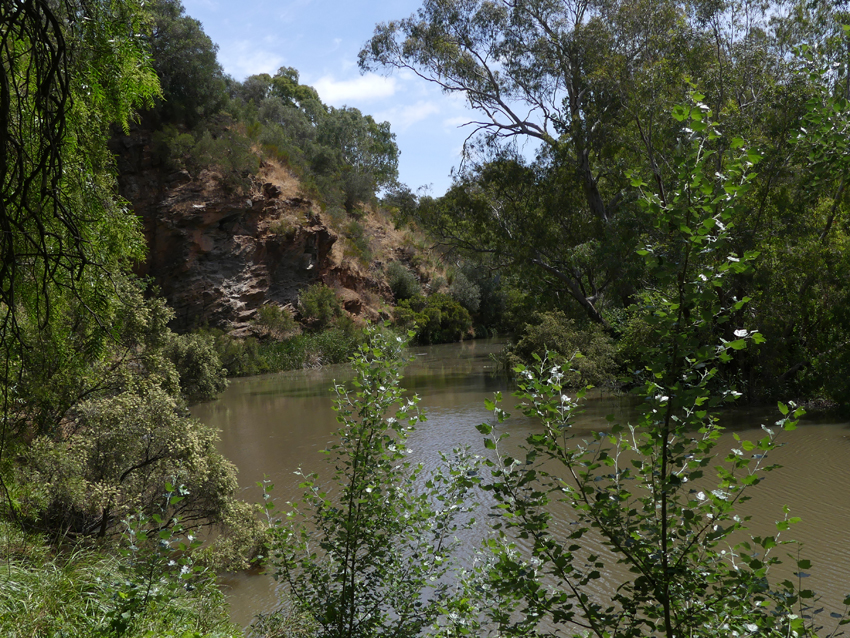
Riverbend Park is exactly what its name implies. Situated at Clarendon, just a two minute walk from the main street, it is a glorious little reserve with an abundance of habitats and wildlife. There are steep cliffs, reed beds, deep pools and shallow riffles. Wildlife aside, the township with its colonial feel, lovely old homes and good eateries, is a destination in itself and certainly worth the forty minute drive from the city.

4

Bend in the river

2

Classic old home


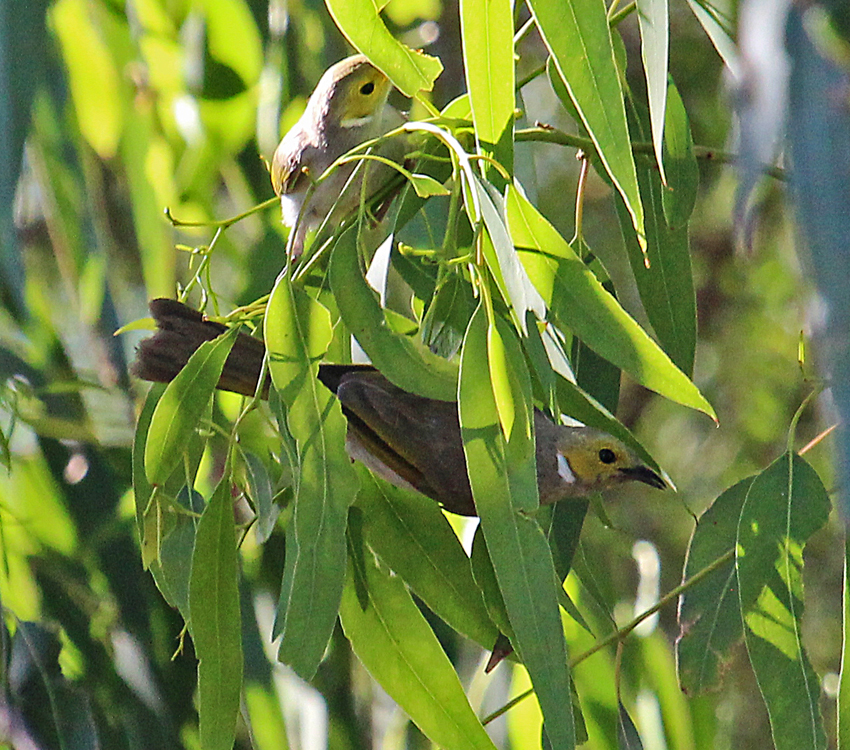
As I stroll along the well grassed banks of the park I notice several species of honeyeaters flitting across the water. The birds seem to be attracted to a huge river gum, gorging themselves on the insects sheltering beneath its peeling layers of bark. Positioning myself behind a nearby bench I rest the camera on a bean bag for stability and fire off a few shots, eventually capturing an image of a white plumed honeyeater hunting for bugs.

11111

Plumed honeyeater


 I follow a well worn dirt road downstream from the car park towards some crumbling cliffs that rise up from the river bank. Unable to go any further, I sit and wait for a while with the camera resting on my lap. There is movement in the undergrowth all around me and after a few minutes I catch sight of a small water skink making its way down to the water.

5

Water skink


After spending a couple of hours in the park, it’s time to indulge in lunch at the local bakery. I take the short walk over the ford then up a well worn path to the main street. Half way up the path I can hear the high pitched twittering of blue wrens. Back out with the camera for one last time! The decision is justified as both a male and female leave the shelter of the bushes to forage on the ground for their avian version of my long anticipated lunch.

6

Female blue wren

6 1

male blue wren


Cheers

And

Enjoy the New Year!

Baz

Xmas Gums

26 Dec

Xmas Gums

Dear Reader;

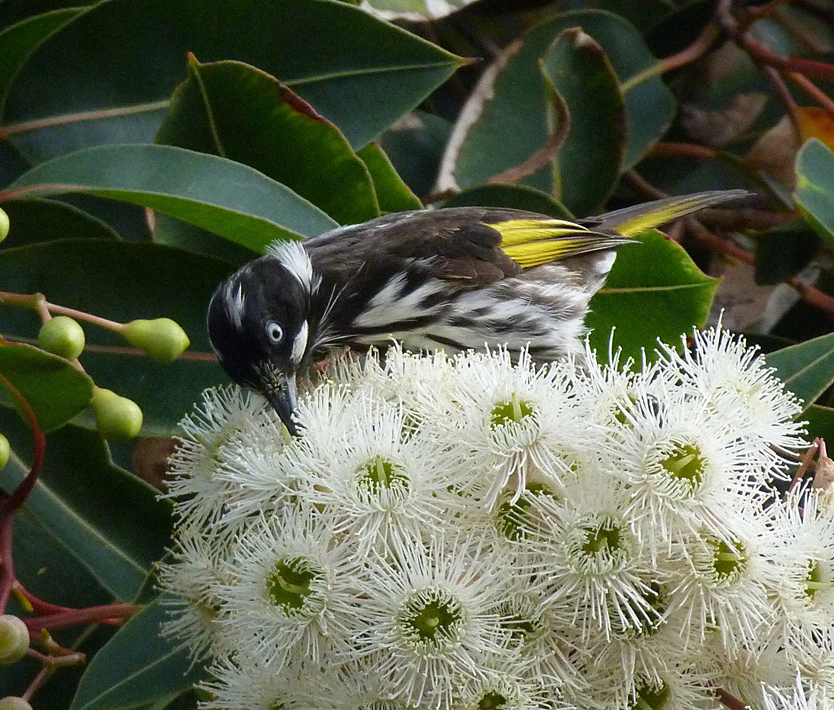
The New Holland honeyeater is perched on the topmost branch of the white flowering gum in my backyard. Every few minutes it takes to the air and chases an insect that has inadvertently flown too close to its ‘operating zone’. But hawking for prey like this takes an energy toll on the little bird, requiring frequent refuelling at the nectar rich flowers that also serve to attract its insect prey.

1

New Holland honeyeater


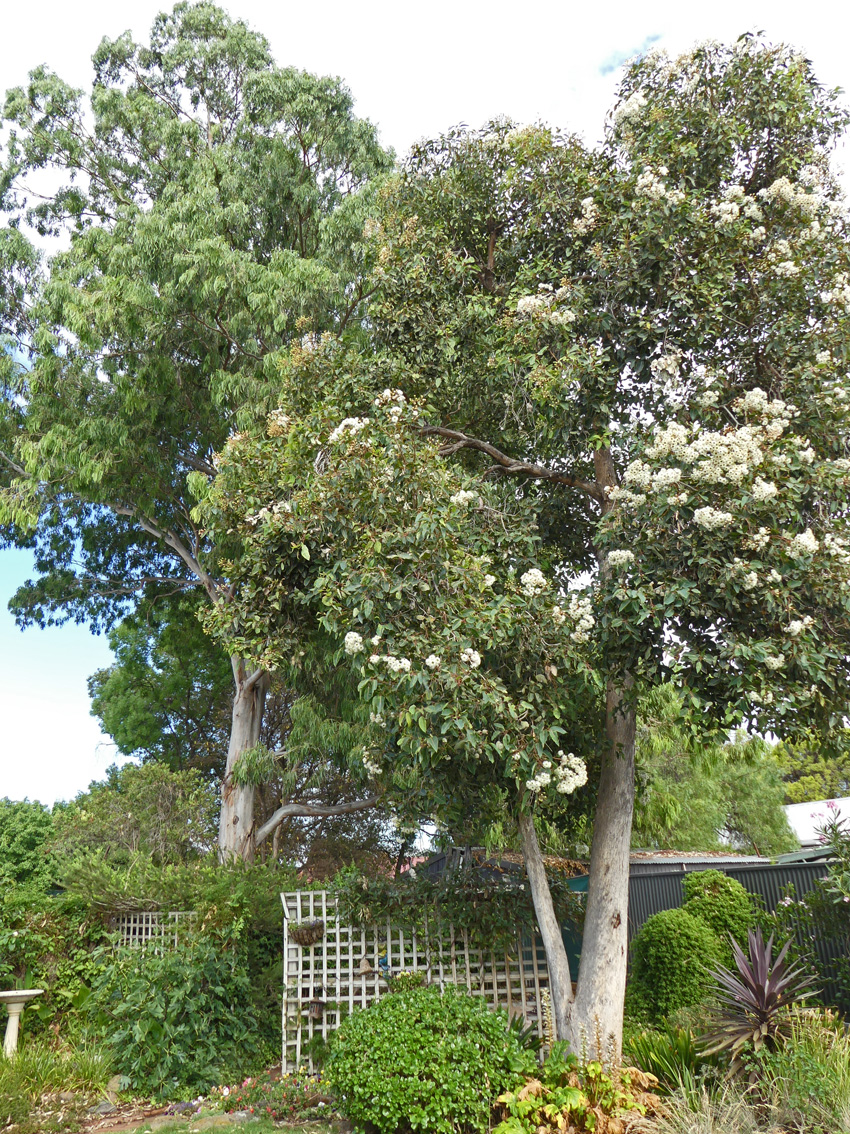
This is just one of the little wildlife scenarios that play themselves out during the Christmas season in the gum trees that grace my backyard. The smaller tree comes into flower in early December reaching its peak around Xmas day. The larger tree has flowered earlier but seems to harbour a wealth of tiny leaf and bark insects throughout the early summer months. Together, they attract a wide range of birds providing an interesting holiday spectacle; especially if one has scored a new camera from Santa.

2

A tale of two gums


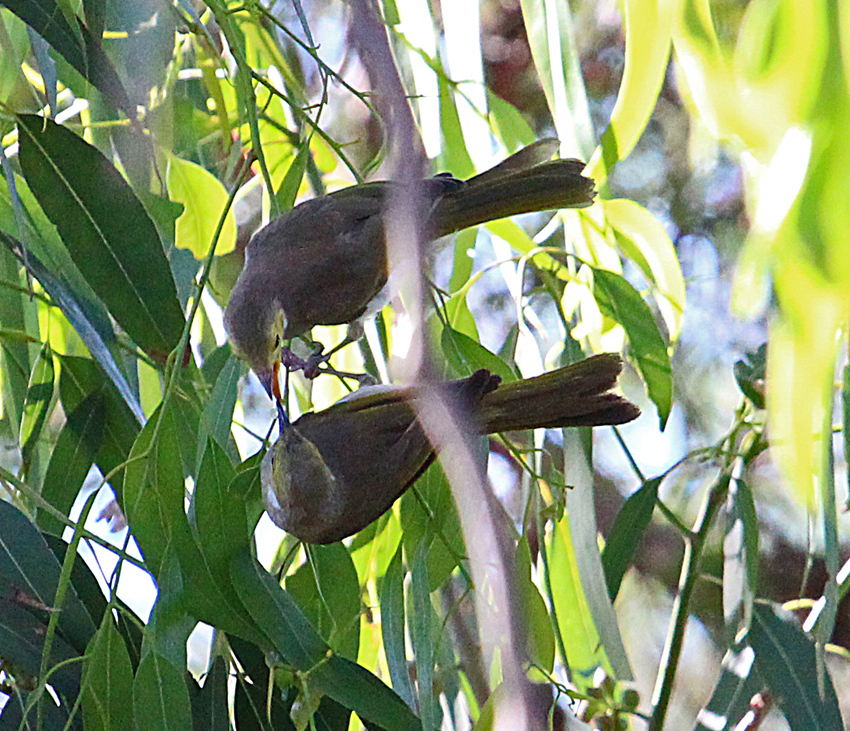
New Holland honeyeaters aren’t the only species of honeyeater that feeds in my garden. The more timid white plumed variety also samples the blossoms and hawk for insects. However, at this time of year they are almost finished raising their final brood for the season and the young ones are being schooled in the art of bug catching by the adults. Peering through my long lens into the shadows of the taller tree I am lucky enough to capture two images of a chick waiting for food then being fed a bug by its parent.

3 1

White plumed honeyeaters


3 2

Have a bug or two junior


In a wonderful coincidence, there is also a family of wattle birds in the same tree and a fully fledged chick is sitting on a branch demanding to be fed. I watch carefully, trying to time my shots to coincide with the exact moment the adult shoves some insect offering down its waiting gullet. Of course, some leaves get in the way and the light intensity drops at the crucial moment but that’s wildlife photography.

4 1

Wattle bird and chick


4 2

A gullet full of whatever


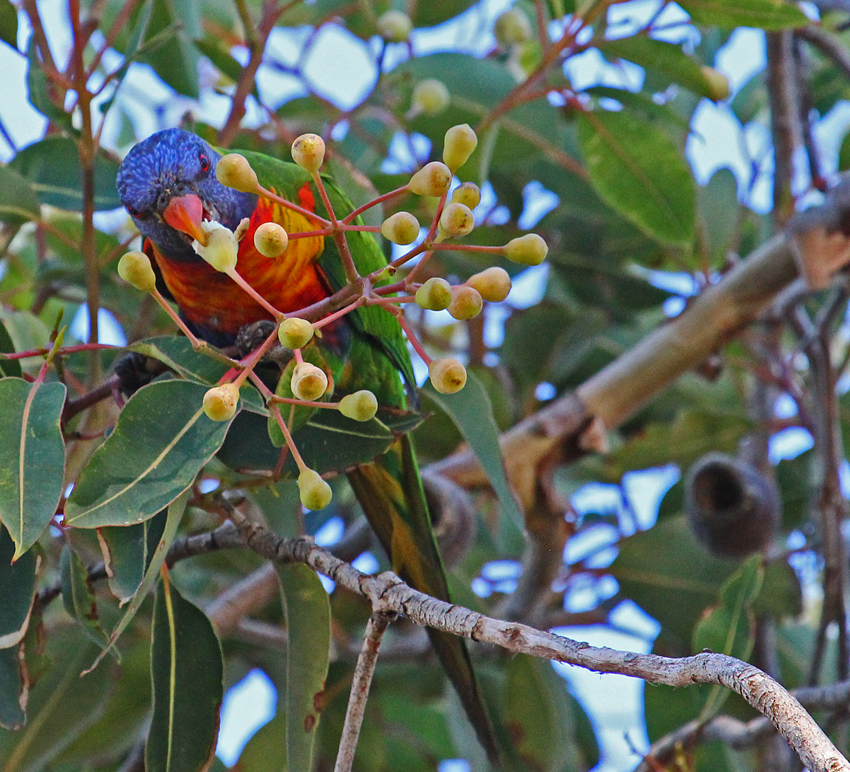
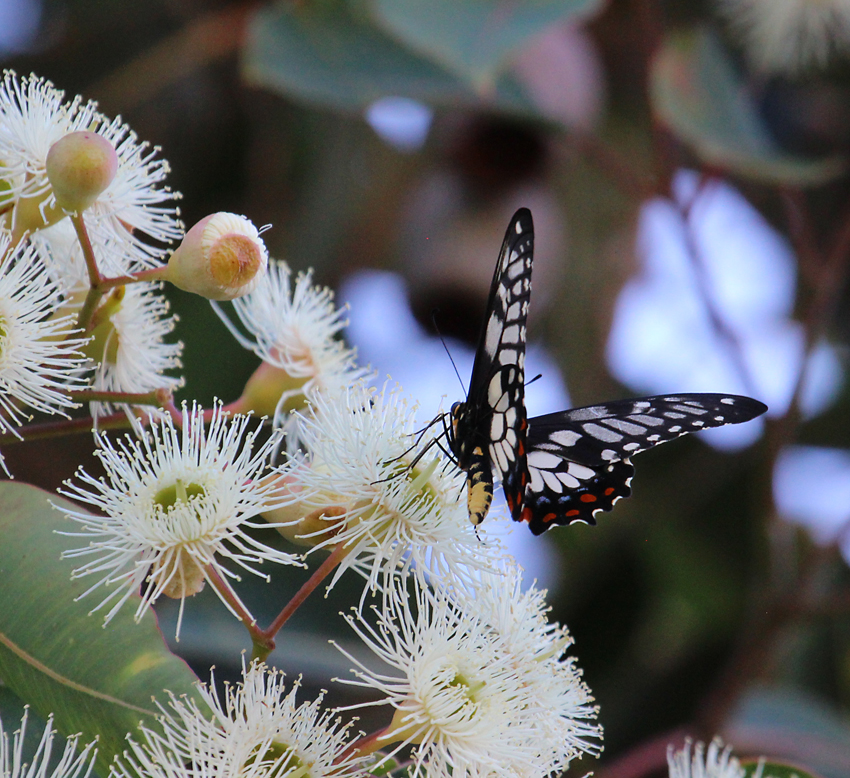
With a Xmas drink and a mince pie resting on the outdoor table next to my cameras I scan the foliage of the smaller tree for a final shot or two. Two colourful creatures oblige; a rainbow lorikeet is tearing apart a blossom emerging from a gum nut and a swallowtail butterfly is probing the mature flowers for nectar.

5

Rainbow lorikeet


6 Dingy swallowtail

Dingy swallowtail


Cheers and Seasons greetings

Until next year

Baz

Port Augusta…Arid Lands Botanic Gardens

7 Dec

Dear Reader:

The sand monitor, a kind of goanna, is raised slightly off the ground and peering intently towards me. It doesn’t seem too perturbed by my presence. In fact, I am probably the more excited of the two. It is my first encounter with one of these lizards which can reach a length of around 1.5 metres. Like all monitors, the sand goanna has a forked tongue like a snake allowing it to use scent to detect the distance and direction of its prey. A closer examination through my camera lens reveals that this animal has been injured at some time and is missing part of its front right foot.

Sand monitor

Sand monitor


I am in the Arid Lands Botanic Gardens just a few kilometres out of Port Augusta near the head of the gulf. The gardens showcase many of the diverse dry-land ecologies that SA has to offer. Unlike most parks this one is not fenced and the animals that venture into its proximity are wild. Despite its natural status the gardens are well serviced by a modern visitor centre and cafe.

The view from the head of the gulf

The view from the head of the gulf


Leaving the sand monitor to its own devices, I walk around the edge of the encroaching scrub towards the extensive eremophila plantings at the back of the centre. Several zebra finches are perched in the branches of a skeletal tree overlooking a small artificial waterhole. I search for the right image, eventually finding a male and female settled on a dead branch; perfectly demonstrating the difference between the sexes.

male and female zebra finches

male and female zebra finches

Purple eremophila

Purple eremophila


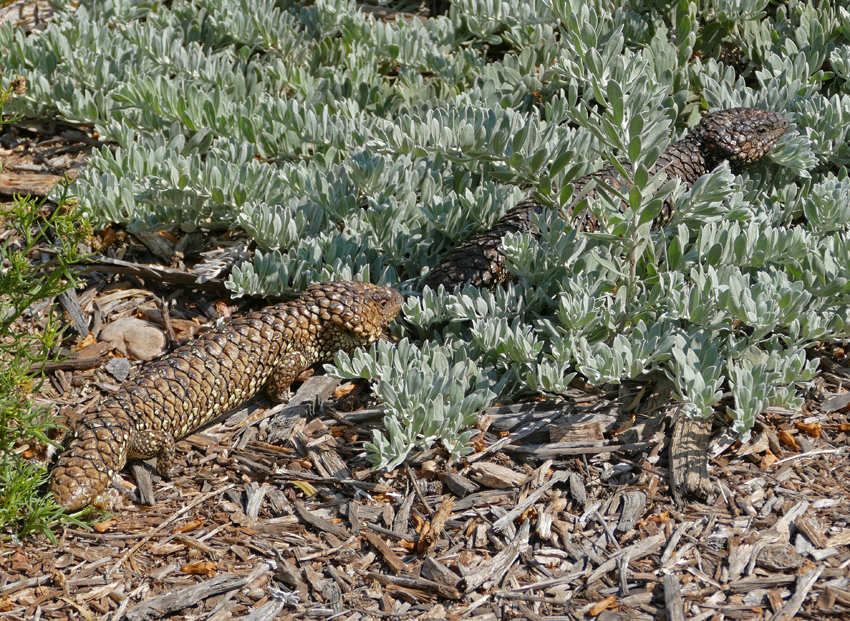
After spending some time exploring the eremophila shrubs with all their subtle floral variations, I walk around to the northern edge of the gardens. This area includes habitat zones where interpretive signs explain adaptations to climate and terrain as well as Aboriginal use of plants as foods and medicines. While I am reading about how sugarwoods are used as sweeteners and their amazing regenerative powers after bushfires, I hear a rustle in the undergrowth. Only a few metres from where I am standing a pair of or shinglebacks are following each other closely between the ground-covers. Sleepy lizards, as they are sometimes known, are essentially solitary reptiles which can only mean that it is mating season.


Shingleback or sleepy lizards

Shingleback or sleepy lizards


Whenever I visit these extraordinary gardens I conclude my day with a little culinary treat; a light meal, ice cream or scones with jam and cream. But these are no ordinary delicacies. Many of the flavours are created from the landscape with a distinctly ‘bush tucker’ nuance such as quandong ice cream and native herb flavoured damper.

Looking out from the café across the eremophila garden into the scrub beyond

Looking out from the café across the eremophila garden into the scrub beyond


Until our next adventure

Cheers

Baz  

Nairne….an artistic afternoon

6 Oct

Nairne….an artistic afternoon

Despite a field that is full of lush green grass, a veritable cow paradise, the small herd of young bovines drifts down towards the fence where I am standing. Perhaps they are intent on providing me with the perfect ‘cow’ shot or they may be simply illustrating the old adage; ‘the grass is always greener….’

2

Taking a closer look

1

Classic South Aussie dirt track

 On this perfect spring day I am driving along Ironstone Range Road just off the Old Princes Highway, a few kilometres east of Nairne. Expansive, open woodland dominates one side of the unsealed track and rich pasture carpets the other. I am on my way to the Jonathan Art Centre to grab a bite to eat and make some inquiries about art classes.

3

Open woodland with massive eucalypts

 Five minutes later I am driving across an open paddock on a grass trail to a pitch roofed building set on the side of a gently sloping hillside. There are rosellas in the trees that line the driveway and a pair of crows raucously announces my arrival. The entrance hall is a combination studio and gallery displaying the owner’s work and opening on to a balcony which overlooks a cottage style garden.

4

Johnathan art centre

5

Work space and gallery

10

Another view from the property

A friend has recommended the fish pie, a classic British dish that I often enjoy in London’s Union Cafe. And this version does not disappoint; full of good South Aussie seafood and topped with a fluffy potato mash. Like the art on display, it is a credit to the proprietor, Liz’s, creative flair.

6

Fish pie and fresh garden salad

To my surprise and delight; while I am enjoying the meal a hare hops through the garden below the balcony, pauses, looks straight at me then heads off down the hillside. Now, though his blog has had more of an ‘afternoon drive in the country’ flavour about it than my usual wildlife emphasis; rest assured, the camera was well within reach and a short burst fired off at my visitor.

7

Waiter, there’s a hare in my garden

Art inquiries and meal complete, I ask permission to wander around the property. Behind a bushy hedge there are rows of colourful annuals and lavender that abut a small pond. I can hear the call of parrots and eventually spot a crimson rosella amongst the layers of blooms. Then, switching to macro, I zoom in on a honey bee feeding. Its legs are covered in pollen brushed from the abundant flowers as the little insect drinks in their various nectars.

8

Layers of colour and rosella

9

Bee at work

A great drive, wonderful meal and a few wild encounters…not a bad way to spend a day.

Cheers

Baz

Marion Bay….the edge of Innes

29 Sep

Marion Bay….the edge of Innes

A small group of grey kangaroos is gathered on the edge of the scrub. The large male seems a little nervous. His ears twitch independently as he hops a few metres closer to where I am balancing the camera on an old jarrah fence post. Keeping the females and a half grown joey behind him, the buck stands up to his full height, giving me a clear warning not to come any nearer to his family.

1 Western grey kangaroos resting on the edge of the scrub

Western grey kangaroos resting on the edge of the scrub

I am walking along the fence-line that separates the township of Marion Bay from the Innes National park. We have hired a little holiday home that sits on the very edge of the township with intimate views of the surrounding grassland and scrub. Each morning, while I am eating breakfast on the verandah, I can see a few odd rabbits and a veritable parade of birdlife amongst the shrubs and trees that make up the garden. My favourites are the diminutive silvereyes that perch in the eucalypts and twitter menacingly at the larger birds that dare to invade their territory.

2 The view from the back verandah

The view from the back verandah

2 Silvereye singing in eucalyptus tree

Silvereye singing in eucalyptus tree

 The kangaroos are close to the lower end of the fence-line which runs from the main road up to the coastal cliffs that dominate this section of Marion Bay. As I move towards the coast I nearly step on an ant nest; not just any colony of ants but bulldog ants. These inch long beasties pack quite a bite and are best avoided. Luckily they do not swarm in great numbers like their smaller brethren. Still, photography is undertaken at a respectable distance.

3 Bulldog or inch ant

Bulldog or inch ant

As I approach the top of the cliffs the vegetation changes dramatically. Low scrubby bushes and thick ground covers with patches of tussock like grasses provide an ideal habitat for a range of small birds I can hear them in the thick cover but only catch fleeting glimpses. Then suddenly my luck changes and a glorious little wren hops out and sits on the very fence-line I have been following. In Adelaide I have often photographed superb blue fairy wrens and I am more than thrilled to see them here in this coastal environment. It is only later when I look at the image more carefully that I realise this little wren is actually a variegated fairy wren; a species I have never photographed.

4

Variegated fairy wren


 Where the fence meets the edge of the limestone cliffs there is a wooden viewing bay that provides an ideal bird watching platform. In the few minutes that I stand and survey the beach below several species of water birds fly past; including a white faced heron, silver gulls and a pacific gull. Looking back across the scrubby verge towards the rather expensive houses that front the esplanade I start planning my next trip to Marion Bay; perhaps a sea view this time.

5 silver gull in flight

Silver gull in flight

6 Coastal viewing platform with views of cliff and beach

Coastal viewing platform overlooking the beach

 An afternoon stroll along the fence-line completed my thoughts turn to dinner. The award winning Marion Bay Tavern is just the place to head as the sun is setting on my rather fruitful day on the edge of Innes. Made from materials that reflect the area, including corrugated iron, reclaimed jetty pylons and jarrah timbers, the restaurant boasts an eclectic menu specialising in fresh local seafoods. But my choice this evening is a pizza cooked in a wood oven fashioned from a classic old rainwater tank.

IMG_8015

Wood oven South Aussie style


Take a drive down to this wonderful area sometime

Cheers

Baz

Check out Geotravelling a new site that I have attached that celebrates the natural, cultural and urban diversity of our planet through my travel photographs.

Normanville’s Back Blocks and Coastal Walk

17 Sep

Normanville’s Back Blocks and Coastal Walk


Dear Reader:

The grey kangaroo is huge, a fully grown male with a couple of smaller females close by, half hidden in the scrub. As I approach, he rises up to his full height and eyes me with intent. I take half a step closer and he turns and shuffles closer to the fence. Then, with a single, effortless bound he clears it and disappears into the scrub further down the hillside.

2 roo

Fully grown male, grey kangaroo


3roo

Up and over

I am in an older part of Normanville on a hillside behind the beach houses and new developments. Large blocks of land are quite common here. Some still retain vestiges of the original pre-farming vegetation. Landowners with an interest in wilderness conservation have re-established endemic plants on many plots that in turn attract a plethora of native wildlife from ‘roos’ and kookaburras to colourful rosellas and even the odd echidna.

IMG_7906

Grevillea species growing under the pink gums


Near the top of this particular block there is a stand of gnarled old pink gums where little crescent honeyeaters and several grey currawongs are sheltering from the light showers that are sweeping in from the sea a couple of kilometres away.

IMG_7909

Grey currawong in pink gum

IMG_6803

Crescent honeyeater sheltering from rain


Beneath the canopy of the trees there is a wide variety of native shrubs and ground covers that support both small birds and insects. Despite the cool weather I manage to find some shield bugs amongst the berries and flowers of a pink Geraldton wax bush. And in the branches above them a crimson rosella is calling to its mate in anticipation of a warmer spring day when they will be searching for nesting holes.

Common gum tree shield bug on Geraldton wax bush

Common gum tree shield bug on Geraldton wax bush


From the scrubby hillside I drive back down to the coast stopping in at the Normanville Hotel for a locally caught seafood meal; calamari, whiting and scallops. The beach is only five minutes from the hotel and I park where a coastal pathway sweeps around to Carrickalinga heads, an area that I frequently dived during my youth.

IMG_7280

Late afternoon view of Carrickalinga heads from Normanville


The sun is getting low now and there are sparrows and honeyeaters settling in for the night in the bushes that flank the path. I can just make out a cormorant resting on the rocky foreshore shaking water from its wings before finding a place to roost. Sometimes this half light produces some of the more striking images that I have captured in the wild and today is no exception. I find a pair of crested pigeons perching on a skeletal branch with the grey sea and sky as their backdrop. They are my final memory of yet another memorable day spent enjoying South Australia’s Fleurieu Peninsula.

IMG_7283 edit 1

Crested pigeons near walking trail to Carrickalinga


Take a drive down the coast sometime and enjoy this special place and its wildlife!!!

Cheers

Baz

Walkerville’s Bickle Reserve…..Fairies in the Garden

4 Sep

Fairies in the Garden

Dear Reader:

As I have categorically stated in several of my posts, “I am no botanist”. I love gardening and appreciate the wonderful diversity of South Australia’s flora but remembering all the different classifications, names and botanical intricacies is just a little too much like hard work. Instead, I rely on a couple of field guides to common plants in the Adelaide area, phone a friend or simply make reference to those yellow bushes or tall straight eucalypts. Hopefully, this gap in my naturalistic armoury will be narrowed as I write more nature posts, though the signs are not promising. So: it is with some trepidation that I lead into the following piece …….

P1130228

Pink fairy (Caladenia species)

IMG_8066

The Torrens near Bickle Park

 ….It is a cool winter’s day, slightly overcast and I am on my knees examining a glorious little patch of native orchids. Most are pink fairies but there is one tiny delicate bloom, the size of a little finger nail, called a gnat or mosquito orchid. Nearby several of the flat prostrate leaves indicate where other orchids will appear in the near future.

P1130247

Gnat orchid (Cyrtostylis species)

All of these species are endemic to the area and though a few might have grown naturally, most are the result of a dedicated group of volunteers who are revegetating this area which is part of the Vale Park Wildflower Walk. The section I am exploring is alongside the Torrens River just east of the autobahn bridge near the Bickle Reserve. Several of the Vale Park group are holding an open morning and explaining the importance and biology of the plants they have established.

P1130234

Chatting about orchids

IMG_8071

Native Wisteria (Hardenbergia)

IMG_8099

Purple swamp hen

As I listen to information about the relationship of certain fungi in the soil to the propagation of orchids and marvel at the spidery native clematis and hardenbergia that are climbing up some eucalypts (big tall ones) I notice a pair of purple swamp hens foraging in the long grass by the river. Leaving the group I pursue the birds and make my way along the bank where there are also dusky moorhens in the reeds and crested pigeons feeding near the bikeway.

IMG_8059 edit

Dusky moorehen

Rejoining the group I chat about the importance of maintaining our wild heritage for future generations and learn about Aboriginal use of some types of native plants including orchids. Predictably in this group I encounter another wildlife photographer and the conversation fluctuates between nature and the lenses we have used for different purposes.

IMG_8088

An occasional visitor

In the course of our conversations one of the replanting team asks me if I have any images from the area and I remember that on a bike ride along this part of the linear park trail I had photographed a koala high in the largest eucalypt overshadowing the orchid beds. But, in keeping with my botanical prowess I forget to ask what kind of species it is (probably a tall, straight one).

Until the next journey into SA’s natural wonders

Cheers

Baz

PS

Check out Geotravelling a new site that I have attached that celebrates the natural, cultural and urban diversity of our planet through my travel photographs.

Norwood’s Parade of Animals

29 Aug

Norwood’s Parade of Animals

 Dear Reader:

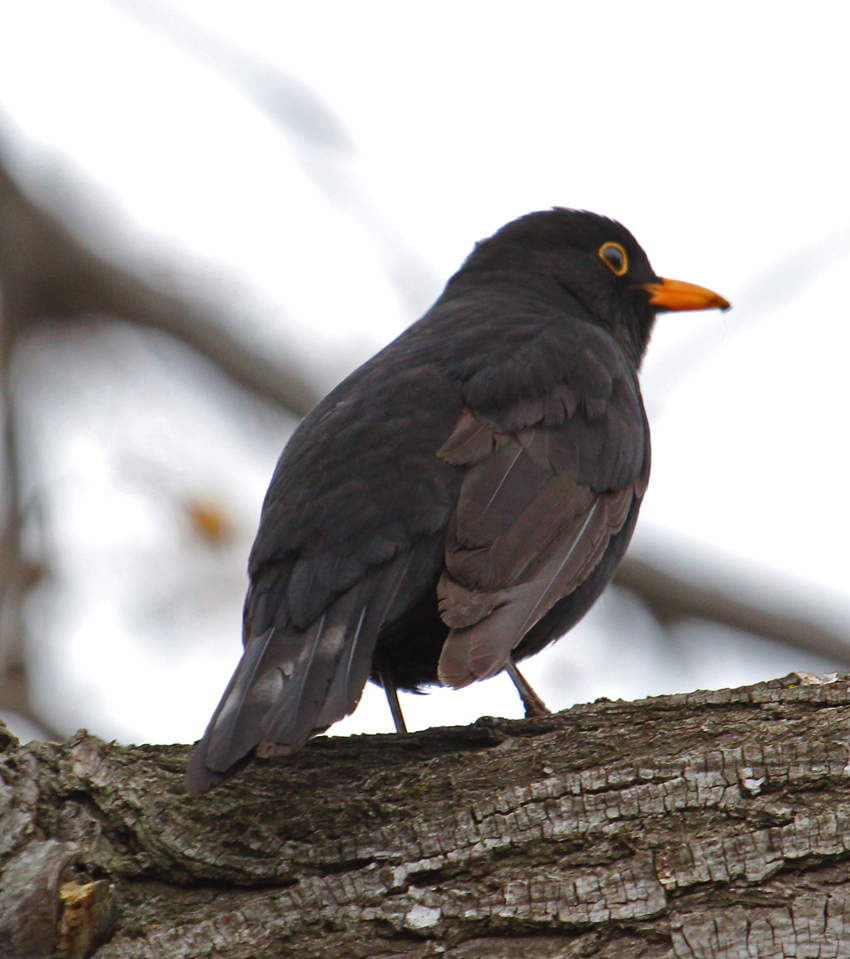
It has been rather a grey week but today the sun is showing its face at regular intervals and there is a blackbird singing in a tree above me. A good day for a walk around Norwood admiring the architecture before grabbing a bite to eat at one of the many restaurants and hotels that make the area a premier dining destination. But this old, established suburb with its towering trees and well-tended gardens also provides meals and homes for a wide variety of urban wildlife.

Juvenile male blackbird

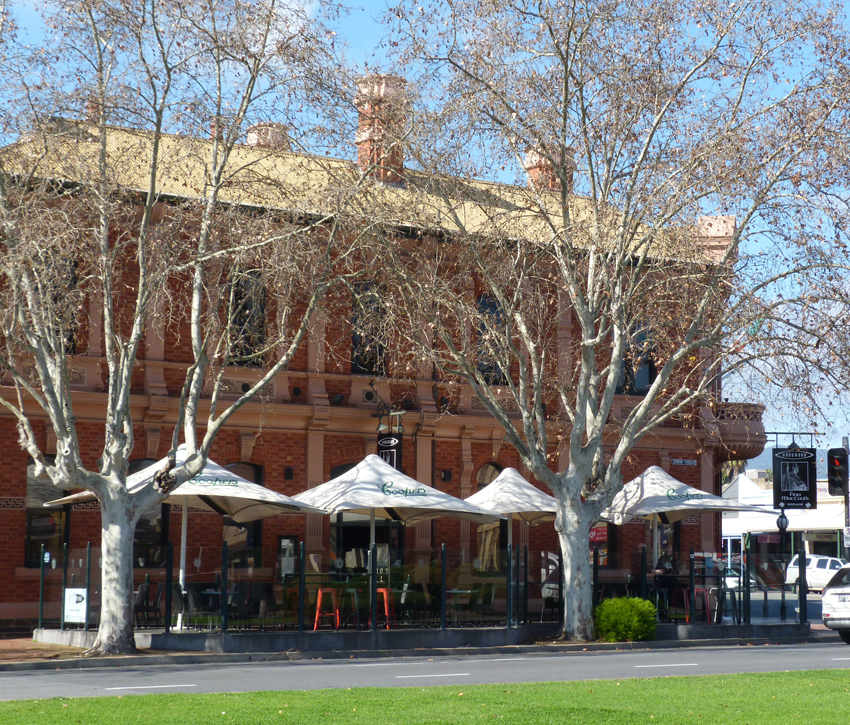
1 One of the classic hotels in the Norwood area

One of the classic hotels in the Norwood area


Blackbird aside; the first indigenous species that grabs my attention is living between the petals of a bright yellow daisy bush. The diminutive flower spider hunts amongst the blooms for small insects. This one has ambushed a fly and is proceeding to wrap it in a web for a late afternoon snack.

2 Flower spider with lunch

Flower spider with lunch


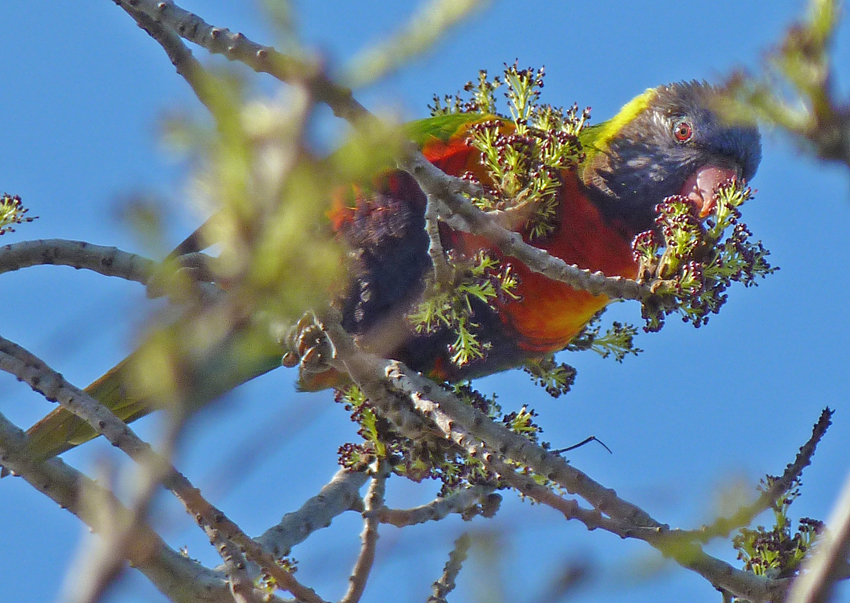
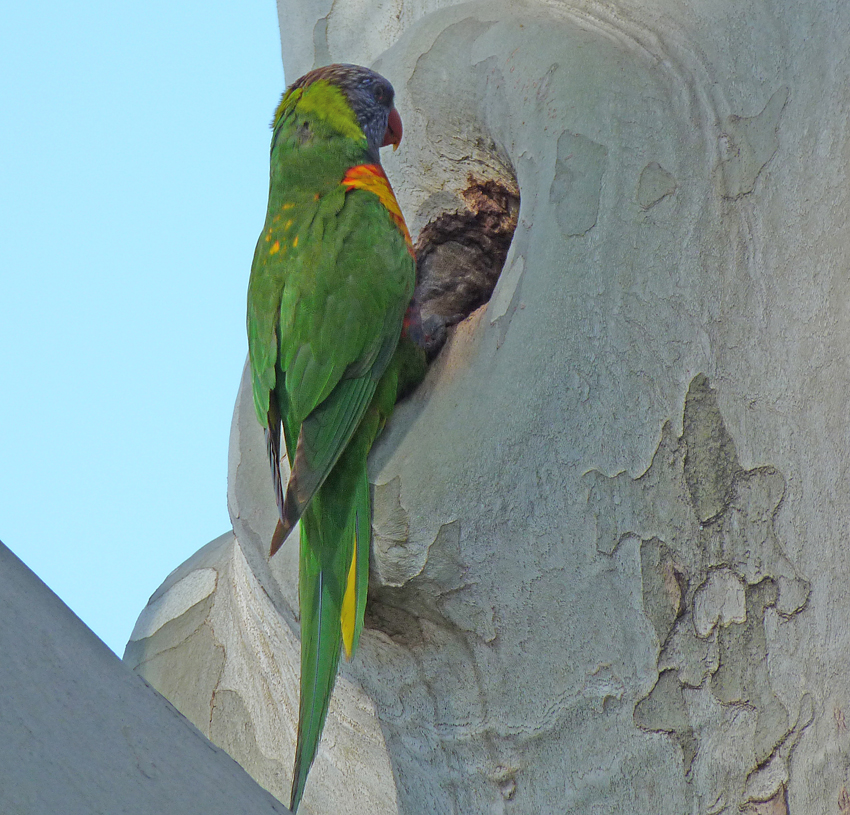
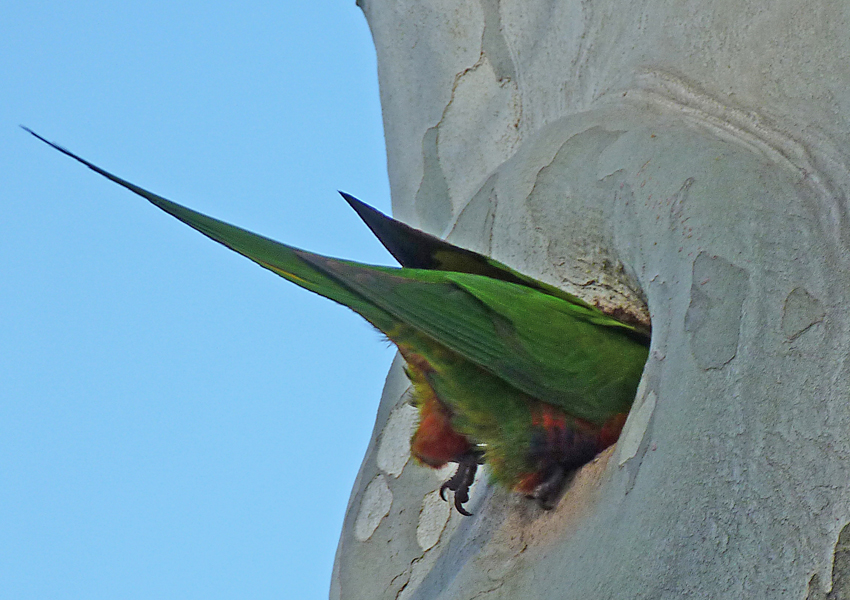
A little further down the street I can hear the call of lorikeets as a pair of the colourful little parrots forage in the trees for seed and blossom. I follow them closely as they fly from the tree tops to a smooth barked gum tree right on the edge of Osmond Terrace, a busy boulevard that cuts through Norwood. Here, with traffic whizzing past, they are investigating a hole in the trunk as a potential nesting site.

2 Lorikeet feeding

Rainbow lorikeet feeding

2 Rainbow lorikeet scouting for real estate

Rainbow lorikeet scouting for real estate

2 Taking a closer look

Taking a closer look

2 Hey honey come take a look

Hey honey come take a look


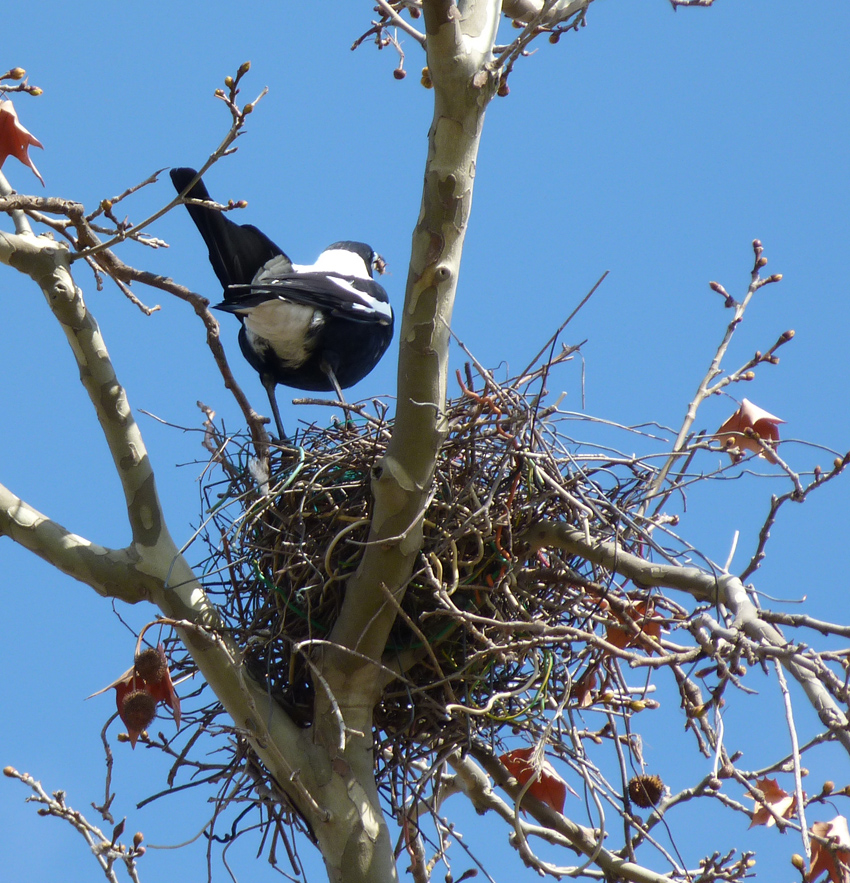
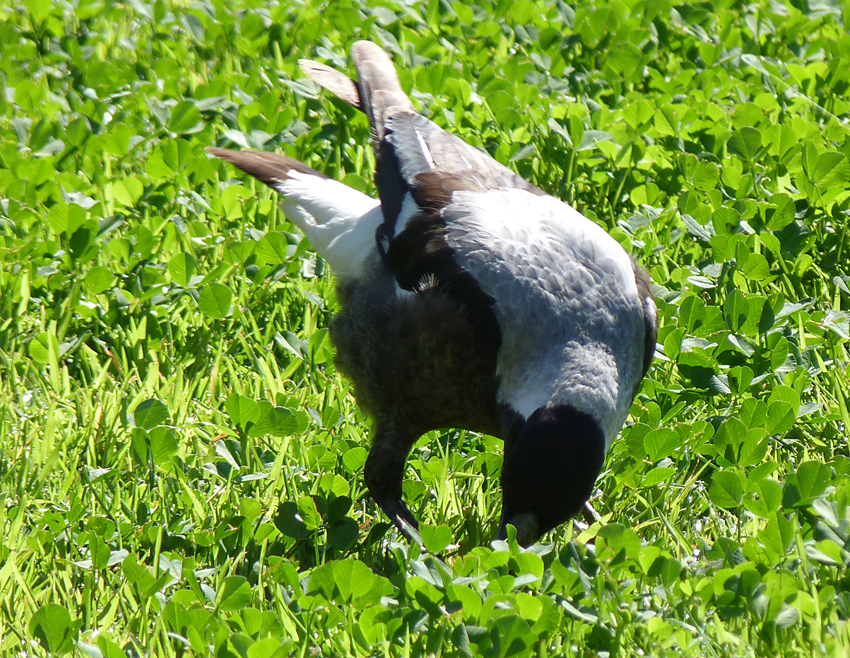
Osmond Terrace is also home to a group of Australian magpies. I can see a raggedy nest high in one of the liquid amber trees that line the thoroughfare and when I focus the long lens on it, the head of a large chick is just visible. After ten minutes an adult bird arrives with a grub in its beak. A few minutes later I catch site of another bird digging for invertebrates in the lawn of a local school while a third sits, watching from the concrete facade of Vine House, one of the suburb’s historic buildings.

Adult magpie arriving at nest

Magpie feeding

Magpie feeding

keeping an eye on proceedings

Keeping an eye on proceedings


My final stop is Finn MacCool’s Irish Pub for lunch where a group of pigeons is also enjoying an alfresco bite to eat in slightly less salubrious circumstances. I started with an introduced species…might as well end on the same note.

P1130169

Common pigeons feeding on crumbs in the street


Until our next adventure

Cheers

Baz  

Check out Geotravelling a new site that I have attached that celebrates the natural, cultural and urban diversity of our planet through my travel photographs.

Chinaman’s Creek on a cloudy day

3 Aug

Chinaman’s Creek on a cloudy day

Dear Reader:

It is a cool, overcast afternoon; not ideal for wildlife watching or photography. Nevertheless, I have organised a weekend trip north to Port Augusta to investigate the Arid Zone Botanic Gardens during the winter months. As an added bonus, I hope to explore a shallow mangrove creek some 20kms south of the town that a friend has suggested as an interesting wildlife stop off en route.

1 wedge tail 2

Wedge – tailed eagles are Australia’s largest raptors with a wingspan over 2 metres

1 wedge tail 1. Australia's largest raptor with a wingspan over 2 meters

Wedge-tailed eagle about to fly

1 wedgy takes flight

In flight


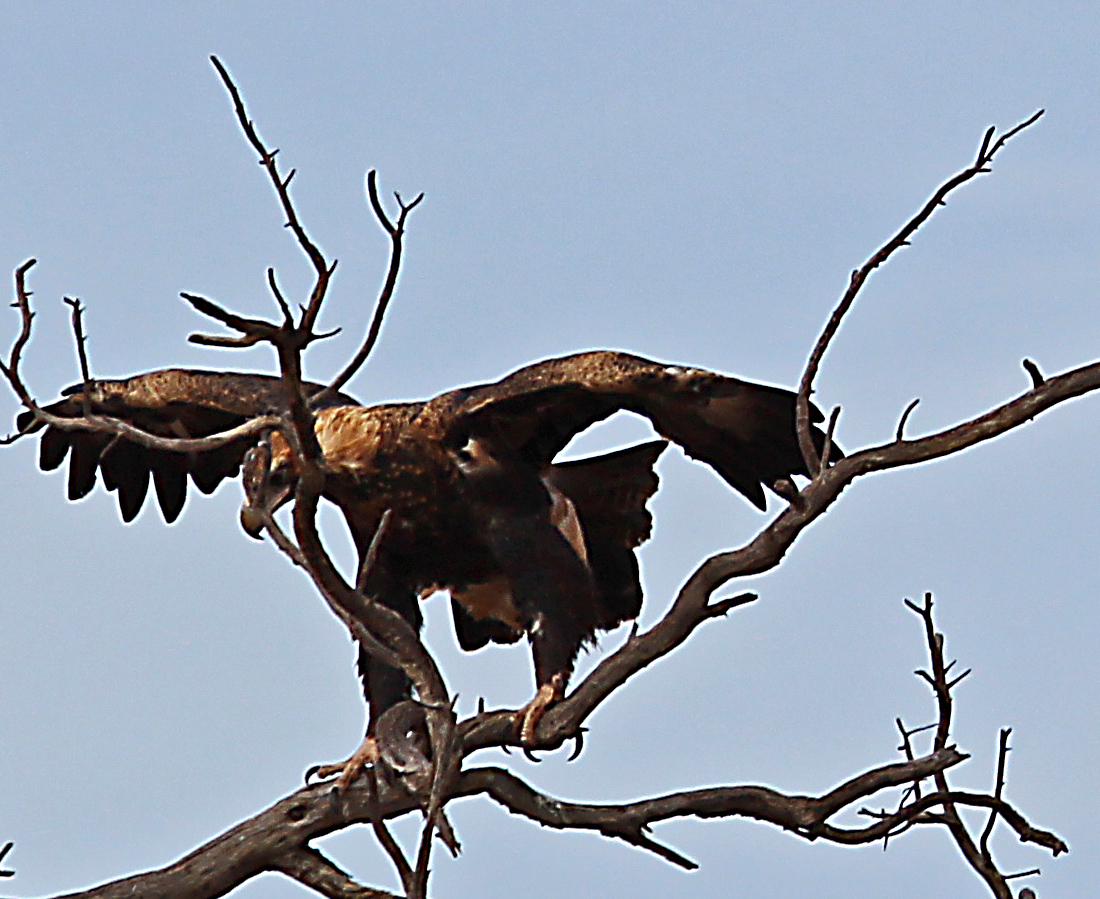
As I approach the Chinaman’s creek junction I notice a pair of wedge-tailed eagles in the skeletal branches of a mallee tree. The birds seem quite relaxed as they survey the low scrub that stretches towards the coast. I let the car roll to a stop and gingerly climb out careful not to let the door bang shut. There is good cover between the birds and myself and I fire off a couple of shots before one bird senses the movement and takes to the air.

2 Galahs iin bush near wheat fields

Galahs in bush near wheat fields

2 Cockatoo near the park's entrance

Cockatoo near the park’s entrance


The stretch of unsealed road that stretches towards the coast is flanked on both sides by scrubby farmland that supports sheep and some wheat fields. Small groups of rose breasted cockatoos are perching in the branches alongside the road. They occasionally take flight into the fields to dig out tubers and possibly ravage a few of the crops; lovely birds to watch but not always popular with farmers.

4 Dirt trackinto the coservation park about 5 kms from the highway

Dirt track into the conservation park about 5 Kms from the highway

4 Visitors to the park

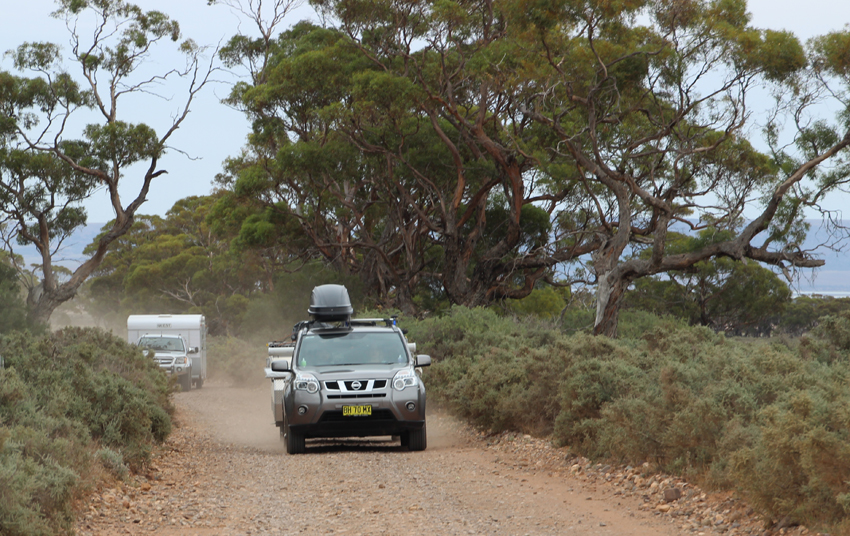
Visitors to the park


Where the cleared land gives way to forest and denser scrub, a fence and sign announces the Winninowie conservation Park which incorporates Chinaman’s Creek. Despite the remoteness of the area we meet a couple of 4X4s complete with camping trailers and stop to chat with the drivers for a few moments. They have been camping by the creek for a few days and had some success fishing the mangrove flats on the receding tide for whiting and mullet.

6 Chinaman's creek jetty at low tide

Chinaman’s creek jetty at low tide

9 Momentary glimpse of a sacred kingfisher

Momentary glimpse of a sacred kingfisher


A few minutes later we pull into the camping area. There is a scattering of permanent shacks and a small jetty that is completely exposed at low tide. I change from shoes to gum boots, from experience I know that this mud sticks like glue, and start to walk along the edge of the little creek. I can hear singing honeyeaters in the mangroves and catch flashes of colour from other unidentifiable species that flit amongst the thick foliage. But the birds are some distance away and the overcast conditions make photography all but impossible.

6 Chinaman's creek jetty at low tide

Chinaman’s creek jetty at low tide


I notice thousands of small burrows honeycombing the edge of the intertidal zone. Each is home to a small shore or mangrove crab. In the creek I can see roving schools of silver baitfish eagerly eyed by a pair of herons that are stalking the fringe of the mangroves.

4 As a pair of emus head towards the trees a grey kangaroo pops its head up

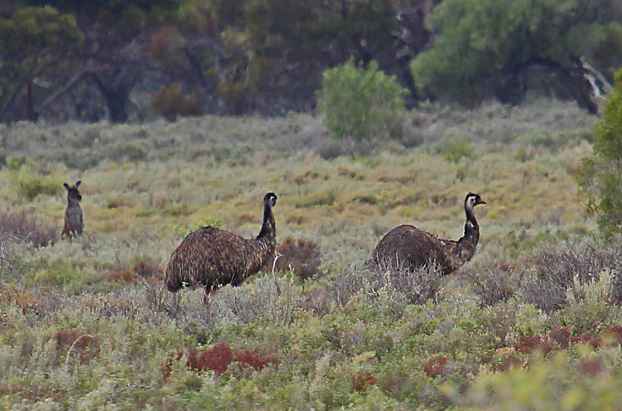
As a pair of emus head towards the trees a grey kangaroo pops its head up


Our time at the creek is limited. The clouds are thickening and a few fat raindrops have bounced off my camera lens. As we leave the park has a few more wildlife surprises that make me grit my teeth over the poor lighting conditions. A gorgeous sacred kingfisher perches on a long-dead coastal acacia bush and a group of grazing emus wanders across the saltbush dominated plain. Later, when examining this image in detail I discover that there is another participant in the scene; a grey kangaroo that was feeding close to them.

5 The creek at low tide with mangrove forest and Flinders Ranges in the background

The creek at low tide with mangrove forest and Flinders Ranges in the background


It has been an interesting first look at this coastal environment with its varied habitats and I look forward to further visits in the warmer, lighter months ahead.


Until next time

Cheers

Baz