Archive | Photography RSS feed for this section

Glacier Rock….Good food, Geology and Wildlife

30 Nov

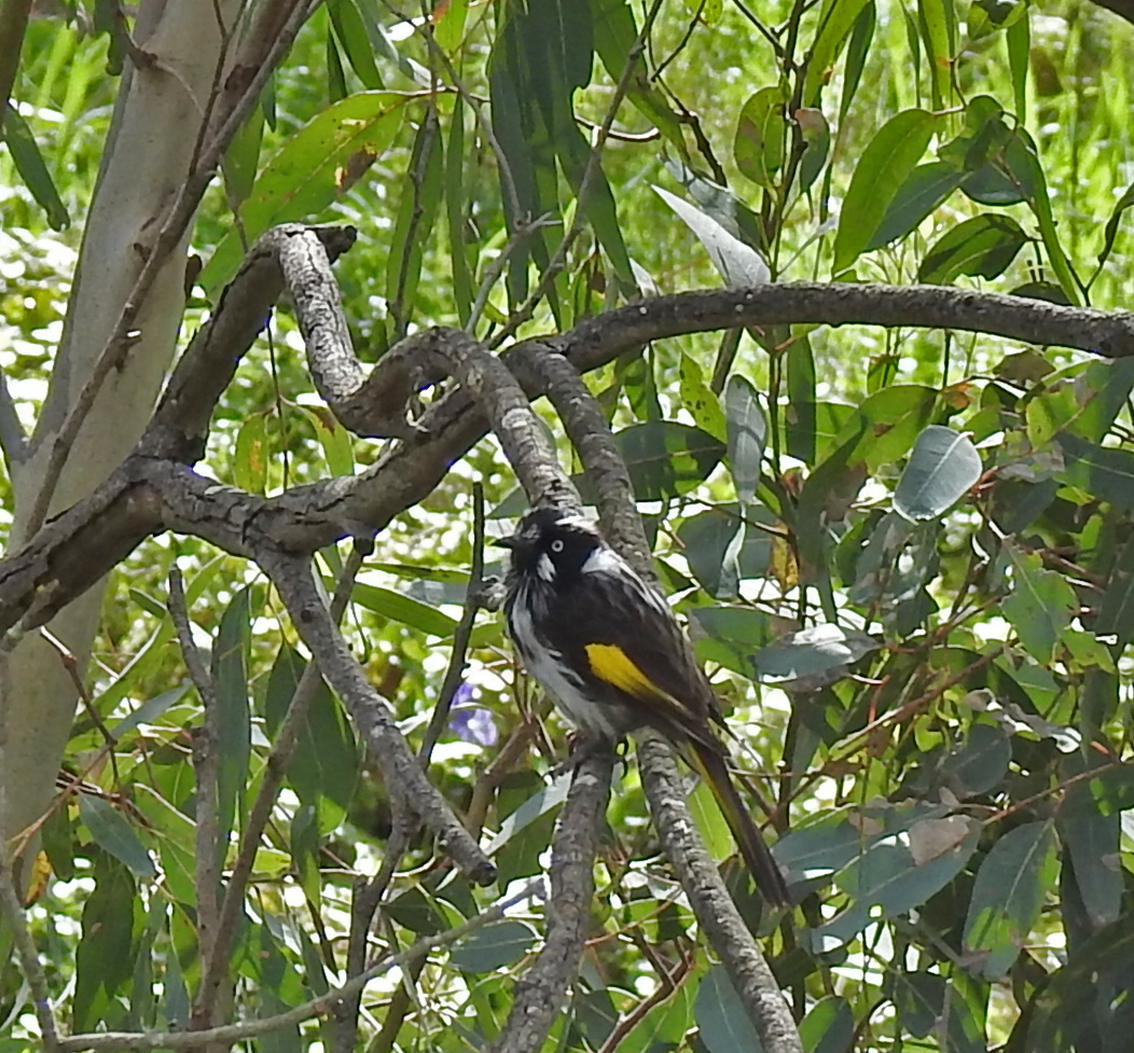
A pair of New Holland Honeyeaters

Dear Reader:

There is white water swirling around the boulders in the river and a family of Pacific Black Ducks are huddling to one side where the water is calmer. Perched amongst the branches of an overhanging eucalyptus tree I make out the shape of several New Holland Honeyeaters and hear the distinctive call of Sulphur-crested Cockatoos as they fly overhead.

Breakfast at the Tearooms

I am sitting on the back decking of the Glacier Rock Tea Rooms  having just devoured a serve of the delicious waffles topped with berries, cream and ice cream; with a little maple syrup for good measure. The weather is overcast and not great for photography but I shall make the best of it.

Typical rural countryside along the Inman Valley

On the drive along the Inman Valley Road we spotted a mob of roos feeding just outside the little township of the same name. There were also  black headed sheep and numerous herds of dairy cattle grazing on the fertile grassland. Some really pleasant rural scenes to photograph.
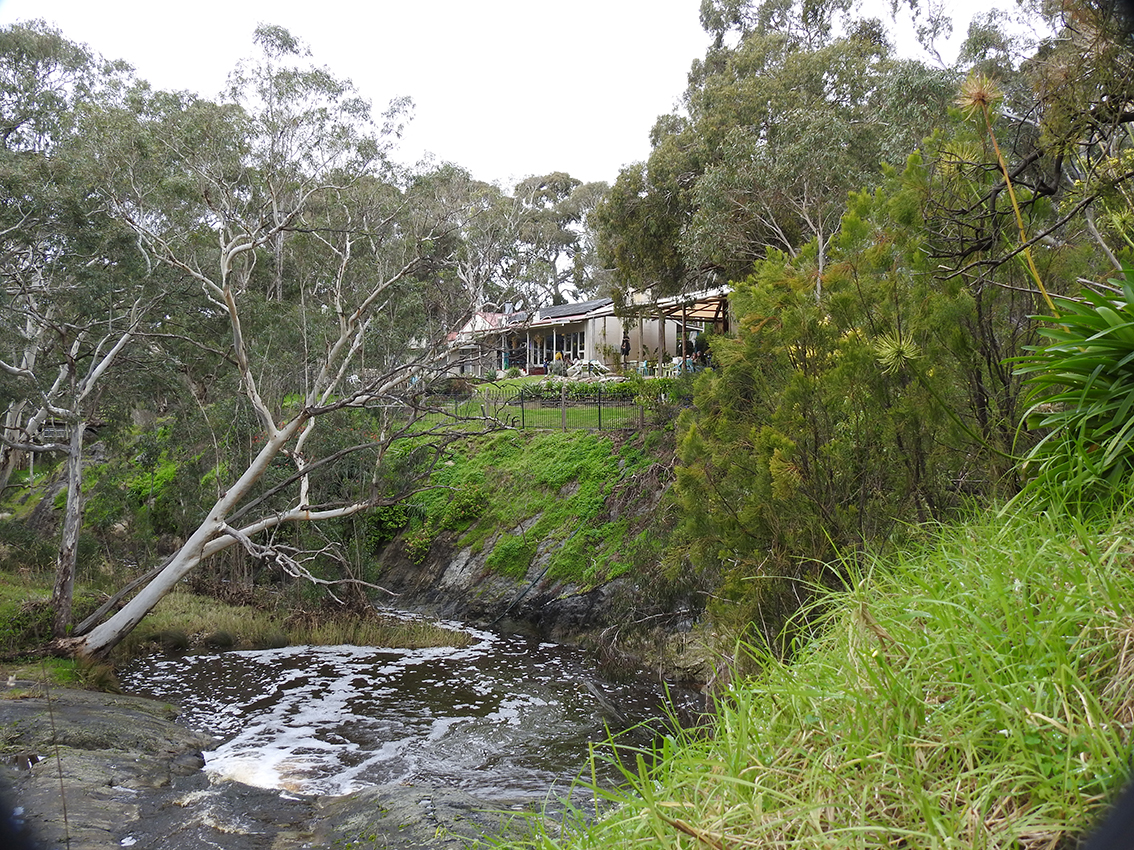
Inman river and Tearooms

I take the track from the caffe down to the river passing an information board on the way which explains the geological processes that lead to the rock formations. They involved the scraping of surfaces by rocks embedded in an ancient glacier which carved out the valley millions of years ago.

White-naped Honeyeater

Grey Fantail

From the viewing point alongside the river I watch Welcome Swallows and Grey Fantails hawking for insects above the water. And, to my great delight, spot a bird I have never photographed before: a White-naped Honeyeater.  

Old bridge over the Inman River
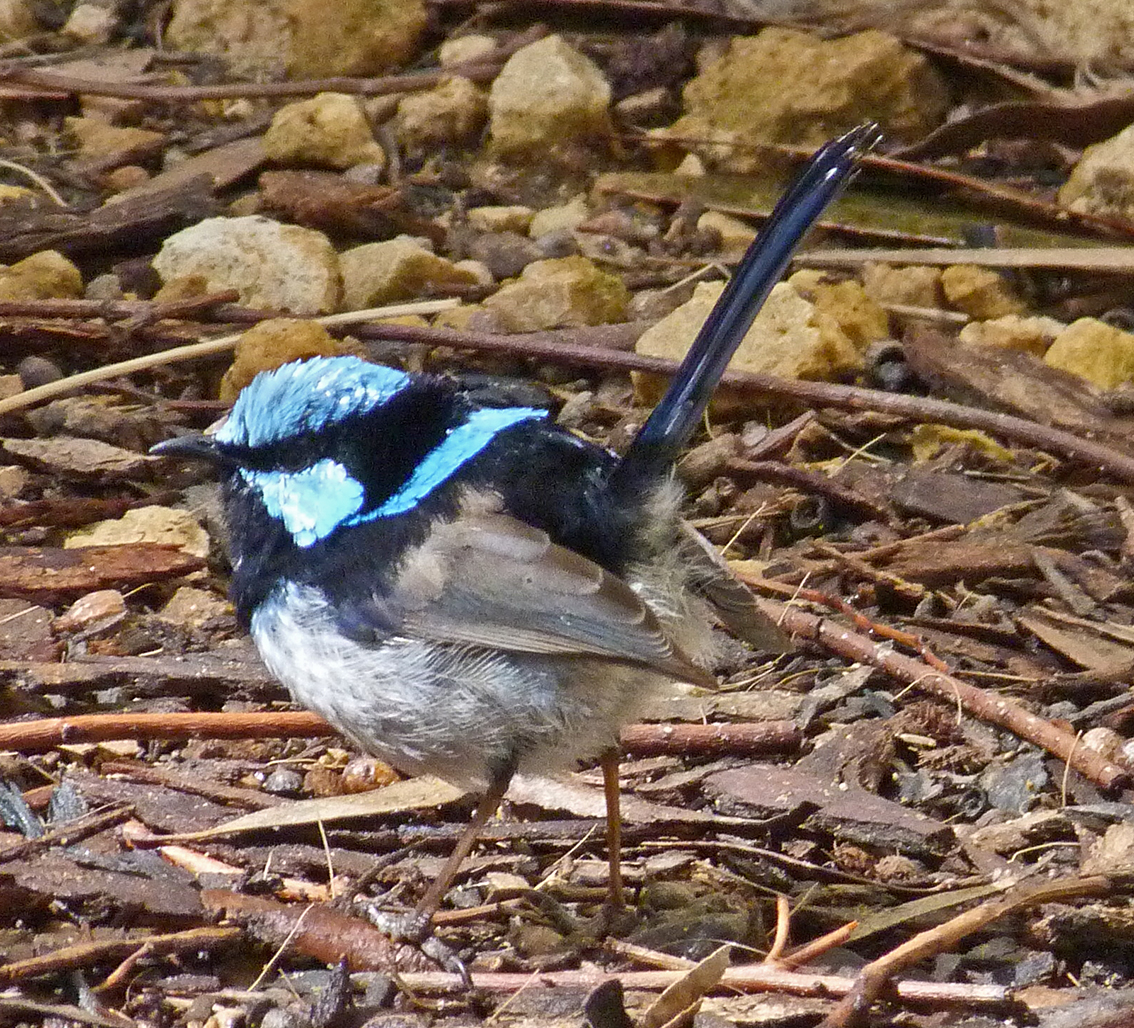
Superb Fairy Wren

The Mt Alma Road runs alongside the café. I walk a short distance along the road to get a good view of a dilapidated, old bridge which crosses the river. Thick brush lines the first section of the road and I can hear the twittering of wrens in the thickets. There are both sheep and cattle in the paddock opposite.

Galahs in silhouette

Red Wattlebird

On the other side of the Inman Valley Road, a narrow, sealed track called Parsons Road climbs a small rise. In the field alongside the road, several Galahs are perched at the top a long dead tree. Nearby a group of Red Wattlebirds are feeding on flowering shrubs along the fence line.

Spider predation or devouring its own carapace after shedding????

However, my final wildlife encounter is on a much smaller scale. A little spider (species unknown) appears to have caught another spider in its web and is starting to wrap it in silk ready to devour later.
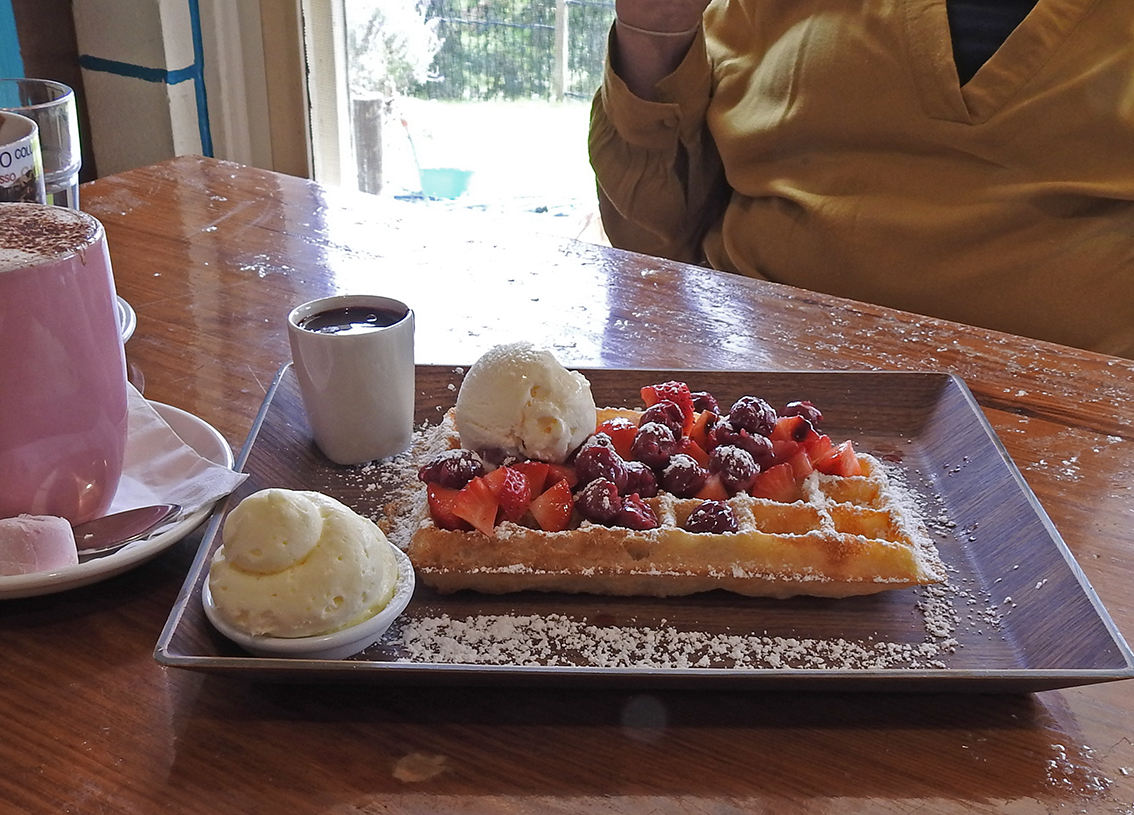
Sweet indulgence

My walk is over and I shall return to the tearooms and treat myself to a hot chocolate. An appropriate end to a rather successful walk in this lovely part of the Fleurieu Peninsula.  

Cheers

Baz

Additional notes

This is an easy walk and drive which is quite suitable for families and seniors with public toilets, parking and other facilities nearby. It is dog friendly.

Please pass on this blog title and or contact information (URL) to any person or organisation with an interest in taking walks and enjoying wildlife in SA.

Click on these links and see more South Australian stories and pictures in my Weekend Notes articles as well as locating similar blogs on Feedspot’s top 20 Australian wildlife blogs

https://www.weekendnotes.com/adelaide/writer/452/

https://blog.feedspot.com/australian_wildlife_blogs/

Port Vincent….. an afternoon walk

30 Oct

Australian Pelican and Silver Gulls

Dear Reader:

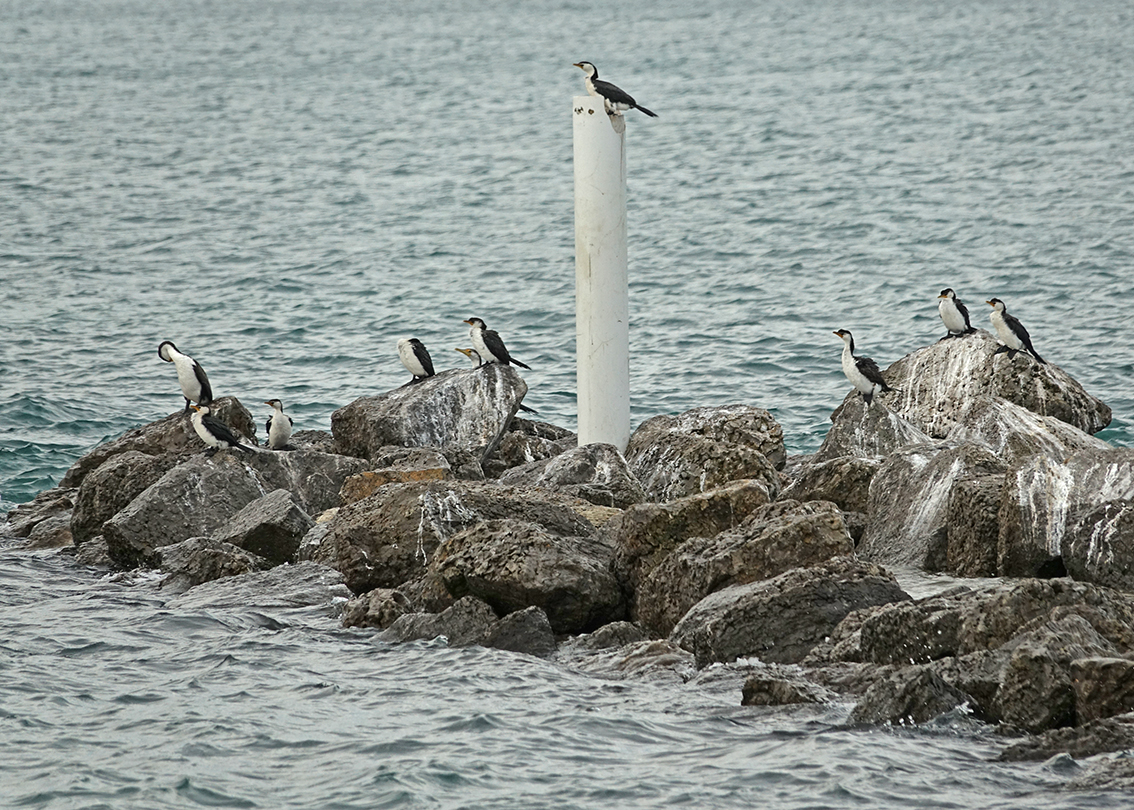
It has been a comfortable two and a half hour drive from Adelaide to Port Vincent. Although, with low cloud cover, I am not anticipating any worthwhile photography until tomorrow. How wrong can I be? As I pull up in the car park, an Australian Pelican lands on the grass verge near the cabins. And, no more than a hundred metres away, I can see a group of Pied Cormorants on the nearby breakwater.

Pied Cormorants

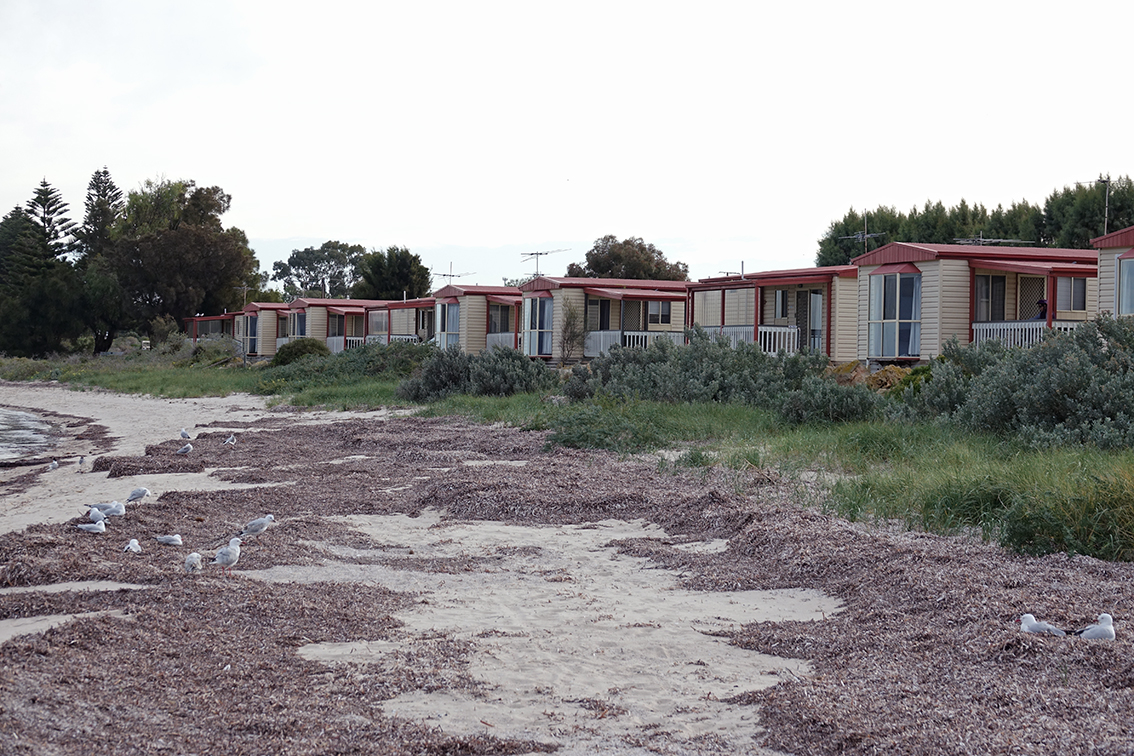
Cabins along the beach front

Apologetically leaving the others to unpack, I grab my Sony RX10 and wander down to the beach. To my surprise, two Bottlenose Dolphins are hunting in the shallows along with another Pelican; much to the consternation of a pair of fishermen who are trying to catch an evening meal themselves.

Pelican hunting solo

Dolphin taking a vertical dive

The dolphins are fascinating; turning, accelerating and diving constantly as they herd the school of fish they are feeding on. Not an easy animal to photograph from the beach as all you see are half a back and the occasional fin. Nevertheless, I continue to track them with the camera. Suddenly, one dives vertically with its tail held high. A nice moment.

Red-necked Stints

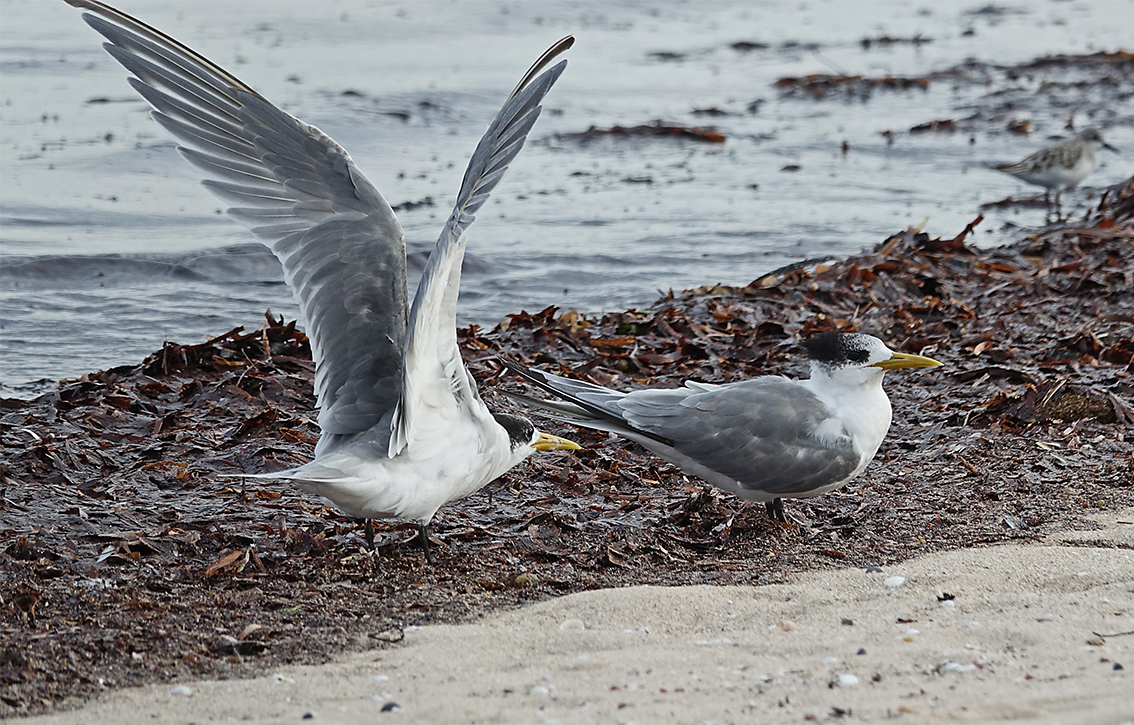
Crested Terns

Along the shoreline, where the waves lap against piled up seaweed, a mixed group of tiny waders; Red-capped Plovers and Red-necked stints, are foraging for tiny worms and crustaceans. Nearby, a Crested Tern is resting on the beach when a second bird flies down to join it, possibly a nesting pair.

Red-capped Plover with eggs

One of the plovers is meandering higher up the beach and doesn’t move far as I approach. I watch it carefully and search the seaweed for a nest. Sure enough, there amongst the brown tangle of weed are two perfectly camouflaged eggs. I back off a dozen metres and wait. After a few minutes the bird returns to its eggs and sits carefully on them eyeing me defiantly. 

Port Jackson Shark egg casing. The spiral shape wedges under rocks.

Remains of a sponge showing silica skeleton

I move away from the little plover and hunt for any other life in the accumulated drifts of weed. My search is fruitful and I turn up a spiral shark egg. Probably from a Port Jackson Shark one of the oviparous (egg laying) species around our coast. Further along the beach I come across the skeletal remains of a sponge. Sponges, unlike nearly all life on earth, have a skeleton made of silica and the fine network of spicules is fascinating and easy to see.

My walk along the shorefront, right in front of our cabin, is coming to an end it is getting cool. Time to head on back and decide on lunch. Probably local seafood at a rather colourful shop on the shore closer to the town. It is easy walking distance and highly recommended by a local I met on my initial Port Vincent walk. 

Cheers

Baz

Additional notes

This is an easy walk and drive which is quite suitable for families and seniors with public toilets, barbecues, parking and other facilities nearby. It is dog friendly.

Please pass on this blog title and or contact information (URL) to any person or organisation with an interest in taking walks and enjoying wildlife in SA.

Click on these links and see more South Australian stories and pictures in my Weekend Notes articles as well as locating similar blogs on Feedspot’s top 20 Australian wildlife blogs
https://www.weekendnotes.com/adelaide/writer/452/

https://blog.feedspot.com/australian_wildlife_blogs/

Aldgate to Stirling…a short walk

24 Sep

Dear Reader:

It is still early Spring and the sun is out and I have often spotted a small copper headed skinks basking in the sun at this time of year. There are several logs on the northern facing aspect of the path and with a little patience and perseverance I manage to find one of the little lizards. Their correct name is the Common Garden Skink or Sun Skink.

Common Garden Skink

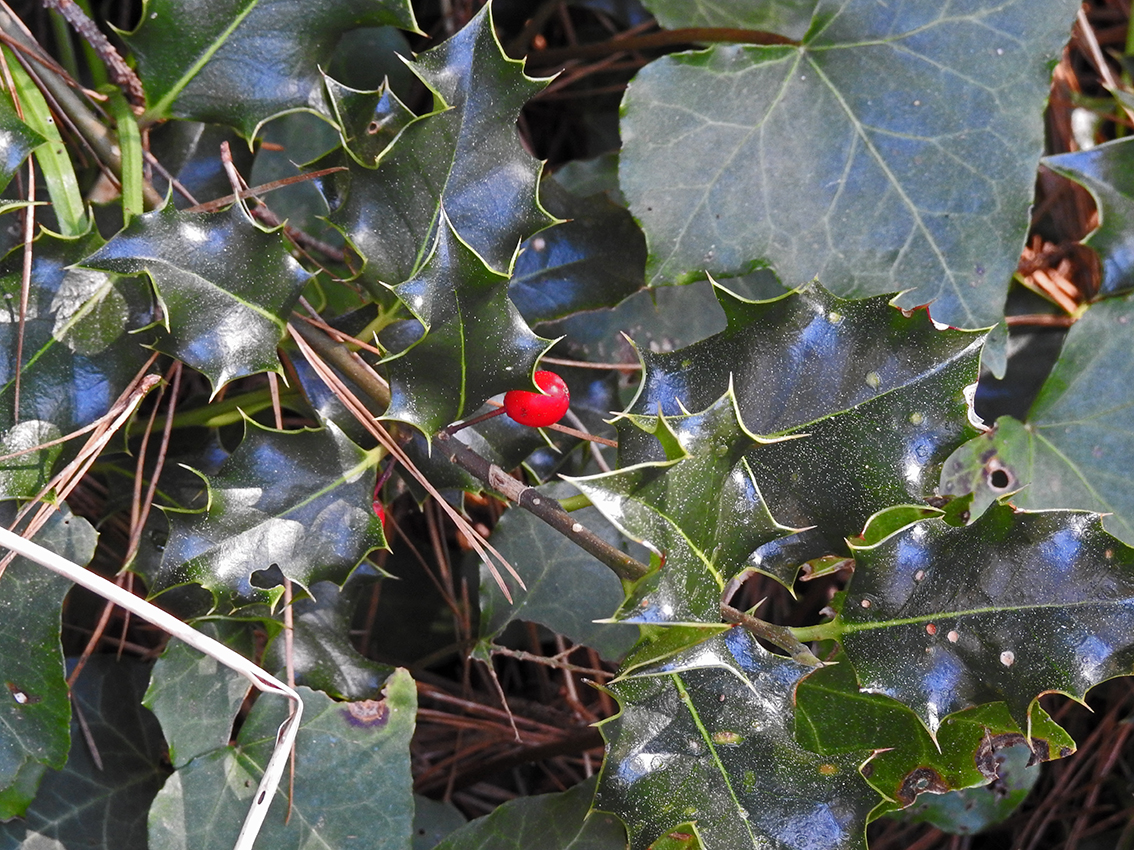
Following up on my previous post, which covered the area around the RSL Hall, on the edge of Aldgate, I am now walking the short path to Stirling. The trail follows the road and creek on one side and is heavily wooded on the other. There are numerous plants both native and introduced along the pathway including: Holly, tall pines, grevilleas, a few eucalyptus and acacia species as well as ferns and bracken.

Holly in the Hills

Grevillea species

After a fifteen-minute stroll along the pathway I reach the outskirts of Stirling. The town has an English country village feel about it with some lovely old homes and many small shops and businesses. Whenever I visit Stirling there always seems to be a welcoming committee of Little Ravens (often mistaken for Crows) in the area. Today is no exception as a group of the shiny black corvids trumpet their characteristic calls from a nearby garden.

Little Raven Stirling

I do not venture far into Stirling as it will be the subject of a later blog. I head back down the path to Aldgate. The dense vegetation, now to my right, is full of movement and the sounds of small birds in the undergrowth; probably wrens and finches. I scan the other side of the road and spot a Koala high in the branches. I take a couple of shots to demonstrate how difficult locating wildlife can be and how training your eyes to notice subtle changes and movement takes continual practice.

Koala at 100 metres

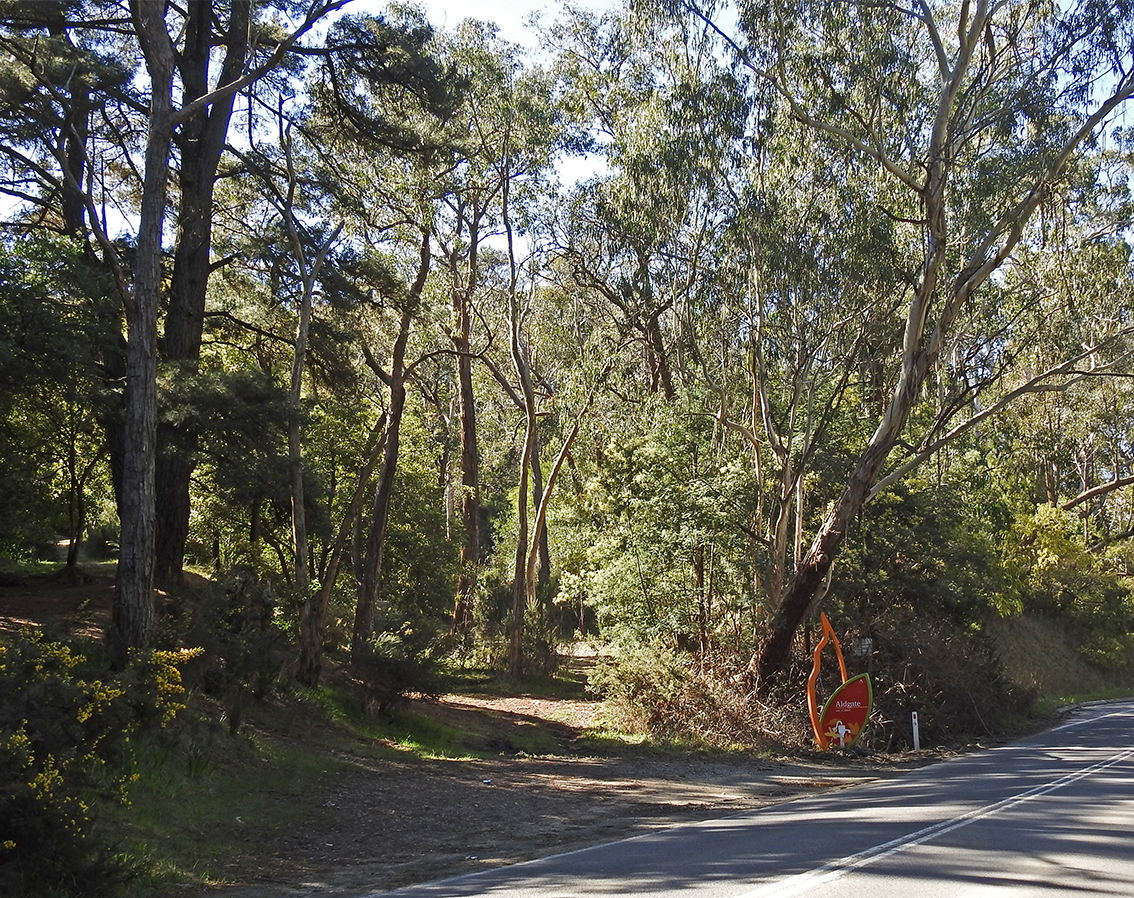
As I approach the outskirts of Aldgate I notice a track on the other side of the road near the township sign. Crossing over, I follow it a short way as it cuts along the hillside and into the scrub. This area is dominated by tall eucalypts and is a more typical hills bushland setting than the pathway.

The track near the entrance to Aldgate

Adelaide Rosella

Koala Aldgate

My detour is well worth the effort. Within a few minutes I have managed to photograph an Adelaide Rosella perched on an old, gnarled branch and a Koala at far closer range than before.

FRED……..Barista at work

FRED….Cosy place to dine

With the walk concluded I drive into Aldgate for lunch at Fred, a wonderful local eatery and another compelling reason to visit Aldgate. Over the years, I have had some wonderful meals in this iconic hills café and I’m sure today will be no exception. The only problem is one of choice with so many interesting dishes to choose from. After some serious deliberating, I end my day in Aldgate with a Croque Monsieur and a Chai Latte, selected from the ‘All Day Breakfast Menu’.    

Cheers Baz

Additional notes

This is an easy walk and drive which is quite suitable for families and seniors with public toilets, parking and other facilities nearby. It is dog friendly.

Please pass on this blog title and or contact information (URL) to any person or organisation with an interest in taking walks and enjoying wildlife in SA.

Click on these links and see more South Australian stories and pictures in my Weekend Notes articles as well as locating similar blogs on Feedspot’s top 20 Australian wildlife blogs
https://www.weekendnotes.com/adelaide/writer/452/

https://blog.feedspot.com/australian_wildlife_blogs/

Warren Reservoir…drained for maintenance

14 Jul

Dear Reader:

From Tea Tree Gully, the road climbs into the foothills then snakes past Chain of Ponds Reservoir before it forks to the left towards Williamstown. Just before the town there are often mobs of Western Grey Kangaroos on the hillside to the right. Today, I spot a small group on the opposite side near a layby where I can safely pull off the road to take a few photographs.

Western Grey Kangaroos near Williamstown

I am exploring the Northern section of the Warren Reservoir which is around 10 kms past Williamstown towards Gumeracha on the Warren Road. The sky is a little overcast with a hint of rain in the air which makes photography challenging but in the winter months one takes any opportunity on offer to venture out into the bush. This is my second visit to the Warren and of particular interest because the reservoir has been emptied for dam wall maintenance and comparing it to my last visit, when it was full, is a rare opportunity.

Reservoir full

Reservoir drained and with some improvements to the public car park area

Usually there are numerous duck species as well as cormorants, Australian Pelicans and Anhingas (Snakebirds) around the edge of the reservoir. Today there is just a solitary Pacific Black Duck paddling along a narrow channel. Way off to the north, I can just make out a pair of kites catching thermals above the surrounding scrub.

Anhinga

Grey Fantail

However, all is not lost. For some reason the number of smaller birds seems to have increased around the periphery of the reservoir. Using the full extension of my Nikon P900 Camera lens, I am able to spot Silvereyes, Superb Fairy Wrens, a thornbill species, Grey Fantails and New Holland honeyeaters. Perhaps a lack of predatory species could account for this or maybe there are insects among the leaves and on the smaller branches.

Adelaide Rosella

I finish my loop walk back at the car parking area where a pair of Adelaide Rosellas are feeding on the ground. They are some distance away and as I approach all but one fly into the canopy. The lone bird perches on a wiry grass stem where it appears to be picking out seeds. I take a shot from distance just before it flies off disturbed by a couple of Little Ravens flying into a nearby eucalypt.

Australian Magpie foraging on reservoir floor

It has been a relatively productive morning’s work and I pack up my gear and head back towards Williamstown and lunch at the local bakery which, by the way, makes one of the best custard tarts I have tasted in a long time.

Snack time

Cheers

Baz

Additional notes

This is an easy walk and drive which is quite suitable for families and seniors with public toilets, barbecues, parking and information boards nearby.

Please pass on this blog title and or contact information (URL) to any person or organisation with an interest in taking walks and enjoying wildlife in SA.

Click on the links below to see more South Australian stories and pictures in my Weekend Notes articles as well as locating similar blogs on Feedspot’s top 20 Australian wildlife blogs

Weekend Notes

Feedspots top 20 Wildlife Blogs


Exploring the Southern Flinders Ranges…..Kanyaka Ruins

4 May

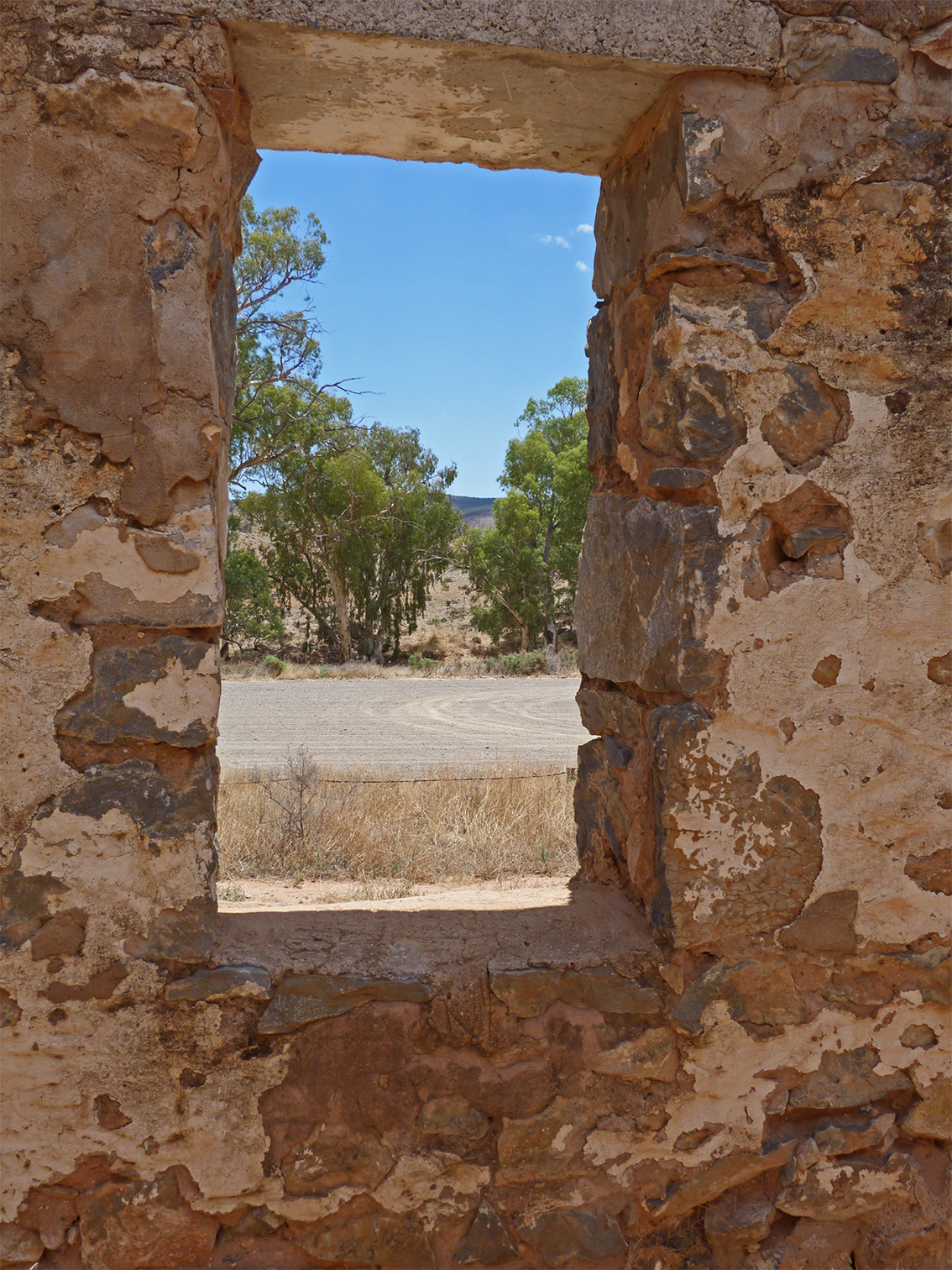
A window view of the area around Kanyaka Ruins

Dear Reader:

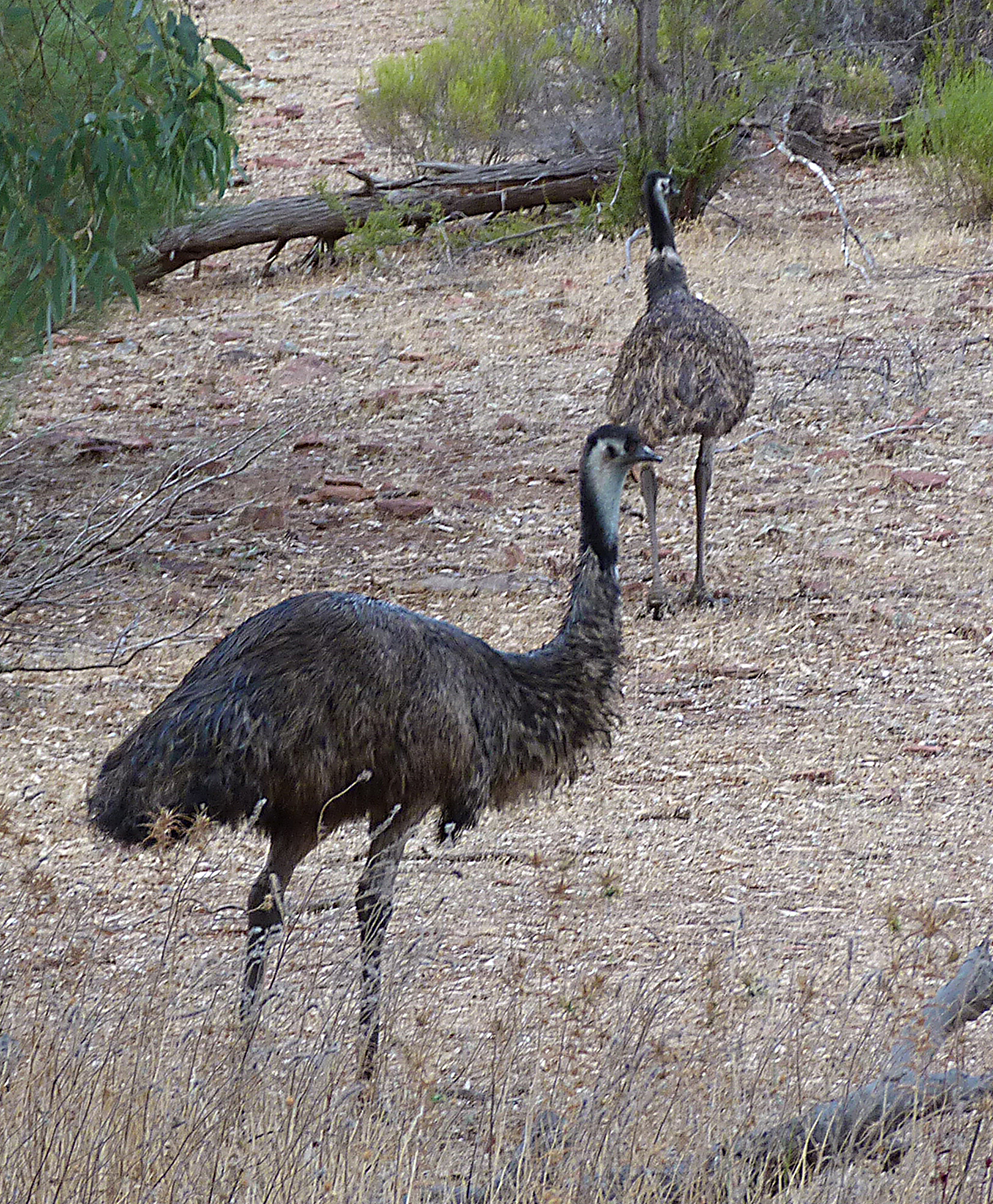
There are patches of low scrub and gravelly, ochre shaded soil on either side of the dirt road leading to the ruins. We are not expecting to see much wildlife on this exposed track. A pair of adult Emus surprise us as they dash across the road and I have just enough time to grab the camera from the console and fire off a few frames.

Driving into Kanyaka Ruins

Pair of Emus

We are driving along the entrance track to Kanyaka Ruins between Quorn and Hawker in South Australia’s Southern Flinders Ranges. This area is the ancestral home to the Barngarrla people. Kanyaka (most likely meaning ‘place of stone’) was originally established as a cattle station in 1852 by Hugh Proby who tragically died in the flash flooding of the nearby Willochra Creek. At its height, under later ownership, Kanyaka housed up to 70 families and ran sheep rather than cattle.

Ringneck Parrots

We have timed our arrival for mid-afternoon in order to have lunch at the ruins, explore the area then search for wildlife in the cooler hours before sunset. Our planning is rewarded as a small flock of Ring-neck Parrots settle a few hundred metres away amongst some wild grasses. With the parrots intent on their feeding, I am able to get close enough for an acceptable shot.

Apostle Birds

Nearby in the shade of a eucalyptus grove, I spot a pair of medium sized grey and brown birds fossicking amongst the leaf litter. On closer examination, I recognise them as Apostle Birds; a species I have never encountered around the Adelaide area where I live.

Small mob of Western Grey Kangaroos near the highway

With the sun getting lower in the sky it is time to leave in order to reach Hawker before dusk. Driving at night or in low light conditions is a recipe for disaster around the Flinders. With so many kangaroos in the area it is easy to have a collision, which can be devastating for both wildlife and driver alike. As if to emphasise the point, we pass a small mob of Western Grey Kangaroos, some with joeys in the pouch, feeding ­close to the highway.

Yellow-footed Rock Wallaby on steep hillside

After resting overnight in Hawker we will head into the heart of the Ranges and search for Yellow-footed Rock Wallabies in the steep gorges. However, that is a story for another time.

Cheers

Baz

Additional notes

This is a long drive from Adelaide but easy walking and quite suitable for families and seniors 

Please pass on this blog title and or contact information (URL) to any person or organisation with an interest in taking walks and enjoying wildlife in SA.

Click on the links below to see more South Australian stories and pictures in my Weekend Notes articles as well as locating similar blogs on Feedspot’s top 20 Australian wildlife blogs.

https://www.weekendnotes.com/profile/651267/

https://blog.feedspot.com/australian_wildlife_blogs/

Maslins and Blanche Point to Port Willunga…a rewarding short walk

12 Mar

Dear Reader:

It is glorious summer’s day, not too hot and a gentle sea breeze. The view from the clifftop is spectacular. The outline of Gull Rock and surrounding shallow reefs are clear cut against an impossibly blue ocean. Inland, the view is quite a contrast with farmland, scrub and distant, low hills reflecting the dry shades of an Australian summer.

Gull Rock from the clifftop

Farmland, Raven and Hills

There are Little Ravens and Red Wattlebirds in the trees alongside the road leading to the carpark. In addition, I can see an adult Singing Honeyeater feeding one of its fledged chicks in the scrubby bushes near the entrance to the downhill trail. As I scan the ocean there is a pair of Bottlenose Dolphins far out to see patrolling the edge of a reef or seagrass meadow.

Reefs and seagrass from the clifftop

Singing Honeyeater

From the Blanche Point/Maslins hilltop carpark there are two ways to reach Port Willunga. The hilltop track is self-explanatory, or you can walk down the steps to the shore and follow the beach. The beach walk has two special features: take a mask and flippers to explore the shallow inshore reefs or examine the rock formations and fossil beds along the route.

Walking along the beach at low tide

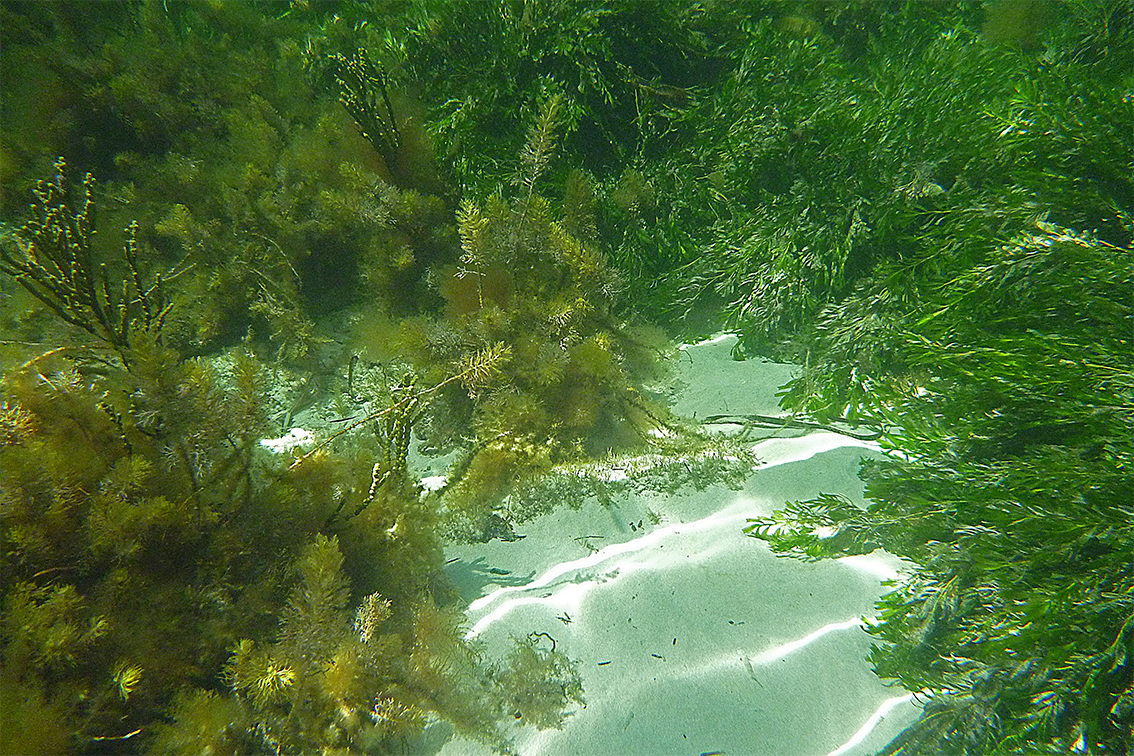
Seagrass and brown algae: an underwater view

Today, I take the path which winds along the top of the cliffs then dips down towards the Willunga Creek outlet where there is a lovely patch of scrub and some old ruins. As I walk along this section of the trail I can hear Singing Honeyeaters and catch sight of a flock of Yellow-tailed Black Cockatoos feeding on pine cone seeds.

Willunga Creek where it meets the sea

Yellow-tailed Black Cockatoos

Suddenly, the birds scatter in apparent panic as a Nankeen Kestrel lands on a power pole. The bird sits for a while and I try to get close enough for a clear shot. Finally I have to settle for a long distance telephoto image. Later, on review, I am quite pleased with the result from my Nikon P900 at this range.

Nankeen Kestrel

Just as I am about to leave the scrub and creek to head up to the restaurant I notice a parenting group of Australian Black Ducks emerging from the reeds. A lovely way to end my walk before indulging in some Calamari and battered fish at the Star of Greece Restaurant. The restaurant and nearby sheltered lookout have lovely views over the Port Willunga Beach, the fringing reef and the old jetty piles.

Remains of the old Port Willunga jetty

Cheers

Baz

Additional notes

This is a moderate fitness walk with parking and other facilities nearby at Port Willunga. It is dog friendly.

Please pass on this blog title and or contact information (URL) to any person or organisation with an interest in taking walks and enjoying wildlife in SA.

Click on these links and see more South Australian stories and pictures in my Weekend Notes articles as well as locating similar blogs on Feedspot’s top 20 Australian wildlife blogs

https://www.weekendnotes.com/profile/651267/

https://blog.feedspot.com/australian_wildlife_blogs/

https://www.onkaparinganow.com/News-listing/Iconic-cliff-top-path-for-Port-Willunga

Goolwa Barrage (1)…Seals, Kites and Pelicans

18 Feb

Seals, Kites and Pelicans

Australian Pelican

Dear Reader:

As I approach the barrage, which separates the fresh water flowing down the Murray from the salt water of the Coorong, I notice quite a lot of bird activity. Pelicans are flying low in the sky and there are both Ravens and Mudlarks scavenging along the rocky banks.


Mudlark or Murray Magpie


Little Raven

The Goolwa barrage is a ten minute drive from the town of Goolwa around 80 kms south of Adelaide. It is the last of a series of locks and barrages that control the flow of the Murray River along its entire length. They were originally intended to make the river more navigable for the elegant paddle steamers that once plied these waters carrying essential goods. Information about them is provided along the path leading from the car park to the  barrage. 


Information

Walkway to barrage

A row of statuesque Norfolk Pines lines the roadway to the barrage and I scan them for more birds. Sometimes I have seen kestrels and hawks perched in the uppermost branches but today I am surprised by an even larger raptor; a Whistling Kite. It seems that food must be plentiful with so many predatory bird species in the area.


Whistling Kite

Pelican and Long-nosed Fur Seal often called New Zealand Fur Seal

When I reach the barrage, I am greeted by a variety of wildlife around the first section which leads out into the river. There are Great Cormorants on the adjacent bank, a Long-nosed Fur Seal basking in the muddy water closer to the main part of the barrage and a seal and Australian Pelican near one of the old wooden gateways. A nice start to my walk out to view the barrage proper………..to be continued in my next post

Cheers

BAZ

Additional notes

This is an easy walk and drive which is quite suitable for families and seniors with public toilets, barbecues, parking and other facilities nearby.

Please pass on this blog title and or contact information (URL) to any person or organisation with an interest in taking walks and enjoying wildlife in SA.

Click on these links and see more South Australian stories and pictures in my Weekend Notes articles as well as locating similar blogs on Feedspot’s top 20 Australian wildlife blogs

https://www.weekendnotes.com/profile/651267/

https://blog.feedspot.com/australian_wildlife_blogs/

Title:Goolwa Barrage(2)…..Hunters and Hitchhikers or ‘Bluey Takes a Rest’

4 Feb

Dear Reader:

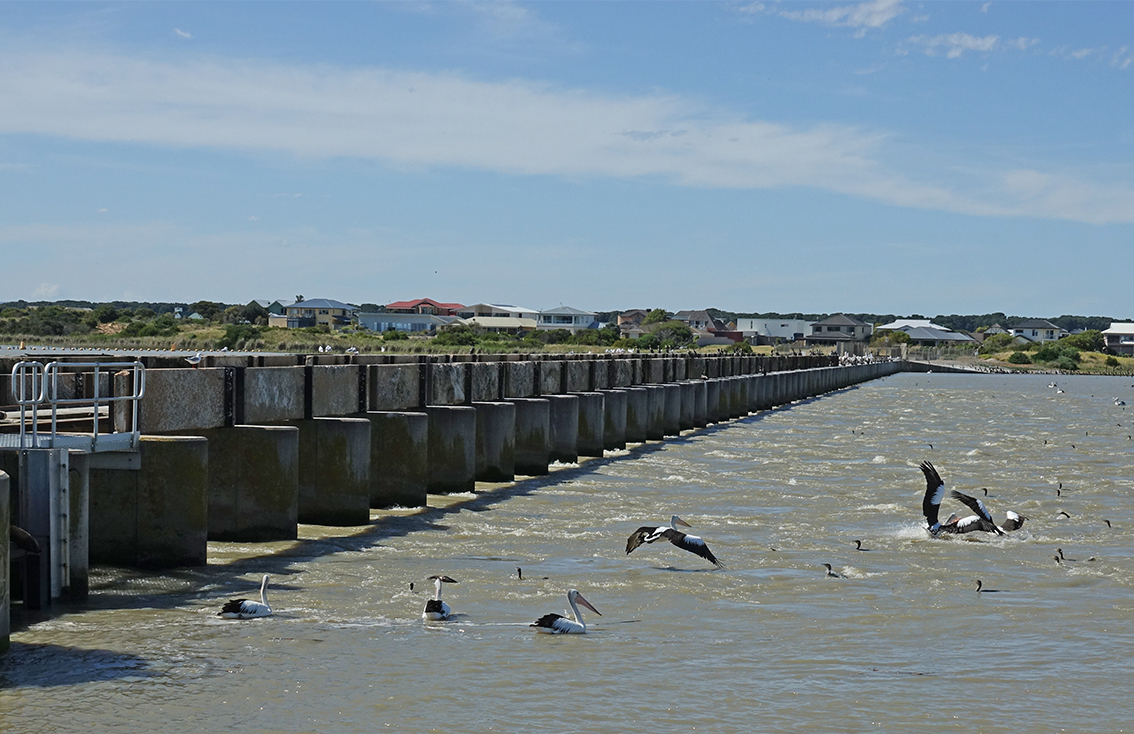
In my previous post I took you from the car park to the beginning of the Goolwa barrage. Now we will explore the main part of the barrage where the water is streaming through the gates at an unprecedented rate due to severe flooding upstream.

View along the barrage

With the floodgates open there is an overabundance of food being washed out into the Coorong. The freshwater is laden with silt and leaves a brown stain across the seaward side of the barrage which actually extends to Goolwa Beach and Victor Harbor.

Enlargement of first image showing interspecies rivalry

Long-nosed Fur Seals, Australian Pelicans and Great Cormorants are positioned to ambush fish and any other food as the water cascades through the gates. On every level this is quite a spectacular natural event and onlookers, armed with phones and cameras, are making the most of the situation.

Too much of a good thing

I spend some time taking shots that I hope will capture the essence of this event as well as a few close-ups of the different species. When animals are engaged in feeding behaviour they often ignore people which creates the perfect opportunity for more intimate images.

Sub-adult Pacific Gull (still has darker markings)

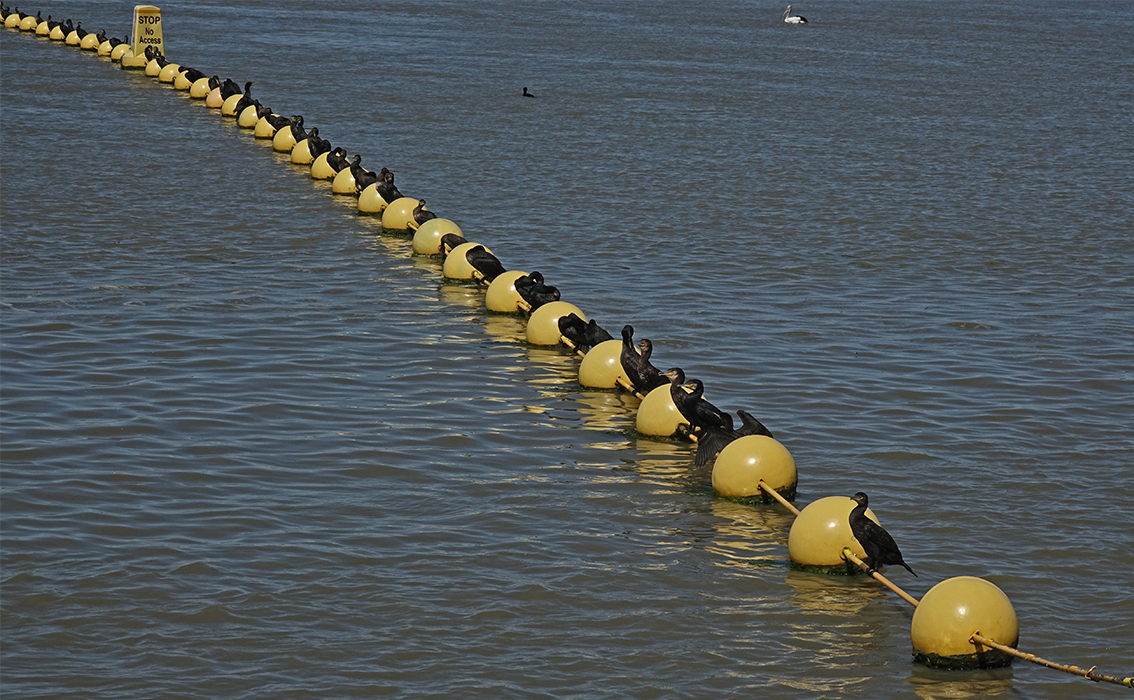
Floats with Great Cormorants

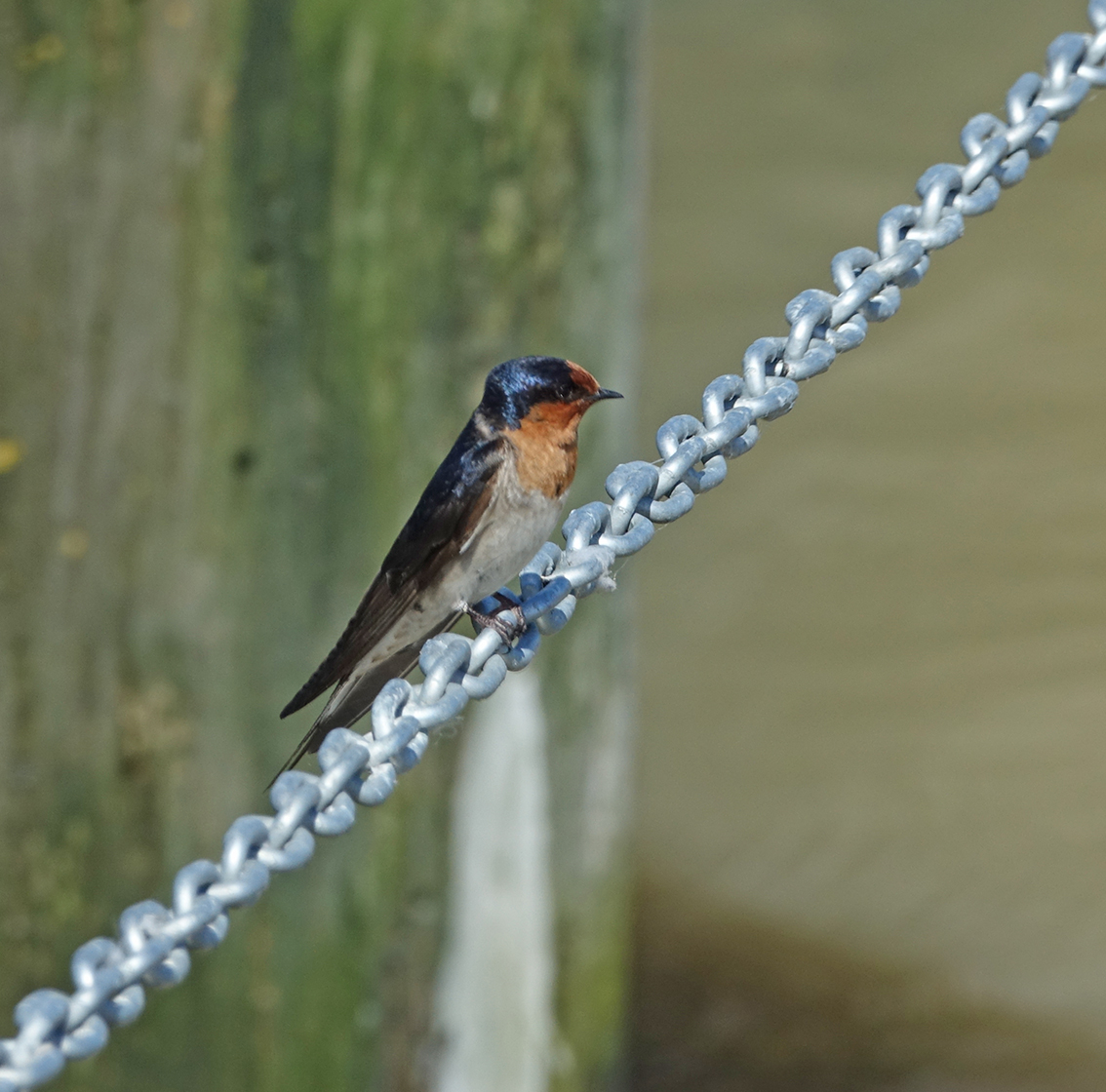
Swallow at rest

It is time to leave. I stroll back along the walkway watching swallows, cormorants and occasional Pacific gull perching on bollards, chain link and floats. I am halfway back to the bank when I notice an elderly couple pointing excitedly at the area where I was just watching the seals.

Catching a ride

Close up of previous image

Time to go

Intrigued, I walk back to the viewing platform and to my surprise they have spotted one of the most unusual examples of animal behaviour I have ever witnessed. A few metres below us, a seal is resting in the water, catching the sunlight on a raised flipper with a Blue-tongue Lizard lying across its body. I can only assume the reptile is taking a break from the swiftly flowing water. The lizard stays for a few minutes before ‘disembarking’ and continuing its journey towards the far bank. Extraordinary!!!!

Historic Goolwa Hotel

On that note, I ‘call it a day’ and walk back to the car. My next stop will be the historic township of Goolwa. There is a wonderful gallery called ‘Art Worx’ where I love to browse and sometimes pick up something special for the house or garden. Finally, the Goolwa Bakery, for a chicken and vegetable pie and perhaps a vanilla slice to follow. Always a pleasant way to wind up any trip to this fascinating waterside location.

Cheers

Baz

Additional notes

This is an easy walk/drive which is quite suitable for families and seniors with public toilets, barbecues, parking and other facilities nearby.

Please pass on this blog title and or contact information (URL) to any person or organisation with an interest in taking walks and enjoying wildlife in SA.

Click on these links and see more South Australian stories and pictures in my Weekend Notes articles as well as locating similar blogs on Feedspot’s top 20 Australian wildlife blogs
https://www.weekendnotes.com/profile/651267/

https://blog.feedspot.com/australian_wildlife_blogs/

Carrickalinga’s Underwater and Coastal Wildlife

7 Sep

Dear Reader:

The drive into Carrickalinga along Forktree Road from Myponga is quite spectacular with sweeping views of the ocean, reservoir and surrounding farmland. On entering the township, it is a short drive north along Gold Coast Drive to the rocky headland which can be easily accessed from the parking zone by a zig-zag series of wooden steps.


Driving in to Carrickalinga

Steps at the headland

This area is a sanctuary which means there should be quite a lot of marine life to encounter. I change into my snorkelling gear before walking down to the beach and survey a couple of entry points then photograph one of the many rockpools. The water is cold this time of year and even with a wet suit it takes a few minutes to adjust.


Old Wives under a ledge

Red Bait Crab

Visibility is good and I work my way along the shoreline which has numerous ledges and a healthy covering of algae as well as some encrusting invertebrates like sponges and sea squirts. A large Red Bait Crab peers at me from its position amongst some brown algae and there are numerous fish species in the seaweed and under the ledges. Within a few minutes I have seen over a dozen types including: leatherjacket species, Old Wives and Moonlighters.


Track along the hillside

Half an hour in the water is enough today. After a quick towelling down and a change of clothes (and camera) I decide to follow the narrow trail cut into the hillside and explore some more of this picturesque coastline.


Locust species possibly Plague Locust

Nankeen Kestrel Hovering

The wildlife above the water is not abundant as coastal vegetation does not provide a lot of food for animals. I manage to spot the occasional Singing Honeyeater and I can see a Nankeen Kestrel hovering near the top of the hillside. Quite a few grasshopper-like animals are taking flight from the undergrowth. A close up shot, and an ID book later at home, suggests they are probably Australian Plague Locusts.


Rockpools

The morning is almost over and as I walk back I look down on the beach and rockpools and the turquoise colour of the sea. Along the path, I notice some Crested Pigeons on an old fenceline, a murder of Crows in the distance and a lone Willie Wagtail fossicking close to the ground; probably after a locust snack. Which reminds me, it is time to head for the Normanville Bakery for a spot of lunch before I take a closer look at the township of Carrickalinga later in the afternoon.

Cheers

Baz

In a further post (Carrickalinga 2) will cover a walk around the township and along the beach.

Cheers

Baz

Please pass on this blog title and or contact information (URL) to any person or organisation with an interest in taking walks and enjoying wildlife in SA.

Click on this link and see more South Australian stories and pictures in my Weekend Notes articles

https://www.weekendnotes.com/profile/651267/

Flinders Ranges Moments

14 Aug

Grazing sheep in the Flinders Ranges

Dear Reader:

Several deep gorges cut through the Flinders Ranges from east to west. They can be comfortably traversed by conventional vehicles in dry weather but in the wet they are hazardous and 4WD is a necessity. In these images I push my vehicle through relatively shallow water after measuring the depth first then attach a tow rope to a vehicle that didn’t quite make it.

A calculated and tested crossing

Didn’t get it quite right

The Flinders Ranges are around 800 million years old and are the result of the uplifting, folding and consequent erosion of an ancient, shallow sea bed. Their sedimentary rocks contain fossils of some of the Earth’s earliest life forms known as the Ediacra fauna. The ranges are the ancestral home of the Adnyamathanha (pronounced ud-ya-mutna) people who have lived there for over 40,000 years.

Layers (strata) of sedimentary rock

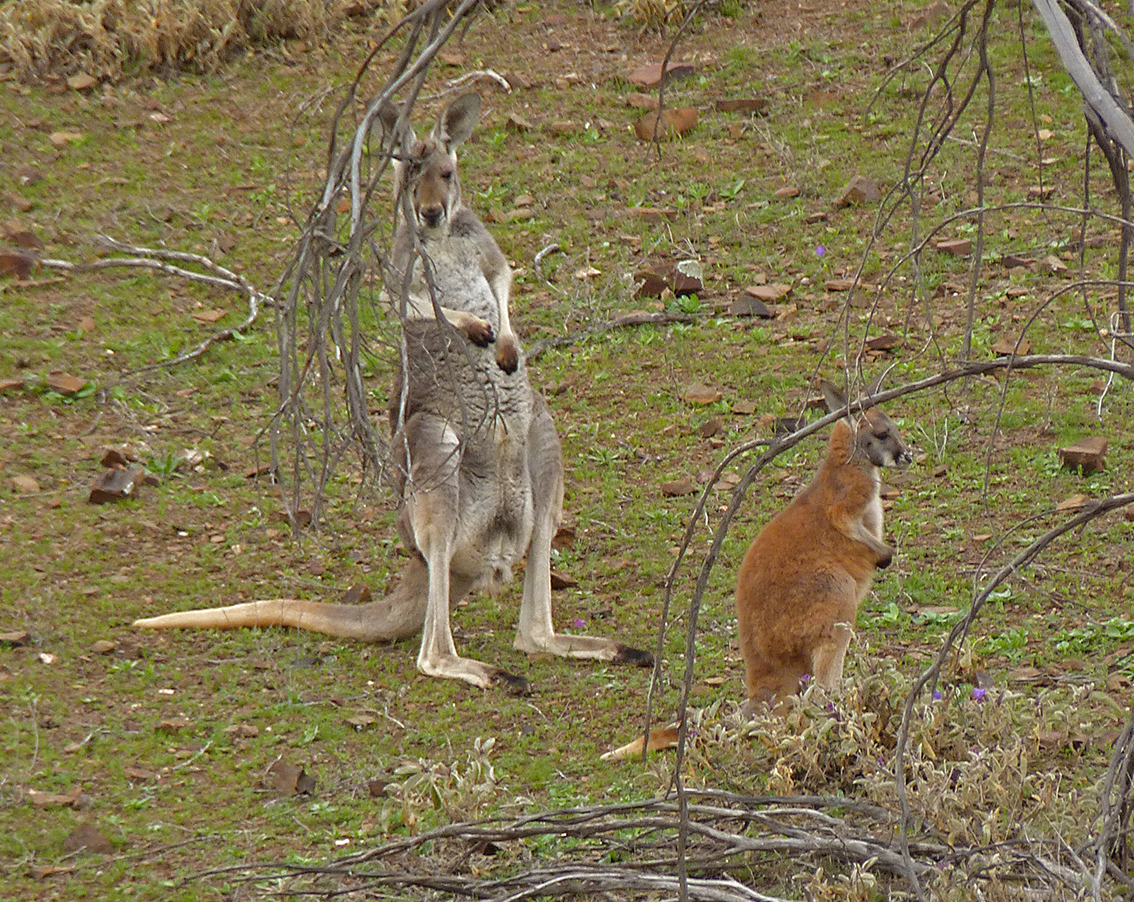
Four different kinds of Macropods (kangaroos and wallabies) live in the Flinders ranges: Western Grey Kangaroos, Red Kangaroos, Euros or Common Wallaroos and Yellow-footed Rock-Wallabies. Western Greys live in low forested areas, Reds prefer dry open plains, Euros live in the foothills and the rare Yellow-footed Rock-Wallabies prefer higher rocky slopes. There is some overlap between the habitats of all these species.

Red Kangaroos

Euro, Hill Kangaroo or Wallaroo

Yellow-footed Rock-Wallaby feeding in Brachina Gorge

Birdlife is prolific throughout the ranges and include a wide variety of species ranging from tiny finches and Budgerigars to Wedge-tailed Eagles and Emus. While taking friends from the USA around Wilpena Pound and Brachina Gorge, in the heart of the Flinders, we stopped to photograph birds on numerous occasions.

Getting up close

Nice result

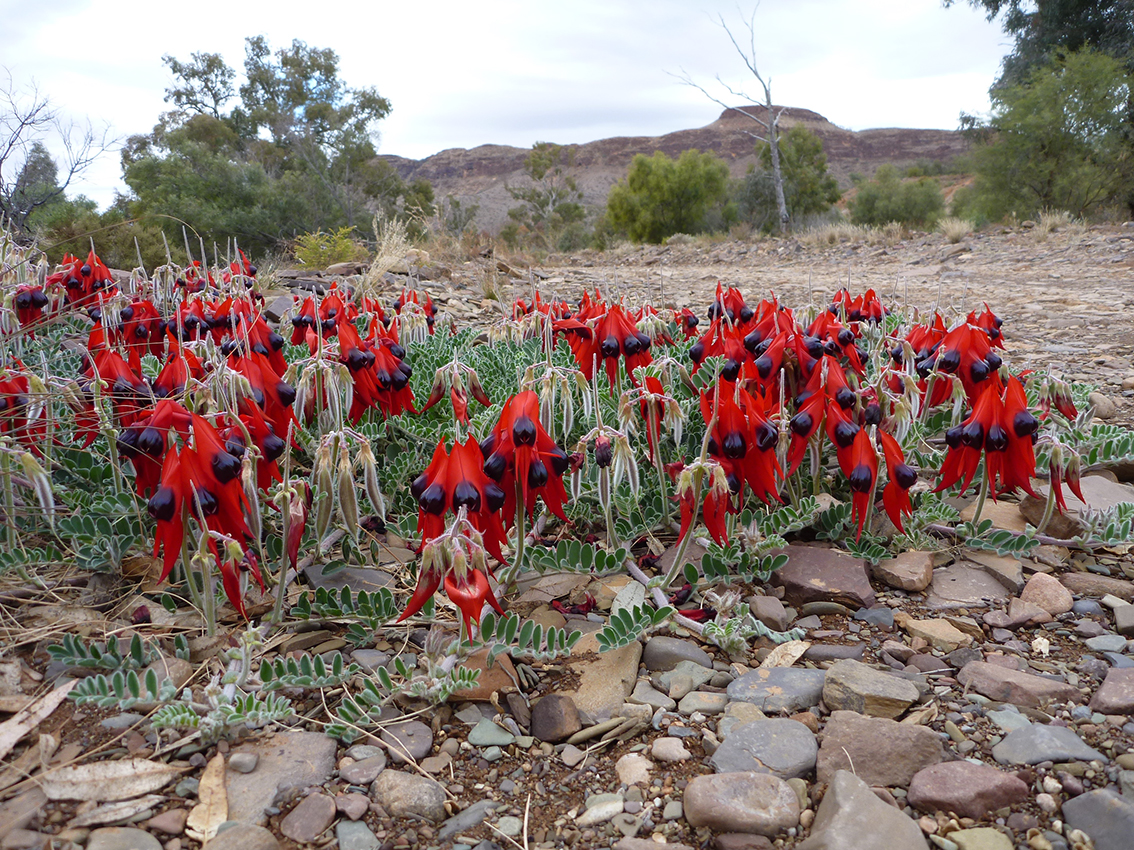
This wild and beautiful region has much to offer in terms of fauna both ancient and modern. However, the plants of this rugged landscape are just as fascinating: Sugar Gums, Cypress-pine, Flinders Wattle, Flax Lilies and the SA state emblem the Sturt’s Desert Pea are just a few examples.

Sturt’s Desert Pea

Although the Flinders Ranges is a truly wild destination it also has a significant human perspective. There are ancient First Nations art sites, a world-renowned hotel featuring local cuisine, working stations (farms) and a significant arts and crafts community. From my own perspective as a photographer, there are the remnants of old settlements such as stockyards, settler ruins, old mine shafts and other relics of the Flinder’s early settlement, all backed by stunning landscapes.

Lunch at the Prairie Hotel

Cheers

Baz

Additional notes

Please pass on this blog title and or contact information (URL) to any person or organisation with an interest in taking walks and enjoying wildlife in SA.

Click on this link and see more South Australian stories and pictures in my Weekend Notes articleshttps://www.weekendnotes.com/profile/651267/