Archive | Underwater RSS feed for this section

Hoseshoe Bay’s Coastal Wonders

1 Oct

Dear Reader:

The Soldiers Memorial Gardens overlooks Horseshoe Bay; one of the most picturesque locations on the Fleurieu Peninsula. Well kept lawns are surrounded by flower beds and fronted by massive Norfolk Island Pines that attract a wide variety of wildlife.


View of Bay from gardens


Today the grassed areas have just been mown and two beautiful, red-rumped parrots are feeding on some seed heads that have been scattered by the mower. Male birds are more colourful than the females with brighter plumage and a red splash of colour on the lower back. The gardener seems to have also stirred up some insects which are being vigorously hawked by a lively little wagtail.


Red rumped parrot


Wagtail

Near the gardens a track runs along the coast towards the jetty and then along the face of boulder strewn cliffs. Several wattle birds are gathering nectar from coastal blooms of agapanthus and I can see both terns and silver gulls patrolling the wave break in search of prey.


Wattle bird feeding


Local jetty and cliffs


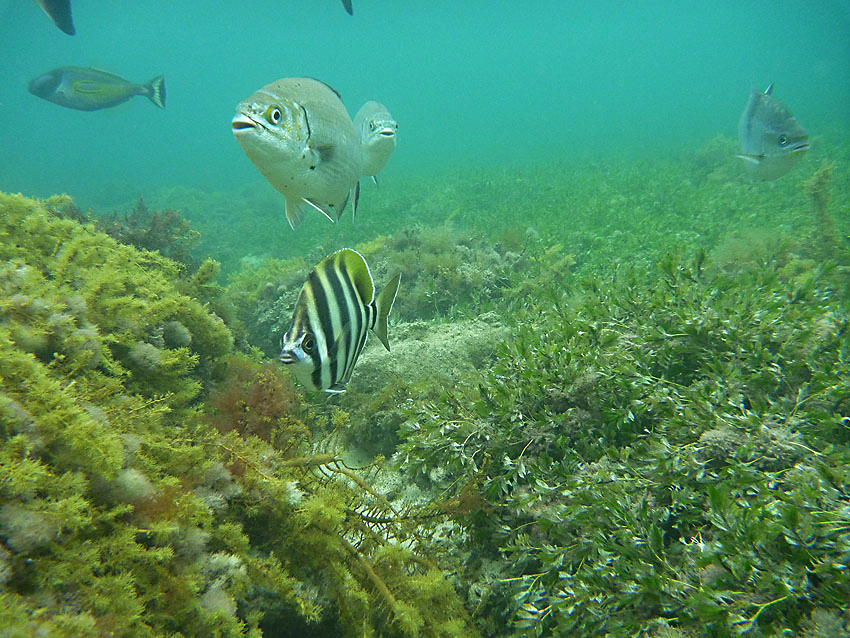
There are rocky outcrops at both ends of Horseshoe Bay and small islands in the mouth. These are home to a myriad of sea creatures. Sweep, drummer and zebra fish are just a few of the fish species that abound here. The rugged, algae dominated rocks also provide habitats for a wealth of invertebrates including: crayfish, crabs, sea snails, sponges and starfish…to name but a few.


Sea snail (gastropod) probably a pheasant shell species


From a high point on the coastal path I have a good view of the bay and I take some time to sit and eat a snack from the Local Port Elliot bakery. Behind me I can hear the call of singing honeyeaters and in front the gentle rushing sound of the incoming tide and surf on the rocks….. a fine way to finish my visit to Horshoe Bay.


Singing honeyeater


Coastal walk and view of islands in bay


 Cheers

Baz


Additional notes

This is an easy walk which is quite suitable for families and seniors with public toilets, food outlets and parking nearby.


 I have recently spent time in Africa and the link below will allow you to enjoy images and text describing some of my encounters with the wonderful wildlife of Botswana and Zambia. I will attach a new image and notes to accompany each post.

https://wildlifemomentssa.blogspot.com

A Hot Semaphore Sunday

4 Mar

A Hot Semaphore Sunday

Dear Reader:

As I walk along the Semaphore jetty I can see several anglers working the shallows for silver whiting. Further along, another fisherman is jigging for squid. His bucket is half full of small baitfish and an opportunistic silver gull is sitting on the railing eying the contents as breakfast. The angler is unaware of his feathery adversary and a few minutes later the gull grabs a fish and heads off down the jetty.

1a

Silver gull


Semaphore is one of Adelaide’s original coastal suburbs and the jetty has been part of Adelaide’s beach scene for well over 100 years. It was originally used to moor pilot and customs craft. A coastal pathway follows the beachfront behind the dunes allowing visitors partial access to this protected area of sensitive coastal vegetation. The Esplanade, near the start of the jetty, is dominated by the iconic Palais Restaurant and Function Centre which was built in 1922. This Semaphore landmark has served as a bathing pavilion, dance hall, surf life saving club and kiosk before renovations in the 1990s.

1b

Lovely morning light

1g

View of the jetty and dunes over the function centre pavilion


Closer to the shore a young Pacific gull sits on a lighting fixture watching the antics of its smaller cousins and keeping a watchful eye on the ocean ready to patrol the shoreline in search of its next meal.

1c

Juvenile Pacific gull


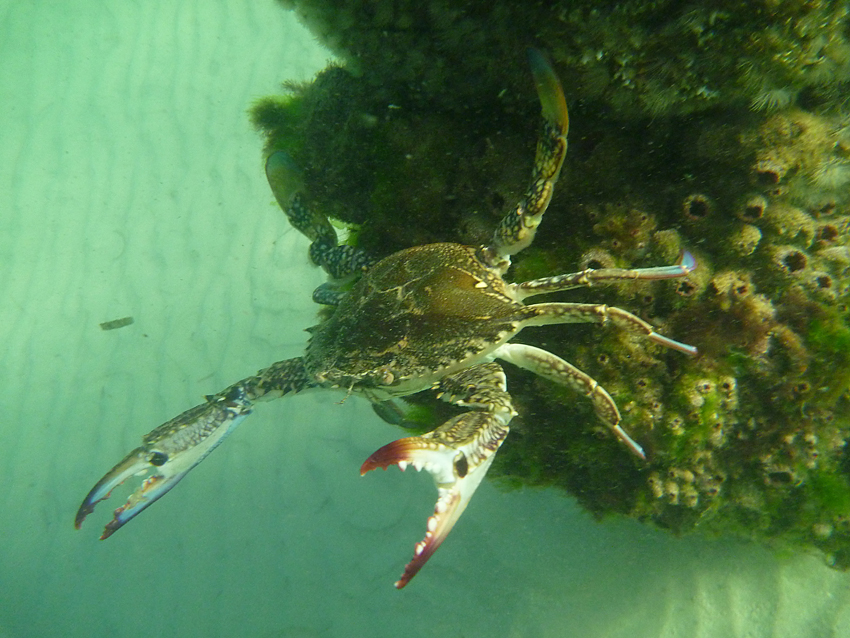
It is getting warm by the time I walk off jetty on to the beach where I have left some snorkelling gear with a family who are enjoying the solitude of an early morning dip. The water is clear and there is little tidal movement as I enter from the beach. I follow the jetty poles out to sea as they provide shelter and food for a diverse collection of marine animals. It is not long before I notice a large blue swimming crab foraging near the bottom. We play a game of tag around the pole as the aggressive crustacean uses its powerful pincers to keep me at a distance.

1d

Agro blue swimmer crab


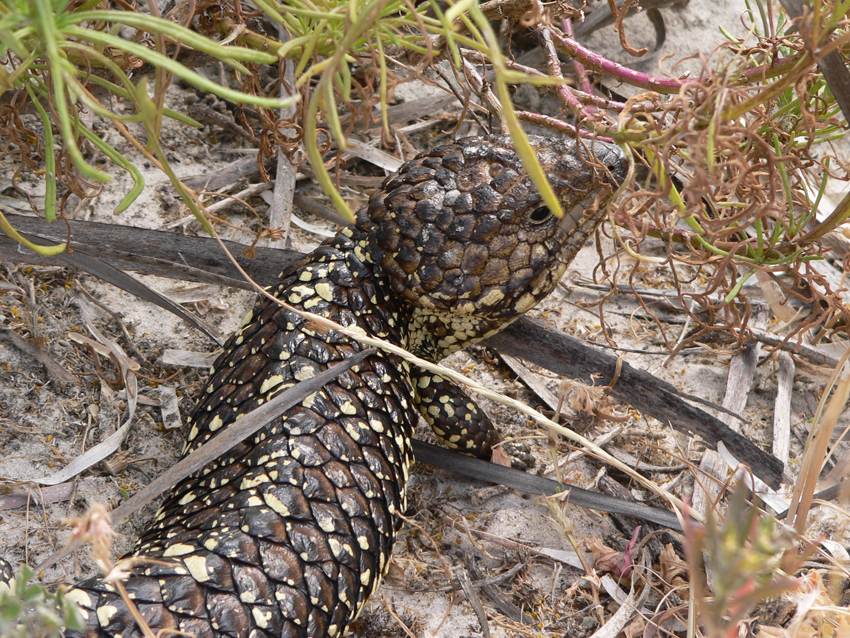
Half an hour in the water is enough to cool me off and I still want to walk along the pathway to search for birds and reptiles in the dunes before it gets too hot. Most of the bird life has sought shelter from the sun but I do encounter one singing honeyeater amongst the grasses that bind the loose sand of the dunes. Along one of the trails to the beach, a sleepy lizard emerges from under a coastal acacia bush to eye me suspiciously before disappearing amongst the ground cover.

1e

Singing honeyeater

1f

Shingleback or sleepy lizard, a kind of large skink


Over the next half hour I stroll down couple more paths and sit quietly amongst some of the coastal scrub watching for tell tale signs of animal life. Numerous doves peck amongst the ground covers and a group of wattle birds squabble noisily in one of the larger shrubs. However, as midday approaches the sun and heat has obviously taken its toll on both me and the wildlife and it is time for a cold drink and lunch. Needless to say, the Palais adequately provides both and as I look across the dunes from my table by the window, enjoying a delicate dessert, I reflect on how much I always enjoy my visits to Semaphore.

1h

What more do I need to say


Cheers

Baz

A Walk Around West Lakes

14 Mar

Dear Reader: Once upon a time when I was several decades younger and people thought less about the environment, there was a mangrove swamp behind the dunes near Tennyson Beach. The government of the day and even the general public cared little for mangroves and even less for anything described as a swamp. Consequently, they allowed developers to ‘liberate’ this area from its unproductive state and create a new suburb in its place. The result was West Lakes. For some, the loss of this unique wetland was an environmental tragedy as such areas are important nurseries for many marine species and significant wild places to be cherished.

IMG_2585

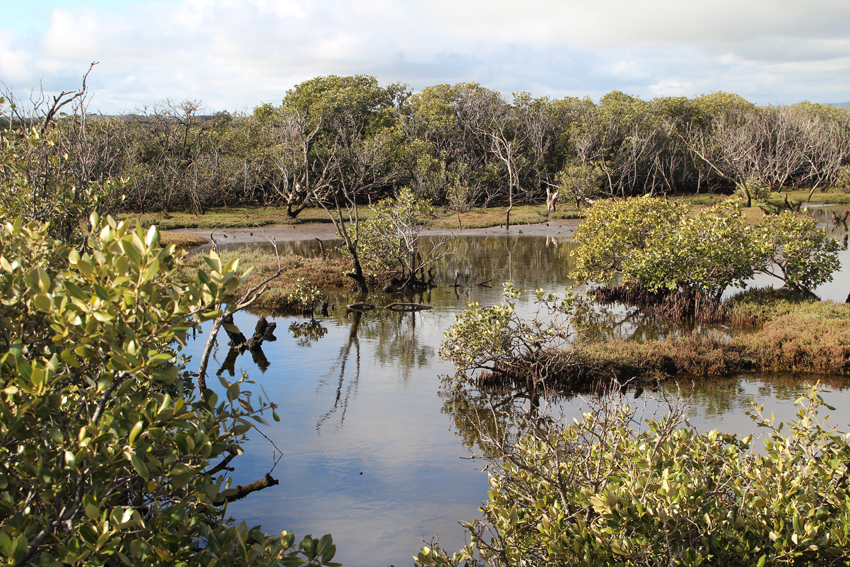
Nearby mangrove swamp demonstrates what the area looked like before development

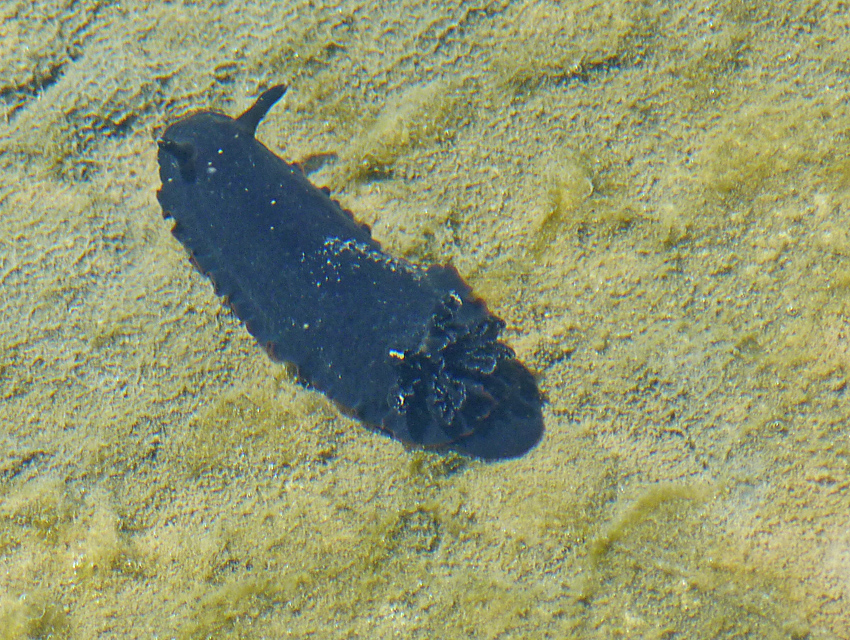
  History aside, West Lakes remains a worthwhile place to visit and walking around the man-made lake on a fine autumn afternoon still provides many interesting wildlife encounters. Instead of samphire swamp and mangrove forest, the edge of the lake is defined by fine sand and a ruler straight concrete edge which steps down into the water. Despite its artificial nature, marine invertebrates and small fish still feed on the algal growth that clings to this constructed shoreline. And on occasions I have even seen nudibranchs, a kind of sea slug with a prominent flower like gills on their backs, grazing on the concrete surfaces.

P1100002

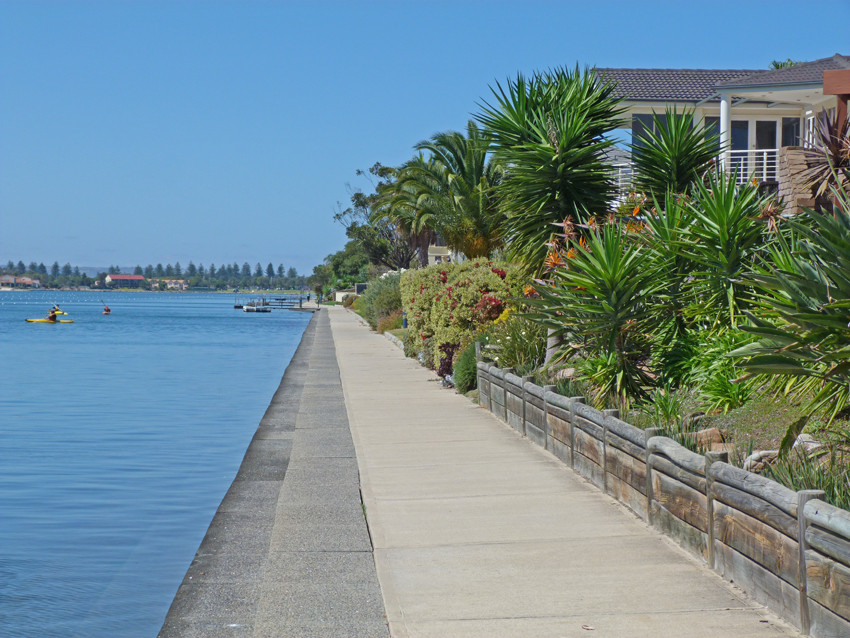
West Lakes today

P1100014

A grazing nudibranch species

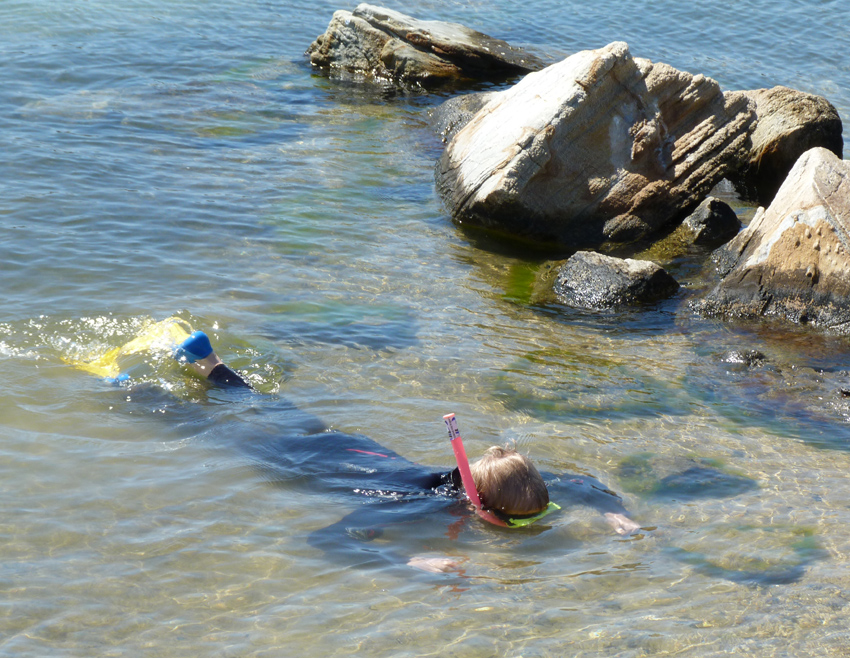
  Because the lake has a less diverse ecology than the original swampland, there are fewer fish species; although sizeable bream, mullet and even the occasional mulloway make it a popular venue for anglers. In fact, the people who live on its shore often feed the resident bream and have quite large schools living near their private jetties and landings. These fish are generally off limits to the fishers but school children who snorkel off the West Lakes Aquatic Centre get quite a thrill when an instructor lures a school from a nearby pontoon.

P1100030 edited

Large bream close to the shoreline

P1090979

School student snorkelling near the aquatics centre

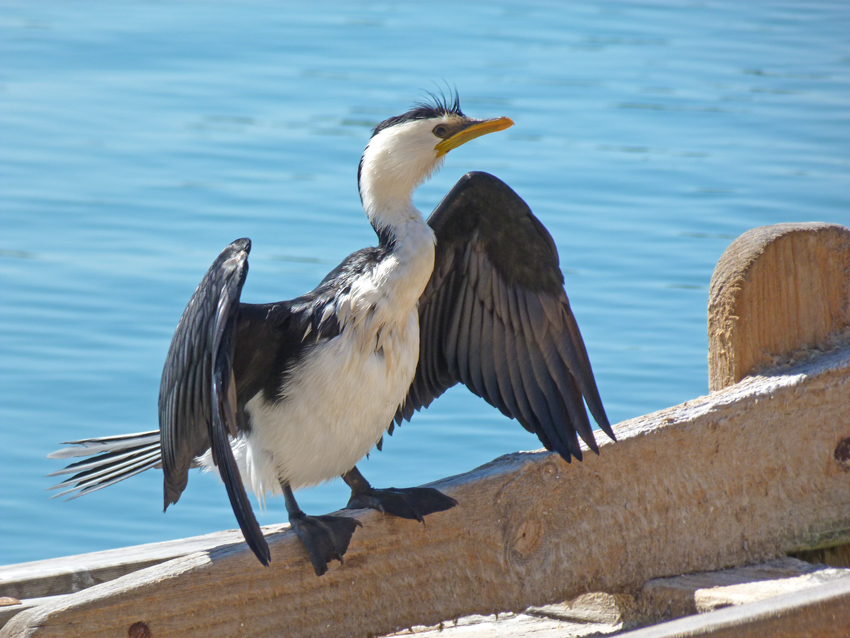
  The fish, crabs and sundry other creatures inevitably attracts predators. Because of the intakes that feed water in from the sea, sharks are virtually unheard of in the lake system and the main hunters are seabirds. Pelicans and cormorants are common and the ubiquitous silver gulls carry out their indispensible clean up duties along the shoreline.

P1100019

Little pied cormorant drying its wings on a pontoon

  Various paths and roads follow the course of the lake system. Walking or cycling along them in the evening and early morning is best for wildlife encounters. However, even at midday when the sun is up and all is relatively quiet on the wildlife front, the well-tended gardens along the fringe of the lake still attract a wide variety of common urban birds as well as insects and the occasional lizard.

P1100023

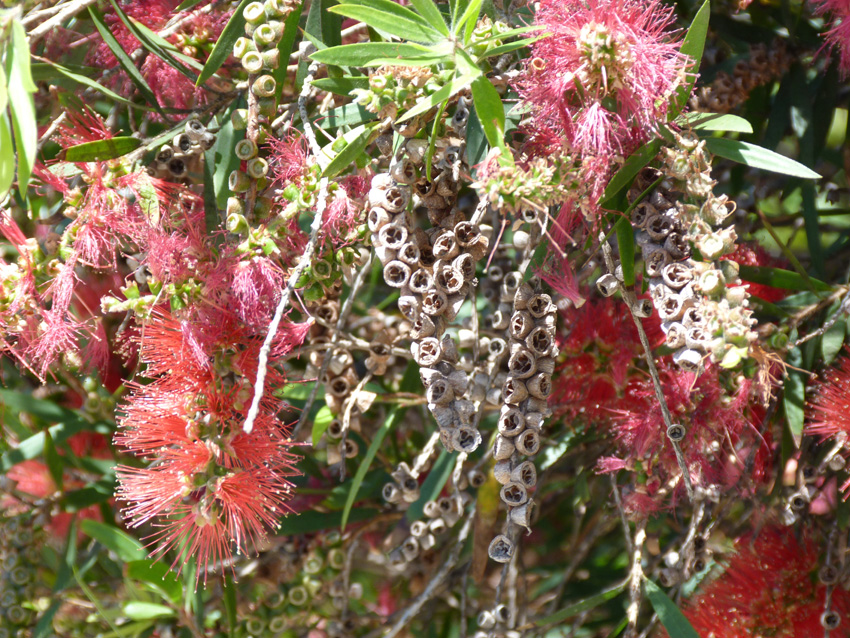
Bottle brush in lakeside gardens

P1100024

Gaura in lakeside gardens

P1100010

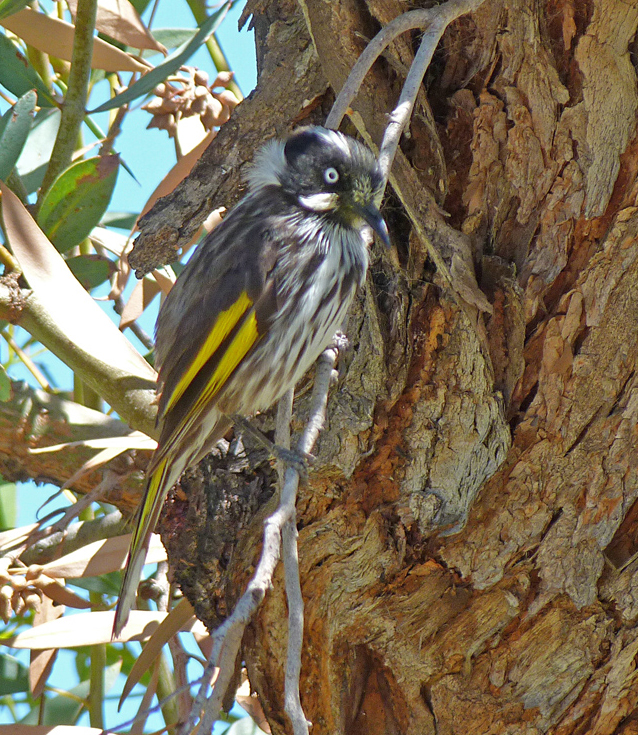
New Holland honeyeater feeding in garden

  Finally, a couple of considerations for those contemplating a walk around the lake. Start at the aquatics centre off Military road as there is a nice little cafe overlooking the water. And take a look at the Tennyson Dunes just across the road from the lake. They separate the urban zone from the seashore and are yet another wonderful South Aussie environment to explore… (see ‘Seaside Dragons’…30th Dec 2012)   Until next time Cheers Baz

Henley Square……Crabs, Coffee and Coastline

13 Jan

Dear Reader:

The morning is warm and still with hardly a breath of wind. Although the water is not as clear as I would have liked it is worth putting on a mask and flippers to explore the shallows alongside the jetty.
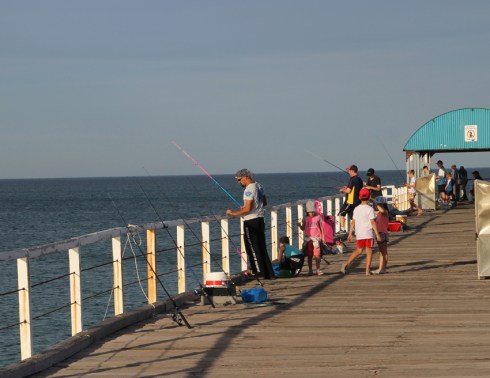
Henley jetty on a summer's day

Henley jetty on a summer’s day (click to enlarge all images)


As I swim into the shadows beneath one of the jetty piles I can just make out a school of sizeable bream with a few silver whiting scattered amongst them. They are massing near the wooden posts directly below several fishermen who have empty buckets and a look of ‘no luck today’ on their faces.
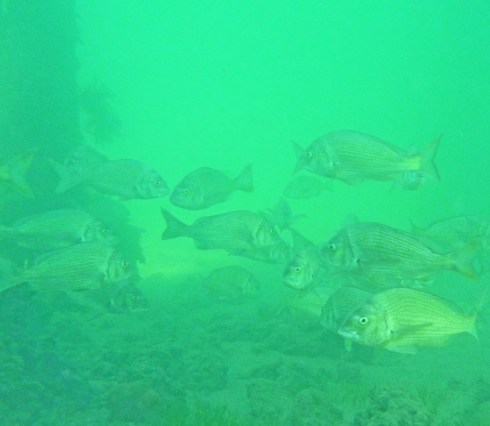
 

School of bream under the  jetty

School of bream under the jetty


The wind is strengthening a little which often stirs up the sand and makes underwater photography challenging to say the least. It is time to switch to macro settings and look for small organisms on the sandy bottom. Numerous furrows snake across the undulating sand like roads through desert dunes. I follow one trail and probe the end point gently with my dive knife to see if I can reveal the perpetrator…no luck. But my digging does annoy a swimmer crab half buried in the sand only an arm’s length away. The little creature immediately strikes an aggressive pose angling up towards me with nippers spread and ready to attack.

Sand crab, note the swimming paddles on the rear legs and the faint furrow in the sand made by a sea snail
Sand crab, note the swimming paddles on the rear legs and the faint furrow in the sand made by a sea snail


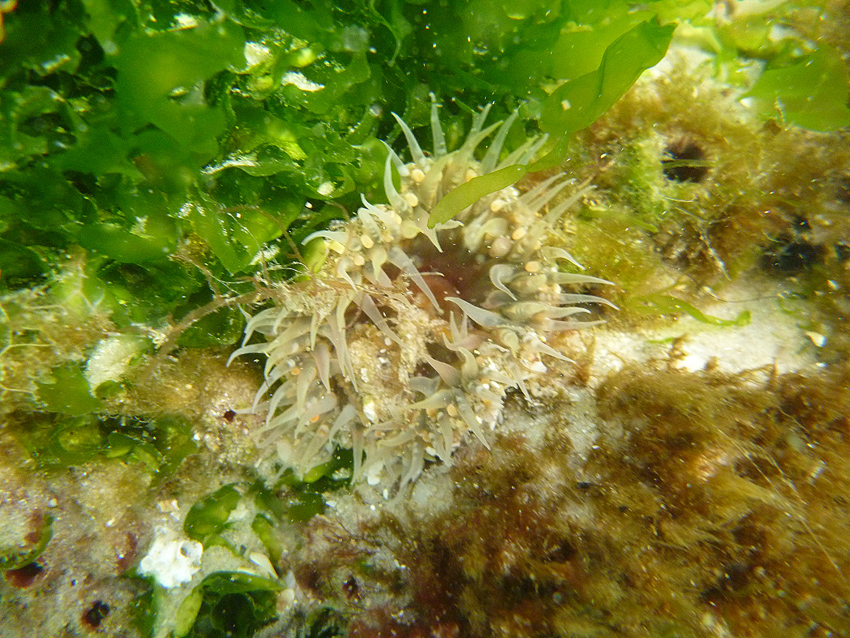
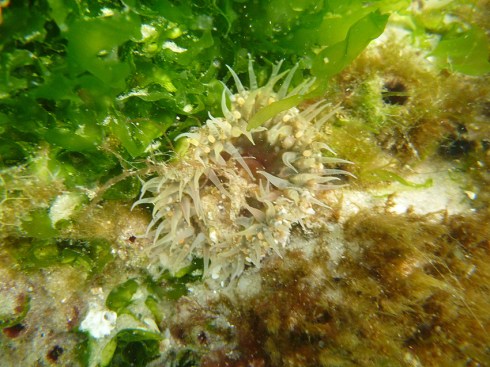
Anemone, sea squirt and green algae attached to a jetty pile

Anemone, sea squirt and green algae attached to a jetty pile


I spend a few more minutes exploring the various organisms that cling to the jetty piles. Satisfied with a few close up shots of anemones and sea squirts, I head for the change rooms and outdoor shower to wash off my gear. And then, the all important decision…. which of the beachside al fresco restaurants for coffee and breakfast? Henley Square at the foot of the jetty is one of Adelaide’s favourite beachside haunts where you will invariably find an eclectic collection of walkers, cyclists, fishers and even the odd naturalist; all enjoying the coastal ambience and quality restaurants.
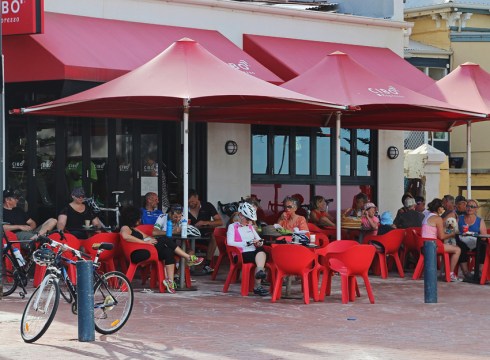
Cafe culture on a sunny morning

Cafe culture on a sunny morning


Coastal strip of dune vegetation including the pine used as vantage point by a nankeen kestrel

Coastal strip of dune vegetation including the pine used as vantage point by a nankeen kestrel


Refuelled and refreshed by my morning dip I walk south along the bikeway that skirts this section of coastline. Between the beach and the path there is a long stretch of low coastal dunes that have been revegetated over the last decade providing an interesting ecosystem that is home to a variety of plant and animal species.
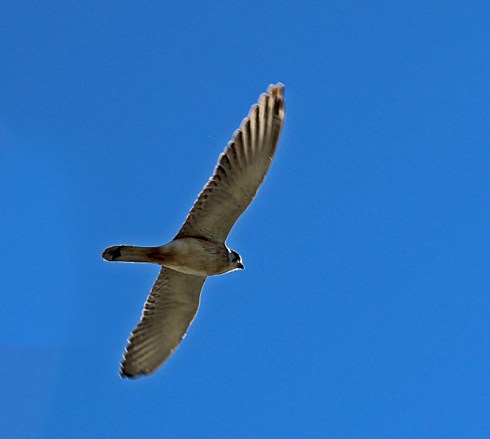
Nankeen kestrel in flight. one of the more common raptors that feeds mainly on ground dwellers but will attack other birds

Nankeen kestrel in flight. one of the more common raptors that feeds mainly on ground dwellers but will attack other birds


Several small groups of sparrows and some honeyeaters are flitting through the foliage but they seem extremely nervous. The reason for their apprehension soon becomes obvious as a nankeen kestrel perches on a tall pine tree to survey its hunting zone. The bird of prey, however, does not go unnoticed by a pair of noisy miners that dive bomb the predator and force it to take to the air again.
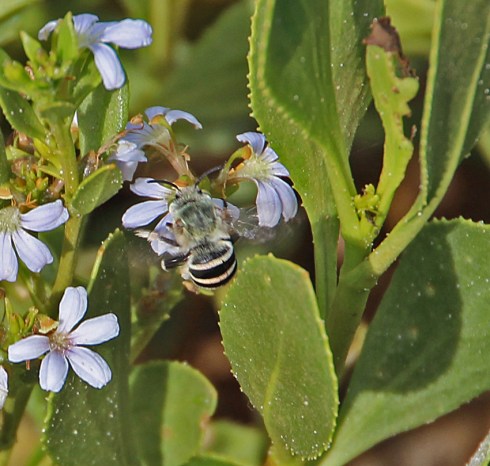
Blue bees are a small native species that have a more errtic, zippy flight pattern than common honey bees

Blue bees are a small native species that have a more erratic, zippy flight pattern than common honey bees
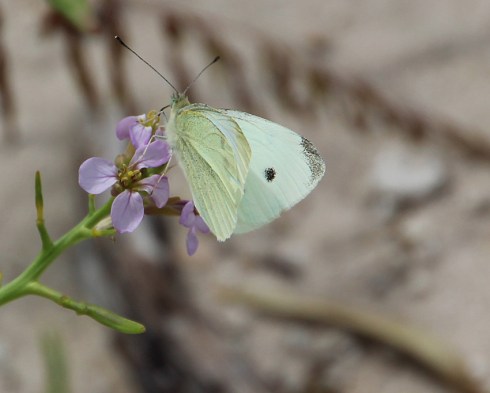
 

A spcies of White butterfly feeding on coastal blooming plants

A species of white butterfly feeding on coastal blooming plants


The temperature is rising and the chance of spotting larger animals diminishing as the day progresses and they seek shelter from the sun. I turn back towards the jetty and focus my attention on the unique coastal plant life and the bees, wasps and butterflies that feed on the various flowering shrubs. Near one of the sandy tracks that lead down to the water a thick stand of acacias, with delicate blue flowering grasses growing amongst them, is attracting native blue bees and several varieties of butterflies. Tricky images to capture as the bees are speedy, erratic little creatures and the butterflies are only landing on the blossoms for a few seconds.
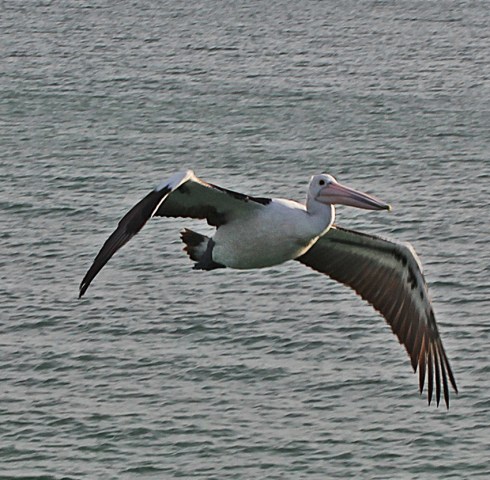
Despite their bulk pelicans are graceful in flight.

Despite their bulk pelicans are graceful in flight.


Australian pelicans have a wingspan of around 2 metres

Australian pelicans have a wingspan of around 2 metres


By the time get back to the square I am ready to sit under one of the square’s cafe umbrellas and sip a long cool drink while watching the locals enjoying another warm South Aussie day at the beach. It’s hot now and time to drive home and sort my pictures. I slip the camera strap over my shoulder ready to leave as one final image presents itself. An Australian pelican glides in low over the water and gracefully deposits itself on one of the jetty light poles and glances in my direction…..thanks!!


Until we chat again

Baz  

Rapid Bay’s Misty Morning Predators

5 Jul

Dear Reader:

The road drops sharply from a cloud enveloped ridge top to the beach then emerges from the mist alongside a small creek. The sky is clearer close to the ocean and I can see the familiar outline of the steep cliffs and the twin jetties that jut out into the gulf. It is a chilly winter’s morning and my hands are cold as I organise my back pack and cameras ready for a stroll along the seafront.

IMG_3732

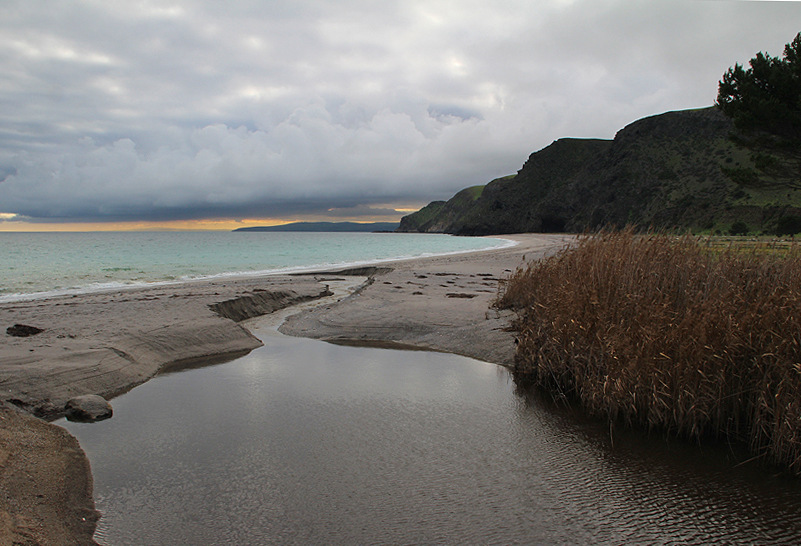
The creek at Rapid Bay (click to enlarge)

Two large birds are flying slowly along the beach front; in the early morning light they seem to resemble pacific gulls, a fairly common species along this part of the coast. I track the seabirds with my long lens and fire off a series of shots and quickly review them. Although the light mist obscured the birds’ features to the naked eye the captured images reveal a pleasant surprise. The wing feathers, tail shape and characteristically curved beak indicate a far more interesting and less common bird….the white breasted sea eagle. A little further down the coast I can see the eagles rise up on a thermal alongside the cliffs as they soar in tight spirals before resuming their beach patrol.

IMG_3771 edit1

White breasted sea eagle (click to enlarge)

The beach with its high cliffs, creek and mining jetty define one of the Fleurieu Peninsula’s most interesting and historic locations; Rapid Bay.  It was here that Adelaide’s original surveyor Colonel Light anchored his brig ‘The Rapid’ in the sheltered bay uttering the words “I have hardly seen a place I like better”.  Only 100 kms south of Adelaide, Rapid Bay is a prime location for divers and anglers. It is also  holds a significant place in the lore of several local Aboriginal peoples; a feature of the area that I will explore in more depth at a later date.

IMG_3761

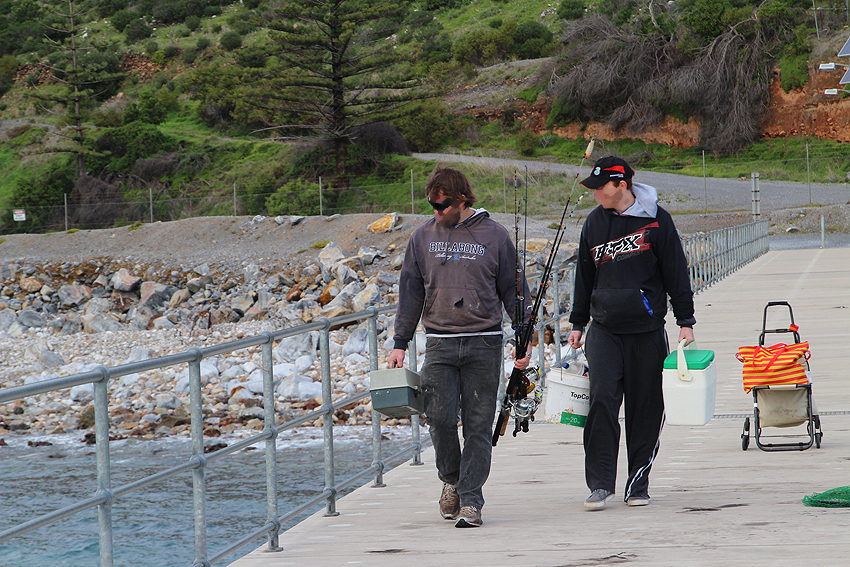
Anglers on the jetty (click to enlarge)

IMG_3755

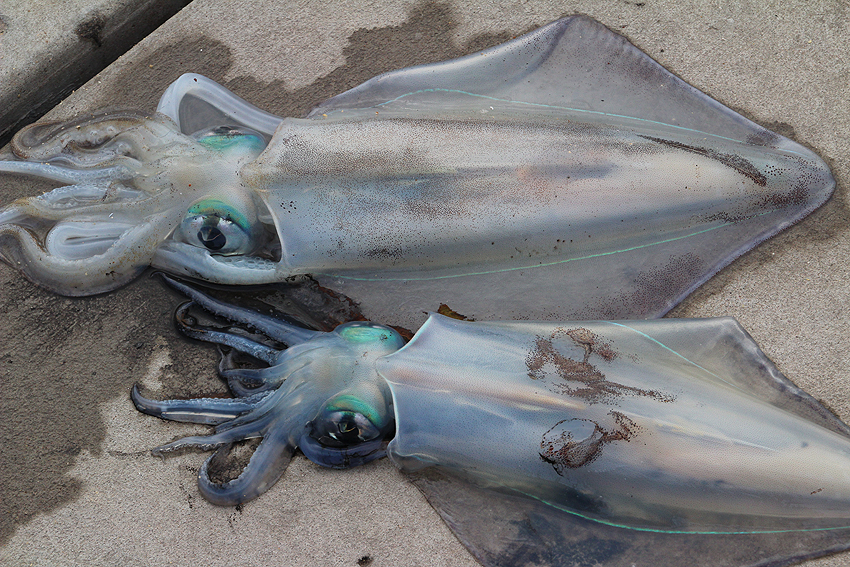
Southern calamari (click to enlarge)

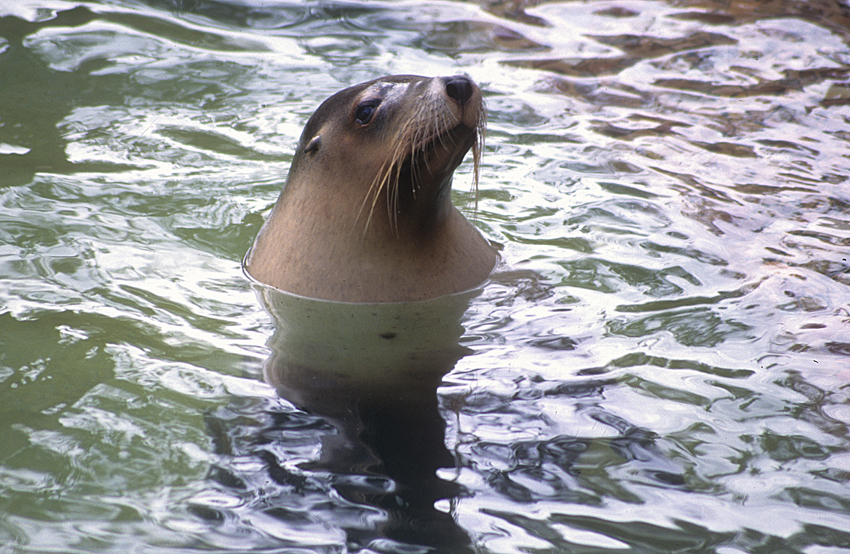
From the beach front I walk along a short dirt road to the jetty. A couple of fishers tell me that a sea lion has been hunting in the shallows between the new and old jetty. After a few minutes a sleek grey shape twists and turns in the water only a dozen metres away and a whiskery face pops up, surveys the surface and is gone as suddenly as it appeared. The anglers tell me that they have tossed a couple of squid to it and that the sealion has been around the jetties for the last couple of days.

sealion 1

Australian sealion (click to enlarge)

I watch the men jigging for squid for a few more minutes before returning to the car which is parked near the creek. As I pack up my gear I can hear the sound of finches in the bushes and reeds but it is difficult to focus on the tiny birds especially in these low light conditions. While I am concentrating on the tiny birds a large raven appears on the nearby embankment with a piece of squid in its beak and proceeds to tear the rubbery flesh apart while keeping a wary eye on me and croaking out a few warning calls to any other would be scavengers that might fancy a calamari entree.

IMG_3741

Little raven (click to enlarge)

Eagles, sealions, squid and even a dolphin that cruises past as I leave the jetty; it has been a morning of predators and scavengers both aquatic and aerial. And now it is my turn to grab a bite to eat. Leonard’s Mill, a renovated flour mill, is one of my favourite dining spots and on the main highway to town a mere 15 kms from the Rapid Bay turn off. Their calamari is on the menu as salt and pepper squid and best enjoyed with a fine white wine from the local vineyards.

Cheers

Baz

Port Willunga’s Natural Charms

24 May

There is a pair of pigeons nesting along the limestone cliffs. They are billing and cooing and puffing up their feathers if rival birds come anywhere near their territory. Unbeknown to the loving pair a far greater menace, in the form of kestrel, is circling high above, scanning the cliff face for a tasty pigeon treat. Luckily for the nesting pair, the hunter overlooks them or perhaps the angle of attack is too steep and the cliffs too perilous.

Lucky pigeons

Lucky pigeons……click to enlarge


I am walking along Port Willunga beach just 40 minutes from Adelaide; a glorious little stretch of white sand that lies below ochre limestone cliffs and bounded by the Aldinga reef to the south and Gull Rock to the north. The reef is a marine sanctuary that showcases a wide variety of the state’s diverse aquatic life. And the beach is a rich repository of the South Australia’s pastoral history where the sea scoured remnants of an old wheat jetty, built in 1853, protrudes from the shallow water. Despite its idyllic setting, Port Willunga also harbours a darker history with no less than five ships being wrecked in the vicinity. The most famous of these was the Star of Greece whose skeleton can still be explored just 500m offshore.

The view from the beach

The view from the beach…..click to enlarge


Leaving the fortuitous pigeons to their parental duties I kick off my shoes and walk through the water amongst the old jetty piles. The wood is bleached white and worn by wind, sand and rain. Tenacious little limpets cling to the timber and a shore crab scuttles past my feet. Looking back across the beach I can see the rough hewn caves that were dug into the cliffs to house fishing dingies and give shelter to the hardy men who made a living from these waters.

Drummer, leatherjackets, sweep and a moonlighter on the edge of the reef....click to enlarge

Drummer, leatherjackets, sweep and a moonlighter on the edge of the reef….click to enlarge


Warm clear water, a fine day and good light….thinks….twenty minutes later I am snorkeling along the edge of the reef. The water is fairly shallow and the marine life prolific. A school of zebra fish swims close to me and large dusky morwong and magpie perch feed along the undercut shelves that define the reef’s edge. At the end of one rocky outcrop a number of different species are congregating where the reef and the adjacent seagrass meadow intersect. I dive to the bottom and hold onto the rocks to steady myself and fire off a couple of shots. Later when I review the images they seem to reflect both the environment and the moment. An hour in the water and I’m getting a little chilly and its time to go back, this time I walk across the shallow rocky platform exploring the many tidal pools.

A casual lunch outside or fine dining inside....click to enlarge

A casual lunch outside or fine dining inside….click to enlarge


The change rooms at the end of the car park make getting out of the wet suit easy and the short walk up the slope to the restaurant, named after the hapless Star of Greece, gives me a good view north and south along the coast. Often I have caught sight of a pod of dolphins cruising the calm gulf waters but not today; just a few fishers and an optimistic body surfer are enjoying the water. However, after a strenuous swim and a walk along the beach my priorities have changed from natural history to lunch and the boutique restaurant, once a fish and chip shop that I frequented as a lad, beckons. Fresh seafood, quality local produce and wines; a typically South Aussie way to finish my day.


Cheers

Baz

Reef and Cliff

25 Mar

The crumbling cliffs drop steeply to a narrow beach where a tangle of dried out seaweed marks the extent of the last high tide. From the beach, a flat limestone platform gently slopes into the ocean. The once smooth surface is scarred with shallow pools, sand patches and bubble weed. A line of white foam marks the outer fringe of the shelf where a sudden increase in depth creates a series of smaller reefs and ledges. These features provide a range of diverse habitats for an assortment of marine life.

3 cliff beach and reef

The view from the cliff top


The first animal that I meet, on my swim across the shallows, is a fiddler ray which has come in from the seagrass meadows beyond the edge of the reef. It is hunting on the limestone platform; using its keen senses to locate molluscs that are buried in the sandy patches. Like all rays, its mouth is located on the underside of the body and its back is camouflaged to confuse predators that might attack from above. I follow the ray for a few minutes approaching quite close as it lies near a patch of bubble weed. Unlike stingrays, fiddlers do not have a barbed spine on the tail for defence and seem to be quite placid animals.

2 fiddler ray red

Fiddler ray near bubble weed


The ray follows a series of narrow cracks in the rocky surface where shore crabs often leave the shelter of their burrows to hunt on the incoming tide. The narrow crevices are also home to hoards of tiny anemones that extend their stinging tentacles to trap the tiny organisms that live in the water.

4 Pale anemones amongst seaweed

Anemones in a rock ledge surrounded by seaweed that keeps them wet on the receding tide


The limestone reef and high cliffs with their spectacular coastal views are the main attractions of the coastal community of Aldinga. The town is a comfortable 50 minutes drive from Adelaide along the main South Road. A traditional Aussie pub and bakery close to the access road from the highway provide great local meals and there are numerous houses for hire along the coastal strip that overlooks the gulf. Several parking bays on top of the cliffs with steps that lead down to the beach and reef make accessing this location very easy. The area is also a marine park and various signs explain the exact nature of restrictions for divers and fishers.


rock crab  aldinga 2

Shore crab that has emerged from its shelter to feed


After following the ray for a while I swim to the seaward edge of the reef and start exploring its perimeter. The limestone is honeycombed with undercut ledges, caves and crevices. Almost immediately I encounter a large strongfish or dusky morwong; a common species that lives in the seagrass meadows. The fish is well over a metre long and appears to be resting before heading into deeper water to feed.

1 strongfish in cavern red

Strongfish or dusky morwong sheltering under a rocky ledge on the edge of the reef


I have been in the water for over an hour and have photographed a wide variety of marine life apart from the species mentioned. Now it is my turn to follow their example and ‘grab a bite to eat’ back at the pub before driving home confident that there is still much to see on subsequent visits to this spectacular local ecosystem.

Cheers

Baz

On the Edge of the Blue Line

25 Dec

On the Edge of the Blue Line

The sand is golden with a uniform, rippled pattern to it; like the sole of an old fashioned sneaker. Every few metres small clumps of grassy weed appear until finally the sand merges into an endless green meadow of seagrass. Seagrasses are not algae but true plants with leaves, roots and in most species, flowers. They form a crucial ecosystem in the shallow waters of Gulf St Vincent. As I hover above the dense mass of leaves, a school of tiny silver fish lifts out of their embrace, swims a few metres then blends back into the shelter of the meadow.

1

Blue line as seen from the sand hills near Henley Beach


I am snorkelling off Henley which is better known as a fashionable beachside cafe strip rather than a dive destination. I decided to arrive a little early and enjoy a cup of coffee while I waited for the sun to get high enough for underwater photography. The water is clear and the ocean warm and inviting at this time of year and it is just a short swim from the local jetty to the blue line where the sand and seagrasses merge. The lush tangle of gently waving blades that surround me are home to one of the planet’s richest marine environments. It is a place where whiting, mullet, blue crabs, giant rays and squid (to mention just a few inhabitants) find food and shelter for themselves and their young.

2 Seagrass meadows

Seagrass meadow


I swim a little further into the seagrass until I locate a patch of sand with some darker detritus around its edge, indicating that something might have dug into the substrate. I stir the sand with the tip of my dive knife…nothing…I swim a few metres further and repeat the process. On the third attempt I get a result. A dinner plate sized blue swimmer crab bursts out of the sand with pincers extended and full of aggression. These crabs are prolific along the upper gulf in the summer months providing a valuable commercial fishery and great sport for recreational fishers and divers.

5 Blue swimmer crab

Blue swimmer crab


Experience has taught me that the boundary between seagrass and sand is an ideal place to observe different animals. Because I am wearing extra weights I am able to rest effortlessly on the bottom in this zone and wait for something to happen. Over the next few dives my strategy pays off as a small group of juvenile King George whiting settle close to me as they search for worms and molluscs between weed and sand.

4 Juvenile King George whiting

Juvenile King George whiting


A little further offshore small sand patches occur regularly in the seagrass meadow. Often there are a few rocks colonised by brown or green algae and even variations in seagrass species in these areas and these slight variations in terrain frequently produce the greatest diversity of marine life. My first sand patch does just that. Lying close to the bottom, I let my eyes adjust to the light and moving shadows produced by the tidal flow and rippling surface. Just a few centimetres from my lens a seahorse clings to a blade of eelgrass using its tail and tiny fins to move in time with the swaying miniature forest of the underwater meadow.

3 Big bellied seahorse

Big bellied seahorse


I have been in the water for over an hour and I am getting a little chilly and besides a cappuccino and breakfast roll beckon back at the Henley Square where many a tourist sips coffee unaware of the glorious marine world just a short swim away.


Cheers

Baz


Photo Reflections 2

16 Nov

Dear Reader:

South Australia is an extraordinary place to live and work especially if you are a wildlife writer and photographer. Our fauna is both diverse and fascinating and en route to any destination there are always interesting country towns, world class wineries or vast rural properties to explore. This blog is a reflection of those attributes and is a collation of images and notes that remind me of the reasons I live and work here.

A Camping near Arkaroola

Camping near Arkaroola


Arkaroola is a world heritage wilderness area approximately 700 kilometres north of Adelaide. Its geology, Aboriginal heritage and wildlife make it a premier destination for off roaders, photographers and those who simply like a taste of real outback life.

B Nankeen night heron

Nankeen night heron

The wetlands around the Adelaide region have a core of commonly sighted species that include a variety of waterfowl, pelicans, ibises, swamp hens and swallows; to mention but a few. The nankeen night heron is one of the less frequently encountered birds which made photographing this one, as it hid in a willow overhanging a lake near my home, a special moment.

C Vines near McClaren Vale

Vines near McLaren Vale


The coast road that runs south from Adelaide along the Fleurieu Peninsula is a drive I have made countless times on the way to a dive site. On this occasion I was drawn to the dormant vines that stood in stark contrast to the overcast sky and yellow oxalis flowers.

D Biscuit star

Biscuit star


Sometimes the simplest creatures, the ones encountered countless times, catch your attention. Perhaps it is the light or just the way the animal is positioned. This common biscuit star caught my eye as it crept along the edge of a rock face covered in algae and a melange of encrusting organisms.

E Hoverfly on blossoms

Hoverfly on blossoms


Hoverflies are one of the most common invertebrates in our gardens. These agile little insects hover, flit and settle on a variety of flowering plants. They seem to be in constant motion. On an afternoon stroll through the Botanic Gardens an accommodating hoverfly settled on a nearby blossom giving me just a split second to get down low and capture this image which emphasises its startling compound eyes.

F Echidna foraging

Echidna foraging


Echidnas roam the length and breadth of Australia but they are not commonly seen. This one was trundling through the bush in the Adelaide Hills close to a termite mound that it had been ripping apart. It was the sound of the little spiky battle tank that gave away its location. Stealth does not appear to be part of their defensive repertoire. You don’t need to be furtive when you are armed with a plethora of sharp spines.


I hope you enjoyed this little reflection

Baz

Moonta Bay: above and below the water

21 Sep

Dear Reader:

It is a lovely afternoon and I am sitting on the balcony of a friend’s beach house gazing across the calm waters of Moonta Bay. The light is soft and despite an unseasonably hot spring day there is a gentle sea breeze ruffling the bushes and coastal grasses on the edge of the steep cliffs that drop down to the beach. I have been watching a pair of rabbits cautiously emerging from their burrows in the soft sand; endearing little creatures but unwelcome guests in this area where they eat the native plants and damage the delicate balance of the cliff top ecology.

Wild rabbits amongst succulent and grasses on the cliff top

Wild rabbits amongst succulent and grasses on the cliff top

As night approaches and the sun drops below the horizon the rabbits become more active. A flock of gulls flies in V formation across the skyline and I retreat into the study to avoid some early season mosquitoes and reflect on my day. The sunset is quite spectacular and provides some inspiration to set pen to paper.

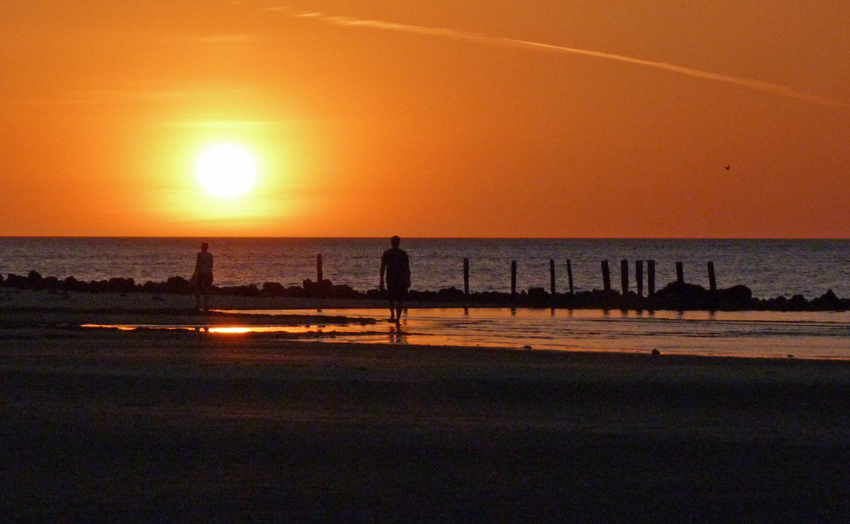
Moonta Bay at sunset

The journey from Adelaide across the flat coastal plains and scrub hedged wheat fields  was an easy couple of hours. I stopped at a local pub and grabbed a bite to eat then pushed on to Moonta. With only one night at my disposal I spent the early part of the afternoon wandering amongst the old mine ruins. A little gecko clung miraculously to the smooth surface of an old mine bucket and a pair of swallows had made a neat little nest behind a wooden beam that protruded from a square stone tower. But strangely it was the colours in the rocks that caught my attention as they hinted at the wealth of copper that was extracted from this area in the late nineteenth and early twentieth century.

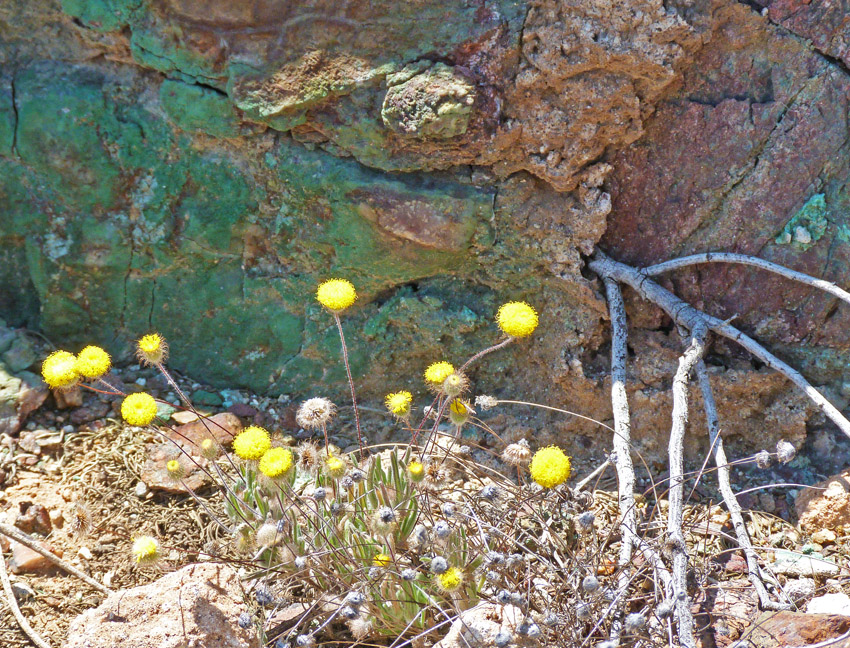
throughout the old quarry the rocks are stll tinged with the coper ore

Throughout the old quarry many of the rocks are tinged with the copper ore

From the mine it was a short drive down to the seashore and jetty with its art deco styled motel and restaurant nestled into the low cliffs. A stroll along the stained hardwood planks out to the end where it curves to run parallel to the shore brought back childhood memories of weekends fishing and playing cricket on the huge expanse of beach that is exposed when the tide recedes. But on this occasion the child’s rod and line were replaced by camera and notebook. Near the shoreline I stopped by a rocky outcrop to watch a pied cormorant hunting amongst the weed and rock-pools; its body seeming to take on the fluid persona of the water as it twisted and turned in search of small fish and crabs.

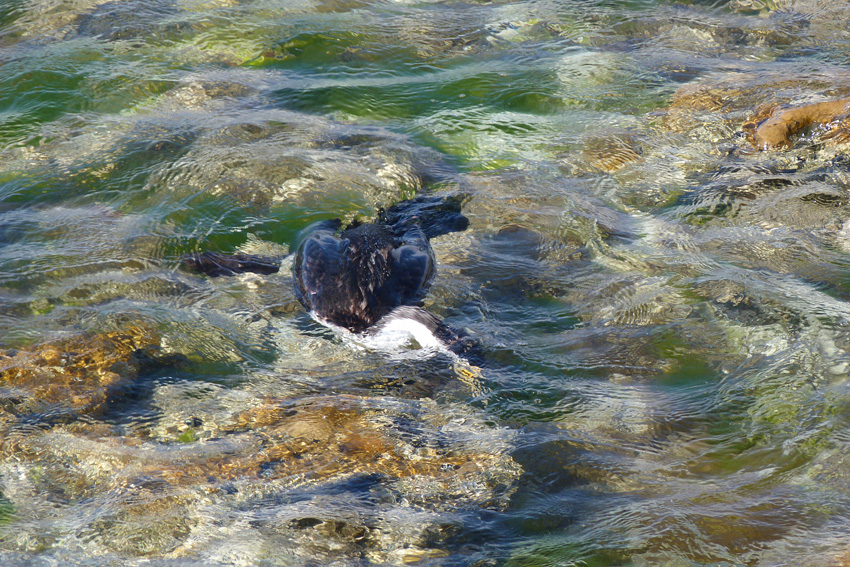
Pied cormorant hunting amongst the shallow rock pools

Pied cormorant hunting amongst the shallow rock pools

 A little further along the jetty, where the shallow water starts to turn darker hinting at the meadow of seagrass beneath, a flotilla of seabirds were patrolling; an indication  that there might be baitfish in the area. With this in mind I trotted back to the car and donned my snorkelling gear to take a closer look. I was not disappointed as several schools of small fish were congregating in the deeper water beyond the rocky outcrop. 

A school of baitfish congregate below the jetty

A school of juvenile mullet feeding below the jetty

The sunset is well over and the  forecast indicates fine weather with calm seas for the next few days.  I’ll probably do a little more snorkelling near the rocky outcrop before walking along the coastal trail to watch the seabirds and search for reptiles and insects.


Until next time

Cheers

Baz