Archive | wildlife photography RSS feed for this section

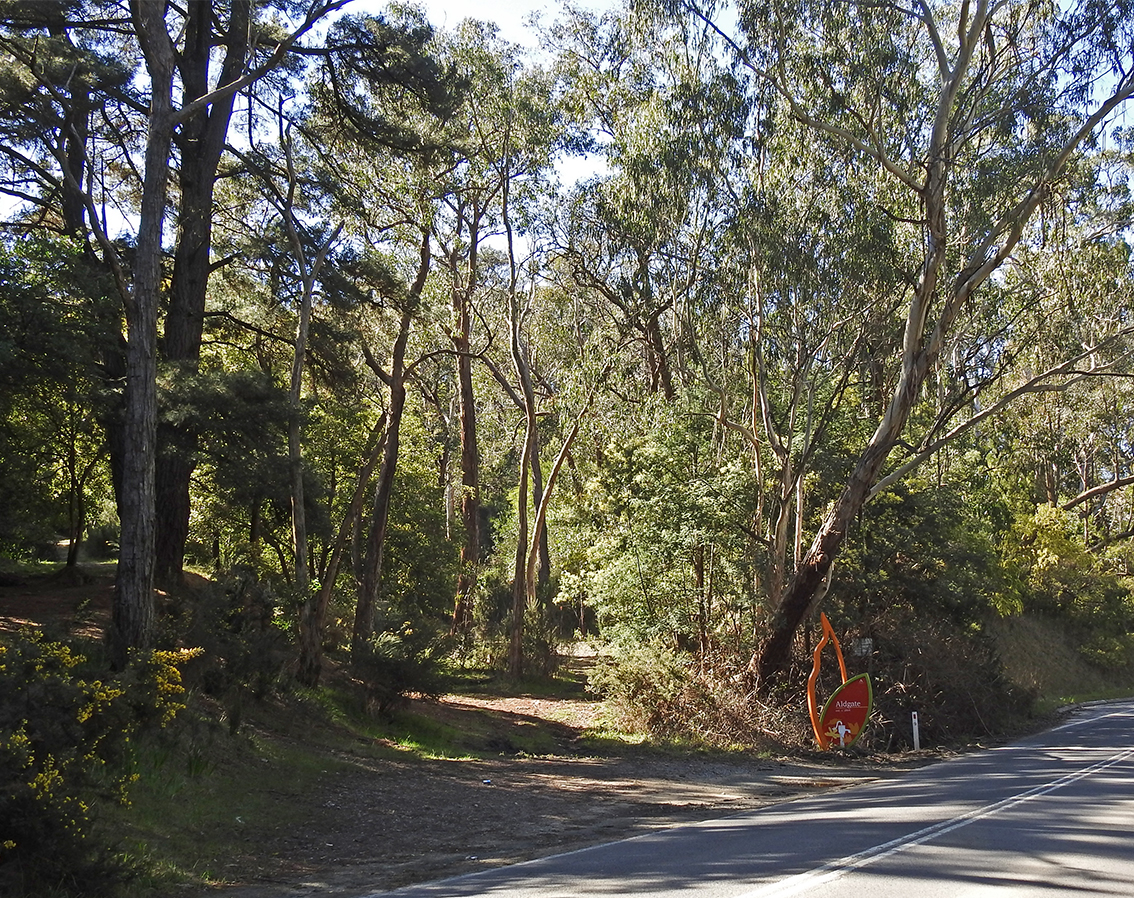
Aldgate to Stirling 1……..around the RSL and church

26 Aug

Dear Reader:

There is a small stream running under the roadway which is overshadowed by tall Eucalyptus trees. I can hear the raucous calls of Galahs, Lorikeets and Sulphur-crested Cockatoos coming from high in the canopy. I swing the Nikon telephoto in a broad arc and eventually locate a lone Galah (Rose-breasted Cockatoo) gripping the trunk of a Stringy Bark Gum. On a grassy area near the playground, which is adjacent to the stream, a male and female Maned Duck are sitting close to each other some distance from the water.

Galah (Rose-breasted Cockatoo)

Male and female Maned Ducks or Wood Ducks

In another tree, I spot an Adelaide Rosella perched amongst the branches and leaves and nearby a second bird  is feeding on the buds of a non-native tree.  In the last few minutes I have identified four species of parrots , two by sight and two by sound. A nice start to my walk between the Aldgate RSL club and the outskirts of Stirling in the Adelaide Hills.

Adelaide Rosella

Adelaide Rosella feeding

Before I take my intended walk back to Stirling along the roadside pathway, I decide to explore the immediate area as I have been surprised by the diversity of birdlife here. A short stone stairway leads up to the Soldiers Memorial and a clearing with some garden seats. I sit for a while contemplating lives lost and the sacrifices made by families to ensure our way of life.

Soldiers Memorial

Golden Whistler

While I am sitting near the Memorial a Golden Whistler lands in the bushes close to me. This truly beautiful bird is not common and I feel privileged to watch it hopping between branches.

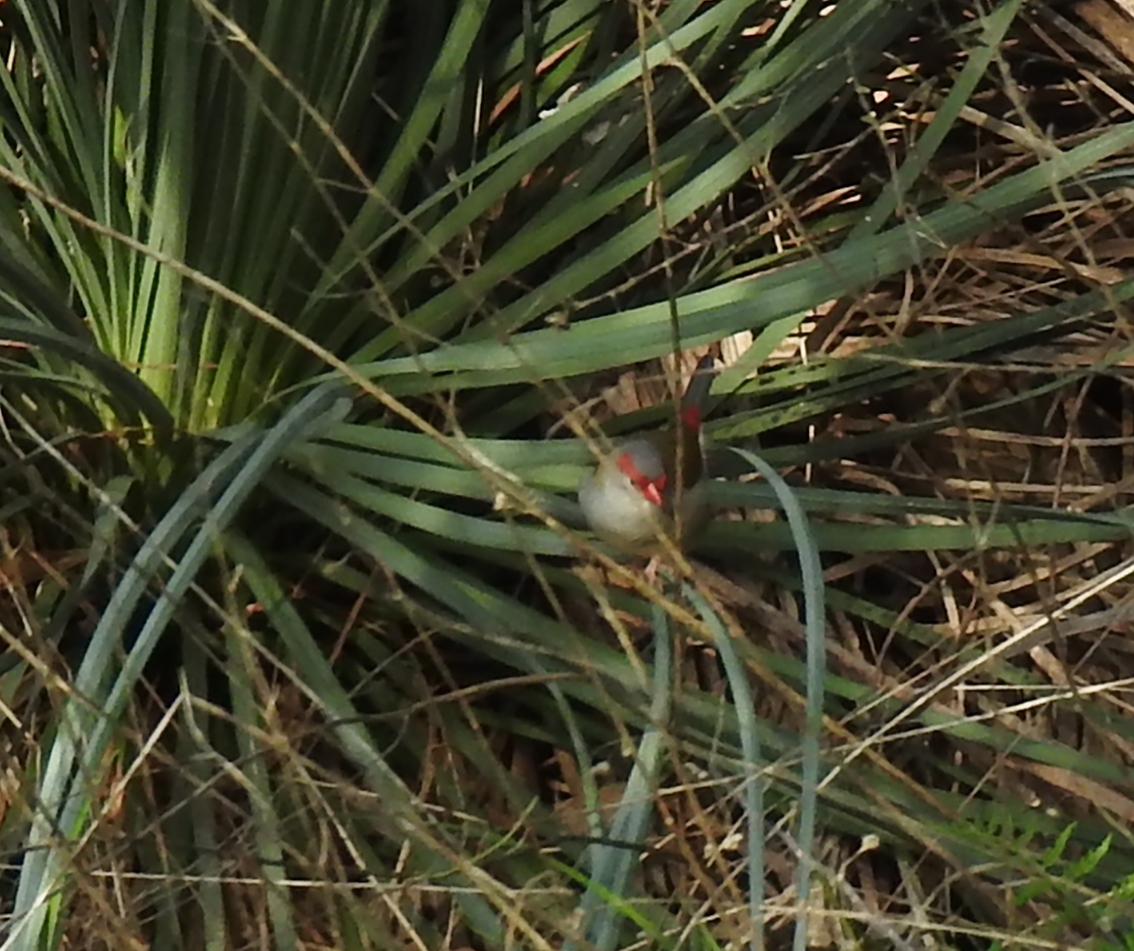
Superb Fairy Wren (Male)

Anglican Church of the Ascension

On the other side of the main road there an Anglican Church. It is shaded by trees and appears to have a range of flowers and flowering trees and shrubs in the grounds; always a good sign when one is searching for wildlife. I have heard the twittering call of wrens while walking up to the church and, as if on cue, I notice a male and female Superb Fairy Wren fossicking in the gravel beneath the Church Noticeboard.

Pair of Laughing Kookaburras

The church’s pretty wrens and flowers seem to have rounded off the first part of my walk around the Aldgate RSL but I am left with one more divine offering. A pair of Kookaburras, that I have not noticed, start to call from a branch in the largest eucalypt overlooking the church. There has been so many species in this small area that I have decided to cover the actual walk back to Stirling in my next post.

Cheers

Baz

Additional notes

This is an easy walk and drive which is quite suitable for families and seniors with public toilets, parking and other facilities nearby. It is dog friendly.

Please pass on this blog title and or contact information (URL) to any person or organisation with an interest in taking walks and enjoying wildlife in SA.

Click on these links and see more South Australian stories and pictures in my Weekend Notes articles as well as locating similar blogs on Feedspot’s top 20 Australian wildlife blogs

https://www.weekendnotes.com/adelaide/writer/452/

https://blog.feedspot.com/australian_wildlife_blogs/

Hale Conservation Park

14 Aug

Adelaide Rosella

Dear Reader:

Over the years I have made several major errors as a wildlife photographer. Perhaps the most telling has been the tendency to see a shot at the beginning of a field trip and not take it as I believe there will be a better one later. Not this time! As I climb out of the SUV I notice a pair of Adelaide Rosellas flying into a gum tree about a hundred metres away. I steady my camera against the vehicle and fire off a couple of frames. And yes; they were the only Rosellas I came close to photographing for the rest of the day.

Trailhead

Typical section of the trail showing some fire damage

I am walking the loop trail in the Hale Conservation Park a few kilometres out of Williamstown on Warren Road which leads to Gumeracha. It is a lovely, compact park with a small parking area and a well-defined track with information panels at the head of the trail.

Flame Heath with Goodenia flower growing through

Cryptandra species

The path climbs gently with generous views of the surrounding rural landscape. There is evidence of fire damage in some areas and significant regrowth; especially the Blue Gums. Although it is winter there are still numerous flowering plants along the trail including Flame Heath and Prickly Cryptandra bushes with Goodenia flowers growing through them.

Clever hands

I continually scan both trees and bushes for birdlife, possums and Koalas. On a level section, which gives me an excellent view of trees growing below me on the hillside, I spot a large Koala in the forked branches of a eucalypt. Its grip on the tree provides an excellent example of the prehensile nature of the marsupial’s ‘opposable thumb grip’-a feature more common in primates.

Scarlet Robin and New Holland Honeyeater (ID images only)

Red-browed Finch (ID image only)

With rain clouds gathering, I decide to backtrack rather than continue along the loop trail. Near the parking area there is a noticeable population of smaller birds which are hard to photograph as they flit between branches and leaves. I decide to take a sit and wait approach and capture some images for identification purposes. My results are far from ideal but they do give a true sense of the difficulty inherent in acquiring good clear shots in a natural environment where animals are wary. Nevertheless, I have included my attempts in this post.

Spotted Ctenotus

When I explore a new area I try to find and photograph animals from as many groups or classifications as possible. In the cooler months, cold blooded animals such as invertebrates and reptiles are the most difficult to locate. It is always worth turning over a rocks and dead tree branches or peering under bark to find animals that might take shelter there, (always replace the item or make sure the animal can move back to a safe place). Today, I find a Spotted Ctenotus; a small, stripy, long-tailed skink, hiding under a rock on a north facing incline.

Mouse Spider (Credit Andrew Fitzner)

One of the best things about exploring our parks is encountering like-minded people and today’s walk is no exception. I meet a couple who passed me on the trail earlier and we chat about what we have seen. They show me a picture of a Mouse Spider spotted on the trail and photographed with an I Phone.

My walk completed, including a promise to myself to return in the spring, I drive back to Williamstown and the local bakery to treat myself to a chai latte and one of the best custard tarts I have eaten in ages.  

Cheers

Baz

Additional notes

This is a moderately steep walk with a small parking bay. It is not dog friendly.

Please pass on this blog title and or contact information (URL) to any person or organisation with an interest in taking walks and enjoying wildlife in SA.

Click on these links and see more South Australian stories and pictures in my Weekend Notes articles as well as locating similar blogs on Feedspot’s top 20 Australian wildlife blogs

https://www.weekendnotes.com/adelaide/writer/452/

https://blog.feedspot.com/australian_wildlife_blogs/

Warren Reservoir…drained for maintenance

14 Jul

Dear Reader:

From Tea Tree Gully, the road climbs into the foothills then snakes past Chain of Ponds Reservoir before it forks to the left towards Williamstown. Just before the town there are often mobs of Western Grey Kangaroos on the hillside to the right. Today, I spot a small group on the opposite side near a layby where I can safely pull off the road to take a few photographs.

Western Grey Kangaroos near Williamstown

I am exploring the Northern section of the Warren Reservoir which is around 10 kms past Williamstown towards Gumeracha on the Warren Road. The sky is a little overcast with a hint of rain in the air which makes photography challenging but in the winter months one takes any opportunity on offer to venture out into the bush. This is my second visit to the Warren and of particular interest because the reservoir has been emptied for dam wall maintenance and comparing it to my last visit, when it was full, is a rare opportunity.

Reservoir full

Reservoir drained and with some improvements to the public car park area

Usually there are numerous duck species as well as cormorants, Australian Pelicans and Anhingas (Snakebirds) around the edge of the reservoir. Today there is just a solitary Pacific Black Duck paddling along a narrow channel. Way off to the north, I can just make out a pair of kites catching thermals above the surrounding scrub.

Anhinga

Grey Fantail

However, all is not lost. For some reason the number of smaller birds seems to have increased around the periphery of the reservoir. Using the full extension of my Nikon P900 Camera lens, I am able to spot Silvereyes, Superb Fairy Wrens, a thornbill species, Grey Fantails and New Holland honeyeaters. Perhaps a lack of predatory species could account for this or maybe there are insects among the leaves and on the smaller branches.

Adelaide Rosella

I finish my loop walk back at the car parking area where a pair of Adelaide Rosellas are feeding on the ground. They are some distance away and as I approach all but one fly into the canopy. The lone bird perches on a wiry grass stem where it appears to be picking out seeds. I take a shot from distance just before it flies off disturbed by a couple of Little Ravens flying into a nearby eucalypt.

Australian Magpie foraging on reservoir floor

It has been a relatively productive morning’s work and I pack up my gear and head back towards Williamstown and lunch at the local bakery which, by the way, makes one of the best custard tarts I have tasted in a long time.

Snack time

Cheers

Baz

Additional notes

This is an easy walk and drive which is quite suitable for families and seniors with public toilets, barbecues, parking and information boards nearby.

Please pass on this blog title and or contact information (URL) to any person or organisation with an interest in taking walks and enjoying wildlife in SA.

Click on the links below to see more South Australian stories and pictures in my Weekend Notes articles as well as locating similar blogs on Feedspot’s top 20 Australian wildlife blogs

Weekend Notes

Feedspots top 20 Wildlife Blogs


Houseboat stories…..After the Floods

28 Jun

Houseboat stories continued (May 2023)…..After the Floods

Dear Reader:

As I walk across the flood plain, which was inundated in last year’s winter rains, there is a definite lack of wildlife. Bushes, grasses and other ground covers have been decimated. Last time I visited this area there were: Butcherbirds, Mudlarks, parrots, honeyeaters, Western Grey Kangaroos as well as an abundance of insects. Eventually I spot a single white butterfly settling on the cracked earth.

Cabbage White Butterfly

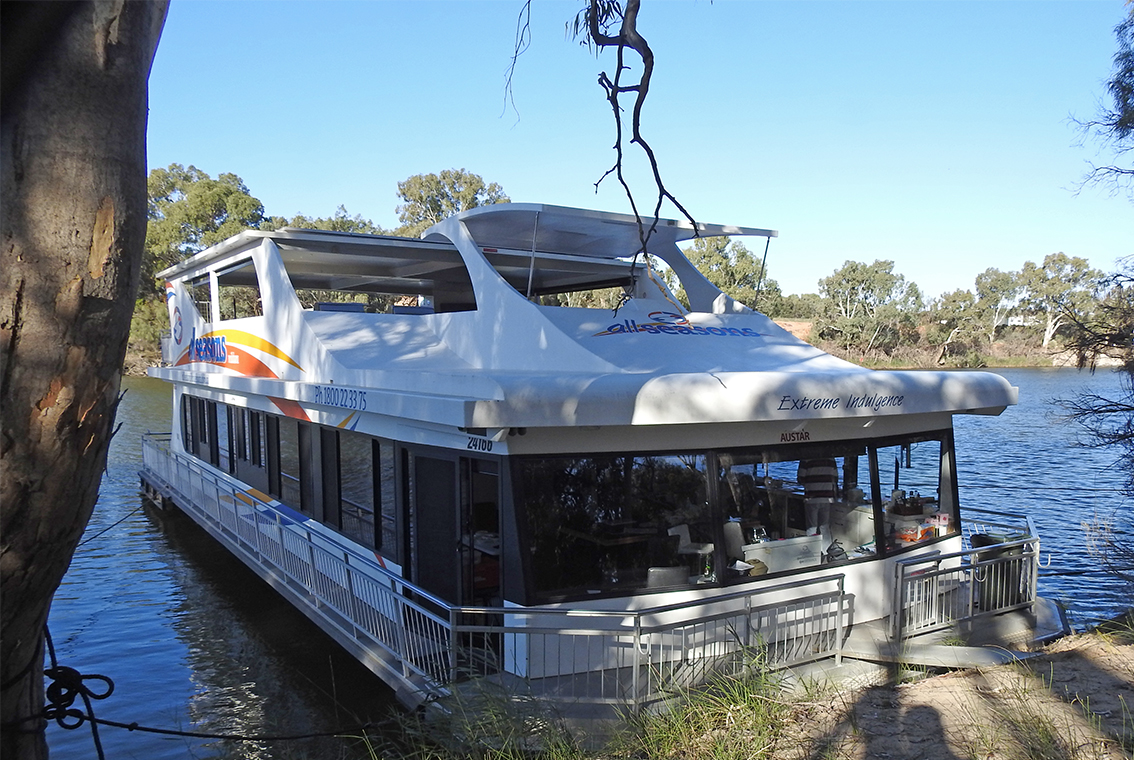
I am exploring Kings Billabong near Mildura, just over the SA border. We have travelled to this location by houseboat but the area is also accessible by unsealed roads. Each year I holiday here from Adelaide and observing the changes along the river, especially after major climatic changes,  is always interesting.

Track to the billabong

First lagoon

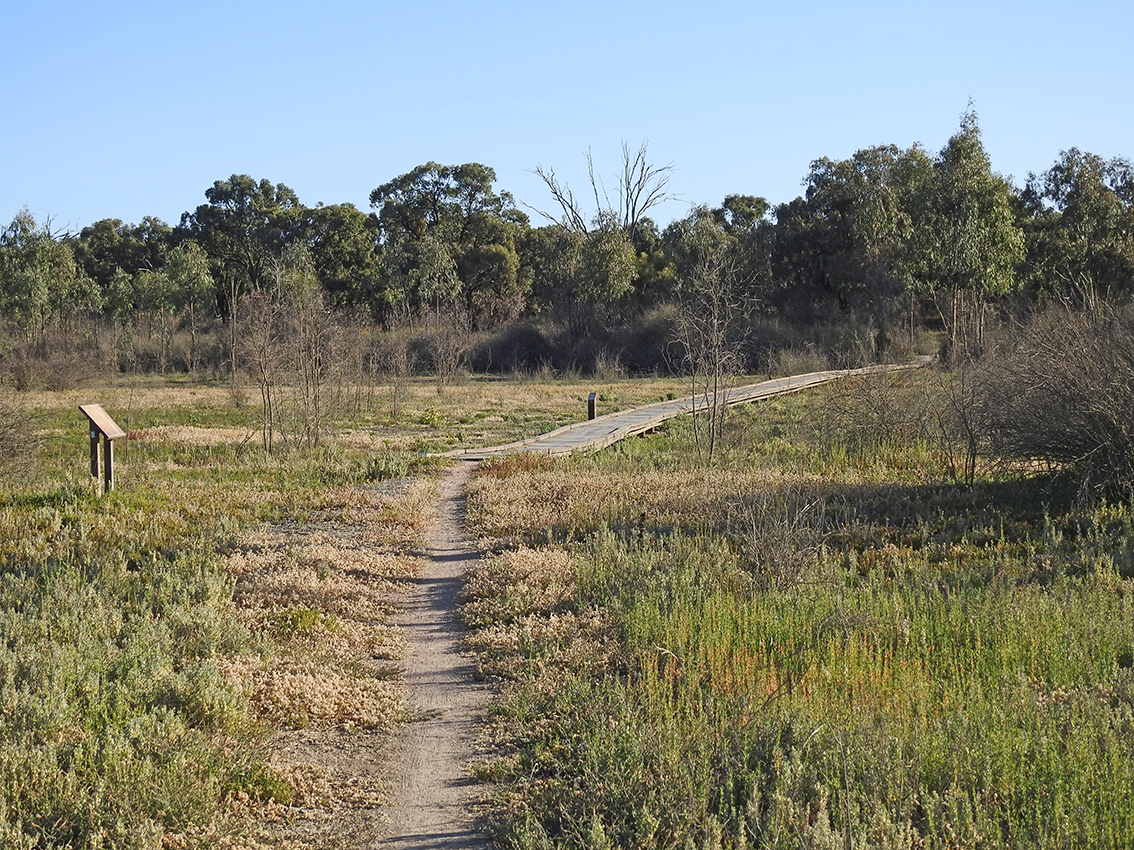
Following a pathway carved by a 4WD vehicle, probably a local ranger, I reach a boardwalk leading to a junction of trails accessing various parts of the billabong. From this location I get my first look at one of the many lagoons which make up this fascinating wetland.

Pink-eared Ducks

There are numerous birds congregating around a small island in the middle of the lagoon. They are about one hundred and fifty metres from my nearest vantage point and the light is starting to fade. Challenging conditions for my Nikon P900. I brace myself against a tree trunk, take a breath and fire off a couple of frames as I exhale. Later examination on the laptop reveals some Australian Ibises, a lone White-necked Heron and a flock of Pink-eared Ducks. The latter two species are birds I have never previously photographed.

Whistling Kite

With around half an hour’s light remaining I quickly skirt the first lagoon and sit quietly while scanning a second lagoon. High in a tall, dead tree overlooking the water, I can just make out the distinctive outline of a raptor. Zooming in, I recognise it as a Whistling Kite.

Spoonbills foraging


Fish in beak

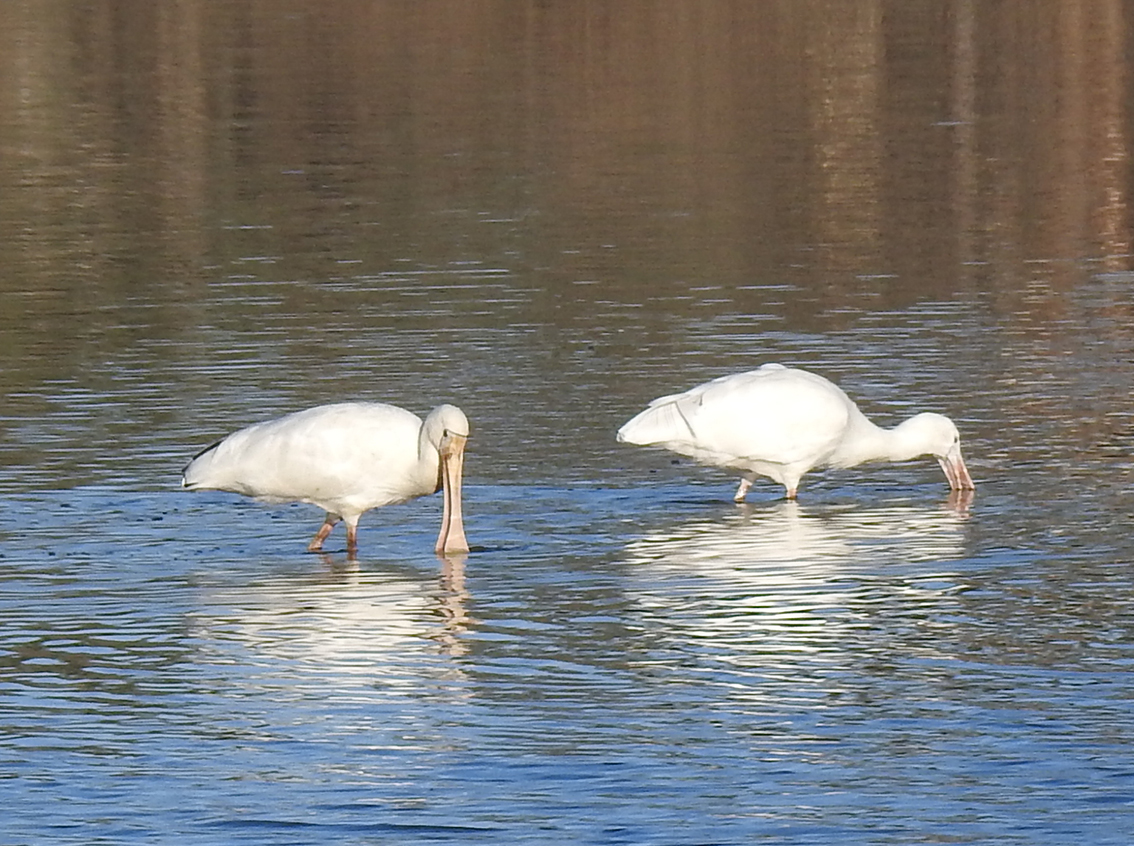
There are a few Pacific Black Ducks, herons and a pair of Laughing Kookaburras around the edge of this second pool but it is a small group of Yellow-billed Spoonbills that are most interesting as they swing their bills through the water in search of small prey. However, I am quite surprised when I see one of the birds capture a small fish in its bill; something I have never witnessed before.

Back at the boat

I feel the vibration of my Apple Watch indicating an incoming phone call. The watch, with its emergency capabilities, is a useful tool when you work alone in the bush. The call is just a safety check and a reminder that dinner is being prepared on the houseboat and it’s time to make my way back. Tomorrow I will venture further into the park to explore some other parts of this complex wetland.

For more wildlife stories and pictures go to:

Weekend Notes

Feedspots best wildlife blogs


Gorge Wildlife Park

20 Jun

Dear Reader:

Capturing images in the wild is one of the most exhilarating challenges a photographer faces. Each image evokes poignant memories of the location and circumstances under which it was shot. However, there is also a place for pictures taken in zoos and wildlife parks.

Wedge-tailed Eagle

At the Gorge Wildlife Park, one can get close enough to discern the fine details of animal structure and physiology such as the split grooming claws of a kangaroo or the scale patterns of a venomous snake. And of course, there are the fascinating interactions of people and animals. Each of the following images was added to my collection to emphasise these and other characteristics of our unique Australian wildlife.

Koalas are usually high in the branches of a gum tree. Being able to photograph one so close enables me to see the shading of fur as well as ear and eye structure.

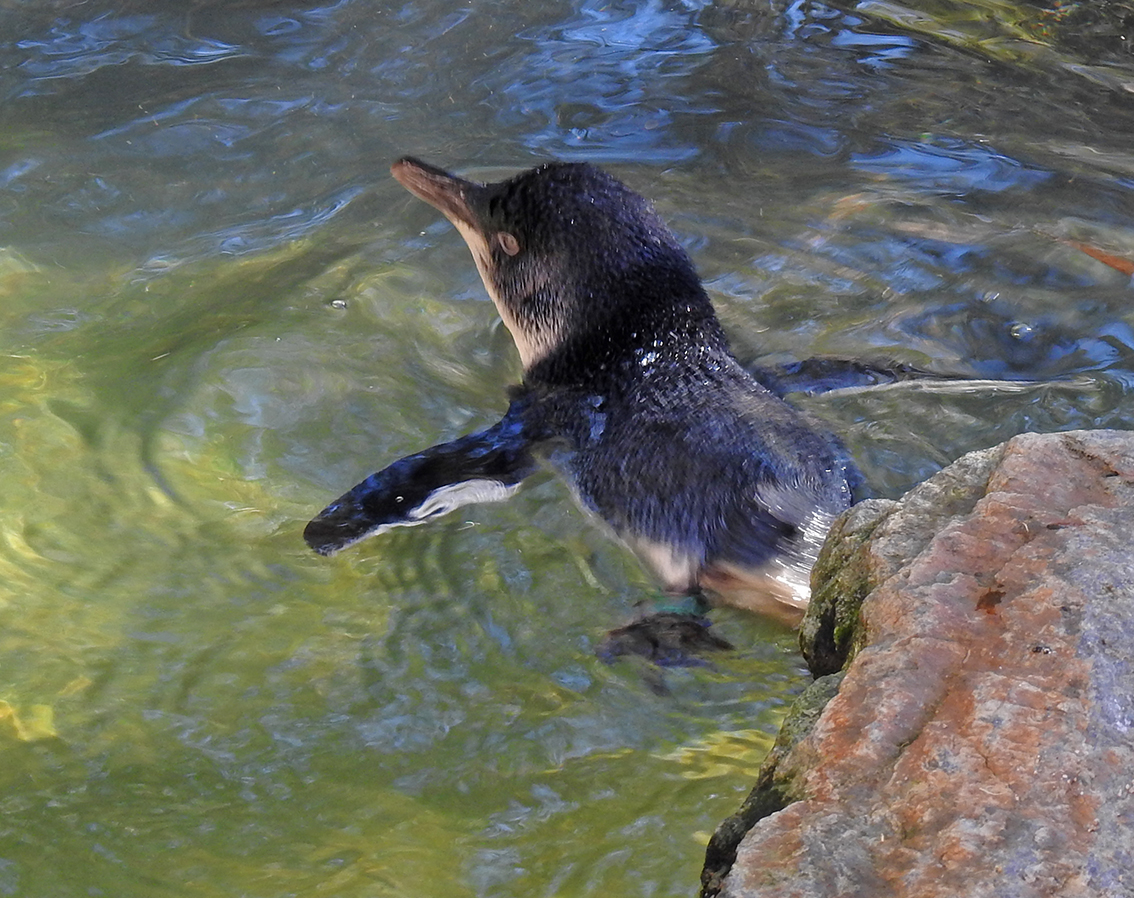
The bullet shaped body, nictating eye membrane and position of the webbed feet and wings are obvious as this Little Blue or Fairy Penguin enters the water.

The tongue, beak structure and use of the feet when eating are well illustrated in this image of a Little Corella.

Getting close enough to a Dingo and her pups in the wild would be nearly impossible without specialist equipment, outback guides and a great deal of time to spend on the project.

Quinn feeds a female Red Kangaroo with a joey in its pouch. A picture which tells so many stories.

I have only encountered two Death Adders in all my years observing wild animals in the bush.

Bad hair (feathers), a wild gleam in the eye and a mouth full of greens….one of my favourite Emu images taken in a wildlife park.

I hope you have enjoyed these images from The Gorge Wildlife Park and they encourage you to visit this extraordinary facility and see what kind of images you can capture.

Cheers

BAZ    

Additional notes

This is an easy walk and drive which is quite suitable for families and seniors.

Please pass on this blog title and or contact information (URL) to any person or organisation with an interest in taking walks and enjoying wildlife in SA.

All images using a Nikon P900

Click on the links below to see more South Australian stories and pictures in my Weekend Notes articles as well as locating similar blogs on Feedspot’s top 20 Australian wildlife blogs

https://www.weekendnotes.com/profile/651267/

https://blog.feedspot.com/australian_wildlife_blogs/

Megafauna… a few thoughts and examples

31 May

Dear Reader

A man hides in the scrub and watches an animal feeding near the river; it is huge and very wary, taller than the man. Despite its massive size the creature is not a threat and only eats plants. However, its size must be respected and the hunter would need help to kill or trap it. Time to move on and look for smaller prey. Such thoughts might have passed through the mind of an Aboriginal hunter thousands of years ago when far larger animals, called Megafauna, roamed the Australian continent.

Lifesize sculpture of a Diprotodon at Naracoorte Caves SA. Diprotodon was the largest of the Australian Megafauna.

Today, only traces of these animals remain. It is generally thought that they perished from a combination of hunting pressure and environmental changes. Some of their remains have been found in caves on the Nullarbor Plain and at Naracoorte in the south east of SA, as well as a few other locations.

Inside the Naracoorte Caves

The term Megafauna usually refers to animals weighing over 100 Kg but as the Australian Megafauna were smaller than those in other parts of the world it is generally accepted that Australian animals over 40 Kg can be classed as Megafauna. Hence, Kangaroo species and wombats can still be called Marsupial Megafauna. In other classifications: Emus, Cassowaries, Saltwater Crocodiles and some large pythons, also fall into this category.

Australian Saltwater Crocodile, an example of existing Reptile Megafauna.

Southern Cassowary, an example of Australian Avian Megafauna similar to the African Ostrich.

African Ostrich, an example of African Avian Megafauna and similar to the Australian Southern Cassowary.

On some continents the Megafauna are still a significant part of the biosphere. To really get a sense of the current Megafauna we must shift our focus to Africa. Here, there are many examples of large animals still surviving in the wild including: African Lions, Hippos, rhinoceros species, giraffe species, African Elephants, Cape Buffalo, Nile Crocodiles and Ostriches. The latter two species have Australian counterparts in Saltwater Crocodiles, Emus and Cassowaries. There was even a marsupial lion-like predator called Thylacoleo which roamed the Australian bush and only disappeared around 30,000 years ago.

African giraffe, an example of existing African Mammal Megafauna.

African rhinoceros, an example of existing African Mammal Megafauna.

Other continents also have their own remaining Megafauna. Bears, Horses and Bison are classic examples. It is interesting to consider that around ten thousand years ago many more large animals roamed our planet. Some of them are related to species I have just mentioned. A  good example is the Elephant’s close relative, the Woolly Mammoth.

African Elephants the largest of the world’s existing terrestrial Megafauna and a close relatives of the Woolly Mammoth.

The extinction of the Megafauna, environmental changes, human intervention and predation are themes so familiar to us at the moment and perhaps by glancing into the past we can learn lessons for the future.

I hope you have enjoyed this diversion from my usual posts. It has given me the chance to use images and experiences from my travels and other nature-based interests. Any comments about this work would be greatly appreciated.

Cheers

BAZ

Additional notes

Please pass on this blog title and or contact information (URL) to any person or organisation with an interest in taking walks and enjoying wildlife in SA.

Click on the links below for more information about this topic and to see more South Australian stories and pictures in my Weekend Notes articles as well as locating similar blogs on Feedspot’s top 20 Australian wildlife blogs

https://www.weekendnotes.com/profile/651267/

https://blog.feedspot.com/australian_wildlife_blogs/

Article Information

 https://australian.museum/learn/australia-over-time/extinct-animals/diprotodon-optatum/

 https://en.wikipedia.org/wiki/Australian_megafauna

Exploring the Southern Flinders Ranges…..Kanyaka Ruins

4 May

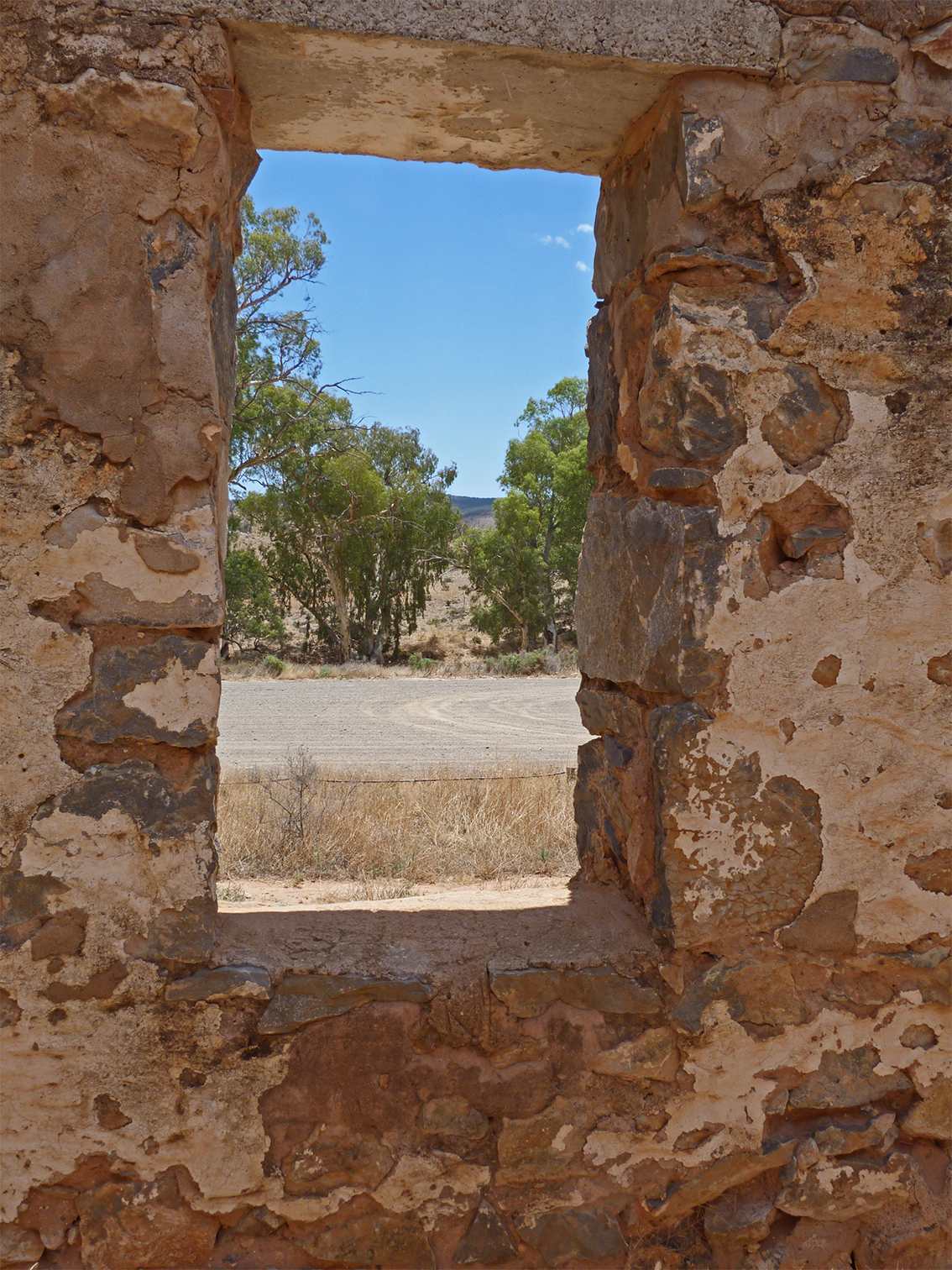
A window view of the area around Kanyaka Ruins

Dear Reader:

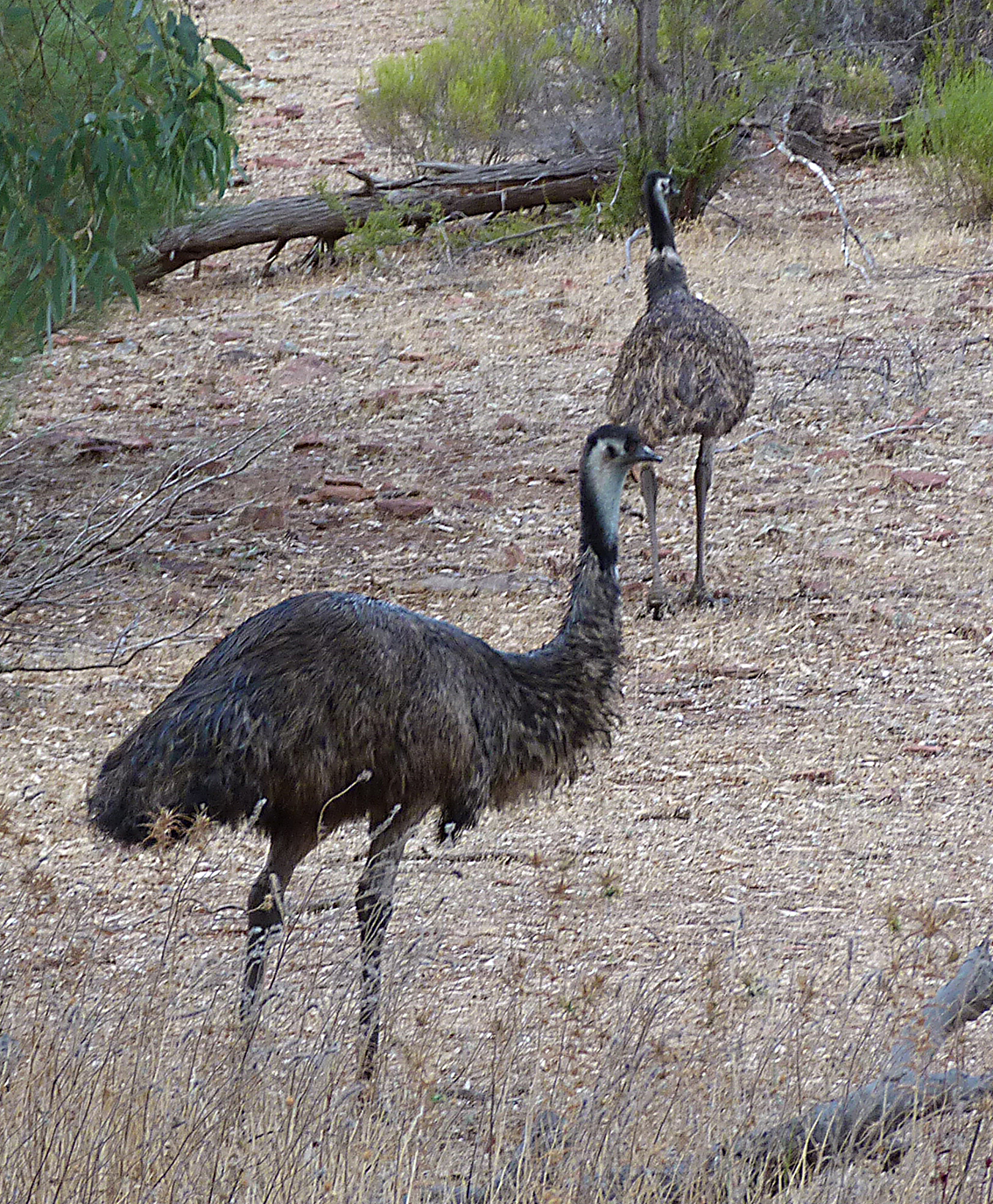
There are patches of low scrub and gravelly, ochre shaded soil on either side of the dirt road leading to the ruins. We are not expecting to see much wildlife on this exposed track. A pair of adult Emus surprise us as they dash across the road and I have just enough time to grab the camera from the console and fire off a few frames.

Driving into Kanyaka Ruins

Pair of Emus

We are driving along the entrance track to Kanyaka Ruins between Quorn and Hawker in South Australia’s Southern Flinders Ranges. This area is the ancestral home to the Barngarrla people. Kanyaka (most likely meaning ‘place of stone’) was originally established as a cattle station in 1852 by Hugh Proby who tragically died in the flash flooding of the nearby Willochra Creek. At its height, under later ownership, Kanyaka housed up to 70 families and ran sheep rather than cattle.

Ringneck Parrots

We have timed our arrival for mid-afternoon in order to have lunch at the ruins, explore the area then search for wildlife in the cooler hours before sunset. Our planning is rewarded as a small flock of Ring-neck Parrots settle a few hundred metres away amongst some wild grasses. With the parrots intent on their feeding, I am able to get close enough for an acceptable shot.

Apostle Birds

Nearby in the shade of a eucalyptus grove, I spot a pair of medium sized grey and brown birds fossicking amongst the leaf litter. On closer examination, I recognise them as Apostle Birds; a species I have never encountered around the Adelaide area where I live.

Small mob of Western Grey Kangaroos near the highway

With the sun getting lower in the sky it is time to leave in order to reach Hawker before dusk. Driving at night or in low light conditions is a recipe for disaster around the Flinders. With so many kangaroos in the area it is easy to have a collision, which can be devastating for both wildlife and driver alike. As if to emphasise the point, we pass a small mob of Western Grey Kangaroos, some with joeys in the pouch, feeding ­close to the highway.

Yellow-footed Rock Wallaby on steep hillside

After resting overnight in Hawker we will head into the heart of the Ranges and search for Yellow-footed Rock Wallabies in the steep gorges. However, that is a story for another time.

Cheers

Baz

Additional notes

This is a long drive from Adelaide but easy walking and quite suitable for families and seniors 

Please pass on this blog title and or contact information (URL) to any person or organisation with an interest in taking walks and enjoying wildlife in SA.

Click on the links below to see more South Australian stories and pictures in my Weekend Notes articles as well as locating similar blogs on Feedspot’s top 20 Australian wildlife blogs.

https://www.weekendnotes.com/profile/651267/

https://blog.feedspot.com/australian_wildlife_blogs/

Maslins and Blanche Point to Port Willunga…a rewarding short walk

12 Mar

Dear Reader:

It is glorious summer’s day, not too hot and a gentle sea breeze. The view from the clifftop is spectacular. The outline of Gull Rock and surrounding shallow reefs are clear cut against an impossibly blue ocean. Inland, the view is quite a contrast with farmland, scrub and distant, low hills reflecting the dry shades of an Australian summer.

Gull Rock from the clifftop

Farmland, Raven and Hills

There are Little Ravens and Red Wattlebirds in the trees alongside the road leading to the carpark. In addition, I can see an adult Singing Honeyeater feeding one of its fledged chicks in the scrubby bushes near the entrance to the downhill trail. As I scan the ocean there is a pair of Bottlenose Dolphins far out to see patrolling the edge of a reef or seagrass meadow.

Reefs and seagrass from the clifftop

Singing Honeyeater

From the Blanche Point/Maslins hilltop carpark there are two ways to reach Port Willunga. The hilltop track is self-explanatory, or you can walk down the steps to the shore and follow the beach. The beach walk has two special features: take a mask and flippers to explore the shallow inshore reefs or examine the rock formations and fossil beds along the route.

Walking along the beach at low tide

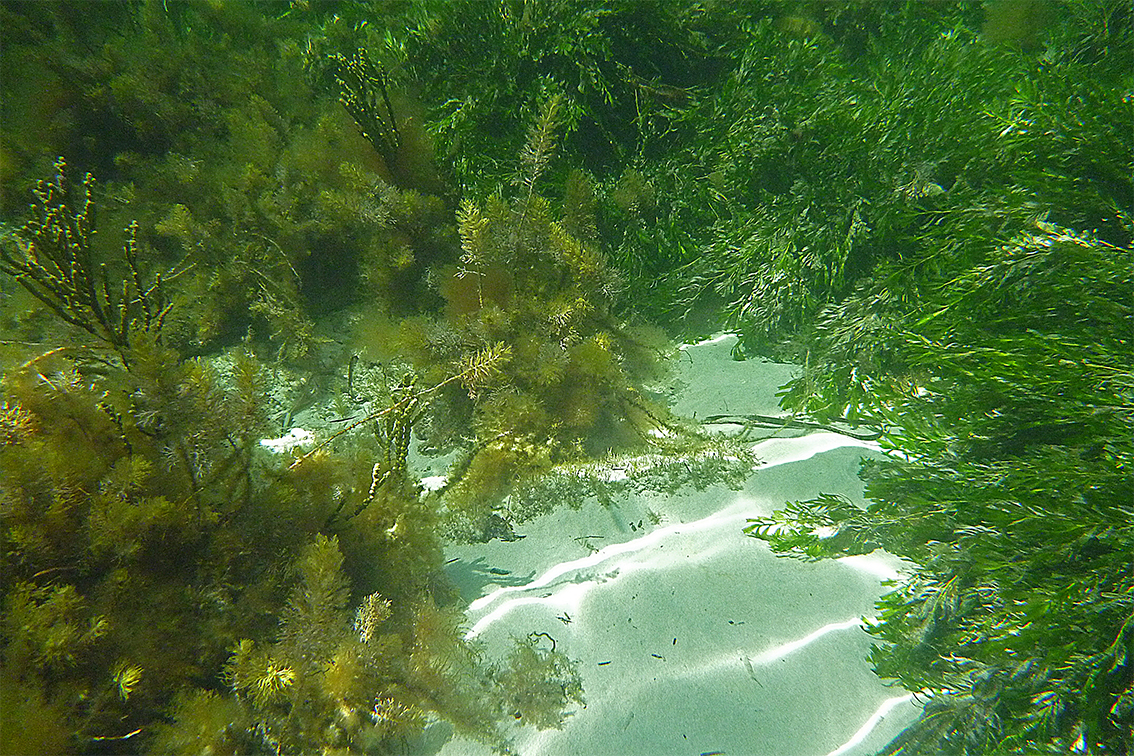
Seagrass and brown algae: an underwater view

Today, I take the path which winds along the top of the cliffs then dips down towards the Willunga Creek outlet where there is a lovely patch of scrub and some old ruins. As I walk along this section of the trail I can hear Singing Honeyeaters and catch sight of a flock of Yellow-tailed Black Cockatoos feeding on pine cone seeds.

Willunga Creek where it meets the sea

Yellow-tailed Black Cockatoos

Suddenly, the birds scatter in apparent panic as a Nankeen Kestrel lands on a power pole. The bird sits for a while and I try to get close enough for a clear shot. Finally I have to settle for a long distance telephoto image. Later, on review, I am quite pleased with the result from my Nikon P900 at this range.

Nankeen Kestrel

Just as I am about to leave the scrub and creek to head up to the restaurant I notice a parenting group of Australian Black Ducks emerging from the reeds. A lovely way to end my walk before indulging in some Calamari and battered fish at the Star of Greece Restaurant. The restaurant and nearby sheltered lookout have lovely views over the Port Willunga Beach, the fringing reef and the old jetty piles.

Remains of the old Port Willunga jetty

Cheers

Baz

Additional notes

This is a moderate fitness walk with parking and other facilities nearby at Port Willunga. It is dog friendly.

Please pass on this blog title and or contact information (URL) to any person or organisation with an interest in taking walks and enjoying wildlife in SA.

Click on these links and see more South Australian stories and pictures in my Weekend Notes articles as well as locating similar blogs on Feedspot’s top 20 Australian wildlife blogs

https://www.weekendnotes.com/profile/651267/

https://blog.feedspot.com/australian_wildlife_blogs/

https://www.onkaparinganow.com/News-listing/Iconic-cliff-top-path-for-Port-Willunga

Goolwa Barrage (1)…Seals, Kites and Pelicans

18 Feb

Seals, Kites and Pelicans

Australian Pelican

Dear Reader:

As I approach the barrage, which separates the fresh water flowing down the Murray from the salt water of the Coorong, I notice quite a lot of bird activity. Pelicans are flying low in the sky and there are both Ravens and Mudlarks scavenging along the rocky banks.


Mudlark or Murray Magpie


Little Raven

The Goolwa barrage is a ten minute drive from the town of Goolwa around 80 kms south of Adelaide. It is the last of a series of locks and barrages that control the flow of the Murray River along its entire length. They were originally intended to make the river more navigable for the elegant paddle steamers that once plied these waters carrying essential goods. Information about them is provided along the path leading from the car park to the  barrage. 


Information

Walkway to barrage

A row of statuesque Norfolk Pines lines the roadway to the barrage and I scan them for more birds. Sometimes I have seen kestrels and hawks perched in the uppermost branches but today I am surprised by an even larger raptor; a Whistling Kite. It seems that food must be plentiful with so many predatory bird species in the area.


Whistling Kite

Pelican and Long-nosed Fur Seal often called New Zealand Fur Seal

When I reach the barrage, I am greeted by a variety of wildlife around the first section which leads out into the river. There are Great Cormorants on the adjacent bank, a Long-nosed Fur Seal basking in the muddy water closer to the main part of the barrage and a seal and Australian Pelican near one of the old wooden gateways. A nice start to my walk out to view the barrage proper………..to be continued in my next post

Cheers

BAZ

Additional notes

This is an easy walk and drive which is quite suitable for families and seniors with public toilets, barbecues, parking and other facilities nearby.

Please pass on this blog title and or contact information (URL) to any person or organisation with an interest in taking walks and enjoying wildlife in SA.

Click on these links and see more South Australian stories and pictures in my Weekend Notes articles as well as locating similar blogs on Feedspot’s top 20 Australian wildlife blogs

https://www.weekendnotes.com/profile/651267/

https://blog.feedspot.com/australian_wildlife_blogs/

Title:Goolwa Barrage(2)…..Hunters and Hitchhikers or ‘Bluey Takes a Rest’

4 Feb

Dear Reader:

In my previous post I took you from the car park to the beginning of the Goolwa barrage. Now we will explore the main part of the barrage where the water is streaming through the gates at an unprecedented rate due to severe flooding upstream.

View along the barrage

With the floodgates open there is an overabundance of food being washed out into the Coorong. The freshwater is laden with silt and leaves a brown stain across the seaward side of the barrage which actually extends to Goolwa Beach and Victor Harbor.

Enlargement of first image showing interspecies rivalry

Long-nosed Fur Seals, Australian Pelicans and Great Cormorants are positioned to ambush fish and any other food as the water cascades through the gates. On every level this is quite a spectacular natural event and onlookers, armed with phones and cameras, are making the most of the situation.

Too much of a good thing

I spend some time taking shots that I hope will capture the essence of this event as well as a few close-ups of the different species. When animals are engaged in feeding behaviour they often ignore people which creates the perfect opportunity for more intimate images.

Sub-adult Pacific Gull (still has darker markings)

Floats with Great Cormorants

Swallow at rest

It is time to leave. I stroll back along the walkway watching swallows, cormorants and occasional Pacific gull perching on bollards, chain link and floats. I am halfway back to the bank when I notice an elderly couple pointing excitedly at the area where I was just watching the seals.

Catching a ride

Close up of previous image

Time to go

Intrigued, I walk back to the viewing platform and to my surprise they have spotted one of the most unusual examples of animal behaviour I have ever witnessed. A few metres below us, a seal is resting in the water, catching the sunlight on a raised flipper with a Blue-tongue Lizard lying across its body. I can only assume the reptile is taking a break from the swiftly flowing water. The lizard stays for a few minutes before ‘disembarking’ and continuing its journey towards the far bank. Extraordinary!!!!

Historic Goolwa Hotel

On that note, I ‘call it a day’ and walk back to the car. My next stop will be the historic township of Goolwa. There is a wonderful gallery called ‘Art Worx’ where I love to browse and sometimes pick up something special for the house or garden. Finally, the Goolwa Bakery, for a chicken and vegetable pie and perhaps a vanilla slice to follow. Always a pleasant way to wind up any trip to this fascinating waterside location.

Cheers

Baz

Additional notes

This is an easy walk/drive which is quite suitable for families and seniors with public toilets, barbecues, parking and other facilities nearby.

Please pass on this blog title and or contact information (URL) to any person or organisation with an interest in taking walks and enjoying wildlife in SA.

Click on these links and see more South Australian stories and pictures in my Weekend Notes articles as well as locating similar blogs on Feedspot’s top 20 Australian wildlife blogs

https://www.weekendnotes.com/profile/651267/

https://blog.feedspot.com/australian_wildlife_blogs/