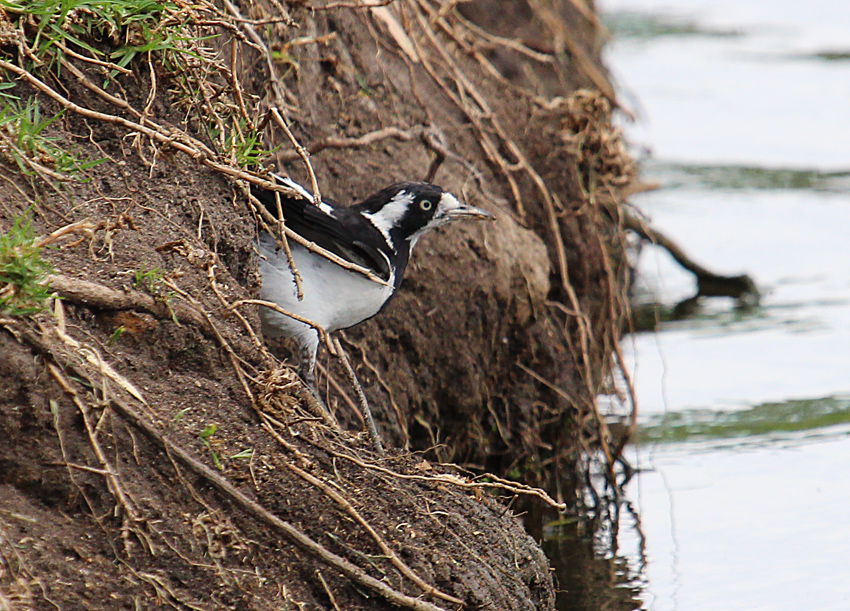
Aldinga Scrub

21 Dec

The tawny frogmouth is absolutely motionless. At first glance, I can’t see the bird even though my guide has pointed out its position. Eventually I locate it amongst the foliage exploiting its extraordinary camouflage and the tactic of remaining statue-still to remain ‘hidden in plain sight’. I am using a long lens which allows me to zoom in close enough to capture the delicate whisker-like structures around its beak; perfect for sensing insects at night. “Sometimes there are two together,” she informs me. “And we’ve had a nest with young.” I make a mental note to ask her to give me a call when that happens; photographing a frogmouth and its chicks would be something special.

A tawny frogmouth exhibits its amazing camouflage

A tawny frogmouth exhibits its amazing camouflage (Click to enlarge all images on page)

I am on the edge of the Aldinga scrub; a patch of remnant bushland that hints of what this coastal plain would have looked like before the early settlers arrived with their ploughs and sheep. Aldinga and its coastal neighbour Silver Sands are just an hour’s drive from the centre of Adelaide and a favourite haunt of mine for an entirely different reason. No more than a kilometre away is one of my favourite snorkelling destinations. A reef to dive on, long white beaches for swimming and surfing and a patch of scrub to explore; make this an ideal destination for a day trip from the city.

A half full water hole attracts a wide variety of animals

A half full water hole attracts a wide variety of animals

I continue to walk along the road that borders the scrub. The houses on the urban side of the track blend in well with the bushland ambience. Obviously the residents have chosen this location because of its natural setting and the gardens are filled with a variety of native plants that attract insects and birds. In a huge gum that towers over the track I can hear the raucous screech of a wattle bird high in the canopy. The largest of all the honeyeaters, wattle birds often feed on leaf bugs and nectar from eucalyptus flowers. This one is hopping between the branches calling loudly while foraging amongst the leaves.

A wattle bird wipes its curved beak clean on a branch.

A wattle bird wipes its curved beak clean on a branch

A post and wire fence separates the road from the scrub and a host of tiny birds are twittering and flitting between the trees just inside the reserve. I find a likely spot and sit quietly, balancing the camera and lens carefully on my knees. Eventually, one of the tiny birds perches on a bare branch a dozen metres away. I track the fluffy bundle of feathers and take a quick series of shots as it hops and turns before taking flight. Perhaps one frame will freeze its incessant motion and allow me to identify the species. On reviewing the image my best guess is a species of thornbill.

Thornbil species

Thornbill species

I am more than pleased with my stroll along the edge of the scrub. The frogmouth, wattle birds and tiny finch-like birds were more than I expected. But as I turn to walk back to the car I hear the familiar thump of a kangaroo’s powerful back legs hitting the hard packed earth of the track. An adult grey kangaroo and its joey bound across the road and pause by the fence-line. I watch them as they survey the obstacle for a few seconds then the joey squeezes between the strands of wire while the adult clears it with a single bound. They stop and look around before disappearing into the thick scrub.

A joey balances on its tail and lifts its back legs before squeezing through the fence

A joey balances on its tail and lifts its back legs before squeezing through the fence

The afternoon light is fading and I have one last stop to make before driving home and it has little to do with wildlife. Opposite the Aldinga pub there is a charming café called the Old Vine. It has a colonial cottage feel about it and the meals are interesting, tasty and sourced from local produce but the main draw card is a citrus tart that is as good as any I have eaten anywhere in the world…and I have sampled quite a few.


Come visit

Merry Xmas

Baz
An Island in the Lake

17 Dec

Dear Reader:

Sunday morning is for bike riding. A time to drop my little point and shoot into the non-lycra shorts, haul the mountain bike out of the shed, and cycle through Adelaide’s extensive parklands or along the linear park trail which follows the Torrens River.

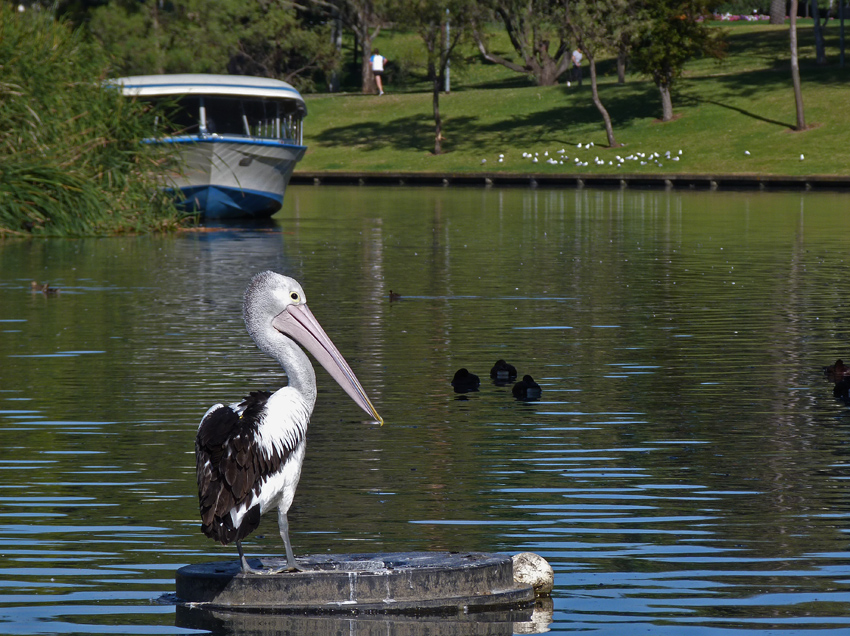
Torrens lake with Popeye and pelican

Torrens lake with Popeye and pelican (click to enlarge all images on this page)

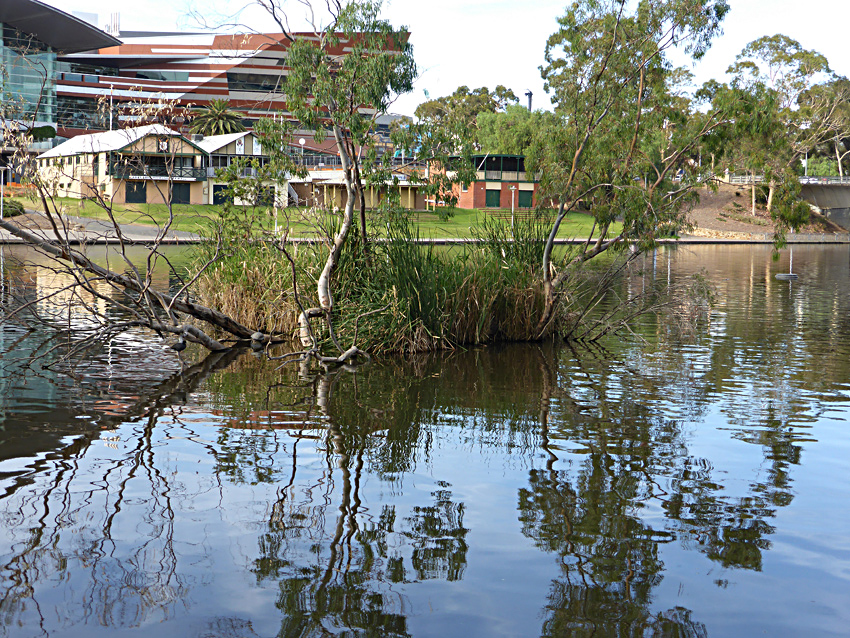
On this particular morning I thought it would be nice to ride around the Torrens Lake which sits on the northern edge of the city by the picturesque Adelaide oval. There is always a wide variety of wildlife on the banks of the lake and my long-time photographic adversary, the water rat, can sometimes be found near the tiny island opposite the paddle boats. In fact, on my last excursion around the lake I caught sight of one of the elusive little rodents paddling into the reeds that form the bulk of this tiny refuge.

Island with convention centre in the background

Island with convention centre in the background

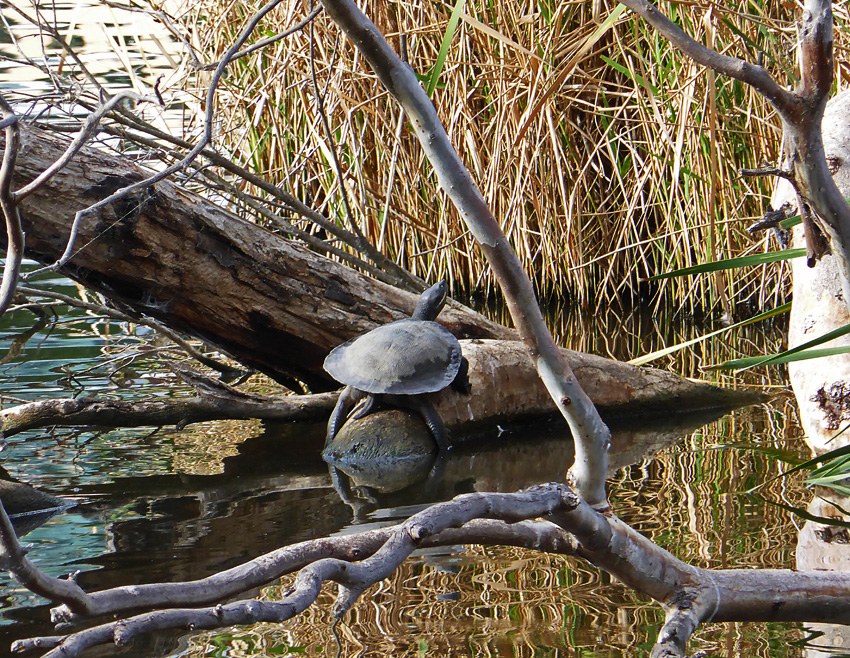
Unfortunately my journey past the island yielded no results on the water rat front but it did turn up a couple of quite unexpected visitors; a pair of nesting mudlarks with fully fledged young and a long necked turtle basking on a partially submerged tree branch. However, as the island is a good 40 metres from the bank and the targets fairly small, capturing good, clear images was always going to be a problem. Nevertheless, I fired off a series of shots as the birds and certainly the turtle might be gone before I could return later in the day armed with a DSLR and long lens.

Snake neck turtle basking

Snake neck turtle basking

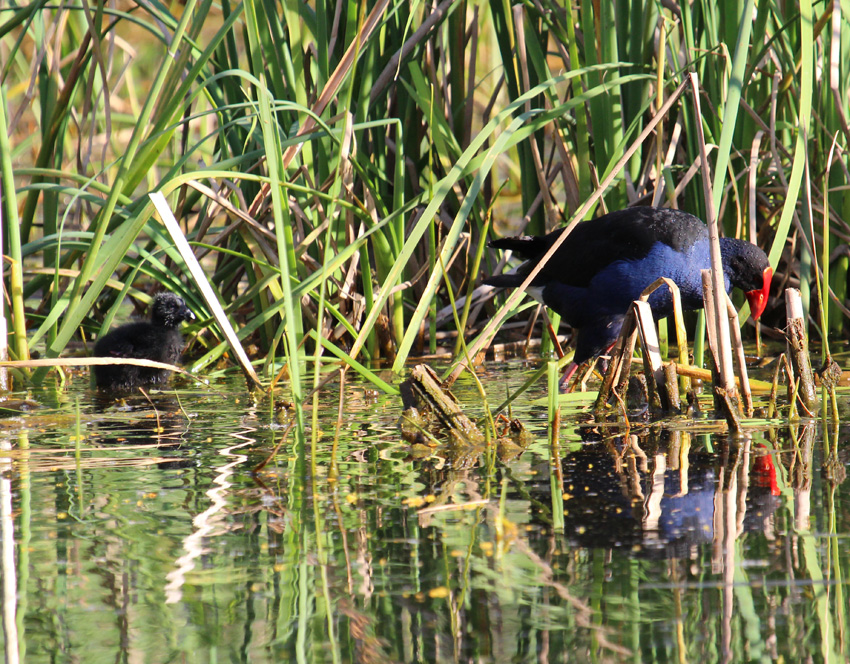
Several hours later, in somewhat overcast conditions, I parked my car by the weir alongside the golf course and iconic Red Ochre restaurant at the northern end of Memorial Drive and walked along the path towards the little island. The banks along this part of the lake are thick with tall reeds and both purple swamp hens and dusky moorhens use them for shelter and nest building materials.

Purple swamp hen with chick near reed bed

Purple swamp hen with chick near reed bed

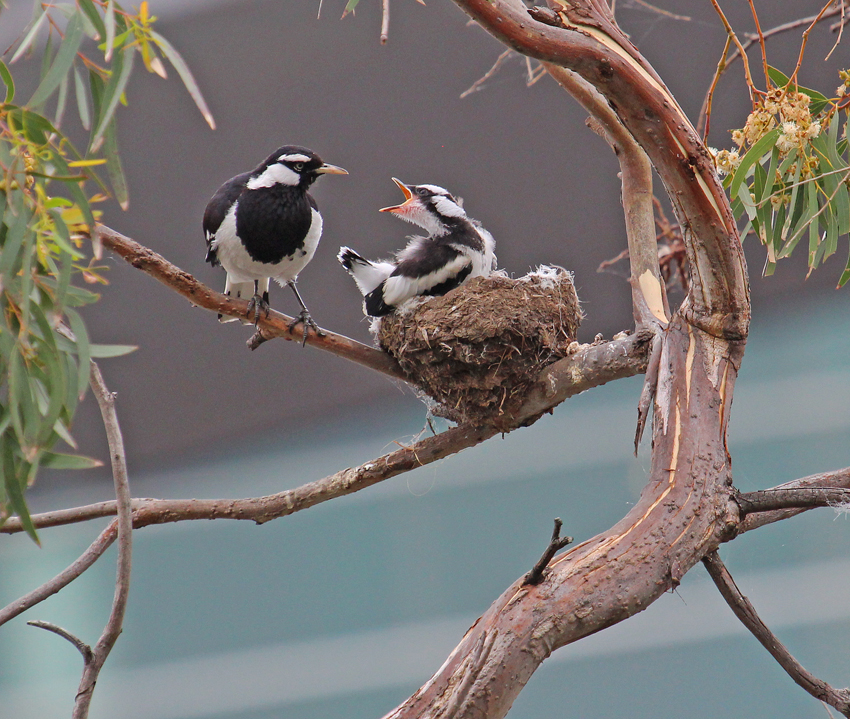
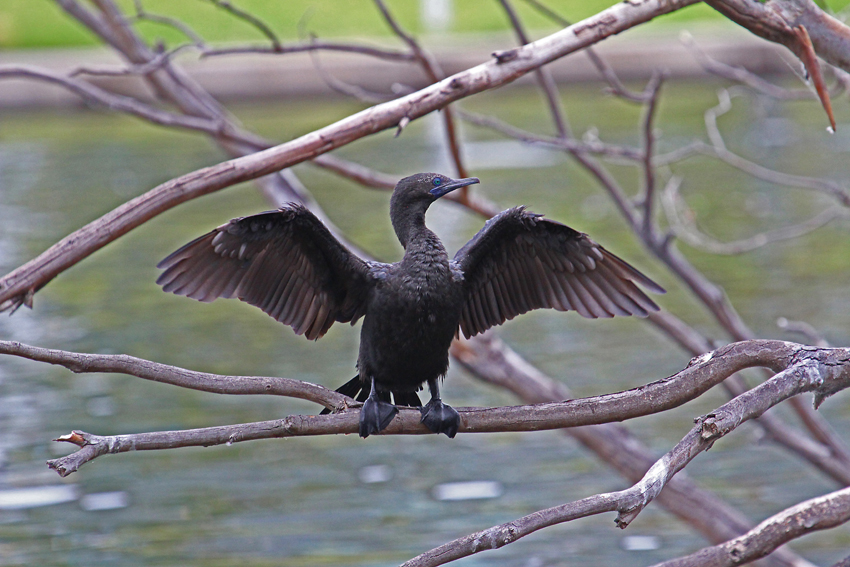
Despite many distractions, I finally reached the section of bank opposite the island and set about photographing the magpie family. The adults were fossicking for grubs in the muddy banks close to where I was sitting and feeding the young as they squawked for food in the crowded nest. Below the nest, a pair of black cormorants perched delicately on a dead branch stretching out the­­ir wings to dry after hunting carp in the lake.

More please

More please


Mudlark or Murray magpie forging in the bank for grubs to feed young

Mudlark or Murray magpie forging in the bank for grubs to feed young


Little black cormorant drying wings

Little black cormorant drying wings

After about 30 minutes, a large black swan that had been cropping the grass nearby waddled over to keep me company. Swans can be aggressive and this one certainly had something in mind as it settled no more than a metre away and glared at me intently. Over the years I have often observed large groups of birds congregating around a local personality who       I refer to as John Swan. He does not feed them but simply spends time with the birds; perhaps this particular swan mistook me quietly sitting on the bank for John. Finally the swan’s enthusiasm waned and it nonchalantly wandered off to crop the grass leaving me to finish documenting the tiny island’s wildlife community.

What's your problem

What’s your problem

Enjoy the festive season

Cheers

Baz

Ingalalla Falls

13 Dec

Dear Reader;

Ingalalla falls does not actually cascade down the dark boulders to the pools below. This is South Australia where water is scarce and in the summer months rain is a rare blessing. But it is a waterfall and as such attracts a varied collection of wildlife as well as providing a few interesting walks and the perfect setting to enjoy a picnic in the bush.

Yankalilla's main street with bakery and surrounding hills visible

Yankalilla’s main street with bakery and surrounding hills visible (click on all images to enlarge)


The falls are about 10 kilometres off the main south road near the coastal hamlets of Normanville and Yankalilla. Both towns have superb little bakeries where one can quickly stock up on a range of ‘goodies’. My choice for this expedition included a gourmet chicken, potato and cheese pie with a generous serve of bee-sting cake (a legacy of our early German settlers) to follow.

Ingalalla falls desceding into the creek

Ingalalla falls descending into the creek


The dirt road from Normanville passes through a mixture of open bushland and wheat fields with a superb links golf course near the main highway. And just few kilometres down the track I noticed a boulder with a metal plaque that celebrated the life of a local settler, mariner and pastoralist William Field, adding an unexpected historical perspective to the day.

A little bit of history

A little bit of history


Where the native scrub started to merge with pine plantations, a small signposted track leads to a sheltered camping area complete with a simple shelter and scattering of wooden benches and tables. From there, a walking trail follows the little creek to the falls. On the right side of the path a steep hillside covered with bracken, native shrubs and tall stringy barked eucalypts rises abruptly from the creek.

Bushland trail characterised by  eucalypts, bracken and low bushes (2)

Walk to the falls showing eucalypts, bracken and low bushes


The rustle of leaves and chirping calls indicated that the thick cover was home to many small bird species but the dense foliage made identifying them somewhat difficult. Eventually, I adopted the sit still and wait strategy which yielded results as a yellow faced honeyeater and grey fantail soon came within camera range.

Grey fantail perching near the creek after eating an insect

Grey fantail perching near the creek after eating an insect


Yellow faced honeyeater in thicket

Yellow faced honeyeater in thicket


Although it was a mild day for summer, a few insects were active around the creek. Both dragon and damsel flies hovered amongst the reeds and several species of butterflies alternately fed on small flowering shrubs and rested amongst the leaf litter.

Wattle trunk scarred by boring beetles

Wattle trunk scarred by boring beetles


Meadow argus butterfly camouflaged in leaf litter

Meadow argus butterfly camouflaged in leaf litter


The rest of my walk was equally rewarding with a pair of yellow tailed black cockatoos making a sudden appearance in one of the nearby pine trees and a couple of wester grey kangaroos bounding across the track as we drove back to the road with the late afternoon light enhancing the golden wheat fields.

Wheat fields on the edge of the track to Ingalalla

Wheat fields on the edge of the track to Ingalalla


I hope you enjoyed this recollection

Drop me a line with any suggestions, criticisms or compliments

All are welcome


Baz

Crossing the Creek

30 Nov

Dear Reader:

In my other life I am a teacher and my school has the unique advantage of having a creek running through the centre of the campus neatly dividing us into two quite distinct entities. I say advantage but to those less enamoured by the lure of nature it is seen, more as a barrier; to each their own. Every day I cross the creek on at least a half dozen occasions and every day I see something interesting that I point out to my students in the hope that it might promote a little engagement with the non-digital world. Duelling magpies, mating dragonflies and the occasional brown snake have all been prime time features.

Baz teaching creek studies on the bridge

Baz teaching creek studies on the bridge (click all images on page to enlarge)


Education aside, the creek is a wonderful resource for the people who live in the area and walkers, joggers and cyclists alike use the pathways that run along the banks. Currently, the creek is starting to dry out as spring fades and summer breathes its hot northerly winds across the city. But there is still a diverse mixture of wildlife taking advantage of the receding water. Both black and maned ducks have raised their ducklings in the small pools near the school bridge and chestnut teal with their striking markings are not uncommon.

Black ducks and chestnut teal

Black ducks and chestnut teal


My creek runs through the suburb of Mawson Lakes which has been fashioned around a series of artificial lakes that in themselves are home to various water birds, turtles and huge carp. The central shopping area is a good place to start a walk as it has a nice little cafe overlooking the main stretch of water and the coffee is good. Mawson Lakes is a twenty minute train or bus ride from the city and the train station sits on the northern edge of quite a sizeable expanse of swampy wetland.

Mating dragonflies

Mating dragonflies


The local council have planted bushes and trees along the length of the creek which attract a variety of birds. Rainbow lorikeets seem to be around the area throughout the year with the greatest numbers occurring when the eucalyptus trees are flowering. They provide these raucous little parrots with the nectar, seeds and blossoms that are the bulk of their diet.

Rainbow lorikeet feeding on eucalyptus blossoms

Rainbow lorikeet feeding on eucalyptus blossoms


During my most recent foray across the creek it was large water birds that dominated the reedy watercourse. Ibis and herons are quite common but one of the children rekindled my faith in the observation abilities of twelve year olds when she noticed that one of the ibises had a different shaped beak which it was swinging through the water rather than probing. It turned out to be our first spoonbill for the year.

Spoonbill feeding

Spoonbill feeding


Until our next chat

Baz

The Old Talisker Mine

15 Nov

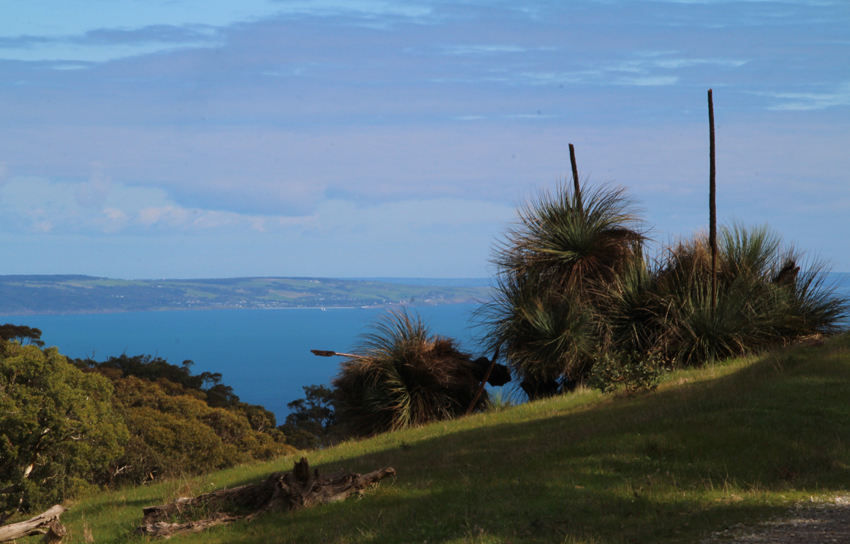
The view from the top of the hill is spectacular. Soft winter pasture still covers the ground in sharp contrast to the spiky Xantheria or grass plants that characterize the harsh coastal scrub and the blue of Baxter’s Passage and hazy profile of Kangaroo Island beckon on the horizon.


Backstair's passage and Kangaroo Island

Backstair’s passage and Kangaroo Island (double click to enlarge all images on this page)


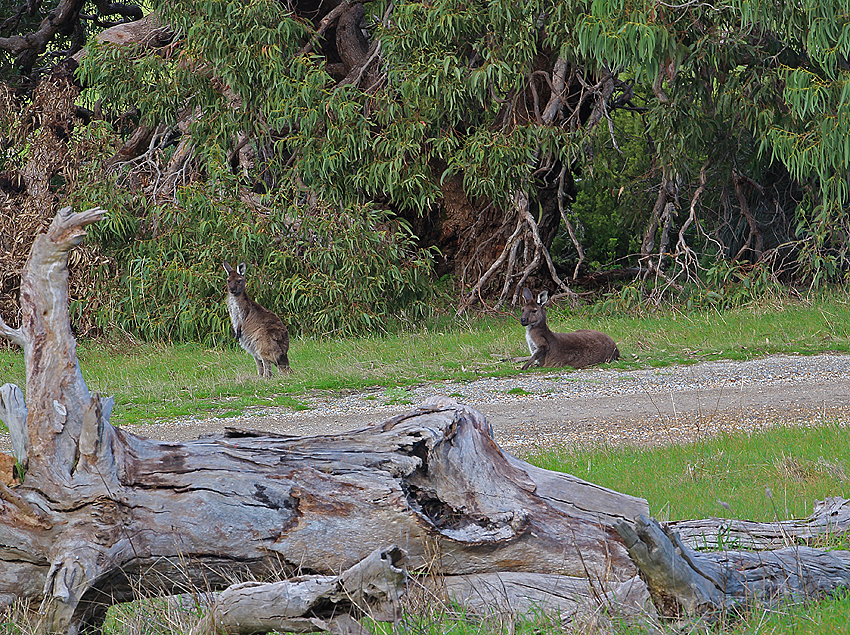
As I get out of the 4WD to capture this image I notice a pair of western grey kangaroos on the edge of the scrub no more than 20 meters from the vehicle. They are wary, ears twitching and sniffing the air. One is considerably larger than the other. They are probably a mother with a joey at heel and her pouch looks a little enlarged suggesting that she may have another little one tucked away. There could even be two in the pouch; one permanently attached to the nipple while the other simply enjoys the ride. In good times kangaroos can multiply quickly.

Western greys by the track

Western greys by the track


I am in the Talisker National Park about an hour and a half journey from the city and 10 kms from Cape Jervis at the toe of the Fleurieu Peninsula. The park centres around a series of bush trails that surround an abandoned silver and lead mine dating from the 1860s. Old machinery, buildings and shafts add an historic dimension to an area rich in scenery and wildlife.

Crushing house and old boiler

Crushing house and old boiler


From my cliff top lookout I backtrack along the dirt roads to the entrance of the old Talisker mine site. The walking trail to the mine is not too steep but the scrub on both sides is dense and full of life. In both the treetops and bushes I can hear the calls of wrens and honeyeaters. Eventually one of the delicate little birds pauses on a branch to announce its territory.

Crescent honeyeater

Crescent honeyeater


The track ends in a small clearing where the rusted remains of crushers, boilers and old buildings mark the main site. They are all that is left of a mine that once was the workplace of dozens of miners and supported a community of 300 souls at nearby Silverton; now also long gone.

Pied currawong

Grey currawong


The buildings are surrounded by a forest of eucalypts and I can hear the more distinctive movements of a larger animal in the branches on the far side of the crushing plant. I focus my long lens on the area and start to search for the perpetrator, expecting another roo or even a possum disturbed from its daytime sno0ze. But it is a large crow-like bird that I spot amongst the leaves and branches, a pied currawong, a relative of the white backed magpies that are so common on the plains where I live. Currawongs are a group that I have rarely photographed successfully as they tend to be a little more wary than their magpie cousins.

Bush track surrounded by eucalypt forest near the park entrance

Leaving the park along a bush track


It has been quite a long day walking, driving and stalking wildlife and the ruins are a great place to sit and unpack a well anticipated lunch picked up at the local Yankalilla bakery; nothing flash, just a steak and mushroom pie and an indulgent apricot tart to round off the meal. Good South Aussie ‘tucker’ to fuel up for the walk up the hill and drive home.


Cheers

Baz                  

A Stroll with a New Camera

1 Nov

Dear Reader:

Like all photographers I enjoy equipment. Every so often I can even justify buying a new camera. With an overseas trip to Italy looming I needed a light compact zoom that would fit easily into my pocket. In truth I had been thinking of getting the same kind of equipment to carry when cycling along the parkland trails that I enjoy each weekend. Too often, I had decided not to take my DSLR or super-zoom because thy were that bit too cumbersome or the weather looked threatening. And on nearly every occasion some exquisite little wildlife moment went un-recorded.

Small lake near McIntyre Rd f3.3 @1  320 sec ISO100, click to enlarge

Small lake near McIntyre Rd; f3.3 @1 320 sec ISO100, click to enlarge all images on this page.

Australan grebe f6.4 @ 1 200th sec ISO  400; click to enlarge

Australian grebe; f6.4 @ 1 200th sec ISO 400


A little compact would serve both purposes and popping a plastic bag in my bike pants (not the lycra variety I assure you) would take care of any wet weather problems. My camera of choice was a Panasonic TZ40, a pocket sized camera with a respectable 20x zoom. They were on special with a new model coming out and my old Pana’ FZ40 had always proved a reliable unit capable of producing some extremely sharp images.

Sacred Ibis reflections f5.9 @ 1 320th sec ISO 100

Sacred Ibis reflections; f5.9 @ 1 320th sec ISO 100

Red flowering gum, f5.9 @1 200 th sec ISO  100

Red flowering gum, f5.9 @1 200 th sec ISO 100


Armed with my new acquisition, I chose some familiar turf to see what the little camera could do. Tea tree Plaza is a large shopping mall on the north eastern fringe of Adelaide’s suburbs. There are some nice cafes to get an early morning ‘cuppa’ before you set off across the adjacent park to intersect Dry creek by the bridge over Montague Road. From there, a network of paths, trails and tracks wind south along the creek towards the coast or north into the foothills.

Rainbow lorikeets examining tree hollow f6.4 @1 125  th sec ISO 250

Rainbow lorikeets examining tree hollow; f6.4 @1 125 th sec ISO 250

Mudlark collecting nesting material;  f2.9 @ 1 125th sec ISO 400

Mudlark collecting nesting material; f2.9 @ 1 125th sec ISO 400


I decided to take the southern bike trail that follows the creek down to McIntyre road then work my way back to the bridge along the bush tracks that hug the other side of the waterway; a nice journey of around 3kms that includes several small lakes, patches of quite dense scrub and some towering old river gums.

Maned duck with chicks;   f5.6 @ 1 80sec ISO 160

Maned duck with chicks; f5.6 @ 1 80sec ISO 160

Black duck taking off;  f6.4  @1 250 th sec ISO 100

Black duck taking off; f6.4 @1 250th sec ISO 100


In this post, I will not describe each particular wildlife encounter, instead the pictures and brief captions can tell the story. There was a little post image tidying up through Photoshop but in my humble opinion the little camera did a good job as a backup and will certainly sit in my pocket on many a bike ride or travel adventure in the future.


Until our next chat

Cheers

Baz  

Wildlife and Pub Food at the Port

25 Oct

Dear Reader;

It is a mild spring afternoon and there is barely a breath of wind to ruffle the waters of the inner harbour. A pair of sooty oyster catchers are foraging between the exposed rocks on the southern embankment. They are using their powerful blade-like beaks to prise shellfish from the rocks and dig in the sand for worms and crabs. The bright red beaks and eyes look like they have been painted by an artist with an exaggerated disposition for contrast.

IMG_4312

Sooty oyster catchers foraging at low tide (click on all images to enlarge)

IMG_4326

Soon to be lunch


I am walking around the wharves and shoreline of Port Adelaide. Originally nicknamed Port Misery by the early settlers who came ashore amongst the mangroves, mud and mosquitoes that once dominated the area; the Port has undergone many changes. Once a lively harbour that berthed dozens of ships delivering the provisions to establish a new colony; it is now a quieter, quayside community. People now come to the Port from the city, just 15 minutes away, to visit the maritime museum, shop at the weekend markets or go for a cruise along the Port River to catch sight of the world’s only urban dolphin pod.

IMG_4337

Dolphin cruise ship moored at the wharf


From the foreshore I walk past the pub and on to the old Birkenhead Bridge, the first bascule or lifting bridge in Australia. Glancing down at the old jarrah poles, driven hard into the river bed where they once stood as moorings, I notice that several silver gulls have chosen the iron clad posts as nesting sites. Every so often one of the birds lifts off its scruffy nest and checks the eggs, sometimes giving one a little push with its beak, perhaps to keep the distribution of heat even.

P1060700

Nesting silver gull

P1060692

Silver gull adjusting egg position


I watch the birds for half an hour. While one sits on the nest the other flies off in search of food further along the shoreline amongst the same rocks the oystercatchers were exploring just a little while ago. The foraging gull tugs on the end of a tube worm protruding from the fine sand and mud. It is about to extract the hapless invertebrate when a mudlark, usually a woodland species, emerges from a clump of nearby bushes and relieves the seabird of its prize.

IMG_4342

Mudlark feeding along the shoreline


Like the gull and mudlark I figure it’s about time for lunch and head for the Birkenhead Tavern and one of the best chicken schnitzels the Port has to offer.

the pub

Birkenhead tavern

Sorry, only one post this month!!!!!

Have been travelling overseas

Until next time

Cheers

Baz

A Bite at Grange

19 Sep

Dear Reader:

A lone silver gull is flying parallel to the shore just above the Norfolk pines that grow along the Grange beach front. Suddenly it veers off course, dipping towards one of the trees and letting out a loud, raucous shriek. This unusual behaviour encourages me to stop and take a closer look through the telephoto lens. And there, perched serenely on the topmost branch is a beautiful nankeen kestrel surveying its stretch of prime coastal real estate.

Nankeen kestrel looking for prey

Nankeen kestrel looking for prey (click all images to enlarge)


Nankeen kestrels are small falcons that are widely distributed across the country. They usually live in rural or outback regions where they hover over fields and open bushland preying on small mammals, reptiles and occasionally taking birds in the air; which explains the gull’s nervous disposition. Seeing one in an urban area is a really quite unusual. For the next half an hour I follow the raptor as it patrols the shoreline and dunes moving from tree tops to fence posts to survey its territory.

The Marines, beachside heritage homes

The Marines, beachside heritage homes


Grange Beach is just 15 minutes from the centre of Adelaide. An old wooden jetty, classic golden sands and heritage buildings make it an ideal place to go for a walk and grab a bite to eat summer or winter! A walking &cycling trail passes through the area winding between the seafront properties and coastal revegetation zones providing a unique blend natural and urban habitats that encourages a wide variety of wildlife.

Spotted dove

Spotted dove

Singing honeyeater in coastal scrub

Singing honeyeater in coastal scrub

The unfortunately named pigface

The unfortunately named pigface


After watching the kestrels I follow the track south. The delicate shrubs and grasses that stabilise the dunes are home to many different bird species from common house sparrows to spotted doves and singing honeyeaters. Although it is a coolish day and the insect life is in short supply a few bees and butterflies are congregating around some early blooming pigface, a common succulent in the dunes.

Grange jetty at low tide showing worm casing encrustaceans

Grange jetty at low tide showing worm casing encrustaceans


For a little variety I walk back along the beach. The tide is out exposing concrete-like encrustations of tube worms cemented to the jetty piles. A track leads from the beach to the old kiosk which is now a fashionable restaurant. My day ends with a glass of white, salt and pepper squid with sautéed scallops in the shell accompanied by a generous serve of crusty bread.

Grange Kiosk

Grange Kiosk


Until our next adventure

Baz          

I Wonder What the Neighbours are Doing?

11 Sep

Dear Reader:

It is a cool, early spring afternoon. I can hear annoyingly cheerful birds singing in the white cedars that line my street but I am bored stupid. Home from work with a cold but certainly not sick enough to stay in bed. What to do? Going for a walk along the beach or up in the hills would be foolish and daytime television is just one step above poking my eyes with a sharp stick. Decision made! I shall stroll up to the main road, pick up a magazine and have a cup of coffee with an inordinately unhealthy pastry at one the cosy little cafés that are dotted along Prospect Road.

IMG_4175

A mudlark finds grubs in the gutter (click all images to enlarge)


I am halfway through the door when I stop and think that it might be worth taking the camera along, though the chance of seeing something unexpected on a quiet suburban street at midday; is not very likely. It turns out that I am quite mistaken and my two hundred metre walk to the main drag is filled with interesting moments.

IMG_4174

Rainbow lorikeet feeding on a late flowering gum


First encounter; a pair of rainbow lorikeets are alternately feeding on a late flowering gum and taking turns to performs some trade-like renovations on a hollow branch in a nearby cedar. One of the parrots uses its powerful, curved beak to scour the edge of the entrance while the other pops in out and removing old bits of nest lining. They seem quite oblivious to my presence and allow me to get quite close.

IMG_4185

Rainbow lorikeets house hunting


I leave the rainbows to their reno-project and move further up the street. A Murray magpie is sorting its way through the leaf litter and other detritus deposited in the gutters by recent rains. Every so often it stops, cocks its head to one side and gulps down a worm or bug. Ironically, there is a classic white backed magpie sitting on the power line above watching its little namesake. Despite their titles, the two species are unrelated and it is only their colouring that encouraged early settlers to name the birds after the black and white European magpies. Although it is a large imposing bird this particular magpie has a serious handicap which is revealed when I take a look at its magnified image on the viewfinder. The powerful beak has been badly damaged making both feeding and defence a ‘tough ask’.

A busted beak makes life on the streets tough

A busted beak makes life on the streets tough


Even the cafe has its wildlife component as a squadron of New Holland honeyeaters perched in a courtyard tree argue over territory with the ever present miner birds and several sparrows and pigeons patrol beneath the tables in search of crumbs. But the standouts are still the rainbows and their nesting antics, which simply confirmed an unwritten rule that every wildlife photographer knows; take your camera, something will almost always surprise you.

IMG_1446

Juvenile miner bird watching out for new Holland honeyeaters


Until our next chat

Baz

Yellow Flowers on a Winter’s Day

8 Aug

Dear Reader:

Adelaide is generally blessed by an amicable climate but it does have its grey days. Usually the winter showers are interspersed with long fine periods when the sun shines through the clouds and brightens up a chilly morning. Today was not one of those days.

1 Euryops or Little Sunray

Euryops or Little Sunray (click to enlarge)

I had been staying at some lovely little units on the edge of the foothills and planning to take some shots in the gardens to promote the virtues of a South Australian winter’s day but the weather refused to cooperate. It was overcast with a little drizzle and no sign that the curtain of clouds would lift. Undaunted, I headed into the manicured grounds looking for something to lift my spirits and lend a little colour to the day. Fortunately, the perfect candidate was growing right in front of my unit in the form of a robust Euryops bush; a non native, daisy species that blooms right through the winter months.

Hoverfly landing and feeeding on blossom (click to enlarge)

Hoverfly landing and feeding on blossom (click to enlarge)

Despite the cold weather, the bush appeared to be supporting a small but diverse population of insects some of which I would normally associate with the spring and summer months. A couple of hoverflies were sitting in the centre of the flowers probing them with their stout little proboscises. These hornet coloured little insects usually flit between flowers pausing for a brief instant to feed. The cool weather seemed to have slowed the insects down a little and made them for more amenable to having their portraits snapped.

Flower spider hunting amongst petals (click to enlarge)

Flower spider hunting amongst petals (click to enlarge)

 Euryops blossoms provide are the whole world for a common flower spider. I watched through my lens as one wait immobile on a petal for several minutes then moved to another one to maintain its frozen stance, primed for a sudden jump should either prey or predator come too close. During the day I caught glimpses of several different species of flower spiders and they are certainly an interesting group of common garden animals worth exploring further.

Fly feeding on blossom (click to enlarge)

Fly feeding on blossom (click to enlarge)

 The winter months see a decrease in virtually all arthropods especially spiders and insects. The common bush flies that can be a nuisance in summer and early autumn are a welcome absence in the winter. However, several of the more solitary species of flies seem to persist through this chilly season. Their iridescent green bodies and bright red eyes provide a striking contrast to the bright yellow flowers as they probe their dense centres searching for nectar in the delicate folds.

 Breakfast for two (click to enlarge)

Breakfast for two (click to enlarge)

 Perhaps the most prolific insects that I saw on this grey, chilly morning were the common woolly bear caterpillars that appeared to be munching both the leaves and flowers of my Euryops bush. These furry little creatures grow into black and white tiger moths and seem to be immune to the cold weather that decimates other insect populations. Indeed, I seem to remember that they can survive temperatures below freezing because of the glycerol, a form of anti-freeze, they produce.


Then the rain came down and sent me scampering inside for a glass of mulled wine and time to review the images I had captured while thinking about the next sunny day.


Until next time

Baz