Photo Reflections 2

16 Nov

Dear Reader:

South Australia is an extraordinary place to live and work especially if you are a wildlife writer and photographer. Our fauna is both diverse and fascinating and en route to any destination there are always interesting country towns, world class wineries or vast rural properties to explore. This blog is a reflection of those attributes and is a collation of images and notes that remind me of the reasons I live and work here.

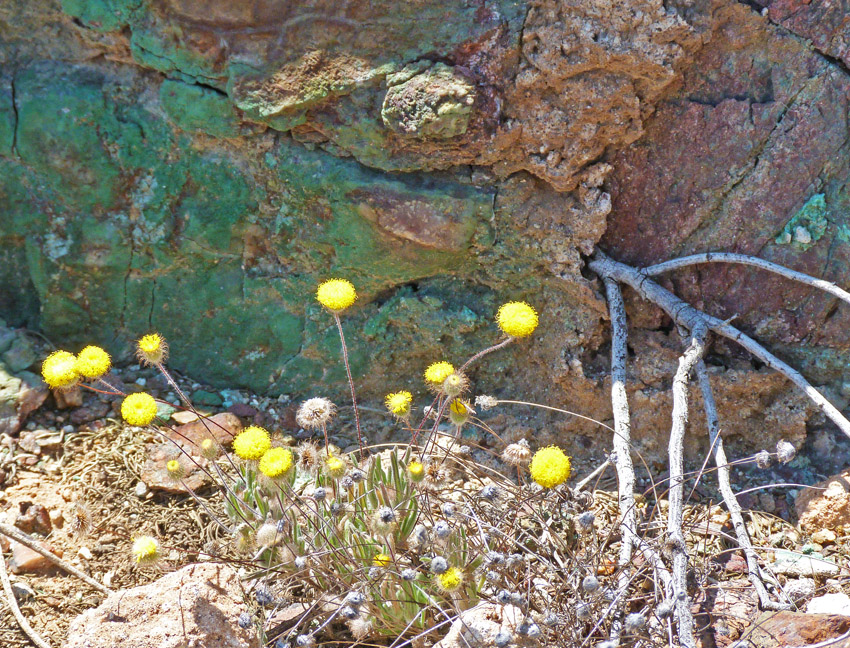
A Camping near Arkaroola

Camping near Arkaroola


Arkaroola is a world heritage wilderness area approximately 700 kilometres north of Adelaide. Its geology, Aboriginal heritage and wildlife make it a premier destination for off roaders, photographers and those who simply like a taste of real outback life.

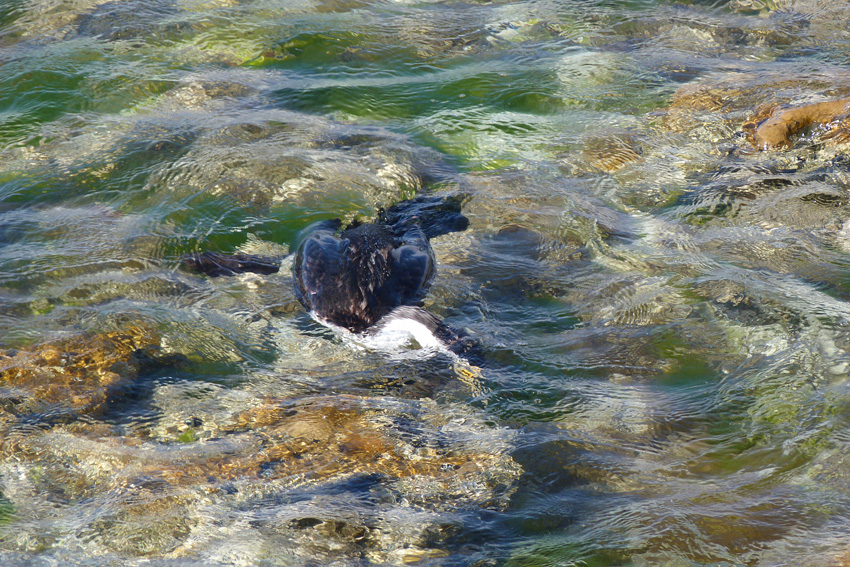
B Nankeen night heron

Nankeen night heron

The wetlands around the Adelaide region have a core of commonly sighted species that include a variety of waterfowl, pelicans, ibises, swamp hens and swallows; to mention but a few. The nankeen night heron is one of the less frequently encountered birds which made photographing this one, as it hid in a willow overhanging a lake near my home, a special moment.

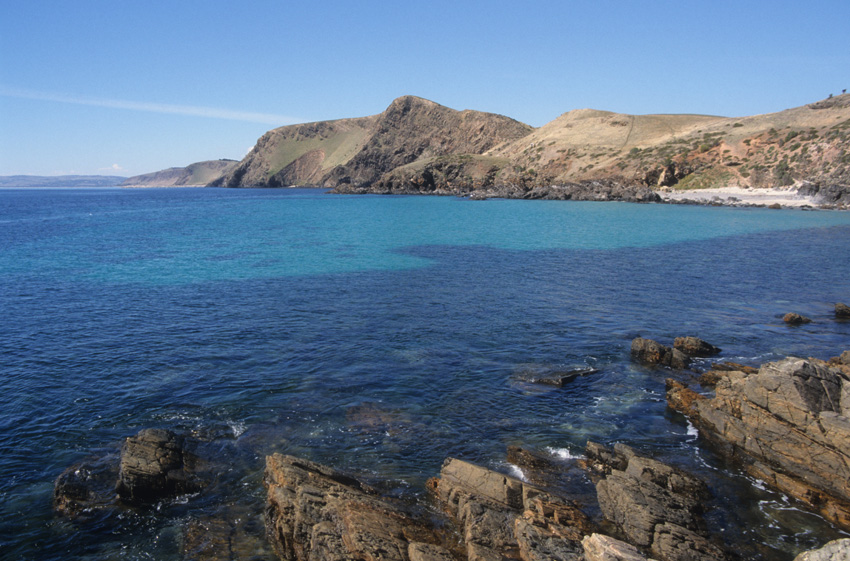
C Vines near McClaren Vale

Vines near McLaren Vale


The coast road that runs south from Adelaide along the Fleurieu Peninsula is a drive I have made countless times on the way to a dive site. On this occasion I was drawn to the dormant vines that stood in stark contrast to the overcast sky and yellow oxalis flowers.

D Biscuit star

Biscuit star


Sometimes the simplest creatures, the ones encountered countless times, catch your attention. Perhaps it is the light or just the way the animal is positioned. This common biscuit star caught my eye as it crept along the edge of a rock face covered in algae and a melange of encrusting organisms.

E Hoverfly on blossoms

Hoverfly on blossoms


Hoverflies are one of the most common invertebrates in our gardens. These agile little insects hover, flit and settle on a variety of flowering plants. They seem to be in constant motion. On an afternoon stroll through the Botanic Gardens an accommodating hoverfly settled on a nearby blossom giving me just a split second to get down low and capture this image which emphasises its startling compound eyes.

F Echidna foraging

Echidna foraging


Echidnas roam the length and breadth of Australia but they are not commonly seen. This one was trundling through the bush in the Adelaide Hills close to a termite mound that it had been ripping apart. It was the sound of the little spiky battle tank that gave away its location. Stealth does not appear to be part of their defensive repertoire. You don’t need to be furtive when you are armed with a plethora of sharp spines.


I hope you enjoyed this little reflection

Baz

Moralana Trail-Outback Wildlife With A Little History Thrown In

2 Nov

Dear Reader:

The sky is endless blue, interrupted by just a few cotton-wool clouds. High above the ranges I can see the outline of a wedge tail eagle spiralling on a thermal as it searches for prey. Once these majestic raptors were a common sight throughout the Flinders but with the decimation of the rabbit population their numbers have dropped. Today they hunt for more indigenous prey; wallabies, lizards and road kill from the many tracks that meander through the ranges. As I carefully steer the vehicle around another corrugated, gravelly bend, I catch site of a kangaroo standing motionless in the long grass. Easing to a stop, I wind down the window and take a closer look through a telephoto lens. The powerful, compact body and rusty brown tinge to its fur immediately mark it as a euro or hill kangaroo; a species that lives amongst the rocky outcrops rather than on the plains.

a Euro or hill kangaroo watches the watchers near the track

Euro or hill kangaroo watches the watchers near the track


I am driving the Moralana trail, a 30 km dirt track that cuts across the Flinders Ranges, 40 kms south of the iconic bush resort of Wilpena Pound. The track is flanked by the jagged peaks of the pound on one side and the Elder Ranges on the other.  It is an easy drive compared to the trails that follow the gorges further north yet there is a proliferation of wildlife ranging from flocks of cockatoos to echidnas and several species of kangaroos.

b Driving along the trail with the Elder Ranges in the background

Driving along the trail with the Elder Ranges in the background


We leave the euro feeding on some low bushes and continue our drive. A few kilometres further on, half hidden amongst a stand of pale barked eucalypts, I notice a rough cut log corral by the roadside. Closer examination reveals a plaque explaining that the structure is a restored ‘cueing’ or shoeing station. In the 1870s it serviced the bullock trains that hauled native pine logs which were then cut for the construction of the overland telegraph. The corral is just one of the many historic sites that remind us of the hardy pioneers who lived and worked in the Flinders during the state’s early years. After a long day’s driving, the cueing station seems a perfect place to stop for a late lunch and enjoy home baked meat pies and sausage rolls, purchased earlier in the day at a country bakery on the drive from Adelaide.

c Old bullock yard near Arkaba Station

Old bullock yard near Arkaba Station


The afternoon sun is dropping low in the sky and it is unwise to drive these tracks in the evening as the roos become more active and 50 kgs of kangaroo smashing into a vehicle does neither animal nor car much good. I ease my foot down on the accelerator, the dust billows behind us and we continue our journey along the track. We catch sight of more kangaroos in the distance; they are probably western greys or reds. Suddenly, a pair of emus emerge from thick scrub alongside the road and for a few minutes the huge birds keep pace with the car before heading back into the bush. According to the map we are only a few kilometres from the junction with the Wilpena road when we slow for a broad, dry watercourse that cuts across the road. I turn the car into the creek and engage 4WD. We bump and slide over the round pebbles and avoid the larger boulders as we drive a couple of hundred metres along the creek and venture out for a final forage in the bush. We are not disappointed. On the dried out bank, wedged into a tight crack between some flat rocks, we come across a sleepy lizard which, judging from the snail shells close to its refuge, has made this little niche its home base for some time.

d A shingleback or sleepy lizard sheltering under a lichen scarred rock

A shingleback or sleepy lizard sheltering under a lichen scarred rock


The sun is low now, the light soft but Moralana has one more moment in store for us. Close to the junction with the bitumen road, a small herd of wild horses are grazing near the fence-line. Whether these are true brumbies (Australian wild horses) or stock that is herded periodically for riding, I am not sure… but whatever their origin the very presence of these elegant animals was the perfect parting gift.

e Wild horses grazing near a creekline

Wild horses grazing


From the Flinders

Regards

Baz


Wine, Whales and Pelicans at the Bluff

26 Oct

Dear Reader: 

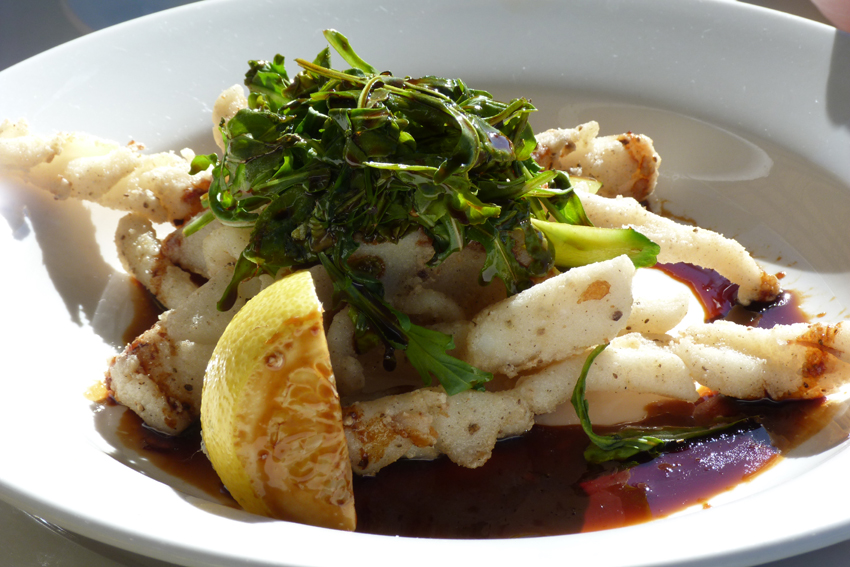
I am at ‘The Bluff’, a granite outcrop near the tip of the Fleurieu Peninsula. Comfortably tucked into a wicker chair on the balcony of the ‘Whalers Inn’,  I am enjoying a plate of local calamari and nursing a fruity white from one of our coastal vineyards. The restaurant is only ten minutes drive from the centre of Victor Harbor, the south coast’s largest town.

bluff vh

A view from the restaurant

P1000661

Calamari with soy, lemon and wilted greens

My field glasses and camera are within easy reach and every few minutes I scan the horizon beyond Wright Island for a tell-tale blow, breach or the raised fluke of a Southern Right Whale. I can just make out one animal a few kilometres out to sea and I am hoping that it will make its way closer inshore. Only a few days ago two adults and a calf were frolicking in the bay just a few hundred metres from where I am sitting. In fact, well over 40 whales have been seen during the last month. Southern Rights regularly migrate with their calves en route to their Antarctic feeding grounds at this time of year.

P1000649

Rocky outcrops and an offshore island


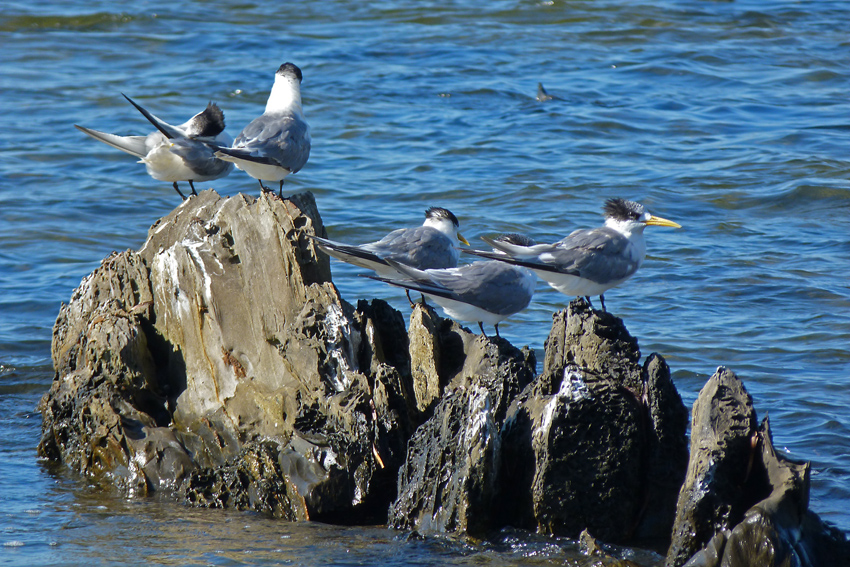
No such luck. The whale heads further out to sea and I know that it is late in the season and the chance of another sighting is slim. I shift my focus to the rocky foreshore where jagged outcrops of dark rock trail into the sea. A strong offshore breeze is ruffling the feathers of a group of caspian terns that are precariously clinging to the rocks. Over the last few hours they have been alternately patrolling the rolling swell between Wright Island and the mainland searching for baitfish then resting on the shoreline.

tern 2

Crested terns resting between forays


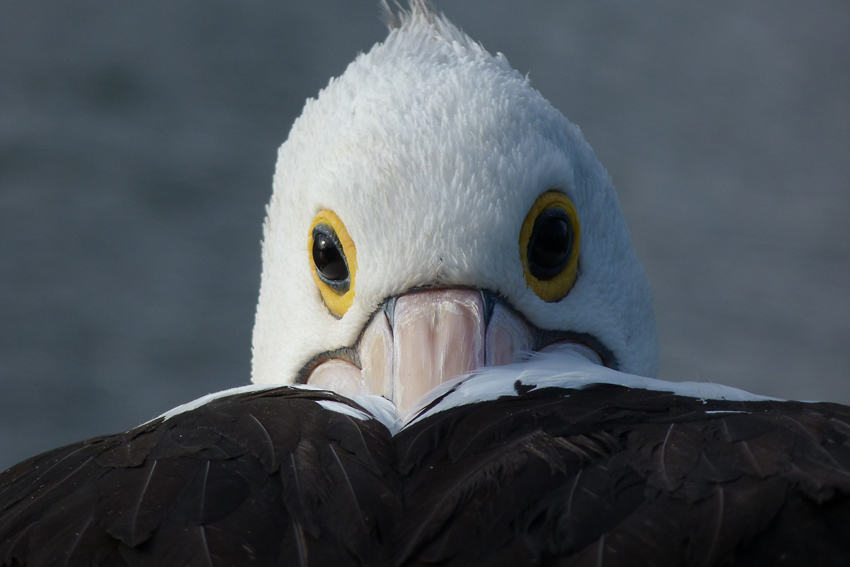
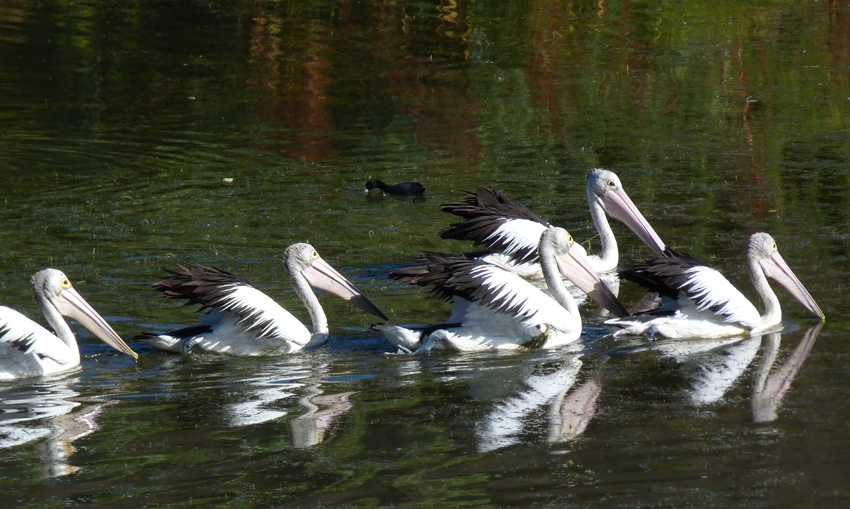
A little closer to the town, between a stand of huge Norfolk pines, there is a boat ramp and every so often anglers motor in from the deeper water and tie up at the dock. Several large granite boulders lie close to the channel and a couple of Australian pelicans have been patiently ensconced on their smooth surfaces eyeing each craft in the hope of a fishy handout. They are not too fussy and a few mullet, salmon trout or even some unused bait usually makes their wait worthwhile. While I finish my calamari the birds are rewarded by a boatie and his family of pelican friendly kids.

pelic 4

Australian pelican


There are, of course, the usual silver gulls flying, scavenging and wading in the shallows in search of any kind of food from a discarded potato chip to an unwary shore crab. But amongst their sleek silver forms I catch sight of a larger yellow beaked gull. It is a pacific gull, a less common species in this area, and it is wading in the shallows searching for prey in one of the tiny beaches that form between the rocky outcrops.

pacific  gull 3

Pacific gull


As the afternoon wears on and the temperature climbs, I finish my glass of wine, pay the bill and stroll down to the car. The sea is inviting and my snorkelling gear and underwater camera are in the back. Today I have dined well, photographed a diverse collection of seabirds, watched whales on a dazzling blue ocean, and now I have the chance of encountering some slightly smaller varieties of marine life in a great dive location.

That encounter will be the subject of a future blog.

Cheers

Baz


Family Life at Walker Flat

11 Oct

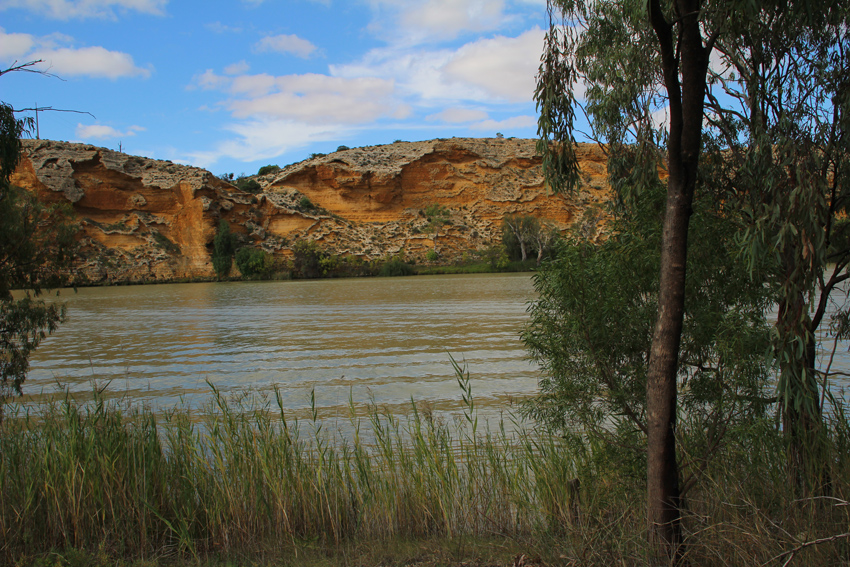
The road from Mannum to Walker Flat is a classic Australian drive. With low hills to the left and the river on the right it winds past limestone cliffs and mallee scrub. It is a short drive of no more than 30 kms but there is ample opportunity to get out of the car and wander around in the scrub or capture a panoramic shot of the river. The countryside is typical of the Murray Mallee zone. Mallee are smallish eucalypts that have numerous trunks growing from the same base. They are of uniform height and stretch for kilometres in an unbroken forest. The hills are predominantly limestone based and where the river cuts through them it exposes a wonderful array of fossils.

walkers flat cliffs

Limestone cliffs a Walker flat


As you come down the hill into Walker Flat the river takes a sweeping bend exposing ochre coloured cliffs that rise abruptly from the water. There is small community of shack owners, a general store and places to camp, launch a boat or cross the river on an old fixed line ferry. The area has several billabongs; backwaters fed by floods; and it was these that I had come to explore. Even as I drove down from the low hills to meet the river I could see a flock of pelicans cruising along the main channel of the river.

Pelican feeding as a group

Pelicans feeding as a group


Camera in hand, I walked along a dirt trail that followed the course of a large billabong that was bordered by thick stands of reeds and some old eucalypts. My quick reconnaissance was useful and I located a dozen different bird and insect species in the first few minutes. However, the wildlife seemed very wary and scattered at my approach. Accordingly, I resorted to my favourite strategy for capturing images under these circumstances and found a quiet spot with a clear view in every direction, settled down and waited.

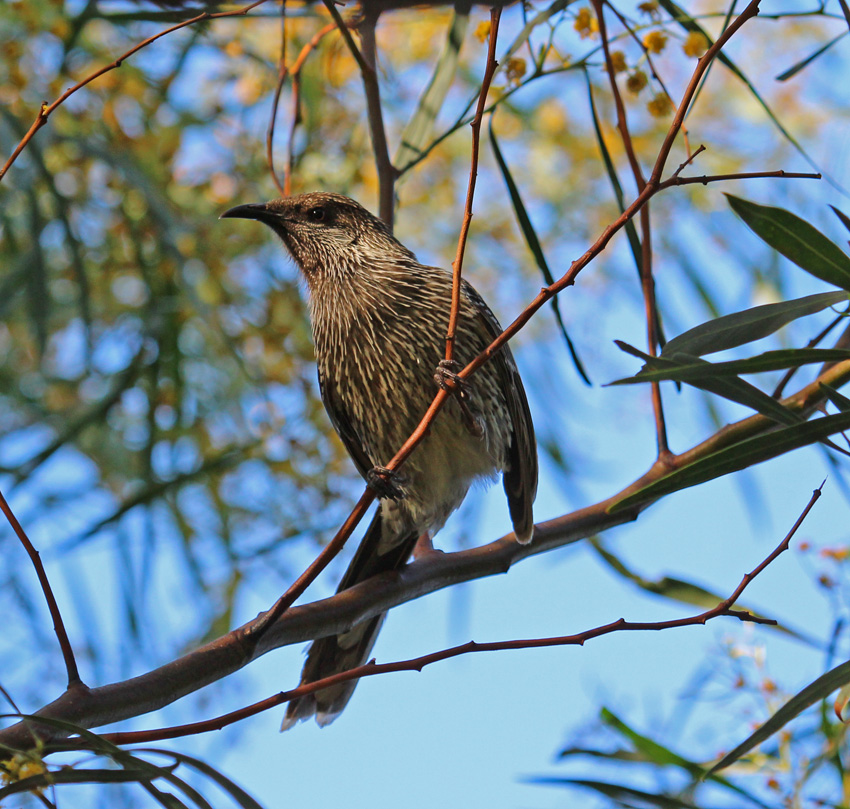
little wattlebird

A little wattlebird, one of the many bird species along the billabong

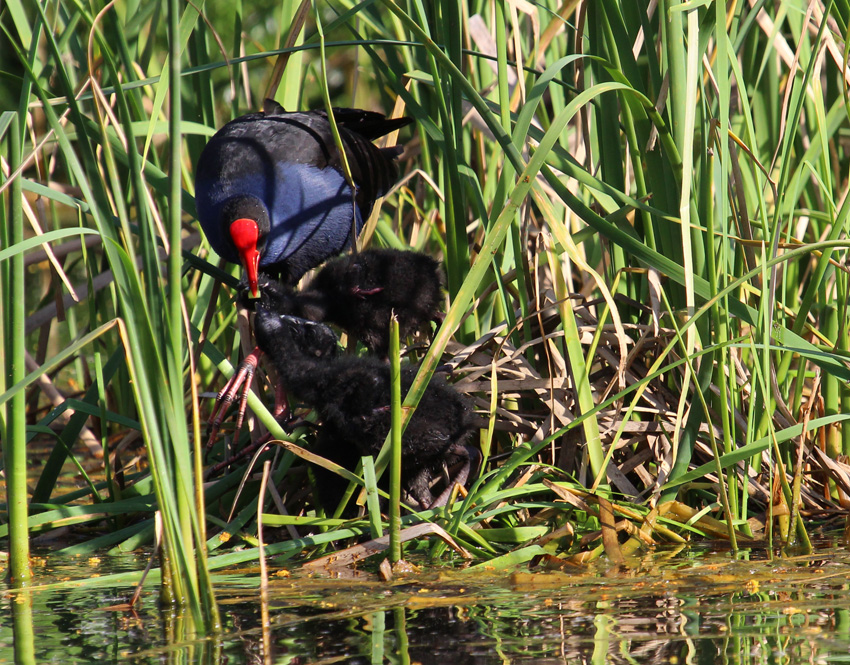
Within twenty minutes or so the rhythm of the river bank seemed to return to normal. So long as I didn’t make any sudden movements or sounds most of the wildlife seemed to view me as a part of the environment and I, in turn, started to notice the hidden things that were going on all round me. Twenty metres in front of me the reeds began to move and a purple swamp hen emerged delicately grasping the plants with his outrageously huge feet. I eased the big lens up slowly for a better look and to my surprise the adult was accompanied by two fluffy, black chicks. Over the next few minutes I was privileged to watch the adult cutting up reed stalks with its powerful beak and feeding them to the young. Later, another swamp hen appeared and took the chicks further into the reeds indicating that both parents were involved in rearing their brood.

IMG_2791

Purple swamp hen cutting up reed stalk near chicks

IMG_2793

Purple swamp hen feeding a chick with cut up reed morsel


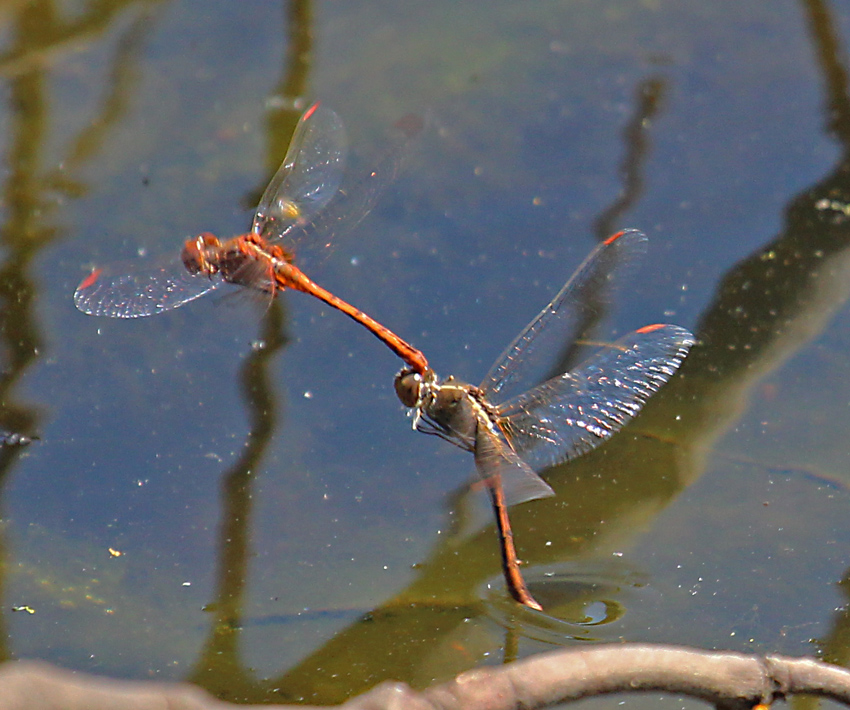
My next encounter was a tad closer. A variety of large dragonflies and their more delicate cousins the damselflies had been continuously flitting across the water just a few metres away. They appeared to be in a mating phase with an occasional pair joined head to tail, which is part of the reproductive process. Others were obviously hunting smaller insects while a few seemed to be establishing some kind of territory by chasing off rivals of the same species.

wandering percher

Wandering percher dragonflies mating in flight

Emperor dragonflies mating


Between the dragonflies and purple swamp hens feeding their family my patience seemed to have paid off and re-confirmed an old but well tried approach to wildlife photography. Better to let the target come to you than chase it.


Until next time

Baz


Kids, Kookaburras and Creeks

4 Oct

Dear Readers

It would be lovely to write for a living. To earn my dollars wandering South Australia’s diverse wilderness areas taking photos and composing articles to share with you. Dream over….reality check! Like most of the world I need a steady job to survive and my profession is teaching. One of the many requirements at my school is to take my year 6 students on camp each year. Fortunately, Adelaide has many wonderful destinations in the adjacent hills and along the coastline that provide a range of outdoor activities. Many of these sites also double as corporate destinations. This year we chose Wirraway a campsite located on the eastern fringe of the Mt Lofty Ranges. It is a beautiful location situated amongst rolling hills with a little creek running through the property. And, to my delight their program included a nature walk along with the adventure activities.

G

Typical hills country


Each morning I woke at six and reluctantly dragged my weary bones out of bed; any teachers reading this will immediately understand that the previous night’s sleep was limited to a few hours. The students were not allowed out of their dorms until 7.00 which gave me an hour to wander around the grounds uninterrupted. Campsites always attract wildlife. However well intentioned the staff may be there are always a few food scraps to be had, nooks and crannies to nest or hide in as well as wood piles and building materials that might be home to both predator and prey. On my first morning a pair of rats scurried under the raised foundations of the caretaker’s home watched with interest by me and anticipation by a kookaburra sitting in a an old gum tree (there’s a song title there).

kooka2 red

Hungry kookaburra


The camp site was also home to a wild rabbit that liked to munch the grass close to one of the girls’ dorms but scurried back into the bushes at the slightest noise. Each time it appeared I tried to signal the students to be quiet and take a look…no such luck. Only a picture snapped in the quiet hours and shown at the dinner table convinced them that I was not making it up.

A

Peter makes a rare appearance


Both male and female superb blue wrens were common though timid and constantly on the move keeping low in the bushes and feeding in the leaf litter. And a resident flock of red browed finches moved between the flowering trees and bushes often coming close when I was working with the students and staying away if I had a camera nearby. Fancy that!!

C

Male superb blue wren

B

Finches all in a line


Our nature walk was quite a revelation. You would not expect city kids to be overly responsive to a lengthy stroll in the bush when the alternative activities included horse riding, archery and rock climbing. Surprisingly, they showed a keen interest in what the guide had to say and even sat quietly by the creek for a few minutes trying to work out how many different frog species could be identified from their distinctive calls. Even the plant life scored a hit, most notably the unusual grass trees that were flowering at the time and an old weathered log with lichen and moss growing in its sinuous furrows.

E

Flowering grass plants

F

Patterns and colours in nature


The three days passed quickly and each group appeared to enjoy their excursions into the bush.  Kids get few opportunities to experience the outdoors in our digital world and watching their faces as they discovered the beauty of wild things was a rare pleasure.


Until my next post

Cheers

Baz

An Urban Billabong

29 Sep

Dear Reader:

The word billabong looms large in Australian folklore. It is where ‘a jolly swagman’ met his untimely end and mythical beasties called ‘bunyips’ supposedly emerge from the water to devour unwary campers. In reality, billabongs are freshwater wetlands that flood when river levels are high then become more isolated in the dry season. They are essentially backwaters that provide a refuge for many different species of animals as well as being popular locations for camping and fishing.

i

Still, dark waters of an urban billabong


In South Australia the lower reaches of the Murray River has many lovely billabongs that have provided me with many a peaceful afternoon’s wildlife watching and photography. However, the trail that runs along the banks of Adelaide’s Torrens River also incorporates a little billabong which is tucked behind the upmarket suburb of St Peters, just a stone’s throw from the CBD. It was rehabilitated in the mid eighties and over the intervening years various community and government groups have overseen its care and maintenance.

c

A mosaic of the rainbow serpent reflects the importance that Aboriginal people attached to billabongs


Last weekend, I packed my little super-zoom camera, hopped on the bike and pedalled up to the billabong to take stock of the wildlife. It has been a long wet winter and I was hoping that the warmth of the first few weeks of spring would stimulate some wildlife activity. I was not entirely disappointed. As I approached the little wooden landing that fronts the water, a pair of amorous crested pigeons pranced and displayed to each other. Close to a patch of reeds a mother black duck was tending a pair of fluffy little ducklings.

h

Courting crested pigeons

k

A pair of black swans nibble the water side vegetation


During the winter months the landscape may be verdant but few of the native shrubs flower and the insects that rely on the blossoms are rare. Now the billabong was clearly beginning to emerge from its winter blues and life was starting to reassert itself. As well as the hormonal pigeons and baby ducks a colony of colonial spiders had constructed a silken trap in an acacia bush and delicate little purple chocolate lilies were emerging from their winter dormancy.

chocolate lily

Chocolate lily

L

Colonial spiders construct a complex web in a wattle bush


As spring turns to summer I am sure the wildlife will continue to flourish and I look forward to revisiting and reporting back to you.

Cheers

Baz      

Moonta Bay: above and below the water

21 Sep

Dear Reader:

It is a lovely afternoon and I am sitting on the balcony of a friend’s beach house gazing across the calm waters of Moonta Bay. The light is soft and despite an unseasonably hot spring day there is a gentle sea breeze ruffling the bushes and coastal grasses on the edge of the steep cliffs that drop down to the beach. I have been watching a pair of rabbits cautiously emerging from their burrows in the soft sand; endearing little creatures but unwelcome guests in this area where they eat the native plants and damage the delicate balance of the cliff top ecology.

Wild rabbits amongst succulent and grasses on the cliff top

Wild rabbits amongst succulent and grasses on the cliff top

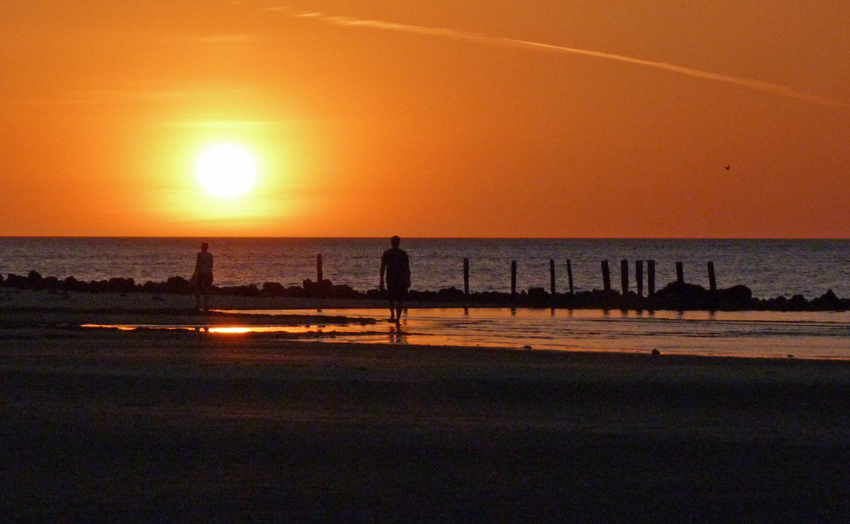
As night approaches and the sun drops below the horizon the rabbits become more active. A flock of gulls flies in V formation across the skyline and I retreat into the study to avoid some early season mosquitoes and reflect on my day. The sunset is quite spectacular and provides some inspiration to set pen to paper.

Moonta Bay at sunset

The journey from Adelaide across the flat coastal plains and scrub hedged wheat fields  was an easy couple of hours. I stopped at a local pub and grabbed a bite to eat then pushed on to Moonta. With only one night at my disposal I spent the early part of the afternoon wandering amongst the old mine ruins. A little gecko clung miraculously to the smooth surface of an old mine bucket and a pair of swallows had made a neat little nest behind a wooden beam that protruded from a square stone tower. But strangely it was the colours in the rocks that caught my attention as they hinted at the wealth of copper that was extracted from this area in the late nineteenth and early twentieth century.

throughout the old quarry the rocks are stll tinged with the coper ore

Throughout the old quarry many of the rocks are tinged with the copper ore

From the mine it was a short drive down to the seashore and jetty with its art deco styled motel and restaurant nestled into the low cliffs. A stroll along the stained hardwood planks out to the end where it curves to run parallel to the shore brought back childhood memories of weekends fishing and playing cricket on the huge expanse of beach that is exposed when the tide recedes. But on this occasion the child’s rod and line were replaced by camera and notebook. Near the shoreline I stopped by a rocky outcrop to watch a pied cormorant hunting amongst the weed and rock-pools; its body seeming to take on the fluid persona of the water as it twisted and turned in search of small fish and crabs.

Pied cormorant hunting amongst the shallow rock pools

Pied cormorant hunting amongst the shallow rock pools

 A little further along the jetty, where the shallow water starts to turn darker hinting at the meadow of seagrass beneath, a flotilla of seabirds were patrolling; an indication  that there might be baitfish in the area. With this in mind I trotted back to the car and donned my snorkelling gear to take a closer look. I was not disappointed as several schools of small fish were congregating in the deeper water beyond the rocky outcrop. 

A school of baitfish congregate below the jetty

A school of juvenile mullet feeding below the jetty

The sunset is well over and the  forecast indicates fine weather with calm seas for the next few days.  I’ll probably do a little more snorkelling near the rocky outcrop before walking along the coastal trail to watch the seabirds and search for reptiles and insects.


Until next time

Cheers

Baz

Springtime Turtles at Maggie’s Farm

7 Sep

Dear reader

Its early spring in South Australia and everything natural has started to flourish after a rather damp winter. To celebrate the season’s change I decided to take a drive out to Maggie’s in the Barossa Valley. Only an hour’s drive from the city, the Barossa is a favourite destination for urban South Australians. It is characterized by gently rolling hills and open bush-land where fine old homesteads sit amongst seas of vines. The land is not only conducive to what is arguably the finest wine growing area in Australia but also to wildlife. There is always a diverse pageant of bird life and even the odd kangaroo or fox to be seen on the way to visit a winery or two, which makes a drive through the valley a rewarding way to spend a spring afternoon.

AG Open bushland and vines

Open bushland and vines

Maggie Beers is a little pheasant farm situated in the heart of the valley. Maggie is a gourmet chef and she produces a range of fine homemade products ranging from pates and cheeses to ice cream and cooking oils. Visitors to the farm can sit on the decking or in a country styled dining room overlooking a charming little pond while sampling delicacies from quaint wicker baskets. The water is surrounded by tall eucalypts and an olive grove, which attract a variety of birds including rosellas, galahs and waterfowl but Maggie’s special wildlife treat resides in the pond not around it.

B Maggie Beer's from across the lake

Maggie Beer’s from across the lake


As I sat nibbling my pate and biscuits sipping a glass of red I caught sight of my first pond critter. At first it was a mere ripple in the water that caught my attention then two little dark nostrils appeared As the ripples drew closer I could see the little turtle clearly through the water. It was coming to the surface to breathe and probably warm its reptilian body in the sun before heading back to the bottom to search for yabbies, worms and other invertebrate goodies.

A Enjoying good food and wine while watching the wildlife

Enjoying good food and wine while watching the wildlife

The turtle stayed on the surface for at least 10 minutes stretching out its long snake neck and paddling closer to the shallows by the edge of the decking. Before the indulgences of dessert and coffee were complete I had watched half a dozen snake necked turtles appear and disappear in the area where I was sitting.

D Turtle in shallow water emerging to take a breath

Turtle in shallow water emerging to take a breath

Freshwater turtles belong to the family Chelidae and there are 24 species living in Australia’ rivers and wetlands. Interestingly, there are no land-living tortoises in Australia.  Maggie’s pond turtles are eastern long-necked tortoises (Chelodina longicolis). They grow to a carapace (shell) size of around 25cms and the neck can be a little over half the size of the carapace.

C underwater view of freshwater turtle swimming

Underwater view of freshwater turtle swimming


Watching wildlife in such ‘trying circumstances’ requires both stamina and endurance but my next step epitomized the daring and courage of the dedicated wildlife writer and photographer. Yes, you guessed it ‘Dear Reader’, I left the safety of my secure hide, shouldered a camera and walked around the pond. The goal: to try and get a little more insight into the behaviour of the turtles and see if there were any interesting birds in the trees.  

AF Turtle basking on the surface

Turtle basking on the surface


Apart from simply enjoying some different views of the turtles and being serenaded by a pair of affectionate sulphur crested cockatoos, my walk did not provide any new insights though one large turtle did appear to be munching a tadpole or small fish when it surfaced.

E A pair of affectionate sulphur crests

A pair of affectionate sulphur crests

On balance, a day sipping wine, eating fine food and photographing turtles did not seem to be a bad way to kick off spring.

Until next time

Baz

Corella Wars

24 Aug

Dear Reader:

Strathalbyn is one of those country towns that make you think of Britain. An imposing church presides over a pleasant stretch of river complete with ducks, gently sloping banks and an old fashioned rotunda. Huge Norfolk pines are mingled with classic river red gums and picnicking families often spread blankets on the banks and eat sandwiches or barbecue a few snags.

Like a flurry of snow Corellas perch in the trees they are feeding on showing bare branches

Church, rotunda and corellas in the trees


But the rustic charm is not sound-tracked by the gentle call of songbirds. Quite the opposite, it is the raucous call of parrots that often fills the air. Large flocks of short beaked corellas frequently descend upon the trees that line the Finnis River where it passes through the town. They are particularly fond of the towering pines and hundreds will sit along the branches of each tree tearing at the cones and limbs with their powerful beaks. At the same time they engage in a variety of typically cockatoo-like social interactions ranging from mutual grooming and preening to wing flapping, mock fights and beak duels; all of which are accompanied by a variety of screeches and squawks.

A Corella social behaviour

Corella social behaviour


Short-beaked or little corellas (Cacatua sanguine) are, as the name suggests, a member of the cockatoo family. They grow to around 40 cms in length and can weigh over half a kilogram. These corellas often congregate in flocks that can number thousands of birds. They are mainly ground feeders, rooting out tubers and bulbs and are particularly fond of cereal crops like wheat and barley; a habit which does not endear them to many farmers.

B Corellas use a combination of wings , beaks and feet  to position themselves

Corellas use a combination of wings , beaks and feet to position themselves


Although most locals and visitors alike enjoy the sight of thousands of graceful white birds wheeling through the sky, the continual noise and quite substantial damage to the heritage trees has become a significant problem. Various means have been employed to move the flock to the outskirts of the town including: culling, high frequency sound bursts and quite recently using a trained peregrine falcon to discourage them.

D Little corella flock circling pine trees

Flock of little corellas circling pine trees


Strathalbyn is only an hour’s drive from the city and the wildlife along the Finnis and open bushland that dominates the area makes it a wonderful day’s outing. And the corellas are the most endearing of birds to observe despite their rather destructive disposition.

 I hope you enjoyed this story.

Cheers

Baz

Second Valley ….drive and dive

17 Aug

Dear Reader:

This week’s post is courtesy of a chilly winter dive and a pleasant day’s drive to one of my favourite childhood haunts, Second Valley.

D Second Valley bay on a winter's day

Second Valley bay and beach on a calm winter’s day


In 1836 Colonel Light, the founder of Adelaide, was searching for a good location for South Australia’s new capital city. He sailed his ship, the Rapid, into a sheltered bay with a fresh water stream that flowed in from a fertile valley. Light named the bay after the vessel. The second little cove that he discovered was just a few miles north towards the present location of Adelaide and was simply known as Second Valley.

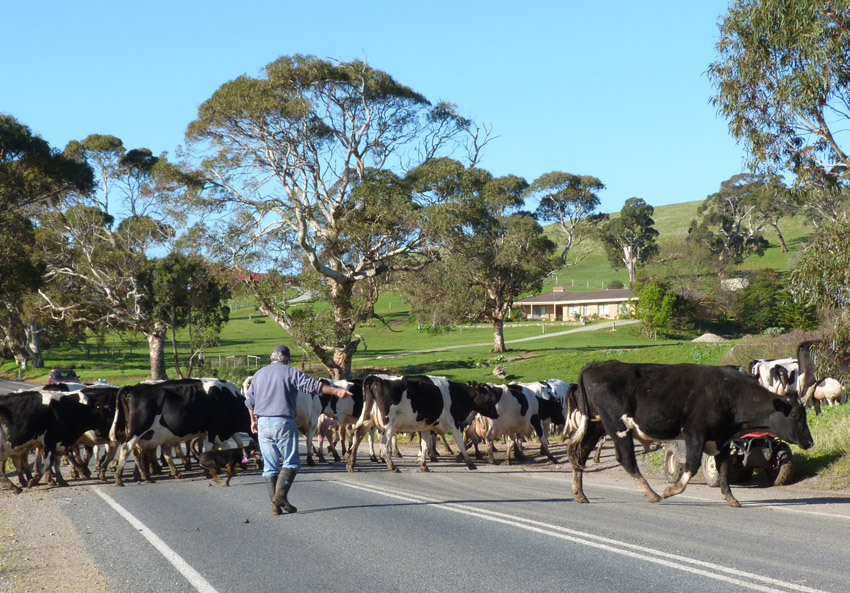
E farmer and dog taking dairy herd across the road near Rapid Bay

Farmer and cattle dog taking dairy herd across the road near Rapid Bay

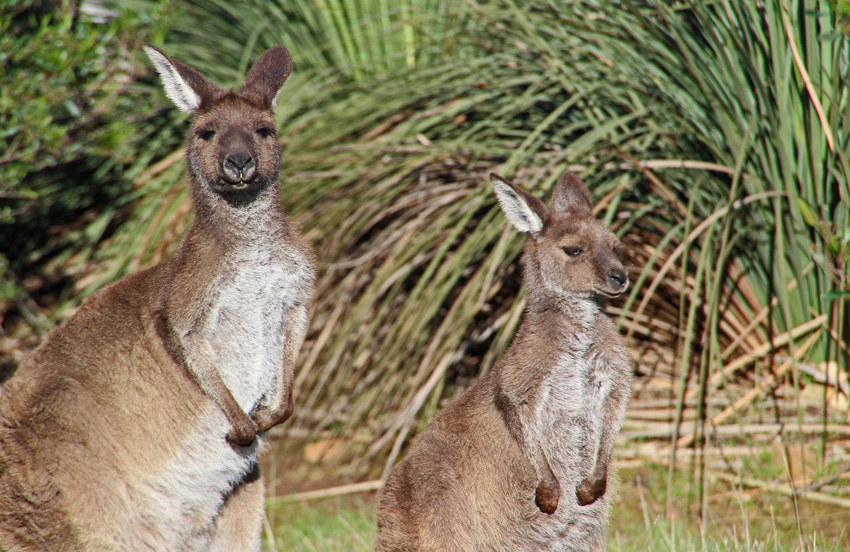
Second Valley is a one and a half hour drive from the city centre along the Fleurieu  Peninsula’s south coast road. The dairy farms that lie amongst the rolling hills, large expanses of open woodland, and vineyards make it a recreational drive worth undertaking for its own sake. But for the wildlife enthusiast both drive and destination are even more enthralling. The farms and bushland support a healthy population of western grey kangaroos that are often visible from the road. Rosellas, various cockatoos, lorikeets and a host of other bird species are also common throughout the year.

BB Western grey kangaroos near the roadside near Second Valley

Western grey kangaroos by the roadside near Second Valley

However Second Valley’s real charm lies beneath its pristine waters. The sheltered little bay is enclosed by limestone hills and coastal cliffs . It boasts an exquisite little beach and miniature rocky headland which is bisected by an old wooden jetty. Small boats can be launched from the beach but the marine environment is just as easily accessed from the beach, jetty and rocks for shore based divers. It is, in my experience, one of the best scuba and snorkelling locations that I have encountered anywhere in the world. A place where a novice snorkeler can swim amongst shallow rocky reefs in water they can stand up in or a more adventurous diver can swim a short distance and be next to a cliff face that drops away into 10 metres of water.

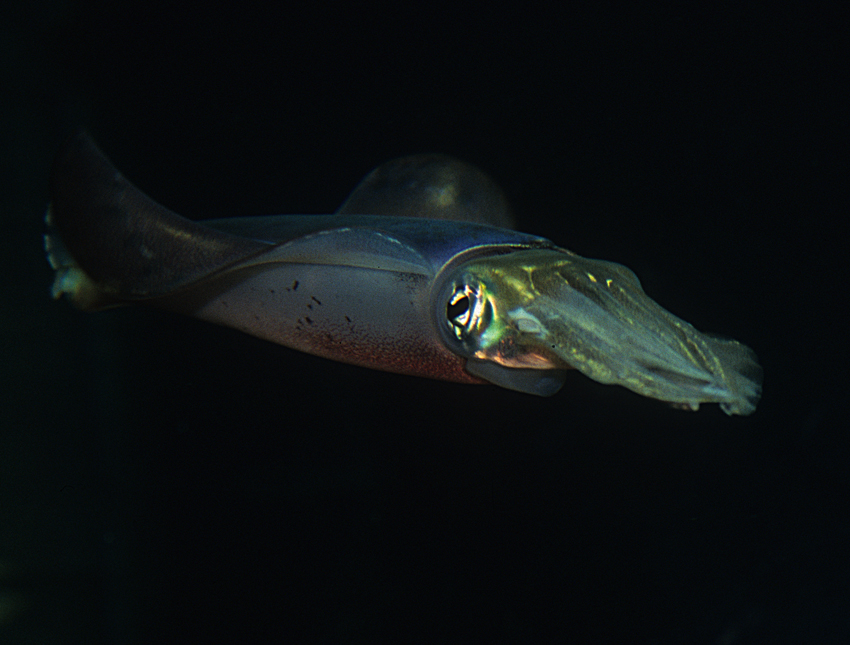
A squid at nightshowing irridescence

Squid viewed on night dive

Below the water there is a diverse range of habitats to explore ranging from limestone caves and ledges, to rocky reefs, seagrass meadows and open expanses of white rippled sand. There is always a wide selection of marine life to enjoy. Over the years I have encountered everything from huge eagle rays to schools of iridescent squid on a night dive and once I came across an elephant shark lazily gliding across the segrass as it came into the shallow bay to breed.

B large cuttlefish amongst brown algae

Large cuttlefish amongst brown algae

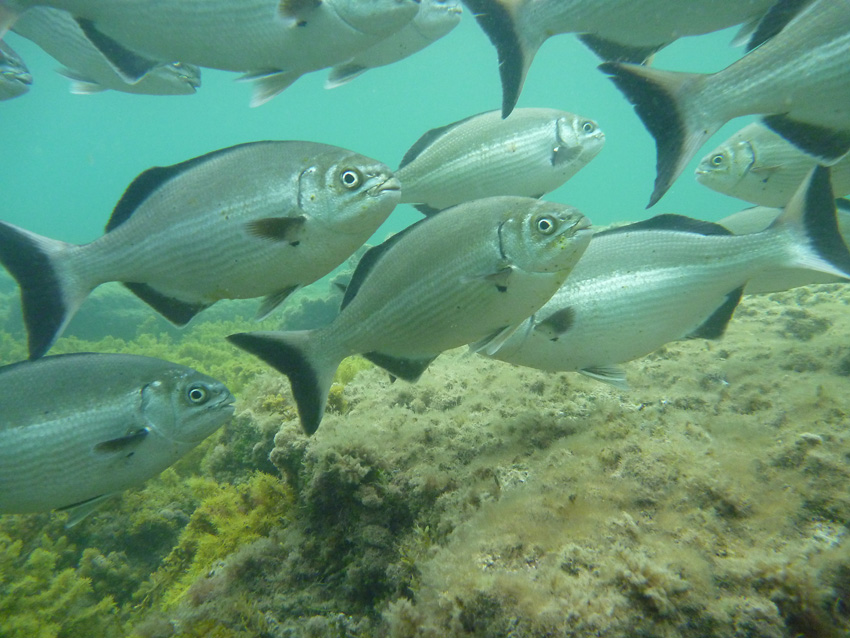
Although the balmy days of summer are the ideal weather for a dip in the ocean the winter months often produce long fine breaks when the sea is calm and visibility excellent. On this particular occasion I was lucky enough to encounter a couple of large cuttlefish under a ledge and a school of silver drummer milled around me on the edge of the rocky outcrop. On any typical dive, either snorkelling or with scuba, I would expect to sight at least 30 different species of fish and a multitude of invertebrates. This dive was no exception.

BB Silver drummer schooling  at the end of the rocky peninsular

Silver drummer schooling at the end of the rocky peninsula

As always I hope you enjoyed the pictures and anecdotes and that they encourage you to come and enjoy our unique scenery and wildlife.

Cheers

Baz