Mangrove Wildlife

9 Aug

Dear Reader:

The city of Port Adelaide is a working port that includes a power station, shipyards and fine old buildings that date from the early colonial days when sailing ships transported goods and settlers to the new colony. Yet only a few kilometres from this industrial zone is a haven for wildlife both above and below the water. Mangroves once dominated this area but land clearing, to establish new beachside suburbs, decimated this crucial coastal environment. Eventually local communities and conservationists finally put pressure on the government to preserve what was left.

AH Power station near the mangrove area

Power station near the mangrove area

This weekend I grabbed a camera and spent a leisurely hour walking around the Port taking in the sites and enjoying some seafood at one of the oldest hotels in the state. Early in the afternoon I drove a couple of kilometres to the Garden Island boat ramp where mangroves still dominate the shoreline of the Port River. This complex system of intertidal mudflats, seagrass meadows and the thick cover of mangrove trees supports a vital nursery area for many of the fish, prawn and crab species that live in St Vincent’s Gulf; Adelaide’s marine backyard and larder.

AG Puemataphores  in the mangrove forest

Puemataphores in the mangrove forest


As I walked along the little jetty that skirts the edge of the mangroves I chatted to a couple of fishers working the incoming tide. They had spotted a pod of dolphins cruising along one of the channels a little earlier in the afternoon and a pair of pied cormorants were boldly eying their bucket of baitfish as we spoke. The jetty also provides an excellent view into the mangroves and within a few minutes I had spotted a white faced heron perched on a low branch hunting for crabs. Nearby, a glorious little golden whistler was searching for insects near the entrance to a tidal creek.

AA Whitefaced heron hunting deep in the mangroves

White-faced heron hunting deep in the mangroves

AC Golden whistler in thorny bushes on the edge of the mangroves

Golden whistler in thorny bushes on the edge of the mangroves


Because the tide was out I had the perfect opportunity to walk into the mangroves and take a closer look amongst the tangle of limbs and bizarre little pneumatophores that protrude like blackened fingers from the forest floor. The sticky mud between these gas absorbing extensions of the root system was pock marked with little crab holes. It took some patience and a mini war with a squadron of mosquitoes before I caught a crab in the open and managed to capture an image.

AD Mangrove crab in samphire at the edge of the mudflat

Mangrove crab in samphire at the edge of the mudflat


A little itchy and with my boots liberally coated with dark mud, I decided to call it a day. Later in the year I will return to another area of mangroves a little further down the coast and share some more images and notes about the extraordinary animals that exist in this harsh and unusual habitat.

Cheers

BAZ   

Coorong

28 Jul

Dear Reader

This week’s posting is about one of my favourite wildlife refuges: a place that rivals any of the habitats that I have visited over many years of travelling and one that is in my own backyard.

AA Drying fishing nets on a Coorong beach

Drying fishing nets on a Coorong beach

The Coorong is around two hours drive south east of South Australia’s capital city Adelaide. It consists of a 150 km, slender spit of land of land that runs parallel to the coast enclosing an extensive chain of brackish, shallow lagoons and salt pans. Impressive scrub covered dunes, battered by the heavy seas of the southern ocean on the seaward side, run the length of the narrow peninsular. At its north-western end the Coorong is fed by the River Murray which enters into two large lakes-Albert and Alexandrina. The unusual word ‘Coorong’ is thought to be derived from the Aboriginal word ‘kurangh’ which means ‘long neck”

AC Wind blown trre amongst grasses with the shallow salt pans in the background

Wind blown trre amongst grasses with the shallow salt pans in the background

The region’s unique landscape of sand dunes, tussock grasses, low scrub and jagged limestone outcrops, is a haven for wildlife. Kangaroos, wombats, emus and an abundance of parrots and honeyeaters are just a few of the many native species that inhabit the thick, low bush that borders the lagoons and cover the towering dunes. An extraordinary number and variety of wading birds regularly gather in the Coorong. Enormous Australian Pelicans glide majestically along the waterway or spiral high on thermals before settling back on the water to fish. Tiny Mongolian Dotterels, which have travelled over 10 000 kilometres to avoid the northern winter, feed on the beachfronts between the crashing waves while avocets and curlews probe for shrimp and worms in the shallow limestone pools and mudflats. In total, over 400 species of birds, both residential and migratory, are found in this internationally recognised wetland.

AB Pelican in flight cross the shallow waters of the Coorong

Pelican in flight cross the shallow waters of the Coorong

Such a rich and diverse environment did not escape the attention of Australia’s original inhabitants and for around 40 000 years the Coorong has been home to the Ngarrindjeri (pronounced Nuh-run-jerri) people. They hunted kangaroos, emus and reptiles in the scrub as well as fishing and harvesting shellfish in the lagoons. Today the Ngarrindjeri still live in the area and practise many of the ancient skills that have been handed down through countless generations by ceremonies and stories. Those visitors who wish to learn more about the Coorong’s rich Aboriginal heritage can stay in lovely studio apartments, camp out, or park a caravan at the Coorong Wilderness Lodge with its sweeping views of the park and bush-tucker walks or canoe trips lead by local guides.

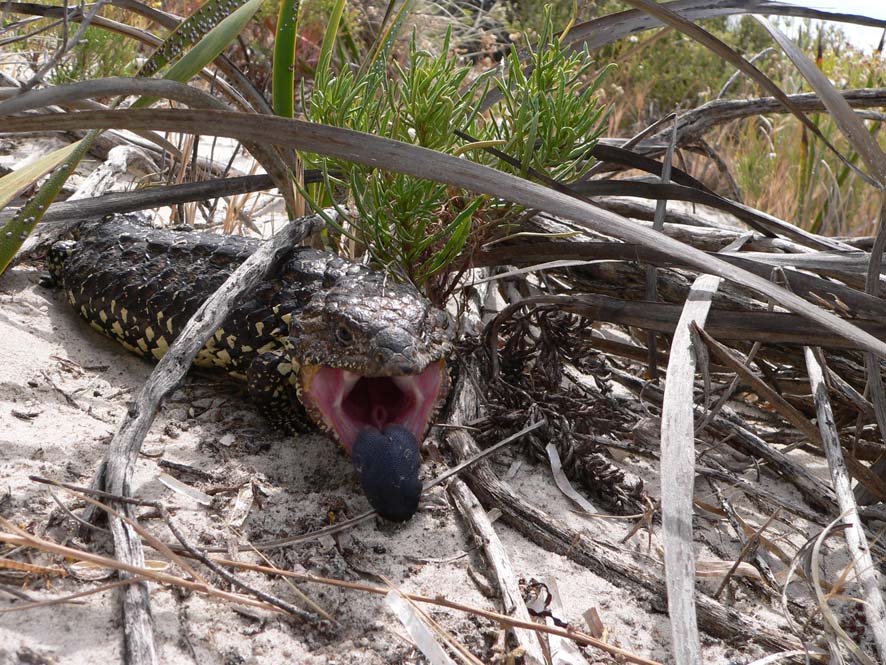
AD Sleepy or shingleback lizard amongst Coorong dunes

Sleepy or shingleback lizard amongst Coorong dunes

Despite its wild and lonely character the Coorong National Park is an easy day trip from Adelaide. Ideally, you would hire an off road vehicle in the city and take the coast road south then meander back north on a variety of tracks that parallel the highway to the mouth of the River Murray and the twin lakes of Alexandrina and Albert. From there you can join the main road back to the city and even drop into one of the regional wineries if time permits. However, if wild places are your passion and you feel the Coorong’s scenery and history are worth a longer stay there are a variety of established bush campsites as well as budget cabins, units and bunkhouses in the area. A slightly more upmarket approach is to book into one of the self-contained lakeside cottages at the historic homestead of Poltalloch on Lake Alexandrina. From there you can arrange guided tours of both the Coorong and lakes or use your own vehicle or boat to explore the area.

A battered old 4WD cruises along the beach at sunset near  lake Alexandrina

A battered old 4WD cruises along the beach at sunset near lake Alexandrina

I hope that one day, Dear Reader, you will come and visit this extraordinary place.

Cheers

Baz

Photo Reflections 1

21 Jul

Dear Reader;

As you may have gathered from my previous posts, South Australia has a diverse selection of landscapes and wildlife. When you add our temperate climate and clear skies to the mix, it becomes abundantly obvious that this is a place well suited to wildlife photography. In this post, and a few more in the future, I will share some of my favourite wildlife encounters and the images they produced. They will not always be my most technically correct pictures but they will be the ones that invoke my fondest memories.

Telowie Gorge 2_09-10-07_0008_1

Telowie Gorge; a classic dry creek habitat


Echidnas are the hedgehogs of Australia. They trundle along like little battle tanks searching for termite mounds which they rip apart with their powerful front claws. They are in fact monotremes, a peculiar group of mammals that lay eggs; their closest relative is the platypus one of the world’s most bizarre creatures. This particular echidna was wandering across a dirt track on Kangaroo Island and paid little attention to me as I followed it for several hundred metres into the thick bush.

A Echidna trundling across dirt track

Echidna trundling across dirt track


Zebra finches are found throughout South Australia. They tend to frequent dense bushland where there is a lot of cover. The males are more distinctly marked and brightly coloured than the females. I lay cramped in a thicket of acacia bushes for over an hour watching a group of these colourful birds waiting for the opportunity to capture an image that demonstrated the difference between the sexes. As you can see I was eventually rewarded for my efforts when a pair landed on a nearby branch.

B Male and female zebra finches

Male and female zebra finches


As a wildlife photographer I spend a considerable amount of time flat on the ground, half covered in dust and leaf litter. It is therefore inevitable that sometimes I will share these times and spaces with the critters that call them home. However, I was not quite so philosophical when a sizeable forest scorpion decided to co-habit the log I was balancing my camera lens on. We spent an awkward few minutes together before the little arachnid decided that it was more comfortable under the log where it had been peacefully residing before a large hominid disturbed its rest.

C Scorpion

An inquisitive scorpion


One of the most difficult tasks I face as a wildlife writer is to adequately describe with words and pictures the environments that I explore. The edge of the Aldinga reef is one of my favourite haunts. The shallow limestone reef breaks the surface at low tide and falls away sharply several hundred meters offshore to sandy bottom dominated by algae and seagrasses. The actual edge is well defined with a series of crevices and caves that provide a wonderful habitat for a variety of fish including drummer, leatherjackets and magpie perch. On my last dive I took a dozen pictures trying to describe this characteristic environment eventually capturing the one you see here which included all the essential elements; algal growth, three species of fish and the rocky edge of the reef.  

D The edge of the reef

The edge of the reef


I hope that you enjoyed these images and the little stories that accompanied them.


Cheers

Baz 

A Walk to the Falls

12 Jul

Dear Reader

Last Saturday was a classic Adelaide winter’s day. It had rained the night before and a fine patina of dew decorated the shrubs in my garden. The sky was clear and despite a chill in the morning air it promised to be sunny and dry; perfect conditions for a walk in the park. Not any park though. My park of choice was a little conservation reserve nestled in the foothills about 20 minutes from the city centre. Like Waterfall Gully,  Morialta Conservation Park is graced by a series of waterfalls and steep walking trails that cut through a variety of classic bush habitats.

AB Typical sandstone and eucalypt bushland within the park

Typical sandstone and eucalypt bushland within the park

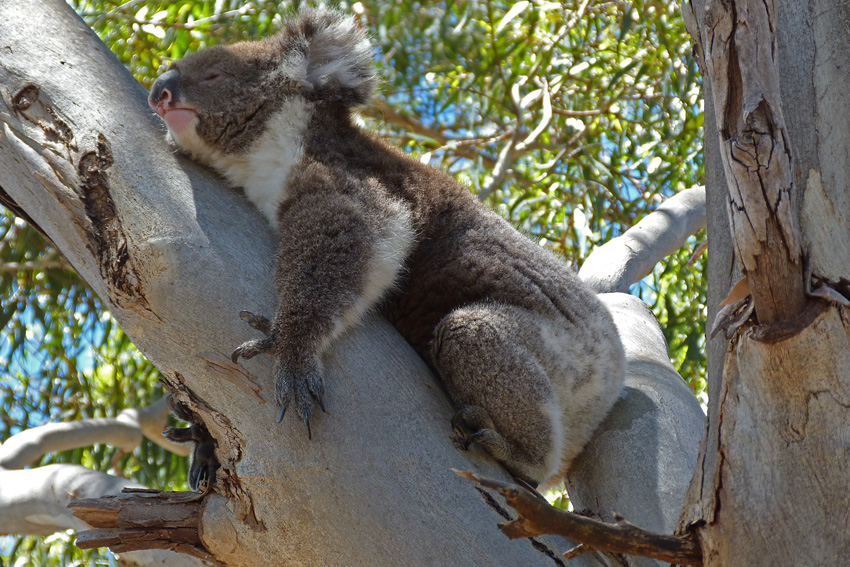
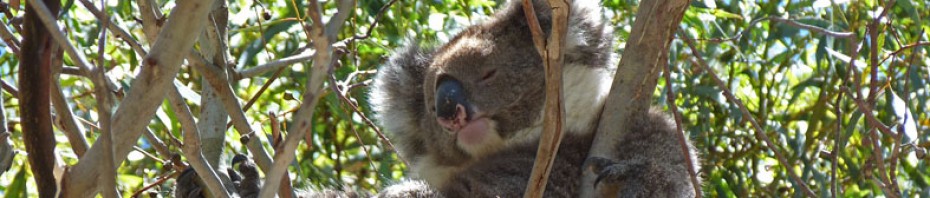
 The drive took me a little longer than expected as I was waylaid by the smell of freshly cooked pastries emanating from a little bakery. My rucksack now stocked with enough calories to sustain my upcoming physical endeavours and probably those of the next week, I pulled into the little car park alongside the creek, hung a camera from my shoulder and set off up the southernmost trail. The sun was still low in the sky and only the southern face of the steep-sided valley benefited from it.  I had walked just a few metres and was emerging from the shade when I noticed some walkers standing below a tall eucalyptus tree pointing excitedly at one of the higher branches. I followed their obvious line of sight and there, nestled into the fork between trunk and branch was a fairly large koala doing what koalas do best ….stretching out and resting.

AC Koala in tree near the trailhead

Koala in tree near the trailhead

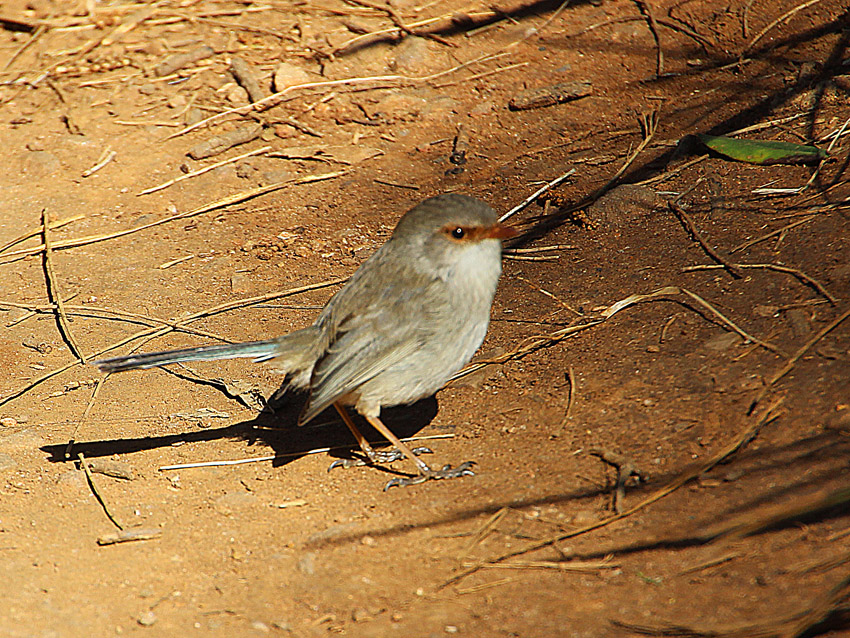
The koala was an unexpected and encouraging start to the day and after spending few minutes watching it I started up the trail with a fair degree of optimism. Winter is never the best time for wildlife. Plants have fewer flowers and fruits and the insects that are attracted to them are in short supply. Of course there is always an up-side when it comes to nature and the damp ground makes it easier for some bird species to fossick for grubs and worms. A pair of blue wrens seemed to be making the best of these conditions, madly hopping from one tree branch to the next then down onto the ground in a never ending search for food. Their constant motion and the morning light gave me only a few half-chances to capture some images and no hope of freezing their motion completely. I did manage a couple of shots that showed some of the obvious differences between the male and female of this species.

AI Male blue wren

Male blue wren

AH Female blue wren

Female blue wren

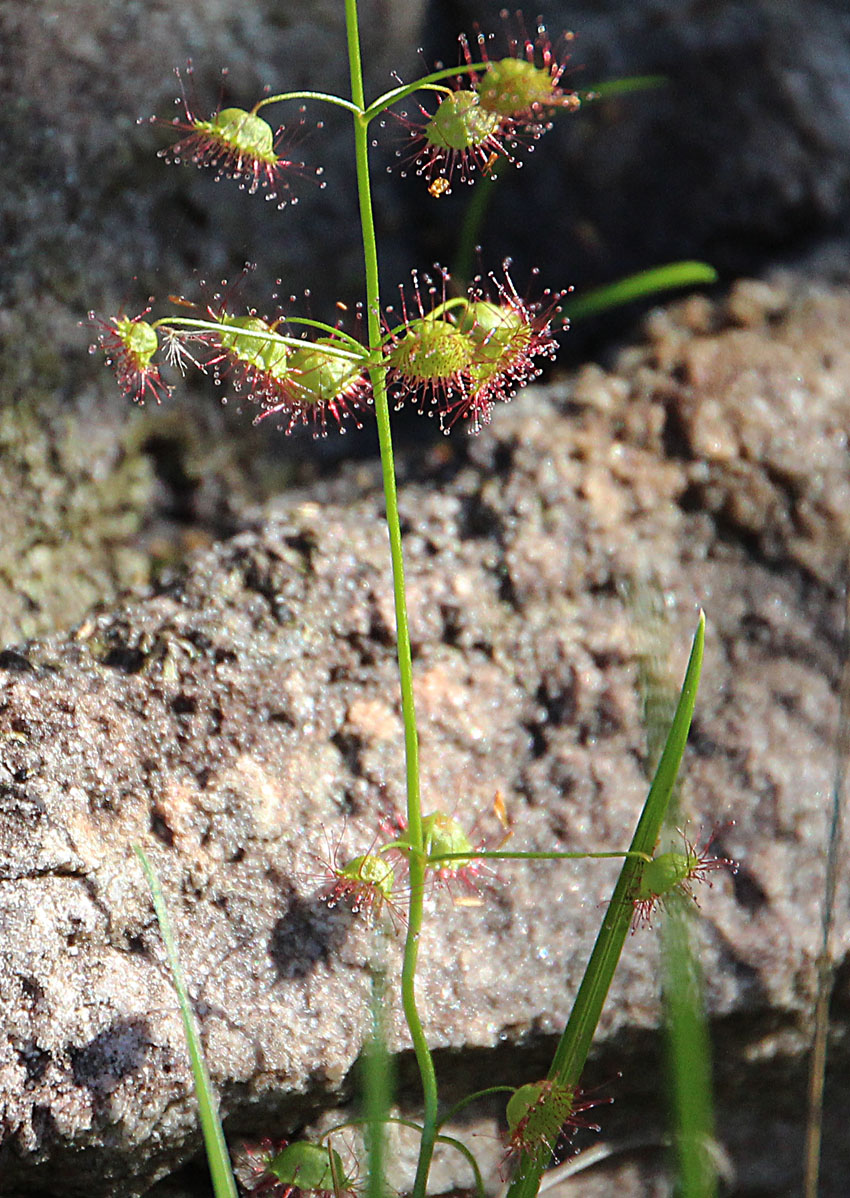
A little further up the track I stopped and sat on a large boulder and scanned the undergrowth for insects or lizards. There was nothing to be seen or heard but I did notice some honeydew plants growing amongst the grasses near a rocky outcrop. These delicate little plants have tiny inverted cups radiating from their stems. The cups are fringed by small filaments and have sticky, viscous fluid in the centre. Unwary insects are trapped in the sweet heart of the cups and the filaments close on them to seal their fate. The unfortunate bug is then digested by its ‘vegetable’ captor providing essential nutrients that other plants might get from the soil.

AG Honeydew plant

Honeydew plant


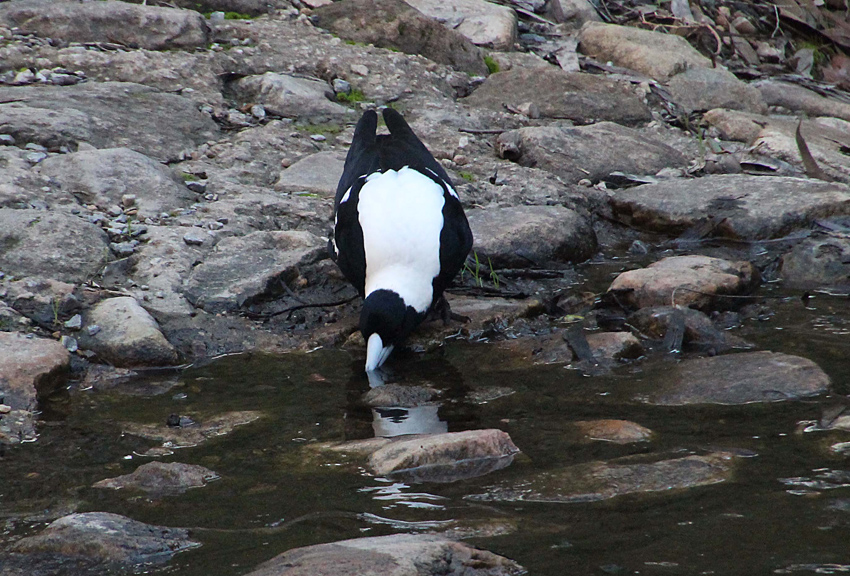
Colourful wrens, cute koalas and carnivorous plants had provided quite a range of wildlife in the first kilometre or so of my walk. As expected, the wildlife had not been prolific but there always seemed to be something around the next bend if I took the time to pause and use all of my senses. The next few kilometres were enjoyable but largely uneventful. A few honeyeaters flitted between late flowering shrubs, a magpie nervously snatched a drink from the creek while a squadron of miner birds squabbled in a stand of acacia bushes. It was not until I was almost back to the car park and walking below some tall, pale eucalyptus trees that bordered the creek that my next significant encounter occurred.

AD Magpie drinking from the creek below the falls

Magpie drinking from the creek below the falls

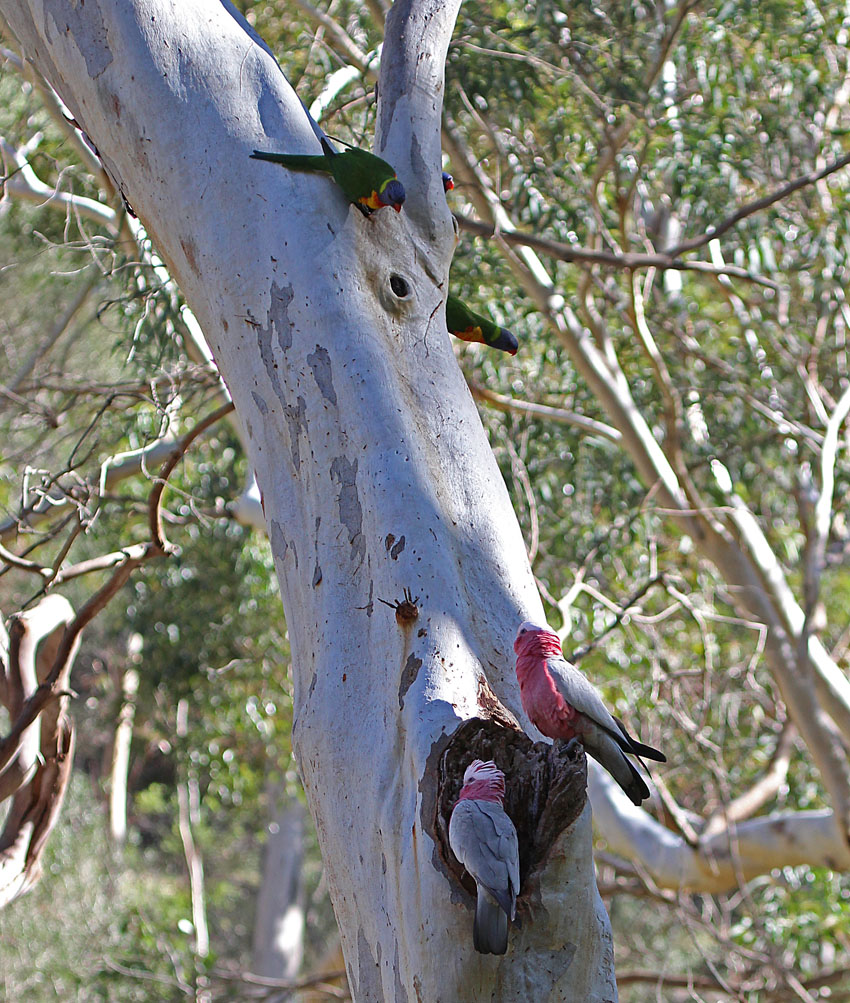
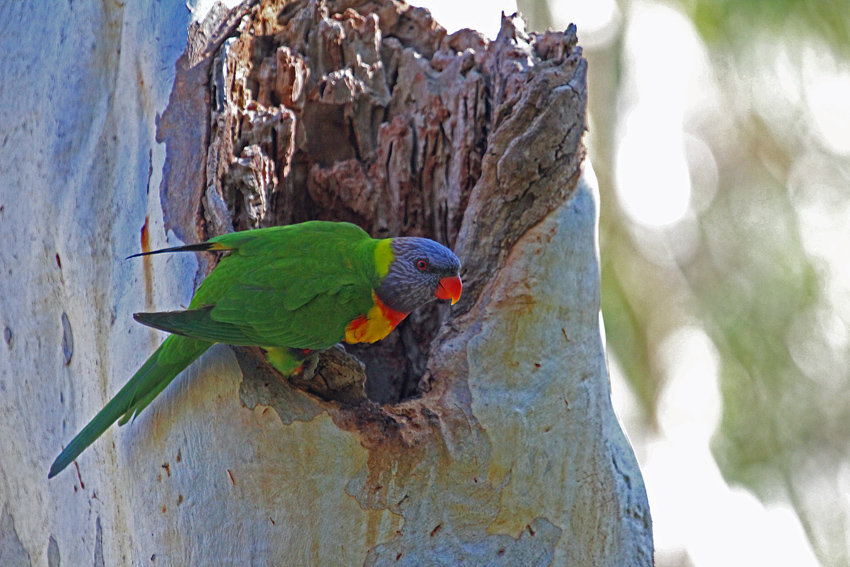
A small group of rainbow lorikeets had gathered on the branches of a massive gum tree about 10 metres off the ground. They were screeching loudly and seemed quite agitated. I moved away so as not to scare them and sat quietly in the cover of some thick bushes watching closely through my long lens. The source of their consternation soon became obvious; a pair of galahs had commandeered a nesting hole in the trunk of the tree. Over the next half an hour I witnessed a heated real estate battle develop as a continual rotation of chattering rainbows tried to dislodge their larger rivals. Eventually the galahs moved off and one of the rainbow lorikeets immediately flew down and started to peck around the perimeter of the nest hole.

A A pair of rainbows watching galahs at nest site

A pair of rainbows watching galahs at nest site

AF Inspecting the new proerty

Inspecting the new property

I finished my walk sitting on the edge of the creek with a cappuccino from the coffee van that plies its trade on the weekend and a pastry from my stash. Not a bad way to spend a sunny winter’s day for any wildlife enthusiast.


Thanks for taking the time to read this post.


Cheers

Baz  

Red Earth Wildlife

28 Jun

Dear Reader

South Australia’s capital Adelaide is a wonderful starting point for long country drives that take you through a variety of landscapes ranging from seemingly endless wheat fields to rugged coastline and dense bushland. The  city sits in the curve of the Mount Lofty Ranges. It has a fine Mediterranean climate with hot summers and cool wet winters. However, as you travel further west both the terrain and the climate change dramatically. The grassy plains and forests give way to saltbush, desert and scrubland. Even the earth beneath your feet looks different, the browns and greys turn to a rusty red, a signature feature of this iron rich land.

AB Bush track and old sheep fencing near Whyalla

Bush track and old sheep fencing near Whyalla

I have travelled west on many occasions to visit family on the Eyre Peninsula. They live in Whyalla, the state’s largest city after Adelaide. Whyalla lies on the coast and is a steel making centre where the iron rich rock that paints the landscape its terra cotta shades is mined, processed and exported to all corners of the globe. The city is well positioned for exploring the rugged Eyre Peninsula and has good accommodation as well as excellent fishing and interesting mangrove stands along the shallow foreshore. However, it is the nearby rugged bush landscape and hardy desert creatures that carve out an existence from it, that never fail to inspire me when I visit.

AB Different layers of arid scrub on Eyre Peninsula

Different layers of arid scrub on Eyre Peninsula

My last visit a little, at the end of this summer, was particularly rewarding. We had been without significant rain for well over a month which often brings the wildlife closer to the town where there is casual water and food, albeit not quite their natural diet, around parks and other public spaces. As many desert animals are crepuscular or nocturnal they tend to head back into the shelter of the surrounding bush during the day when the light is better for photography. This behaviour results in a narrow window of opportunity, during the early morning and late afternoon, for wildlife watching.

AE desert scrub near Whyalla

Red Kangaroo in semi desert terrain near Whyalla


A morning drive along one of the narrow bush tracks, used by local farmers to repair fencing, brought me to a large clearing and a brief encounter with a huge male red kangaroo. He was alone and grazing on some low shrubs and grasses and moved slowly into the bush as I approached. Several of the smaller grey coloureds females bounded across the track as I moved further along the trail and I caught a passing glimpse of an emu way picking its way through some stands of Myall trees. For the next hour the wildlife viewing was much the same, a few roos in the distance and the occasional bird of prey and flights of parrots flushed out of the surrounding bush.

hite-browed Wood Swallow perched near its nest in a fence post

White-browed Wood Swallow perched near its nest in a fence post


Later in the evening I drove along a different trail and had to engage low ratio 4WD to scramble my SUV across some steep shale covered sections. But it was well worth it when I climbed out and walked slowly through a particularly promising section of scrub. Crouching low in the bushes I spotted a couple of white browed wood swallows, a species I had never photographed and certainly a beautiful little bird and one superbly adapted to this green grey outback country.  

AF Tawny frogmouths group camouflagedin Myall Scrub in the late afternoon

Tawny frogmouths group camouflaged in Myall Scrub in the late afternoon


Satisfied with my afternoon’s work, I checked the ground for ants, scorpions or other pain inducing critters, sat down under an old, weathered Myall tree and pulled out my drink bottle. Sitting quietly in the bush is a treat for a city guy and I was going to enjoy some time alone before driving back for dinner.  However, it turned out that I was not alone in my choice of resting places. Perched on one of the branches, no more than three metres from away, was a family of tawny frogmouths; an insectivorous, nocturnal species unique to Australia that has an owl like appearance and the most amazing camouflage that I have ever seen. The birds were seeing out the daylight hours in the shade and paid me no heed as remaining still is a crucial part of their survival strategy. A final series of images to end an amazing morning in the bush.

Cheers

Baz

← Back

Thank you for your response. ✨

My South Aussie Garden

15 Jun

Dear Reader

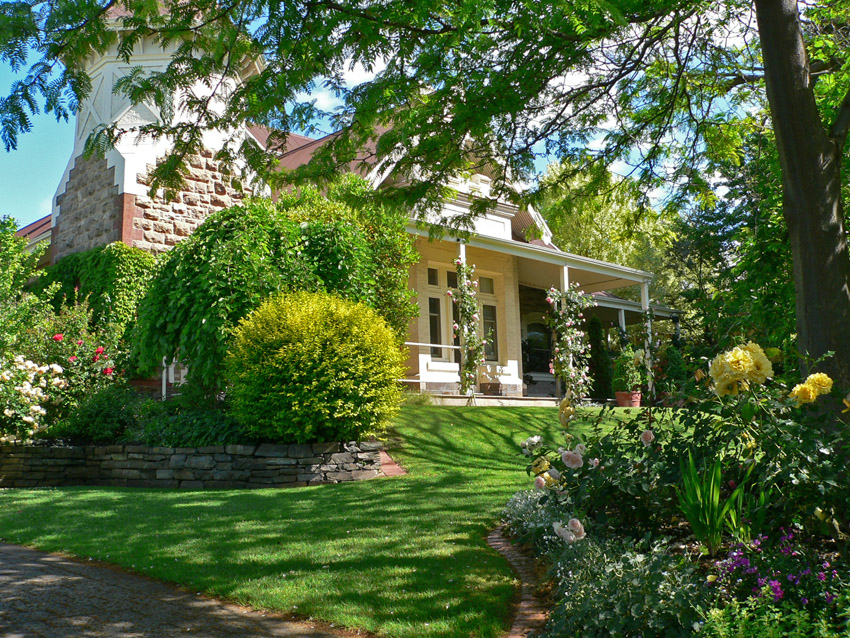
The people of Adelaide have the luxury of a glorious Mediterranean climate; cool and wet in the winter, mild to warm during autumn and spring and hot and dry in the summer. Such benign weather combined with the city’s ideal location between hills and coast provide excellent conditions for gardening throughout the year. Viewed from the hills, the city looks like a green patchwork of tiny gardens, expansive parks and tree lined boulevards. In general, South Australians take great pride in their gardens creating personal spaces that provide a sanctuary in a modern urban setting as well attracting local wildlife into the city.

AE Clssic home and garden in North Adelaide

Classic home and garden in North Adelaide

My own garden, like that of many Adelaideans, is a combination of native shrubs, trees, lawn and exotic flowering plants, all carefully chosen to give colour throughout the year and attract both birds, insects and the occasional reptile. Small areas of lawn and strategically placed rocks provide variations in terrain while outdoor seating and water features add aesthetics plus an all important source of moisture in the summer months.

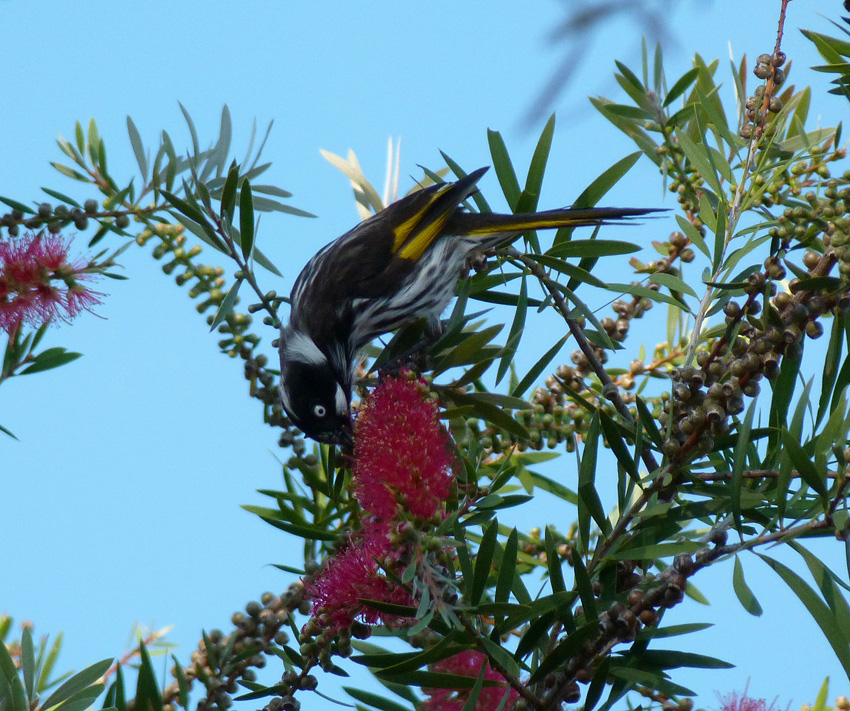
AB New holland honeyeater feeding in bottlebrush

New holland honeyeater feeding in bottlebrush

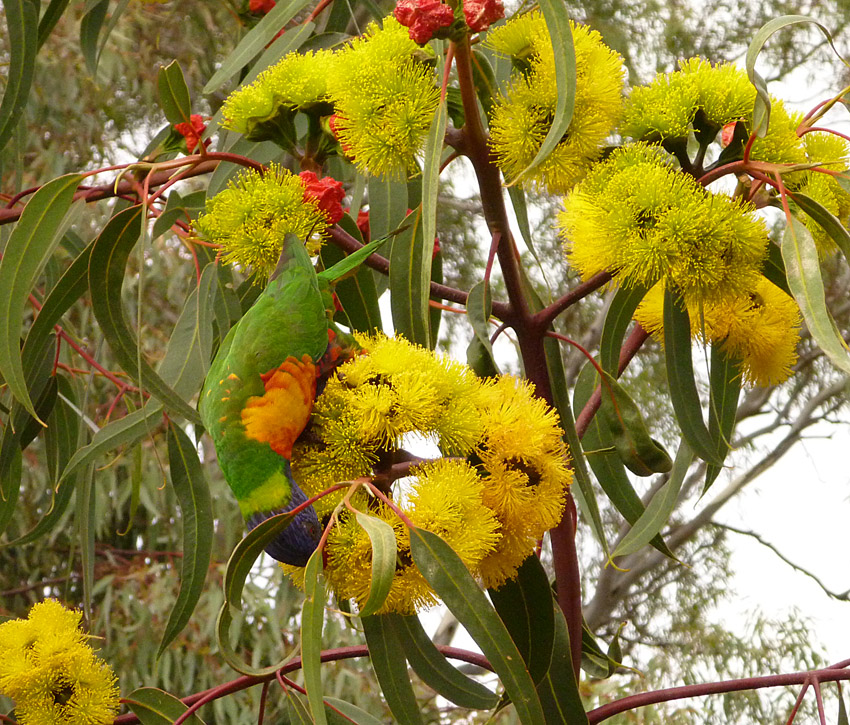
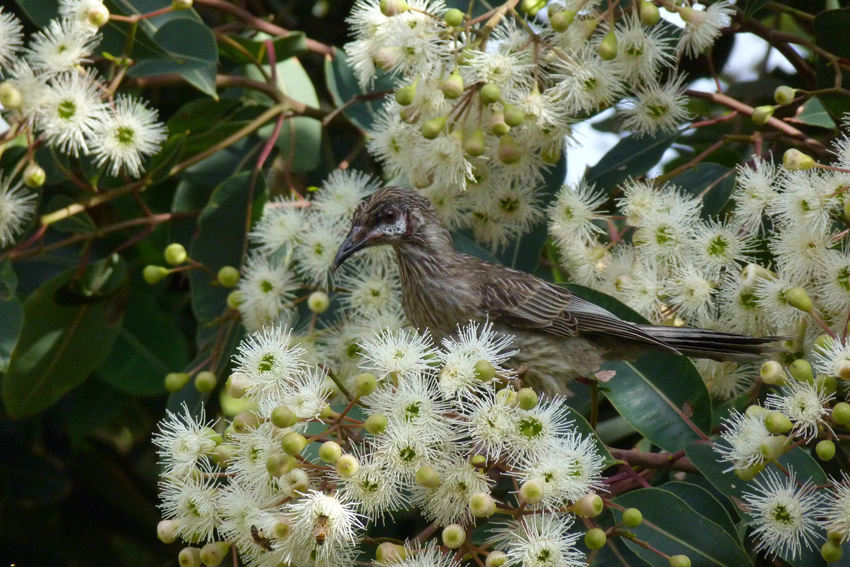
A couple of sizeable eucalypts dominate the back of the garden. The smaller of the two has large yellow flowers that blossom in the spring and tends to attract a wide variety of parrots, especially rainbow lorikeets. The larger tree has smaller, white flowers that seem to be at their best around Christmas. The  snowy blossoms are a favourite food for several different  species of honeyeaters including the largest of all; the wattle bird whose raucous cry sound remarkably like wakeup…wakeup.

AF Rainbow lorikeet feeding on red flowering gum blossoms

Rainbow lorikeet feeding on red flowering gum blossoms

AC Young wattle bird feeding in eucalyptus tree

Young wattle bird feeding in eucalyptus tree

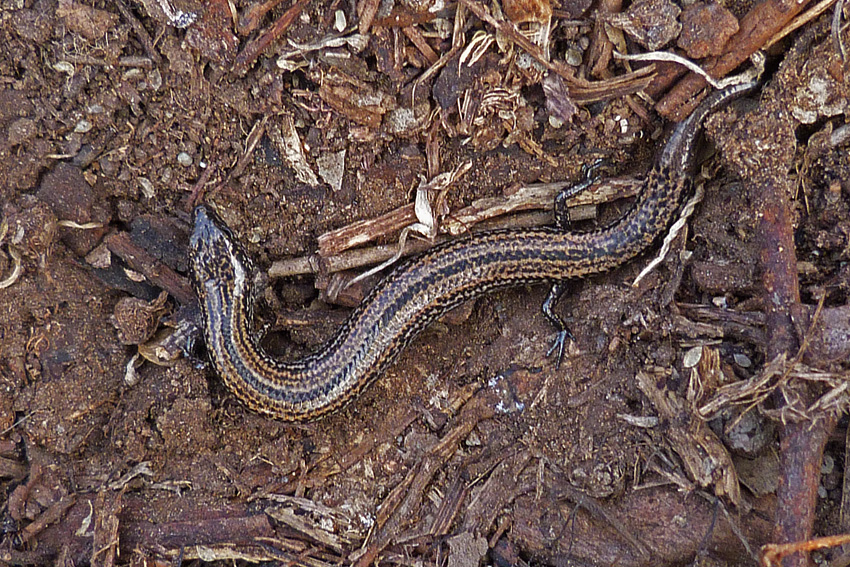
Several different species of lizards are quite common around the garden. Marbled geckos live amongst the brickwork and a variety of slender skinks including sliders and cenotus scurry under the leaf litter and rocks. Occasionally a blue tongue or shingleback makes an appearance during the summer months.

AAgarden skink amongst bark and leaf itter

Garden skink amongst bark and leaf litter


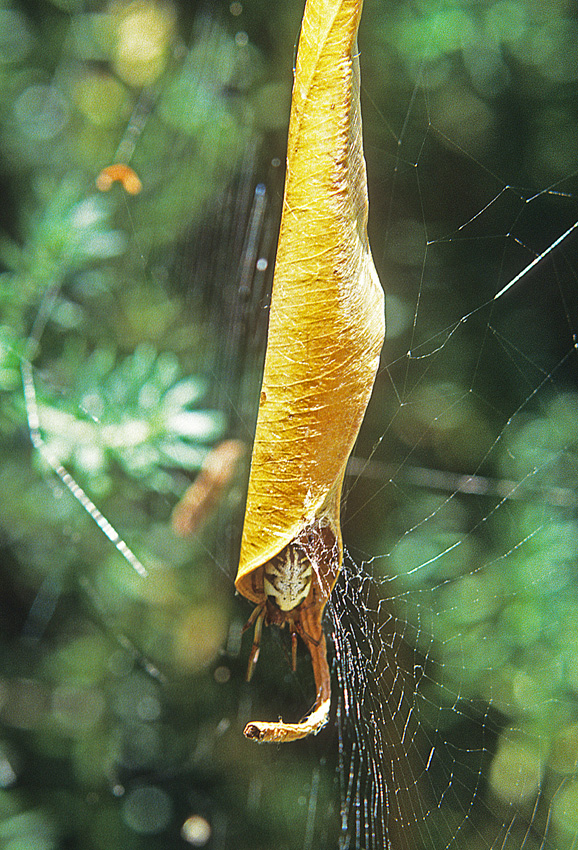
Spiders and insects are found in a myriad of micro-niches throughout the garden. Flower spiders hunt amongst the blossoms, red backs live in the dark recesses of garden sheds while various beetles, wasps and mantids (to mention just few groups) forage amongst the diverse shrubs and grasses.

AD Leaf curling spider

Leaf curling spider using a gum leaf to construct its home


This is a merely a brief introduction to my garden. In some of my future posts I hope to share much more detailed stories and observations about the animals and plants that   I encounter each day in my own garden and others that I might visit around the state.

Cheers

Baz

Any feedback on this post is most welcome

← Back

Thank you for your response. ✨


Misty Morning Rats

9 Jun

 This year, the first few days of winter have been a little cloudy with a light mist over the city in the early hours. It is the kind of weather that encourages a cup of coffee, at the Par 3 Cafe by the Torrens Weir, before my weekend bike ride around the river trail. But the cool quiet mornings do have one distinct advantage. Some of the more reclusive creatures that inhabit the river banks seem a little less wary and easier to find; most notably…The Australia water rat…one of my favourite species.


AFF Torrens Weir in winter feeding the river below

Torrens weir in winter feeding the river below


As you can imagine, misty mornings, shy wildlife and carrying a camera on a bike does present a few challenges. My digital SLR and long lens are too heavy and the low light conditions push the compact super zoom that I can comfortably wear on my hip, to its absolute limits. Consequently, please excuse a couple of the rather grainy images that I have included later in this post. However, the mere fact that I was able to capture these pictures encourages me to share them and their story with you.


AA Willy Wagtail lookin for insects amongst the reeds

Willy wagtail looking for insects amongst the reeds


Over the many years that I have walked or cycled around our permanent creeks and wetlands I have only caught the occasional glance of Australian water rats. The tell tale ‘V’ shaped wake that they leave and their low profile in the water make them unmistakable. Unfortunately, after a brief appearance they invariably dive or disappear into the tangle of reeds and grasses on the water’s edge. It is also quite easy to confuse them with common rats, which swim well and often live close to waterways. Unlike their terrestrial cousins, water rats are a little more robust have a slightly blunter face with a heavier covering of whiskers. Their back feet are also webbed and they have a white tip to the tail.


AG Common rat scavenging close to the river

Common rat scavenging close to the river


Back to my tale of coffee and misty mornings; last Saturday I had cycled from home to the weir and was peddling along the track that runs south above the river when I noticed a classic ‘V’ shaped wake in the water. I quickly dismounted, whipped off my helmet and gloves and pulled out my camera. The water rat swam upstream diving periodically and I was able to walk slowly along the trail watching it for around 5 minutes. Eventually it disappeared into the undergrowth near the bank but not before another one paddled close by affording me a rather unique photo opportunity. However, as I mentioned at the start of this piece, the light conditions were far from perfect and my target animals were the best part of a 100 metres away. A lot of frames and little Photoshop produced the two images you can see here.

AC Australian Water Rat sheltering under the bank edit 2

Australian water rat sheltering under the bank


AD Australian water rats swimming across the river

Australian water rats swimming across the river

Encouraged, I returned the next day and sat quietly on the bank for the best part of an hour, hoping for a repeat performance. I did see one water rat for a brief moment but I could not focus rapidly enough to get a clear image. At this point, the coffee beckoned and I cycled back to the weir stopping a couple of times on the way to enjoy the winter’s early scattering of leaves on the river bank and watch a pair of silver gulls wading in the water cascading over the sluice gates.


AH Early winter leaves on the river bank

Autumn leaves on the river bank

AE Australian silver gull looking for prey in the overflow

Australian silver gull foraging in the overflow

Now that I know there are several water rats in the area I am determined to travel the same path on foot over the next few months with my DSLR to see if I can improve on these pictures. But for now I am thrilled to have seen the little animals foraging in the wild and to have captured a few simple images.


Until next time

Baz

← Back

Thank you for your response. ✨

South Coast Sealions

31 May

Dear Reader:
Last weekend I was walking along the rocky foreshore of the Deep Creek Conservation Park at the tip of the Fleurieu Peninsula around 90 kms from Adelaide. A few metres from the shore a rush of water and a speeding grey shape caught my attention. ‘Dolphins at play’ was my first thought but a closer look dispelled that idea. The twisting motion was suddenly more than a little familiar… sealions. A pair were frolicking or fishing close to the rocks on the inside of the powerful rip current that surges between KI and mainland. They were too fast for me to take a shot but my thoughts drifted back to my first encounter many years ago in this same stretch of water.

AACP1070291 edit

Deep Creek foreshore with grass trees in foreground

We were *spear-fishing along this same section of coast on a day that would have been better spent sleeping in. There was a stiff sea breeze and the visibility was around 2 meters at best. I was returning to the surface after scouring a rocky ledge near the bottom for zebra fish and just one hard kick of my fins from the next breath of air when a grey shape rocketed out of the gloom just below me.  In an instant my assailant turned to face me with breathtaking agility. Instinctively, I raised my spear gun, slipped off the safety and prepared to meet either a bronze whaler or white shark.

AADzebra 2 edit

Zebra fish on a rocky reef feeding amongst brown algae

Needless to say, my reflexes combined with the drag of the water meant that by the time the predator had reached me the gun was in no position to be of any use. The next moment I was face to face with my attacker. The large bull sealion came to a sudden halt, only inches from my facemask; its formidable set of teeth, bushy whiskers and baleful eyes providing an image that stays with me to this day. The sea lion performed a few more acrobatic turns as if to point out my ineptness in its watery home then disappeared back into the murky depths.

AAEsealion 8red

Sealion underwater near Deep Creek

Australian sealions (Neophoca cinerea) are a threatened species that inhabit the temperate waters of Western Australia and South Australia. They grow to around 2.5 metres in length and weigh up to 300Kg; the males are larger than females. Sealions feed on fish, molluscs and crustaceans and in the past were persecuted by fishermen and hunted for blubber and meat. Unlike seals, sealions move comfortably on land using their flippers rather than dragging themselves. They have external ears; hence their family name Otariidae . Sealions breed on isolated beaches and rocky platforms often with rock pools close by where the pups can swim safely while being weaned. Their major predator is the great white shark.

AABsealion 5 edit

Female sealion weanng pup on a sheltered beach

This was not my last encounter with these glorious South Australian mammals but it was my first and most memorable. In a later blog I will tell you about an exhilarating weekend on Kangaroo Island photographing sealions.

AAAustralia marine and coast sealions edit

Male sealion asserting dominance on a breeding site

Cheers
Baz

*Apologetic footnote…..Many of the Australian wildlife photographers and naturalists that I have encountered developed their passion for the natural world and much of their field-craft with a rifle or rod in their young hands before graduating to pen and camera.

← Back

Thank you for your response. ✨

Rare Birds on the Beach

16 May

Dear Reader:
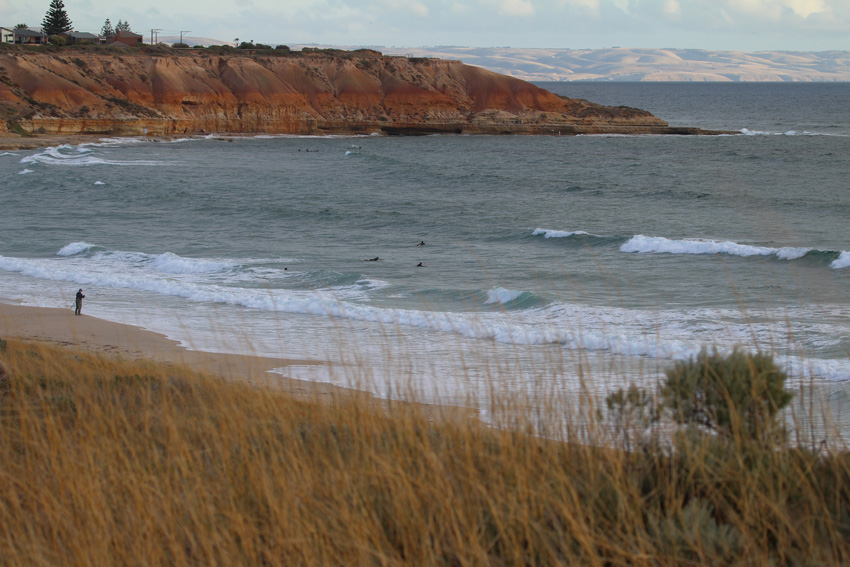
This week’s post is coming to you from Southport, a surf beach just south of Port Noarlunga but still sheltered by the reef (see Jan 21st post). I am sitting in a small cafe sipping a cup of coffee and reflecting on the last couple of hours spent wandering through the sand hills and along the beach.
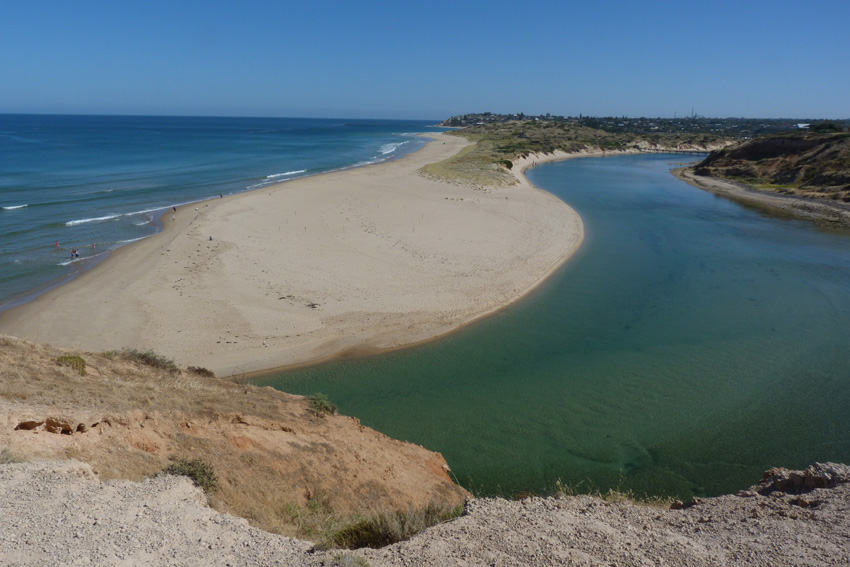
I had driven to Southport in the early afternoon with the specific intention of walking along the tidal flats, where the Onkaparinga estuary drains into the sea, to photograph crabs and wading birds. However, I had not counted on such a high tide; the mudflats were covered and I could only access the walking trails that meander through the sand hills from beach on the seaward side.

A Southport Beach, estuary with bridge in the background red

Southport Beach, estuary with bridge in the background

I parked by the roadside and crossed the river on a small bridge below the cliff line and spent a few minutes watching anglers casting for bream and garfish. Nearby, a father and son paddled a sea kayak towards the ocean disturbing a small flock of black swans as they edged close to one of the steeper banks where the sandy slope of the dunes ran into the water.

B Kayaking below the cliffs red

Kayaking below the cliffs

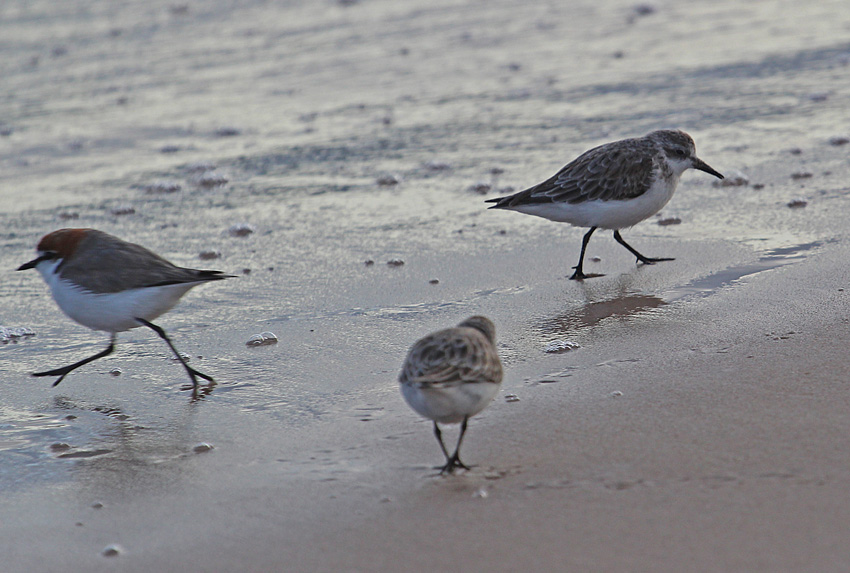
As I traversed the final set of dunes above the beach I felt the afternoon sea breeze on my face and caught the muffled crash of waves breaking on the shore. Several surfers were enjoying a choppy break and more adventurous anglers were wading into the white water to cast for salmon. I headed down to the sand to find one of the trail entrances to the dunes that open onto the beach. As I trudged through the soft sand I noticed a group of diminutive shore birds racing between the foamy lines of waves curving up the beach. At first glance they appeared to be similar in appearance but a more critical look through the telephoto revealed a mixture of species and sexes.

D Mixed group of waders foraging between waves red

Mixed group of waders foraging between waves

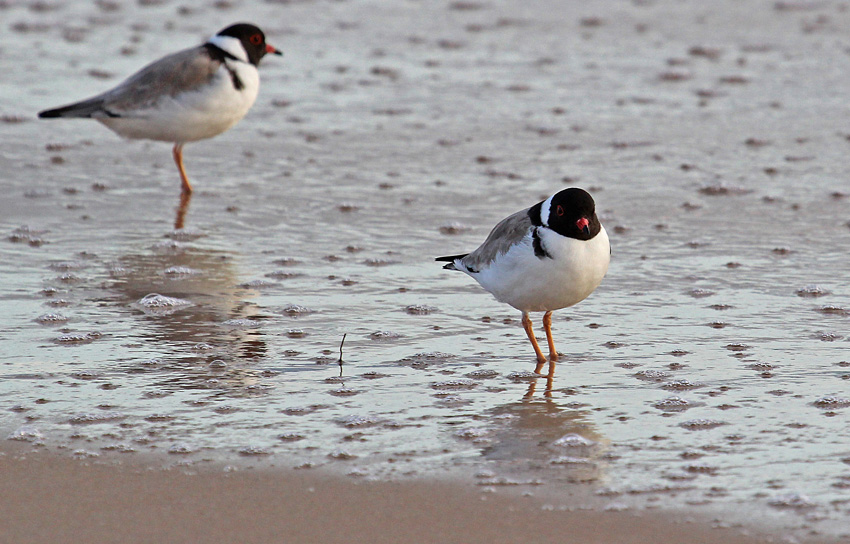
One particular pair stood out amongst the others. I held my breath, refocussed and squeezed off a series of shots, dropped to one knee to better incorporate the water into the background and fired again. I was photographing a pair of hooded plovers, an endangered species that nests on open beaches and a bird that I had only glimpsed at a distance along the Coorong’s extensive beaches further south. As I captured the last image, the wind picked up and the little flock of waders lifted as one and flew further down the beach.

E Hooded Plovers red

Hooded plovers

A sat for a few minutes, smiling inwardly as I reviewed the images then continued down to the trail entrance. As I climbed back up into the dunes I reflected on the extraordinary beauty and diversity of this stretch of coastline, a mere 20 Kms from the city centre. Walking through the dunes was like entering another world made up of: low scrub, wiry grasses and a thick layer of undergrowth fashioned from the skeletal remains of branches and tree trunks. I walked slowly and paused frequently observing a variety of insects, several lizard species and an assortment of birds including: honeyeaters, magpies and crested pigeons.

C View of the beach from the dunes in the afternoon light red

View of the beach from the dunes in the afternoon light

But today it was the ocean that called and as the light started to fade I took another track down to the shoreline and worked my way back to the section of beach where I had encountered the plovers. Sadly, the plovers were long gone but a little group of red capped dotterels remained, bedding down for the night in the footprints that I had left in the sand when I walked this way just an hour ago.

F Red Capped Dotterels bedding down for the night red

Red capped dotterels bedding down for the night

My coffee is finished now and it is time to drive home and share this afternoon with you.

And yes, dear reader, I missed the tide but somehow I think it might have been for the better.

Sincerely
Baz

← Back

Thank you for your response. ✨

Adelaide’s Parkland Rosellas

4 May

Dear Reader Adelaide’s CBD is surrounded by parklands. They are a place for workers to enjoy during a lunch break or cyclists and joggers to traverse on the daily commute. They set the tone for the city and also provide a natural backdrop to the everyday business of the state’s vibrant capital. They were conceived by the city’s founder and first governor Colonel Light and are still treasured and protected by those who live in the city and inner suburbs.

AA bike linear park

Bike riding through the parklands

The ecology of the parklands like the commerce of the city has its own rules and hierarchy. magpies and miner birds aggressively mark out and defend their territories, brushtail possums enjoy the nightlife and screeching rainbow lorikeets seem to know everyone’s business.

AB Noisy Miner feeding on a banksia bloom

Noisy miner feeding on a banksia bloom

One of my favourite animals in this urban ecosystem is the elegant and colourful eastern rosella. They are found throughout the Adelaide and Mount Lofty region and seem to have a preference for open woodland where they can find suitable nesting holes, preferably in old growth trees. There has been a pair raising their young in a white cedar in front of my home this year and when I go for an evening walk I can hear the young ones deep in the tree calling to the adults.

AC Male and Female Adelaide Rosellas feeding

Male and female eastern rosellas feeding

Adelaide rosellas are around 35 cms in length with females being slightly smaller with a faintly orange cast to their plumage and less defined markings. They create a nest up to a metre deep within a tree hollow. Both parents feed the young. Rosellas are mainly seed eaters and feed mainly on the ground.

AD Adelaide Rosella on parkland fencepost feeding on wild grain heads

Eastern rosella on parkland fencepost feeding on wild grain heads

For me, one of the attractions of rosellas is their is its truly unique South Australian connection.  Indeed one particular type, the Adelaide rosella,  only occurs within a few dozen kilometres of the city. It is actually a hybrid of the yellow rosella which inhabits the Murray River valley and the crimson rosella which is more prevalent in the south east of the state.

AE Social interaction between Adelaide Rosellas above nesting hole

Social interaction between eastern rosellas above nesting hole

If you walk through the parklands during the spring and summer months it is not difficult to observe these colourful rosellas exhibiting a full range of behaviours from feeding to nesting and mating.

AF Adelaide Rosella perched on nesting hole entrance

Eastern rosella perched on nesting hole entrance

Cheers Baz

← Back

Thank you for your response. ✨