Goannas, Shinglebacks and Ringnecks at the Ferries McDonald Conservation Park

30 Oct

Dear Reader:

Two Mallee Ringneck Parrots are perched high in a spindly eucalypt. Bracing the camera against a tree, I focus on the nearer bird to better illustrate its glorious colours.

Malle Ringneck Parrot

First sighting of Parrots

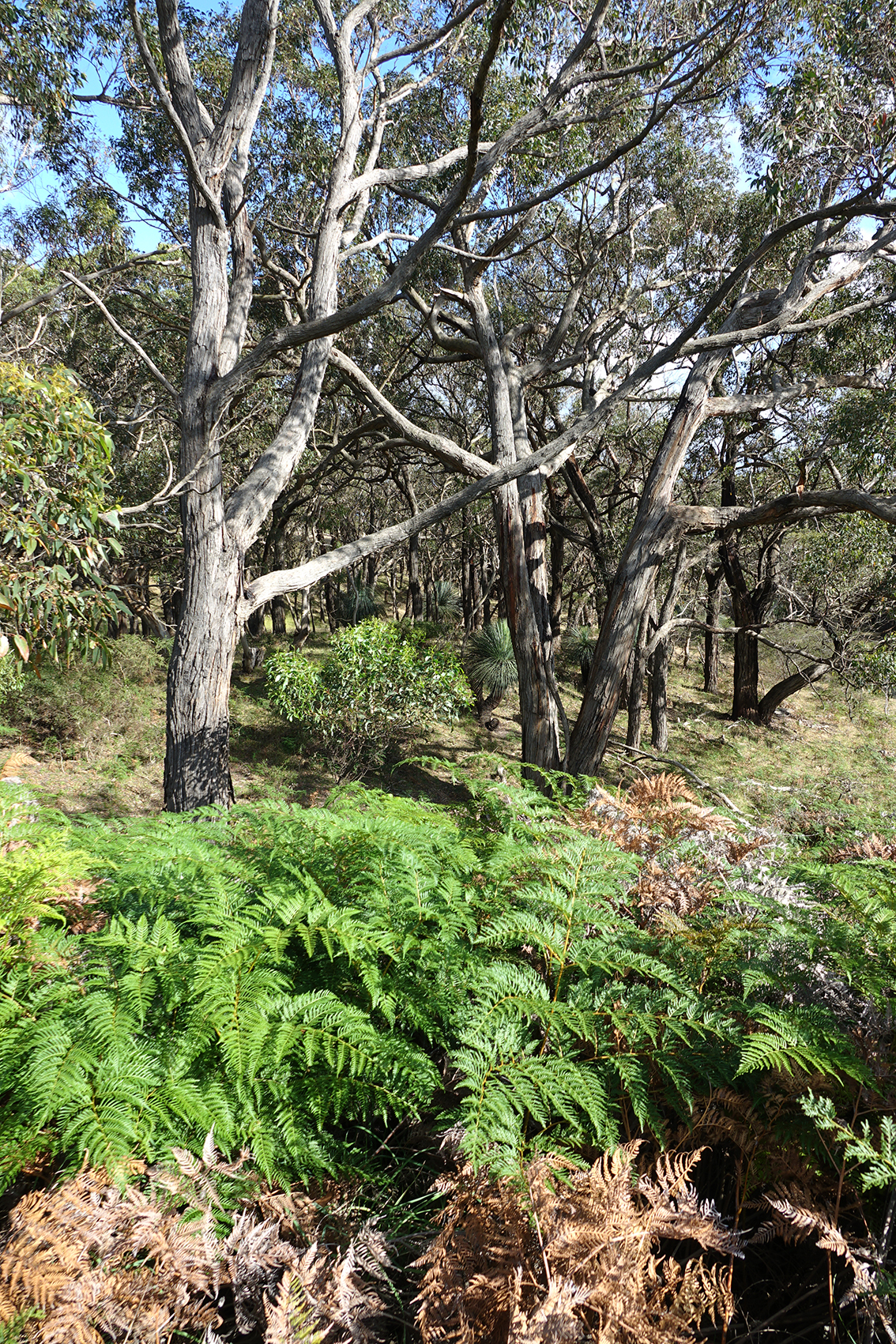
The Ferries McDonald Conservation Park is in the Monarto area about an hour’s drive from Adelaide’s CBD. It is a ‘dryland’ park dominated by Mallee trees and typical of the area before European settlement.

David entering the park

In the spring there is an abundance of blossoming shrubs and understory wildflowers, including numerous orchid species.

Eremophila Species

Peaflower species


We move along the narrow track slowly and listen carefully for a tell-tale rustle in the undergrowth or bird call. It is the former that announces my next encounter as a Shingleback Lizard heads for cover, abandoning the open, sunny area where it is basking.

Shingleback in cover

I’d prefer not to have my photograph taken

The occasional raptor, and small groups of cockatoos fly overhead. However, it is a diminutive, female Spotted Spotted Pardalote that catches my eye.

Spotted Pardalote

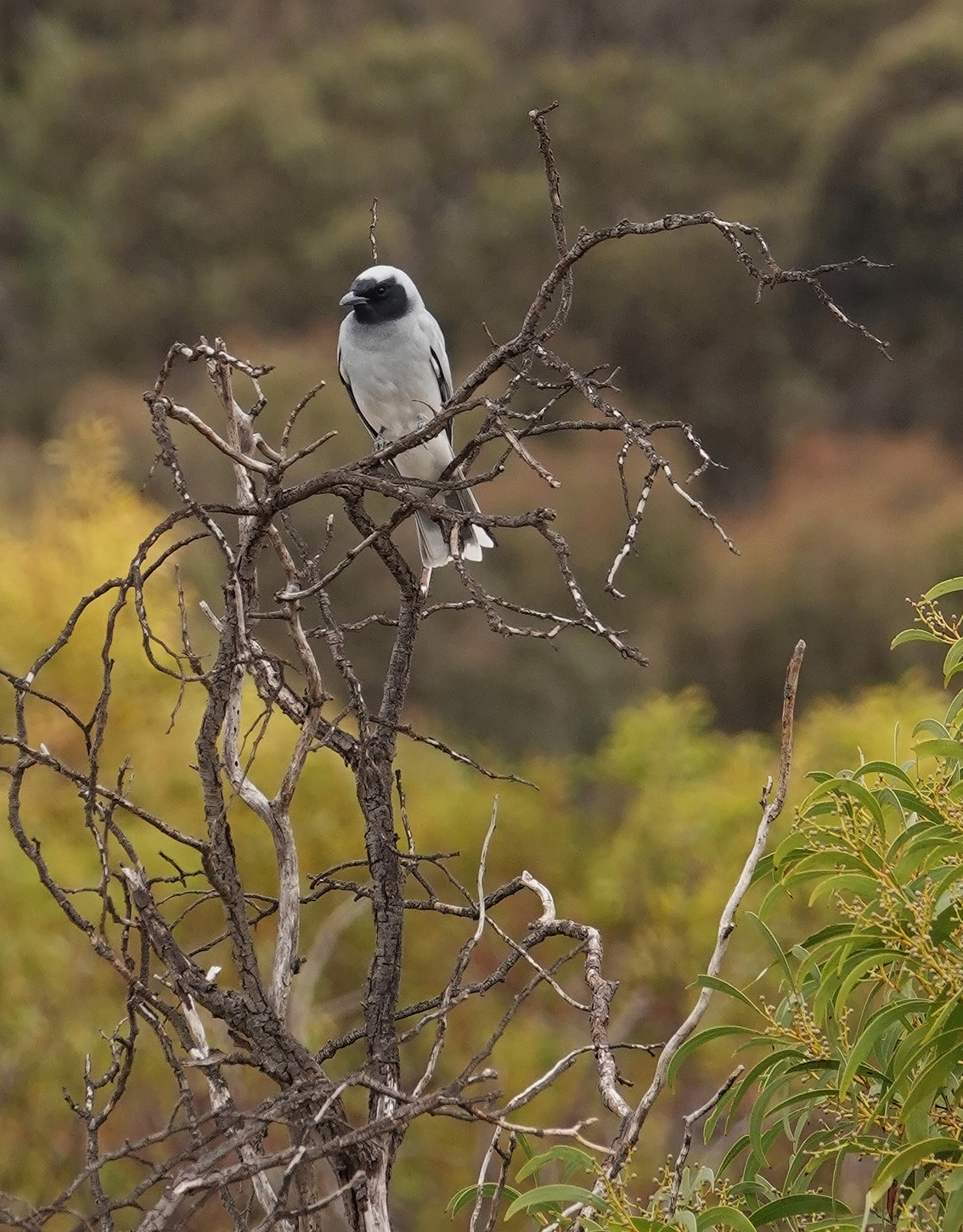
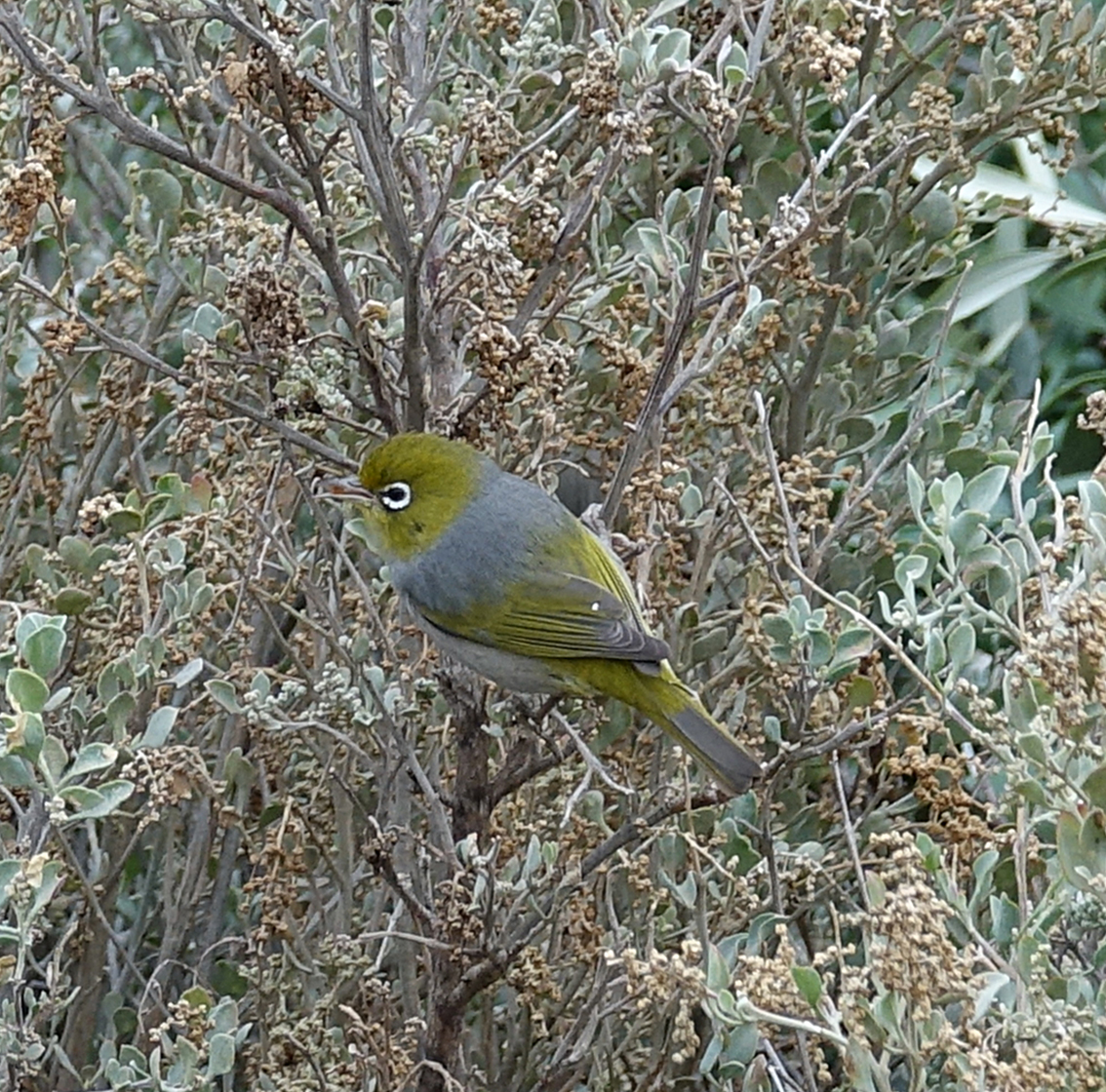
During the next hour of gentle walking we encounter a lone Western Grey Kangaroo near a fence-line which separates the park from nearby pastureland and numerous bird species. Most are tiny birds such as Silvereyes and honeyeater species which are feeding high in the canopy. In addition, there are Little Ravens, wattlebird species and Black-faced Cuckoo Shrikes in the area.

Western Grey with joey

The day is quite warm and the trek has taken a couple of hours which includes numerous stops to stand, watch and listen for wildlife. It is time for a leisurely drive home while still scanning for wildlife as we negotiate the initial section of unsealed road. However, it is a very rare sighting of a monitor lizard crossing the sealed road that really excites us.

Goannna crossing the road

I slow the car and cut the engine, gliding to a stop where the Goanna (the general term for all Australian monitors) pauses on a slight embankment. I power the windows down and we manage a few close ups before the lizard heads back into the scrub. An extraordinary way to round off our day.

Sand Goanna or Sand Monitor

Cheers

Baz

Additional notes

The camera used for this post is a Nikon P900

This is an easy walk/drive which is quite suitable for families and seniors. 

Please pass on this blog title and or contact information (URL) to any person or organisation with an interest in taking walks and enjoying wildlife in SA.

Click on these links and see more South Australian stories and pictures in my Weekend Notes articles as well as locating similar blogs on Feedspot’s top 20 Australian wildlife blogs

Barnes on a Rainy Day

14 Oct

Dear Reader:

A trio of elegant Mute Swans glide effortlessly across the river. They are accompanied by both male and female Mallards.

Three Mute Swans and one cygnet alongside Mallards

English Mute Swans are a sharp contrast to the usual Black Swans that I encounter at home in SA.

Australian Black Swans and cygnets

I am taking a rainy day walk around the outer London village of Barnes; a 45 minute bus trip from central London. This largely affluent community sits on a bend in the Thames River.

One of several pubs in Barnes

There is a wide range of things to do in this village even on a rainy day. The architecture is varied and interesting, the river and central duck pond support a variety of wildlife and there is an eclectic variety of shops and galleries to browse.

Duck pond at Barnes

Beyond the swans, in mid river, two teams of rowers battle against the incoming tide as their coaches urge them on from a power boat. And yes, the term tide is correct, as the Thames is a tidal river for many miles above its confluence with the ocean.

Rowing on the Thames

Battling a sudden gust of wind I follow the Thames Path, past some interesting buildings with glorious views over the river. I am making my way towards a little gallery which I always visit when I come to London.

Walking along the Thames Path in the rain

Local artists are featured here and I chat with one of the owners, an artist himself, before purchasing a beautiful ceramic owl as a keepsake.

Inside the Riverside Gallery

On the nearby duck pond, my naturalist’s eye is drawn to a pair of Swans and their sub-adult cygnets. The birds start to paddle across the water in my direction. Even closer, a pair of Egyptian Geese leave water and begin to feed on the grassy verge by the pathway. 

Egyptian Geese feeding

The rain eases a little and I peer into shop fronts as I make my way along the high street towards a bus stop for my return trip to London.

A soggy dog at the bus stop

As always, my short excursion to Barnes has been wonderful. Despite the wet weather, which adds a certain convincing flavour to the day, I have managed to capture a few memorable images.

Cheers

Baz

Additional notes

The camera used was a Nikon Coolpix W300 (all weather camera)

This is an easy walk/drive which is quite suitable for families and seniors with public toilets, parking and other facilities nearby. It is dog friendly.

 Please pass on this blog title and or contact information (URL) to any person or organisation with an interest in taking walks and enjoying wildlife.

 Click on these links and see more  stories and pictures in my Weekend Notes articles as well as locating similar blogs on Feedspot’s top 20 Australian wildlife blogs
 https://www.weekendnotes.com/adelaide/writer/452/

https://blog.feedspot.com/australian_wildlife_blogs/

Hahndorf Has Wildlife

24 Sep

Dear Reader:

At first glance the little creek appears lifeless but on closer examination I spot a Blue Damselfly and a juvenile Eastern Water Skink on the overgrown stonework.

Hahndorf is a tourist town of German heritage about a forty minute drive from Adelaide’s CBD. Best known for handicrafts, galleries, food and souvenirs; it also has quite a wide variety of wildlife hidden in its streets, trees and parks.

I am currently strolling around the Alec Johnston Park which has a small creek running through it, a soldiers’ memorial as well as a playground, rose garden and a heritage shed.

The trees above me are a haven for parrots. I have seen lorikeets and a rosella. However, it is their larger cockatoo cousins the Galahs and Sulphur Crests that make for the best images.

Two species of ducks live in and around the little creek: Pacific Black ducks and Wood or Maned Ducks. Today, a little group of Maned Ducks are dabbling amongst the water plants.

It is early spring and the wildlife is beginning to build up again after the winter hiatus. As with any natural observations weather and time of year are critical. Even a few roses are beginning to bloom.

Finally, I shall avail myself of the many lunch options available in Hahndorf and I am certainly leaning towards Kranskys (German sausages) and Sauerkraut with a serve of Beesting Cake to follow.

Cheers

Baz

Additional notes

This is an easy walk and drive which is quite suitable for families and seniors with public toilets, barbecues, parking and other facilities nearby. It is dog friendly.

Please pass on this blog title and or contact information (URL) to any person or organisation with an interest in taking walks and enjoying wildlife in SA.

Click on these links and see more South Australian stories and pictures in my Weekend Notes articles as well as locating similar blogs on Feedspot’s top 20 Australian wildlife blogs

https://www.weekendnotes.com/adelaide/writer/452/

https://blog.feedspot.com/australian_wildlife_blogs/

The Grampians…Around Halls Gap 1

25 Aug

Halls Gap Grampians

A preliminary note:

When I am not enjoying the natural wonders of South Australia I sometimes cross state borders and enjoy the wildlife of our close neighbours, Victoria and Tasmania. This post is about one of my favourite Victorian destinations.

Dear Reader:

There is an old fencepost on the edge of the creek trail. The weathered wood is in stark contrast to the red and black colours of a Red Jewel Beetle  crawling across it.

Red Jewel Beetle

I am staying at Halls Gap in the heart of the Grampians National Park. Because I am here for a wedding, there is not the usual time available for exploring the natural environment. My observations will only cover those animals which are casually encountered.

Classic Grampians scrub with rocky outcrop in the distance

I take the Mt Victory Road from Halls Gap to meet some friends at Zumsteins. On the way I am surprised by a large Eastern Grey Kangaroo which decides to make its way down a steep bank to cross the road in front of us.

Eastern Grey Kangaroo descending sloping hillside

Further along the road, a small group of Emus are feeding amongst a patch of grass and thistles. These adaptable birds forage for a wide variety of foods including: tubers, grasses, fruits, insects, centipedes and other arthropods.

Emus foraging

We reach the camping ground at the Zumsteins Historic area on the MacKenzie River. Apparently there are Platypuses in the river but my only sighting of a monotreme (egg laying mammal) is a lone Echidna.

Echidna foraging

Grey Currawong

Taking a more circuitous track back to Halls gap we have a few more interesting wildlife encounters along the way.  I photograph a Long-billed Corella perched high in the canopy, numerous Eastern Greys by the roadside and a  Grey Currawong in the trees where we stop for a snack.

Eastern Grey Kangaroos alert to a disturbance

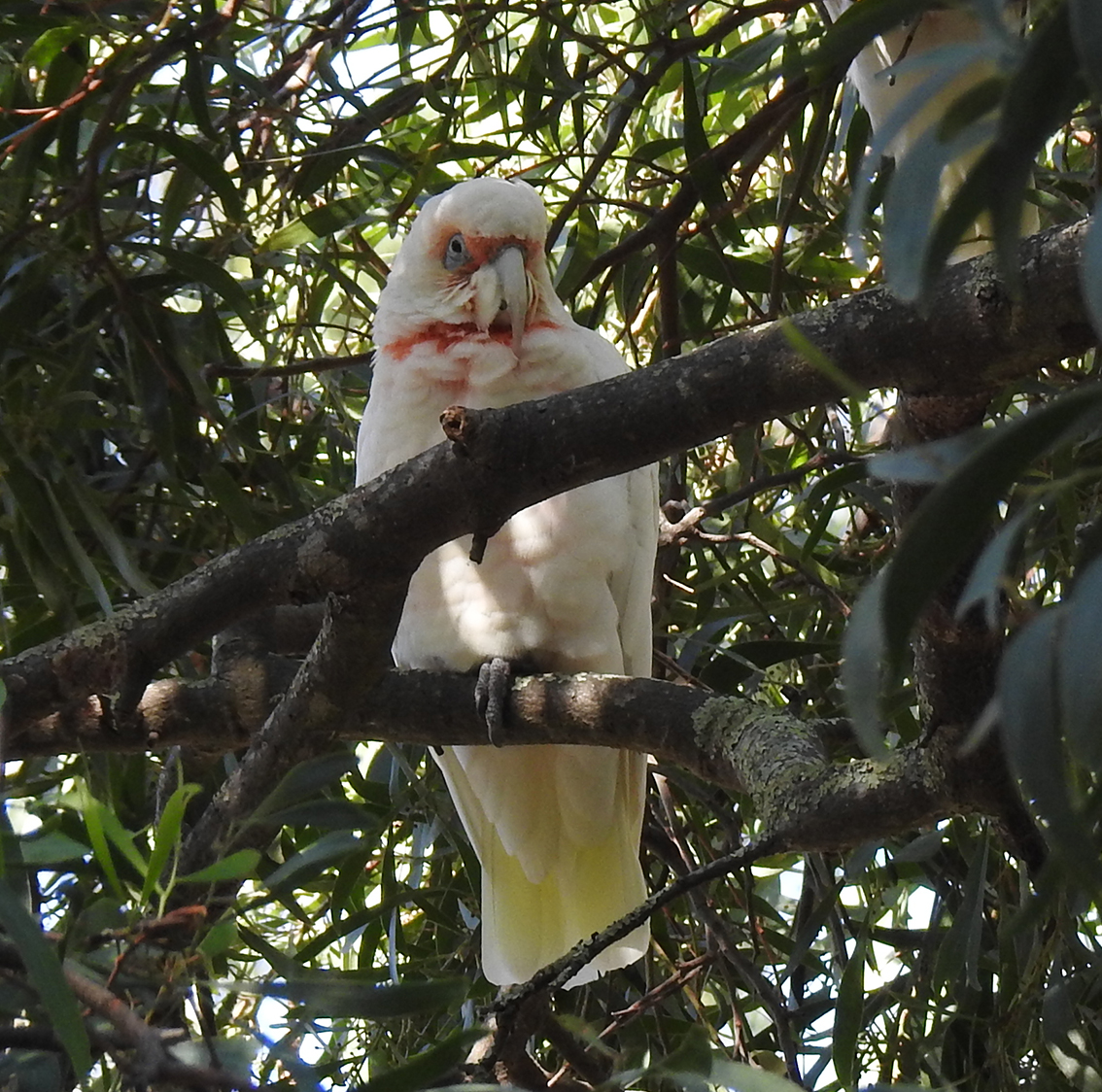
Long-billed Corella

However, the sun is getting low in the sky and we have one more place to visit, an orchard with a lovely view of some rocky outcrops. The site of tomorrow’s wedding.

Sunset on the edge of The Grampians

Cheers

Baz

Additional notes

This is an easy drive which is quite suitable for families and seniors. Dogs are not allowed in the National Park

Please pass on this blog title and or contact information (URL) to any person or organisation with an interest in taking walks and enjoying wildlife in SA. Dogs are not allowed in the National Park.

Click on these links and see more South Australian stories and pictures in my Weekend Notes articles as well as locating similar blogs on Feedspot’s top 20 Australian wildlife blogs

https://www.weekendnotes.com/adelaide/writer/452/

Bethany SA….. history and wildlife

5 Aug

Dear Reader:

Against a clear blue sky, a Nankeen Kestrel hovers above wheat stubble in search of rodents, lizards and other small animals.

Nankeen Kestrel

I am driving into the village of Bethany in the Barossa Valley about 70 kms from Adelaide. Founded in 1842 by German Lutheran settlers it was originally called Bethanian: German for Bethlehem. This charming hamlet has numerous points of historic interest starting with a Lutheran church constructed in 1883 and located on the site of an original mud, thatch church built in 1843.

Bethany, Lutheran Church

Further along the road, there is a local cemetery. I wander around reading the inscriptions which gives some perspective into the lives of our early settlers. Several Crested Pigeons are perched in one of the many trees and bushes that give the cemetery a garden-like quality.

Crested Pigeon

I take a few images of: homes incorporating original stonework, farm machinery, old fencing and other features that characterise this colonial village. In one front garden, a Monarch Butterfly perches on a shrub while Australian Magpies call (referred to as carolling and warbling) from nearby eucalypts.

Monarch butterfly, credit Debbie Simmonds

Near the town’s exit and heading further into the Barossa there is a ford crossing the Tanunda Creek. An unpaved pathway runs along the waterway. Massive Red River Gums tower above the creek and I spot: Galahs, Adelaide Rosellas and a lone Sulphur-crested Cockatoo high in the branches.

Galahs (Rose-breasted Cockatoos

Walking along the trail I meet a young couple exercising their dogs and ask them about the wildlife. They mention that Western Grey Kangaroos are common and the occasional Echidna.

Echidna, photographed in nearby woodland

Several of the biggest eucalypts have quite a lot of bark peeling off their trunks and I lift it carefully searching for: centipedes, roaches, gecko lizards and termites. All of which frequent this micro-habitat. I discover none of these. Instead, a myriad of half-grown Huntsman Spiders scatter in all directions. Instinctively, I jump back and fire off a couple of shots. I am not ­­­arachnophobic, but spiders are far from my favourite form of wildlife.

Juvenile Huntsmen Spiders head for cover

Close up of juvenile Huntsman to show features

After crossing the creek, I walk back towards my car which is parked near the ford. I will return to Bethany in the Spring and take a longer walk along the creek. However, today I’ll finish my day by visiting the nearby Bethany Winery and pick up a bottle or two to remember a good day exploring this iconic South Australian destination.

Bethany Winery

Cheers

Baz

Additional notes

This is an easy walk and drive which is quite suitable for families and seniors with public toilets, shelter, barbecues, parking and other facilities nearby. It is dog friendly.

Please pass on this blog title and or contact information (URL) to any person or organisation with an interest in taking walks and enjoying wildlife in SA.

Click on these links and see more South Australian stories and pictures in my Weekend Notes articles as well as locating similar blogs on Feedspot’s top 20 Australian wildlife blogs

https://www.weekendnotes.com/adelaide/writer/452/

https://blog.feedspot.com/australian_wildlife_blogs

The Kapunda Mine Trail…History and Wildlife

17 Jul

Dear Reader:

There is an Adelaide Rosella perched amongst the bare branches of a fruit tree in the garden of the old ‘Mine Manager’s House’.

Adelaide Rosella

I am taking a walk around the Kapunda Mine site situated on the southern edge of the mid north town of the same name. It is an easy, short walk. Despite the rather overcast conditions, I am hoping to get a few good shots of the site and local wildlife.

Black-faced Cuckoo Shrike (credit Debbie Simmonds)

Before my walk I spoke to several people at the Visitor Information Centre and the local hotel. They mentioned a mob of Western Grey Kangaroos in the area and the occasional Echidna encounter. Fingers Crossed!

Classic Aussie pub

From the parking bay by the old house, the marked trail leads up to a lookout and tall Chimney which was connected to the boiler house and steam engine.  This system ran different pieces of mining equipment.

Start of the trail

Leaving the chimney site I make my way down to a playground area with fascinating metal sculptures. As I read the information plaque I notice some movement in the bushes to my right. Kangaroo? No! A bunny which skips away into the bushes.

European Rabbit

Rounding one of the bends at the top of the walk I encounter more information plaques which detail a range of stories about mining processes, the life of miners as well as some anecdotes from the mine’s historic past.

One of many stories

I read some information about ‘Wheal Charles’ an early part of the complex catch a  glimpse of some tiny birds feeding on nearby saltbush plants. Focus is tricky in the poor light and with such speedy little birds I have to take a dozen shots before getting one right. They are Silvereyes, one of our smallest local species.

Silvereye

The views across the ‘minescape’ from here are quite fascinating with the streaks of different coloured minerals standing out from the browner soil and background rock strata.

View across part of the open cut section of the mine

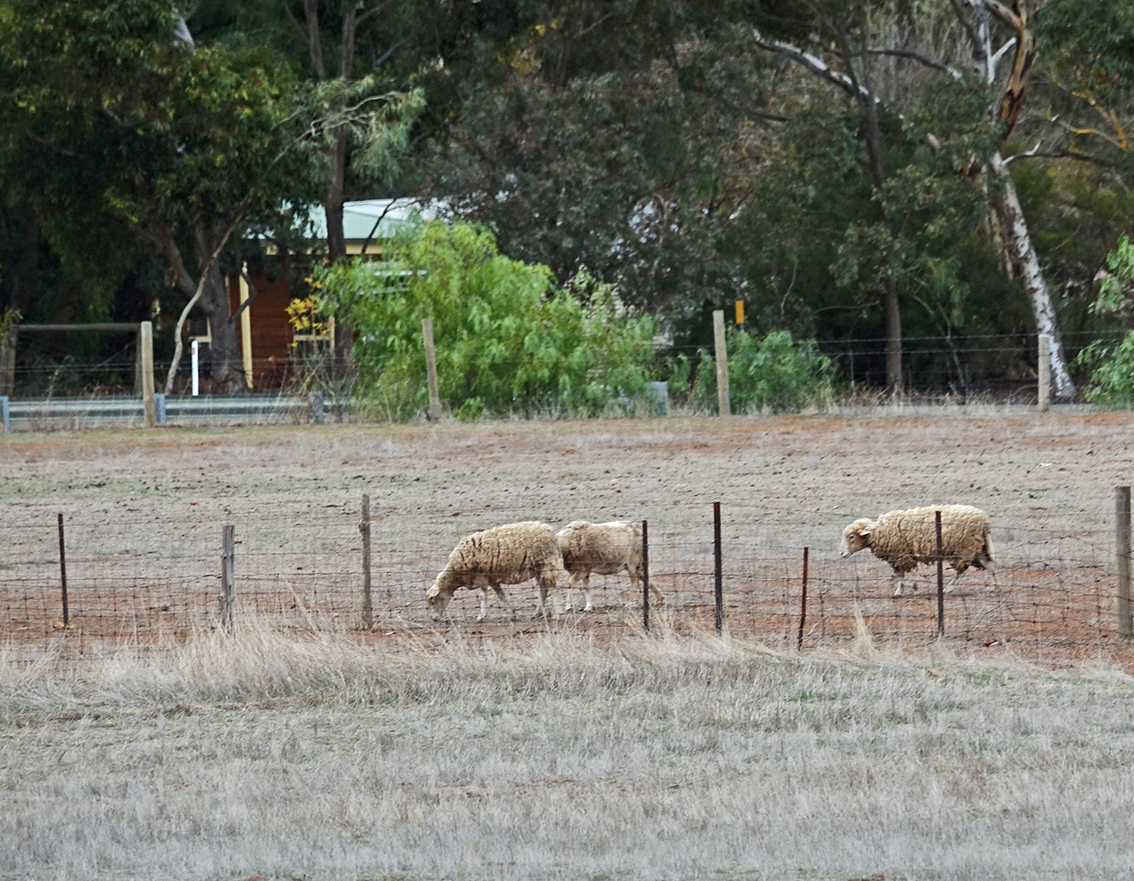
There are sheep in a paddock alongside the mine and some dark coloured birds on the ground near them. Initially, I think they are Ravens but after a closer look through the telephoto lens I spot their red eyes and realise the birds are White-winged Choughs.

Nearby pasture

White-winged Choughs

The Choughs are my final wildlife encounter. However, as I make my way back to the beginning of the looped trail I notice a series of placards telling a story about Sir Sydney Kidman a famous Australian outback figure. A great way to finish my tour of this charming town’s historic mine site.  

A story to end the walk

Cheers

Baz

Additional notes

This is an easy walk and drive which is quite suitable for families and seniors with public toilets, barbecues, parking and other facilities nearby. At the time of writing this post, the trail and facilities were undergoing a major upgrade. It is dog friendly.

Please pass on this blog title and or contact information (URL) to any person or organisation with an interest in taking walks and enjoying wildlife in SA.

Click on these links and see more South Australian stories and pictures in my Weekend Notes articles as well as locating similar blogs on Feedspot’s top 20 Australian wildlife blogs

https://www.weekendnotes.com/adelaide/writer/452/

https://blog.feedspot.com/australian_wildlife_blogs

Mylor: Parrots, Food, Shopping and History

15 Jun

Dear Reader:

There is an avenue of trees shading the footpath. A small group of Sulphur-crested Cockatoos are using both beaks and feet to feed on something growing or living on the branches and leaves.

Sulphur-crested Cockatoos enjoying a winter feast

I am in the small town of Mylor in the Adelaide Hills. It has a village atmosphere with a general store, small restaurant and craft shop and a football oval. Some lovely heritage homes adorn the main street and a small creek runs along the back of the oval.

One of many heritage buildings in the area

A quality range of goods on display at Verte Kitchen

As I walk along the tree lined street I notice a plaque commemorating soldiers from the town who gave their lives during the First World War. I pass a few emotional moments reading about the trees planted to mark their sacrifice.

The smaller populations of some early hills communities made these losses particularly poignant.

One of so many who gave their lives for their country

Apart from the Sulphur Crests, the trees harbour two other parrot species; Rainbow Lorikeets and Adelaide Rosellas. Once again it is hard to determine exactly what they are eating.

Adelaide Rosella

I cross the road only to stop and let a group of Maned Ducks toddle across the footpath next to me. Their presence certainly indicates there must be some water in the nearby creek.

Maned Ducks

I hear the calls of Galahs as a flock circles overhead before landing on the oval where they start foraging for bulbs, tubers and whatever else they can dig up with their powerful beaks.  Although the Galahs are some distance away, I take several shots. From experience, I suspect getting closer will result in the flock taking off.

Galahs or Rose-breasted Cockatoos

My final stop has little to do with the wildlife of the area. There is a wonderful little café and gallery in the middle of the village. Fresh baked goods, local arts and crafts all with a slightly French flavour make Verte’ Kitchen, a must visit, Hills destination.

So much to choose from

Cheers

Baz

Additional notes

This is an easy walk and drive which is quite suitable for families and seniors with public toilets, barbecues, parking and other facilities nearby. It is dog friendly.

Please pass on this blog title and or contact information (URL) to any person or organisation with an interest in taking walks and enjoying wildlife in SA.

Click on these links and see more South Australian stories and pictures in my Weekend Notes articles as well as locating similar blogs on Feedspot’s top 20 Australian wildlife blogs

https://www.weekendnotes.com/adelaide/writer/452/

https://blog.feedspot.com/australian_wildlife_blogs

Kayeema Conservation Park, Kangaroos, Koalas and a nearby winery

23 May

Dear Reader:

On entering the forest of eucalypts, native pine and acacias we hear the bellowing grunts of a male Koala. Within a few minutes we find the perpetrator of this solo cacophony hanging upside down in a gum tree.

An unusual Koala pose

Looking more carefully, we notice a second, smaller animal; probably a female. The story becomes clear as the male rights himself then clambers across the gap towards his intended.

Lady in waiting

On my way

We leave the Koalas to their mating rituals and move further along the narrow trail. The weather has been dry this autumn and the wildlife is scarce with not much food on offer. However, we do spot some Superb Fairy Wrens and an Australian Tree Creeper. With shadows and distance against us, photography is quite a challenge.

Treecreeper on the forest floor (poor light)

Dry weather has also impacted the invertebrate population. However, there are numerous Leaf Curling Spiders stringing their webs across the trail and I manage to find the silken lair of a trapdoor spider. Ants are numerous and there are a few Common Brown Butterflies fluttering around.

Leaf Curling Spider

Common Brown

The Dominant vegetation in the Kyeema Conservation Park varies between Pink Gums and Cup Gums on the flatter stretches to taller Stringy Barks and thick growths of bracken and fern in the gullies . Several different shrubs are flowering in the gullies including bright red Flame Heaths.

Trail near the start of the walk

Stringybark habitat

Heath species

Today, we are following the Mulurus hike, a short walk of about 1.5 Kms. It loops back to the park entrance where it intersects part of the Heysen Trail. We follow the Heysen Trail for around 500meters then cut up to Woodgate Road and return to the small car park.

Park entrance

The park is fringed by pasture and there are Australian Magpies and Adelaide Rosellas feeding on the ground with sheep in the background. The occasional call of little Ravens and White-winged Choughs as well as the twitter of tiny birds in the canopy accompanies us throughout the walk.

Adjacent pasture

After leaving the park we take a series of unsealed roads back to Brookman Road, the main bitumen road leading back to Adelaide through Willunga and McClaren Vale.

Backroads to Brookman Road

Near the intersection of Brookman Road and Woodgate Road, which leads to Kyeema, there is a lovely winery, the Lazy Ballerina, which is certainly worth including on your itinerary.

Lazy Ballerina Winery

Finally, to complete our day visiting Kyeema, a pair of Western Grey Kangaroos are lazing in the shade just walking distance from the Winery. 

Male Western Grey Kangaroo

Cheers

Barry and David

Additional notes

This is an easy to moderate walk which is quite suitable for families and seniors. There is parking. 

Please pass on this blog title and or contact information (URL) to any person or organisation with an interest in taking walks and enjoying wildlife in SA.

Click on these links and see more South Australian stories and pictures in my Weekend Notes articles as well as locating similar blogs on Feedspot’s top 20 Australian wildlife blogs

https://www.weekendnotes.com/adelaide/writer/452/

https://blog.feedspot.com/australian_wildlife_blogs

Kapunda…The Pines Recreation Park

4 May

Dear Reader:

There is a pair of White-plumed Honeyeaters perched on a branch about thirty metres away. I think one is an adult which has just fed its well fledged chick.

The Pines Conservation Reserve is a five-minute drive from the historic township of Kapunda. It encompasses the old reservoir which once serviced the town and its mining community. Today the reservoir is dry after a long summer with little rain.

From the park’s entrance where I spotted the honeyeaters, I follow a looped trail leading to the reservoir. There are Galahs and rosellas flying through the trees and scrub and I can hear the twittering calls of smaller birds in the canopy and bushes.

On the side of a nearby slope I notice a classic 1800s cottage which has been renovated and is now privately owned. Nearby signage informs me this was once the residence of the Waterworks Manager.

Nearby, there is a bird hide which would stand on the edge of the water when the reservoir is full. There is a visitor book of observations which recounts animals observed. One recent notation mentions an Echidna shuffling underneath the hide.

I sit in the hide for a few minutes and watch several different species of birds drinking from a small trough which appears to have a permanently piped in water supply. I am particularly excited to see a pair of White-naped Honeyeaters at the trough.

From the bird hide, I backtrack a little and take the shorter route to the car park which passes across the top of the levy then down a slight slope. I stop to photograph the old Turncock building which regulated the water supply to the town.

From the top of the levy I am level with the middle story of the surrounding forest. I spot a Laughing Kookaburra half hidden in the branches and an Australian Tree Creeper on the trunk of a skeletal, old eucalypt.

The walk has been quite successful though for this time of year, with little water and most of the flowering trees and shrubs dormant, the wildlife has been hard to spot and photograph and I have had to rely on the extreme magnification that my Nikon P900 embodies.

My final stops are in the town itself; firstly, the local craft and arts centre then for lunch at the North Kapunda Hotel.

Next time I visit Kapunda I will explore the town which has its own pond and urban wildlife as well as the nearby mines. I hope you enjoyed this post and look forward to my next one which will focus on the tourist oriented town of Hahndorf in the Adelaide Hills. Yet another destination in our wonderful state

Cheers

Baz

Additional notes

This is an easy walk and drive which is quite suitable for families and seniors with public toilets, a shelter, parking and other facilities nearby. It is dog friendly.

Please pass on this blog title and or contact information (URL) to any person or organisation with an interest in taking walks and enjoying wildlife in SA.

Click on these links and see more South Australian stories and pictures in my Weekend Notes articles as well as locating similar blogs on Feedspot’s top 20 Australian wildlife blogs

https://www.weekendnotes.com/adelaide/writer/452/

https://blog.feedspot.com/australian_wildlife_blogs/

Khaiserstuhl CP, Wildlife in Wine Country

16 Apr

Dear Reader:

The predatory bird circles high in the morning sky then swoops down low to within a hundred metres of me. A Wedge-tailed Eagle, Australia’s largest bird of prey.

Wedge-tailed Eagle hunting

I am heading for the Kaiserstuhl Conservation Park, a twenty minute drive from Nuriootpa in the Barossa Valley and around 90 kms from Adelaide. Kaiser Stuhl was a popular winery, now incorporated into Penfolds, that flourished in the region for over half a century. The name comes from a prominent hill in the Barossa. Indigenous people referred to the area as Patpoori which means little grass tree, a species common to the area.

Beginning of the Wallowa Trail

As I approach the park from Tanunda Creek Road the boundary between native scrub and vineyards is quite obvious; a metaphor for the unique blend of beautiful countryside and rural endeavour that typifies the Barossa Valley.

Scrub and vines on the periphery of the park

I leave the car opposite the entrance to the park and clean my boots in the scrubbers provided which lessens the chance of transferring Phytophthora (root rot) infection. Two Tracks, Stringybark and Wallowa are clearly marked and I choose the latter. Within a few metres I spot a group of Superb Fairy Wrens in the undergrowth; their fluffy plumage suggests that some are juveniles.

A juvenile Superb Fairy Wren is well camouflaged in the leaf litter

Leaf Curling Spider inside leaf and attached to web

To my surprise and delight there are numerous identification plates near the base of some bushes and trees. As I am not a particularly competent botanist, being able to easily name some of the plants I encounter when constructing my posts is a real bonus. I wish more parks would follow this example. I pass some banksias which have been fire blackened, a process which opens up their seed pods helping to rejuvenate fire affected bushland. Further along the trail I notice a Leaf Curling Spider which has built its web, and suspended home, in a Grass Tree.

Eucalypt and Grass Tree (Xanthoria) scrub


Banksia species showing flower and open seed pods


There are smaller birds in the canopy and I use the full extension of my Sony RX10 3 to identify them. However, getting a clear photograph proves impossible. Later examination and a lot of Photoshopping reveals them as: Silvereyes, a pardalote species, Crescent Honeyeaters, New Holland Honeyeaters and a Scarlet Robin.

Crescent Honeyeater (Image from my stock photos)

Time is marching on and I have an appointment in Nuriootpa to learn more about the Khaiserstuhl name and its history; which I will reveal in a later post. As I retrace my way to the entrance I hear the distinctive rustle of a larger animal in the scrub to my left. I freeze and ease the camera around slowly. A pair of Western Grey Kangaroos are standing motionless about fifty metres away. An adult and half grown joey. A lovely way to finish my walk.

Adult Western Grey Kangaroo

Western Grey Kangaroo joey

Cheers

Baz

Additional notes

This is an easy walk and pleasant drive which is quite suitable for families and seniors. There are trail markers as well as panels with maps and other information.

Please pass on this blog title and or contact information (URL) to any person or organisation with an interest in taking walks and enjoying wildlife in SA.

Click on these links and see more South Australian stories and pictures in my Weekend Notes articles as well as locating similar blogs on Feedspot’s top 20 Australian wildlife blogs

https://www.weekendnotes.com/adelaide/writer/452

https://blog.feedspot.com/australian_wildlife_blogs