Tag Archives: Aboriginal culture

Mount Barker’s Laratinga Wetland………Crakes and Warblers

16 Jan

Dear Reader:

A small bird with vivid spots and dashes paddles out from the reed bed. A Spotted Crake, the first one I have ever seen.

Spotted Crake feeding


For the next ten minutes I watch several of the striking birds as they dip into the water in search of aquatic plants and animals such as worms, crustaceans, molluscs, spiders and even small fish and tadpoles.

Spotted Crake habitat

Leaving the crakes I walk a further hundred metres to another pool before I hear the melodic call of a reed warbler. There are reeds, small bushes and a variety of grasses bordering the water. I can still hear a bird calling and scan the reeds for movement. Deep in the tangle of stems I locate the source of the call; an Australian Reed-warbler.
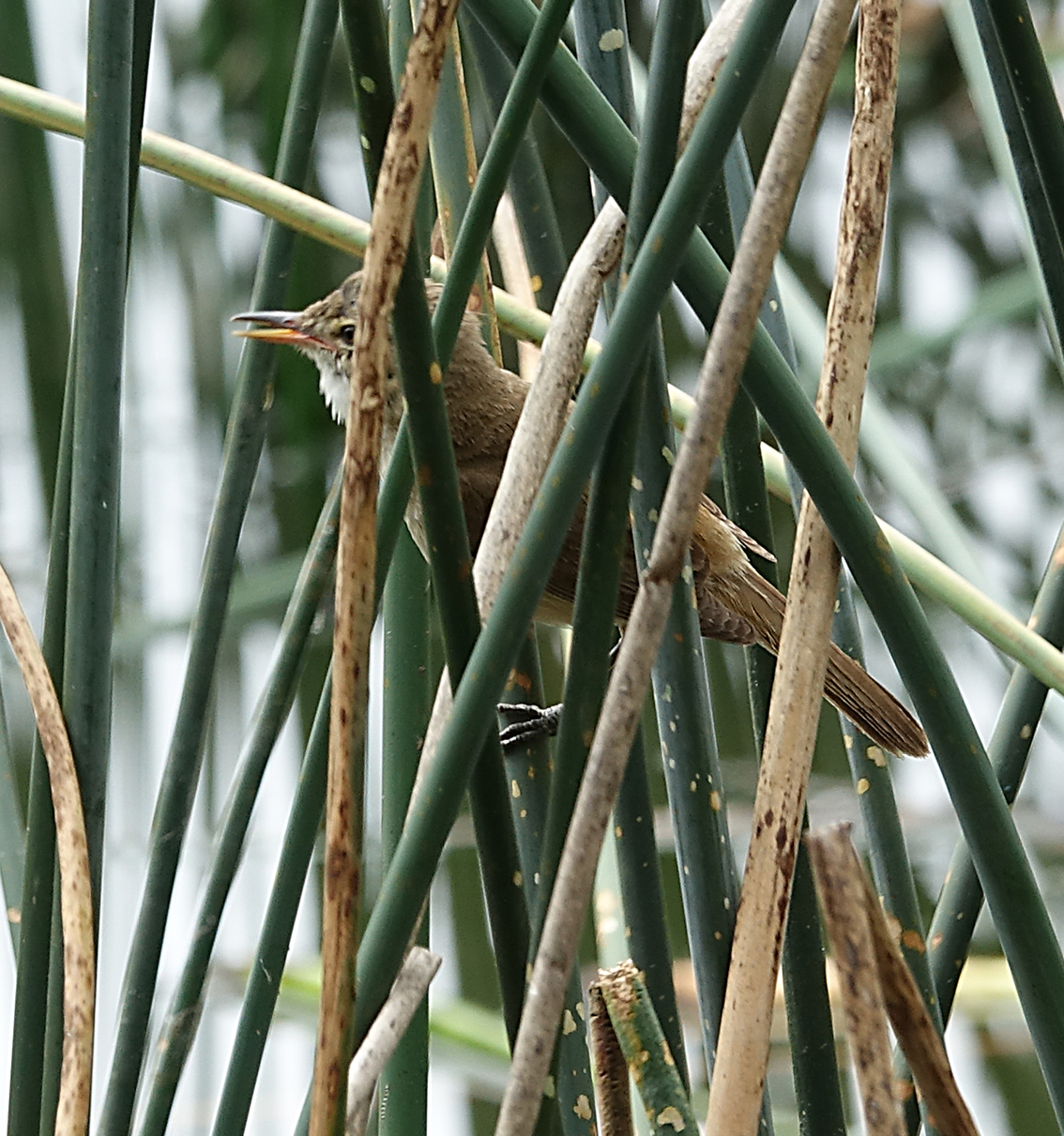
Australian Reed-warbler calling
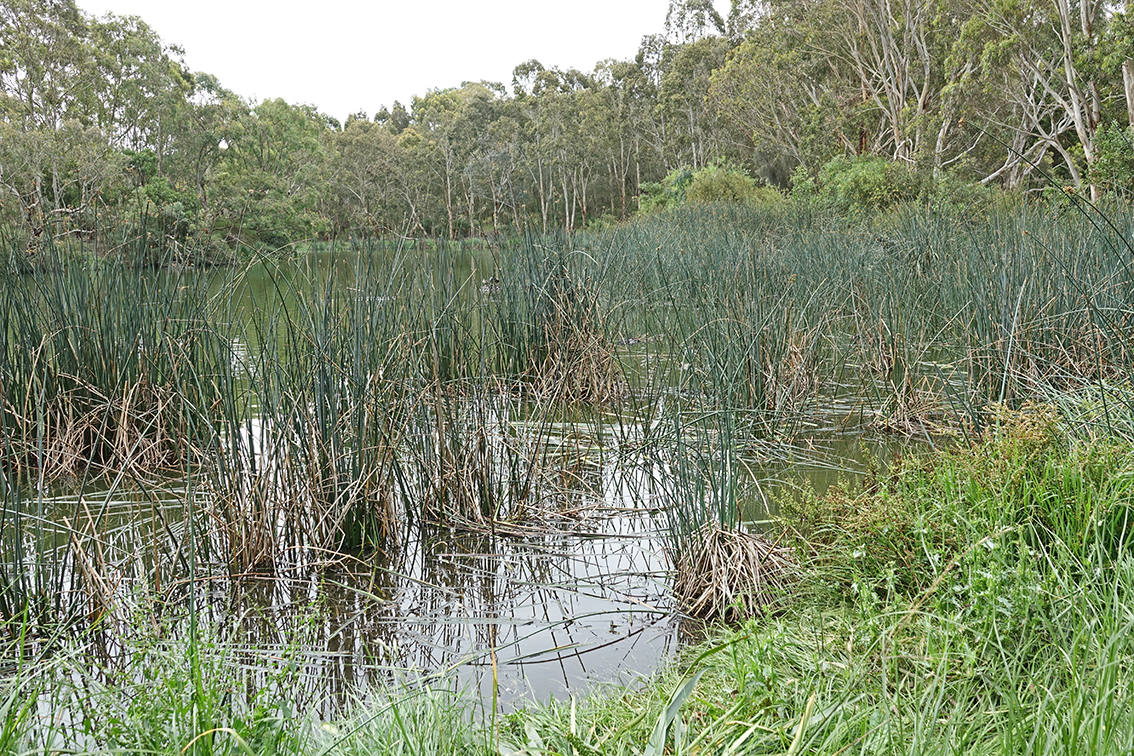
Reed warbler habitat

My hunting ground is the Laratinga Wetlands near Mount Barker about a Forty five minute drive from the city. In the local ‘Peramangk’ language it approximates to “Flooding Land Creek.” This wetland serves numerous purposes including filtering waste water, providing habitats for a range of animals and the establishment of walking, running, and cycling trails.
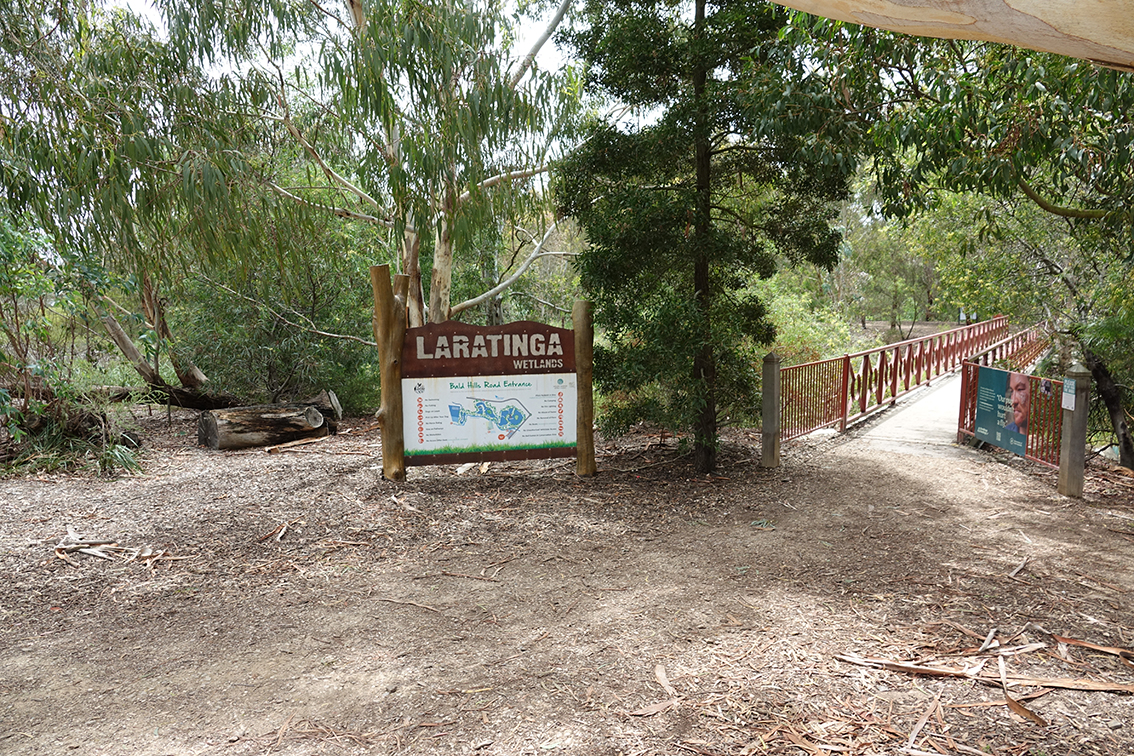
Wetland entrance

Having achieved my primary goal of photographing Spotted Crakes and Australian Reed-warblers, I continue my stroll around these fascinating wetlands keeping an eye open for more interesting plant and animal life.
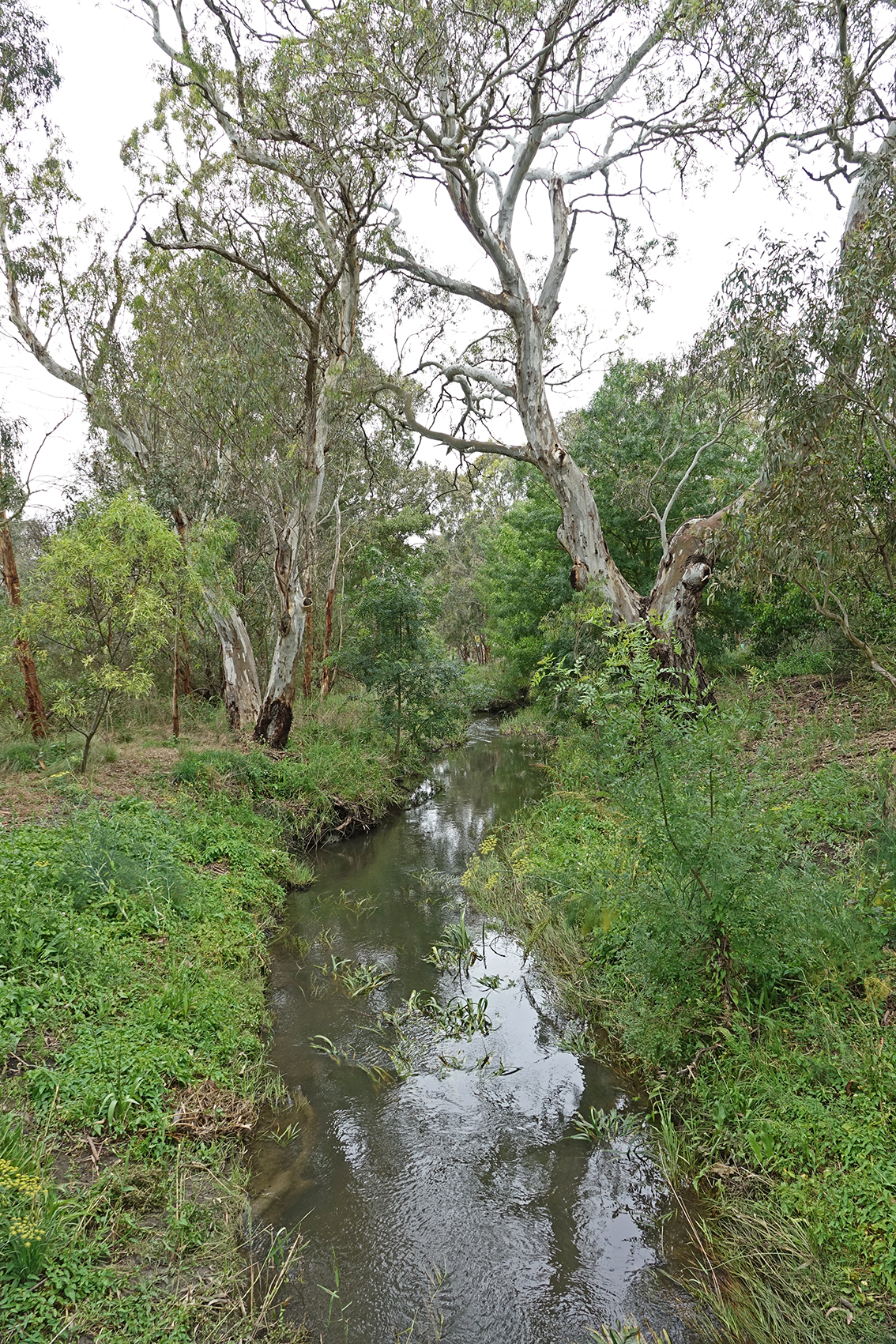
Channel between larger pools

Because my Nikon P900 with its 83X magnification doubles as a spotting scope, I am able to search the opposite bank of a broad pool. I notice several Grey Teal perched on a branch overhanging the water. But it is the Short-necked or Macquarie Turtle in the background that is my main focus.

Grey Teal, Eurasian Coot and Short-necked Turtle

The day has been overcast and the light is fading. I have encountered numerous bird species in addition to the crakes and reed warblers as well as two reptiles; the turtle and a gecko. Another animal group would complete my day’s excursion. I turn my attention to invertebrates searching the foliage and leaf litter.

Marbled Gecko……showing camouflage

I am in luck. Perfectly suspended in the branches of a Christmas Bush is a Leaf-curling spider. These little arachnids create a home by spinning their silk around a dead leaf slowly curving it until they form a cylindrical shelter to hide in.

Leaf-curling Spider in Christmas Bush
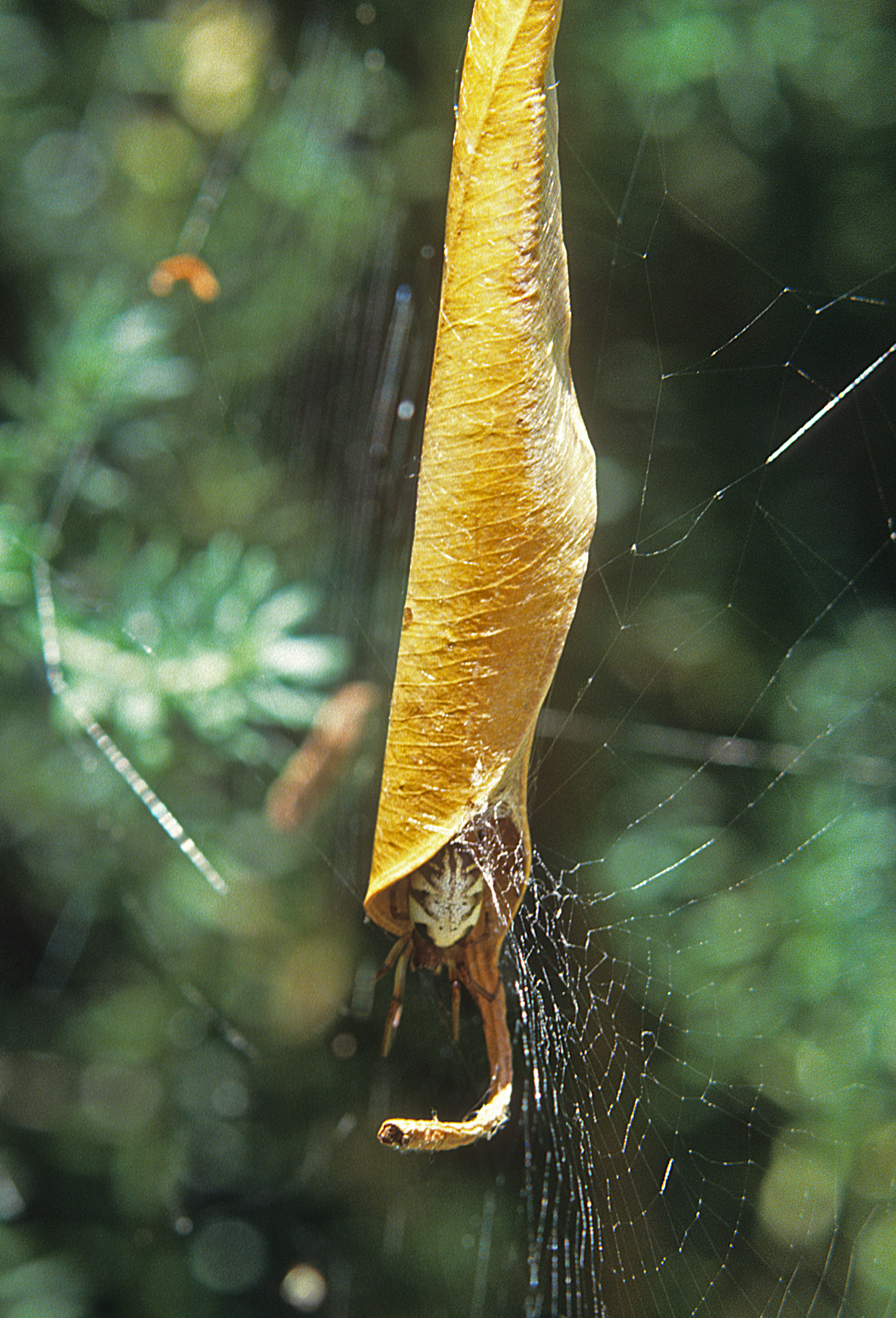
Leaf-curling spider…Image shot at another location to show the spider

Now it is time to leave this amazing wetland but I will return in the near future to search for more wildlife in its maze of waterways, reed beds and bushland.

Cheers

Baz

Additional notes

This is an easy walk and drive which is quite suitable for families and seniors with public toilets, parking and other facilities nearby. It is dog friendly.

Please pass on this blog title and or contact information (URL) to any person or organisation with an interest in taking walks and enjoying SA wildlife.

Click on these links and see more South Australian stories and pictures in my Weekend Notes articles as well as locating similar blogs on Feedspot’s top 20 Australian wildlife blogs

https://www.weekendnotes.com/adelaide/writer/452/

https://blog.feedspot.com/australian_wildlife_blogs/

Torrens Island

1 Oct

Torrens Island and its causeway entrance are situated over the Torrens Island Bridge at the end of The Grand Trunkway in Port Adelaide; about a 30 minute drive from Adelaide’s CBD. The island is closed to the public but the small breakwater and causeway are open. Most of the island is a conservation park with the remaining area housing the power stations and some historic sites.

Road across breakwater looking back at hills

The island if flat and covered with mangroves, samphire and saltbush. The causeway has no vegetation. The mangroves that are accessible from the causeway and road are actually situated on Garden Island. The causeway forms a barrier between the Angas inlet on the left and the warm water outlet from the power station on the right as you face the power station.

Black-shouldered Kite perched on light pole

Numerous fish species including bream, mullet, whiting and Mulloway are attracted to the warm water. In turn, predatory birds such as: herons, pelicans, terns, gulls, cormorants and egrets are found in this area. Small mangrove crabs are found under the rocks in the intertidal region. Dolphins are not uncommon and best spotted from the bridge.  A population of common rats live among the rocks feeding on discarded bait but they are rarely seen during daylight hours.

Little Egret hunting near mangroves

The dominant vegetation seen from the causeway is the Grey Mangrove with small amounts of samphire. At low tide there are seagrass meadows visible through the fencing on the mudflats to the left facing the power station.

Mangrove leaves and fruit….note the waxy top and rough, paler underside where salt crystals accumulate.

Prior to European settlement the mangrove and samphire swamp areas were a rich hunting and gathering region for the local Kaurna people. They would have caught crabs and speared or netted fish as well as collecting shellfish.

Torrens Island power station

Torrens Island was named after Robert Torrens senior who was chairman of the SA Colonisation Commission. Between 1870 and 1980 it was a quarantine station for both animals and people entering the state. During World War 1 the island was used as an internment camp for citizens of German and Austrian backgrounds. Since 1963 much of the island and surrounding water have been protected areas and part of different marine reserves. Three power stations are operating on the island: Torrens Island PS since 1963, Quarrantine PS since 2002 and finally Barker Inlet PS since 2009. All are gas powered.

Fishing as the sun goes down

Fishing from the rocky causeway in the warm water outlet is popular. There are fine views of the ships’ graveyard and its wrecks from the bridge. Tours of the old quarantine facilities can be arranged through the maritime museum in Port Adelaide. In short, quite an interesting place to visit and combine with a day at Port Adelaide.

Cheers

Baz

Additional notes

This is an easy destination to visit and is quite suitable for families and seniors.

Please pass on this blog title and or contact information (URL) to any person or organisation with an interest in taking walks and enjoying wildlife in SA.

 Click on this link and see more South Australian stories and pictures in my Weekend Notes articles

https://www.weekendnotes.com/profile/651267/