Tag Archives: centipede

One Tree Hill Road Roundabout to Kersbrook Part 1

20 Sep

Dear Reader

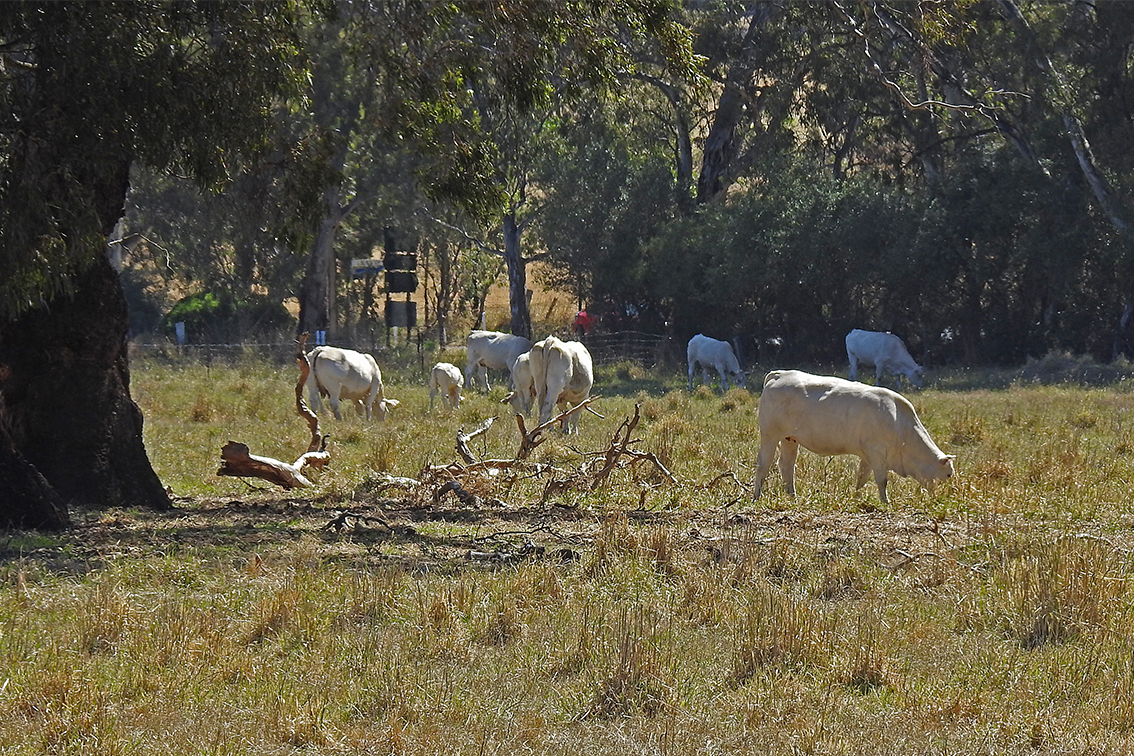
After leaving the One Tree Hill Road roundabout for Kersbrook Road, I expect to drive a few kilometres before making my first roadside stop. Two Western Grey Kangaroos and a small herd of cattle put pay to that plan as they appear a mere hundred metres from my starting point.
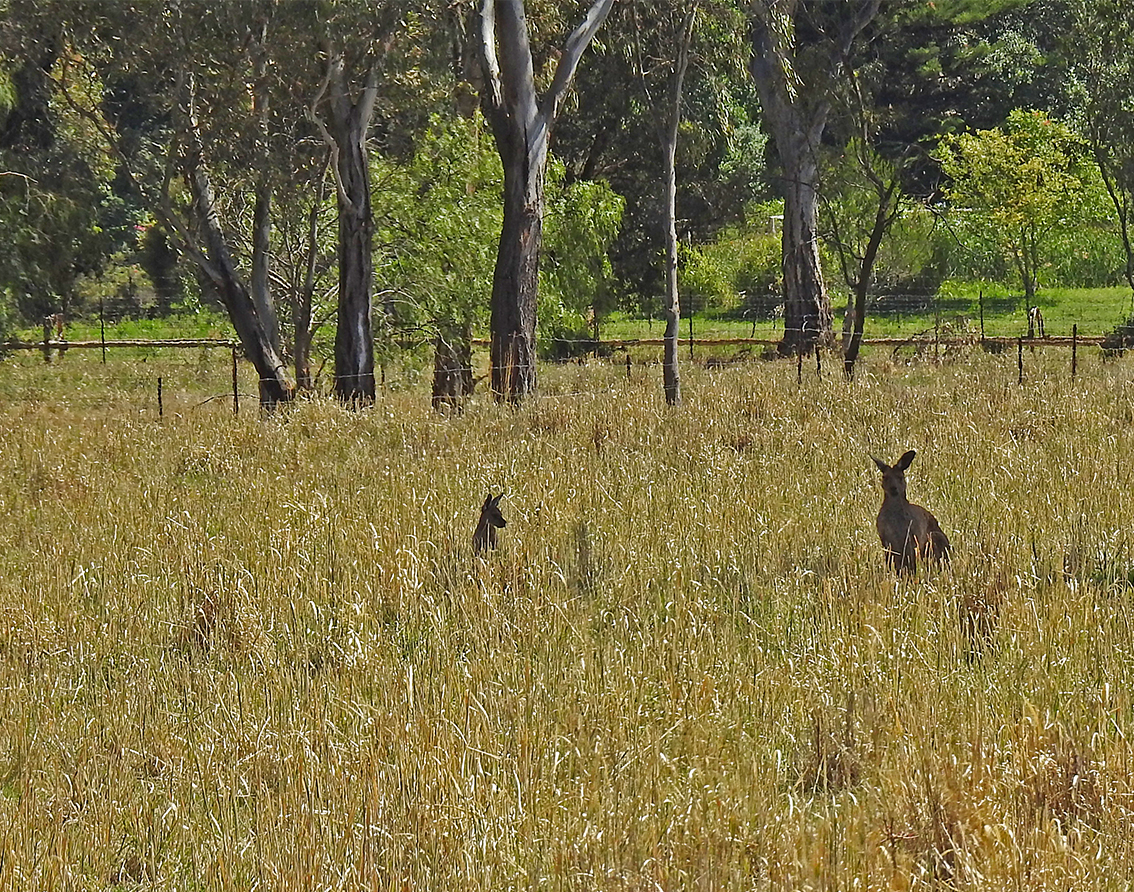
Western Grey kangaroo and joey amongst the tall grasses
Murray Grey Cattle

Leaving the roos and cattle behind I start to climb the winding road towards Kersbrook stopping at a convenient roadside layby after 2.3Kms.

Roadside scrub

After clambering over an old fence, I catch a brief glimpse of a Grey Fantail and some small parrots in the thick scrub which makes them impossible to photograph. Luckily, a decorative, Common Brown Butterfly settles on a fallen branch providing a nice image.
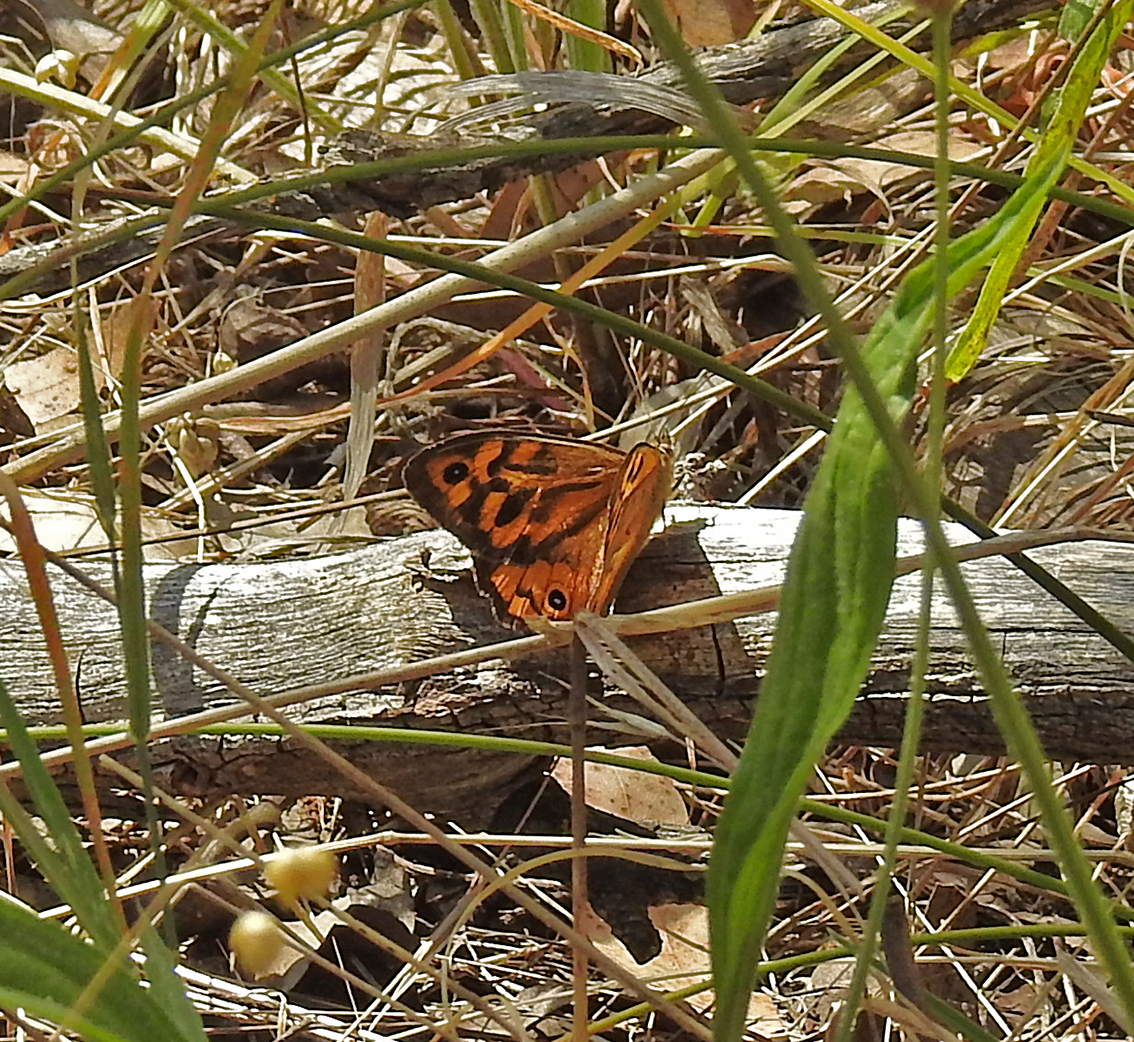
Common Brown Butterfly

I fossick around in the undergrowth moving fallen branches and bark and unearth a Piedish Beetle and a large Garden Centipede. It seems that invertebrates might be the flavour of the day.

Piedish Beetle
Garden Centipede species

At the 3.7 Km mark Karwin Road leads off to the left with a sign for Minya Sanctuary. I park on the corner where there’s a small patch of scrub and a panoramic view of open farmland as well as an earthen dam for sheep and cattle.

Local dam for stock

Following a small path through Sheoak sapplings, I am lucky enough to encounter Honeybees feeding on Scabia flowers as well as a native Blue-banded Bee and a Mud-dauber Wasp.

Blue-banded Bee
Common Honey Bee

Although I have only covered around 4kms of the 11Km drive to Kersbrook it has been a revealing and fascinating look at this part of the foothills and I am sure that the next 7kms will be equally enthralling.

Mud-dauber Wasp

Cheers

Baz

Additional notes

Other animals seen, heard but not photographed: Mistletoe Bird

The camera used for this post is a Nikon Coolpix P900

This is an easy drive which is quite suitable for families and seniors.

Please pass on this blog title and or contact information (URL) to any person or organisation with an interest in taking walks and enjoying wildlife in SA.

Click on these links and see more South Australian stories and pictures in my Weekend Notes articles as well as locating similar blogs on Feedspot’s top 20 Australian wildlife blogs

https://www.weekendnotes.com/adelaide/writer/452/

https://blog.feedspot.com/australian_wildlife_blogs/

Wildlife Around Chalk’s Campground

16 Dec

Dear Reader:

With the arrival of summer, grasses turn to gold with remnant shadings of green while pale gums add a subtle contrast to the landscape.

As the countryside flashes past on my way to the campground I notice a field of freshly baled hay. A flock of Sulphur Crested Cockatoos forages for any remaining seed heads.

Sulphur Crested Cockatoos

My destination is Chalk’s Campground, just past the Warren Reservoir on the road between Williamstown and Gumeracha. I am not intending to camp here; however, the interface between human habitation, rural zones and wilderness areas is an excellent place to encounter wildlife.

Although the campsite is closed between December and March, due to the danger of bushfires, it is still accessible for walking and is a destination along the famed Heysen Trail. I drove through the area a few weeks ago on a sunny day and spotted a Shingleback lizard in the undergrowth.

Although it is summer, the weather is overcast and photography a little more challenging than on my previous visit. I use the powerful lens of my Sony RX10 to scan the trees, bushes and ground in search of wildlife.  Common Brown butterflies are the most common animals. They are flitting between the grass and leaf litter where their excellent camouflage is most apparent.

As I walk around the campsite zone, I notice a group of Adelaide Rosellas perched in a pine tree. The birds are wary and I only manage to fire off a couple of long range shots before they take flight.

Bark is peeling off many large River Gums and I probe under it in search of millipedes, spiders, roaches and other bugs. Spiders are not my favourite creatures and I have often come across multiple Huntsman species under the bark. However, today’s arachnid is a jet-black spider which resembles the common Black House Spider.

It is time to wind up this excursion and I backtrack along a little creek towards the car park. On my drive home I will take a break at the Gumeracha Bakery and enjoy a tasty chicken pie and an indulgent custard tart.

In a final attempt to find some different animals, I decide to turn over a few flattish rocks (which I carefully replace in their original position) in the hope of finding one of the elongated skinks that commonly shelter under them. To my surprise, it is a large and very and active Garden Centipede that I unearth. And, on that note, I bid Chalk’s Campground farewell.

Until our next adventure

Cheers

Baz

 Additional notes

This is an easy walk and drive which is quite suitable for families and seniors. It is dog friendly.

 Please pass on this blog title and or contact information (URL) to any person or organisation with an interest in taking walks and enjoying wildlife in SA.

Click on these links and see more South Australian stories and pictures in my Weekend Notes articles as well as locating similar blogs on Feedspot’s top 20 Australian wildlife blogs

 https://www.weekendnotes.com/adelaide/writer/452/

https://blog.feedspot.com/australian_wildlife_blogs/

Title Kangaroo Island….Day 2 Lesueur Conservation Park

30 Jul

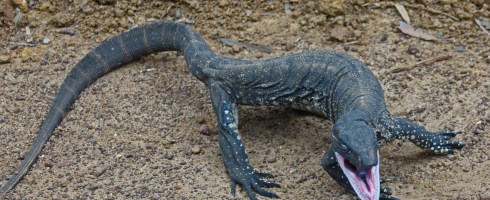
Rosenberg’s Monitor a little upset

Dear Reader:

Grey clouds are shrouding the sky this morning and a cool wind is sweeping in from the sea. I check the weather app and there doesn’t seem to be any rain forecast for the day though the light will be poor.  My Sony RX10 has the larger sensor of my two cameras and seems the obvious choice for today’s jaunt through the nearby Lesueur Conservation Park.


Wildlife and Farm life

The unsealed road from the lodge towards Lesueur has been recently graded which makes travelling a little easier and I reach the turn off to the park in a few minutes. There is low scrubby forest to my left and verdant grazing land on the right. To my surprise, a flock of sheep near a small water hole are sharing their territory with Black Swans. A sweep with the telephoto also reveals a few Masked Lapwings and Grey Currawongs in the paddock.


Pea flower species

Blue Cockatoo Orchid

I make the signposted turn to Lesueur CP and a little way down the road I notice a cage trap set under a grass tree; I assume it is for feral cats which are a threat to all Australian wildlife from reptiles to birds. Today there are very few animals around which is fairly typical in cool overcast conditions and I decide to fossick around in the scrub adjacent to the road. The first thing I notice is the proliferation of flowering plants including native pea flower species and delicate blue orchids.


Grey Fantail and Silvereye

Red-browed Finch

There are small birds high in the trees but they are hard to identify. I come across a deep rut in the road which is partially filled with water. The vehicle scares several small birds away which are using the pool as a bathing area. After driving a several hundred metres down the track I leave the car and approach the ‘bird bath’ stealthily through the scrub. Taking up a position about fifty metres away I wait and within ten minutes they return. Long shots on a cloudy day do not make for award winning images but they do help me identify these small birds as; Silvereyes, Grey Fantails and Red-browed Finches. Meanwhile a large centipede is burrowing through the leaf litter next to the log I am sitting on. Telephoto to macro in a split second supports my use of bridging cameras in some circumstances.


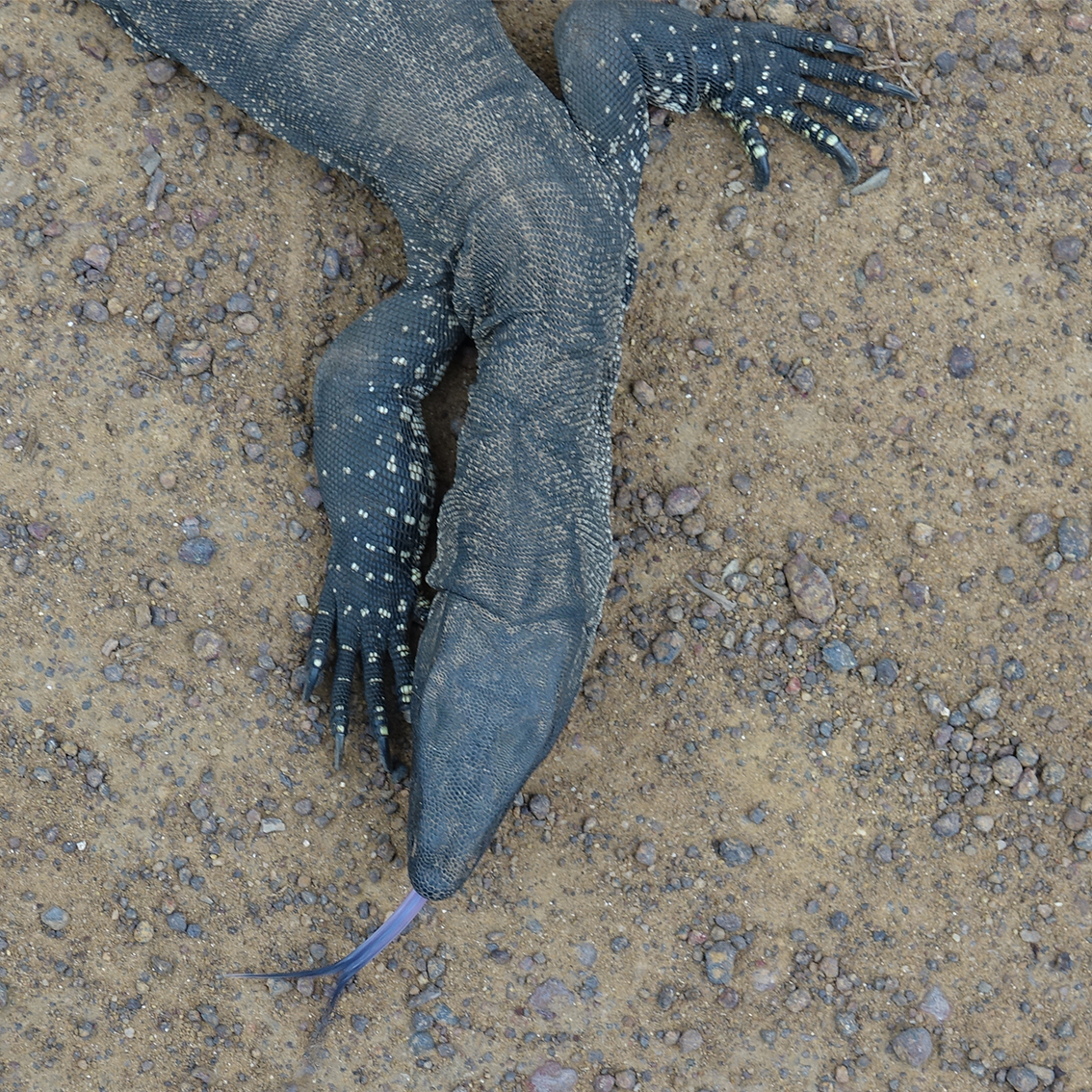
Rosenberg’s Monitor (like all monitor lizards it has a forked tongue similar to that of a snake)

Centipede species

The wildflowers, centipede and small bird species have made the excursion into the park interesting and I am sure it is worth another visit on a more amenable day. I leave the park and take another randomly chosen track which takes me away from the coastal fringe. Five minutes along this route I see the flattened shape of a large lizard by the side of the road. I stop and take a closer look hoping it has not been injured or killed by a car. As I approach the goanna/monitor which instantly informs me of my error with a hiss and quick, aggressive lunge. I take a couple of shots and usher the animal away from the road.


Creek scene


View from the lodge

A little further on, the road passes over a small creek which is picturesque even on a dull day. It then intersects with another road, which my GPS informs me, leads back towards ‘Seadragon Lodge’( see link below for more information) where I started my day’s adventure. By now the clouds have shifted and patches of blue sky are brightening up the day. Time to relax, put a log in the combustion heater and sort through my images while enjoying the view across the gully to the ocean.

Cheers

Baz

Additional notes

Seadragon Lodge……  https://seadragonlodge.com.au/

This is an easy drive which is quite suitable for families and seniors and the lodge is wonderful with magnificent views and abundant wildlife.

Please pass on this blog title and or contact information (URL) to any person or organisation with an interest in taking walks and enjoying wildlife in SA.

Click on this link and see more South Australian stories and pictures in my Weekend Notes articles

https://www.weekendnotes.com/profile/651267/


Whyalla’s Coastal Fringe

25 Jun

Whyalla’s Coastal Fringe

Dear Reader:

The grey kangaroo is bounding along the small levy that cuts across a shallow clay pan near the edge of a tidal flat. It stops monetarily and twitches its mobile ears, looks around, then continues on its way into the scrub alongside the raised earthen mound. I get a few seconds to make a shot and the wary marsupial is gone.

Grey kangaroo

 I am exploring the coastal fringe of Whyalla South Australia’s third most populous city. The steel and regional centre is situated near the head of Spencer Gulf on the Eyre Peninsula about 450 kms from Adelaide. The area is a mixture of mangrove, tidal flats, sandy beach and some small industrial areas that enclose substantial freshwater pools. Several roads lead down towards the coast from the Lincoln Highway and some of the terrain requires 4WD.

Garden centipede

Egyptian beetle 

I take the vehicle across one of the mud flats and have to fight to keep from getting bogged. Slipping the SUV into low range and slowly sliding across the surface I wrestle with the steering until the wheels grip sand on the edge of the levy. Relieved, I get out and survey the quagmire of clay-like debris stuck to the wheel arches. But my close call has led me to a cosy little depression amongst the scrub and I decide to move a few fallen branches and search for invertebrates. After a few minutes I unearth a rather large garden centipede and a few Egyptian or ‘cellar beetles’ as well as some different ant species. After a little macro photography I carefully replace their homes.

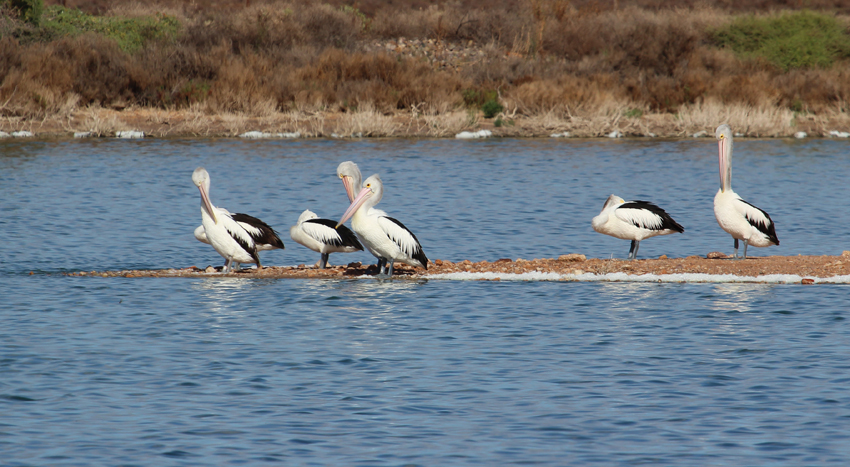
Australian pelicans 

Another dirt road takes me past the rifle club and some large freshwater ponds that have attracted a small group of pelicans. The birds appear to be simply congregating and socialising between short forays into the water to feed. Along the edge of the water there are several different species of small waders including dotterels and plovers but they are wary and take flight when I approach.

Crested pigeons 

The scrub alongside the mangrove patches is also home to a variety of birds including singing honeyeaters and fantails. One scrubby eucalypt that has managed to endure decades of salty onshore winds provides shelter for a trio of crested pigeons a species that I often see found foraging in the coastal bush.

View from Hummock Hill 

I head back onto the highway drive back into the city and up to a local lookout. Hummock Hill is a fitting place to end my exploration of Whyalla’s coastal fringe. The site of the first settlement in 1901 it provides panoramic views of the city, coast and surrounding bushland. Hummock Hill also served as a gun emplacement during the Second World War and has lately been developed as an historic site; lovely place to simply take in the rugged beauty that this area has to offer.

Cheers

Baz 

 I have recently spent time in Africa and the link below will allow you to enjoy images and text describing some of my encounters with the wonderful wildlife of Botswana and Zambia. I will attach a new image and notes to accompany each post.

https://wildlifemomentssa.blogspot.com