Tag Archives: Fleurieu

Wirrina Foreshore Reserve

25 Mar

Dear Reader:

The Western Grey Kangaroo stops feeding and looks at me, twitches its ears then hops deeper into the bushes where it is joined by a second roo.
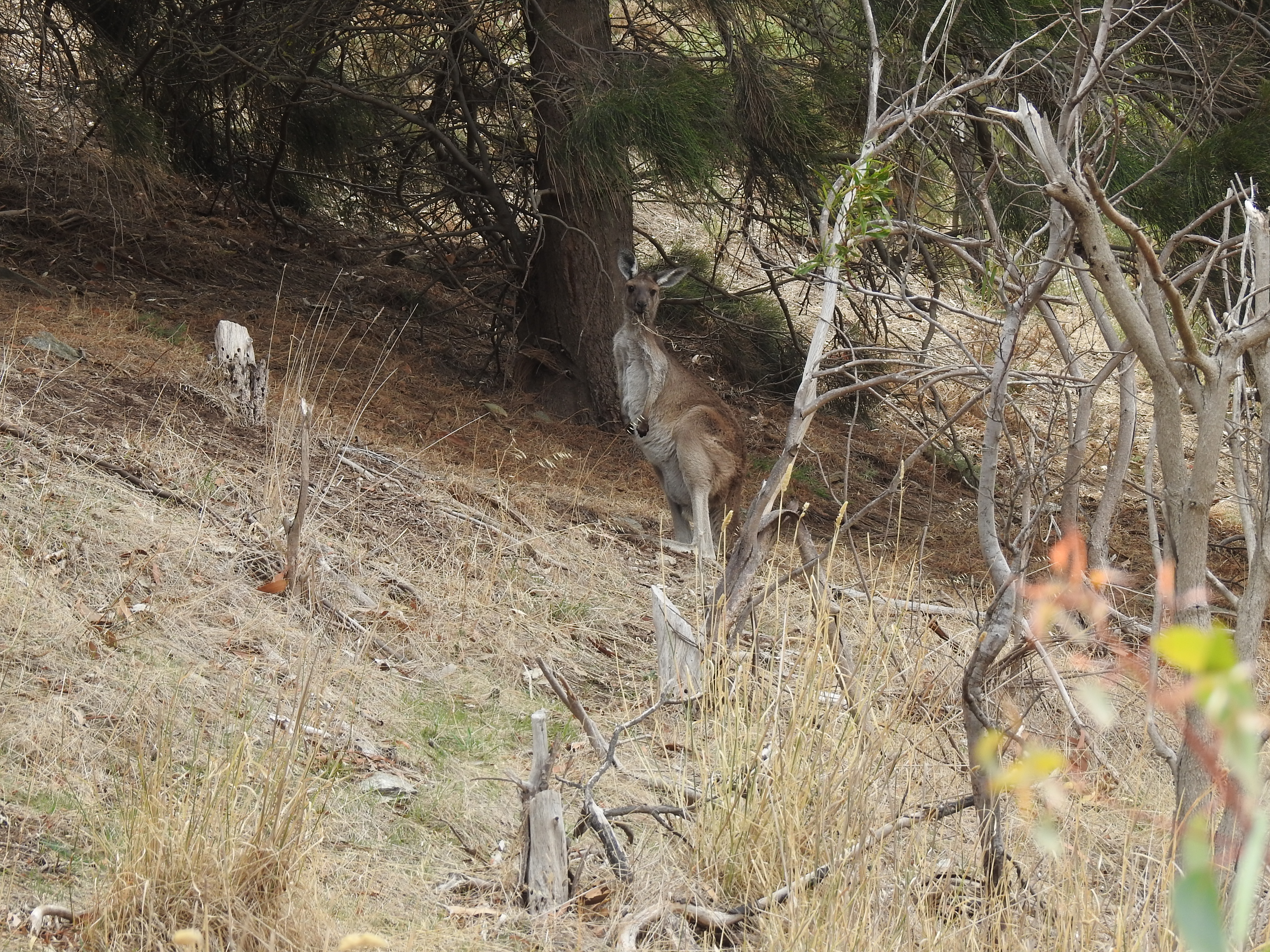
Western Grey Kangaroo
Then there were two

I am driving along the access road to Wirrina Cove marina, where I will walk along the Wirrina Foreshore Reserve. It is a rather overcast day which adds a few extra photographic challenges.

Beginning of the walk

Like other parts of the Fleurieu the story told by the rock formations is fascinating. The areas geoheritage includes: deep sedimentary basins, massive plate tectonic collisions, glaciation and mountain formation.

Rock formations along the shoreline

At low tide the rocky foreshore is a maze of rockpools. Within each of these ecological niches lives a wonderful variety of marine organisms such as anemones, sponges, seasnails and crustaceans; to mention just a few.
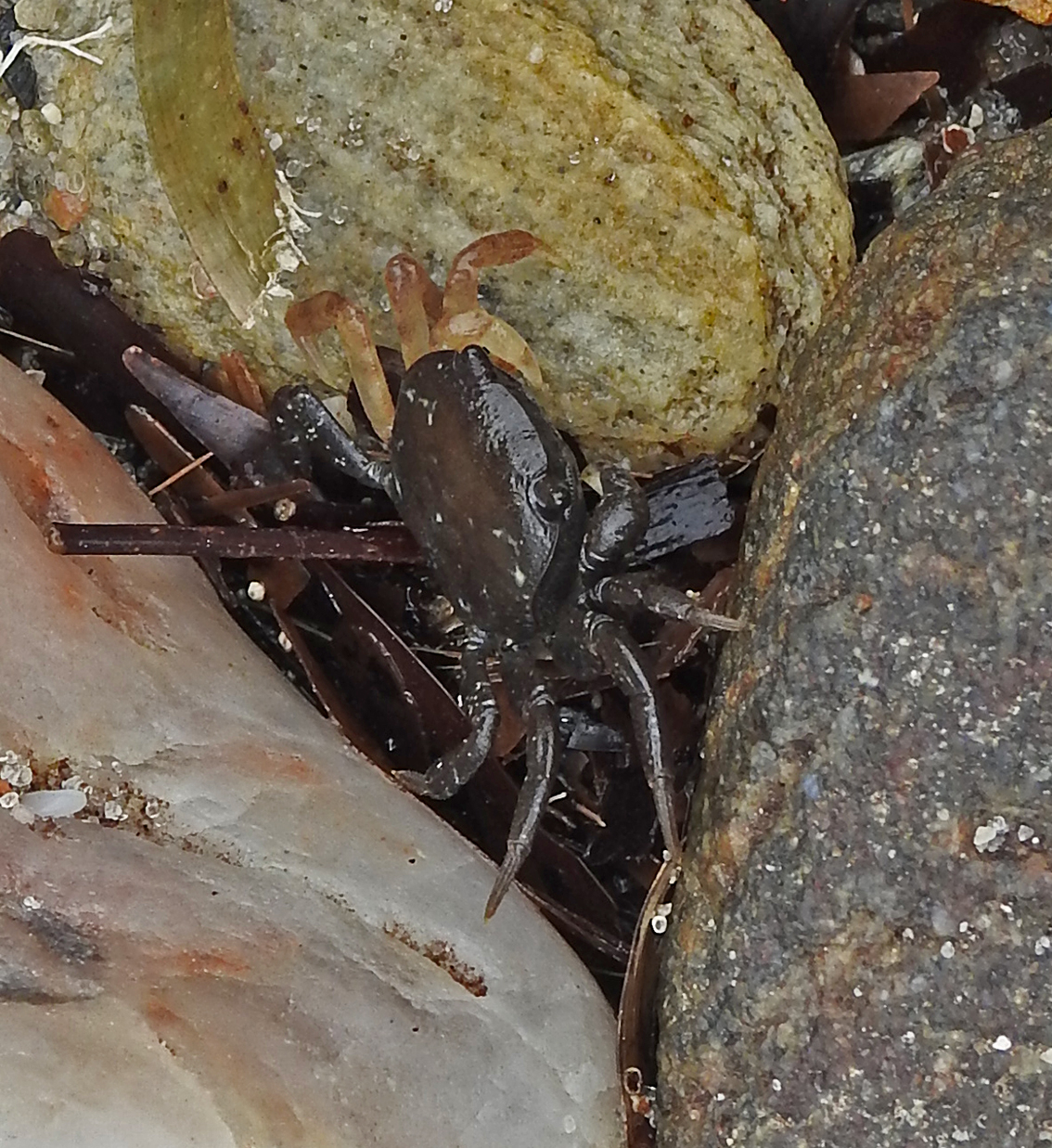
Shore crab species on the edge of a rockpool
Turban Shell

Banks of seaweed cover some parts of the shoreline and I am amazed to see an Australian Magpie probing the weed. Closer observation suggests it might be gathering nesting material.

Australian Magpie in seaweed pile

After spending some time exploring the edges of the pools, I move back to the trail to capture a few images of the typical birdlife. There are White-faced herons stalking the shallows, Pied Cormorants and Masked Lapwings resting on the rocks and a pair of grebes further out to sea.

White-faced Heron

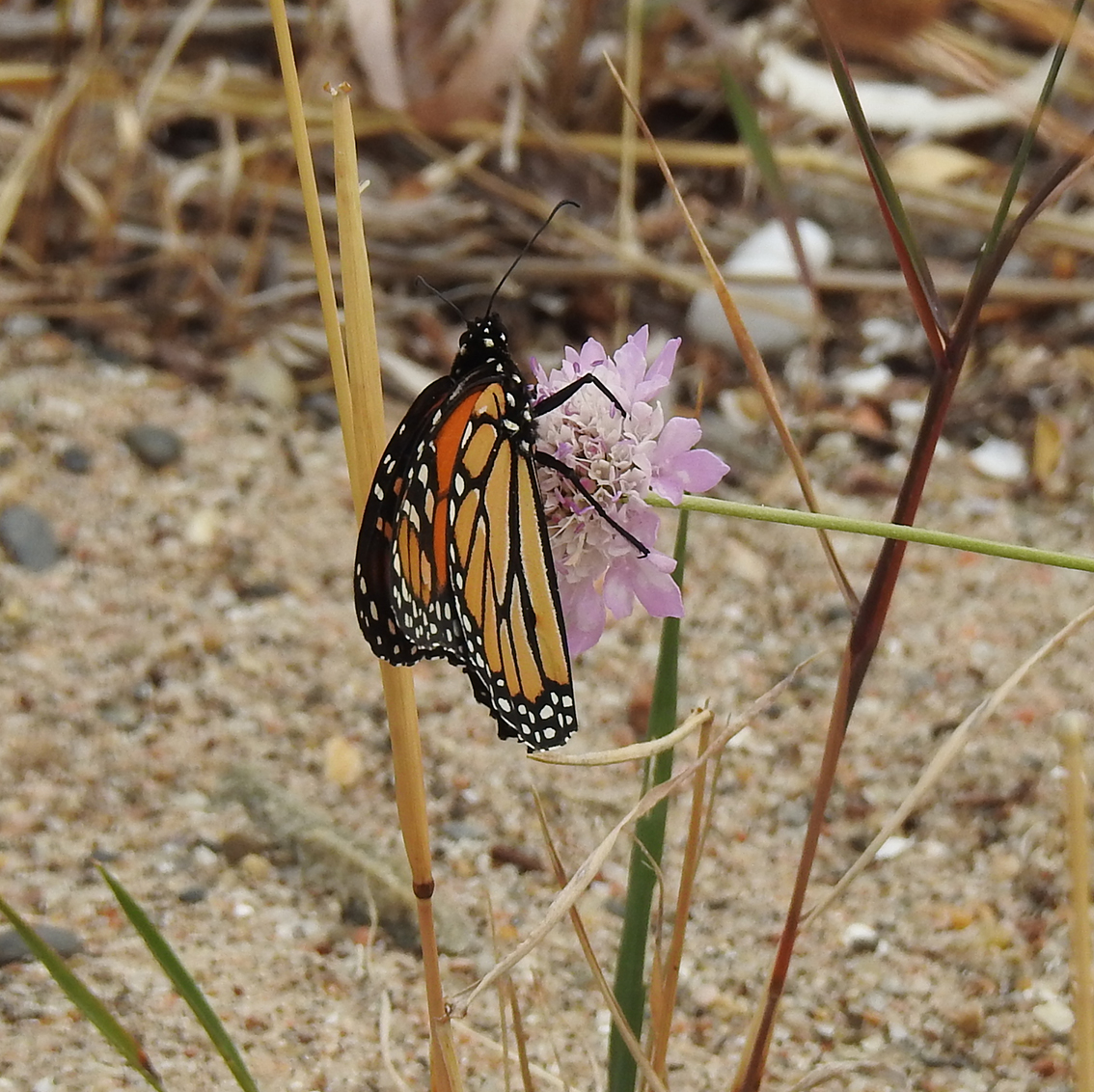
Having captured images of molluscs, birds, crustaceans and marsupials, I turn my attention to plants, insects and other life forms. Butterflies and native bees are feeding on flowering Scabia blooms, lichens coat the rock formations and Cushion Bushes colonise niches in the rock formations.  
The weather closes in and it is time to leave the walking trail. However, I am determined to return on a warmer, sunnier day with some snorkeling gear to further explore this fascinating area.

Cheers

Baz

Additional notes

The camera used for this post is a Nikon Coolpix P900

This is an easy walk and drive which is quite suitable for families and seniors. It is dog friendly.

Please pass on this blog title and or contact information (URL) to any person or organisation with an interest in taking walks and enjoying wildlife in SA.

Click on these links and see more South Australian stories and pictures in my Weekend Notes articles as well as locating similar blogs on Feedspot’s top 20 Australian wildlife blogs

https://www.weekendnotes.com/adelaide/writer/452/
https://blog.feedspot.com/australian_wildlife_blogs/

, , , , , , , , ,

Bullock Hill CP….. Kangaroos, Cows and Cockies

19 Mar

Dear Reader:

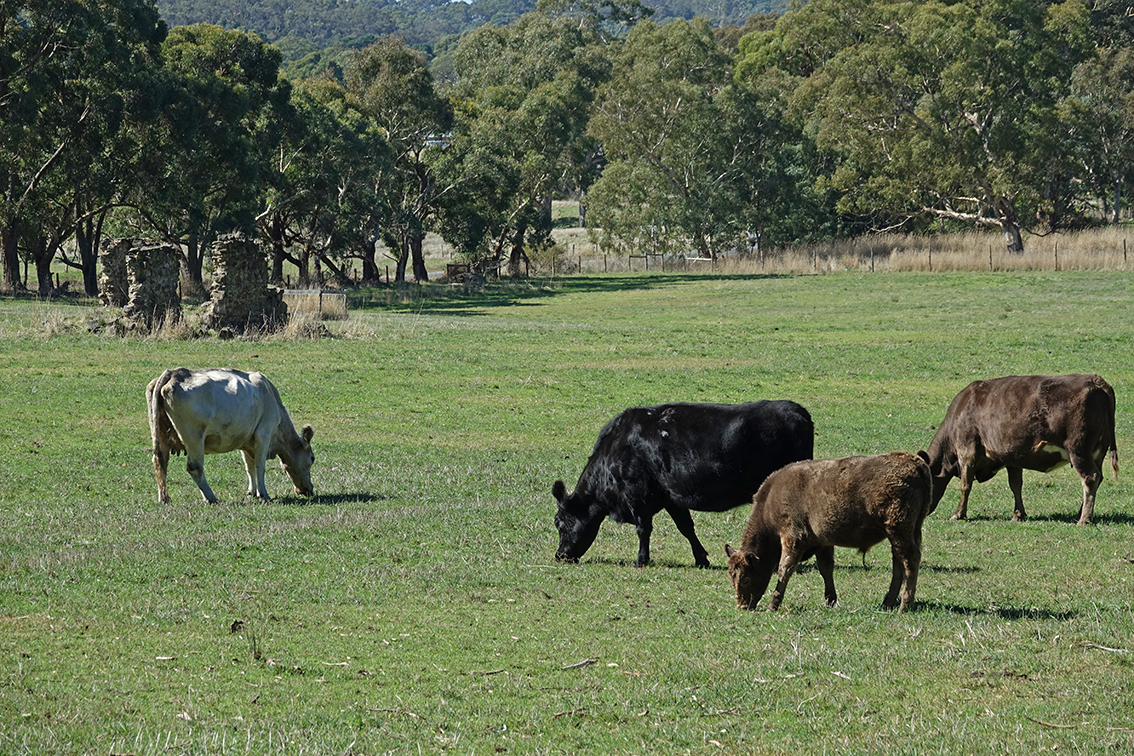
The scenery on my drive between Meadows and Ashbourne varies between open pasture to Creekside scrubland with both kangaroos and cows enjoying the fertile landscape.

Rural setting with old farmhouse ruin, stock and bush background

My destinations are the town of Ashbourne and the nearby Bullock Hill Conservation Park. I have driven along several of the roads I am about to explore during the cooler months when the weather was not as conducive to photography and I promised myself a summer visit and a meal at the Green Man Hotel.

Track into the park

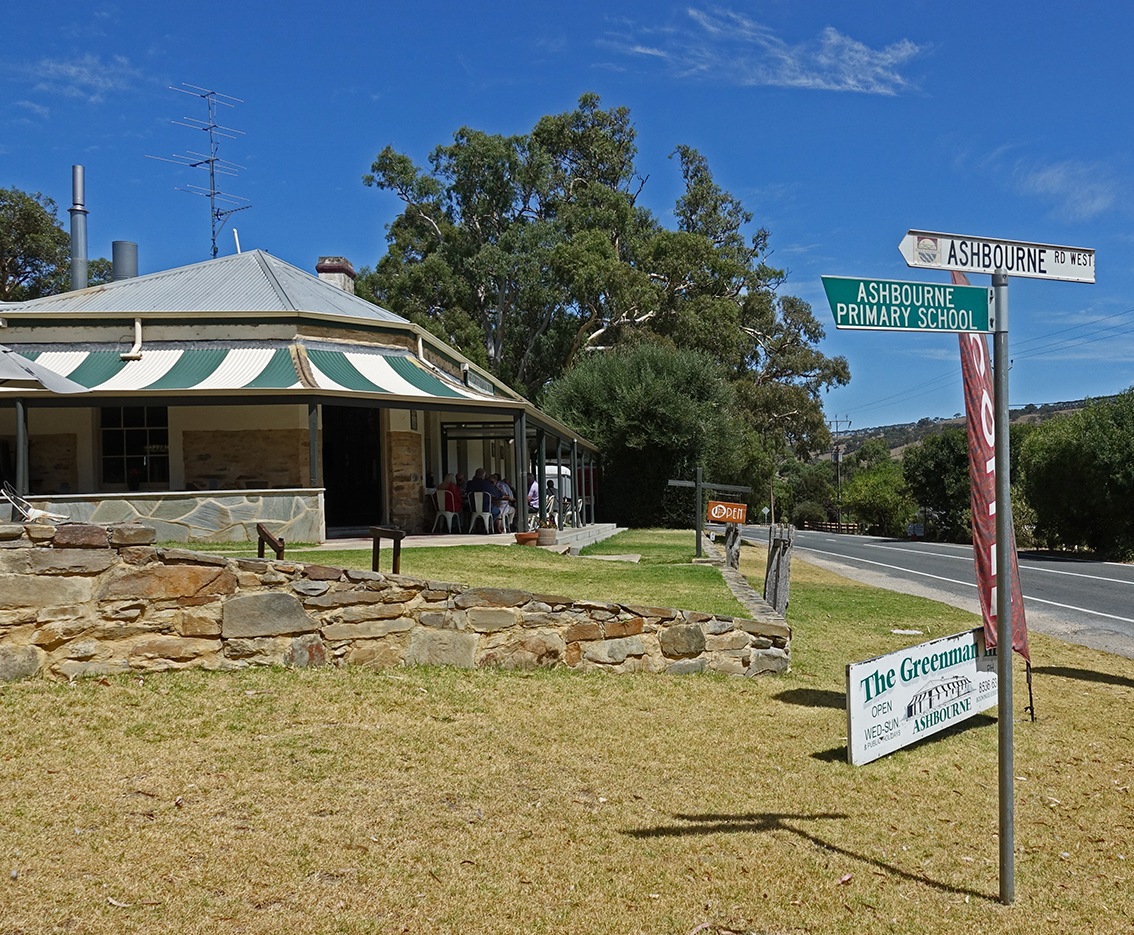
Green Man Hotel in Ashbourne SA

Three roads skirt the Bullock Hill Conservation Park; Signal Flat Road to the west, Wattle Flat Road to the east and Haines Road to the south. There are walking trails leading into the park off these roads. The country town of Ashbourne with its folksy Green Man Hotel lies a kilometre or two north west of the park, on the intersection of Bull Creek and Signal Flat Roads.

Wattle Flat Road on my previous trip

I enter the park off Haines Road. There are honeyeaters, Grey Fantails, rosellas, lorikeets and Galahs. The birds are wary and move quickly in the canopy. Eventually I spot a Welcome Swallow resting between aerial sorties in search of insects.

Welcome Swallow taking a break

Galah or Cockie or Rose-breasted Cockatoo

Along Wattle Flat Road, I notice a pair of roos near a fenceline and stop to take a picture. Not a successful venture as one bounds over the fence while the other scoots under it. Both animals are unhurt and I get the feeling they have done this on more than one occasion.

One under one over….Western Grey Kangaroos

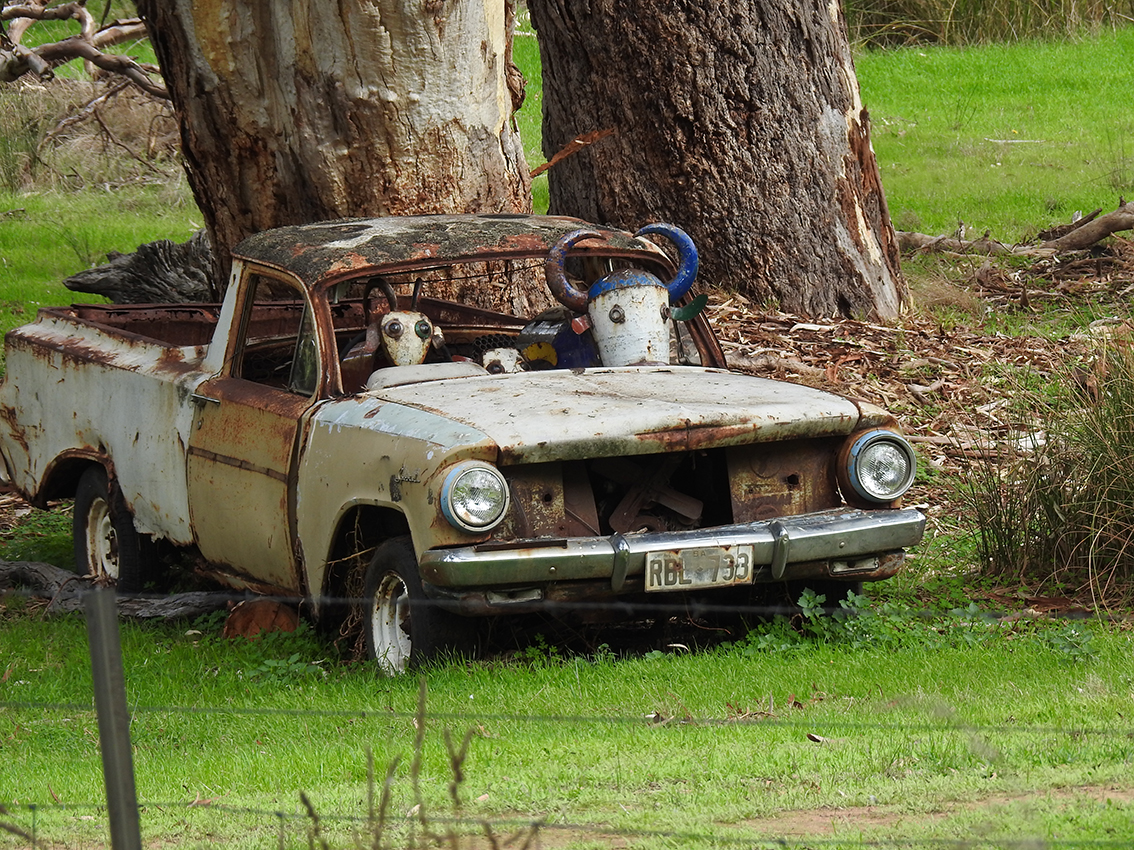
On this trip I have not driven back along Signal flat Road which skirts the eastern side of the park. However, on my last drive I was quite taken by a whimsical piece of ‘Auto-art’; if such a genre exists. On the same drive I encountered significant flocks of Galahs.  

A little whimsical, rural art off Wattle Flat Road

Back in Ashbourne and alongside the Green Man Hotel, there is an enclosure with a couple of unusual sheep which seem to be shedding their fleece rather than it being shorn. I believe they are White Dorpers a variation bred specifically for this particular characteristic.

Shearing the easy way….White Dorper variety of sheep

Leaving the car in the shade, I order a seafood platter and share an outside table with a curious and food oriented Australian Magpie. It has been a worthwhile day in the field and I will certainly return during spring to further explore the park and surrounding areas.

Seafood plate with Oysters, Calamari, Scallops and fish

Australian Magpie

Cheers

Baz

Additional notes

This is an easy walk and drive which is quite suitable for families and seniors with public toilets, barbecues, parking and other facilities nearby..

Please pass on this blog title and or contact information (URL) to any person or organisation with an interest in taking walks and enjoying wildlife in SA.

Click on these links and see more South Australian stories and pictures in my Weekend Notes articles as well as locating similar blogs on Feedspot’s top 20 Australian wildlife blogs

https://www.weekendnotes.com/profile/651267

Hindmarsh Island ……Part 1

29 Mar


Hindmarsh Island ……Part 1

Dear Reader:

The bridge over the Murray River to the island is sleek and modern. Where it terminates there is a small layby and a short track going back under the concrete stanchions. A line of posts edges into the river. Probably part of the old ferry structures. Every few minutes, Australian Pelicans land on the old wooden posts and rails resting or watching for prey in the water.


Hindmarsh Island Bridge

After a while, the pelicans move off and land in the water near a reed patch. Another bird joins them and they start to swim in a roughly circular formation. They seem to be hunting; possibly herding small fish. My thoughts are confirmed when the birds tighten the circle and simultaneously dip their heads and long beaks into the water. The manoeuvre is repeated several times. Their movements are very graceful, almost like watching synchronised swimming or ballerinas with fluffed up tutus.


Pelicans up

Pelicans down

I am on Hindmarsh Island; Kumerangk in the language of the First Nations People who live in this area, the Ngarrindjeri. The island is an hour and a half drive SE of Adelaide near the town of Goolwa. It is flat and low with extensive areas of pasture, some scrub and a modern housing development with associated marina. There are numerous roads both paved and dirt criss-crossing the island. Hindmarsh Island is significant both in South Australia’s settler history and Ngarrindjeri history and culture and the creation of the bridge was the subject of friction between First Nations People and the SA government.


Fishing the channel

I continue driving for another ten minutes, past the marina turnoff on my right then the take one of several unsealed roads to my left which brings me to a shoreline where there is a small group of houses. Two fishermen are working the channel and I stop and chat with them for a few minutes about the marine and terrestrial wildlife in the area.


Orb weaver at work

Lovely, golden grass and patches of coastal scrub carpet this area and offer shelter to a range of animals. I spot some wrens and other small birds and catch a fleeting glimpse of a reptile near the muddy shore. Lizard or snake? Not sure. However, it is an Orb Weaver spider constructing its complex web that intrigues me. I watch the industrious little animal for some time and capture some reasonable close-up images.


Lapwing, Ibis, swans

My next stop is a couple of kilometres down the sealed road at a small group of shacks. There are short jetties poking out into the channel and most of them seem to be favourite roosting areas for both Black and Pied cormorants. Where the muddy shoreline and Samphire swamp meet, I can see numerous wading birds including: Spoonbills, Pied Stilts, Sandpipers and Masked Lapwings. In the slightly deeper water, a large flock of Black Swans are feeding.


Fascinating ecosytem


The morning’s drive and my initial exploration of the island have been quite productive and after I find a place to sit and have a bite to eat, provisioned from one of Goolwa’s many fine bakeries, I will head over to the Murray Mouth and Mundoo Channel to continue my day at Hindmarsh Island…………to be continued.

Cheers

Baz


Additional notes

This is an easy drive and walk which is quite suitable for families and seniors. Hindmarsh Island is dog friendly except for the Conservation Parks.

Please pass on this blog title and or contact information (URL) to any person or organisation with an interest in taking walks and enjoying wildlife in SA.

Click on this link and see more South Australian stories and pictures in my Weekend Notes articles

https://www.weekendnotes.com/profile/651267/