Tag Archives: honeyeater

The tip of the Fleurieu

28 Apr

Dear Reader:

The school of Silver Drummer and Banded Sea Sweep mill around the rocky outcrop off Cape Jervis SA.

Silver Drummer (top centre) and Banded Sweep

I am exploring the southern tip of South Australia’s Fleurieu Peninsular using images that show a few of its many features and attractions.
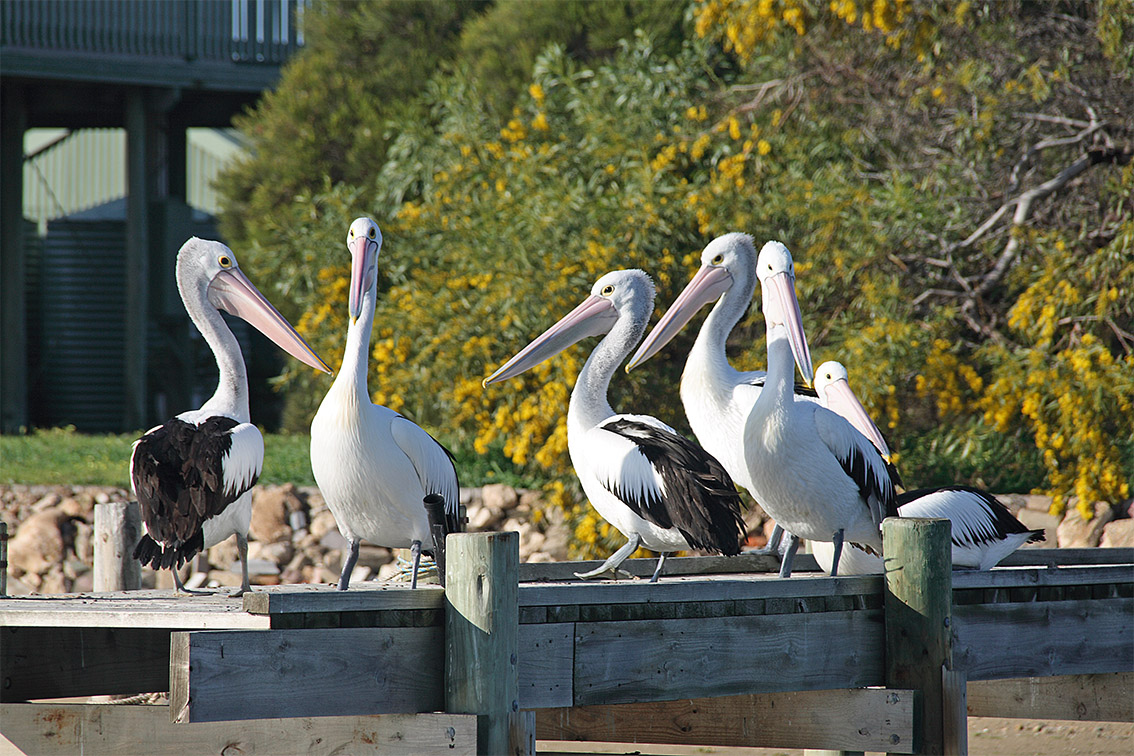
Australian Pelicans Goolwa bird reserve

Cape Jervis is the transit port for the Kangaroo Island Ferry as well as being an interesting wildlife destination in its own right.

Kangaroo Island ferry at Cape Jervis with KI in the background

Numerous seabirds live in this area including: terns, gulls, cormorants and various birds of prey. At different times I have observed Sea Eagles and Nankeen Kestrels.

Nankeen Kestrel hovering

Just before Cape Jervis, a dirt road leads to Fishery Beach where an undersea cable crosses beneath Investigator Strait to KI. I spend a little time snorkelling close to the shore where I photograph a school of Zebra Fish.

Zebra Fish

Range Road Curls around the foot of the peninsular passing through pasture, scrub and grazing country. Near the beginning of the road there is an entrance to the old Talisker mine. Numerous small birds inhabit the dense scrub around this area and the old buildings and machinery provide some historical context.
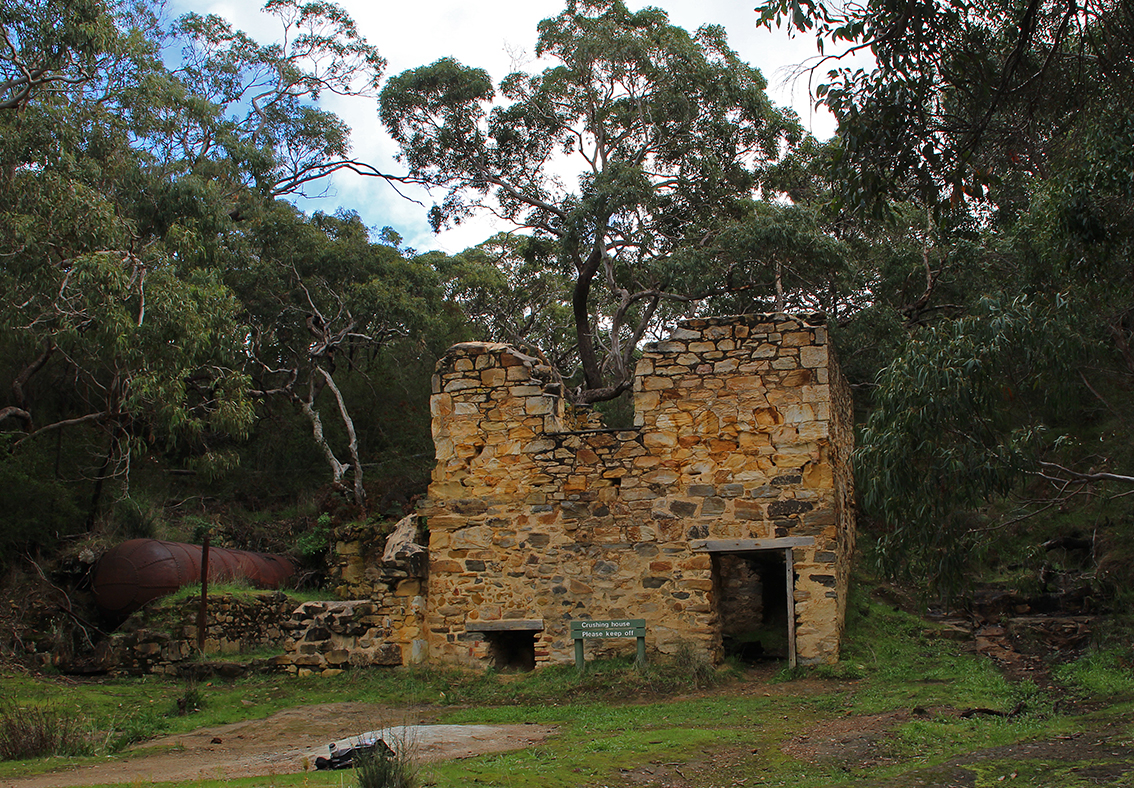
Crusher house and boiler
Crescent Honeyeater

One of the main attractions of the southern Fleurieu is the Deep Creek Conservation Park; a wonderful place to photograph Western Grey Kangaroos and the occasional Echidna.

Lone roo Deep Creek Conservation Park
Roos in the mist Deep Creek CP

My next stop on this trip is Victor Harbor, where I watch a succession of recreational fishing boats head out to sea while I enjoy a tasty seafood lunch at Whalers Seaside Dining.
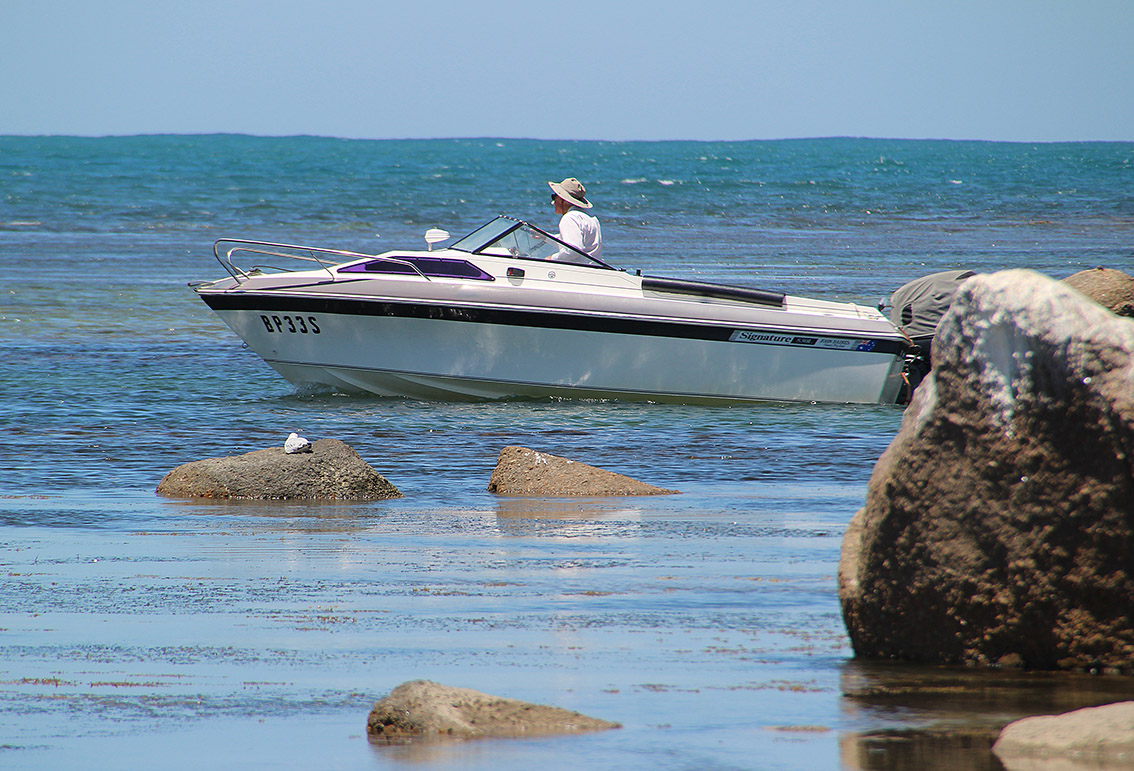
Setting out from the Victor Harbor boat ramp

Having reached Victor from the city via South Road and Range Road I decide to return to Adelaide along the B37 (Strathalbyn Route) after a 4WD run along iconic Goolwa Beach towards the mouth of the Murray River.       

Entrance to Goolwa beach

Cheers

Baz

Additional notes

The cameras used for this post are Sony RX, Nikon P900 and Nikon Coolpix AW100  

This is an easy drive which is quite suitable for families and seniors with the exception of the 4WD section which can be tricky depending on tides and wind.

Please pass on this blog title and or contact information (URL) to any person or organisation with an interest in taking walks and enjoying wildlife in SA.

Click on these links and see more South Australian stories and pictures in my Weekend Notes articles as well as locating similar blogs on Feedspot’s top 20 Australian wildlife blogs

https://www.weekendnotes.com/adelaide/writer/452/

https://blog.feedspot.com/australian_wildlife_blogs/

Kapunda…The Pines Recreation Park

4 May

Dear Reader:

There is a pair of White-plumed Honeyeaters perched on a branch about thirty metres away. I think one is an adult which has just fed its well fledged chick.

The Pines Conservation Reserve is a five-minute drive from the historic township of Kapunda. It encompasses the old reservoir which once serviced the town and its mining community. Today the reservoir is dry after a long summer with little rain.

From the park’s entrance where I spotted the honeyeaters, I follow a looped trail leading to the reservoir. There are Galahs and rosellas flying through the trees and scrub and I can hear the twittering calls of smaller birds in the canopy and bushes.

On the side of a nearby slope I notice a classic 1800s cottage which has been renovated and is now privately owned. Nearby signage informs me this was once the residence of the Waterworks Manager.

Nearby, there is a bird hide which would stand on the edge of the water when the reservoir is full. There is a visitor book of observations which recounts animals observed. One recent notation mentions an Echidna shuffling underneath the hide.

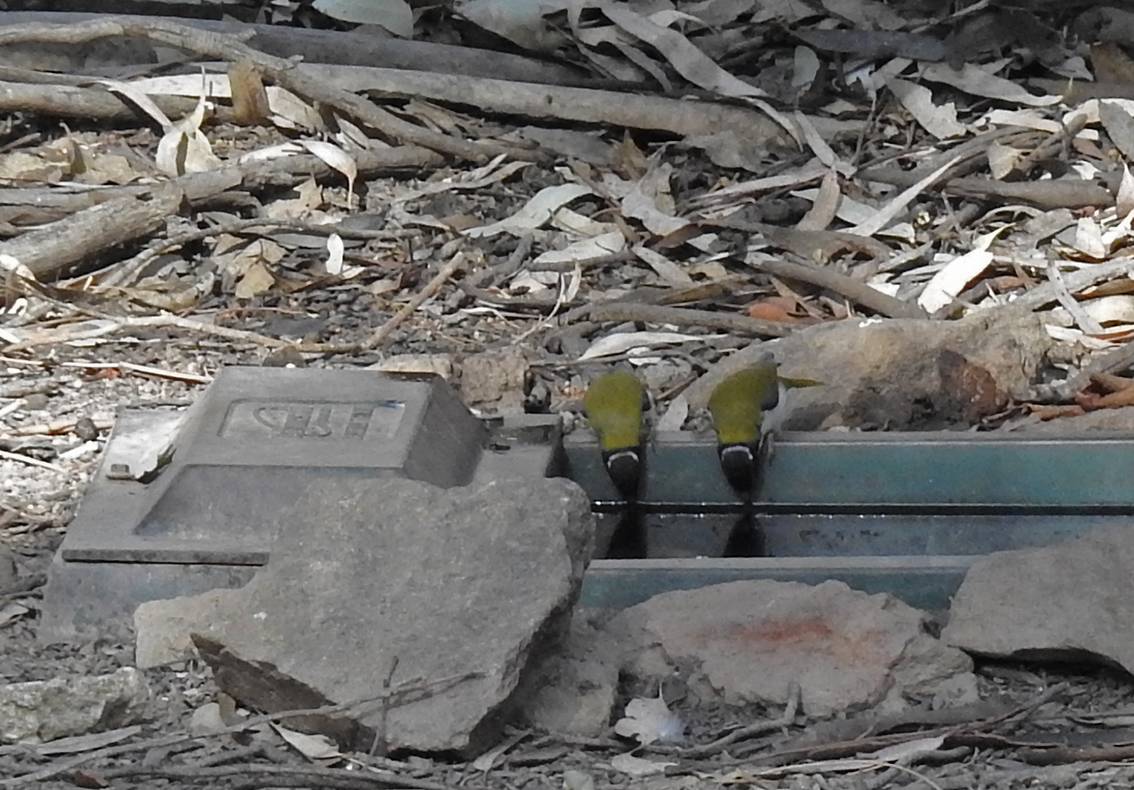
I sit in the hide for a few minutes and watch several different species of birds drinking from a small trough which appears to have a permanently piped in water supply. I am particularly excited to see a pair of White-naped Honeyeaters at the trough.

From the bird hide, I backtrack a little and take the shorter route to the car park which passes across the top of the levy then down a slight slope. I stop to photograph the old Turncock building which regulated the water supply to the town.

From the top of the levy I am level with the middle story of the surrounding forest. I spot a Laughing Kookaburra half hidden in the branches and an Australian Tree Creeper on the trunk of a skeletal, old eucalypt.

The walk has been quite successful though for this time of year, with little water and most of the flowering trees and shrubs dormant, the wildlife has been hard to spot and photograph and I have had to rely on the extreme magnification that my Nikon P900 embodies.

My final stops are in the town itself; firstly, the local craft and arts centre then for lunch at the North Kapunda Hotel.

Next time I visit Kapunda I will explore the town which has its own pond and urban wildlife as well as the nearby mines. I hope you enjoyed this post and look forward to my next one which will focus on the tourist oriented town of Hahndorf in the Adelaide Hills. Yet another destination in our wonderful state

Cheers

Baz

Additional notes

This is an easy walk and drive which is quite suitable for families and seniors with public toilets, a shelter, parking and other facilities nearby. It is dog friendly.

Please pass on this blog title and or contact information (URL) to any person or organisation with an interest in taking walks and enjoying wildlife in SA.

Click on these links and see more South Australian stories and pictures in my Weekend Notes articles as well as locating similar blogs on Feedspot’s top 20 Australian wildlife blogs

https://www.weekendnotes.com/adelaide/writer/452/

https://blog.feedspot.com/australian_wildlife_blogs/

A Winter Walk by the Normanville Jetty

4 Sep

A Winter Walk by the Normanville Jetty

 Dear Reader:

It is a glorious winter’s day; one that reminds you that spring is not far away. The winter sun is bright even dazzling and it has brought the seafront to life. There are a few insects buzzing around the grasses that bind the dunes together and more birds than I have seen in a long time. I manage to spot three species of honeyeaters on a short walk into the scrub; a ‘New Holland’ a less common ‘Crestcent’ variety and a ‘Singing Honeyeater’ that sits nicely on a railing posing for a photograph.


Blue on Blue with a little woodwork


Singing Honeyeater


A small creek empties into the sea near the jetty and a pair of Black Ducks are paddling near the reeds while a Masked Lapwing tentatively forages around the water’s edge. Local Aboriginal people, the Kaurna, tell a creation story of how the creek was formed from the tears of Tjilbruke as he carried his dead nephew along the coast towards Cape Jervis. Archaeological dating of middens and campsites suggest human habitation of the area dating back many thousands of years.


Masked Lapwing


Where creek and sea meet


Like other beaches in this area numerous species of birds nest on the foreshore and back into the dunes. Perhaps the most significant of these is the rare and vulnerable hooded plover which I am lucky enough to spot feeding along the dune frontage as I walk south along the beach.


Hooded Plover


During the warmer months the suns are frequented by a wider range of species from brown snakes and sleepy lizards to mantises and butterflies. However, today is one better suited to a walk along the beach or some fishing on the jetty for mullet, flathead and squid followed by lunch at the Normanville Kiosk and Cafe situated where the jetty meets the beach. A wonderful way to finish my winter walk in one of SA’s nicest beachfront locations.


Lunch options

Cheers

Baz

Additional notes

This is an easy walk/drive which is quite suitable for families and seniors with public toilets, barbecues, parking and other facilities nearby. It is dog friendly.


See more South Australian stories on Weekend Notes

https://www.weekendnotes.com/profile/651267/

 I have recently spent time in Africa and the link below will allow you to enjoy images and text describing some of my encounters with the wonderful wildlife of Botswana and Zambia. I will attach a new image and notes to accompany each post.

https://wildlifemomentssa.blogspot.com

Marion’s Warraparinga wetlands

24 Jan

Dear Reader:

There is a Kookaburra high in the red river gum near the entrance to the Warraparinga wetlands. It chortles out its laughing call alerting just about every wild creature in the area. However, the main purpose of its famous laugh is proclaiming to other kookaburras whose turf it is and how eligible one is for mating. As I sit and listen I cannot help but wonder what the original people who inhabited this land thought about these iconic Australian birds and the other animals that lived here.

A kookaburra sits in the old gum tree

A kookaburra sits in the old gum tree (click to enlarge all images in this post)


For tens of thousands of years before European settlement the Kaurna people roamed the Adelaide plains and south coast. They used both forest and grasslands to hunt for kangaroos, possums and birds. The creeks and wetlands provided turtles, yabbies and fish. Reeds and other plants were a source of food, medicinal remedies and the raw materials for weaving and building.

A timeline describing aspects of Kaurna culture

A timeline describing aspects of Kaurna culture


 Although Aboriginal peoples used symbols, they never developed writing. Their laws, ideas, family histories and seasonal maps were passed from one generation to the next by a series of stories some of which are referred to as Dreaming Stories and often relate to spirit ancestors. One such story is that of Kulutuwi a young boy who is killed by his stepbrothers and carried to his resting place by his uncle Tjilbruke. It describes how the tears that Tjilbruke shed formed the little creeks along the Fleurieu Peninsula. Warraparinga, which comes from the Kaurna warri parri and means windy place by the river is on Sturt Creek near the start of the Tjilbruke trail in the suburb of Marion. It is a wetland complex and home to the Living Kuarna Cultural Centre which has interpretive displays, an art gallery, performing space and cafe.

The creek flowing freely after summer rain

The creek flowing freely after summer rain


An acrobatic white plumed honeyeater feeding on small insects

An acrobatic white plumed honeyeater feeding on small insects


 Leaving the kookaburra to its vocal gymnastics, I walk through a sculpture garden and down to the creek which is flowing quite swiftly as it has rained heavily in the last week. The rain has also stimulated some plants to flower and there is a healthy population of insects in the bushes and trees. The typical ‘wick wicky’ call alerts me to several white plumed honeyeaters that are energetically picking off lerps and ants high in the tall eucalyptus trees by the water. I spend a good ten minutes trying to get a definitive shot that shows their hunting strategies.

Galah feeding on the ground

Galah feeding on the ground


Rose breasted cockatoo or galah performing beak maintenance duties

Rose breasted cockatoo or galah performing beak maintenance duties


In the same stand of trees both rosellas and cockatoos are sheltering amongst the foliage. The cockies are particularly interesting as they have been feeding on the ground pulling up tubers and searching for seeds then returning to the trees to wipe their beaks on the branches; whether to clean, sharpen or what?…I am not sure.

Reeds by the banks of a small lake help filter out pollutants

Reeds by the banks of a small lake help filter out pollutants


Purple swamp hens are often seen using their huge feet to climb over reeds

Purple swamp hens are often seen using their huge feet to climb over reeds


Eurasian coots are found in Asia, Australia, Africa and Europe

Eurasian coots are found in Asia, Australia, Africa and Europe


 The trail is well defined and leads me past several different ecosystems. One of these is a chain of ponds that are surrounded by reeds. South Australia’s urban wetlands have been developed to help filter storm water run-off and improve the health of our creeks but they also serve as a wonderful habitat for water birds. Eurasian coots, purple swamp hens and dusky moorhens are all feeding close to the reeds and these birds would have been part of the diet of the Kaurna people who hunted along the nearby Sturt Creek.

The lobby of the Living Kaurna Cultural Centre

The lobby of the Living Kaurna Cultural Centre


Having spent a couple of hours exploring the trails and stopping to capture a representative batch of images, I wind up back at the cultural centre for a well earned cup of coffee and a pastry. In the next room there is a wonderful display of indigenous art and a timeline displaying the history of the Kuarna people. It seems a fitting and reflective way to end my first visit to this rather special park in the heart of Adelaide’ southern suburbs.


Until our next adventure

BAZ