Tag Archives: hooded plover

Victor Harbor…..A Foreshore Walk

29 Jan
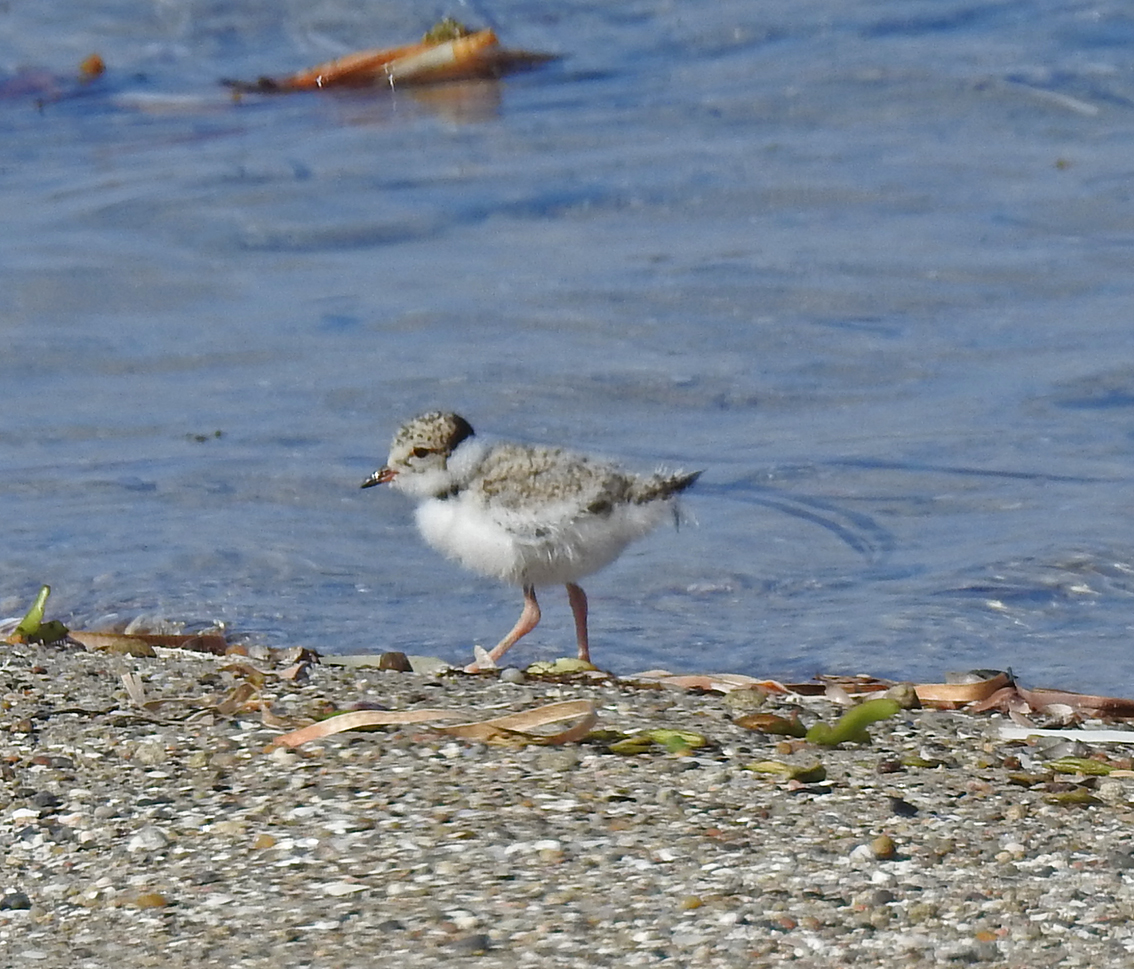
A lone Hooded Plover chick ventures close to the water

Dear Reader:

The small shore bird leads its chicks across the sand towards the water. They peck at the sand mimicking the parent as she forages for food. Rare and lovely birds, Hooded Plovers nest in a protected zone on the beach.
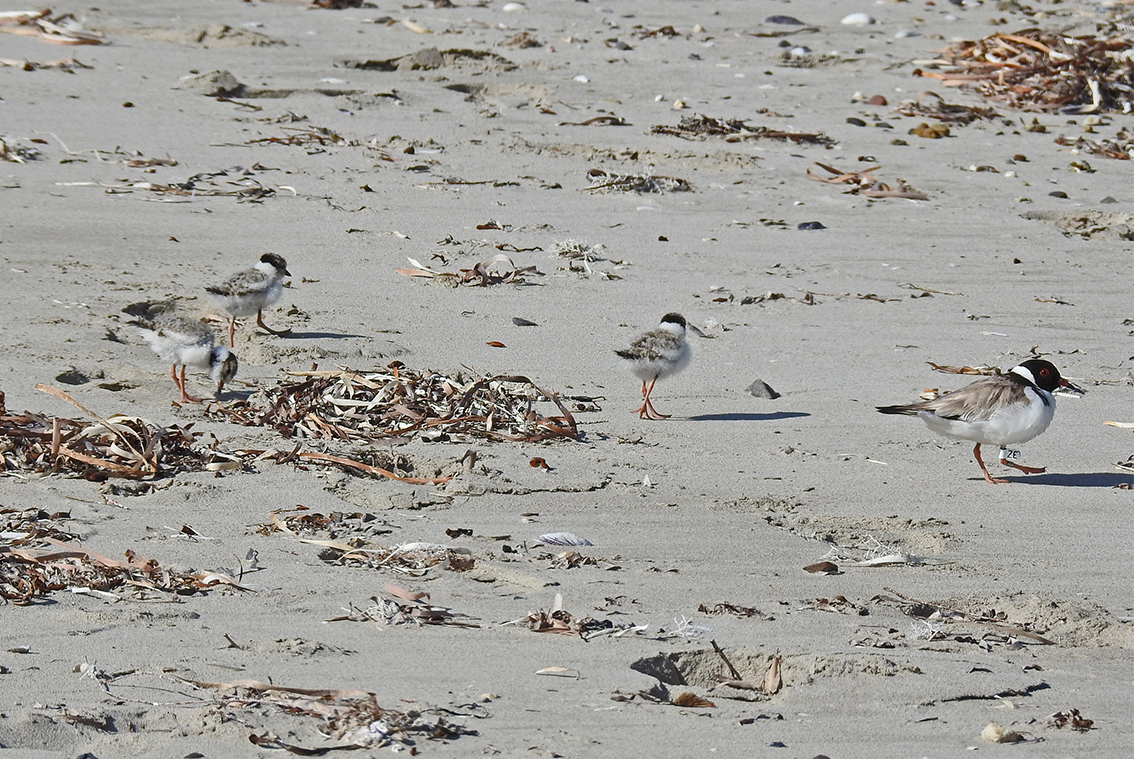
Adult Hooded Plover with quite mature chicks

I am walking from the Bert Puxley Reserve near the boat ramp back along the foreshore towards Muwerang-Kent Reserve at the mouth of the Inman River. The tide is out and a variety of waterbirds are feeding in the shallow rock pools that characterise this stretch of water.
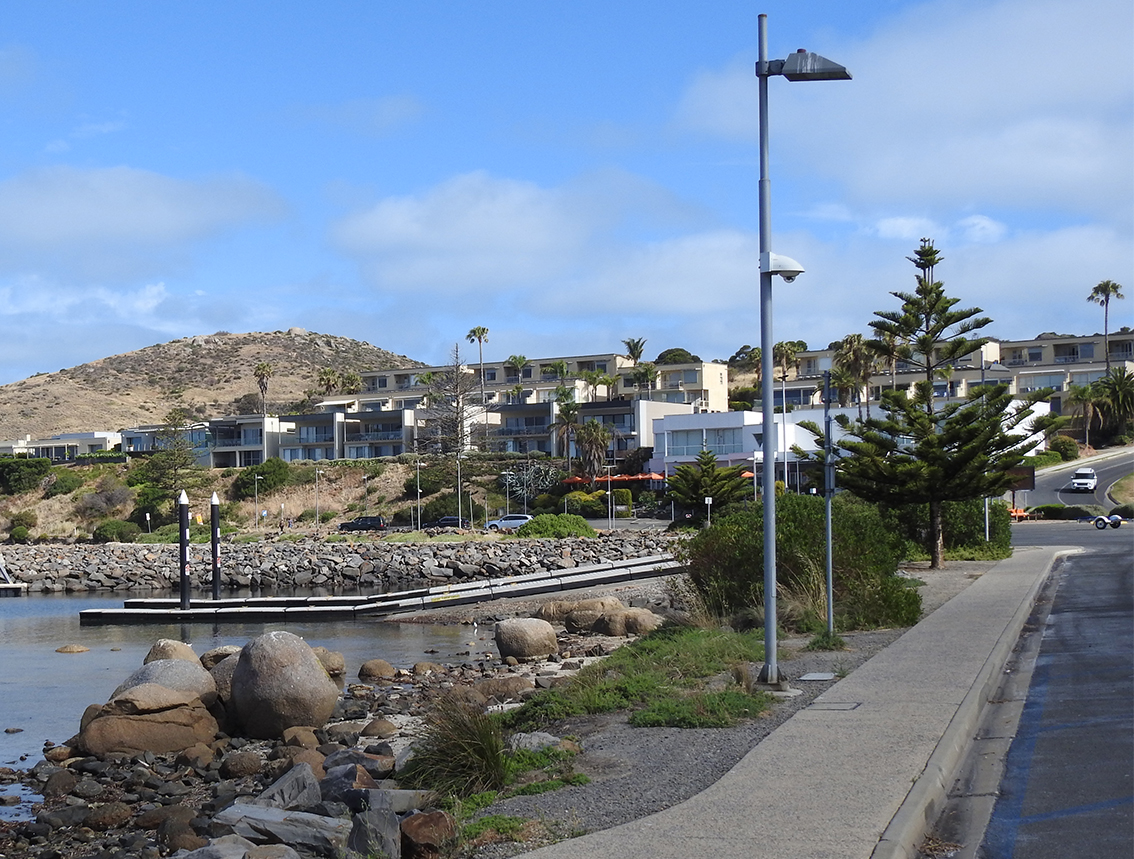
Whalers Inn and the boat ramp with the Bluff in the background
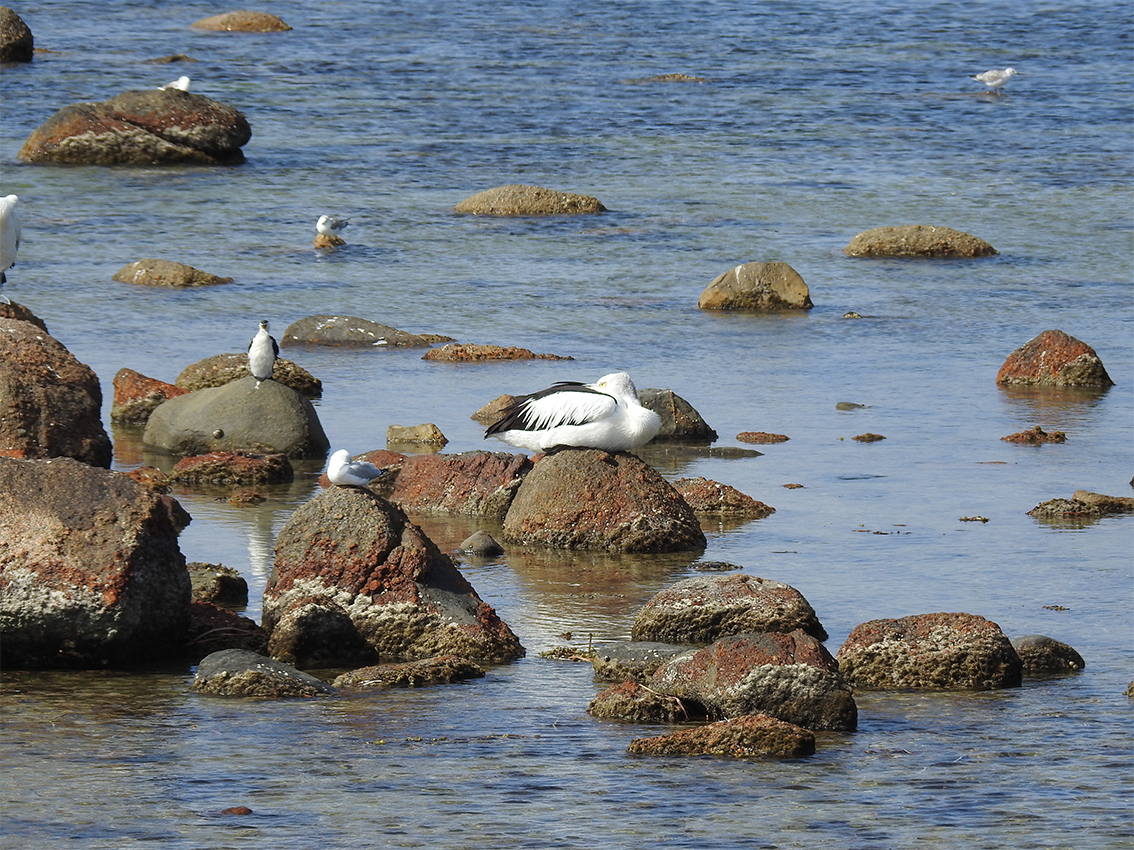
Cormorant, Silver Gull and Australian Pelican resting on granite boulders near the boating channel
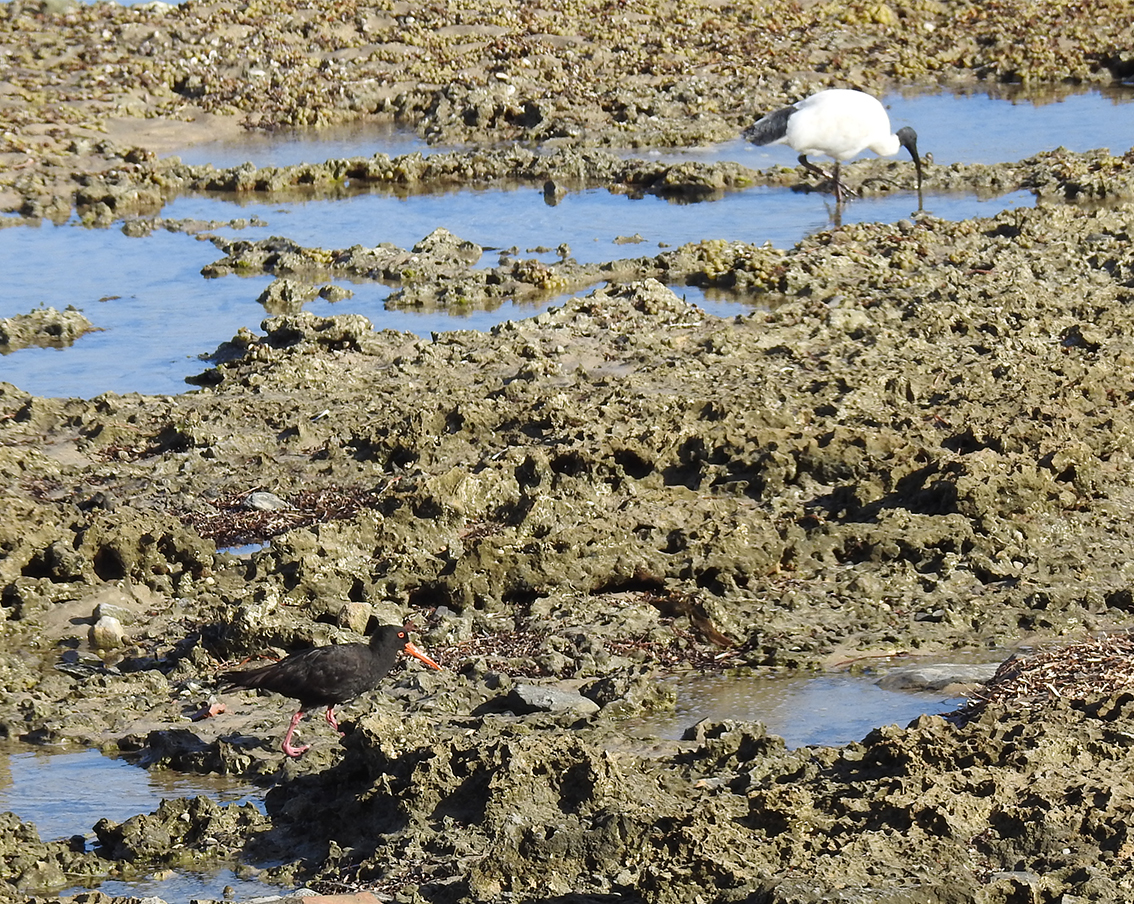
Sooty Oystercatcher (foreground) Australian White Ibis (background) foraging in rock pools for different prey which suits their beak types

Tall Norfolk Island Pines line the pathway and a group of Rose-breasted Cockatoos (Galahs) are squawking and squabbling in the topmost branches while others feed on the grassy verge.
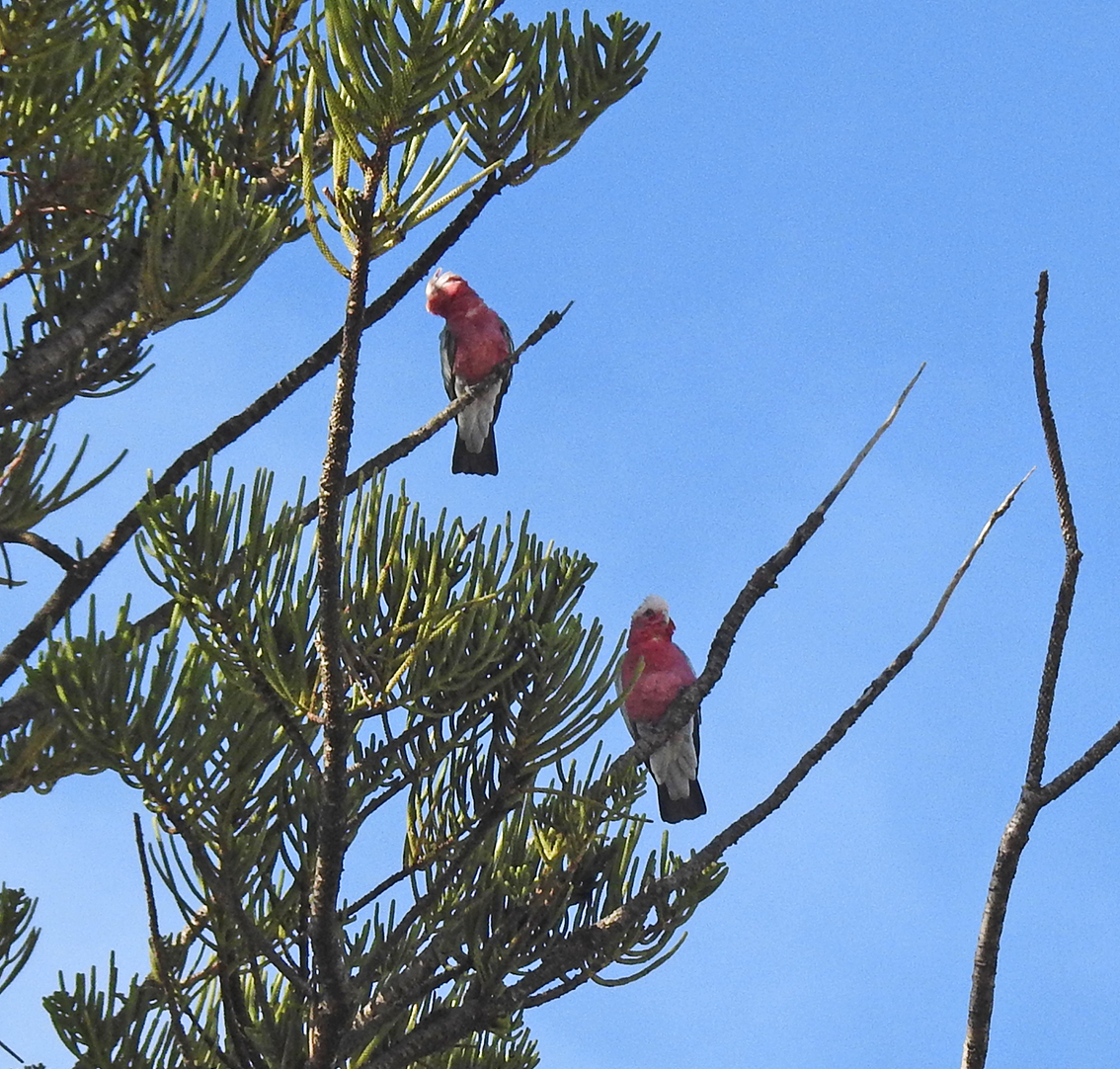
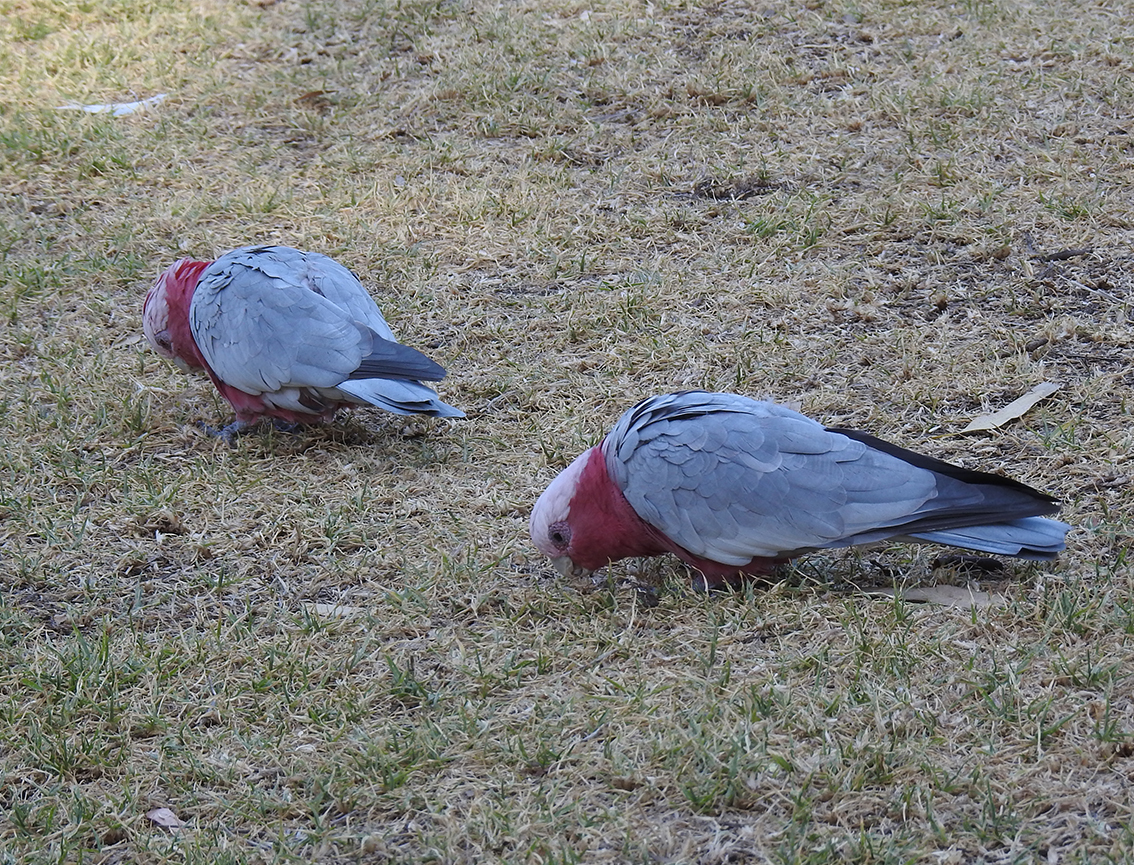
Galahs getting ready to roost
Galahs feeding

Much to my surprise, I catch sight of an unusual bird pushing its way through the shallows, beak forward and seaweed strewn across its ornately crowned head. A Great-crested Grebe. A bird I have rarely encountered. Using the full extension of the Nikon P900 telephoto, I take a series of shots to capture this feeding behaviour.
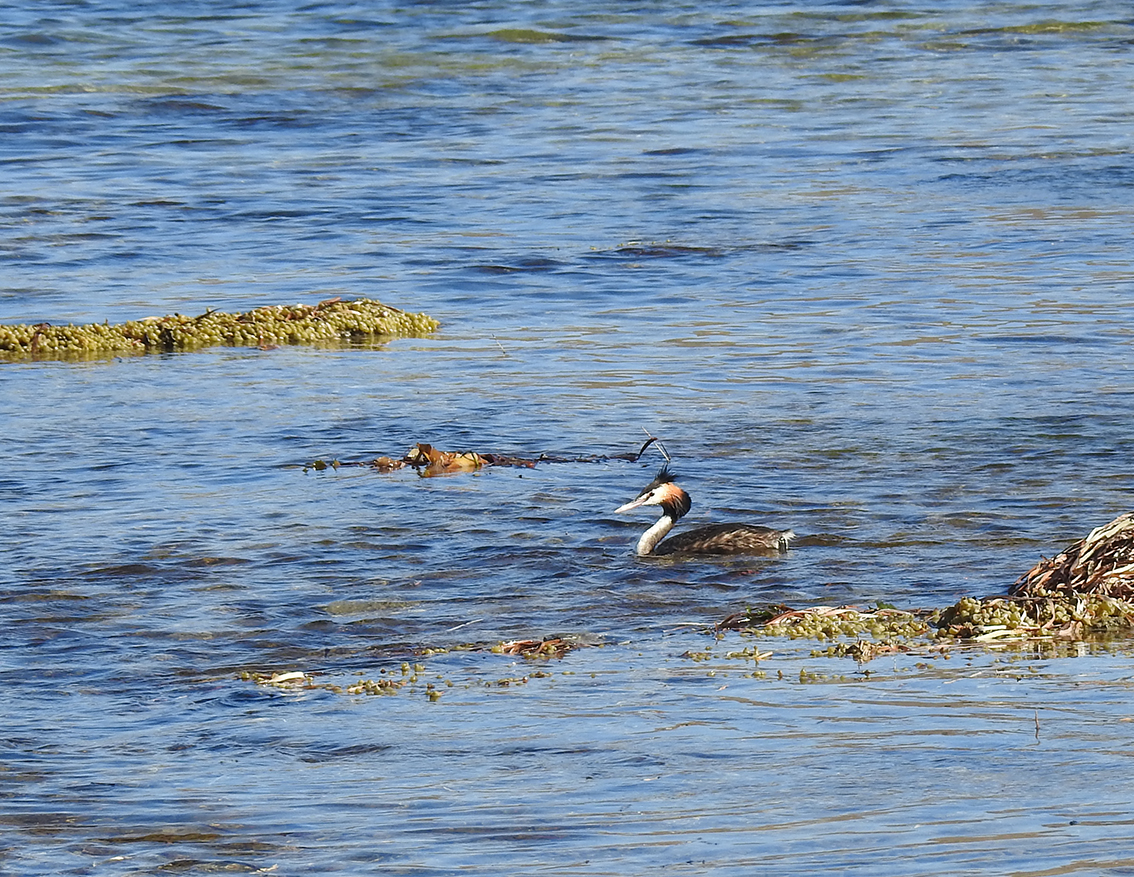
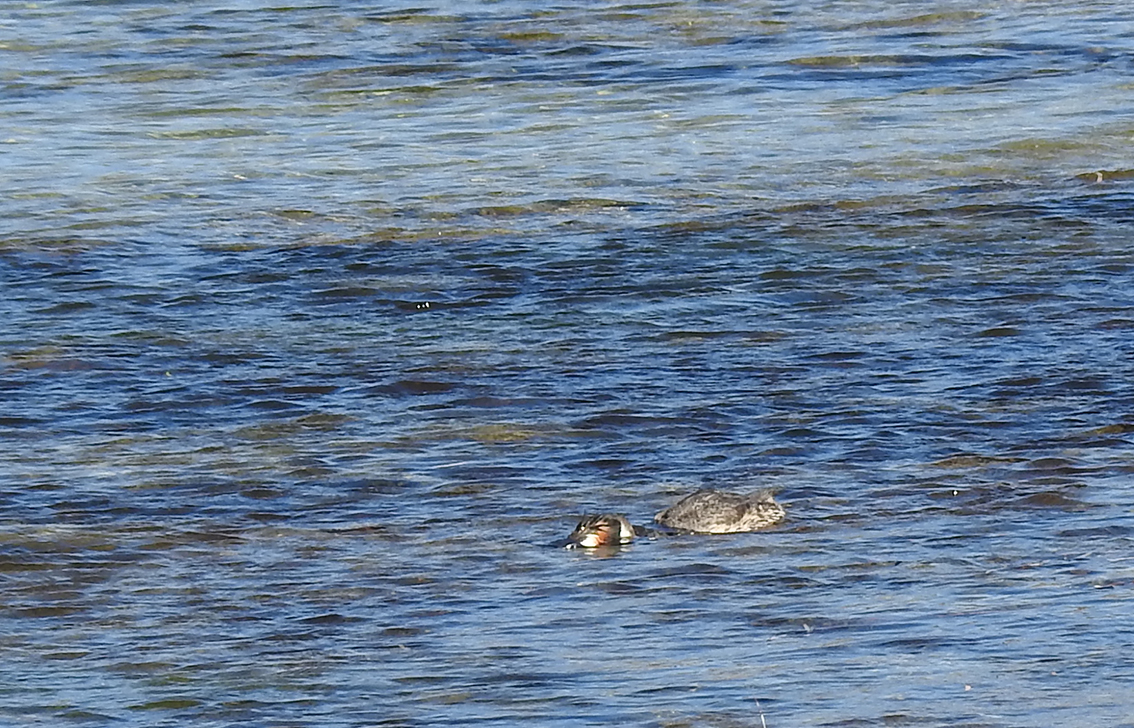
Great-crested Grebe
Great-crested Grebe hunting

Leaving the path, I walk along the sandy beach scanning the water for other seabirds, dolphins, or fish caught in the shallow rock pools. I don’t have to walk very far before I spot a small group of waterfowl, Grey Teal and Pacific Black Ducks, in the shallows. They are birds I usually associate with fresh water.
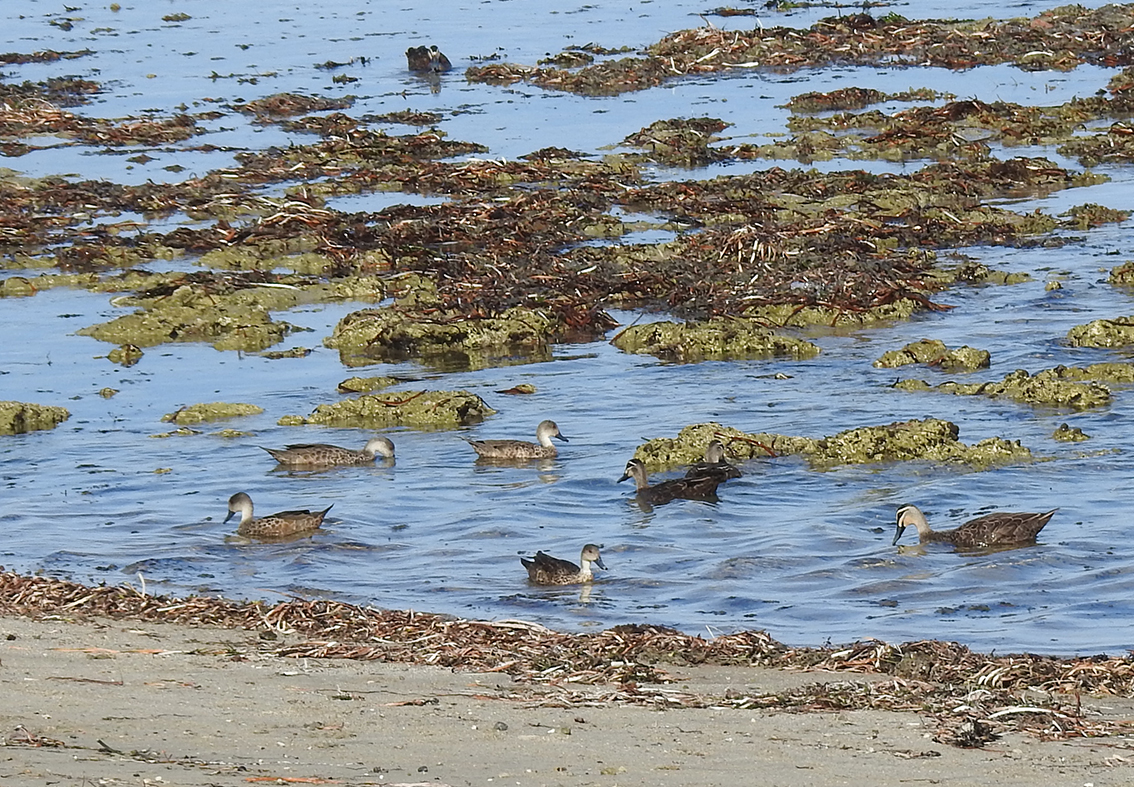
Grey Teal and Pacific Black Ducks

I have been walking and observing for over an hour and decide to break for lunch. Approximately halfway between the two parks there is a small group of shops catering for Victor’s summer influx of visitors. Fresh sandwiches, pies, pizzas, yiros and many other Aussie lunch staples are available.
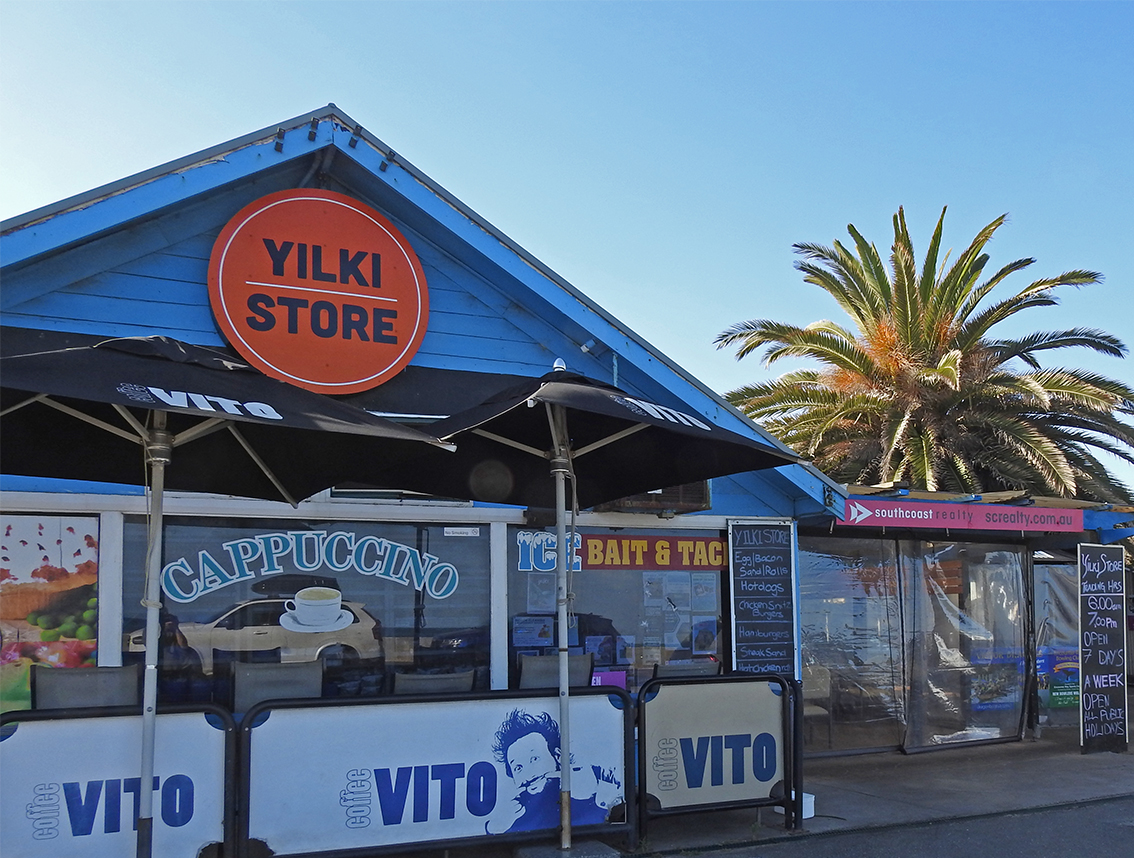
Plenty to choose from

Although my walk has primarily focussed on the birdlife, the variety of coastal vegetation is notable. As well as the wiry grasses that hold sandy areas together there are numerous flowering bushes such as Cushion Fan-flower and Coastal Wattles and Myoporum.
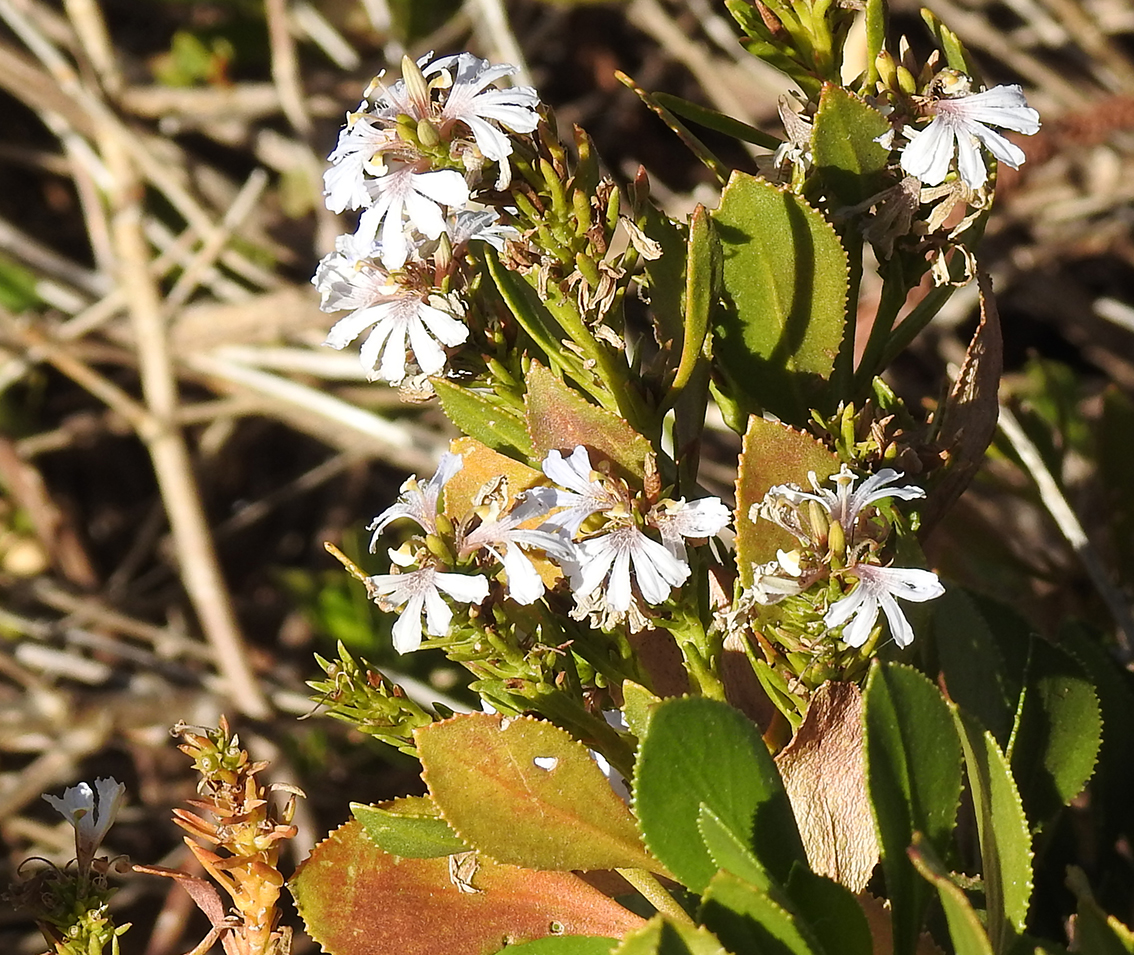
Cushion Fan-flower blossoms

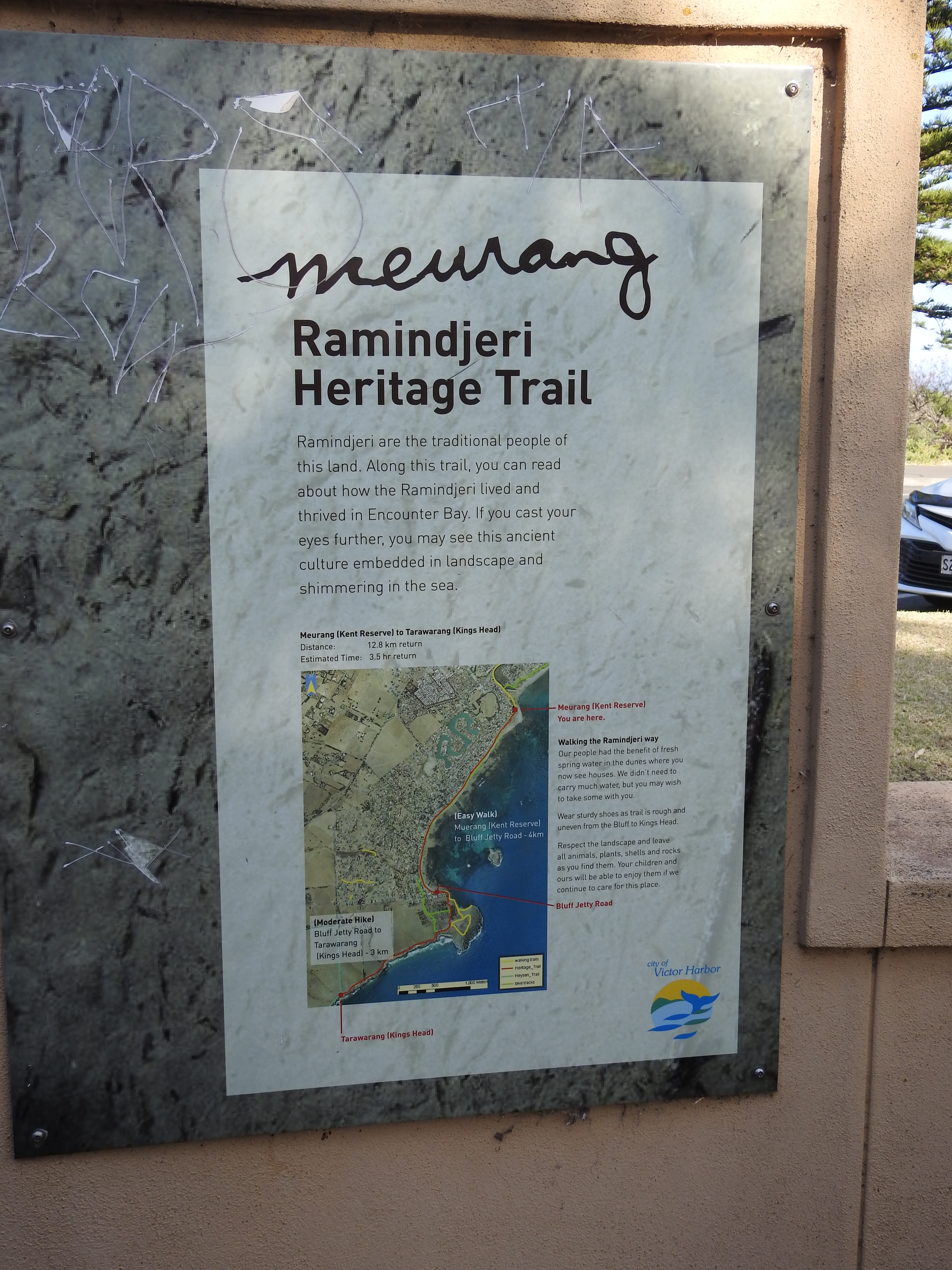
My final destination is Muwerang-Kent Reserve where a range of information plaques provide First Nations and more recent historical and cultural information about the area.
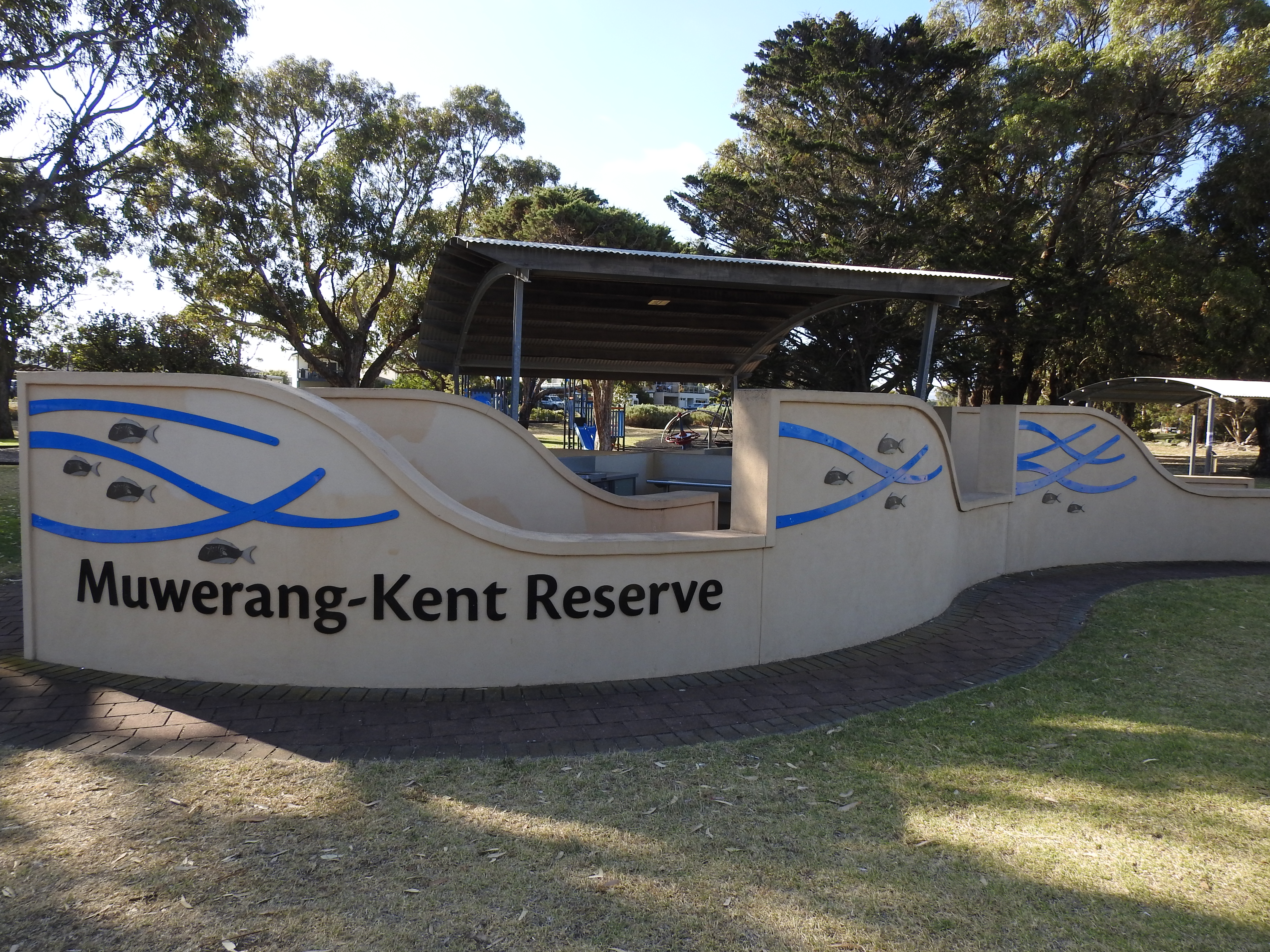
Multi purpose reserve with: shelter, play and exercise equipment and information
First Nations information

Cheers

Baz

Additional notes

Other animals seen, heard but not photographed: Caspian Tern, Silver Gulls,

The camera used for this post is a Nikon Coolpix P900

This is an easy walk and drive which is quite suitable for families and seniors with public toilets, barbecues, parking and other facilities nearby. It is dog friendly but areas of the beach are cordoned off for the plovers meaning dogs should be on leads around these zones.

Please pass on this blog title and or contact information (URL) to any person or organisation with an interest in taking walks and enjoying wildlife in SA.

Click on these links and see more South Australian stories and pictures in my Weekend Notes articles as well as locating similar blogs on Feedspot’s top 20 Australian wildlife blogs

https://www.weekendnotes.com/adelaide/writer/452/

https://blog.feedspot.com/australian_wildlife_blogs/

A Winter Walk by the Normanville Jetty

4 Sep

A Winter Walk by the Normanville Jetty

 Dear Reader:

It is a glorious winter’s day; one that reminds you that spring is not far away. The winter sun is bright even dazzling and it has brought the seafront to life. There are a few insects buzzing around the grasses that bind the dunes together and more birds than I have seen in a long time. I manage to spot three species of honeyeaters on a short walk into the scrub; a ‘New Holland’ a less common ‘Crestcent’ variety and a ‘Singing Honeyeater’ that sits nicely on a railing posing for a photograph.


Blue on Blue with a little woodwork


Singing Honeyeater


A small creek empties into the sea near the jetty and a pair of Black Ducks are paddling near the reeds while a Masked Lapwing tentatively forages around the water’s edge. Local Aboriginal people, the Kaurna, tell a creation story of how the creek was formed from the tears of Tjilbruke as he carried his dead nephew along the coast towards Cape Jervis. Archaeological dating of middens and campsites suggest human habitation of the area dating back many thousands of years.


Masked Lapwing


Where creek and sea meet


Like other beaches in this area numerous species of birds nest on the foreshore and back into the dunes. Perhaps the most significant of these is the rare and vulnerable hooded plover which I am lucky enough to spot feeding along the dune frontage as I walk south along the beach.


Hooded Plover


During the warmer months the suns are frequented by a wider range of species from brown snakes and sleepy lizards to mantises and butterflies. However, today is one better suited to a walk along the beach or some fishing on the jetty for mullet, flathead and squid followed by lunch at the Normanville Kiosk and Cafe situated where the jetty meets the beach. A wonderful way to finish my winter walk in one of SA’s nicest beachfront locations.


Lunch options

Cheers

Baz

Additional notes

This is an easy walk/drive which is quite suitable for families and seniors with public toilets, barbecues, parking and other facilities nearby. It is dog friendly.


See more South Australian stories on Weekend Notes

https://www.weekendnotes.com/profile/651267/

 I have recently spent time in Africa and the link below will allow you to enjoy images and text describing some of my encounters with the wonderful wildlife of Botswana and Zambia. I will attach a new image and notes to accompany each post.

https://wildlifemomentssa.blogspot.com

Rare Birds on the Beach

16 May

Dear Reader:
This week’s post is coming to you from Southport, a surf beach just south of Port Noarlunga but still sheltered by the reef (see Jan 21st post). I am sitting in a small cafe sipping a cup of coffee and reflecting on the last couple of hours spent wandering through the sand hills and along the beach.
I had driven to Southport in the early afternoon with the specific intention of walking along the tidal flats, where the Onkaparinga estuary drains into the sea, to photograph crabs and wading birds. However, I had not counted on such a high tide; the mudflats were covered and I could only access the walking trails that meander through the sand hills from beach on the seaward side.

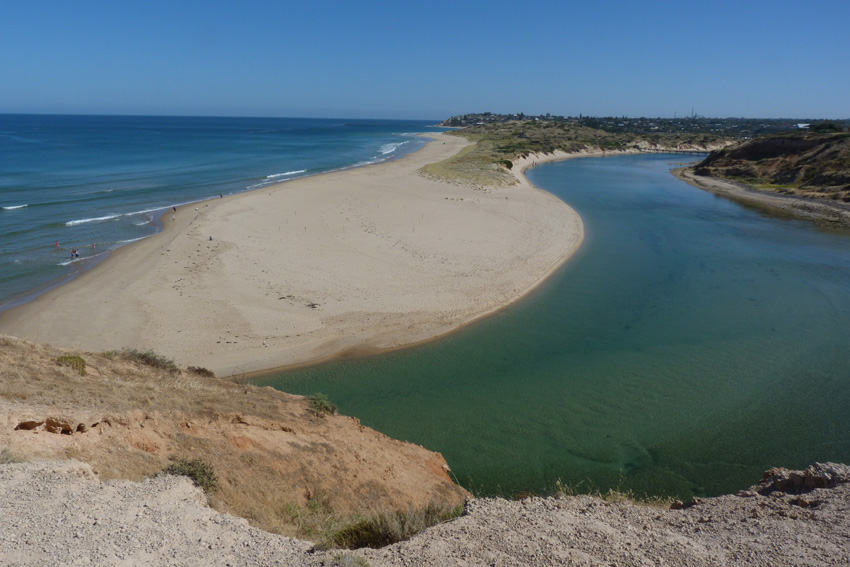
A Southport Beach, estuary with bridge in the background red

Southport Beach, estuary with bridge in the background

I parked by the roadside and crossed the river on a small bridge below the cliff line and spent a few minutes watching anglers casting for bream and garfish. Nearby, a father and son paddled a sea kayak towards the ocean disturbing a small flock of black swans as they edged close to one of the steeper banks where the sandy slope of the dunes ran into the water.

B Kayaking below the cliffs red

Kayaking below the cliffs

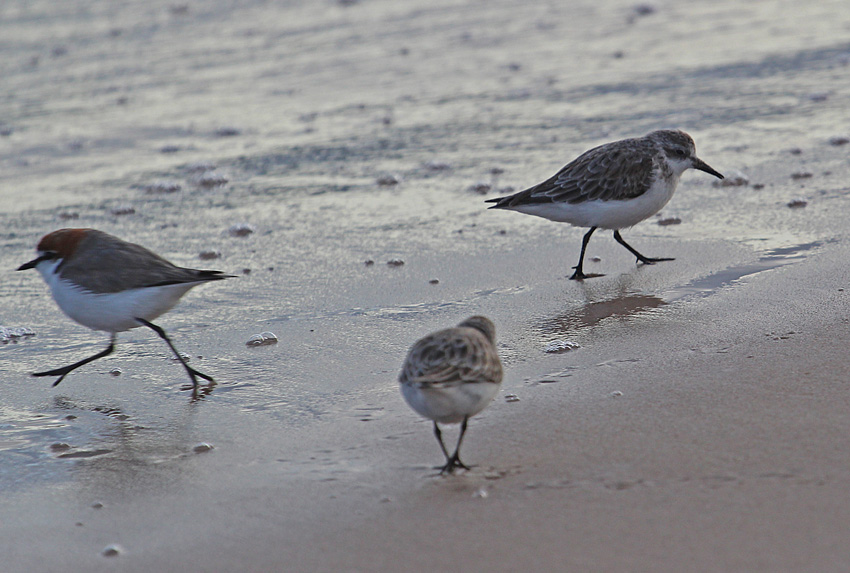
As I traversed the final set of dunes above the beach I felt the afternoon sea breeze on my face and caught the muffled crash of waves breaking on the shore. Several surfers were enjoying a choppy break and more adventurous anglers were wading into the white water to cast for salmon. I headed down to the sand to find one of the trail entrances to the dunes that open onto the beach. As I trudged through the soft sand I noticed a group of diminutive shore birds racing between the foamy lines of waves curving up the beach. At first glance they appeared to be similar in appearance but a more critical look through the telephoto revealed a mixture of species and sexes.

D Mixed group of waders foraging between waves red

Mixed group of waders foraging between waves

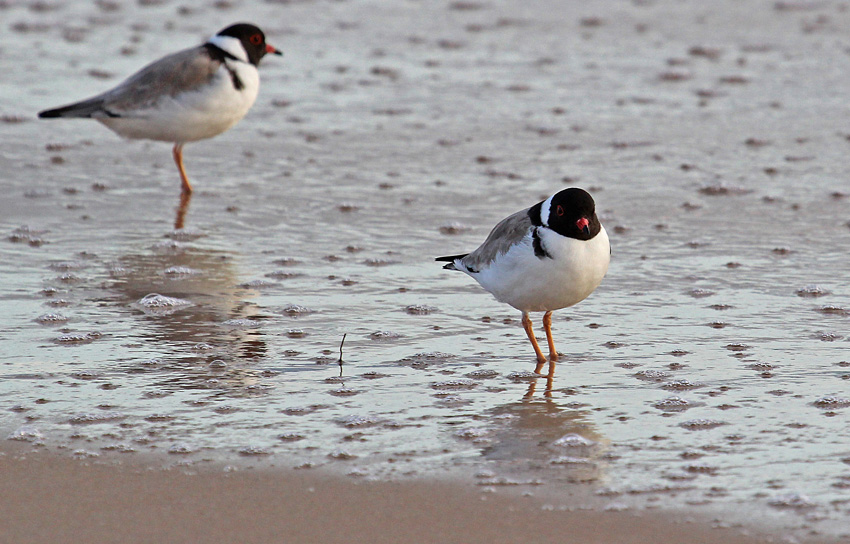
One particular pair stood out amongst the others. I held my breath, refocussed and squeezed off a series of shots, dropped to one knee to better incorporate the water into the background and fired again. I was photographing a pair of hooded plovers, an endangered species that nests on open beaches and a bird that I had only glimpsed at a distance along the Coorong’s extensive beaches further south. As I captured the last image, the wind picked up and the little flock of waders lifted as one and flew further down the beach.

E Hooded Plovers red

Hooded plovers

A sat for a few minutes, smiling inwardly as I reviewed the images then continued down to the trail entrance. As I climbed back up into the dunes I reflected on the extraordinary beauty and diversity of this stretch of coastline, a mere 20 Kms from the city centre. Walking through the dunes was like entering another world made up of: low scrub, wiry grasses and a thick layer of undergrowth fashioned from the skeletal remains of branches and tree trunks. I walked slowly and paused frequently observing a variety of insects, several lizard species and an assortment of birds including: honeyeaters, magpies and crested pigeons.

C View of the beach from the dunes in the afternoon light red

View of the beach from the dunes in the afternoon light

But today it was the ocean that called and as the light started to fade I took another track down to the shoreline and worked my way back to the section of beach where I had encountered the plovers. Sadly, the plovers were long gone but a little group of red capped dotterels remained, bedding down for the night in the footprints that I had left in the sand when I walked this way just an hour ago.

F Red Capped Dotterels bedding down for the night red

Red capped dotterels bedding down for the night

My coffee is finished now and it is time to drive home and share this afternoon with you.

And yes, dear reader, I missed the tide but somehow I think it might have been for the better.

Sincerely
Baz

← Back

Thank you for your response. ✨